
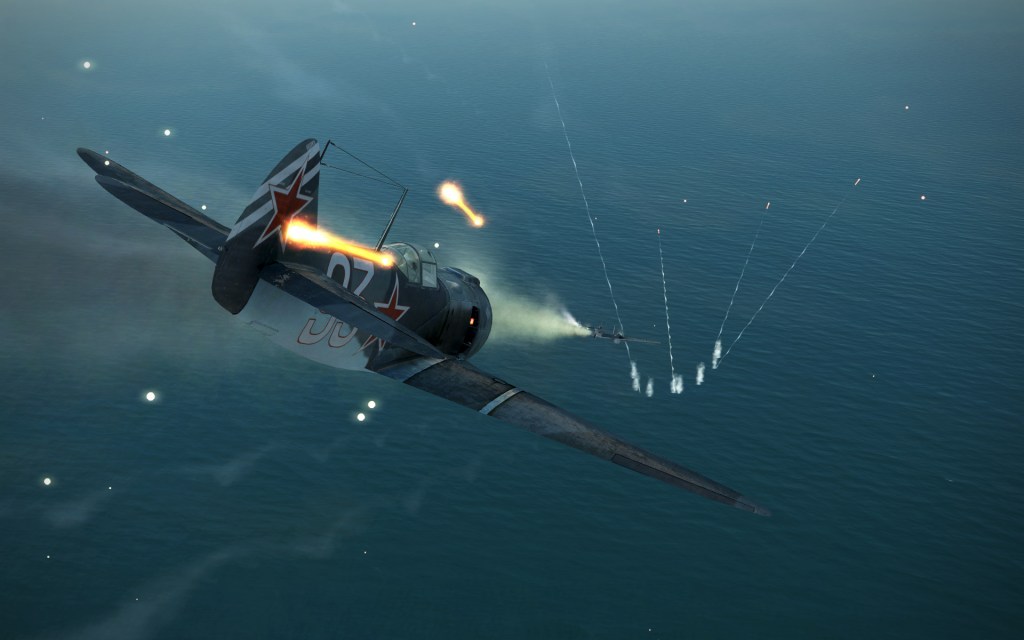
Lavochkin’s definitive La-5 fighter went through several iterations but one of the best versions of that fighter was the La-5FN. Featuring a boosted engine, numerous refinements, weight savings, and substantially better rear visibility thanks to a cut down fuselage, the La-5FN represents one of the best fighters that the Soviet Union was able to field for World War II and, 1CGS has made it available in IL-2 as an independent Collector Plane. Is the La-5FN the new king in the Soviet fighter hangar? Let’s find out!
A boosted La-5
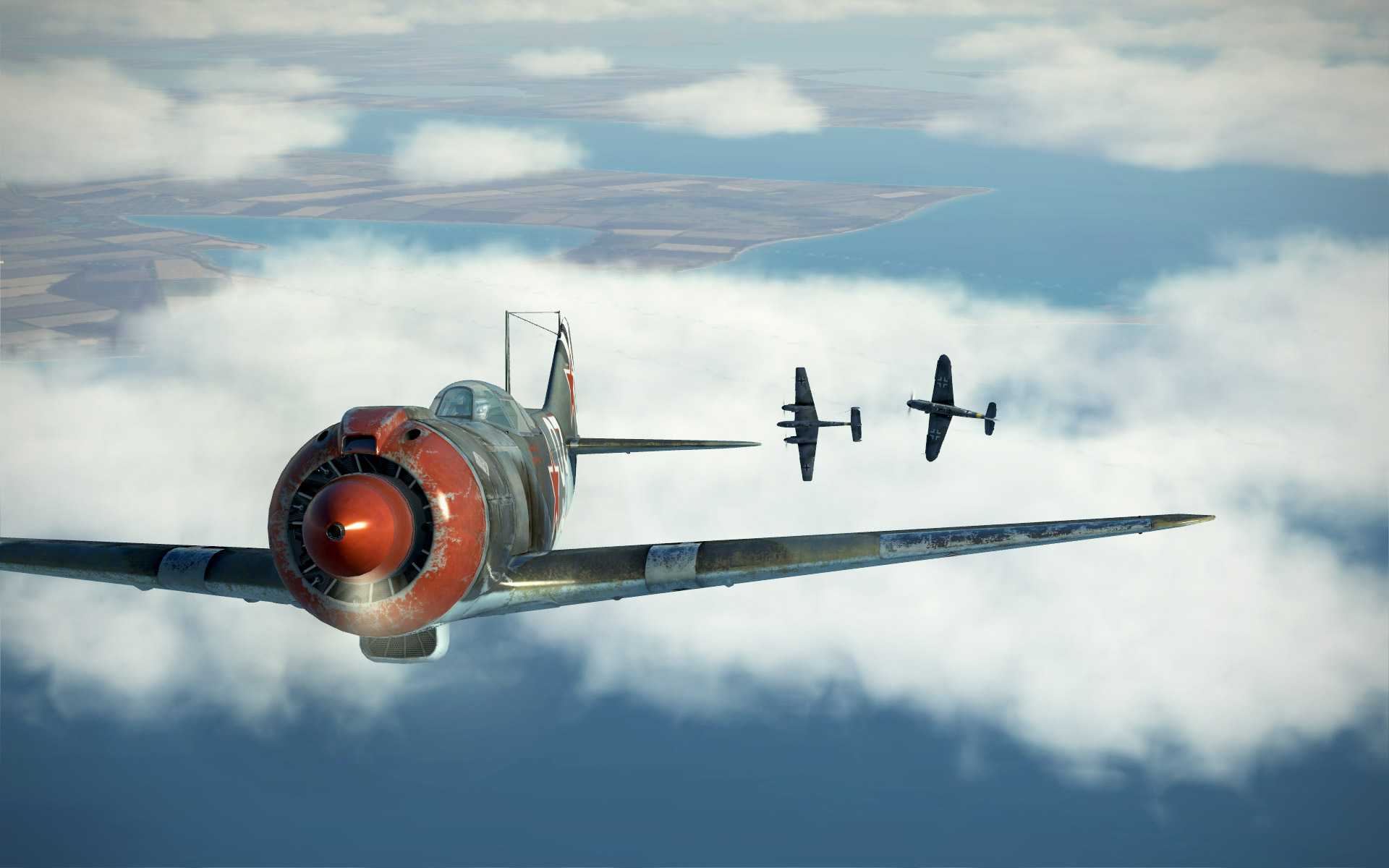
1CGS’s IL-2 series now has two main versions of the La-5 series with the La-5 Series 8 and the La-5FN Series 2. Additionally, an engine modification for the La-5 Series 8 effectively makes that aircraft an early La-5F that fits well into the IL-2: Battle of Kuban Career series and ups the ante for multiplayer battles.
Compared to that engine modification, the La-5FN is a whole other aircraft that represents a near peak for the Lavochkin line during WWII. Its appearance in 1943 on the frontline marked a turning point for German fighters who previously retained some level of superiority even at lower altitudes where Russian fighters tended to be competitive.
The M-82FN (FN standing for boosted and fuel injected) engine in the La-5 gives the aircraft considerably more power going from 1700hp in the La-5 Series 8 to 1850hp in the La-5FN Series 2. While power goes up, weight goes down with the La-5 weighing a standard weight of 3353 kg while the La-5FN tips the scales at just 3305 kg – a small but not insignificant difference of 48kg.
Though available in fewer numbers than the excellent Yak series, the La-5FN was a significantly dangerous foe and both it and the La-7 made a significant impact on the air war in the east.
Raw performance
Performance numbers come from the IL-2 forums with tables provided by 1CGS for each of their aircraft. These numbers are a summary. For the full details visit the IL-2 forums.
For these comparisons, I put the La-5FN up against its closest Allied rivals and up against the Bf109G-4 and FW190A-5. My upcoming Bf109G-6 comparison will cover some similar comparisons.
Stall
La-5FN Series 2
- Indicated stall speed in flight configuration: 168..185 km/h
- Indicated stall speed in takeoff/landing configuration: 147..159 km/h
La-5 Series 8
- Indicated stall speed in flight configuration: 165..183 km/h
- Indicated stall speed in takeoff/landing configuration: 147..162 km/h
Yak-1B Series 127
- Indicated stall speed in flight configuration: 153..169 km/h
- Indicated stall speed in takeoff/landing configuration: 132..145 km/h
Bf109G-4
- Indicated stall speed in flight configuration: 165..175 km/h
- Indicated stall speed in takeoff/landing configuration: 154..167 km/h
FW190A-5
- Indicated stall speed in flight configuration: 169..195 km/h
- Indicated stall speed in takeoff/landing configuration: 160..175 km/h
The stall speed in flight configuration on the La-5FN actually increases versus the La-5 Series 8 and it puts it in the same neighborhood as the FW190A-5. Low speeds are not the La-5FN’s forte and should be avoided in combat.
Climb
La-5FN Series 2
- Climb rate at sea level: 20 m/s
- Climb rate at 3000 m: 16.7 m/s
- Climb rate at 6000 m: 12.5 m/s
La-5 Series 8
- Climb rate at sea level: 18 m/s
- Climb rate at 3000 m: 13.3 m/s
- Climb rate at 6000 m: 8.2 m/s
Yak-1B Series 127
- Climb rate at sea level: 17.0 m/s
- Climb rate at 3000 m: 15.0 m/s
- Climb rate at 6000 m: 9.5 m/s
Bf109G-4
- Climb rate at sea level: 20.1 m/s
- Climb rate at 3000 m: 18.9 m/s
- Climb rate at 6000 m: 15.4 m/s
FW190A-5
- Climb rate at sea level: 15.4 m/s
- Climb rate at 3000 m: 11.9 m/s
- Climb rate at 6000 m: 9.7 m/s
The La-5FN climb rate at sea level is superior to every aircraft on the list except for the Bf109G-4 which it matches almost exactly. Although its performance does decline as altitude increases, the La-5FN is still the best climbing fighter in the Allied line-up so far and out-climbing the FW190A-5 at all altitudes.
Speed
La-5FN Series 2
- Maximum true air speed at sea level, engine mode – Boosted: 583 km/h*
- Maximum true air speed at sea level, engine mode – Nominal: 552 km/h
- Maximum true air speed at 2500 m, engine mode – Nominal: 605 km/h
- Maximum true air speed at 6000 m, engine mode – Nominal: 646 km/h
Note: The official data transpose the top speeds in the literature, however, the in-game as tested speeds roughly match the above values.
La-5 Series 8
- Maximum true air speed at sea level, engine mode – Boosted: 544 km/h
- Maximum true air speed at 3000 m, engine mode – Nominal: 571 km/h
- Maximum true air speed at 6500 m, engine mode – Nominal: 603 km/h
Yak-1B Series 127
- Maximum true air speed at sea level, engine mode – Nominal, 2550 RPM: 530 km/h
- Maximum true air speed at 2000 m, engine mode – Nominal, 2700 RPM: 567 km/h
- Maximum true air speed at 4500 m, engine mode – Nominal, 2700 RPM: 600 km/h
Bf109G-4
- Maximum true air speed at sea level, engine mode – Emergency: 540 km/h
- Maximum true air speed at sea level, engine mode – Combat: 517 km/h
- Maximum true air speed at 2000 m, engine mode – Combat: 564 km/h
- Maximum true air speed at 7000 m, engine mode – Combat: 640 km/h
FW190A-5
- Maximum true air speed at sea level, engine mode – Emergency: 558 km/h
- Maximum true air speed at 3000 m, engine mode – Emergency: 578 km/h
- Maximum true air speed at 6400 m, engine mode – Emergency: 658 km/h
- Maximum true air speed at sea level, engine mode – Combat: 533 km/h
- Maximum true air speed at 3000 m, engine mode – Combat: 558 km/h
- Maximum true air speed at 6000 m, engine mode – Combat: 622 km/h
The La-5FN is a true speed king being faster than all of the other fighters compared here at all altitudes with the Bf109G-6 at 6000 meters coming within a hair of the La-5FNs performance. For once, German fighters will find themselves on the back foot even at altitude. The numbers don’t show this but in testing the Bf109 may still perform better at extreme altitudes (up at 9000 meters) but combat at this altitude is typically rare.
Turn times
La-5FN Series 2
- Maximum performance turn at sea level: 21.0 s, at 320 km/h IAS.
- Maximum performance turn at 3000 m: 28.0 s, at 340 km/h IAS.
La-5 Series 8
- Maximum performance turn at sea level: 23.4 s, at 270 km/h IAS.
- Maximum performance turn at 3000 m: 35.3 s, at 270 km/h IAS.
Yak-1B Series 127
- Maximum performance turn at sea level: 19.0 s, at 270 km/h IAS.
- Maximum performance turn at 3000 m: 24.1 s, at 270 km/h IAS.
Bf109G-4
- Maximum performance turn at sea level: 21.2 s, at 270 km/h IAS.
- Maximum performance turn at 3000 m: 27.2 s, at 270 km/h IAS.
FW190A-5
- Maximum performance turn at sea level: 23.5 s, at 280 km/h IAS.
- Maximum performance turn at 3000 m: 35.5 s, at 280 km/h IAS.
In turns, the La-5FN is superior to its earlier predecessor and is very similar to the Bf109G-4. In high speed turns, the La-5FN’s elevator gets heavy making it very similar to the Bf109 and opening up an avenue for the FW190s superior at-speed handling to win out.
Though not an ideal turn fighter, the raw numbers bear out the La-5FN’s more than adequate turning ability particularly versus its German opponents either equaling or besting them in all situations.
The La-5FN in combat
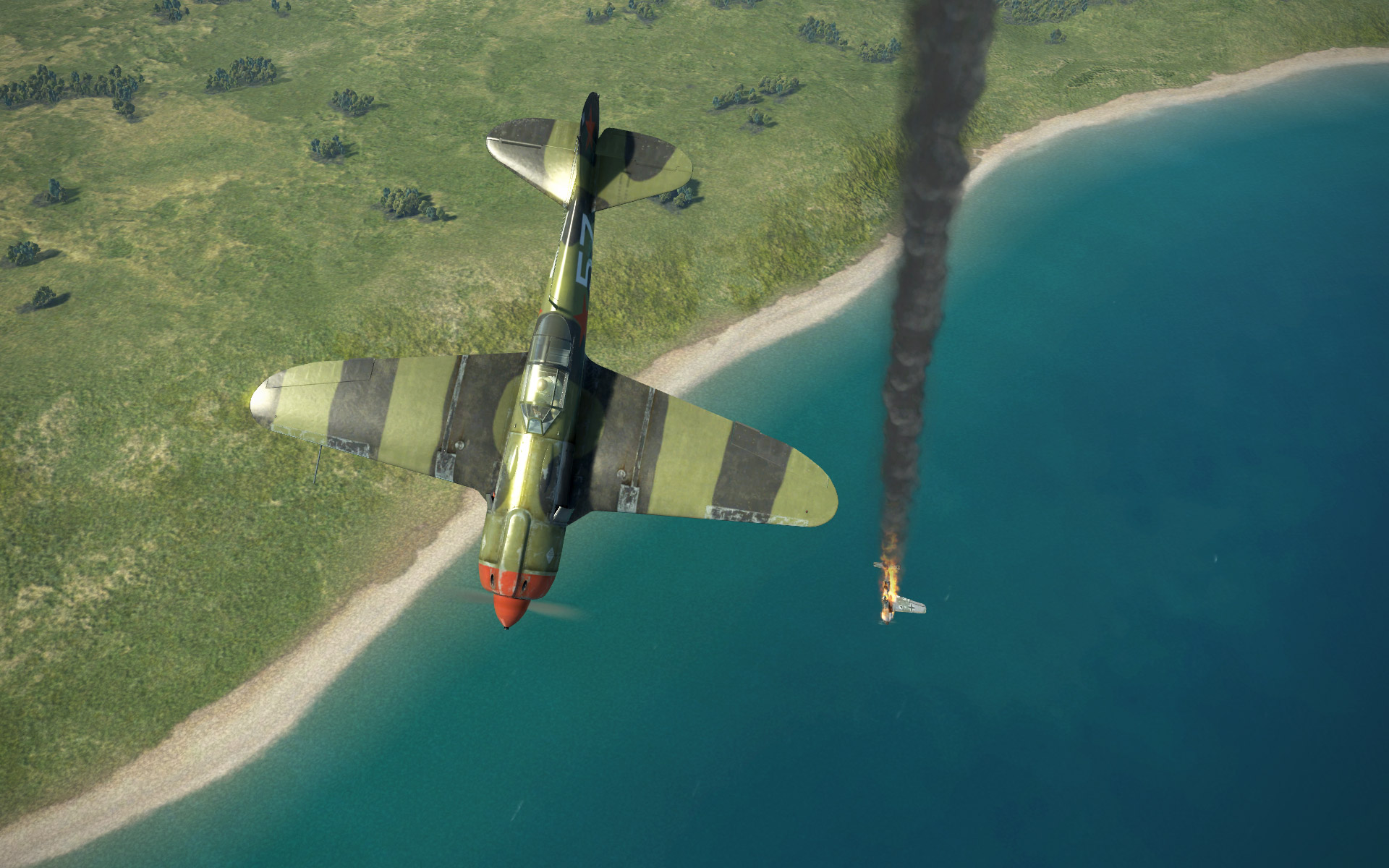
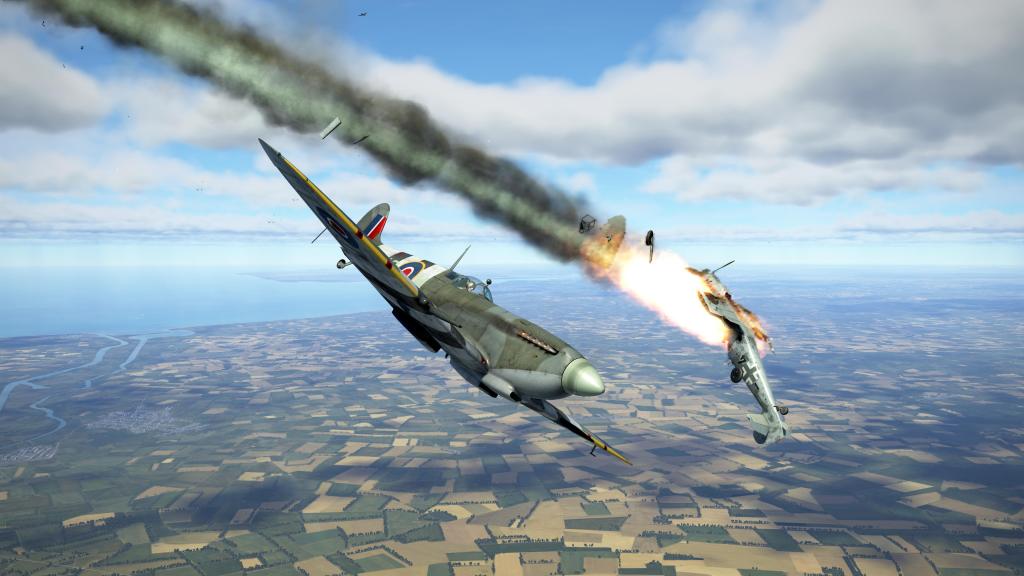
Pilots used to flying the Bf109 and FW190 with marked superiority should find themselves fighting at equal or sometimes inferior positions when faced with the La-5FN as an opponent.
The La-5FN does have a few downsides too starting with its ammo supply. In this area, it is somewhat limited by the 170 rounds per gun on the twin ShVAK 20mm cannon installation versus the 200 and 250 rounds available to Bf109 and FW190 pilots respectively. Accurate, precise shooting will reward with multiple kills but inaccurate shots will drain the ammo supply quickly.
Pulling high alpha maneuvers is sometimes a bit of an issue – the fighter can bleed speed quickly in these situations and feels sluggish when pulled too tightly in a turn. While the Yak-1B and even the Bf109 feel confident in a tight turn, the La-5FN, though capable in a turn, feels much better when you let off the stick and preserve your speed.
While view out the rear is considerably improved from the La-5 Series 8, its forward view is cluttered and limited by the huge radial engine sitting at the front. This is similar to the La-5 Series 8 although it feels somewhat worse. The armored glass is an advantage when facing down rear gunners, however.
The biggest weakness of this fighter is its dive speed maximum of 720km/h. This is about equal with the Yak-1B and it opens up an avenue for escape for German fighters so long as they keep under their 850km/h dive limit.
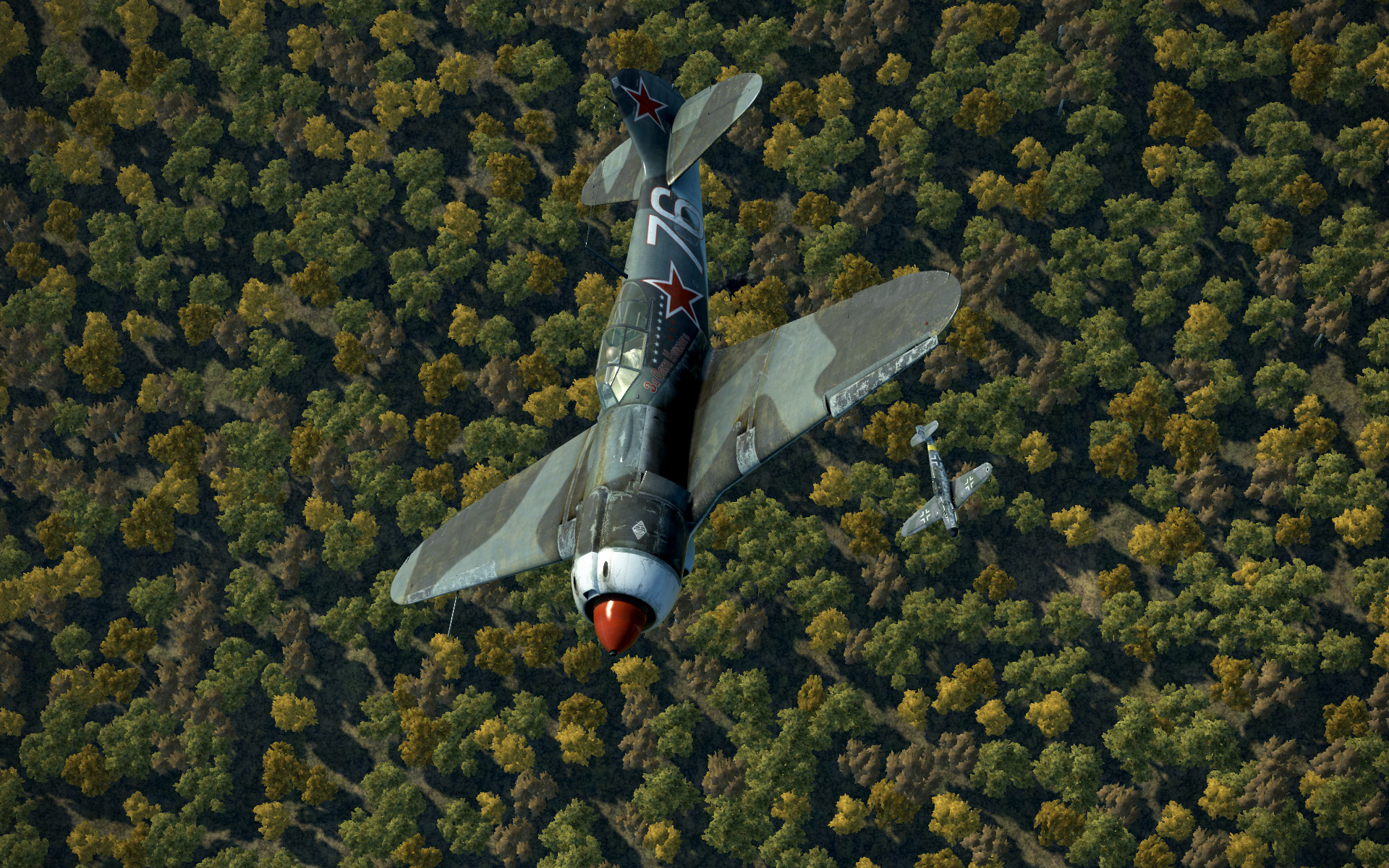
The La-5FN is mostly a specialist aircraft being almost entirely oriented towards short range fighter and interceptor duties. It has very limited ground attack options (a pair of 100kg bombs is the limit of what it can carry) and it’s not particularly great at strafing targets – though it can certainly do it in a pinch.
When taken on the whole, the La-5FN is fast, agile, with a quick roll rate and able to hit hard thanks to some very good weapons. The type is an antidote to typically superior German fighters which allows Allied fighter pilots to, for once, have an aircraft that matches or beats German fighters in most situations. Despite it’s weaknesses, the La-5FN is one of the best aircraft to fly in the entire series and opponents should definitely be on guard when a well flown La-5FN shows up.
Overall report
Pros
- High top speed and extremely good climb rate
- Fast roll rate and overall good agility
- Effective firepower
Cons
- Somewhat limited over the nose view
- Low maximum dive speed
- Controls get heavy at high speeds
Screenshots



 Stormbirds
Leave a comment