
It came out quite a long time ago now in flight sim terms but today I’m taking a close look at Big Radial’s JRF-6B Goose. Their version of the Grumman Goose has to compete with a free version that is part of the 40th Anniversary install, however, there’s a lot to like here with this version and if you love amphibious aircraft, you’ll definitely want to check this review out. Let’s have a look at the Goose!
Disclaimer
Big Radial’s was kind enough to send me a copy of their JRF-6B Goose for review. As is customary when I’m sent something for review, I always indicate that it has been done and reiterate that my thoughts are always my own and Big Radial’s gets to read the review at the same time that everyone else does.
A bit of history
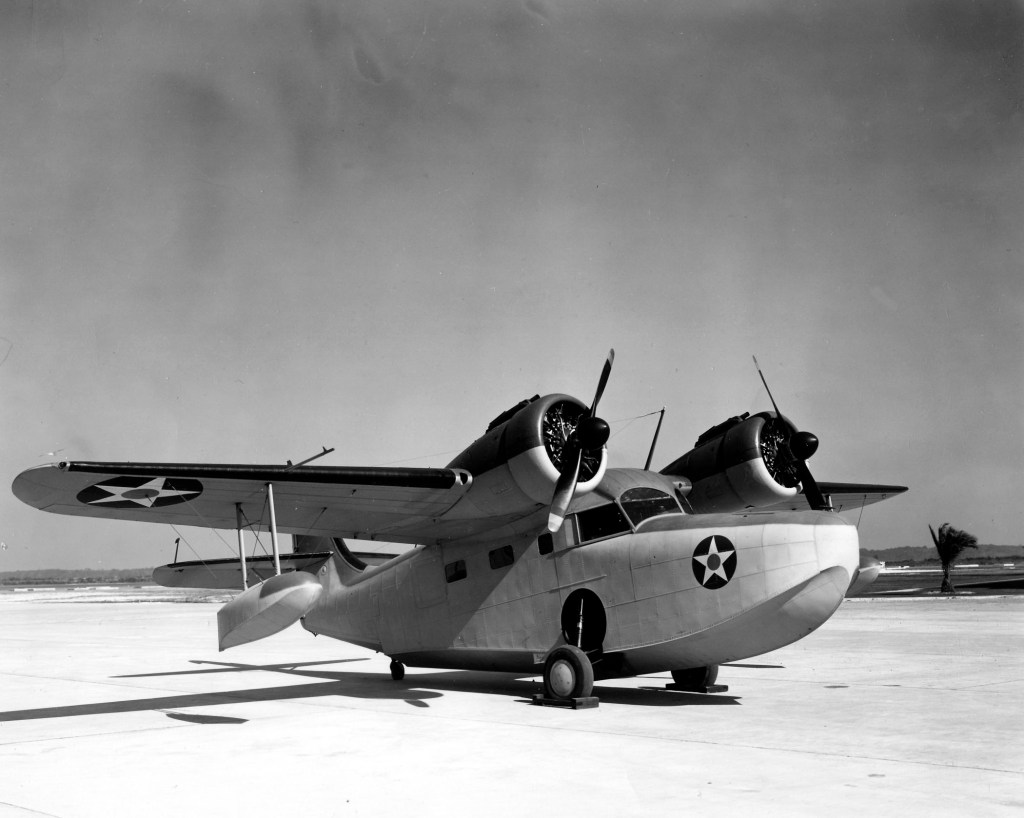
The Grumman Goose has an interesting history and, like many utility aircraft of the era, was ultimately pressed into service for military purposes during WWII. The aircraft’s history, however, starts out with a more luxurious purpose.
A group of wealthy Long Island residents, including investment banker E. Roland Harriman, commissioned Grumman for an amphibious aircraft that they could fly from their estates on Long Island to New York and back. Grumman responded with the Model G-21.
The high-wing monoplane was mostly metal construction with fabric for the trailing half of the main wing and for the flight control surfaces. The engines were mounted high on the wing keeping them and their propeller blades up and away from the water when engaged in amphibious activities. Power was provided by two 450 horsepower Pratt & Whitney R-985 Wasp Junior air cooled radial engines.
The earliest versions were equipped to handle a small number of passengers (usually 2-3) together with a bar and a small toilet. Other G-21s were equipped as air taxis with the ability to carry up to 6 passengers.
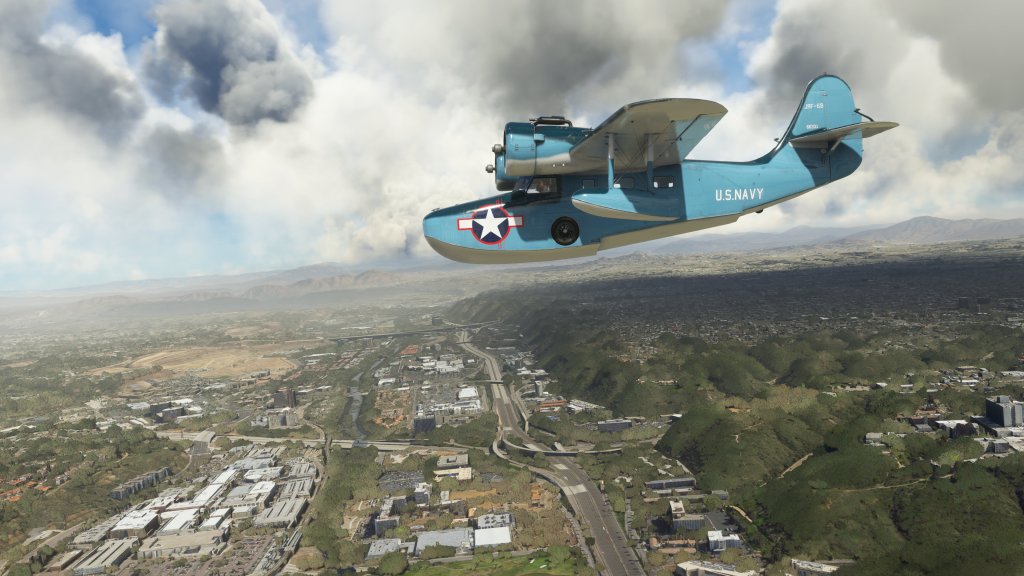
Other variants were constructed for various military applications including the US Army and US Army Air Force, Portuguese Naval Aviation, the Royal Air Force, Royal Canadian Air Force, and the United States Navy. It’s a USN version that Big Radials has modeled for Microsoft Flight Simulator with more spartan accoutrements in the back. The JRF-6B, as it was known in USN service, was primarily intended for navigational training and a transitional aircraft to other amphibious types.
Features and hidden goodies
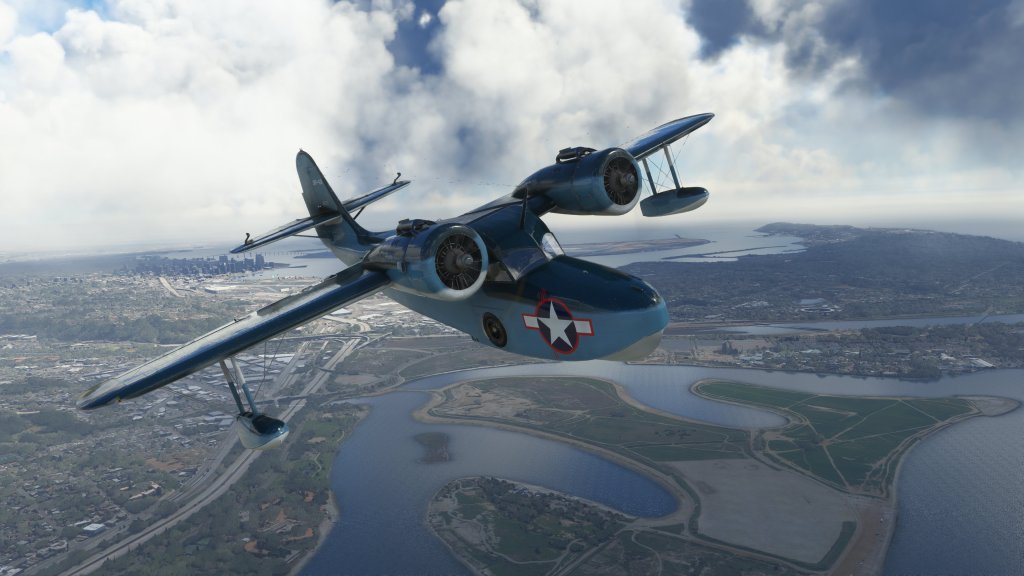
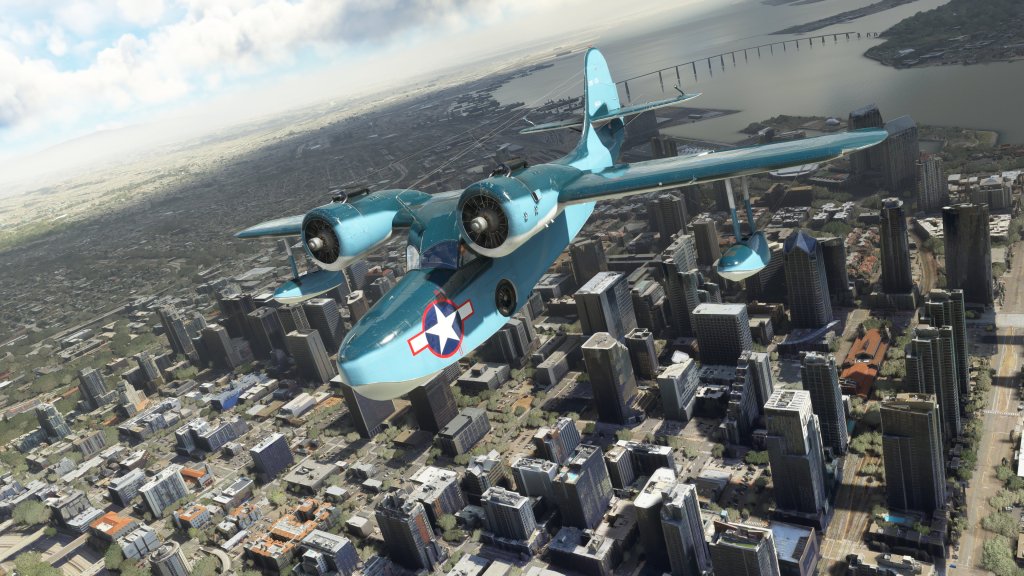
Big Radials checks all the basic boxes for a Microsoft Flight Simulator airplane. It’s got a highly detailed exterior, 4K textures, detailed cockpit, and an impressive soundscape.
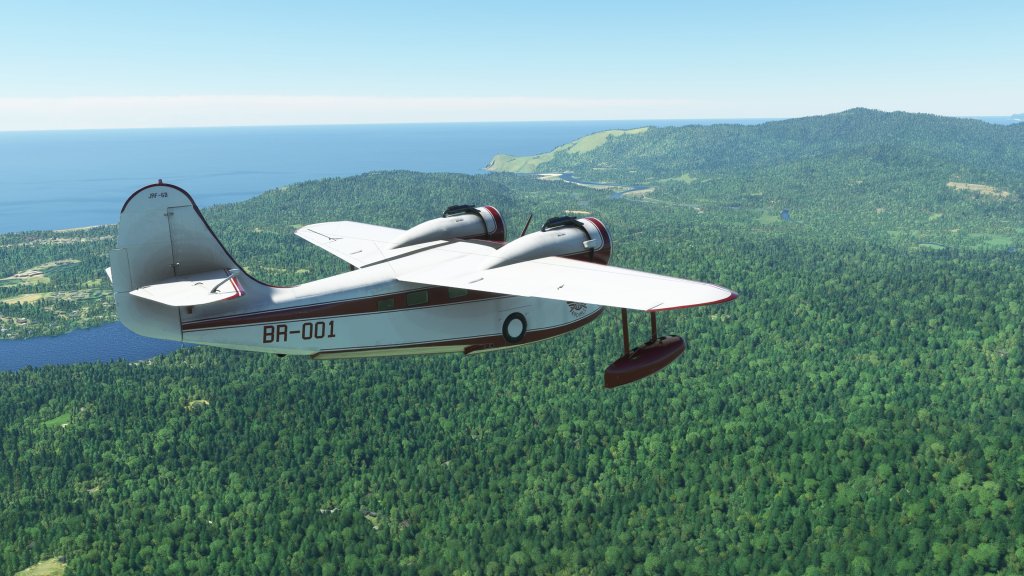
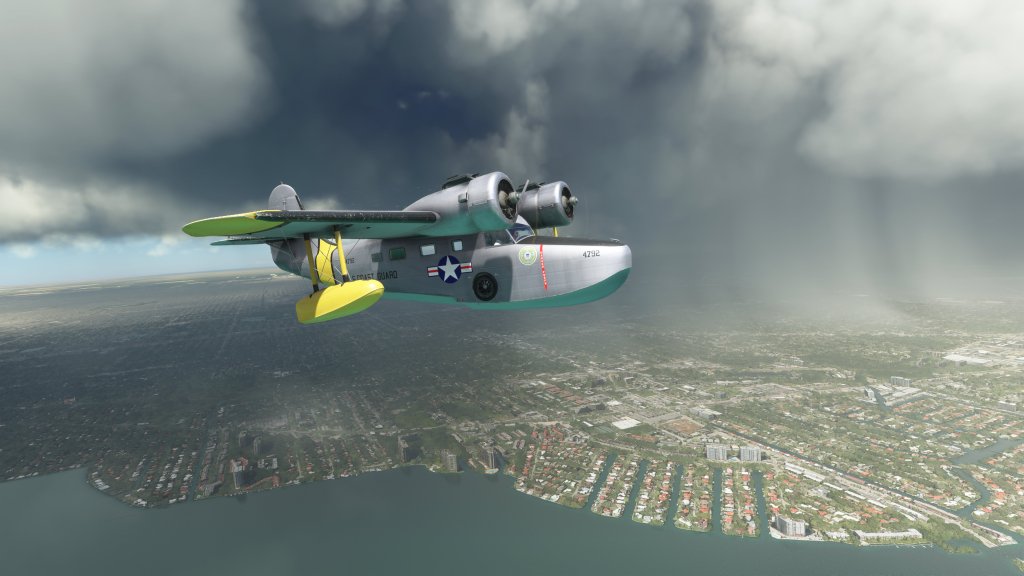
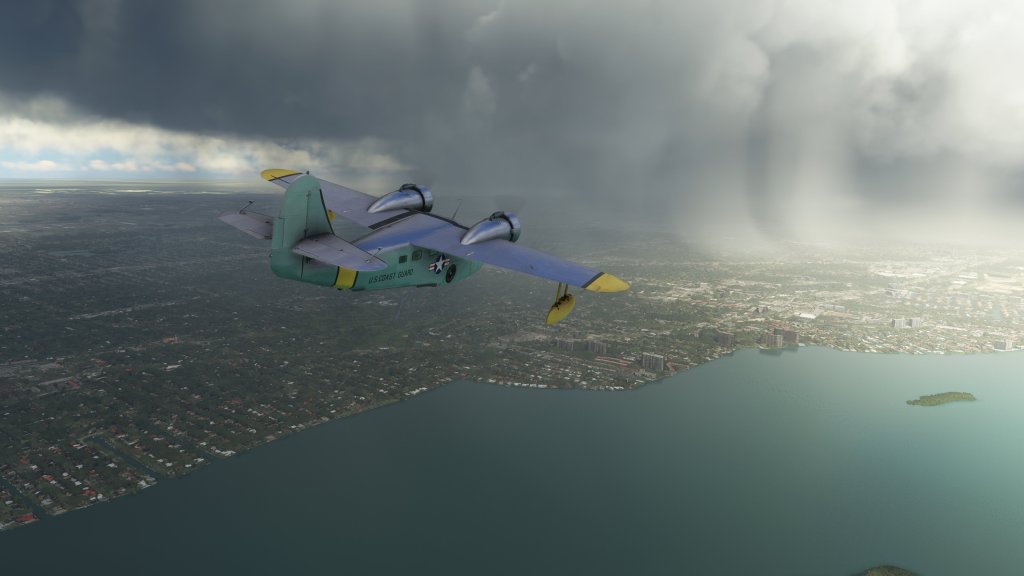
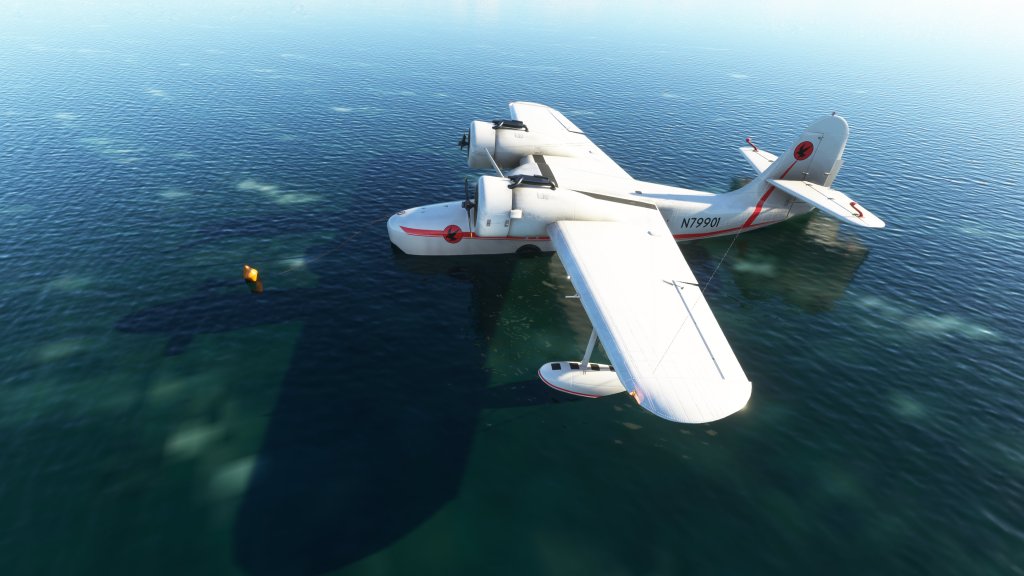
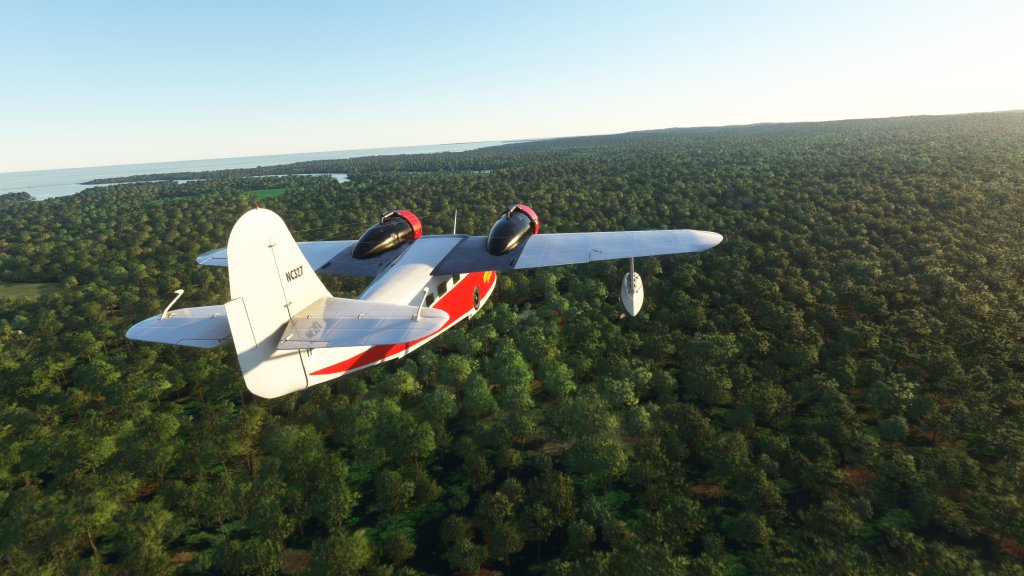
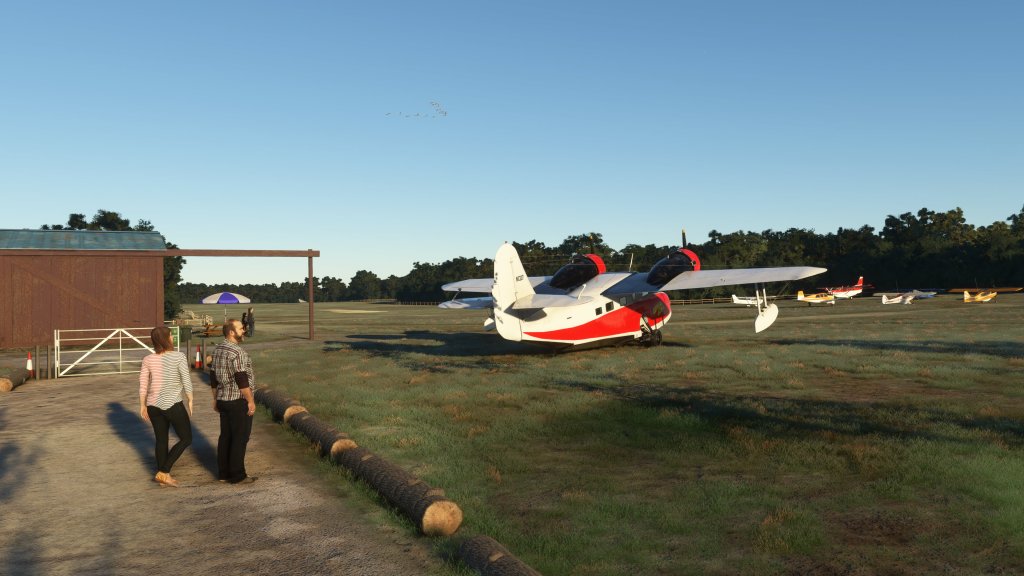
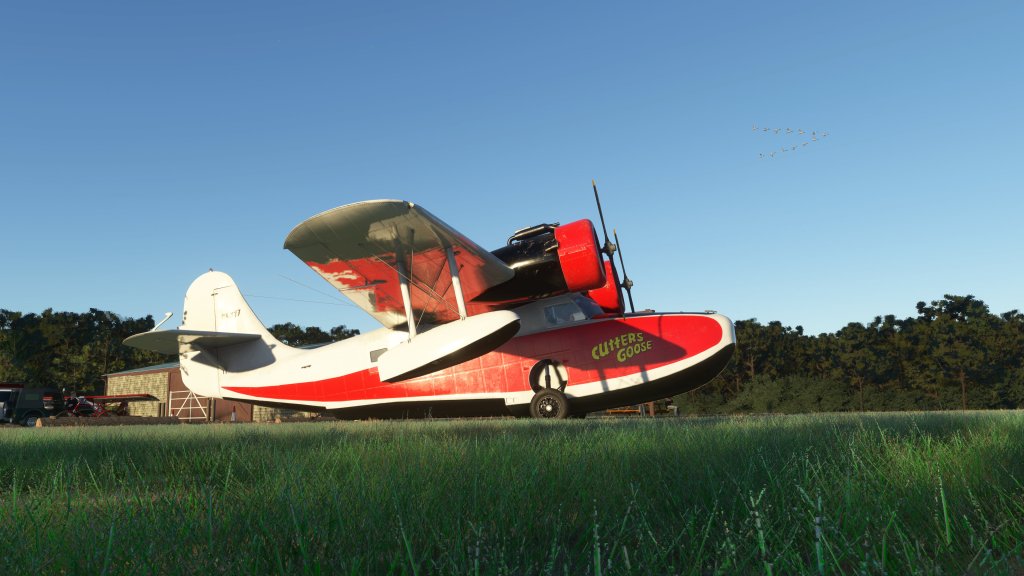
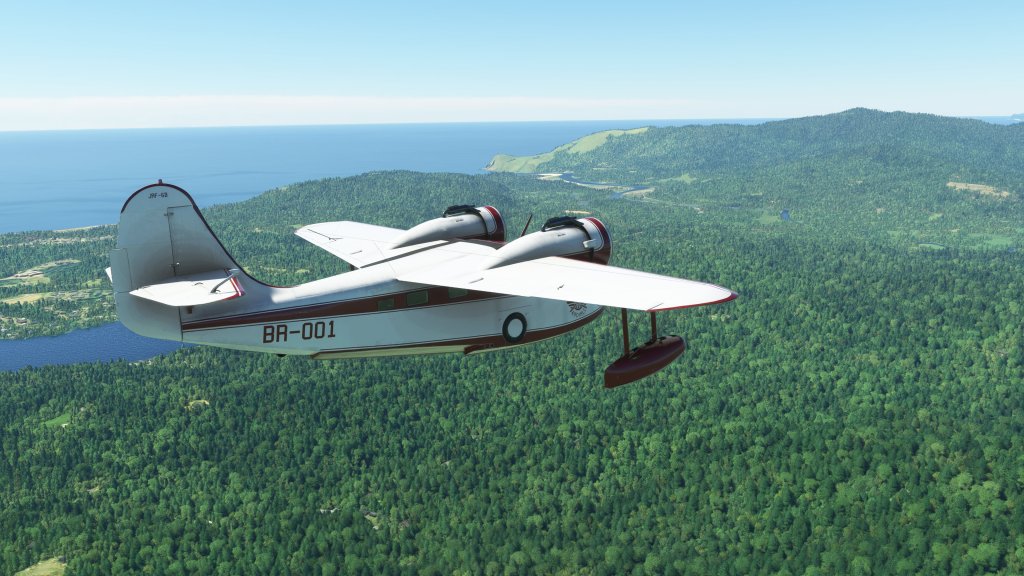
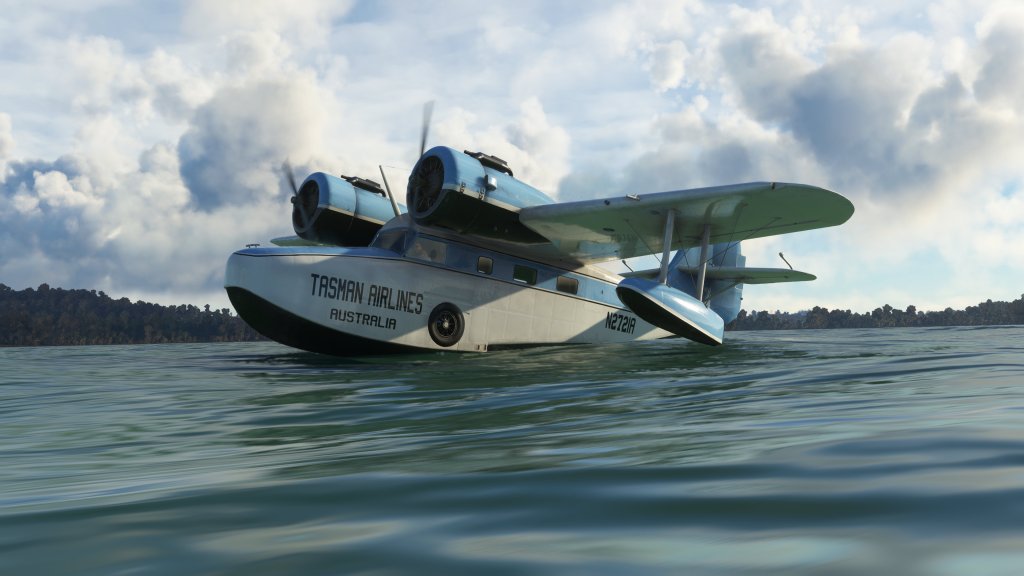
The exterior is yet another great job by the folks at Big Radials. They tend to specialize in older aircraft that have a well-worn appearance and that is achieved here with the model and with the texturing. The wear marks appear in all the right places and the aircraft, though very serviceable, also looks like it’s been in use for a long time. The standard variant comes with 7 liveries and the ski equipped version has just one livery. A few extra would be nice but the ones that it does come packed with a great and represent civil, military and the fictional “Cutter’s Goose” from 1982-83 adventure television series Tales of the Gold Monkey.
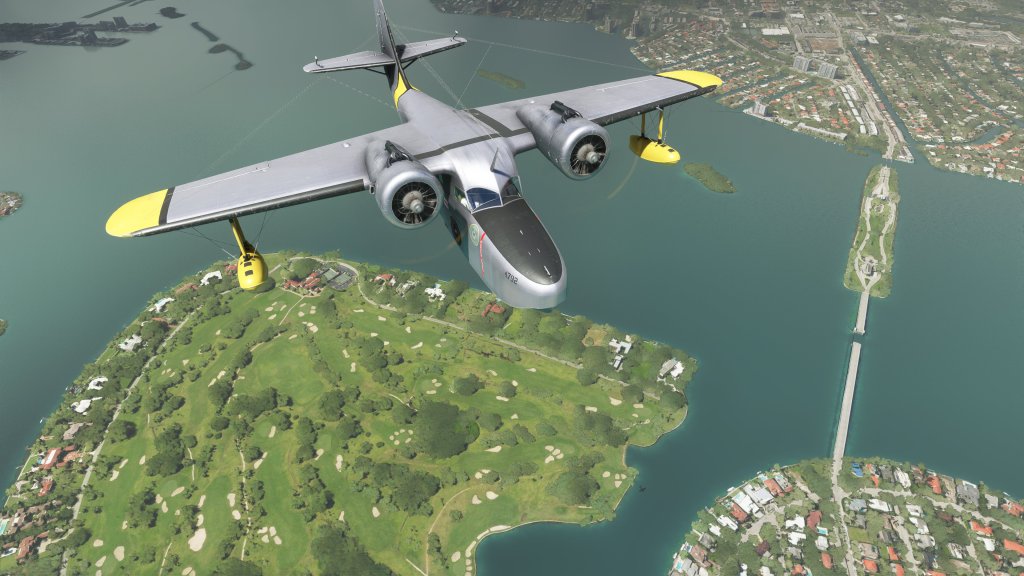
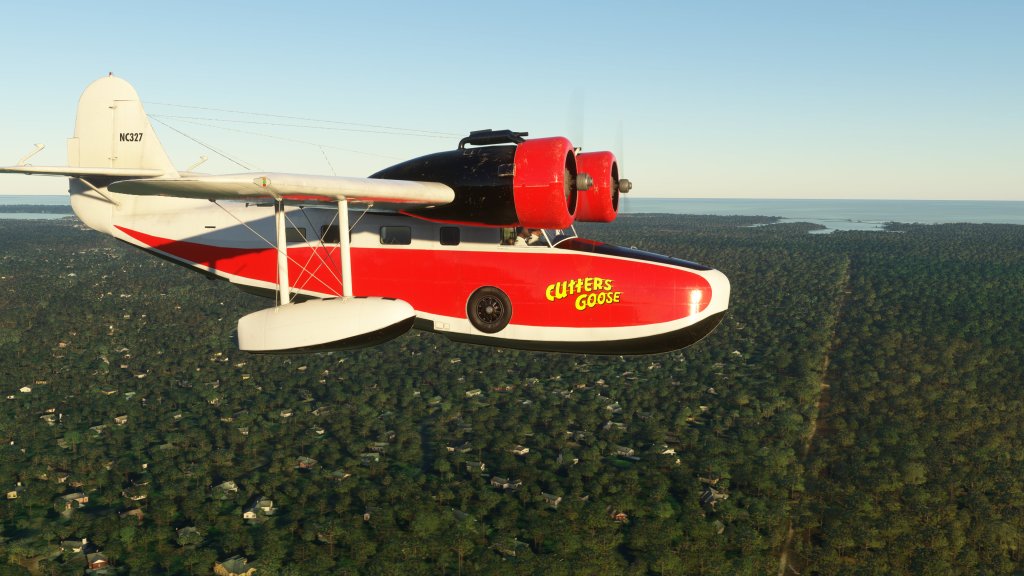


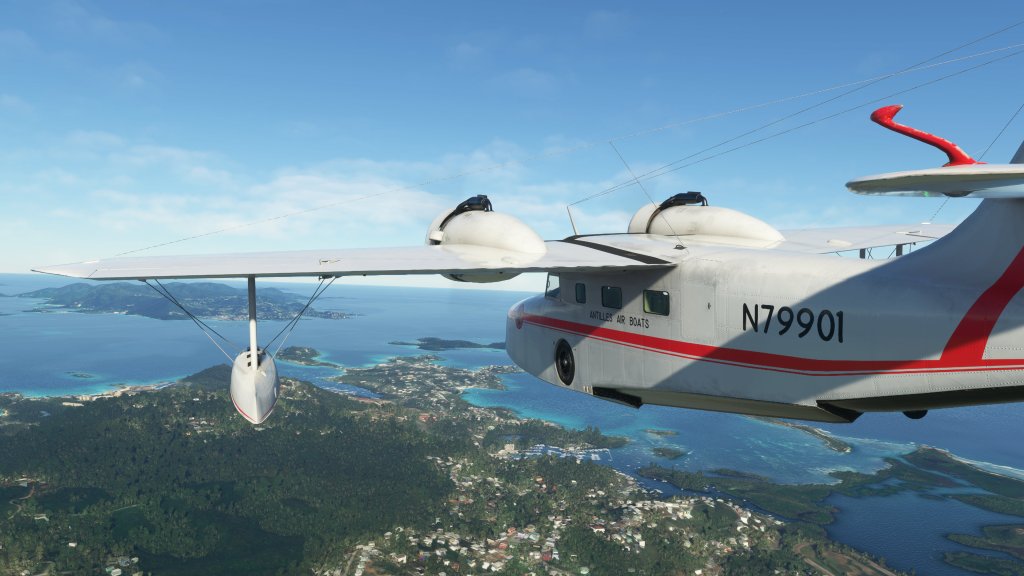


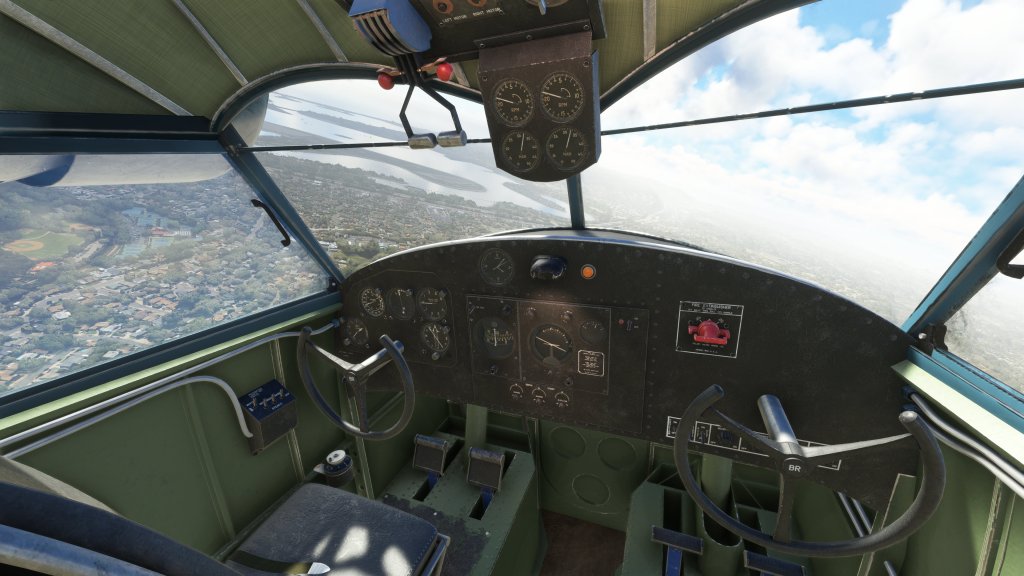
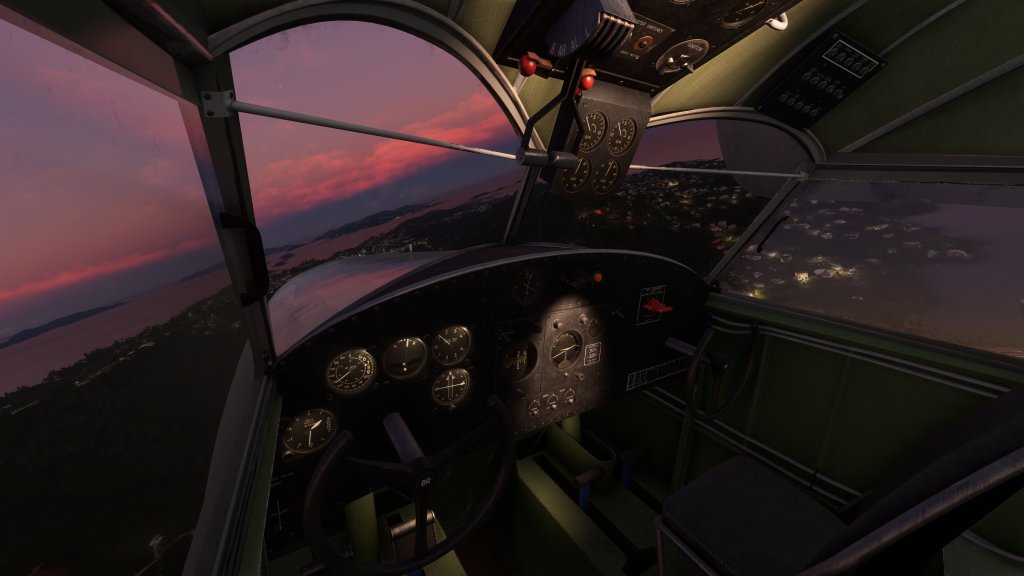
That kind of detailing applies to the interior as well which receives all of the same treatments. It is a very basic cockpit which, on the face of it, doesn’t have a lot of stuff in there. It’s mostly hard edges and a panel of instruments. It’s not a mistake of modeling, this is how the JRF-6B’s cockpit really is. There are civilian variants that are also more modern that have a much fancier cockpit. This one is all business and if you’re a warbird fan you’re going to feel very much at home with both the looks and with the instrumentation.

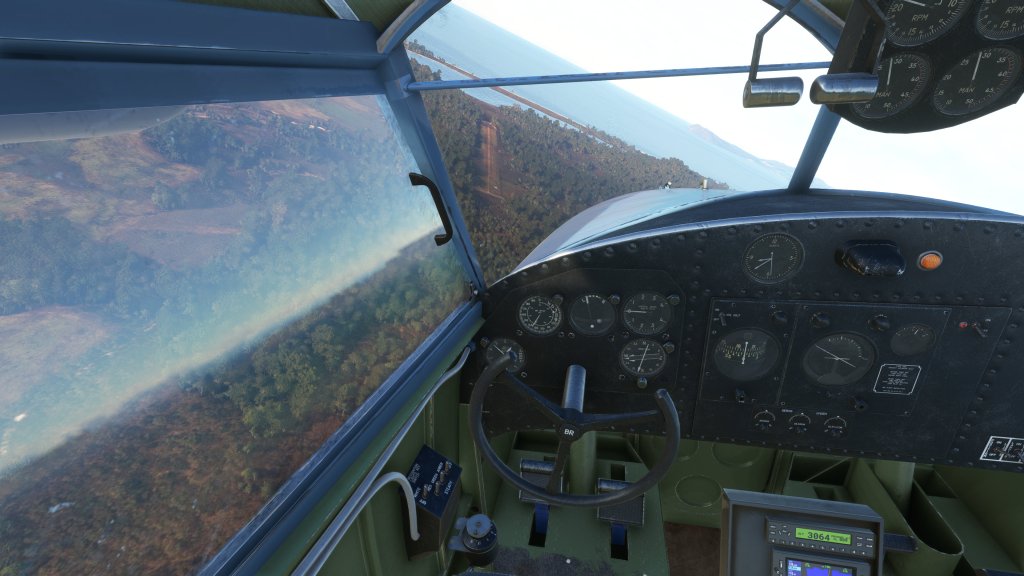


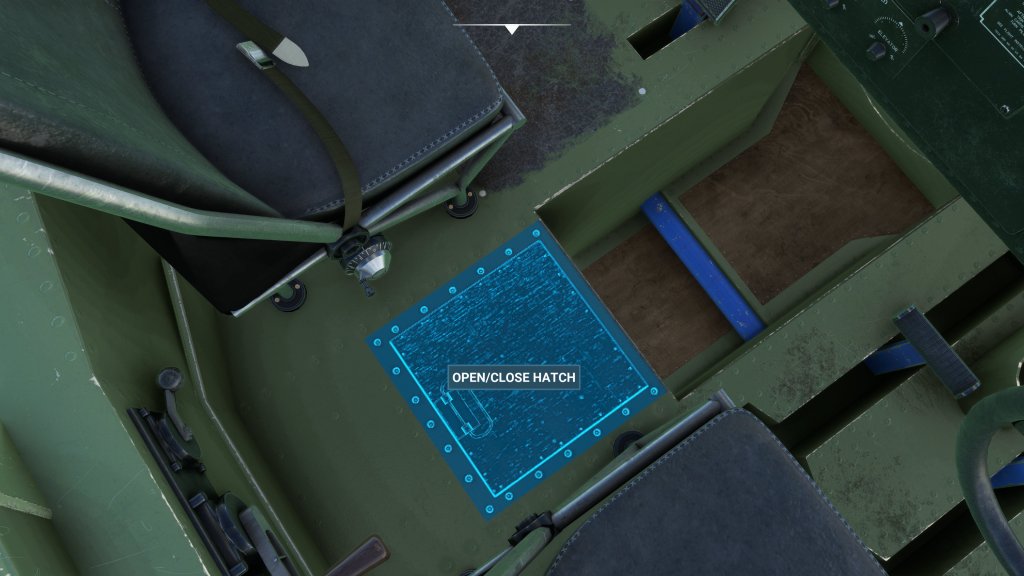
As is Big Radial’s way, the Goose does come packing with some hidden instrumentation that takes this beyond what it appears to be on the surface. An access panel located between the pilot and co-pilot seats can be opened and a panel pulled out that has a GNS530 GPS as well as radio and transponder. If you wanted to take this on VATSIM I suspect you could! The GNS530 doesn’t appear to be the usual one, visually, and it has a bit of a rough appearance. Its fully functional and fits in well here. There’s also toggle switches that adjust the appearance of the yokes (leather wrapped or plain), drops an anchor and enables a fictional water rudder assist.


I also wanted to mention that the cockpit has windows into the landing gear well which lets you check on the status of the manually retracted landing gear. In the sim you still press the usual button and you can hear the gear being wound up and down.
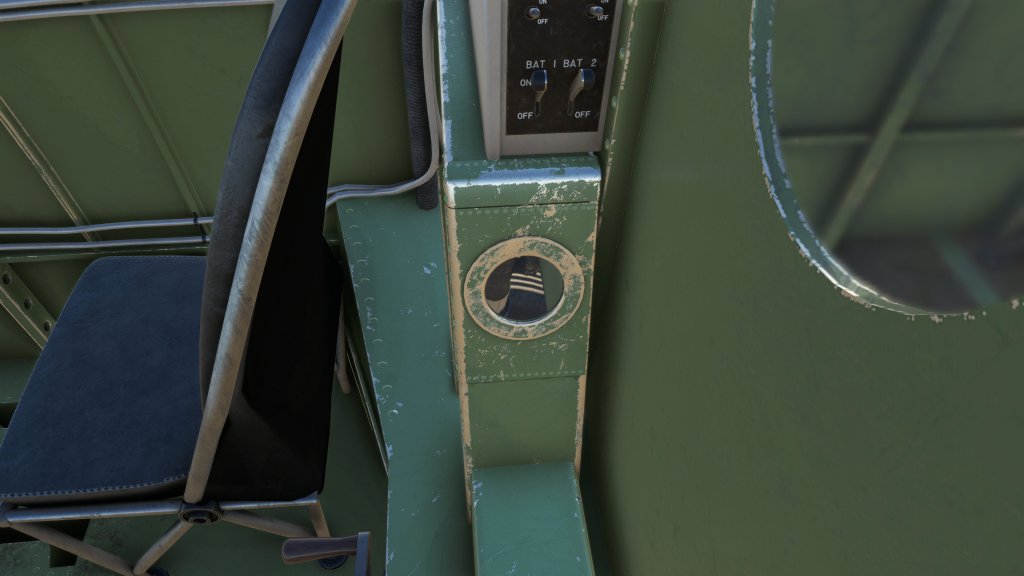
The sounds on the Goose are also generally excellent. The one gripe I have is that the rushing air sound doesn’t appear to play when you do a powered-on stall. Powered off stall has a familiar woosh that really communicates what the airplane is doing. Everything else here is golden sounding from the character of the Wasp Junior engines to the various clicks and clanks from everything in the cockpit.
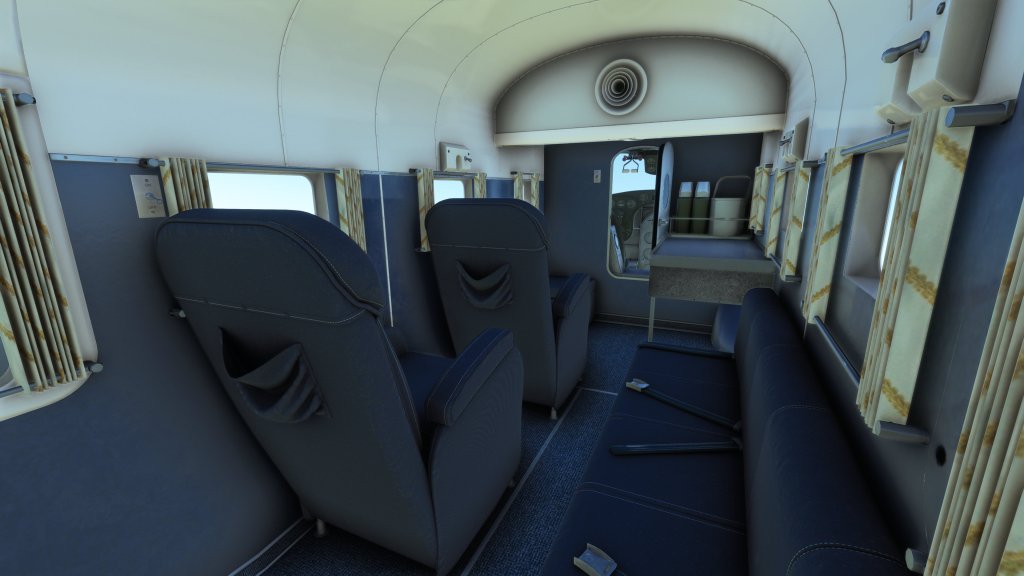
There’s also a lot of interactivity here. The forward compartment is accessible via a door which you can click the handle to open. Another click and you’ve opened the forward hatch. The same applies behind the pilots with a frosted glass window on the door, a passenger compartment with yet another clickable door that contains a cargo and toilet. The exterior door also opens and a ladder can be moved from cargo area to the exterior of the airplane for easier accessibility. Oh… and it also has a deployable fishing line and stool that goes on the top of the airplane for when you’re parked on the water. Love those fun little details!
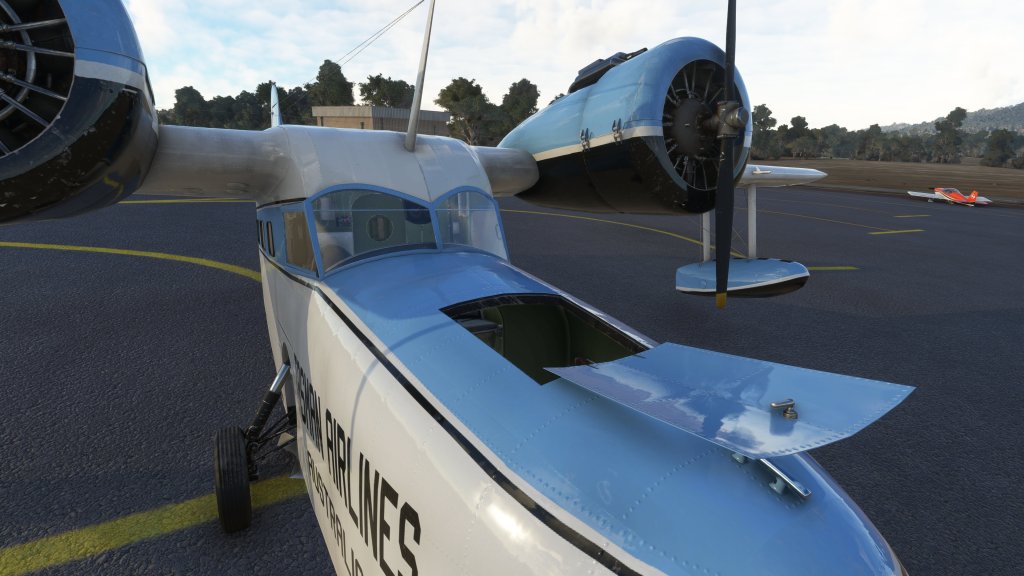

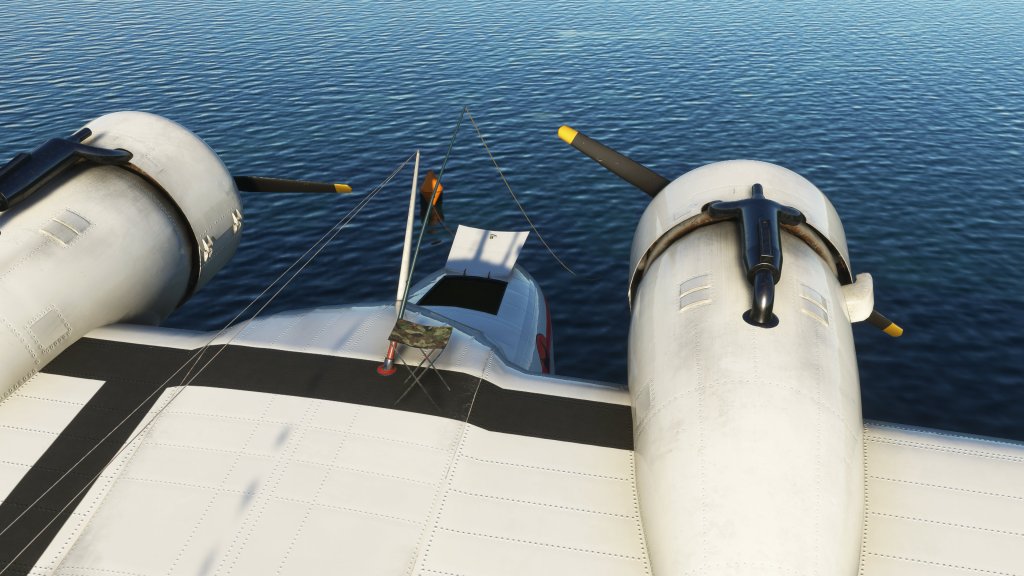
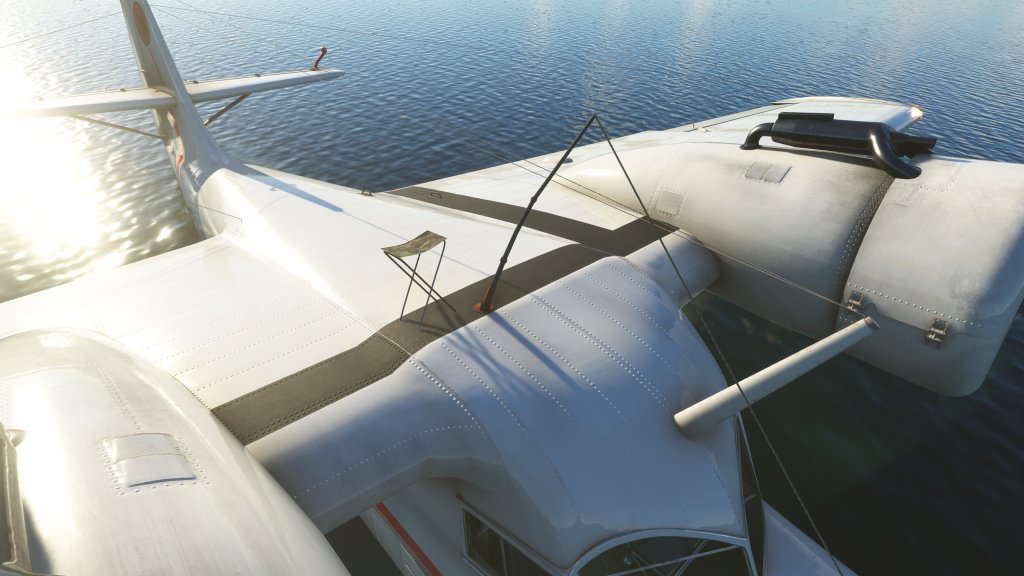
Another option lets you choose the type of wheel hubs.


Another key feature. Failures! A lot of MSFS aircraft don’t have them but this one does.! You can really cook your goose (pun intended!) if you overheat and overpower the engines. Your engines will trail smoke, they will fail, and you’ll fall from the sky.

The Goose also comes with its own bush trip and ample documentation to get you flying the plane.
Flying… or staying ahead of the Goose
Another plus on the scorecard here is how engaging the Goose is to fly. It has a kind of split personality in that it’s a bit of a lumbering beast with slow roll control and moderately effective elevators and a strong rudder. Keeping this aircraft coordinated and well in balance takes some effort and because it’s a seaplane and a reasonably good rough field airplane you can take it into smaller airports. This is fun but it also increases the chances of crashing into something if you’ve not done things right.
Speaking of not doing things right, start-up requires some careful management too. A wobble pump builds fuel pressure and working the throttles back and forth to prime the engines is also necessary before hitting the starter buttons. It took me a bit to get there.
The Goose has a very basic autopilot system that looks like its based on a Sperry autopilot. You first establish the rough position of the airplane first making sure that its in trim and set on cruise power. Turning the system on then means using the available dials to further trim the airplane and adjust it for level flight. You also need to establish your heading first before setting the heading hold mode which will attempt to match the current heading and keep the airplane flying in that direction.
When not on autopilot the Goose likes to wonder around a bit and so you really do need to coordinate your flying and keep the nose where it’s supposed to be. Doubly so for takeoffs and landings where the usual dance on the rudder is needed like any other tailwheel airplane.
Water handling is generally good although I struggled, even with differential power, to get the airplane to turn around. It doesn’t have a water rudder which makes things harder to manage in MSFS. It does have a rudder helper located on that secret panel but I’m not sure if it was actually doing anything different as I was still struggling. Perhaps it’s the reviewer that needs to get better at seaplane handling. Either way, water landings are still terrific fun!
The Goose in the room
I have to feel a little bit bad for Big Radials who announced their work on a Grumman Goose long before we knew that yet another Goose was going to end up being in the 40th Anniversary package. Having that freely available Goose no doubt caused at least some attention to be turned away from the one that costs money. I get that.. especially these days. However, having flown both back-to-back and looked closely at the two I do want to offer some comparison, contrast and suggest that the one by Big Radials might be what you’re looking for if this type of airplane appeals to you.
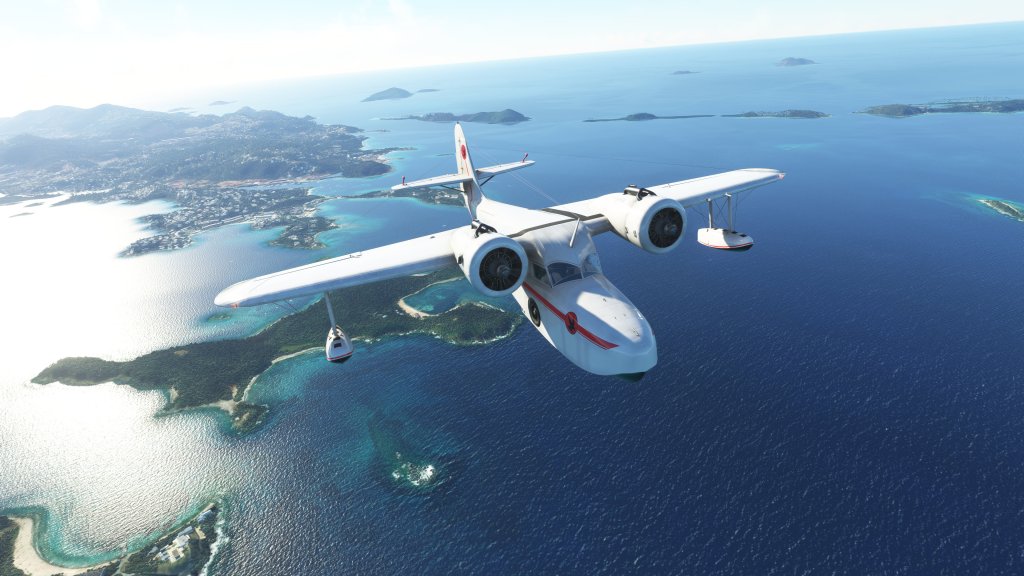
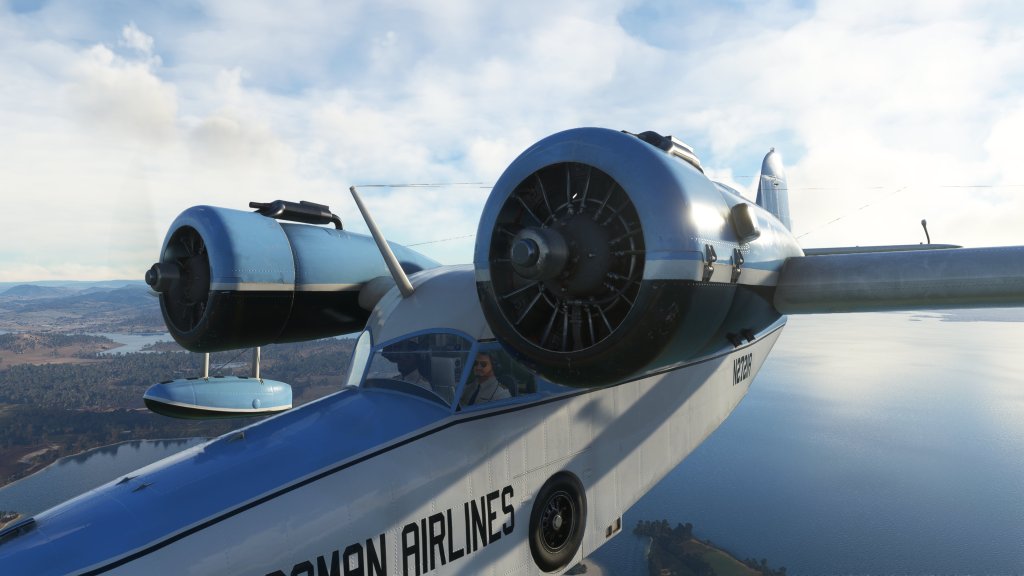
On the visual front, both Gooses (no Geese here) are actually quite similar. Especially on the exteriors where both have really good looking models and great texture work and artistry. You could look at both and, at first glance, be hard pressed to tell them apart. I do think, if given enough time, I’d eventually be able to figure out which was which and I do have to say that while I appreciate both, I think the detailing around the engines and engine cowls is just a bit better in the Big Radials.
On the inside the story is quite similar with good visuals. The cockpits are similar though not identical and the 40th Anniversary Goose has a luxury passenger compartment with one door accessible and the other one permanently cracked open – enough to see the toilet but not move the camera in there. Big Radials has put more features and more details into theirs with more doors that open and a somewhat more complex cockpit that includes controls behind the pilots which appear to be simpler/different on the free version.



The handling is a bit different too and 40th Anniversary Goose struggles with what some tail dragging aircraft do in MSFS with some genuinely weird behaviour on takeoff. Particularly in a crosswind, the free Goose makes itself into a weird weather-vane and then goes off on an uncorrectable angle. The Big Radials version feels more controllable but also livelier and more interactive. Taxiing the Big Radials one feels solid with the aircraft wobbling convincingly back and forth from engine torque while the free one wobbles so much that it feels like it has a flat tire.
Big Radials also packed their Goose with the aforementioned secret compartment that gives you the GPS, it has a Sperry or Sperry-esq autopilot system, and there’s generally more interactivity from the forward compartment to the rear cargo/toilet area to the opening passenger hatch and more.
So, ultimately, I think Big Radials has the better Goose. It handles better, it has more features, and it looks as good or better than the one that came free with the 40th Anniversary. If you love the Goose or this type of airplane, its probably worth it. If you just want to noodle around in a Goose for 20-minutes and move on then I’d say the free one will suffice.
Final thoughts
Although overshadowed by other releases, Big Radials manages to produce slightly quirky and off-beat aircraft options that Microsoft Flight Simulator airplane fans should absolutely not miss out on. The Goose, much like their Noordyun Norseman that I recently reviewed, is packed with value including a bush trip, engine management and failures, and some hidden avionics that make the aircraft more accessible to those wanting GPS and radio transponders and communications.
This historic representation of the Grumman Goose is well realized, its fun, it’s simple, and if you like this kind of airplane you should absolutely consider it for your next aircraft purchase. The Big Radials JRF-6B Goose can be purchased on the Marketplace or via their website for $30.00 AUD or roughly $20.19 USD at time of writing.
Screenshots












 Stormbirds
Leave a comment