
I love bushplanes and can’t get enough of them in Microsoft Flight Simulator. I missed out on getting Got Friends PZL-104 when it released but now that I’ve had a chance to check it out for myself I regret not giving it more attention back then. In this review I’ll look at the visuals, the sounds, the overall package, and how this airplane flies. This is the Stormbirds review of Got Friends PZL-104 Wilga!
Disclaimer
Got Friends sent me their PZL-104 Wilga for Microsoft Flight Simulator in exchange for a review. As is my policy, I always disclose when a developer has sent me something to review. As is also my policy, I write what my experience is like and share it to you unedited by any third party. Got Friends gets to read this at the same time as you do.
A bit of history

Designed by Poland’s PZL (Państwowe Zakłady Lotnicze or State Aviation Works) in 1961 and 1962, the PZL-104 Wilga (golden oriole) was intended from the outset as a light utility airplane with a focus on sports and civil aviation including glider-towing and parachute training.
Initial prototypes were redesigned several times with the fuselage seeing substantial changes through the process. The slim WN-6RB piston boxer engine proved problematic and was swapped out in favour of the Ivchenko AI-14R radial engine. It spoiled the clean lines of the earlier models, but the reliable nature of the engine proved to be ultimately useful.
The robust nature of the airplane made it widely used in both civil aviation and military purposes doing everything from the glider towing it was designed for to flight training as well as liaison and light observation duties while in military service.
The Wilga was produced to the tune of roughly 1,000 models by PZL primarily. European Aeronautic Defence and Space Company (EADS) took over production for a brief time after 2001 although the company ultimately decided to wrap up production in favour of other priorities. Production ended in 2006.
In the package
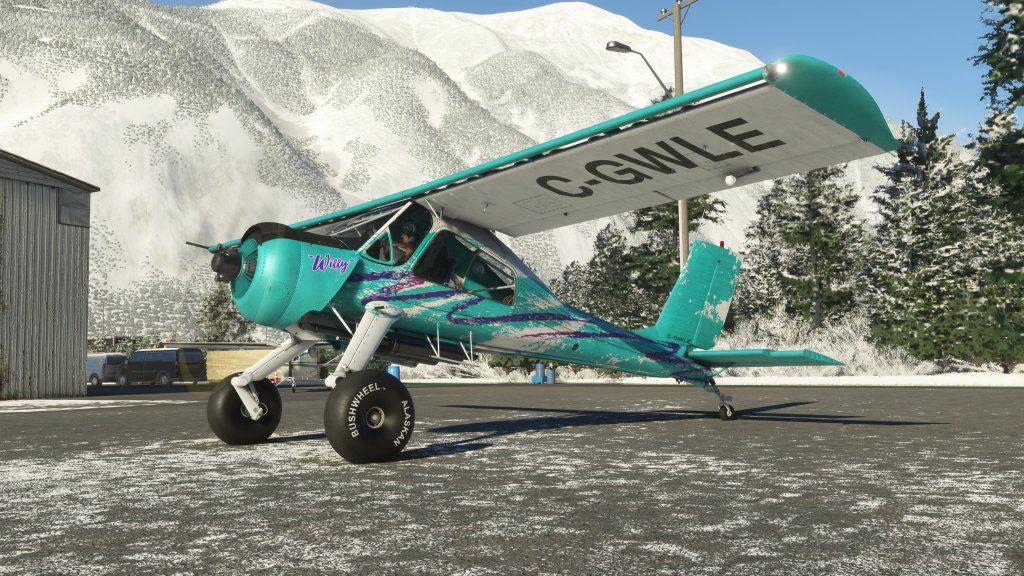
Got Friends have packaged quite a bit into their Wilga release with multiple configurations available. There’s the 35A/80A variants with 20in tundra tires and a 260hp engine, the 35H/80H with LAP-3000 floats and a 285 horsepower engine, the 35P/80P variants with 29in Alaska Bush Wheels with 360 horsepower, and the even more rugged 35X/80X variants with 35in Alaskan Bush Wheels, 450 horsepower on tap and modern avionics – a digital attitude indicator, digital clock, Garmin GTR-225, Garmin GTX-330, and a Garmin Aera-760. The 35 variant has a Polish cockpit while the 80 variant has an English cockpit.
Some of these Wilga variants have an autopilot with a limited ability to hold level flight and make course corrections while others are more basic and lack any kind of autopilot. The great news is that you can fly this in a classic 1960s/1970s era configuration with limited horsepower or you can more than double the horsepower and fly some extraordinarily rugged airports with the best of the bushplanes out there. Top speed performance varies slightly but climb performance on the high horsepower versions increase dramatically.
All variants have the option for realistic engine operation. With that feature checked, abusing the engine will cause it to fail. You’ll get some rough running for a bit and then ultimately it will die and nothing you can do will bring it back to life. It’s a great feature that is still relatively rare on most MSFS airplanes but it is so good to see here.
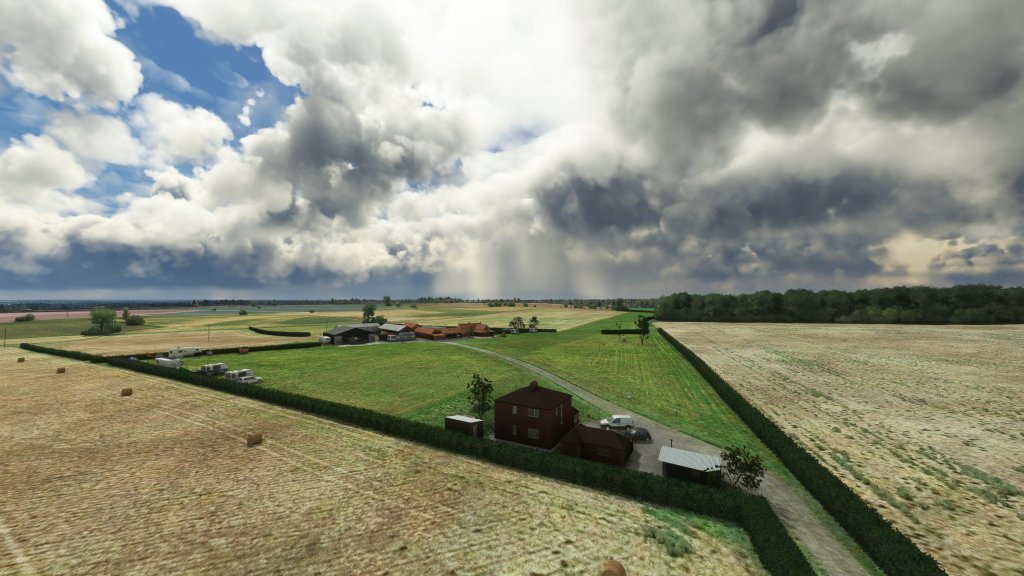
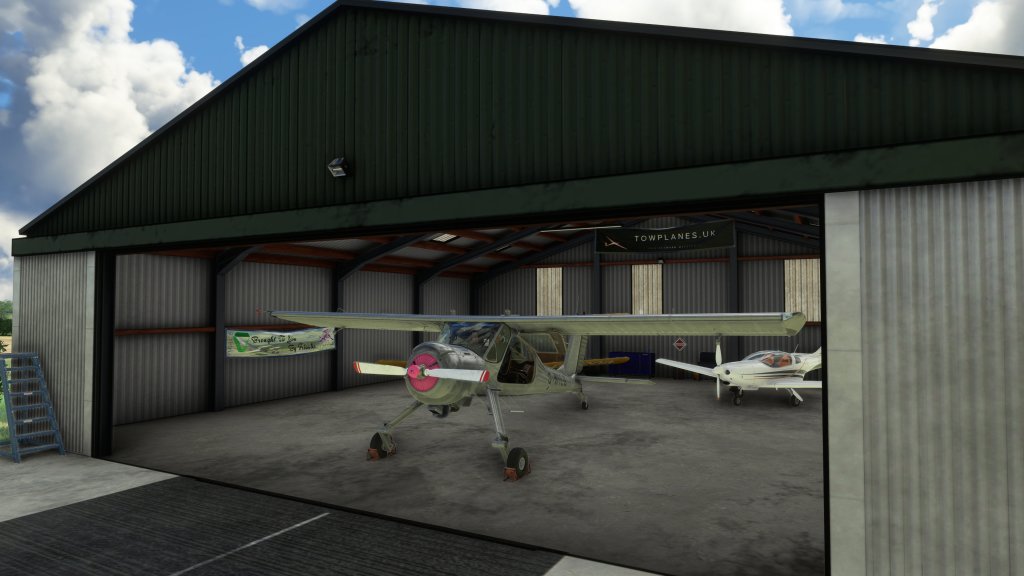
Got Friends have included more into this package than just the airplane too. It also includes Forwood Farm, EGH2, located in the middle part of the United Kingdom. This airport, handcrafted by Emerald Scenery Design, includes a hangar with interactive doors that open and close and some really cool scenery details. Very nicely detailed, this is a small farm strip so be prepared to do some rough field operations – as rough as it gets in MSFS anyways!


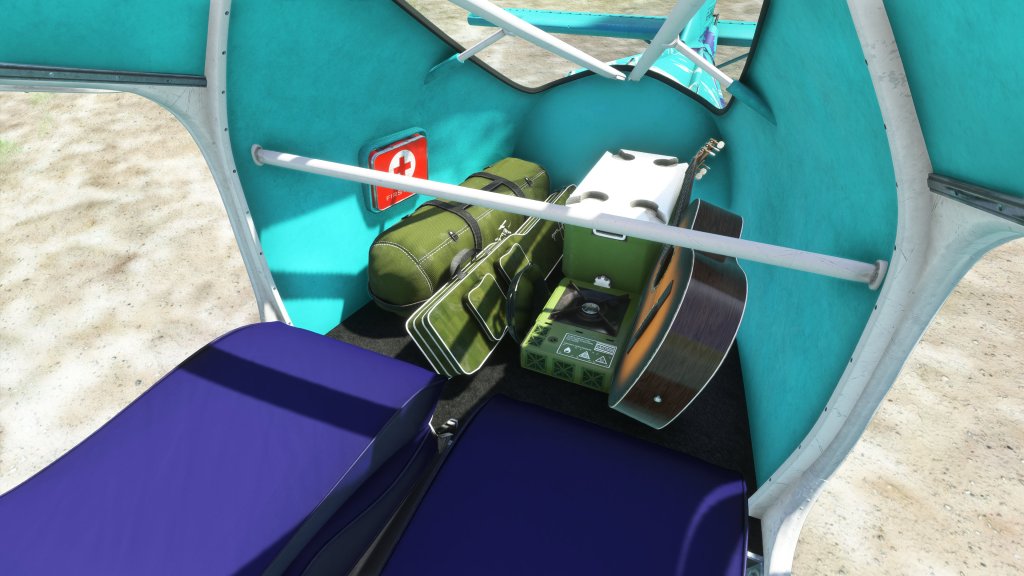
You can paradoxically expect the unexpected with Got Friends and here we have some fun extras in the form of the cargo. Using the available clipboard/options menu, you can unload the cargo in the back storage area with a portable grille, a cooler, camping light and even a guitar. Its fun and goofy and I love it!


Visuals and sounds
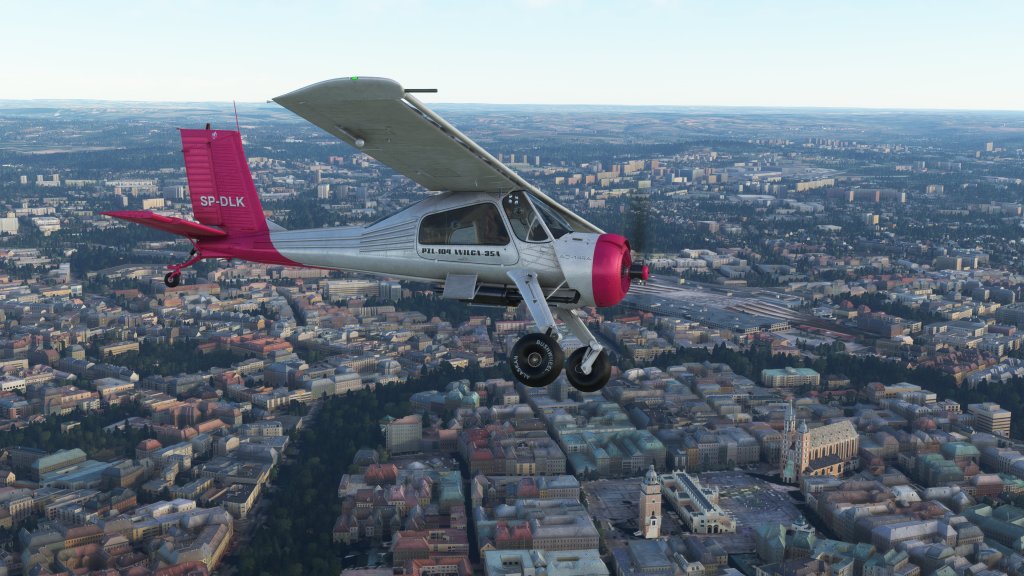
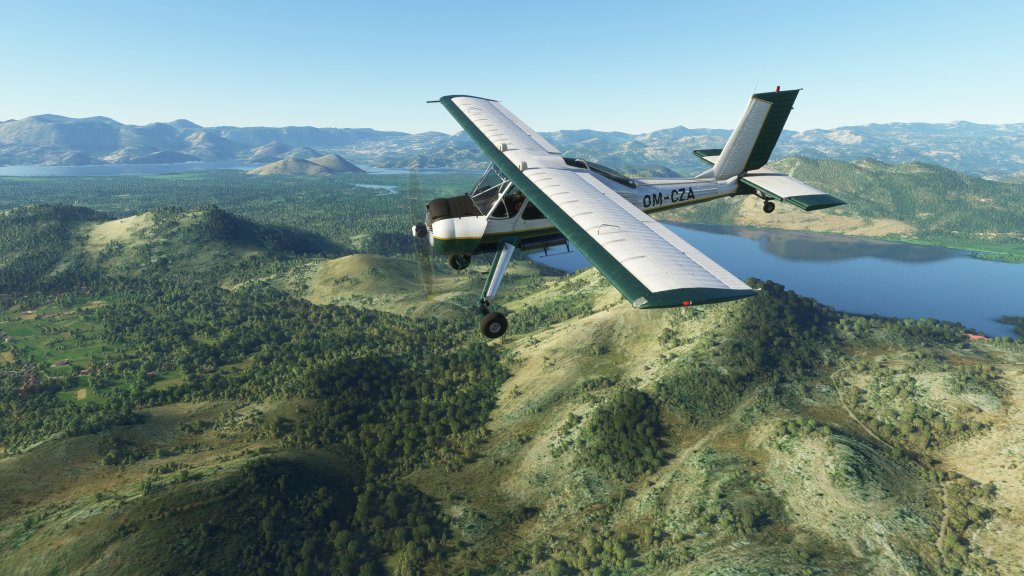
I’m really impressed with the way that the Wilga looks. In a sim full of impressively designed and detailed airplanes, Got Friends shows that they are up there with the best in the business in my opinion.
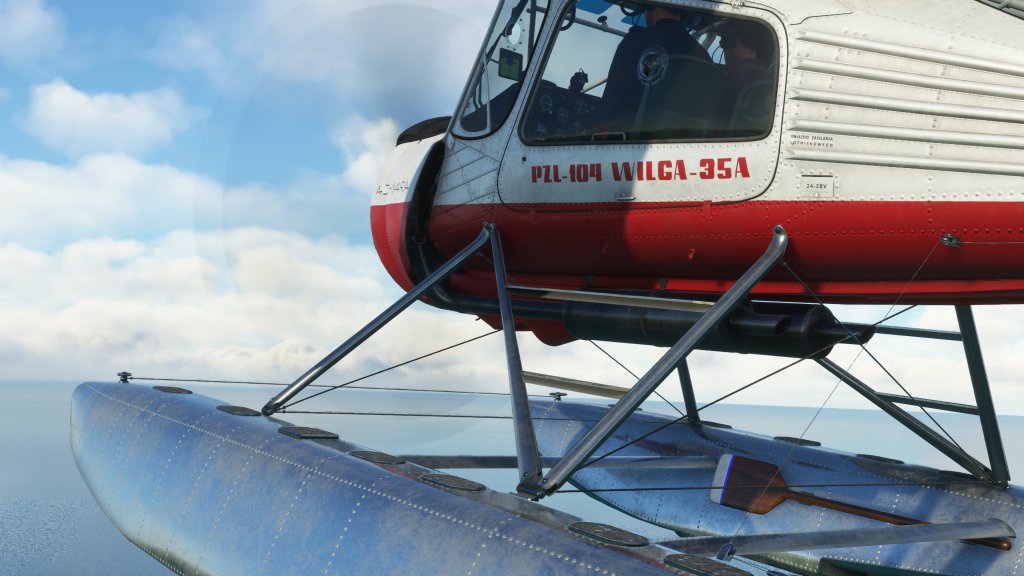
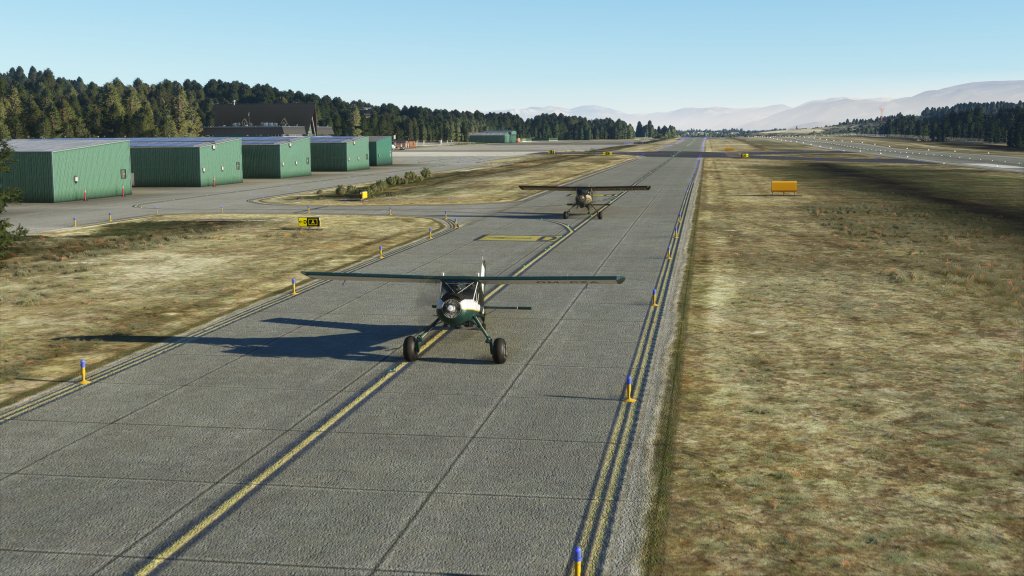
The Wilga is highly detailed and has a lot of small details on the skin of the aircraft as well as all around it. The exhaust stacks are exposed and beautifully detailed. The wing and fuselage surfaces are not smooth as you may find in a modern carbon fiber aircraft but have a lot of small details everywhere. It makes the Wilga look the part of a 1960s era light utility airplane. Most of the liveries sport a little wear and tear on the outside giving this a used but well maintained feel.
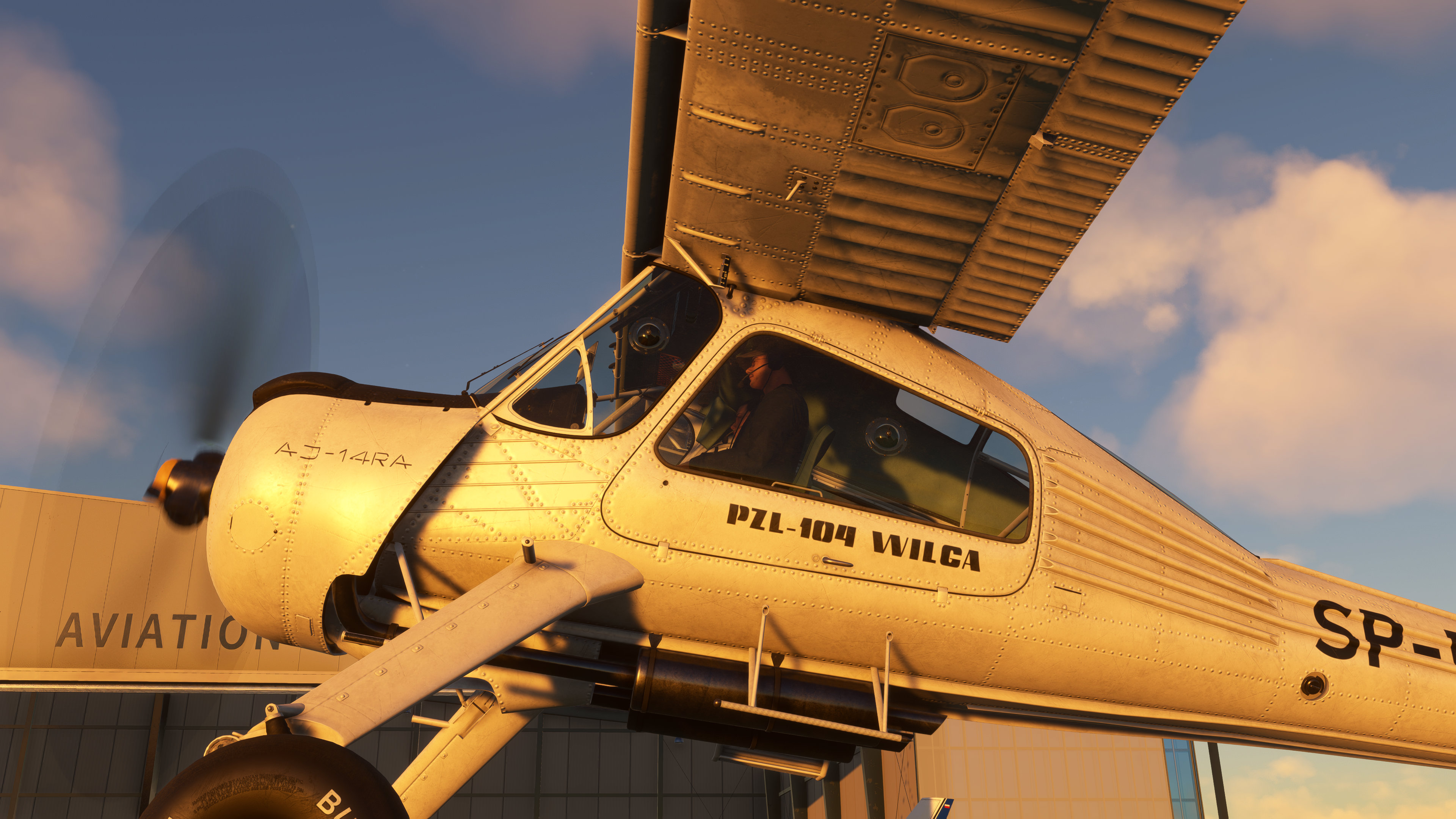

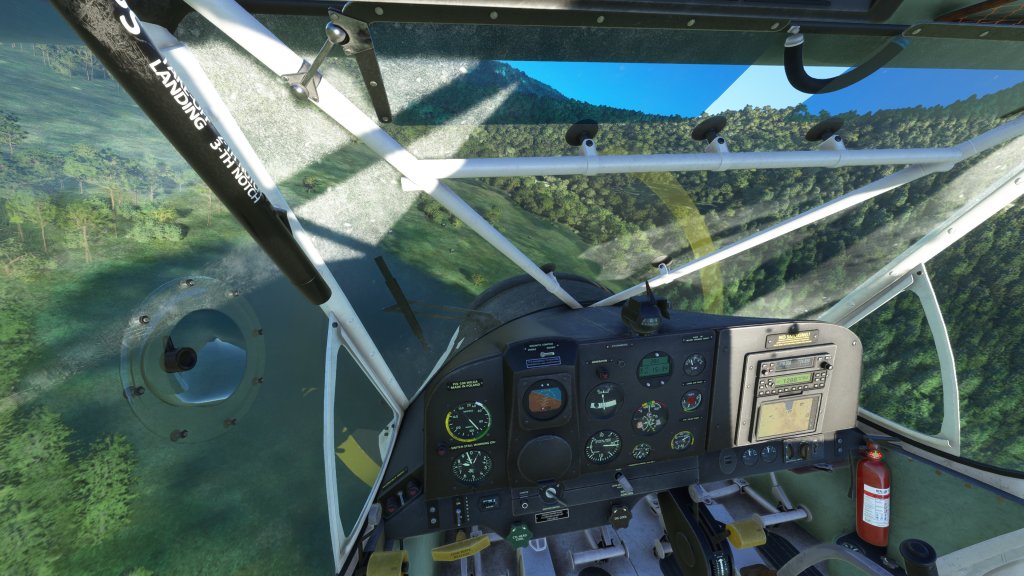
Doors open and close, window vents open and close, and virtually everything in the cockpit is animated. Even the passenger seats fold up and down. The engine mount subtly shakes around on its own showing off a subtle but impressive vibration effect. That technology is shared with the overhead storage netting which has a headset and some sunglasses that shake around as the aircraft moves. You can even choose to have the doors on… or off via toggle switch in the cabin. Nice!
There’s a lot of little details everywhere you look and it shows the love and attention that Got Friends have put into this airplane.
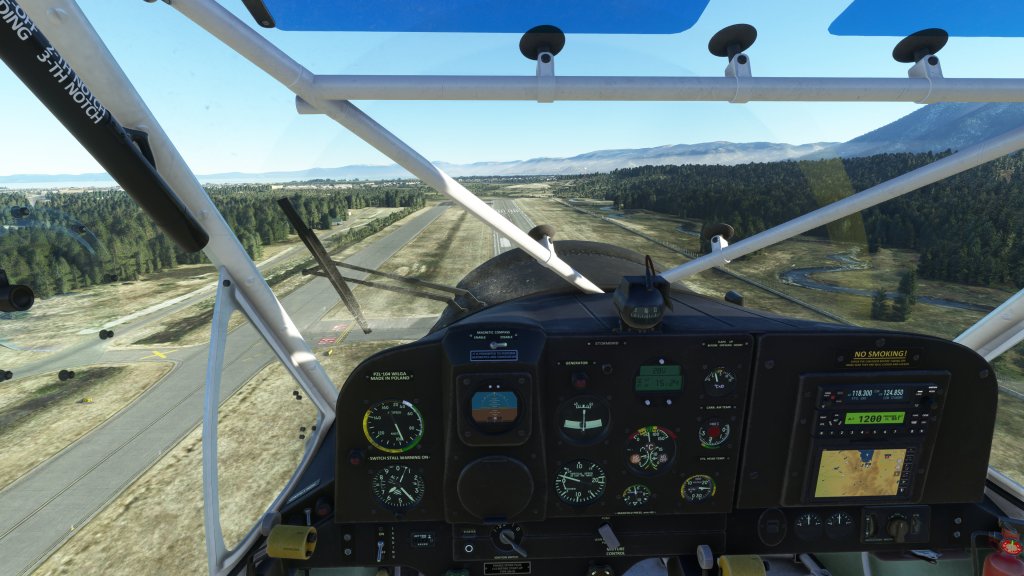
The cockpit is a spartan and utilitarian place but Got Friends have managed to get the detailing just right. Everything looks well used with lots of wear and tear but at the same time everything is very easy to read and instruments are crisp, clear and pop when you need them to.


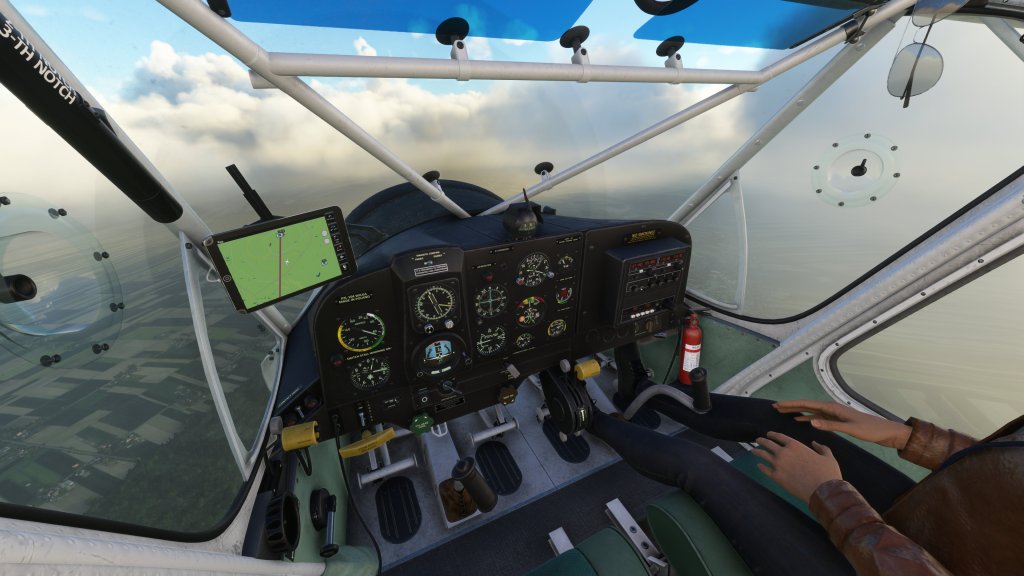

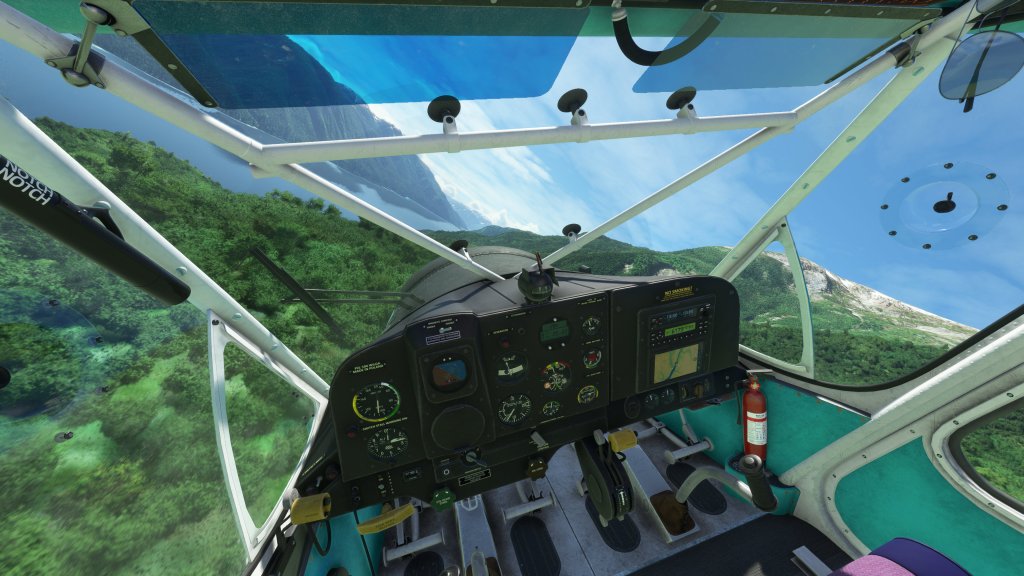

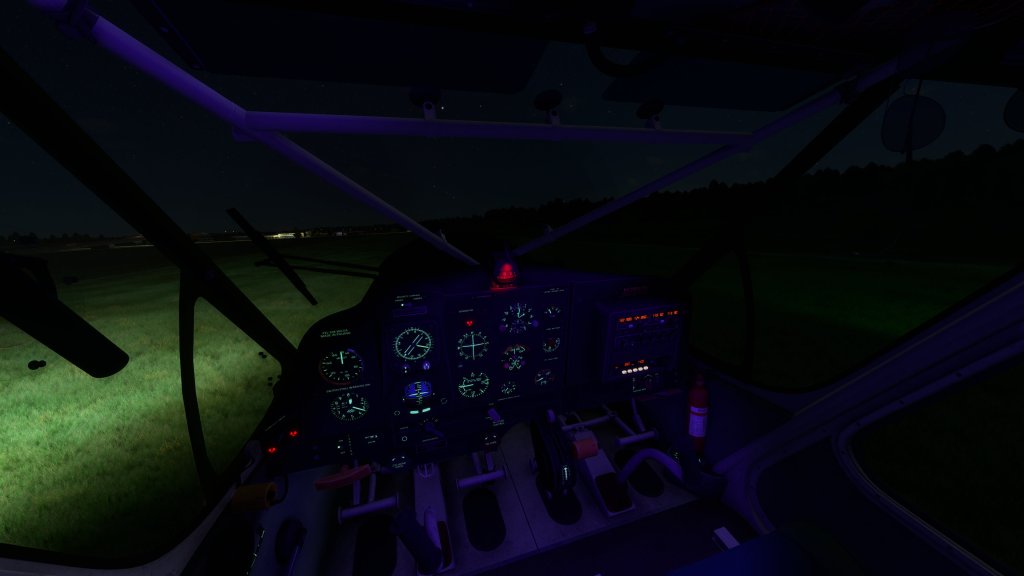
The night time UV lighting is also very cool looking!
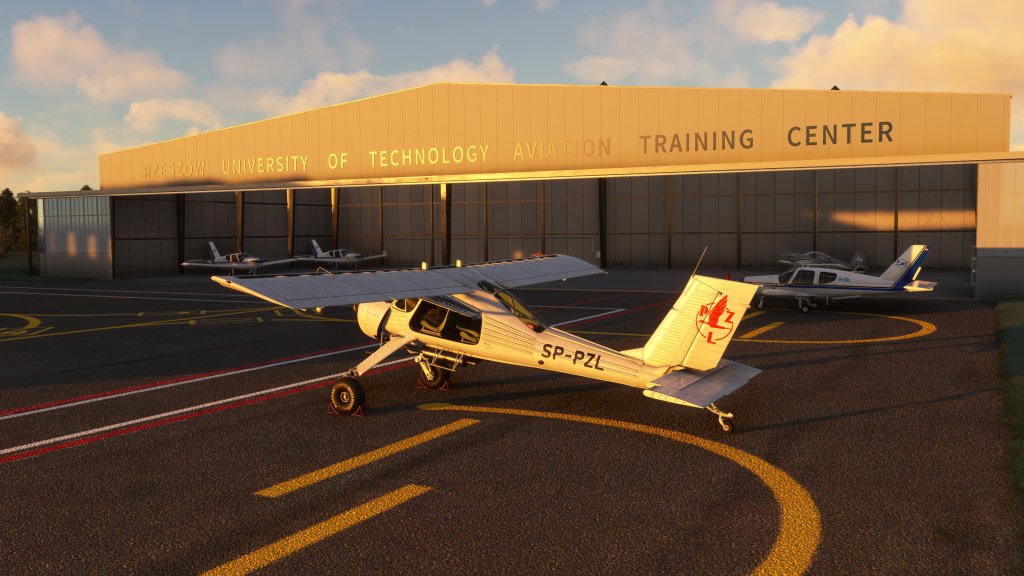
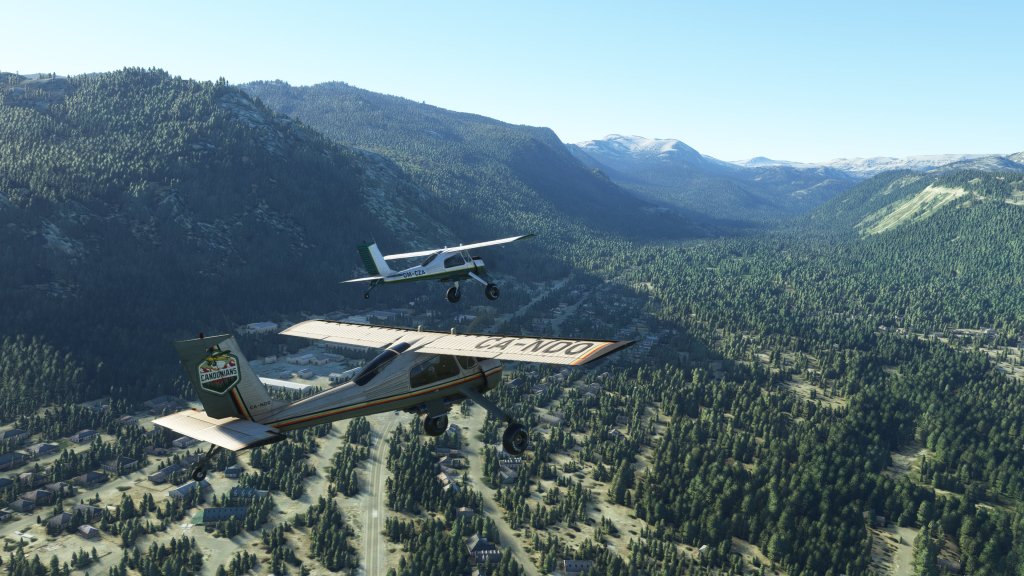
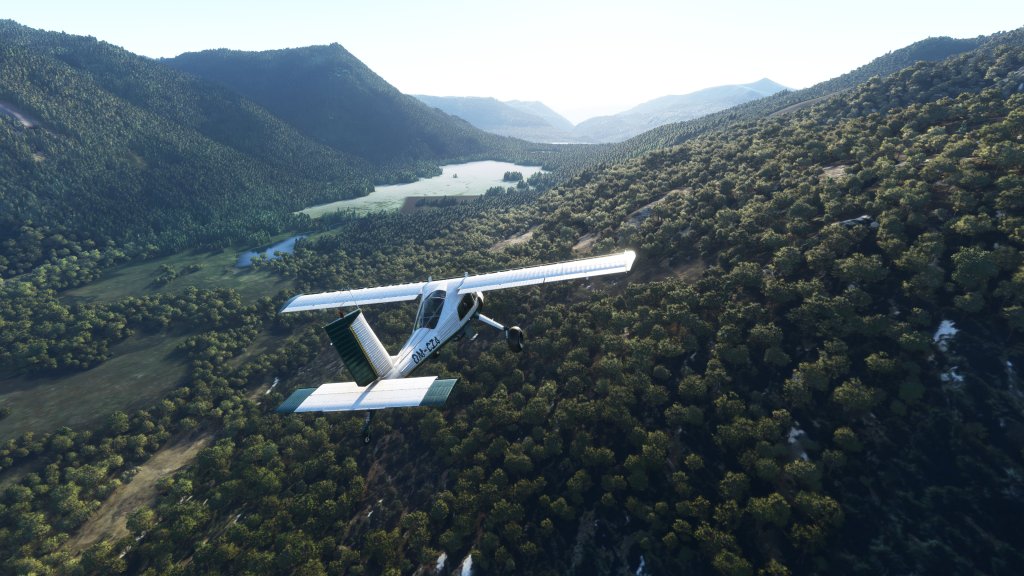
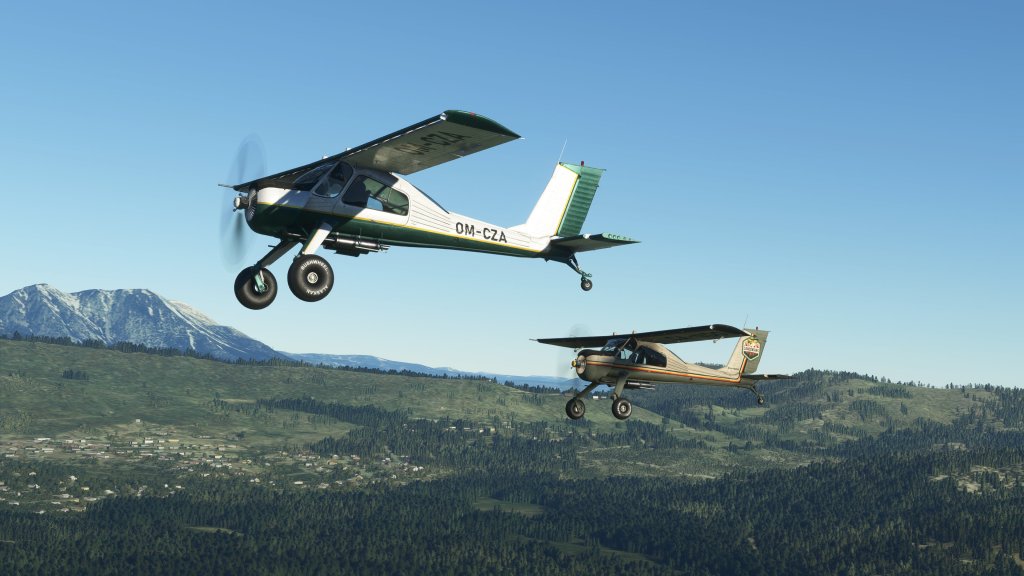
Over a dozen liveries available with nearly all of them being shared across the different versions. These appear to be all based on real world schemes (with differing registration letters) including Polish military trainer scheme, some spartan utility schemes and a few more wild options too. This gives us a decent variety to use no matter your taste in schemes.





The sounds are similarly impressive with full Wwise audio setup sounding great and feeling natural throughout. There are sounds for the control surfaces moving which are particularly noticeable when the aircraft is off while blending into the cacophony of the engine when its on. Switches and toggles all feel satisfying enough and the engine itself is reasonably pleasant to listen to as well. Audio is where this airplane establishes its character too with the stall sound being more of a ringing bell – giving off a distinctly Eastern European flavour.
Flying it around
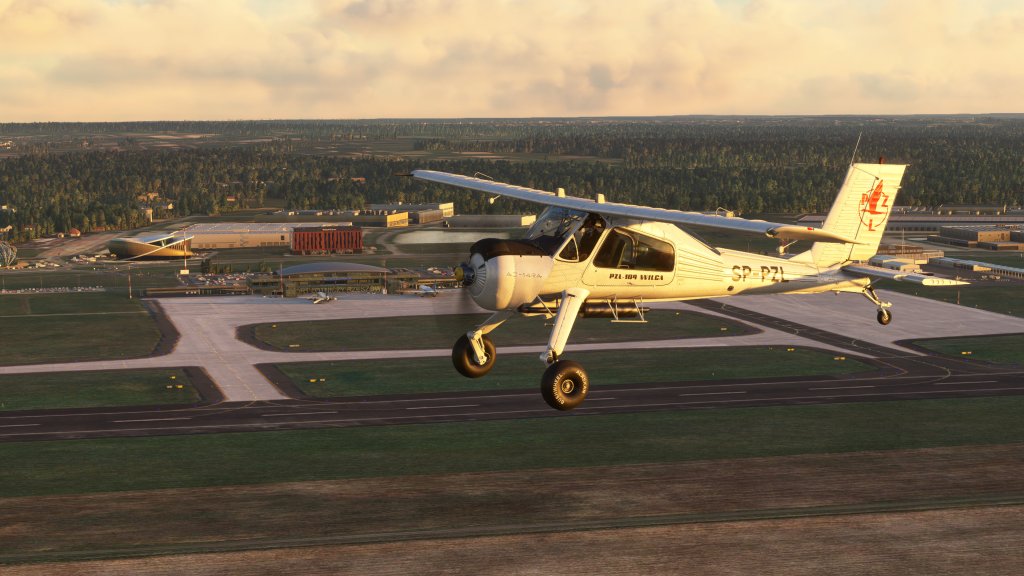
The Wilga is relatively easy to fly which is unsurprising given its high wing configuration and its intent as a trainer. The aircraft famously has a poor glide ratio which contrasts with the sailplanes that it is often setup to tow in the real world. With the engine off, the Wilga loses altitude quickly.
There’s support for the MSFS interactive checklist and you can skip the whole thing and just press Control-E. Works just fine on this airplane although some variants may not turn on everything required or open the radiator controls up – so watch for that if you have realistic engine management on.
Takeoff is manageable so long as you’re quick on the rudder. Unlike some early MSFS tail draggers, this one behaves more realistically and doesn’t have any weird tendencies to swing off in a direction uncontrollably – once you have appropriate speed the rudder is effective at keeping you centered. Climbout happens more slowly in the lower horsepower models while the 450 horsepower 35X/80X model climbs extremely quickly and lifts off almost immediately after a very short roll.

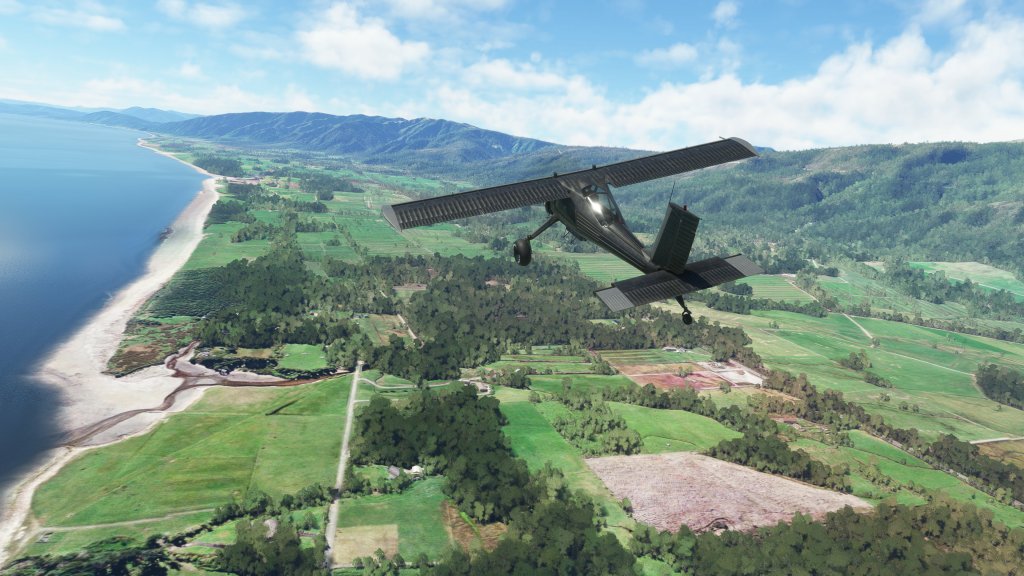
It can turn around in a very tight space making it capable of doing some challenging and tricky approaches in mountain passes and hard to get at airports. It feels very confident and controllable in nearly every aspect of its flight envelope and you even skim the water with the aircraft’s landing gear if you want. I had some fun doing that during one flight.
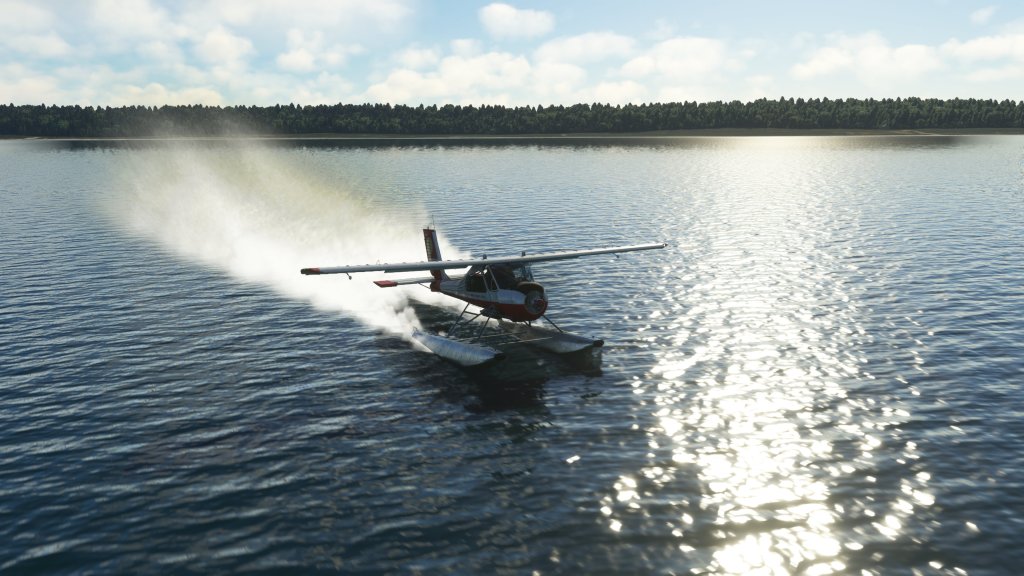
The floatplane equipped version is also quite a bit of fun! An effective elevator makes getting the right attitude for takeoff and landing easy and deployable water rudders give the Wilga plenty of authority to turn around in tight spaces. A lot of aircraft in MSFS don’t operate well on water without rudders so I’m glad to see that this one does – it makes it more flexible to be sure.

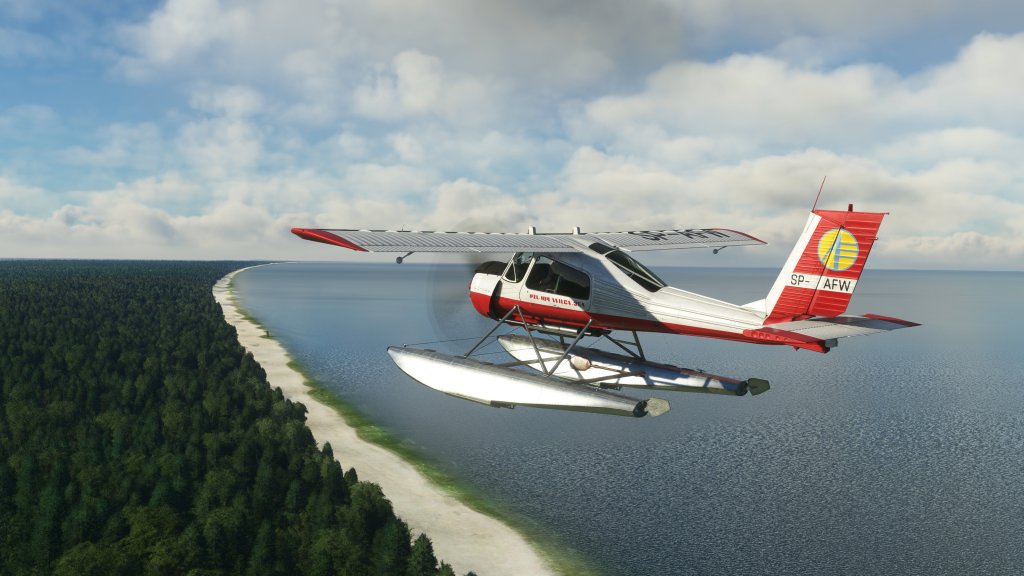
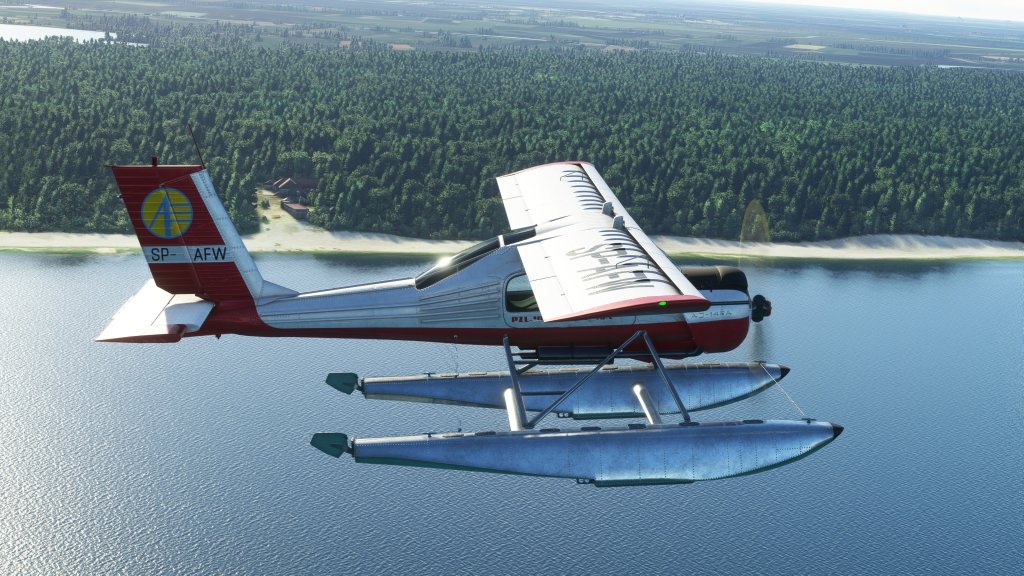
Landing is relatively easy and, if done right, you can land in a very short space giving the aircraft serious STOL credentials. Right up until the stall, the Wilga is controllable and will fly down to around 40 knots without stalling out. When it does stall, however, it does rapidly drop a wing which means that you really want to be good at riding the edge of the stall and listening for the bell intently if you’re doing some more risky field landings. I came down hard the first couple of times as I wasn’t expecting the stall to develop that quickly – be forewarned. That all said, its still an extremely stable airplane so this is at the edge of the envelope only.
One thing the Wilga doesn’t seem to be very good at is handling cold operations. I started a flight in below 0c conditions at Stewart, British Columbia and had the windscreen freeze over immediately. I don’t think the Wilga was intended for those conditions in any case.
The Wilga is, on the other hand, suitable for cross country operations. Hands-free flying is possible thanks to an autopilot on most versions so you can set it to cruise and mostly let it fly unattended (if you need to chase kids, pets, or laundry) but be warned that its a simple gyro autopilot and it doesn’t do much. You can tell it to fly level, you can tell it to roll left or right and you can tell it to climb and descend. It doesn’t follow VOR or GPS navigational information – you have to do that through the other instruments/tablet in the airplane.
Final thoughts
Straight up, the PZL-104 Wilga by Got Friends is an excellent bushplane experience. They’ve done a great job representing the Wilga in Microsoft Flight Simulator thanks to a combination of good systems, great modeling, and a lot of attention to detail. Its fun to fly, it has great performance, the frame rate is excellent, options list is lengthy, the audio and the visuals are top notch and there’s a long list of variants to boot.
If I were to come up with a downside to this, it’s probably the price premium that the Wilga commands versus some cheaper options in the store. Asobo’s own Aviat Husky A-1C is a similar type of airplane available for much cheaper, however, it lacks the fine attention to detail and the much larger array of versions. It also doesn’t have the failures. At $34.99 USD, the Wilga is priced similarly to the Parallel 42 FreedomFox/Fox 2 which I haven’t yet reviewed but is in the same ballpark for price and type of airplane.
Do I think the Wilga is worth it? Yes, I do! There’s a really good amount of value packed in here with the engine failures, custom airport, the engine variants, wheel types, and the float plane version. It’s a quality product. Got Friends’ Wilga delivers in style and attention to detail. I’m a fan!
Screenshots






 Stormbirds

Leave a comment