
The growing collection of airliners in Microsoft Flight Simulator has reached an impressive spot with growing variety and selection. Just Flight’s most recent addition puts us in the captain’s seat of the Fokker F28 Fellowship. Now that it’s been out for a while and seen some updates, I wanted to give the airplane a proper review. How does it stack up to the competition? Might this be the most fun you can have in an simulated airliner? Here are my thoughts on the Just Flight Fokker F28 Fellowship.
A bit of history

The Fokker F28 was born from a requirement issued by British European Airways for a highspeed turbojet regional airliner. It was a challenge that Fokker was already interested in tackling. The project combined market research and lessons learned from the development of Fokkers F27 turboprop airliner. North American style design, manufacturing simplicity and an effort to make the symbology used in the cockpit and elsewhere as universal as possible to aid in worldwide sales.
The result was an airplane that had good short runway performance and be capable of reaching 85% of destinations served by their own F27 and the DC-3. With 65 passengers in the early versions and an extension enabling up to 85 passengers in later models, the jet fit into a new niche of the time with a combination of capability, capacity and range.
The Fokker F28 was first flown on May 9, 1967 coming just a month after Boeing first flew their first generation 737.
241 were produced between 1967 and 1987 before the type was replaced by Fokker’s updated 70 and 100 series. Airliners worldwide flew it including Indonesia’s Garuda, Norway’s Braathens, South Korea’s Korean Air, and Canada’s Canadian Airways and Air Ontario.
Something a bit different
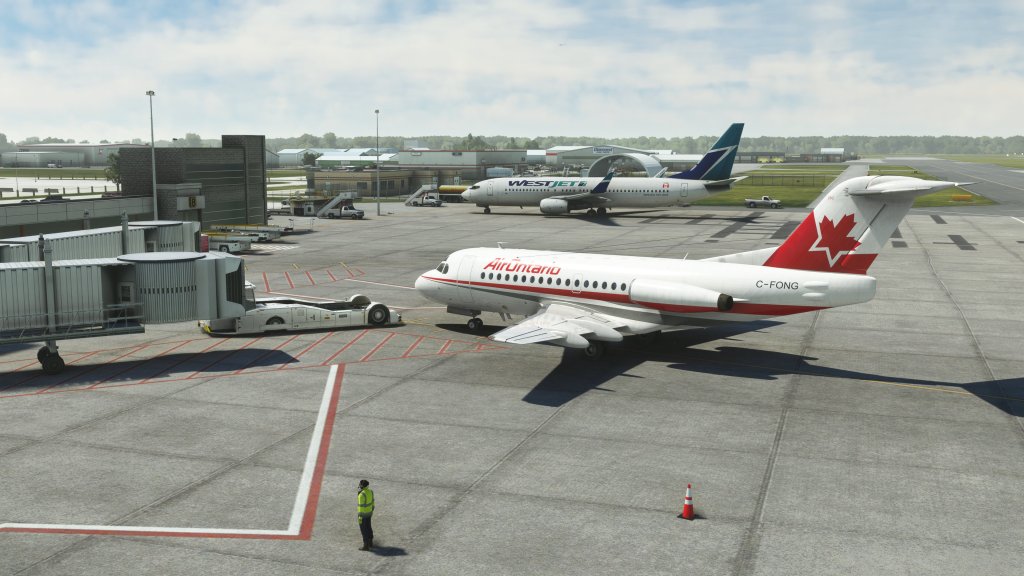
Aircraft like the A320 and the 737 are extremely popular with virtual airliner fans, however, I like it when things get shaken up just a bit and that’s what Just Flight has been doing with their BAe 146 Professional first and now the Fokker F28 Professional. These are two airliners that are off the beaten path for most flight simmers but are also still very intriguing and valuable to have in the sim.
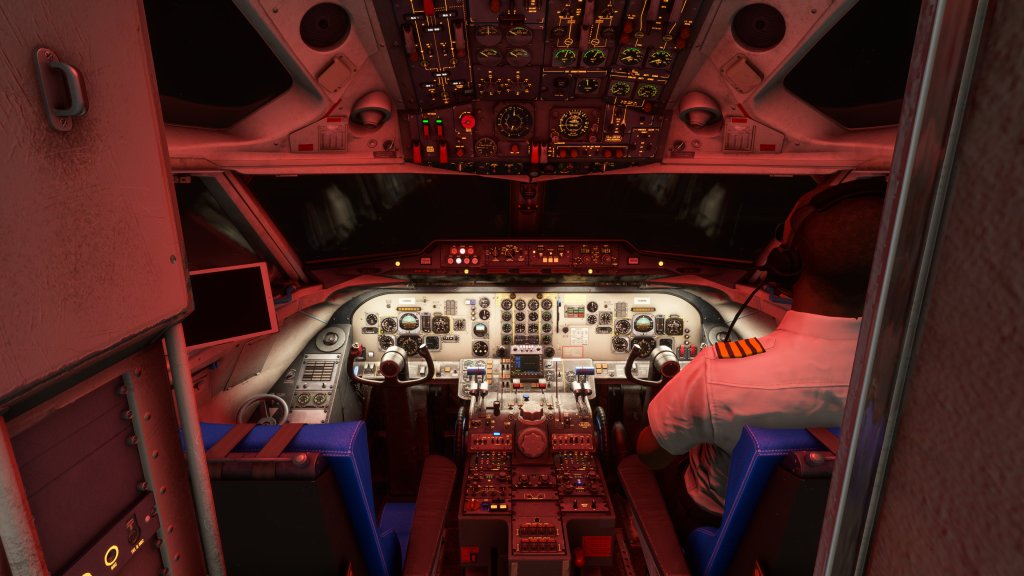
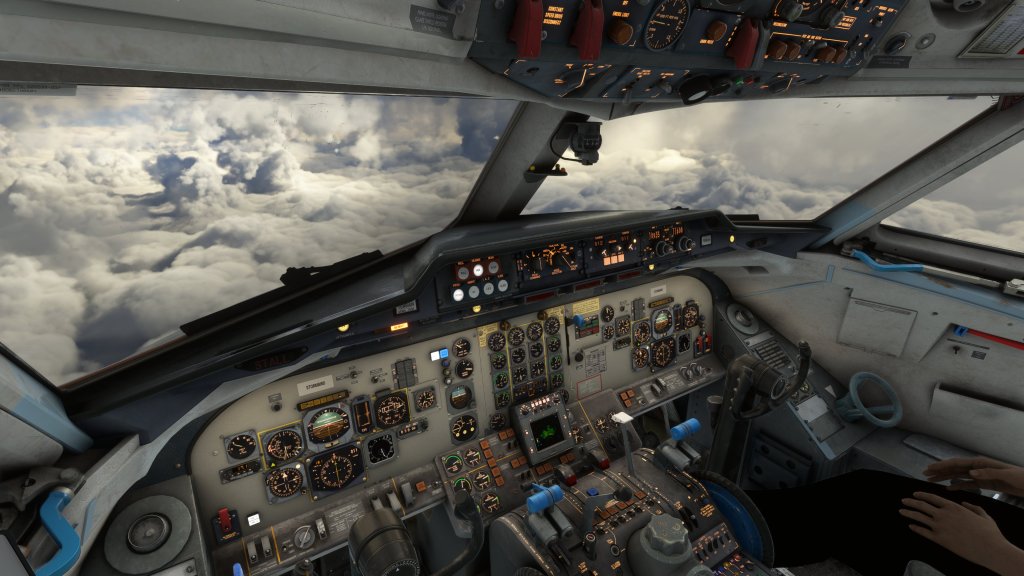
Spend a few minutes in the cockpit and you’ll quickly realize that this isn’t a modern airliner. This is an airplane that lacks many of the modern conveniences and complications of more modern airliners. You can see the dotted lines between this and a modern jet, yes, but everything comes from a different era.
There’s no flight computer either so everything that the pilots do for navigation is based on radio beacons, compass, charts and traditional navigation skills. Now, its also 2023 and flying it in that context means that you may want to put more modern spin on your flying too. Just Flight have smartly made available an optional GNS530 GPS system. It lets you fly this a bit more like a modern airliner if you want to.
There’s also the autopilot that really stands out as a more antique predecessor to what we see and expect on a more modern airliner. There’s more manual control and more needing to manage and fly the airplane. That can be quite freeing if you’re still new to airliners as this is a more hands-on experience that is less programming computers and more about just flying the airplane.
Variants available
There are four variants available: the 1000, 2000, 3000 and 4000. The 1000 variant has capacity for 70 passengers while the 2000 variant stretches the fuselage slightly making room for 9 more. The 3000 is based on the 1000 but with a longer wing while the 4000 is the same as the 2000 but again with the lengthened wing.
For the most part these aircraft are quite similar to each other in most other respects but they do each have their own selection of liveries based on which airlines flew which type. There are also resulting performance differences though I found it to be subtle in my experience.
Visuals and sounds
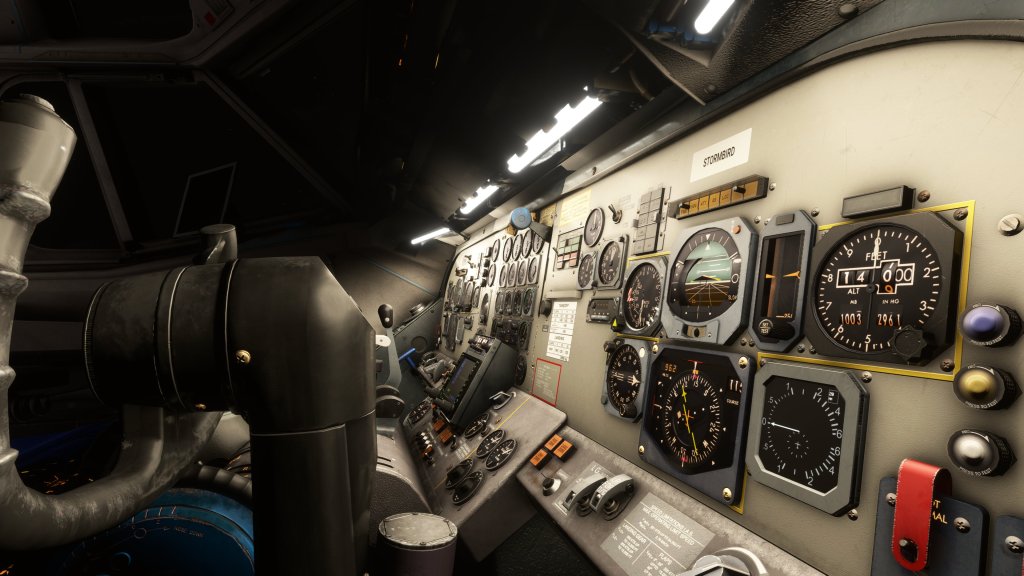
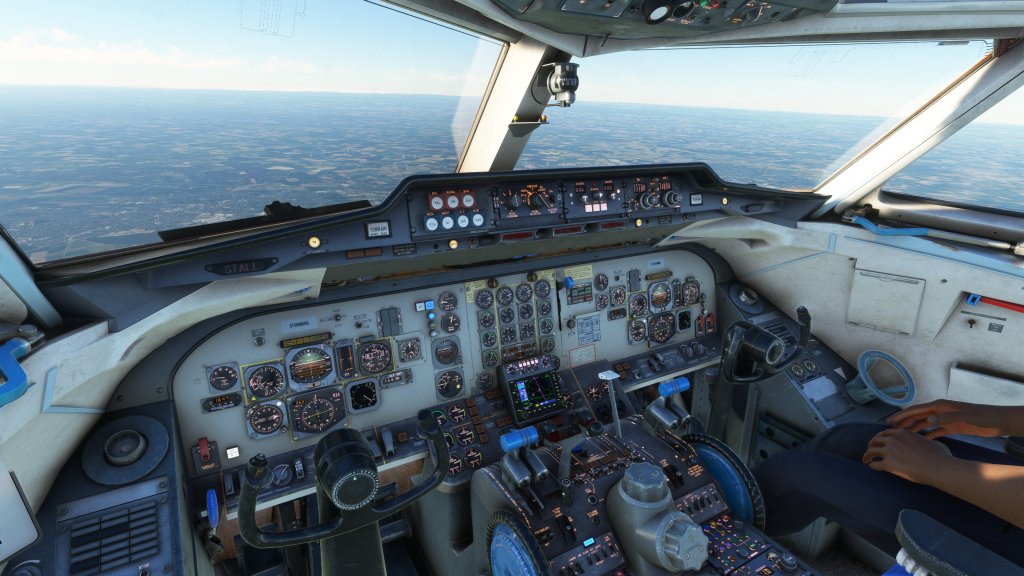
Just Flight have previously impressed me with their visual work on the Piper Turbo Arrow III/IV that I reviewed last year. The visual work by their artists is at a top level that competes with the best in the industry and that shows here with an exemplary cockpit. It also has a very good cabin that sports all of the right details.
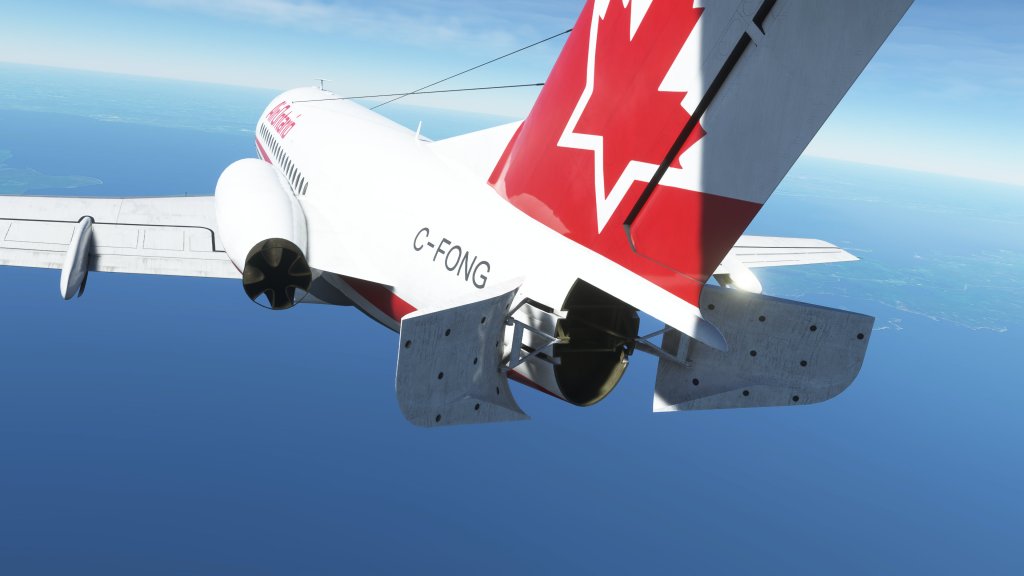
There’s an aesthetic that is at play here too with the airplane taking on a worn appearance. It’s an airplane that has flown quite a bit, has seen quite few takeoffs and landings, and it has attracted all the appropriate grime and wear that you’d expect. That carries right through to things like all of the weathering at the rear of the airplane where the smoky Rolls-Royce Spey Mk 555-15 engines, typical of the era, have left a mark. An optional hush kit adds a sound damper on the engines which visually affects the look of the plane.
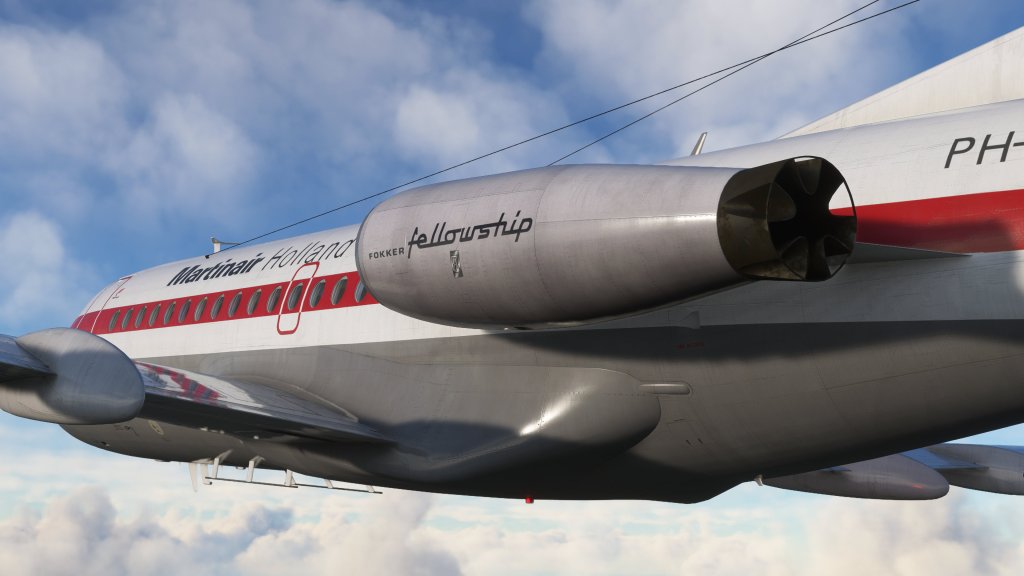

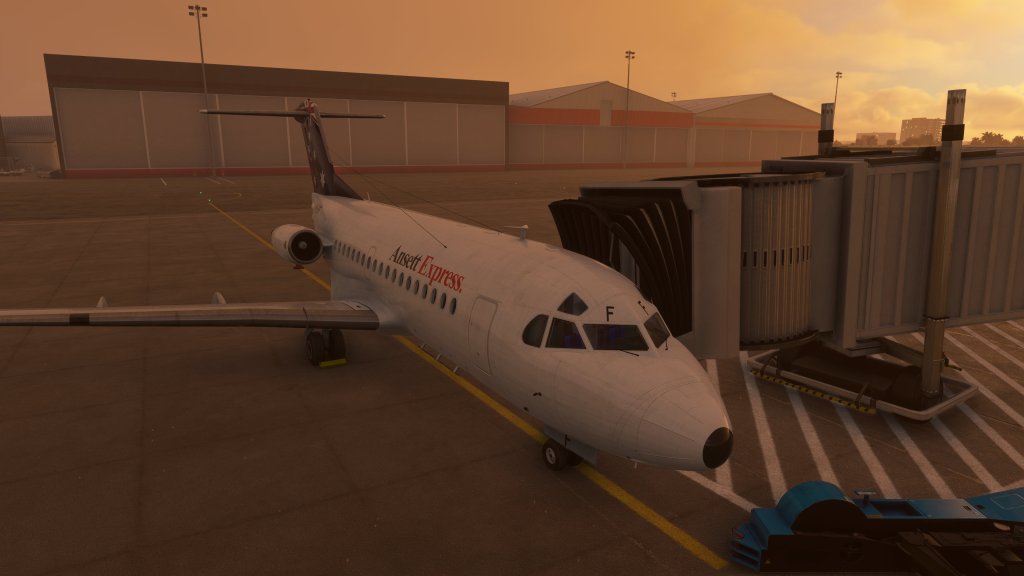
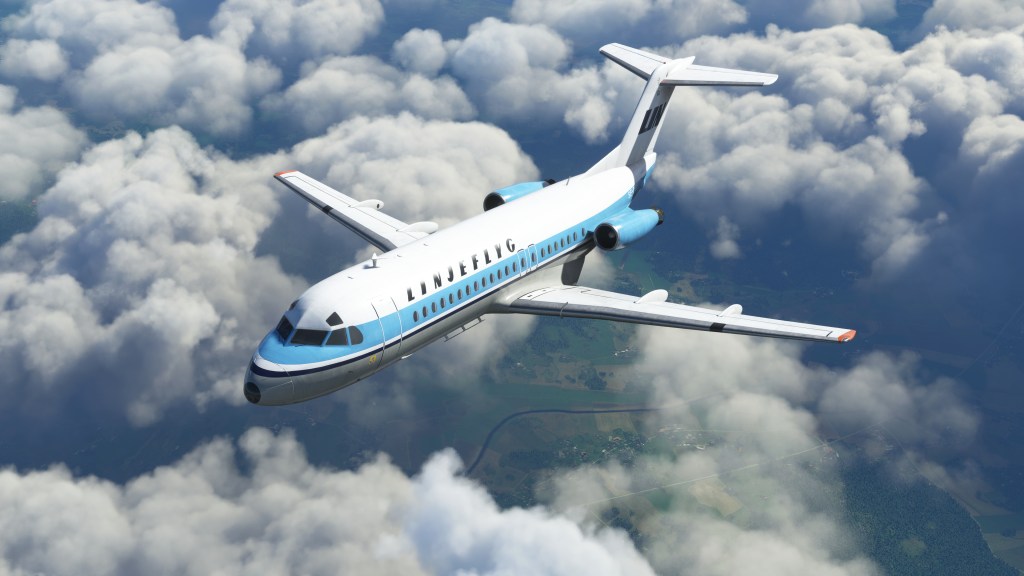
A couple dozen liveries are included in this pack spread across the four variants. These offer a pretty wide array of historic liveries including some airlines that no longer exist or have rebranded. Horizon Air is now Alaska Air and TAT (Transport Aérien Transrégional) was gradually absorbed into British Airways. Others represent classic schemes such as KLM’s iconic blue scheme which never seems to age. Their’s also the Fokker house livery which is quintessential 1970s. My personal favourites are of course the Canadian Airlines and Air Ontario schemes. There’s lots of variety to be had with operators from across the globe.


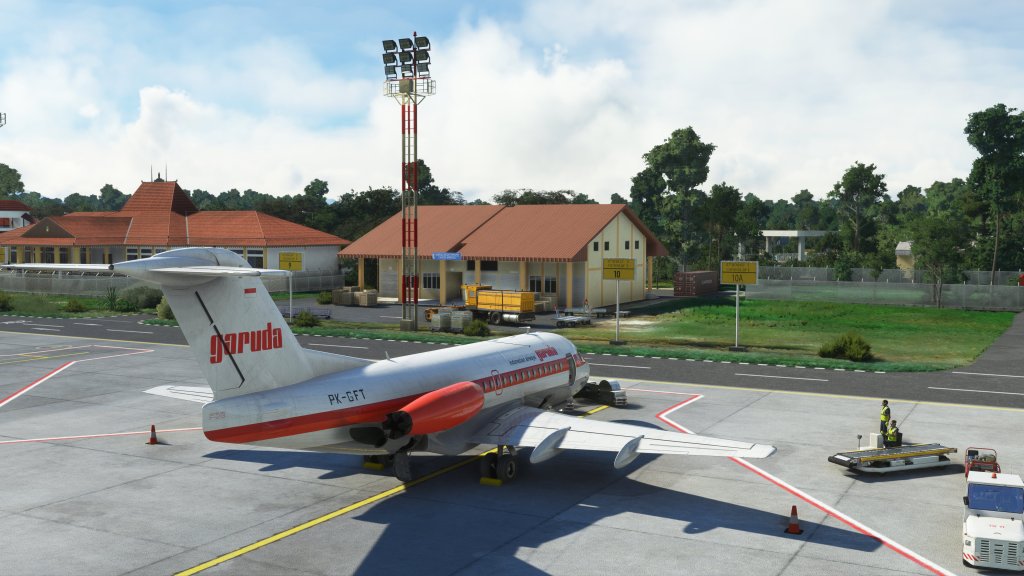


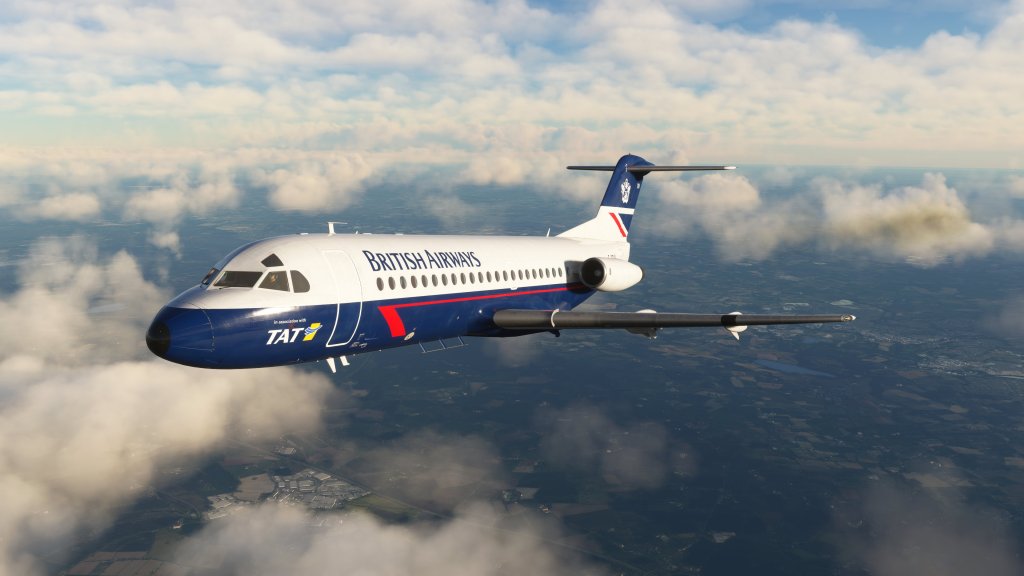
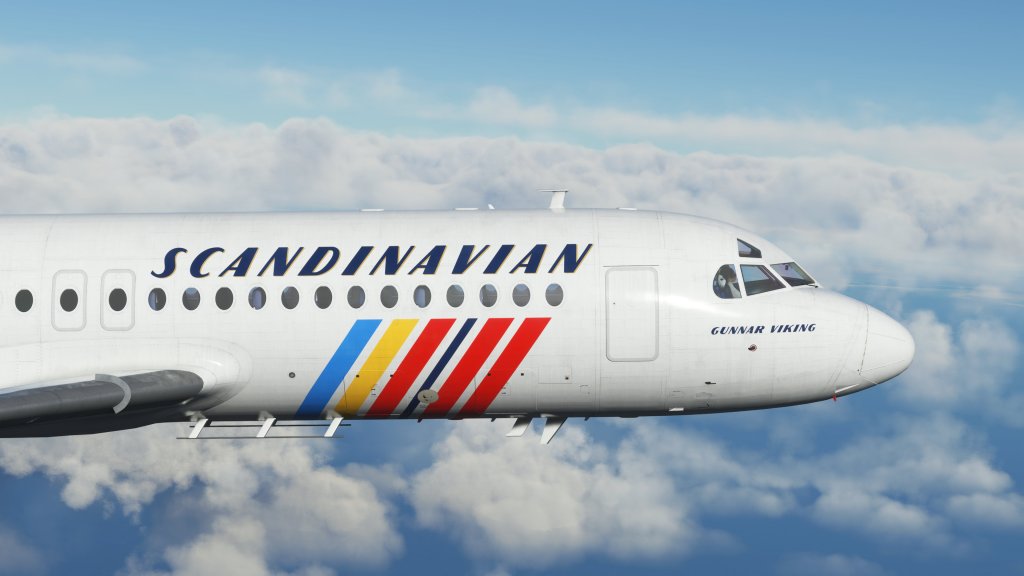


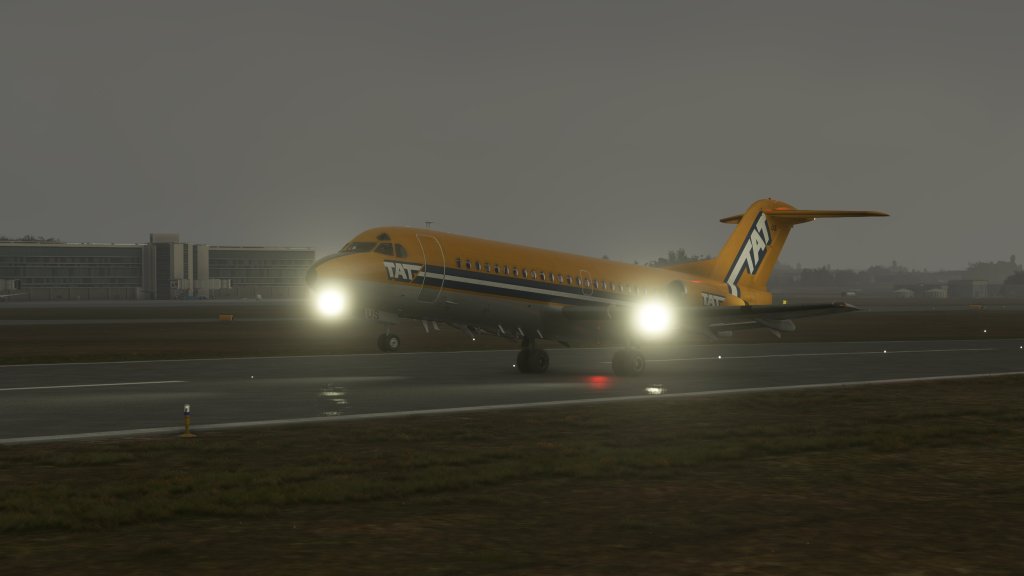
The interior lighting on this airplane is fantastic. Particularly so in the cockpit with warm incandescent bulbs lighting up the cockpit at night. The attention to the lighting and materials really comes together in a brilliant way here that feels impressively immersive. Exterior lighting is good too although I sometimes think the landing lights have a bit too much flare.
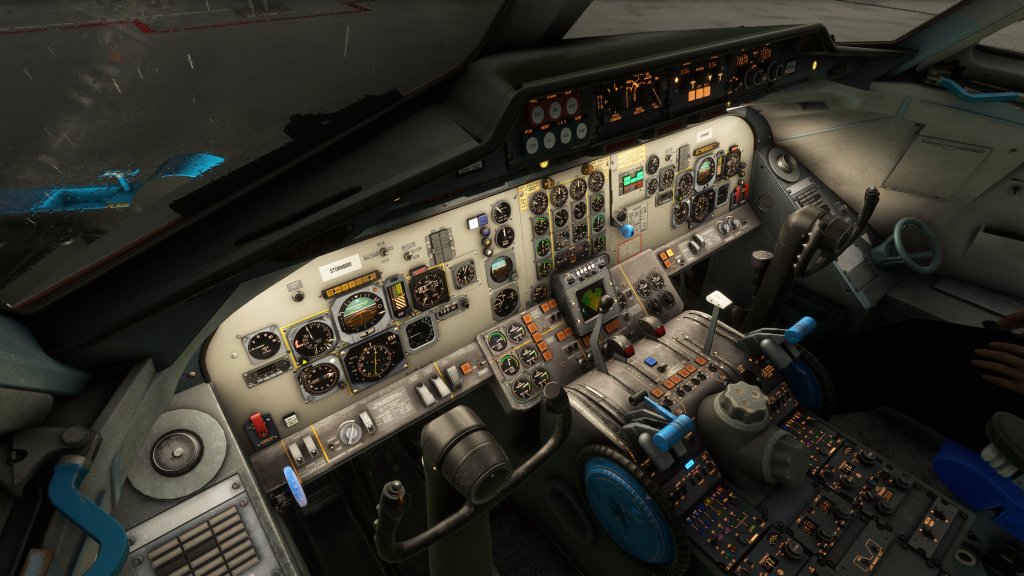
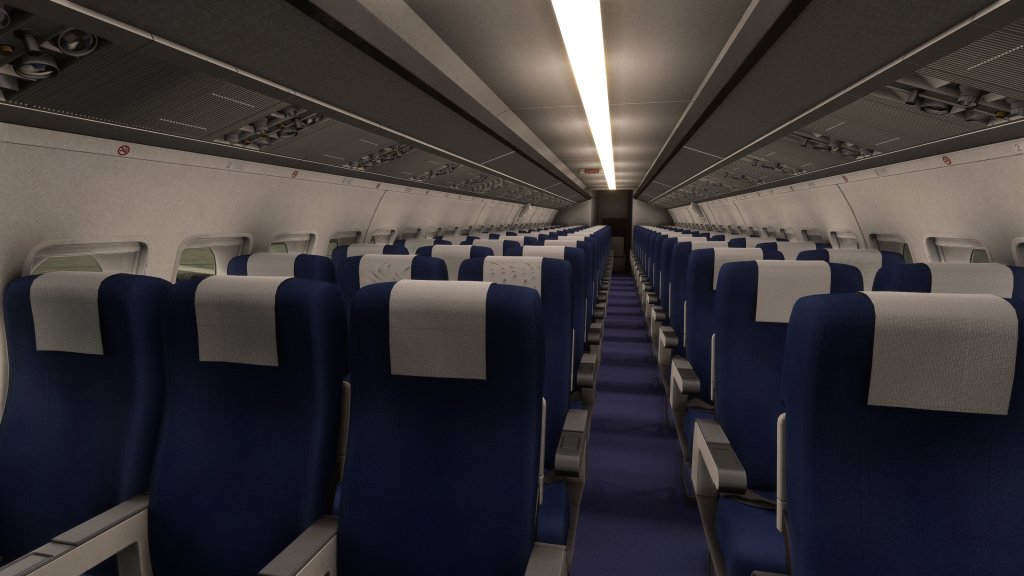
The cabin is fully modeled sporting classic seats and overhead lighting. The galley looks the part and the exterior stairs and hatches are all fully functional too.


One item that the Just Flight F28 has been criticized for but which is unwarranted is the lack of moving fan blades on the engines. Because the F28 uses turbojets and not turbofans as modern airliners do, the fan blades are hidden (and animated infact) behind fixed vanes at the entry to the engine.
I can, however, offer a minor critique that the jetway system at any airport I tried didn’t seem to fully connect with the airplane. I’m not sure if this is a legitimate critique either or simply a matter of the airplane never being intended to work with one. It doesn’t look horrible but it does look a bit odd.
The sounds are great on this! Preview videos made by Just Flight weren’t kidding when they made it clear that the team had come up with unique sounds for every switch, button, chime and buzzer. The engines sound great as you throttle them up and the overall cabin noises are well realized with the sound subtly changing as you move down the cabin. The optional hush kit does quiet the turbojet engines down a bit but I haven’t really noticed it having a big impact. Optional music can be played in the rear cabin as well with the ability to add your own music into the mix if you want with the controls located on the wall near the entry point letting you adjust.
Overall this is extremely well realized airplane that both sounds and looks the part.
Performance
Airliners are traditionally among the most CPU, RAM and GPU demanding aircraft in civil aviation simulators and so its worth considering how well the F28 performs.
I don’t do benchmark testing but I do pay close attention to the overall feel of the airplane. In the air and at some airports the F28 performs well on my system, however, at some heavier airports the F28 really seems to bog down. Other airliners at the same airport perform better in my experience so I would put this one in a middle area between some of the most optimized and the least optimized.
An optional update takes the 4K textures and ups them to 8K. None of the screenshots in this review made use of the 8K texture set and frankly the 4K set is already incredible.
How it flies

The overall feel of the F28 is of an airplane that is somewhat bigger and heavier than I perceive it to be. The controls feel sluggish and the response to control inputs takes a bit of time to process. It very much feels like a classic airplane and in a good way. I like that it has character and feels like a product of its time.
Takeoff comes relatively quickly in most configurations with the engines providing enough thrust to get going reasonably quickly. The turbojets has a feeling of a more analogue experience with the needles jumping around just a bit and each engine reaching full thrust at subtly different times. The F28 never feels like a sportscar and instead very much feels like the bus in the air that it is.
That heavy feeling continues with cruise where the airplane seems to confidently fly along through most weather conditions without a lot of concern. Its confidence inspiring but it does mean that you need to be ahead of the airplane at all times.
Landings I’ve found the F28 to be good at with the appropriate amount of flare and a good approach angle making all of the difference. Responsive engines and good technique make nailing most landings straightforward. That said, if you have a low visibility approach you might miss having a more digital readout with more information and more automation.
The co-pilot does give some helpful callouts during takeoff and in the last parts of the landing so that does help to spread the workload a little.
Systems
The F28 is a bit like a classic general aviation airplane with all of the systems and instruments all separate. Nav and radio comms are in different places and on different dials from each other, the autopilot controls are both up front and down on the side by the pilots right hand, and everything is very tactile in feel.
Everything here is both familiar and a bit different. It took me a while to understand how the autopilot would home in on a VOR and how the pitch commands on the autopilot worked. I’ve forgotten and relearned it a couple of times over the last several months so not everything is fully intuitive. But it is all very well done in my experience.
You can operate the plane in a traditional manner or equip the optional Working Title GNS530 and either program in your routes or do the route in the MSFS planner and have it loaded up on start. I love the option!
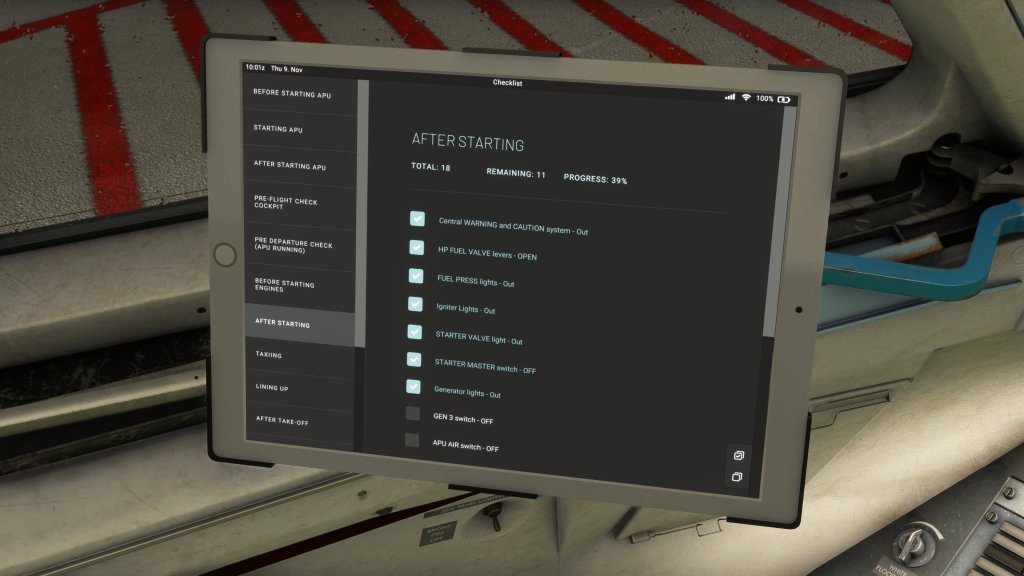
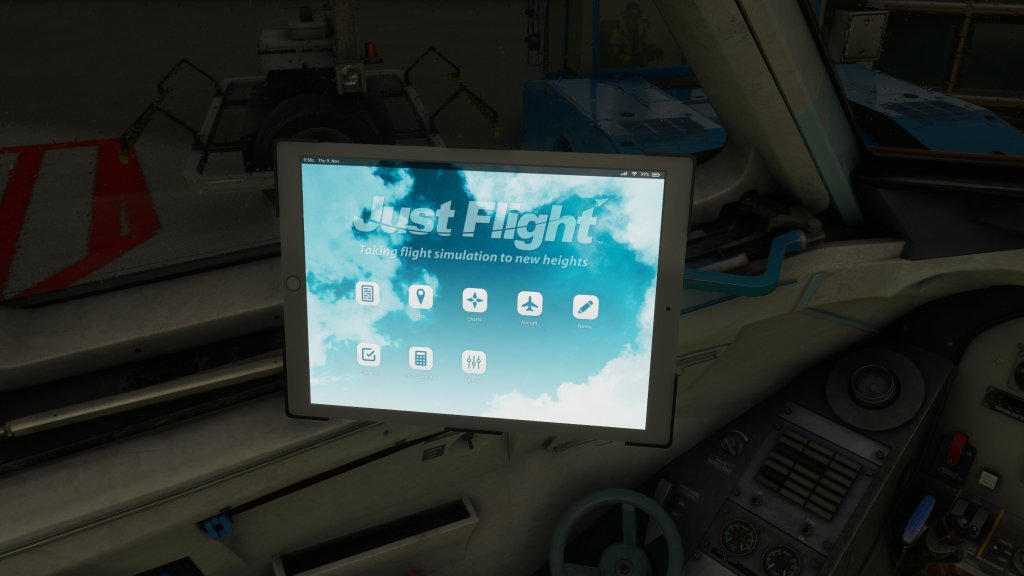
The EFB is fully functional with options for SimBrief and NaviGraph. That includes NaviGraph charts functionality which displays over 7,000 different charts at your departure and arrival airports. The tablet interface also has a good airplane manager as well with lots of options (including that GNS530). State saving is possible and you can click Cold and Dark and Ready for Takeoff modes.

Another kudos to Just Flight is for supporting the MSFS radar system. Its not an ideal or fully accurate system at this stage but rather than making us wait for something else, Just Flight have given us the default system which is both better than nothing and sometimes useful in picking up weather ahead. I’ll go for useful and practical while we wait to see some better modeling on weather radar sometime in the future.
One thing you won’t find with this airplane is a dedicated failures system. The F28 is nicely modeled and has good systems depth but you can’t do what you can on some of the other airliners and setup detailed failure scenarios. That doesn’t overly bother me as I tend not to use those scenarios all that often myself but it is a key consideration for some airliner pilots so its worth noting.
Getting a handle on these systems can be done via a manual which is available for download here.
Frequent updates but not an ideal patching system
I also have to provide some kudos to Just Flight for providing semi-regular updates to the F28 with detailed changelogs. The F28 came out in great shape but it did have a few issues and the updates have satisfied me both with solving issues and being responsive in solving them in the first place.
If you do buy through the Just Flight store, as I have, I will say that the updating process is a bit old fashioned. When an update comes through, you need to find out about it, go on the website, download the airplane over again and replace the old one. It’s fine, its workable, but it feels a bit like updating in the 1990s where now even freeware operations like FlyByWire and Headwind provide updaters that automatically keep you up to date with the latest. If you buy it through the in-game Marketplace you’ll get updates more slowly but at least they will be managed automatically. A trade-off that is worth noting.
Final thoughts
The Fokker F28 from Just Flight offers an extremely impressive aircraft with great visual details, superb sounds inside and out, and ample features and accommodations.
There’s very little that I’m unhappy with on this aircraft aside from an antique patching process and maybe the pricing. Pricing the F28 at $69.99 USD puts it on par with PMDG’s 737-700 and -800 releases but higher than their -600 and -900 releases while the Fenix A320 is also playing in the same ballpark at £49.99 (about $65.50 USD). The F28 is certainly at the same calibre of experience as these in most respects but it does lack failure modeling the way that the others do and of course the airplane itself doesn’t have the complex flight computer that is more typical on modern types. So if any of that is a dealbreaker you may need to look elsewhere. For everyone else, the F28 is a solid experience.
This is also some of the most fun I’ve had in an airliner with the more antique systems providing extra charm and challenge in equal measures while forcing you to think more about flying the airplane and less about programming the systems to make it go. As someone who is still new to airliners, something like this is actually in some ways more approachable thanks to the simplicity.
While the F28 doesn’t have the modern-day appeal that the A320 and 737 series offer, what you get here is something that is equal parts quality and charm all rolled up into one package. If Just Flight continue to support the product long term as I expect they will, this will be a fun airliner to fly for many years to come.
If the Just Flight F28 Professional is what you want to fly, you can buy it over on the Just Flight store here or in the marketplace. I’m also looking forward to their eventual follow on, the F70 and F100 which brings the Fokker airliner series into a more modern age.
Screenshots










 Stormbirds

Leave a comment