
Released last year and constantly improved by developers AzurPoly, I figured it was well past time to take a look at the C-160 Transall for Microsoft Flight Simulator and finally give it a review. This aircraft is well worth a look for fans of both civil and military aviation equipment as this aircraft ambitiously reaches towards the same levels of fidelity as some of the sim’s top airliner products.
A bit of history

The C-160 Transall follows a familiar post-WWII era formula for aircraft design in Europe that would no doubt help pave the way for other significant collaborations.
Developed from a requirement for a replacement for the piston-engined Nord Noratlas transports operated by both France’s Armée de l’Air and West Germany’s Luftwaffe, the C-160 Transall would emerge as a collaborative product produced by MBB, Aerospatial, and VFW-Fokker. Requirements for the aircraft included a range of 1,720 kilometers while carrying a 16,000 kg load while also operating out of semi-prepared airstrips. Short field performance was key with the aircraft being capable of performing steep descents of 20 degrees and landings on fields as short as 400 meters.
First deliveries of the aircraft started in 1965 with production ending in 1985. The aircraft would then see a series of modifications and additions giving the aircraft more modern laser-based INS systems, missile warning sensors, flare dispensers, and electronic warfare self protection measures. Additional fuel tanks and an aerial refuelling system were also added to some C-160s.
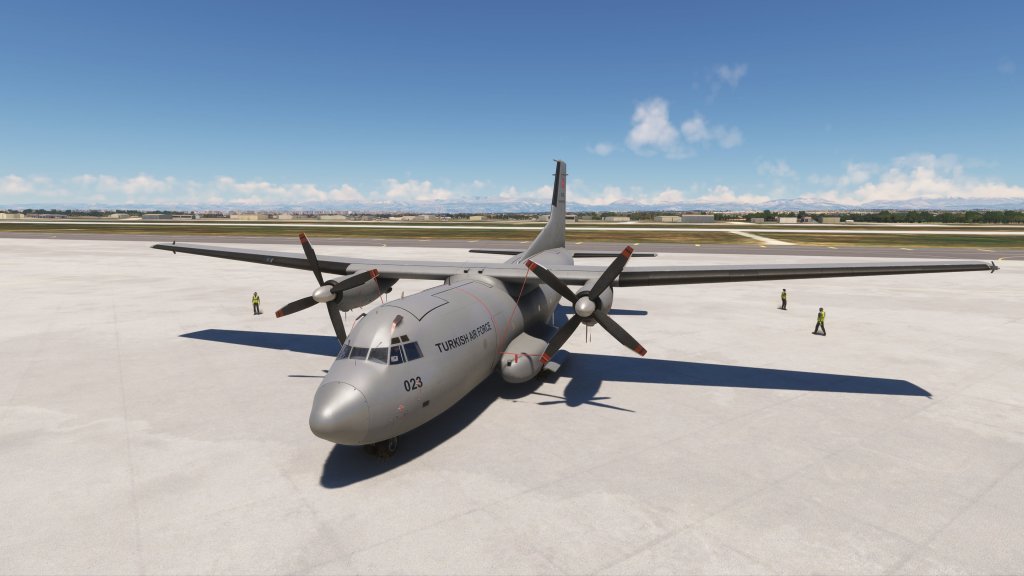
The service life of the C-160 was lengthy with the type being retired by the German and French air forces in 2021 and 2022 respectively. The aircraft is still actively used by the Turkish Air Force and its been used by civil and military operators in France, Gabon, Indonesia, Switzerland, and South Africa.
Visuals and sounds


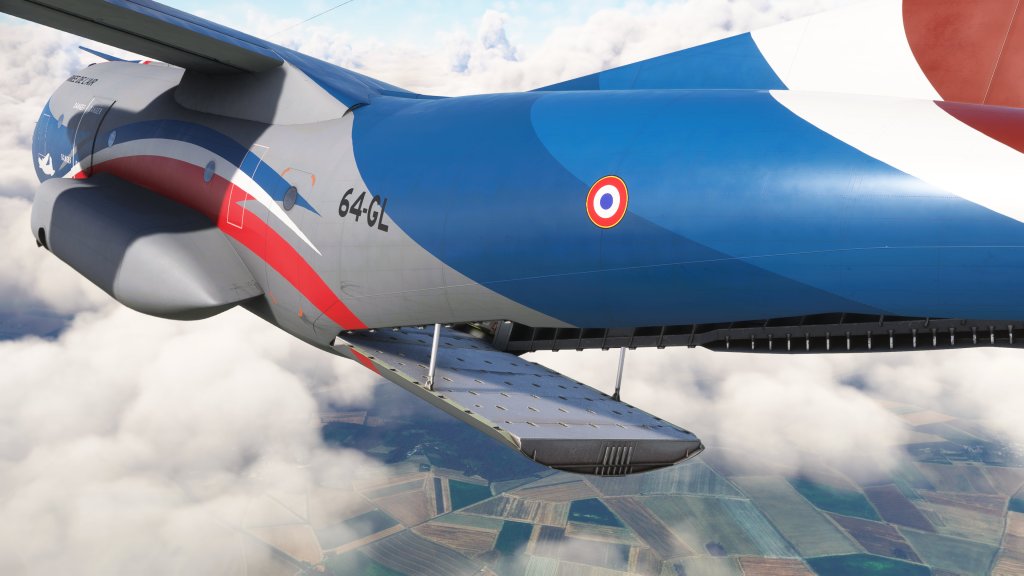
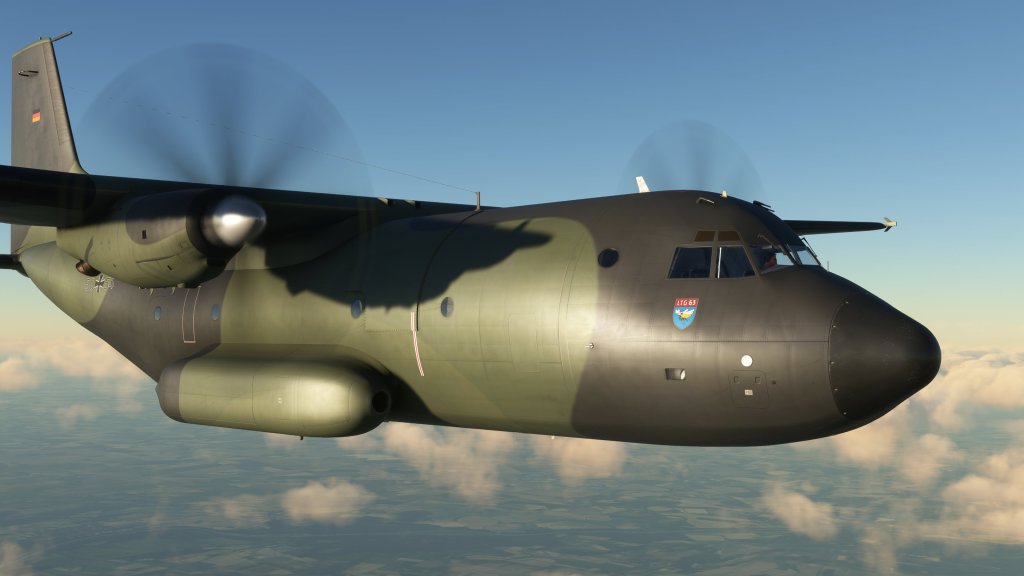
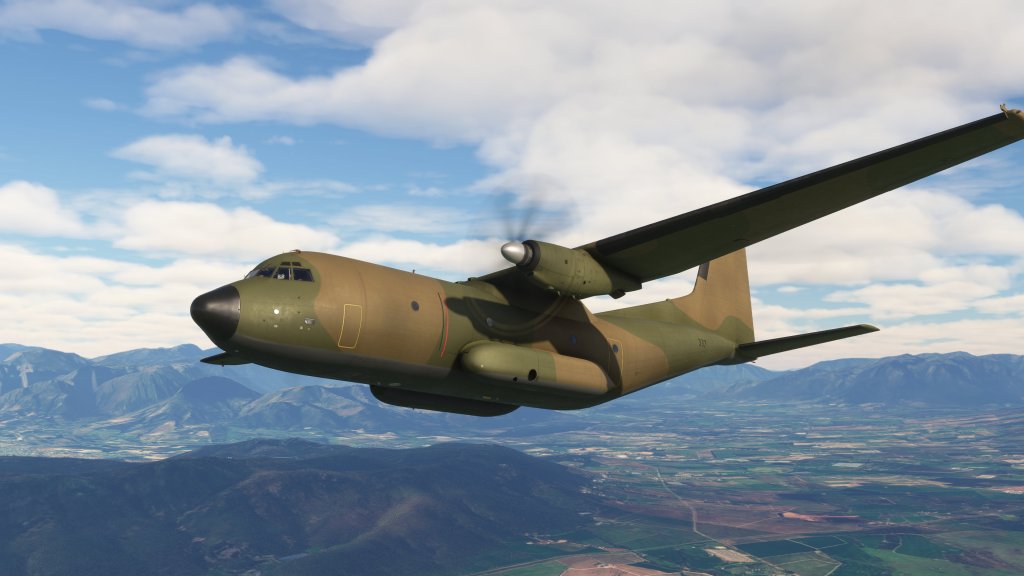
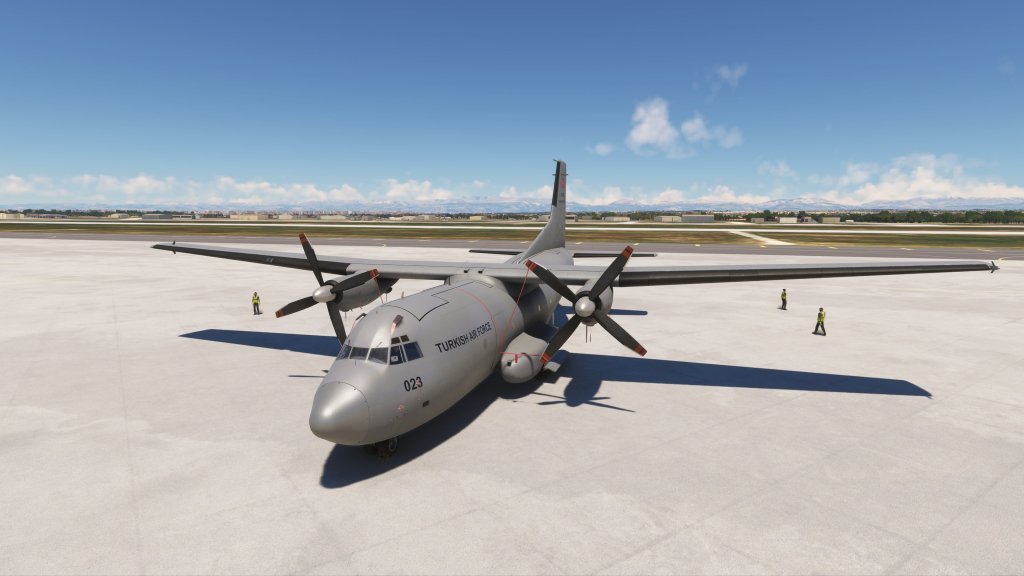
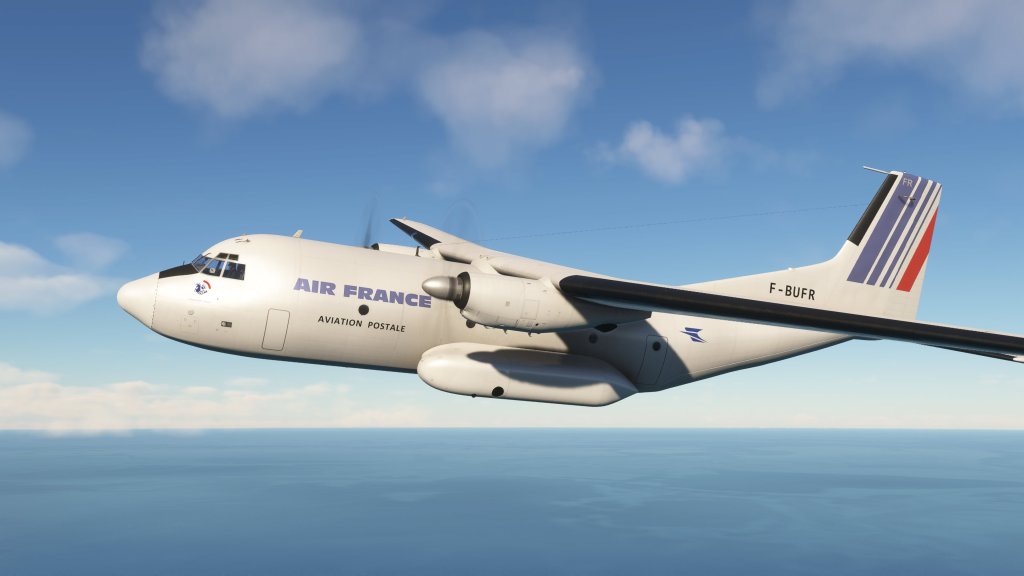
AzurPoly did a great job at the look and feel of the C-160. Though it doesn’t quite reach up to the level of some of Microsoft Flight Simulator’s absolute best examples, its only maybe slightly behind the works of art from produces like iniBuilds and their A300, PMDG and their 737 series, or Just Flight and their F28 or Vulcan. That said, you really have to get in close and look at some of the details to see a few things maybe not come off as quite as detailed as the competitors. Still, these are 8K PBR textures and they very much look the part.
Extraordinarily minor gripes aside, tons of little details are there that you appreciate over time. There are dirt and scratches where they should be all over the airplane and it looks well used, like any military transport airplane, but also cared for and maintained. AzurPoly report that they were given the opportunity to access a French C160 NG/R at the Musée Européen de l’Aviation de Chasse in Montélimar, France which helped them get the details just right – and it shows!



Animations are a particular highlight on this aircraft with working cargo ramp, flaps, gear, exterior doors, and everything that moves displaying really carefully crafted animations. I loved the smooth sliding motion on the rear doors for example.
AzurPoly have also gone above and beyond with a highly configurable cargo area that, controlled via EFB, lets you pack away paratroopers, relief supplies, light armored vehicles, and more.
The sounds are also a highlight with one or two reservations. There are a few sounds on start-up in particular that have maybe not the best blending with the start-up sound kind of disappearing into the cacophony of engine sounds before being subsumed by the running sounds. The developers have also really caught the high frequency whine off of the C-160’s Rolls-Royce Tyne turboprop engines. The engines together with a tremendous array of other sounds in the cockpit for buttons, switches, and systems including the gear and flaps all have a kind of crunchiness to them that makes them feel at home in this type of airplane.
I love nearly all of the work here though I do find that the engine whine does tend to get on my nerves after longer flights. Something I don’t find with some other aircraft. I don’t know if its just the higher pitch or some sound in the mix that really gets to me – your mileage (and high frequency pitch sensitivity) may vary here.




Systems and features
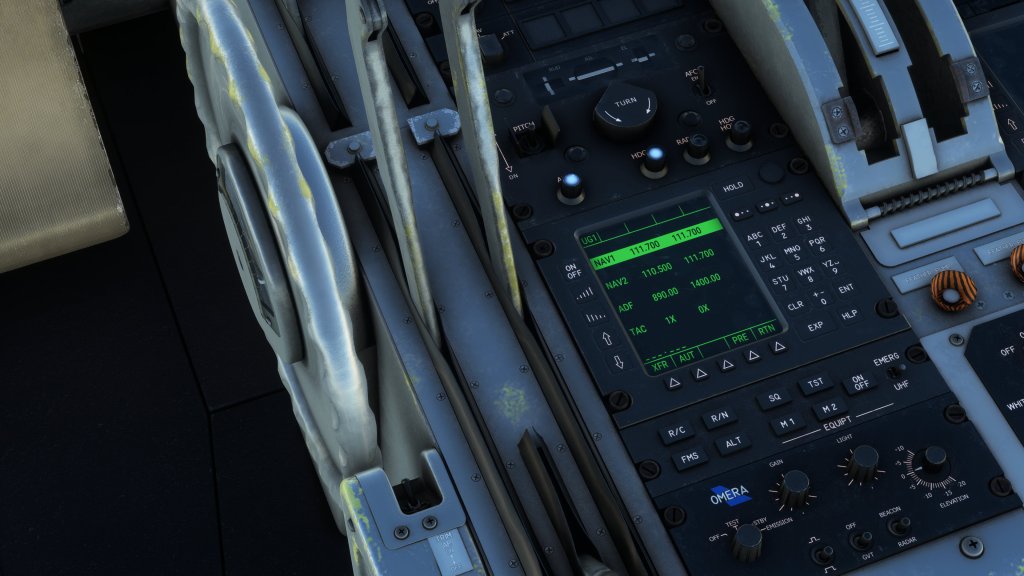
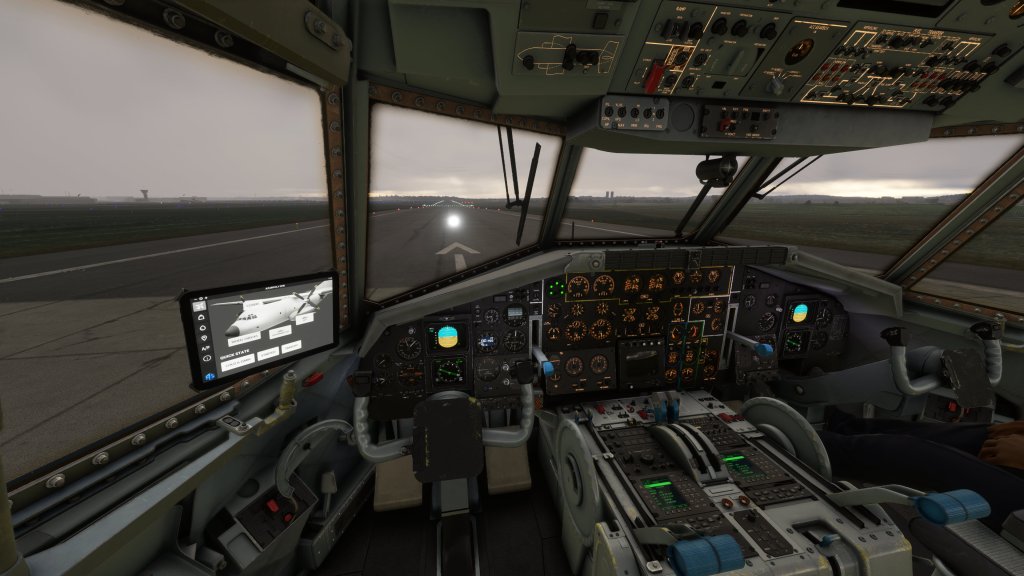
Systems are another generally outstanding feature for the Transall. AzurPoly say in their marketing material that they were essentially forced, due to the military nature of the aircraft, to create their own bespoke systems for the aircraft and they very much succeeded. Unlike some lower quality efforts out there, this military aircraft has its real world instruments. A GNS430 is optionally available for those wanting a more modern (and familiar) GPS system in the cockpit.
Bespoke EADI, EHSI screens, a custom FMS, operational autopilot system, and functional cargo doors round out some of the key systems features for the aircraft. They all work and seem to work well though, because they are bespoke, it will take some time to get to know the aircraft as the way its does things is neither Boeing, nor Airbus nor anything else that you maybe familiar with. The FMS is particularly obtuse but you can sidestep that by using the GNS430 so you do have options.
The bespoke nature of some of the systems is probably going to be the biggest impediment to flying this airplane as you’ll need to learn how the C-160 does things. It’s about the biggest “issue” I can find with it along with the somewhat scattered nature of some controls in the Transall in the first place. Ergonomics aren’t it’s strong suit… but that’s not on AzurPoly. They faithfully recreated that well.
Other minor quirks include some difficult to operate dials and switches and the left/right click on various controls being counter to what they tend to be on other MSFS aircraft. I definitely switched things in the wrong direction a few times with this one and I wish they’d standardize their approach. Nitpicky but annoying too for sure.
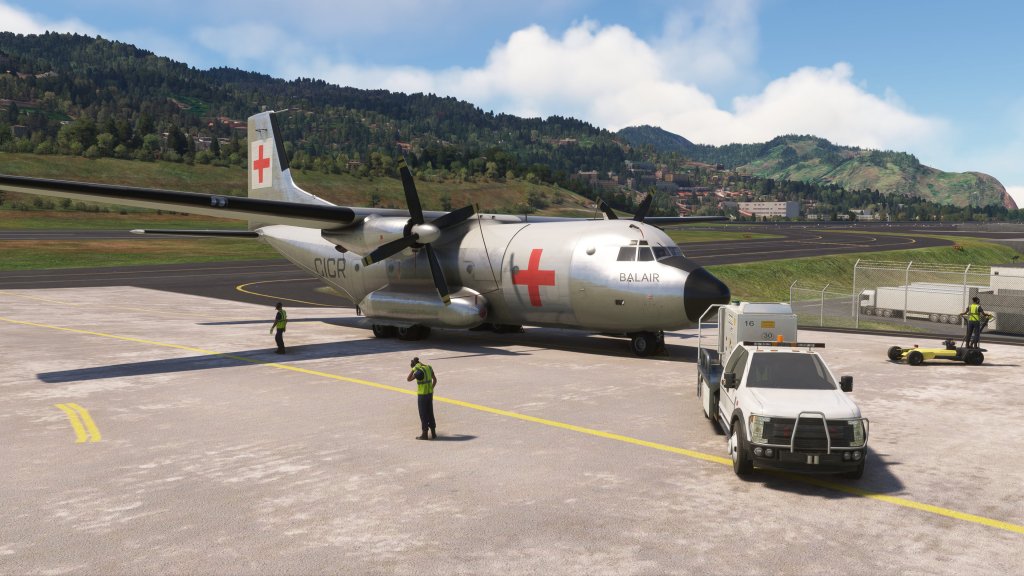
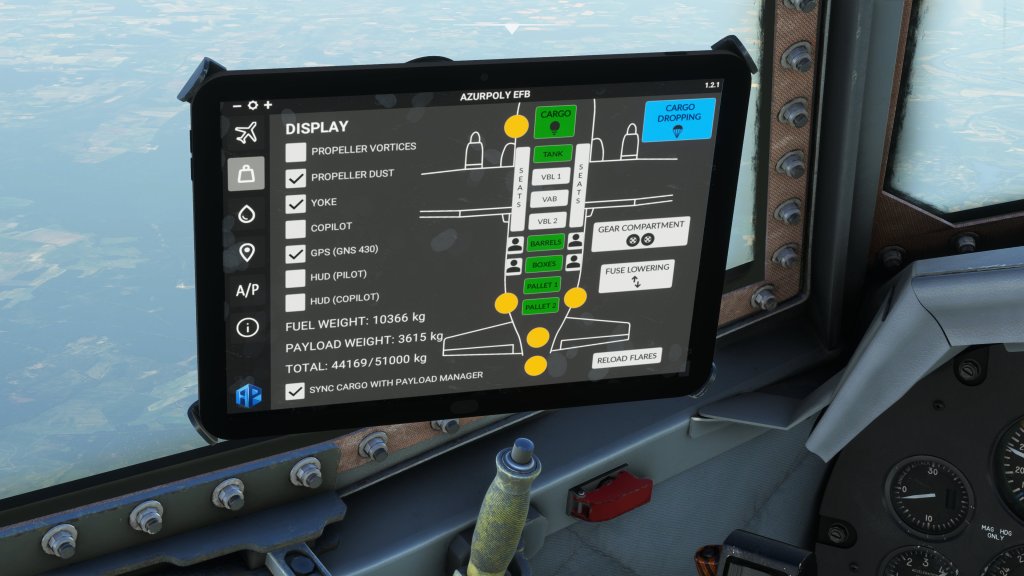
The EFB is a real standout feature here coming with plenty of options and functions to manage the aircraft. My general requirements for optional fast and fun operation? They are there with a panel state selector letting you put the aircraft in a cold and dark, ready to taxi or ready to take off condition.
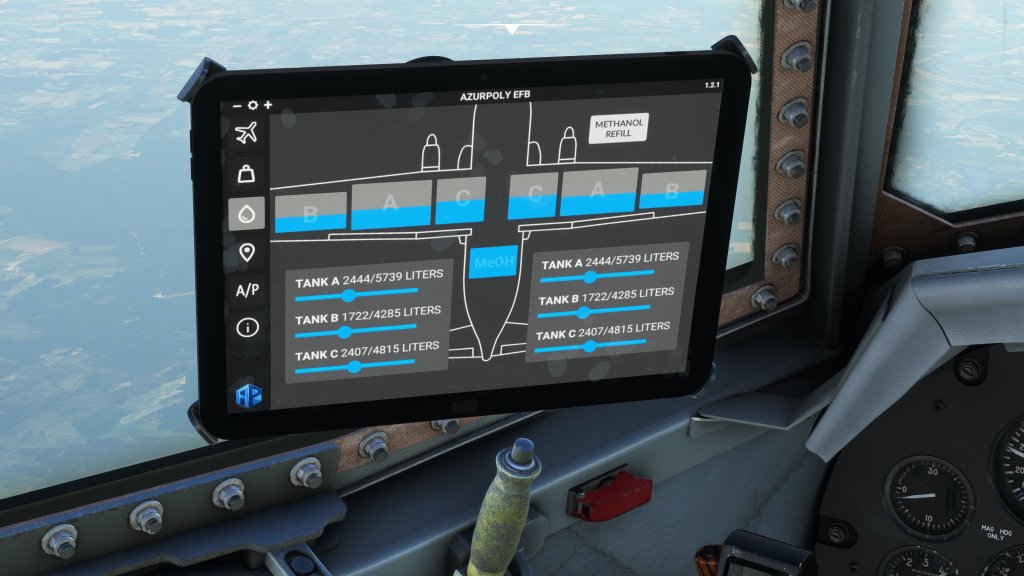


There’s also an optional HUD for the C-160. Some models were retrofitted with a HUD and this one is quite good from a developer standpoint. I found it’s utility to, however, be limited and the framing for it actually takes up quite a bit of screen real-estate which kind of circumvents part of the reason for wanting one.
The Transall also has a payload manager that let you specific the type of cargo you want to put in the back. It’s all configured in the EFB and it works great. The weights are pre-set too so an armored vehicle applies the appropriately heavy weight to the aircraft and associated center of gravity change. You can really feel it!

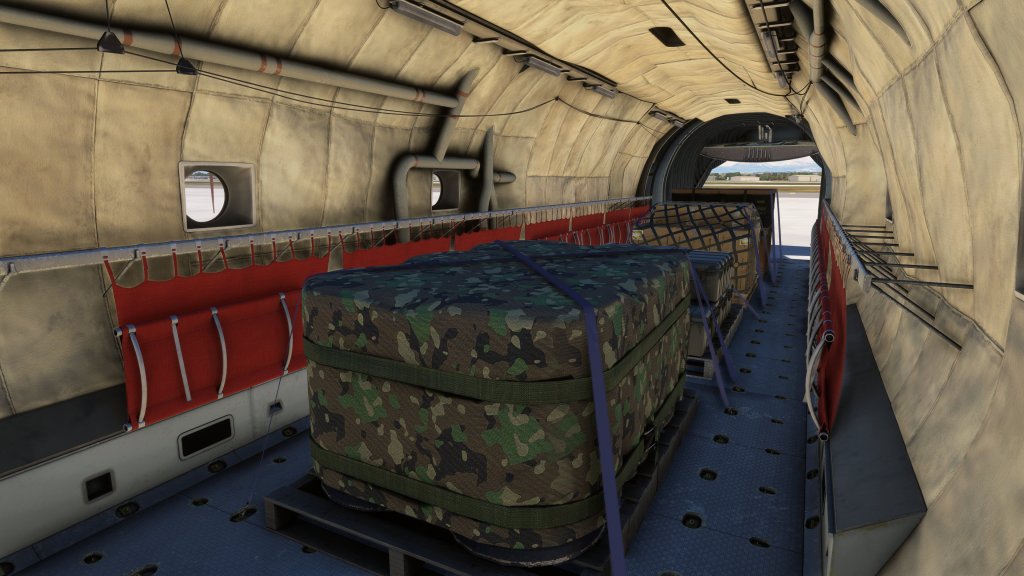
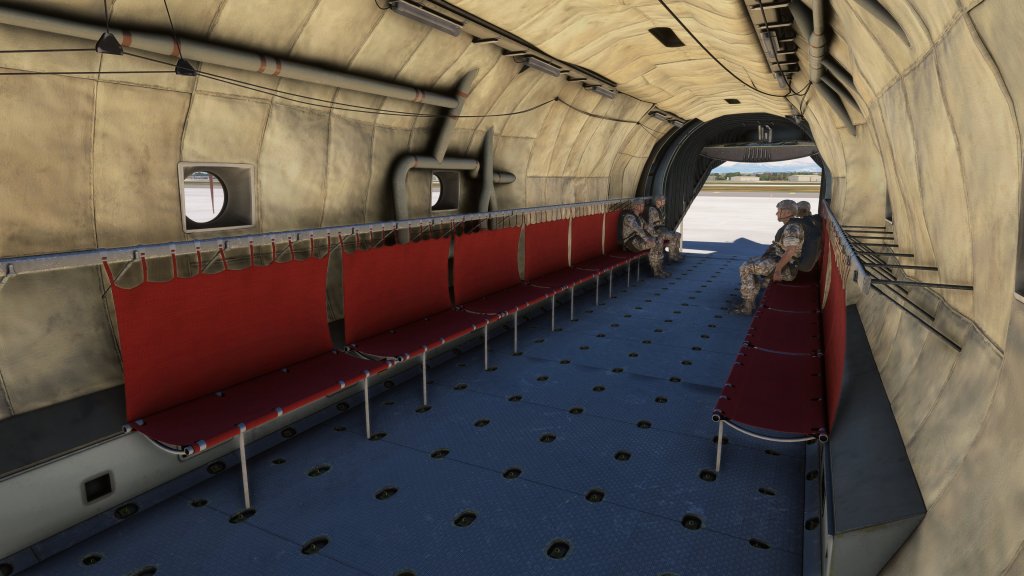

The Transall also has the ability to deploy flares, paratroopers, and paradropped cargo pods too.

Other features for the aircraft include a downloadable manual and a paintkit.
Flying the Transall
Despite those complex systems and features that I mentioned earlier, its not terribly hard to get into the C-160 and just fly it. The military nature of the aircraft together with its performance kind of lend it to being flown less like an airliner/cargo jet, though you can essentially do that, and more like a tactical aircraft.
Low level run through the mountains? Terrific fun! Radar avoiding low level secret insertion missions? Did that last year! Flying a relief mission into a storm affected area? Have done that too. Steep descents into a smaller, slightly off the grid, airport? Yeah absolutely doable. The Transall is still far slower to react than a zippy little bushplane but you end up taking it to some of those same out of the way areas anyways.

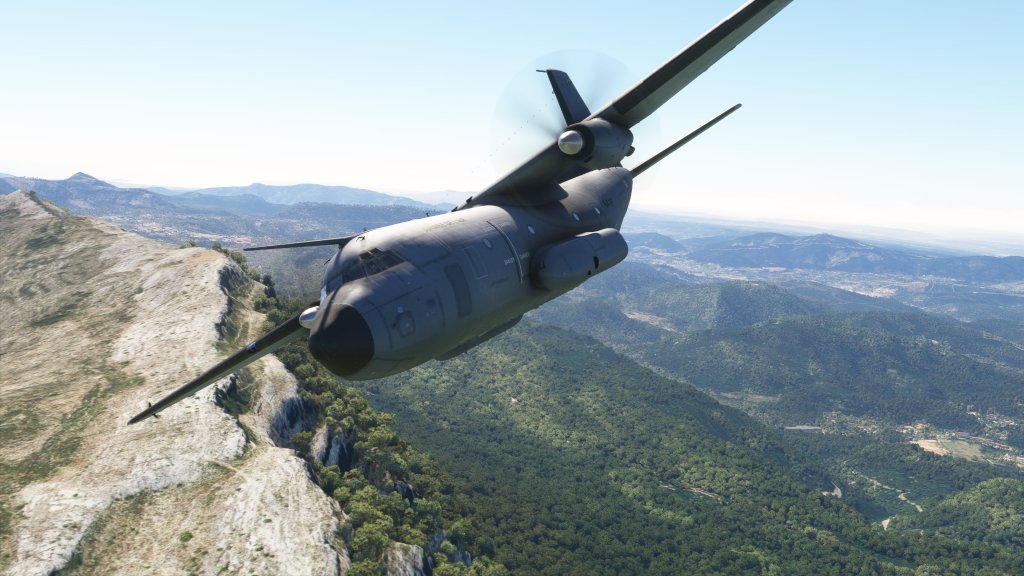


Its small enough, powerful enough and light enough, when not fully loaded, to even be a bit aerobatic though the roll rate does get sluggish at speed. This isn’t a fighter jet, it doesn’t handle like one, but at the same time its quite confident doing these kinds of low level sorties too.
You can also land it in incredibly short distances. Short runway? Rough airstrip? No problem as long as there’s enough clearance for the wings. The roll-out between touchdown point and full stop can be incredibly short. Then you can reverse back to a safe takeoff and go.
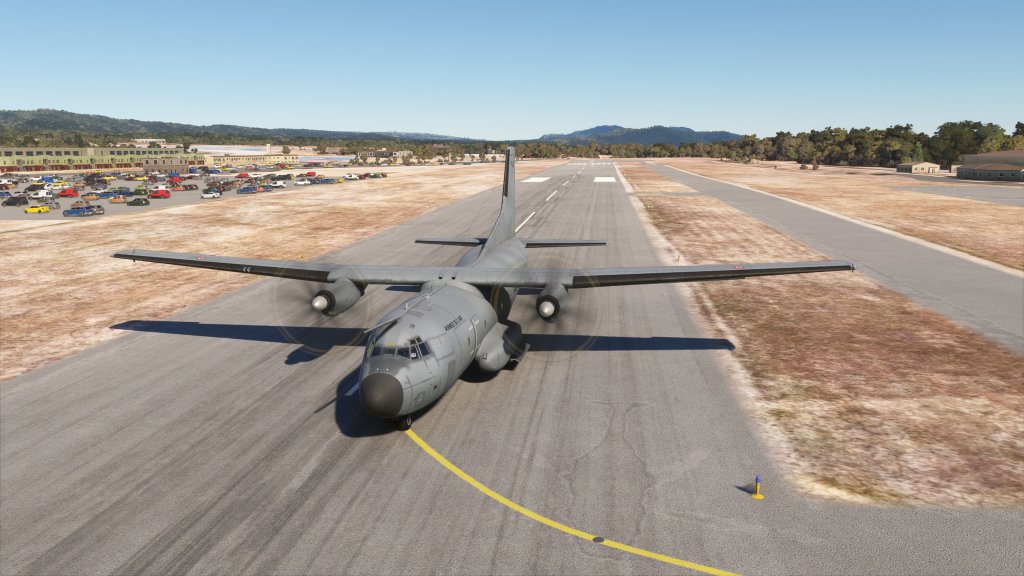
You really do get a good range of experiences with the Transall and that means that your flight profile can really vary quite a bit while operating it. You can very much fly it like a cargo airplane on a set flight route or you can take it off the beaten path. It feels at home doing both.
Final thoughts
What is on offer here is actually quite remarkable. AzurPoly have delivered an aircraft with a complexity level similar to some of the top airliner products in Microsoft Flight Simulator while also offering an airplane that’s a bit more rough and tumble and thus more accessible to a wide audience.
I was very pleased to see the C-160 Transall by AzurPoly be one of the best selling aircraft in the MSFS Marketplace and that high sales figure is fully justified as this is one quality presentation from top to bottom. They currently don’t really have any competitors with few military transports on offer in the market for Microsoft Fight Simulator right now and none that offer the kind of fidelity that this one does.
If you like military aircraft, the C-160 Transall for Microsoft Flight Simulator is one heck of a great product with an extensive feature list, quirky but well done systems, and a flight envelope that somehow manages to combine lumbering cargo plane together with an aircraft that you can actually throw around the skies a bit and land in some rugged places.
The C-160 Transall by AzurPoly is available on SimMarket (€ 32.99), Orbx ($50.00 AUD), and the Microsoft Flight Simulator Marketplace. Pricing is slightly variable but you can find it for about $32-35 USD depending on exchange rates at the time. Check out AzurPoly’s C-160 product page for more information on the aircraft as well.
Screenshots






 Stormbirds
.jpg)
Leave a comment