
I’ve been using VKB’s STECS throttle system for over a year now and have previously offered up part one and part two of my review on the throttle system. Now it’s time for the definitive long-term review of the product! VKB’s STECS competes with a variety of high end offerings but how does it match up with the competition, what value does it offer, does it bring anything unique to the table and most importantly – is this hardware for you? Read on!
Disclaimer
VKB-Sim sent me the VKB STECS for review in exchange for a detailed series of reviews of the hardware. As always, I disclose when something has been sent to me for review. VKB have no editorial control over this review and these words are entirely my own.
What’s exciting?
STECS is the result of a multi-year effort by VKB-Sim to produce a medium to high end throttle experience for flight simmers. The product was announced years ago and took some time to arrive into its final form.
The marketplace is more crowded than it was before with VKB’s STECS up against products from VIRPIL, WinWing and long time industry veteran Thrustmaster. Fortunately, STECS brings a few of its own tricks to the market too. All of these entrants vying for your flight sim dollars so this will definitely be a tough nut to crack. That’s exciting for simmers like us because choices like this help drive companies to offer their best and what is on offer here is definitely exciting.
Unboxing
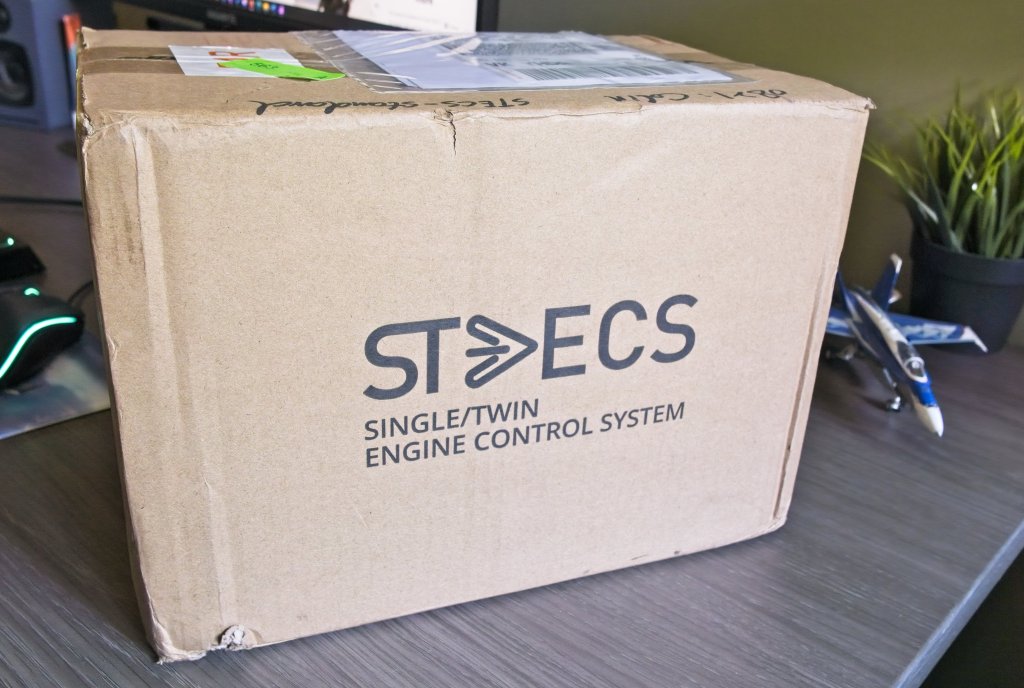
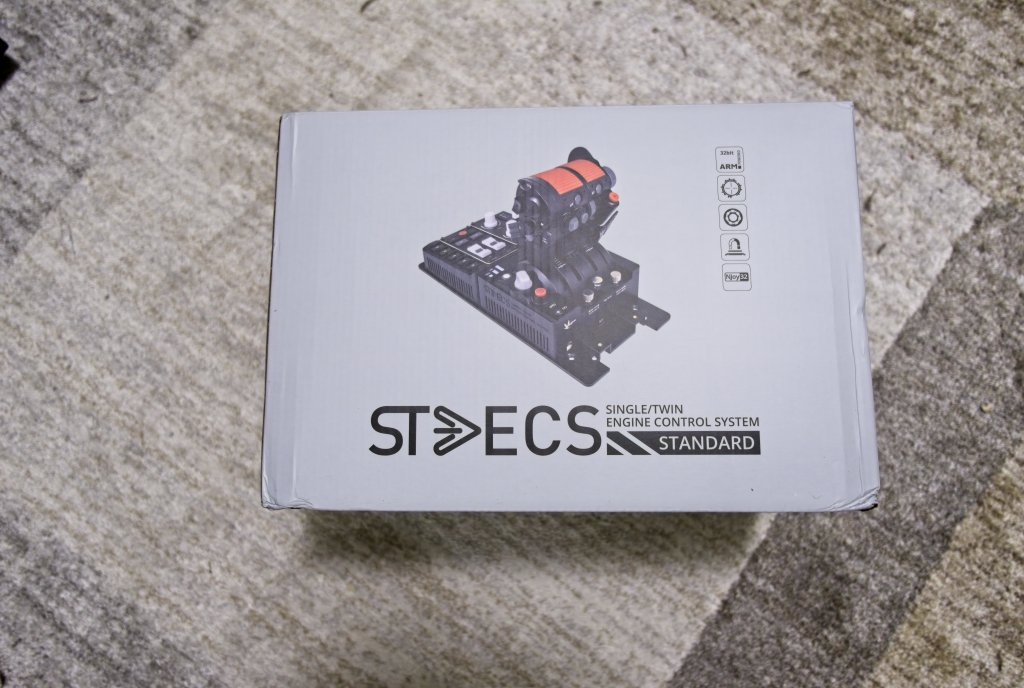
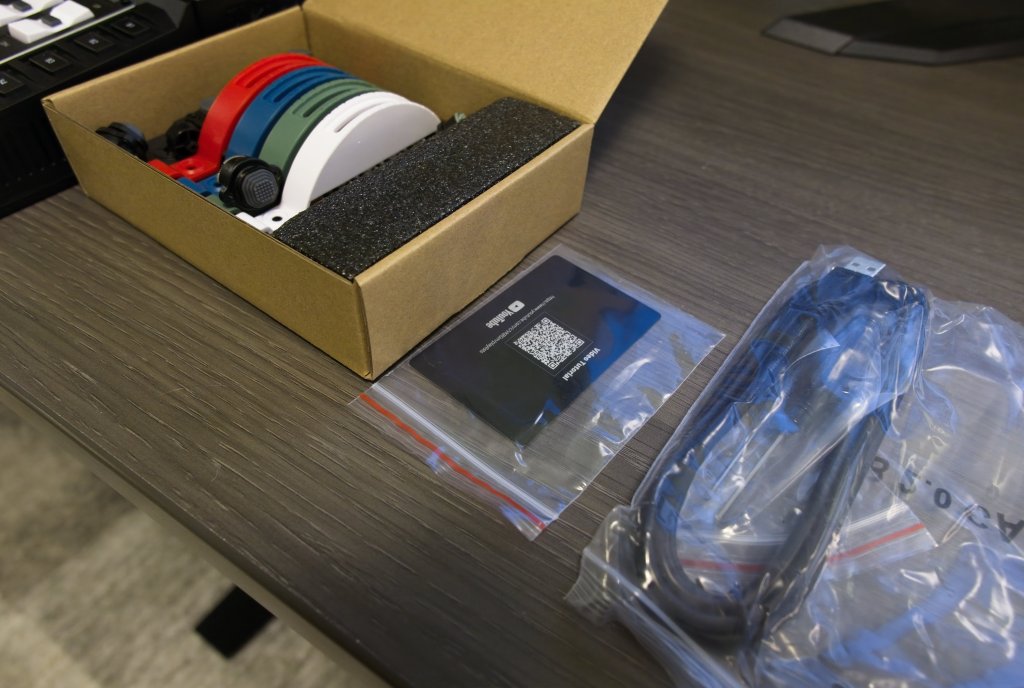
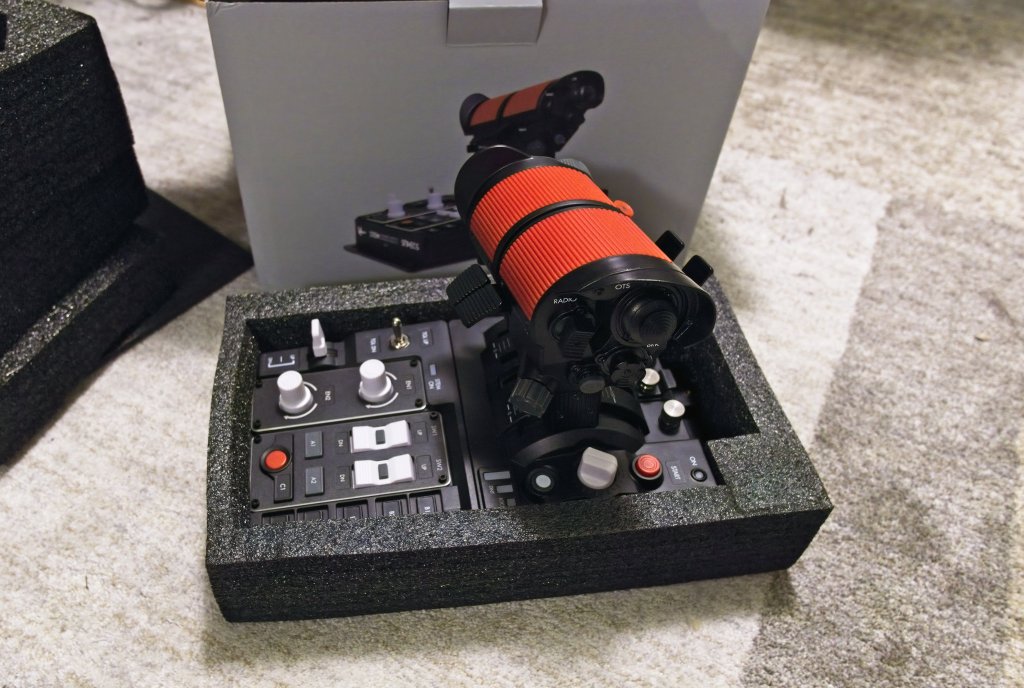
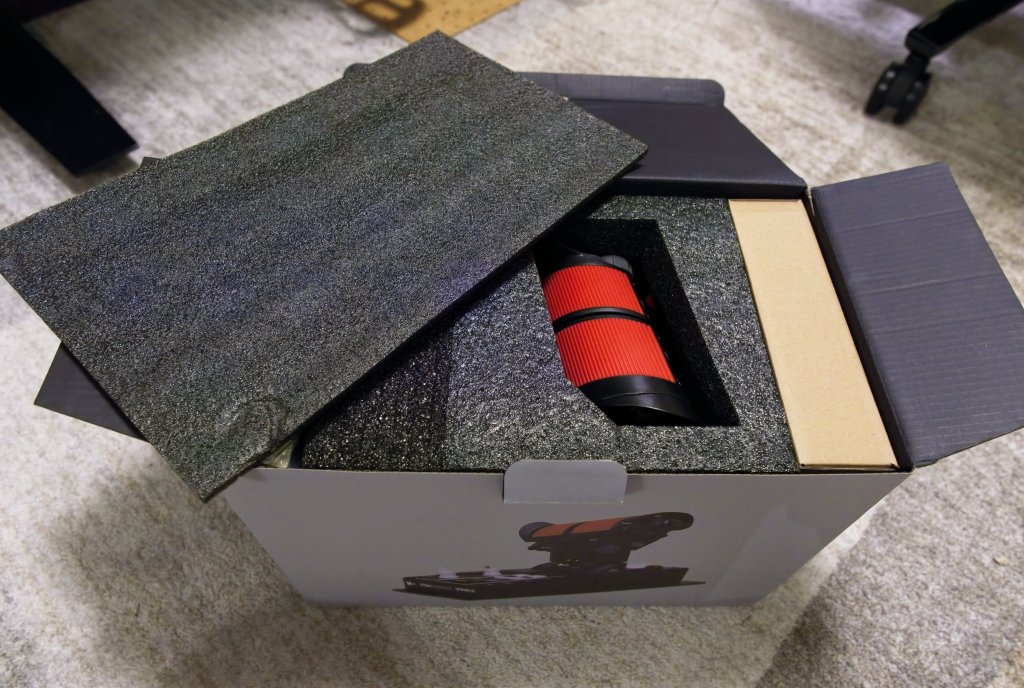
I’ve previously written about the unboxing process with STECS and what was offered in the box. To briefly recap, the packaging was extremely well done by VKB. Foam padding and a marked shipping box protected the product box and the product itself from any wear and tear during the shipping process.
For shipping, the tensioners on the throttle are set to their highest level, locking the throttle into place. I was briefly concerned that something was wrong, however, once they were loosened up a bit the throttle started to move on its own just fine. Its actually smart that they shipped it like this.
Here’s what you will find in the box if you purchase the Standard Edition.
- STECS base
- Throttle grips (labeled MTG-L and MTG-R)
- Red rubber grip pads (pre-installed) and gray rubber pads included
- 5 Detent Frames with the following detent shapes:
- 4 L-shape detent – regular
- 4 L-shape detent – large
- 5 V-shape detent – regular
- 5 V-shape detent – large
- 2 W-shape
- STEM module
- STECS Accessory Magazine
- Phillips head screwdriver
- Hex screwdriver
- USB cable (180 cm / 6′)
Setup process
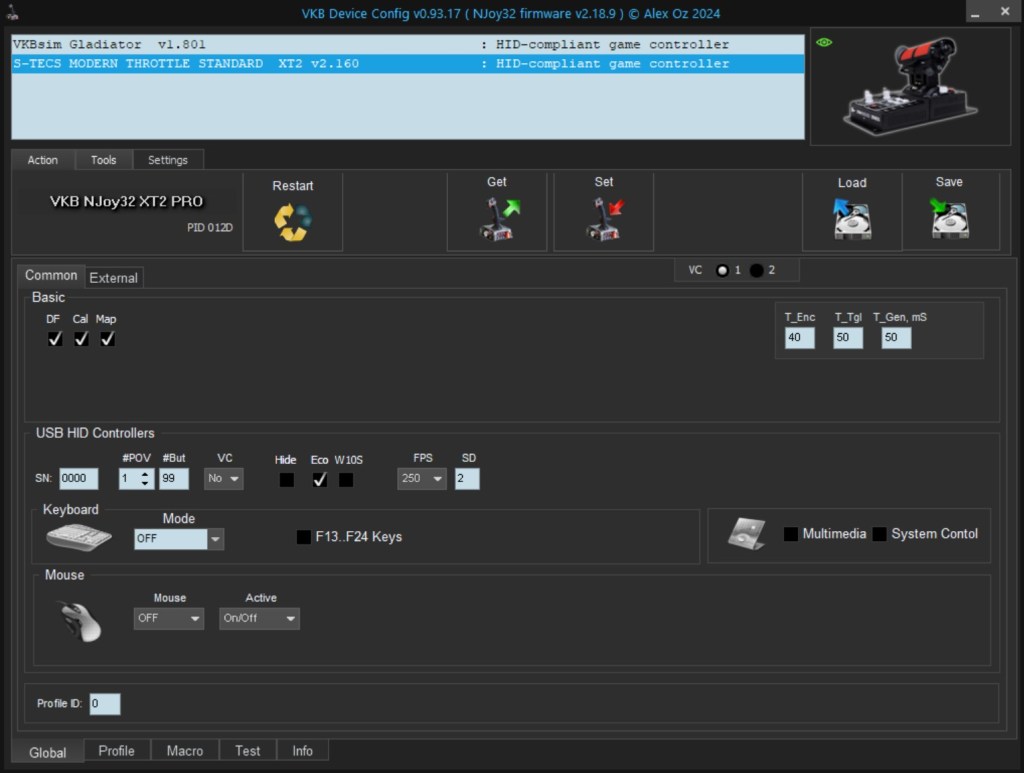
The VKB STECS is nearly plug and play. Though it works best when you plug it in and then download the VKB Device Config supporting software, you can absolutely plug in and go. Each box set comes with a scannable QR code that you can use to get the appropriate geographic location for the software download.
Once downloaded, you’ll get a dialog a bit like this with the Device Config software letting you tweak and configure the unit as you want it to be configured. If you make any changes to the hardware, you’ll also need to come back in here and update the device to match.
Hardware feel, ergonomics and quality
Overall feel
I’ve had a chance to test a bunch of different throttle systems over the years now and each one has come with its own pros and cons.
While the Thrustmaster Warthog and VIRPIL throttles have quite a bit of metal casing to give them that premium feel, VKB has instead decided to go with a virtually all plastic exterior. This unit doesn’t have quite the same “premium” feel that the chamfered metal edges of the VIRPIL MongoostT-50 but that doesn’t really detract from it all that much as its both chunky and solid feeling. And I mean those both in the best possible way!
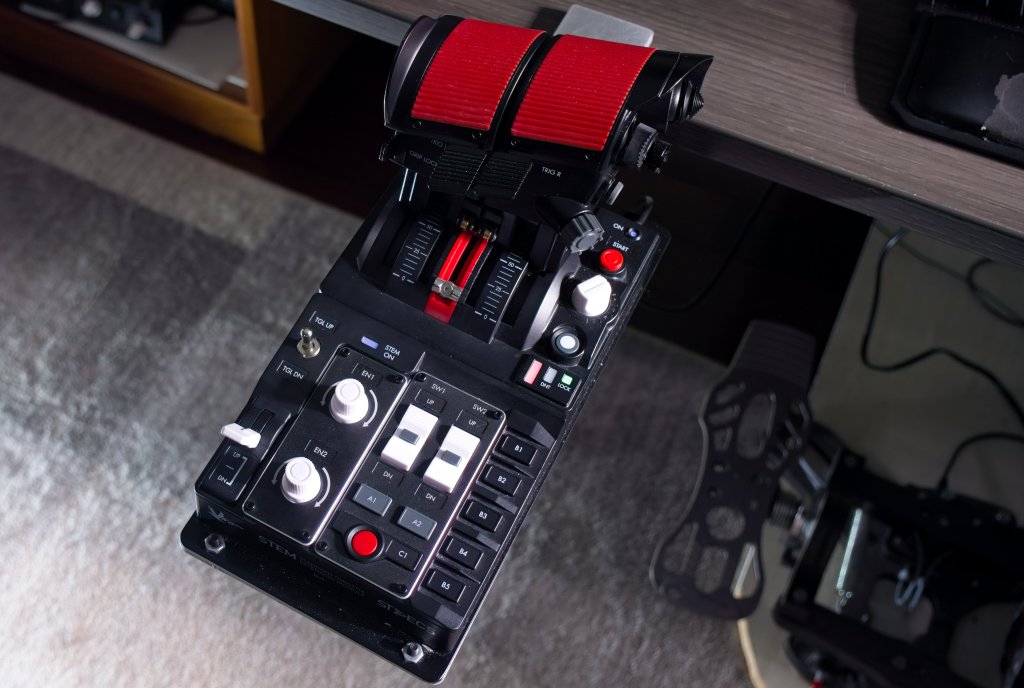
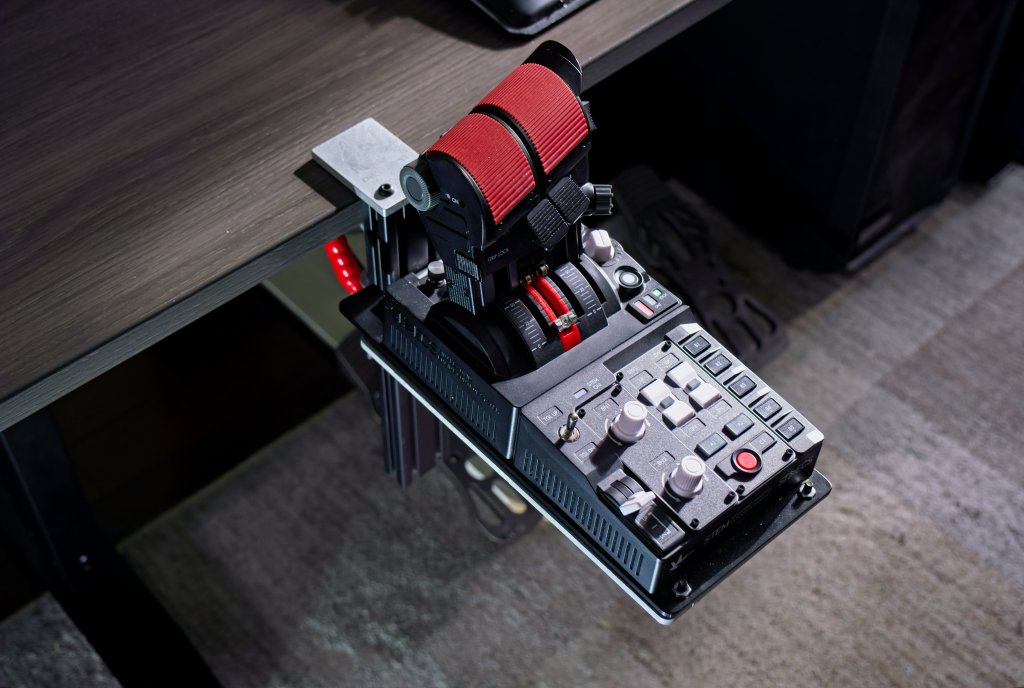
The VKB STECS system is also uniquely modular in the segment. That poses certain engineering challenges making a system that can work in a bunch of different configurations, however, I think VKB’s prior experience here has served them well. The unit, though made up of a couple of pieces, feels absolutely solid and well screwed together. It also didn’t need much fiddling around and it essentially just works as configured.
All of the buttons are solid, responsive, and have enough tactile feel that you don’t have to look at them to know that you’ve successfully pushed a button. The same thing goes for the plastic rocker switches, the model dial, momentary knobs, and the buttons found on the throttle grip itself. While they are plastic, they feel solid and have held up well under long term use.
The throttle grip
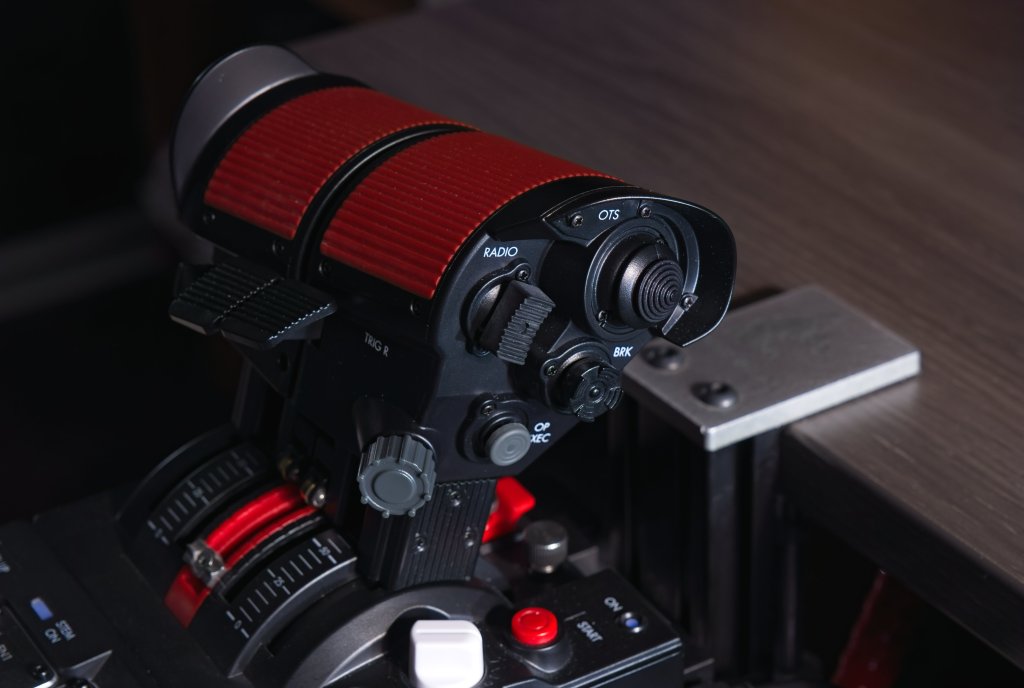
The throttle grip is perhaps the most important piece of this puzzle as its what you’ll rest your hand on most of the time. It has a nice rounded off shape that is actually quite ergonomic. It’s wider at the top than the bottom and the design makes it very comfortable to put your hand on. All of the controls are easily reachable with my medium sized hands.
The colored rubber grip on the throttle is excellent. After a year of constant (almost daily) use, it has shown zero signs of wear and tear and VKB ships this with two (grey and red) so you can both customize but also swap out should it eventually wear out. I don’t think this will be an issue except maybe over the very long term.
The throttle movement itself is a key feature too and VKB have executed on this well. Two controls on the front of the unit lets you configure just how tight you want it to feel and so you can choose if you want something weighty or something faster and lighter. My only complaint is that if you do for the looser configuration that the unit is heavy enough to then start to droop on its own. To be fair, you have to set it to a very light setting, but it is worth noting. At a mid level it stays rock solid in its place and it hasn’t slipped or become lose over the last year.
The split throttle mechanism is functional and kept in place by a single sliding plastic piece. To date, it’s been easy to disconnect, go split throttle, and then reconnect them again. It can be a bit fiddly to reconnect though it has worn a small amount which has made it easier.
There is an axis based hat control that naturally falls on your thumb. It’s ideal for slewing radars, target pod controls or used as a view control depending on your preferences or the sim that you’re flying in. I think VIRPIL manages to sneak out ahead with an even more precise feeling system than this one but these two are essentially neck and neck and far in advance of the old units you may find on the Warthog series. I hear Thrustmaster updated them so maybe more modern units compare favourably, still VKB’s got a solid analog stick here. I should mention too that the thumb control is on a slight angle which bothered me at first but I’ve since gotten over. It may actually be more natural this way than I first assumed and now I use it without a second thought.
The buttons feel reasonably solid as do the four way + button push hat switches. Many buttons can be swapped for additional hat switches which is great customization. I did, however, find it a little fiddly to setup in that I had no issues in actually installing them physically but getting the software to recognize them was a little more challenging. As it is, right out of the box the configuration is still more than enough for most flight sim purposes outside of maybe the Apache in DCS World.
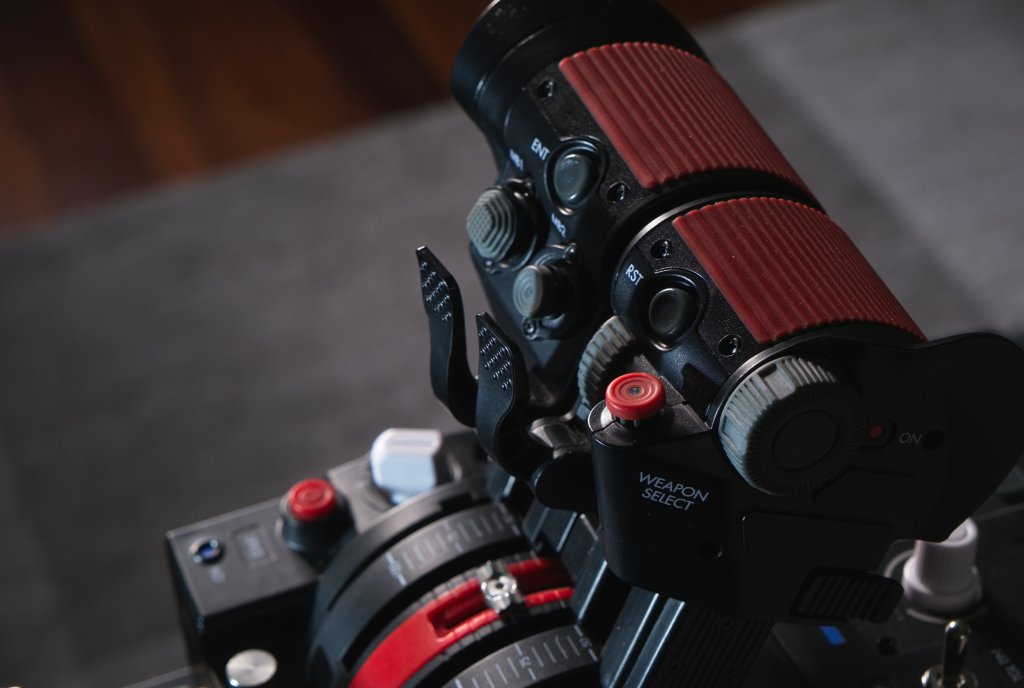
The “radio button” is a two way plus push button on the side of the throttle. It’s perhaps the least well implemented and feels a little wobbly though I’ve never found it to actually be a problem over long term use. The underlying button itself is sturdy but the rocker style button on top seems to move around a fair bit. It’s still functional and tactile when activated.
The base STECS + STEM
The STECS Throttle System Standard comes with both the STECS core component which is the throttle with a pair of buttons and a mode switch control. It is then paired with the attached STEM module which brings with it a ton of extra buttons and controls. This is the version that VKB shipped to me for testing, however, there are a couple of other configurations which I’ll talk about a little later on.
The STEM has a metal toggle switch, an up and down handle, two momentary knob controls with push button, two rocker switches, and eight push buttons configured into a couple of different groups.
I wasn’t sure about this setup at first but I’ve grown accustomed to it because its so flexible in so many different purposes.

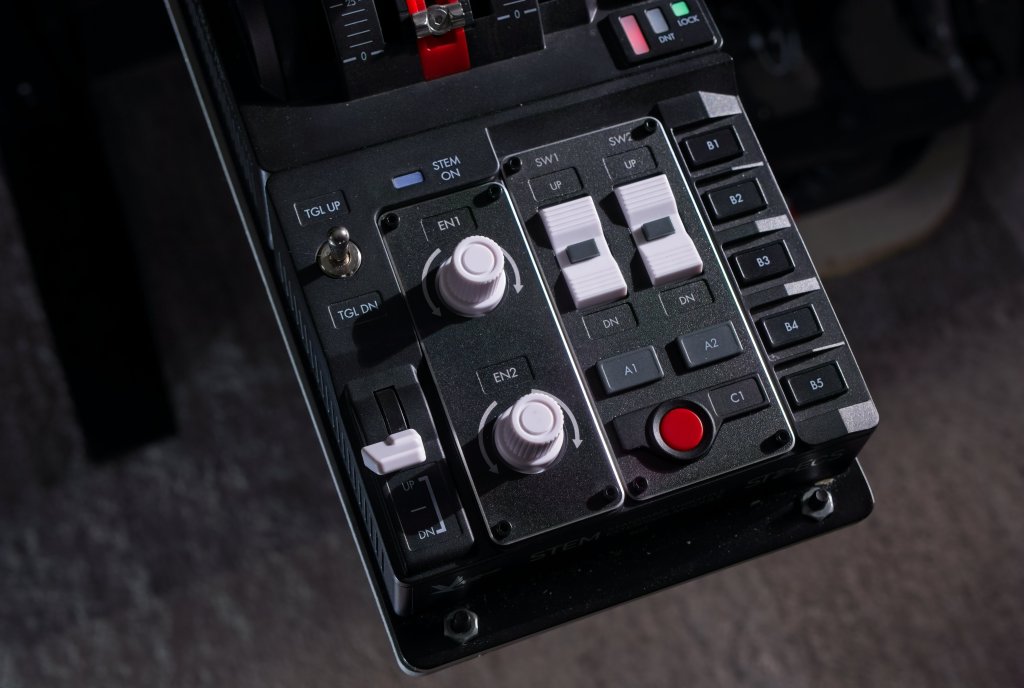
The toggle switch is ideal, for example, for setting master modes or being used as a master arm control. The up and down toggle with middle detent is ideal as a landing gear control and it ensures that you know if your gear is up or down just by feel. The momentary dials, something that has been problematic on other throttles I’ve tested, work great. You can use them to dial in altitude, barometer, speed, or other settings in the cockpit as the hardware on the unit queues up multiple rotations and dispenses them out to the software rather than causing the glitching that I’ve seen on other units.
We’ve got the rocker switches which are useful for a litany of situations as are all of the various buttons. I like that we’ve got them grouped into three different styles with five running down the side, one semi-recessed, and two under the rockers. It creates logical groupings you can use to bind whatever sets of controls you need.
Choosing your configuration and pricing
VKB sell the STECS in four configurations. Each one with a slightly different price and configuration. While this review was done with the Mark I model, there is a subtly upgraded Mark II that has replaced it (thus the nomenclature).
- STECS Throttle System Mk.II – Mini ($199 USD)
- STECS Throttle System Mk.II – Mini Plus ($219 USD)
- STECS Throttle System Mk.II – Standard ($279 USD)
- STECS Throttle System Mk.II – Max ($319 USD)


The mini, of course, is the most basic of the versions with just the moving throttle and base with mode controller and two buttons. The mini plus adds the STECS ATEM (Auxiliary Throttle Extension Module) with 4 buttons, 2 safety protected buttons, and a four way directional encoder with central button. The Standard swaps the ATEM out for the STECS STEM (Standard Throttle Extension Module) with eight buttons, three position flip switch, two K-switches, and one self centering toggle. Finally, we have the Max which brings back the ATEM, adds the GNX MFH (Multi-Functional Holder) and mounts the STEM up on the holder.
All of the options are a bit bewildering at first, however, the system they’ve created is quite logical and nicely interconnected once you get to know it. You can alternatively mount other pieces such as the GNX FSM-GA with a more general aviation type setup.
VKB are also offering Space Throttle System versions with a six degree of freedom system rather than the split throttle.
I’d say the biggest determining factor here is which model works best in the setup that you have. Some may want the mini, not because of affordability, but because it fits into limited space on a desk or mount. Others will go for the Max with a configuration that is suited to a cockpit setup. I suspect that the Standard edition with its middle of the road price and configuration similar to that of other models from other companies will be the volume seller.
Because VKB sells each of the components individually, there is the potential too for purchasing the lower priced Mini first and then buying the other components and attaching them later.
All in all, there’s a lot of choice and smart modularity here that allows for customization and price consciousness.
How to use it in different applications
The benefits of a long term review is that I haven’t just been flying with the STECS for a few weeks, testing out a handful of aircraft, but rather I’ve been using it near daily and flying it with everything. General aviation, helicopters, military aircraft of all varieties, gliders, you name it… if I’ve been writing about it in the last year I’ve been flying it with the STECS.
I’ve flown A320s, 737s, the SA342 Gazelle, Mi-24P Hind, AH-64D Apache, F/A-18C Hornet, Cessna 172, the DA42, various Spitfires and Focke Wulfs, multiple gliders and too many others to list. It’s easily adapted to most of these with the occasional creative thinking required to get the most out of it.
Jets and helicopters work great with STECS. The dual throttle, split or linked, are great for these applications and the control panel is ideally suited to aircraft like this regardless of military or civilian. The throttle unit is setup more like a combat aircraft but it translates nicely for civilian aircraft operation too. The four way hat switches let you manage a ton of different controls and the thumb axis is great for radar and targeting pods.
General aviation and warbirds requires a bit more creative thinking. The rotary axis on the throttle I’ve often used for propeller pitch, though some may decide to use the split throttle for that. I often bind mixture control to one of the four way hat switches with the other switch being used for radiator controls.
I’ve flown helicopters on this setup as well. Separate detents and maybe even a slight adjustment of the tensioners to get a lighter feel might be needed to get a more responsive collective but I would say that this unit is absolutely workable for helicopter fans too. A dedicated collective is not in the cards for everyone and so this does work well enough.
The included throttle detents are easy to setup and I have mostly set them and then forgot them because they work well for airliners and jet fighters and other types of aircraft alike. I have a bump at the 5% prevent the throttle from dropping to zero which can be used for reversers in an airliner or keeping out of the initial startup power on a warbird. Similarly, I have bumps setup at about the 70% acting as a TOGA setup on some airliners while being my afterburner detent on jet fighters. It’s a compromise that I’ve setup to work with a wide variety of aircraft, however, they are completely customizable and you may find a different method better for you!
What is different with the new Mark II model?
VKB has made a few adjustments with the Mark II which arrived after I received my review copy. The majority of what is here is unchanged, however, they have changed the thumb mini-stick out for a five way hat switch (four way plus push) and then the mini-stick moves to where the index finger is.
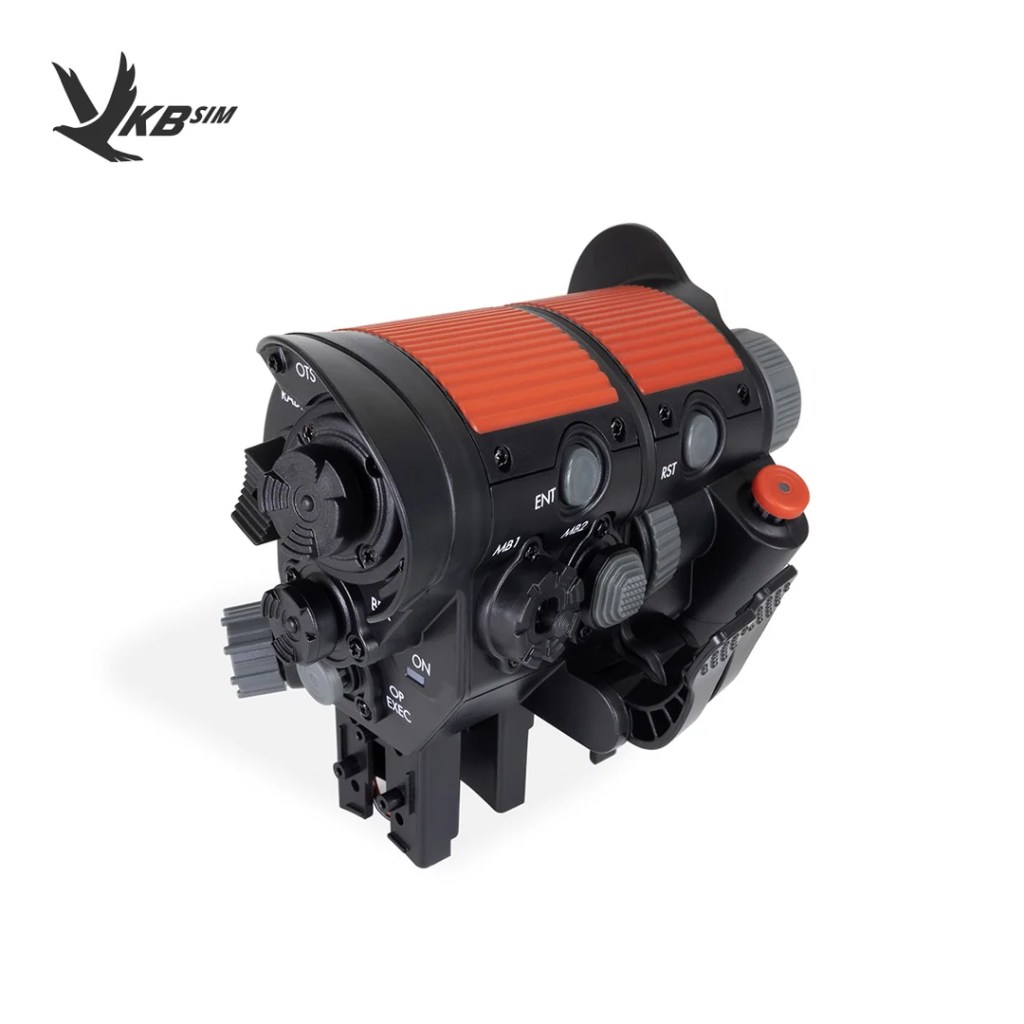
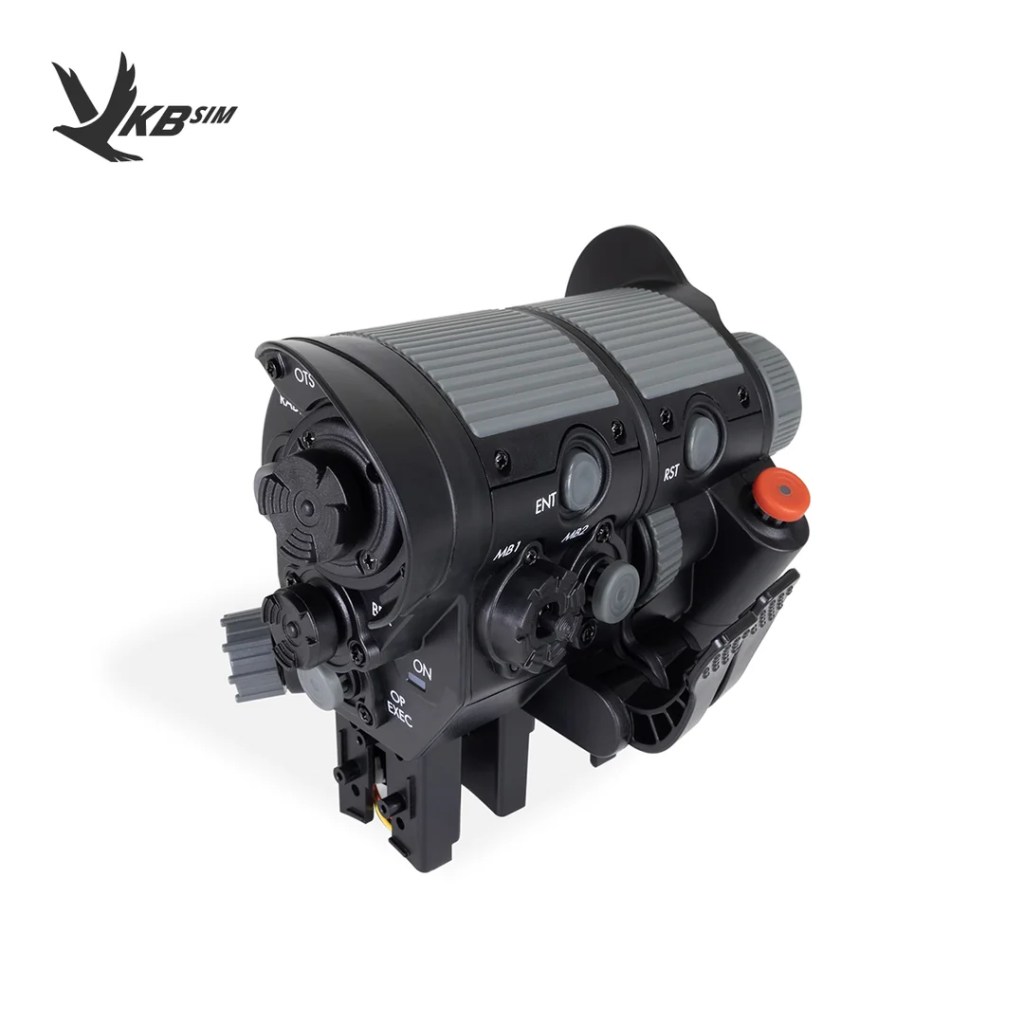
This is probably a smart change following user feedback and mirrors some of my earlier thoughts. VKB announced the changes on the r/HOTAS group and you can read that here.
Final thoughts
The HOTAS/throttle market is getting a little crowded these days and VKB’s long awaited entry into the market has finally arrived and made a mark over the last year. Was the wait worth it? I’d say it was! This is an excellent product by the hardware maker with a highly modular, configurable, throttle system available at multiple price points offering premium features in nearly every category.
I have very little in the way of criticism that I can offer this product and especially so after the changes for the Mark II system. For those of you deciding on a system, the VKB solution should definitely be on your list to compare against. There are some minor quibbles on the configuration and I would have loved to see a secondary axis control where the mode dial switch is as I tested on the VIRPIL but that aside I think the layout is excellent.
One of the things that I appreciate about this style of throttle, versus some of the other options I’ve seen released recently, is that it smartly aims to be “generic” enough that you can use it for a bunch of different airplanes. While some may be configured mostly around a single airplane, this system is intended to be flexible enough that you can use it for everything from a fighter jet to a business airplane to an airliner or helicopter. And that’s absolutely what I’ve done throughout several months worth of testing!
I’m also pleased to report that the unit has exhibited rock solid reliability throughout my testing. My earlier reviews incorporated my feelings at the time but after a year of use I can also report that I’ve had no issues at all with it. VKB has made some great hardware before and this one is yet another example.
Versus the competition you’re hard pressed to find a bad system these days. Competitors including various options from WinWing, VIRPIL, and Thrustmaster. The configuration of the systems and the sometimes small, sometimes large differences in price should probably steer your decision making. You can’t go wrong with this system and I’m very pleased to give it top marks!
VKB have setup shop in various regions around the world. If you’re looking to purchase or get more information, check out the storefront appropriate to you.
- VKB Europe
- VKB Canada (limited selection)
- VKB Australia/New Zealand
- VKB India
- VKB Asia-Pacific-Oceania
- Rest of the World – please email VKB HQ directly



 Stormbirds
Leave a comment