
Released late last week, Microsoft and Carenado have collaborated together again to offer up a new aircraft for Microsoft Flight Simulator 2020 and 2024. In this mini-review we go over some of the basics of the release and determine if the airplane is worth your time. I also do a little bit of a comparison between it and what the Just Flight PA-28 series offer. Let’s go!
A bit of history
The history of the Piper PA-28 Cherokee and all of its variants is probably worth a book or two. Deciphering the naming schemes and all of the different models that have come out over the years is probably worth a tome as well.
Piper designers Karl Bergey, Fred Weick and John Thorp designed the PA-28 series as a lower cost alternative to the company’s PA-28 Comanche. With simpler components and a fixed landing gear, the aircraft had lower performance but was better able to compete with Cessna’s 172 series. Compete it has! The PA-28 series has seen over 32,000 produced since its initial production in 1960, ranking it the fourth most produced aircraft in the world behind the Cessna 172, Ilyushin IL-2, and Messerschmidt Bf109 (isn’t that a fascinating list!).
The PA-28 on hand is a PA-28-236 Dakota fitted with a Lycoming O-540 engine de-rated to 235 horsepower. This is more akin to Cessna’s Cessna 185 than the 172 so it has a bit more pick-up-and-go ability. The Dakota was the name used in 1979 when the 236 series picked up the semi-tapered wing which reportedly gave better stall control.
Despite the immense production run, Microsoft Flight Simulator 2020 nor 2024 has had a Piper PA-28 in the sim as a “default” or first party offering. Well, that’s all changed now with this release.
Visuals and sounds
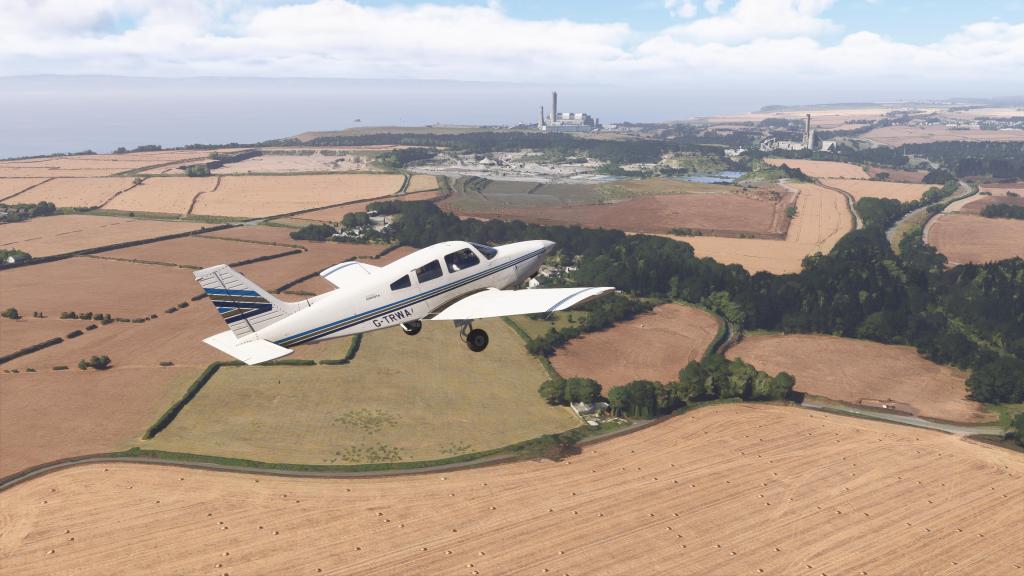


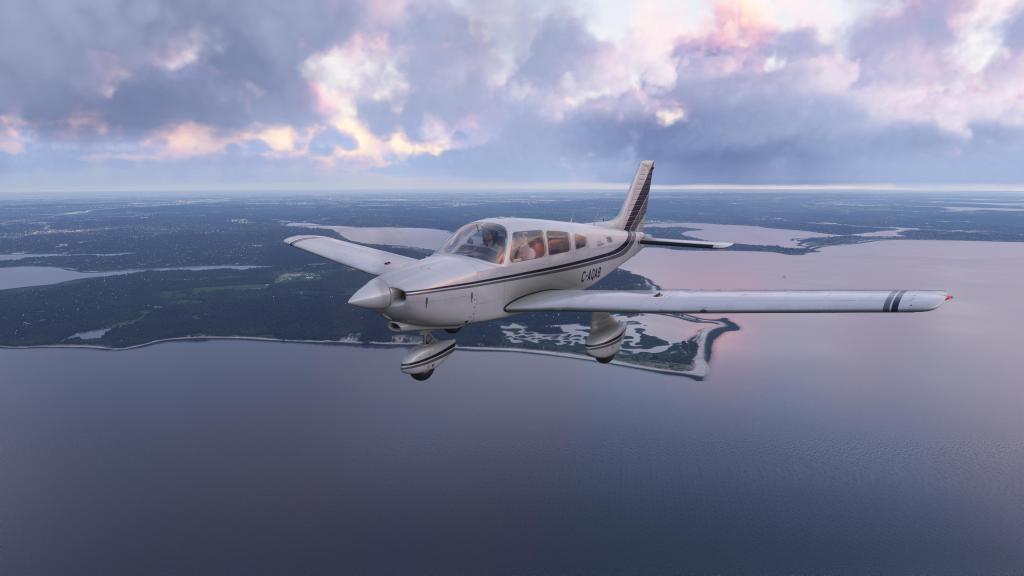



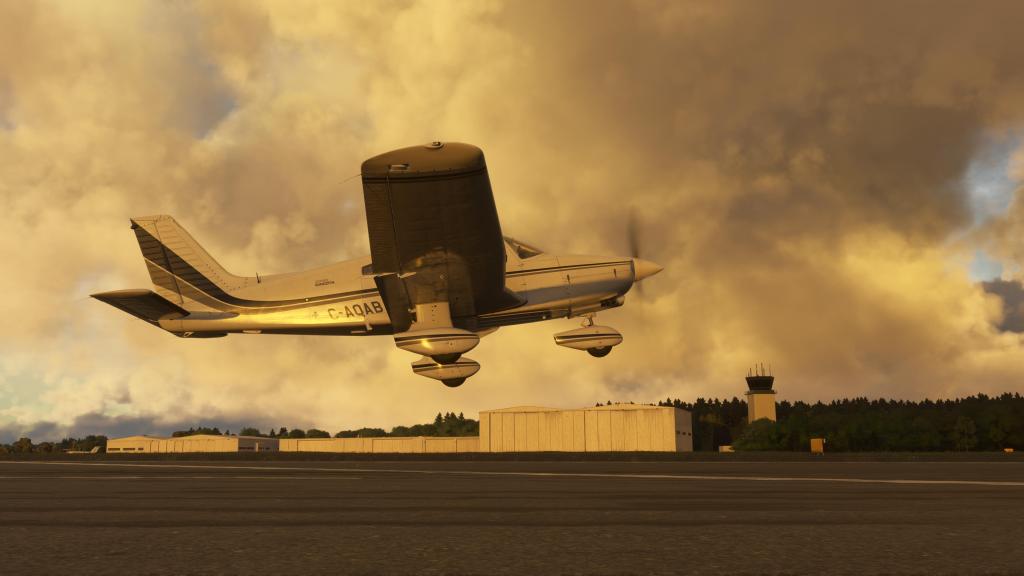

This aircraft has been developed by the folks at Carenado. One of the things that they are known for is having strong visuals and this one impresses quite a bit. Both inside and out, you’ll see very detailed textures that are at the top of the class when it comes to general aviation aircraft. The interior lighting is also very impressive with great visual effects off the analogue controls. The leather seat textures look like they are real… I almost feel like I could smell them through the screen they are that good.
You’ll see the same experience on the outside where the textures and model work are superb. I particularly appreciate the effort that Carenado has gone into to make things like the static whips move around in the airflow. Its a nice touch they’ve added to other aircraft and haven’t missed out on here.
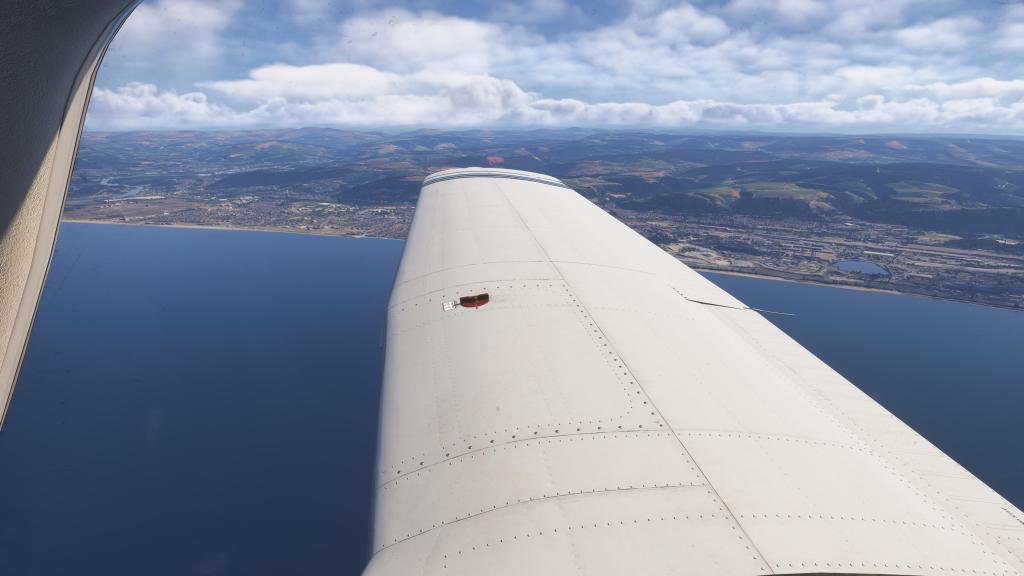


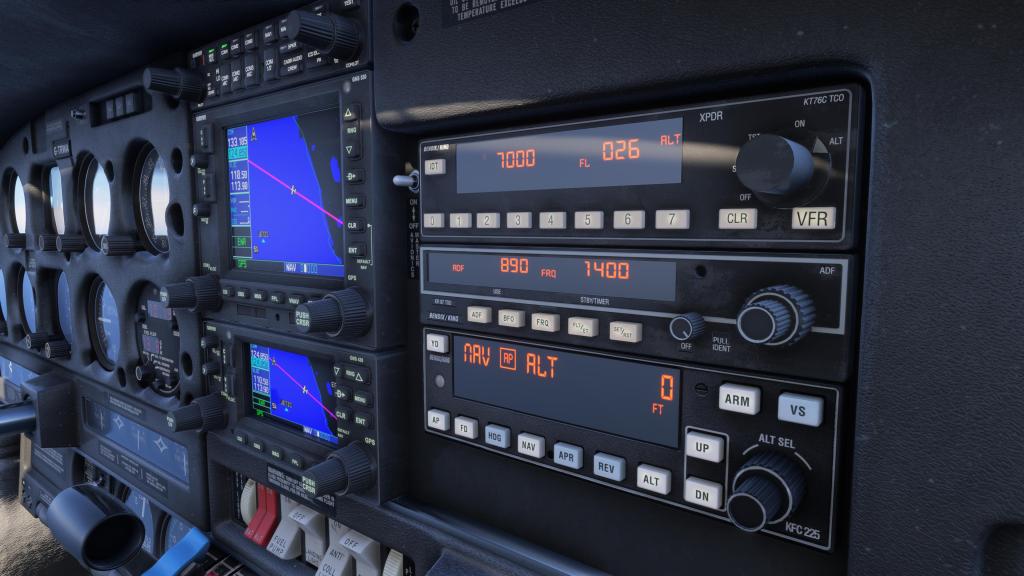

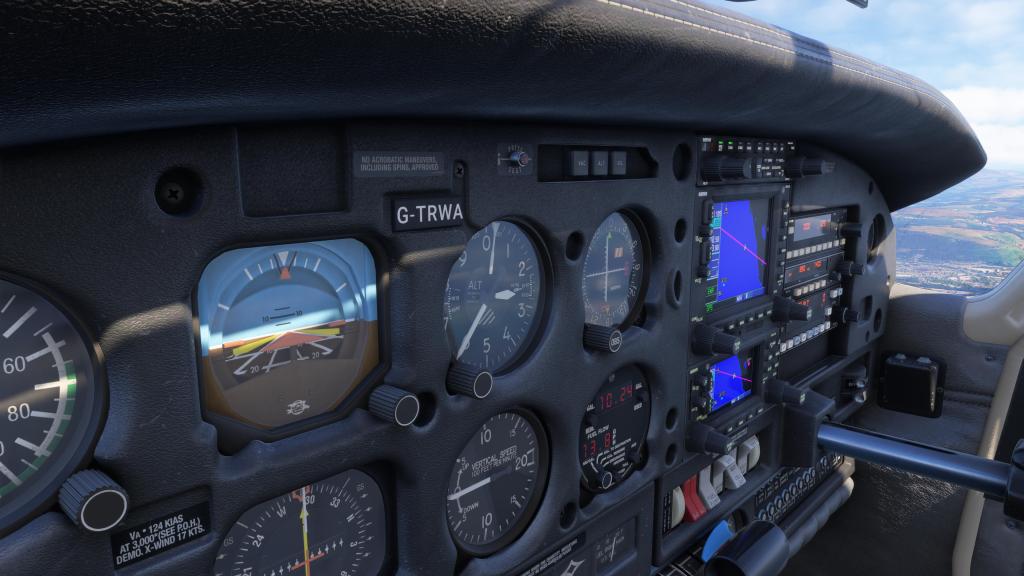

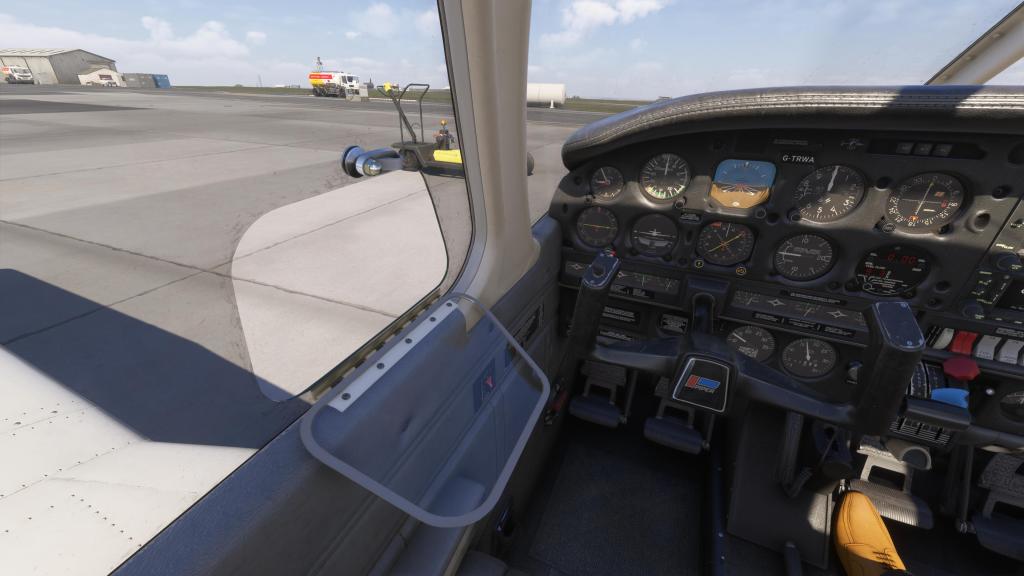
The sounds are very typical of Carenado work. Its not the best in the industry but its more than adequate and it sounds very similar to the other PA-28s I’ve flown in flight sims as well.
There’s appropriate sounds for the fuel pump, the various switches make satisfying thunk noises, and the airframe creaks and groans through heavier maneuvring.
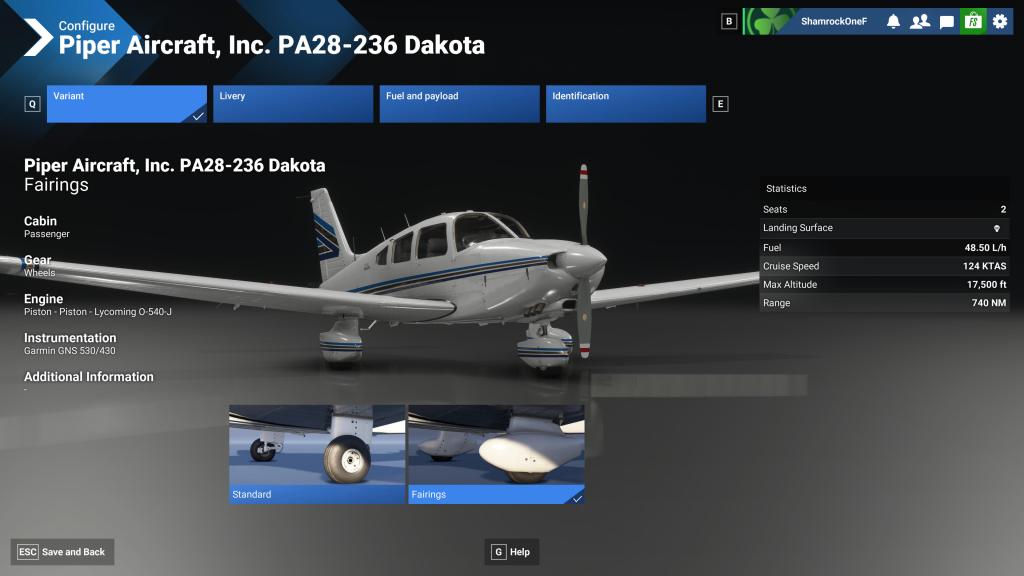
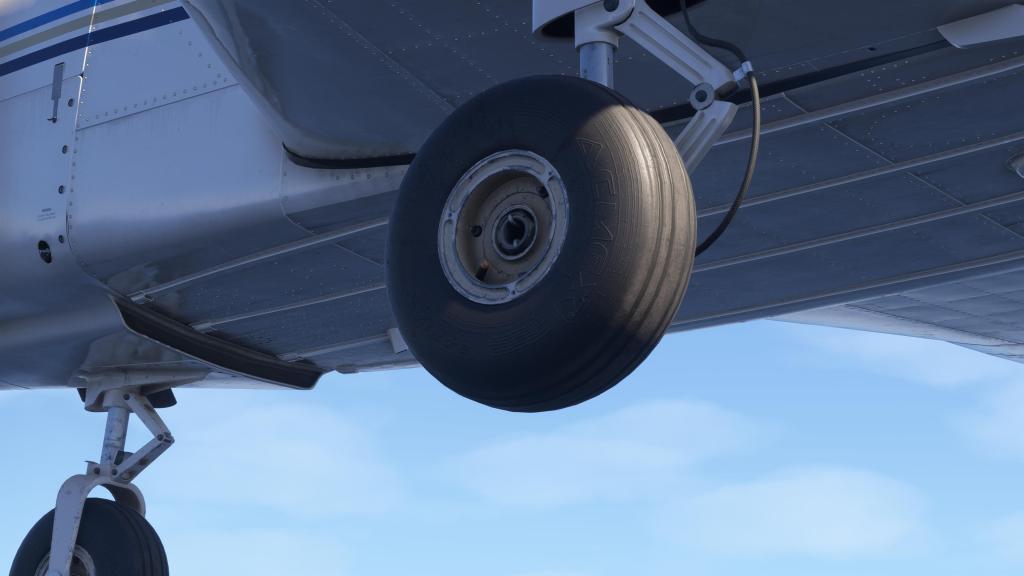

There’s one option for the aircraft with the ability to choose between fairings on the wheels or standard configuration without the fairings. I kind of like the look with the fairings on so that’s usually how I have been flying it but you’ll see both in the screenshots.
Systems and flying
Another hallmark of Carenado is generally well equipped if not very deeply simulated aircraft systems. What you won’t get here are system failures, reliability indicators, or any sort of functional electrical system. The avionics on hand are what you’ve got and there are no real options beyond that.
The good news is that this is generally well equipped with a standard six pack, Garmin GNS530/430, autopilot, comm and nav radio, and a fuel flow calculator. One of the things I tend to look for in a general aviation aircraft in MSFS is if they can do long distance cross country trips which usually means having a GPS (or at least a nav radio) and having an autopilot so bathroom breaks and house chores can be done along the way – this one has that ability which is great.
The PA-28 here seems to fly just fine. Again, Carenado aircraft are rarely the most lively when it comes to flight models and this one is generally fine with hitting the numbers and flying the way you’d expect it to but it doesn’t have some of the nuance you might see elsewhere. This is true here. If you hard over on the rudder the aircraft comes back to center pretty quickly without much oscillation. It could probably stand to be made a tiny bit more lively.
It does seem to stall pretty well. I did a standard power off stall and it dropped the nose and kept on going. Then I got creative on the controls and put it into a brief spin which it again recovered from well and fairly convincingly. The PA-28 is reportedly quite benign in stall conditions so this seems right.

This PA-28 also supports the walkaround feature with doors the open, fuel caps that come off, and covers that need to be removed before flight. Generally these are well implemented although the entire system remains a bit finicky in 2024 and this aircraft has a few that are difficult to find the clickspot for.
Comparison with Just Flight’s PA-28 series
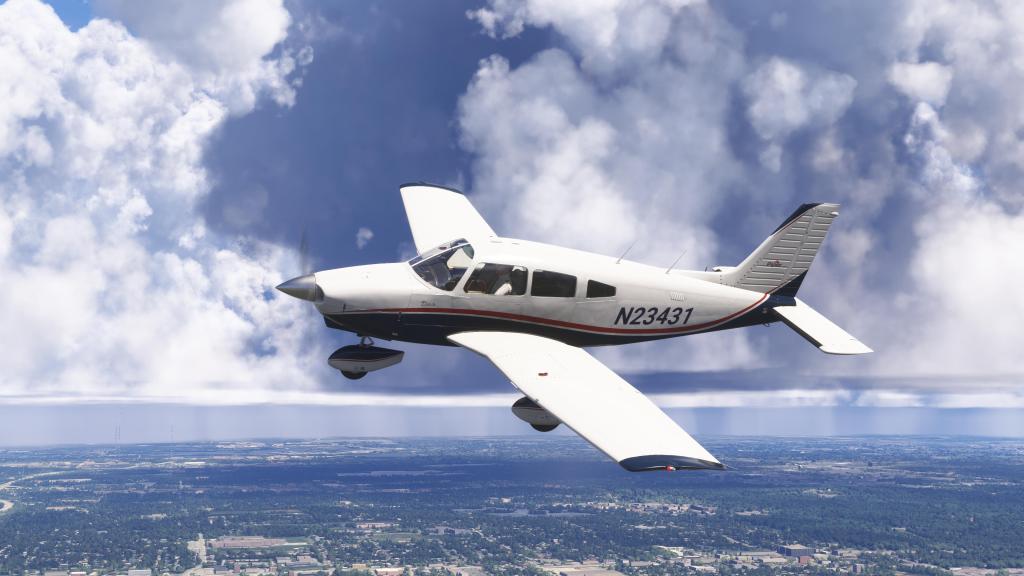

It was hard for me, coming off of a few Just Flight PA-28R Arrow III/IV flights recently, to not compare the experience between what Just Flight has in a payware option and this more cost effective version (especially for 2024 owners where its free).
This one by Carenado is pretty good. You manage to get about 90% of the experience for quite a bit less. It is, however, in the 10% extra that you find some enjoyable nuggets.
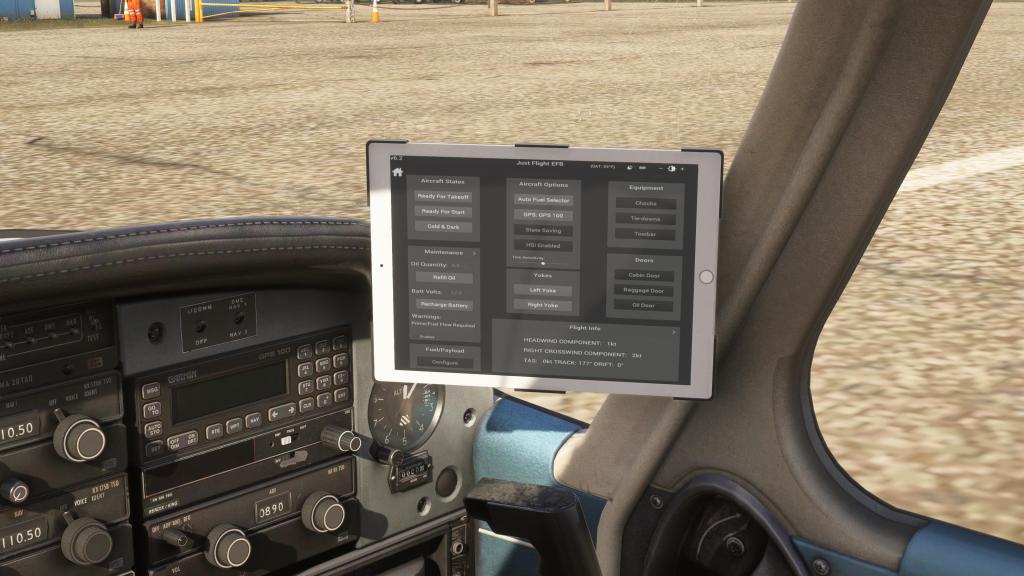
My impression is that the Just Flight version just manages to offer a bit more of everything and a lot of its interacted through that versions EFB tablet interface. Just Flight’s PA-28 has several different avionics configurations including support for both third party GTN750 touch screens (the PMS50 and TDS). It also has a maintenance system with persistence across flights. The whole aircraft’s flight model also feels a little more lively both in the air and on the ground and that is worth a fair bit in my book.
Visually and aurally they are surprisingly close and I think the Carenado version may even be slightly better in some visual aspects. On the other hand, Just Flight’s liveries are more interesting and their interiors are all slightly different with different colours and fabric types to match.
Now the PA-28R Arrow III, PA-28R Turbo Arrow III/IV, and PA-28-181 Warrior II all represent slightly different versions of the Piper series and there’s more than enough room in the simulator for all of these models.
Make good campaign and final thoughts
The bottom line is that this is another solid general aviation offering for MSFS. The quality is consistently good, the aircraft’s capabilities make it useful for all kinds of GA flying, and it will generally be a fun time doing it.
If you’ve got MSFS 2024, this new aircraft is the third in the “Make Good” series of offerings where Microsoft has been giving us aircraft for free as kind of compensation for some of the troubles of 2024’s launch. It’s a gesture that I think is generally well appreciated.
While the CAP-4 was just alright, this Carenado release equals well with the Cessna 185F that they also developed and released as part of this program. These aren’t tremendously deep aircraft in a simulator sense but a casual flyer will find that these offer more than enough to chew on. For MSFS 2020 fans, you can buy this for a very reasonable $14.99 USD in the Marketplace. If you’re expectations are middle market, you’ll be generally quite happy with the PA-28 here and if you want a little bit more I can highly recommend that you spend some extra cash for the Just Flight PA-28 series.



 Stormbirds
Leave a comment