
While other developers have done all kinds of different versions of the Boeing and Airbus airliners, Just Flight have continued to provide something unique and different. Their latest airliner release, the Avro RJ, was initially available for MSFS 2020 in the fall of 2024 and then upgraded to 2024 compatibility and later 2024 native support in the summer of 2025. Just Flight have continued to do something a little different which is always good to hear. But is different also good? Does Just Flight’s latest airliner hold up versus the competition? Let’s explore!
A bit of history of the Avro RJ and the BAe 146 before it

The BAe 146, the precursor to the modernized Avro RJ, started life as an airliner project developed by the UK’s Hawker Siddeley aircraft company.
The airliner was intended to fill a niche role between the turboprop airliners and small jet airliners. It was envisioned as a “feeder jet,” bringing passengers from smaller airports with smaller runways and into larger hubs where they could move to a larger airplane. Its designers also saw a market potential in mountainous and rougher fields at higher altitudes – places where some other airliners might not dare to go. Initial design work began in 1973, however, progress was initially slow and only picked up steam after Hawker Siddeley’s transformation into British Aerospace.
The four engine approach was also somewhat unique with most four engine airliners being large aircraft intended for transcontinental flying. The BAe 146 was not intended for that so naturally we ask, why did it have four engines? Turns out the reason is noise abatement. The airliner was envisioned to fly into and out of hubs like London City airport with ample population living and working in close proximity and even in the 1970s there were concerns around noise caused by low flying aircraft. Four turbofans were considered quieter and better performing than two comparably powerful contemporary engines and so the design went with the quad jet configuration. Incidentally, two engine designs were considered but never built.
The BAe 146 enjoyed relative success, however, its avionics fit became quite dated as the technology guiding airliners began to change rapidly. The Avro RJ intended to solve that and it first flew in September of 1981. Changes with the RJ model included a cockpit that was significantly modernized with a partial glass panel setup, digital instrumentation, automation features such as auto-thrust, and a modern autopilot. It also featured slightly higher thrust LF 507 turbofan engines (replacing the earlier ALF 502) which added a few extra hundred pounds of thrust collectively.
The series proved popular within its niche. There were 221 of the BAe 146 developed before production would switch to Avro and the modernized RJ which saw an additional 166 produced before production ended in late 2003. Both BAe 146 and Avro RJ types still fly in the world with a number of them notably flying in Canada and Australia doing cargo, passenger, and aerial firefighting duties. One of the aviation related YouTube channel even chartered an Avro RJ for a sightseeing flight over the mountains of Alberta.
Options available
Just Flight have developed both the BAe 146 as the 146 Professional and the Avro RJ as the RJ Professional. This review is going to focus entirely on the Avro RJ, however, much is shared between the two so you can infer quite a bit about the overall quality of the package. Ultimately, you’ll need to look at the quality of the product and determine if you want the more modern glass panel setup or the more traditional arrangement in your purchasing decision. At time of writing, the BAe 146 has not yet moved over to MSFS 2024 and this review has been conducted with MSFS 2024 in mind.
The Avro RJ comes packaged together with three passenger variants: the RJ70, RJ85 and RJ100 variants. The 70 is the shortest with seating for anywhere between 70 and 94 passengers. The 85 seats up to 112 passengers while the 100 model can fit anywhere between 116 and 128 in the high density layout.
Though never produced, the Avro RJ was offered in a QT (Quiet Transport) variant that built off of the same configuration offered in the earlier BAe 146. None were ordered, however, Just Flight responded to customer requests for a freighter version of the RJ and has delivered this variant anyways.
There are a few other configuration options available in the aircraft’s EFB that includes the ability to add auxiliary fuel tanks for longer range missions, optional HF aerials, VHF tail aerial, and the ability to fit a metric altimeter among other sim related options.
Visuals and sounds










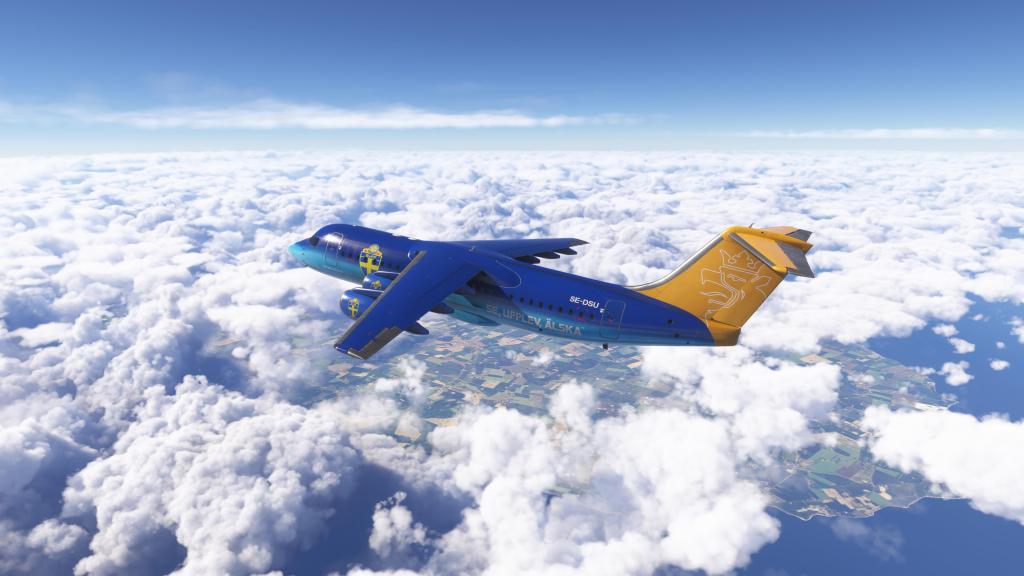



I probably sound like a broken record by now, endlessly repeating the same message, but I’ll say it again. If you know any of the work that Just Flight do, you’ll know that their visual modelers are absolutely up to the task of creating beautifully rendered airplanes. The Avro RJ is no exception to this!
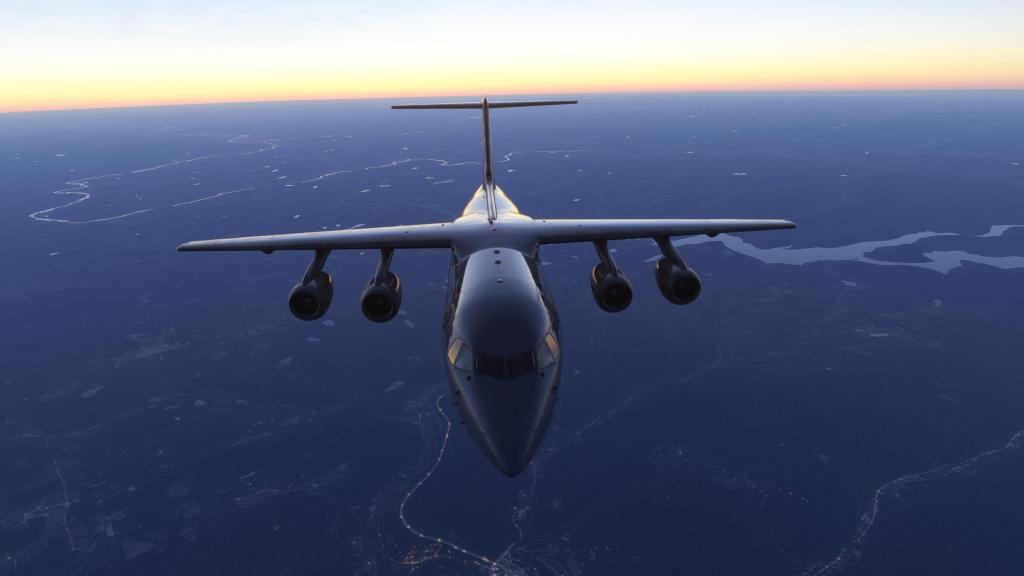
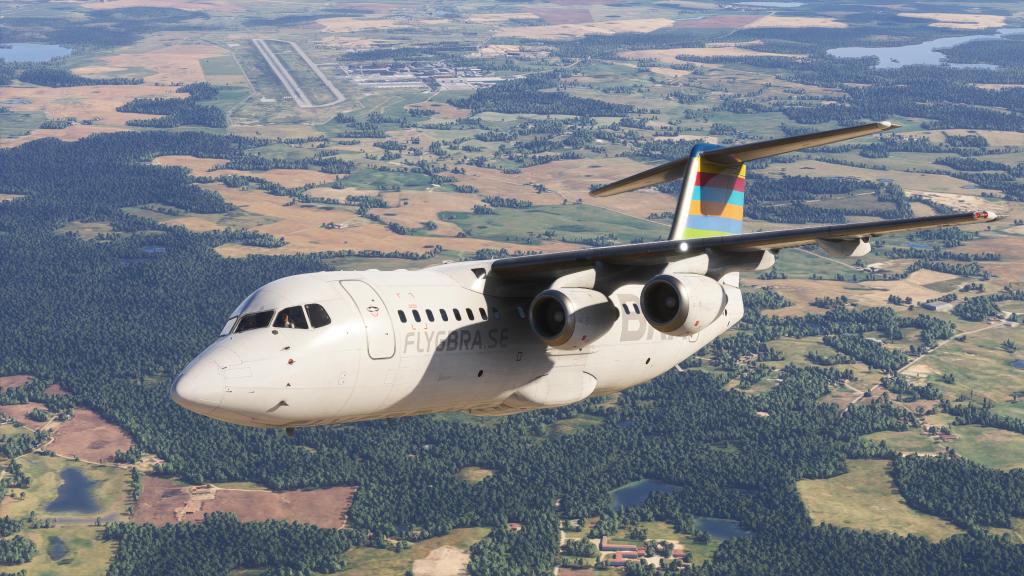
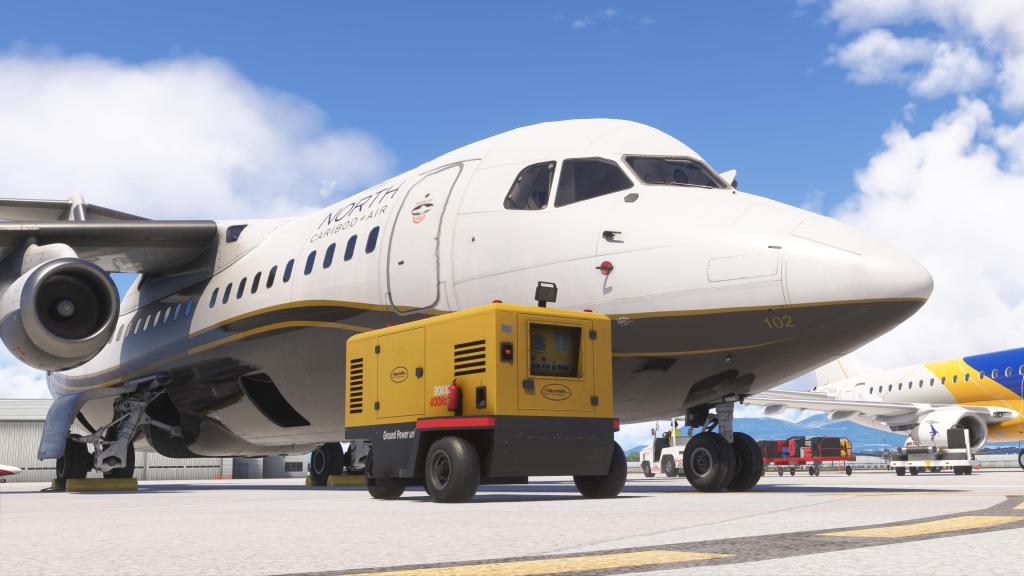
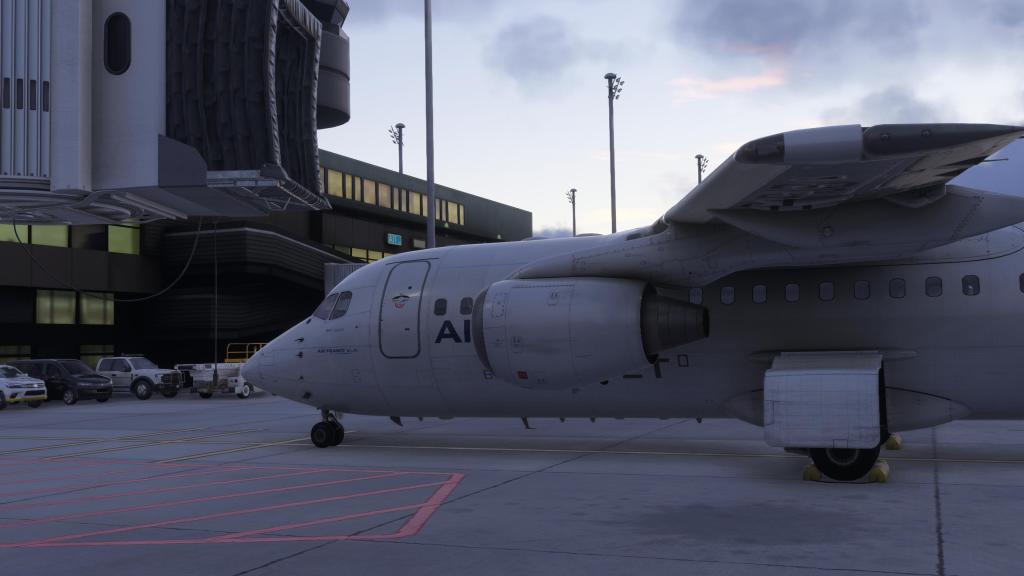
The RJ exterior visuals are excellent. There’s strong materials work with stunning reflections and visible imperfections in the aircraft’s skin and there are great animations and lighting effects too. I’ve tried to find a spot on the airplane where maybe they didn’t spend enough time but I’ve never found it. It is, perhaps, still slightly behind something like the latest from iniBuilds or Fenix but only very slightly and only when viewed at extremely close distances.

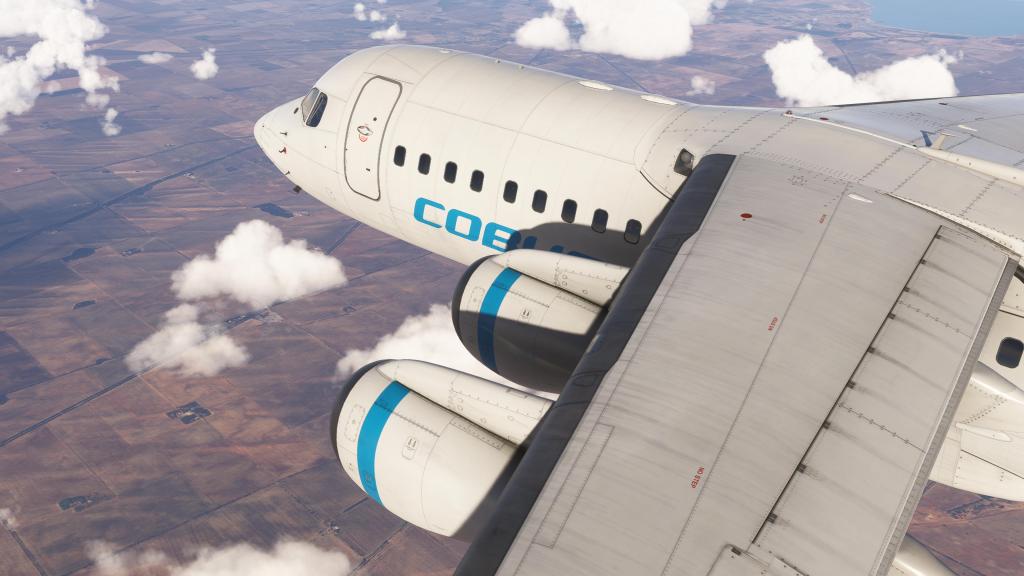


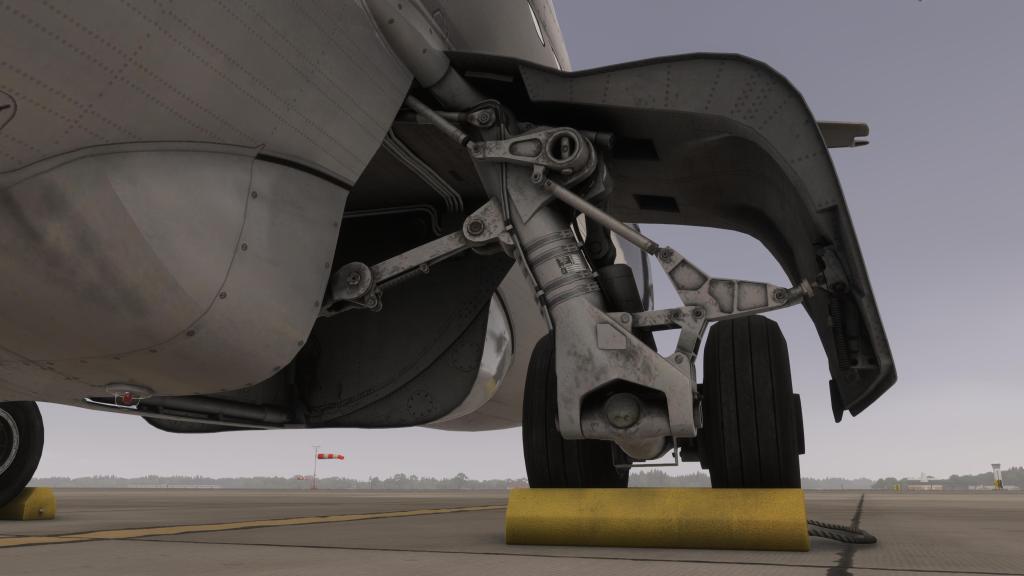
Just Flight does have a style about them and they tend to go for a slightly weathered effect that is a little more matte than some of the ultra-shiny options out there. Frankly I like this more! It makes the airplane feel well used and slightly aged though never neglected.


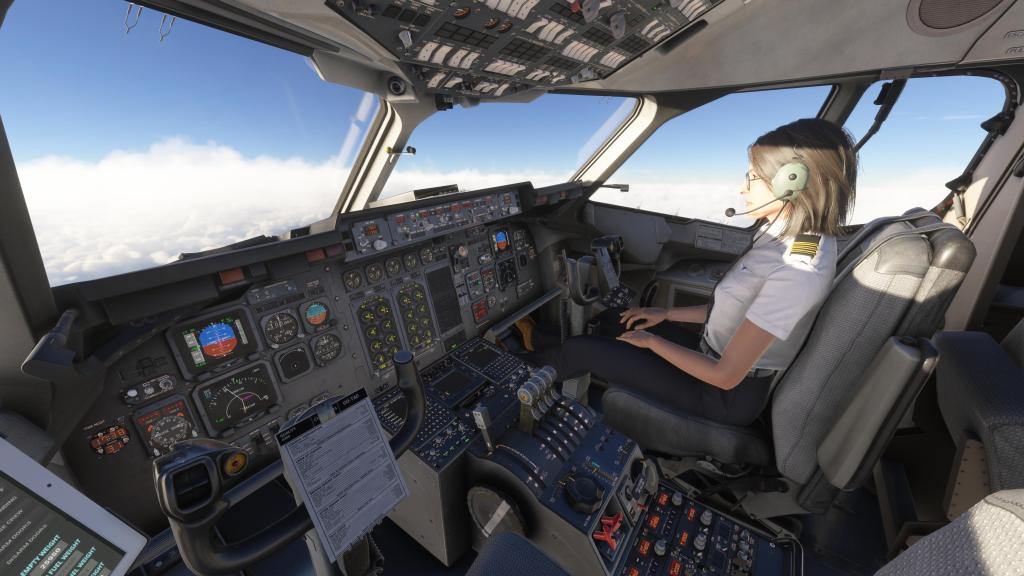

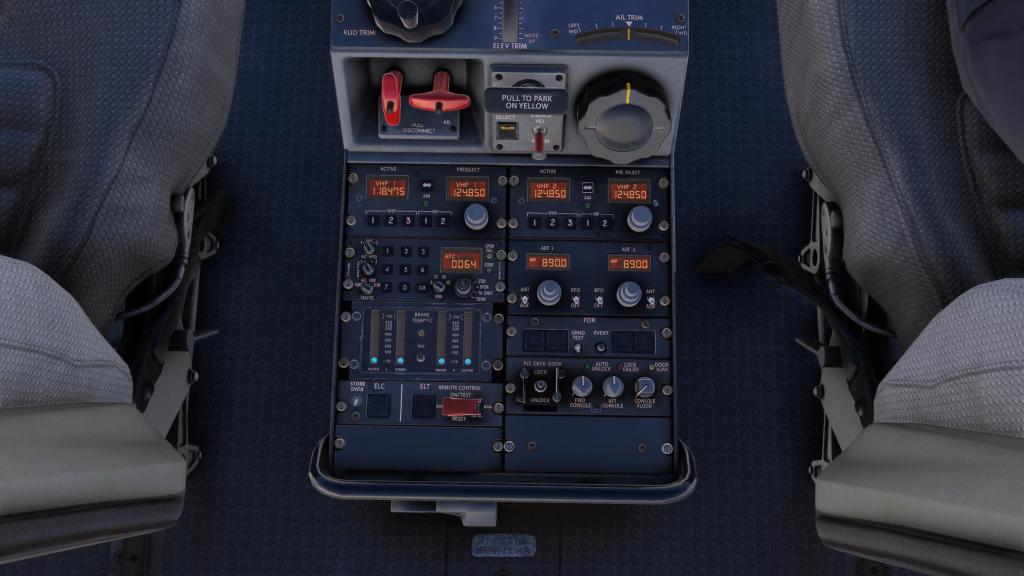


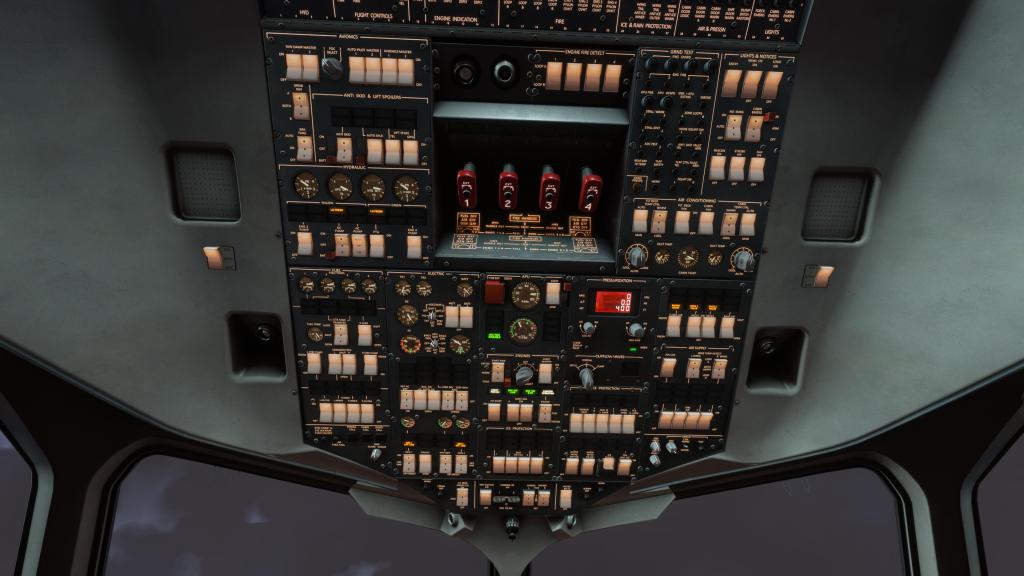

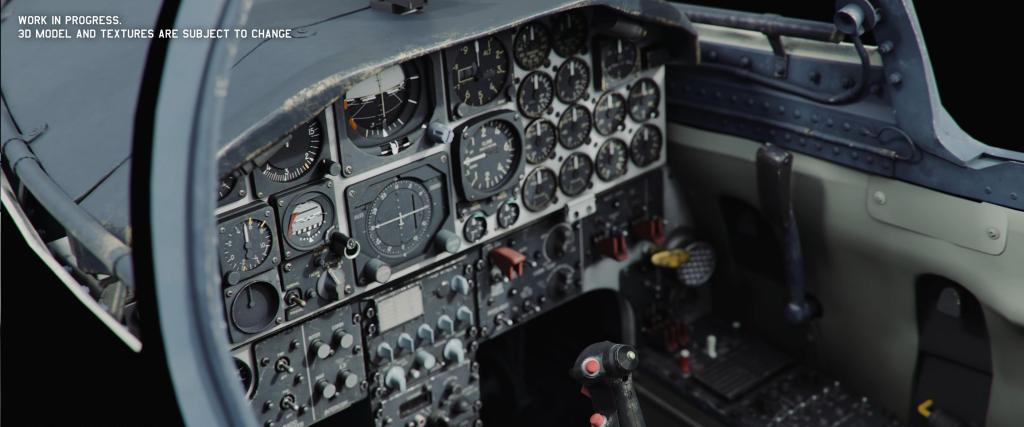
The cockpit is also quite good. It’s not an aesthetically beautiful cockpit but its a highly functional one that is represented by generally good textures and solid animations. Everything that’s important in the cockpit is fully clickable. So aside from a few maintenance panels and the emergency oxygen masks, you can click on nearly everything else. The lighting is also well done though not nearly as dramatic as you’ll see with the Just Flight F28 and that has more to do with the aircraft than the work by the artists.
On closer inspection you will see some occasionally grainy textures and the text is painted on old school style rather than using vectors the way some new aircraft are. This style portrays the wear and tear well but it does look a little blurrier versus the best in the industry when you get up extremely close. Still, at normal viewing distances it tends to not be an issue and my comment here can be considered nitpicking.
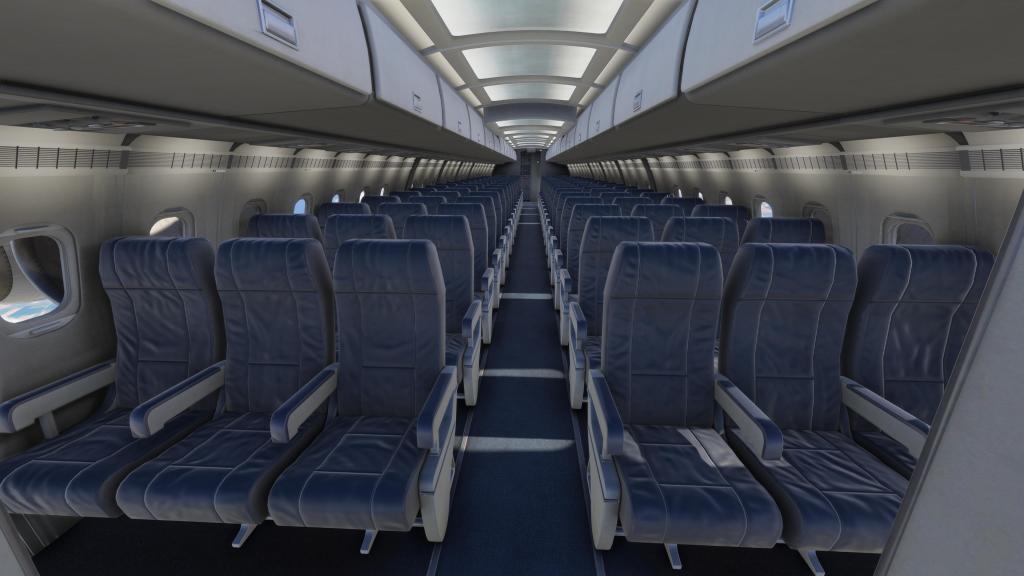
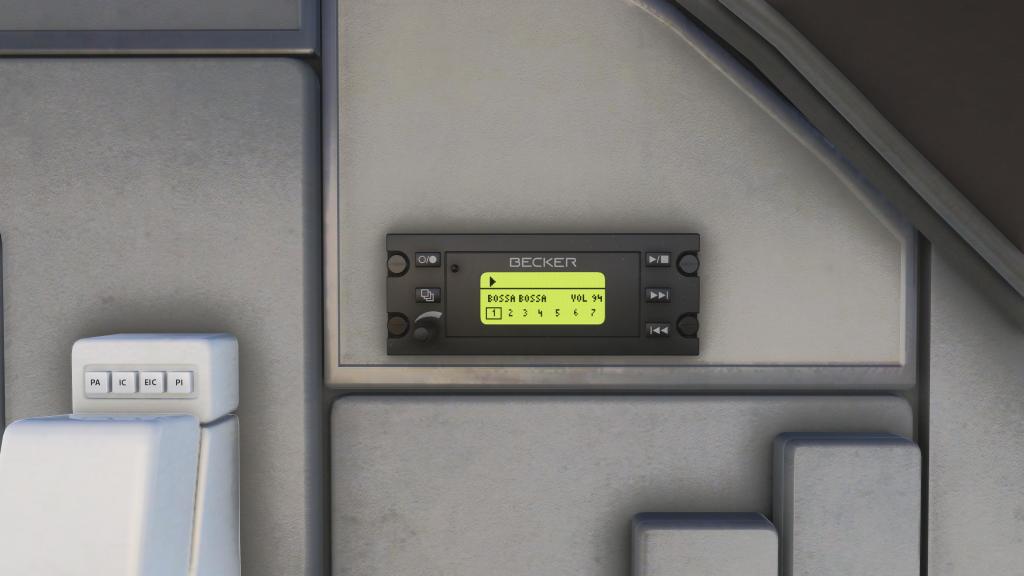
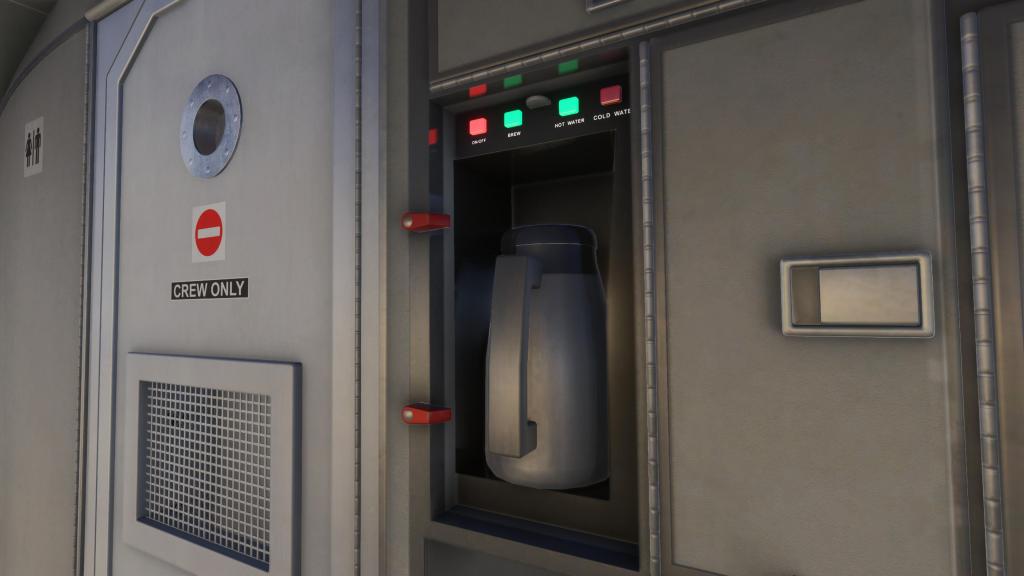
The cabin is quite well done. I tend not to spend much time back there in these simulated airliners but it is a checklist feature for most products these days and the cabin is a nice immersion layer. There is some interactivity back here too with adjustable lights, a music player, and a “working” coffee maker with sounds and lights that add a little extra to the ambience back here. The most recent update, version 1.4, have also added options for branding the interior cabin which are a welcome touch.


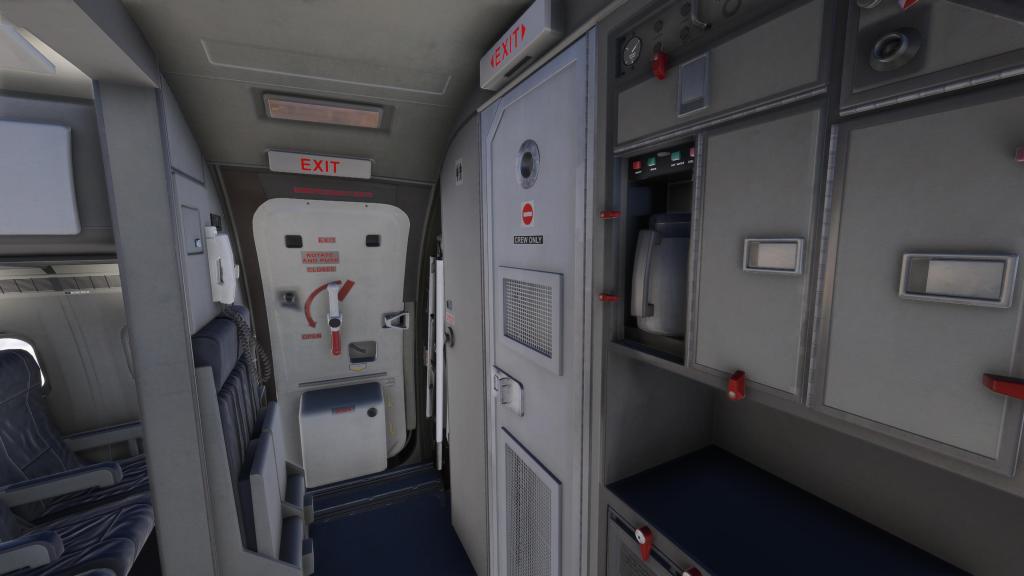
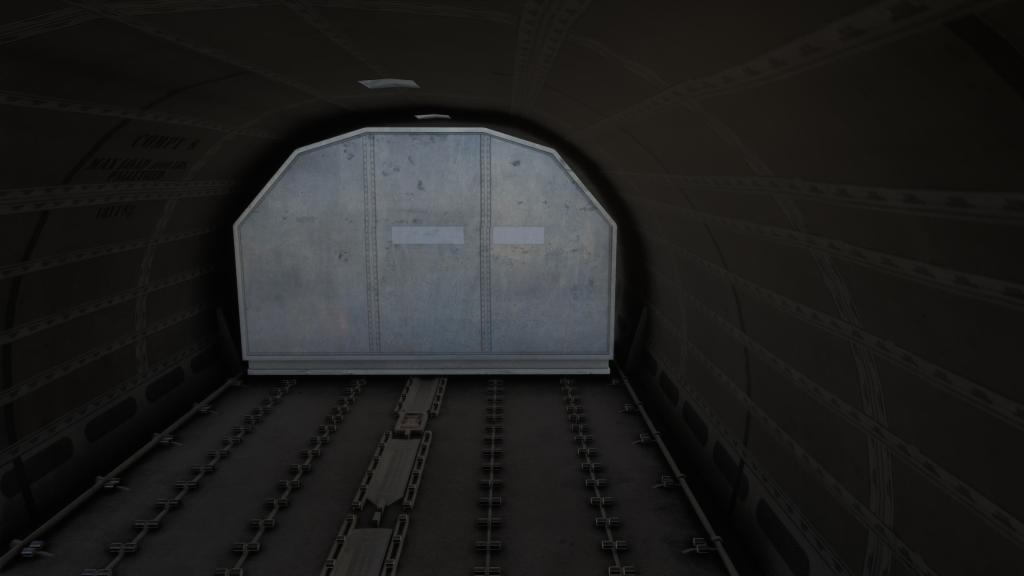
Recently added, the QT freighter variant has its own unique cabin space with its own configuration and dynamically loaded cargo. There are no options for different types of visuals for the cargo and instead you have standardized pallets. It is, after all, the most common type of thing you’d see in the back of similarly equipped BAe 146 freighters so that’s alright. The number of pallets loaded are determined by weight.

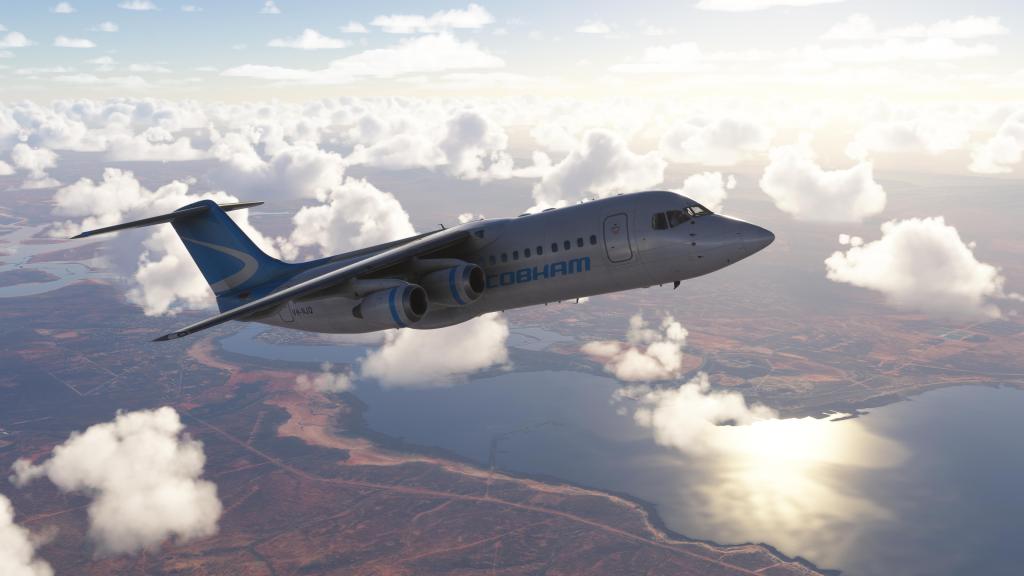
Just Flight have included a couple dozen liveries based on real world operators spread out across the RJ70, 85, 100 and QT variants. Some are very typical looking while others are more dramatic offerings. Just Flight chose a great selection!
The sounds are also a strong point with Just Flight and the RJ once again is excellent. Strong punchy sounds that give the airplane a lot of extra life can be found everywhere. This is the “whisper jet” so the RJ is not overly loud and boomy but it sounds right for a four engine hopper like this one is.
Buttons and controls in the cockpit have great sound effects attached to them and nothing feels or sounds like a default offering. Just Flight likely got a chance to get hands on with a real airplane and the sound effects very much reflect that.
They’ve even done sound work for the cabin and if you elect to have passengers board the airplane you’ll hear them getting on and getting settled down. There are a few cabin announcements and your copilot will make some call outs at appropriate times. There’s also a controllable music selection for the cabin and a coffee machine work clickable switches that operate the machine and make coffee brewing noises. Great!
In short, this is a generally excellent audio and visual experience.
Flying the airplane



The Avro RJ is very satisfying to hand fly with direct controls that manage well in most typical airliner situations. The longer RJ100 is the most steady and stable to fly in my experience with the other two shorter variants being subtly different. The RJ70’s nose tends to wander a bit more on landing where the shorter fuselage has a little less stability as the speed drops off. More rudder work is needed to keep it on track. That does make it interesting!
Start-up is mostly painless as airliners go (and you can use the EFB to set the panel state to turn around, takeoff or cold and dark as preferred) though you do, of course, have to start four engines rather than the more typical two. There are a few quirks around the cockpit but mostly I found myself quite at home in it after just a couple of flights.
The RJ isn’t the quickest climbing nor the fastest cruising. I know at least one reader who shared a story with me about how slow the 146 and RJ can be relative to some other airliners. In the real world, that could be an issue but here in the sim it does make for some more interesting ops and careful management to fly the aircraft in some of the more constrained airspaces.
The autopilot has been, in my experience, extremely reliable flying without glitches or problems. I have, however, had a few quirks with entering flight plans and getting some odd STAR configurations on approach with waypoints getting all tied up together in a bit of a mess. Its only happened once or twice and only early on so it may just be certain airports. Yes, it might very well be an issue with the person doing the input too!
One of the great things about picking an airplane like this is the unique real world locals that you can follow with its operation either in the modern day or historically. The Avro RJ is meant for short hops so your flight time are generally going to be shorter but they will also have you flying into and out of some more interesting airports.
Few aircraft are cleared to operate from London City airport but the RJ and 146 before it were regulars in their heyday. Moving halfway across the world, the RJ is still flown in Canada with North Cariboo Air and Summit Air (both represented in available liveries) serving both larger hubs and smaller airports. Northwest airlines used to fly the RJ85 between a variety of destinations in the midwest of the United States. Or fly around with Malmo Aviation with its colourful Swedish football team livery. Of course, this is a flight sim and you can fly this airplane almost anywhere.
The systems and operation

The Avro RJ represents the era that marked the transition between the all analogue systems and digital. The RJ is a bit of both. Having spent quite a bit of time with it I can say that it feels quite a bit like a 737NG and that’s not an accident. The implementation was meant to help make the aircraft more interesting to customers world wide and basing it after the then most popular airline around was thought to help.
Just Flight custom-coded a GNLU-910A FMS system with autopilot connected LNAV and advisory VNAV (with the banana just like the CRJ and 737 that makes it relatively easy to dial in for altitude constraints). It has SID and STAR support, it can do holds, performance monitoring, ETA and fuel estimations. The RJ also adds in an auto-throttle which is really nice to have as the BAe 146 doesn’t have that. Basically, the Avro RJ has all of the features you expect from a more modern airliner.
There’s quite a bit of depth to the systems too. Realistic alignment times for the IRS systems with differing alignment times depending on latitude (and optionally set to realistic, fast or instant on preference in the tablet), simulated TCAS, oxygen systems, electric, pneumatic, hydraulic, and FADEC simulation on the engines.
The aircraft doesn’t have thrust reversers so it relies on a large butterfly style air brake system at the back and strong brakes to manage the landing. The brake system has a pre-flight testing system and has realistic heat effects, fade and monitoring with a dedicated readout in the cockpit to ensure that the brakes haven’t gotten too hot. These all add to the unique side of operating the Avro RJ and speaks to its ability to operate at smaller airports in practical application as well as to the simulate depth of the airplane.
Just Flight have, like many of their other aircraft, added in a basic failure system that lets you set random or scheduled failures to test your skills as a pilot. It doesn’t have an overall reliability/maintenance mode that tracks usage over time.
The EFB, SimBrief, and NaviGraph



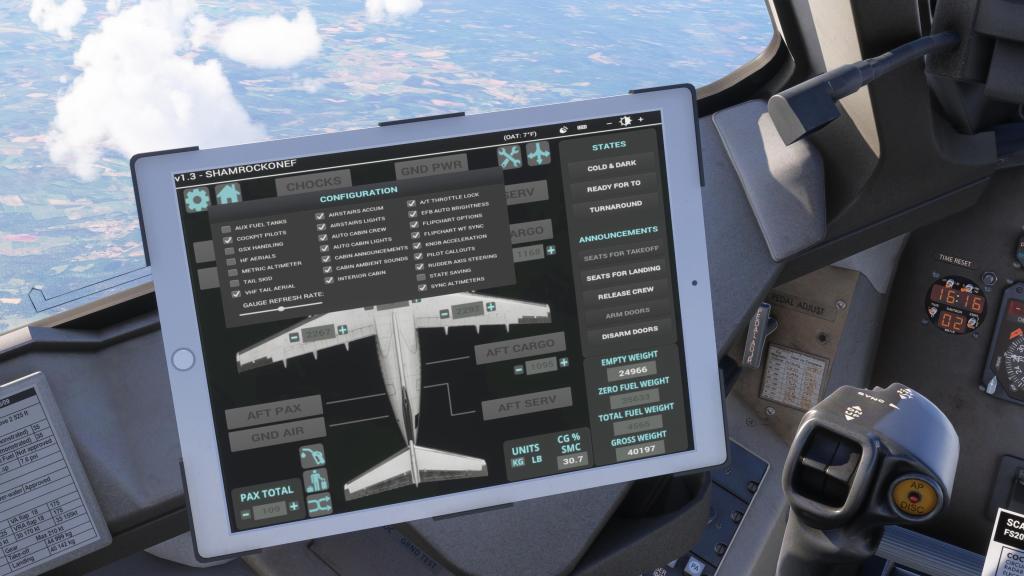

Just Flight have fitted the Avro RJ with the latest version of their airliner tablet. This is a now familiar configuration with access to various aircraft options, configuration settings, and the ability to set different aircraft states. This is also where you manage passenger count and fuel settings.
The EFB does have the ability to import quite a lot of information from SimBrief including the OFP as well as fuel and passenger or cargo information. This is a great time saver! NaviGraph support is also built in for those with a subscription so you can access your charts right in the airplane. That puts Just Flight’s RJ on par with the competition. It also has a custom note taking option, top of descent calculator, and you can choose from a ton of options from within the tablet. It’s also here were you can use a custom Just Flight pushback control system (which I’ve grown to rely on) and toggle aircraft states when needed.
Originally I was set to complain that Just Flight’s SimBrief integration ended here and that we weren’t able to import the flight plan without doing a manual download of some files. But that is no longer an issue! Version 1.4 added that functionality and it works beautifully!
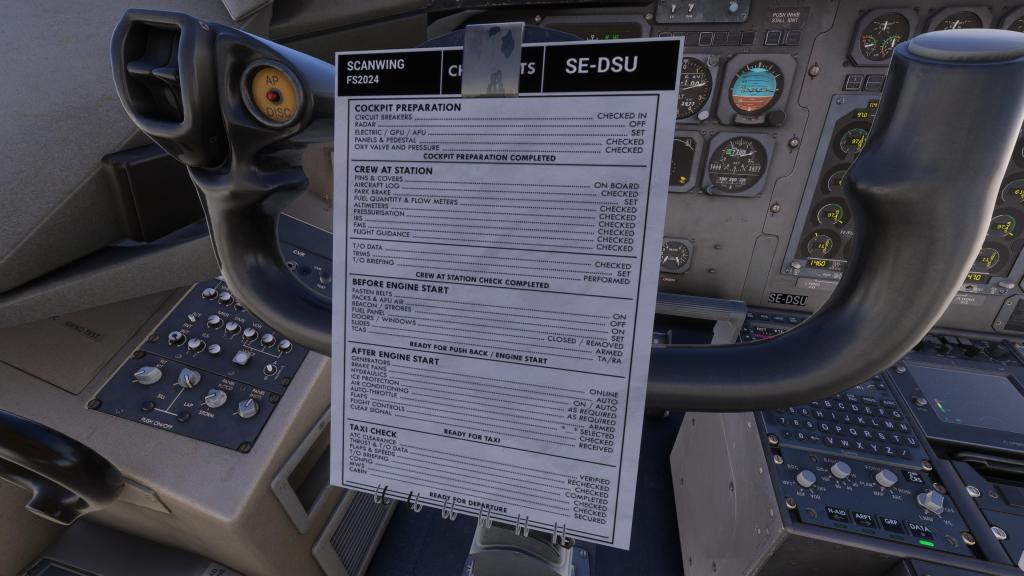
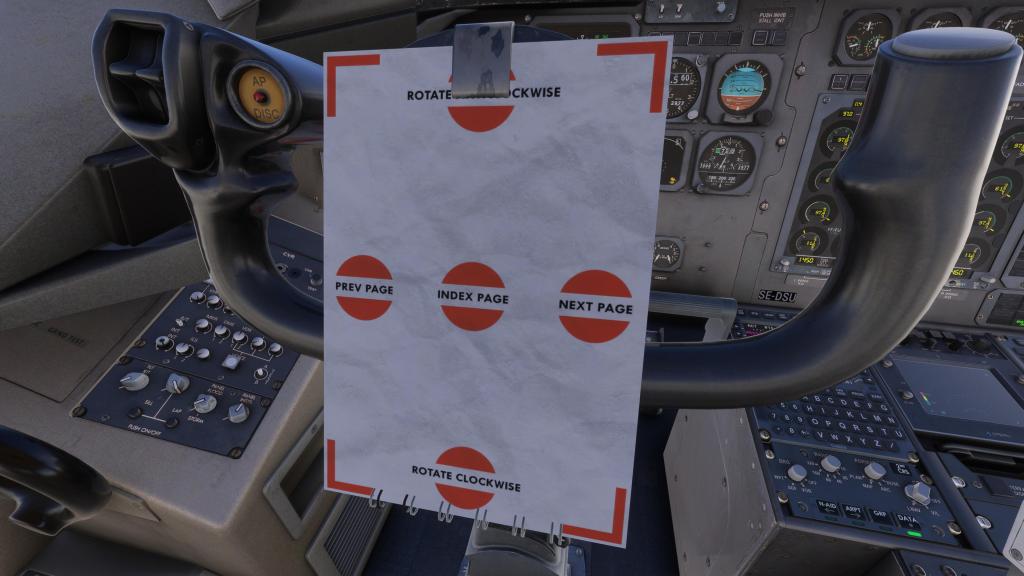
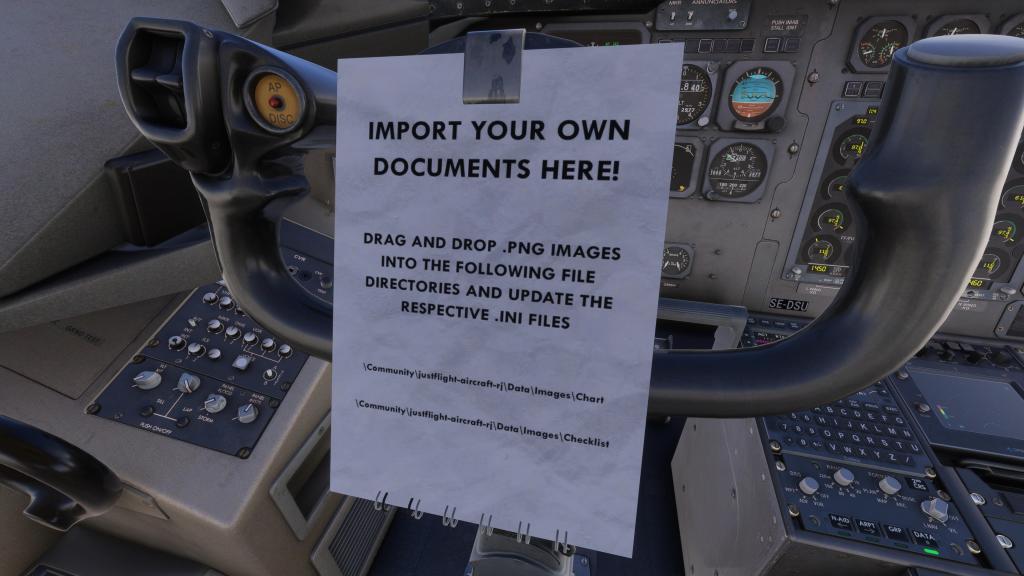
There are some nice extra features too such as the ability to click a hotspot in the cockpit to get realistic V speeds attached to a paper chart. Or the paperchecklist which is attached to the aircraft’s yolk. You can even import your own documents in there.
Framerates
Another strong argument for this aircraft is its optimization. I’ve flown the Avro RJ in both MSFS 2020 and 2024 and found it to have excellent optimization. Frame rates tended to be 45 on the ground and around 90 in the air – all dependent on the scenery and framegen settings. I’ve found it even works with decently smooth framerates on some of the sim’s heaviest custom scenery airports like Frankfurt.
I’ve found it to be among the best optimized airliners in the sim feeling about on par with the Aerosoft CRJ and PMDG 777. It puts it in a really solid spot in the pack of airliners and Just Flight have optimized its code enough to confidently sell it on Xbox.
Fast and fun
Frequent readers will know that I like to rate airliners on their ability to be fast and fun. Sometimes you do want to go through the whole checklist, start the airplane from cold and dark, and do everything by the book. And sometimes you have 1-hour to do a quick commuter flight and you don’t have the time to spare.
Fortunately, the Just Flight Avro RJ is generally pretty good at being fast and fun. Just Flight’s tablet lets you select Cold and Dark, Turnaround, and Ready for Takeoff so you can get the airplane up and running quickly.
Final thoughts
Just Flight have managed to pull together yet another excellent product with the Avro RJ. High quality systems, visuals, sounds come together beautifully with great performance and few bugs experienced during the initial roll out.
The immersion through good systems, great sounds and strong visuals really helps you feel like you’re there in the cockpit. As with the F28 Professional which I reviewed previously, Just Flight may not be the absolute best in any one category but the sum total of all of the features including the various immersive effects adds to overall enjoyment that ensures that its not just a sterile accurate aircraft but one with personality!
I suspect this aircraft has been overlooked by some because its not a modern Boeing or Airbus. It is an older type and while the RJ is still flown in a bunch of places, it is also clear that it’s heyday has passed. I tend to worry less about that sort of thing and I really quite enjoy flying historical routes so none of that causes me any issue.
I do think Just Flight have also attempted to connect with more modern airliner flyers more with this one thanks to 737NG-like avionics that are found on the real model. While the BAe 146 is seemingly just as excellent in the overall quality of operation, the older systems don’t lend themselves nearly as well to modern methods and so the transition between the modernized Avro RJ and an 737NG is much easier. Just Flight’s very recent efforts to further add to the FMC’s integration with the EFB and with SimBrief just help ensure that flows are similar to more modern airliners. Surely some will appreciate that.
I can absolutely recommend this airliner! Never one to shy away from something a little different, Just Flight’s airliner projects have avoided the fight over most common models and done something different and I once again have a lot of appreciation for them doing that. Sometimes I don’t think they get quite enough credit or attention for excellent products in the broader Microsoft Flight Simulator marketplace and they absolutely deserve it with the work they’ve done here.
Beyond just being different, the Avro RJ is an excellently simulated airplane and its clear that a lot of care and attention has been placed. Not only to transform their earlier BAe 146 project into the RJ but in general capturing all of the unique details that this specific aircraft entails. This is one of the best airliners around together with the company’s Fokker F28.
Just Flight are selling the Avro RJ (and BAe 146) for $69.99 USD individually or $125.95 in a package deal. I ended up purchasing just the Avro RJ but both offer compelling features and experiences and the 146 may yet arrive on both my hard drive and as a review on this blog sometime in the future. The aircraft is also available from the MSFS Marketplace and works on both PC and Xbox.
Screenshots






























 Stormbirds
Leave a comment