
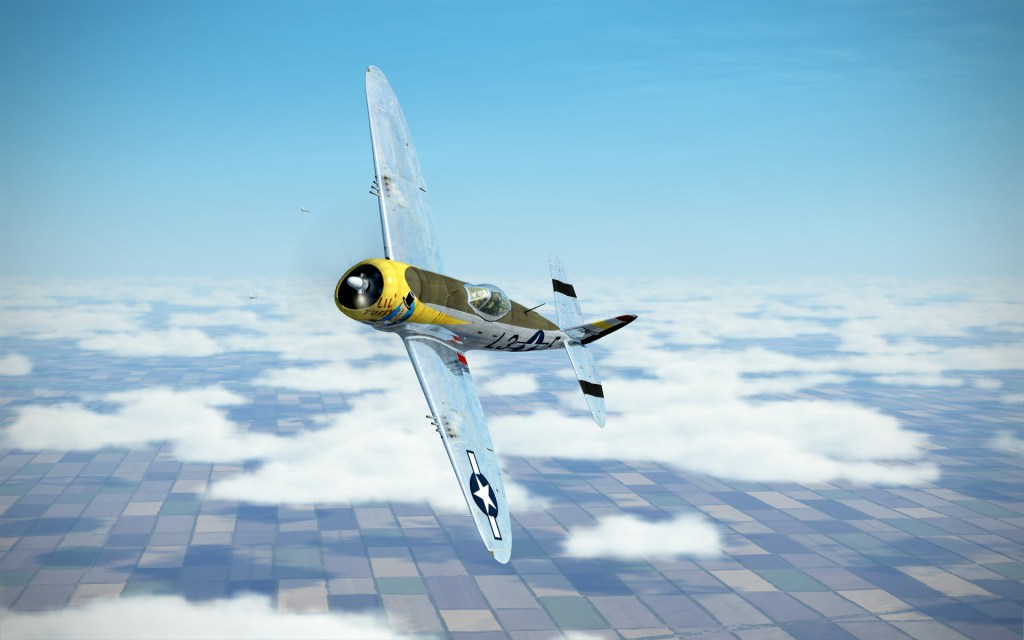
It’s only been a few days but I’ve been spending most of myflight time checking out the new P-47D-28 which was released on Wedesday in patch 3.007. The P-47 Thunderbolt coming to IL-2 represents the first of a trio of classic American fighter aircraft of WWII that made such an impact in the skies over Europe. Being able to fly this fighter in IL-2: Great Battles is a dream come true for many. I give you a first look at this new aircraft in IL-2 and some first impressions on how it flies, how to use it, and a few thoughts of my own on the Thunderbolt’s place in history. Let’s get to it!
The history of a legend

The Thunderbolt is one of a few dozen aircraft that have achieved legendary status in the annals of WWII history. Over 15,000 P-47s were built from 1941 through 1945 making it one of the most numerous combat aircraft in history (though only half as many compared to the 33,000 Bf109s and 36,000 IL-2s produced during the war).
Designed by Georgian immigrant to the United States, Alexander Kartveli, the aircraft was loosely based on the P-43 Lancer (an aircraft designed by Alexander Servesky , another import from the east). Early P-47 and P-47B models had serious issues that needed to be solved but the type came into its own in the later P-47C and early P-47D models – and these were the first to see combat in the skies over Europe.
The Thunderbolt started life being designed as a high-altitude interceptor fighter. Designed with speed and firepower primarily in mind, the P-47s massive R-2800 radial engine (generating over 2,000 horsepower) and its turbosupercharger allowed the aircraft to maintain the engine’s full power up to altitudes of 30,000 feet.
Later, the P-47 took on a new role operating with the 9thAir Force and flying low altitude missions in support of the advancing Allied armies. The P-47s other attributes of structural strength and the ability to absorb battle damage and still fly home helped significantly. Though strong,the P-47 was not immune to battle damage and over 3,000 were lost in all types of combat.
Thunderbolts in Battle of Bodenplatte

P-47D-28 that we have in IL-2: Battle of Bodenplatte represents a mid to late 1944 variant of the P-47 with numerous refinements and a few compromises made to make it what it needed to be.
Handling
My initial impressions of the P-47s handling are mixed. The aircraft has received a lot of praise over the years but its reputation is actually fairly complex when looked at on the whole. The aircraft doesn’t feel especially “sharp” in its handling. At over 12,000lbs, the P-47 is far heavier an aircraft than the likes of the Bf109G-6 (at just under 7,000lbs) or the Yak-1B(at 6,300lbs) so its not unexpected
The initial turn-in is actually quite quick and if you have enough speed you usually have more than enough ability to bring the nose ahead of your target for a long spray from the guns and a possible kill. It is speed that is king with the P-47 and fortunately its an aircraft that is pretty good at it.
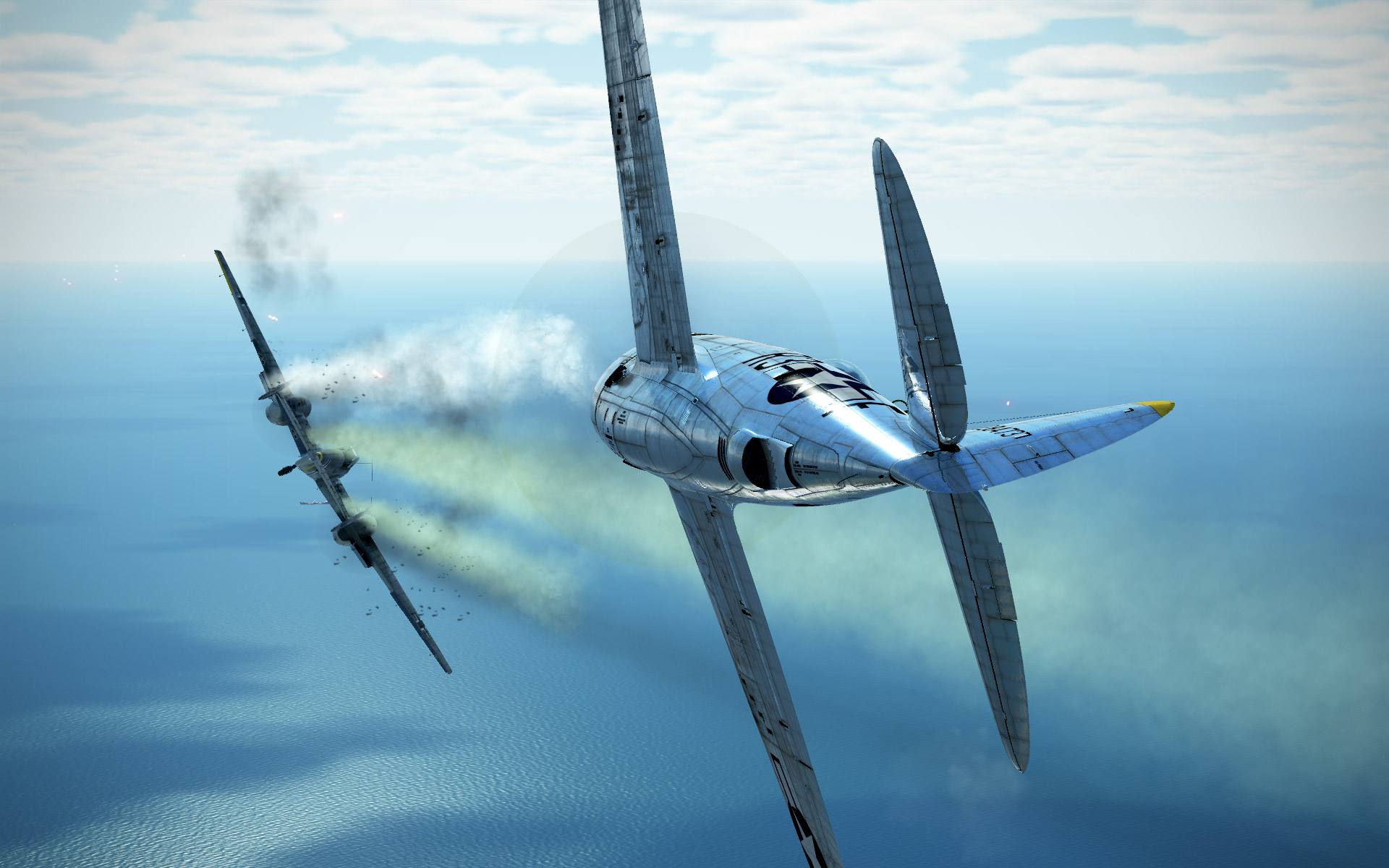
Initially it felt slow until I started flying it with speed as my primary intention. Engage the boost, give it the maximum throttle allowed, and make sure the turbosupercharger is linked to your throttle and you have an aircraft that is reasonably fast at lower altitudes and extremely fast at 30,000 feet. Just don’t get stuck in prolonged turn fights.
Roll rate is actually quite good considering the weight challenges but it isn’t in the same league as the FW190 nor as crisp as some other types. Some have commented that it feels slow and that prompted me to do a little research and reading on the subject. Interestingly, some veteran pilots of the P-47 considered it an extremely good fighter in roll rate while other pilots called it only average or not overly special.
In this USAAF test document comparing various fighters on hand within the service, the P-47 (a B model) was listed as having a 63 degree a second roll rate which translates roughly to needing 6 seconds for a complete roll. This consistent with my experience in IL-2. Other sources (the NACA 686 report) give approximately 80 degrees per second as a maximum roll rate. I’m not an aeronautical engineer and can’t comment more completely on the subject.
Finally, dive is a strength of the P-47 with the ability to dive to about 500mph as indicated in the cockpit. Though initially slower to gain speed, the P-47 rapidly picks up more in the dive overhauling any fighter I’ve chased so far. Above 500mph though, the controls get heavy, Mach tuck becomes an issue (thanks to new flight modeling) and you quickly realize that you’re doomed to hit the ground hard.
Firepower and modifications

One thing the P-47 is not lacking in is firepower. A standard eight .50cal machine guns gives this fighter incredible punch and the ammo supply is ample. The ammunition and spread lets me fire at medium ranges and take greater chances on scoring a crippling snap shot than other types with less available ammo.
The machine guns come in handy against ground targets too. So do the available ground attack modifications which come with a variety of 500lb and 1000lb bombs fitted to the aircraft as well as six rockets hung in tubes from the wings. At maximum load, the P-47 can carry more bomb and rocket firepower than some light and medium bombers of the era.
The P-47 also comes with the K-14 lead computing gun sight. A licensed copy of the British Mark II GGS, the K-14 works the same way with the same effectiveness letting a P-47 pilot pull lead and calculate a shot with stunning accuracy. It’s a huge advantage for pilots who take the time to learn how the sight works.
The cockpit
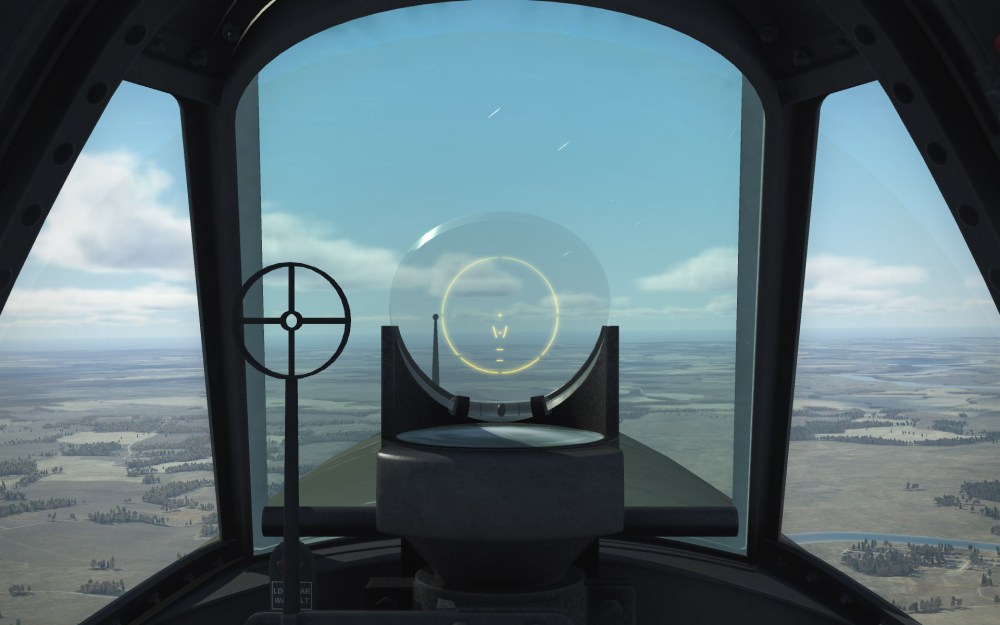
The gun reticle changes when you pick a ground attack modification. 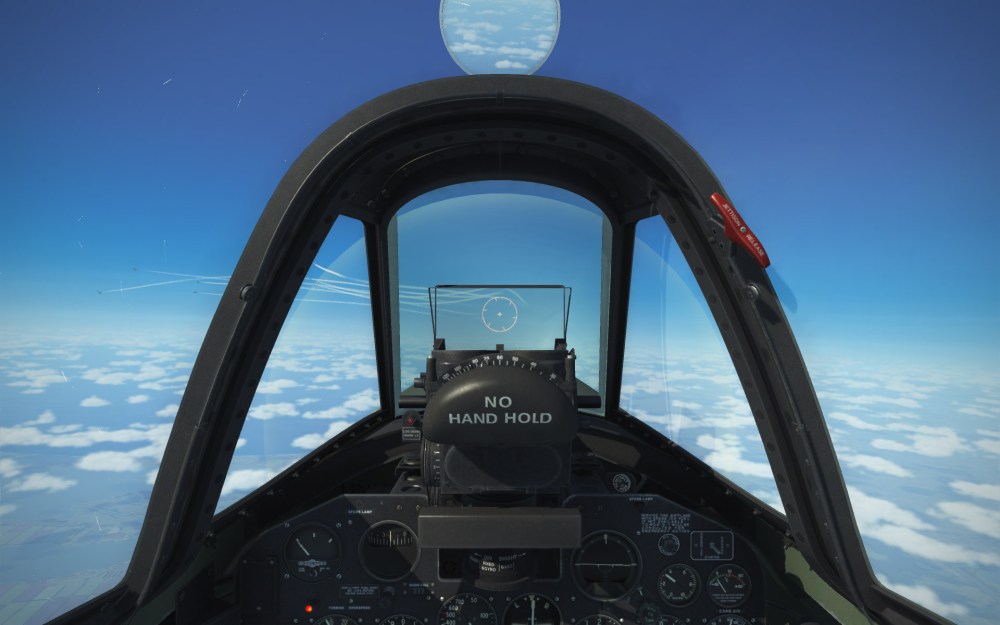
The K-14 “ace maker” sight plus optional rear view mirror 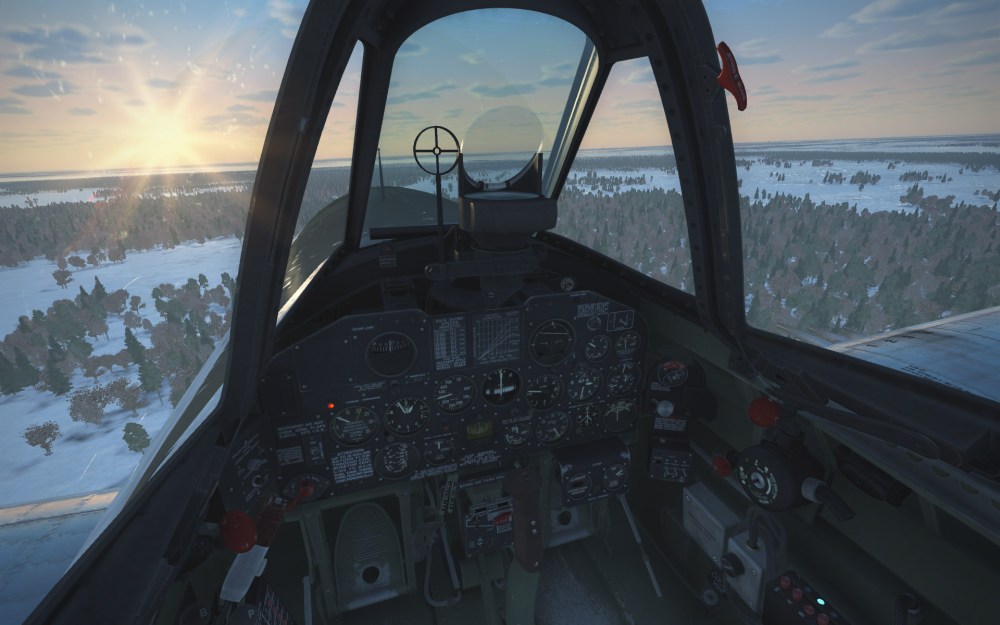
The “big office space” of the P-47 is impressive compared to smaller fighters
One thing that is really great is the cockpit. The developers have done a great job representing what is a “huge office” in the sky. The P-47s cockpit feels big, the textures are very good, and all of the previously mentioned gunsight options give the Thunderbolt flexibility. There’s also something special about looking out at the cowling of that huge R-2800 radial engine up front.
Just a first impression
Though this is just a first impression I have to say that the thing that strikes me most is that this is the first time I’ve been able to fly a fully realized P-47 in quite some time. The one in IL-2: Forgotten Battles (that went on largely unaltered after that) had a half finished cockpit with missing textures and it was always a little disappointing to fly. There’s nothing like that here where the P-47D-28 has been lovingly crafted and looks beautiful inside and out.
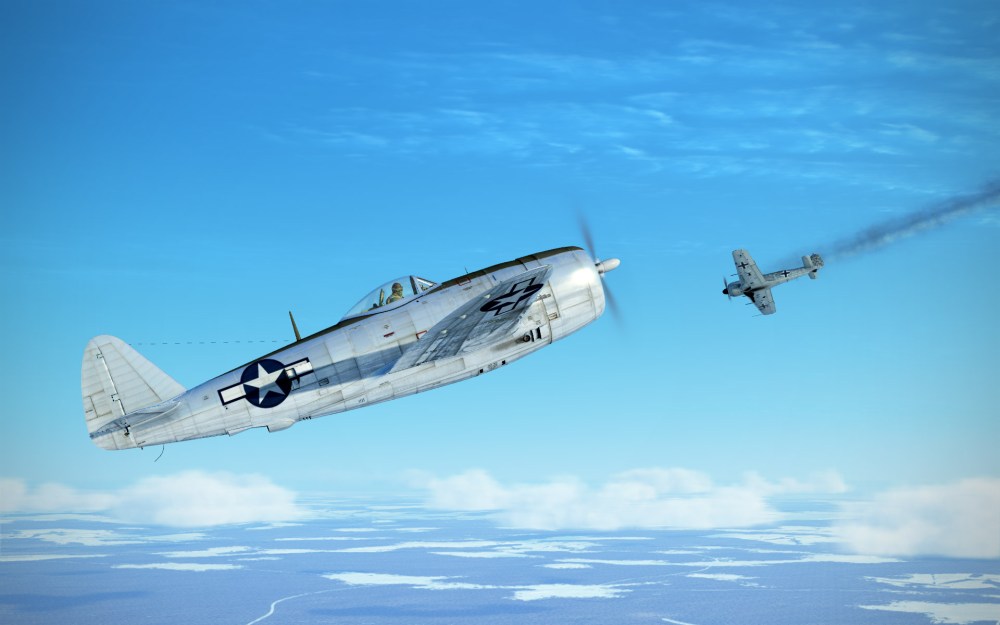
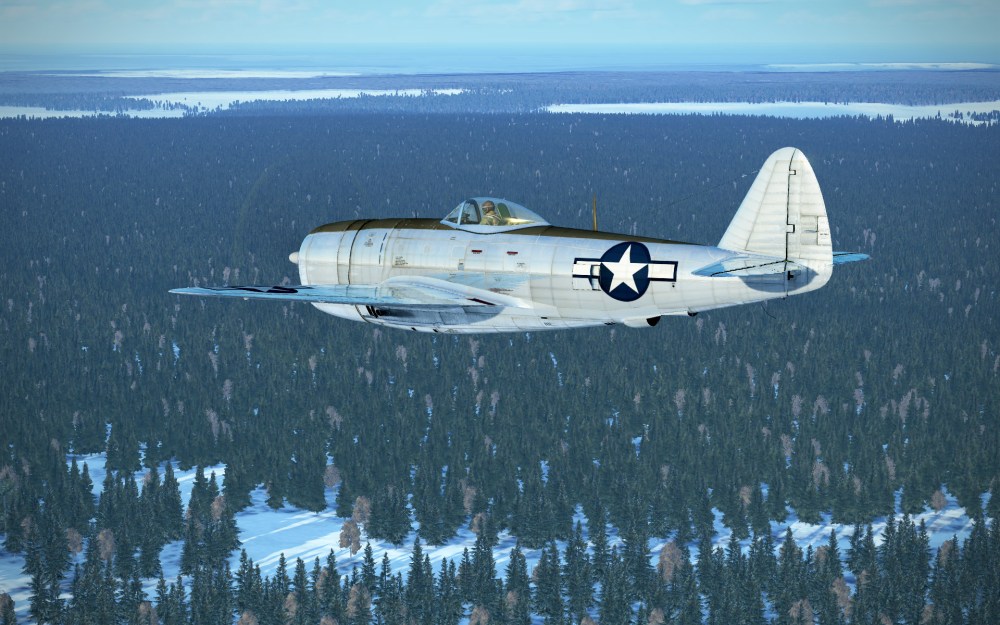

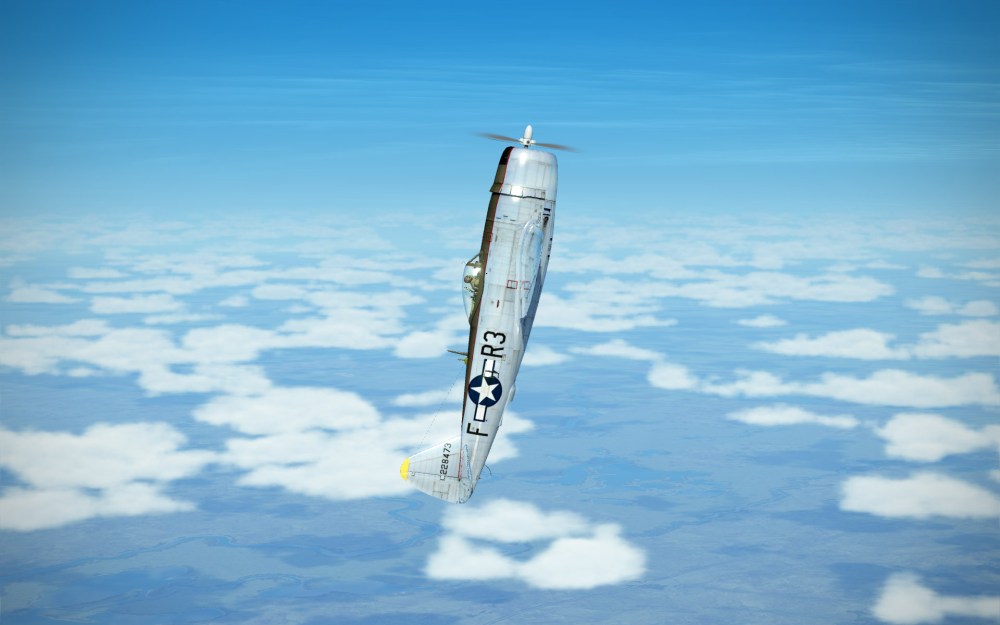
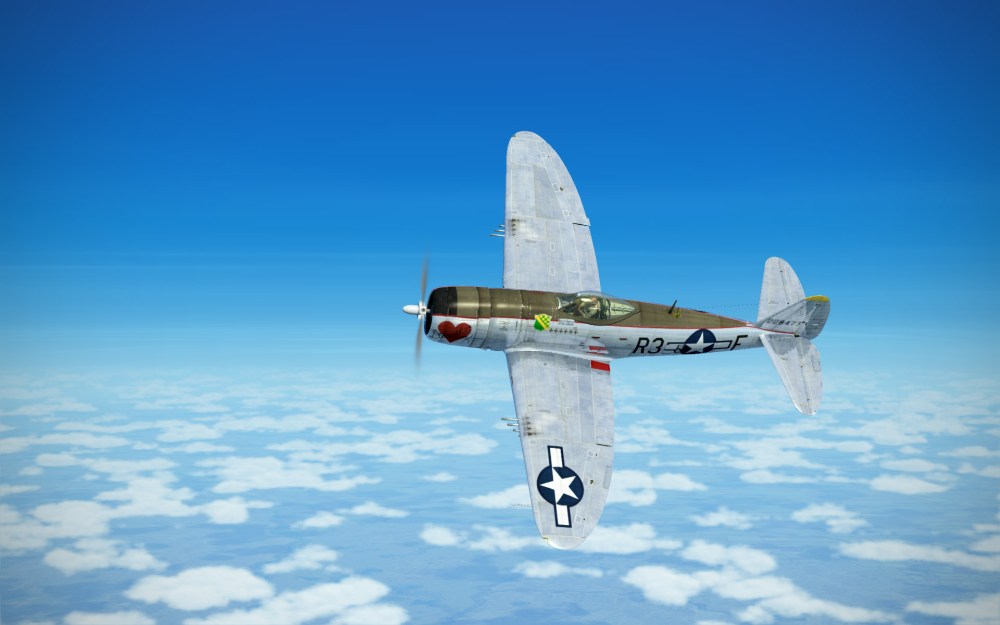
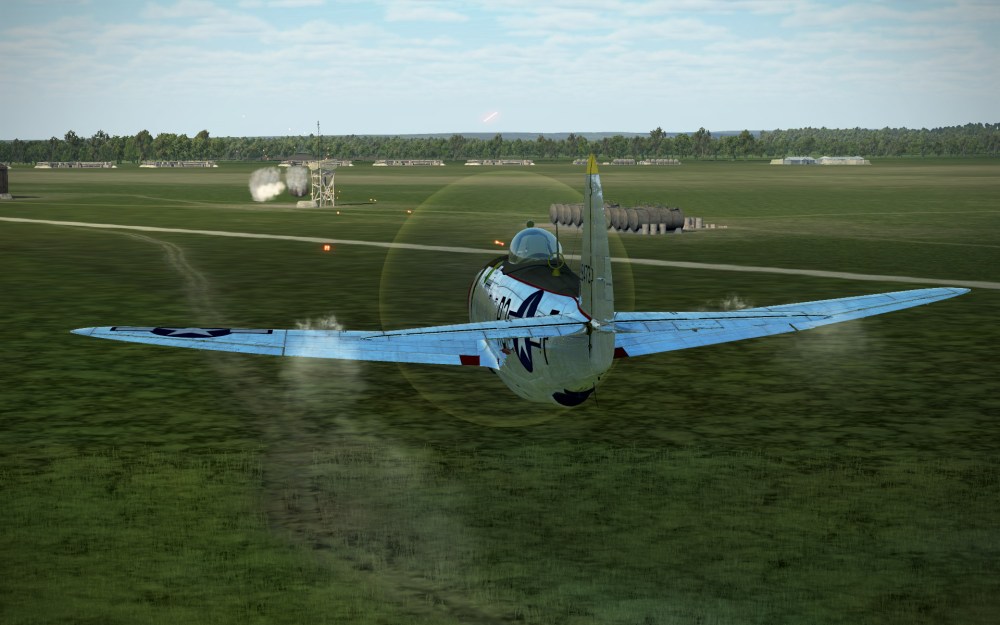
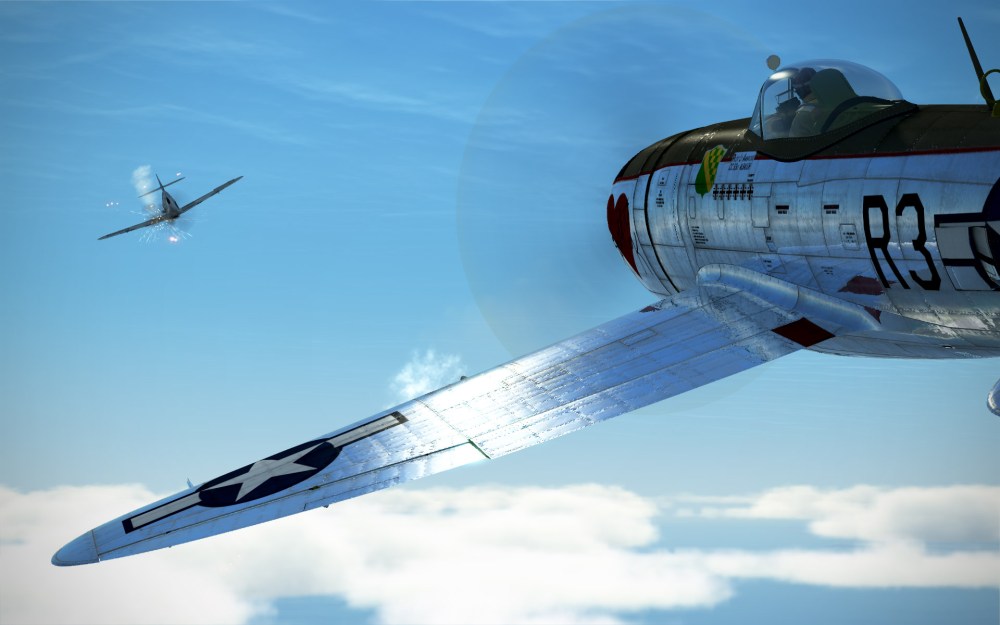
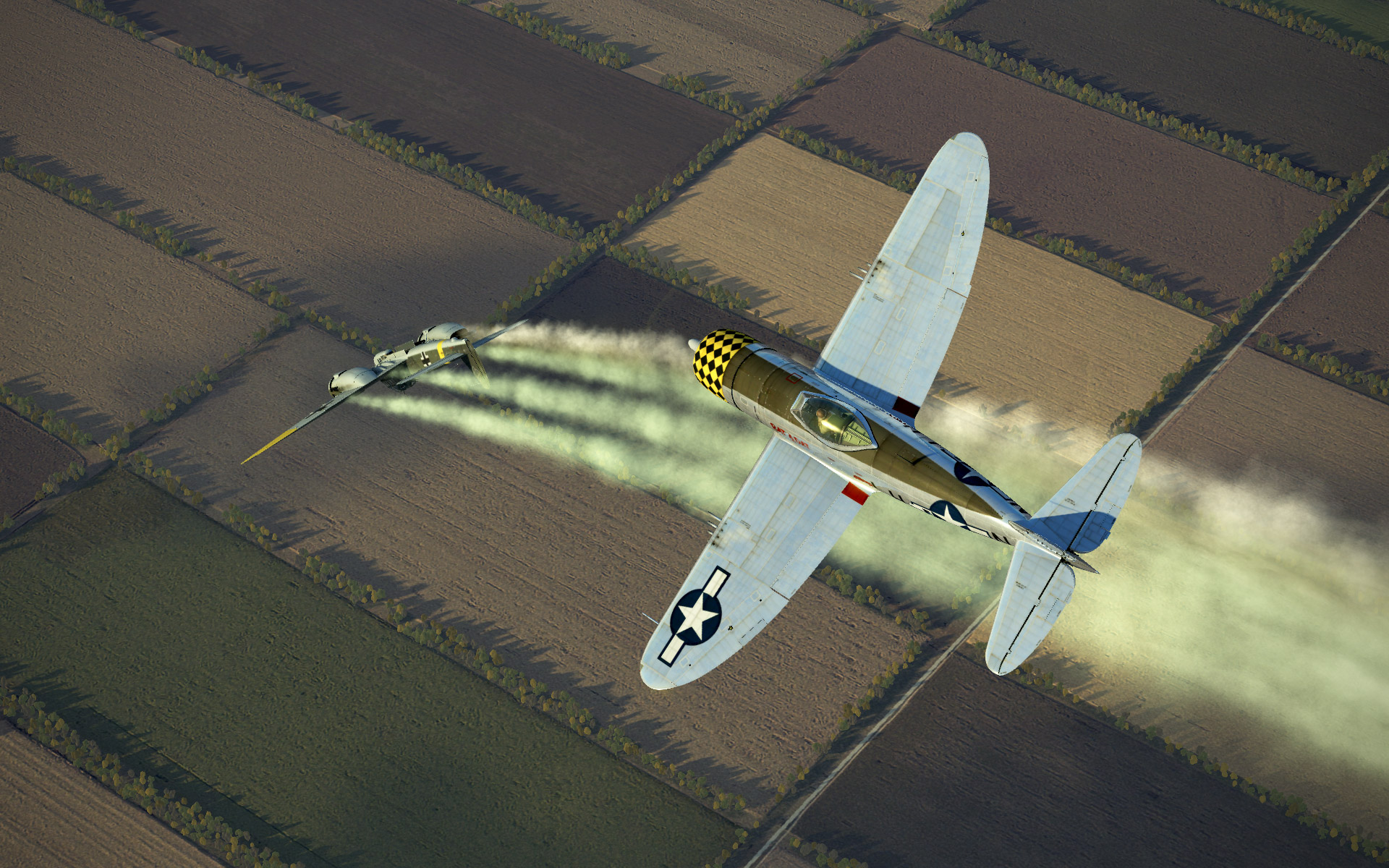
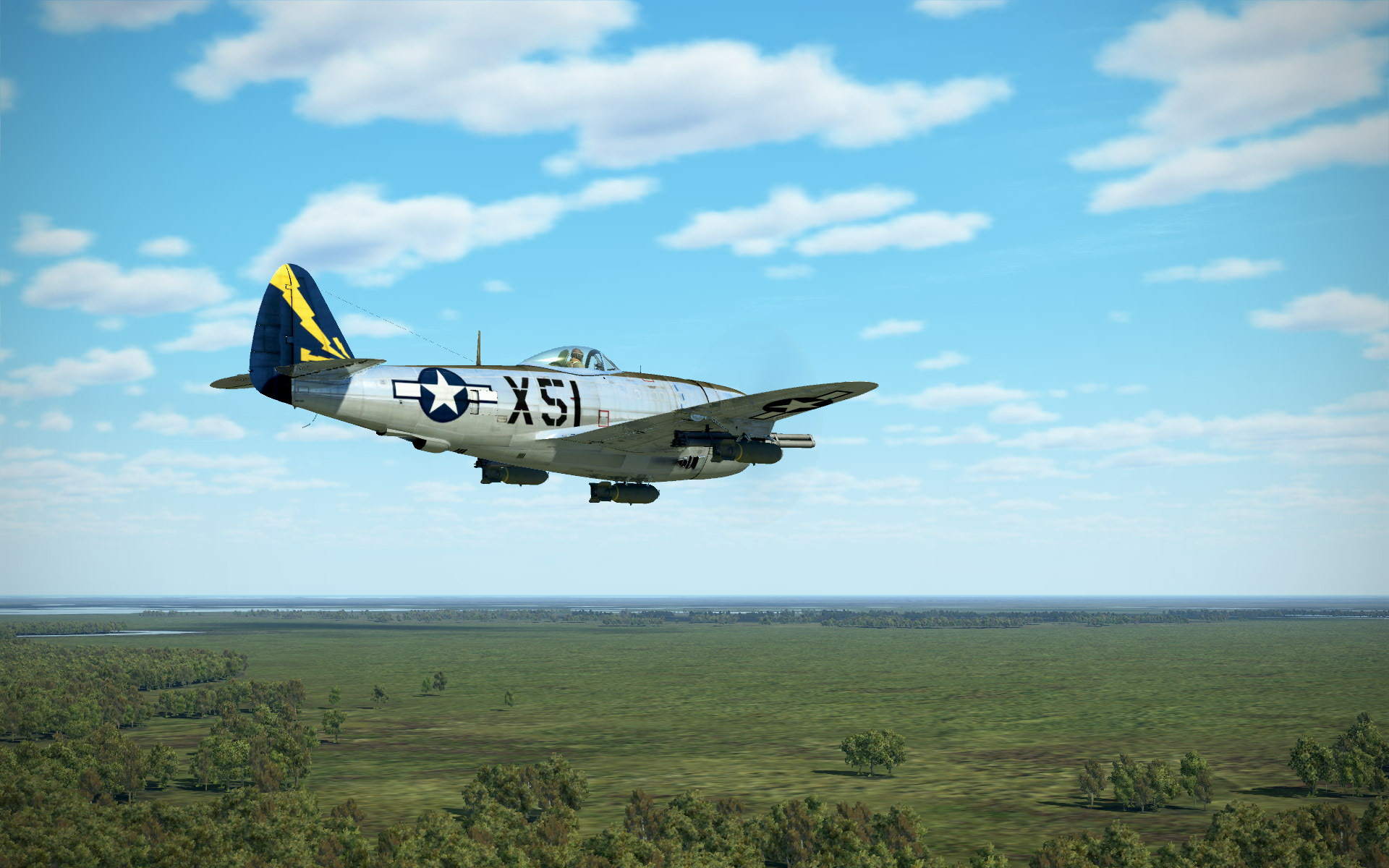
This aircraft has multiple features for both air and ground attack, an option for clean wings with no pylons and an option to bomb it up and add all kinds of ground pounding capability. Even the N-9 gunsight changes reticle types when you pick the ground attack option for easier strafing and rocket placement. A nice touch!
There’s been a lot of thought and effort put into this aircraft inside and out and both in the visual department and in the sound. There’s also something about the sound that just sounds great and its one of the best attempts at getting the rumble and clatter of a radial engine pouring out 2000 hp that I’ve heard in a sim yet.
I’m sure there will be discussions about the aircraft’s handling, performance attributes, damage model and more over the coming months. It’s an aircraft that attracts that kind of attention (and scrutiny) but rest assured that 1CGS have done a really good job bringing this big, tough, heavy, powerful and capable fighter to life.
The P-47 may take a little getting used to, especially if you’re used to more agile fighters, but it largely lives up to its real-life counterpart and it is a lot of fun to fly around.
Updated on November 26 at 8:45 pm EST with grammar and formatting corrections.



 Stormbirds
Leave a comment