
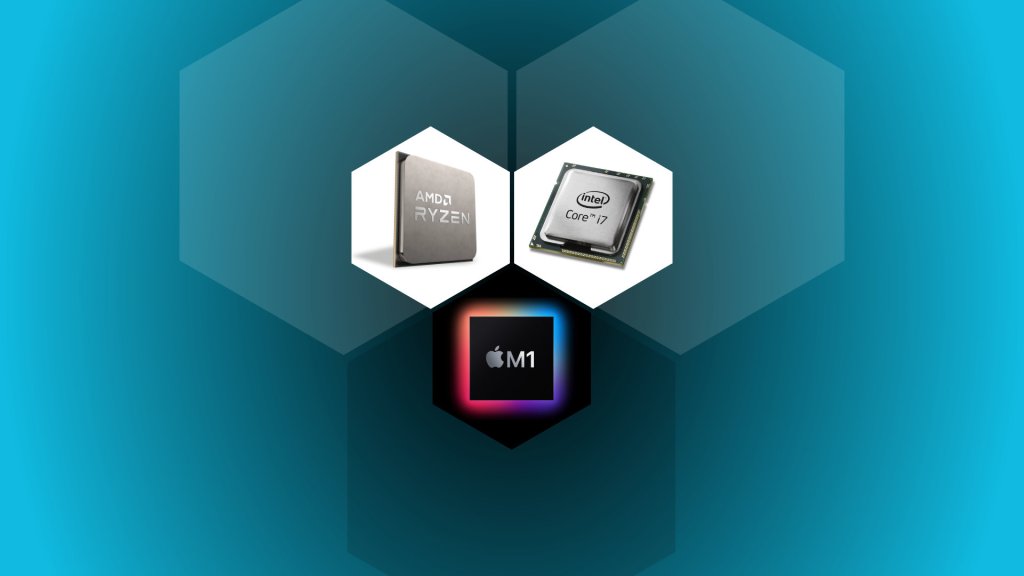
For the last decade, if you wanted to get the best flight sim performance, you pretty much had to get one of Intel’s popular Core series of CPU’s and make that the heart of your simulation rig. AMD has had its time in the limelight before with the Athlon 64 but they haven’t been able to quite match that earlier CPU since the mid 2000’s and so they aimed for best value and bang for the buck. That helped earn their place in the hearts of some sim pilots rigs, however, things are starting to shift. AMD’s new Zen 3 is looking to have leapfrogged Intel with newer faster chip architecture which marks an exciting time for people looking into building a new system right now. But that’s not all that’s going on. There’s also Apple’s new chips to consider and what they might mean for the future of our hobby. There’s some interesting things to talk about both happening now and in the future so let’s have a look.
The big shift
I’ve been building my own gaming PC’s since the early 2000’s. I don’t update all that frequently, but when I do, I like to do plenty of research and build something that will hopefully last for several years. That usually translates to roughly 5-year cycles between upgrades with the occasional addition of RAM or a GPU swap when necessary. I’m sure I am not alone in this kind of cycle as this is about how long it takes for a high end system to slowly be eroded by slowly but ever increasing system requirements from the latest sims.
I’ve bought my share of AMD and Intel over the years, but for the last couple of cycles I’ve put an Intel processor into my system because its performance, particularly single core performance and instructions per clock cycle (IPC), were better than AMD’s most of the time. Most flight sims, despite their best efforts, are still driven by single core performance and so having the best single core performance possible within a certain price range meant going with the supplier that could do that. Multi-core is providing increasing levels of performance now but even in 2020 it’s clear that single core performance still matters quite a bit to sim pilots.
I’ve seen arguments back and forth on just how much multi-core versus single-core affects performance but at the end of the day the thing that ultimately matters is how smoothly your system can display your sim. The best parts in simulation are where the system running the show fades into the background and you can just enjoy the moment.
For the last decade, achieving that flight sim nirvana usually meant putting a relatively high end Intel chip into your system and for AMD fans to satisfy themselves with a cheaper chip that was nearly as good. Fortunately for AMD fans (and really, all of us), there’s some competition that’s heating up right now and it appears that AMD has now put Intel on the defensive.
The third generation of “ZEN”
AMD’s Ryzen processors have offered a credible alternative of Intel for a few years now. After a period of disappointing performances by AMD’s chips versus the comparable Intel chip, Ryzen was nearly breaking even but was usually edged out ever so slightly in some way and AMD aimed squarely at the performance for price crown instead. Now, however, with the announcement of the ZEN 3 architecture and the 5000 series of AMD CPU’s, things seem to have changed!
A recent video by Linus Tech Tips included Microsoft Flight Simulator as part of their suite of games to be benchmarked and the graphs showed that even AMD’s lowest end Zen 3 chip at launch, the AMD 5600X, is handily outperforming Intel’s latest and greatest. Move up to the higher end AMD 5800X, 5900X and it only gets better for AMD’s new chips. At the moment it appears that, for Microsoft Flight Simulator fans, the new Ryzen 5950X and below are the chips of choice. Linus Tech Tips weren’t the only ones as reviews here, here and here also showed AMD’s new chips ahead in most tests. Even more exciting is the news that even the lower cost and lower powered Ryzen 5600X was able to beat most of Intel’s high end line.
Flight Simulator is a modern flight sim and its ability to make better use of all of the cores available is likely better than more legacy sims. And here’s where things get interesting because AMD’s new Zen 3 seems to be able to beat Intel’s latest CPU’s in the important IPC (instructions per cycle) metric and outperform in single core benchmarks too.
This is all good
Of course, nothing ever stays the same in PC hardware and Intel has been planning an update to their CPU’s which are due sometime early in 2021. Will they be able to regain the performance crown? Maybe.
Right now, AMD holds an advantage of having a newer, smaller, CPU fabrication process that Intel has not yet caught up to. AMD’s processors may fall behind yet again or they may not. However, no matter what happens in this space, more competition between Intel and AMD means that the next time you go to upgrade your system there should be some fantastic CPU’s out there better suited to our hobby than ever before and prices on the previous generation become more affordable.
Ever changing future of computing
Since the early 2000’s there’s been a back and forth rivalry between Intel and AMD for x86 architecture chips. These are the hearts of nearly all flight sim rigs including fans of X-Plane who have been playing that series on Apple’s MacOS. Now, however, things are changing as Apple has dropped the x86 architecture altogether on their newest systems and are instead going over to their own version of the ARM architecture in something called Apple Silicon.
ARM has been around for a long time but it has largely been used in applications that were lower powered. For example, ARM has helped build a foundation on which the smartphone revolution has been powered and its from that revolution that something interesting is happening.
The push towards ever more powerful smartphones with digital assistants and better graphics has finally started to catch up to the more powerful x86 processors to the point where Apple is now all in on their M1 chips using ARM. And the initial performance benchmarks are, frankly, stunning, with the ability of their new M1 powered systems beating out the previous generation of mobile Intel chips in both performance and power consumption. But they are also doing something else interesting – they are integrating their ‘Neural Engine’ right into the CPU. And this is where I get back on to something that might affect flight simulation in the future.
Neural engine is a fancy way of saying AI processes are now happening in their own dedicated areas on their new system on a chip M1 processor. Real time image enhancements, speech recognition, and other AI driven processes are now becoming part of computing. And I can see this becoming a potential boon for flight sims in the next five years. If desktop class processors (x86, ARM, whatever) can make AI easier and more accessible to developers we might finally see some interesting things happening in this space for simmers.
I’m thinking about better and more realistic AI that can actually learn from the last air battle they had with you. Or the ability to interact with an AI air traffic control or a ground controler or JTAC through fully accelerated voice commands. These are doable now but sim developers often don’t have the time to work with the technologies needed to happen. However, with new hardware unlocking new possibilities and new frameworks hopefully making this easier for developers to access in the first place, we might start to see some interesting revolutions that we’ve long waited to happen.
I doubt we’ll all be switching to an Apple based ARM system for our IL-2, DCS, or Flight Simulator in the near future, but revolutions in technology start small and often expand into every area eventually. I think the next 5 years should be a very interesting time for our hobby when it comes to new hardware and how it might change the way we sim.





 Stormbirds
Leave a reply to Gretsch_Man Cancel reply