
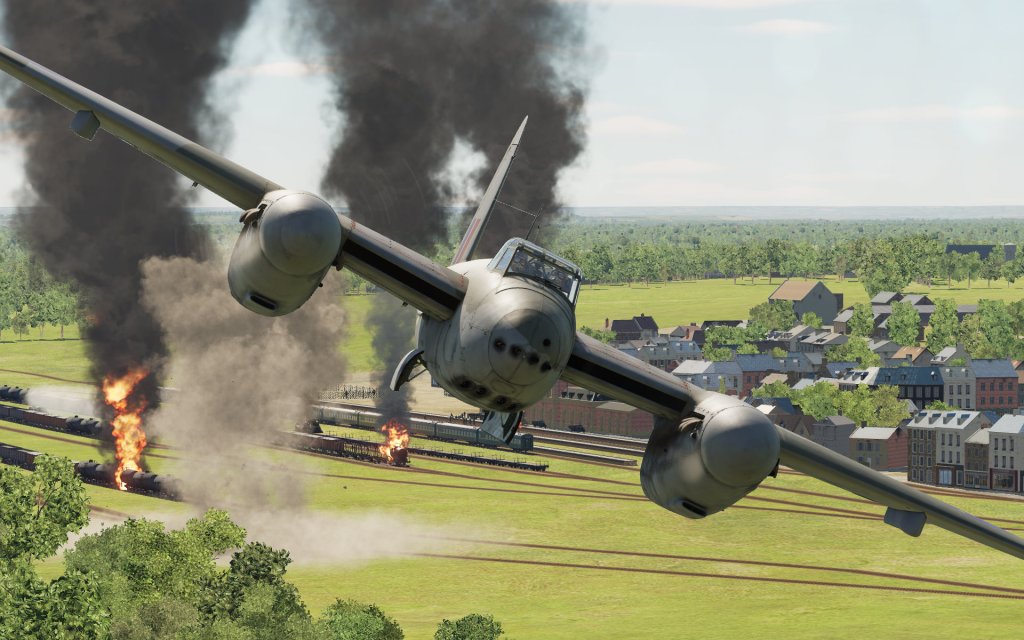
I’ve spent a few hours with the DCS: Mosquito now doing the tutorials, flying the aircraft, and doing what the Mossie does best – swooping down low and attacking Axis ships, vehicles, and trains while looking the part the whole time! These are my first impressions of the DCS: Mosquito.
The ‘Wooden Wonder’
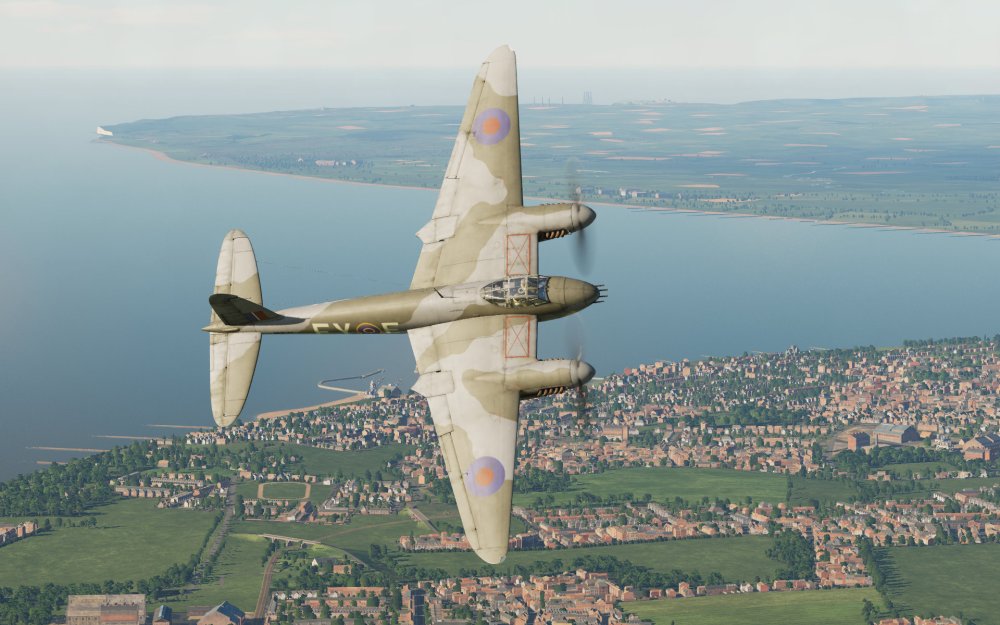
De Haviland’s Mosquito was an excellent aircraft born out of a dire concern that strategic resources would dry up and alternative construction methods were needed to build combat aircraft. The wooden airframe Mosquito came about primarily because of that concern but it grew into a legend.
A radical concept at the time, the Mosquito was envisioned as a light bomber eschewing the usual defensive armament and focusing on speed as the primary defensive measure. Initial successes with the bomber variant saw the aircraft modified with guns and cannons in the nose in an early night fighter variant proving itself far more capable and successful than the Defiant night fighters.
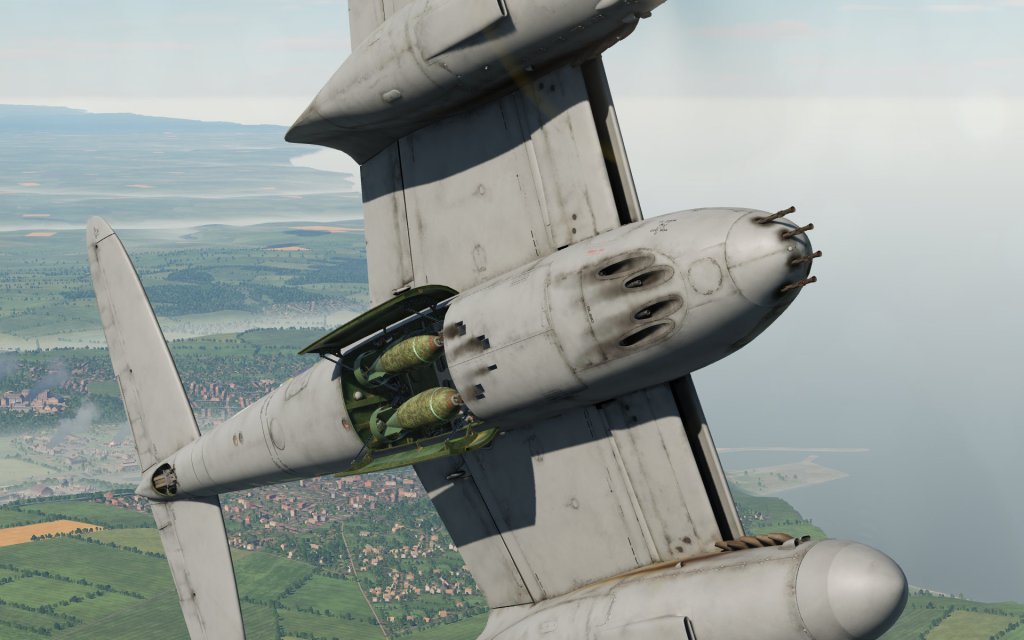
Before long, the Mosquito was modified again into a dedicated fighter-bomber with the FB.VI becoming the definitive version. Four Browning .303 machine guns, four Hispano 20mm cannons and a compliment of 500lb bombs in the bomb bay then supplemented by a further two 500lb bombs on the wings. The Mosquito was also later armed with eight RP-3 rockets delivering a powerful punch that some likened to the broadside of a heavy cruiser.
I don’t think I need to go on for too much longer to convince most people of the Mosquito’s success as a combat aircraft or its legendary status.
First impressions of the cockpit and exterior
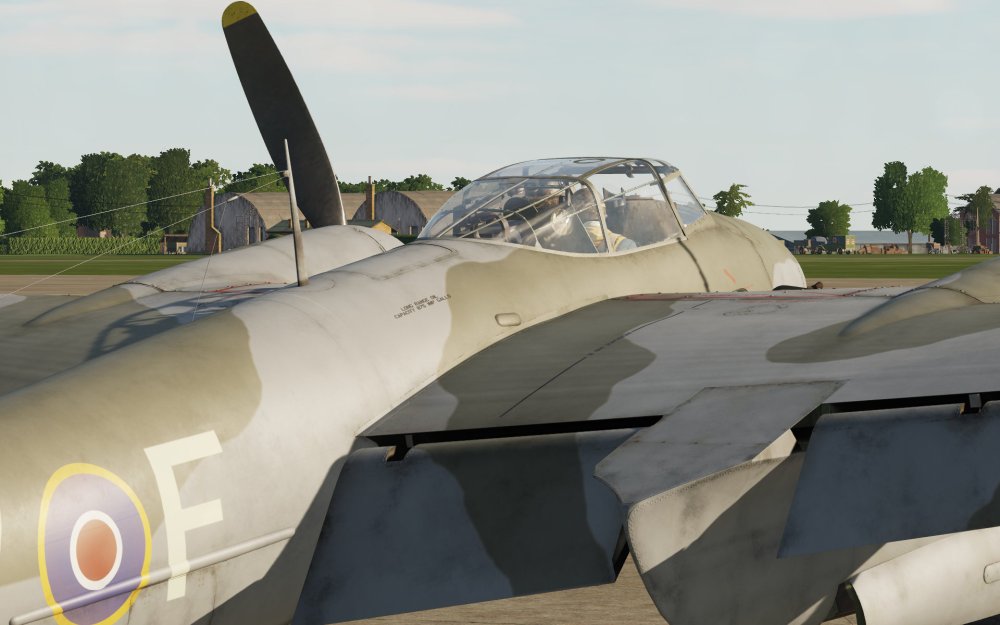


A lot of rumour and speculation and a few official comments came out when the DCS: Mosquito was delayed from its initial road-mapped release date. Delays in DCS module releases are not unusual but this one seemed to be a little more dramatic than some and all arrows seemed to point at the exterior model needing some more time in the oven before it was fully baked.
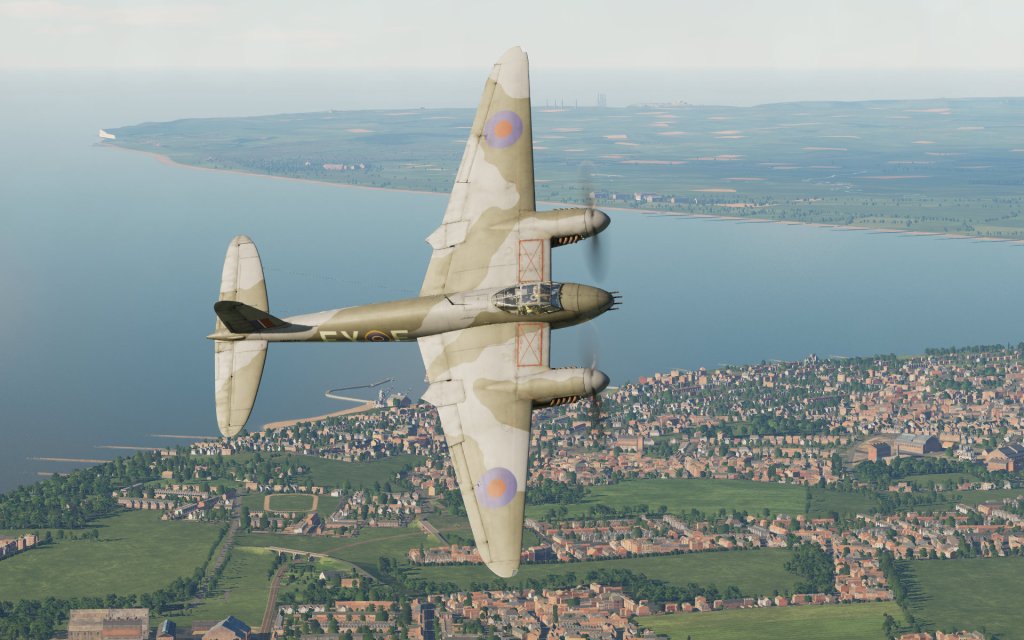
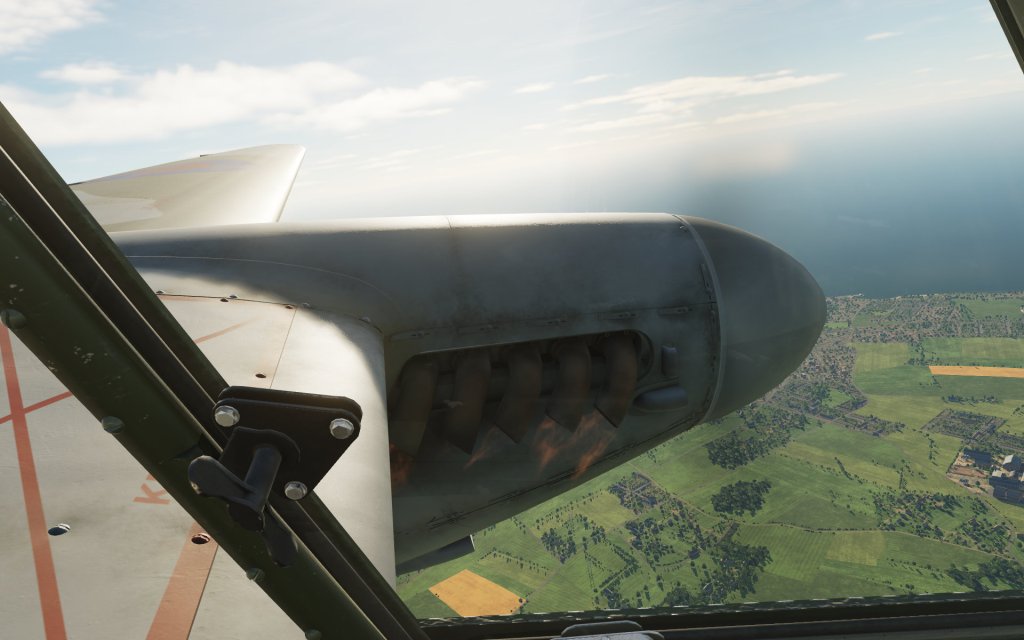
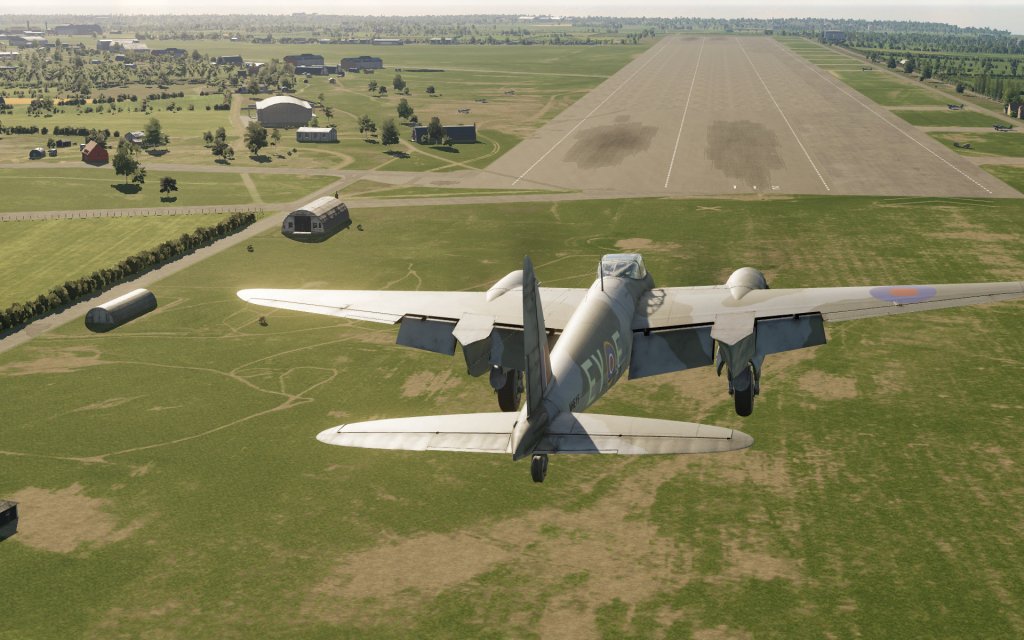
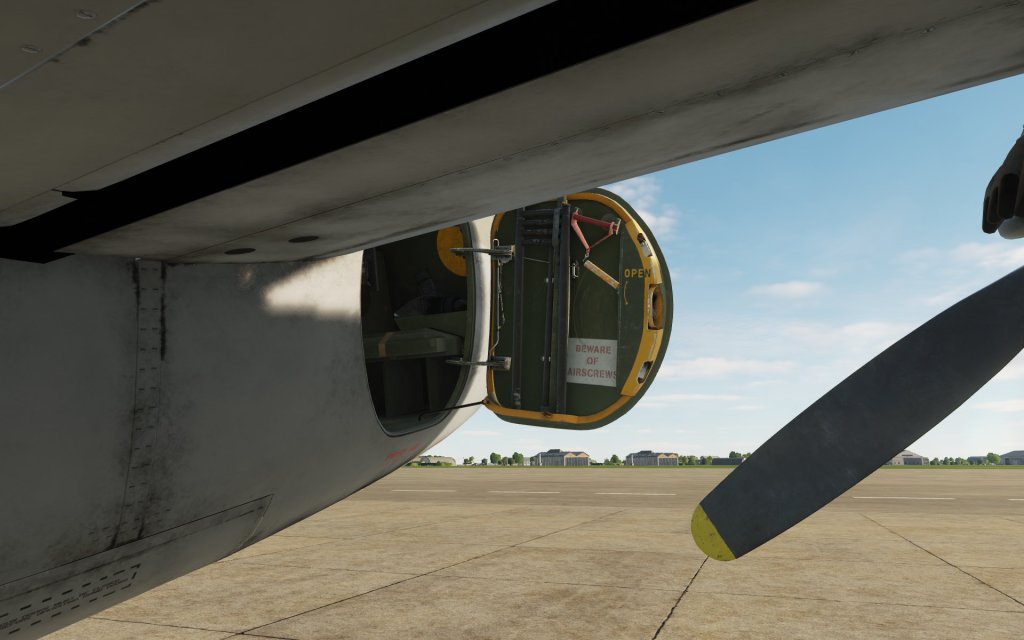
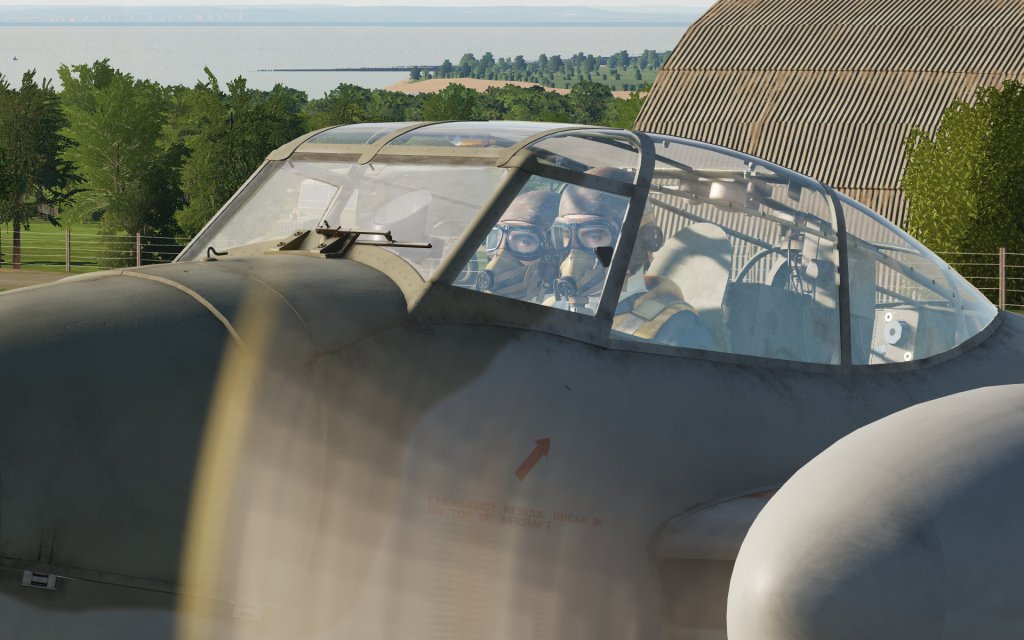
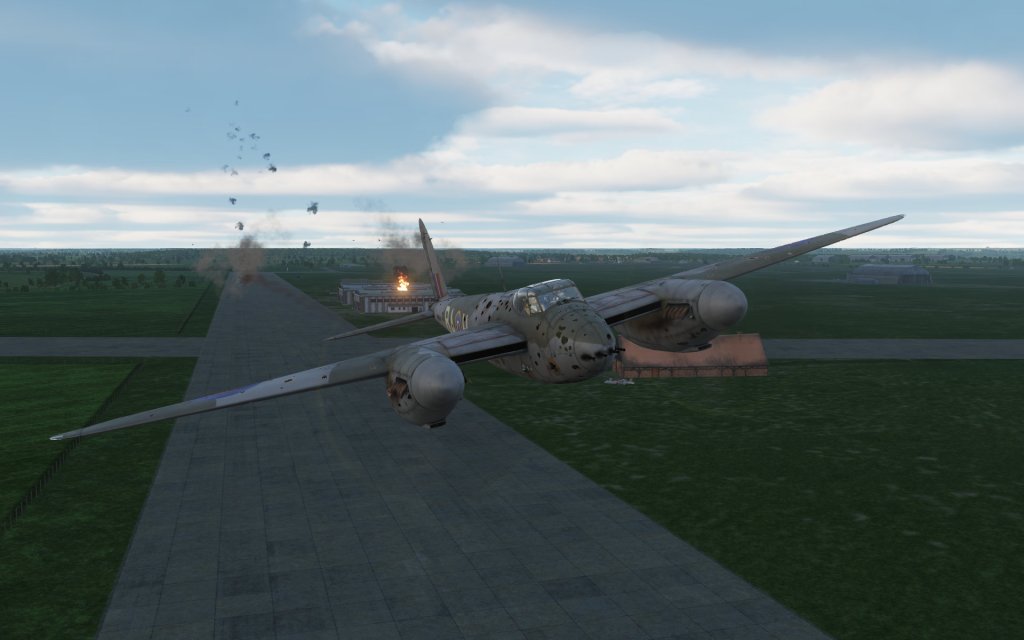
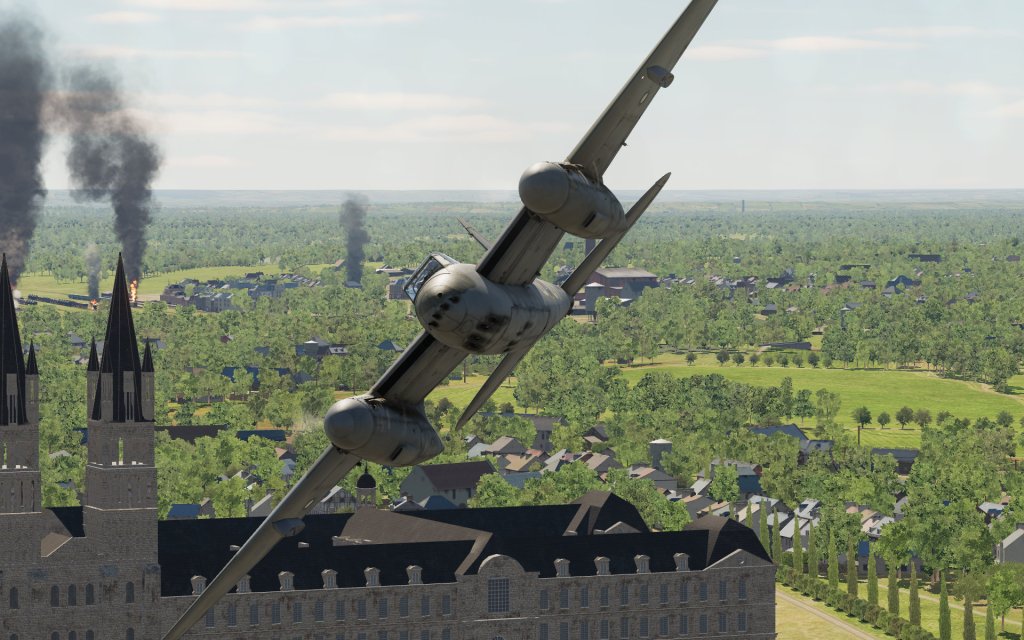
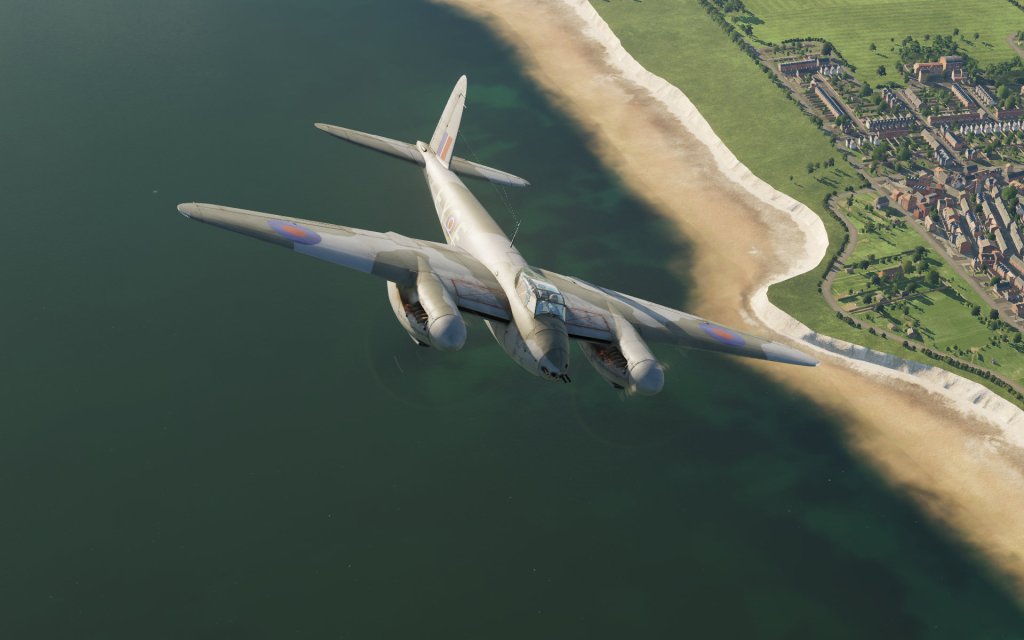
Whatever happened behind the scenes, none of that is on display anymore because the Mosquito’s exterior model looks brilliant. I’ve gone over it in detail at close distances and its among DCS’ best. The Mosquito has some unique shapes and an overall smooth appearance thanks to it’s wooden skin construction and I think they are well captured.


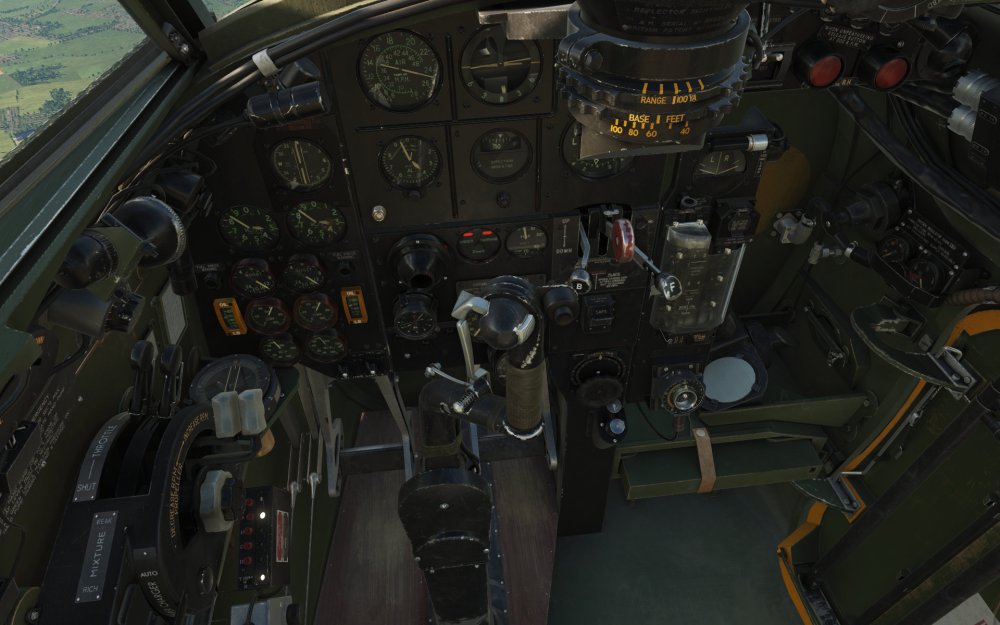


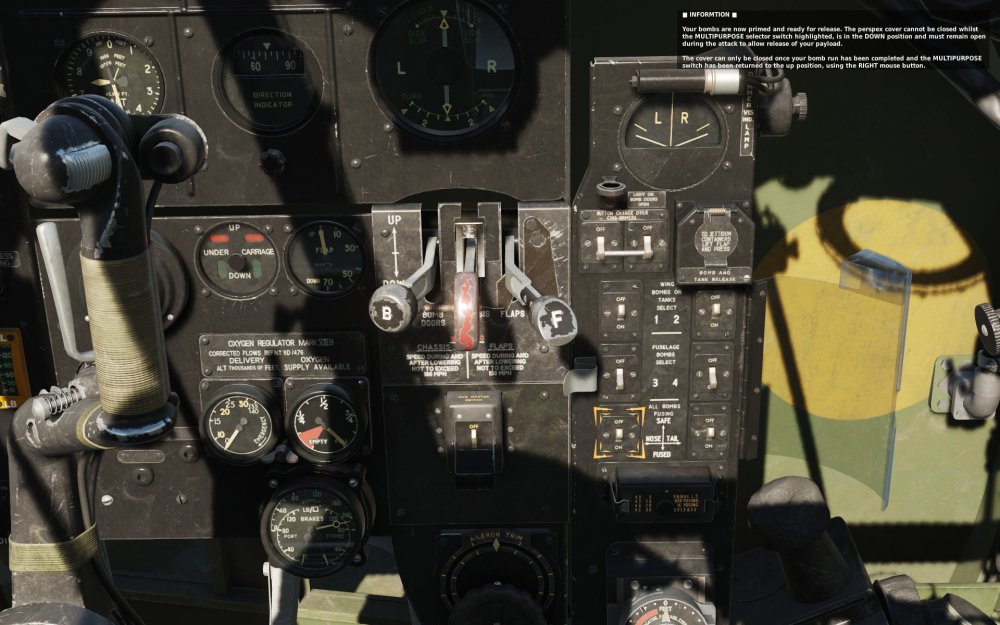
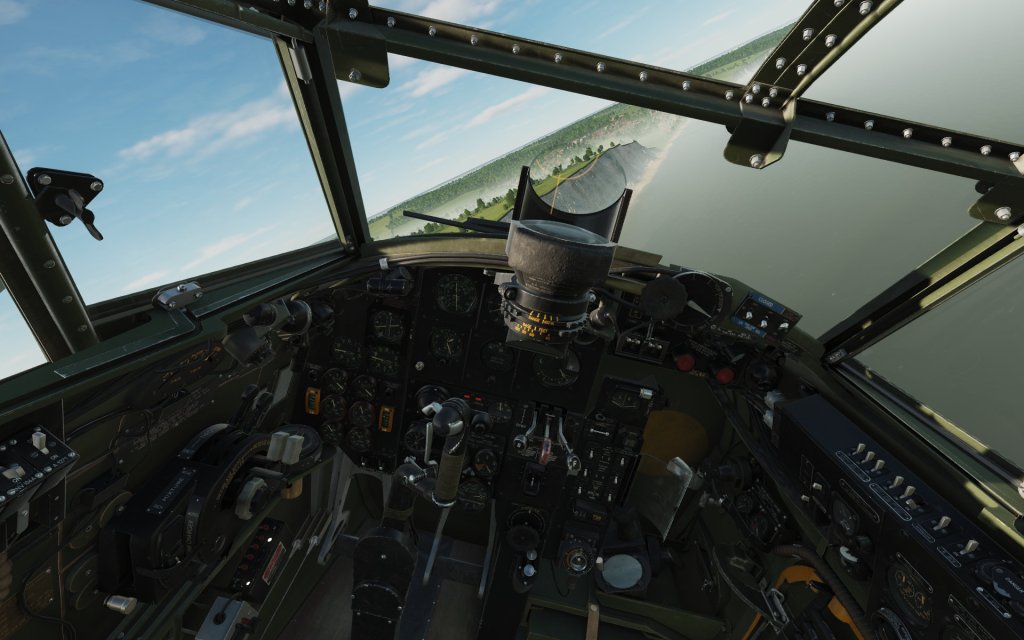
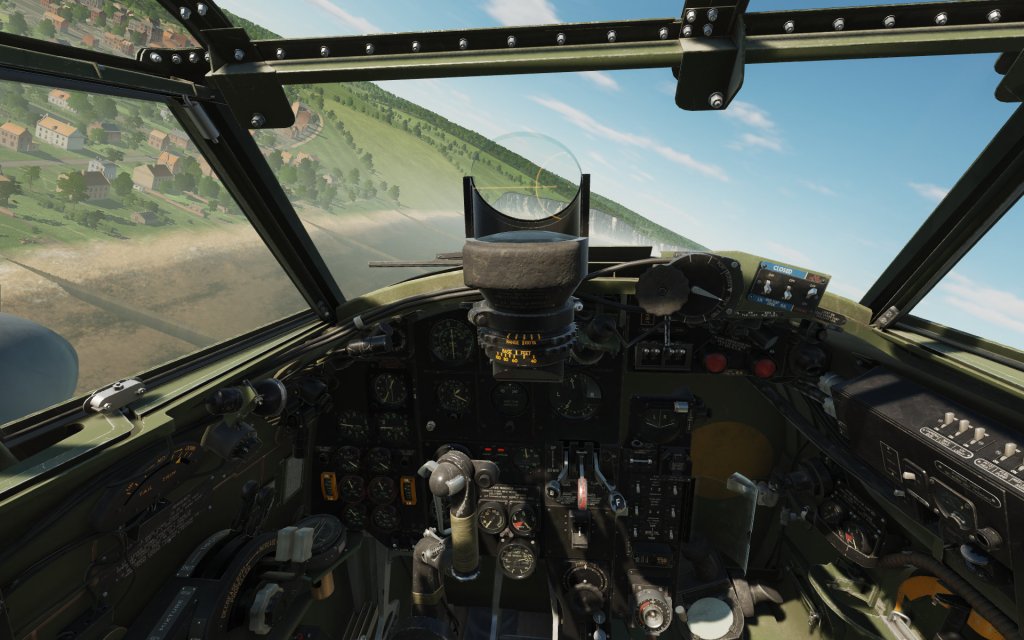
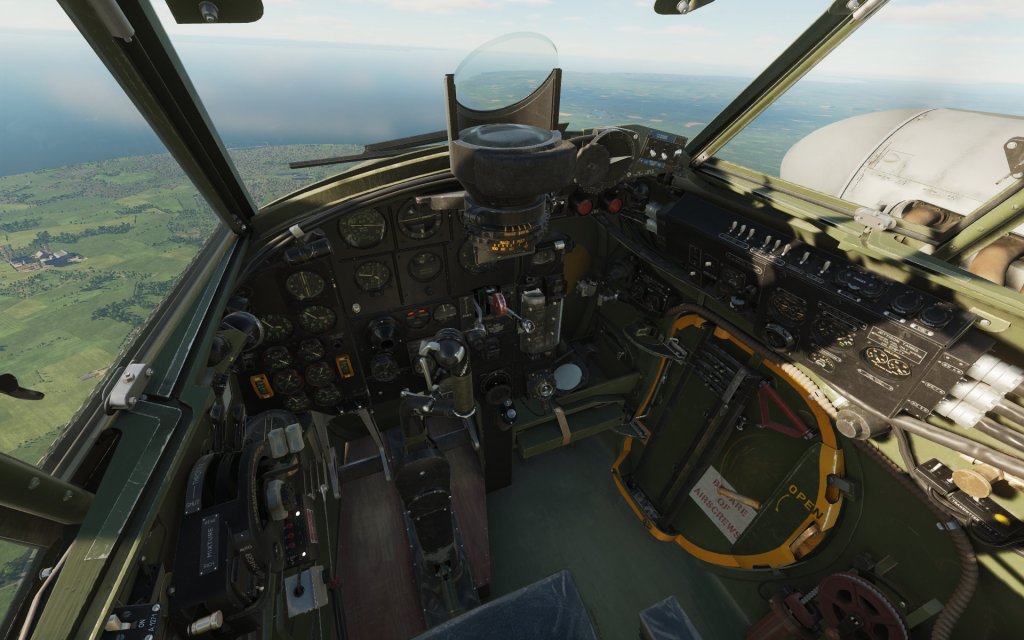
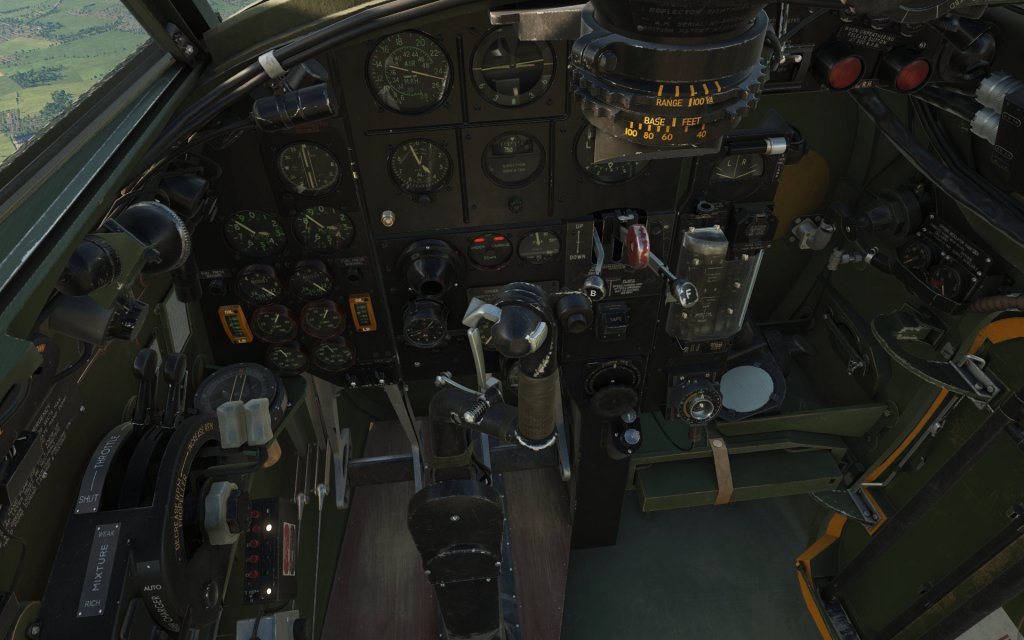
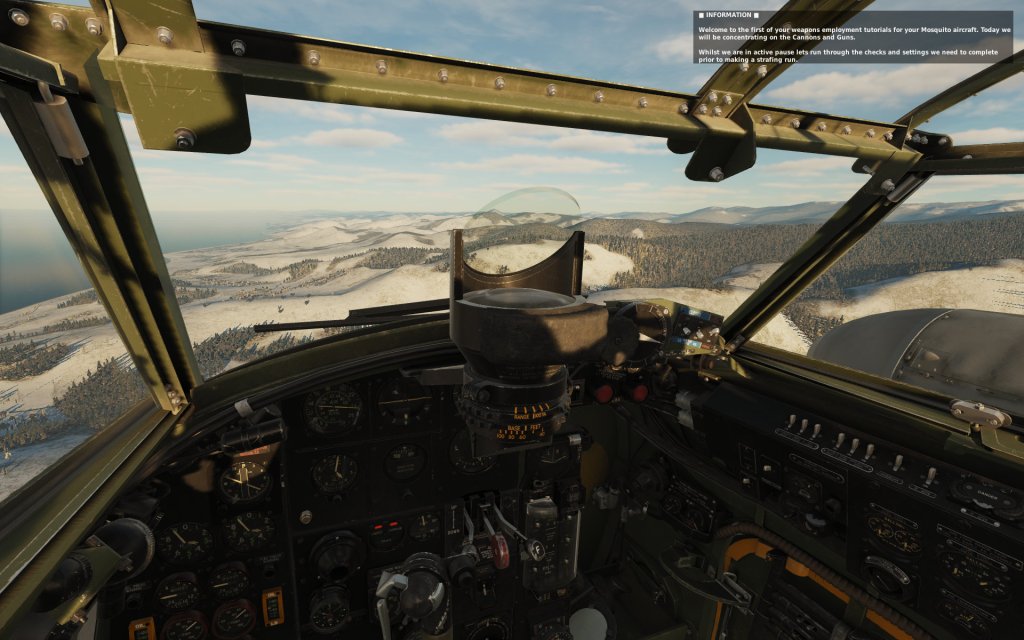
There’s no shortage of attention to detail inside the cockpit either where the Mosquito rivals all of the recent Eagle Dynamics releases. The Mi-24P Hind, P-47D-30 Thunderbolt, and F-16C Viper are all recently put together by Eagle Dynamics (recent is a relative term here folks) and the Mosquito’s cockpit is right up there.
The texture work is once again excellent showing plenty of subtle wear and tear without looking like the aircraft’s cockpit was put through the blender. You want the aircraft to look like it’s in use without it looking like it’s been baking in the sun for several decades and ED has found the right balance. Needles and gauges are also readable even when there’s some deep contrasts due to bright sun and shadow.
Flying the Mossie

I’m only just getting started with the Mosquito but I’m feeling ok-ish with most areas of operations on the aircraft. If you’ve flown the DCS: Spitfire IX, you’ll be familiar with most of the quirks of operating a Merlin powered aircraft.
That said, there are some differences and one that took me by surprise is just how sensitive the engines seem to be to negative G maneuvers. Even a slight push over on the stick will cause the engines to immediately cut and sputter until you get back to a 1G state. It feels rather sudden for an aircraft that, I would have thought, would have received similar updates to the fuel feed system that the Spitfire did. I’m sure Eagle Dynamics has done their research on this and I honestly haven’t read about this quirk either way but it was a surprise.
The Mosquito is also, like all DCS WWII aircraft, very twitchy on the controls. I immediately went into the key bindings and put on some significant curves. Up to +30 on my rudder pedals and +25 on my stick axis. Your controls and mileage may vary somewhat depending on your setup and preferences.
Also like all DCS WWII aircraft, I find I am trimming the aircraft constantly to combat porpoising and it feels like that effort never ends if you want smooth and coordinated flying. The Mosquito is quite like the others that I’ve flown in that respect so its nothing new. Landing/takeoff physics and general handling of the aircraft all feel very fluid and real and the sounds and physics come together here to create a convincing experience.
Before I move on let’s briefly talk about sounds because its part of the Mosquito’s appeal and I have to say that both inside and out, the sounds are excellent. The Merlin’s sound great and all of the various controls that should have satisfying thunks and other noises – when they aren’t drowned out by the engines. The gun sounds are also excellent.
Into combat


So far I’ve taken the Mosquito through flight training, weapons training and through some of the quick missions. The training missions are actually quite good with several available taking you through the basics, through start-up and takeoff and then into the various weapon and armament setups that you’ll need to fly the Mossie. They are also mostly short and can be done in just a few minutes – ideal if you need a quick refresher.
The included quick action missions are of varying quality. Most of them have good briefings that tell you what you’re up against with most of them on The Channel map and just one on DCS: Normandy. The Normandy scenario seems to have had the least amount of time put into it but the actual mission is fairly fun. I was most frustrated with the airdrome attack on The Channel because the flak seems to be superhuman in their aim and there isn’t enough time between spawn in and the airbase infront of you to configure the aircraft for combat.
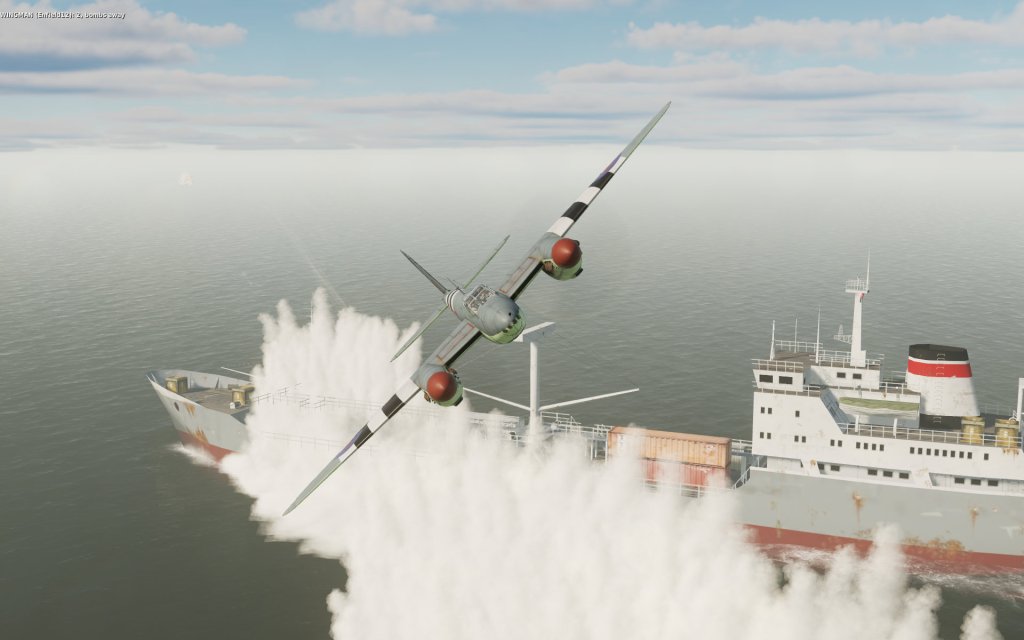
Other scenarios are fun and involve convoy attacks, a naval ship attack off the coast of France and more. Most of the scenarios also, interestingly, reference the RP-3 rockets as an available loadout which leads me to believe that they hoped to have them at launch and they were just not quite ready. I’m sure that will be along shortly.

I have had just one notable bug with the aircraft that I haven’t mentioned. At one point I was hit by flak and my cockpit view started to jump around. It seems to have been related to something to do with the gunsight as I was able to flick that switch off and the problem stopped. Further problems may reveal themselves over time but that’s the only thing that really stood out to me.
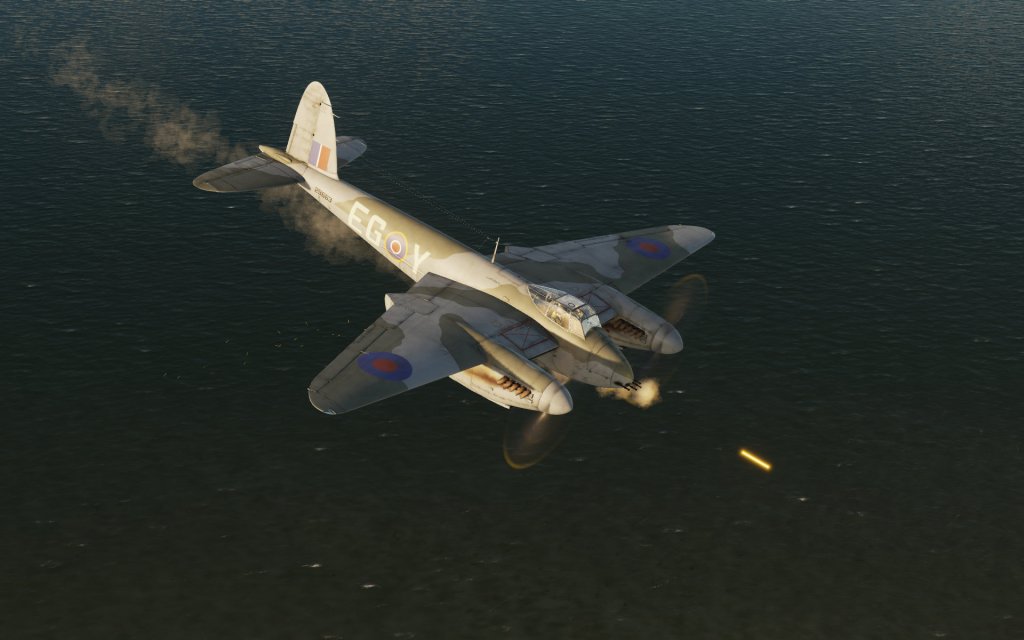
As written in the introduction, the Mosquito has substantial firepower and the four 500lb bombs and ample cannon and machine gun armament makes it a heavy hitter among WWII types. I had lots of fun practicing with the 500lb bomb drops (although my accuracy leaves much to be desired) while gun strafing was intense and highly entertaining. Putting all of that armament in the nose makes aim easy and allows the pilot to drop a veritable fire-hose of .303 and 20mm fire on whatever is unlucky to be in-front.
There are some interesting quirks with the aircraft including some controls that are located behind the seat and managed by the navigator/observer. That’s easy to manage in single player but I’m not sure how that will pan out when I take it online. The pilots view also shifts to the right when you turn on the gunsight automatically lining you up. Otherwise you sit slightly offset from the sight so you can see better while flying. Interesting and unique.

The Mosquito damage model is also a step up from what I saw of the DCS: Fw190A-8 and DCS: P-47D-30. Engines can be damaged, light on fire, and systems can fail with electronics going haywire and equipment behaving badly. The new DCS damage model system is on good display here including more detailed location based damage decals – a new feature for DCS. There are still some quirks like when my fuel tank blew up and the wing just ceased to be. Or in another instance I lightly grazed a tree and the wing once again just disappeared from existence. It’s not quite as fluid as IL-2’s damage model in those areas but has definitely taken several steps forward at the system level.
Final thoughts
Eagle Dynamics has taken some flak in recent years for some underwhelming early access launches. The DCS: F-16C was one of those launches that critics quite rightly pointed out was rushed and suffered from some serious issues. The Mosquito seems to have avoided that fate and benefited from some extra time spent in development. It is more in-line with their other recent releases like the DCS: Mi-24P Hind which came out of the gate in an already good state with fixes and additions mostly adding to the experience rather than solving anything egregiously missing.
According to Eagle Dynamics the roadmap for phase 2 includes the following:
- Operator’s AI for multi-crew
- Tire and shock absorber dynamics
- Operable drift recorder device
- Engine failures
- Fire-extinguishers
- Rockets armament
- More liveries
Although engine failures is listed as a feature still to be developed, I’ve already seen an engine shut down and die after sustaining some battle damage. So, clearly they want to add more layers of detail to some of these features than develop them outright as the aircraft already has some of this capability baked in.
Fun, capable, and without any serious issues that I’ve discovered so far, DCS: Mosquito is another good addition to the DCS World War II aircraft line-up. It fits The Channel and Normandy map scenarios perfectly and I’m guessing that we’ll be seeing a whole lot of Mosquito flying around on DCS World’s two popular WWII servers.
A fun, solid, well put together module. If you like World War II aircraft and have a soft spot for British aircraft, the Mosquito is highly recommended. You can buy it directly from Eagle Dynamics for $59.99 USD (an early access discount $47.99 is still currently in effect as of this posting) or from Steam.




















Leave a Reply