
Asobo Studio, Microsoft, and the folks at Carenado have come together to produce yet another collaboration aircraft for the Microsoft Flight Simulator Marketplace. This time it’s the Beechcraft Bonanza V35 and its the third in their Local Legends series. What makes this aircraft a legend and should you add it to your MSFS hangar? Let me see if I can help.
A bit of history
I’ve been on a bit of a roll recently with Beechcraft aircraft reviews thanks to a near constant stream from Microsoft and Carenado. What’s fun about all of this is that we’ve been able to take a journey through aviation history with the Beechcraft Model 17 Staggerwing, then the Model 18, and now the Bonanza V35 all arriving more or less one after the other with some other types sprinkled in-between. While the last two were pre-war designs, the Bonanza V35 is a post-WWII era aircraft that took advantage of both the technology and the the boom in pilots.
The Bonanza was first flown in 1947 and began life as the Model 35 under a design team lead by engineer Ralph Harmon. What emerged was a thoroughly modern design with an aluminum skin and horizontally opposed engine when many GA types were still using fabric, wood and radial engine power.
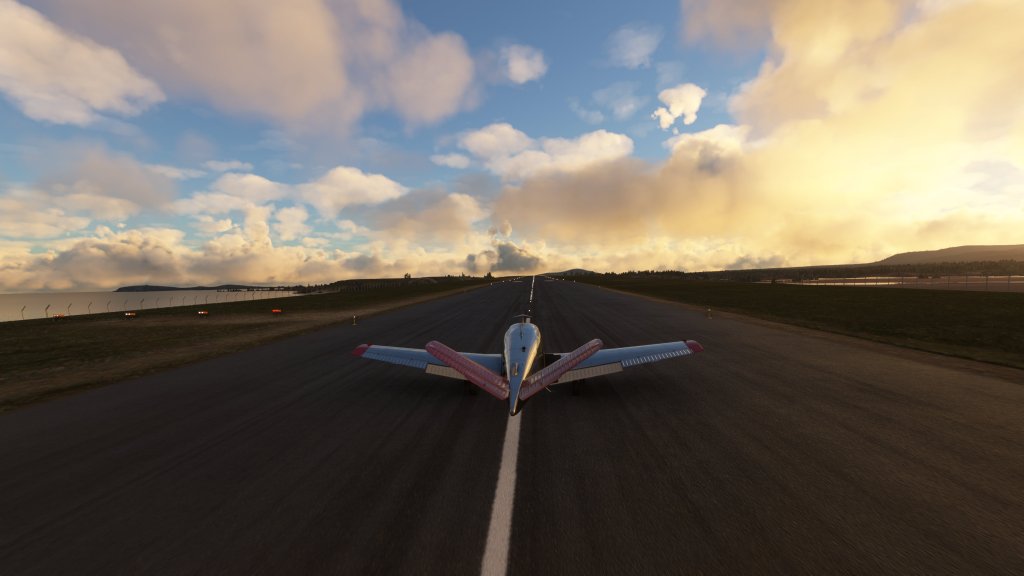
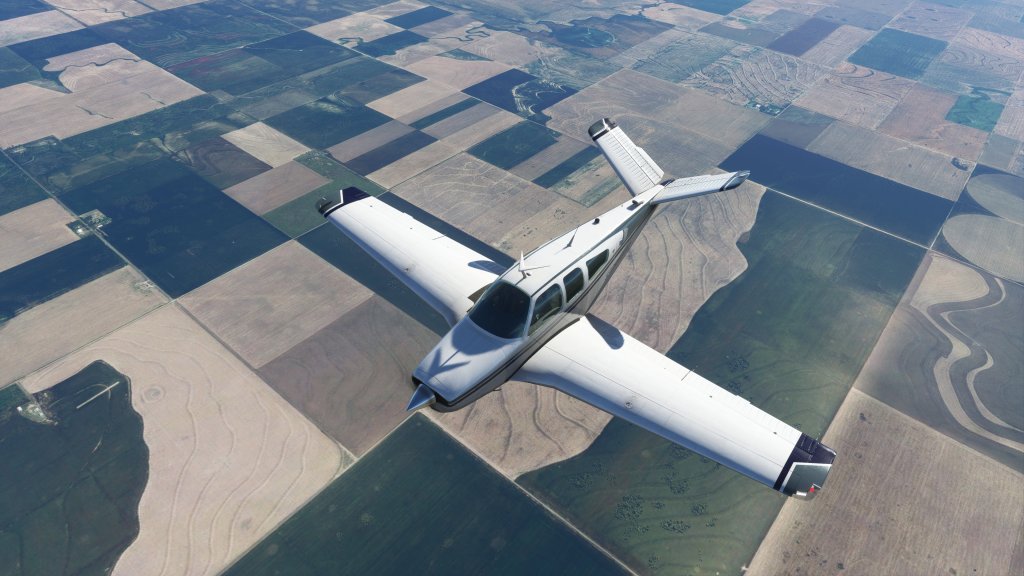
The V-tail design came into being in an attempt to save weight and improve aerodynamics as the team at Beech were anticipating that a new generation of pilots would want to have faster aircraft than were previously available.
The Bonanza would go on to see sales success. More than 17,000 Bonanza’s have been produced over its production run and the Bonanza has the distinction of the longest continually produced airplane in history.
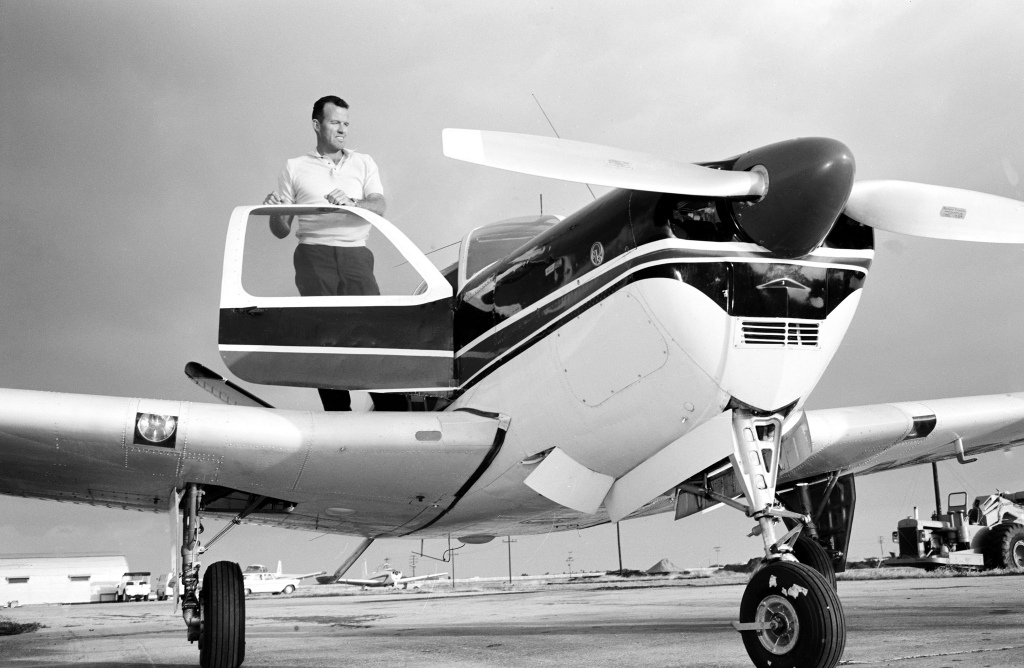
Several versions were produced over the years including a V-tail Model 35, a Model 33 with a conventional tail (sometimes called the Debonair), and a Model 36 which is the most recent version featuring a stretched fuselage and conventional tail. All of these models proved to be highly sought after. The Model 33, a cheaper and conventional tail version, later become the template for all modern Bonanzas.
The Bonanza’s success, however, did have a dark side. The V-tail version wracked up a reputation for being a “doctor killer” as it was coined. Doctors, lawyers, an celebrities were buying up these desirable aircraft with their often newfound wealth. Many were inexperienced, overconfident, and flying an airplane with more speed and power than they may have been used to. The accident rate soared.
The Bonanza itself did have a couple of problems too. First, the shorter tail of the V-tail models meant that weight and center of gravity considerations were essential. It is possible to stay within the proper weight calculation for the type while exceeding CoG limits. Second, a structural problem in older V-tail models did lead to several crashes after the tail separated necessitating a reinforcement program to fix the problem.
These issues combined to cause considerable damage to the Bonanza’s reputation. Beechcraft was then convinced to move to the more conventional tail configuration. This is why the modern G36 variant uses a more conventional setup.
Some interesting reading is available for those who want to dig deeper. Particularly this AOPA report on safety and the Bonanaza.
Visuals and sounds
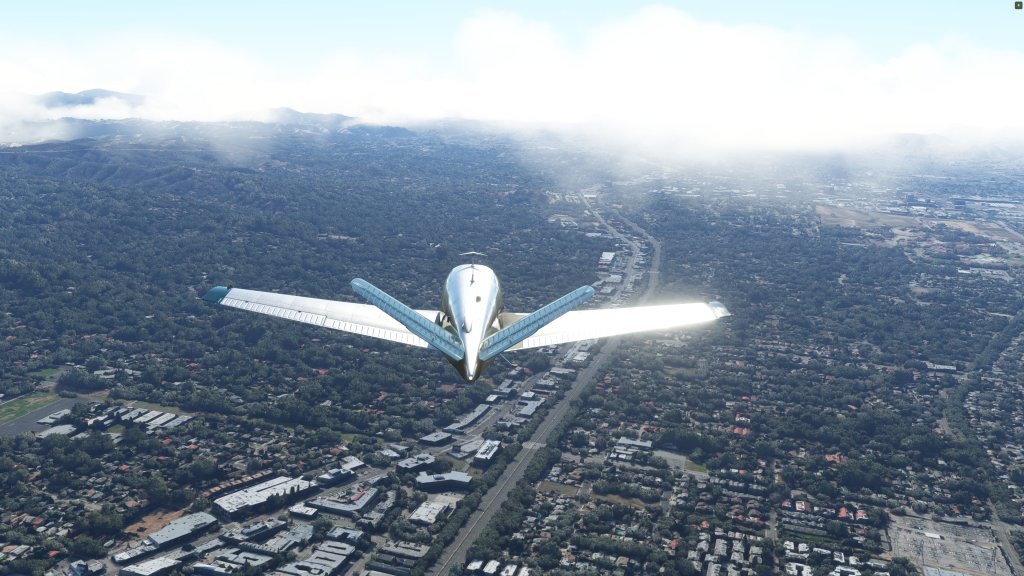
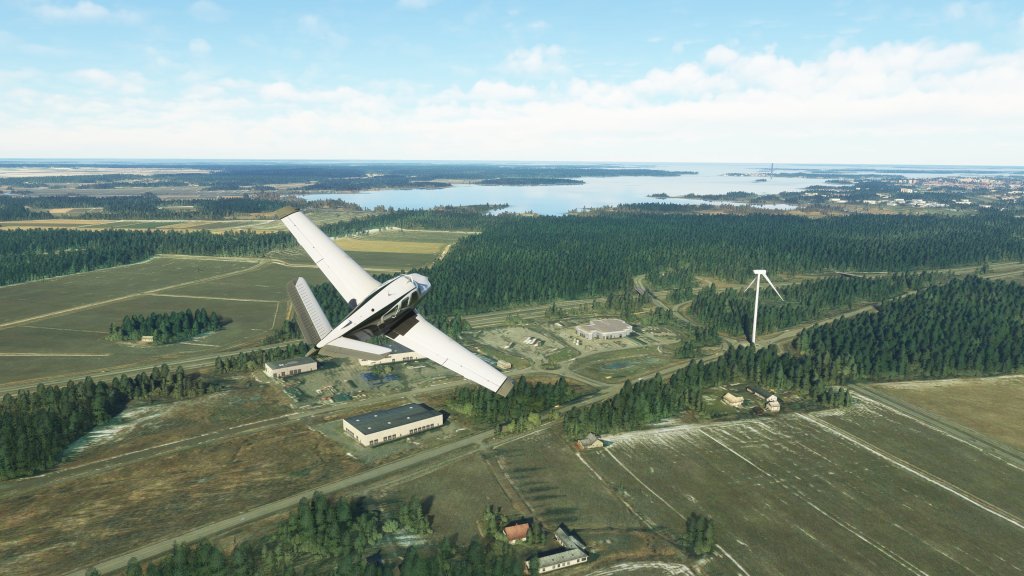

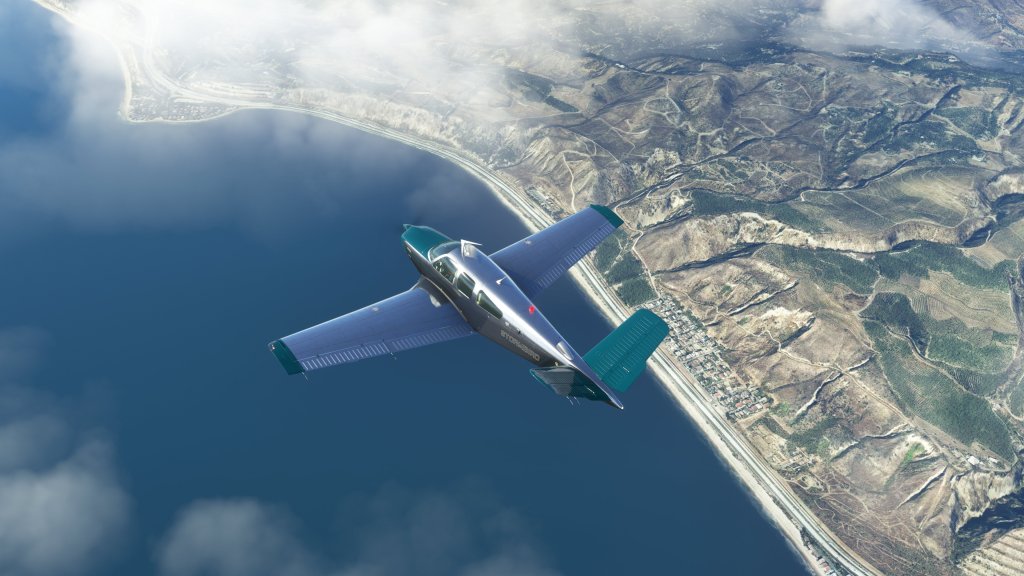
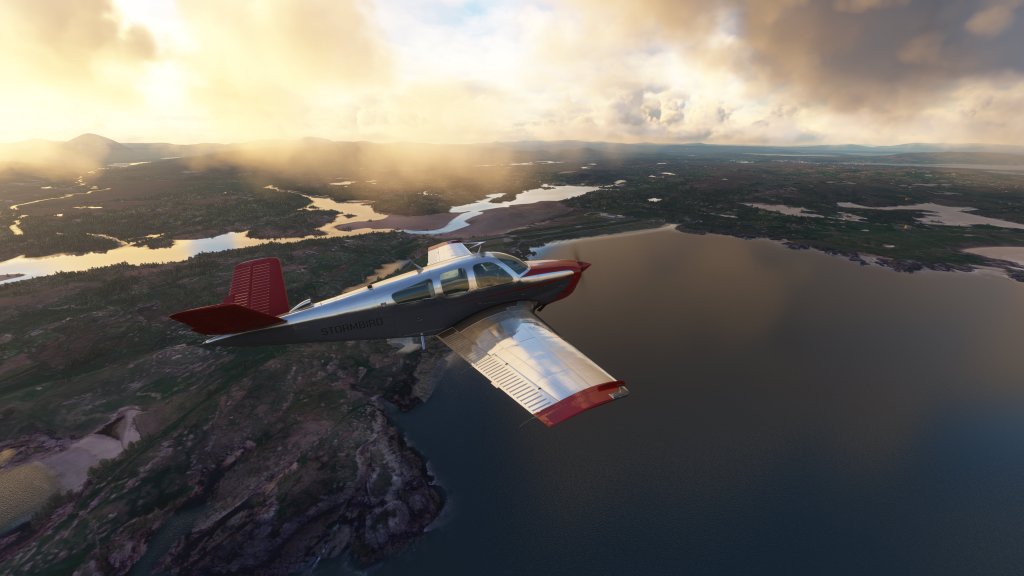
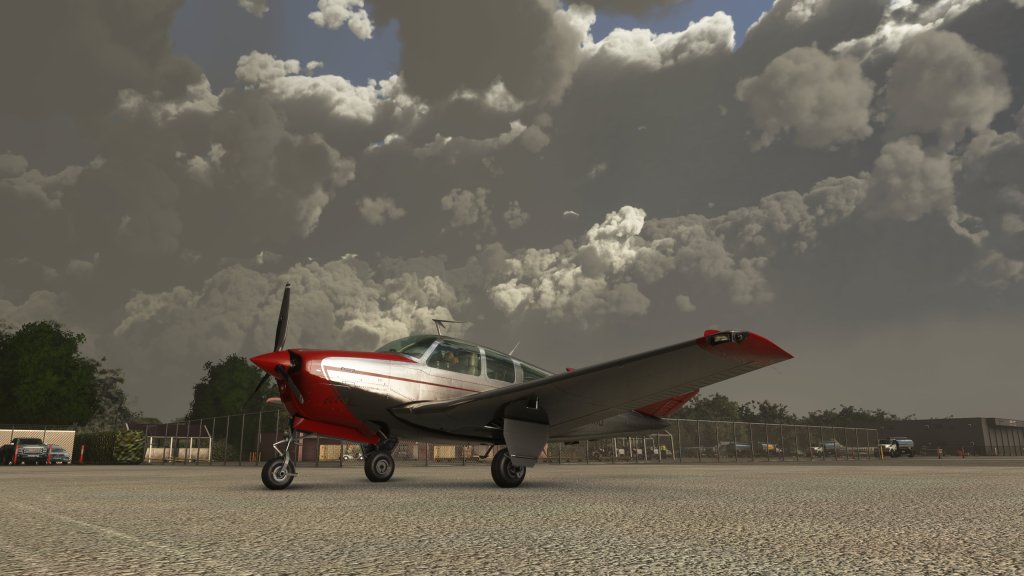
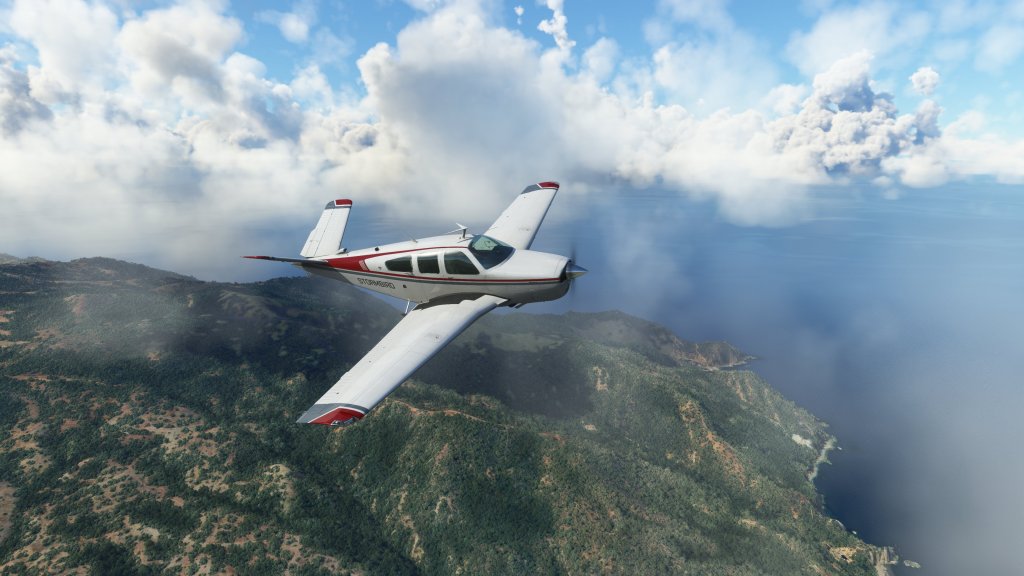
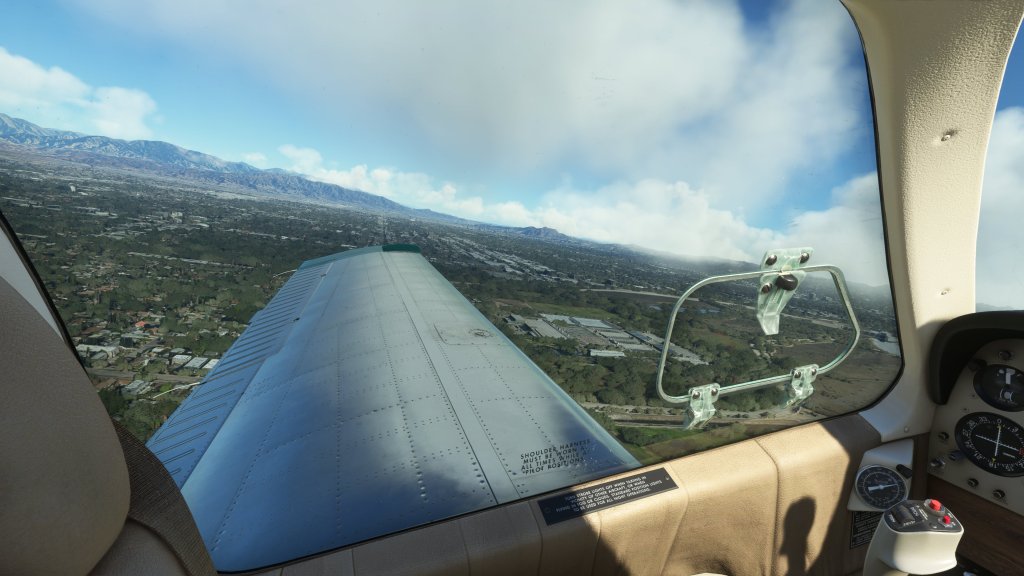
Every time I review a Carenado airplane I come away impressed with the visual fidelity. This is no exception to that rule. Carenado’s best artists were clearly involved with making this version come to life in Microsoft Flight Simulator.
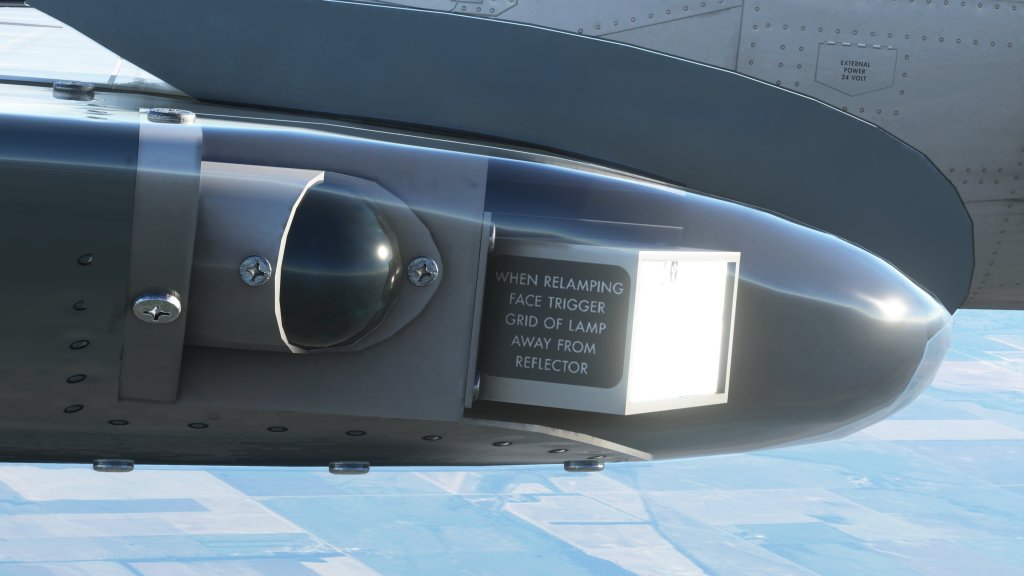
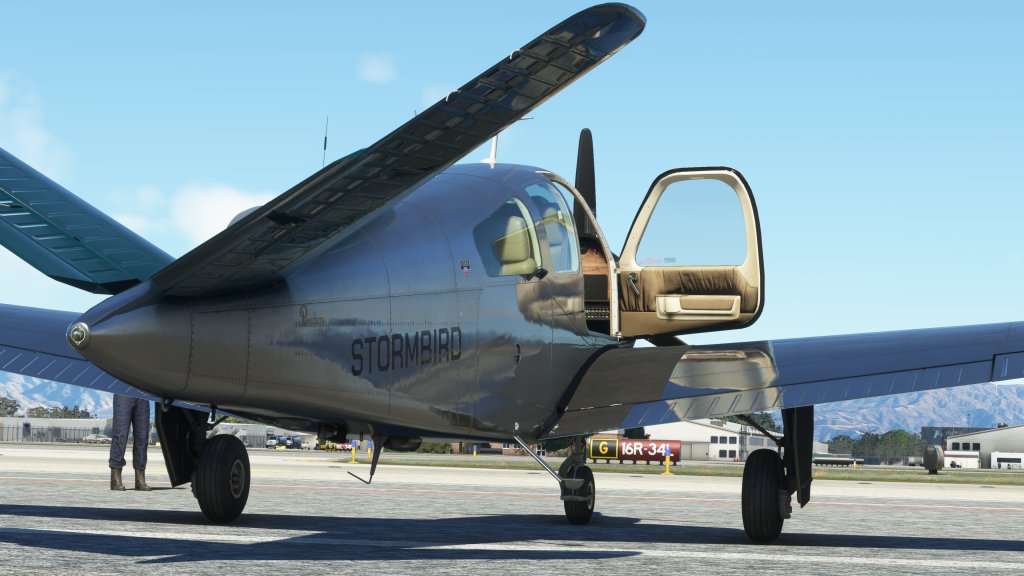
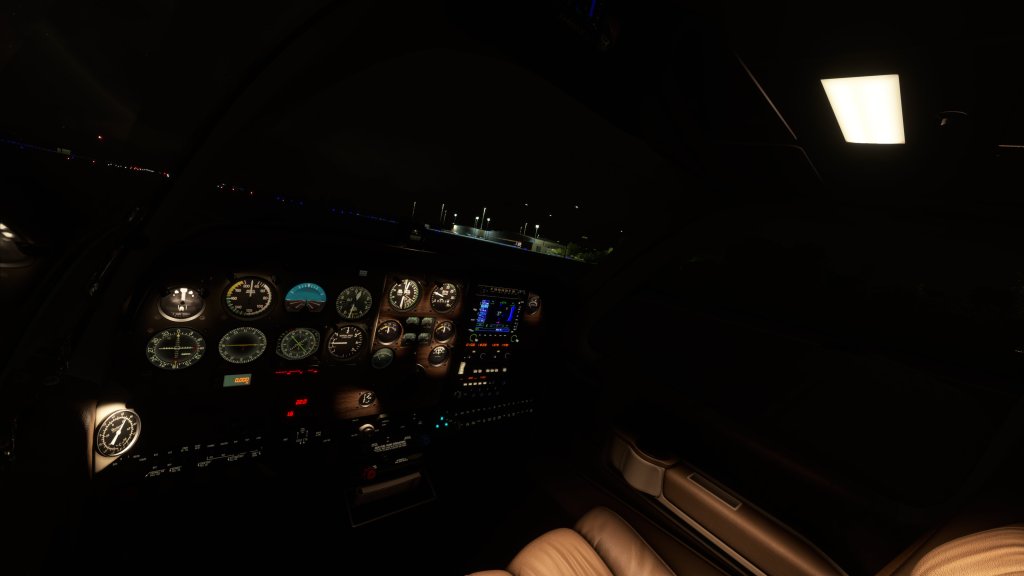
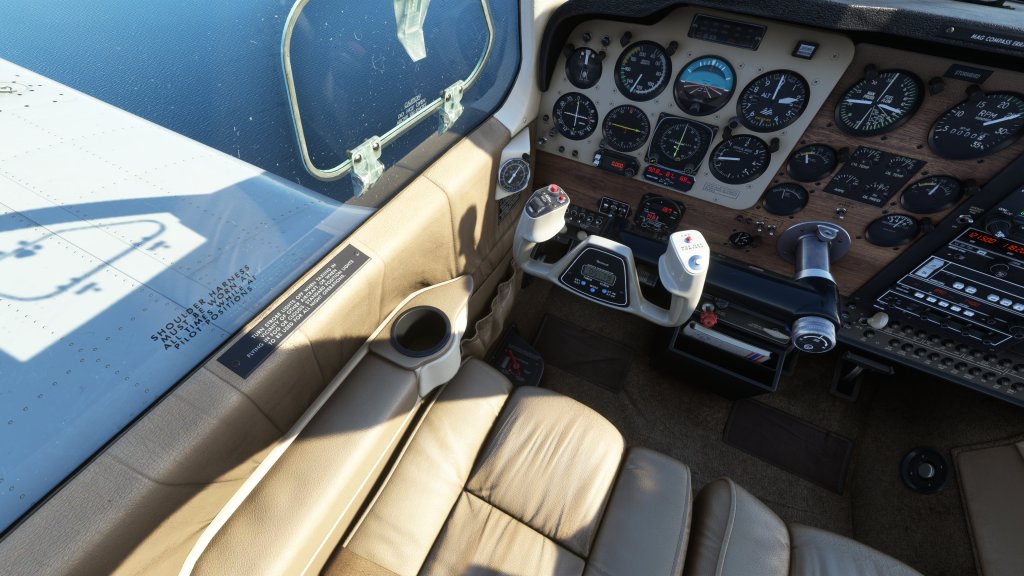
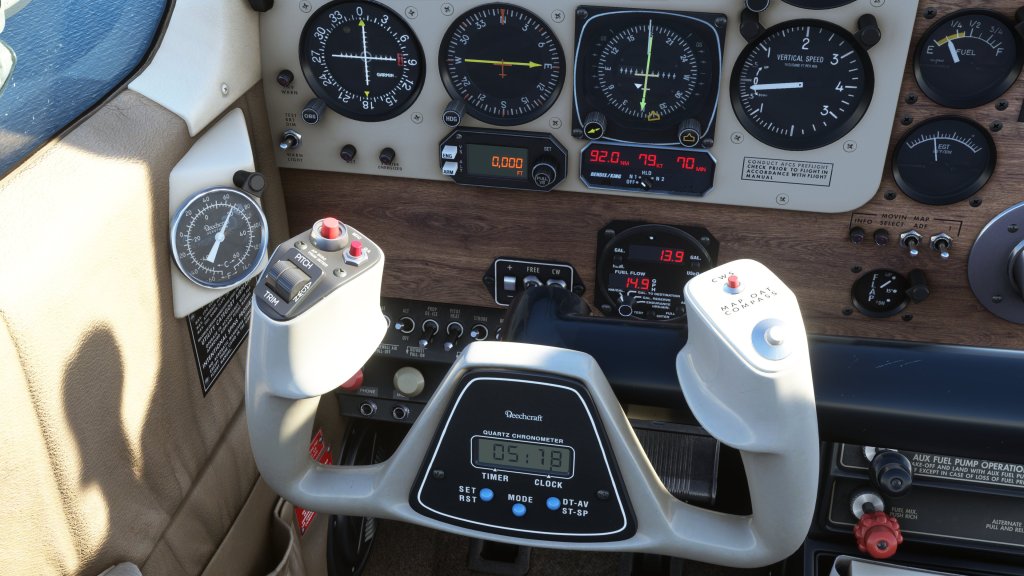
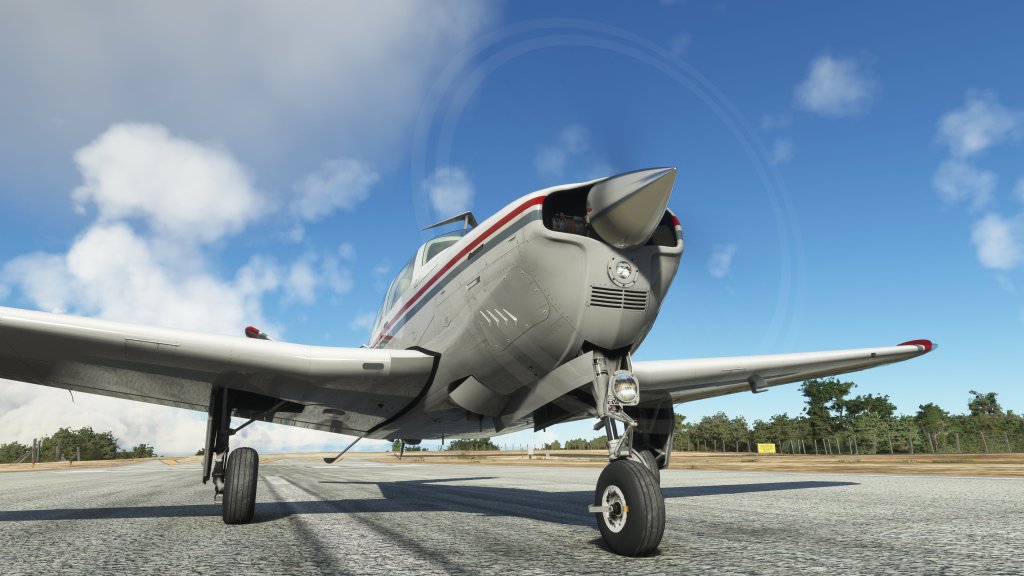
The aircraft is a visual feast with the exterior modeling even the finest details. The V-tail? Looks incredible from up close with the type’s ruddervaters modeled in exquisite detail. There’s even fully legible text viewable from up close on the Bonanza’s wingtip navigation lights. That accounting for details goes into the cockpit too with incredible detailing on all instruments and controls.
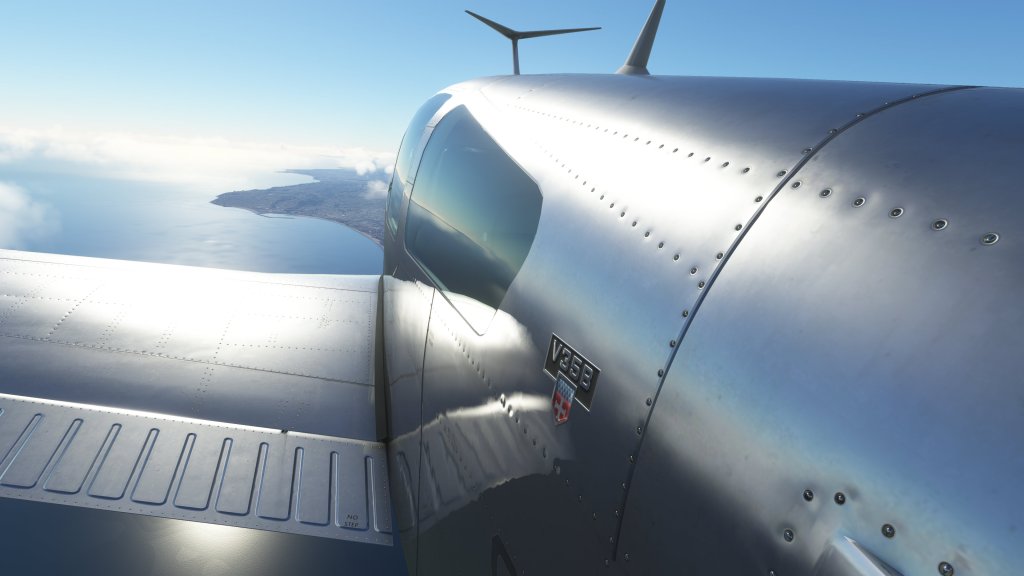
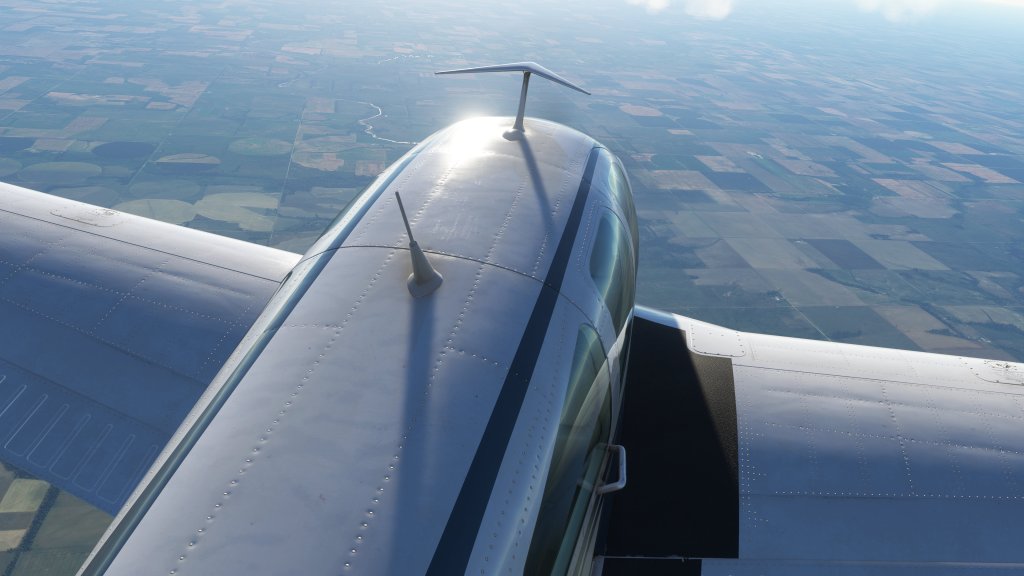
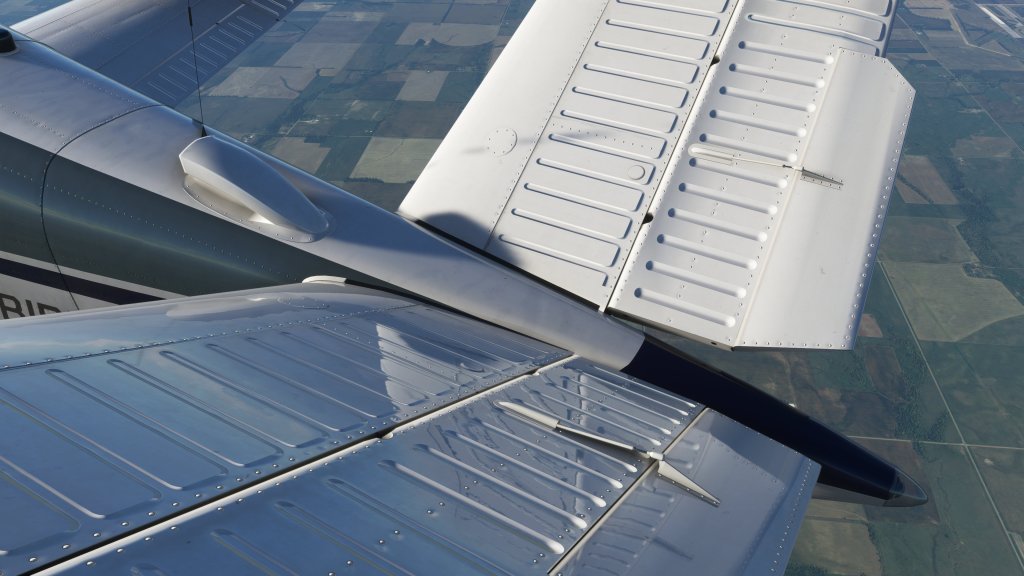
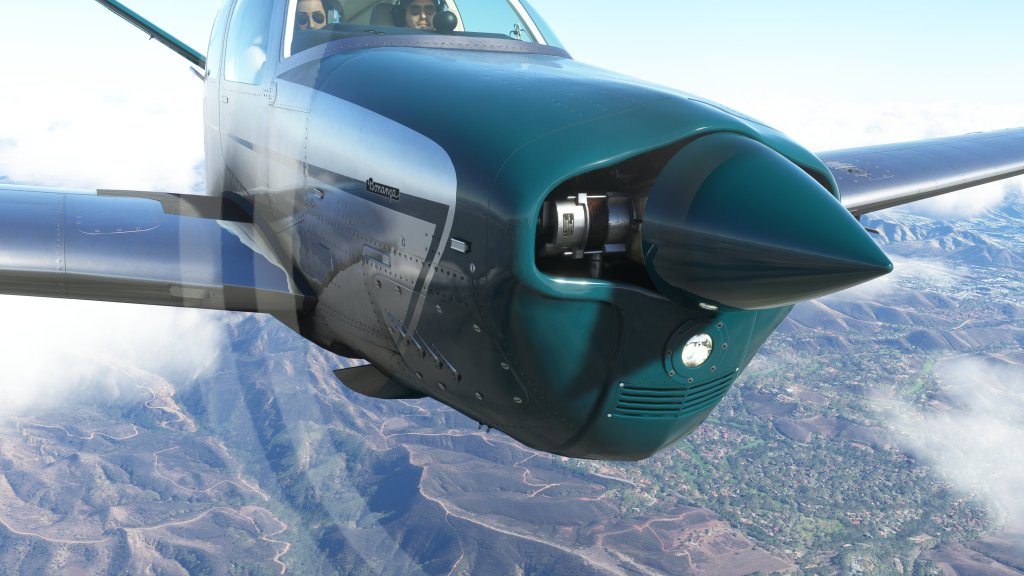
Pilot models use the Asobo defaults which give us at least a little flexibility on who appears in the cockpit. The external view will show both front seats occupied while the interior view shows nobody at any point. No passengers are modeled either. Typical at this price point.

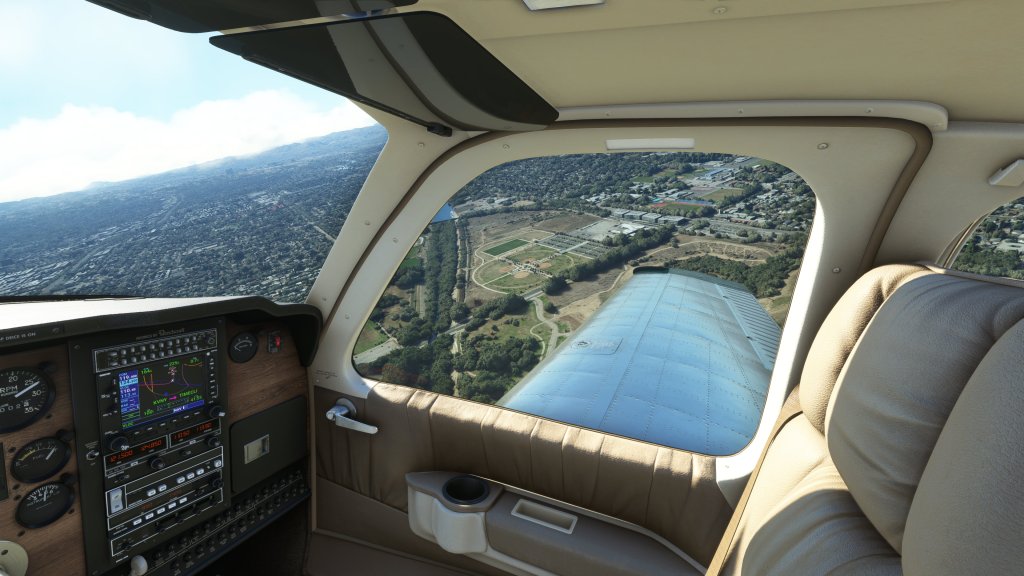
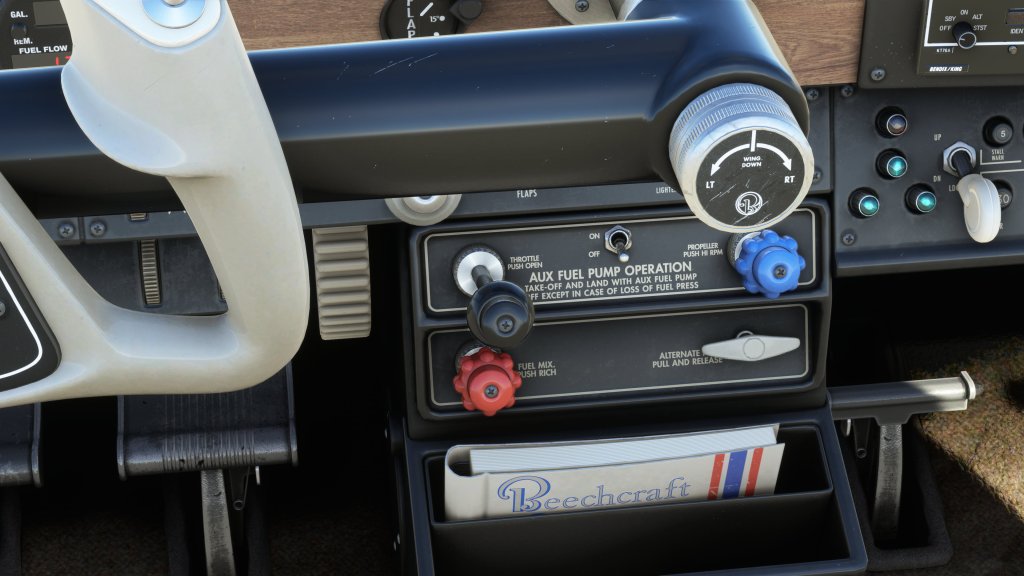
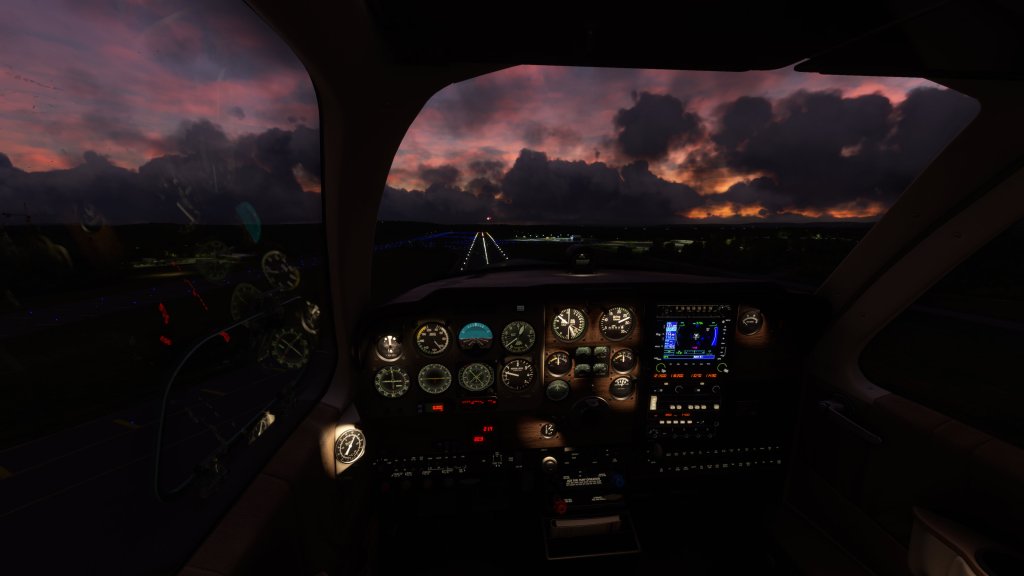

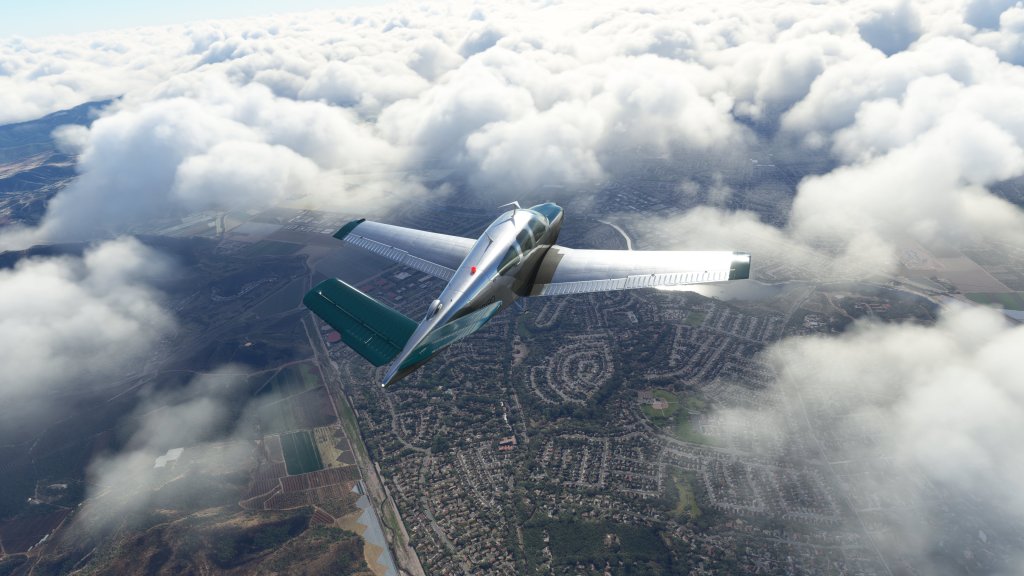
I am thankful too that Carenado and Asobo chose to do this unique version of the airplane as the V-tail is such a unique and iconic version of the airplane.
On the sound front, Carenado have employed their usual array of sounds. The engine once again takes on a kind of drone-like quality that I find slightly annoying at times. It does, however, become more of a pleasant purr at cruise power settings so that’s usually where I leave it. It’s not worse or better than other Carenado types and is perfectly adequate.
There are those nice to have features like airframe squeaks during higher G turns and in turbulence. It’s tastefully done. There are also great sounds for all of the switches, doors, and other gear in the cockpit.
Systems
The Bonanza V35 is configured in a very conventional way with the usual array of controls. For those wondering, no this isn’t like the Bonanza G36 version that comes with Microsoft Flight Simulator and it does not have a G1000 glass cockpit. This does feature a GNS 530 GPS, a conventional six pack of steam gauges, and a semi-modern autopilot system.
This is a great aircraft for cross country flying as you have everything you need to dial in your flight and let it fly. It doesn’t mean that you can ignore it because the V35 still demands some attention. Managing your fuel is important as it is in many GA types from the era. Left and right tanks need to be managed so that balance and fuel flow are maintained. Getting the right fuel mix for efficiency and power is important too.
Carenado are a bit light on engine modeling and this one is no different. There’s no failure modeling and you can’t overcool or overheat the engine causing it to stop. There’s also no wear modeling over time. Although noteworthy, it also isn’t too surprising as this has been the typical experience from aircraft in this series and price point.
Flying it
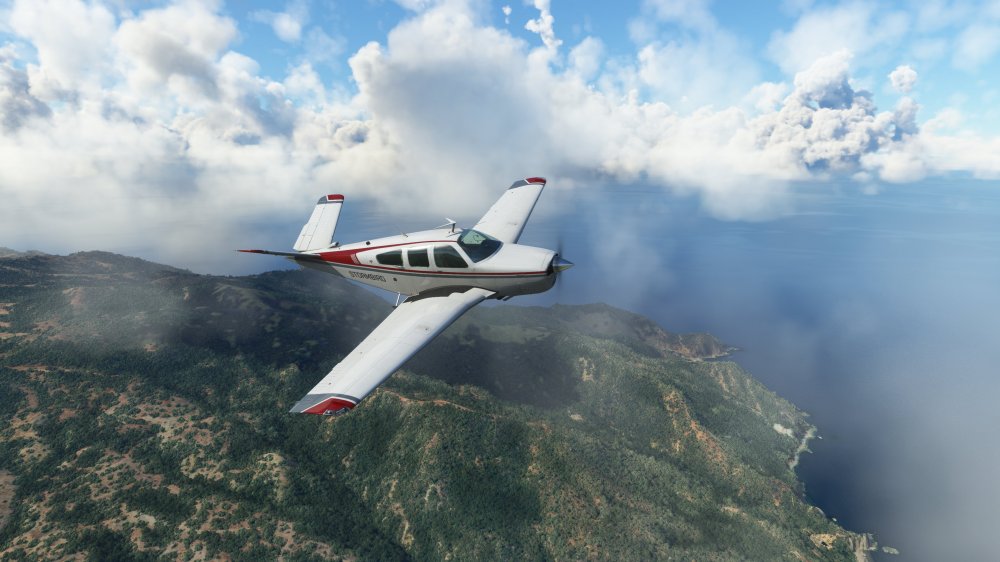
Taxiing the Bonanza is very easy like most conventionally equipped GA aircraft. It taxied well at most speeds and is easily controlled by rudder and brake controls.
Takeoff with the Bonanza is also very easy. Having watched a series of YouTube videos and comparing the experience to what I see in the sim, the experience seem to be pretty similar. The aircraft rotates at around 75 knots, and gently lifts off the runway. Flaps aren’t necessary but they are useful to get aloft quickly. Build a bit of speed after retracting the gear really helps with the climb out. It does take a bit of time to build necessary speed for rotation, particularly at higher altitudes, so bear that in mind.
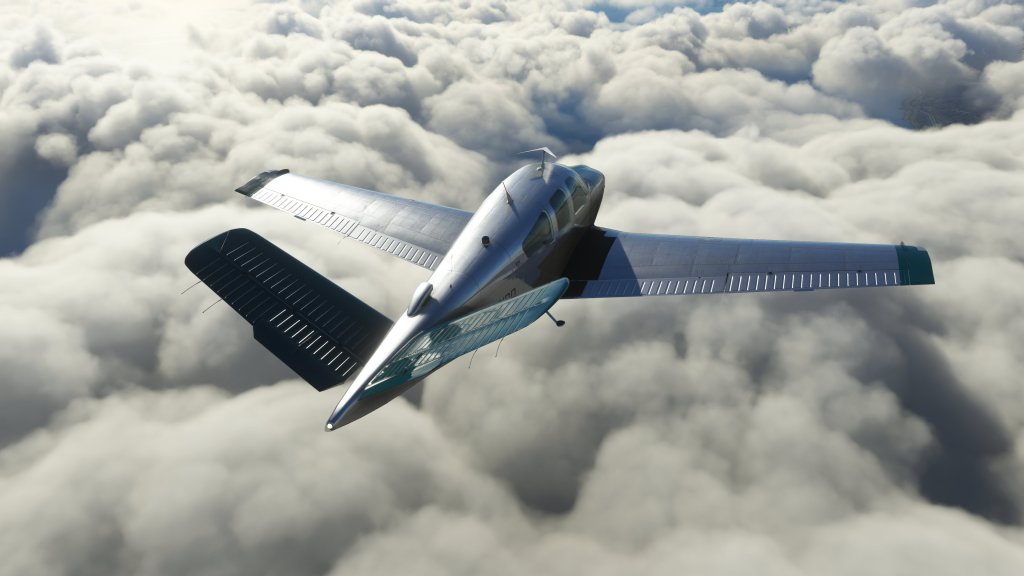
The Bonanza seems to be happy doing around 800 feet a minute during the climb and it can do that up to cruise altitude without too much difficult. It can easily zoom up more quickly.
One of the advantages of the ruddervater and V-tail design is control coordination. Here the Bonanza is easier than most types. Rolling the aircraft doesn’t seem to require nearly as much coordination as other aircraft in the series.
The Bonanza is generally responsive on all controls, however, I find the ailerons are a bit heavy. In comparing this to Carenado’s very similar Mooney M20R, the Bonanza rolls slower and feels heavier. And you want to know what? I like it this way!
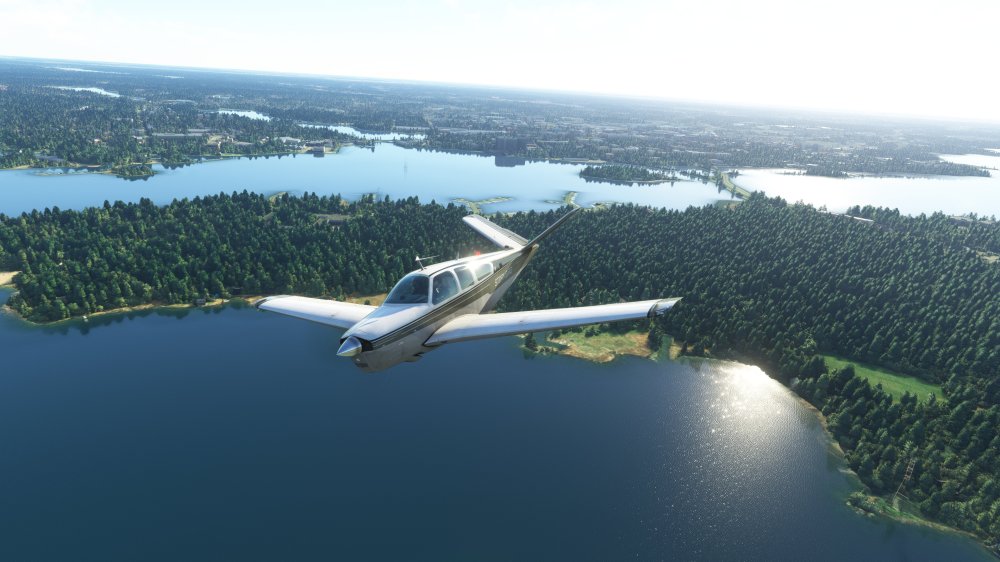
The stall is probably where I’m most disappointed with the Bonanza. I intentionally put extra weight in and moved the CoG to the aft limit and even when fully loaded the aircraft seemed to stall without issue. To be fair, a reading of several comments from real world v-tail Bonanza pilots seemed to be conflicted over just how much this is an issue. Stall recovery in MSFS was straightforward with counter rudder to correct the roll on the stalled wing, a bit of nose down to recover airspeed and then pull out of the dive with no more than maybe 500 feet or 1,000 feet lost.
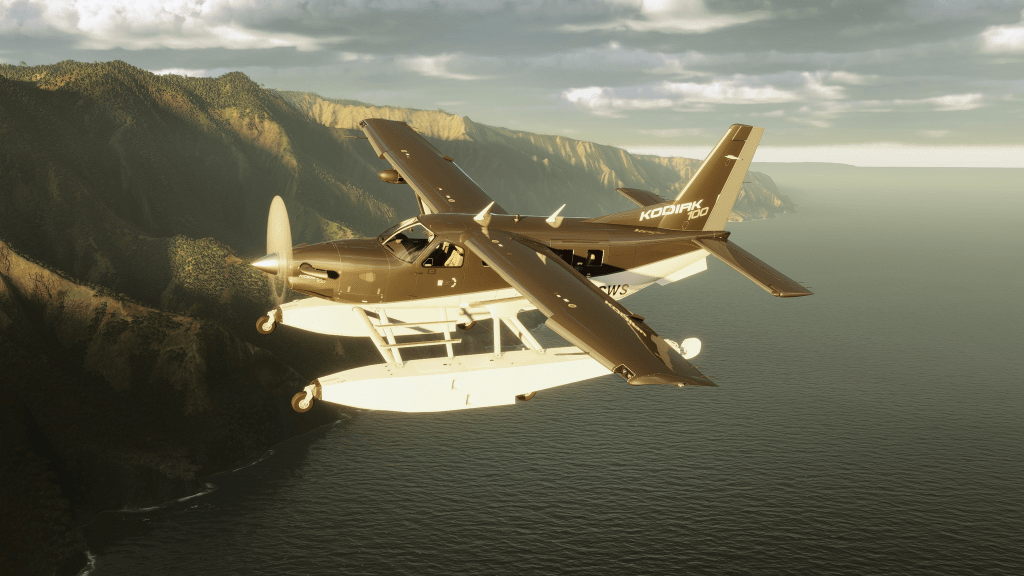
Landing this aircraft feels pretty good. A lot of MSFS airplanes tend to float in the ground effect but this one feels sufficiently dampened. Closer to my experience with SWS’ Kodiak 100 and almost X-Plane like in that regard… although not quite (put down your pitchforks X-Plane fans). Crosswinds seem to not offer as much challenge as in the real world version of this airplane.
Final thoughts
The Asobo/Carenado Bonanza V35 is overall a fun package. On the downsides, this aircraft doesn’t have the usual EFB controls and features that the more expensive Carenado aircraft have. It also doesn’t have the kind of engine modeling that you find with aircraft from SWS or Just Flight. On the other hand, this aircraft is being offered at more than half the price.
I expected this aircraft to be harder to fly than it was but that seems to be on account of a reputation that the airframe itself doesn’t full deserve. The flight model isn’t bad but it also doesn’t seem to offer much from the unique configuration. My reading of the airplane’s safety record seems to reveal that it was more market interest rather than bad airplane design that lead to its reputation as the “doctor killer.”
With no bugs that I was able to find, solid visuals, good sounds, and useful systems configuration for cross country flights, there’s an awful lot to like here. At $15.99 USD in the MSFS marketplace, this is a good purchase for anyone who loves the Bonanza V-tail series or who wants a fun GA aircraft with good but not deep system modeling. This is a quality release with a fun and classic airplane that’s biggest issue is that there are now so many similar GA experiences out there that this is distinguished only by its looks. Despite that, you can’t go wrong with this and I anticipate many more hours of fun with the Carenado/Asobo Beechcraft Bonanza V35.
Screenshots






 Stormbirds

Leave a reply to t5s_blanco Cancel reply