
Orbx and Asobo Studio have come together to offer us a new local legend: the DHC-4 Caribou. I was really excited to try out this aircraft, I couldn’t resist its Canadian roots after all, but unfortunately it didn’t quite meet my expectations in some ways. Let’s get into it!
A bit of history

Following the Beaver and the Otter, de Havilland Canada’s reputation as a maker for STOL or short take-off and landing aircraft was cemented by the third and much larger DHC-4 Caribou. The type impressed and found use with a variety of military and civilian operators. Among its attributes were its 1,200 foot runway operations, the ability to load up to 8,000 lbs of cargo via the rear loading door, and its rugged construction.
It was operated by the U.S. Army and U.S. Air Force, by the Royal Australian Air Force, the Royal Canadian Air Force, as well as Spain, Liberia, Kuwait, Kenya, Iran, India, Cameroon, and the United Arab Emirates just to name some of the military operators. Civilian operators included the infamous Air America, a CIA front running clandestine operations in Vietnam during the Vietnam War.
Many of the 307 that were built are retired now although a few are still reportedly flying with civil operators.
Visuals
Orbx are known for curating a strong collection of visually impressive scenery packages in their online store both by their own team and by third parties. Their prior aircraft releases have also been visually good and even impressive and for the most part the DHC-4 lives up to that reputation albeit with a few misses.
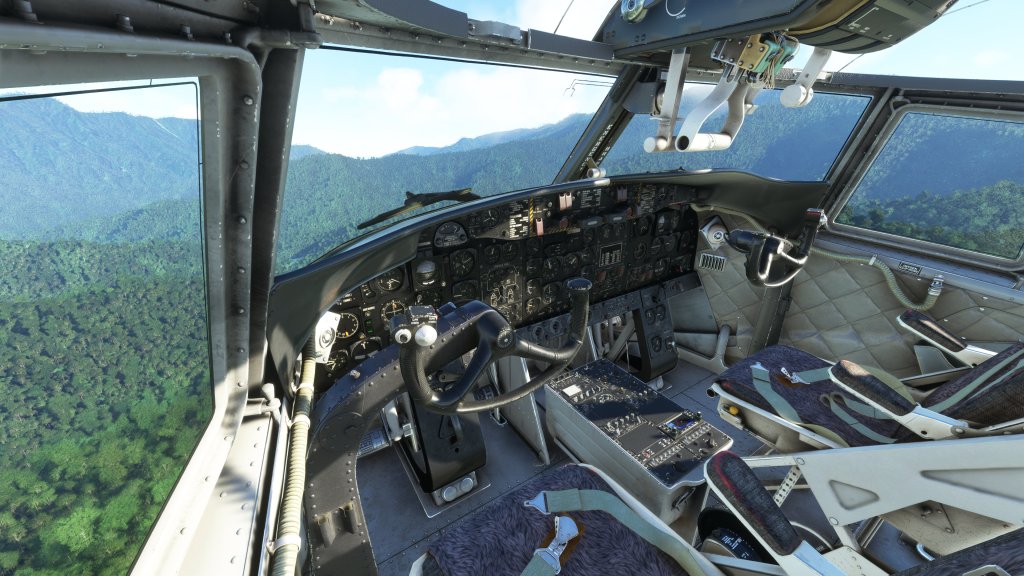
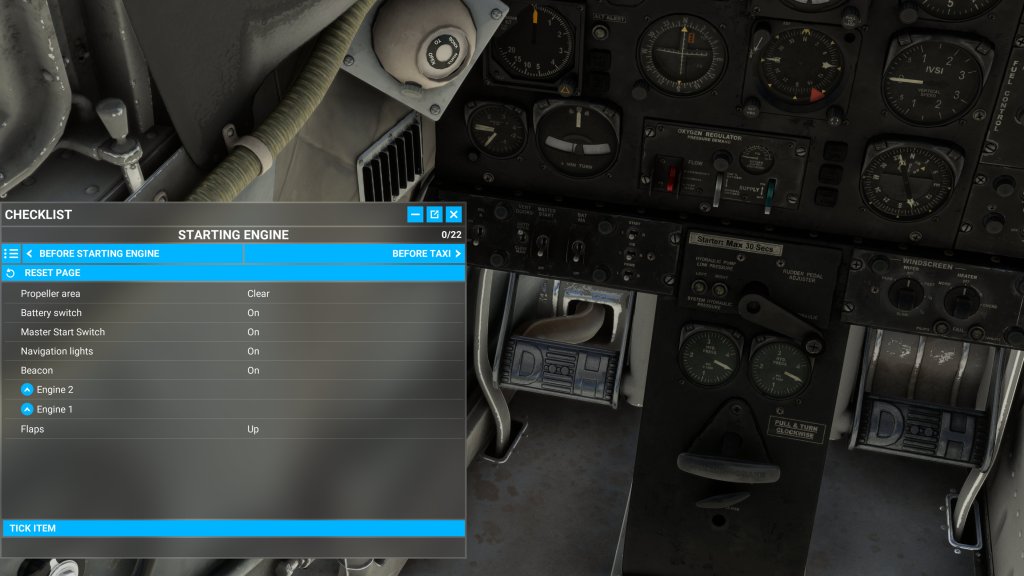
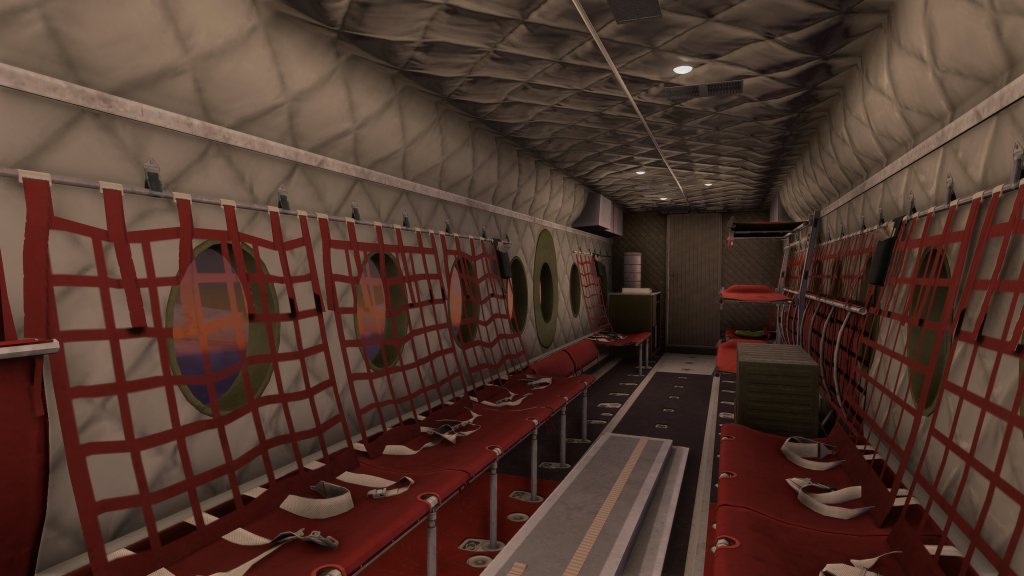
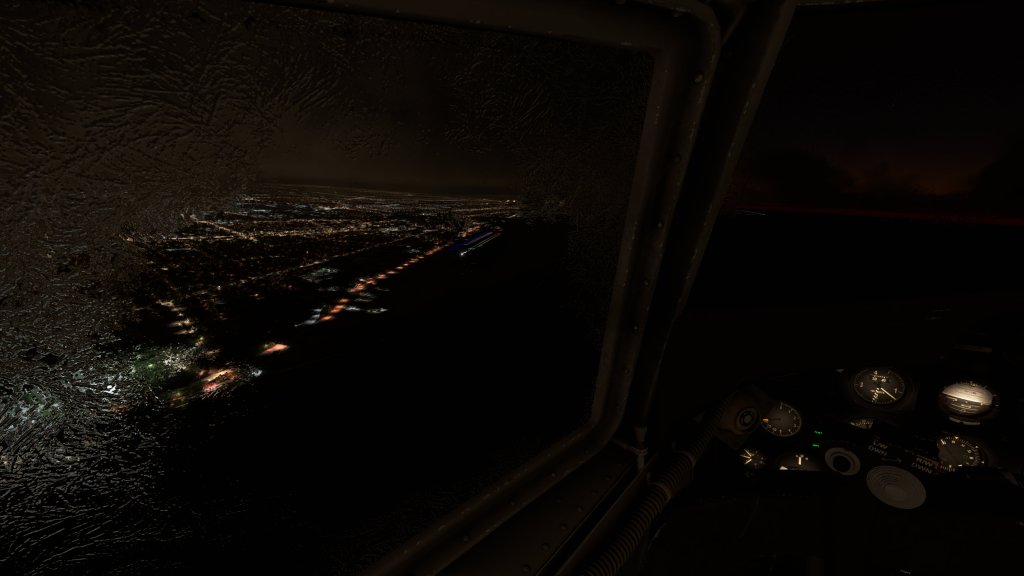
First, the cockpit itself is overall quite impressive. The panel looks great and the wear and tear looks appropriate and accurate for an aircraft that has seen a lot of service. A lot of the fine details are great too which good detailing in most places. The biggest miss are the seats which should be a fuzzy material but end up with a flat texture approximating a fuzzy material. It … doesn’t look great. A miss in an otherwise strong cockpit visually.
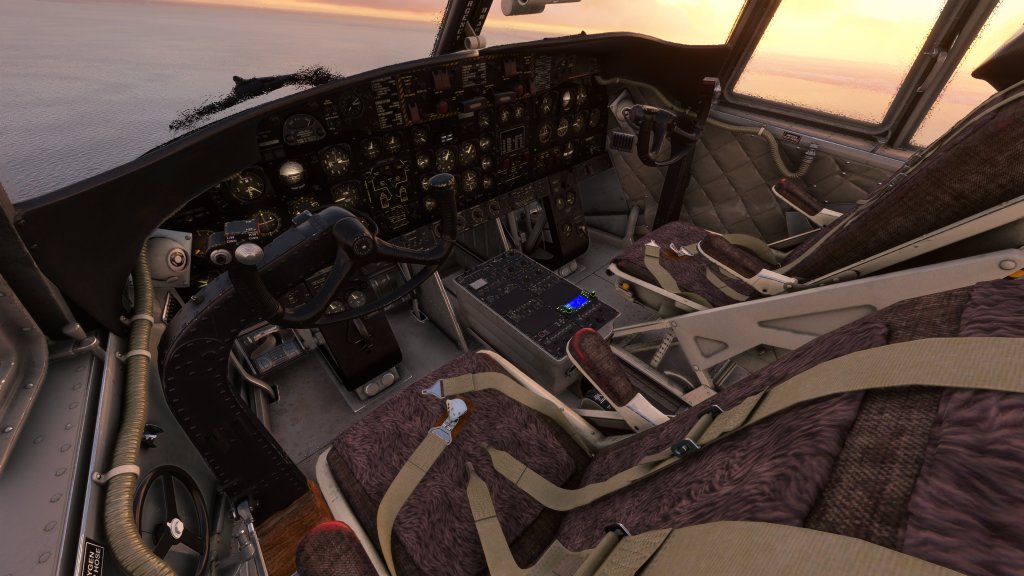


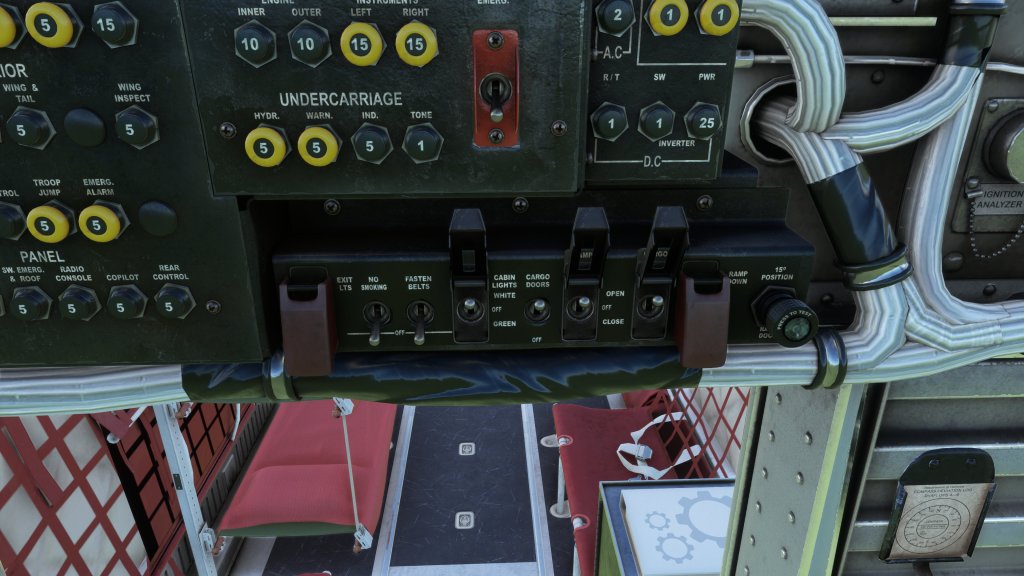

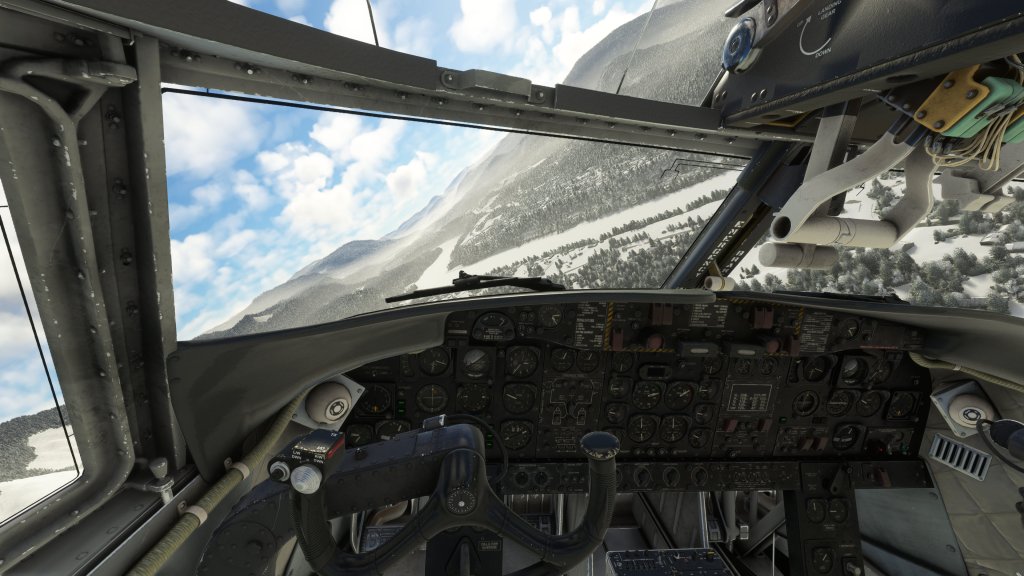
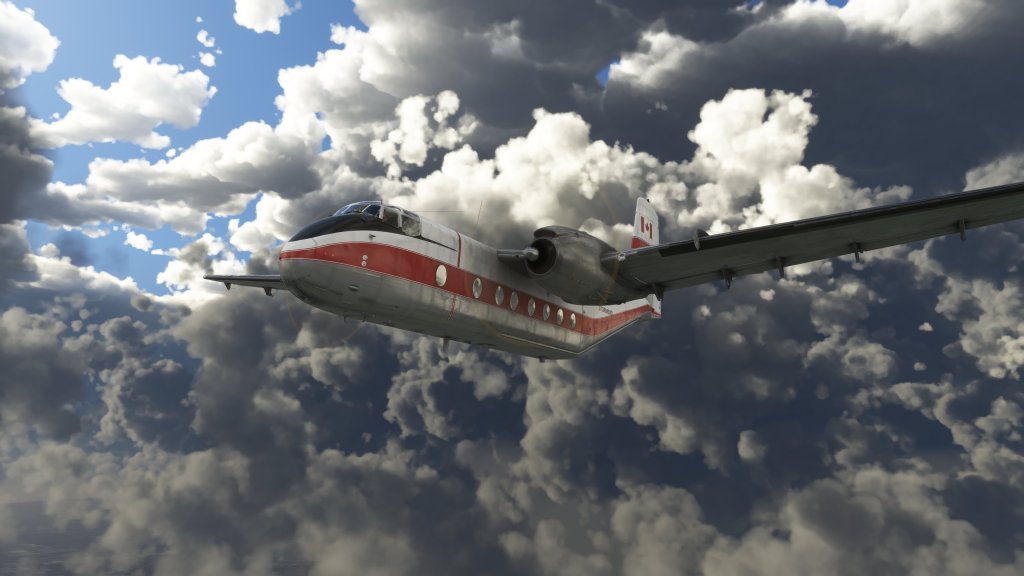
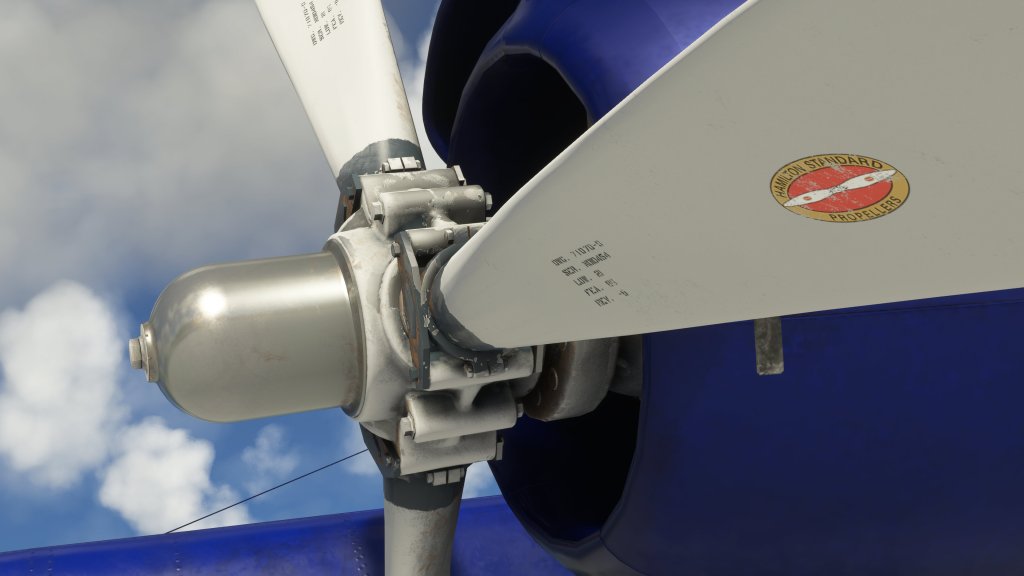
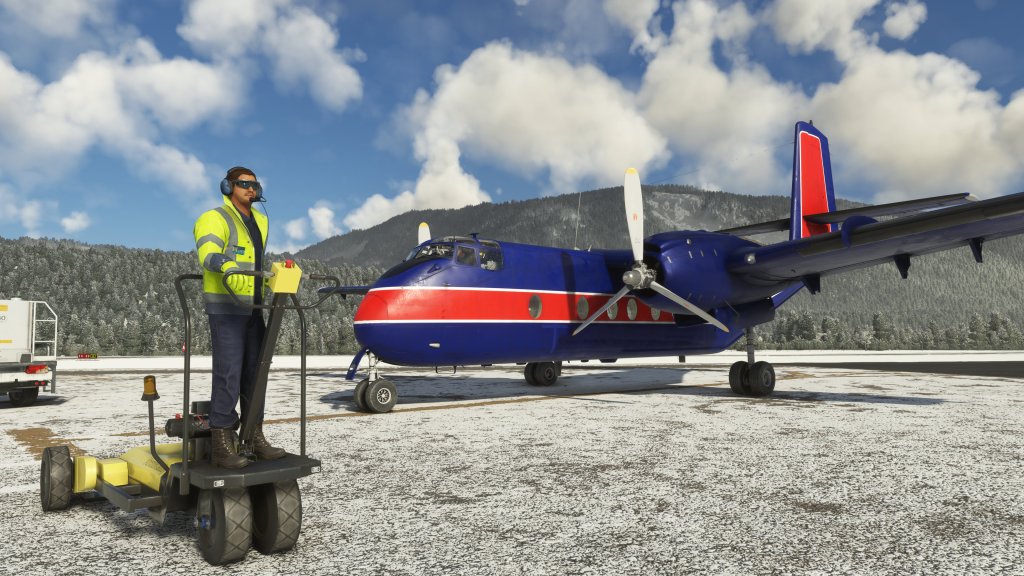
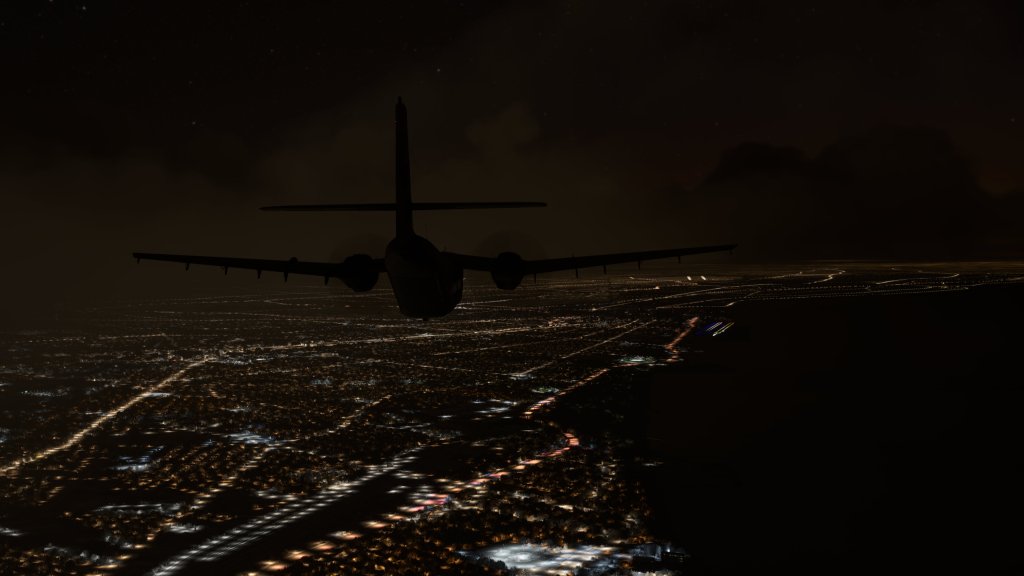
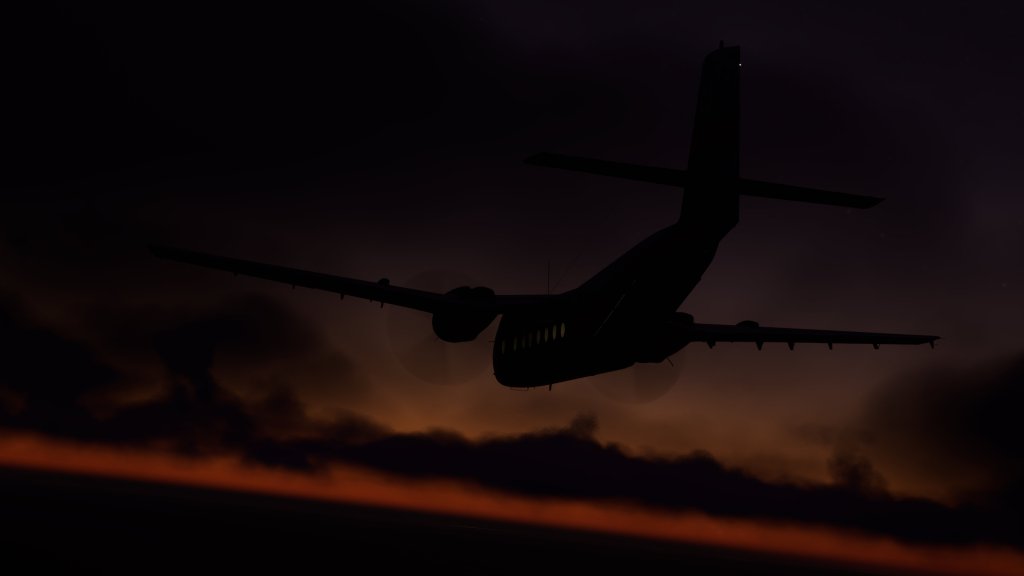
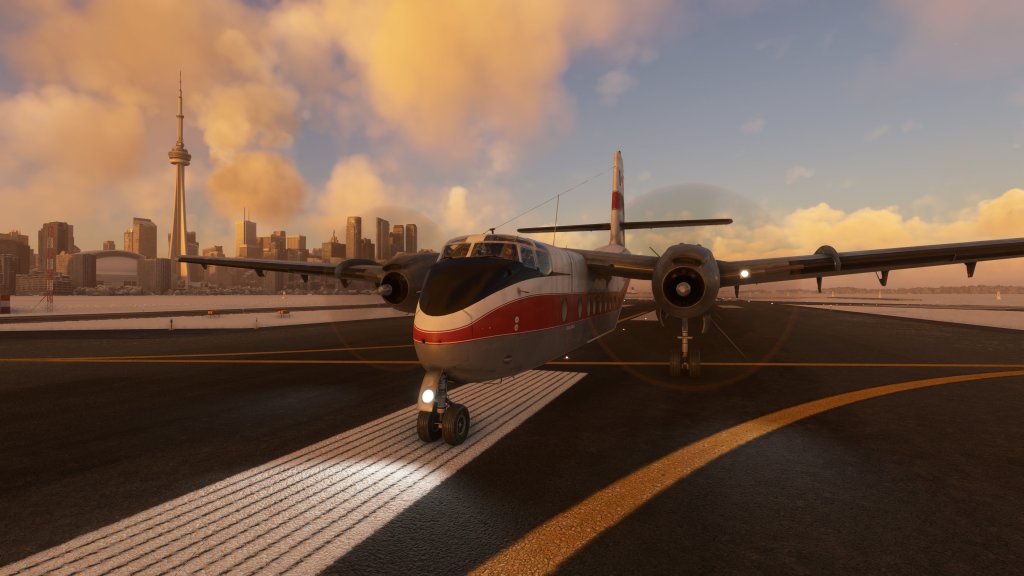
On the exterior, the overall attention to detail is great and again with just a few misses here and there. The wheel wells are only partly detailed and the bump mapping all over, particularly with rivets, are sometimes a little lower on the details than I’d expect. Good from a distance but not holding up as well as they could up close. The nose section seems to have the odd shading issue or perhaps some 3D model quirks going on there. The rear cargo door also appears to show light coming through when its dark – on that it looks like a model issue but I’m prepared to accept that the aircraft door may not have fully sealed in real life too. Something to look into some more perhaps.
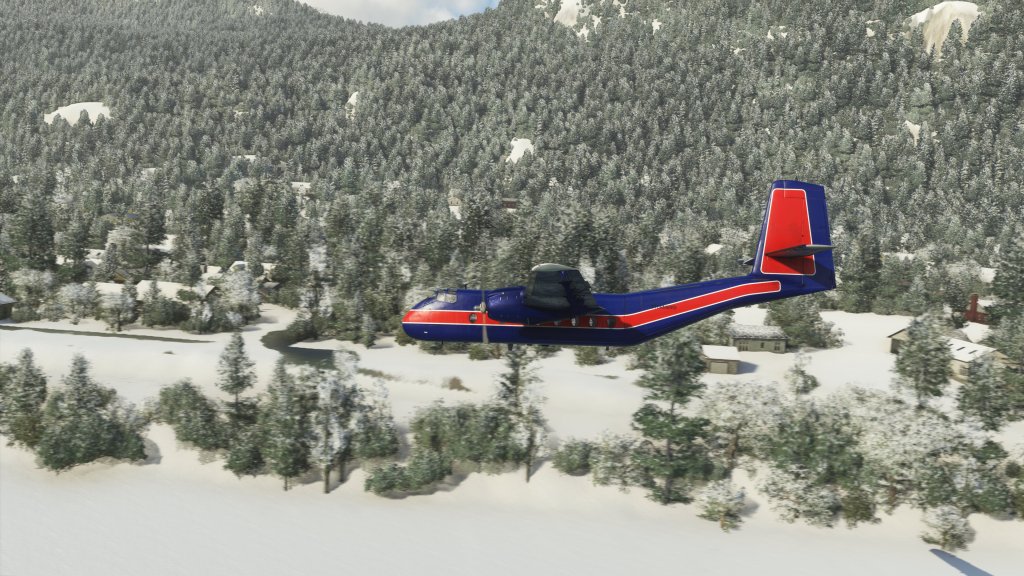


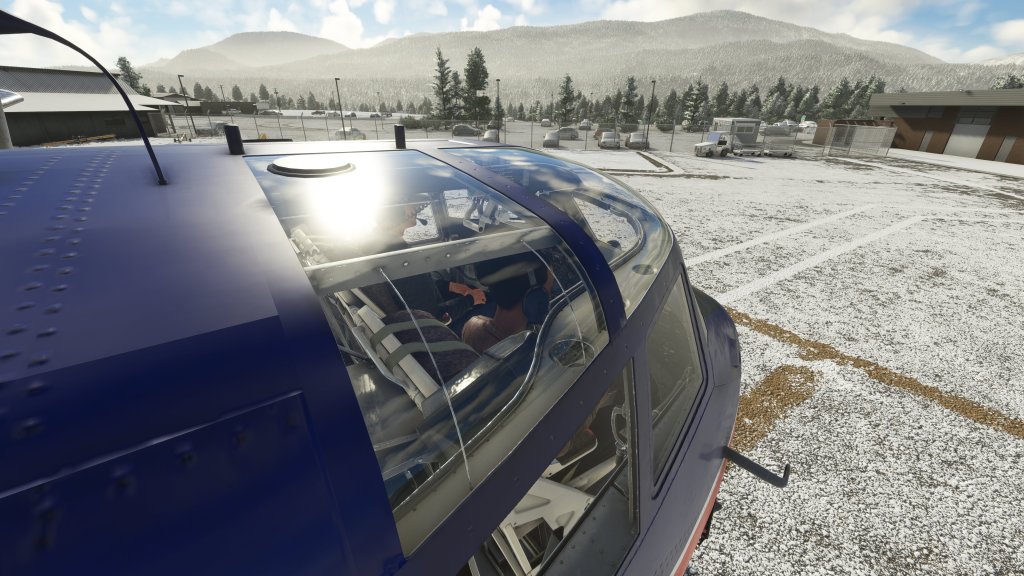
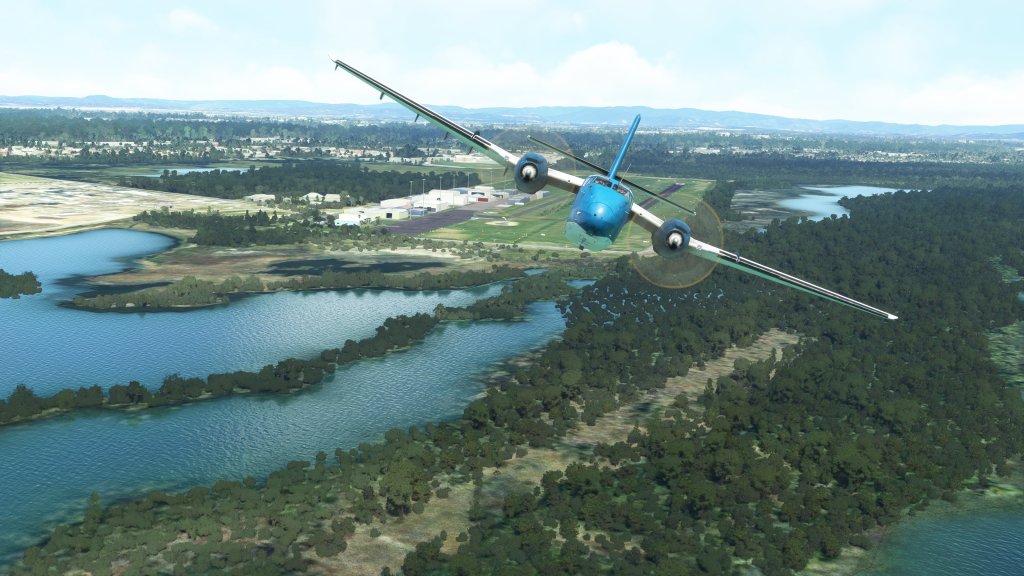

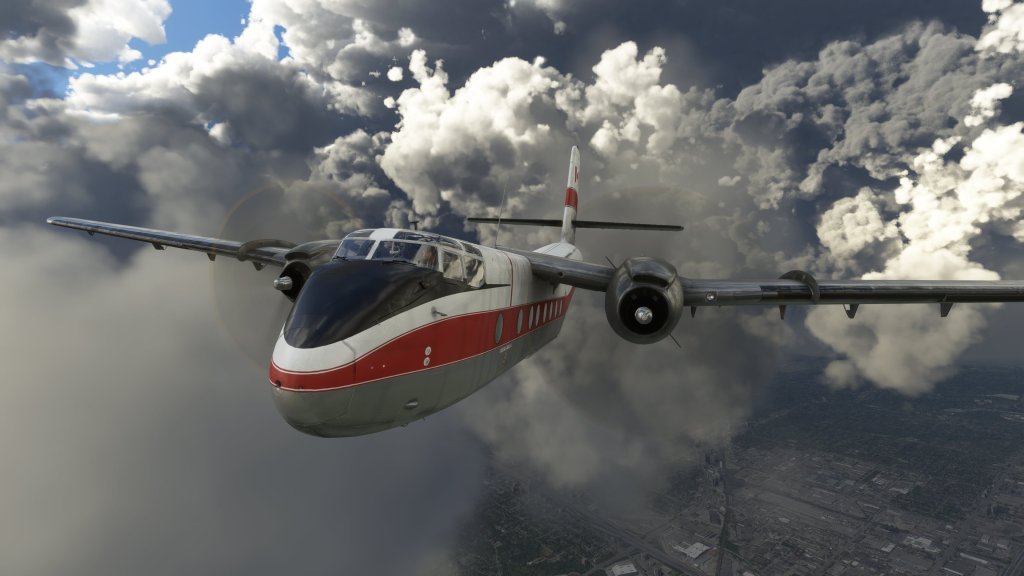
On the good side, the overall visuals are great and the detailing around the engines, exhausts, flaps,, ailerons, and animations are all good to great. It’s not a bad looking airplane but there are some blemishes that stand out.
Sounds
The sound work on the DHC-4 is really good. Start-up sequence sounds are satisfying and well blended together. The starter noise is slightly different from each of the engines too which is kind of a nice feature.
Individual controls including the throttle, propeller, mixture, and yoke which all make noises in motion. It’s especially noticeable with the engines off but you can still hear it with the engines on. Engines themselves have a suitable hum and roar at times and there’s good relation between engine power settings and the audio samples.
The last thing I want to mention is the excellent sound on the rear cargo door opening and closing. The sound for that is great!
Flying it
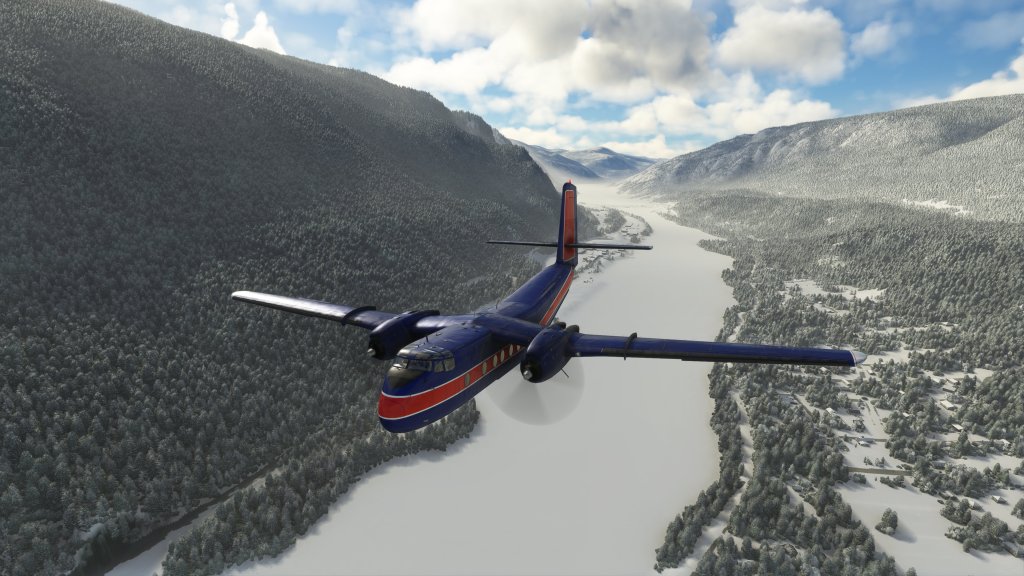
The DHC-4 is surprisingly fun to fly. It feels like a DC-3 type airplane with just a little more spunk. Ailerons are heavy and require some planning and even a little rudder to kick the airplane into a faster roll at times when needed. But get it down into the weeds or into a narrow canyon and it handles it well with speed, power and agility in about equal amounts.
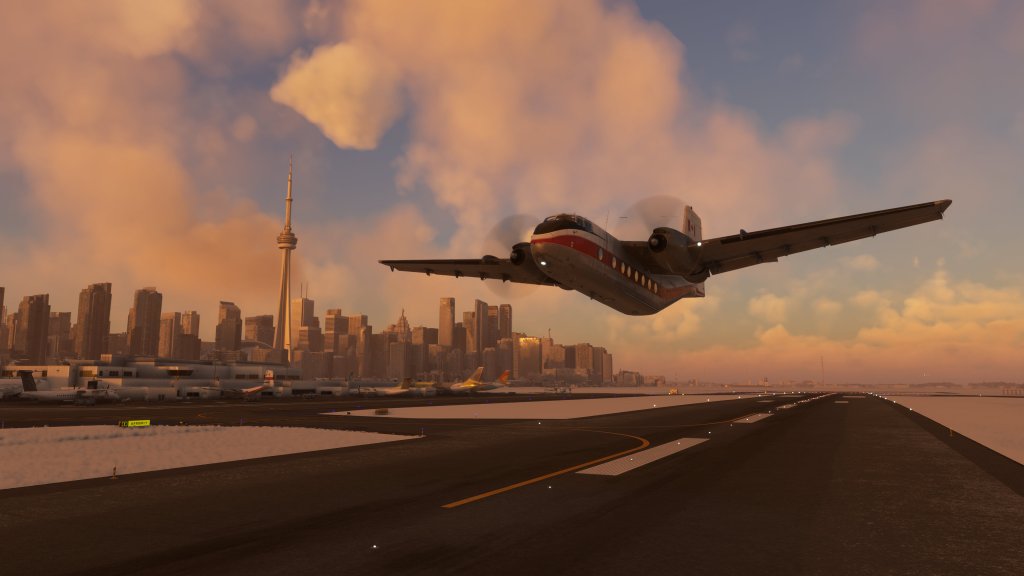
That STOL reputation that the DHC-4 has? It can definitely match it. Takeoff comes rapidly despite the size of the aircraft and landings can be achieved in a short amount of space too. The biggest challenge is fitting the type’s 95 foot wingspan into some of these smaller airfields. Provided that there’s ample room, the DHC-4 can land on a dime. In other words, it won’t get into DHC-2 Beaver bush strips but anything bigger can be achieved.
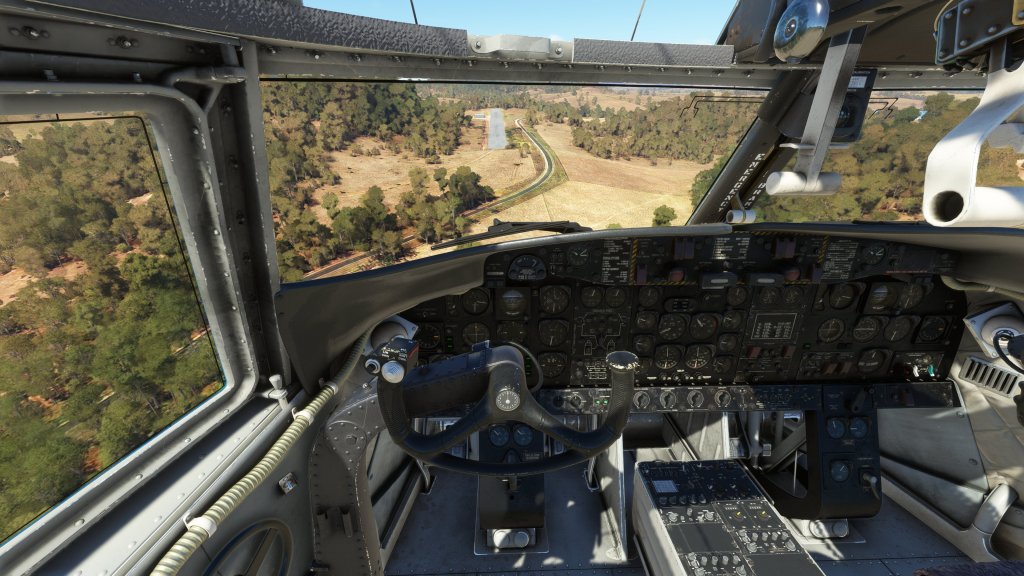
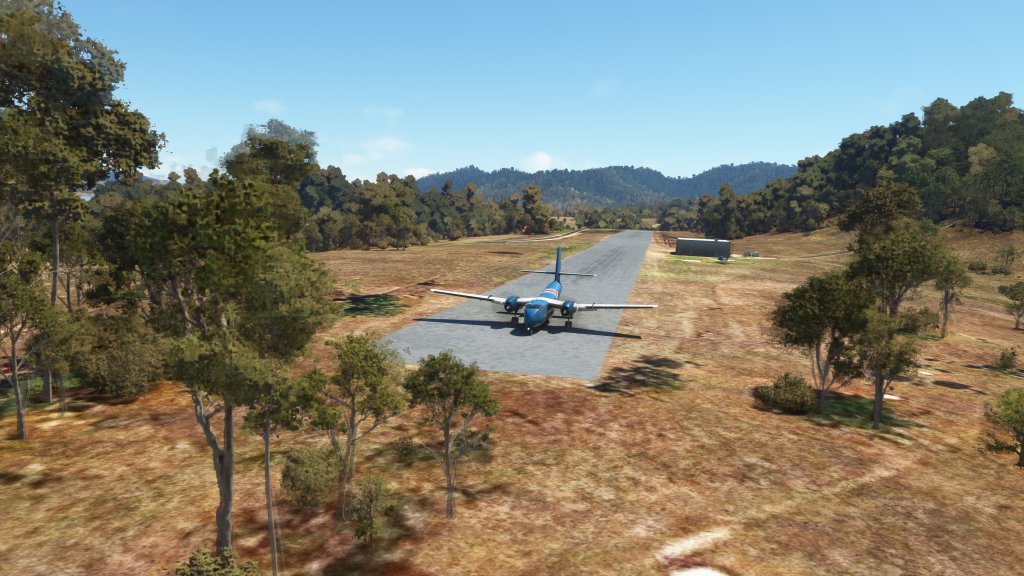

The DHC-4 does have a limited navigational capability with DME and VOR navigation as well as a small onboard GNS430 GPS unit. The downside? No autopilot which means hand flying the DHC-4 at all times. It shows the age of the airplane although part of me wishes for an optional modification with autopilot – I’m not sure if any flew like this or not but I’d love it on some of those longer cross country flights.
Instead, the DHC-4 seems best suited to carving canyons and river valleys and doing shorter hops between small airstrips and it can be quite fun at doing that!
A few other misses
There are some quirks with several systems on the aircraft. That includes the clickable electrical fuse panel which is nice that it can be clicked but disappointing that it doesn’t appear to do anything. For example, turning off the lights via the panel don’t do anything. There are also quirks with the battery, oil, and fuel gauges showing readings that probably shouldn’t be happening on a healthy airplane.
I can forgive nearly all of that for a relatively cheap add-on. The next one, however, is much more problematic for me.
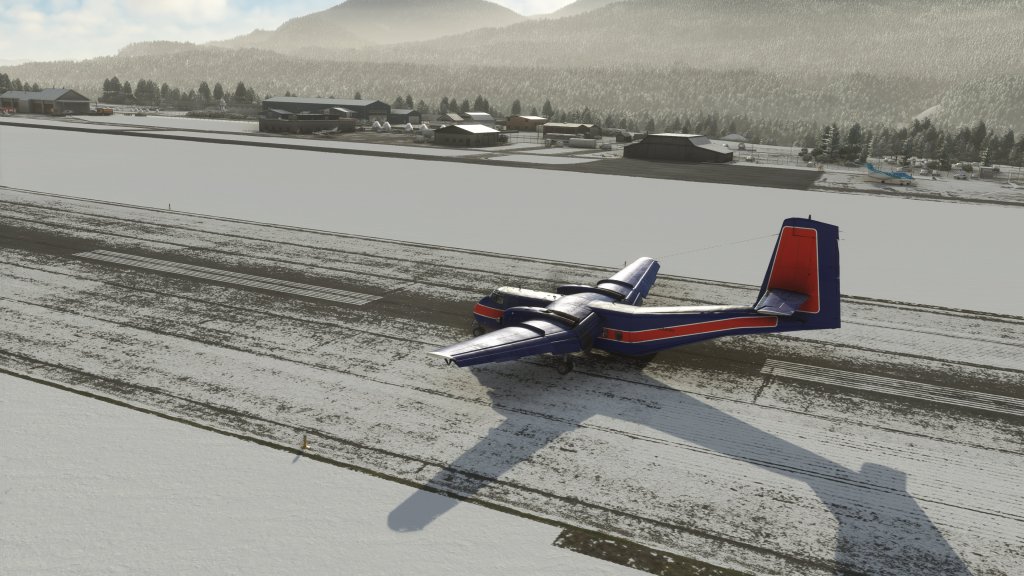
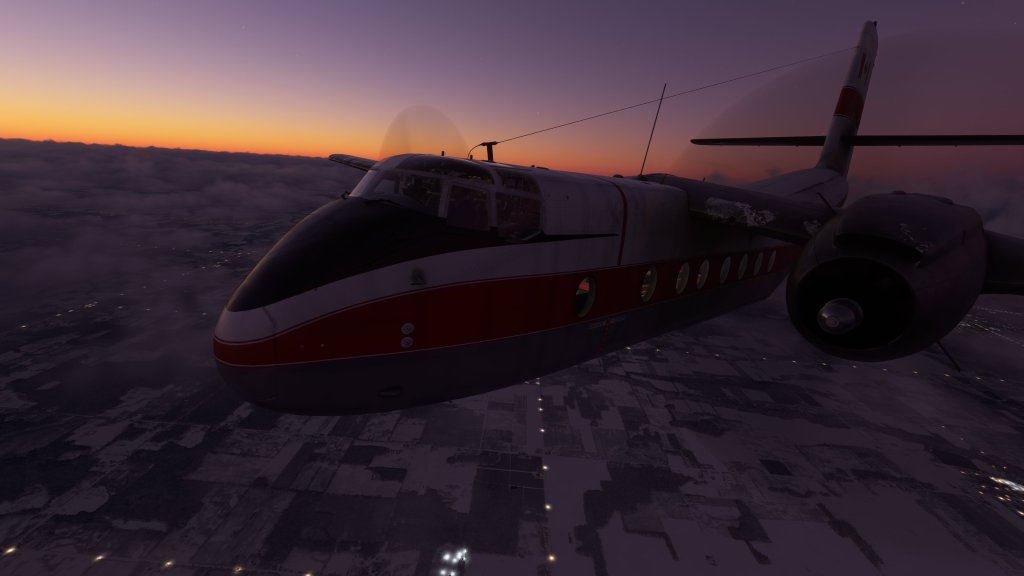
My very first flight with the DHC-4 took me from snowy Toronto to Cleveland in below freezing temperatures and light snow in places. The aircraft quickly developed icing and while the deicing system on the airplane works just fine there is a big miss – the control to heat the windscreen is not available. You can’t click it or interact with it in any way.


So, while the windshield doesn’t appear to completely freeze over in icing conditions, you do loose quite a bit of visibility and you have no recourse to deal with it in those conditions. This despite the aircraft having a system to manage it. That hurts the DHC-4’s ability to operate in some of those rough and tumble, back country, operations that its supposed to be able to operate in. Tropical climes will be required.
Final thoughts
For the price of $14.99 USD, the overall impression of the DHC-4 is good but not great. A couple of key misses really tarnish the overall experience for me. Icing over the pilots view in winter conditions in an aircraft that is more than capable of dealing with those conditions in the real world is disappointing.
A few sloppy elements on the visual side too are nitpicky but still there. I point to other partnerships such as with the Carenado Bonanza v-tail which came out beautifully and with far fewer issues for the same price and while they are not strictly the same airplane it does hurt the DHC-4 quite a bit. It also hurts Orbx’s aircraft making reputation a bit too. DHC-2 Beaver, by Blackbird Simulations, was released for free with far more depth and capability and it caused me to pay much closer attention to their Cessna 310R product.
I still hope to have some fun with the DHC-4 but I do hope too that Orbx’s team provide some future fixes to enhance the aircraft. It has strong potential but it needs to do a bit more to earn my full praise. I hope that it happens!
Screenshots














 Stormbirds
Leave a reply to coolmusings Cancel reply