
If you haven’t checked out the news recently, the Gulf of Mexico has recently spawned a tropical storm turned hurricane which is now bearing down on the west coast of Florida. As I’ve done in the past, flying over these storms in Microsoft Flight Simulator has been an interesting experience that provides us with just a small taste of what the real world storm is capable of. Here’s a brief journal of my experience with this latest storm, Microsoft Flight Simulator, and how its live weather engine is representing it all.
The storm
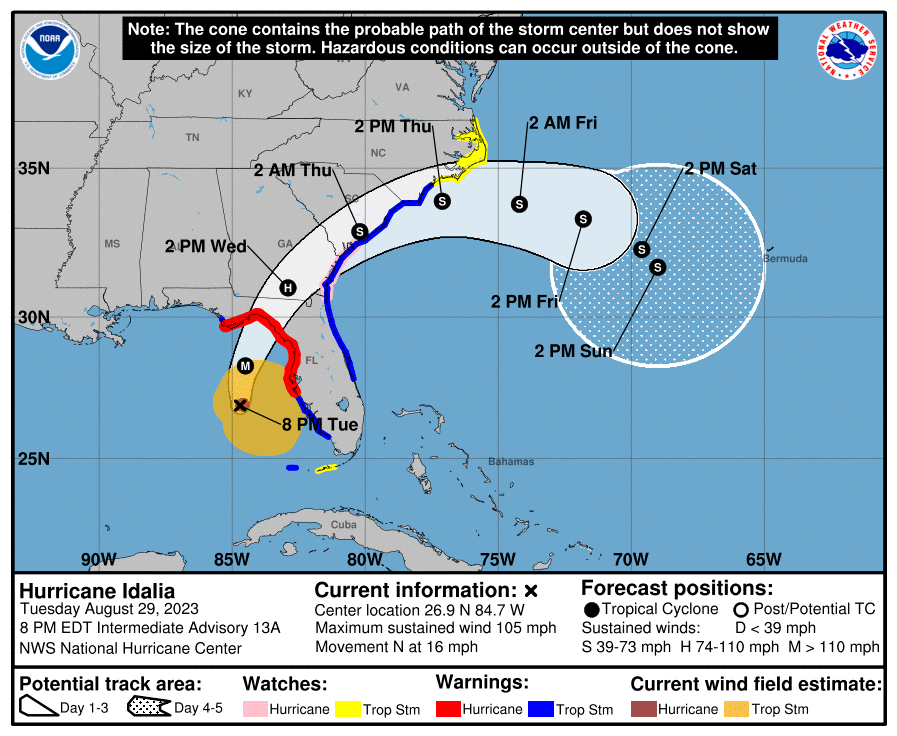
As of the time of writing and according to NOAA in the United States, Hurricane Idalia is located 26.9 north and 84.7 west just off the coast of Florida in the hot waters of the Gulf of Mexico. It is currently a Category 2 Hurricane with maximum sustained winds of 105 mph (169 km/h). If sustained winds go above 111 mph (179 km/h) it will be declared a Category 3 and listed as a Major Hurricane.
Multiple evacuation orders are up along the Florida coast and my heart goes out to everyone in its path. I hope any regular readers of this blog in the affected areas are taking all precautions, following local weather, and above all… staying safe.
Meanwhile, real world pilots are flying at regular intervals through the storm measuring pressure changes and conditions of the storm. It looks like a wild ride!
Above the storm
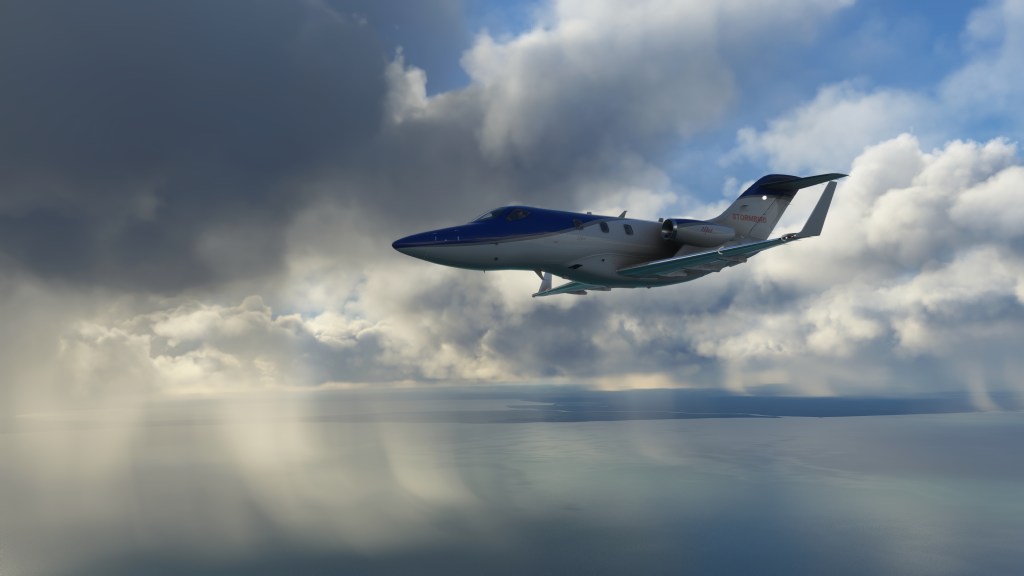
In the past, I’ve flown aircraft like the Beechcraft King Air 350i into the heart of some pretty impressive storms. That took me into the storms at a sometimes middling altitude. This time I’m taking something faster that flies higher to see what my experience would be like and its time for Marwan Gharib’s HJet (read my full review) to fly through, or more accurately, above a hurricane.
Taking off from Key West (KEYW) in the HJet, I spared no time to turn towards my destination of New Orleans and Louis Armstrong New Orleans International Airport (KMSY). On the path between us is the center of the storm.
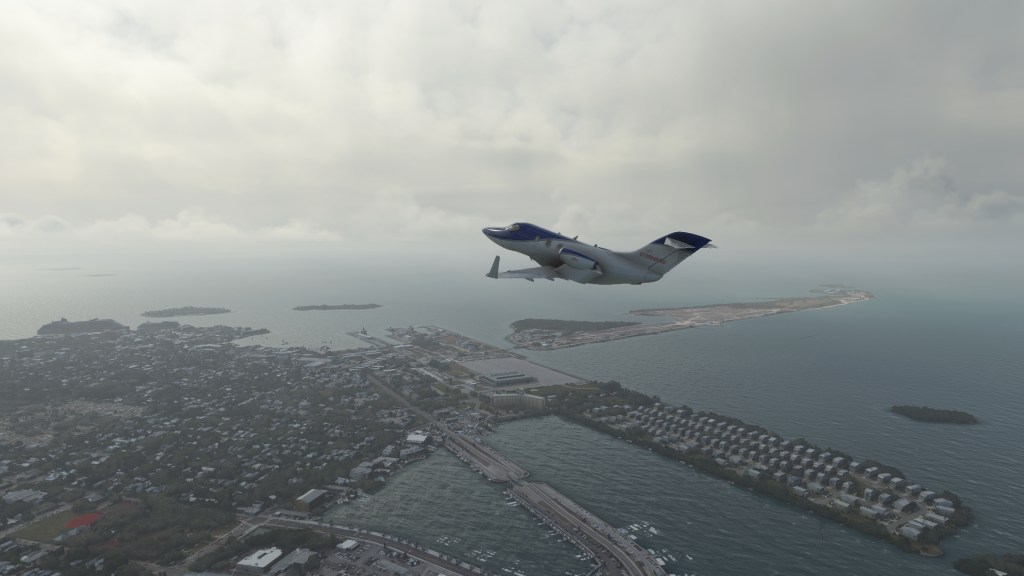

The HJet is exceptional for its ability to climb quickly and achieve a very high cruising altitude. In this case, ATC stepped me up from 12,000 feet to 20,000 feet, 32,000 feet and then on up to 44,000 feet where I cruised for the majority of the flight.
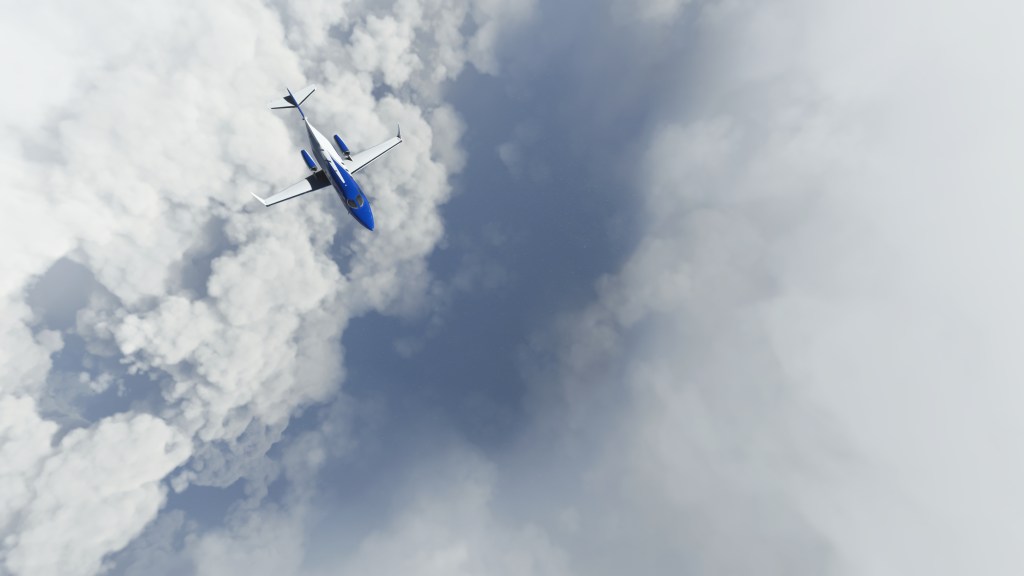
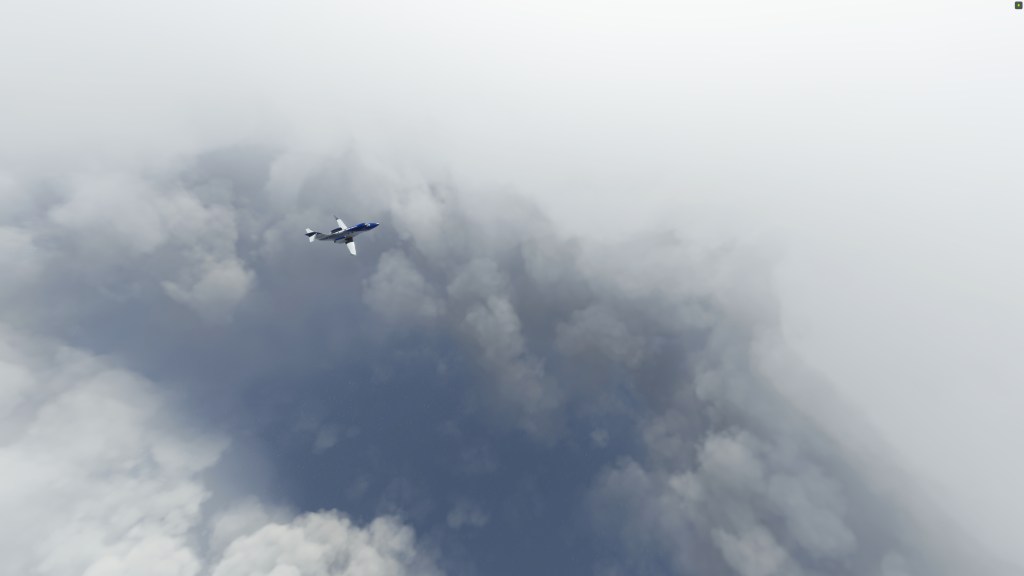
From the pilot and passenger viewports there was little to see except for an almost uniform white. From the exterior view I could catch glimpses of the storm below.
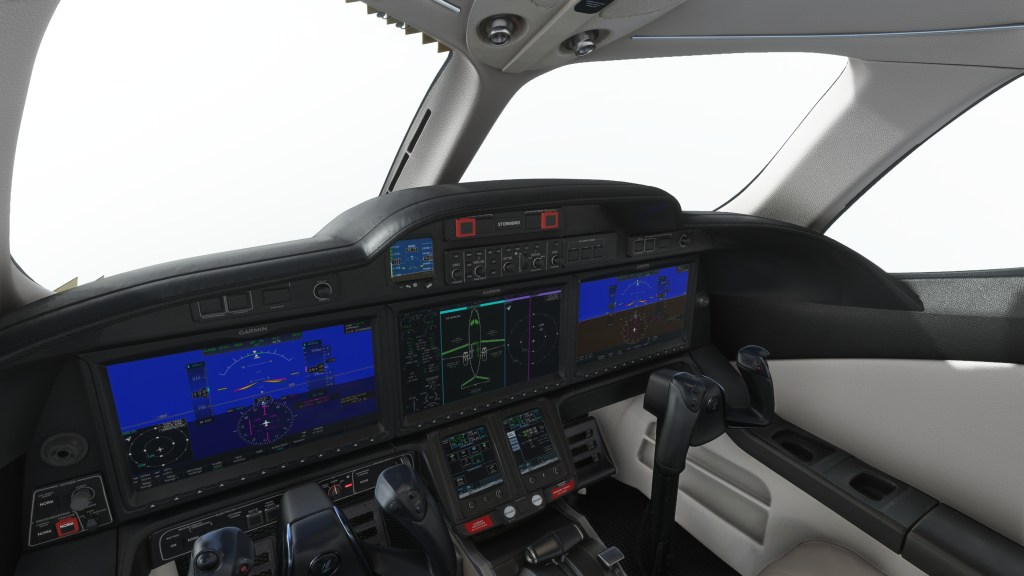
Even at these altitudes the air was not smooth in the sim with realistic turbulence on and the aircraft being rocked about by ever changing airflows. I dialed back the aircraft’s semi-newly implemented autothrottle to 180 knots as the swings in speed were taking us frighteningly close to the type’s maximum speed.
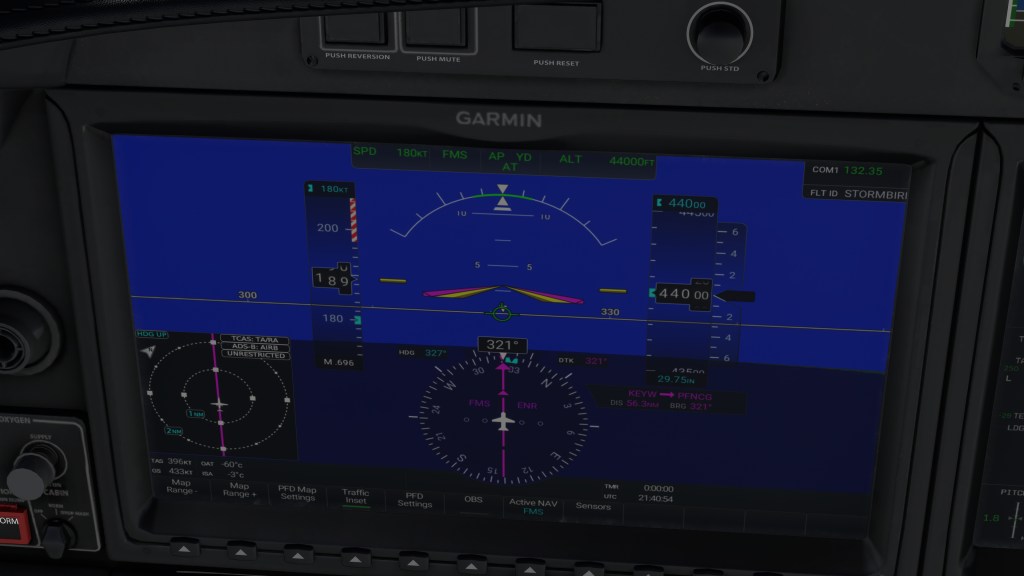
Other flying on Microsoft Flight Simulator tonight had a similar idea flying all around and into the storm. Multiple warnings from ATC about nearby aircraft and multiple TCAS traffic alerts sounded during my time flying through the storm. It was a hotbed of activity for virtual pilots.

At one point in the flight, I flew over a chasm in the storm clouds. This might have been the eye of the storm, as represented in the weather model. Meanwhile, the turbulence increased with the HJet being rocked around on all axis. The autopilot maintained its composure while I imagine the pilot and co-pilot may have needed to make a few trips to the aircraft’s onboard lavatory.

Emerging out the other side
After a time we emerged, unscathed, on the other side with the turbulence evening out and the clouds underneath dissipating.
The weather model definitely picks up on the differences between a major storm like Idalia and my recent flying through and over storm strong thunderstorms on the east coast earlier this summer.
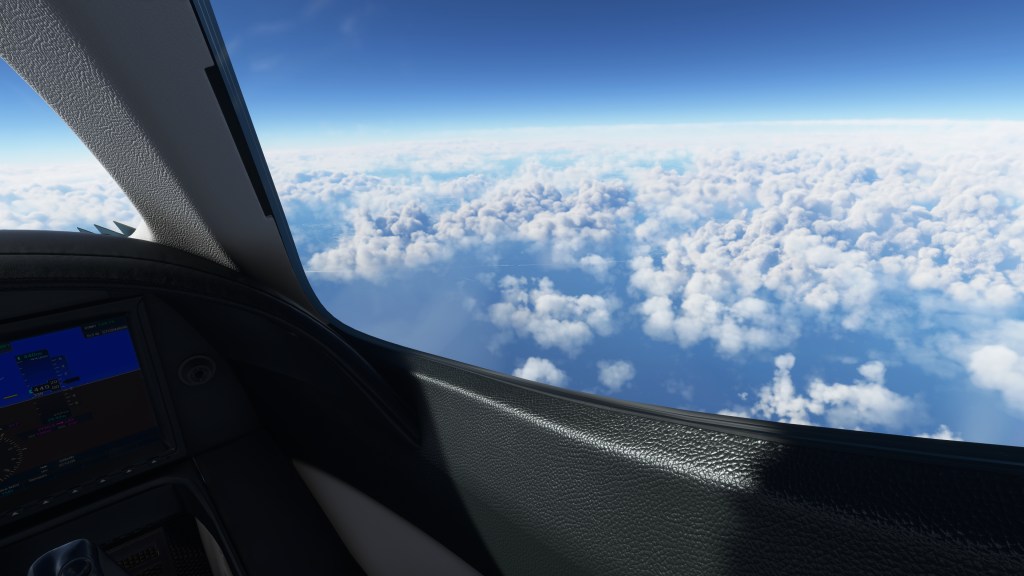
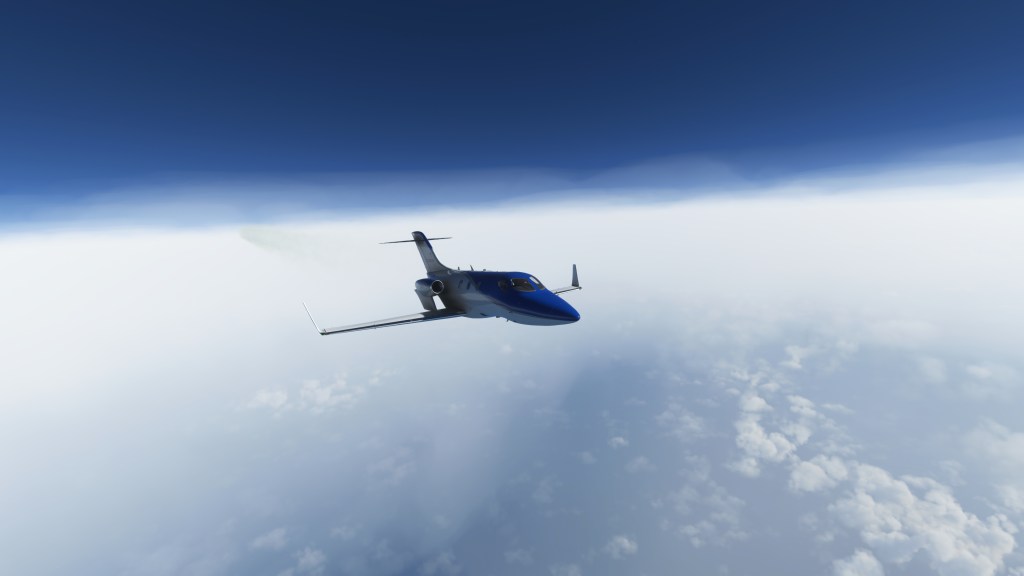
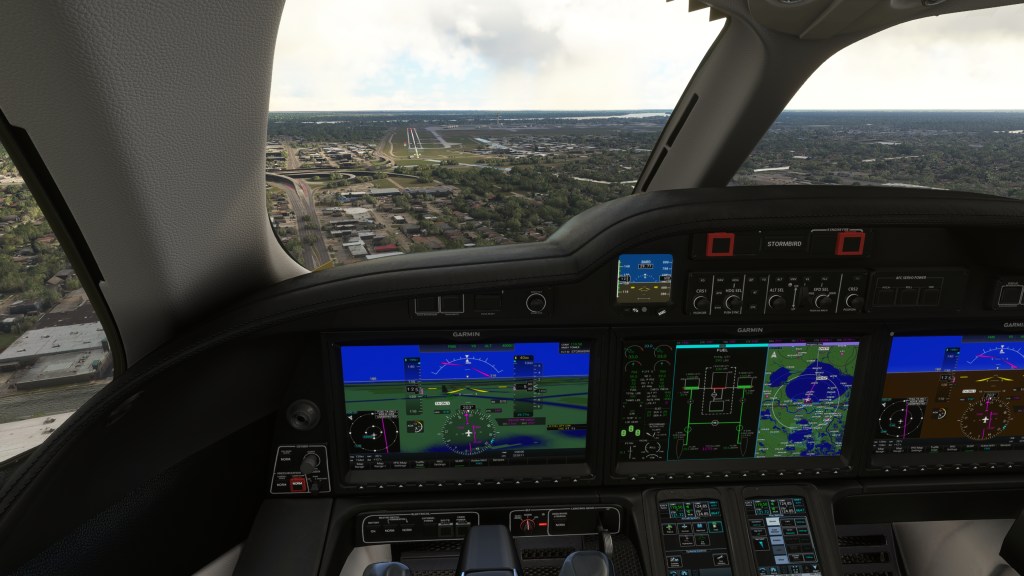
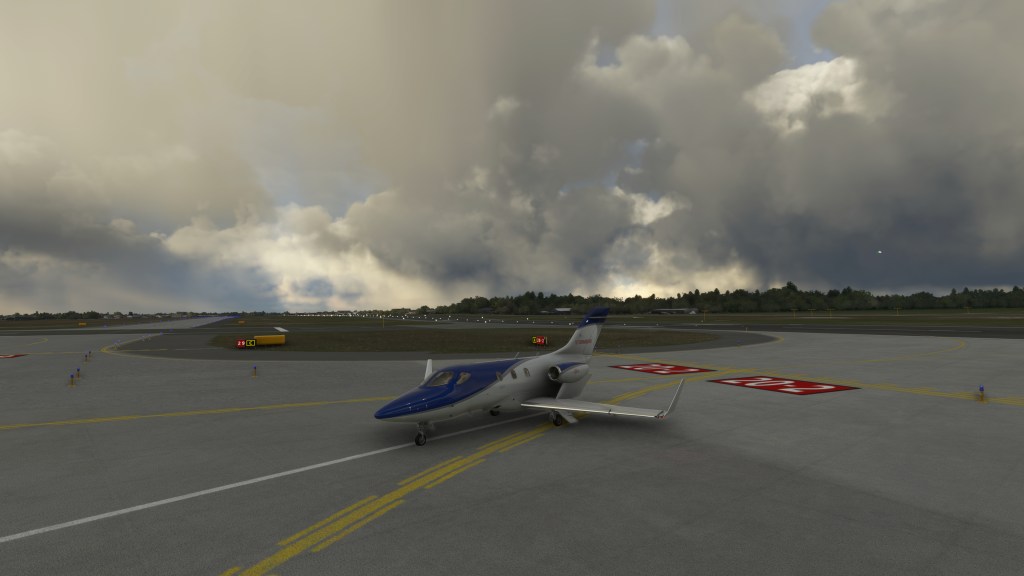
The rest of the flight was relatively uneventful with a safe landing conducted at KMSY. Clouds on the horizon told a good portion of the story of what was going on out in the gulf as did localized rain storms which I passed through on the descent phase of the flight.

Again, I wish for the best for everyone in the path of this storm. Hopefully things turn out for the better. I do encourage everyone to follow local guidance and to be well!

 Stormbirds
Leave a comment