
I’ve got a review coming up for a unique aircraft in the Microsoft Flight Simulator stable and I wanted to share one particularly interesting exploratory flight in Mario Noriegas’FN.333 Riviera amphibious plane. And what better place to test such a plane than in the Caribbean!
Saba to St Barts testing flight
You get a bit of an inside look at what I tend to do on my first flights with general aviation aircraft. I like to challenge myself and the airplane and put it in difficult situations right from the start. So what did I do? Load up the FN.333 on one of the shortest and most treacherous airports in the world – Saba Island (TNCS)!
With its short 1,312 ft foot runway and cliffs on either side, there’s little room for error. Would the diminutive GA airplane even make the end of the runway? I wanted to find out!
Going through the checklist, I got the Riveria started up and then worked my way to the runway. The aircraft was in a bit of a tight spot and the 20 degree movement on the nose wheel made getting out of that spot difficult. But I managed to get it around and over to the runway. I backtracked onto runway XX and then got ready for takeoff. Power up, flaps set, let’s go…
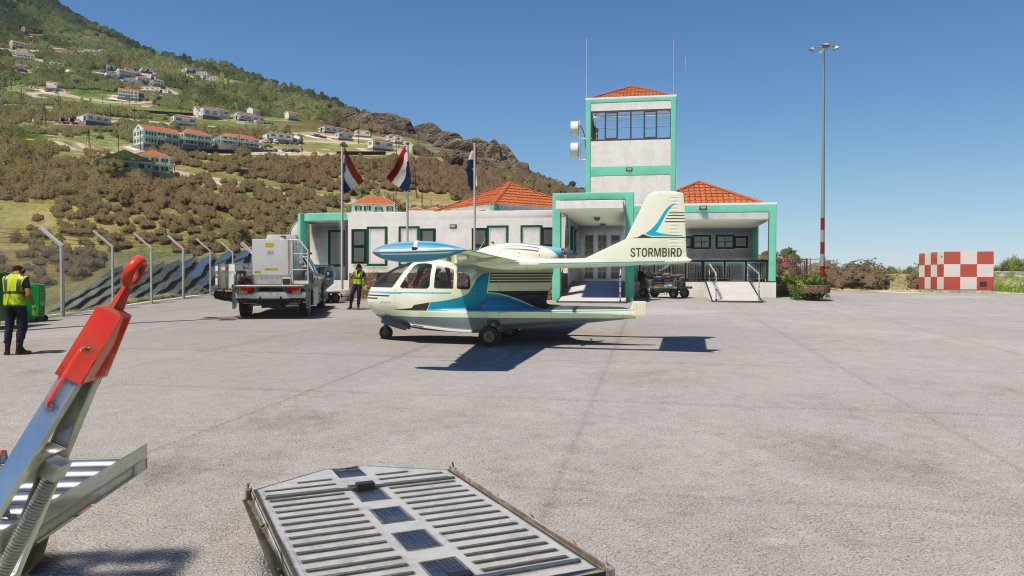


And I made it! Turns out this airplane can handle this short runway. 250 horsepower in a pusher propeller configuration and a wee bit of stall buzzer just as I was taking off made this work just fine at 50% fuel. I suspect we may not have made it at full fuel!
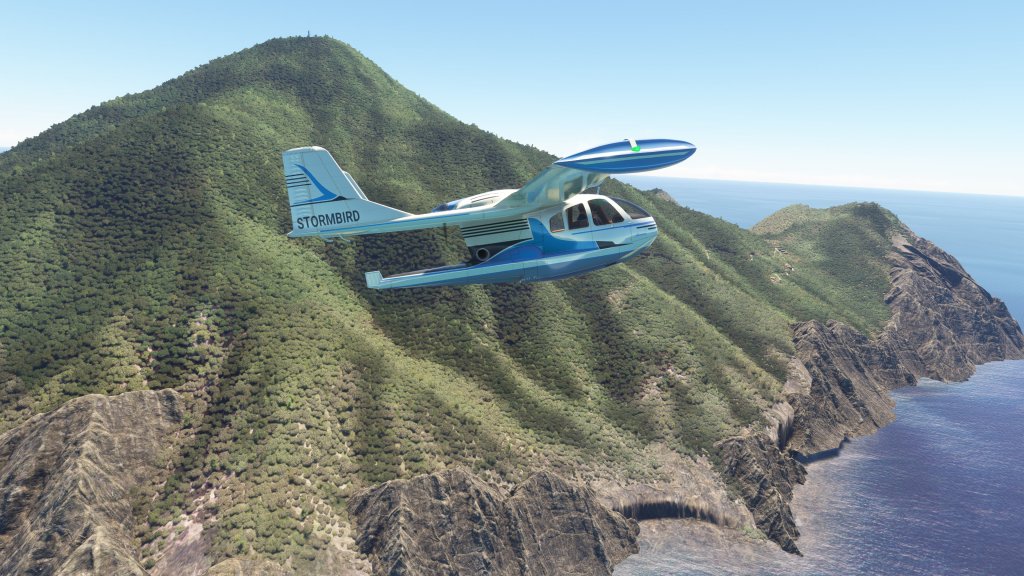
I flew the aircraft around for a bit before trying some stall tests. The Riveria is pretty steady and stable in MSFS with power off stall being quite gentle. On the other hand, cross controlling the ailerons and rudder causes a very sudden slip spin. Easy to recover but livery! There’s a fair bit of nose wobble to the aircraft too which is actually a good thing in MSFS because it makes the aircraft feel a bit more lively than your average GA type.
Then it was time for autopilot testing and here I managed to get the system doing exactly what I wanted to do – a slight 100 fpm climb, heading hold, and on course for St. Barts.
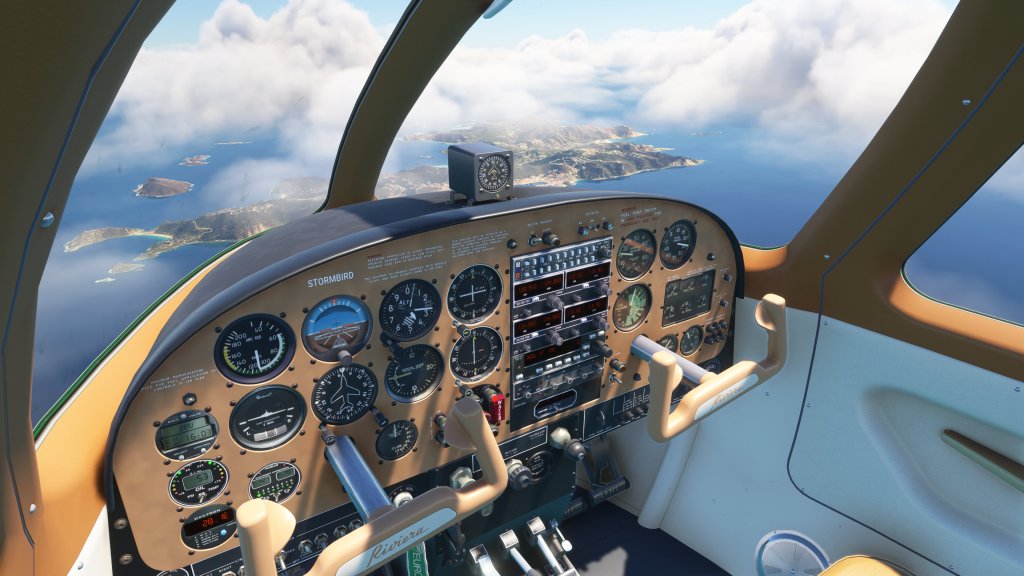


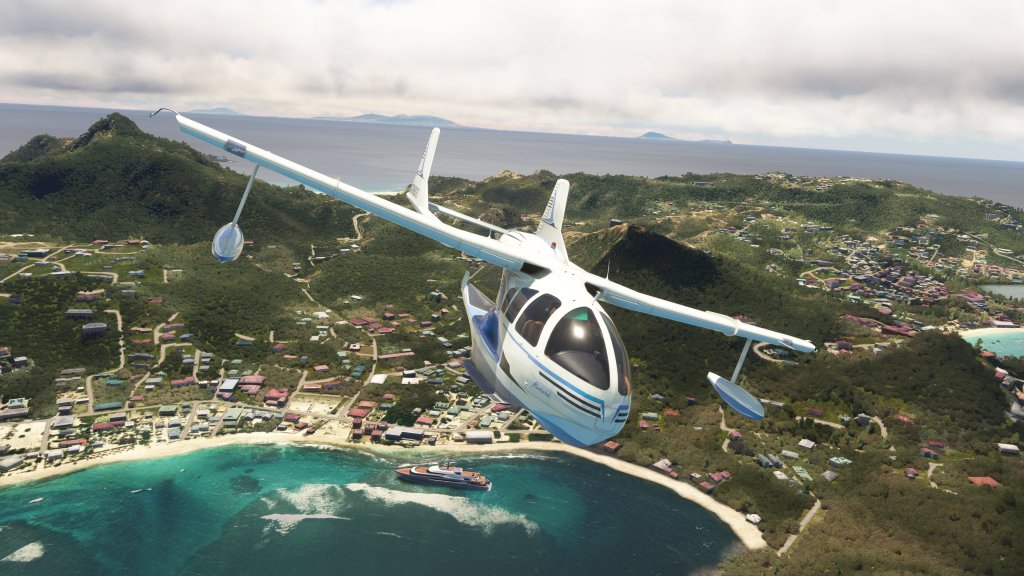
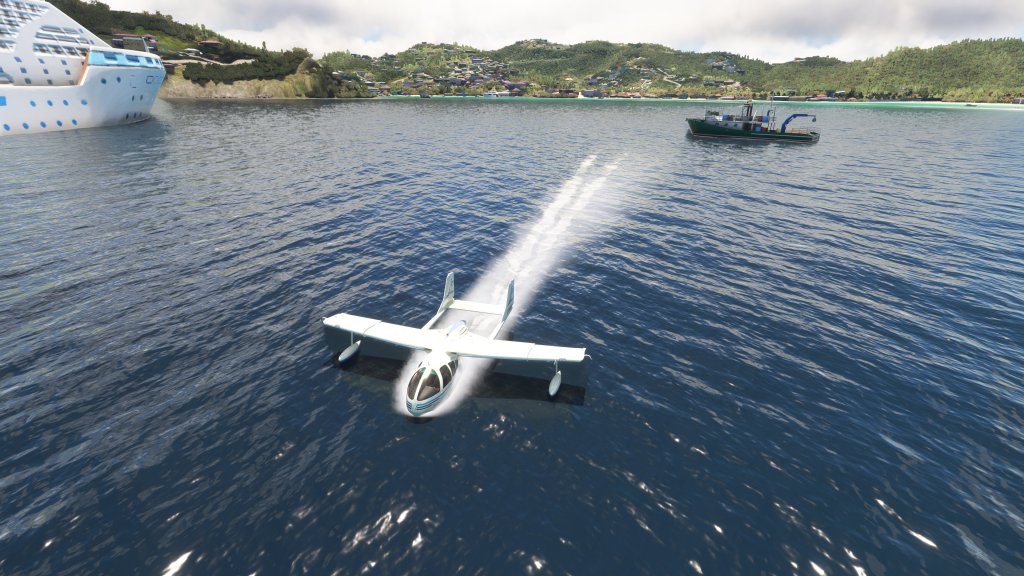
Flying over Gustavia, the capital, and then down into St Jean Bay (Baie de St Jean when not being anglicized) where I tested the FN.333’s water capabilities. Like most aircraft in MSFS, water physics are not terrifically great but its sufficient to be fun and after touchdown I practiced controlling the Riveria on the water. It has a water rudder and limited capacity to maneuver but I mostly got the hang of it…. and then I discovered the anchor which helped keep the aircraft in place and made for a great moment just parked on the water letting the aircraft bob up and down.

A DHC-2 Beaver flew over me while I was admiring the moment which only added to the ambience.
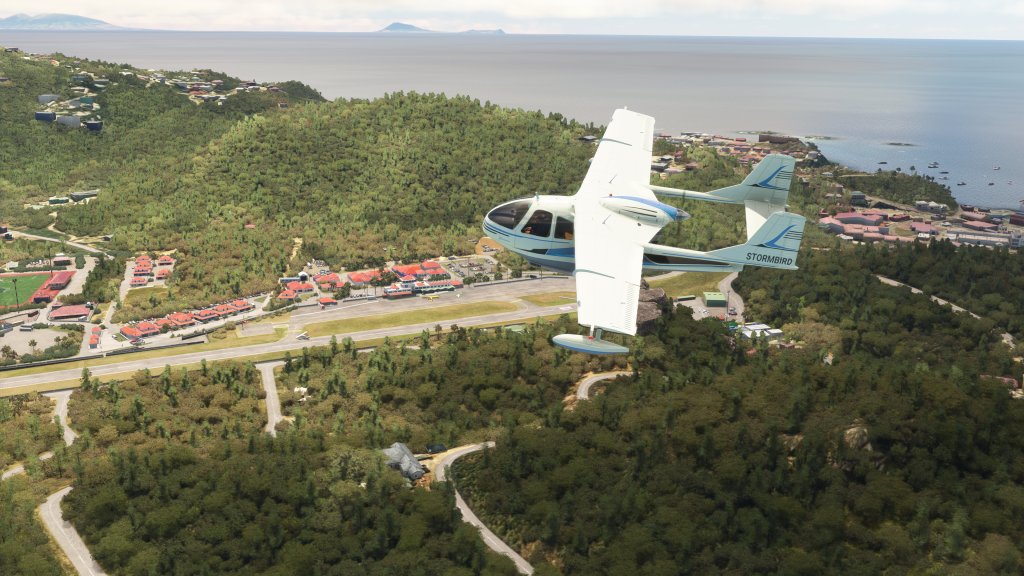
Then it was time to takeoff and try that. The Riveria takes time to gather speed and get airborne. Unsurprising but sometimes a bit worrying as you’re just watching the airspeed gauge slowly gain speed. But I did manage to get airborne and decided that the best way to end the flight was a landing at the ever challenging Gustaf III airport – the one with the steep hill at the one end and the bay at the other end. Did I land it? You bet! It was a challenge but fun to do.

That was my first flight with the FN.333 Riviera. More flying to do with this terrific little plane!
 Stormbirds
Leave a comment