
I’m back in a favourite aircraft for this Flight Journal. iniBuilds A300-600 has just received another update and this one is fairly substantial! There are new features for the aircraft including a new radio control panel, however, its the engines that are the stars of this update with the newly added Pratt & Whitney’s PW4158 engines. What does new engines bring to the experience and does it matter? Let’s fly it and find out!
Departure from Kushiro airport
I’ve been doing quite a bit of freight flying with the A300-600 so for this flight I was hoping to find a passenger option. As it turns out, most freight operators with with the P&W but one livery I had installed already used the engines in airliner form – JAL. So I decided to redo a flight that I did years ago with a semi-short hop from the island of Hokkaido and World Update 1’s Kushiro airport down to Tokyo Haneda.
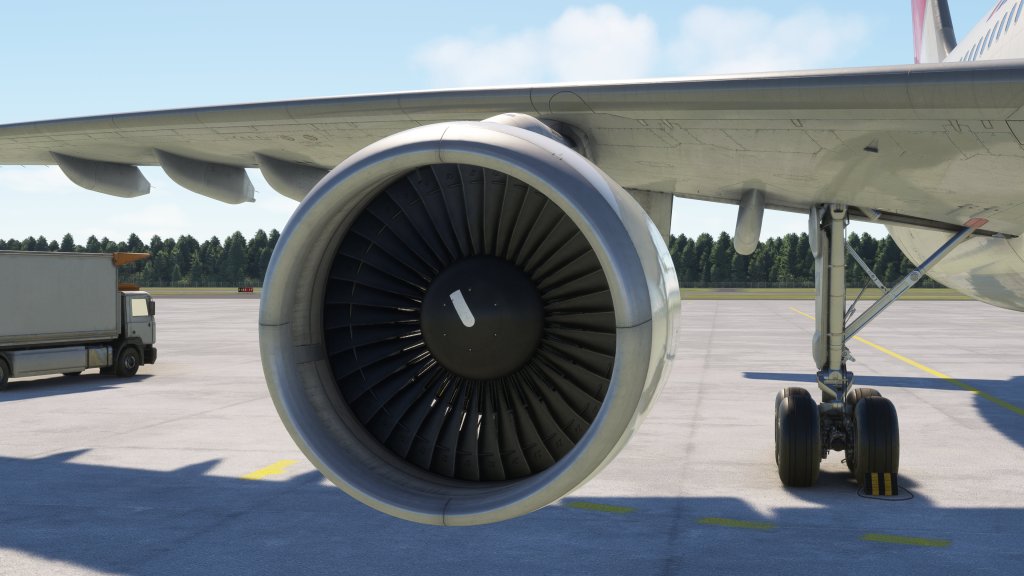
I’ve been using other airliners quite a bit recently as well so coming back to the A300-600 gave me a chance to see what the latest updates were offering. I made full use of SimBrief as well as the aircraft’s EFB to run services, refuel the plane, load it with passengers, and get ready for the flight. I also got a good close look at the new engine option.
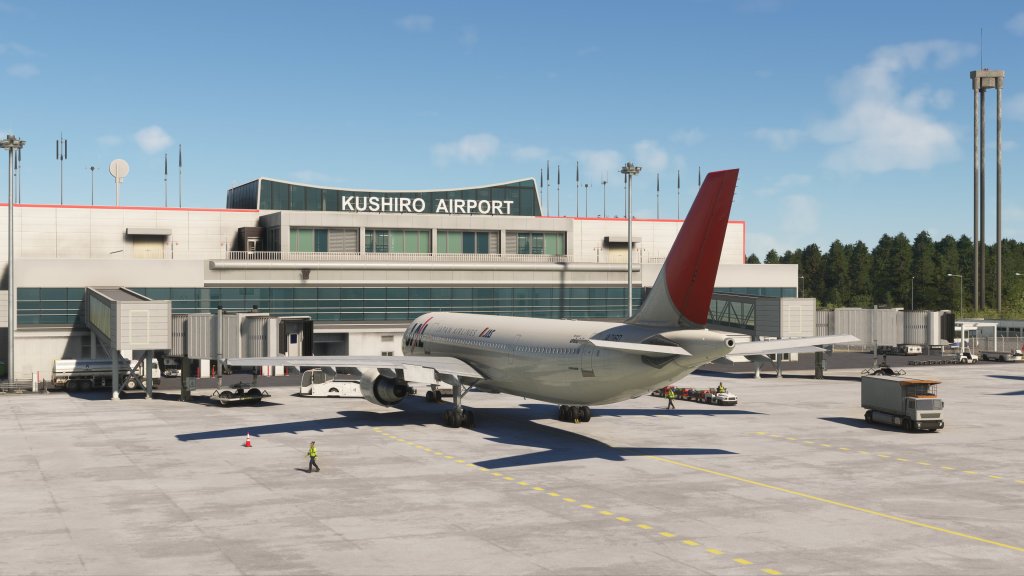
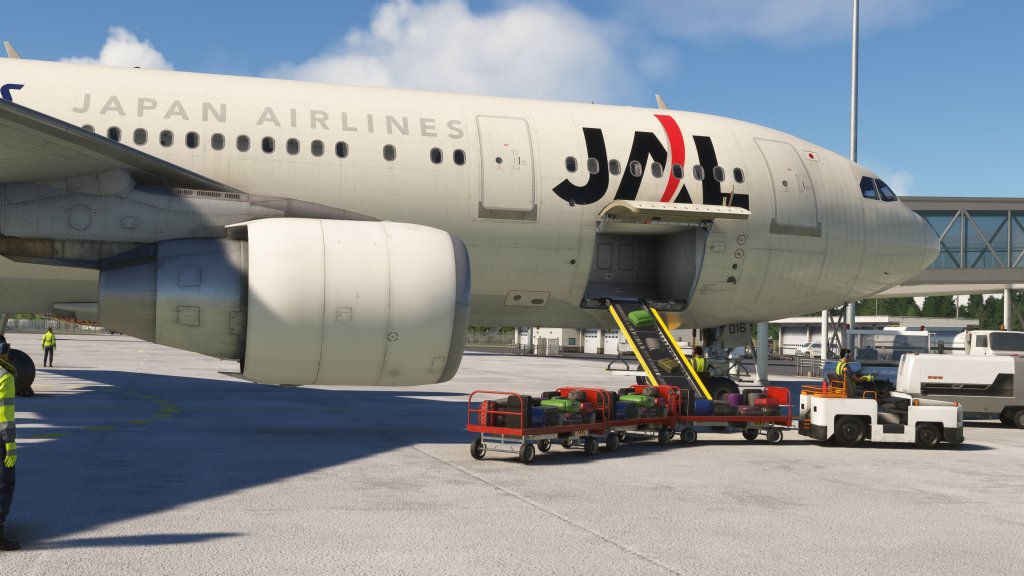

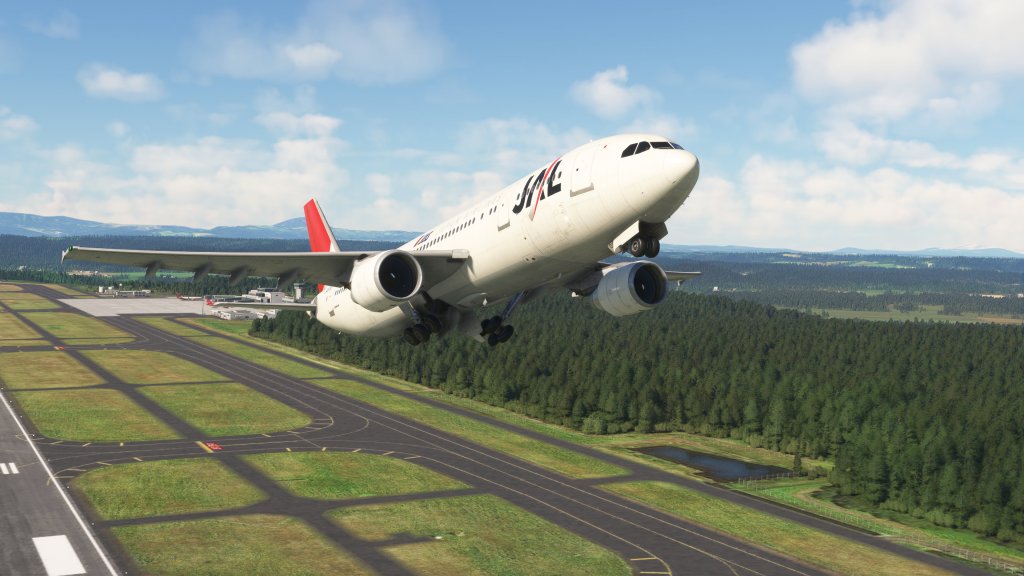
Then it was time to start up and fly! Several minutes later the A300-600 was airborne and heading south for Tokyo.

Cruise
Reaching cruise in the P&W powered A300-600 happens pretty much at the same rate that we did with the other engines. Again, if there is a difference in performance its not something that I noticed in a significant way. Others who are more finely attuned to it may notice something more subtle but the good news is that the A300-600 doesn’t feel any less capable with these engines either.
We reached a cruise altitude of 34,000 feet and cruised our way across the straight from Hokkaido to flying just off the eastern coast of Honshu for about half an hour before coming onshore and cruising over the mountains.
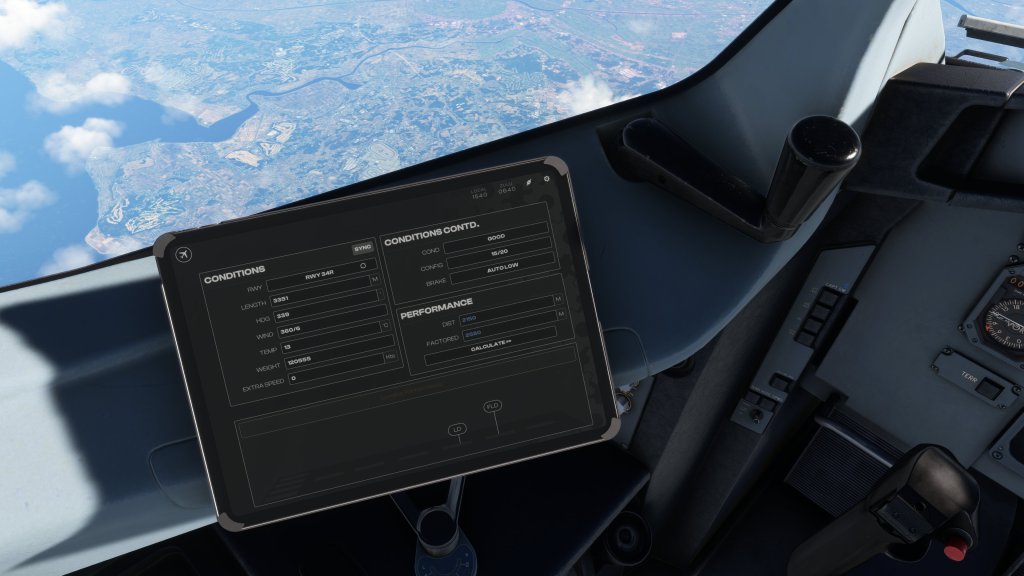
The cruise gave me time to again look at the engines and take in the different sound characteristic (which is very noticeable). It also gave me time to make use of the new landing performance tool (seen partially configured) which was a criticism that have been made by some for not including at the start. Now, its part of the selection of EFB features available.


Bringing it in for a landing
I initially screwed up the approach programming so I ended up reinputting the information myself and made some sort of mistake along the way. I was able to correct it but not before overflying some critical waypoint without descending. I spent the next 10 minutes extricating myself from a silly situation that no real world pilot would ever want to be in… but I did get the A300 down to the appropriate approach pattern and altitude and brought it in for a smooth though slightly fast landing on Haneda’s now infamous runway 34R. Fortunately everything went as planned after that with the P&W’s thrust reversers deploying correctly and the aircraft auto breaking beautifully.
All that was left was a quick taxi to the terminal, parking, shut down and deboarding. Another successful flight!


The engines, the airliner
After the flight I reflected back on the experience and what the difference in engines offered in terms of it.
The two engines are of comparable power with the two offering power in the 52,000 lbf – 62,000 lbf range so performance doesn’t feel perceptibly different. There is a different power readout with the P&W engines so if you’re a flight simmer that pays very close attention to the power settings on the engines… you’ll see that the display is different and that the engines power up and down slightly differently. iniBuilds discussion on the differences between EPR for the P&W and N1 display for the GE is interesting but more academic than I can reliably repeat. Watch their video for a better description.

The thing that I most notice was the visual difference with the engine having a different nacelle shape, different fan blade and nose cone. And also the noise difference. iniBuilds made sure that these had their own character and the P&W idle louder but throttle up with a more throaty rumble and less of a “buzzsaw” effect from the GE. I love that! It gives the A300 a different character when you jump between models.
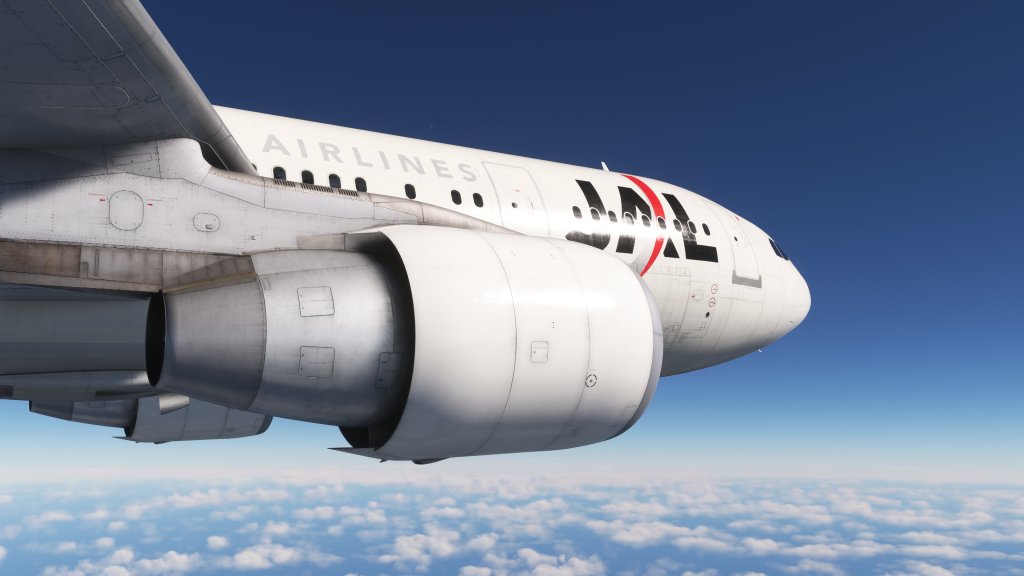
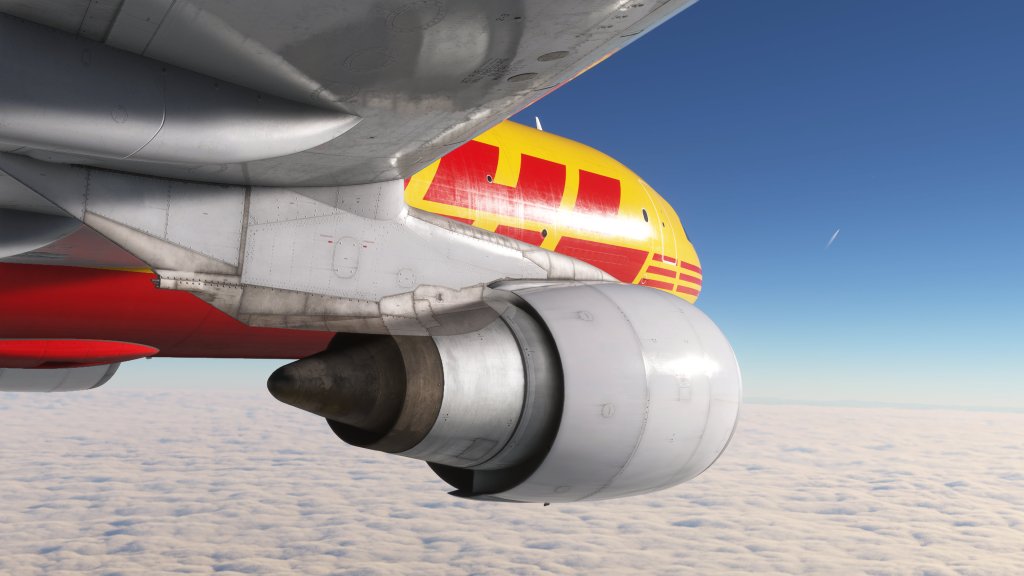
So, why would we want this as a feature tickbox? Completeness or accuracy is the reason… and isn’t that the reason for so much of what we do. You may want to fly a specific aircraft for a specific operator and that specific operator chose the P&W or the GE model. You want your simulated airplane to have the same look, feel, sound and performance. Makes sense!
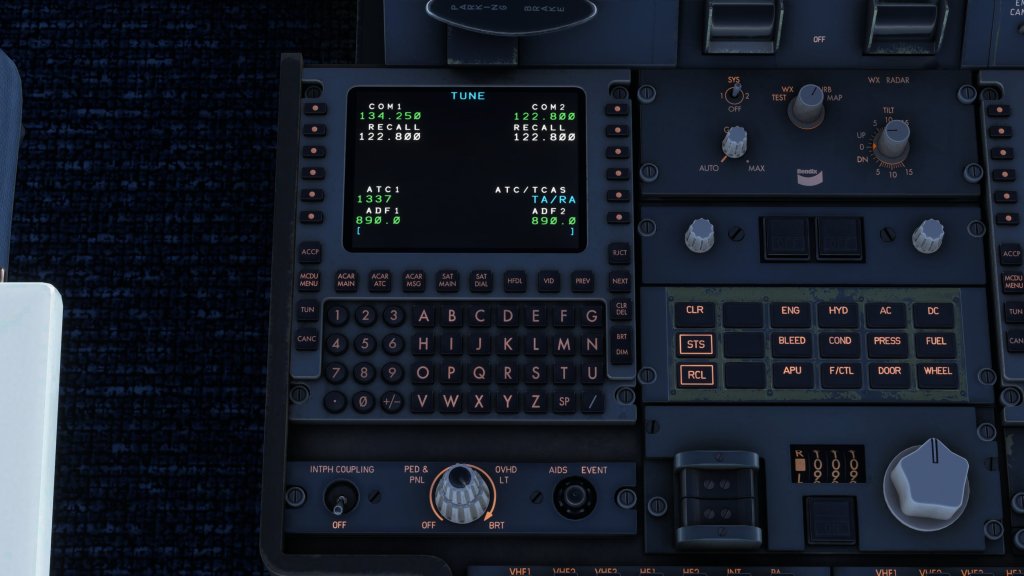
The other feature that I didn’t use all that much is the new optional IDC radio panel. It has its own FMC/MCDU style interface and a bunch of new features that are particularly useful for the Vatsimmers among you. I do like the modern approach to radio management so for my limited purposes, setting the transponder code and turning it to TA/RA, was enough!
As for the rest of the experience, the A300-600 is maturing as a product with better performance and stability, a few more options, and these new engines. iniBuilds have also added more liveries to the mix on their iniManager software from the last time I checked so the aircraft has even more options than before. The aircraft is looking brilliant and performing almost as well too. It’s not quite as well optimized as PMDG’s offerings but its very good! Kudos for the ongoing development and commitment to making this a solid product!




 Stormbirds
Leave a comment