
As World War II’s aerial war wound down and the end of the conflict was in sight, aircraft producers in Germany were busy producing what would be the last of their aircraft line-ups. The Ta152H was one such fighter and despite the small number produced and its limited combat history, the type has been a bit of a fascination around World War II warbird sim flyers. Recently released as a Collector Plane for IL-2 Sturmovik: Great Battles, a few questions remain: Does the Ta152H-1 upset the delicate balance for online battles? What’s it like to fly? What scenarios can you fly this rarity in? I hope to answer these questions and more.
A bit of history
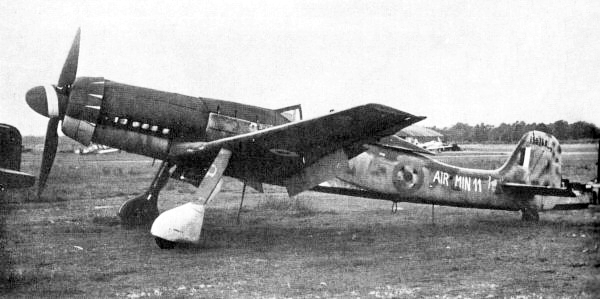
Solving the Focke Wulf Fw190’s issues with performance at higher altitudes began as early as 1941. A number of new prototype versions featuring different powerplants and adding turbochargers to the aircraft were proposed. Prototypes with turbocharged BMW 801 (Fw190B) and turbocharged DB 603 (Fw190C) engines were created before the lengthened Fw190D-0 with a two-stage, supercharged, Junkers Jumo 213 became the template for the production Fw190D-9 variant that many WWII aviation enthusiasts are familiar with.
While the resulting Fw190D-9 was a success, boosting the Fw190’s performance at higher altitudes and keeping it competitive with the latest Allied fighters, it was always seen as a interim type. Rumours about the introduction of an even higher flying bomber, the B-29, reached Germany and fears of a bomber that was exceedingly difficult to intercept. Early efforts to use the DB 603 failed and focus continued on the Jumo 213 engine – this time with a three stage supercharger.
The fuselage of the Ta152H was extended from the D-9, new vertical tail surfaces were designed, hydraulic flaps were used instead of electrical ones, and the wings were lengthened too. Fw190’s 10.51 meter wingspan on the original models were replaced with new 14.44 meter wings giving better control and performance at high altitudes. The aircraft also was designed with a pressurized cockpit.
Performance proved impressive with a 776 km/h (or 469 mph top speed) recorded at 13,500 meters (or 44,300 feet). It was somewhat slower at 560 km/h or 350 mph at sea level even with the MW50 boost enabled. At high altitudes the engine performance was also boosted with the GM-1 system which injected nitrous oxide into the engine increasing the amount of oxygen available.
By early 1945 when the Ta152H began to be deployed to squadrons the war situation was so desperate that the aircraft had little opportunity to fly at its maximum altitude and its combat record saw it engaged in entirely low and medium altitude battles never getting an opportunity to engage the Allied bomber streams it was intended for.
Visuals, liveries and sounds


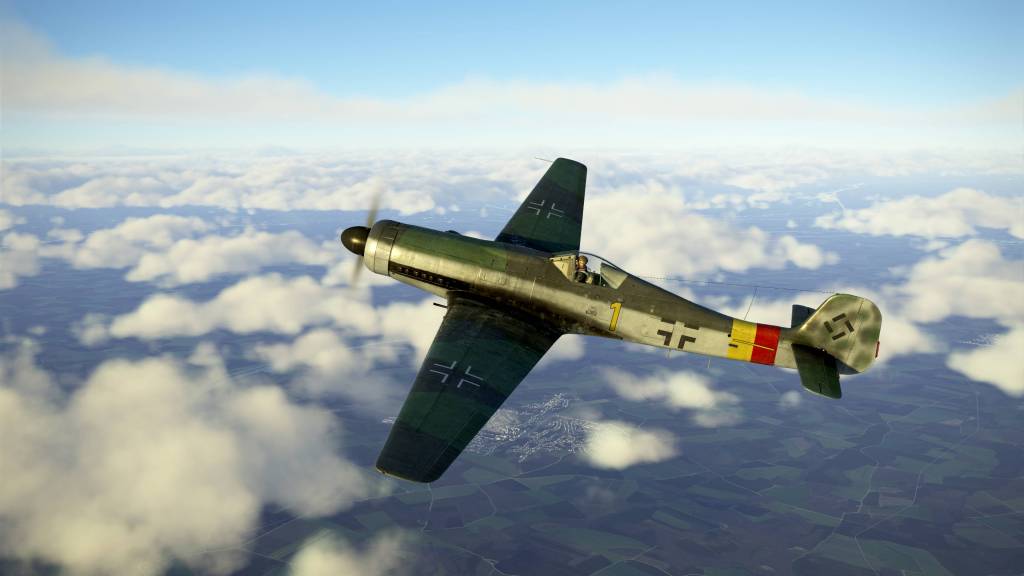


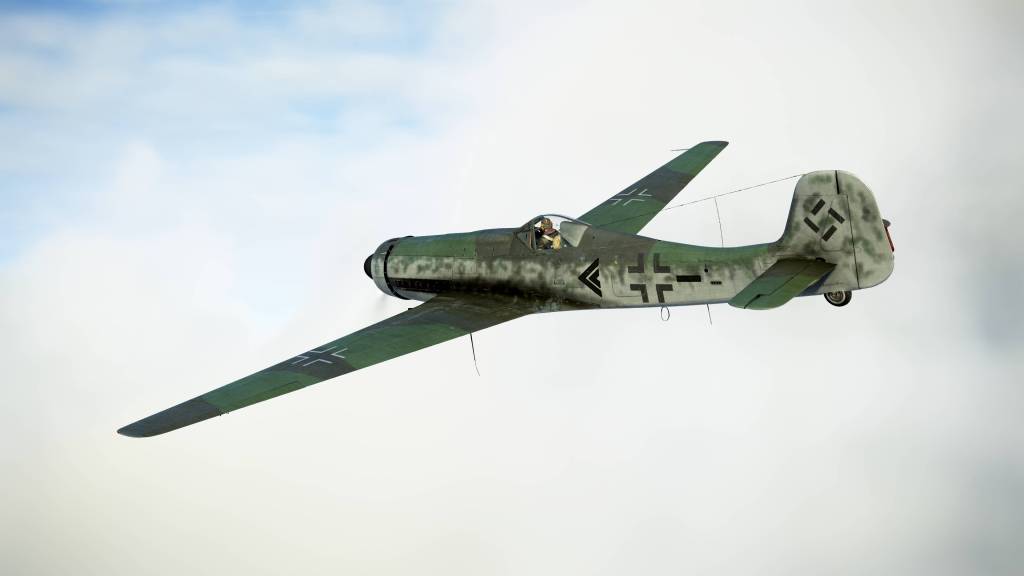
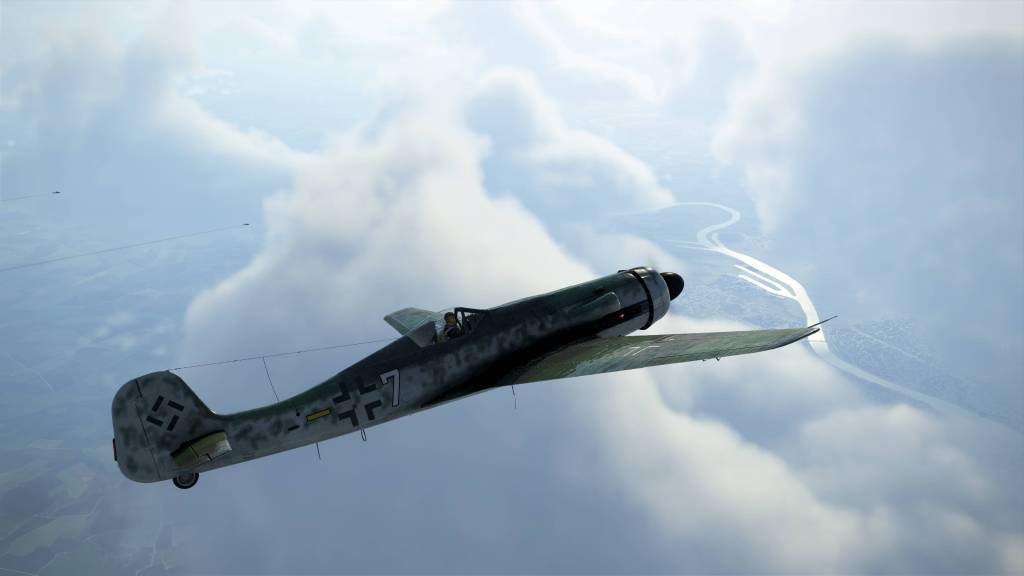
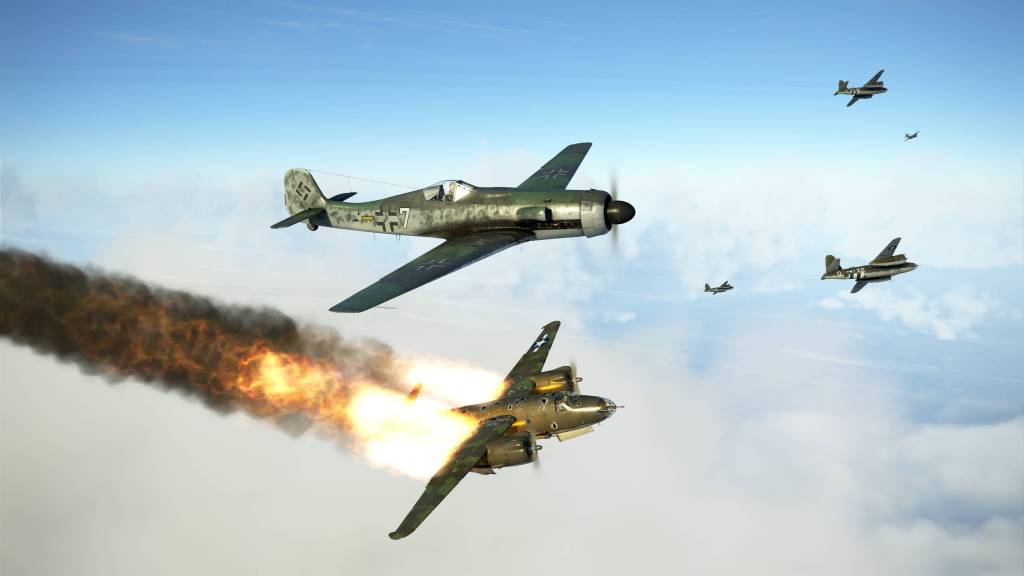
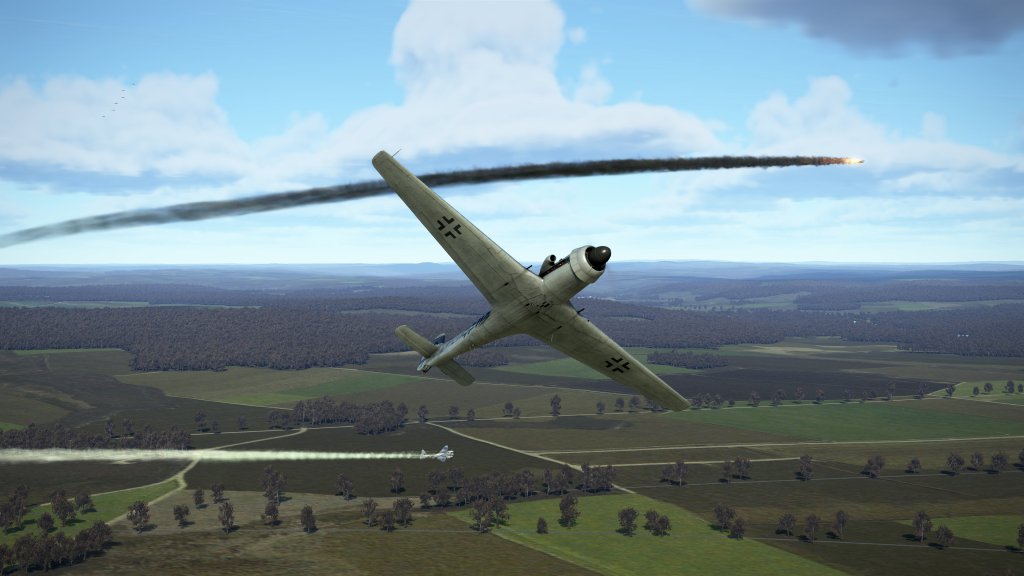
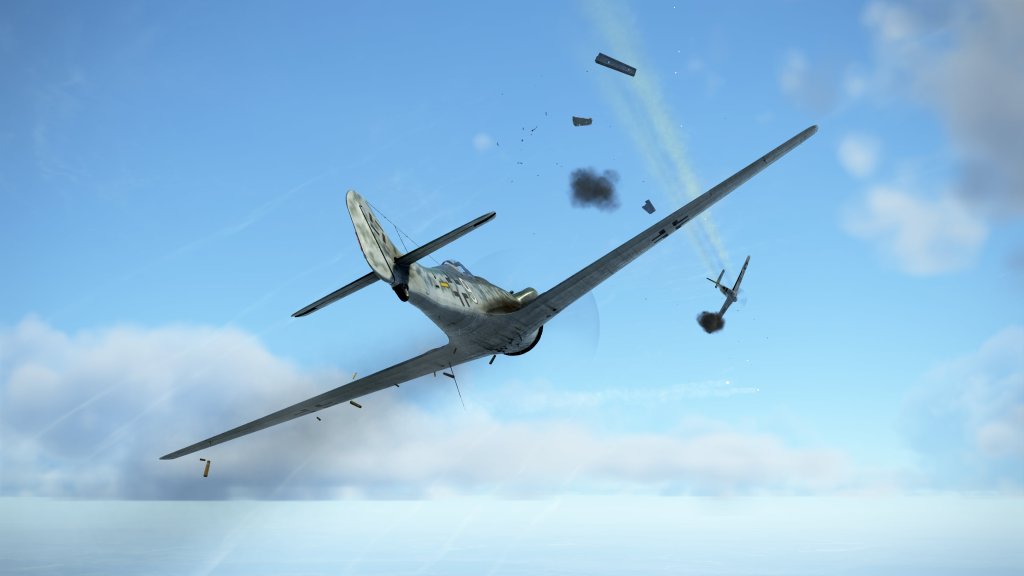
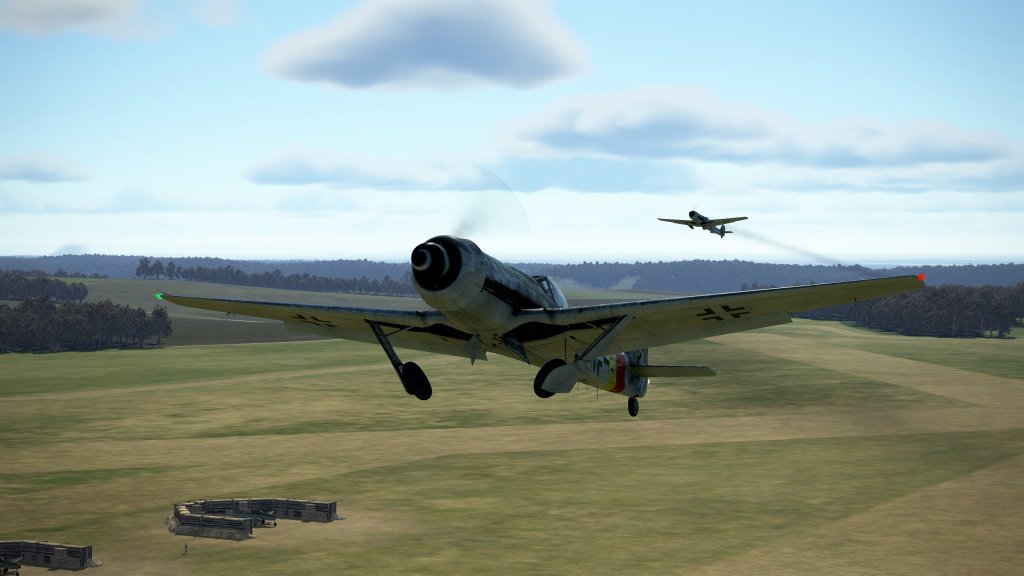
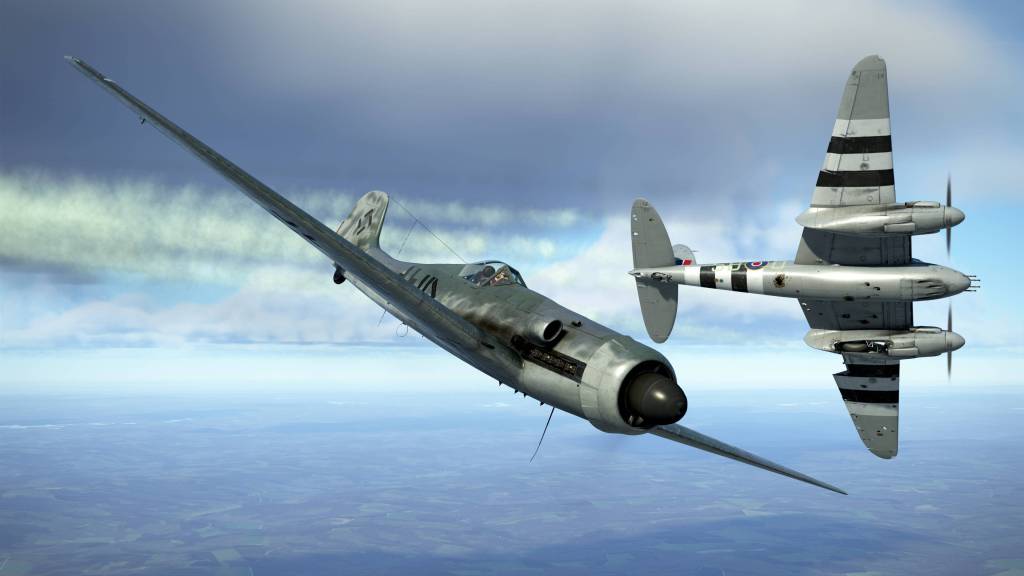
The Ta152H matches the quality levels seen in previous editions of the Fw190 series and that of the whole 1CGS lineup. Good detailing, appropriate wear and tear, and crisp textures round out both interior and exterior models of this aircraft. The reflections on the wings and the overall artistry of both the model and the liveries is at the typically impressive level. The Great Battles engine may be a bit aged these days but it still manages to look pretty darn good!
The Ta152H has 8 available liveries by default. These include a couple of historical schemes and a few generic examples too. I enjoy the all-red Aufhammer livery. The red livery is of dubious tactical value unless you want your enemies to know you’re coming. The real one was painted this way to avoid the flak gunners who were known for being trigger happy by this stage in the war.
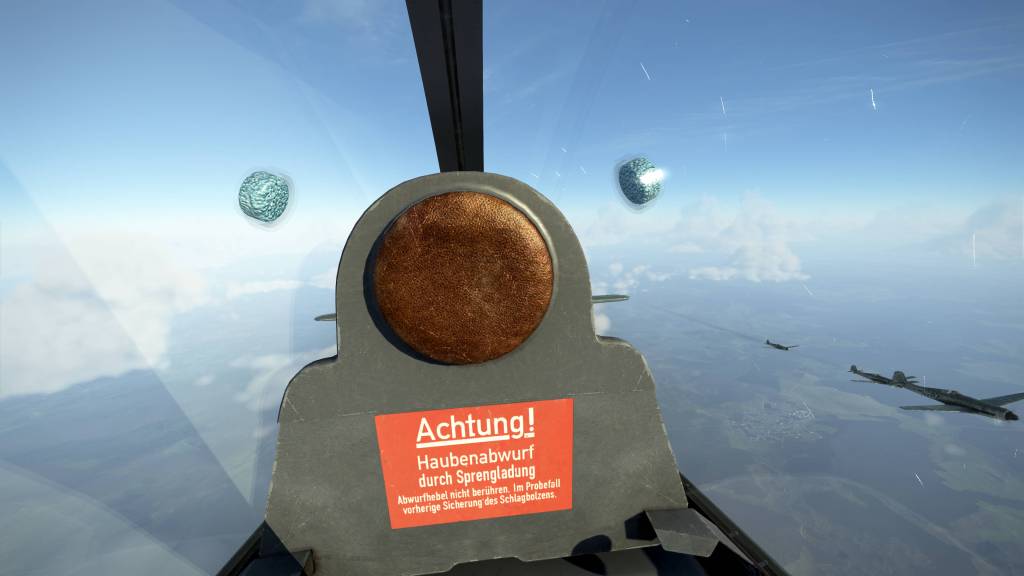
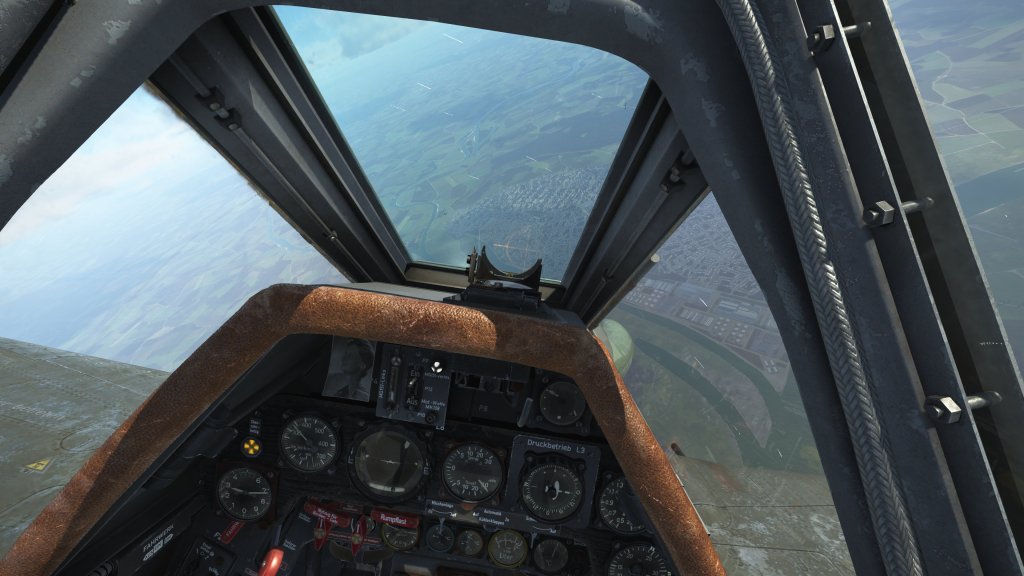
The cockpit is a very familiar place with similar visibility and sight lines to other Fw190 models. The artistry is a bit better here than in previous projects.


Limited modifications
The Ta152H comes with just one modification. The addition of the EZ42 lead computing gunsight. I’ve never really enjoyed using it in the Fw190D-9 and I don’t particularly enjoy it here either – the sight is just not big enough to lead fighter targets.
Because of the purpose built interceptor’s intended role as well as late war expediency, no ground attack modifications or munitions are available on this aircraft.
Performance comparisons
For this performance comparison I’m going to focus on the two closest aircraft in the Luftwaffe line-up – the Fw190D-9 and the Bf109K-4. I think you’ll end up choosing the Ta152H more based on how it stacks up in comparison to these than relative to the aircraft you’ll be fighting.
Speed
Ta152H-1
- Maximum true air speed at sea level, engine mode – Emergency with MW-50: 579 km/h
- Maximum true air speed at 5000 m, engine mode – Emergency with MW-50: 663 km/h
- Maximum true air speed at 7400 m, engine mode – Emergency with MW-50: 740 km/h
- Maximum true air speed at 12000 m, engine mode – Emergency with GM-1: 756 km/h
- Maximum true air speed at sea level, engine mode – Combat: 541 km/h
- Maximum true air speed at 10700 m, engine mode – Combat: 707 km/h
- Maximum true air speed at 12000 m, engine mode – Combat: 678 km/h
Fw190D-9
- Maximum true air speed at sea level, engine mode – Emergency: 607 km/h
- Maximum true air speed at 2000 m, engine mode – Emergency: 641 km/h
- Maximum true air speed at 5200 m, engine mode – Emergency: 694 km/h
- Maximum true air speed at sea level, engine mode – Combat: 565 km/h
- Maximum true air speed at 3200 m, engine mode – Combat: 623 km/h
- Maximum true air speed at 6500 m, engine mode – Combat: 663 km/h
Bf109K-4 (DB-605DB)
- Maximum true air speed at sea level, engine mode – Emergency: 599 km/h
- Maximum true air speed at 7500 m, engine mode – Emergency: 702 km/h
- Maximum true air speed at sea level, engine mode – Combat: 543 km/h
- Maximum true air speed at 8000 m, engine mode – Combat: 684 km/h
Bf109K-4 (DB-605DC)
- Maximum true air speed at sea level, engine mode – Emergency: 614 km/h
- Maximum true air speed at 6200 m, engine mode – Emergency: 713 km/h
- Maximum true air speed at sea level, engine mode – Combat: 536 km/h
- Maximum true air speed at 8000 m, engine mode – Combat: 684 km/h
Unsurprisingly, the Ta152H has superior altitude performance over its stablemates but that really only begins to kick in around 7500 meters. Below that the Ta152H is slightly slower in most categories to the Bf109 and Fw190D-9. It’s still churning out impressive numbers but not superior ones.
Service ceiling and climb rate
Ta152H-1
- Service ceiling: 14000 m
- Climb rate at sea level: 17.5 m/s
- Climb rate at 3000 m: 15.8 m/s
- Climb rate at 6000 m: 13.4 m/s
Fw190D-9
- Service ceiling: 11600 m
- Climb rate at sea level: 19.0 m/s
- Climb rate at 3000 m: 17.3 m/s
- Climb rate at 6000 m: 14.6 m/s
Bf109K-4
- Service ceiling: 12300 m
- Climb rate at sea level: 19.7 m/s
- Climb rate at 3000 m: 17.4 m/s
- Climb rate at 6000 m: 13.3 m/s
I always though the Ta152H-1 was a superior climbing aircraft but these numbers suggest otherwise. While service ceiling is again superior, the Ta152H-1 is slightly behind the 190D-9 and Bf109K-4 for maximum climb rate.
Maximum performance turn
Ta152H-1
- Maximum performance turn at sea level: 21.5 s, at 280 km/h IAS.
- Maximum performance turn at 3000 m: 26.9 s, at 280 km/h IAS.
Fw190D-9
- Maximum performance turn at sea level: 20.0 s, at 300 km/h IAS.
- Maximum performance turn at 3000 m: 29.0 s, at 300 km/h IAS.
Bf109K-4
- Maximum performance turn at sea level: 24.2 s, at 270 km/h IAS.
- Maximum performance turn at 3000 m: 32.3 s, at 270 km/h IAS.
The long wings of the Ta152H-1 give it a superior turn rate versus the other two though the D-9 does reportedly do slightly better at sea level. Once you’re up to 3000 meters, the difference is marked with the 152H having the best turn rate of any of the German fighters. It also manages to achieve its best turn rate at a slightly slower speed which gives the Ta152 a bit more flexibility to engage in that kind of fighting.
Flying the 152H in combat

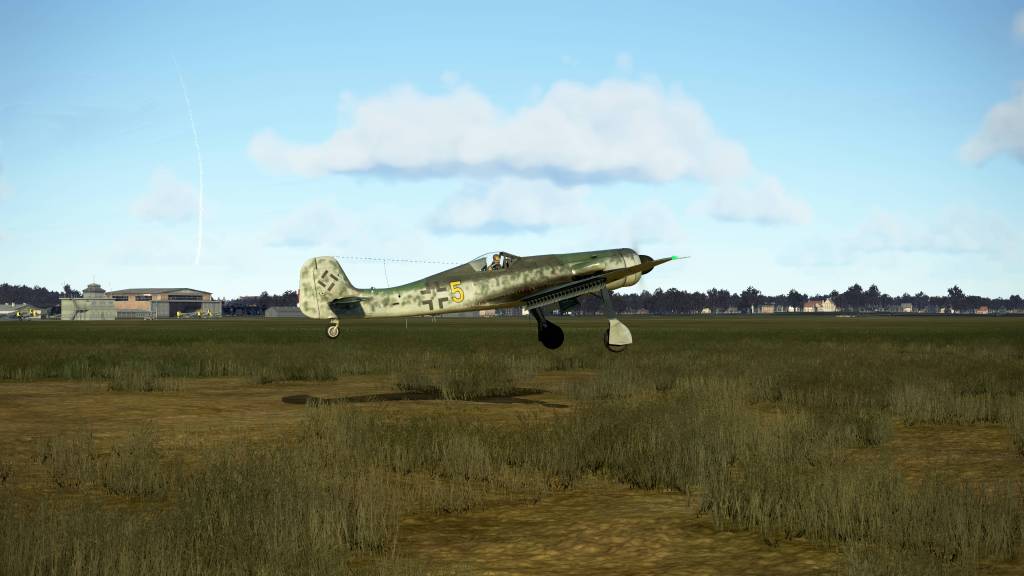
Experienced Fw190 pilots are going to find themselves at home in the Ta152H as it flies and fights mostly like a Fw190. It has the same cockpit layout, with few differences, and the same overall strengths and weaknesses. Takeoff and landing are similar too though the Ta152H does appear to have a slightly longer takeoff run and landing can be done at a slightly slower speed. The wide track undercarriage helps make it easier to manage on the ground.
While the aircraft is still very much a Fw190 in overall character and application, it does have its share of unique handling attributes. More unique attributes than any other version of the aircraft in the series as it turns out. As we saw in the performance comparisons, the long wings give the aircraft a somewhat better overall turn rate particularly when it comes to pulling lead on a target. When it stalls you’ll find the stall is slightly more gentle too. On the flip side, roll rate is reduced though not as much as I may have assumed given the long wings and the ailerons remain highly effective.
Tactics are still Fw190 tactics with some minor differences. You still should not get into long drawn out dogfights though you can still turn better than other German types. You’re still inviting disaster against a well flown Spitfire for example that can turn tighter and may be able to climb faster depending on the model and available fuel type. Stay fast, boom and zoom and use climb, speed and firepower to defeat your opponents.

The aircraft is capable at extreme high altitudes but will, like its real world counterpart, spend most of its time down low where its performance is similar to a number of other aircraft on either side. This makes the Ta152H an impressive but not altogether superior fighter and it doesn’t upset the overall “balance” of a multiplayer server. In some ways, the Ta152H is inferior to the Fw190D-9 and some may prefer a bit more speed for a bit less agility.
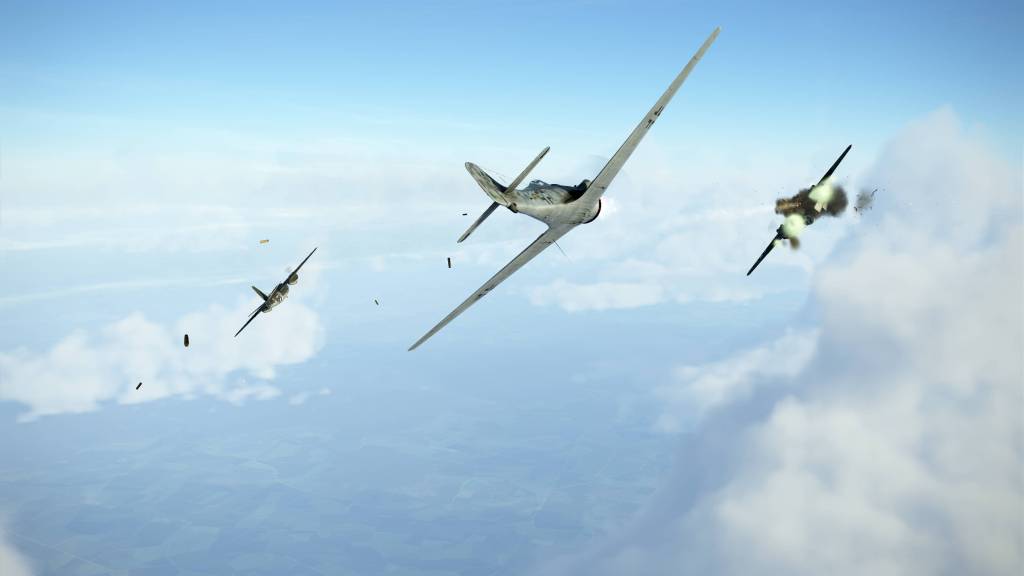
The gyro gunsight is of limited utility versus fighters though it can be useful in “sniping” bomber targets. Meanwhile, the type’s single MK108 30mm cannon and two MG151/20 cannons make for short work of all fighters and most bombers.
There have been comments in the community regarding structural failure of the wings in high speed and high-G maneuvers but I haven’t found it to be a problem in the slightest. I wasn’t even aware of the problem despite several hours of flight and combat on the Ta152H until I saw the thread so I suspect that the aircraft is just capable of some structurally defeating high-G maneuvers that you really should avoid.
Single and multiplayer
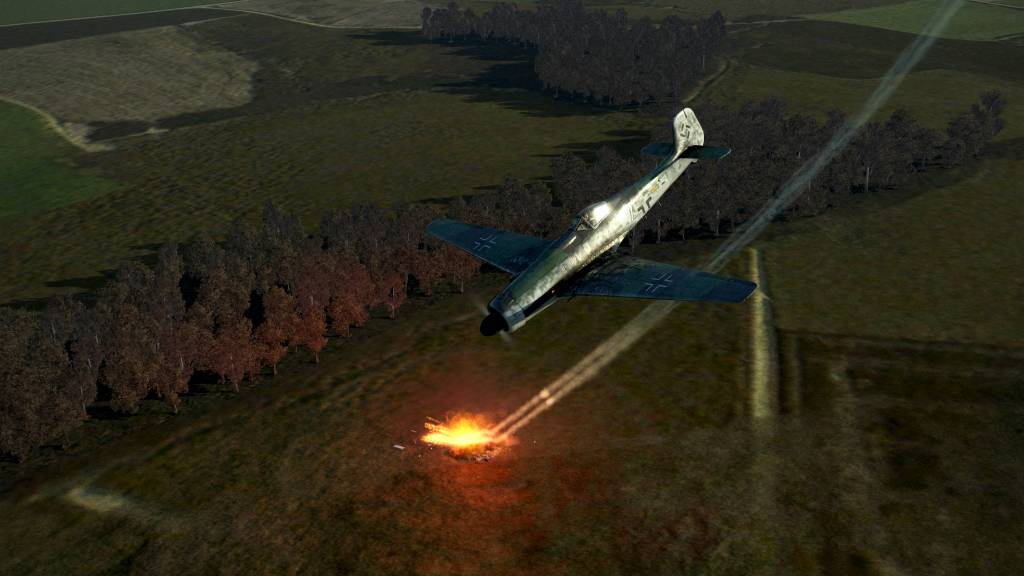
The Ta152H can be found in the quick mission builder (QMB) and advanced quick mission builder (AQMB) missions on the Rhineland map (part of Battle of Bodeplatte). In the career mode you can find the aircraft in the “Crossing the Rhine” phase of the campaign and assigned to I. Gruppe of Jagdgeschwader 11 where you’ll primarily fly interception and airbase defense missions.
The type is available on the popular Combat Box server though not in every scenario so you won’t see it all of the time but it will crop up from time to time too. I wouldn’t rely on it as a primary type and would ensure that you’re familiar with the other Fw190s available and then pick this one when it does become available for use.
Final thoughts
I’ve always had a bit of a fascination with the Ta152H. It’s interesting primarily because it was flown in conditions that it wasn’t designed for and never really had an opportunity to do battle in the way that it was intended. The lengthened wings also give it an almost glider like appearance too which is both utilitarian in its intended role but also a big awkward outside of it. It has a unique presence that is at once familiar and unique at the same time.
While we can lament the lack of a four engine heavy to really test the aircraft in scenarios that it was intended for, I’m choosing largely to see beyond that. The aircraft is actually quite a bit of fun and when flown smoothly can be a really fun aircraft to just zoom around the sky in. The firepower and overall Fw190 pedigree, when matched with good tactics, can make this into an impressive if not dominating presence in IL-2 Sturmovik: Great Battles multiplayer and single player scenarios.
The Ta152H-1 can be purchased as Collector Plane through the IL-2 Sturmovik webstore and through Steam for $19.99 USD. A small discount is currently available at the time of writing bringing the price down to $16.99 USD.
Screenshots





 Stormbirds
Leave a reply to ShamrockOneFive Cancel reply