
After doing my Aeroplane Heaven C-47 review back several weeks ago it popped into my head that I hadn’t done something that I had promised to do a few years ago. Most of you probably won’t remember that I said anything about it but its something long simmering at the back of my head. I am pleased to be able to write a review on the Microsoft Flight Simulator iteration of the famous Junkers Ju52. Having spent a fair bit of time with the IL-2 Great Battles version, I was keen to visit this classic airplane and have a look at it in this sim as well. How is it to fly in MSFS these days? Is it still worth some time and money? Let’s review!
Keeping history alive
Its in the title of this review and I want to get to this point first before I write about any of the other items. The MSFS team have been very good at doing some historical legends and doing the work of at least some level of digital preservation while also making that work interactive and accessible to a wide variety of flight simmers. The Ju 52 fits into that category alongside many of the other types that they have covered and as I was doing my research into this module, I was a bit surprised to be reminded that this was the inaugural Local Legend – number 1!
I love that while we get to experience these aircraft in a simulator, they are also, in a sense, being digitally preserved. A lot of work has gone into making sure that this airplane represents a strong representation of the real world aircraft. Microsoft, Asobo, and the digital creator on the project, Oliver Moser, also worked with a Ju52 pilot and had access to one of the few surviving examples to help make this aircraft come alive. It’s not the only aircraft they partnered on also doing Local Legend 12: The Dornier Do X Flying Boat and Local Legend 6: Junkers F 13 among a few others.
As for the history of this aircraft, the Ju52’s history is quite a long and fascinating one. I’m just going to touch on a few items here. Though the aircraft undoubtedly has connections to WWII, the type has a history that extends to both before and after in a wide variety of roles all over the world.
Initially designed as a single engine aircraft, it was reconfigured as a tri-motor which had become popular at the time. The aircraft was intended to be an airliner for Deutsch Lufthansa and saw some use in the role, however, the type was pressed into military use by the Nazi regime despite the objections of Junkers company founder Hugo Junkers. Junkers, no doubt for his resistance, died under suspicious circumstances in 1935.
Thousands were built for the Luftwaffe and used in cargo transport, troop transport, airborne troop insertion, mine sweeping and more. Most of the several thousand produced were destroyed either in combat or demolished at the end of the war.
Fascinatingly, the Junkers 52 lived on post war! The type was produced in France as the Amiot AAC.1 Toucan and in Spain as the CASA 352. Several Ju52s are still in limited operation today.
Visuals and sounds
We’ve been through quite a few legendary aircraft over the years of MSFS development and release cycles. I’ve reviewed quite a few but I have to say that this one really stands out to me.
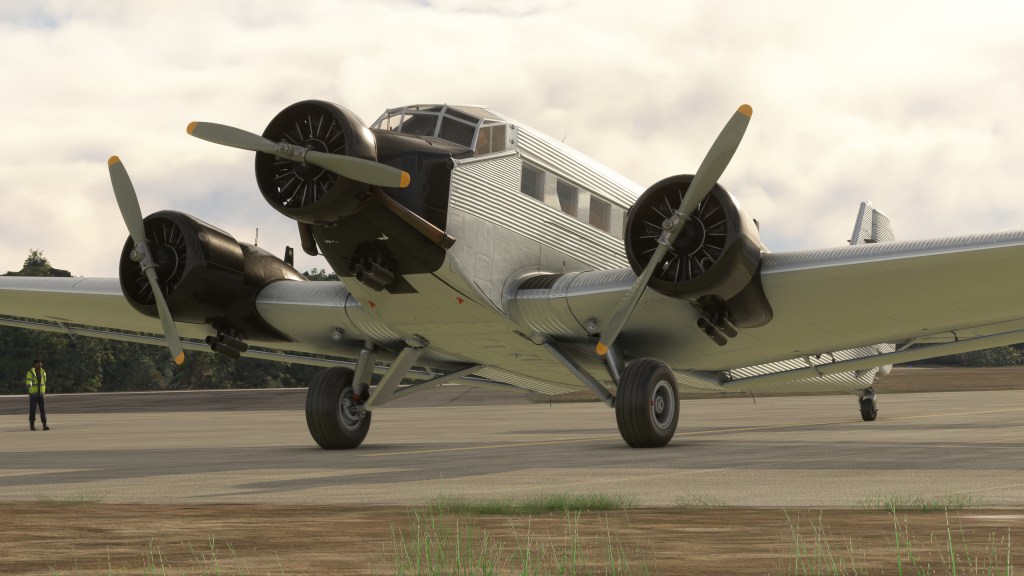
Getting the corrugated aircraft skin just right is awfully hard to do and as much as its possible I think the artists for this aircraft managed to make it look really good. The detailing around the engines, the cowling, the inner portions of the engines, the flaps (that move down and become a kind of double wing setup), the animated gear and tailwheel all show some very careful modeling and texture work! Everything feels crisp and clean!
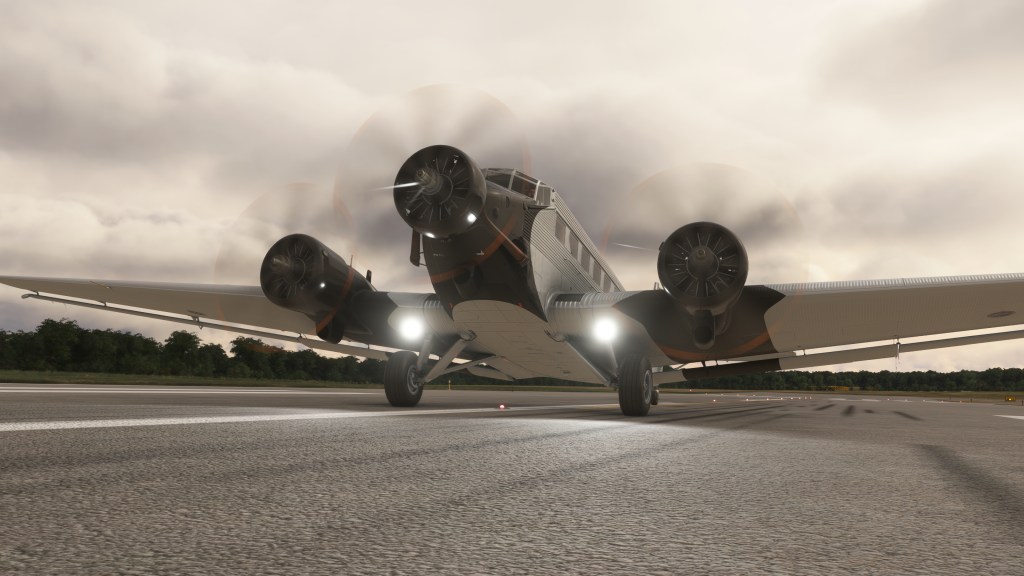
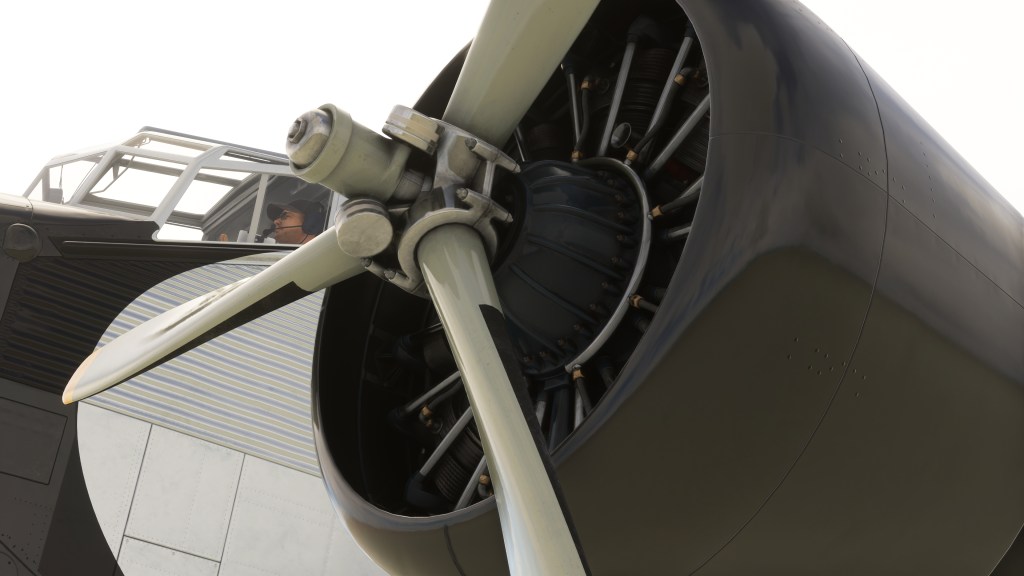
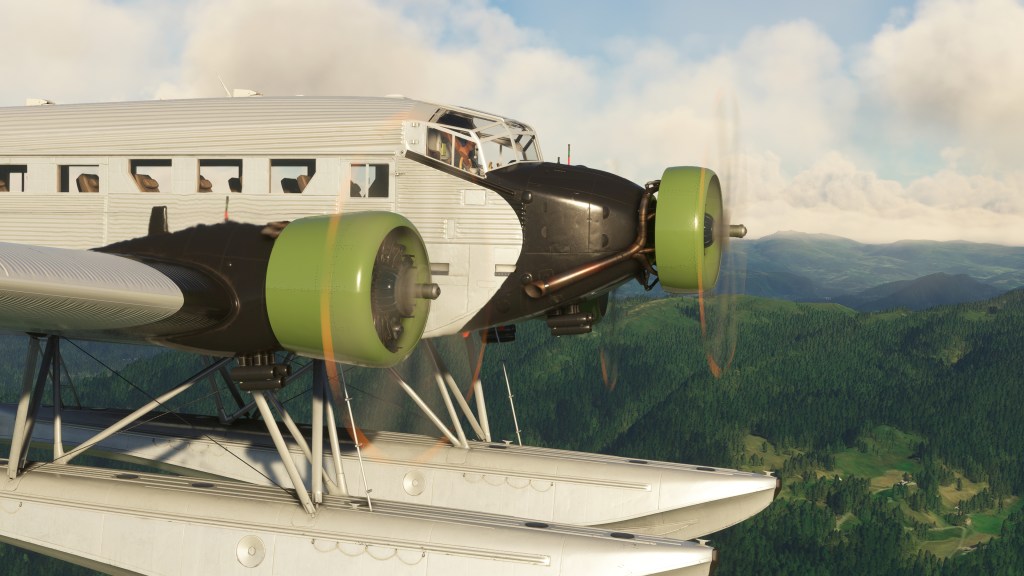
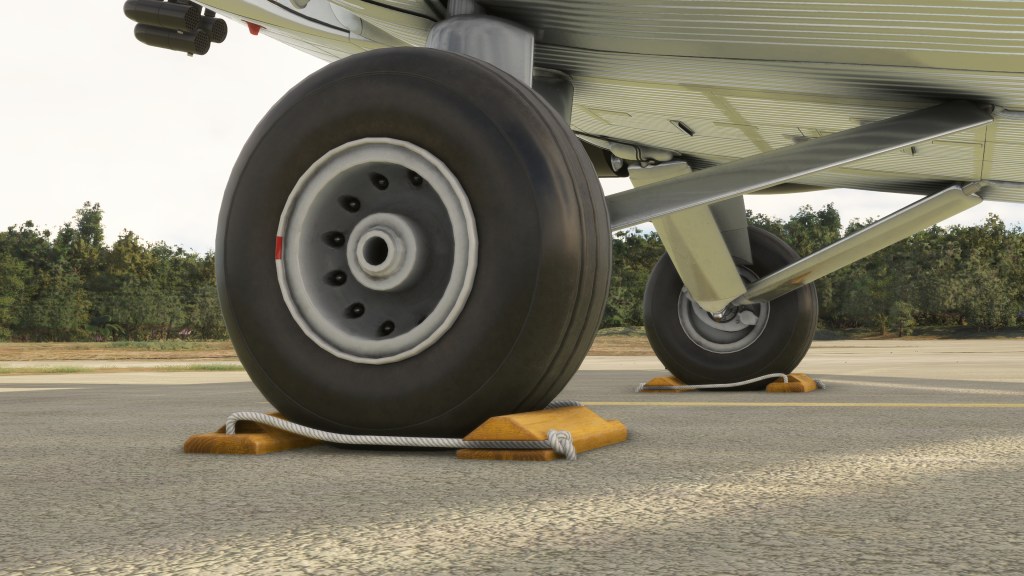


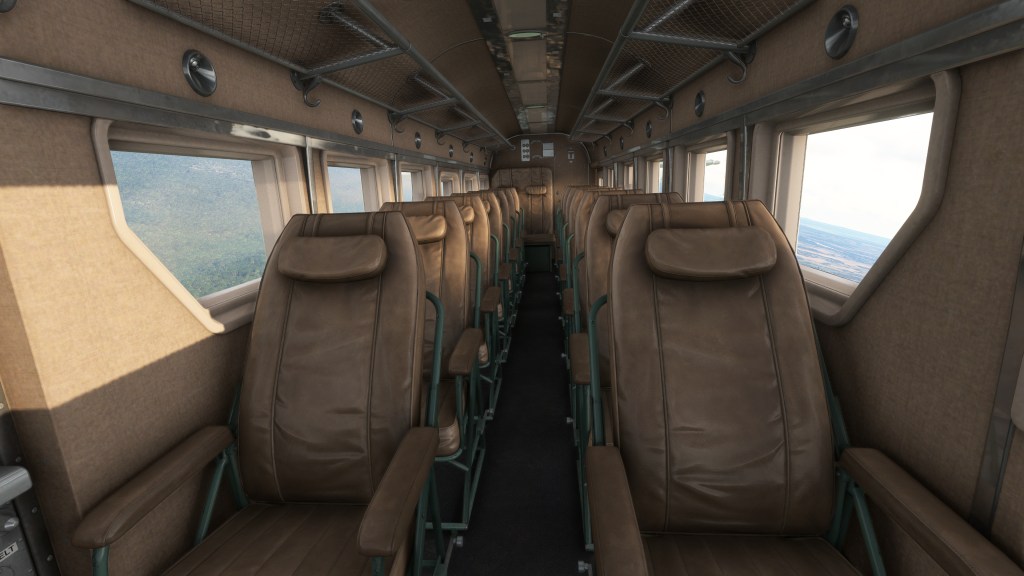
That detailing extends to the interior of which there are two different cockpits with different art styles and instruments. Both are immaculately detailed. The cabin area looks great as well with beautiful detailing.
Being an earlier aircraft release for MSFS, I do find that there are some things that have gotten better. There’s no fire or smoke on engine start and the transition for the propeller animation from stopped to moving is lacklustre. That said, we’ve seen some recent releases with the same issues but I’m a little more forgiving of this older example.
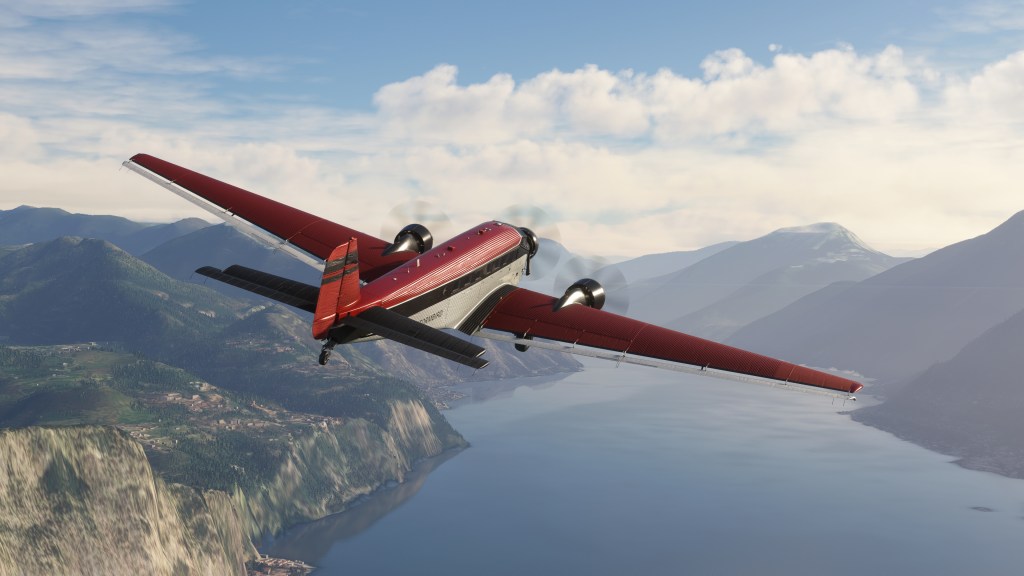
The type comes with a bunch of liveries. As near as I can tell, none of them are historically accurate but are semi-historically inspired. MSFS has typically shied away from military liveries in most cases (with some exceptions) so this one is more aimed as the Ju52s civilian experience of which it had many. They also might’ve tried to do the JU Air HB-HOS in the pack as a real world modern flying example but maybe weren’t able to secure the licensing.

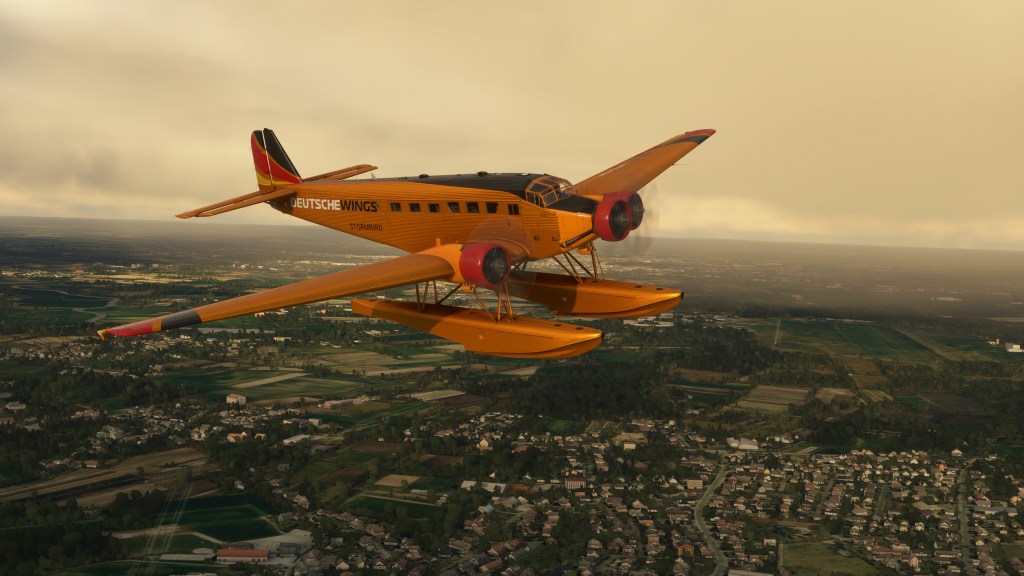
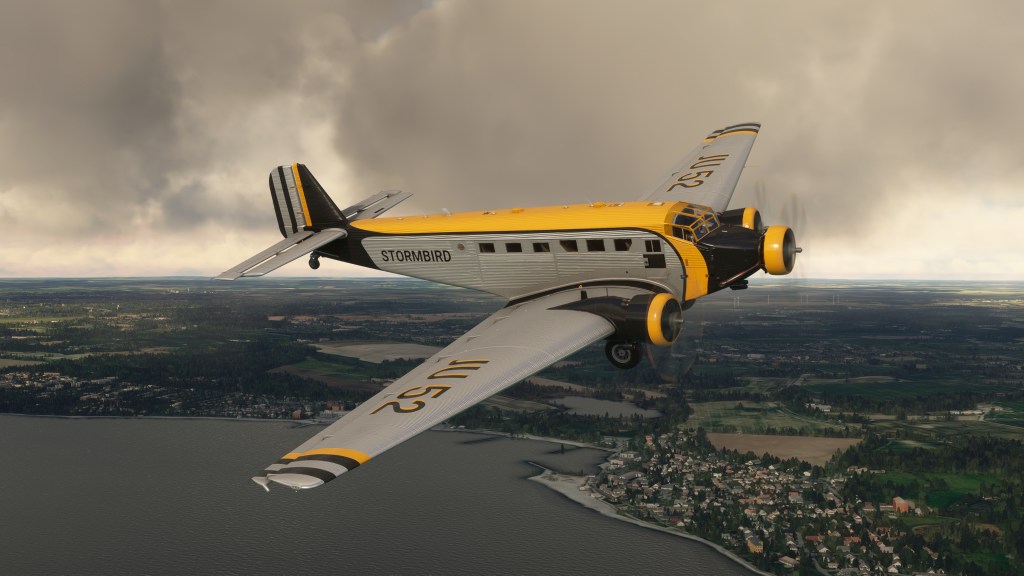
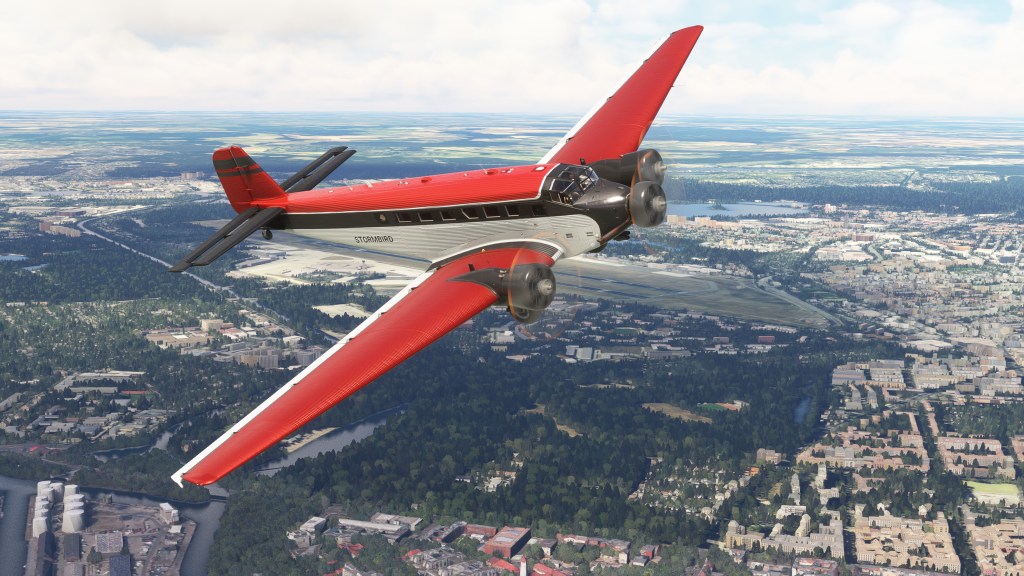


The sound work is generally good. Its not as impressive as something that you’d hear from a high end module but the engines are suitably good and the various buttons and levers in the cockpit have sounds even if I think they could be chunkier. Not bad overall though!

Flying the Ju52
My review of this module goes two ways when it comes to the flying character.
On the one hand, I’m generally impressed with the airplane in flight. It’s a gentle beast and it feels very familiar to me having flown the IL-2 model. Ailerons are generally responsive in most regimes of flight but the aircraft’s roll rate is ponderous. Elevators are reasonably effective in most scenarios but they do have their limits too. Turns can be very tight and hard movements on the rudder are quickly dampened down though not too quickly. In this regime of flight, the Ju52 feels pretty good and not too different from the IL-2 experience.

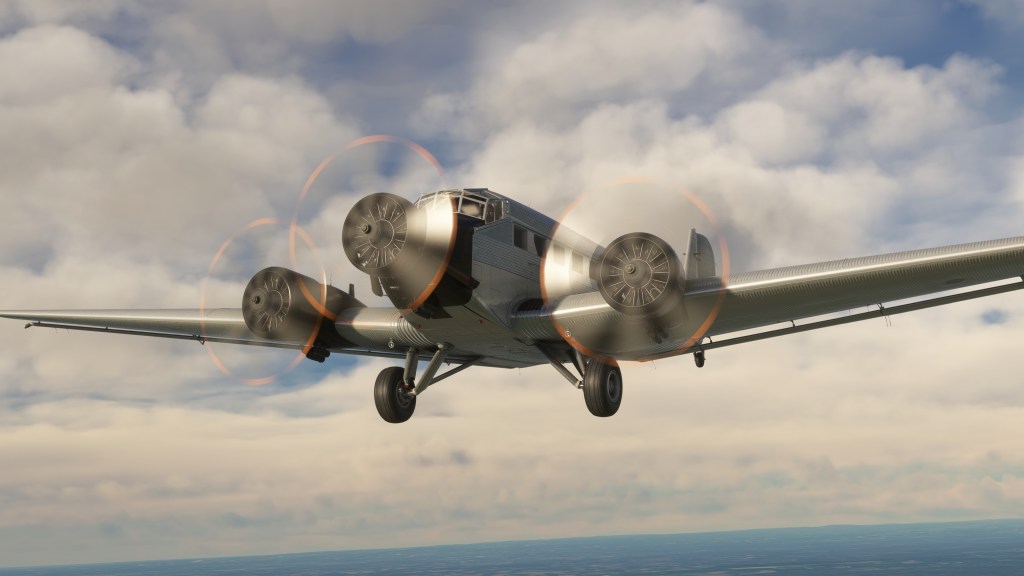

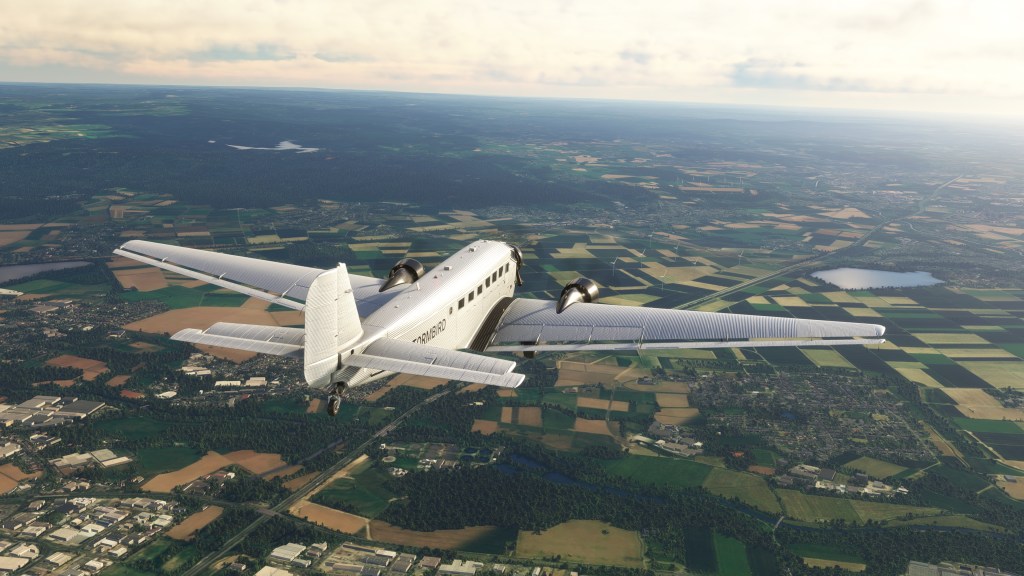

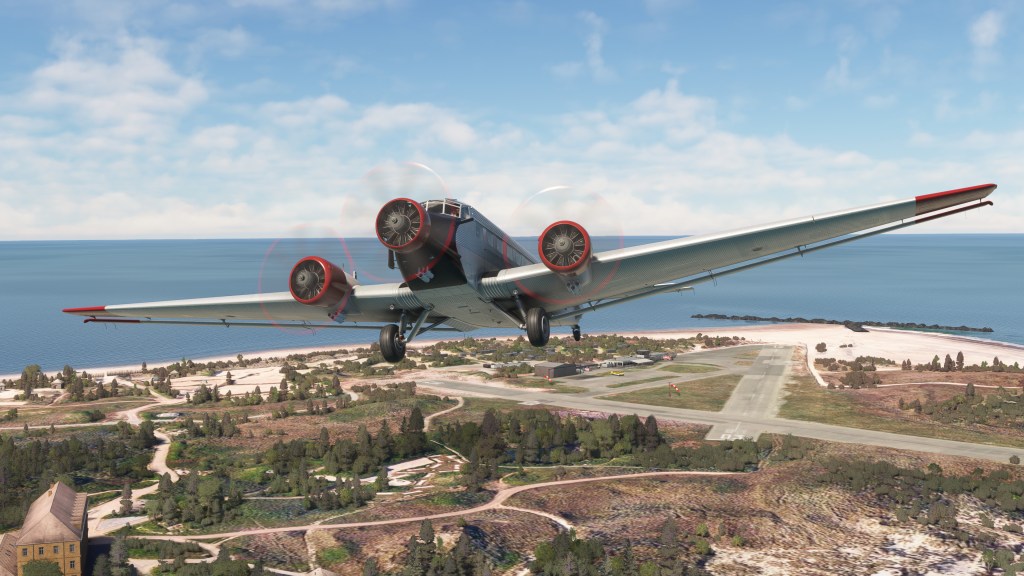
On the other hand, the type has been known to have some MSFS specific quirks. Lighten up the fuel load and take the 1939 model and you’ll soon see that the Ju52 can spring up into the air in an extremely short distance (less than 3 seconds of takeoff roll in my experience). Some combination of the limits of the MSFS flight model circa 2021 and weather and load mean that the type can do STOL takeoff like few others and it doesn’t quite seem right. The Ju52 is rated for a 500 meter / 1650 foot runway, however, this is far less than that. Furthermore, the IL-2 model, though capable of a short takeoff, displays no such quirk and I generally feel that it’s a better representation of the actual flight model. There are apparently some climb quirks in some situations too although I did not personally encounter them.
I’d love to see this aircraft get a once-over by the MSFS team. Maybe some CFD modeling and the enhancements from 2024 would sort out some of the quirks here. Will it happen? Doubtful but I can still wish!
The type does have an amphibious version and water handling is generally easy to master. Even at low throttle you can maneuver the aircraft around which is useful but its also probably a simplified experience. Still, its always a bit of fun to land on water when doing some flight sim adventures.
Systems and features
The Ju52 comes with a surprising amount of capability baked in depending on which cockpit variant you choose. There are two!


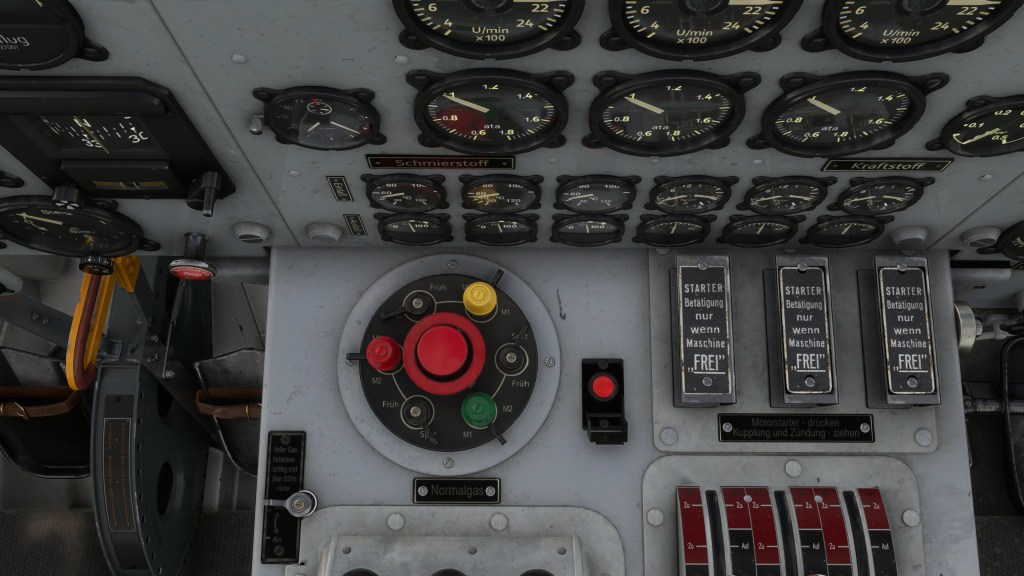


A classic version has 1939 style cockpit instruments. I’m very familiar with this one so everything was in its place and generally most features of the aircraft are functional although there’s no penalty for flying with the oil and radiator controls closed. Even if the gauge does show an overheat, nothing will happen. Its not that kind of sim experience although I wish it had some of that.
That aside, most things in the cockpit do work and the interactivity is really good overall. There are some useful concessions to making the aircraft functional in MSFS with a back panel, containing the lighting controls for the plane, growing a few extra buttons to enable you to open and close doors, add ground chocks, and add an access ladder for the passengers. I like this approach.
The classic version also has something of an autopilot onboard. Its more of a heading hold capability where you turn on the autopilot, dial the heading to the one you want to match, enable the hold and then the aircraft will gently (using the rudder only) try and hold the heading. Its not a modern AP system but something that is more of an assist. You can never really be hands off with the Ju52 even with this system on.

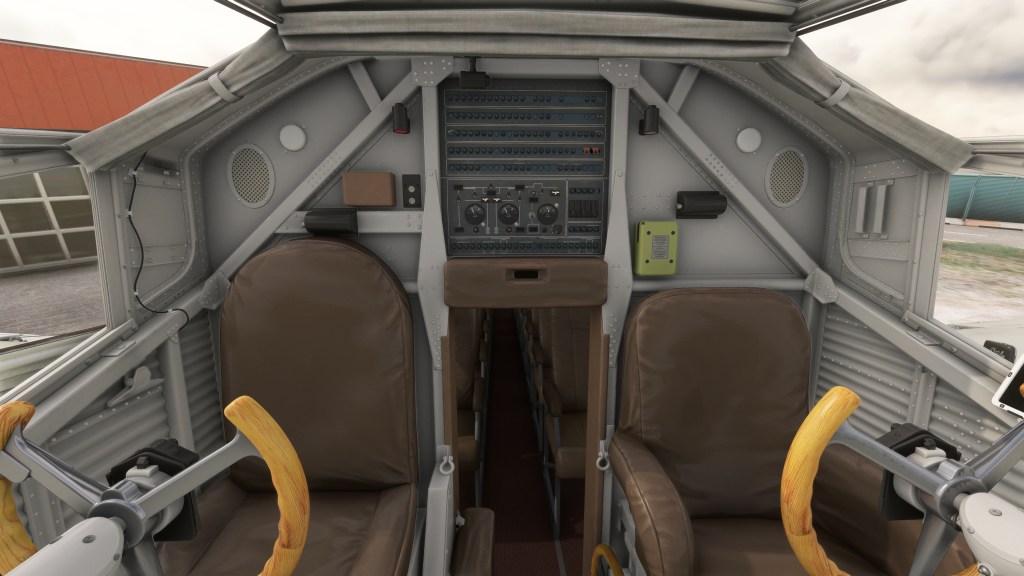


The modern retrofit is completely different in almost every way with its own set of controls and instruments. There’s a tablet that you can turn on and off with GPS functionality, a more modern DME display, VOR navigation, modern transponder and radio controls, and generally speaking you can operate this as you would any other GA or small airliner. Though this version is missing any sort of autopilot and lacking what even the classic version has. I’d have loved a functional autopilot here in the modern version.
The aesthetic is completely different for this version and I’m generally impressed that they went through the effort. Its not just a retrofit of a radio and a GPS the way I’m used to seeing in a lot of other aircraft but essentially an entirely different cockpit.
Final thoughts
I’m really glad I came back around to this aircraft. Flying the Ju52 in MSFS has a kind of soothing effect as nothing really happens very fast, its never really a stressful experience in any way, and the type is just so well behaved. You can definitely appreciate the lengths that the artists went to make the visuals on this too with an exterior and interior that really impressed me. It’s better than most of the other aircraft in its category that I’ve looked at.
On the downsides, you’ll find that the sounds are just ok and the flight model only sometimes feels like a Ju52. The extremely short takeoff capability was never really ever fixed and I suspect it never will be. Its frankly not a dealbreaker at this price point because more normal weights and flying conditions will result something approaching a realistic experience.
Flight model foibles aside, this project was clearly a labour of love. Something put together with knowledge and ability that doesn’t just appear if you’re doing it for a quick release. I do wish it had more but none of the Local Legends have ever been extremely deep offerings but rather a recreation that puts us into a piece of aviation history at a pretty reasonable price.
This aircraft is up for $14.99 USD in the Marketplace but is regularly on sale whenever they have a big marketplace sale. That makes it a pretty good buy if you want a historical aircraft to cruise around with. There’s just enough here with the different cockpits and systems plus the amphibious variant to make this a worthwhile purchase, even three years after release, if this type of historic aircraft interests you and some of the flight model quirks you can look past.
I’ve got a few more of these Local Legends I want to visit and review before MSFS 2020 heads off into the sunset. Not that they are going anywhere of course!
Screenshots



 Stormbirds
Leave a comment