
A long time ago I said I would eventually go back to and re-review the FlyingIron Simulations Spitfire IX. It was the first warbird in Microsoft Flight Simulator and a lot has happened to both the sim and to the Spitfire IX from FlyingIron Simulations over the last few years to the point where I really want to revisit it and look at it with a fresh set of eyes. The company has put together other aircraft since then too, but I want to focus on their first for the moment. So, let’s get to this re-review!
Which Spitfire model is this?
Microsoft Flight Simulator now has several Spitfire models available. FlyingIron Simulations chose a popular model to recreate and its one that I’ve personally put a lot of flying time into over the decades of flight sim flying.
The aircraft being simulated is the Merlin 66 powered Spitfire LF.IXc. I’ve written about the history of the Spitfire many times on the blog here but as quick recap on this specific model. The Spitfire IX was intended as a stop-gap design, an intermediate model to bridge major upgrades that were coming with the Spitfire VIII. As it turned out, the Spitfire VIII took a while to get into production and the Spitfire IX was functionally similar enough to keep in production to the point that the IX model became the backbone of RAF fighter squadrons through 1943 and 1944.
The big difference between the Spitfire IX and prior models was all down to the engine. The new Merlin 60 series engines provided more power and performance at altitude than previous models and its two-stage supercharger provided ample performance at both lower altitudes and higher altitudes. Later, a captured Fw190 revealed that type’s specific performance at different altitudes and the Merlin 66 version was born to compete and exceed the Fw190’s speed at all altitudes. The model was a significant success.
Because the Spitfire IX was such a key piece of WWII history, it’s also been one that has been replicated endlessly over the years. I’ve flown it in titles such as Aces over Europe, IL-2 Sturmovik: Forgotten Battles Ace Expansion pack, IL-2 Sturmovik: Battle of Bodenplatte, and with the DCS: Spitfire IX. Its probably my most flown warbird so naturally when FlyingIron Simulations brought it to Microsoft Flight Simulator, I had to have it.
Features and changes over time
The Spitfire IX boasts quite a range of features from a 3D model derived from detailed CAD models, Wwise soundset with sounds recorded professionally with a real Spitfire IX, detailed flight model, and it comes with both standard and clipped wing variants.
FlyingIron Simulations has proven that their a company that is willing to come back and revisit a product several times over and the Spitfire IX has been through four major upgrades since its release in March of 2021. The upgrades touched everything from flight model to sounds to avionics and at the risk of repeating myself… what I reviewed years ago is not what is now available. There is more of just about everything.
Some of the more notable additions include a custom coded Merlin temperature model to simulate overheating, an overhaul of the fuel system complete with external tank integration, custom oxygen system, functional fuel primer, addition of modern radio and transponder unit, integration of a Garmin 530 GPS, visual effects that include engine smoke, fire effects, and tire particles. The flight model has been tweaked and tuned by GotGravel who has done some of the more dynamic MSFS aircraft over the years.
All of that adds up to a pretty impressive featureset for the Spitfire.
Visuals and sounds
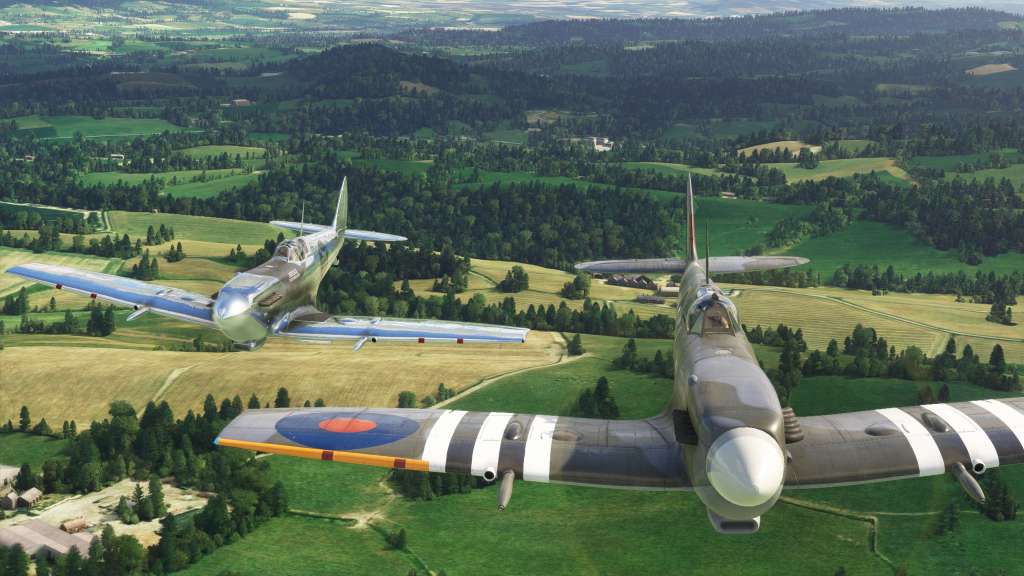
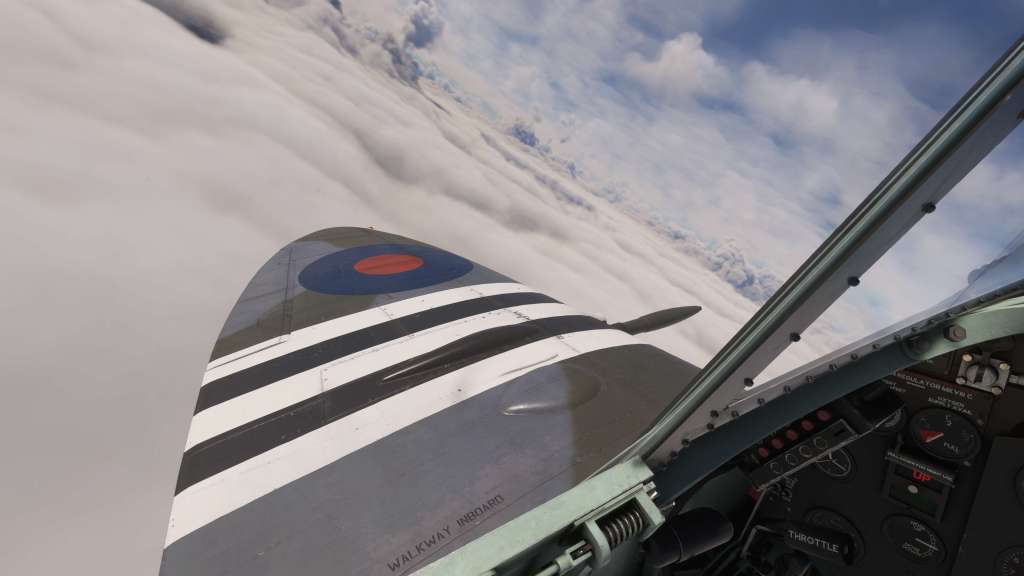
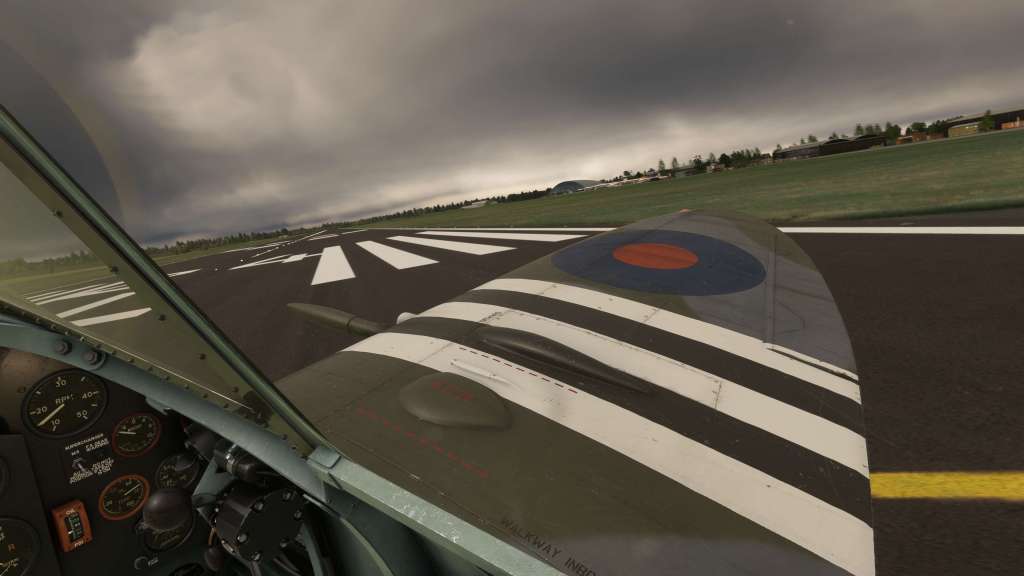
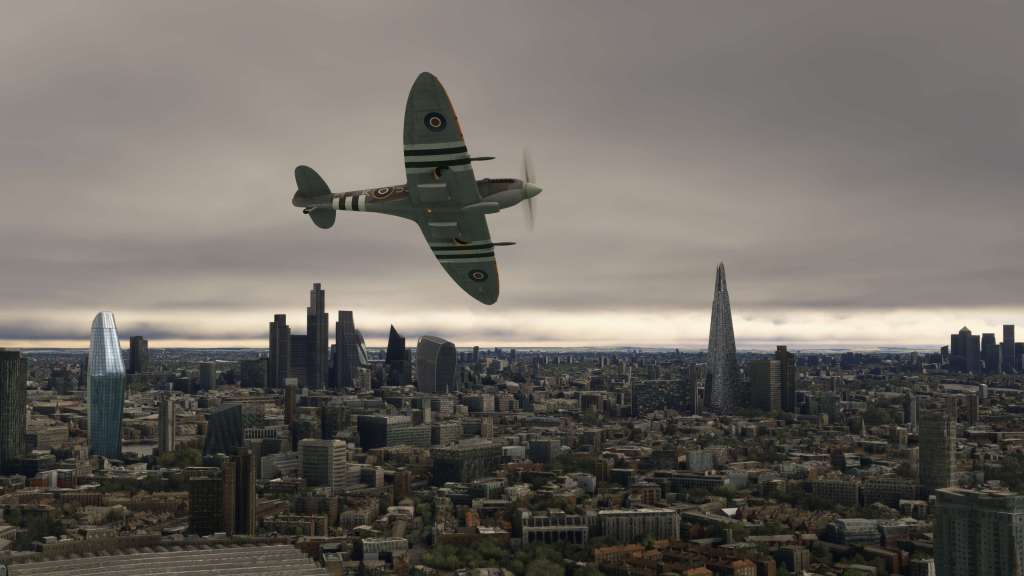
Looking at the visuals of the FlyingIron Simulations Spitfire IX, I am no less impressed now than I was back in 2021 when the aircraft first released. Its hard to choose a favourite between all of the Spitfire IXs around because the Spitfire IX in IL-2 and in DCS World are both excellently modeled too but this one is just as excellent. It looks the part, it holds up under close scrutiny, and there’s virtually nothing I can find fault with here.
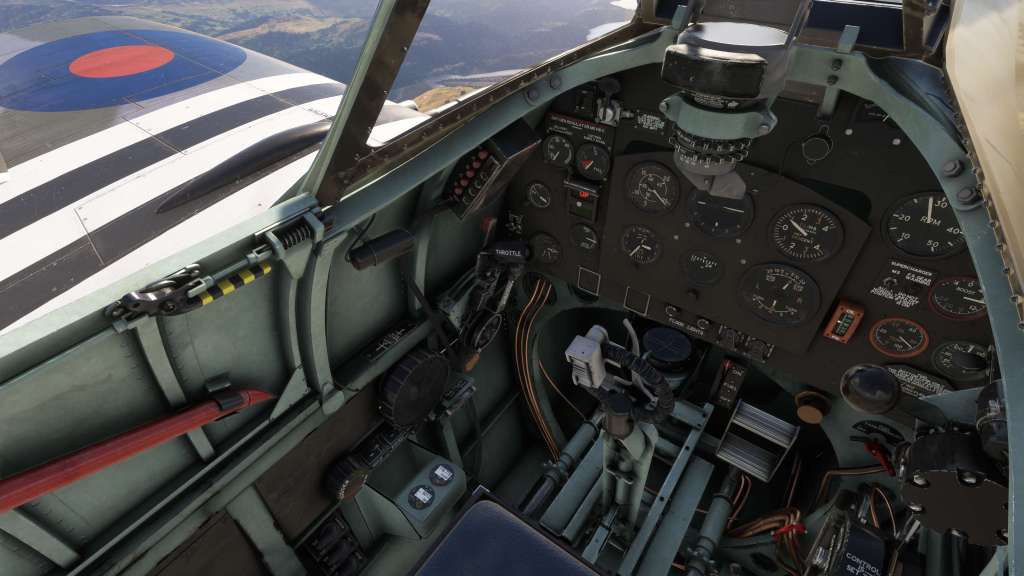
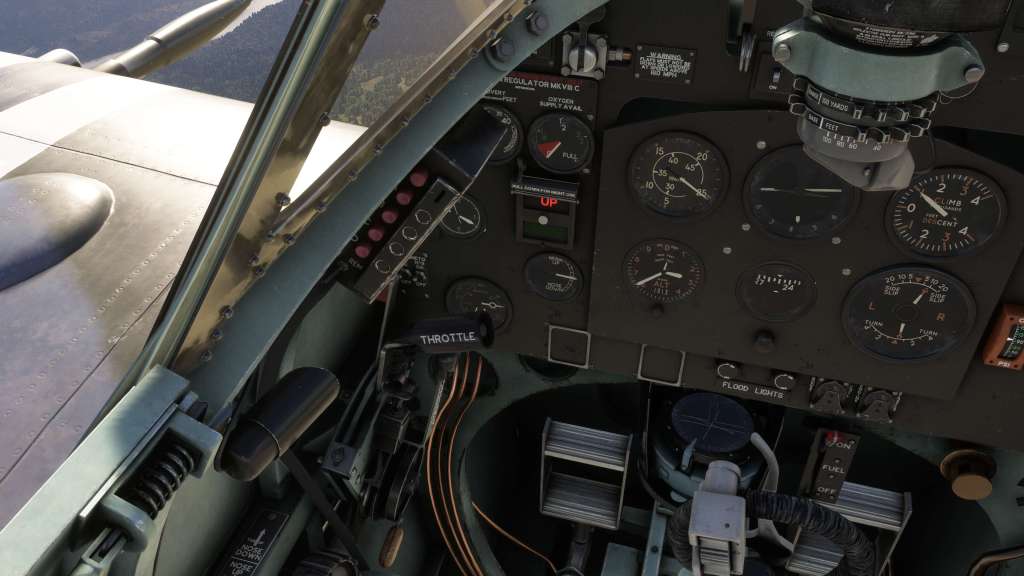
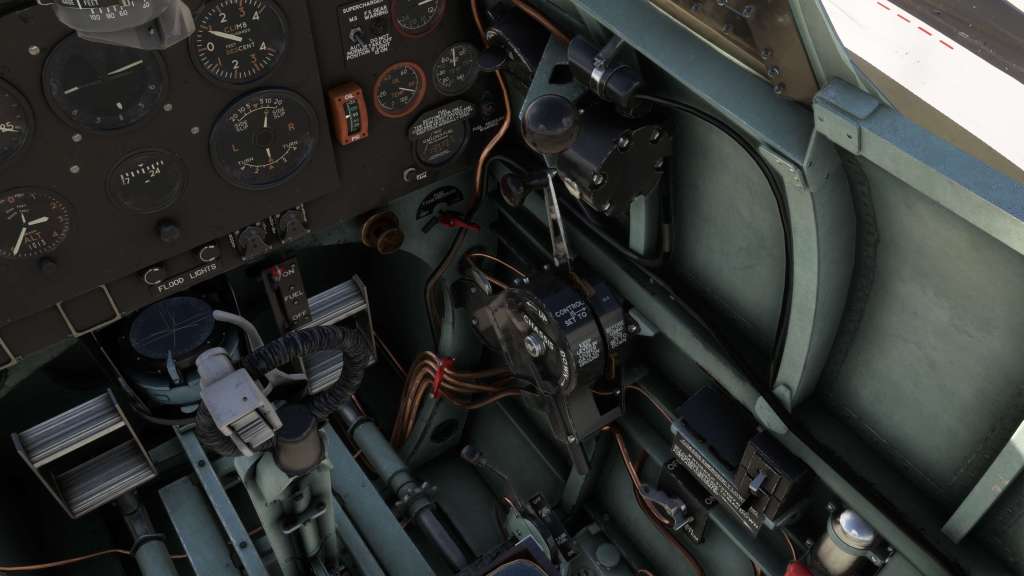
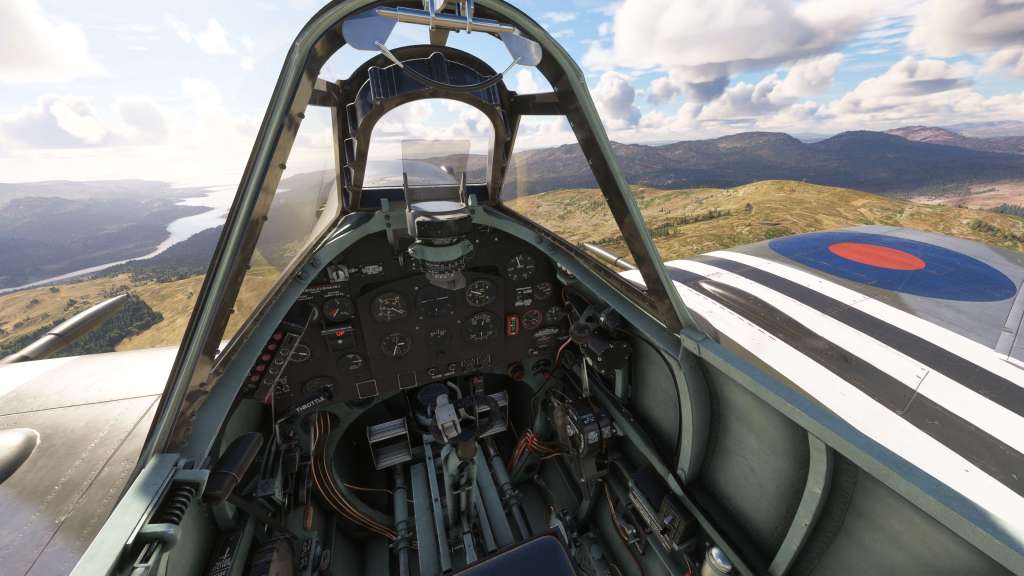
The cockpit is beautifully detailed, the exterior sharply and crisply textured, and everything that’s animated moves smoothly and accurately as best I can tell. Everywhere you look, there’s careful attention to detail, appropriate weathering, and all of the instruments are sharp and crisp.
The details go a step deeper here with some great physics and code driven animation. The needles bounce around quite a bit as does the throttle. They are seemingly reacting to the aircraft’s state and reflecting the natural vibration of the fire-breathing dragon that Merlin engine that is up front. It makes the whole thing feel very visceral and alive. Really impressive work all around here on this cockpit!


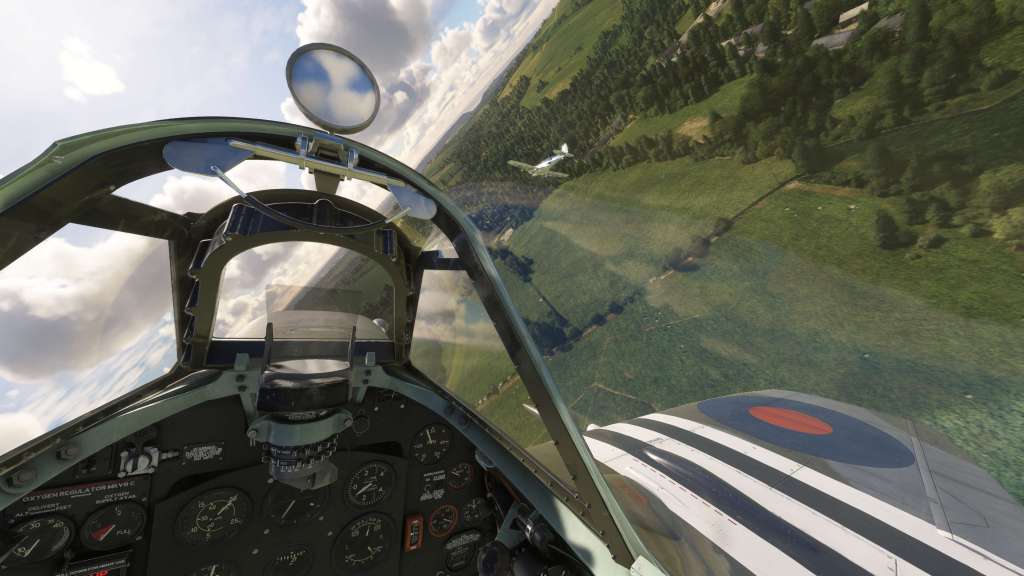

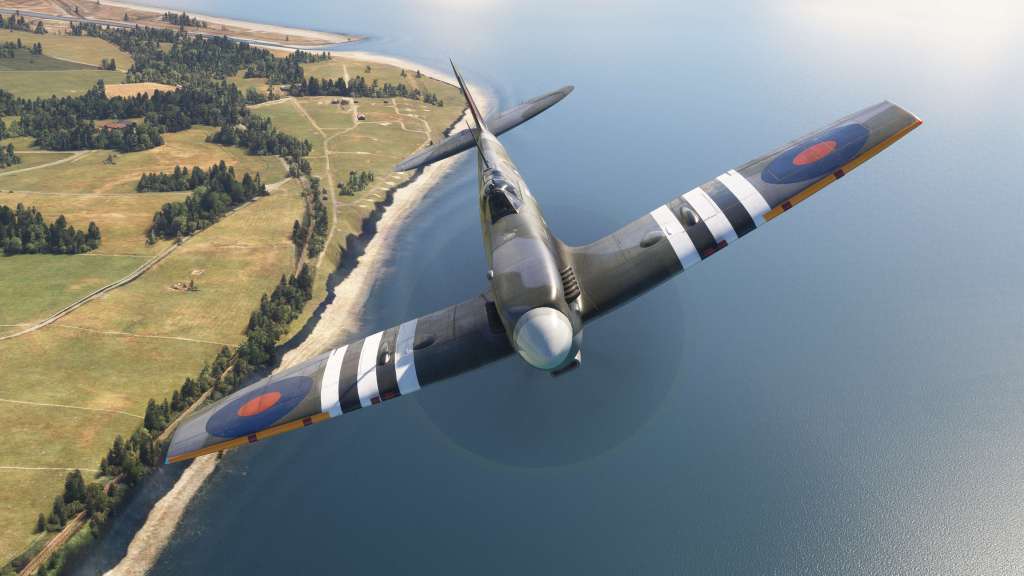
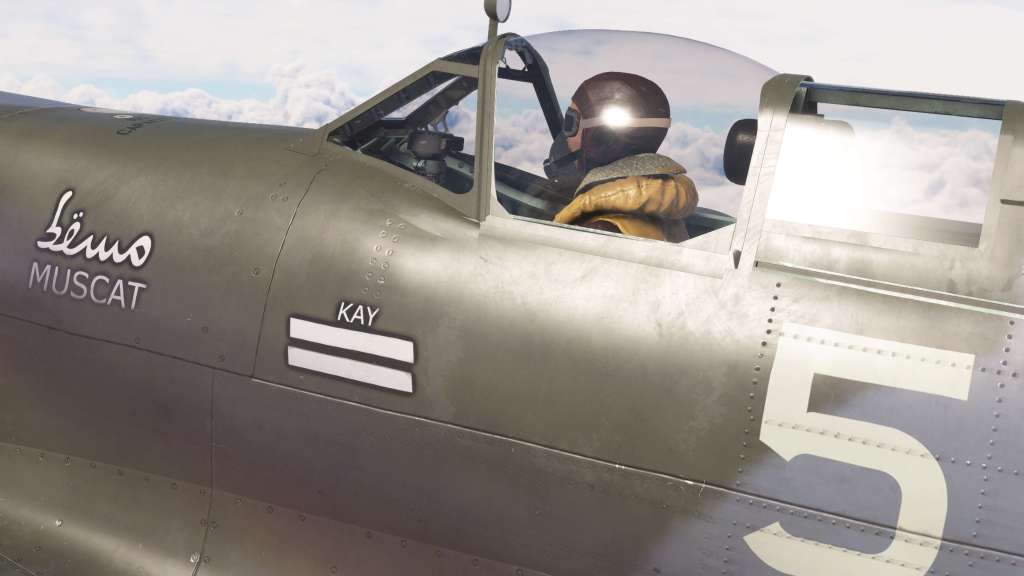
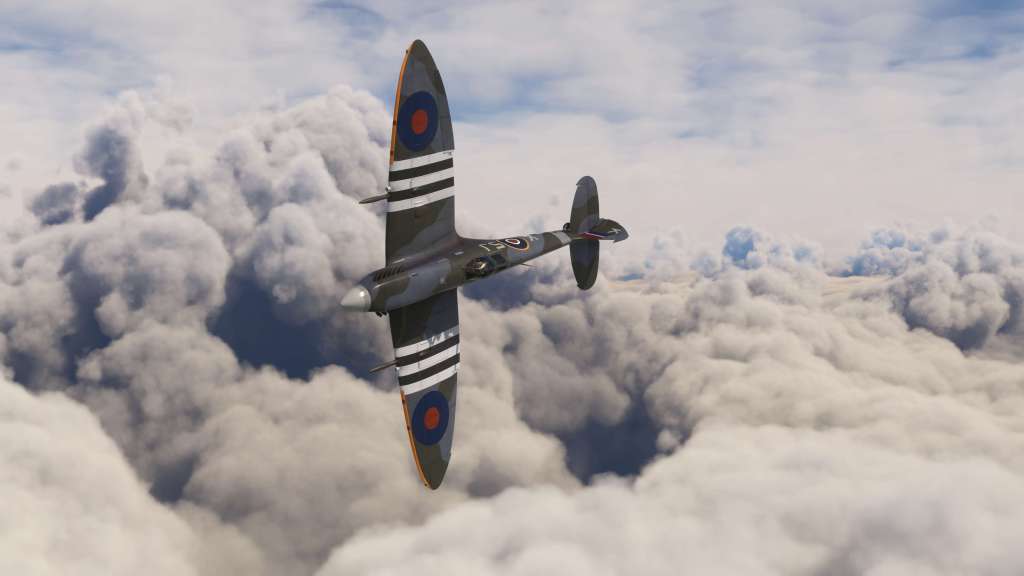
The exterior is just as well done. There’s not a single thing I can point out as an issue. I particularly love the matte appearance of the Spitfire’s exterior when viewed in the sun at low angles. It really looks the part! Special care has been taken too with the recce blue Spitfire scheme being even more matte in finish than the standard RAF or RAAF schemes. The silver Spitfires are of course shiny bright!

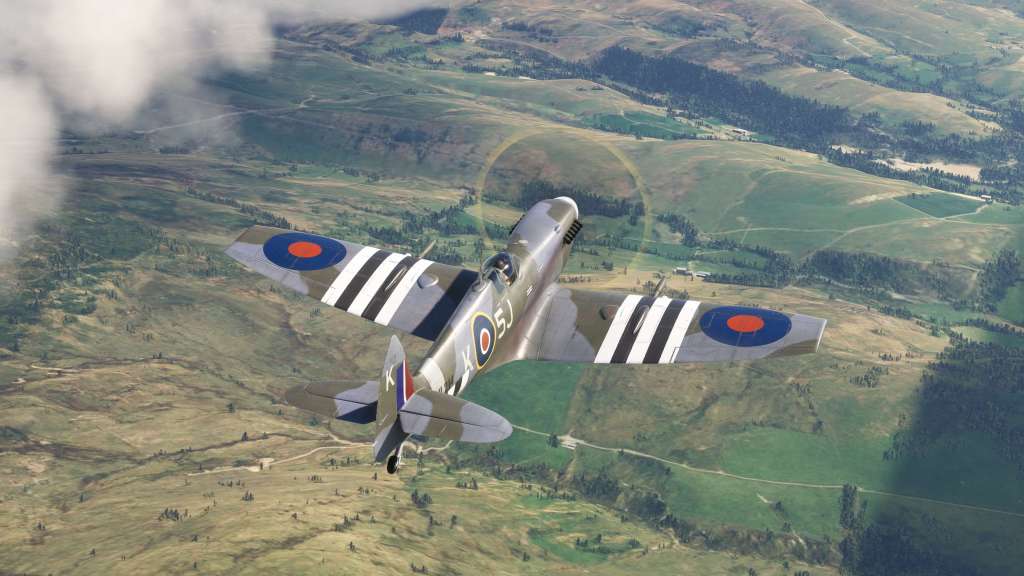
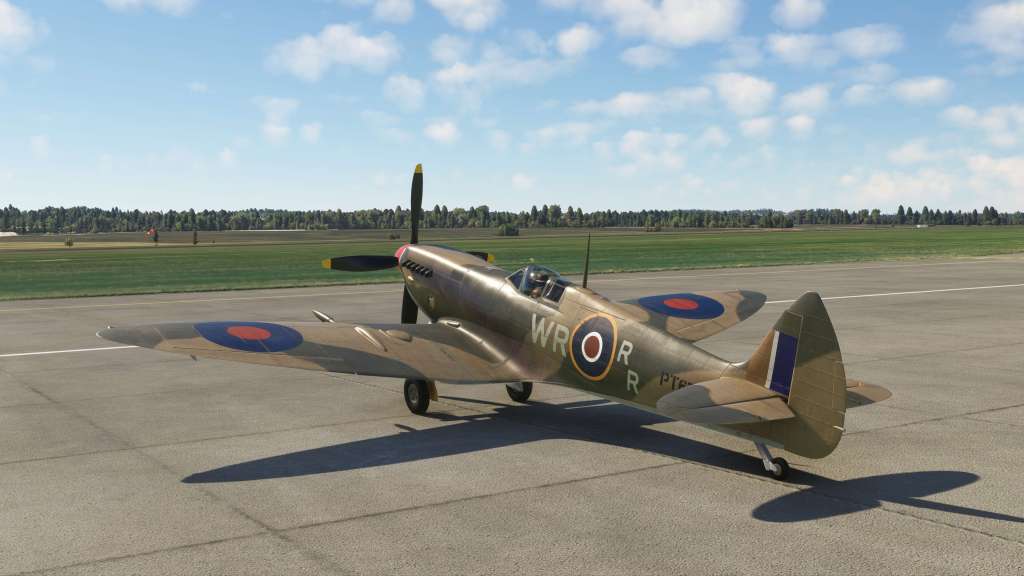


The aircraft has a small number of available liveries. Seven in all representing a few different styles of scheme for the airplane. They are sufficient but I think I would have loved to see a few more for variety sake. The liveries are shared between the full and clipped wing variants.
I had previously complained about the propeller visuals on the aircraft but it looks like these too were tweaked to the point where it looks natural and I haven’t really given it a second thought.
The aircraft lets you choose between a custom FlyingIron Simulations Spitfire pilot model or the default pilot models in Microsoft Flight Simulator. Great for immersion either way and it also means you can make use of third-party models too.
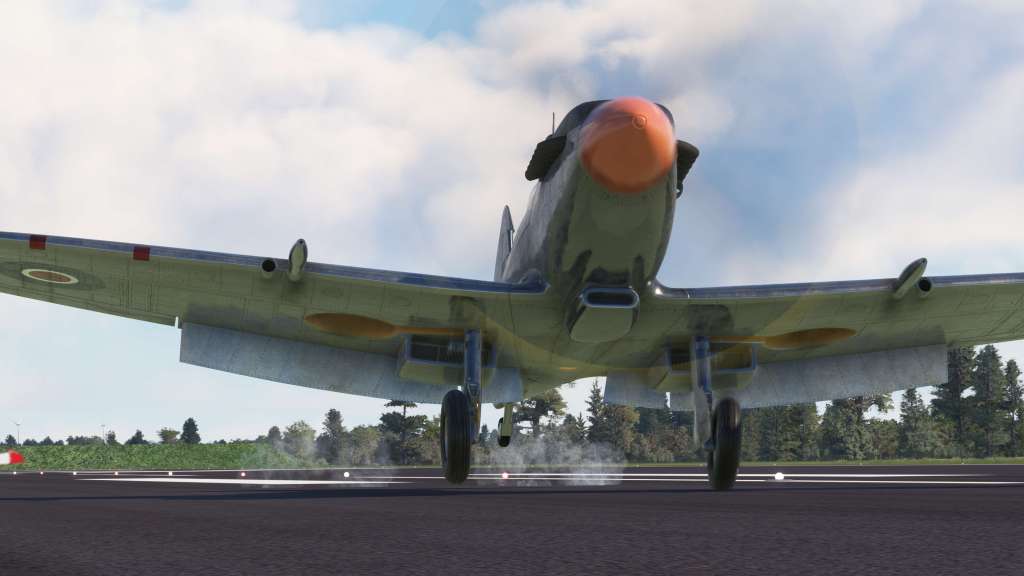
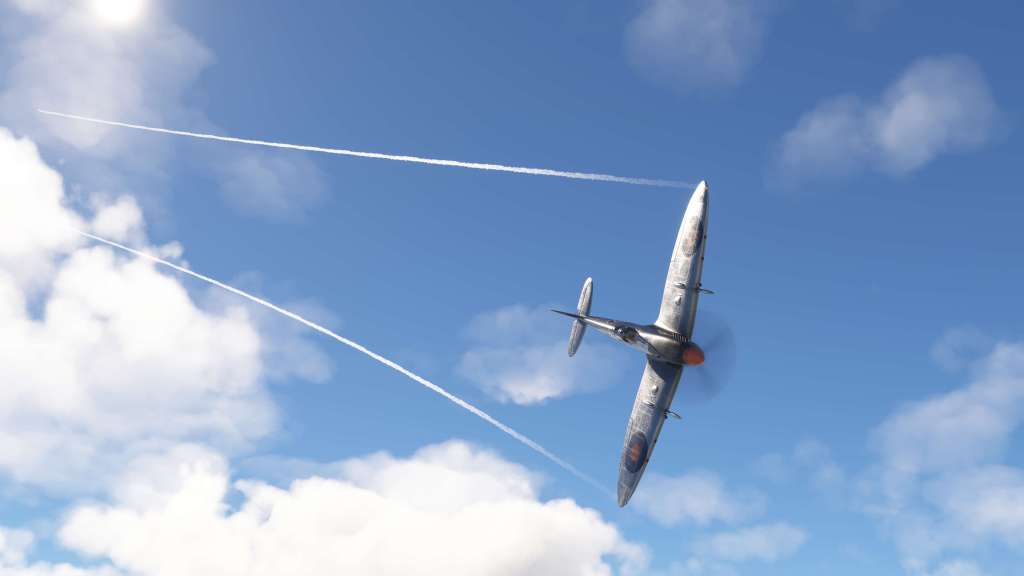
There are some added visual effects too like wingtip vapour trails at high G’s and gear smoke effects on touchdown. Love to see those! You can also bend the propeller if you crash the plane. Not something you see on most MSFS modules.
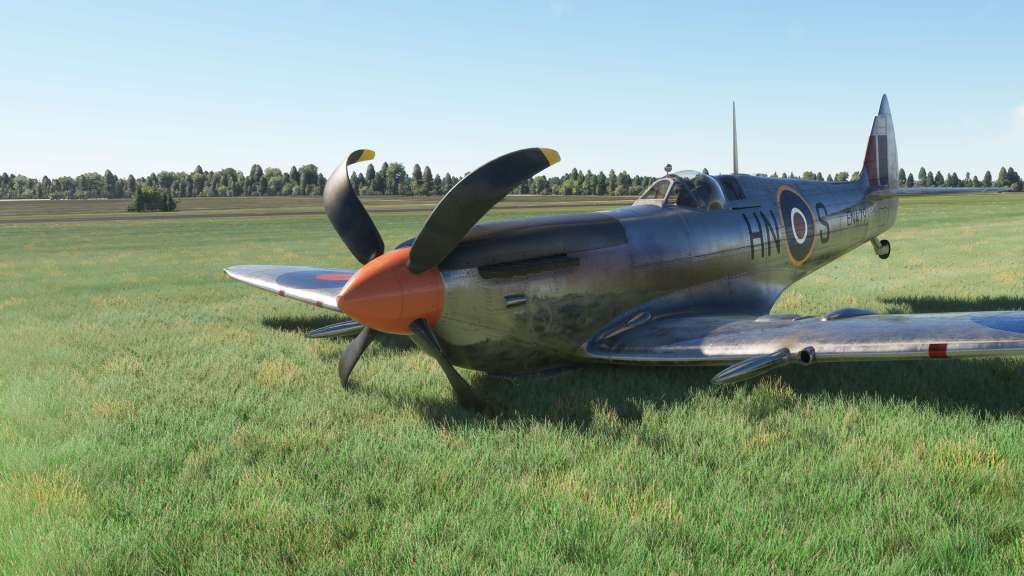
The sounds are quite good too with a fair bit of feedback from the aircraft while maneuvering it around. The engine sound on the exterior is outstanding while the interior sound is just very good but overall you have great sound presence from the engine. Wind noise on the canopy is well done and the mechanical sounds are just slightly audible over the engine are great too.
There are some nice extras like a very convincing brake pressure release noise when you’re using the wheel brakes, the engine pops and blips when you reduce the throttle too much, and there’s a custom pilot breathing effect when pulling high G maneuvers. Excellent!
Flying and handling
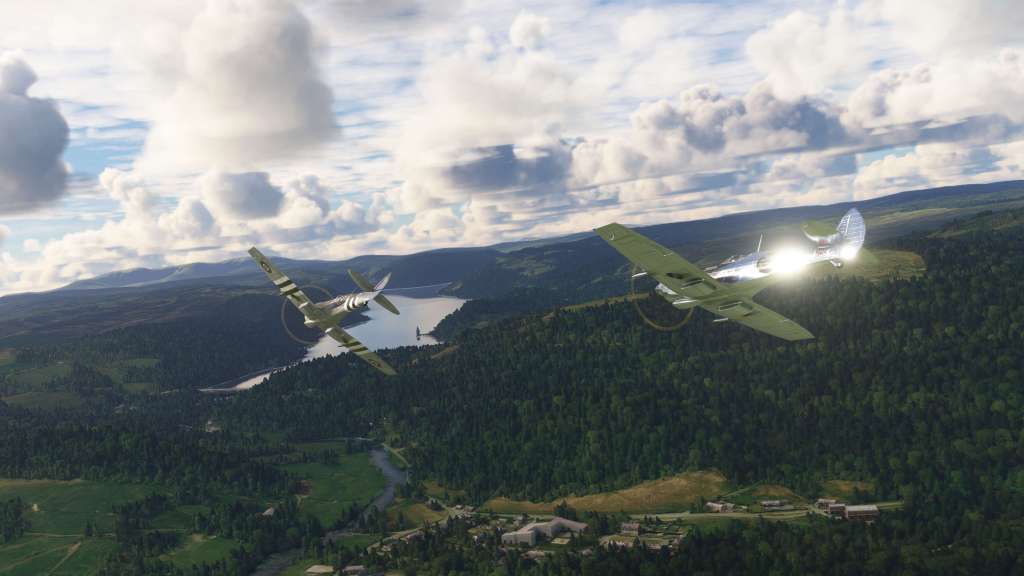
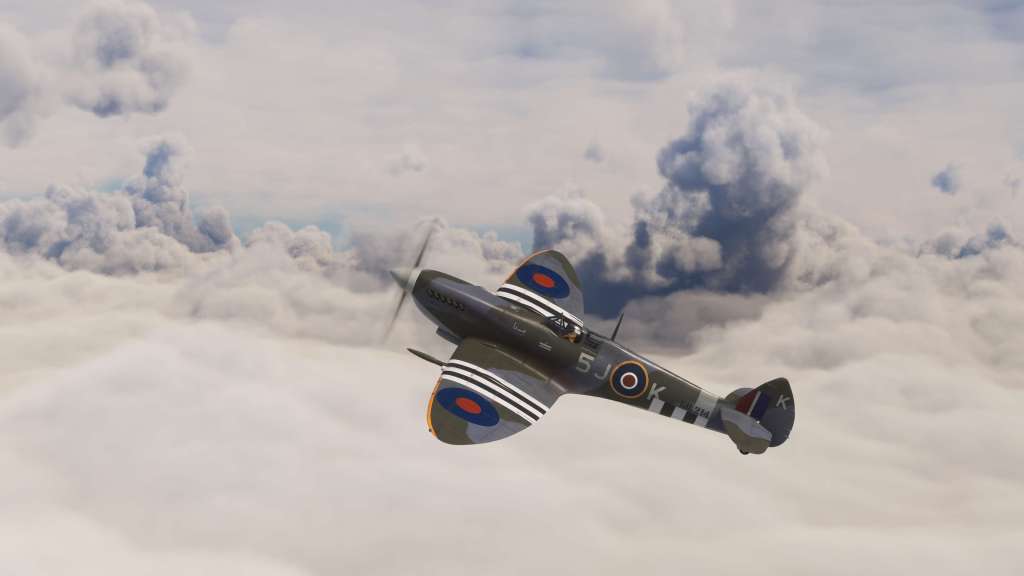
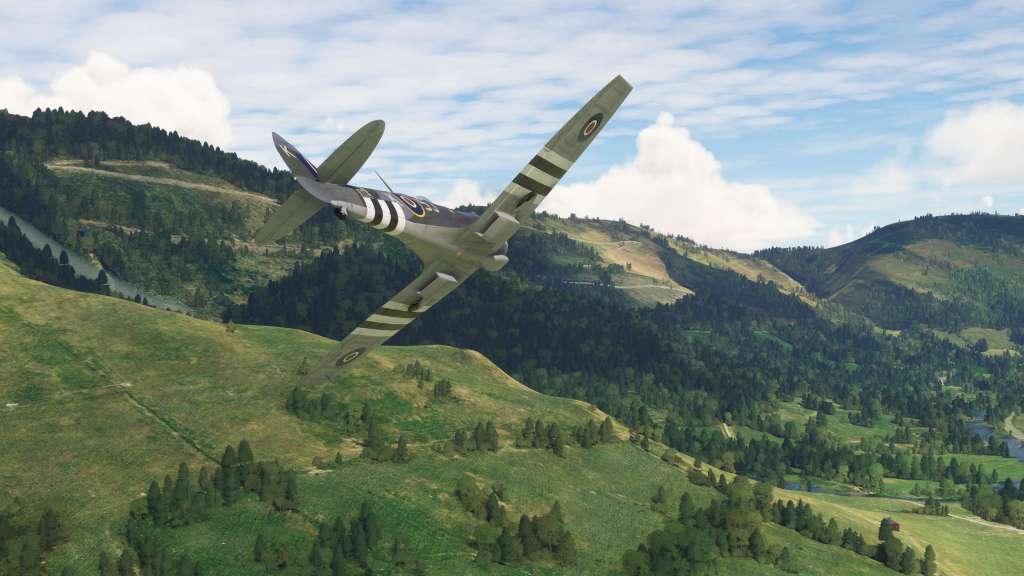
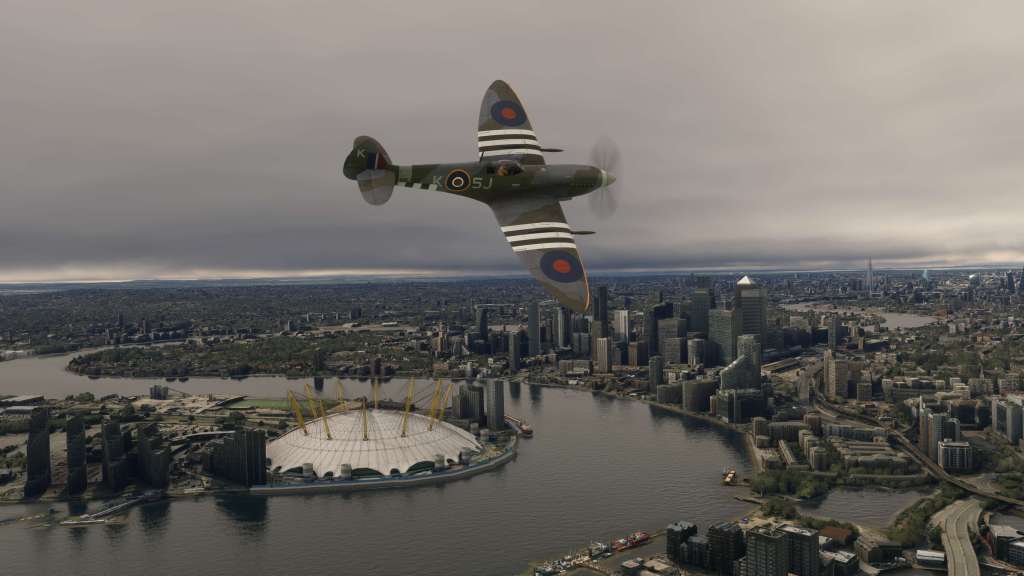
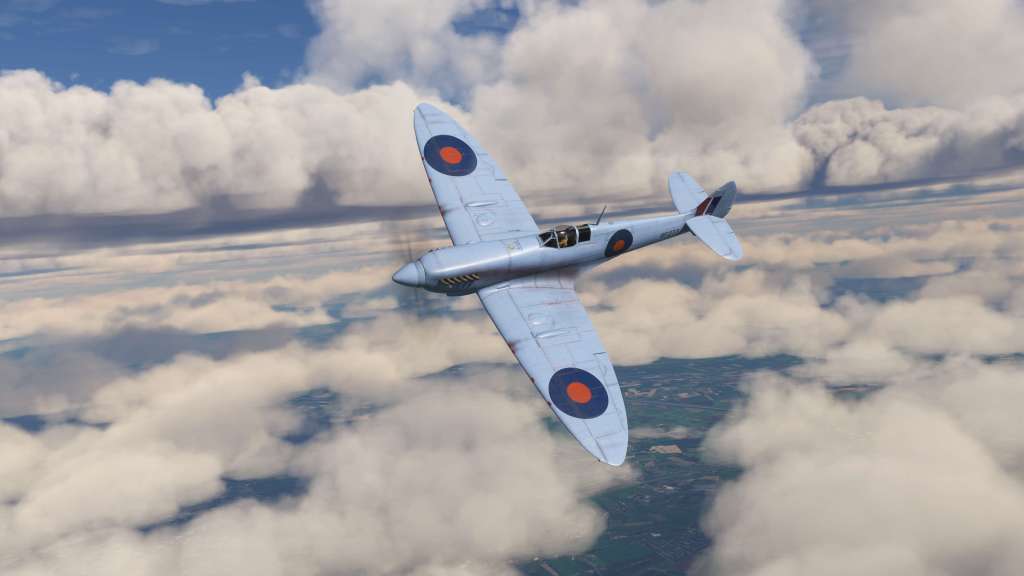
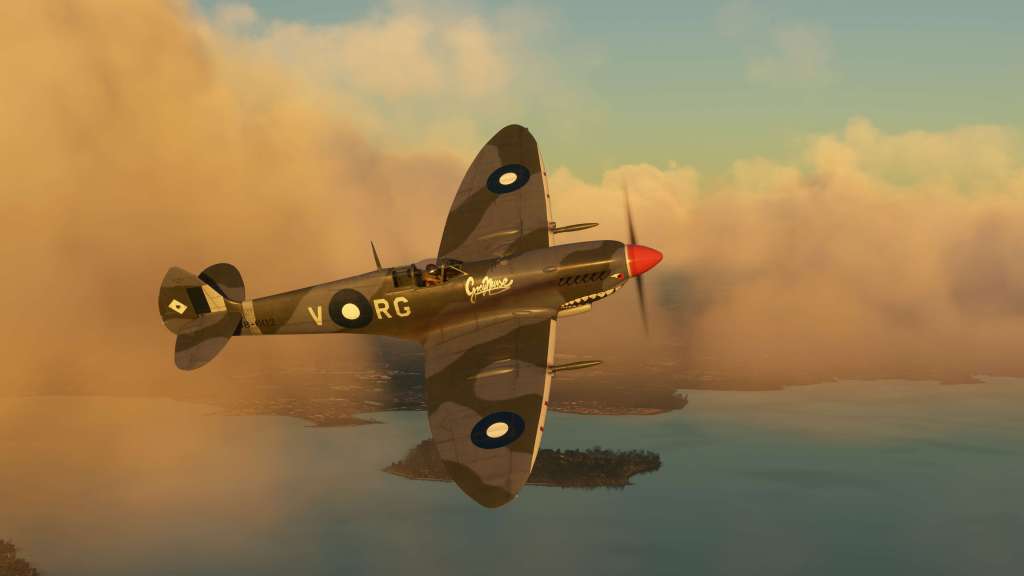
One of the issues I had with the FlyingIron Spitfire IX on its first release was in regards to some of the handling attributes. The team brought in GotGravel, a well known flight model engineer, to update the aircraft and it feels very natural right now. I still think the IL-2 and DCS versions feel ever so slightly better but they are all starting to coalesce now around the same handling character which is ideal.
Flight Simulator is still not quite as natural as the others and some instances like kicking hard on the rudder result in a fairly abrupt return to center that doesn’t feel quite right to me. But its still far better than before and you can perform high G turns, hammerhead stalls, loops, dives, rolls, and other maneuvers the way you’d expect a Spitfire to be able to perform. I spent about an hour flying with a friend through the Mach loop and the nearby countryside over Wales and had an absolute blast doing it. It felt very natural and I stopped thinking about the handling so much as I was becoming reacquainted with a plane that I’ve spent a lot of sim hours in.
The team put together their own custom ground handling system which negates some of the issues I previously had with the tail-wheel handling. Previously, it just didn’t feel like a Spitfire on the ground and that is part of the aircraft’s charm and occasionally notorious reputation. Fortunately, now it does! There is a toggle mode to turn off the more advanced handling so if you want an easier experience, it’s there for you, and if you want a more sophisticated experience like you get in IL-2 or DCS its there too. It’s very close indeed.
Other features include the ability to have a prop strike so you must take care on takeoff. And the Spitfire’s difficult handling during takeoff is there. Good rudder pedals or great technique with a twist stick with the expert mode on are highly recommended both by FlyingIron and by me!
Systems and features
The Spitfire is by nature a simple airplane when it comes to its onboard systems. This WWII era fighter was meant to be a high-performance combat airplane and there’s very little else onboard. What the fighter does have, however, is brilliantly modeled.
Fuel system? Yep! External fuel tank slipper system? Yep! Oxygen system that can deplete over time and then be refilled? Yep! Simulated maintenance with systems like oil, spark plugs, engine overhaul timing, vacuum and fuel pumps? It’s got that too! Very little of that was simulated before but in this updated version we’ve definitely got quite a bit of deep simulation going on.
There’s a complete interactive checklist for engine start-up and shut down and you will have to follow proper procedures for things like fuel tank pressurization or the engine will start to run roughly and lose power when you get into higher altitudes. The automatic supercharger gear switchover is realistically simulated.
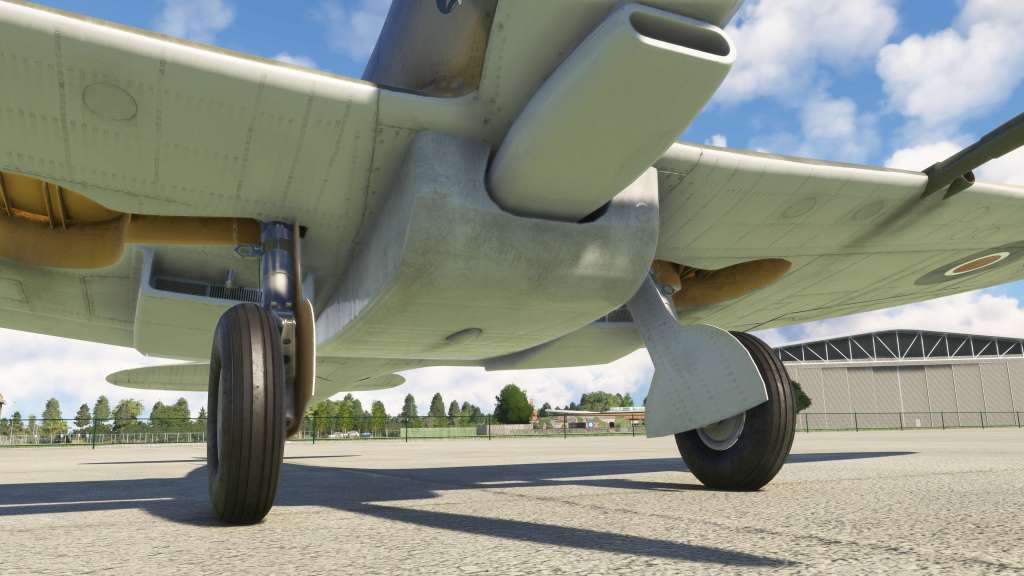
Another thing that’s now there is the engine now has a stress system whereby overboosting and over cranking it will cause the engine to ultimately fail. You can even check the percentage of the stress on the engine through the onboard tablet.
Speaking of the tablet, the airplane now has a stowable tablet that goes into one of the map pockets on the left hand side of the cockpit. It’s extremely useful with toggles for various settings, checklists, V-speed references, live data and stats showing off the last few minutes of your flight, loadout information, maintenance information, an autopilot interface, and some additional settings. All of this is superb for flight simmers and I particularly appreciate that the option for both a GNS530 (ala many of the warbirds flown these days) and the option of an autopilot for cross country tours is greatly appreciated. You can of course opt to ignore those features for maximum realism too but having the option makes the warbird even more valuable and practical.


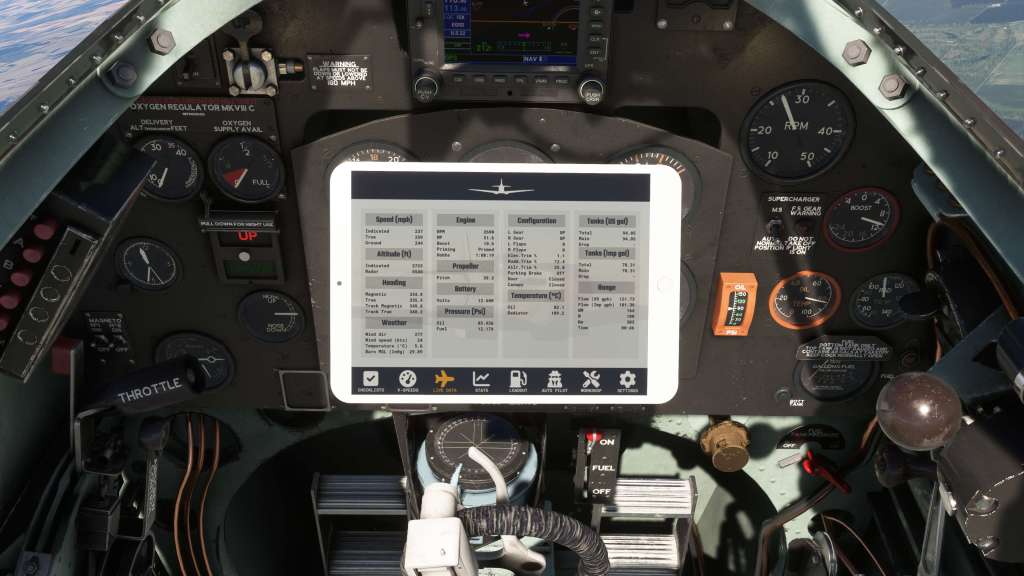

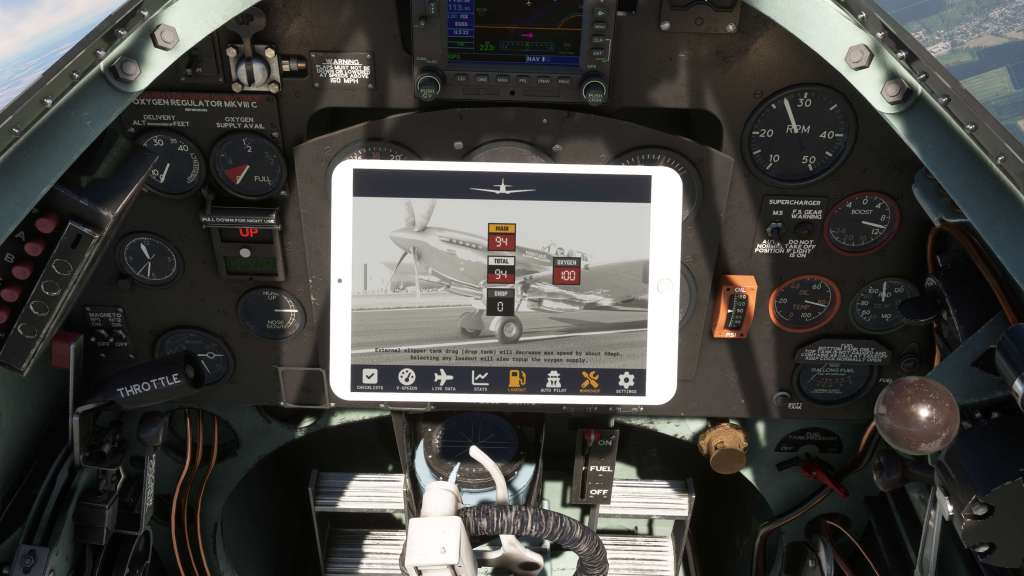
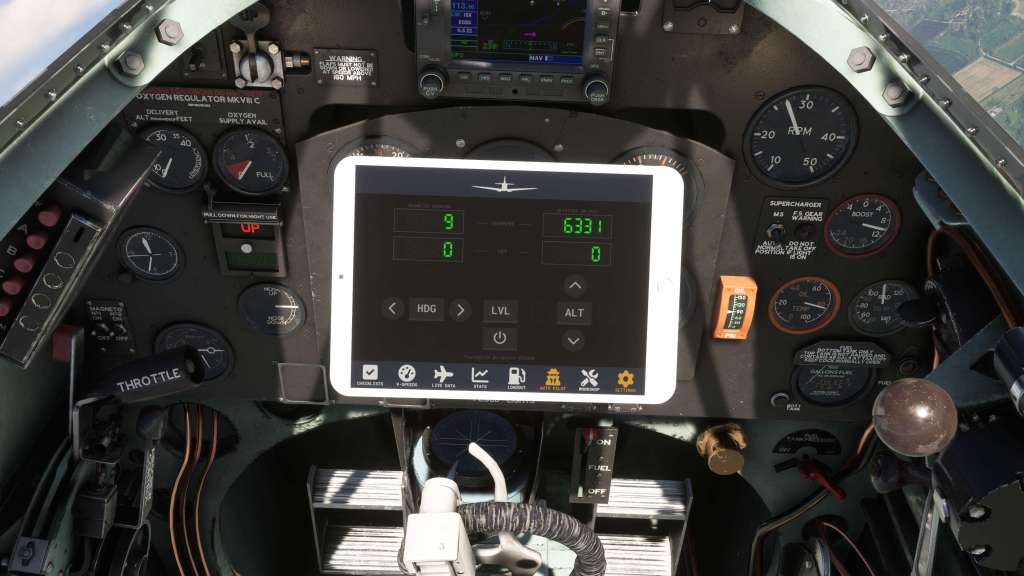
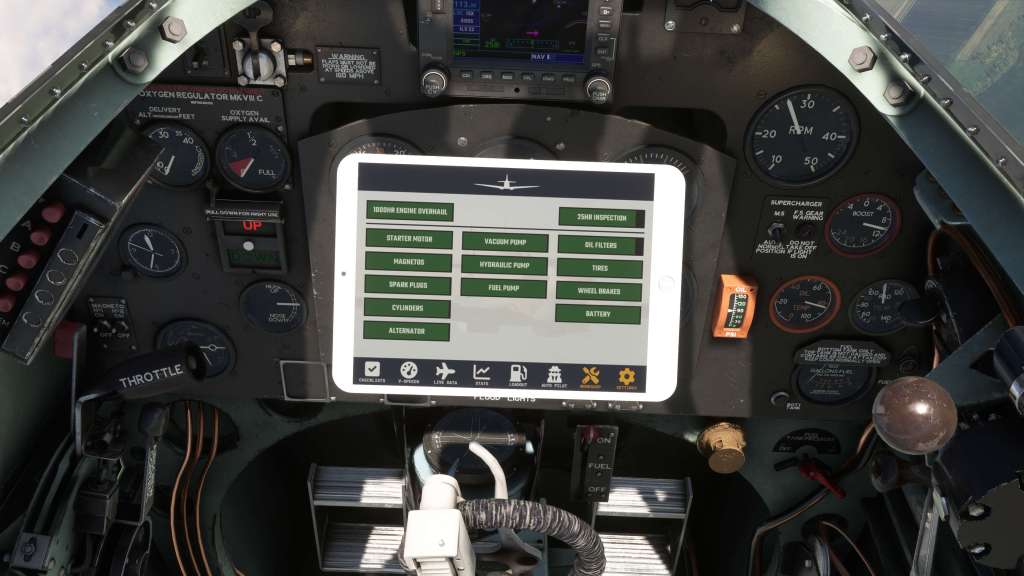

Another concession to flight simming is the addition of two very tastefully integrated panels on the lower left side of the cockpit near the seat. Here you’ll find a transponder selector and a comm radio control. You can absolutely use the radio buttons, old school style, or dial your own as needed. Good concessions to flight simming and potentially meaning that you could take this into a Vatsim environment as well. Nice!
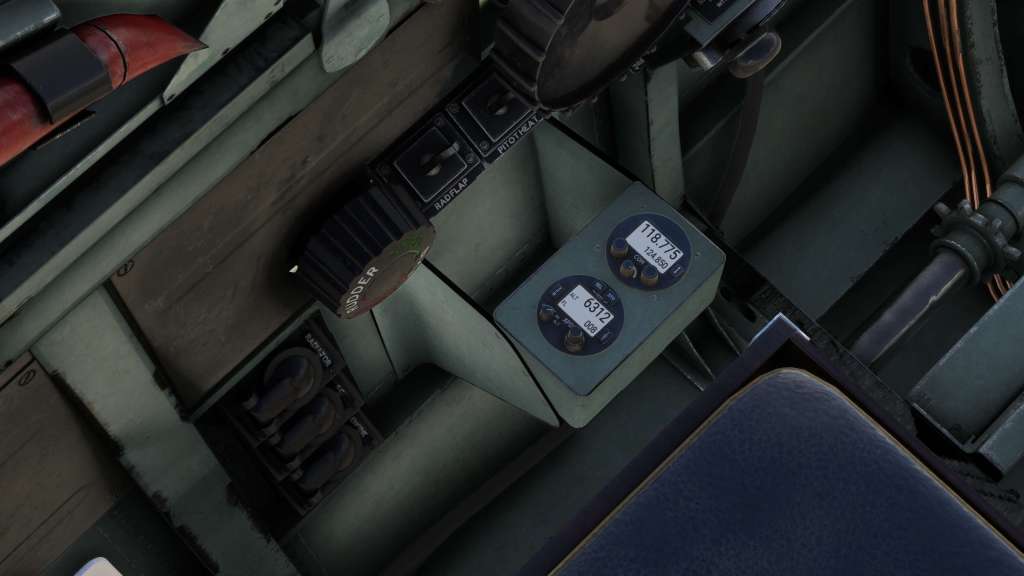
The only thing that you might consider missing on this airplane is armament beyond the optionally fitted 20mm cannons (which you can toggle on and off). There are no bomb or rocket attachments.
Final thoughts
I am really glad that I had the opportunity and time to revisit this airplane. As the first warbird in Microsoft Flight Simulator, FlyingIron Simulations Spitfire Mark IX came before a lengthy list of types that have since graced the sim. The company and aircraft release have stood the test of time by offering significant updates to the airplane over the years since its release keeping it in tip top shape and offering a range of features that compete with the best in the marketplace right now.
All of the complaints I had about the airplane previously are gone and the aircraft release has matured in essentially all directions. The developers could have decided to just move on and leave it be but the updates have kept this in great shape.
If you were thinking about buying this warbird but giving it a bit of pause due to its age, don’t give that a second thought. This is as engaging as the F4F from GotFriends that I reviewed recently and this has spurred me on to get to a few other warbirds in the mix because as it turns out Microsoft Flight Simulator has a fantastic and growing collection from some top developers.
If you’re interested in buying the FlyingIron Simulations Spitfire IX, it’s available from their website for $35.00 AUD (about $23.30 USD). You can also buy it on the MSFS Marketplace.
Screenshots









 Stormbirds
Leave a reply to Nicolas Turgeon Cancel reply