
Jason Williams and the Combat Pilot team are back at it again with a new developer diary and this one is focused on some of the sim’s core technology. The focus this time around is on the flight model and related damage model. The team have big plans and are intent on setting much of the groundwork needed for the series. Let’s have a look!
Creating custom systems
I was pretty impressed with what Combat Pilot had already done with their aircraft flight models in the Pre-Alpha. As it turns out, a more bespoke system is planned to better scale the sim over the long term. Off the shelf systems were explored but ultimately the needs of a combat flight sim are rather specific and so the team have taken on the task of making their own physics system.
It’s not a small task but apparently the project has already been underway for quite a while. It has implications not just for the flight model, which they intend to offer a realistic depiction of all of the aircraft in the sim, but also for the engines and for the damage model.
Our goal is for EntropyFM to be the first flight-simulator physics engine to model both hard and soft body physics for the plane’s damage and structural model, in a double precision, multi-threaded, fully deterministic architecture. This means your hardware will be used efficiently to render all the calculations, and therefore, generate the same results on different clients. We aren’t yet at a point where we can decide the multiplayer architecture of our project, but we know that regardless of our choice, we will have all doors open for us and we will not be flight-model/physics limited.
Jason Williams
Another aspect of the project is the need to create the flight models in the first place and while creating a bespoke physics system does sound laborious, it sounds like it will pay off as they expand their aircraft set and model somewhat more obscure or less well documented Japanese aircraft.
To define all the necessary values that make up our aerodynamic and aeroelastic models, we will be using CFD extensively. Computational Fluid Dynamics calculations allow us to simulate specific instances of the aircraft’s instantaneous attitude. To get an idea for how an aircraft behaves across a wider range of attitudes, we need to run many calculations, each of them sometimes taking days to converge. For this reason, we will be setting up a computer cluster to enable us to run it on the side. If anyone in the community has experience setting up these systems in Linux, we would appreciate any help you can provide.
Jason Williams
Jason provides some diagrams of the CFD analysis that they are running on their already in-sim F4F Wildcat.


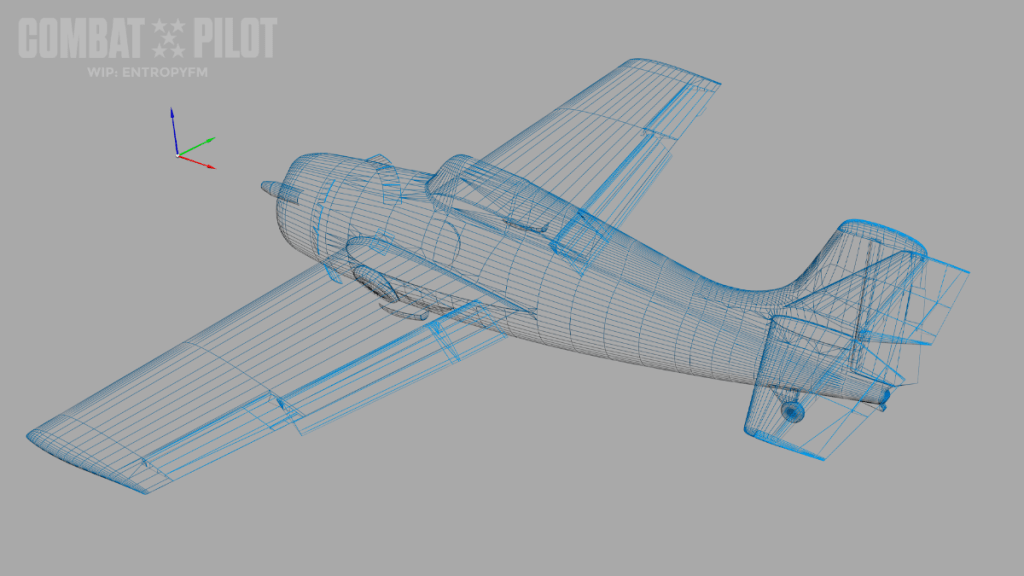
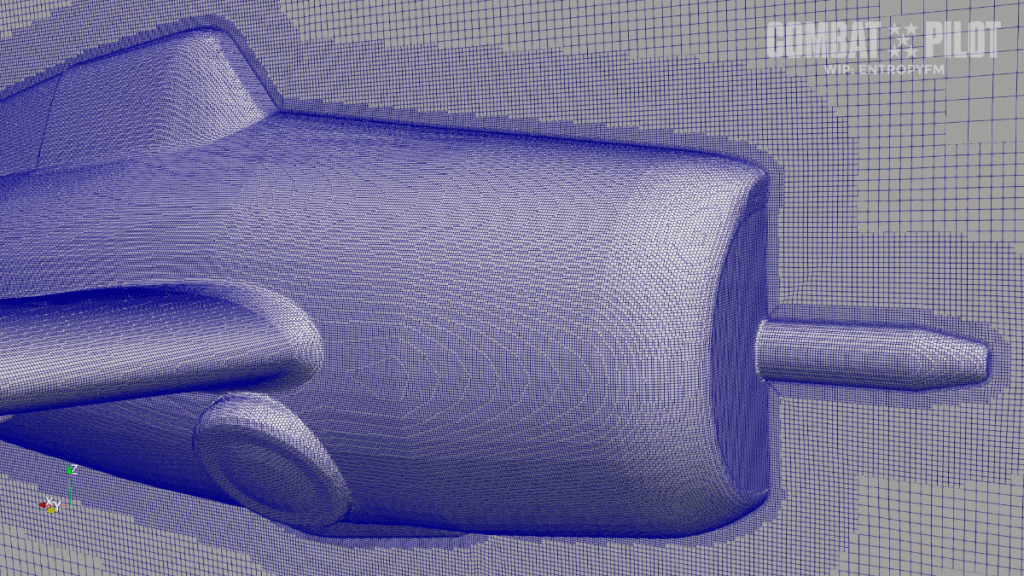
Jason reports that they intend to be the first sim to model soft body physics which will let them model things like dents or deformations from collisions.
It sounds like they have some big plans too for utilizing their physics system for other effects, tied into the Unreal engine, where glass can shatter, oil can splatter, and fire will… be quite dire? Sorry about the rhyming!
It all sounds impressive enough. The benefit of developing Combat Pilot and getting these core systems in place now is that they don’t have to go and try and force something else to work later on. Jason and team have a long term vision and they know what kinds of content we want to see in combat flight sims.
There’s quite a bit more detail so do read the latest diary for more!




 Stormbirds
Leave a reply to beggyg Cancel reply