
Ugra Media’s release of the DCS: Cold War Germany map has me excited by the possibilities. DCS hasn’t been short on maps recently with three releases in recent memory all offering some level of excitement, however, I think this one has something special that makes it stand out. It’s time to have a detailed look at is new map! Let’s go.
An overview
DCS: Cold War Germany is a historically based map set in 1980s Germany. The map represents the area as it was during the Cold War and we’re going to talk a lot about that as we go through this review. The theme of the map is very much baked into the work that Ugra Media has put in to represent this.
The map is 980 km by 800 km in overall size with a ovoid area running through it from the south west to north east currently detailed. Zones outside of the detail area will only have basic overall geometry but won’t have the buildings, roads, and other details.
Urgra Media have released this into early access meaning that the map is still in active development. The first phase, what’s currently released, is just the first part of their plan. Phase 2 and 3 will expand the detailed areas of the map and will also add spring, autumn and winter scenery textures.

The map is populated with several thousand buildings, several key points of interest, covers most of Germany but also brings in pieces of Poland, Czechoslovakia, Netherlands and Denmark. Most of these areas don’t have much on them yet but they will in the later phases. Key cities such as Berlin, Frankfurt, and Hamburg are all on the map and fully detailed. There are reportedly 100 airbases, airfields, and helicopter landing pads spread out across the map… or will be by the time development is complete.
A key point of issue with this map is the storage requirements. All of the detail means that this map takes up some serious room and it currently comes in around 110 gigabytes of storage space. This has been a source of concern for many especially as the final map size is projected to hit 205 GB total once all three phases are delivered.
My settings and performance
I was experimenting with landscape details set to high and low during my efforts to take screenshots. Aside from a reduced draw distance, low settings seems to offer essentially the same level of detail up close with the benefits of reduced memory usage (both RAM and VRAM). Depending on your screen, resolution, and other settings, you may find yourself needing to adjust to find the best solution for performance. For me, despite a strong system, landscape settings on low seems to offer the most tangible frame rate benefits. Many of the screenshots will reflect that slightly reduced draw distance as a result.
Regular readers will note that I’m not big on doing detailed performance testing. It’s a rabbit hole I suspect I would disappear into trying to get the most accurate result. Suffice to say, with an RTX 3080ti and 64GB of RAM, I’ve been able to run this map quite well at 4K resolution. Frame rates were fast and fluid and hovering in the 60fps range or better whenever I checked. At high settings and with light fog, the performance numbers did drop a bit though remained steady.
It’s a well optimized map despite the incredible amounts of detail. Typically Ugra Media tend to find ways to sneak out a bit more performance as their projects are completed so I expect this one should stay in a good place.
So many details big and small


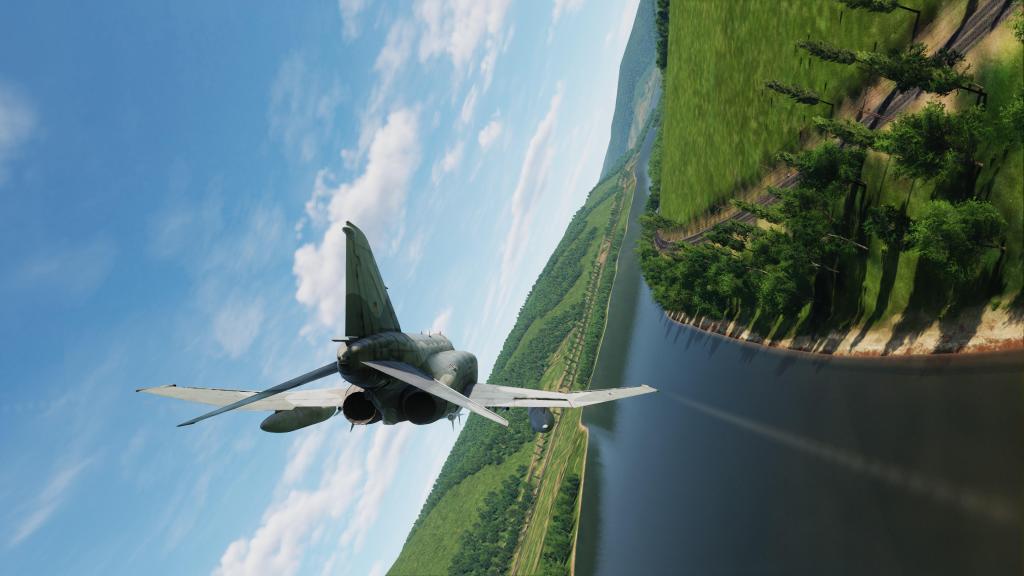
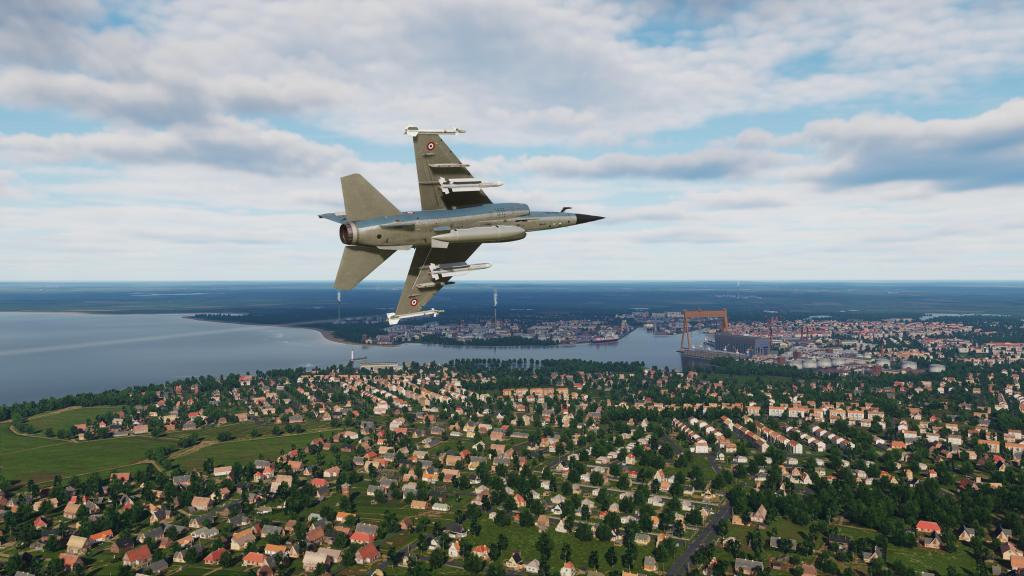

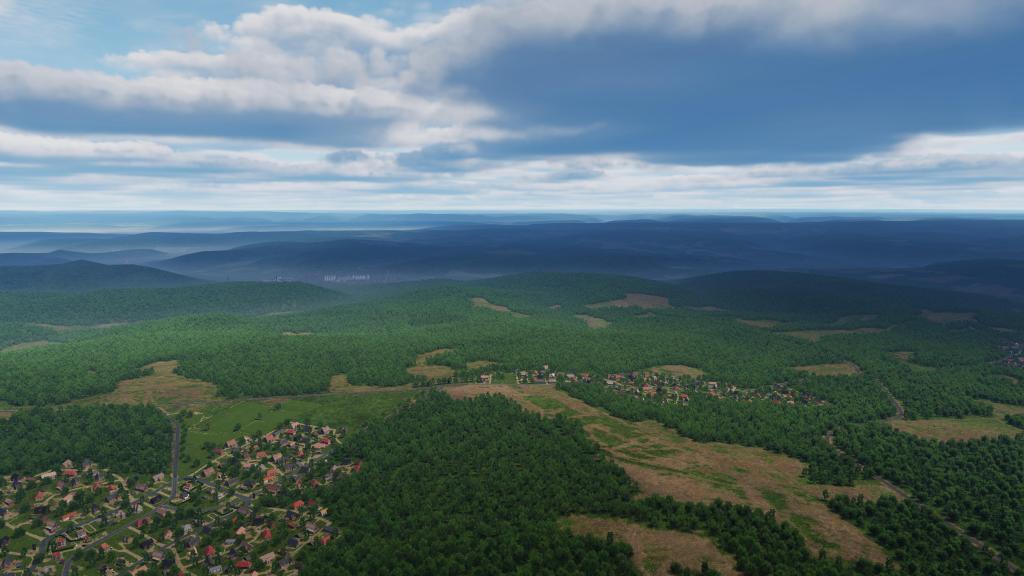
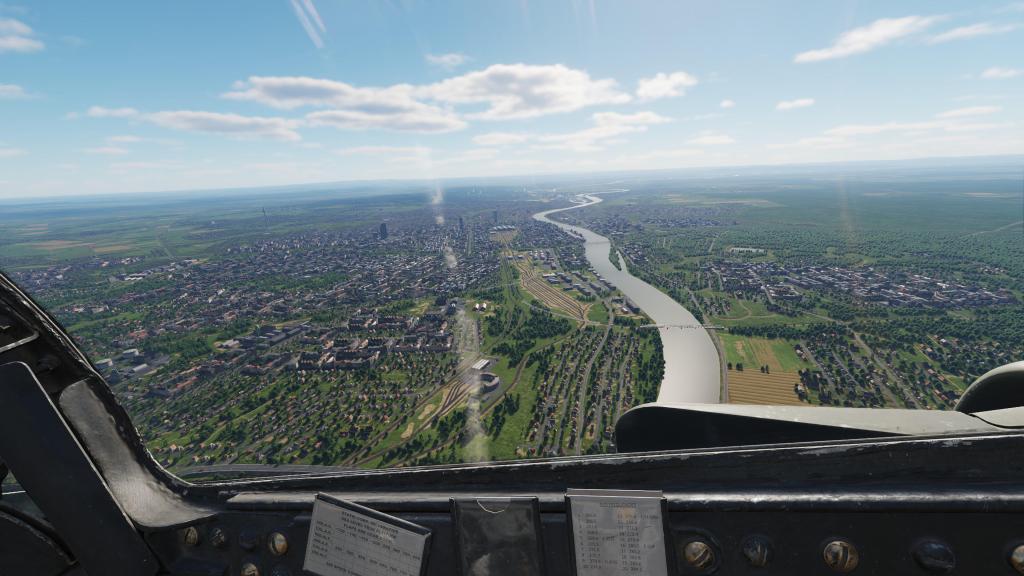
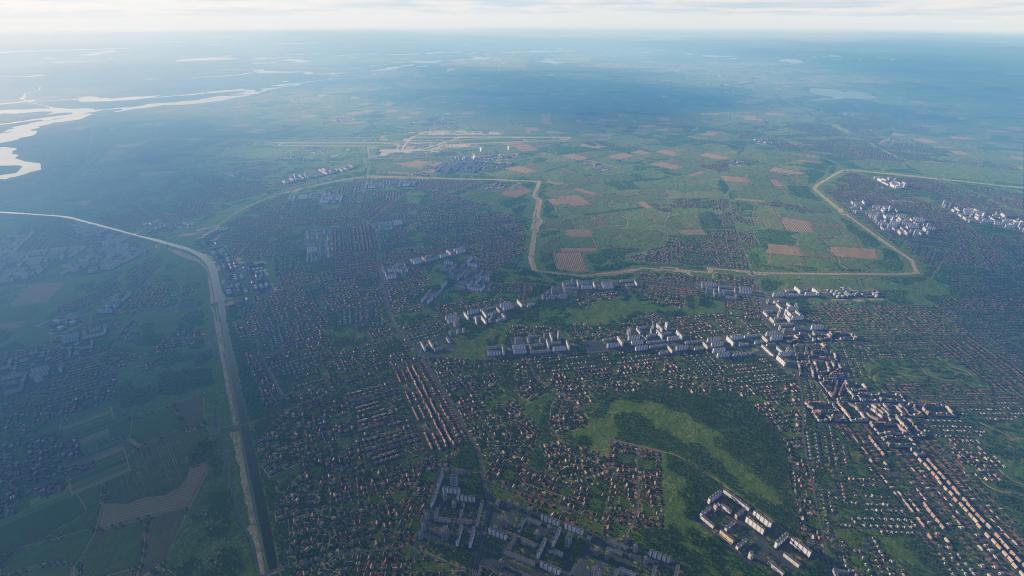
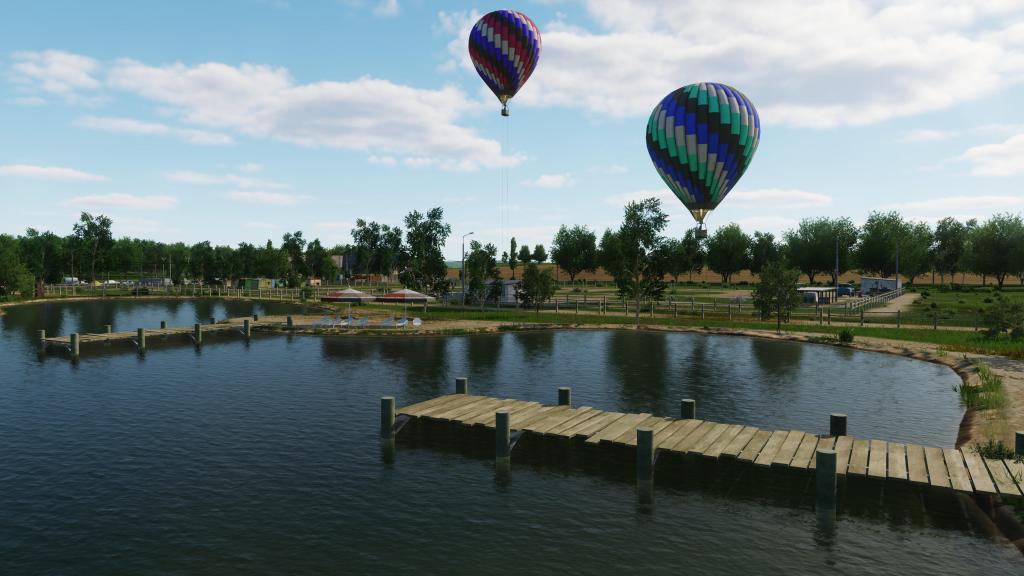
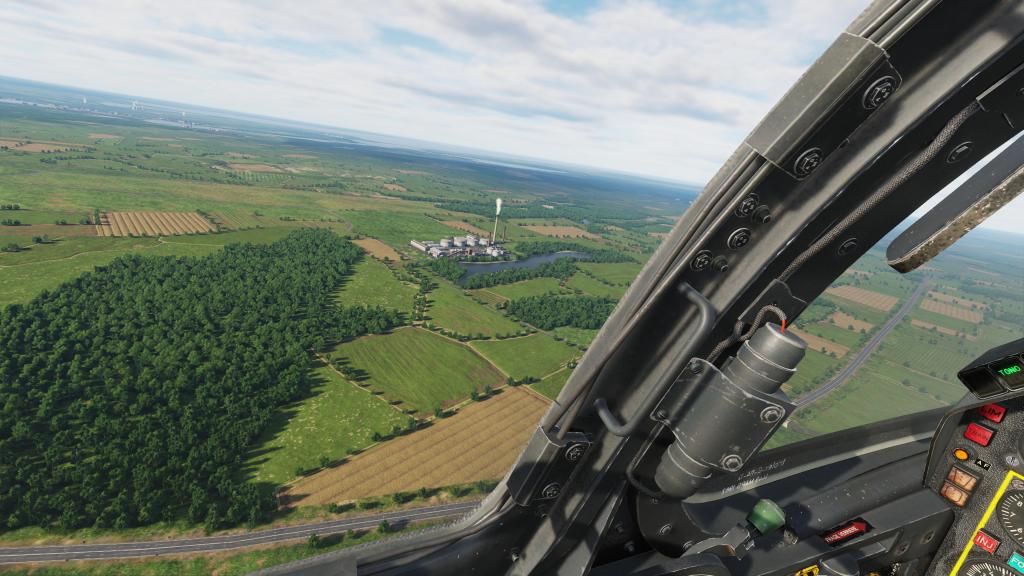
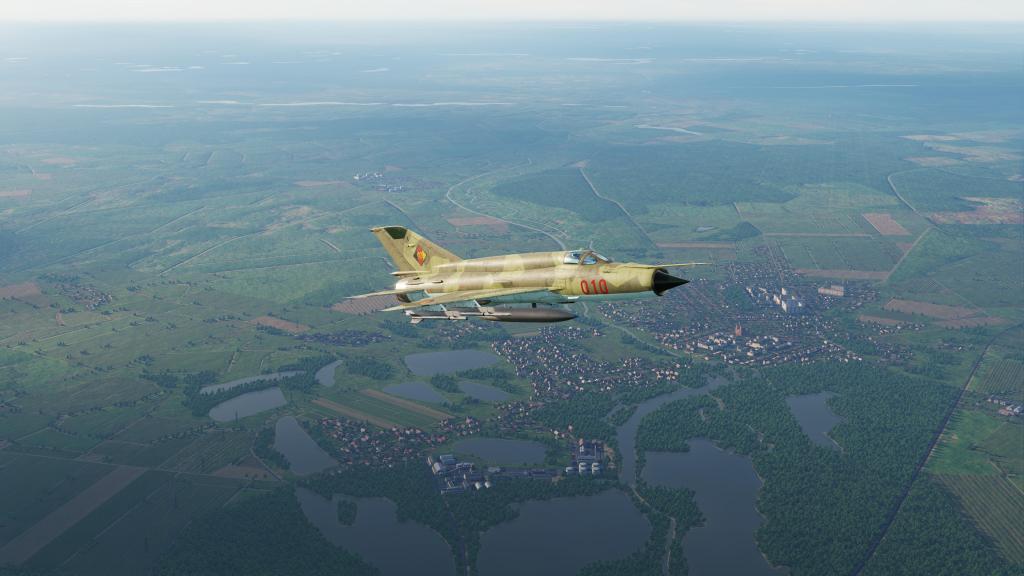
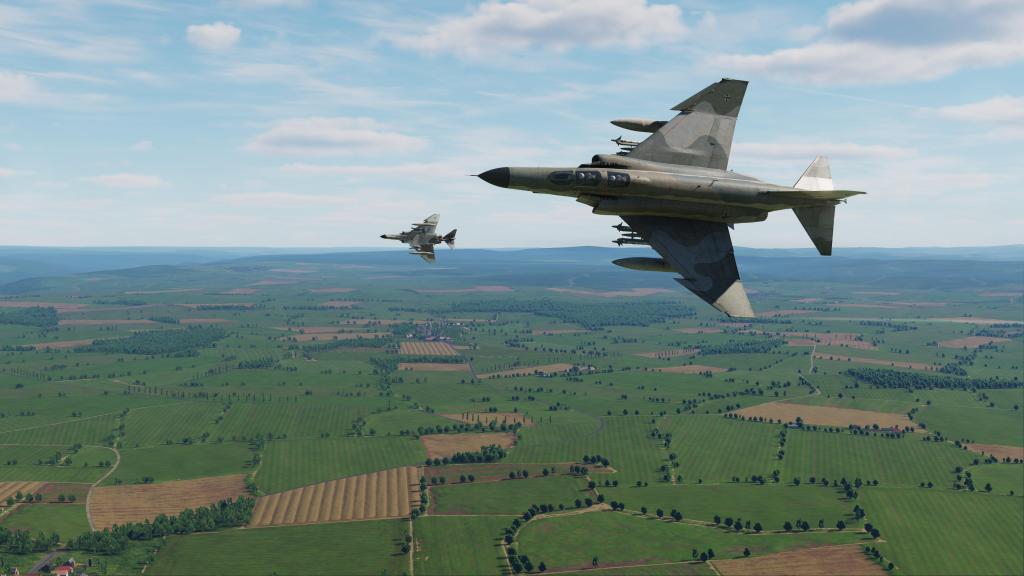
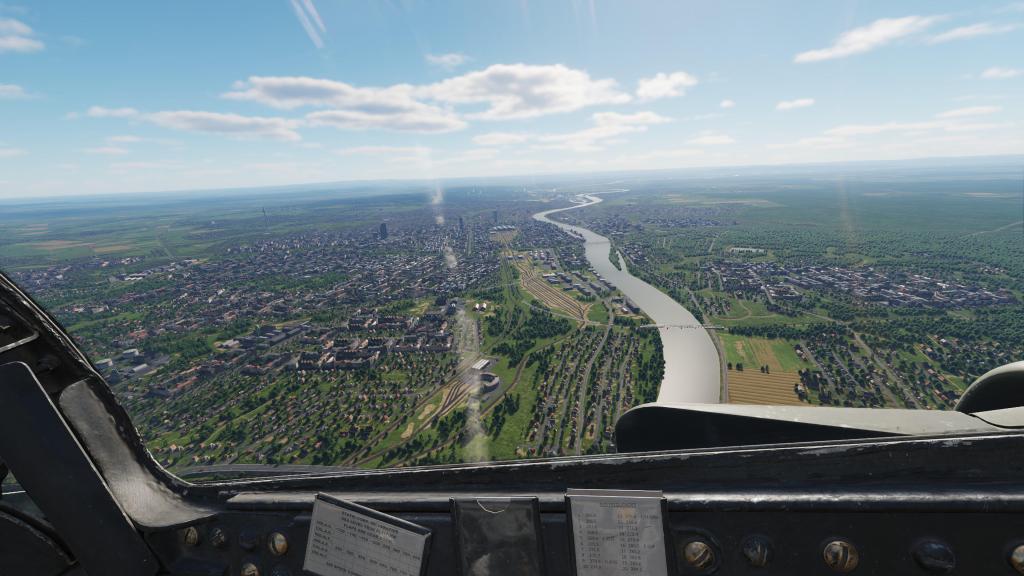
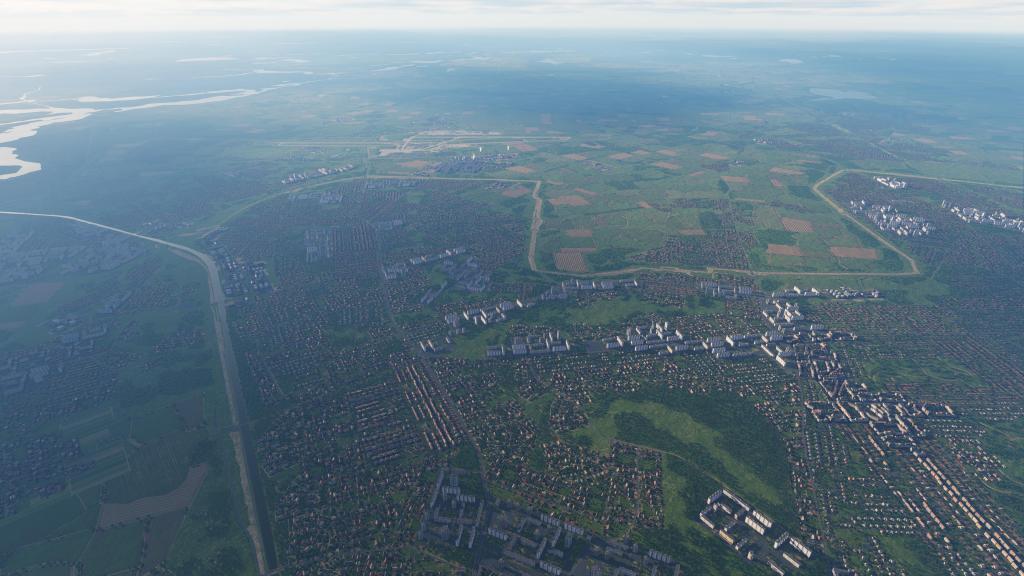
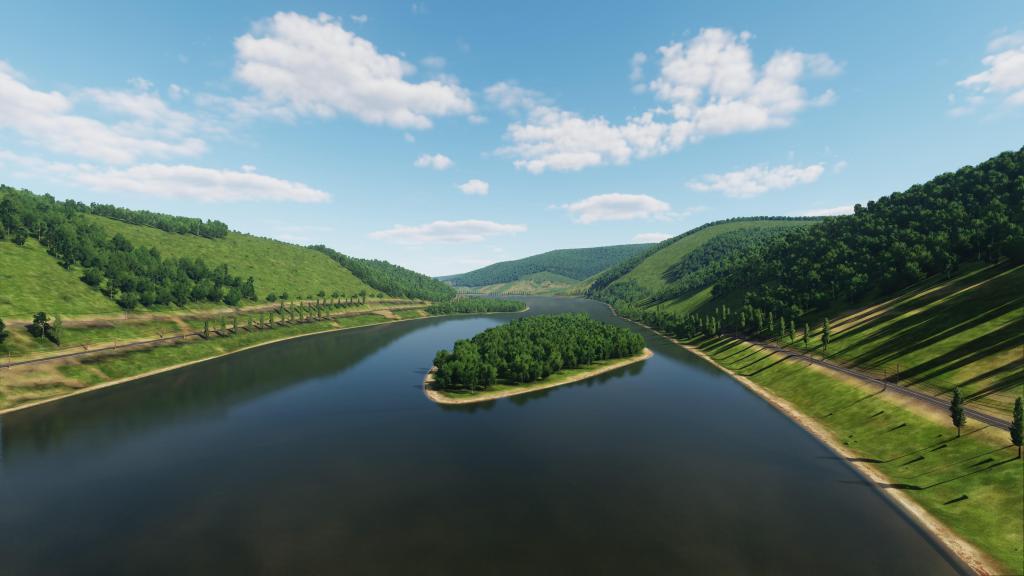
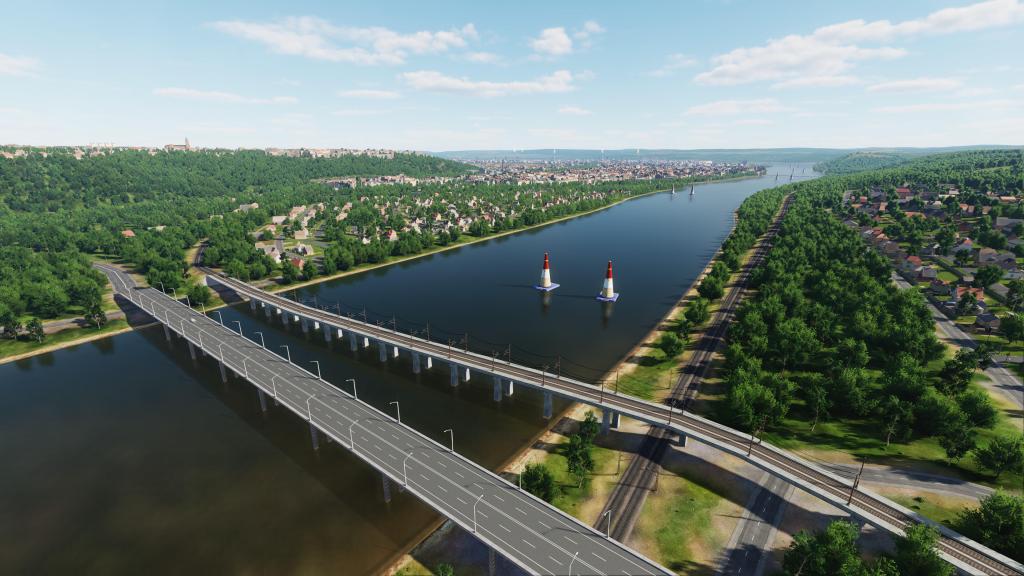
The artists that created this map have really gone all out creating it. There are tons of details big and small built into this map and that helps it really stand out.
The various structures spread out on the map is kind of jaw dropping. If you look around long enough, you start to see that Ugra Media really did economize memory and storage usage by basically using the same objects where they could but they’ve also created so many different combinations that every location really does feel unique as the same time. Very hard to weave that thread but I think they did well.
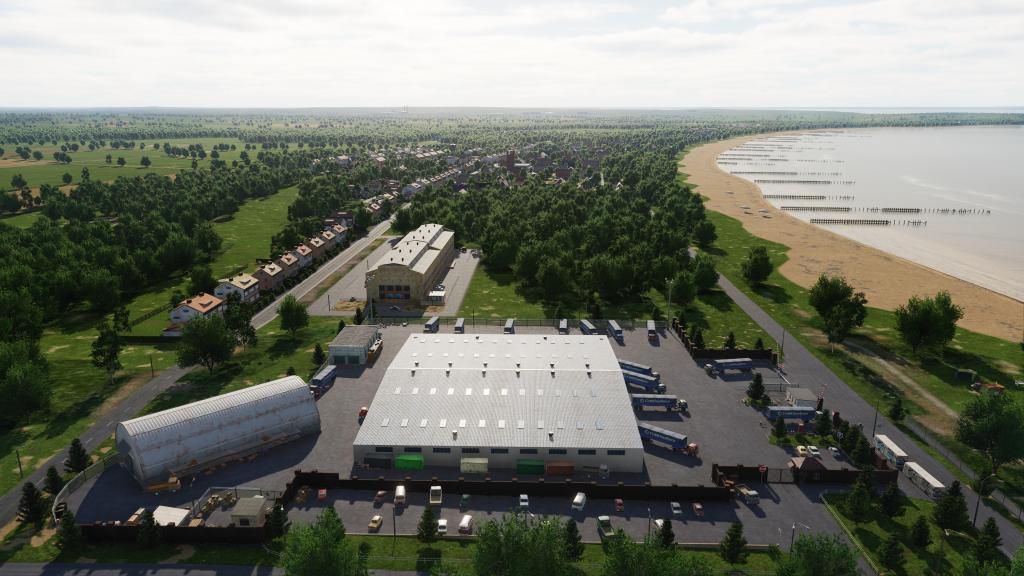
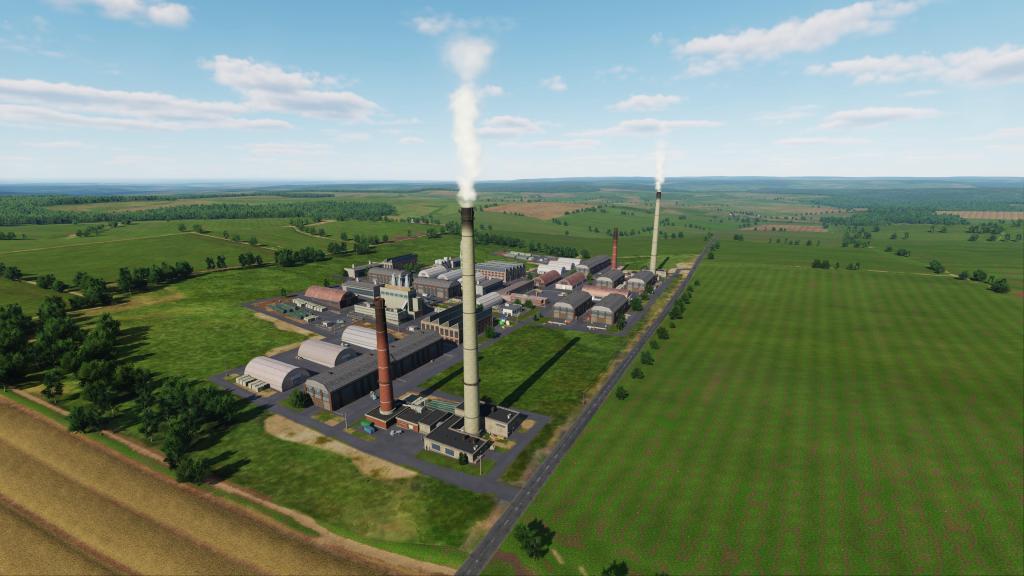
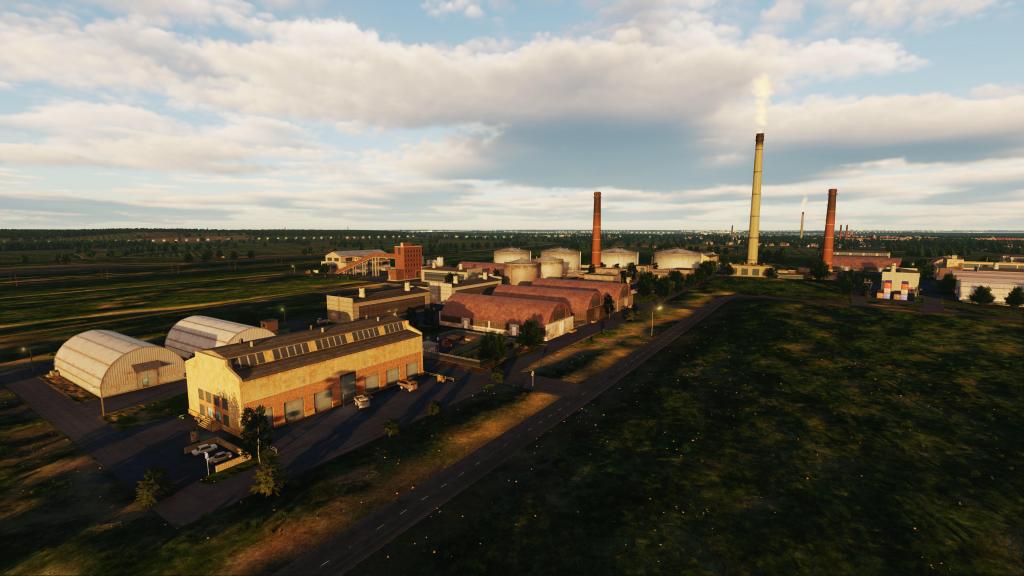
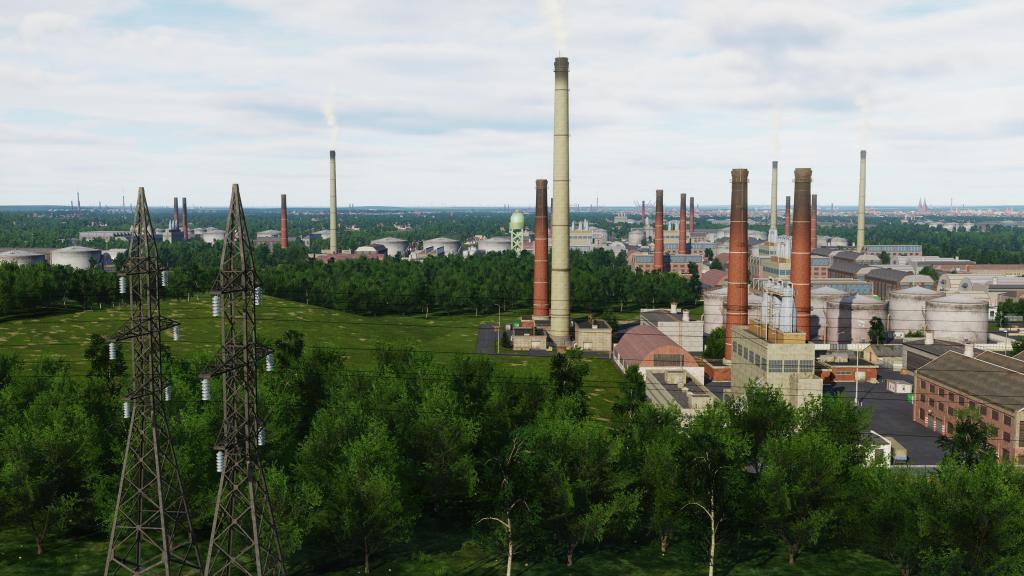

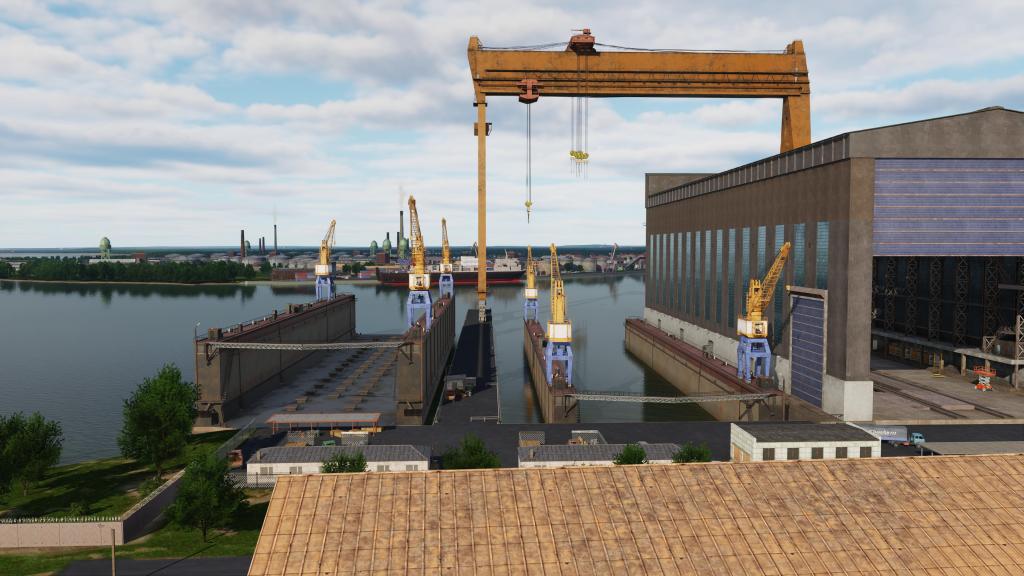
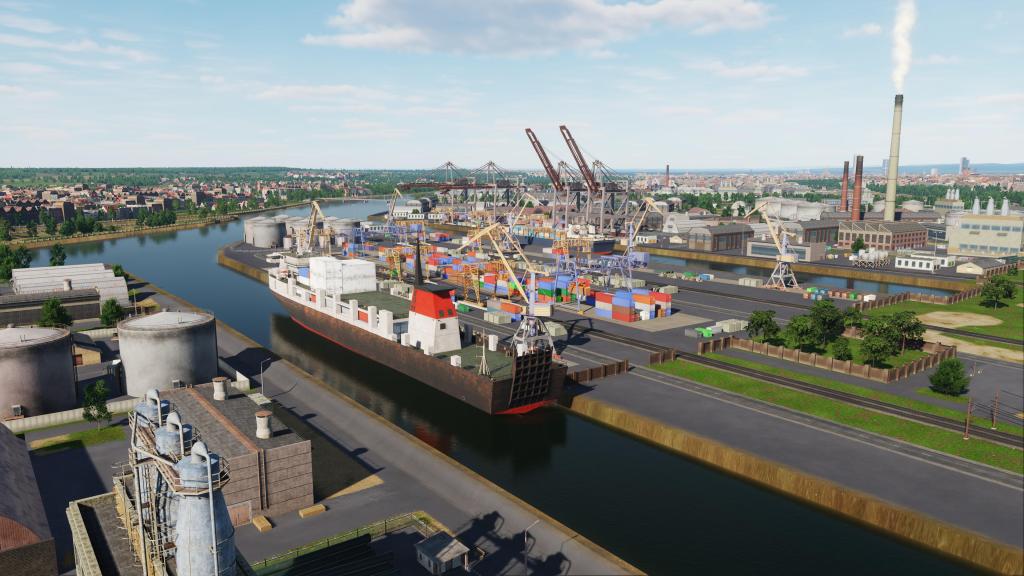
The artistry on these buildings is also reasonably impressive. Texture resolution is sometimes exceptional and at other times its just average but I think this is a fair trade-off and even down in the weeds helicopter pilots are going to feel like nearly everything looks great.
Stop signs, potted plants, swing sets, lounge chairs, dumpsters, storage tanks, parked vehicles, trucks, and other doodads are found nearly everywhere you look.
There are some fun additions too. An air racing course can be found on the route complete with pylons which kind of looks awesome. Another interesting thing I found while flying around were some hot air balloons. Yeah! That’s unique. I’m pretty sure you can hide these both, as mission maker, if you want something a little more serious.
Ugra Media have also setup a lot of assets that are moving around on the map. There are boats, trains, cars, harvesters and other farm equipment and on it goes. I’m sure there’s a few I haven’t found yet.
Airbase details
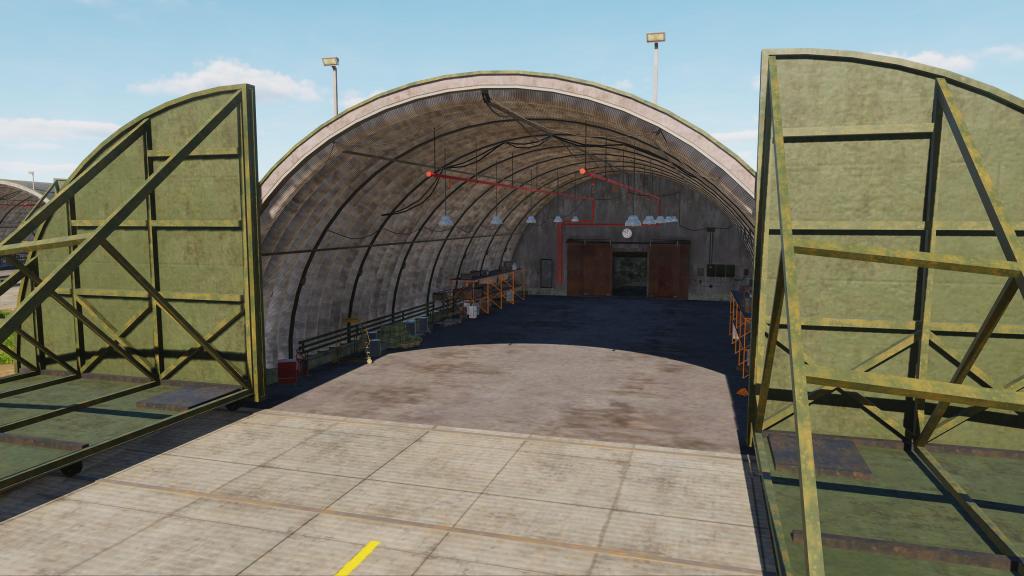
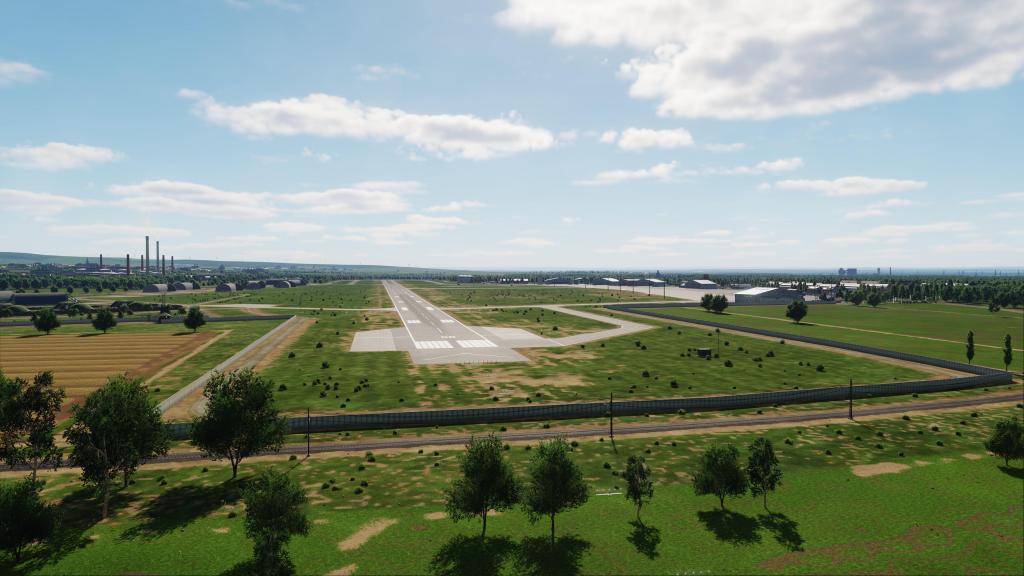
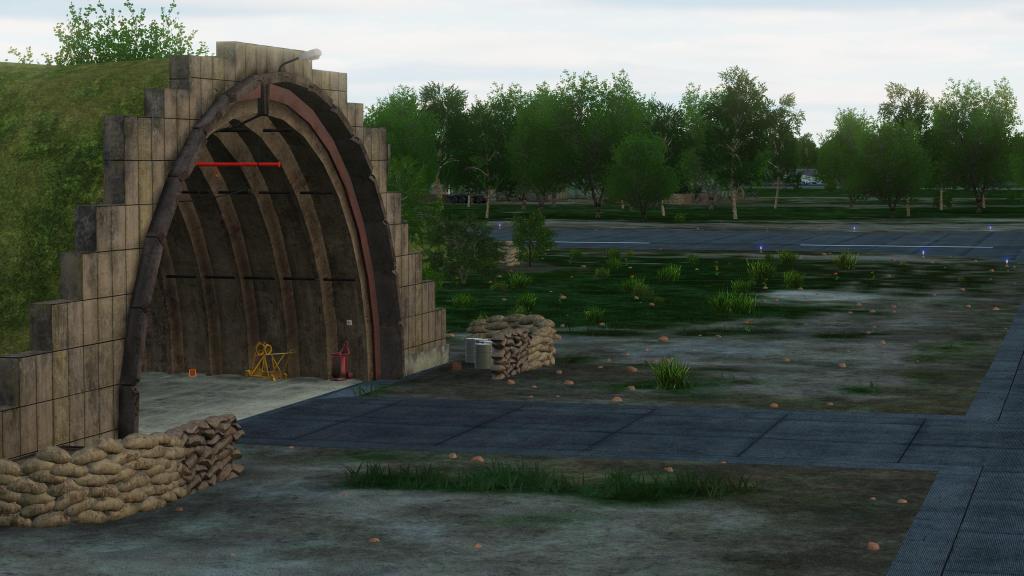
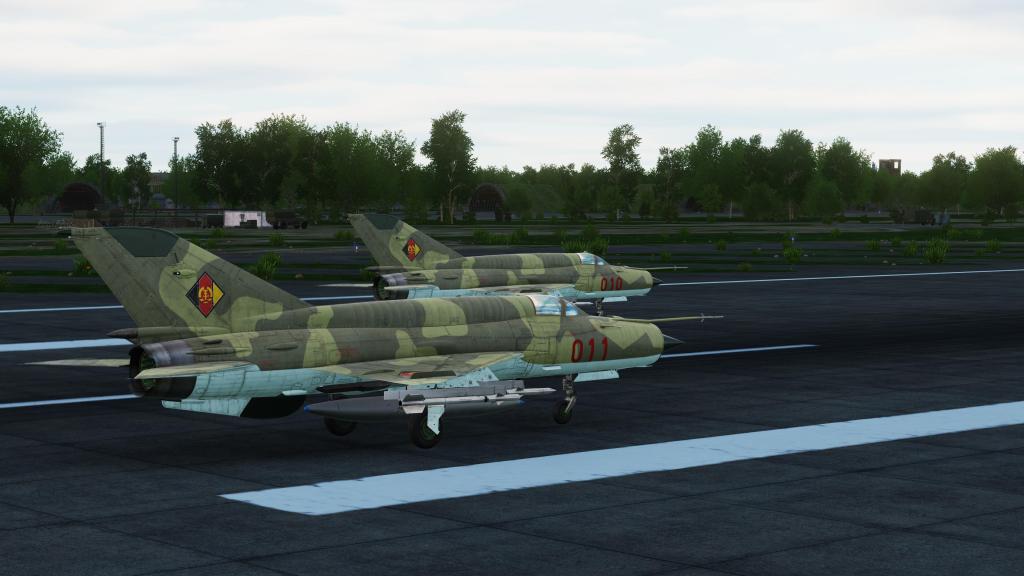
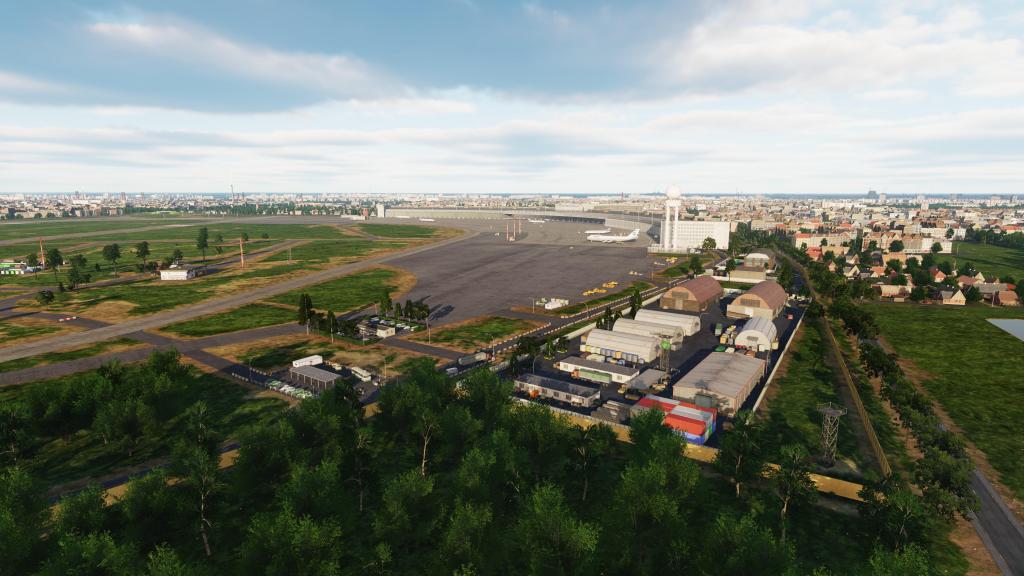


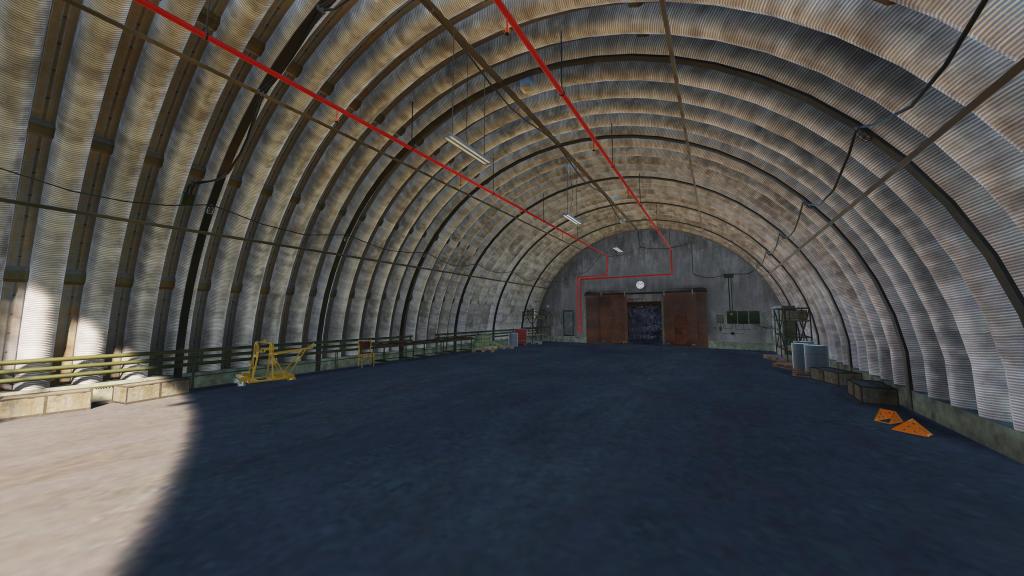
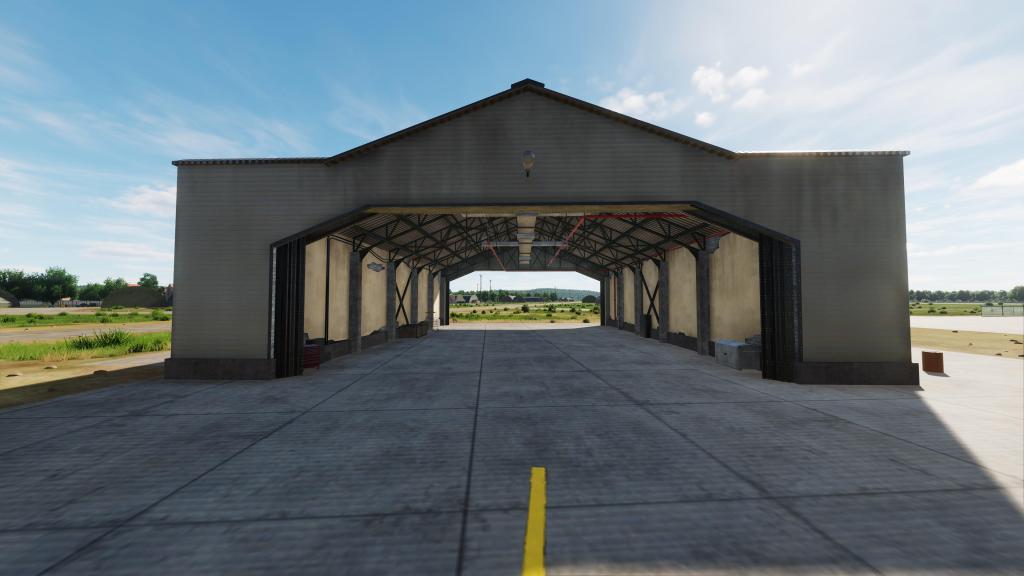
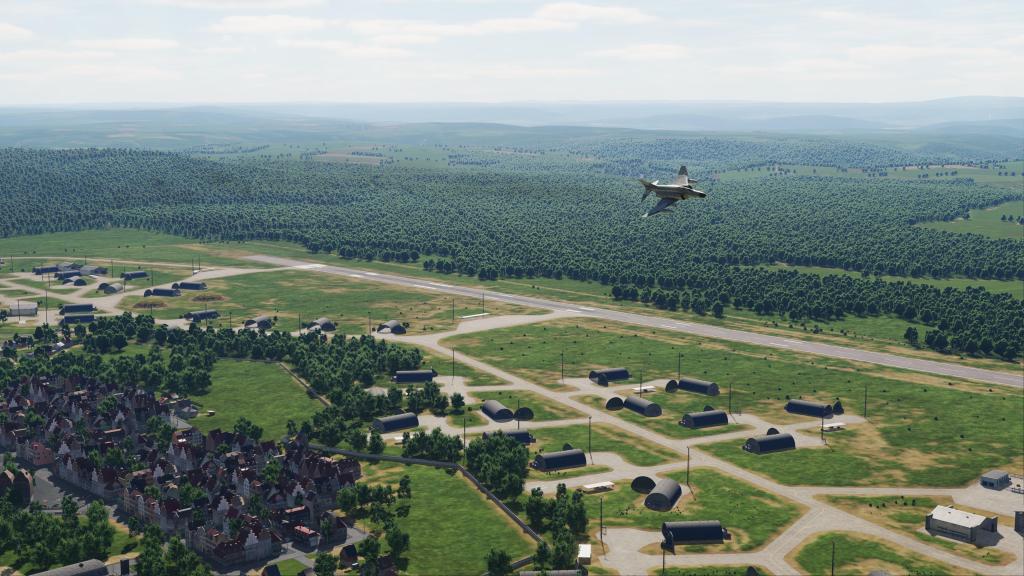
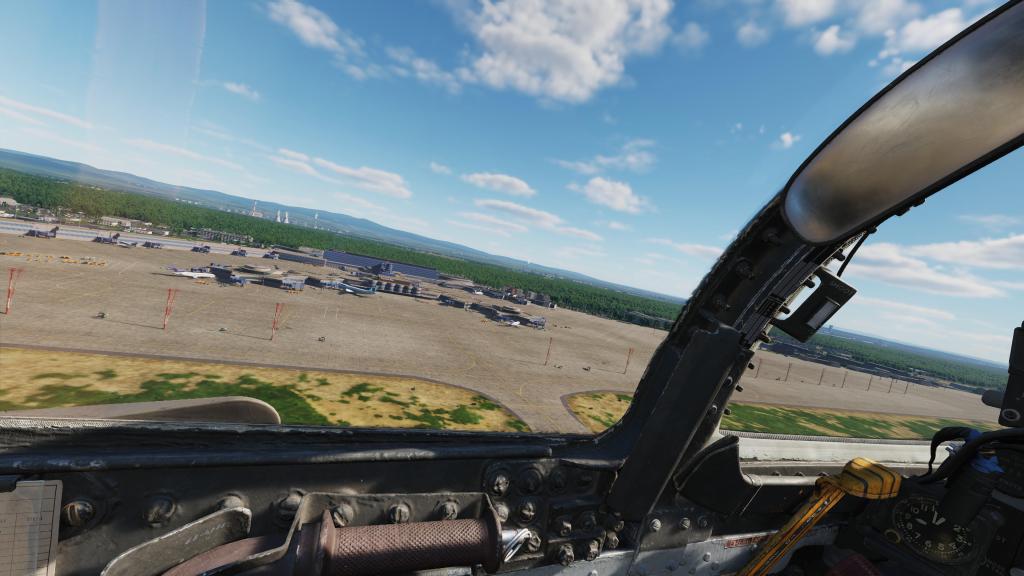
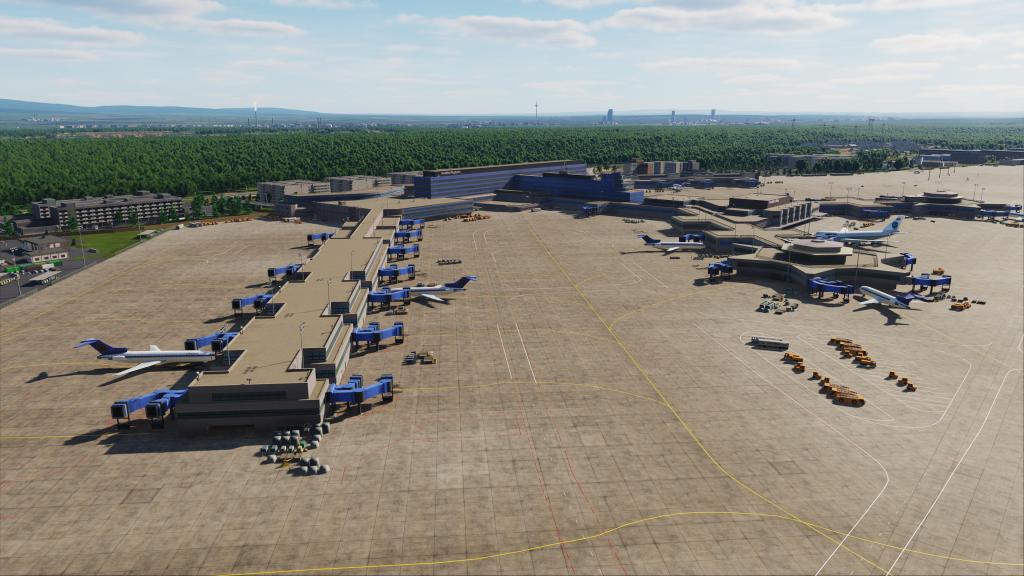
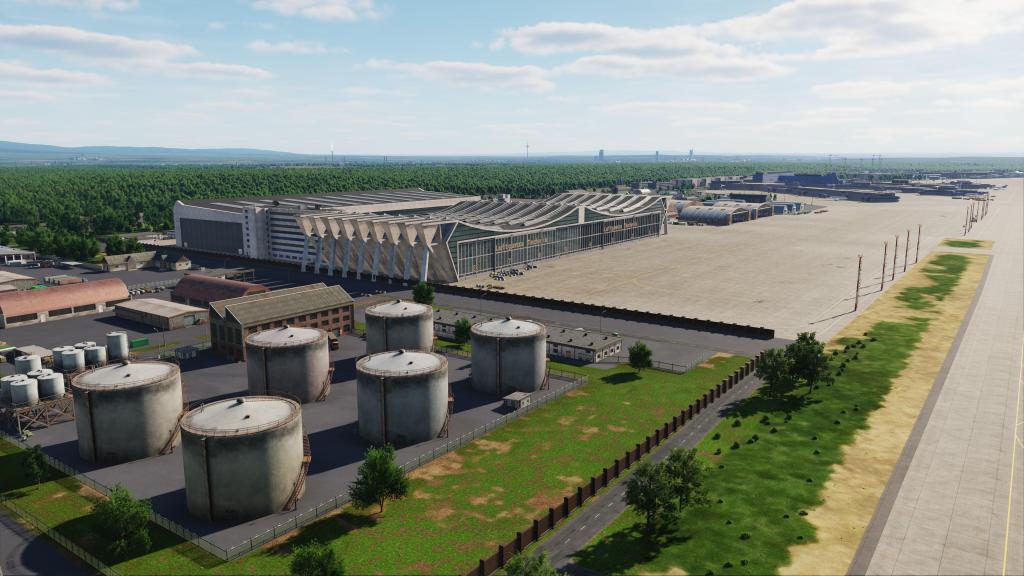
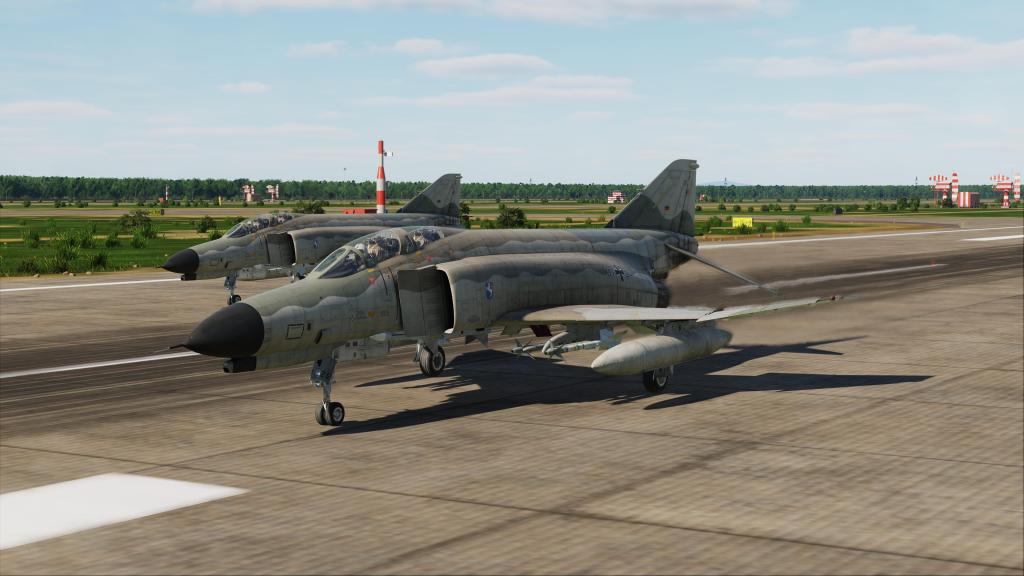
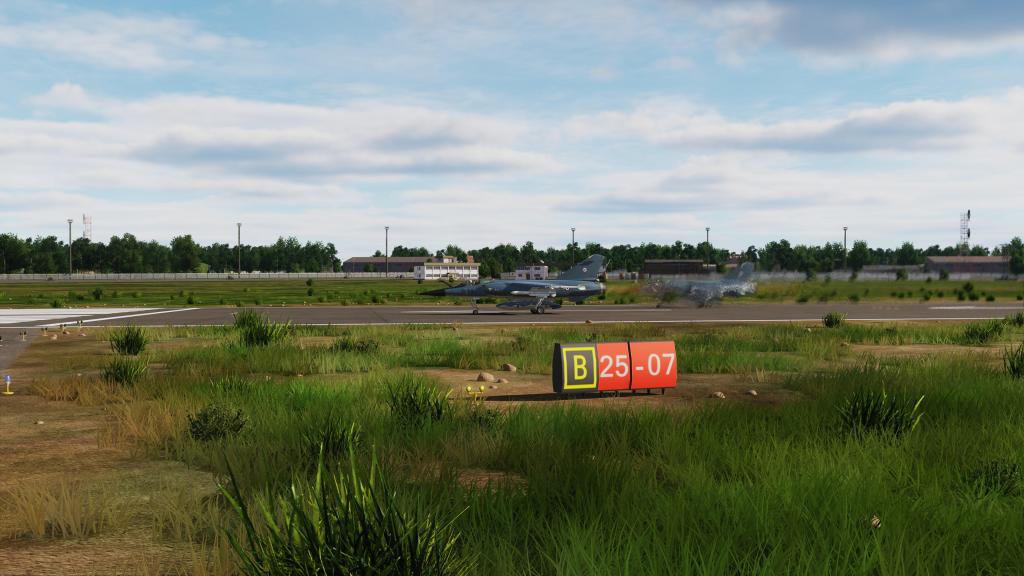
You’re going to get sick of me saying it so let me get it out of the way here too. Airbases are also just jam packed with details! Surprise!
There are boxes and canisters, parked aircraft and jet ways, fencing, runway signs and markings, and tons of detail on the runways themselves with many airports seemingly having their own unique details.
This stands in stark contrast to the somewhat limited details we’ve seen on the DCS: Kola map. That one needs to study what Ugra Media have done with these airports because they are great on the Germany map.
I would say that this stands in excess of what they’ve done with their prior maps as well. It’s all very similar but this just impresses.
The stand out airports are Tegel, Schönefeld, Tempelhof, Frankfurt, Hamburg, and Hannover. These are civilian airports with lots of parked aircraft and jet ways but they also really stand out and some of them, like Tempelhof, are steeped in history.
Large urban areas
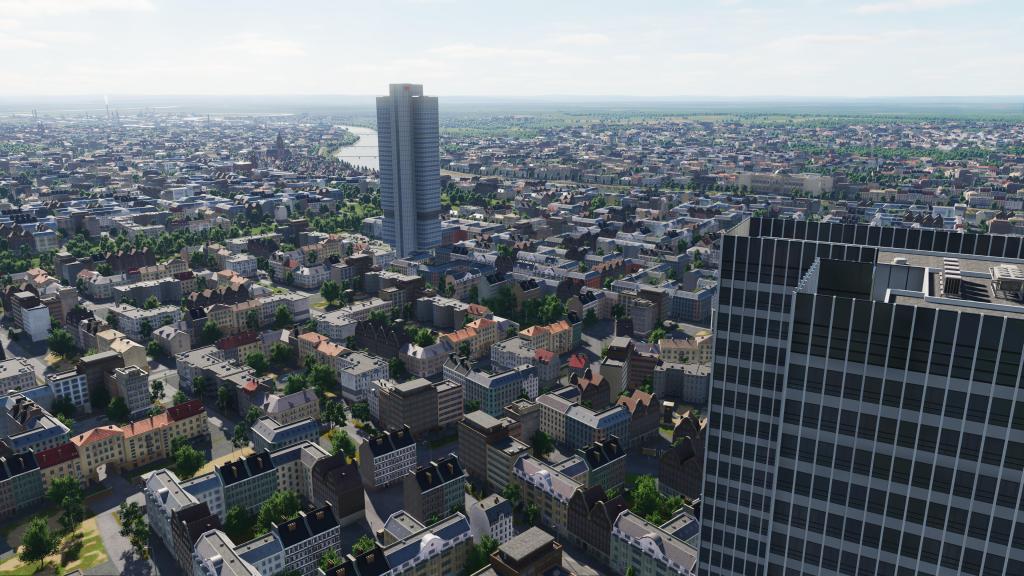
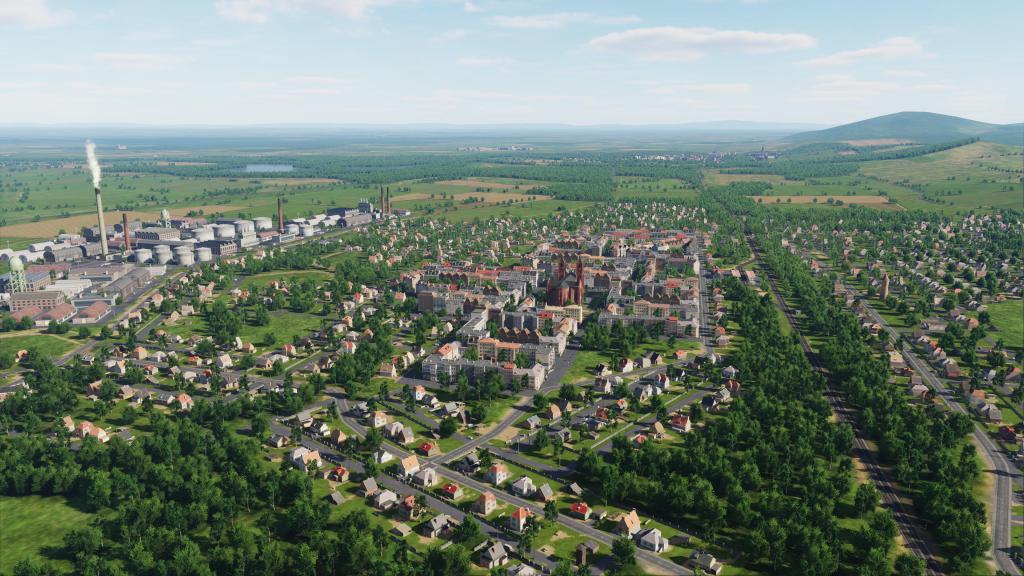
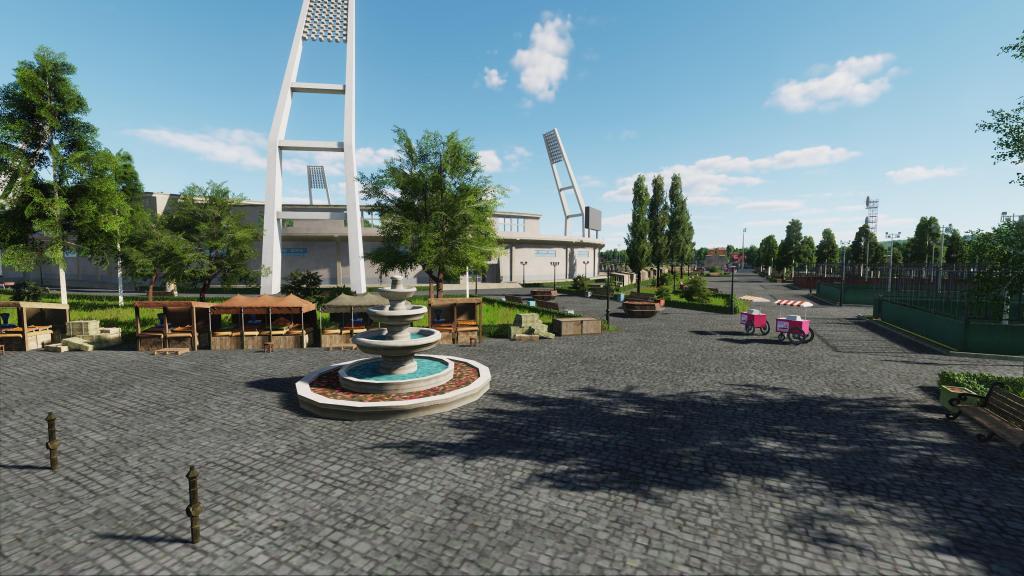
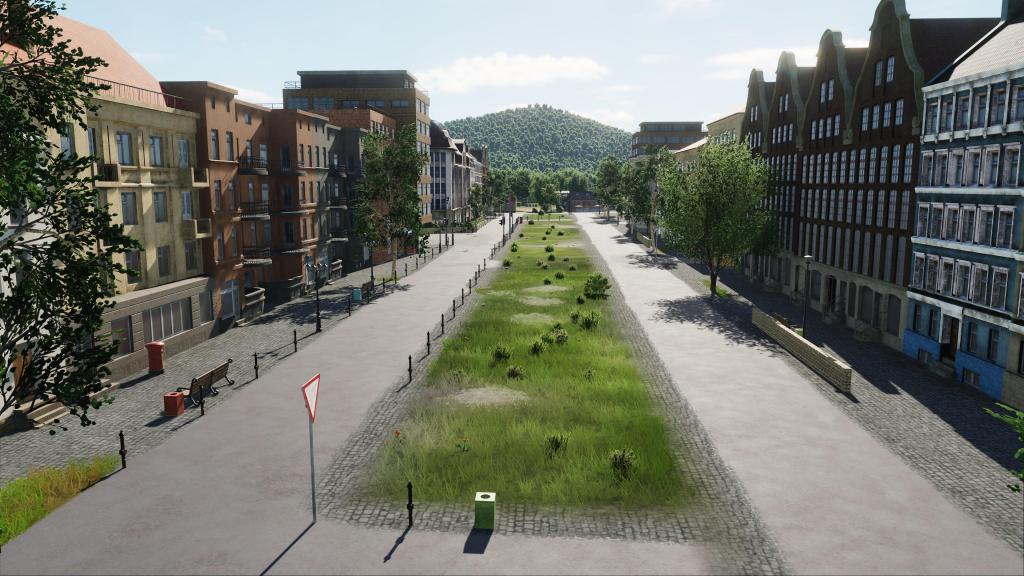
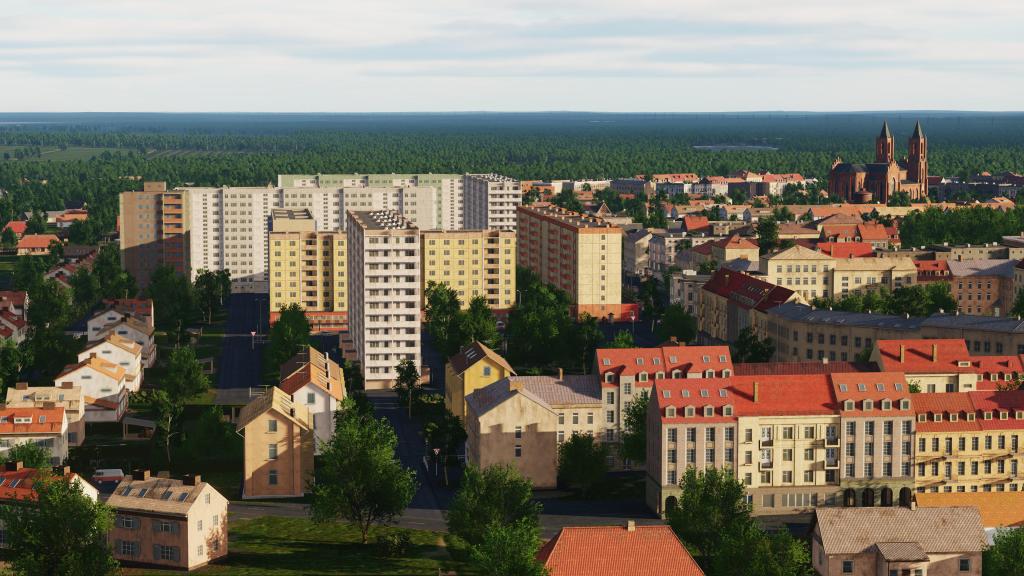
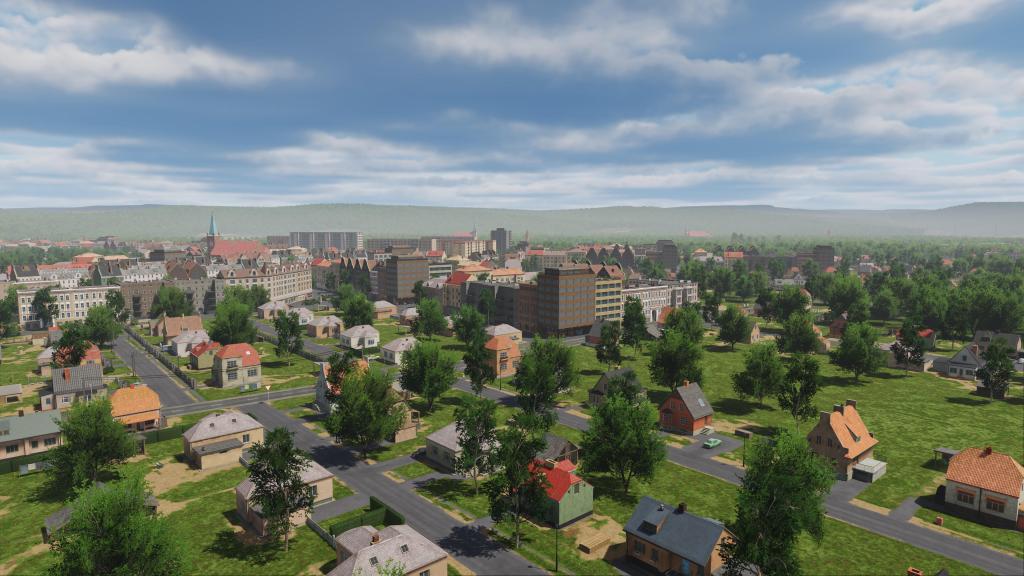
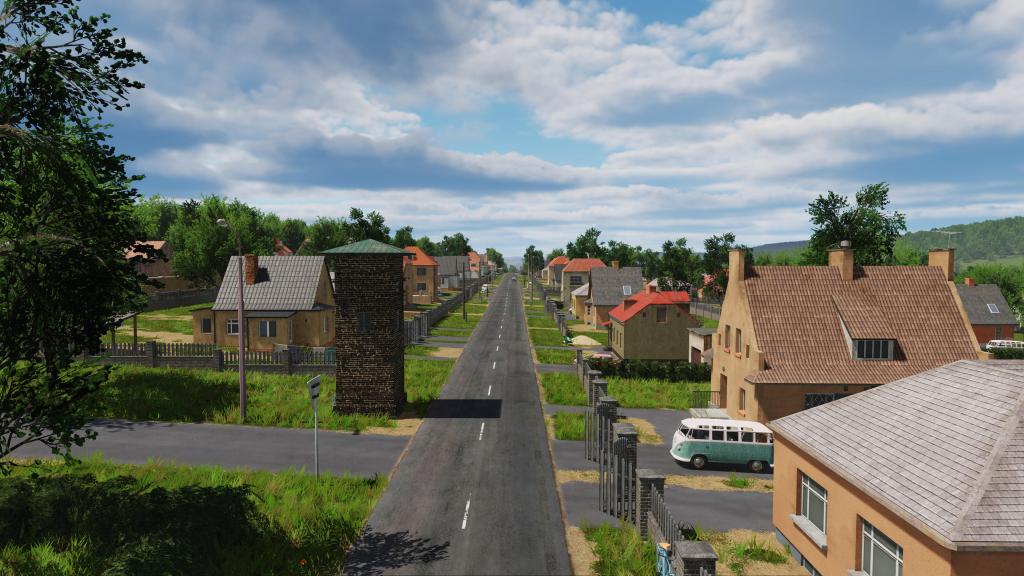
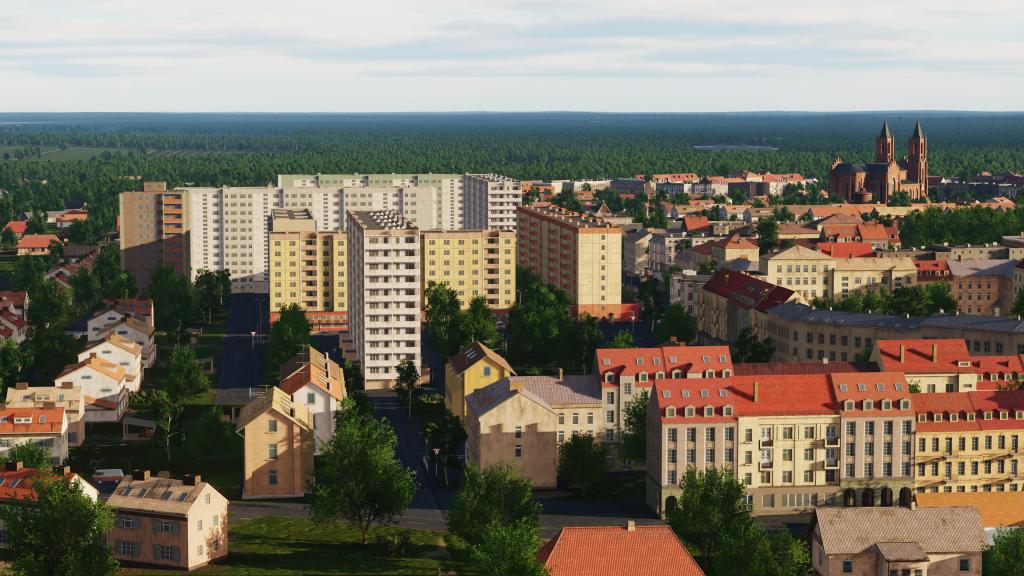
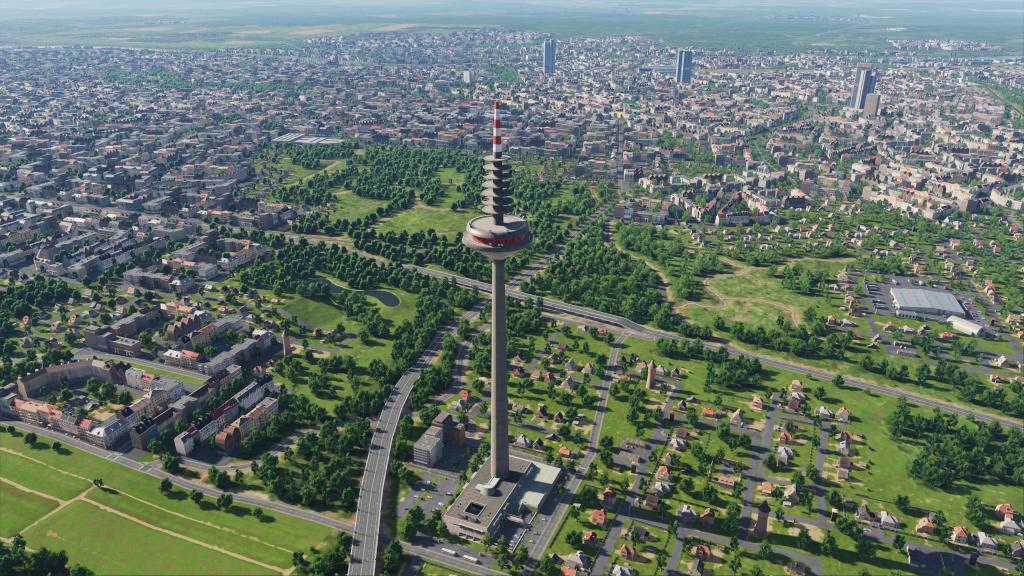
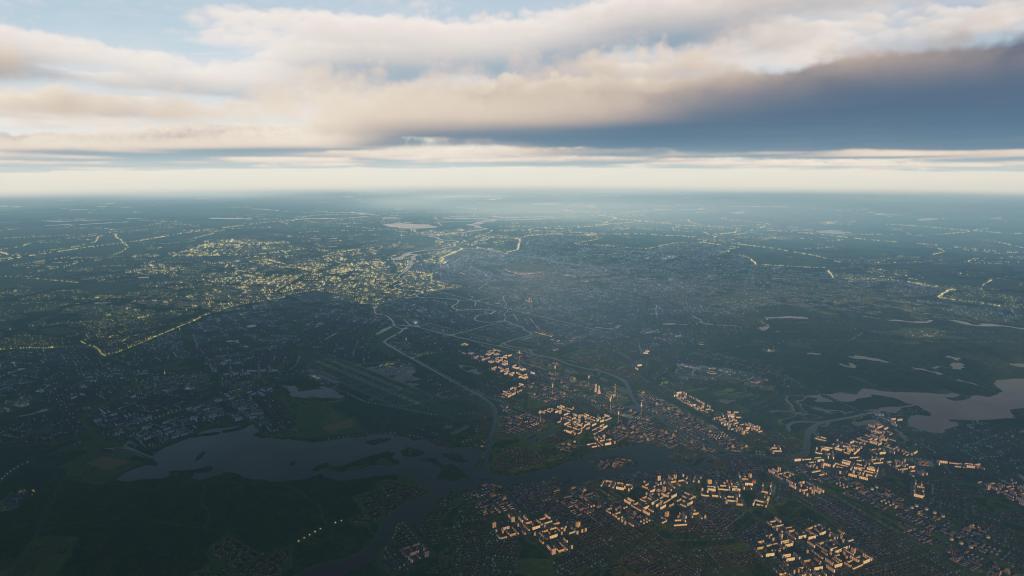
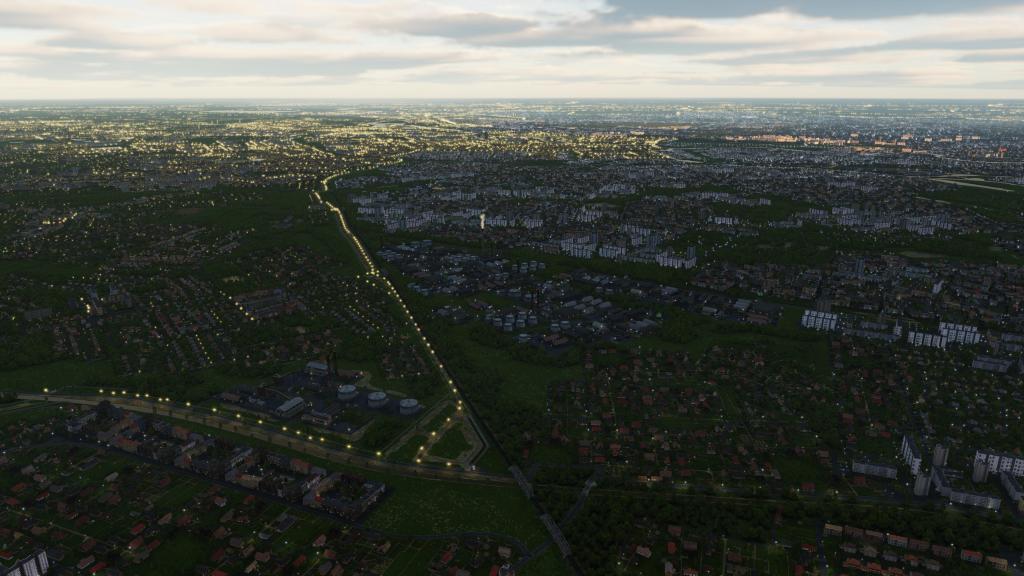
The biggest cities on this map are also exceptionally filled out. If you go down to the street level you’ll be impressed at just how good it all looks. I’ve already talked about small details so lets talk big ones.
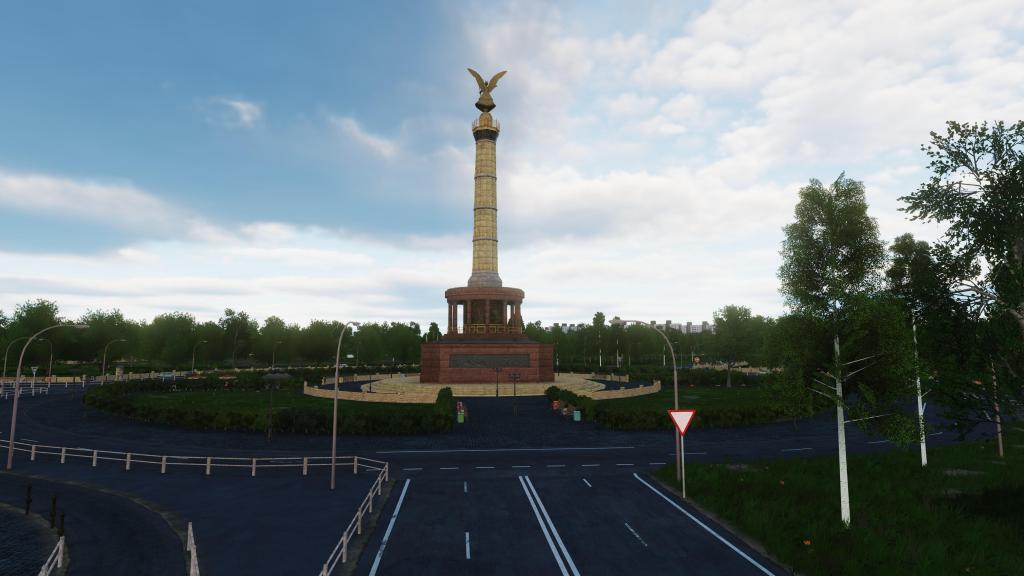
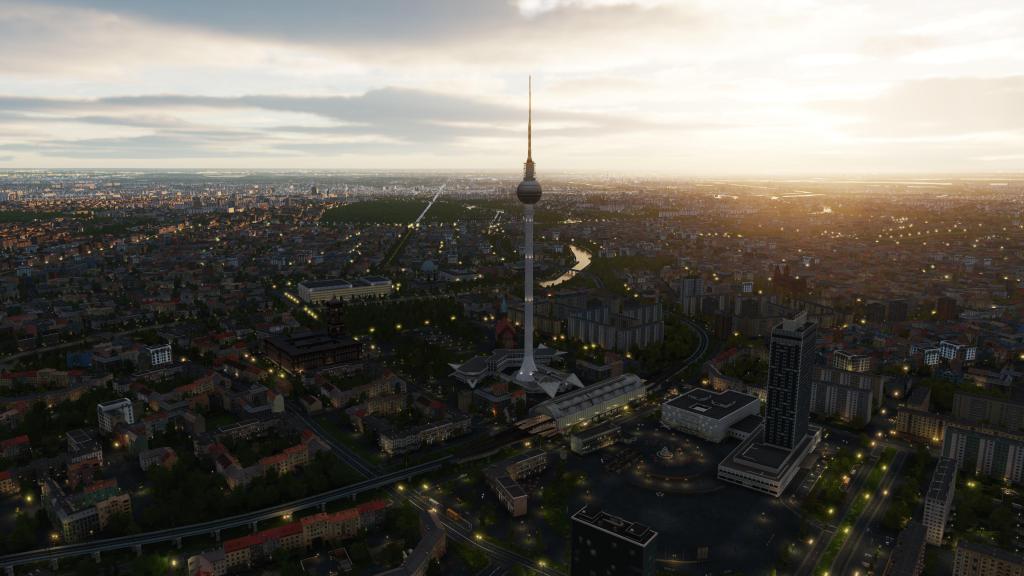
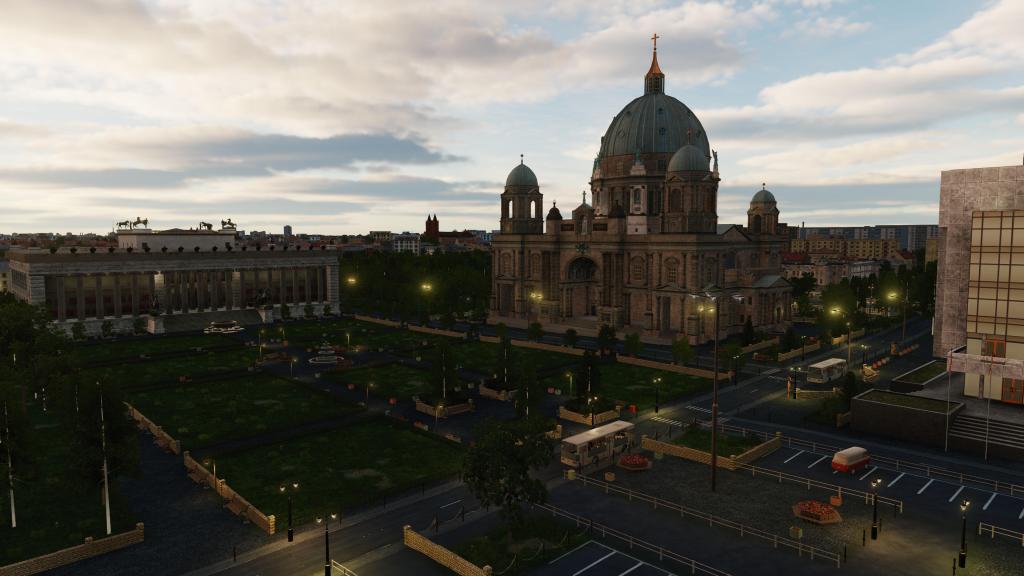
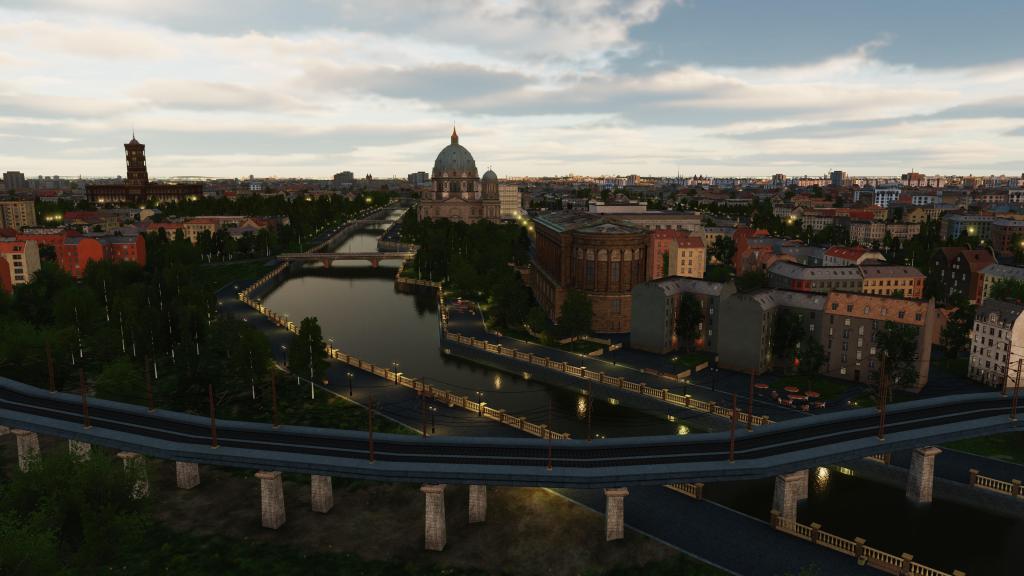
Cities will have large numbers of apartment complexes, they have train stations, bridges over rivers, cathedrals and churches, broadcast towers and more. Cities like Frankfurt and Berlin have quite a few points of interest too such as the Europaturm communications tower, the Reichstag, Brandenburg Gate, Berlin TV tower and so forth.
Most towns also have some sort of church or town square and these have ample draw distances, even when the settings are set to low, which helps with navigation.



Numerous military installations
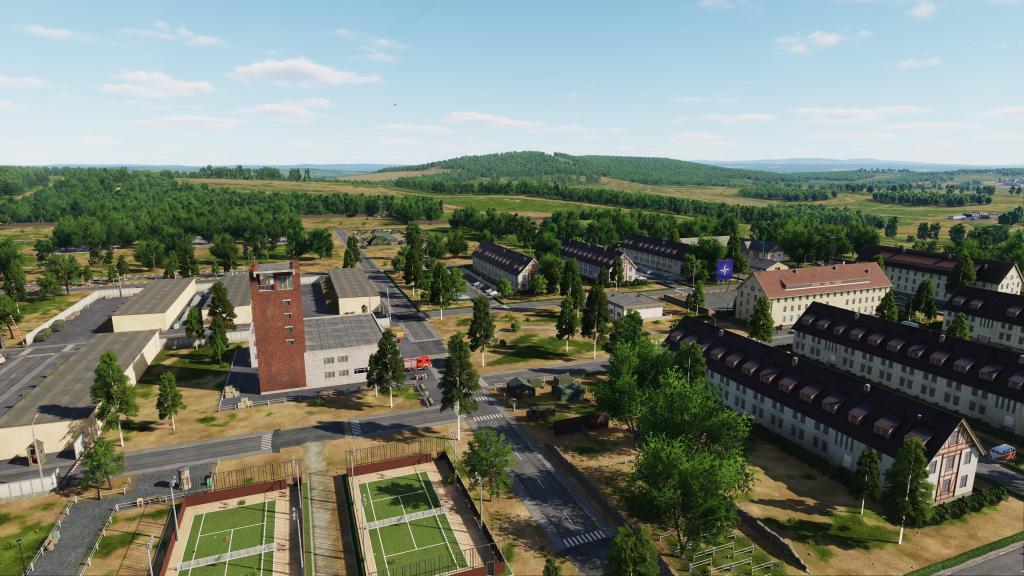
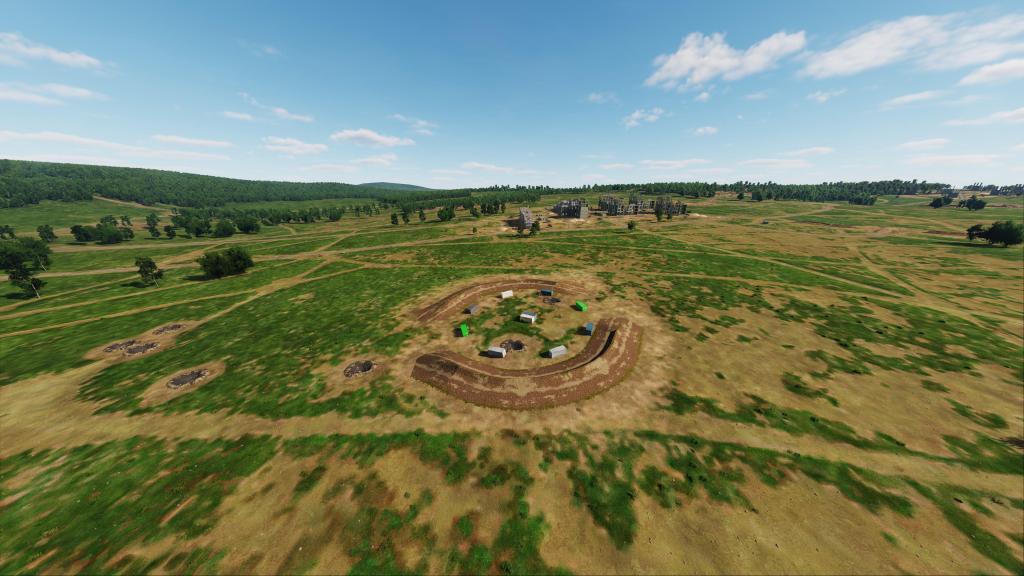
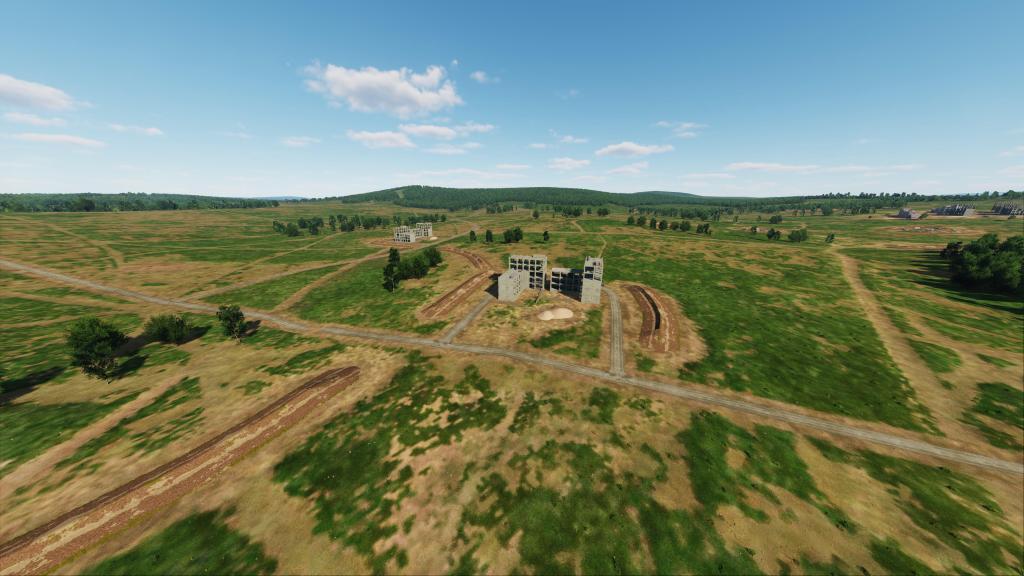
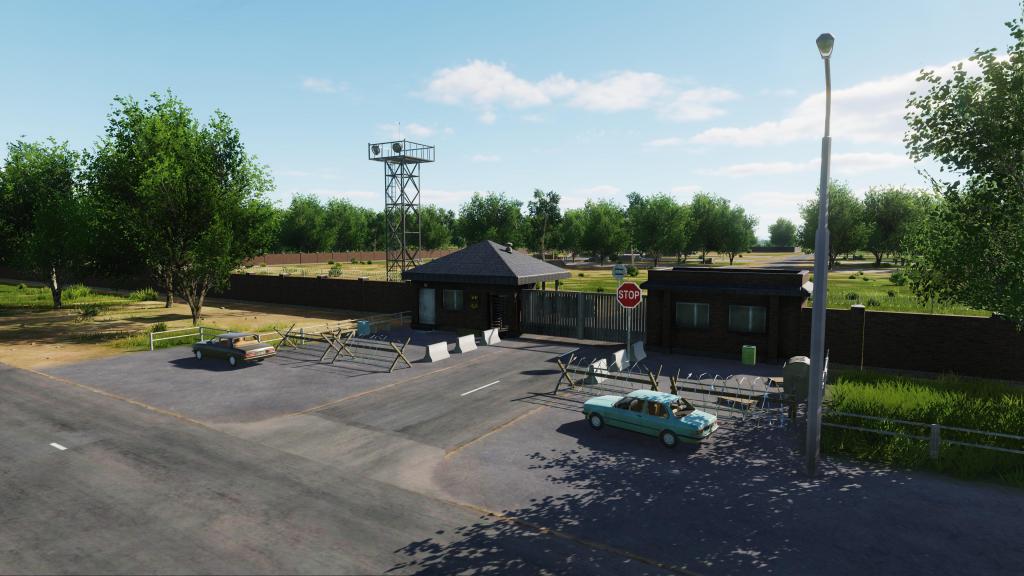
In addition to airbases and the border guard posts, there are numerous military installations of which I’ve only stumbled across a few so far. But I know there are many more out there too! Some of them have training ranges (like in the screenshots below) while others are more industrial in nature with parked tanks and vehicles. SAM sites are apparently part of the mix as well though I, again, haven’t found them yet. More is planned for phase 2 and 3 so I expect these to grow.
It’s a narrative in a map
The more I explored and checked out everything that Ugra Media have put into this map, the more I felt that this map actually has a strong narrative. This is a historical map and, like the work they did for their Normandy map, its steeped in the time period that its set.
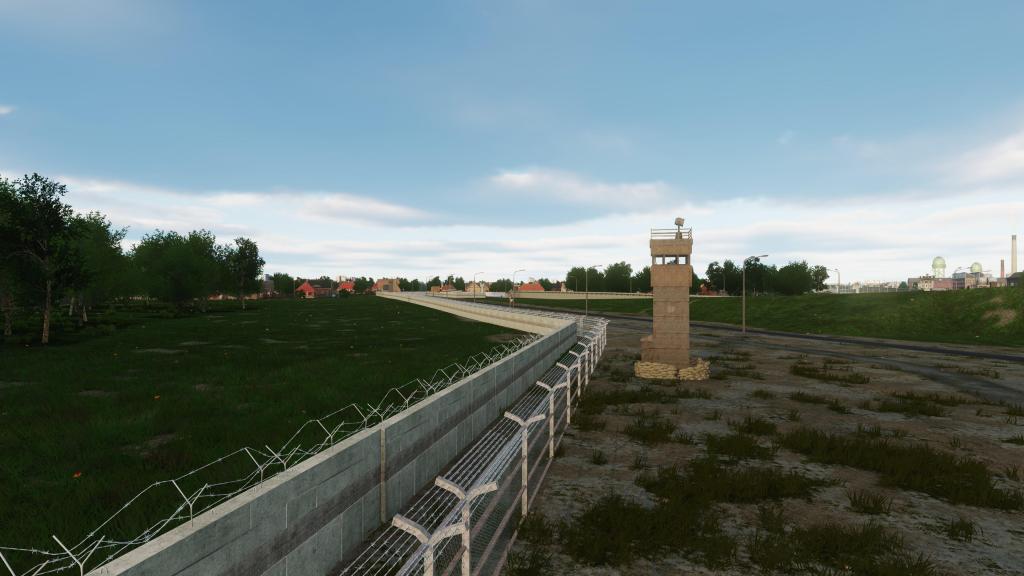
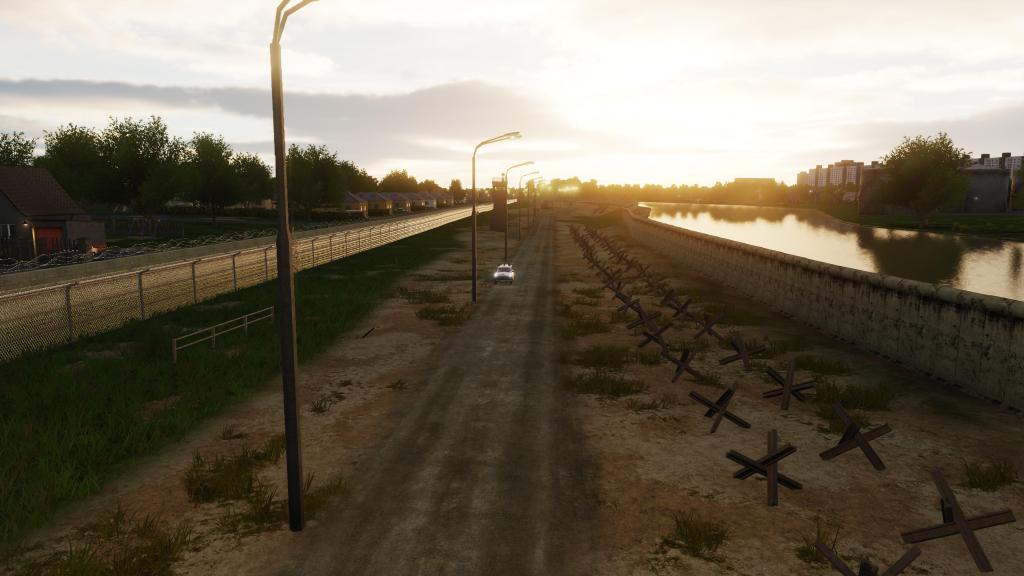
This map is, in a way, the story of the Cold War and the flashpoint that never was. The map has all kinds of pieces to it that help tell that story with the obvious break through the middle of Berlin, complete with barbedwire and guard towers. Similarly, the whole country was split to east and west and the map shows all of that too with the border walls, the fencing, and even some of the banners and warnings are recreated for this map.
It goes beyond that. Check out many of the buildings, the cars or the trains on either side of the map and you’ll be able to tell where you are just by the style. There’s lots of classic German buildings that predate the Cold War era, sure, but you’ll see the obvious differences. As I was checking out the border area, a police car drove along perimeter fence conducting what was surely a regular patrol. It’s a totally unnecessary detail but it’s there and it makes the map and its time period come alive almost instantly.
The problem of popularity
The biggest problem with DCS World maps is the fragmentation effect that they have on the community. Tricker, a DCS World content creator, posted a really good video recently talking about this issue and how maps like DCS: Iraq, Afgahnistan and Sinai are out and available but just don’t seem to have enough traction to be used by popular servers online.
This is a problem that really only affects multiplayer focused players, however, that’s a large chunk of our community and its not an issue I want to downplay.
Ugra Media’s own DCS: Syria did manage to capture the imaginations of DCS simmers and server managers and that convinced enough people to buy in to the point where most communities are running this map including some of the largest and most popular servers out there.
There’s a feedback loop that happens where when enough people buy the map, server operators feel that its worth their time to develop scenarios for it, which in turn convinces more people to also buy in. It becomes self reinforcing.
Will DCS: Cold War Germany manage the same thing? I don’t know for sure but I have a feeling that it just might. The combination of good looks, the engrossing theme of the scenario, and the trend in DCS World towards Cold War era aircraft make this map a logical hit. So too is the different setting with Cold War Germany being one of only a few “green” maps that are set outside of the arid regions that the sim has been covering over the last several years.
Final thoughts
I’ve been a bit unenthusiastic about maps for DCS recently. On an academic level, both Iraq and Afghanistan were interesting locales with real world combat scenarios to base themselves on. DCS: Kola was interesting as a more what-if set in the modern day and covered historically by some popular flight sims of yesteryear. DCS: Cold War Germany stands apart from those by being a historical map, set in the 1980s, but featuring a combat area that was never a combat area ultimately… and thankfully! It also dives headfirst into the Cold War era with the scenery representing and telling that story.
We finally have a natural home for many of the sim’s Cold War era aircraft in a way that the other maps don’t quite match. That combined with the incredible detail, good performance, and promises of extended map areas over time and I think we have a very interesting map that should be a hit with DCS World fans.
It remains to be seen if the map manages to exceed the challenges that other maps face with adoption. I have a feeling this one may achieve it but we’ll have to see.
DCS: Cold War Germany by Ugra Media is now on sale for $55.99 USD in the DCS World e-Shop and on Steam. The price will eventually increase to a regular $69.99 USD, however, it is slightly lower to encourage people to buy during the early access period.




 Stormbirds
Leave a reply to Gumby Cancel reply