
Back in January of 2024 I wrote an early impressions piece based on a couple of weeks spent flying the then recently released A300-600R(F) for Microsoft Flight Simulator 2020. I’ve spent quite a bit of time with the airplane since then but one thing lead to another and I never followed through with the full review. Then, MSFS 2024 came out and iniBuilds split the product line into a Compatible and Premium offering of the airplane making for a bit of complexity when approaching the iniBuilds A300 review. Now that some of the dust has settled, I thought it was well past time to review the venerable airliner. Let’s go!
A bit of real world history

The Airbus A300 represents a number of notable moments in the history of aviation. It was Airbus’ first airplane, it was the world’s first wide-body twin engine aircraft, and it was the first aircraft certified under the Extended-range Twin-engine Operational Performance Standards (ETOPS). It ushered in the era of twin engine aircraft regularly flying the trans-Atlantic routes that were previously dominated by three and four engine airliners.
The aircraft got its start in the design studios of several British, French and German aircraft companies in the late 1960s. Burned by the commercial failures of previous efforts, each of them began to seek out partnerships to tackle something new. Challenging negotiation ultimately came together to start working on a joint effort. Airbus Industrie was later formed and, after a brief stay in Paris, the company relocated to Toulouse, France.
Work on the A300 prototype began in of September 1969 and by September 1972, just three years later, the aircraft was revealed to the public. Two years after that aircraft was certified in Europe and North America and sales began.
Unfortunately, the oil crisis hit around the same time and initial interest in acquiring new aircraft dropped off significantly. Still, Airbus managed to find enough sales to keep the aircraft production line going and by the early 1980s the order book had signed a couple dozen airlines in Europe, Asia and North America. Eastern Airlines in the US allowed the aircraft to break into the North American market and they, like many other airlines, were impressed with the overall fuel savings versus the three engine airliners that they were typically offering on similar flights. That interest in fuel savings started the trend towards twin engine widebody airliners together with Boeing’s 767.
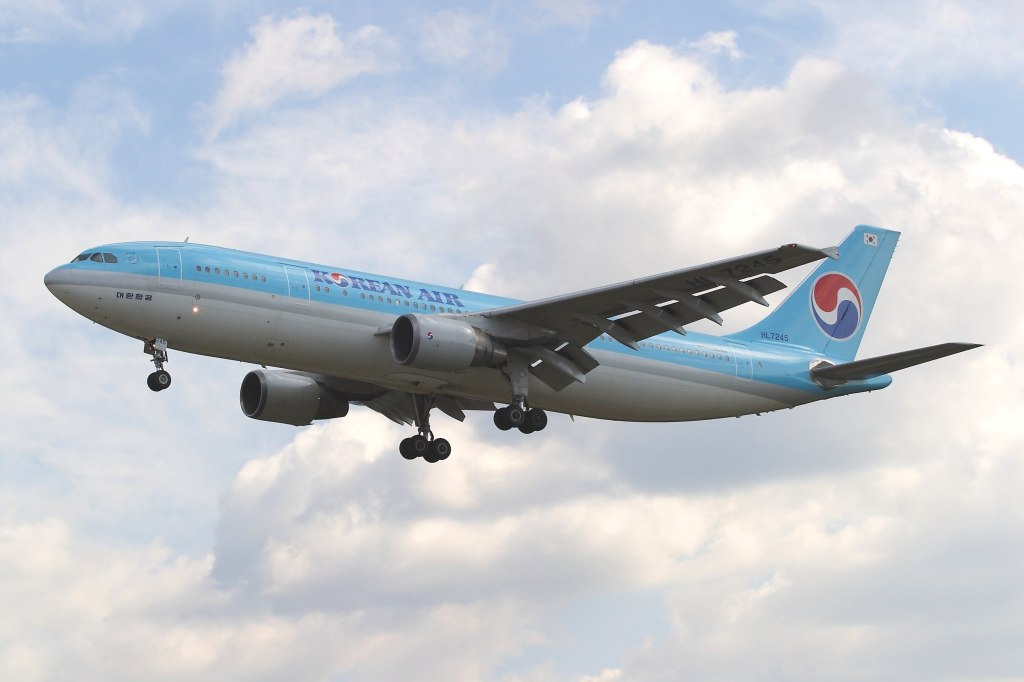
By the 1990s the A300 was being superseded by other types in passenger service, however, it found a second life as a freighter either by conversion from passenger models or built new as a freighter. Such was its popularity in this role that production would continue until 2007. As of 2023, there were over 200 A300s in operation, almost all of them in the freighter role with a handful of passenger models still in operation as well. These are gradually being phased out though many of them are expected to keep flying for freight services until 2035.
The A300 is the aircraft that helped make Airbus what we know today and that kind of pedigree is a fascinating one and doubly so with the success of the type into the modern day. An aircraft for the ages!
Core features


The A300-600R(F) is one of iniBuilds flagship products. Until the recent release of the A350, the A300 represented the top tier of the airliner experiences on offer from the company.
The aircraft comes with a detailed exterior and interior, passenger and freighter variations, custom FMS with support for SIDs and STARs, autoland and RNAV support. There’s also a custom hydraulic and electrical, CPDLC and ACARS support with a modernized radio control, as well as two engine variants. Another feature that iniBuilds has packed in here is a maintenance system with airframe wear and tear leading to warnings and failures.
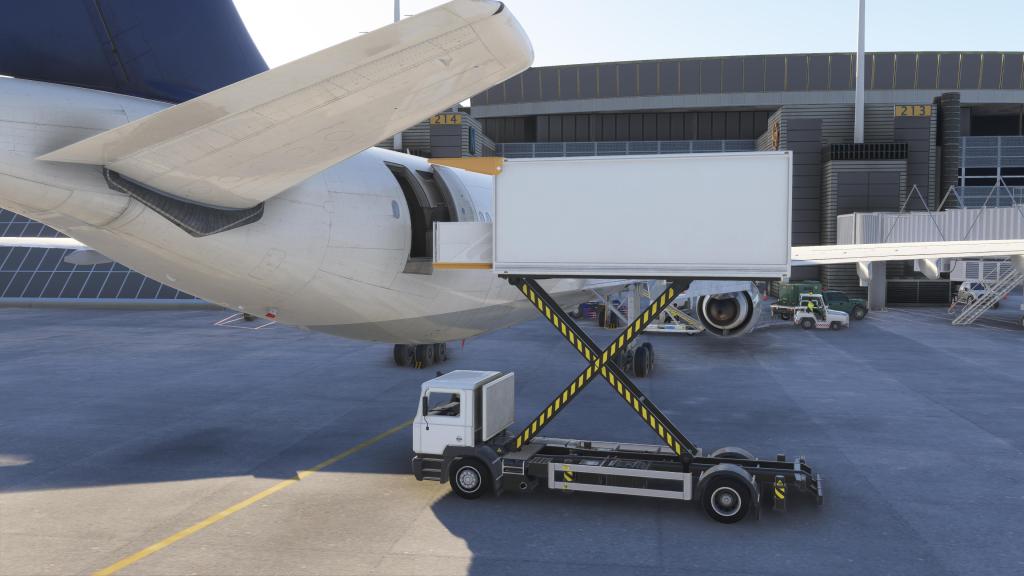
One of the reasons that I was drawn to the airplane was the offering of a freighter version. While the A300’s passenger days have largely passed, the freighter variants are still in heavy use in the modern day and so its very fun to fly this plane into a wide variety of airports and park up at their freighter stands rather than the usual passenger gates. Of course, there’s nothing stopping us from having fun with the passenger version too.
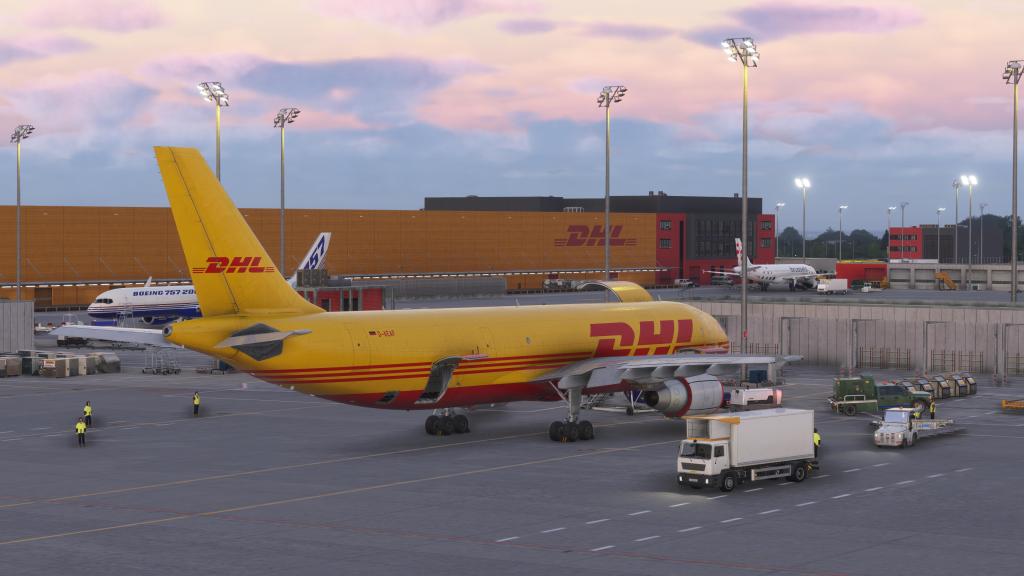
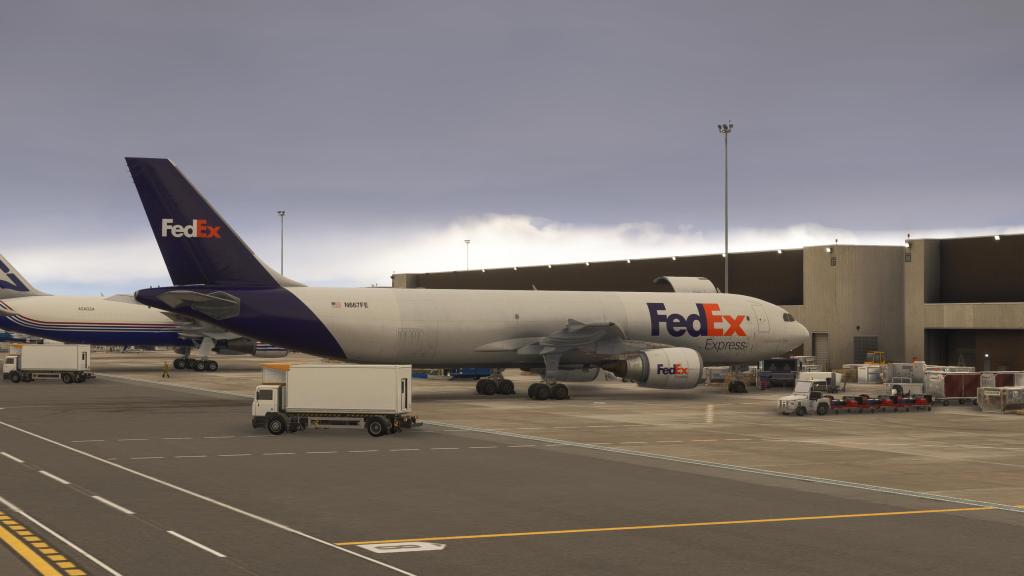
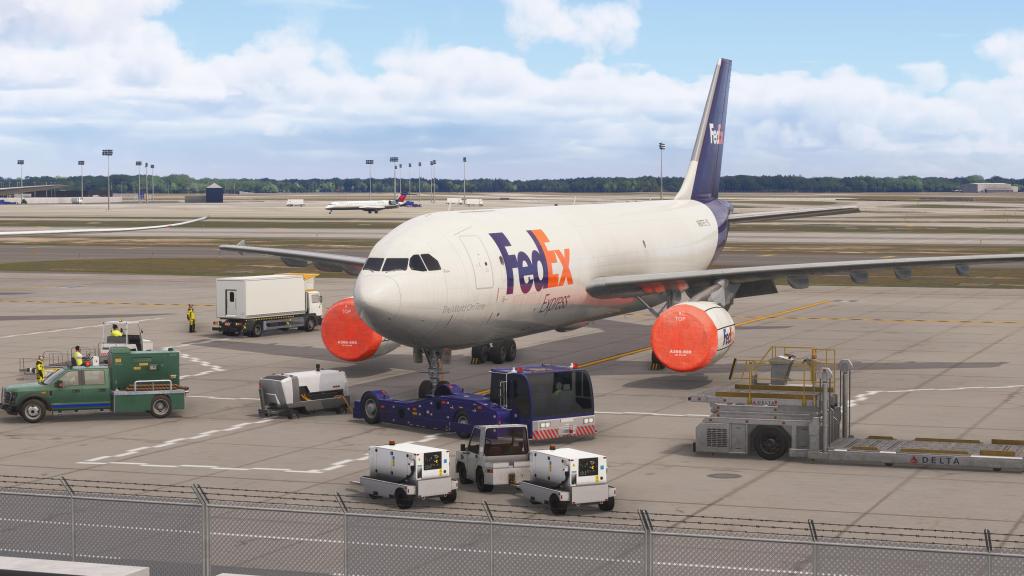
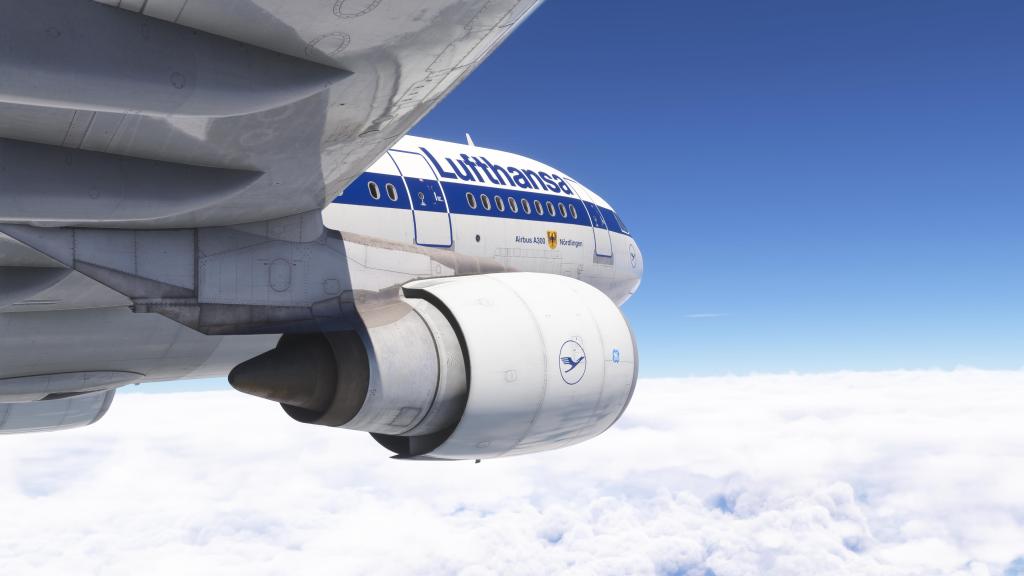
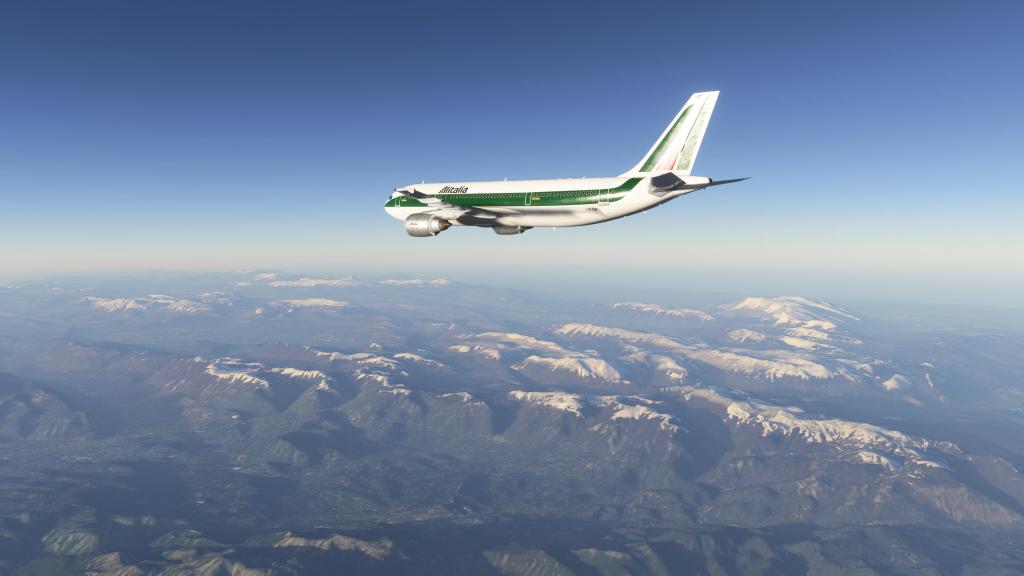
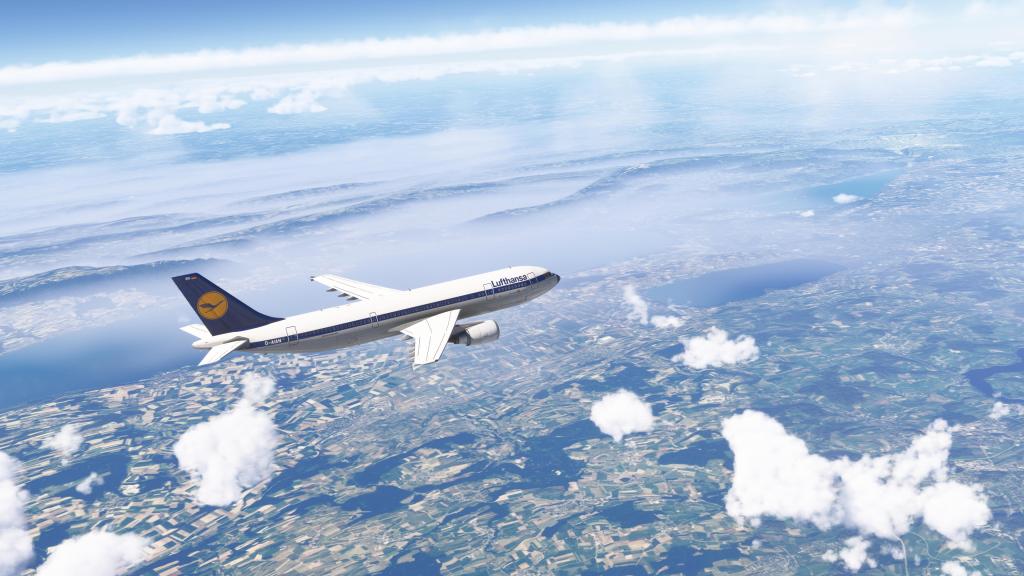
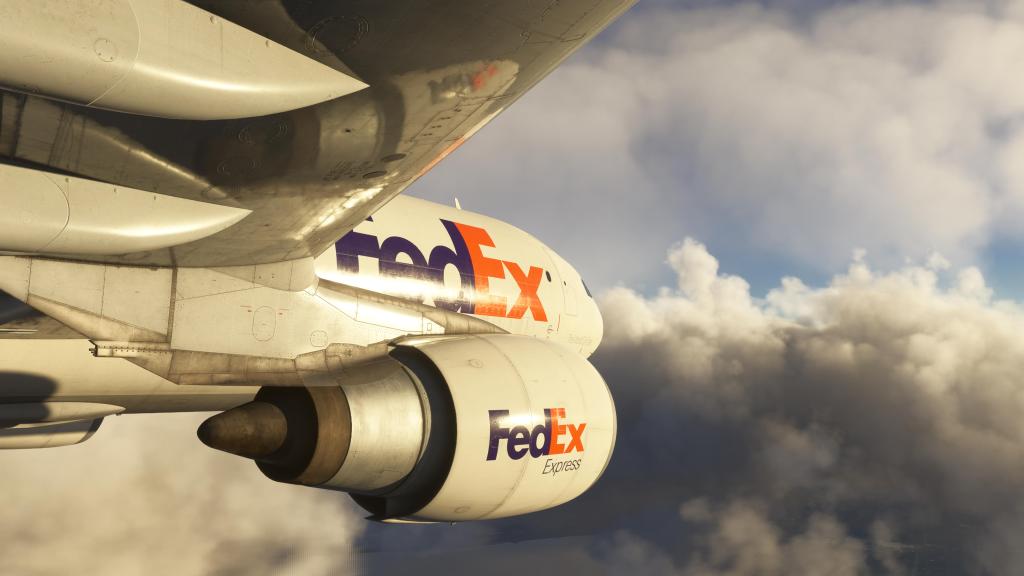
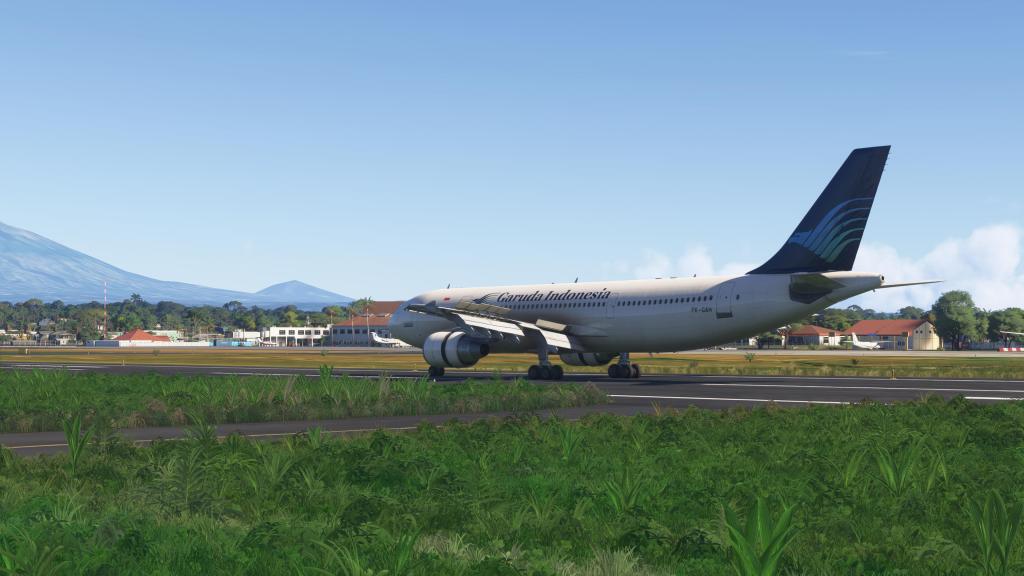
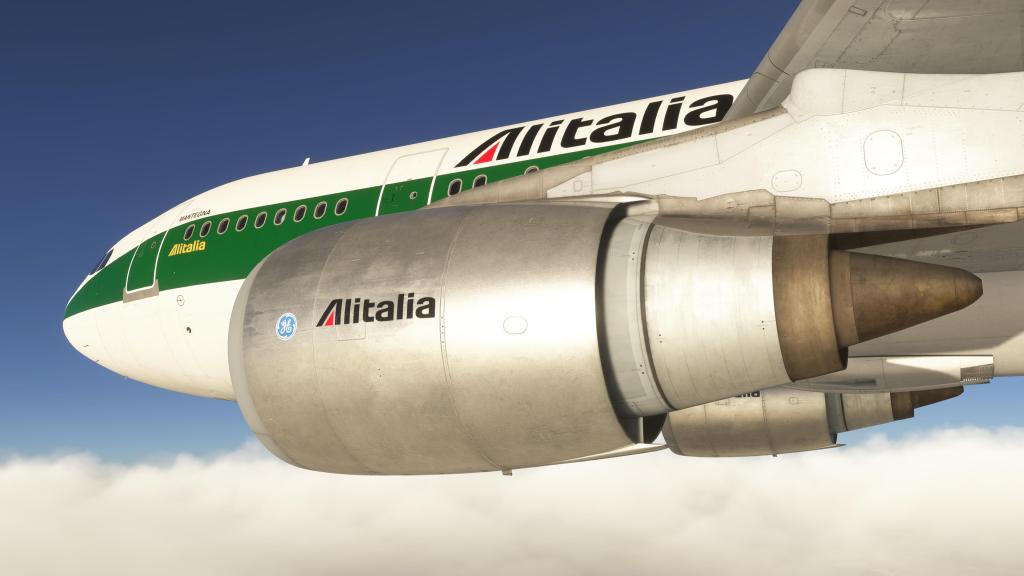
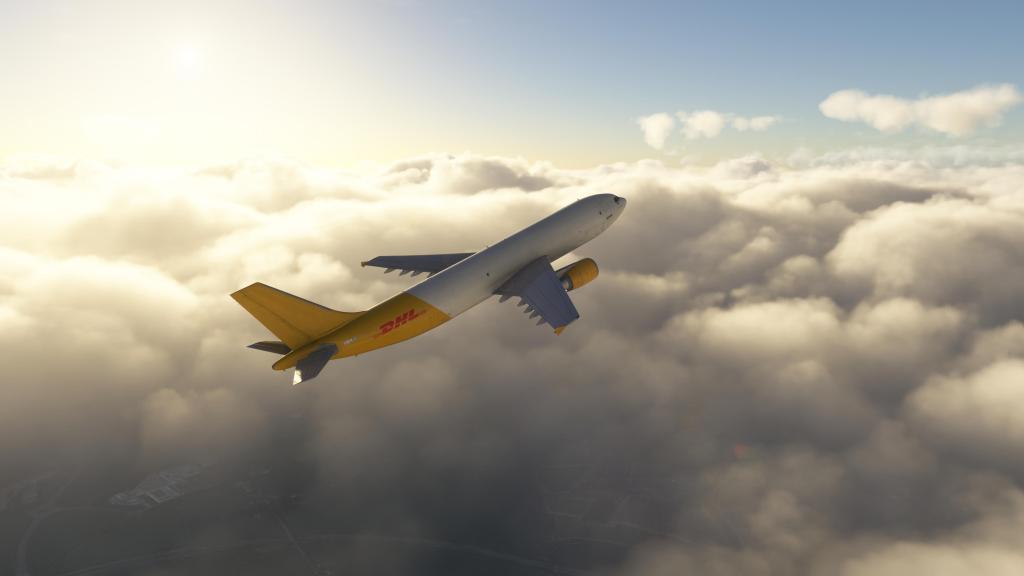
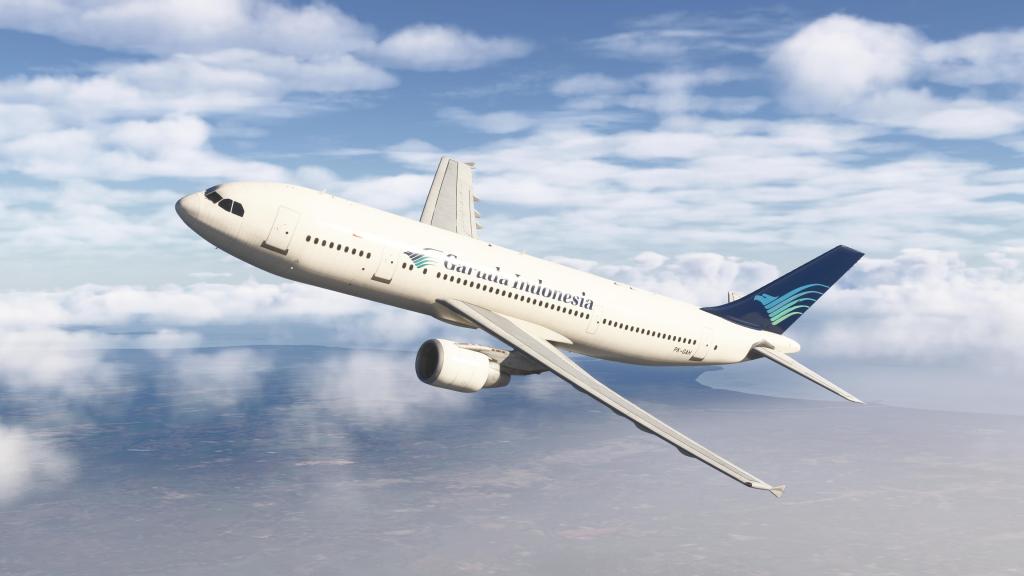
If you have the Premium version in 2024 or the 2020 version, you can use the iniManager software to download several dozen liveries representing a wide variety of schemes used by A300 operators. They’ve got passenger and cargo operators including DHL, FedEx, Lufthansa, Singapore Airlines, American, Eastern, Garuda Indonesia and more.
Both the MSFS 2020 version and the MSFS 2024 Premium version possess this extensive list while the MSFS 2024 Compatible version (i.e. the 2020 version but running in 2024) doesn’t yet have the full list of liveries. That list has been growing slowly over the last several months so progress is being made fortunately.
The updated Premium version has some MSFS 2024 features built into it as well with tweaks to the aircraft to accommodate the newer sim. Reportedly sounds and textures have been worked over though my impression is that it is largely operating the same as it did before. The stairs have been made functional in walkaround mode though the rest of the aircraft’s walkaround features are not interactive in walkaround and instead are removed or installed via the EFB – the same as in 2020.
Visuals and sounds
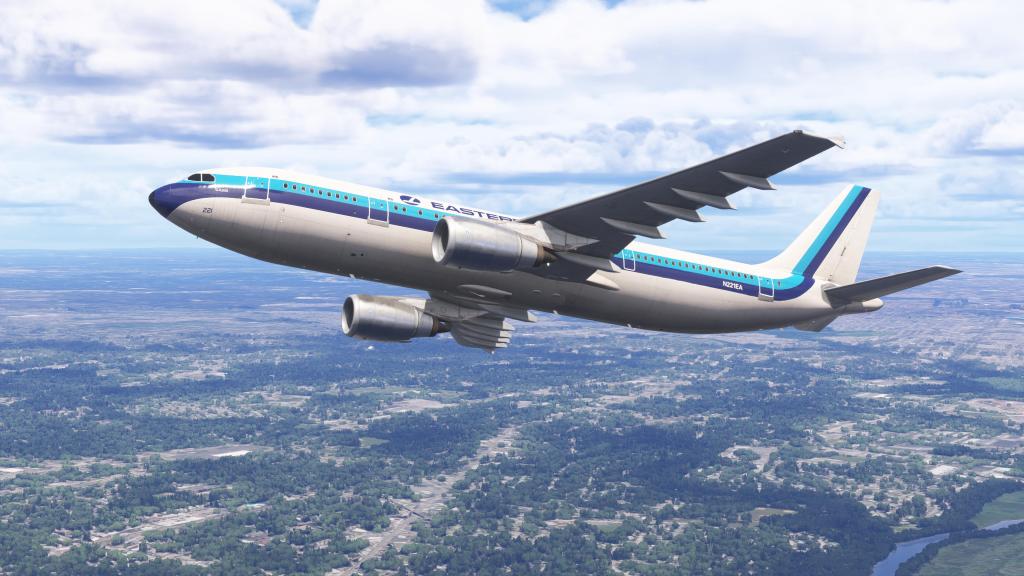

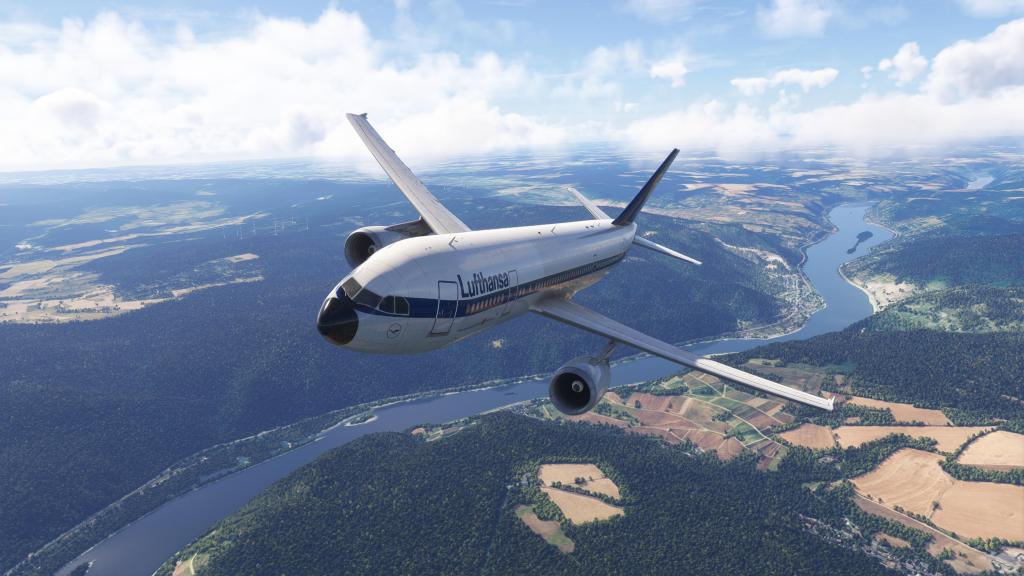

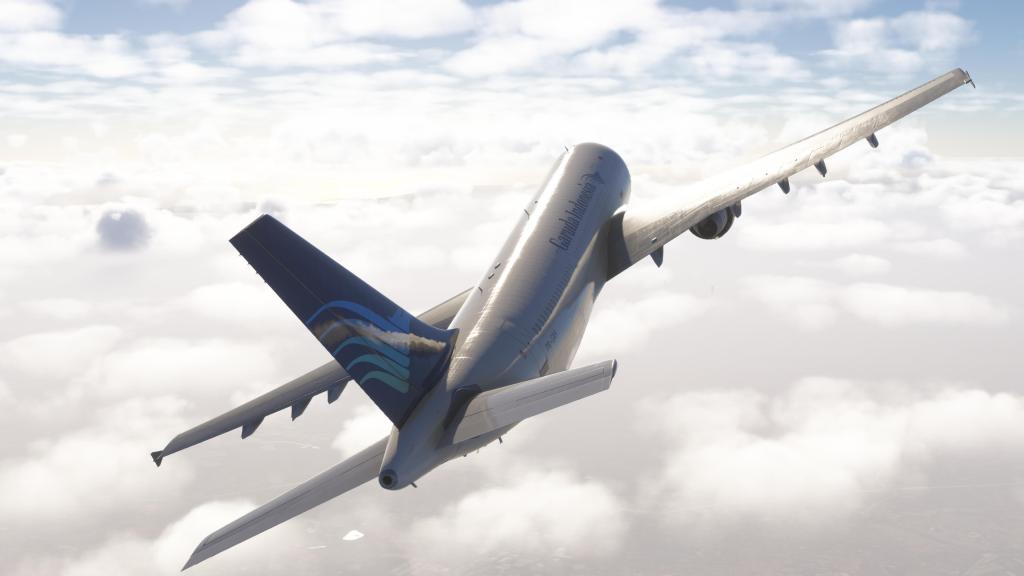


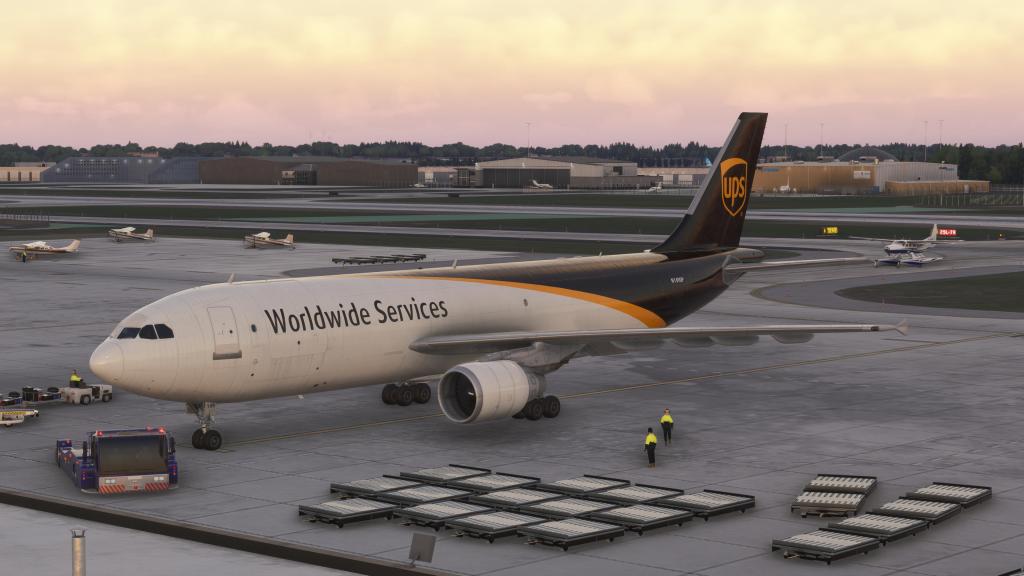

The artists at iniBuilds are particularly adept at creating some highly detailed aircraft. They have contributed dozens of types to MSFS 2020 and 2024 and while some of them have been clearly done to a more modest standard, they went all out when it came to getting the details done for the A300-600.
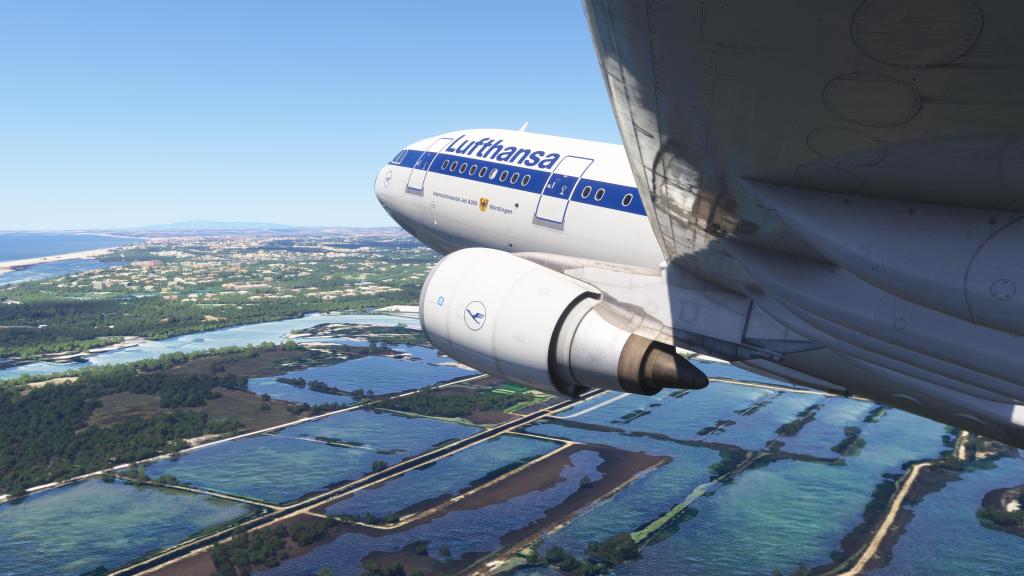
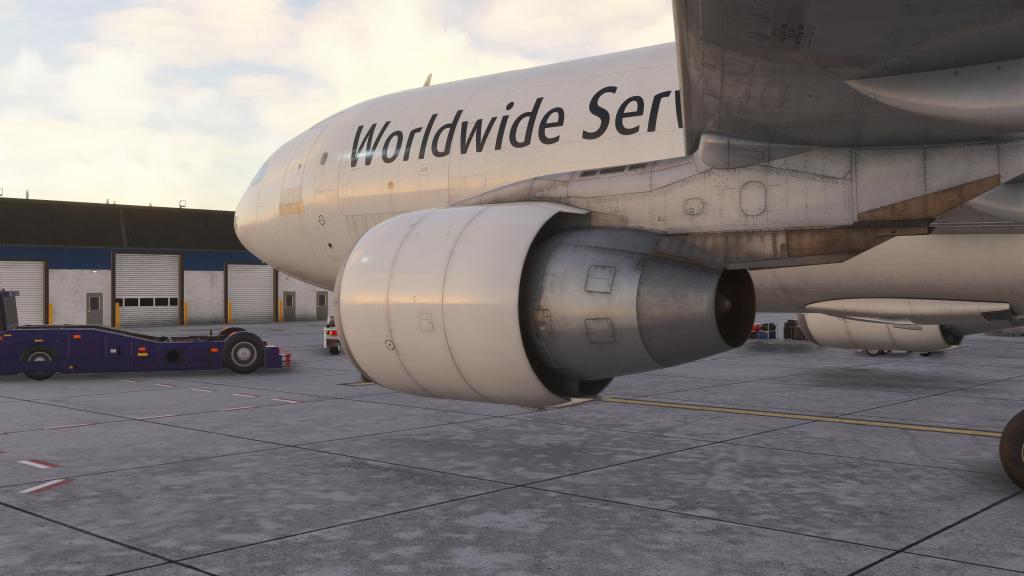
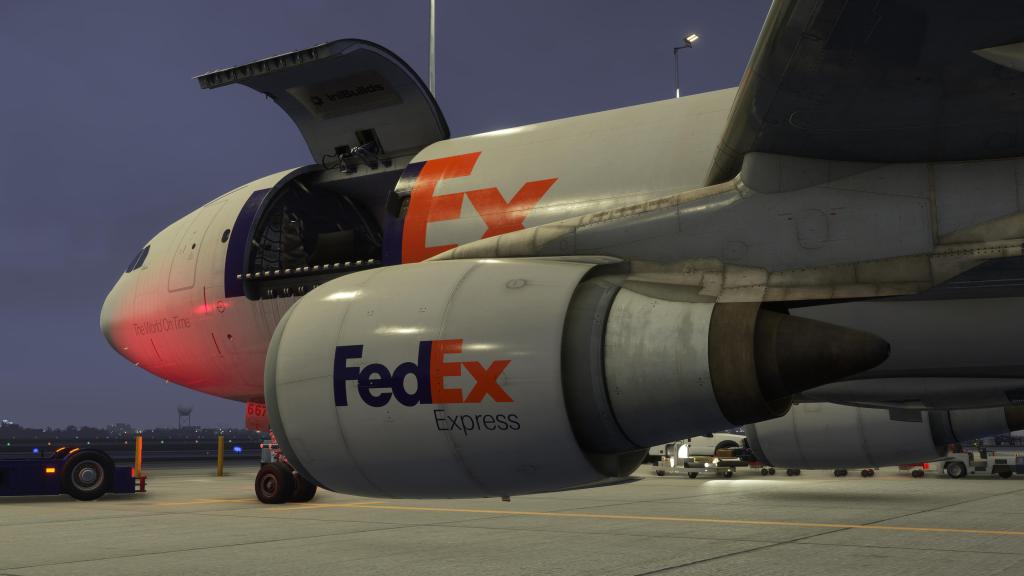
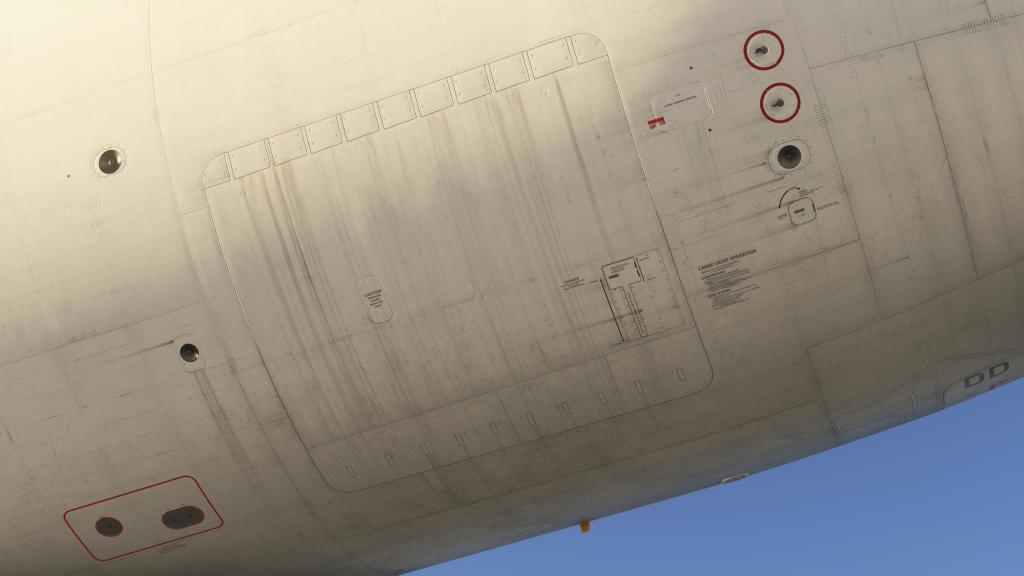
Let’s start with the exterior of the aircraft where the modeling is extremely detailed and matched by some extraordinary work on the textures. Sunlight reflecting off of the various surfaces reveals some impressive artistry and they’ve elected to offer a slightly dirtied and aged aircraft. The aircraft skin has wrinkled, as aircraft tend to do, after long service lives.
Visual details also include some practical consideration. The wear pins on the A300’s brakes are represented in detail and will realistically wear down. If you’ve been hard on the brakes, they won’t just fade realistically but you can also visually see them glow red.


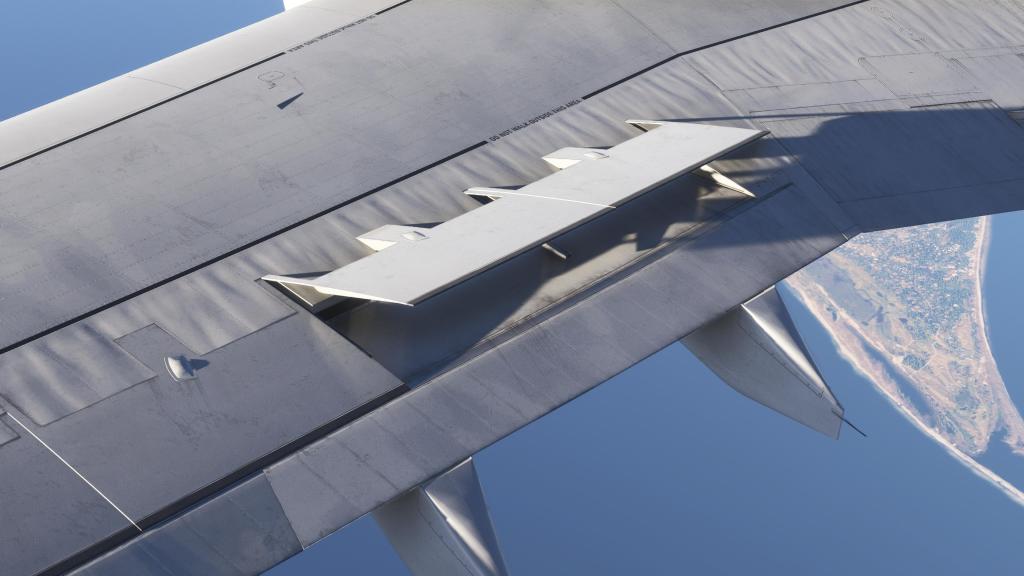


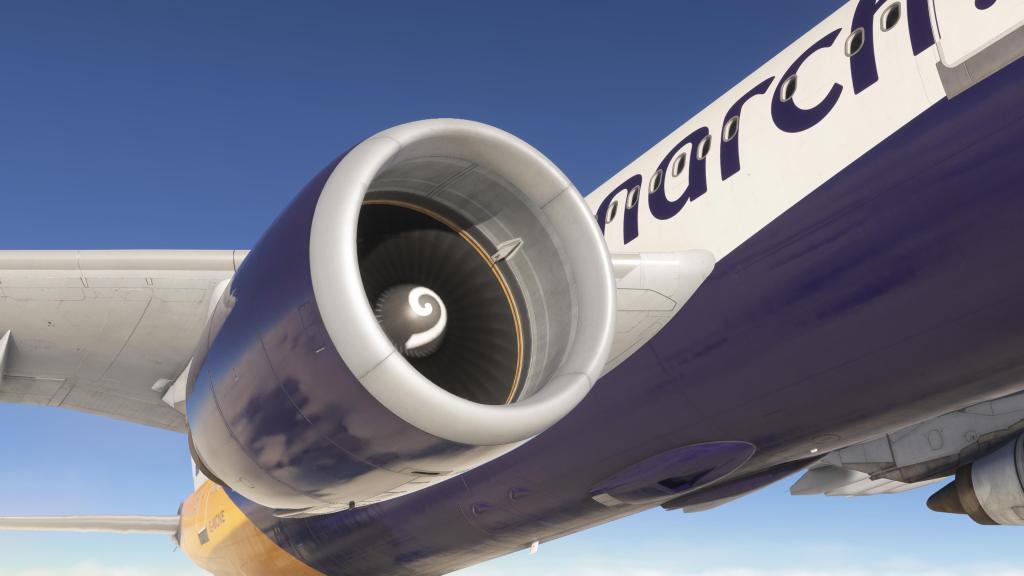


The A300 comes with two engine options: the General Electric CF6 and Pratt & Whitney JT9D engines. These are represented visually with different engine nacelle designs, different fan blades, performance attributes, some slightly different instrumentation in the cockpit and they also have different sounds.
When in maintenance mode, only the GE engine covers open up to reveal the interior of the engine.
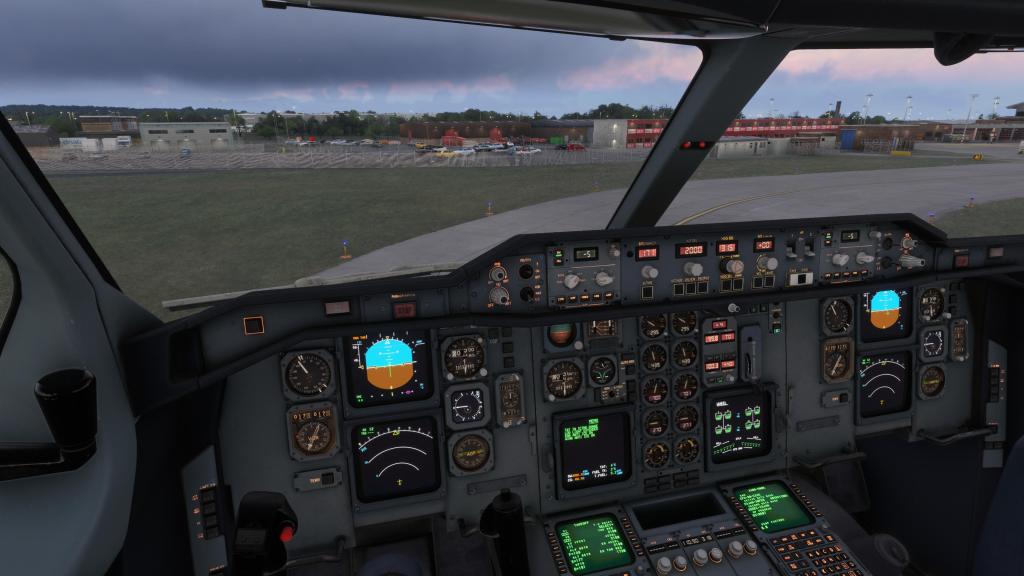
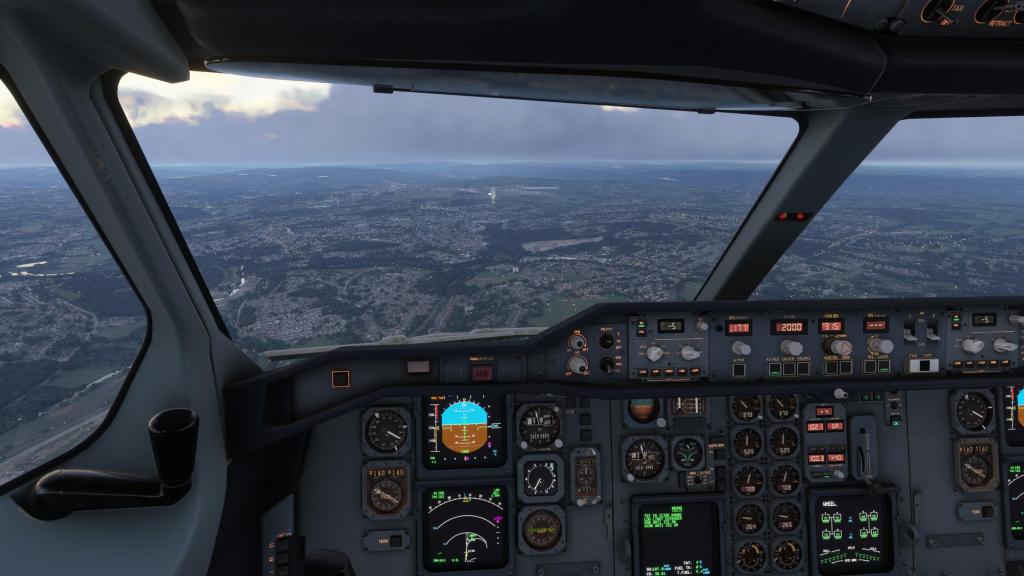
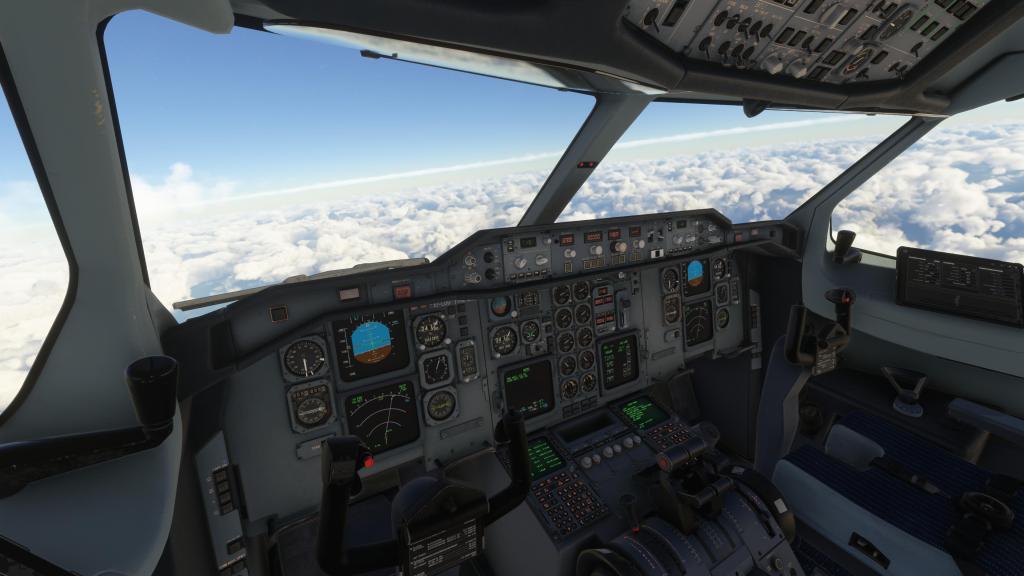
The visual details extend inside the aircraft. The cockpit is beautifully detailed and all of the various switches, knobs, and controls are well rendered. The screens are impressively done too with the type’s CRT style screens showing off their characteristic convex shape and their artists have managed to capture the CRT glow beautifully too. I really love the work there! The night lighting, though not particularly exciting, is extremely well implemented.
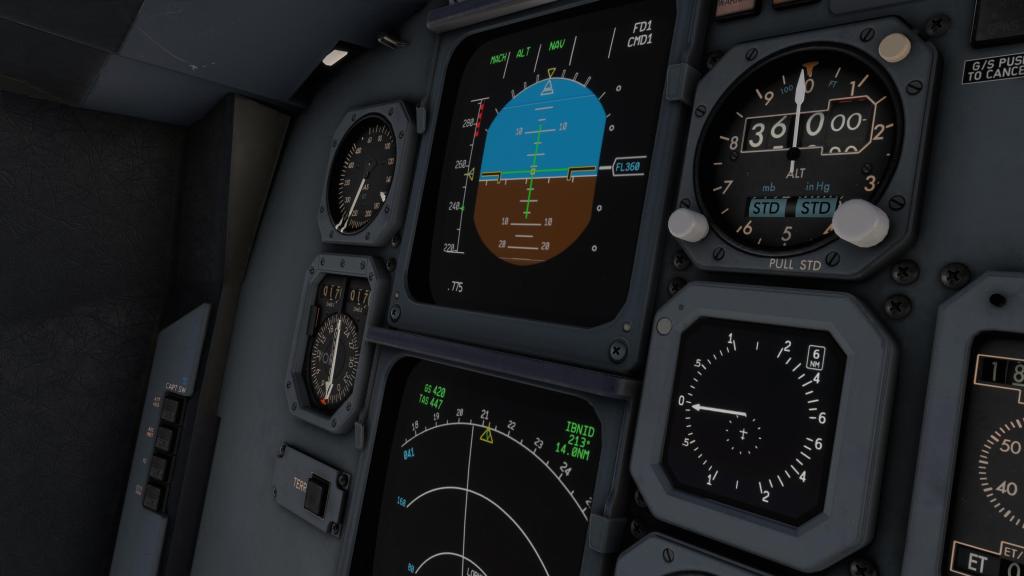

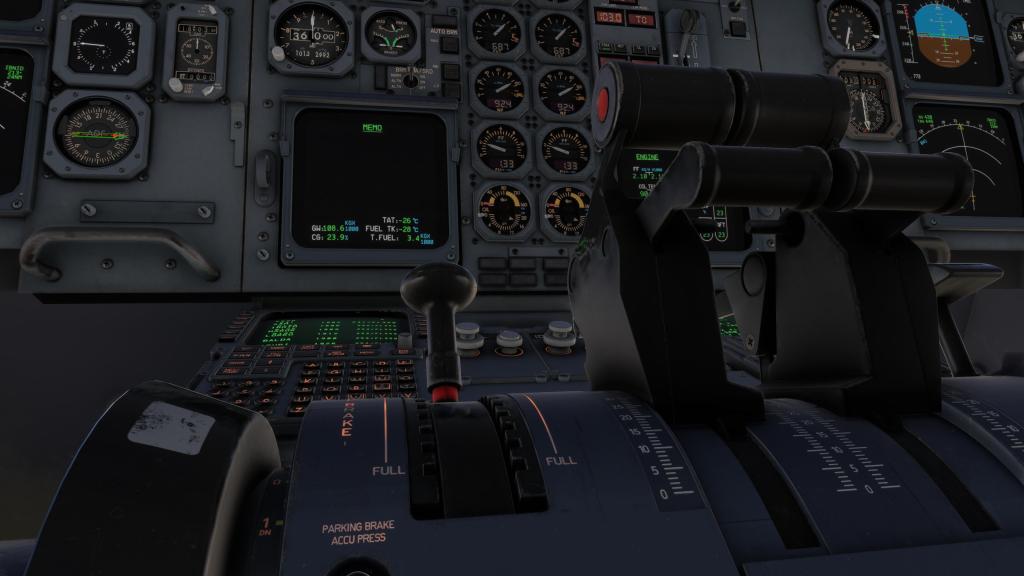

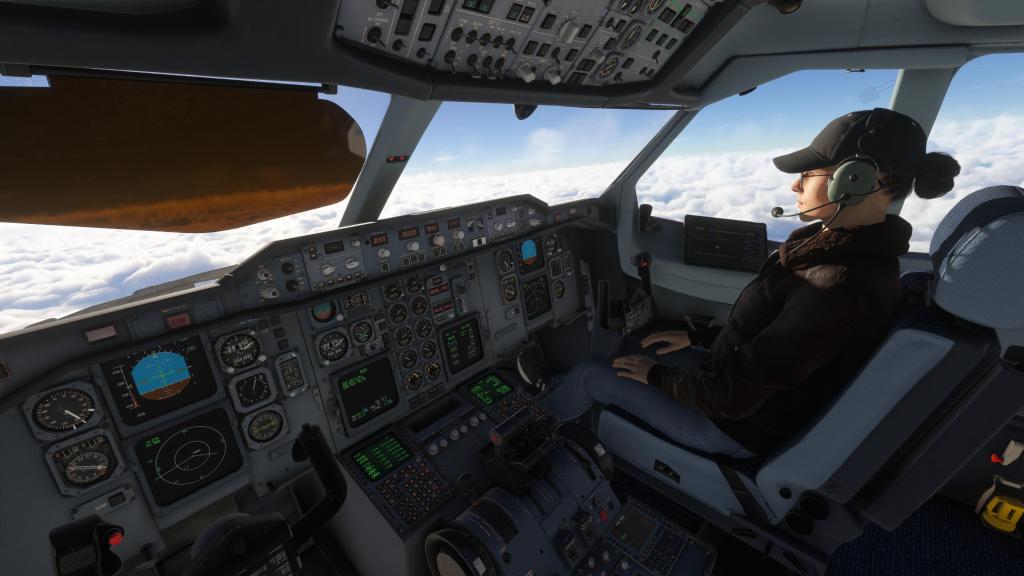


Lighting on the aircraft on a whole is quite good. With realistic cargo ops you may find yourself flying at night and the A300 is great looking and very functional. Dimming and brightening up the displays works well, exterior lighting is both functional and beautiful, and generally its just fun to fly at night as it is in the day.


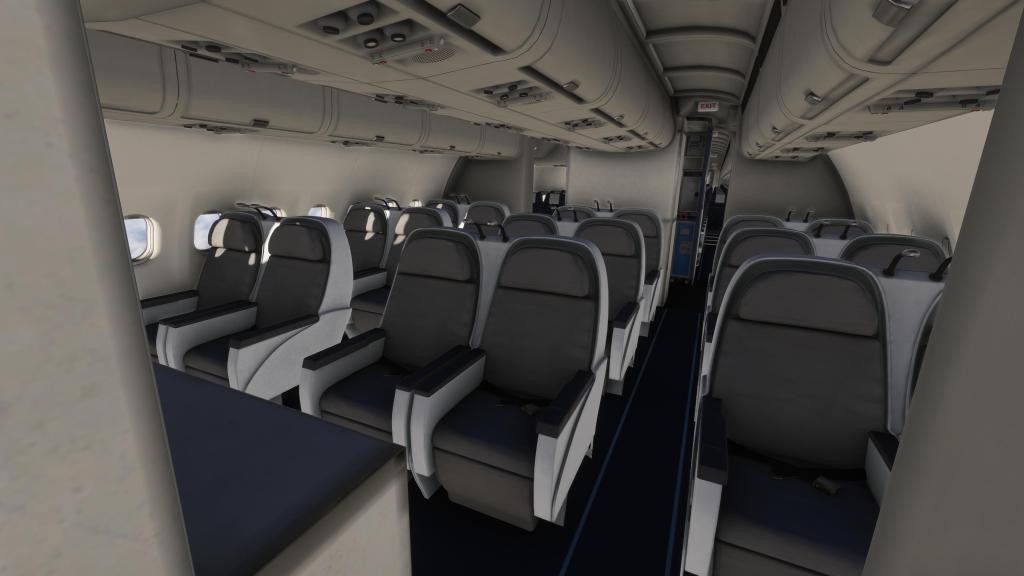
The passenger version has a pretty standard cabin area with solid detailing all around. There isn’t any interactivity back here but I don’t really mind that. There’s a two class setup with dividers, multiple seat types, and galley modeled.


Meanwhile, the freighter version includes a small selection of cargo types including F1 race cars, horses, and a few different standard cargo bins. One of them will read out the SimBrief cargo data and use that weight information as a kind of pre-set though the other cargo loads are arguably more fun.
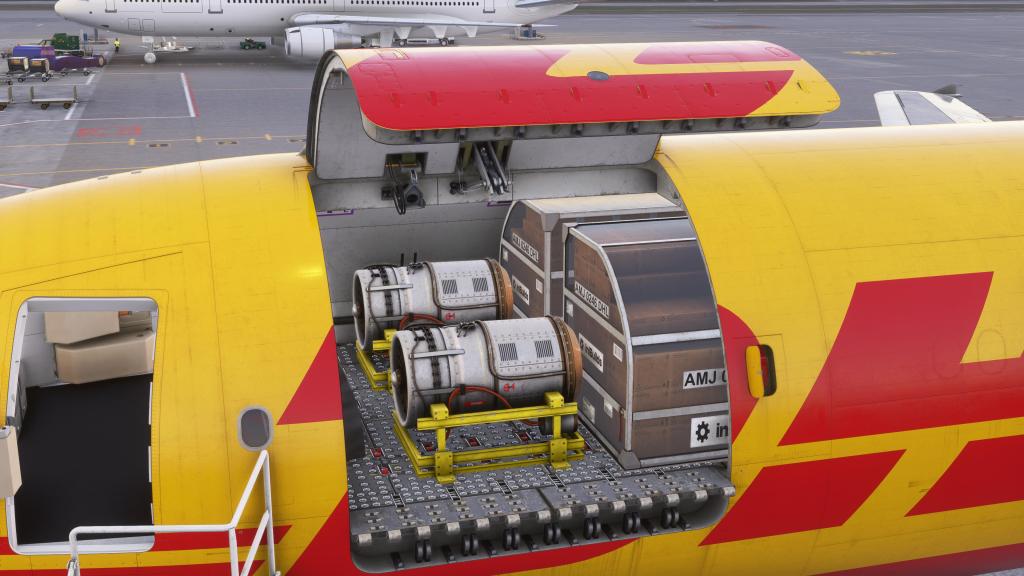


I have read from some folks that the cabin windows on the A300 isn’t quite the right shape but I’ve stared at some photos myself and I’m just not really seeing it. It’s may not be a perfect rendition as a result, however, I think it’s safe to say that it is still one of the most detailed exteriors on any airliner in the sim save for the Fenix A320 series which notches maybe just a tiny bit higher.
The sound work on the A300 is generally quite good too. Buttons, switches, levers and dials all have individual sounds, the two different engines have their own sound character, and generally speaking it all blends well together. There are great sounds for when the spoilers are deployed and the aircraft is being slightly buffeted by the extra drag and the ground sounds are great too.
My only complaint is that I don’t completely love the engine sounds. They do sound quite good from within the cockpit and in the interior areas of the airplane (with realistic attenuation as you move through the cabin) but when you go outside they sound a little screechy and loud. Maybe that’s true to character but I did end up dialing back the exterior sounds on this plane (an option in the EFB) to make it a little less jarring.
Flying the A300

We’re at the spot in the review where I talk about the overall impressions of the A300 and how it flies. How does it operate? How does it feel to fly? Let’s talk about all of that.
Those of you familiar with the A320 or A330 are going to find that there are some things that are familiar with the A300 but also some things that are quite different from a modern Airbus experience.
The A300 has a yoke control rather than the sidestick and the autopilot controls are more like a Boeing than an Airbus. The overhead panel, on the other hand, is quite a bit more like modern Airbuses that you may be used to using the same dark cockpit philosophy with lights out meaning that systems are online and operating as expected. They only light up when they demand your attention. It’s all kind of halfway in between and shows how the systems on Airbus have changed over the years which I always find fascinating!
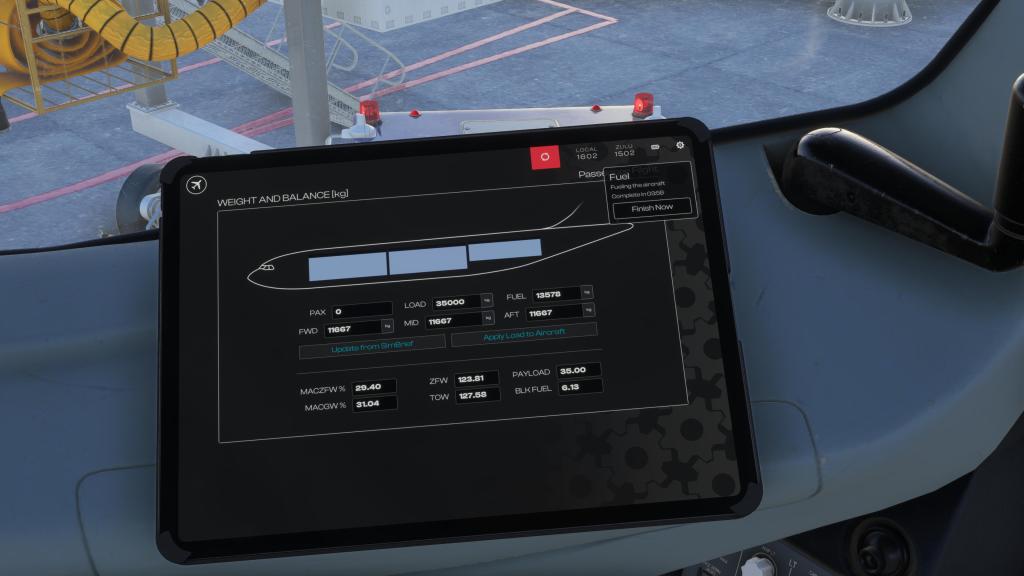
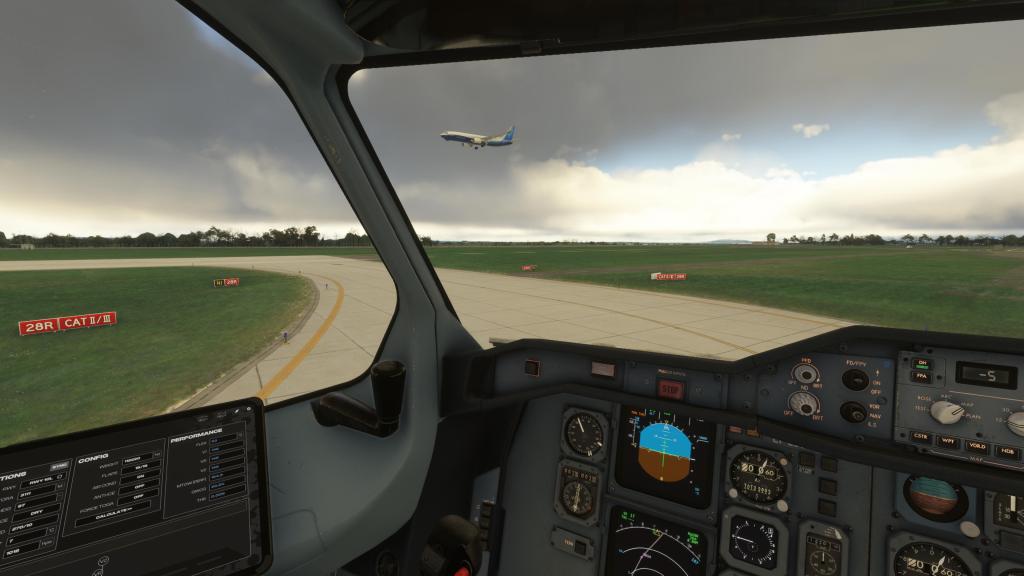
The EFB manages a lot of the extraneous components of your flight from SimBrief import, OFB display, checklists and performance calculations to panel state controls and maintenance controls. You can also make use of the A300’s own pushback tug, open and close doors and cargo, and select different cargo loadouts. This is also where you can setup your throttle calibration for the airplane, adjust various preferred settings for aircraft systems, and even tweak audio levels.


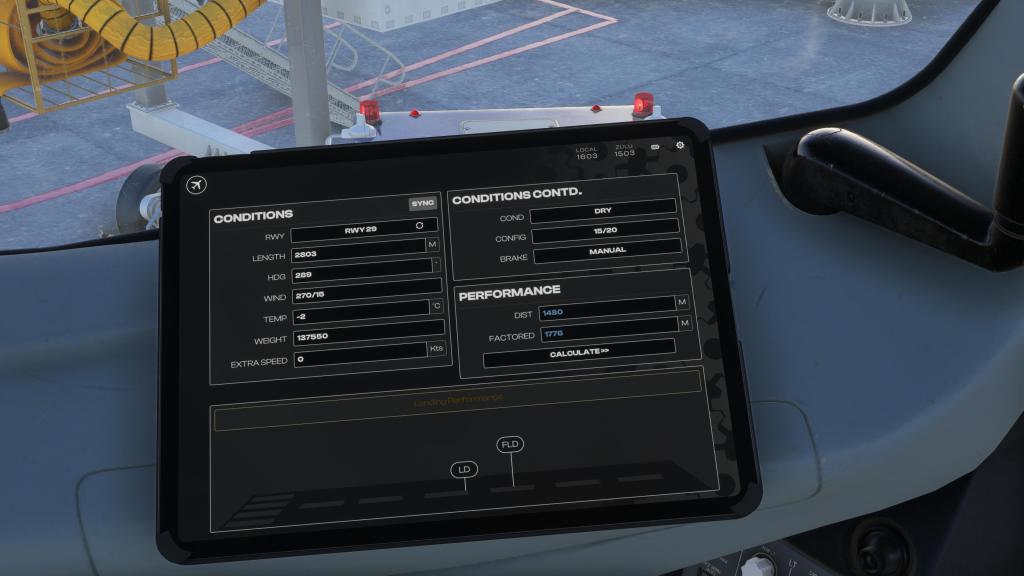

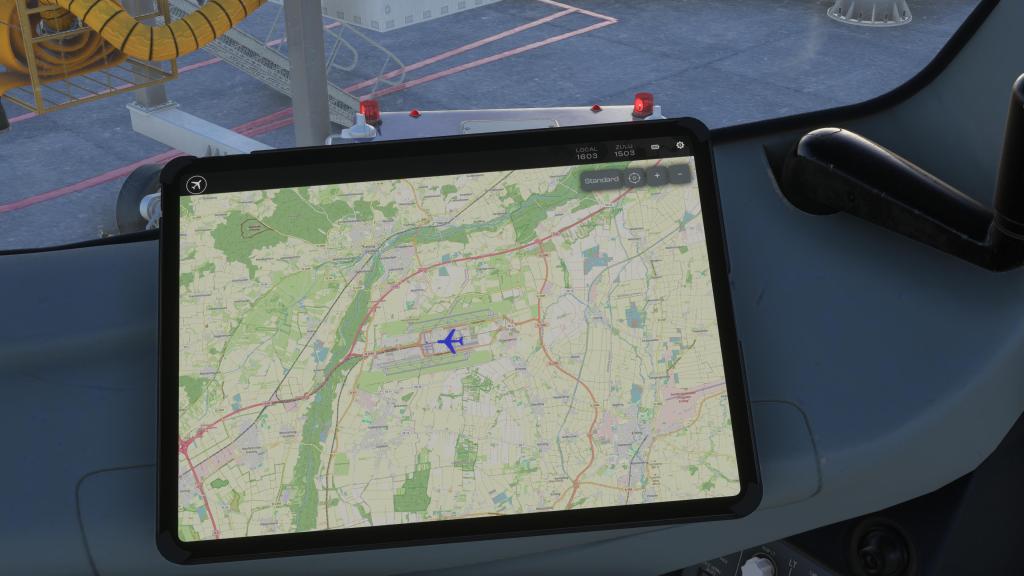

Taxiing the A300 is not too hard to do despite the larger widebody size and iniBuilds have kept apace with the improvements offered for both MSFS 2020 and 2024 ground handling. The more realistic tire and ground handling simulation has been implemented on this aircraft. It feels big and ponderous but its also quite satisfying to taxi.
Takeoff comes quickly with modest fuel loads, despite the large size of the A300, and elevator control is direct. There’s no fly-by-wire here so the A300 doesn’t have the same kind of control laws that you may be familiar with on the A320 or A330. That means the A300 handles in a more direct way which may be more satisfying for old school stick and rudder flyers but it does mean that you can more quickly get out of control.
I’ve never stalled the A300 outside of the one time where I did it on purpose. I did overspeed it once but that was more due to early inexperience and a desire to take some nice screenshots overriding the directive to fly the airplane first above all other considerations.
I also really like how the A300 hand flies! It feels confident and direct as I’ve said but it also feels big and that is reportedly how the real one flies too. There are subtle differences with the 2024 Premium version which makes use of more CFD tools to get the handling of the aircraft right particularly in specific situations. I haven’t noticed much of a difference but the whole flying part of the experience is quite smooth and enjoyable.
Landing with the A300 can be a bit tricky as its less responsive than the 737 or A320 and more sluggish than even the A330. That means you need to stay ahead of the aircraft adding to the challenge. Still, getting the A300 on the ground can be very satisfying as it lands with a loud thunk even when you grease it. I kind of like that about flying this big bird. It feels big and no more so than on landing.
iniBuilds have done a custom FMS for the A300 which is going to generally be familiar to Airbus fans, albeit you can tell this is from an earlier iteration of their systems design. The FMS is capable of everything that you’d expect from a modern system, however, there are some nods to its more primitive nature including having the whole screen refresh to redraw the items on it. Very 80s! I love it! It does allow for SimBrief import so you can very quickly input your plan and performance numbers via the ACARS menu.
Problems and performance issues
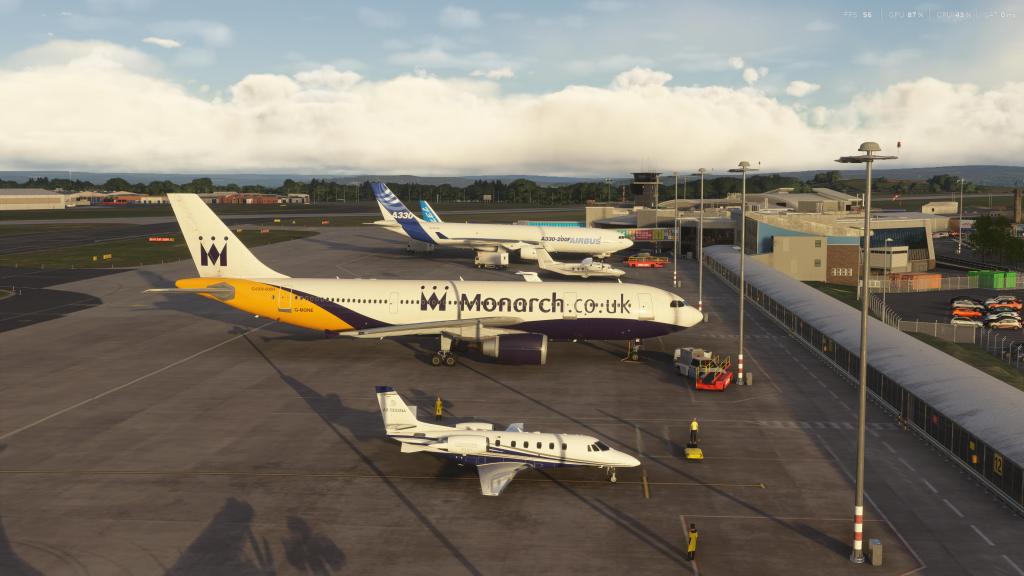
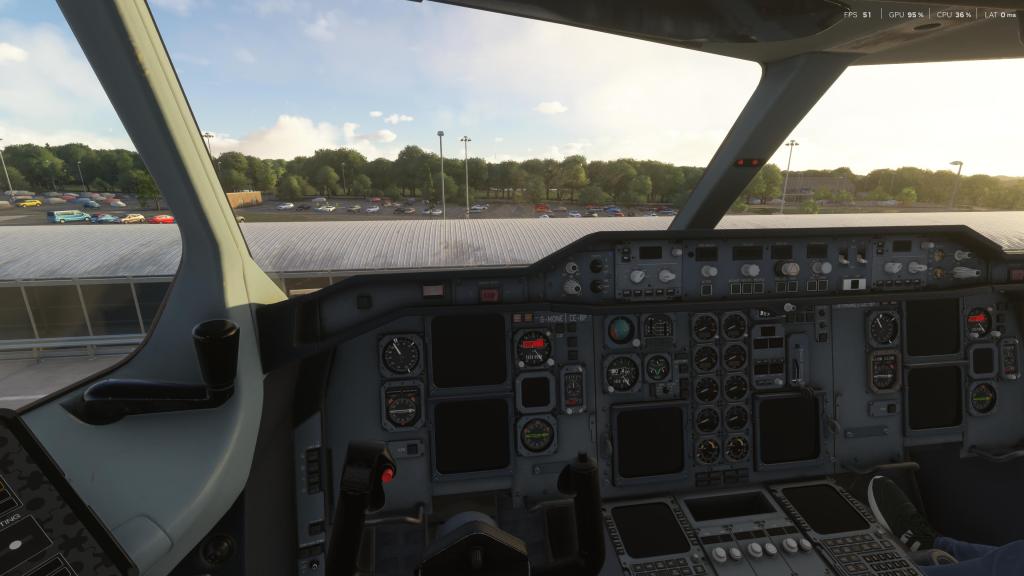

Sometimes I forget to talk about frame rates on airliner reviews because the aircraft in question just works and doesn’t bother me. The iniBuilds A300 has unfortunately been something of a problem in this area though inconsistently so.
I’ve got a strong, admittedly couple of year old now, sim system with a 13th gen Core i7, 64GB of RAM, an RTX 3080ti with 12GB of VRAM and its running off of a very fast Samsung SSD. Despite all that, the A300 struggles sometimes.
Launched in December of 2023, iniBuilds has issued no fewer than 14-updates for the MSFS 2020 version, one update for the 2024 compatible version and four updates for the 2024 Premium version. Some are small updates while others have been substantial ones and it should be said that iniBuilds has been reasonably attentive to the product fixing problems and adding features. Many of the updates have been focused on performance and things had managed to improve for a while.
The move MSFS 2024 has caused some regression and frame rates continue to be the Achilles-heel for iniBuilds A300. Ironically, its the Premium rather than Compatible versions that seem to struggle a bit more with the new sim despite advertised new features for enhanced performance.
That all said, the new Sim Update 2 frame generation feature really does help things out a fair bit. Depending on the scene you can get 30 to 60 or even 70 frames per second. Prior to that I was sometimes seeing 20 fps or even less. Another issue is the WASM cache which seems to get gummed up with problematic code and clearing that out can reduce performance issues. I noticed an immediate improvement and its better after doing that.
Despite all that, when moving around the aircraft and in system resource intensive moments (like landing) the aircraft still tends to stutter and get the jitters in frame rates. The FPS number may remain high but its shaky and inconsistent.
The bottom line here is that the A300-600R(F) is probably harder on my system than anything else that I’ve reviewed to date. I’ve not yet tried the A350 but I hear similar complaints there and I will be comparing the two at some point. Notably, the iniBuilds A310, A320neo and A330 series included in the sim run a little bit more smoothly than the A300-600. Maybe its something about the features going on behind the scenes, I’m sure.
The A300 has, on the other hand, proven to me to be remarkably stable. No WASM crashes or issues experienced with it since it’s earliest days of release. I’ve flown it a lot over the last year and a half and its been a good experience.
Fast and fun
I always ask the question if they can be fast and fun. Can you get this up and flying in as short a period of time as possible or do you need to go through lengthy start-up procedure every time? The answer here is yes! iniBuilds have done enough to make this relatively fast and fun.
The EFB gives you the ability to do a panel state change setting the aircraft in various configurations including cold and dark, turn-around and ready for takeoff. A brief time period where the aircraft systems come online lets you get set for flight. SimBrief support in the ACARS menu allows for a quick import of the flight plan too.
One item that may catch you out, however. If you do your fuel and payload before switching states, the A300 will default back to a basic fuel and payload count and at that point you may find yourself lacking fuel for the full journey. It’s the only product I’ve tested where that happens and its a bit annoying to be sure. Change the state, then change the payload before the engines start to get around it. Double check your fuel state to make sure it stuck. And, if you do a manual start its no problem at all.
Versus the A310

One of the challenges of iniBuilds offering the A300 is that invariably the question then becomes why buy this airplane when the A310 is available as an included aircraft in the sim already. That’s a good question and there are going to be some selling points here that may convince you that you want the A300.
First, lets talk similarities as iniBuilds have upgraded the A310 for MSFS 2024 bringing in some additional artwork and features from the A300. Nice! The A310 is quite a solid rendition of that airplane too (though it is severely lacking in liveries from both first and third parties). Even better, if you get to know the A310 you’ll find yourself able to hop into the A300-600 as the avionics are largely the same. Though you will notice handling and aircraft performance differences between the shorter and lighter A310 and longer and heavier A300.
The differences are in the extra features that the A300 brings to the table. There’s just more of everything. Here we have two types of engines, maintenance features through the EFB, cargo and passenger variants, more options for avionics including two radio control styles. Yes, its basically the same plane but there is more of it in all respects and you just won’t see those features on the A310.
Final thoughts
The airliner market has gotten rather crowded for Microsoft Flight Simulator over the last few years. While the sim started out with few options that satisfied the high fidelity airliner crowd, in 2025 we have a lot of options and that means there’s a lot of competition. Is the A300-600R(F) worth it?
The pros for the A300-600 runs the range from fantastic visuals, good sounds, solid systems modeling and extra features like a good maintenance persistence system. The aircraft is satisfying to fly and you feel like you’re flying a big old airliner (or freighter as it may be). At the same time, the A300-600 is modern enough that you can do everything you need to do with it in much the same way that you would from more modern airliners just with older systems. VATSIM users should have no real struggles following procedures on there.
On the cons, while iniBuilds has made great strides with performance issues on this aircraft yet it still remains one of the heftier airplanes in the sim. In 2020 it reached the level for me where it was satisfying with the occasional stutter at large airports. In MSFS 2024 its been somewhat worse though frame gen and Sim Update 2 have improved things. That leaves me torn with the aircraft being highly enjoyable in nearly every category save for the frame rates which dip into the slideshow level sometimes.
On the value side, I think iniBuilds have generally been good with pricing keeping the aircraft slightly below its competitors while offering slightly more in the package. Offering two engines and having passenger and freighter variants packaged together for roughly $40 USD is a real plus and the A300-600F still seeing use in modern times as a freighter is going to be an advantage to those virtual pilots who prefer to mimic real world ops as closely as they can.
One thing not yet mentioned is the “Epic” avionics update (that’s the Honeywell Primus Epic avionics suite). At one point, iniBuilds were planning to do this, however, that has yet to materialize. If it did, I’d be interested to try it out as a good number of A300 freighters use that system.
There will soon be a competing A300 product on the market as well. Just Flight’s in-house team are tackling the A300B4 variant, the earlier model with less advanced avionics and a three person crew with flight engineer. If its classic airliners you’re looking for, that one may fit the bill better than this model. If on the other hand if you’re looking for a mix of modern 2020 era real world ops and historical passenger ops then the A300-600R(F) flying freight or passengers all across the world may be more up your alley.
Despite the issues, I have a serious soft spot for the A300 and its one of my most flown airliners in the collection. Every time I come away from some other plane, I go right back to this one (and the Fokker F28). It’s got a good combination of everything that makes it versatile and fun and the systems are just the right mix of modern but not necessarily ultra modern so you still flip switches and turn toggles and really manage the plane from time to time.
The A300-600R(F) Airliner by iniBuilds is available in a MSFS 2020/MSFS 2024 Compatible version for £34.99 GBP here and in a MSFS 2024 Premium version for £44.99 GBP here.
Screenshots






























 Stormbirds
_at_Le_Bourget_Airport.jpg)

Leave a reply to James N Nichols Cancel reply