
SimWorks Studios is about to take the wrapper off their brand new GA-8 Airvan for Microsoft Flight Simulator. As you know, I’ve had the opportunity to preview the aircraft a couple of times before with a pre-release version. Now the final version is in the can and ready to go. In this preview I look at a couple of new features while I take the aircraft on a short adventure around the Maasai Mara Safari scenery in Microsoft Flight Simulator 2020. Yes, this one was done in 2020. I’ll explain why along the way!
Taking a tour with the Airvan
When I write up the full review, I’ll get into a bit more of the history around the GA-8 Airvan. Suffice to say, this little utility airplane is a back country airplane intended to get in and out of small airports. One of the livery options included is a delightful ‘Safari Wings’ livery that the developer has put on a bunch of their aircraft. I wanted to get into that theme and go on a little tour. Enter iniBuilds free Maasai Mara Safari scenery (which *ahem* still has not been updated for 2024!). This adds some custom airstrips, additional scenery assets, and scatters wildlife all over the region.
The scenery pack comes with Mara Serna Airstrip which is a kind of home base for the area as well as a bunch of smaller airstrips scattered around the area. I played this one as a milkrun, takeoff, land, shut down, start-up, takeoff and visit the next one. They aren’t far apart but the terrain on the ground is challenging and moving people and supplies around quickly is what you get a workhorse airplane to do. Enter the Airvan!
New features
The reason why I’m doing my initial flying with MSFS 2020 is so that I can check out the failures system and see what its like to fly with that in the background. SimWorks Studios have the 2020 version flying well in both 2020 and 2024 while a native package version of the aircraft is being prepared for 2024. At the moment, the reliability and failures system is only running in 2020 so I thought I’d run it with that in the background and see what its like.
I need more time to really dig into what the system is like for the aircraft but I’m treating it more as a challenge for good flying rather than a training implement where I setup a sudden engine failure. In other words, if you just fly normally, what is it like to have it going in the background. You can absolutely run it both ways but that’s the way that I’m choosing to operate.
Another new feature is the first implementation of SimWorks Studios new tablet system. Its a feature that I thought was one of the few things missing off of their Kodiak and PC-12 aircraft – both which would benefit from being able to select features for each. Its come to the Airvan first but its something that will end up in those other aircraft later on too.
The company’s first crack at it I can already say with some confidence is good. It has checklists, it gives you access to aircraft features, it lets you load the aircraft with people and cargo with a few clicks, and it gives you access to the reliability and failures system. Again, I need more time with it to really feel it out for features but its great to see it operating for the first time.
Flying the Milkrun

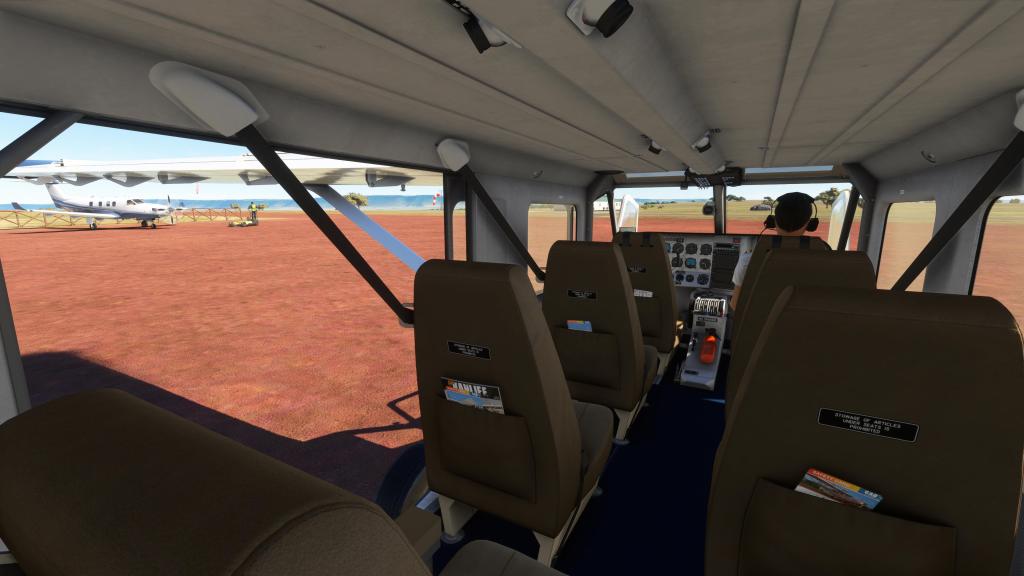
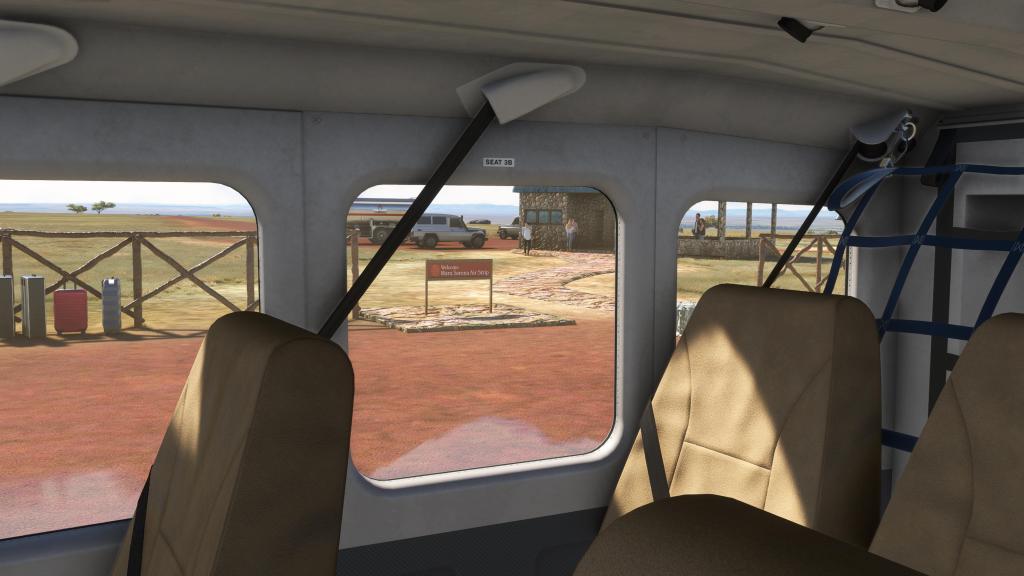


I’ve flown the Airvan a bunch of times now so I’m starting to get to know my way around the airplane. SWS have setup an interactive walkaround mode with the aircraft that works even in MSFS 2020. Move the camera outside of the airplane and do your initial checks to remove the engine plugs, the chocks (left and right independently), the pitot tube cover, and if so wish you can also inspect the oil level. On that last one, I did pull it out but was having trouble seeing the oil level on the dipstick. Not sure if that is actually a working feature right now. Still, as checklist steps go you can do all of that.
After that, I used the tablet to load up the aircraft with people and gear and got ready for start-up.
Running through the checklist, the Airvan is relatively easy to start though I appreciate how its more than just a turn of the key to get the engine to turn over and instead you need to crank it just a bit until it catches and starts.
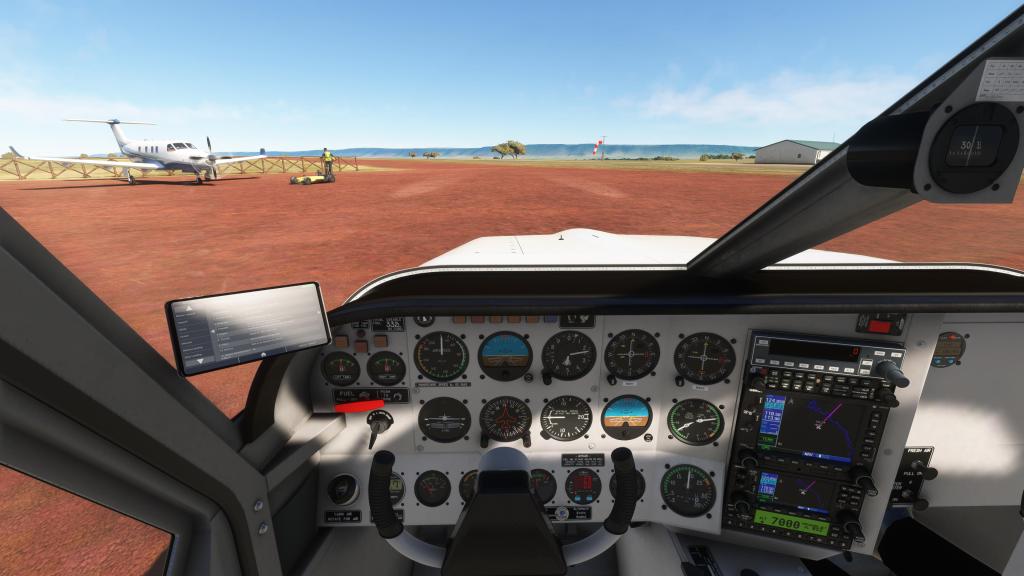
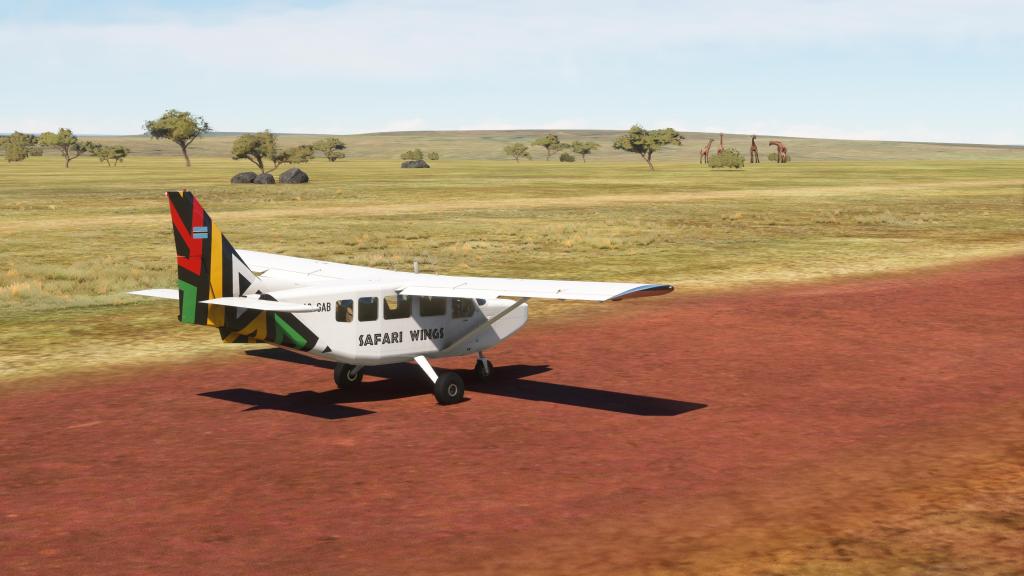
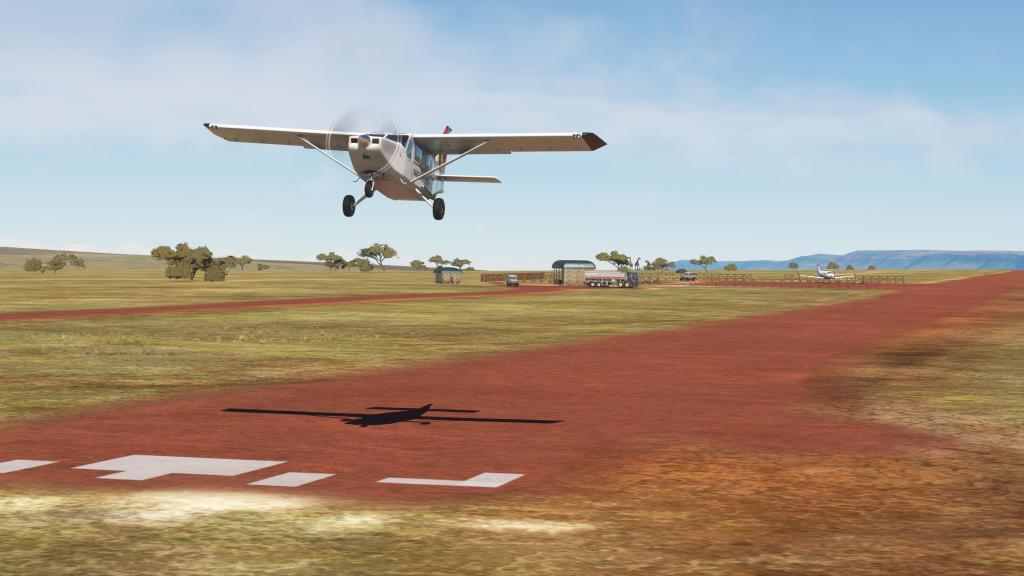
After that, I backtracked on the dirt runway and powered up for takeoff.
Now here’s where I made some critical errors. First, the Airvan is not quick to accelerate or takeoff. It may be a backcountry airplane but it doesn’t immediately leap into the air like the Kodiak or something else with a ton of power behind it. This is more sedate feeling and doubly so when nearly fully loaded with passengers and cargo like we were.
Second, this airstrip is located at almost 5,000 feet. So, who left the fuel mixture at full rich? This guy right here! Too much fuel in the mixture meant that we didn’t have enough power on takeoff for the altitude. Whoops!
Initial climb out, as a result, was very sluggish and the stall warning horn went off a few times until I figured out my mistake and kept it flying.
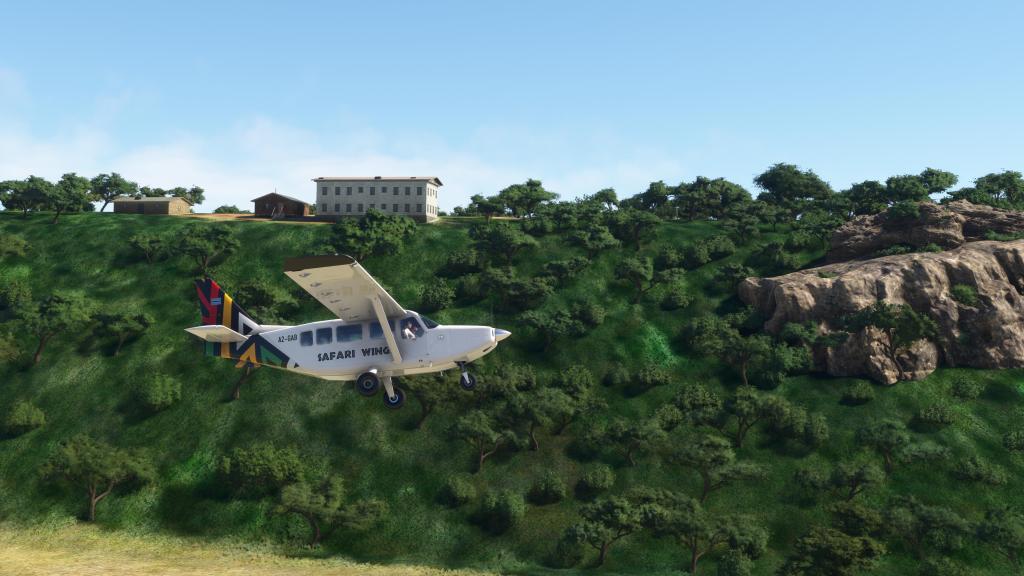
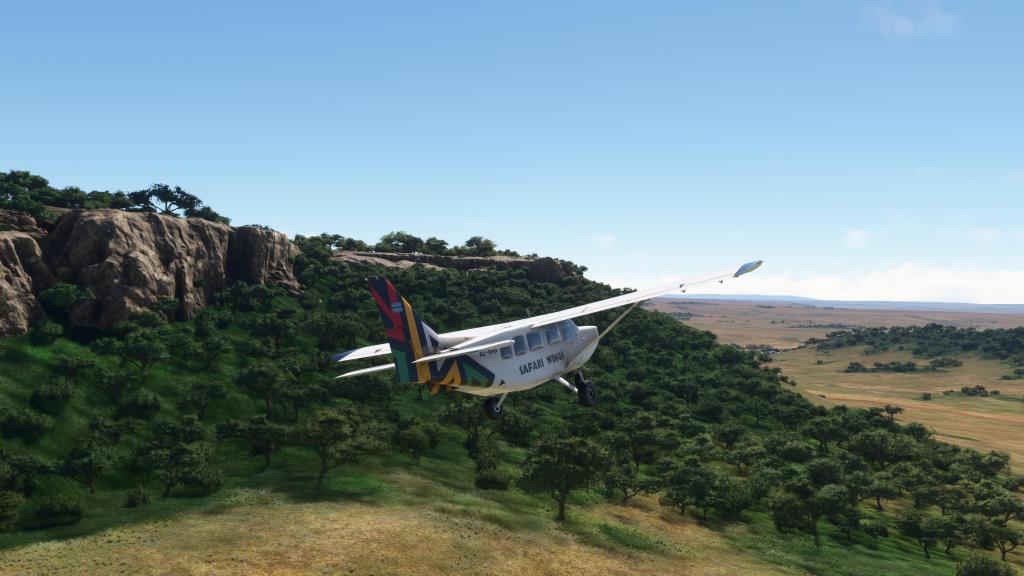
After that, things settled down a bit more. I reduced power back into the recommended range, tweaked the mixture, and settled in for our first hop. Flying low and slow has its advantages and here we could see quite a bit of wildlife.
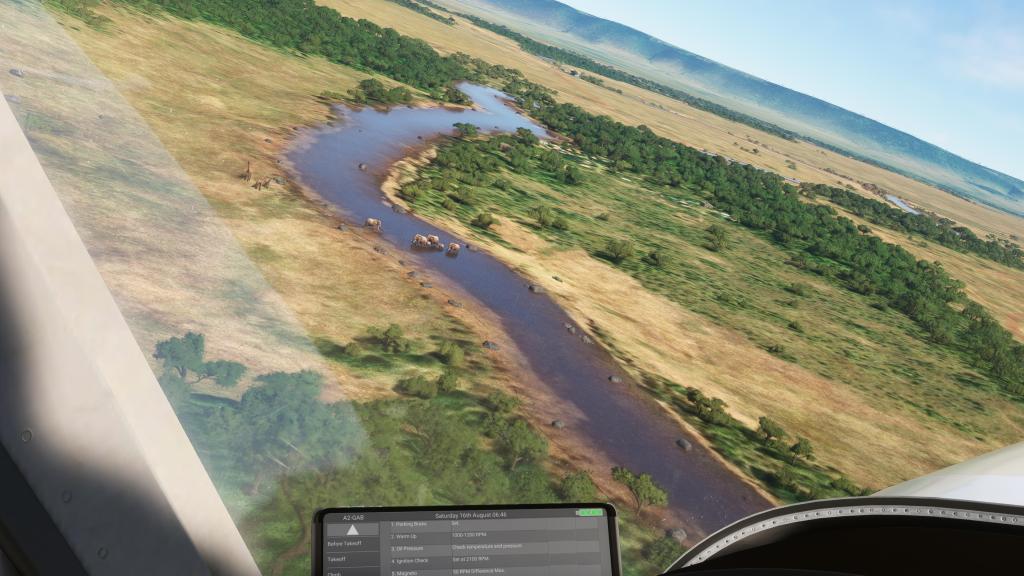
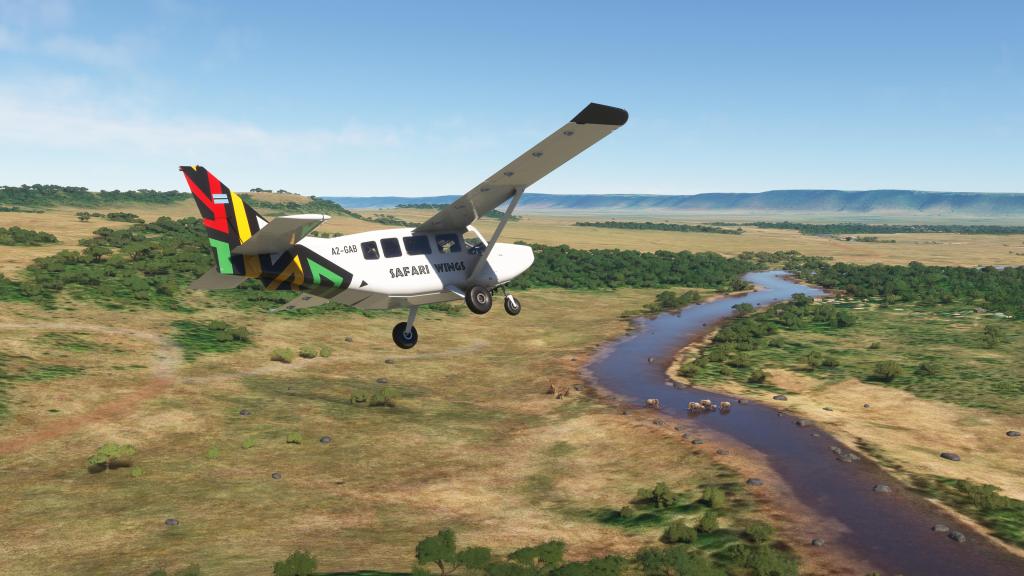
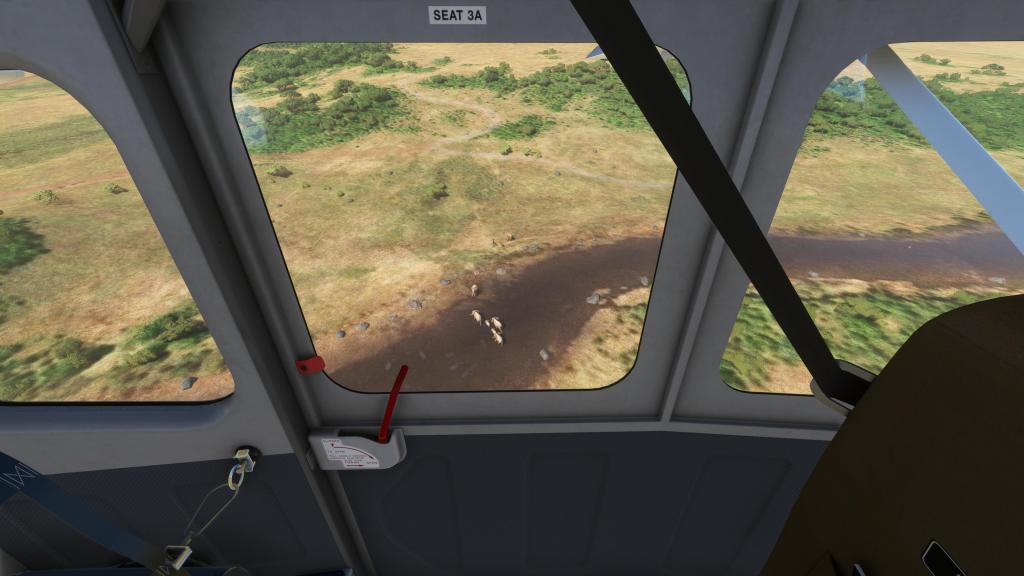
There were also opportunities for flying over vast grasslands and over winding rivers.

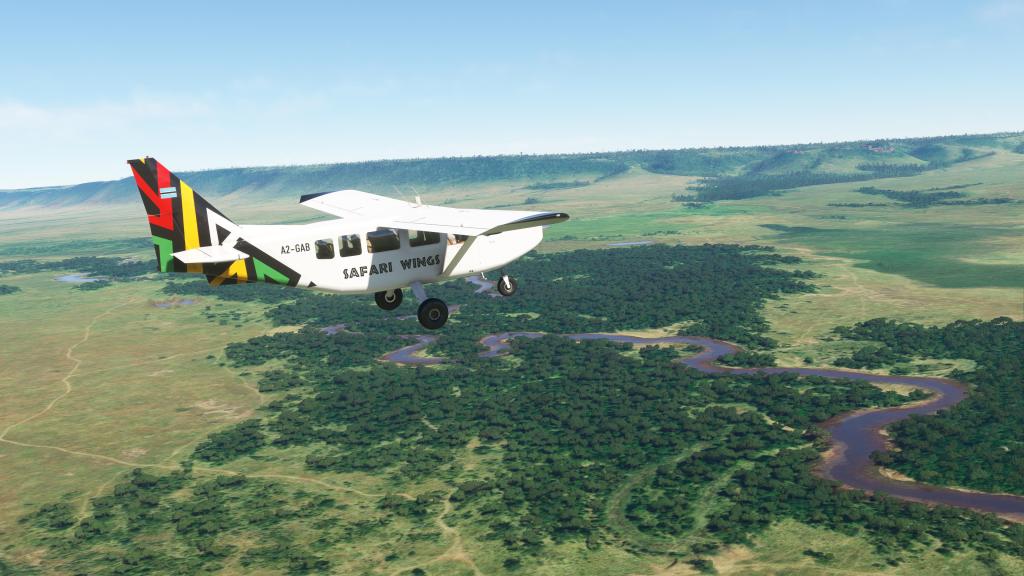

This all before we came up on our first destination.
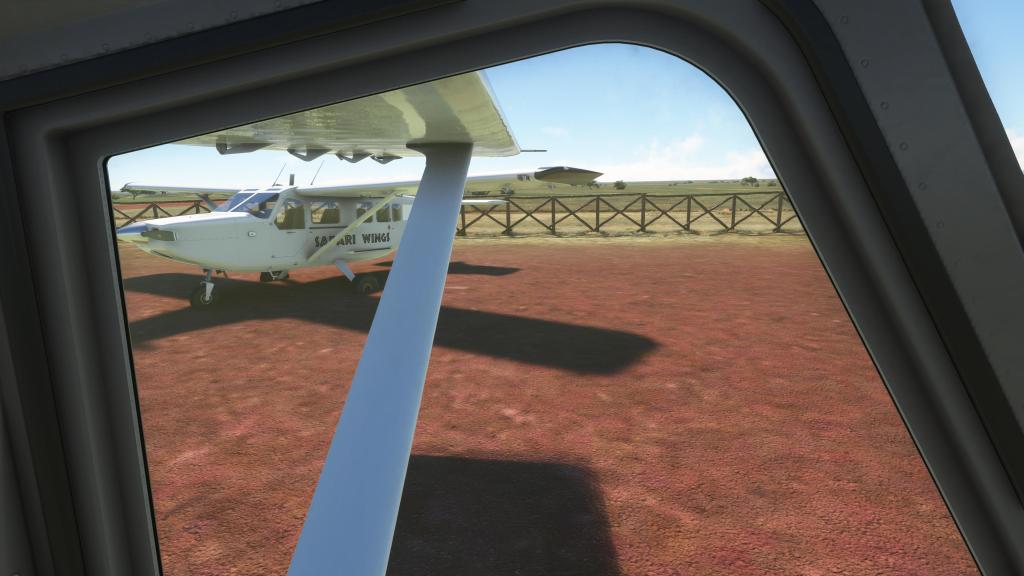
Flying past the airstrip and evaluating the situation, I noted the nice long runway and plenty of parking spots. I turned the aircraft 180 degrees and brought it in for a smooth, easy landing. Far less drama than with my takeoff.


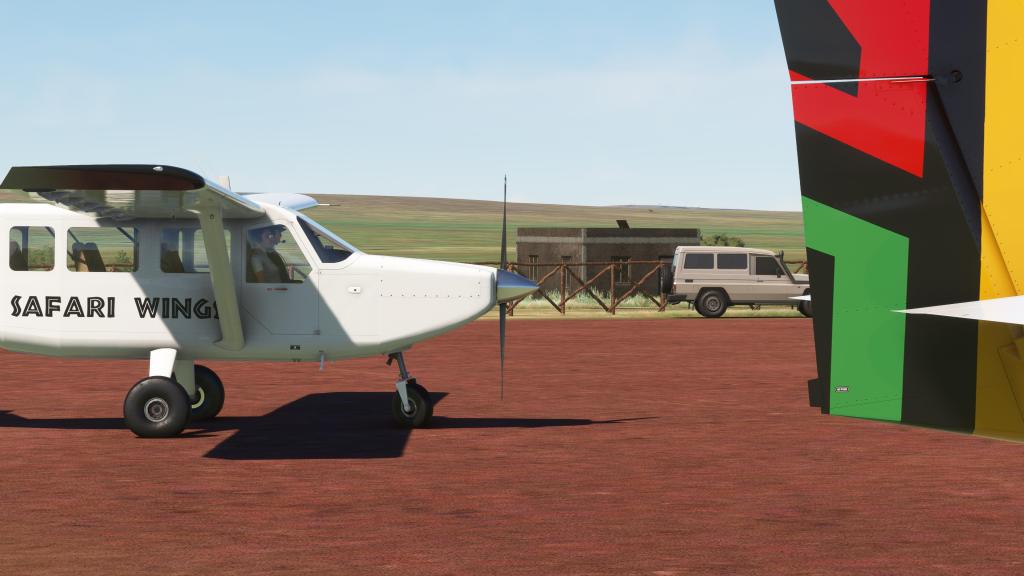
More airstrips
With lessons learned from my earlier takeoff and a lighter overall aircraft (just a couple of passengers and no cargo for this leg), the takeoff was easy and absent of any of the drama from the first one.
We climbed back into the air with a pond full of flamingos and elephants off to our port side. Then made the turn to the west to head for the next location.
Along the way, there were lots of scenic opportunities and some more elephants to view grazing in the water.
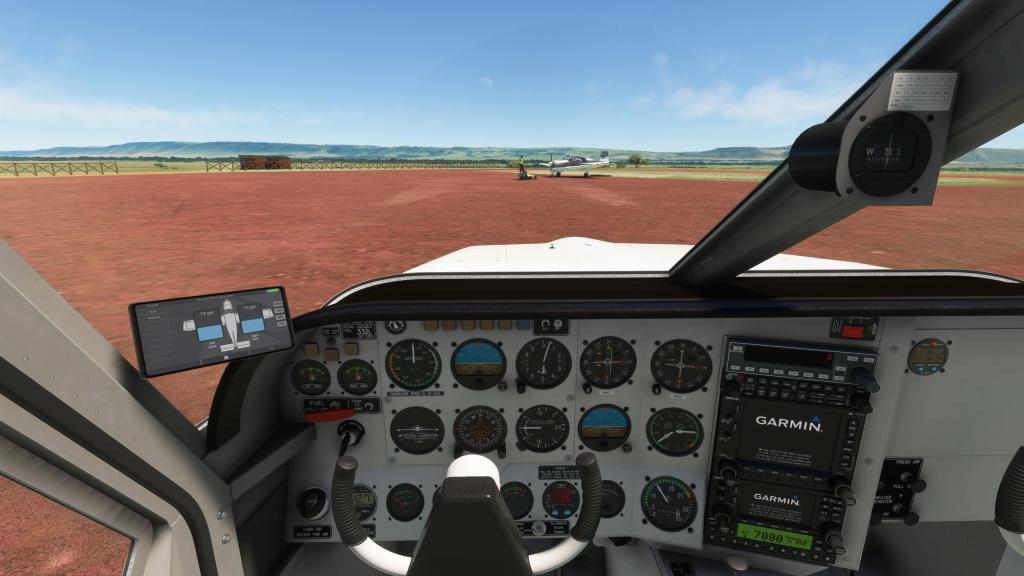


Several minutes later, I landed smoothly at our next destination. Time to pick up some more folks and deliver them to the next airstrip.


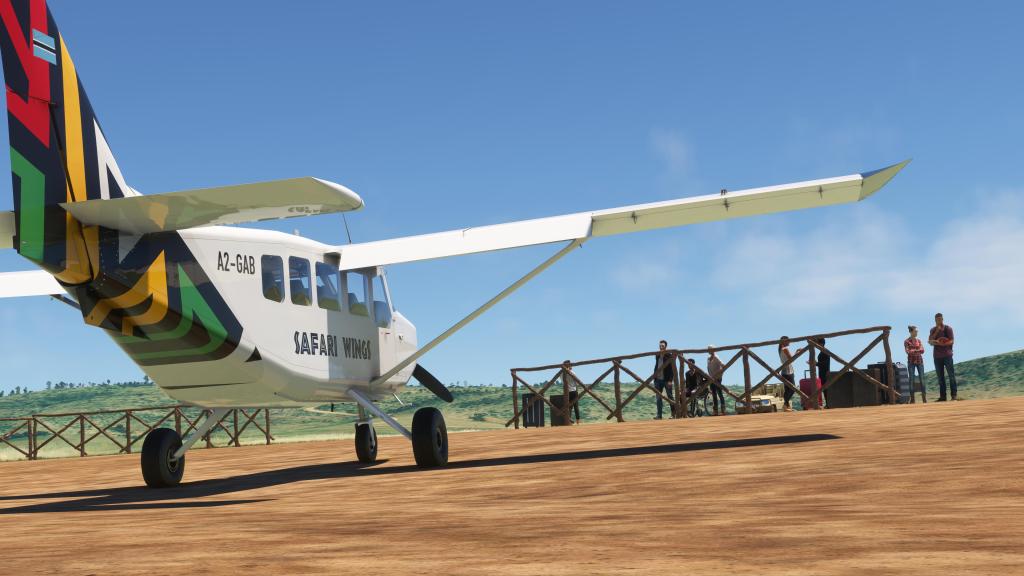
After starting up the aircraft and taking off again, we were on our way to visit the next destination. This one would be interesting as it required us to climb the nearby ridge and gain even more altitude. As the air thins, the Airvan really struggles with performance so climbs are gentle to stay out of any stall situations. Fortunately, it wasn’t all that difficult to climb and get over to the next destination.


Again, I brought the aircraft in for a gentle landing. The Airvan was getting a good workout today! Parked the aircraft, shut down all of the systems and opened all of the doors. Our mission was complete for the day.
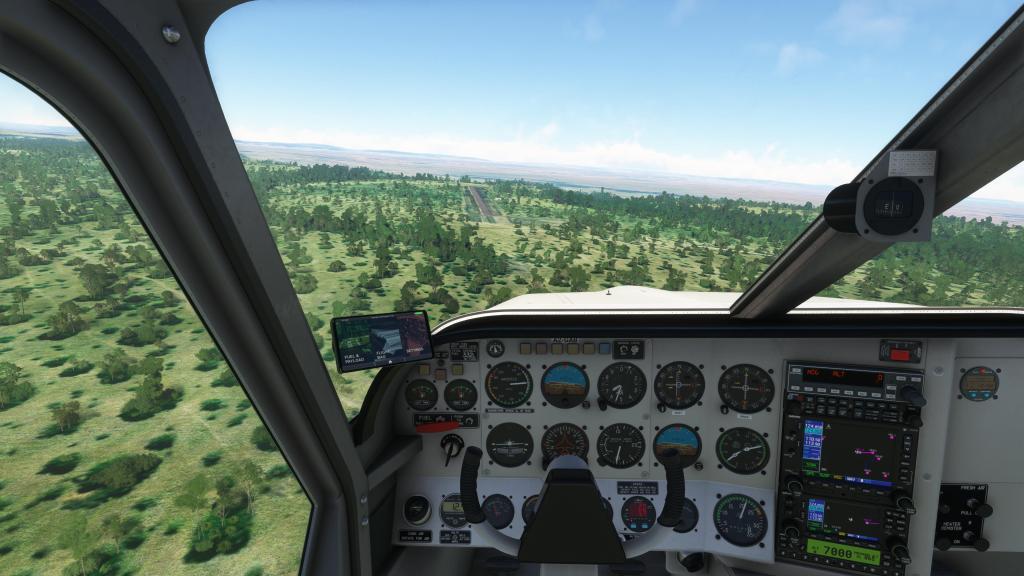


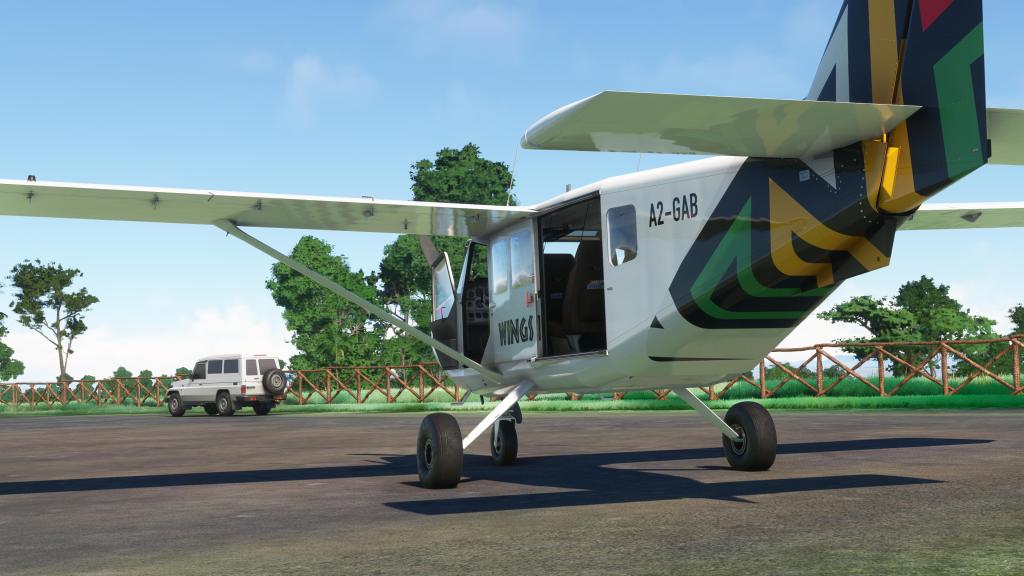
Preview impressions
SimWorks Studios have spent quite a lot of time developing the GA-8 Airvan. Following their popular Kodiak 100 and equally long in development PC-12, the Airvan offers a slightly different experience from the other two with less power and speed but still offering up a fun and interesting flying experience.
This aircraft is also where the company has taken the time to develop their tablet and failures system. Its something they intend to bring to other products and so the Airvan is a kind of proving ground to their future strategy. I like the direction this is going in.
The system failures didn’t impact me on this or any of the other previews that I’ve flown with the aircraft just yet. But I know that its tracking how hard I am on the engine not just on these flights but on subsequent operations too. I also know the aircraft will gradually take on a dirty appearance as it gets a workout on these airstrips. That’s interesting to have as it makes you consider your flying in ways that you may not otherwise do in the sim. Nothing failed or went wrong but it could and you need to think about that.
The bottom line right now is that I need more time with the aircraft to digest all of its quirks including how the failures system interacts over a longer period of time with normal operation.
The aircraft that I flew is the launch version which is ready to go for MSFS 2020 with compatibility for 2024. Purchasers of the 2020 version will be able to get the 2024 native version for free so no worries about jumping between the two versions of the sim. The company reports that the aircraft is ready to go with a Marketplace first launch on August 21st (Thursday!) with a follow-up release coming to the SimWorks Studios website sometime after that. And remember that the 2024 native version is planned to also come shortly after the 2020 release. The delay gives the company a bit of time to track down a few 2024 specific items and get that ready to go.
Stay tuned for more updates on this aircraft coming up shortly! If you have questions about this not quite yet released airplane, do let me know in the comments!


 Stormbirds
Leave a comment