
The IL-2 Sturmovik series dates back to 2001 when the first of the series released to a worldwide audience. The then lesser known Eastern Front setting initially had combat flight sim fans write off the title, however, its great technology and expanding aircraft list made the IL-2 Sturmovik combat flight simulator into a legend. Now, 25-years later, 1C Game Studios have released the fourth generation of the series tackling another lesser known conflict and once again seeking to impress with new technologies. Does the new sim live up to the legacy? Does it push far enough into new areas to justify the next generation? Is it worth the high price? Let’s break everything down in the full review!
Updated August 12 at 9:28 pm EDT: Changes to commentary on VR, correction to Campaign section.
The Korean War

You have to go back to 1999 and Rowan Software’s MiG Alley to find another full featured Korean War combat flight simulator. DCS World dipped its toes into it with the DCS: F-86 and DCS: MiG-15 but two duelling jet fighters don’t make for a full combat scenario and that’s where IL-2 Series focus on the Korean War really make it stand out. Nobody else has touched this subject in 27-years and so the change of scenery and aircraft set feels fresh after decades of mostly World War II and occasionally World War I focused content.
The Korean War itself came on the heels of World War II marking the opening shots of the Cold War and would portent the many proxy wars that would follow after it. The active part of the war would last from the 25th of June 1950 to 27th of July 1953 and lead to some 2.5 to 3-million deaths among civilian and military personnel. It ended inconclusively and permanently split the Korean peninsula between north and south. An armistice was declared, however, no peace treaty has ever been formally signed and its officially considered a frozen conflict. Occasional skirmishes and periods of tension have followed in the 73-years since.
From an aviation perspective, the mix of surplus World War II equipment and cutting edge jet fighters with swept wings marks an interesting inflection point as military aviation began to change dramatically. Aircraft that were top of the line just a few years prior were now being significantly outperformed by the new jet fighters on the scene and bombers, like the B-29, that were difficult to intercept by piston engine interceptors were now vulnerable to the much faster MiG-15. It makes for an interesting subject matter to experience in a combat flight sim.
Content included
IL-2 Series Korea comes with a reasonably lengthy list of content when you factor everything in.
One of the hallmarks of the IL-2 Stumovik titles in general is that they have aimed to offer not just aircraft but a complete battle-space to participate in. This latest generation sticks with that format bringing a large piece of the Korean peninsula with detailed map featuring mountains, valleys, rivers, dams, villages, towns and cities with industrial areas, harbour fronts, and so forth. The map layout is based not on modern satellite imagery but on period appropriate positioning. And, for those of you who sometimes wonder… yes, it is 1:1 in scale according to the developers.
The map also comes with five seasons including summer, autumn, winter, early spring, and late spring. Each season comes with its own visuals and vegetation styles.
The series also packs in an ample array of vehicles, ships, trains, artillery, guns, tanks, and other associated assets. Various technologies have been implemented this time around to take things up a notch across all of these categories.
Vehicles are more detailed visually and have more detailed damage and physics models. New abilities are included now as well with features like the ability for trucks to tow artillery guns. Rails and roads have more terrain variation and the rails are all now rendered in 3D. It looks fantastic up close as it does flying over at a rapid speed.
Ships have seen some big advancements too with more unique damage models, damage zones, and some very cool animations when the sailors decide to abandon ship jumping from the sides.
But what about he aircraft? We have 6 aircraft included with the standard edition and 8 when you go up to the Premium and Deluxe editions. Its two aircraft less than the 8 +2 that we used to see with Great Battles. Fidelity has gone slightly up with these aircraft but numbers are slightly down as a result.
The flyable aircraft types included are:
- MiG-15bis
- IL-10
- Yak-9P
- F-86A-5 Sabre
- F-51D Mustang
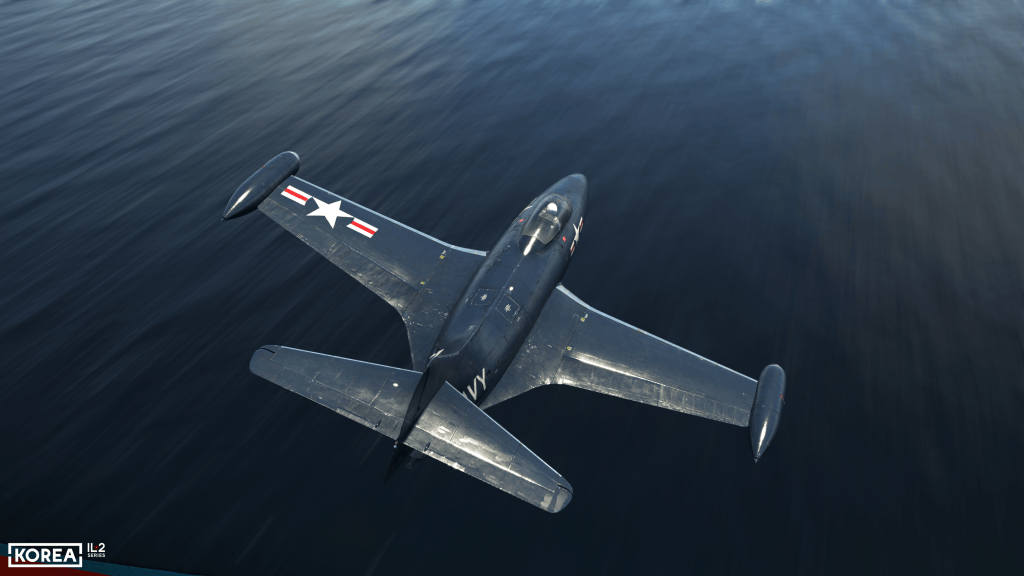
- F-80C-10 Shooting Star
- La-11 (Available in Premium and Deluxe Editions)
- F-84E Thunderjet (Available in Premium and Deluxe Editions)
Deluxe edition also includes a further five aircraft that will also be sold as a future DLC pack. Their specific types have yet to be confirmed though both the F4U Corsair and F9F Panther have been spotted in various officially released sources, I do wish that they had been more certain about what was being added in the add-on pack… not least because Deluxe Edition owners have already paid for them more or less sight unseen.
In addition to these flyable types, a further four aircraft are included as AI-only types. They are:
- C-47
- Li-2T
- B-29
- Tu-2S
The AI-only types add variety (and targets) to the aircraft on display in the sim and interception and escort missions tend to revolve around these. Having flown ample transport and bomber missions in Great Battles, I am hoping that these become flyable options in the future but we’ll have to see how things evolve over the coming months and years.
There’s definitely a few missing types that could be added to the mix. Not least being the AD-4 Skyraider, Sea Fury, Meteor F.8, B-26 Invader or a flyable Tu-2S that would be awfully nice to see. At least some of these might be among the promised 5-aircraft included in the Deluxe Edition DLC pack but we just don’t know yet.
Ways to play!
IL-2 Series branches off into several different ways to experience flight and air combat making some subtle changes to how the series handle both single and multiplayer content.

We’ll start with Exams! This is a training module which is an entirely new way to play that hasn’t been part of the previous Great Battles series. 1CGS have built in a series of training challenges that are aimed at getting people acquainted with new aircraft.
Each aircraft has four scenarios to complete that usually involve a mix of navigation together with combat scenarios tailored to the aircraft in question. The selection for a ground attack focused IL-10 is quite different from that of an F-86 for example. Its not entirely hand holding so the basics of flight are still something that complete newbies to sims are going to want to use other resources for, but it is a good way to ease into a new sim experience or train up on a specific airplane.
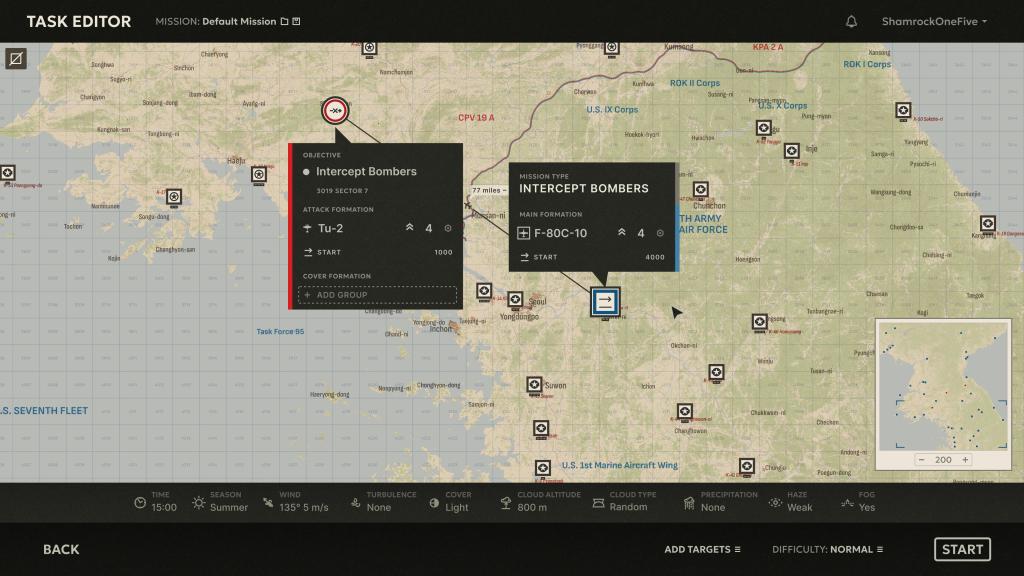
Task Editor is the new name for the Quick Mission Builder from the old IL-2. This is one of my personal favourites because its intended to get you into a quick scenario of your choosing with little fuss. Pick a spot on the map, pick a mission type, select a plane, and off you go with the mission you wanted to fly. You can choose to fly the mission from a parking spot and then complete the whole experience or you can choose to start at a specific altitude and fly the rest of the mission from there. Its quick and flexible in setting up generated scenarios. The new experience incorporates the same kind of quick mission generation that the Advanced Quick Mission Builder used to have in Great Battles and there are quite a few mission types to experience.
Single missions is one of the least utilized areas in the sim right now. It has just two scripted missions available at time of writing. Both missions are great but we need more. I’m hoping we’ll see at least a half dozen more to cover various aircraft types and mission scenarios. Hand crafted missions have the advantage of being setup by an author ahead of time and often provide for the most surprise and variety – at least on the first play through.

Campaigns are a series of scripted single missions strung together. Right now we have no available campaigns but if the past series is indicative we’ll likely start to see both free and paid options from the community over time. EDIT: A campaign has indeed been added to the mix. James Yarborough’s “Home by Christmas” is available to play now.
Career mode is an area that I’m very pleased to see has had a nearly complete overhaul. This is a squadron commander type experience where you create a pilot that persists over the course of a series of generated missions roughly corresponding to historical events.


Basic logistics are also involved in the Career commander experience. Aside from assigning the aircraft and pilots to missions, you’ll also manage aircraft, fuel and munitions supplies and put in requisitions for resupply. Surprise attacks on your airfield can deplete resources or interrupt resupply so you do have to be careful.
You’ll proceed to manage the squadron day-by-day with the ability to choose missions, assign wingmates (or yourself) to missions, and then wait for the outcome. If its a mission flown by you, you’ll takeoff and do the mission as you’d expect to in a career experience. If its flown by wingmates and you’re not on the mission, you’ll get a play-by-play readout that takes 10-20 seconds to complete. Pilot effectiveness and ratings plus numbers of aircraft assigned will all make a difference if the mission is accomplished.
The mode does have some quirks. I ended up in an endless loop of not being able to resupply and not being able to defend the base from attack in one career. Highly ranked members of their flights have been reported by some as going on abnormally high kill streaks during missions – far beyond what should be possible given typical ammo counts. There are clearly some tweaks needed.

On the whole, however, I think the design of this is fun and engaging enough to keep me coming back to setup a new scenario and play things out. No two missions will ever be the same either, though there is a certain degree of repetition as a dozen bomber intercept missions will largely play out the same way each time. 1CGS are committed to adding even more types of missions to both Career and Task Editor so we’ll probably have a good variety of things to do – depending on the airplane in question.
The Career mode is also expected to pick up at least some persistence with damaged infrastructure staying damaged in future missions. But that isn’t in yet. It brings us close to but not quite at a dynamic campaign in that you can’t influence the overall course of the war but you can certainly make a difference at the unit level.
Moving onto another key component: Multiplayer! Though not everyone participates, this is a staple of the series and returns more or less as it did before on a basic level. Both co-op and dogfight options are available with co-op missions typically being a scenario created specifically to fly one mission with a host and players joining at mission start. I would like to see co-op mode tied into the Career experience where friends can join your squadron for a mission. That’d be really interesting as an addition!
Dogfight mode is more popular with players able to join and leave servers more or less at will with scenarios running, often persistently on a server, over hours. Multiplayer system flexibility is such that basic duels can be hosted or the server can be used to house dynamic campaigns that can run over the course of days and weeks with individual players each having their own effect on the overall frontline.
It is a challenging experience online with experienced veterans with years and decades of experience occupying the same space as players entirely new to the genre. It is not for the faint of heart but it can be quite enthralling, especially with friends along for the ride, if you do decide to brave the online battles. You’ll get no better challenge!
Visuals


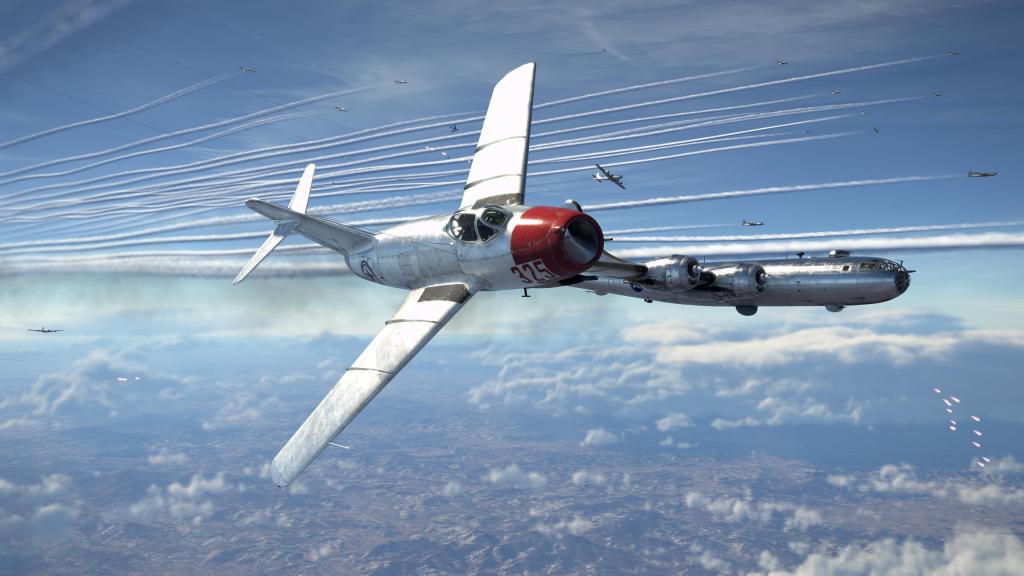
The visual updates to this next generation sim are thorough. Higher detail models, higher detail textures, a revamp of the lighting system, updated clouds, terrain details, vegetation, and visual effects. The overall effect feels rather evolutionary though the overall effect really shines through as you spend time with the sim on the whole. It feels fresh, more colorful, more detailed and it performs surprisingly well in most situations.
Lighting is perhaps the most core fundamental change with IL-2 Series Korea employing a more modern set of lighting schemes including physics based rendering to get more realistic material effects, more stunning day and night time imagery, and better overall contrasts between light and dark within scenes. This can be especially seen at dusk or dawn as the sun rises and the landscape below starts to gradually pick up light. The overall effect is better in every way from what Great Battles was capable of. There are also new lighting effects like airfield lights, city lights, spotlights, and various other illumination effects that just weren’t present before.
The aircraft themselves, the stars of the show, represent a big step forward as well. 1CGS have been very good at generating a kind of overall visual consistency across the years and that’s the case here too though with an obvious push forward in artistry and visual detail. The details on these aircraft really shine and the overall visual effect is absolutely top tier work. I’d put them up against some of the best that we’ve seen from DCS World in recent years and suggest that maybe its a half notch below those modules but certainly among the best in the industry.


Cockpits are worn and weathered but in a way that makes the aircraft feel like a workhorse rather than a museum relic. Lighting flows naturally and smoothly across the interiors while contrast for things like instrumentation remains punchy and clear in all but the most extreme lighting.
The world itself takes a big step forward with more detailed objects in every area. Airfields feel fully realized with new bumpy surfaces even on runways while assets including hangars, revetments, equipment and personnel help fill out the scene. They don’t look like ghost towns the way they used to. The same applies to villages, towns and cities where people walk around, talk to each other, and give more sense of life to everything. So do things like actively billowing smoke from buildings and factories. Its a lot of little things adding up to make the world come alive.
Cloud visuals have been slightly improved from past titles. That said, even at the highest settings I find them a little less visually impressive than some of the scenes that DCS World can pump out. That said, its still an impressive display and some of the patterns are really impressively done and natural feeling on the whole.
All of these change and improvements do come at a price. Higher system requirements (12+ GB of VRAM and 32gb of RAM among them) are here to stay and make a dramatic departure from much lower requirements from the previous iteration. As in the past, eventually hardware performance will outpace these changes.
I haven’t tried the sim with a VR headset. A longstanding neck injury makes it impossible for me to appreciate VR for longer than about a minute or two so I’ll leave it to others to comment on it. Community sentiment is generally positive on VR it seems and indeed the series has long had VR as part of its arsenal of features. Some performance issues on some setups has been an issue that has been reported and so your experience may vary. EDIT: More comments about poor performance have suggested that this may indeed be more of an issue than I thought previously.
Frame rates have been steady at 60-80 fps on my RTX 3080 powered rig though I have had a constant warning about not having enough video memory. The sim seems to be handling it well by dynamically reducing draw distance on some items but it has been a slight annoyance to see the message itself. I’ve dialed back a few settings trying to prevent it from popping up as often but it seems to keep popping up. Worse, I think there may be a memory leak as performance can sometimes degrade after flying several missions back to back. Despite that, frame rates tend to generally remain steady in all but the most demanding of scenes.

All things considered, IL-2 Series is a significant visual step forward for the series that brings it roughly up to par with the latest in the industry. Perhaps the best part is that the whole thing feels cohesive with the lighting, aircraft, objects, and scenery feeling part of the whole. Nothing ever stands out as not belonging to the scene and that really helps push the immersion.
The audio and the music
Most of the sound work in the new sim is very good. Jet and propeller engine sounds are a step above their Great Battles counterparts although they are still synthesized and lack that real world recording character that is just so hard to capture. Still, they are better and technically they blend into the soundscape very well indeed. The sheer noise of a bunch of Mustangs or MiG-15s lining up for takeoff is certainly enjoyable for this warbird enthusiast!
The various other mechanical sounds are similar to or shared with their Great Battles counterparts. Again, these are good and more than sufficient. I appreciate the little touches too like the rattle of the cockpit instruments in high G pulls. Its subtle and it blends in but its also there and it makes you feel the whole experience more than you might otherwise.
The best part? The new gun sounds! It doesn’t matter if its the bark of a .50cal machine gun or thump of a 37mm cannon, everything really pops this time around! It helps make the combat experience more immersive and aurally interesting and I love the work done there.
One of the worst parts of the experience right now are the voice overs. The team have used a mix of human recordings and AI synthesis to create the voice overs and the experience makes me feel left wanting. The voices, especially the American ones, are flat and unengaging, saying different numbers or letters with a kind of robotic flatness that even previous versions of the sim were better at. Those earlier examples had real community actors do the voice work and these just seem to be worse in every way. They also seem to be inserting lines or phrases that aren’t in the subtitles and are unintelligible to my ears. No idea what that’s about but its not particularly great either. I have heard AI voice overs do better work in combination with real voice actors before so I have no idea what happened here.
New for the series is dynamic music. We’ve had menu music before which has been appreciated by some and rejected by others and now we have a new option that brings in an ambient soundtrack for various phases of your flight. Takeoff evokes soaring into the skies feelings while aerial battles have a more pulse pounding feel to them. The samples are well composed and fit the theme of aerial warfare in the 1950s well while also staying nicely in the background and never overpowering any of the other sounds that are going on.
I like the music as it ups the cinematic feeling though I have found, after several weeks, that it starts to become a little repetitive. Some of you will probably keep it on or try it out while I can see others wanting to turn it off right away – you can certainly choose either option.
Flight models

I’m not a pilot but I have been flying a lot of flight sims over the last 30 plus years. In 2026, we’re spoiled by just how good things are in the realm of recreating realistic feelings of flight on our home PCs.
The previous IL-2 Sturmovik: Great Battles Series has, in my experience, always managed to weave a careful balance between accessible sim flying and hardened reality and that overall philosophy carries through into IL-2 Series and its recreation of Korean era jet and propeller aircraft.
There are some attributes where the developers have likely done some difficult behind the scenes work to make assumptions on the types of hardware that we’re throwing at this sim to tune their overall flight model so that things work well on the ground and in the air. For example, brakes still feel a bit squishy here with hard braking certainly able to tip an aircraft on its nose but without the kind of jarring flip over that you might see in DCS World where the inputs are more raw and more reliant on you having very good hardware or carefully tuned response curves.
The obvious stuff like realistic speeds, climb rates, roll rates, as well as edge of the envelope stall states, snap stalls, spins, control lock-up, compressability, and Mach tuck are all present.
Others with more experience have recently weighed in as well. Content creators such as Command T, who is an actual aerobatic pilot, has produced a great series of videos comparing IL-2 Series versus DCS World and to his own real world aviation experience. The comparison gets into the little details but I think the big takeaway, if I can summarize his work, is that the sim competes closely with some of the best modeling on the market perhaps doing better than DCS in some respects and doing worse in others.
Its a subtle, nuanced, complicated conversation but the core takeaway that most people should see here is that IL-2 Series has reached even higher than before and stays closely competitive with DCS World and with other flight sims like X-Plane that are known for good real world flight modeling.
The pilot AI… is still a problem

A perpetual problem in combat flight sims is the artificial intelligence. While the world has witnessed some AI revolutions in generative content and information search, we haven’t seen the same thing in gaming or in flight sims specifically.
1CGS have made modest improvements to the overall flying and operation of the AI in IL-2 Series and that shows in subtly better moment to moment tactics and flying for many of the aircraft in the series. I wasn’t convinced at first that anything had changed but after popping back and forth between the sims I’m finding the new AI to be slightly less predictable and a bit more challenging in some respects. At the same time, there are many problems that are still cropping up and even a few instances where things have gotten worse!
There are plenty of examples where the AI is just not doing as good as it could:
- Enemy AI still tend to get fixated on the first enemy target they see and are difficult to convince to defend themselves from other aircraft. In one mission, five of my F-86 wingmates chased one MiG-15 for several minutes. I had dispatched most of the rest of the MiGs myself only to find them still circling.
- Bomber formations have flown to a target zone and then never dropped a bomb and instead circled aimlessly.
- Friendly AI seem to crash into each other while in formations with alarming regularity. Even when making gentle turns as wing leader, they do tend to plow into each other.
- AI aim at high deflection angles seems worse than before which may reflect some degree of realism, however, I’m finding that friendly an enemy aircraft are often shooting at but missing each other while burning through most of their ammo ineffectually. Sometimes they shoot from far too far away to be of any use.
- During ground attack runs the AI can often get confused and not fire a shot or pull away having attacked one target when another target is right there and easily hit. This has gotten better in recent updates fortunately.
Many of these problems are core to the AI system itself while some are more mission design problems. However, no matter what the core of the problem is, its clear that the AI just aren’t living up to the next generation expectations that the rest of the sim has been offering.
1CGS have suggested that more AI improvements are on the way and we have seen some improvements through the early access period. I hope, however, that this is something that they hammer away at not for a patch or two but as a general rule over the coming months and years. Its been a weak area for the series and overhauling the experience while keeping the sim running smoothly would be a tremendous boon going forward. For now, it remains the weakest link in the chain.
Ground attack supreme

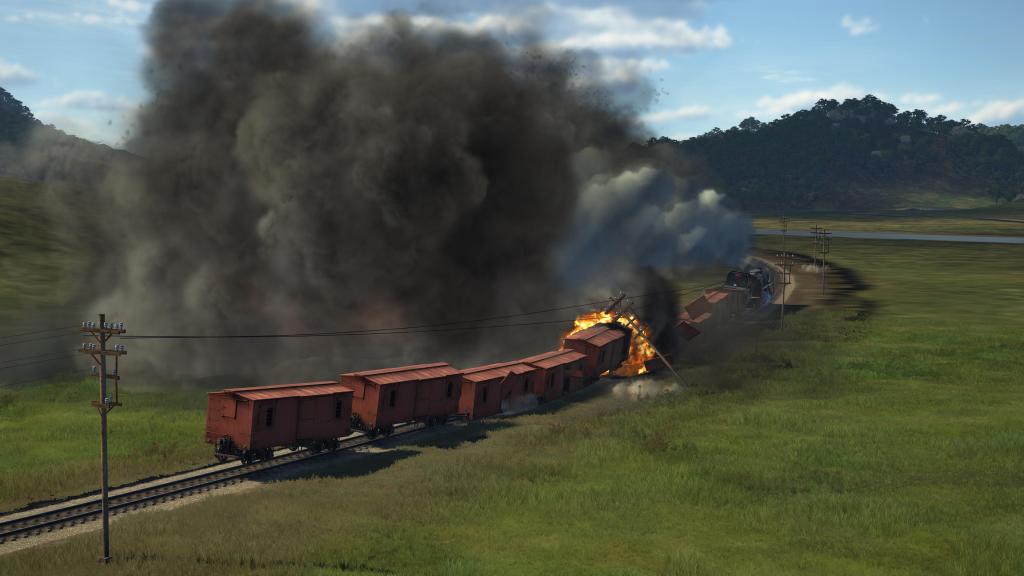


The change to the ground physics has really changed things for the better as well. Attacking trucks, jeeps, tanks, trains and other ground targets is really quite a bit more satisfying than it used to be thanks to a combination of new features.
The damage effects on ground vehicles has been improved significantly through a bunch of different measures. We start with the vehicles themselves with more damagable parts and specific pieces that can fall off, light on fire, or otherwise be effected by your aerial attack. I’ve hit tanks and blown fuel canisters off the sides of them… no real damage in the short term but the immersive effect is impressive!
More impressive are things like bomb blasts leaving 3D craters in the ground with vehicles able to fall into or need to drive around them. An exploding fuel truck can sometimes go flying high into the air. So too can train cars packed with explosives or fuel. Artillery guns can be silenced by eliminating most of the gun crew while the gun may still technically be fine… its still out of action.
The best part of all of these extra details is that you can often get a soft kill on a target now. An AAA gun may still be intact but its crew are out of of action or a train may have derailed thanks to a nearby bomb blast. This is fantastic for a sim that has been focused on tactical air combat for the longest time. It really ups the ante and its the best ground attack experience in terms of physics and damage mechanics in the entire genre by a long shot.
Big bomber formations finally possible


One of the biggest weak points for the previous Great Battles series was its inability to take on large bomber formations. Put more than a dozen bombers together and performance would begin to suffer on even the best systems. This time around, the team have utilized various tricks and simplifications for larger formations to keep the frame rates high and the result? Its superb!
Though larger formations are still somewhat rare, the Black Thursday single mission is a great showcase of what the sim is capable of doing. Several dozen B-29 bombers, all with operable gunners, clash with MiG-15s supported by their F-80 escort. The frame rate remains steady on my system despite the large collection of aircraft and it offers a sense of scale of battle that was just not possible before.
With the series likely to revisit WWII before too long, the dream of large B-24 or B-17 formations seems likely for the future.
The museum
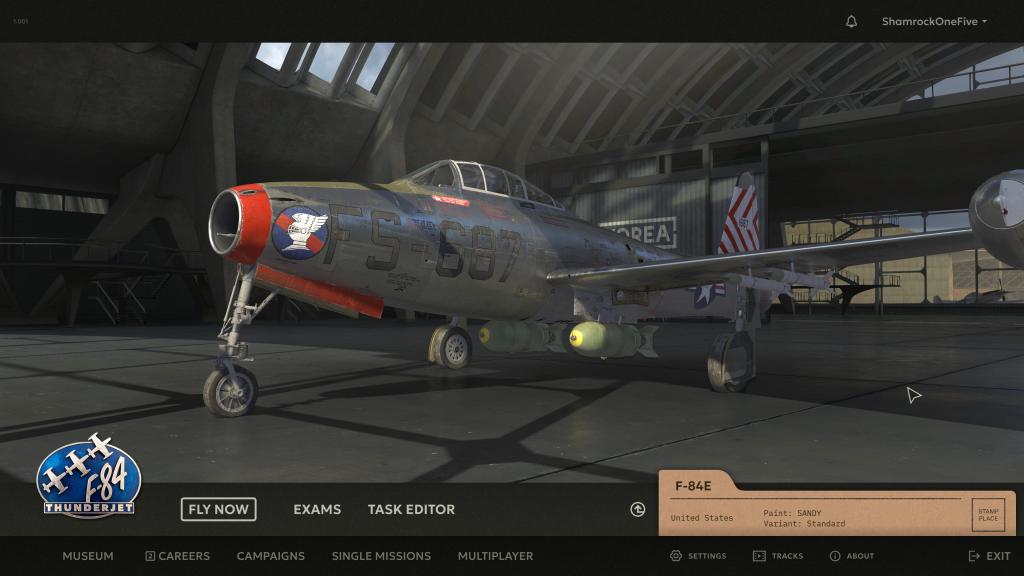


One of the coolest new features is the museum. Rather than being an afterthought, the museum is also the main interface when you first arrive in the sim. You’ll see the aircraft you last flew and you’ll be able to quick click to enter into an interactive showcase that lets you view the aircraft up close, show off the various weapons, open cowling doors, and more.
That’s just the beginning because multiple file folder styled tabs give you a look at variants and loadouts, the cockpit layout, historical descriptions and the characteristics tab. Characteristics is going to get plenty of use as it provides for in-game performance data showing things like speed, climb rate, and various other attributes. You can even compare versus another aircraft so you can see for yourself how the performance match-up is between contemporaries. Want to see how the F-86 and MiG-15 compare in performance? You can directly.
The whole presentation is slick and impressive and all of this is very well thought out. Decades of experience in combat flight sims have come to provide us with this and it is good!
Complexity and fidelity
There are various kinds of combat flight simulators out there that range in the complexity and fidelity of their simulation. Some, study level simulators, focus on single aircraft and offer extremely high levels of detail. Others, known as survey sims, tend to spread and simplify things to offer a greater range of aircraft. Those are the traditional categories though the lines are blurred these days.
DCS World is very much a study level simulator category with each aircraft essentially representing a complete simulation of systems and capabilities. IL-2 Series is more survey focused with more abstraction of individual capabilities in favour of the wider simulation on screen. Though that distinction is sometimes hard to quantify exactly as IL-2 Series aircraft have extremely complex damage models, cascading system failures, and system depth that includes detailed engine and systems simulation. Its not quite as study level as DCS and its designed to not be quite as intense that way.
Some features, like fuel management, remain largely automatic with limited or no player involvement other than fuel tanks are drained in the correct order and managed automatically. I don’t see this as a negative but rather a choice and it makes IL-2 Series more approachable as a sim.
New GUI features
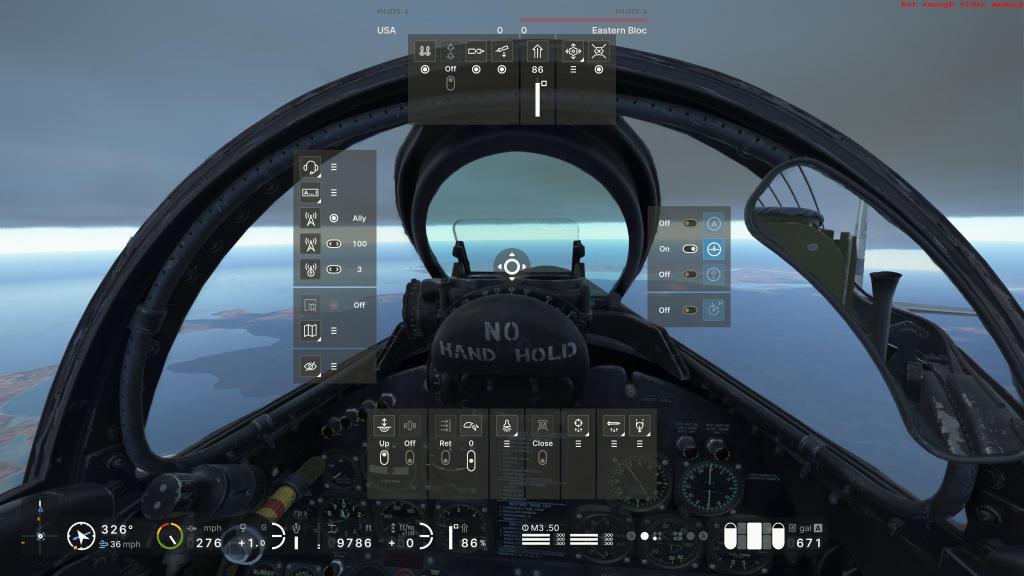
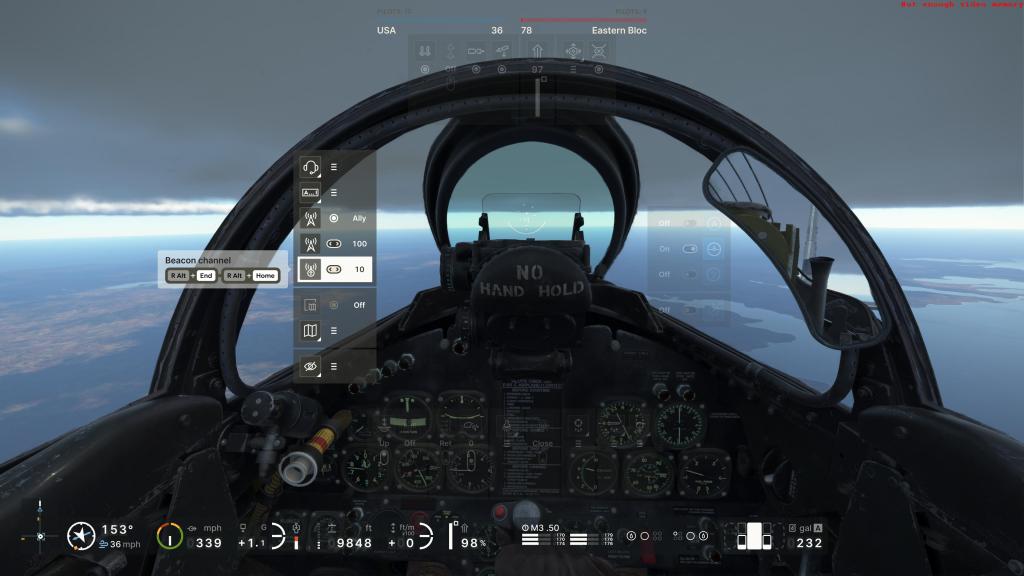
While a lot remains fairly similar for the series, new GUI interactions have popped up in a few places and I wanted to highlight some of the changes.
First, the “backspace” menu (I call it that because you get to it by pressing backspace) is really great. I think this is a great solution to a sim that has increasingly complex aircraft and the need to adjust settings without needing to bind whole fleets of button boxes or esoteric key command combinations. So now you press the backspace button, use the arrow keys, and configure your gunsight or adjust a setting that you rarely use and continue on. You’ll want to keybind more typically used items still but this makes things easier for everyone.
Time skip is another interaction that I think is a superb addition to the series. It reminds me of the old autopilot mode in Aces of the Pacific and Aces Over Europe (that takes me back!). In long single player missions, time skip will pop up after takeoff or after the mission is accomplished and you’re far away from enemy aircraft. It’ll ask you if you want to continue flying the mission normally or if you want to jump to the next waypoint or jump within 20km (or 12 miles) of the target. This makes long flights much more bearable and you can much more easily fly a couple of missions a night experiencing the most exciting parts of the flight and skipping the cruise in between.

Similar to the museum, the Handbook is accessible from the in-flight menu and it gives you the opportunity to check on performance stats, look up where instrumentation is, and read the history of the airplane you’re flying. Lots of opportunities to check things out if you’re uncertain about a detail or two.
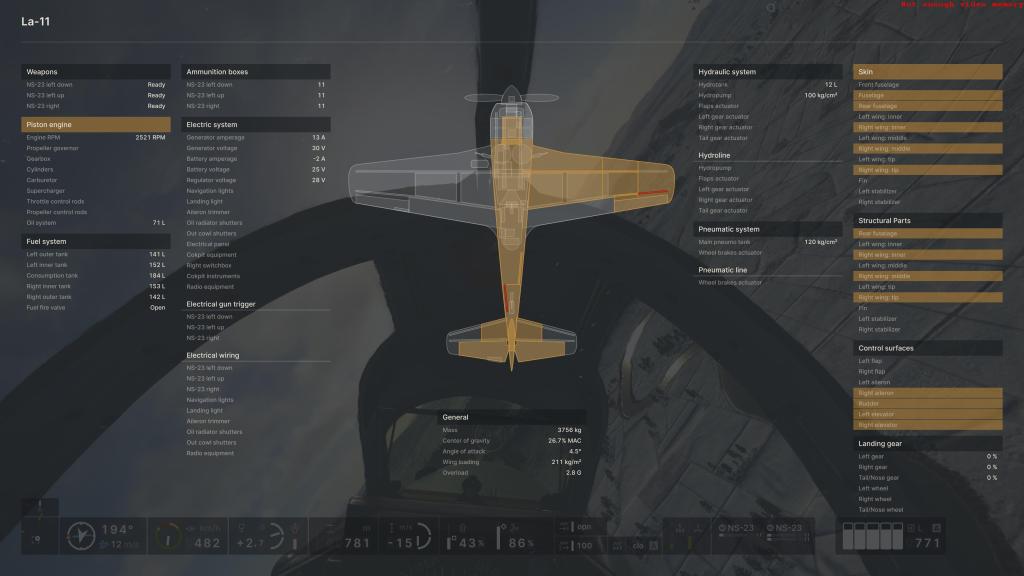
The in-flight damage overview display is yet another cool interface feature that I really appreciate having access to. You can see all of the subsystems that the sim uses for damage modeling and you can see exactly what has been damaged in real time. No guessing.
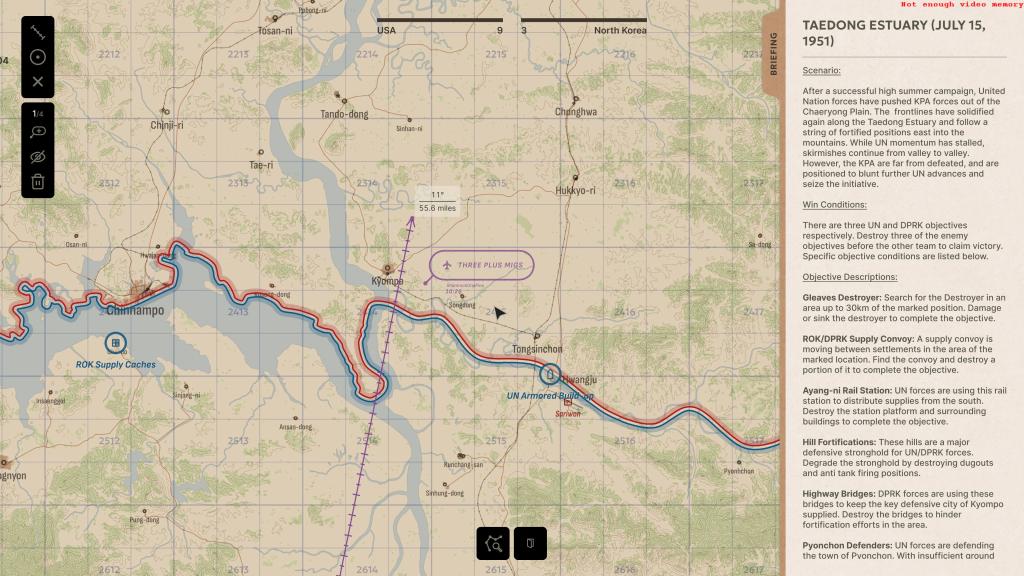
Another feature I find particularly good is the new multiplayer map and objective screen interface. The radius and ruler options are better and more capable than before while the new map marker system allow for better teamplay and coordination – when players decide to use it at least!
Is it easy to get into?
Combat flight sims have historically been quite difficult to get into requiring both pilot and combat knowledge in combination. That is still true here, however, the developers have done a lot of work to try and make things easier.
A new wizard system comes up on first start aimed at helping you bind your key controls based on the hardware that you have available. There are recommended profiles for most popular hardware now and you’re walked through a list of the most important controls that you need to bind before flying for the first time.
The new keybind interface also does a better job at separating and listing controls and you can search by name of control or key input to figure out what you’re trying to work with. Much better for new folks getting into this than before.
There’s still a massive list of controls to work with but this makes the process a bit easier to process.

The new Exams system also gives you opportunities to get yourself acquainted with your chosen aircraft. There are typically four exams per aircraft focused on the type’s strengths. Some are time trials where others are just aimed at the basics of getting to know your airplane. When it goes wrong, a quick replay gets you trying out the short scenario again.
It’s less tutorial and more of a trial by fire, however, I think this may suit most players sensibilities. It’s certainly more approachable than some of the tutorials I’ve seen over the years.
Hardware support is extensive with the sim working well with joysticks, force feedback sticks (I’ll be coming back to this in a future article!), rudder pedals, throttles, gamepads and controllers as well as mouse and keyboard. Of all of those, I recommend a joystick setup above anything else… however, gamepad users have told me that the experience in the new sim is very good. I’m glad to hear it as more ways to play means more happy simmers enjoying the hobby.
Pricing discussion
There’s quite a bit of sticker shock when it comes to pricing on IL-2 Series right now. Its understandable even. The standard edition with just 6-aircraft is $79.99 USD, the Premium is $20 more expensive at $99.99 USD and the Premium Deluxe is up at $169.99 USD. That’s a lot of cash to drop on a new flight simulator and that is likely going to dissuade all but the most committed to drop the money in the early days. No doubt there will eventually be deep discounts that will help spur additional adoption later on but it is admittedly expensive right this moment.
That all said, if we look at per aircraft costs then its around $13 an airplane for a package of airplanes. That’s not too bad in 2026 considering a lot of flight sim content in the broader market is priced at anywhere between $15-90 for an airplane.
Many airliners in X-Plane and MSFS are $50-90 for a single type or variant and DCS World modules tend to be $50-90 also for a single module. None of that includes the rest of the product whereas IL-2 Series is an entire product (e.g. maps, assets, etc).
They also aren’t entirely unreasonable given the overall state of the industry and gaming in general in 2026. The latest yearly Call of Duty franchise release has a base package of $69.99 USD and the most expensive Vault Edition is $99.99 USD. If you stay up to date with an AAA title like that, you’ll be paying roughly that price for the next bunch of years and the old content will fade away as newer games replace it. By contrast, content in combat flight sims tends to be much more evergreen. I still find myself loading up aircraft that came with the original 2013 Battle of Stalingrad release some 13-years later. That’s much better value in my mind assuming you keep flying months and years later.
When broadly considering the marketplace, the content on offer, and the gameplay opportunities, I really feel like the prices aren’t quite as absurd as they may first appear. Don’t get me wrong, dropping $80 USD is still expensive to get yourself started and with the cost of everything being high these days, its not going to be an easy purchase.
Aircraft thoughts
With few aircraft available in the current selection (versus the large collection available in Great Battles), 1CGS have managed to eek out as much value as possible from the collection presented thus far. Here are my thoughts on each type.
F-51D Mustang

Its fascinating that an aircraft that was at or near the peak of performance in WWII is basically second rate and assigned to other duties just five short years later. That’s very much the case for the F-51D Mustang which is a familiar ride for me and many WWII combat flight sim fans. No longer the competitive frontline fighter, the Mustang was plentiful and rushed into service as a close air support and strike aircraft. Unlike the WWII version that folks may be familiar with, this variant comes with a large selection of ground attack ordinance and its long endurance make it great for longer distance strikes or for keeping watch on station for a long period of time.
F-80C Shooting Star

This one has become a surprising personal favourite. The mix of relative simplicity in design and its wide array of ground attack capabilities makes for a fun fighter-bomber that has at least some ability to fight enemy jet fighters – though never on even ground. The F-80C is a generation behind the F-86 and MiG-15 but it manages to do ok with a snappy roll rate, good overall handling, gyro gunsight, and plenty of munitions for ground attack.
F-84E Thunderjet

Somewhere between the F-80C and F-86A-5 in performance, the F-84 was most often used as a fighter-bomber rather than interceptor. Created by Republic, the creators of the P-47, I see some influences from the earlier legend in the later jet. Its real world brethren was responsible for 60% of all ground targets destroyed during the war. Its powerful, a bit less responsive than the other types, but it carries a heavy loadout and is a bit more resistant to damage as compensation.
F-86A-5 Sabre

One of the stars of the show! The Sabre forms one half of the classic Korean War jet fighter dogfight pair (with the MiG-15bis) and manages to hold its own in most scenarios against the MiG. Its not quite as fast or quick climbing as the MiG-15bis but it has great guns, a great gyro gunsight, and better overall agility than the MiG. Its pilot also more frequently has access to a G-suit so long duration fights favour the Sabre over the MiG. Optional ground attack armament make it a pretty good option there too! A lot of folks are still hoping to see an F-86E with its all moving tailplane and better resulting agility at all speeds.
IL-10
With the series still retaining the IL-2 Sturmovik name, the ultimate expression of that type needed to make an appearance and fortunately the IL-10 was a presence in Korea for at least part of the war. This model of the Sturmovik is faster and more agile than earlier models with a new canopy that is somewhat restrictive in visibility but good in protection. The rear gunner has ample ammo supply for the single heavy machine gun with no need to reload. Ground attack options are wide ranging including PTAB cluster munitions, bombs, rockets, and the type’s built in 23mm cannons. Its just agile enough that it can still dogfight and defend itself against some attackers.
La-11

This Lavochkin fighter traces its roots back to the LaGG-3 and La-5 series. Powered by the same Shvetsov ASh-82FN radial engine, the type sports three 23mm cannons which offer a lot of firepower though the muzzle velocity is a bit lower. Its a dedicated interceptor and escort fighter with no ground attack options though you may find it being pressed into that duty from time to time. Its fast enough that it can sometimes surprise even jet fighters so don’t downplay this late series prop fighter!
Yak-9P

Though appearing quite similar to some of the earlier Yak-9 fighters, the Yak-9P was fitted with the much more powerful VK-107 engine that gave the fighter much improved performance and altitude capability. These aircraft were used by North Korea early in the conflict and while a solid match for something like the F-51D, its easily outclassed by jet fighters. Still, like the La-11, it can occasionally surprise a much faster jet while turning inside of them.
MiG-15bis

Forming the other half of the duo with the F-86 Sabre, the MiG-15bis is the improved version of the early MiG-15. The bis upgrade includes a better engine, revised air brakes and slightly improved firepower over earlier models. We don’t have the early model so we don’t have that comparison point but I can say that the MiG-15bis is a joy to fly. Its fast, it climbs quickly, and its only a bit less agile in most speed regimes than the Sabre it often fights against. Though the controls are almost unmovable at very high speeds and that can be a danger. This is a very fun airplane to fly!
Final thoughts and conclusion
It is often the case where two very different things can be true at once and in the case of IL-2 Series we have a sim that is clearly everything its predecessor was and more but one that also inherits some of its predecessors problems as well. The new sim can happily assume the mantle as the future of the IL-2 Sturmovik series having built on past technology and created the foundations of something even more impressive in the future but it needs to continue to iterate to really truly overtake its predecessor and address some of its weak spots.
Despite a few problems here and there, Korea IL-2 Series is a fun new combat flight simulator experience that I’ve been flying almost non-stop for a couple of months now through the early access and into release. I still feel like it’ll be many more months before I feel like I’ve mastered each of the aircraft and extracted all of the experiences that are possible from it. I’m enjoying it, I’m having fun, and that’s a great sign.
Korea IL-2 Series looks and feels fresh, offers a load of new content, refines the gameplay experience, and generally improves on the legacy of the previous IL-2 Great Battles Series. However, it manages to that do that with higher prices for slightly less content than was on offer previously and it struggles to address a few critical items which still need more work to truly succeed over the old series. I think it will get there!
IL-2 Series is available for purchase through the Steam store and directly from 1C Game Studios here.




Leave a Reply