

With the impending arrival of the new Yak-1B Series 127 to the series and some useful data points available from the devs on what the performance of this aircraft will be like, I thought it was a great time to break down just what this aircraft is and isn’t.
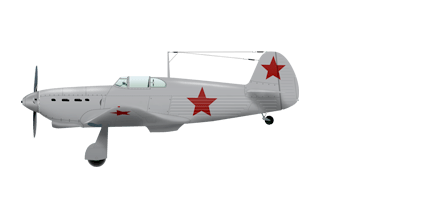
The Yak-1 Series 69 was introduced in IL-2: Battle of Stalingrad and represents a fairly late model of the original Yak-1 design. The Series 69 is an improvement over earlier versions and has a M-105PF engine that granted better power at typical combat altitudes than the earlier M-105 versions. It was introduced in May 1942.
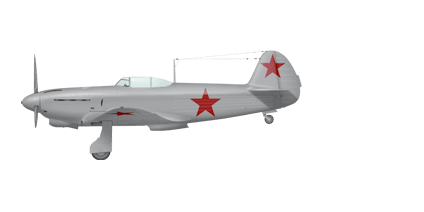
The Yak-1 Series 127 will be introduced as a separate Collector Plane and will be useful in the Stalingrad campaign and in the upcoming Kuban campaign. The Series 127 also has a M-105PF engine with the same engine power as the Series 69.
This comparison list is based on the data presented. In-game experiences may differ slightly.
Stall
Yak-1 Series 69
Indicated stall speed in flight configuration: 155..171 km/h
Indicated stall speed in takeoff/landing configuration: 133..146 km/h
Yak-1B Series 127
Indicated stall speed in flight configuration: 153..169 km/h
Indicated stall speed in takeoff/landing configuration: 132..145 km/h
In some cases there are big differences between aircraft at their stall limits but for the Yak-1 and 1B there aren’t really any significant differences. The Yak-1B is superior in every way but only slightly.
Speed
Yak-1 Series 69
Maximum true air speed at sea level, engine mode – Nominal, 2550 RPM: 514 km/h
Maximum true air speed at 2000 m, engine mode – Nominal, 2700 RPM: 549 km/h
Maximum true air speed at 4000 m, engine mode – Nominal, 2700 RPM: 582 km/h
Yak-1B Series 127
Maximum true air speed at sea level, engine mode – Nominal, 2550 RPM: 530 km/h
Maximum true air speed at 2000 m, engine mode – Nominal, 2700 RPM: 567 km/h
Maximum true air speed at 4500 m, engine mode – Nominal, 2700 RPM: 600 km/h
Faster at sea level, 2000 meters and 4000/4500 meters the Yak-1B is a pretty big step up in speed adding between 15 and 20 kilometers per hour at most altitudes.
Turn times
Yak-1 Series 69
Maximum performance turn at sea level: 19.2 s, at 270 km/h IAS.
Maximum performance turn at 3000 m: 24.6 s, at 270 km/h IAS.
Yak-1B Series 127
Maximum performance turn at sea level: 19.0 s, at 270 km/h IAS.
Maximum performance turn at 3000 m: 24.1 s, at 270 km/h IAS.
Though the Yak-1B is superior in turn at sea level and at 3000 meters the differences are negligible to the point of being almost irrelevant. The Yak-1 is a superior angles fighter and the Yak-1B doesn’t change that.
Climb Rate
Yak-1 Series 69
Climb rate at sea level: 16.9 m/s
Climb rate at 3000 m: 15.0 m/s
Climb rate at 6000 m: 9.4 m/s
Yak-1B Series 127
Climb rate at sea level: 17.0 m/s
Climb rate at 3000 m: 15.0 m/s
Climb rate at 6000 m: 9.5 m/s
Once again the Yak-1B takes the lead but only slightly. The difference in climb between 17.0 m/s and 16.9 m/s at sea level is barely worth noting and the story doesn’t change at higher altitudes.
Weapons
Yak-1 Series 69
1 x 20mm gun “SsVAK”, 120 rounds, 800 rounds per minute, nose-mounted
2 x 7.62mm machine gun “ShKAS”, 750 rounds, 1800 rounds per minute, synchronized
Yak-1B Series 127
1 x 20mm gun “SsVAK”, 140 rounds, 800 rounds per minute, nose-mounted
1 x 12.7mm machine gun “UB”, 220 rounds, 1000 rounds per minute, synchronized
Replacing the twin ShKAS machine guns for a single UB may seem like a downgrade to some but in reality the heavy machine gun increases the weight of fire of the Yak-1B and the Series 127 picks up an extra 20 rounds of 20mm ammunition as well. The Yak-1B has superior firepower although its not a dramatic change versus other types of aircraft.
Conclusion
In every way the Yak-1B Series 127 represents a better fighter than the Series 69. That said, the differences are incremental and the Yak-1B will challenge opposing aircraft at a similar level that the Series 69 does. Those who haven’t bought the new fighter aren’t necessarily left behind in a significant way.
The one element that the Yak-1B does add to the mix that isn’t represented here in some of this raw data is its new bubble canopy which is a game changer in terms of situational awareness that will make this fighter that much more dangerous.
Yak-7B still to come!
The series will end up with a third Yak fighter in the new year with the arrival of the Yak-7B.
The Yak-7B will be heavier and slightly better armed than the Yak-1B version and will likely have overall similar performance. How much it differs from the other two models will be interesting and dependent on which series version is chosen.





Leave a Reply