

Throughout World War II, engine designers were doing their best to increase performance any way that was available. One of those ways was to increase the engine boost pressure to higher levels using revised engine designs and specialized high octane fuel. Nowhere in the war is this method of increasing power more talked about in flight simulator circles than in the 1944 and 1945 time period. So, will we ever see higher boost options available on IL-2: Battle of Bodenplattes aircraft? The answer is yes. Eventually.
Higher boost?
On British aircraft engine boost is measured in pounds of boost pressure. On American aircraft the same effect is measured in inches of mercury for manifold pressure (sometimes labeled M.A.P.). German aircraft use atmospheric pressure (or ATA). These are all indicating the same basic thing – boost pressure in the engine. More boost gives the engine more power.
How does this work exactly? I’m not an expert here so, if you’re really interested in the particulars, refer to someone who knows engines better than I.
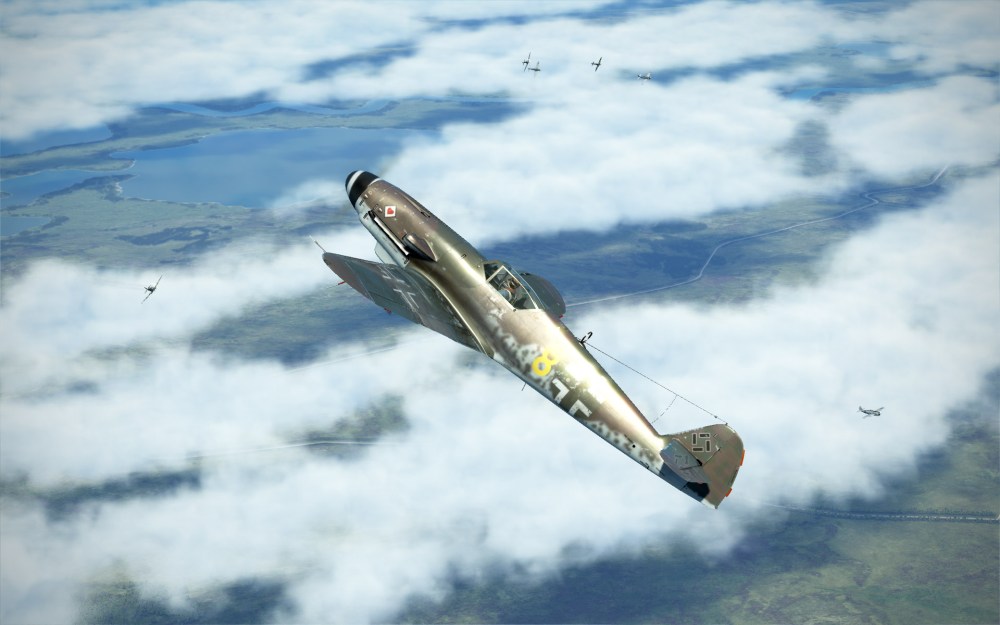
The Bf109K-4 in IL-2: Battle of Bodenplatte already sports the added feature of being able to increase boost pressure – a rare but used modification using an engine with a slightly different designation.
The lightly modified DB-605DC (from the DB-605DB) could boost up to 1.98 ATA instead of the normal emergency power rating of 1.8 ATA. This grants a performance increase of 15km/h at sea level and 11km/h at 6500 meters. These are small but useful gains to the Bf109K-4s already impressive performance.
Allied aircraft boost
What about the Spitfire, Mustang and other Allied fighters? Right now, these higher boost options aren’t available. But, if history is a precedent, they should be.
In late 1944 and 1945 the Royal Air Forces’ 2nd TAF began using 150 octane fuel with their front line tactical fighter units and this enabled Spitfire IX’s with Merlin 66 (and Merlin 266 engines on the similarly equipped Spitfire XVI) to be able to go from a standard maximum boost pressure of +16lbs to +25lbs.
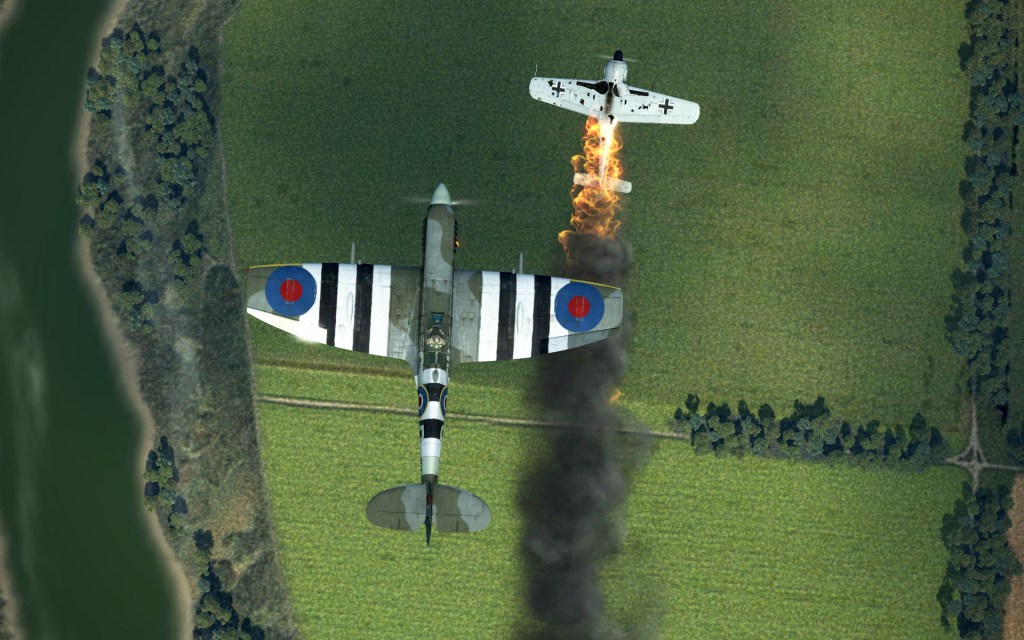
In an Experimental Department Report, Spitfire IX’s with slight engine modifications and using the higher octane fuel, could gain in climb and speed up to about 15,000 feet with the biggest gains right down at sea level featuring an increase of 24 mph between 0 and 3,200 feet. There were diminished gains at higher altitudes.
The USAAF was also pushing higher power options with their aircraft units in 1944 and 1945. Using the same 150 octane fuel (labeled 44-1 fuel), Mustangs were able to increase their manifold pressure from a maximum of 67″ Hg to 75″ Hg and gain an additional 15mph at sea level and up to 14mph at the full throttle height in the second stage with dips back towards normal in between and at the highest of altitudes.
These increases were felt on other types such as the P-47 and P-38 too.
With minor modifications and access to steady supply of high octane fuel, Allied fighters were able to increase their climb and top speed performance. Better still, they were able to do it with no drawbacks to aircraft handling and required few modifications to the engines to allow it.
The roll out didn’t happen all at once but slowly over time and so the “conventionally” fueled options are just as relevant to the sim as the higher boost ones. Over time, more and more aircraft were modified to accept 150 octane fuel and then gain the commensurate performance improvements.

So, why isn’t it in IL-2: Battle of Boddenplatte yet?
There are three main reasons for not including these features in Battle of Bodenplatte and they are as follows
- Research
- Time
- Development isn’t done yet
Research is critical for aircraft performance and while developers have had a chance to develop one set of flight characteristics and performance levels for the aircraft released so far, they haven’t had a chance to essentially duplicate parts of their effort to increase performance for all types.
With the Bf109K-4, I suspect although I don’t know for sure, that the reason why it already has a higher boost option is simply because the team has spent the better part of the last 7 (or likely longer) years researching the DB601 and DB605 series of engines. The resources were clearly there and they decided to implement the added boost options up front.
With the Spitfire, Thunderbolt and other unreleased options the developers are likely still doing the research to make sure that they aren’t just extrapolating values but using hard data wherever possible.
Time is of course the other item and Jason Williams, IL-2’s Lead Producer, had this to say back in November when asked about the added boost pressure:
Time, time, time. If you knew the time constraints the team is under you will see the difficult decisions we have to make. I hope to add such things later when we have more time.
Jason Williams on the IL-2 forums
Here I think we have our answer to everything else. We almost certainly will one day see 150 octane/high boost Allied fighters. It’s just a question of when.
IL-2: Battle of Bodenplatte’s development isn’t done yet either. This kind of detailed engine modeling takes time to get right and so we need to give the team at 1CGS a chance to work through everything they are doing before we see the whole picture. This applies to the whole product (and I’ll remind people to compare what Patch 2.012 looked like compared to Patch 3.001 when Kuban launched) and to specific and individual features.
A few have leveled charges that the development team isn’t including this due to some vast conspiracy against Allied aircraft, or for “balancing” in multiplayer. These seem unlikely given the other moves that the team has made over the years. As with most things it comes down to one simple factor: Time.
Give 1CGS enough time and they will add these performance values as an option. They have pulled through many times in the past for us.


 Stormbirds
Leave a comment