
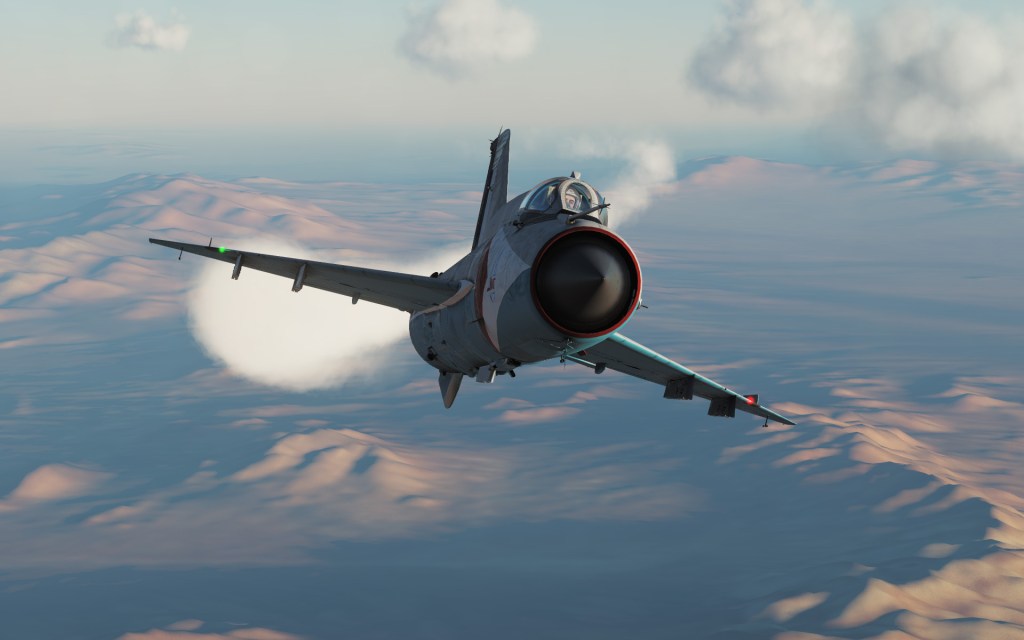
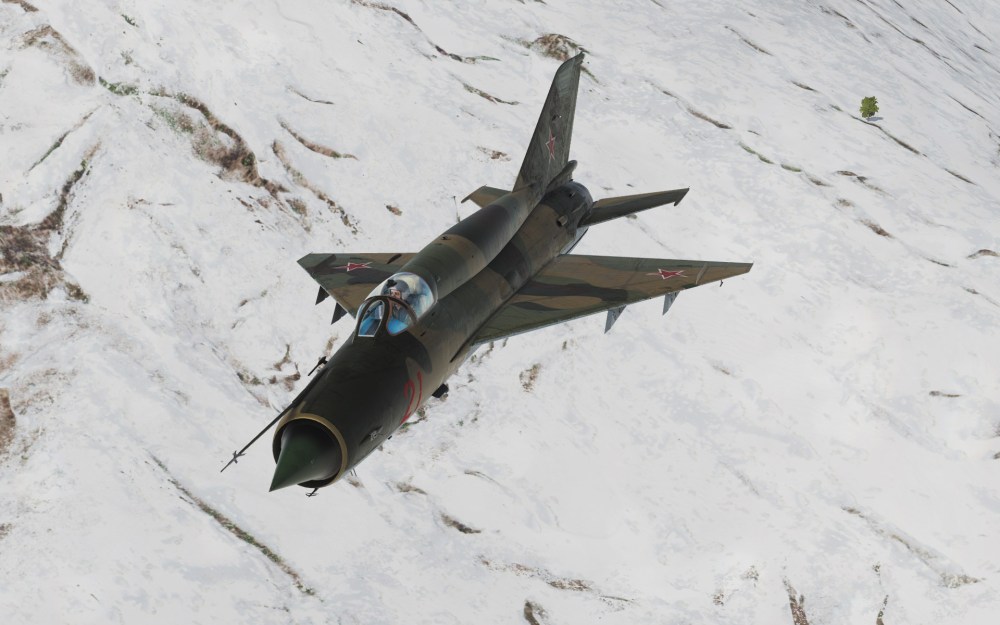
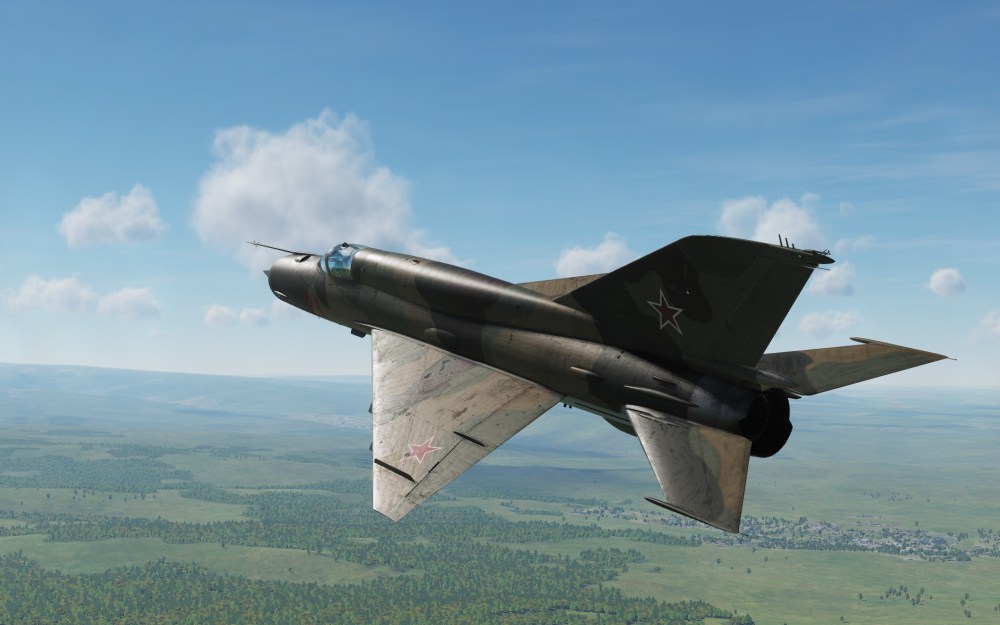
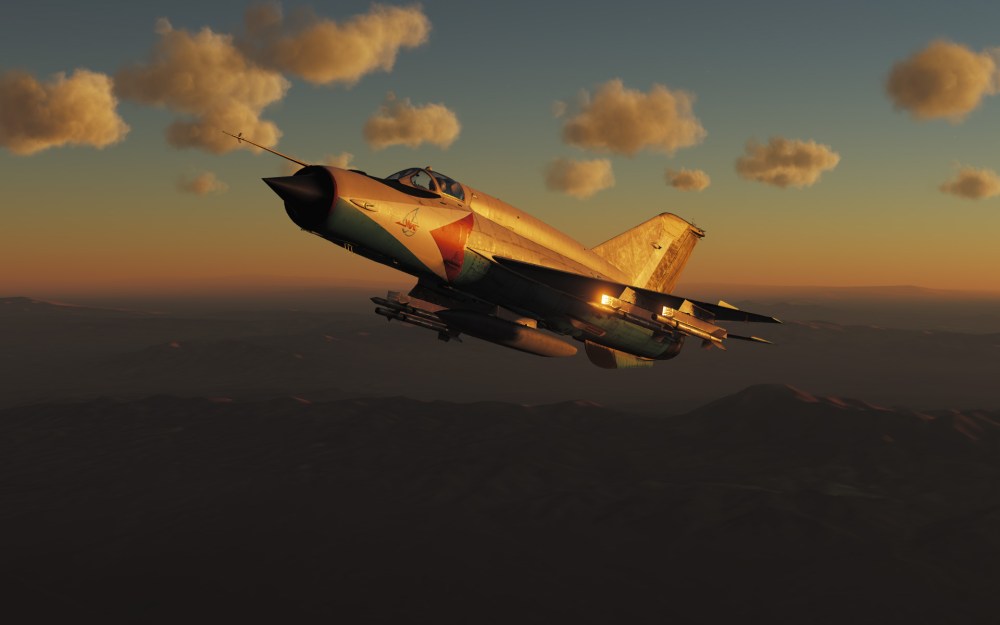
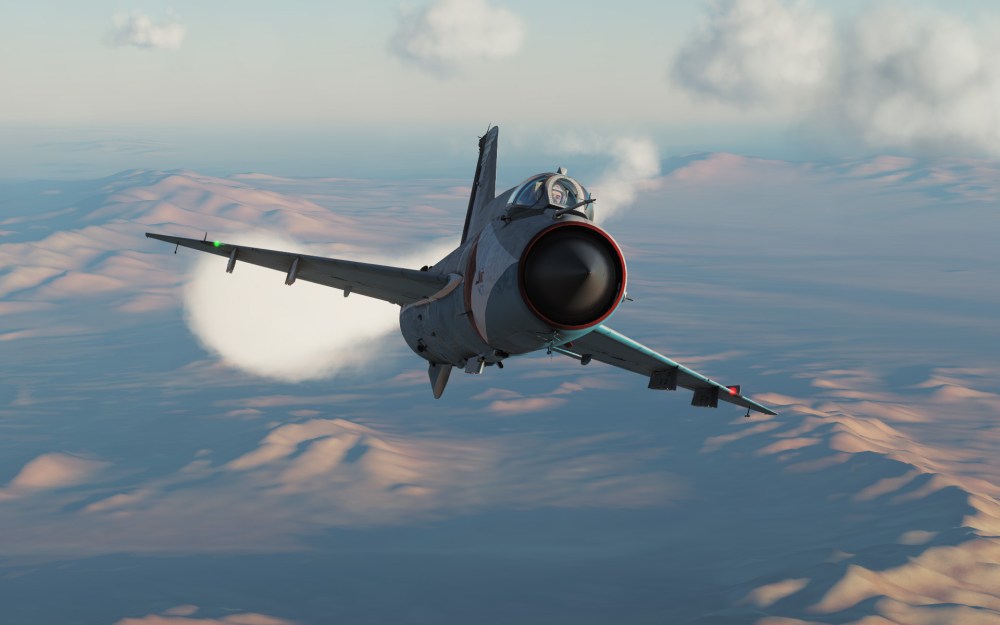
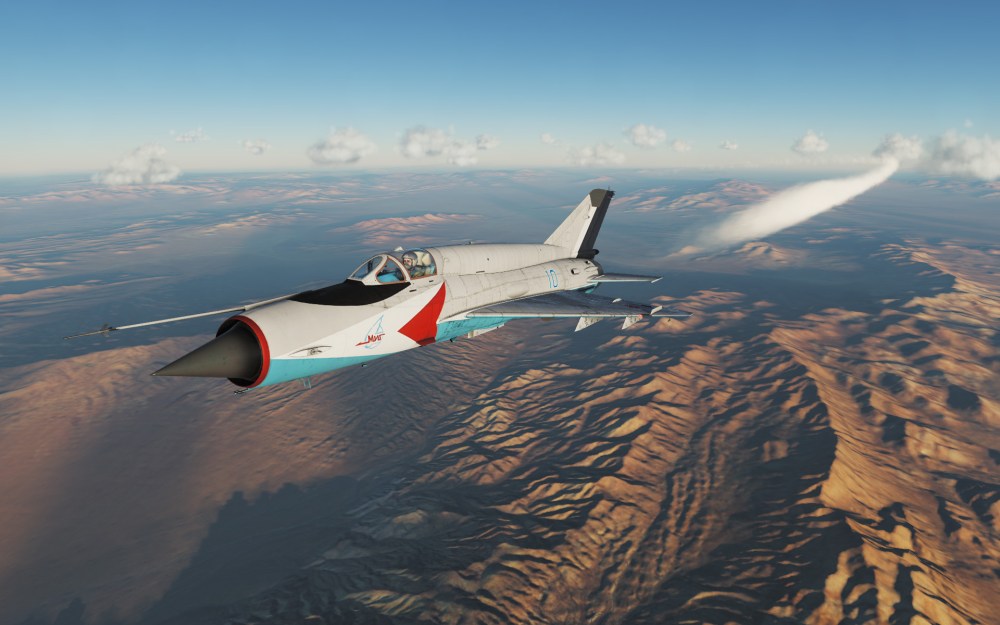
Leatherneck Simulation’s DCS: MiG-21bis is not a new aircraft to DCS World but it is a new aircraft to my hangar and this summer sale I decided to buy this 1960s era interceptor and see what all of the fuss is about. So, what is the MiG-21bis like and what really is all of the fuss about?
A missile with some more missiles attached to it
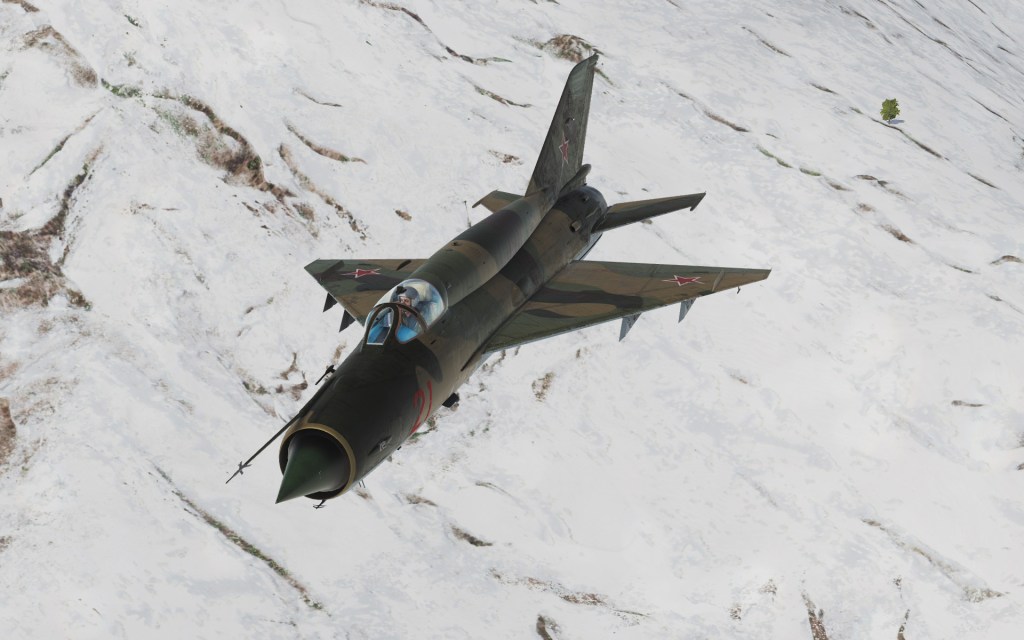
The MiG-21 is a very interesting aircraft with over 10,000 aircraft produced in the USSR during the types’ production run plus a couple hundred extra constructed in places like Czechoslovakia and India. The numbers get even larger when counting the Chinese built J-7 that the MiG-21 was based on.
The MiG-21 has been likened to the AK-47 of jet fighters being cheap yet capable and allowing air forces in countries that had limited available funding to maintain a Mach 2 capable interceptor for air defense duties. North Vietnam used the MiG-21 in large numbers during the Vietnam war and several air forces still operate the MiG-21 in the modern day.
The design of the MiG-21 optimizes interceptor performance at the cost of nearly everything else. Instantaneous turn rate is very good but the tiny delta wings have very high wing loading meaning that energy bleeds very quickly in tight turns. Despite that, the MiG-21 can climb at an incredible rate nearly matching early model F-16s despite having only 15,650 lbf available from its R-25 turbojet engine. It can do Mach 2 under ideal circumstances but more realistically can do Mach 1.6 or 1.7.
The landing profile is interesting too as landing speeds hover around 350km/h until the very last seconds and the angle has to be very low (around 5-10 degrees). Anything more and the jet drops like a rock or tail strikes the runway.
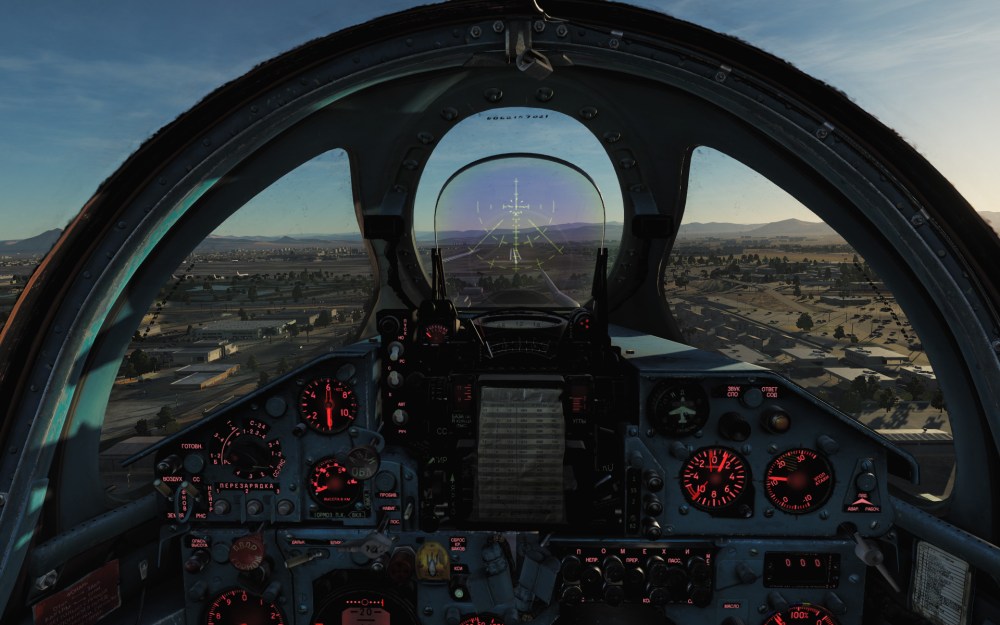
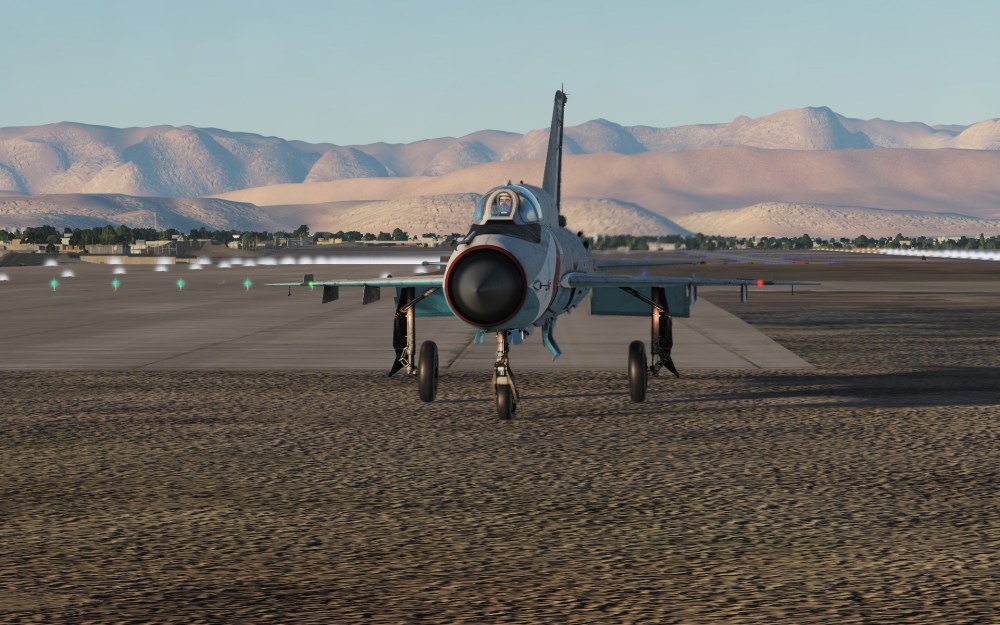
My first landing went extremely well with just the suggested angle and speed but I had trouble trying to deploy the parachute and I rolled off the end of 19R at McCarran International Airport. Next time will be better but it could have been worse too!

Extremely cheerful and always trying to kill you
The MiG-21bis is an absolute blast to fly. It’s extremely quick to roll and responds nearly instantly to pilot command. Though that jet engine may not be the most powerful the jet’s design sure makes up for it and the MiG-21bis climbs impressively quickly and accelerates just as fast.
There’s no fly-by-wire digital control to rescue a bad situation either and the jet has all kinds of things that prohibit certain kinds of maneuvers. Under or overspeed the engine and you could be looking at trying to fly an un-powered brick madly trying to restart the engine before time runs out.
Pull too tightly and you’ll definitely run into some problems with your engine or with controlled flight or both.
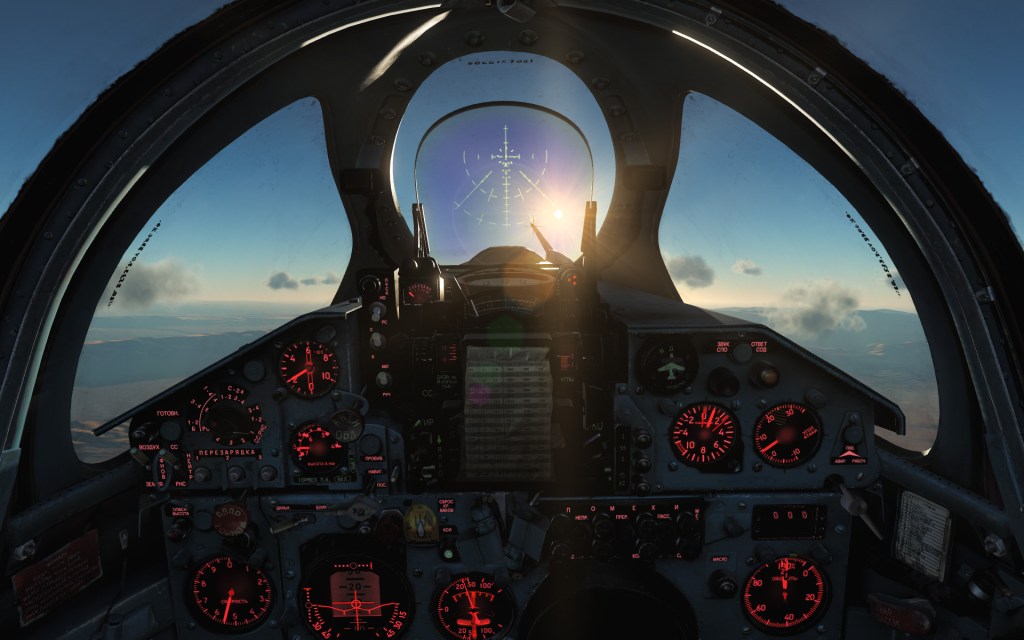
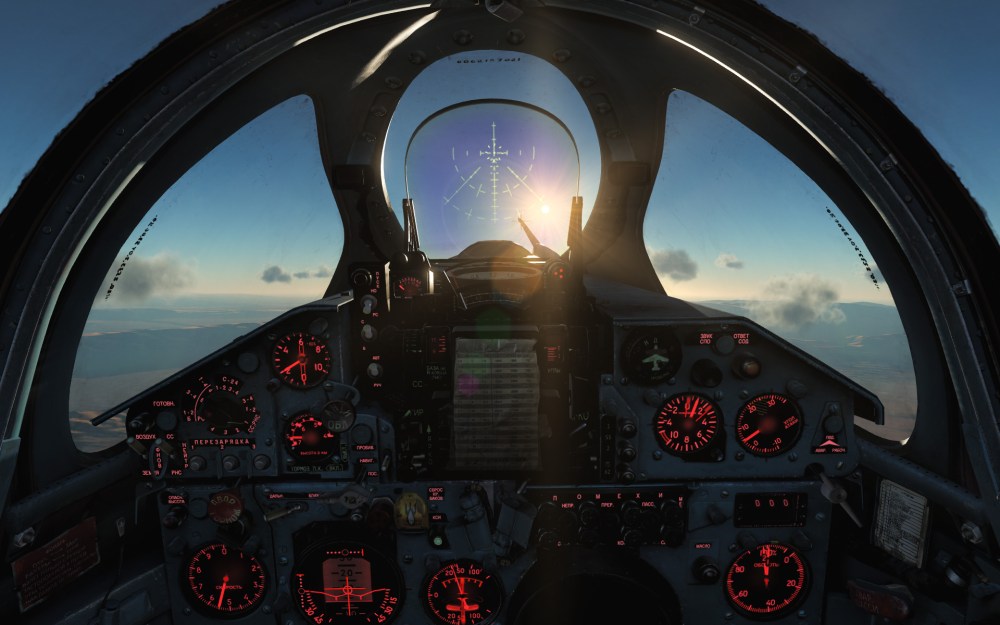
The cockpit looks complex when you first approach it but despite my early misgivings found it has its own style and once you get through the initial thought process it starts to make sense. Or at least some of the time.
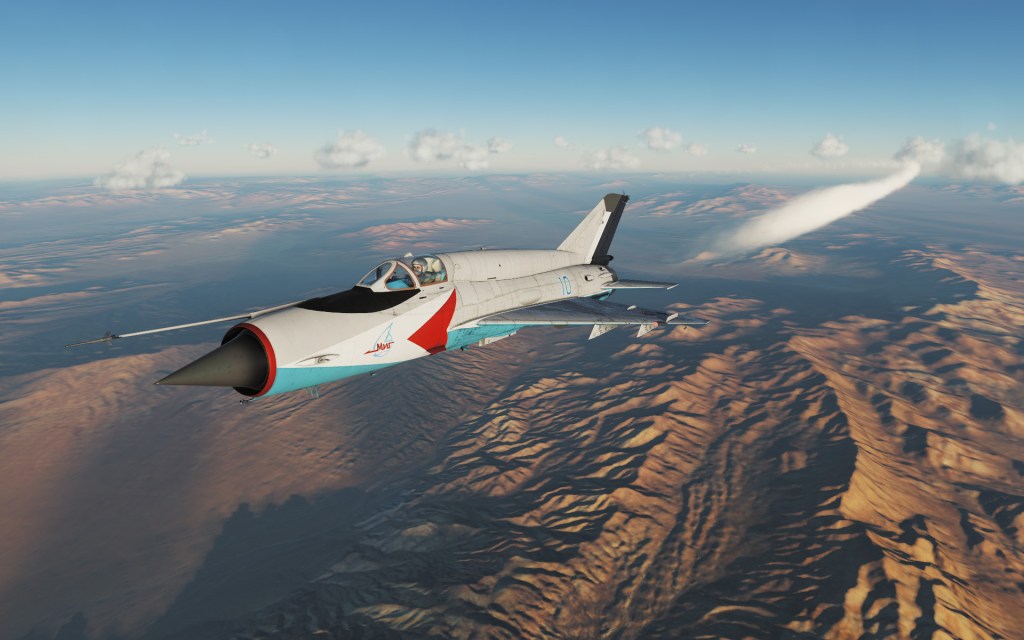
All of these quirks from its flight model to its design seem to be well modeled by Leatherneck Simulations. The same quirks give the MiG-21 a ton of character and life. This is well supported by the art design on the MiG-21 which, though slightly dated for DCS World 2.5 standards, still holds up extremely well. Leatherneck is doing some major upgrades on the MiG-21bis sometime in the future and I’m looking forward to those as they will go a long way towards cementing the reputation of an already beloved module for DCS World.
All of those details above ultimately boil down to just one thing: the MiG-21bis is just fun to fly! I’m looking forward to putting some more stick time into this module.










 Stormbirds
Leave a reply to Michael Dwyer Cancel reply