
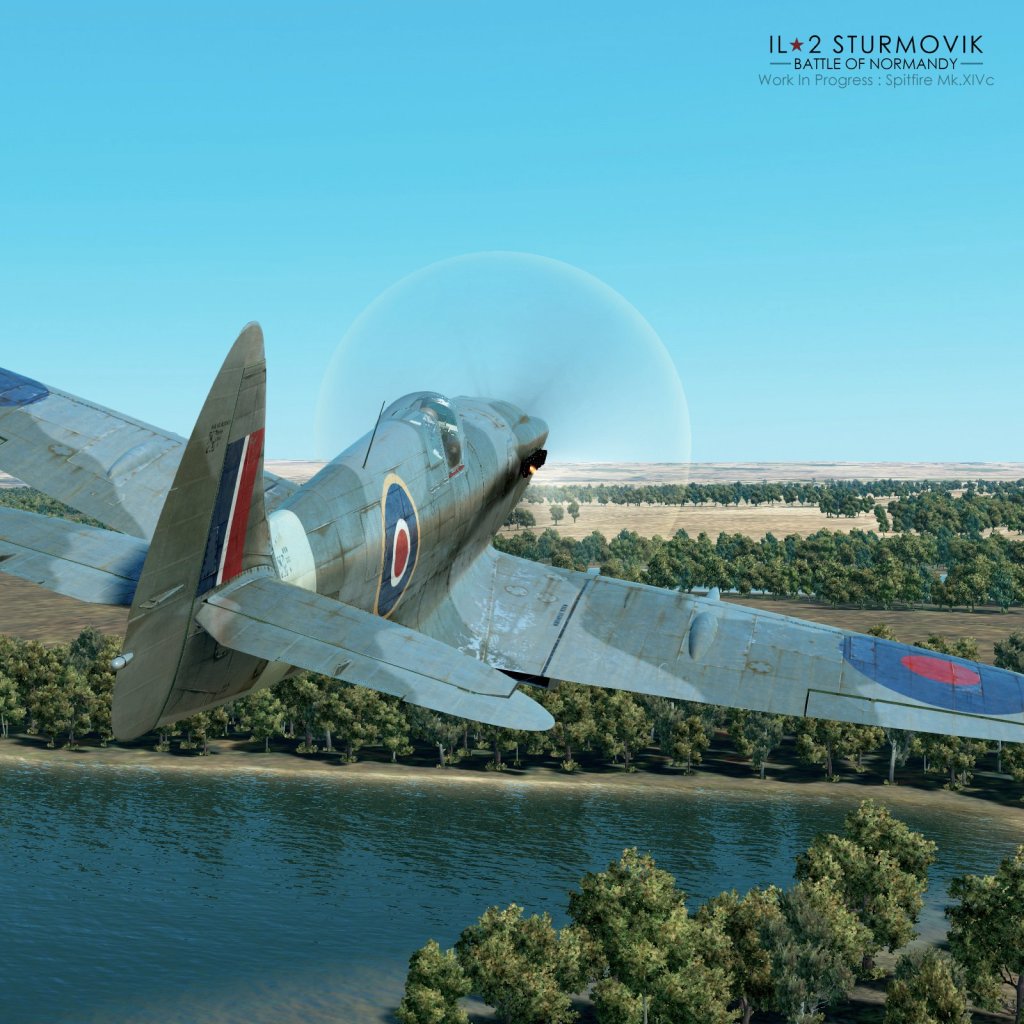
This week’s developer diary from 1CGS is very short but it’s one packing some great new information on an aircraft that I’ve wanted to fly for a very long time – the Spitfire XIV. We have some interesting new details on this Collector Plane addition to Battle of Normandy and how it’s development is going and what it will include when released into the sim.
A couple of variants and some high performance options
The news from Han from 1CGS this week is that they are building the Spitfire XIV with both C-wing and E-wing armament configurations. This means that we’ll have the traditional two 20mm Hispano Mark II cannons and four Browning .303 machine guns in the C-wing variant as well as the two 20mm Hispano Mark II cannons and two Browning .50cal machine guns in the E-wing. You may be familiar with that configuration on the Spitfire IXe already in the sim.
And the good news doesn’t end there. The 150 octane boost option will also be available giving the Spitfire XIV a near 30 mph boost in top speed performance at lower altitudes – useful for chasing V-1 ‘Buzz’ bombs.
A selection of screenshots shows off the new fighter currently with the C-wing. Han reports that we’ll see the E-wing version later.
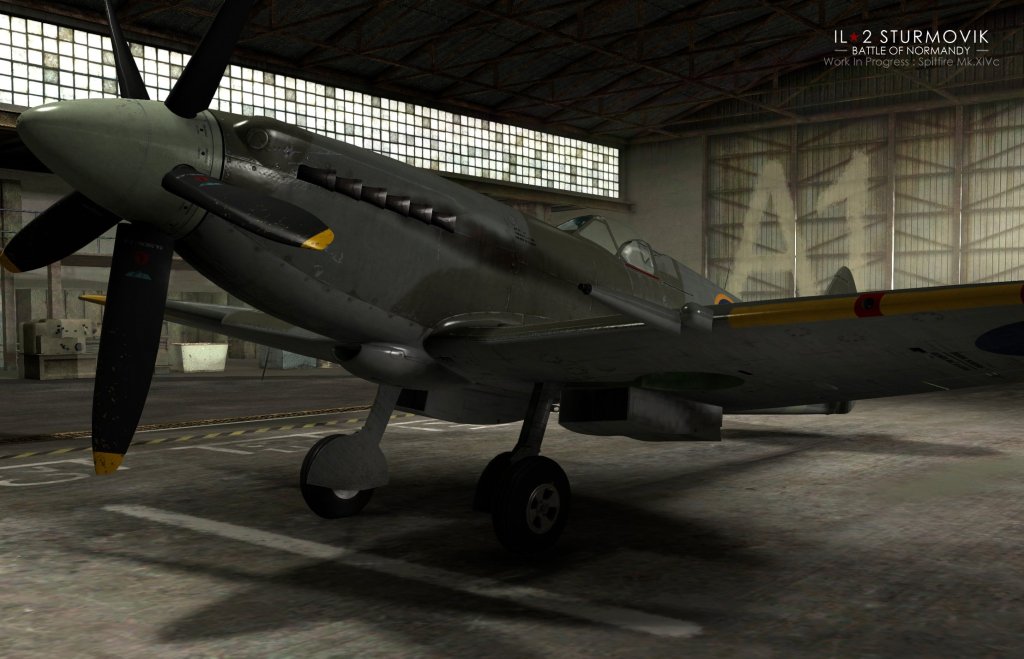
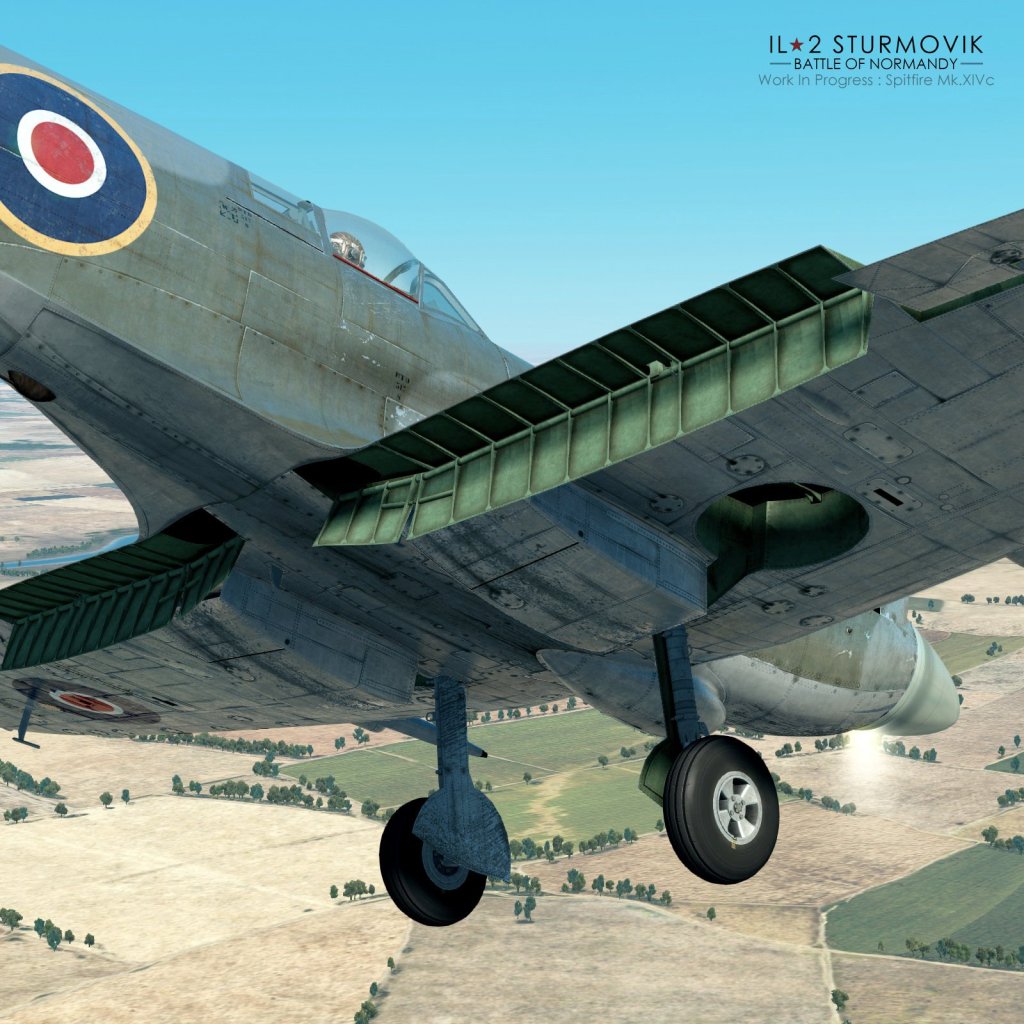
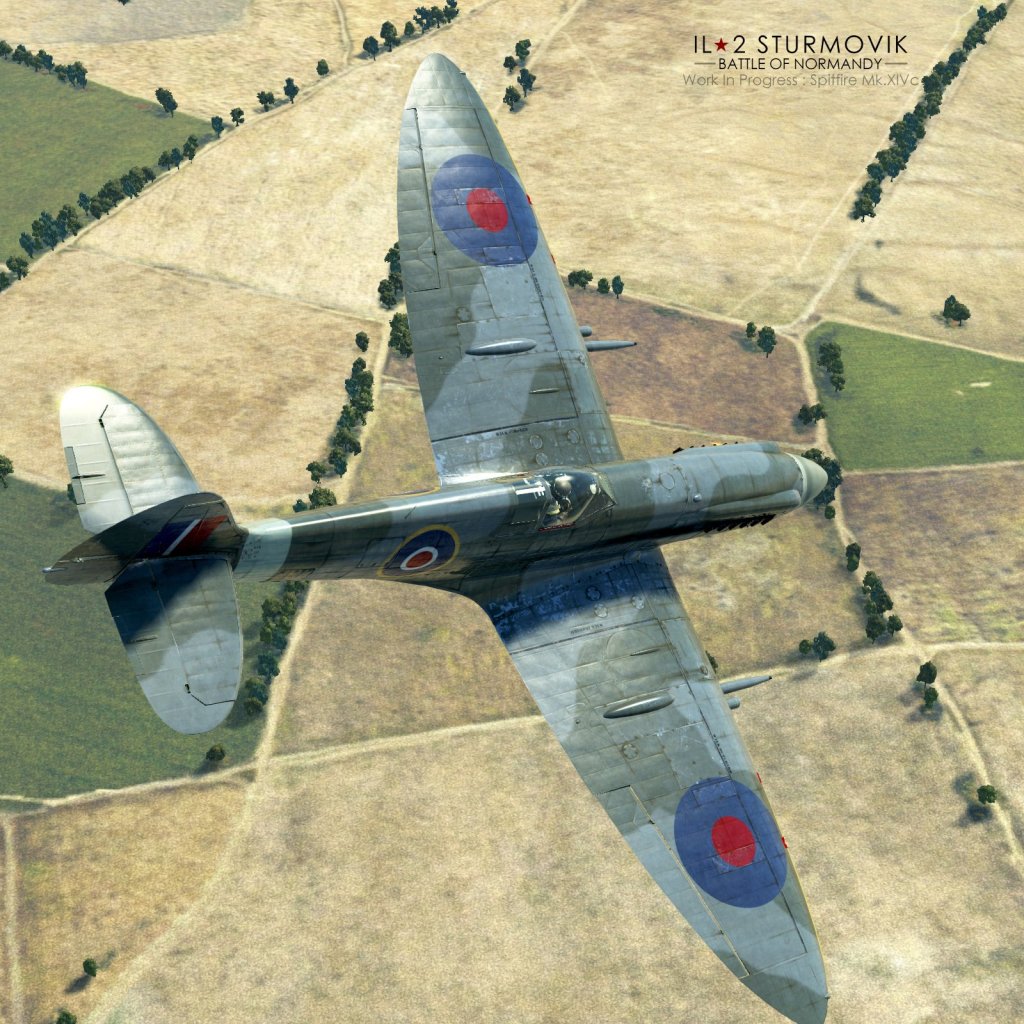

According to Han, work on this fighter is still at an early stage and in a recent interview it was mentioned that this fighter would likely come in early 2021. It’s likely that we’ll still have to wait a while for this aircraft to show up in our hangars but when it does I think it will make quite a splash.
I’ve been waiting to fly a Spitfire XIV in a sim for quite a long time. The last time I got to fly one of these was in Dynamix’s Aces Over Europe. So it will be difficult to contain my excitement when this finally does arrive.
The Mark Fourteen
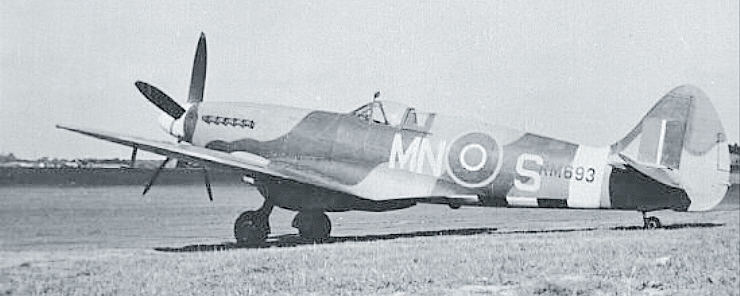
The Spitfire Mark XIV will be the third Spitfire model added to the IL-2: Great Battles Series and it represents one of the highest performing fighters of World War II. The Griffon 65 engine in the Spitfire XIV was a more powerful follow-on of the Merlin engine requiring a redesigned and lengthened cowl, a larger tail section to help manage stability issues, and larger radiators.
The result of all of these changes was a fighter that had an engine capable of producing over 2,000 hp and a top speed of 465 mph at high altitudes and a climb rate around 5,000 feet a minute. Spitfire XIV’s were also used to chase V-1’s and in these cases they were enhanced with 150 octane fuel allowing boost pressures up to somewhere around +21lbs. Some of these low altitude V-1 chasers were able to reach speeds of around 400 mph at sea level.
The Spitfire XIV will be able to match other high performance fighters including the Bf109K-4, Fw190D-9, P-51D, and act as a friendly rival the Tempest Mark V which should make for some interesting scenarios – and no doubt a few arguments too.
The Spitfire XIV was not without its foibles. The increased power and torque on the narrow track landing gear caused many accidents including a number of ground loops and despite the increased power and overall similar handling, some Spitfire pilots much preferred the Spitfire V or Spitfire IX to this later model type. It should be an interesting experience to have in a sim. I can’t wait!


 Stormbirds
Leave a reply to ShamrockOneFive Cancel reply