
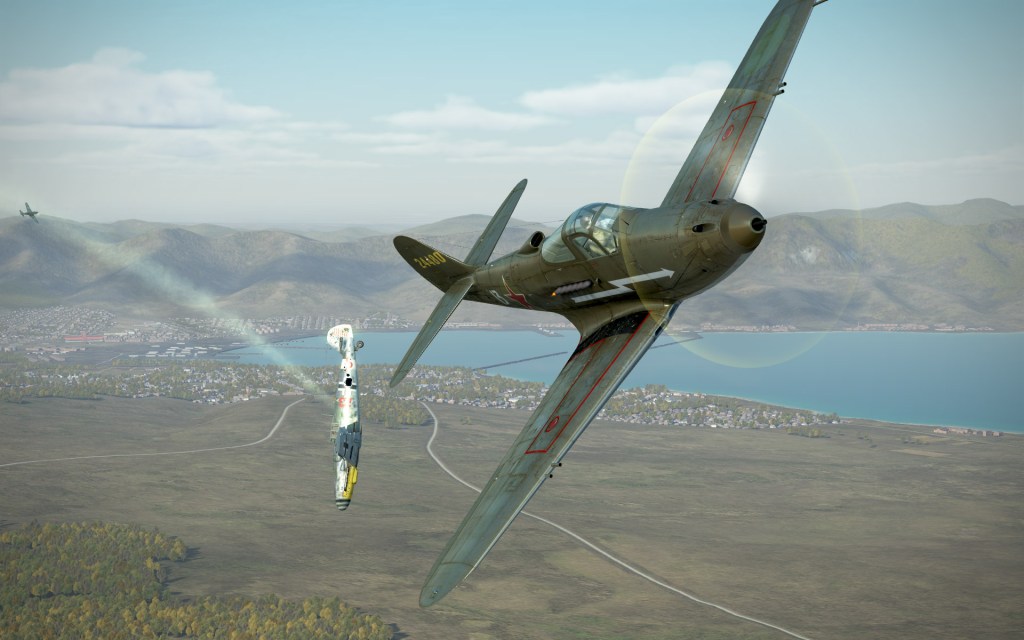
I’ve had a chance to get some flying in since the new 4.501 patch arrived for IL-2: Great Battles. Here are my first impressions on the changes and some further thoughts on the issue.
The problems of the past
Let me be clear what the differences are between now and the previous patch. Prior to 4.501, spotting required a lot of using the field of view keys to narrow your vision. Although semantically it wasn’t actually zooming in, the effect was essentially that. A narrower field of review revealed more details. The problem? Narrowing it obviously removes a lot of the visibility around and so scanning the sky for distant aircraft was an exercise of being zoomed in and still trying to scan large quantities of sky.
Worse, pre-patch it was easy to loose your wingmates even though they were “right there!” Often aircraft would just disappear and not be easily spotted again. Even when told exactly where they were it was sometimes an exercise in futility trying to find them. It didn’t happen all of the time but it happened often enough that we all found it frustrating.
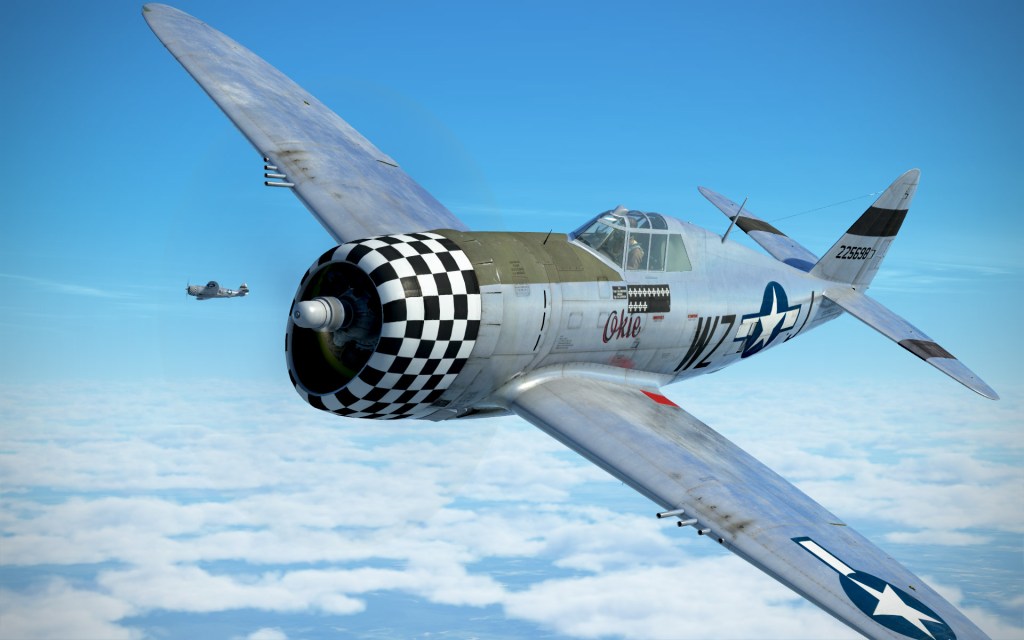
That this was sometimes happening together while flying with a couple of trained commercial and former military pilots helped me to understand just how big of a divergence this was from a more realistic depiction of flying and spotting aircraft.
This is the second time that the developers have tried to improve spotting. The last time the enhanced spotting was drastically reduced until it essentially no longer made any difference from the first time and I’m hoping we do not see a repeat of that.
Dramatic, yet subtle
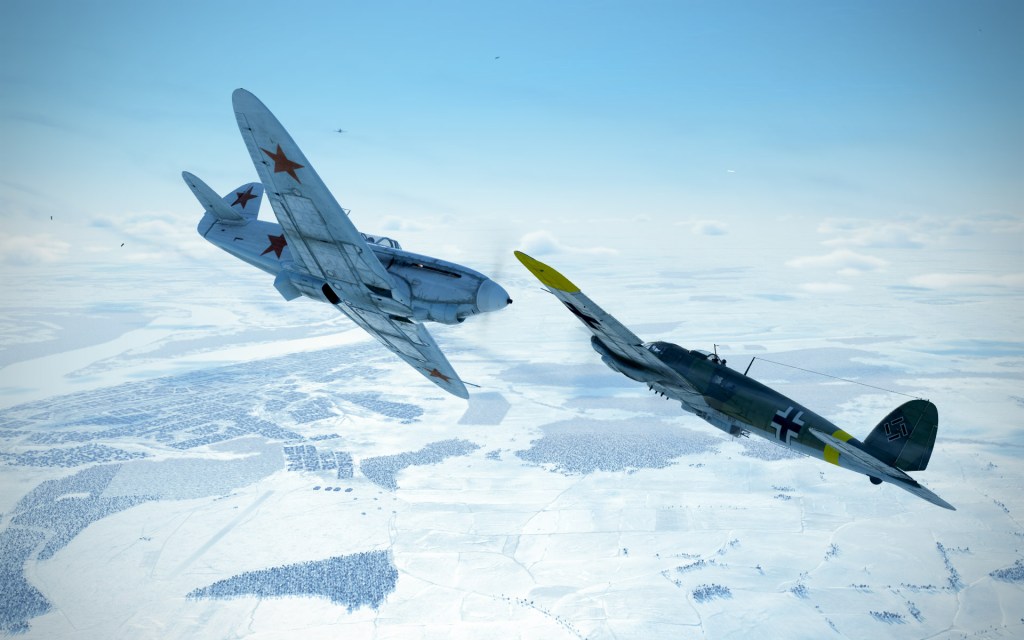
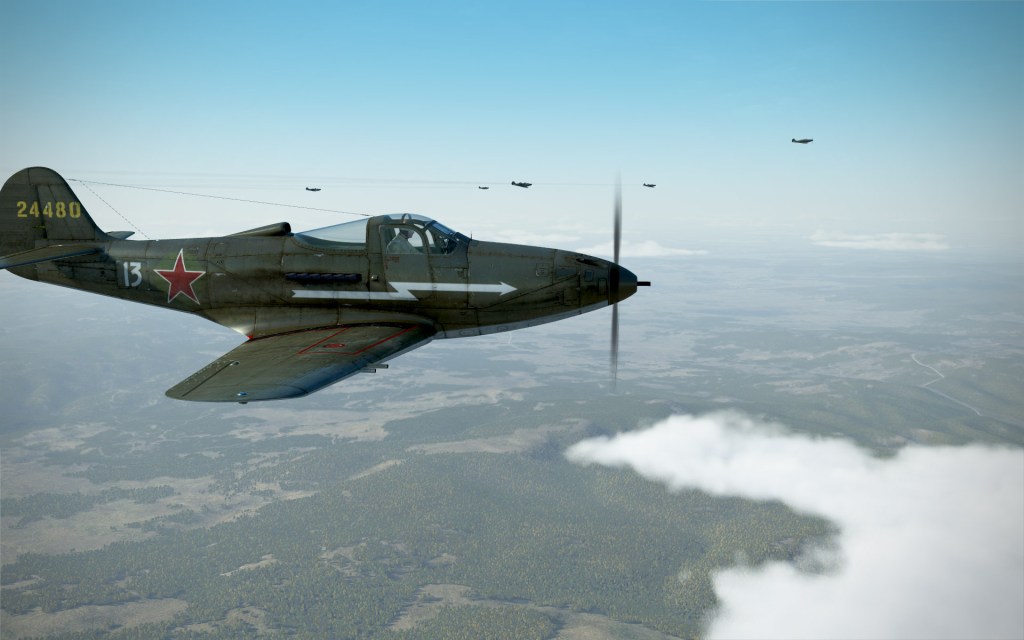
The way new spotting works has completely revitalized the experience for me and I would think many others too. Even at the widest field of view, it’s now possible to spot nearby aircraft without too much trouble. This doesn’t meant that large cartoon hands point out the aircraft but there are still visible and it makes it a lot easier to keep track of whats going on and even spot aircraft from several kilometers away.
Last night three AI Me262’s flew past us at a couple of kilometers distance and we could spot them perfectly once we were looking in the right direction. They were against the darker blue parts of the sky and were still visible. In another test I was in the QMB flying some scenarios against the AI at different times of the day. Dawn and dusk have historically been difficult times to spot aircraft and while that is still true they no longer disappear before your eyes. You can track them if you’re looking in the right direction.
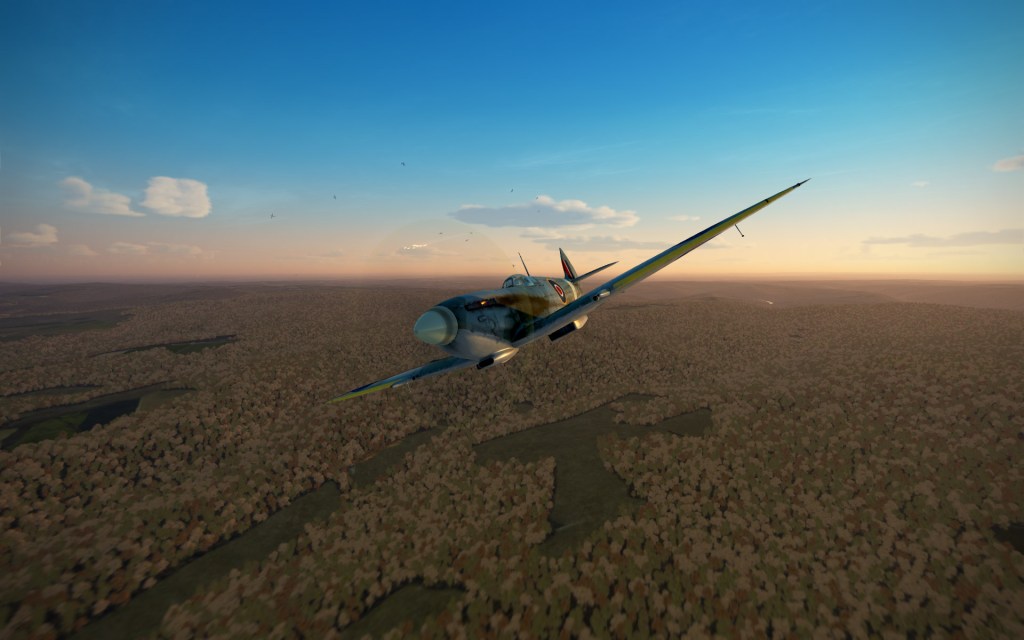
This change is a massive improvement to the way that multiplayer and single player alike can experience the sim. No longer do we have to look at a narrow corner of the sky with a narrow field of view. Now you can more effectively cover off an area and keep an eye on your wingmates without an errant pixel suddenly becoming an enemy fighter at the last moment.
That all said, this update does another thing right. Aircraft are not instantly or obviously visible at longer ranges. Nobody is going to spot you coming over the horizon or ducking through a valley to perform a sneaky attack run any better than they could before. And it’s still more than possible to bounce enemy aircraft by using the real tactics of flying out of the sun or coming up from dead astern where they most likely have a blind spot.
I’m a fan of this change. I think it’s what it needs to be without adding a silly mechanic or something that takes us out of the WWII flying experience. This is an excellent change and even after just a few flights I think this is where the series needs to be. I’m not against further improvements and tweaks but only in the service of having this good of an experience while reminding ourselves that we’re virtually flying in a digital word represented by pixels on a screen.
This is a good, accessible experience
I’ve already seen a few complain about the new system suggesting that it has had a negative effective on online battles. I can’t agree with this at all.
There are bound to be a few who enjoyed the previous system because it provided them an advantage in the specific way that they fly. The old system made spotting hard in a couple of key ways. First, spotting against the ground when the aircraft was low to it was particularly hard, which was a benefit to strikers flying to target areas (more on that in a moment). Second, it was of benefit for those who flew very high up and were spotting aircraft at medium levels and swooping in for the kill. Spotting an essentially black dot against deep blue skies on an LCD monitor is a difficult exercise and so this type of flying was rewarded. Fly outside of these narrow confines and the new spotting systems is, to me, undeniably better. These two seem mutually exclusive so hold that thought for a moment.
Let’s go back to the attacker flying at low altitude and avoiding spotting by using the terrain clutter as a cover. That’s a tactic and one that can pay off both under the old system as well as under the new system – but those aircraft were also effectively invisible until a key point. That point was when the flak began to engage them. So intercepting attack aircraft wasn’t a matter of tactically positioning patrols between target areas and enemy airbases but a matter of waiting for puffs of black smoke and tracers and then swooping in for the kill.
None of these tactics are inherently wrong or bad. I’m not passing judgement on their use. But rather that they aren’t the only times where aircraft should be easier to spot or conversely where it’s hard to spot aircraft doing things that shouldn’t realistically convey an advantage.
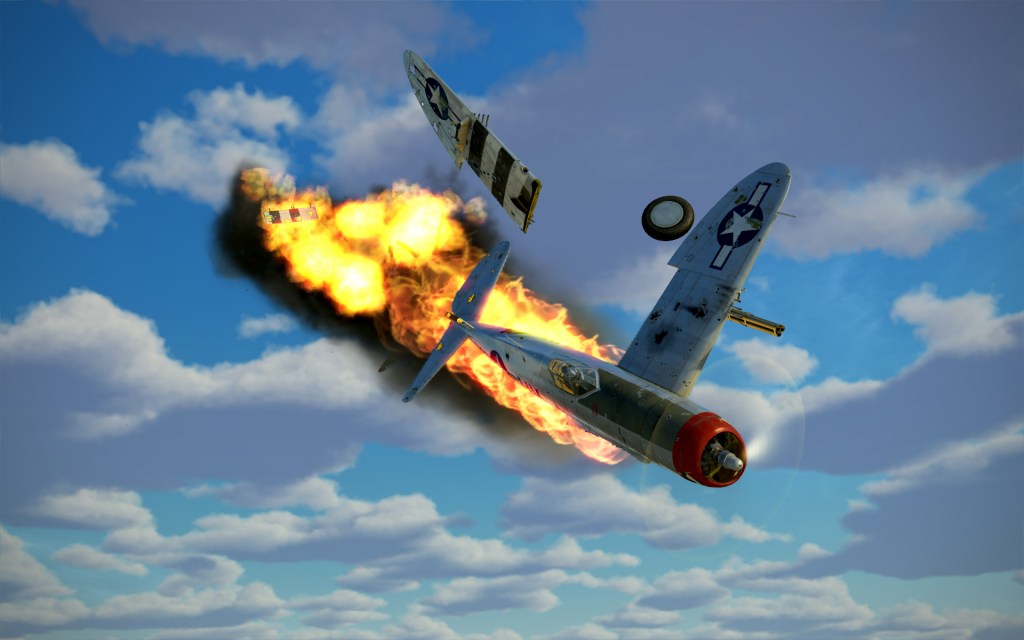
Now, it is possible, with a well placed patrol, to intercept attackers before they get to the target if they are within visible range of the patrolling fighters. Similarly, those attackers should be able to see the fighters coming if their spotting and situational awareness is on and take evasive action. That increases the challenge for everyone but it also encourages more tactics than just the surprise bounce. And that’s what I want to see. More than just an endless stream of kills where the enemy never saw you. It’s still more than possible to do that, it’s likely to happen nearly as often as before, but it has less now to do with a system that prevented detection and more to do with careful tactics and a bit of carelessness on the part of the aircraft under attack.
I think this change is good. Change can be hard too but I think this is a transformative experience that helps the vast majority of virtual pilots spot targets in a way that’s both keeping the realism while also accepting the limitations of the medium that we’re flying with. That LCD monitor that’s either a foot away from you or just inches away if you’re a VR pilot is something that we have to accept as a limitation versus a human eye looking at a real scene.
Moreover, you want people to be able to see other aircraft while flying around. Not just the few who fly in a very particular way or the folks who have modified their game or computer setup to enhance contrast. Everyone should be able to have a good experience here and have a reasonable chance of seeing aircraft at a realistic range.
This is a very good change to the IL-2: Great Battles Series and one that I hope and think will be a durable change. It’s something that IL-2 multiplayer has needed for a while now. I’m glad it’s here and it should stay!


![[DBS]TH0R Avatar](https://1.gravatar.com/avatar/7e3c1b9c262b850180ddec7f9fd03938e29da4be154ceea9f754245c18792e15?s=48&d=identicon&r=G)


 Stormbirds
Leave a reply to Blue 5 Cancel reply