
In recent weeks and months there have been many comments around some key features in the IL-2 Sturmovik: Great Battles Series. Some of those comments have bubbled over into some heated arguments and an update on what the team was doing about them seemed to be a necessity. That is just what we’ve got with an update from Jason Williams, IL-2’s Executive Producer. Here’s a summary of what he said, what we can expect to see, and some of my own thoughts on it.
Addressing some key items
There are four key issues that Jason has laid out in his Briefing Room and Officers Club forum thread. Here they are as he’s laid them out:
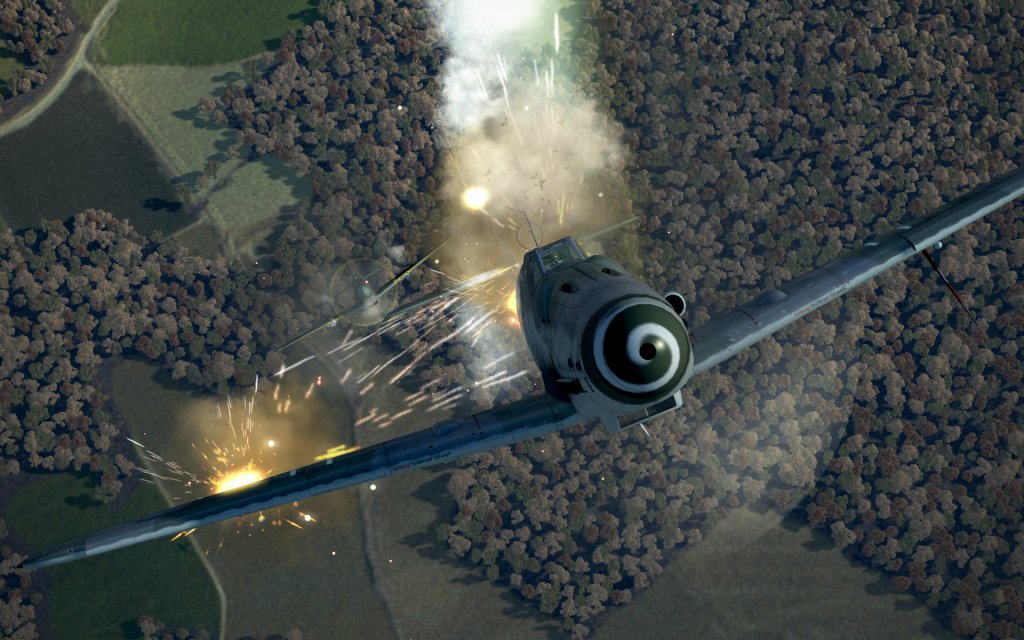
- Effectiveness and ballistics of US .50 cal. bullets of WWII planes.
- Control surfaces “jamming” due to cables and rods being damaged of WWI planes.
- Frequency of catastrophic wing failure of WWI planes due to damage.
- General ammo and damage modeling concerns.
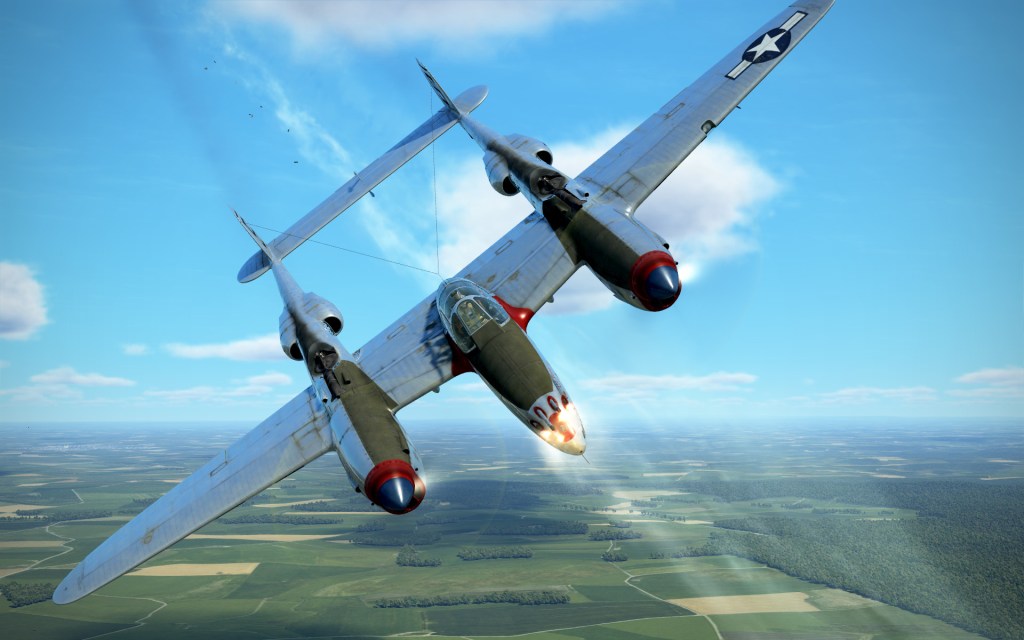
The issue of the .50cal is an old one that stretches back across multiple sims and there are lots of opinions on how good (or bad) of a weapon it should be. That said, what Jason had to say was very interesting because it’s clear that there were discrepancies in the weapon right from the time it was implemented in 2015 during Battle of Moscow’s development.
Thanks to a well-researched report by community member Yak_Panther and other modders, we have found that certain parameters for our .50s somewhat out of spec. Hmmm…. we’re not exactly sure how this happened. We first built our .50s in 2015, but strange things can happen and our memories fail us on this as we often don’t remember all details of work done years ago. Regardless, Han and Viks have researched the issue anew outside of normal work hours and discovered we have a mismatch with the data that has been posted. So, Han has made adjustments to both the parameters of the bullet and dispersion of the bullets. Will the community like the result? These changes may make them more potent or possibly it won’t be noticeable. At least they are now set to proper parameters and entering testing.
Jason Williams
The thread that Jason references by Yak_Panther is right here for your reading pleasure. In it, Yak_Panther does some impressive level of research into the issue referencing real world ballistics tables and comparing them to testable in-game values.
The results of his work in summary are that the IL-2 version .50cal apparently underestimates penetration capabilities up to 1000 yards and then overestimates them. The bullets are slightly off in their velocity traveling too slow and both drag and mass values are also seemingly off. The exact numbers, tables, and academic references on the subject are all in the thread.

Next up, damage models for Flying Circus aircraft including the issue of jammed control surfaces and wing damage failures.
A couple things have happened here that warrant more explanation. We agree that the “jamming” is happening too much and the proper behavior of a control surface becoming loose instead of jammed when cables are severed is also wrong. This was baffling to us, because there is no such problem with WWII birds and these complaints did not seem to appear early in FC’s life cycle.
Jason Williams
Indeed, the issue seemed to crop up not at release of Flying Circus but during the damage model updates in 2020 and that’s where the story does seem to get interesting. Fortunately, the cause of the issue has been identified.
The problem is, we failed to update the WWI aircraft to include this new feature or adhere to the new limits of jamming frequency. Oops… to put it mildly. But why was it not so obvious when FC1 was first released? Another mystery lost to time, complexity of the product and a fast pace of development.
Jason Williams
So, a mistake but also a curious rise in the incidents that seemed to not happen until more recently. I too had noticed it and thought it to be a new and perhaps undocumented feature but this seems to not be working exactly as had been intended and that multiple code updates over time exacerbated the problem. We might never know.
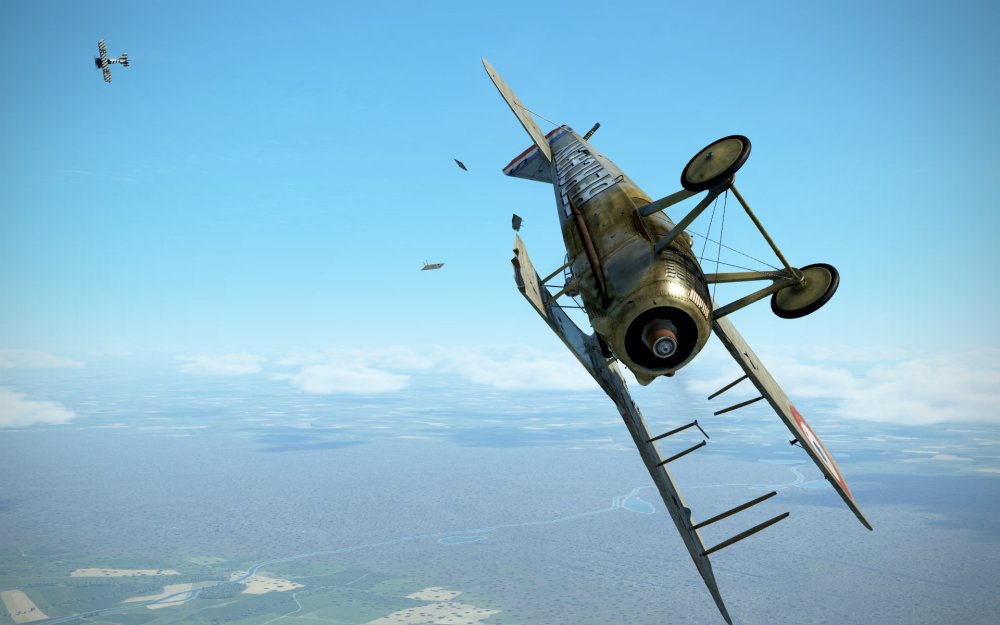
Wing failures are yet another issue that plague Flying Circus pilots in some circumstances. There are times where only one or two bullets seem to be behind a total failure of the wing surfaces while other circumstances could see dozens upon dozens of bullets fired without the same kind of result.
Again, here are some key words from Jason on the subject.
This is another issue that is hard to know the totally correct answer to. Our math and the various designs of some WWI planes, says it should happen, but maybe we have something wrong and it happens too often? Play tests also seem to suggest it happens in MP more often than MP. We suspect it is more of a general issue that cannot be resolved with a quick fix, we also don’t know if this behavior is indeed truly wrong. Data on WWI planes is hard to find in general. It requires more research and time to look at. Its definitely in our list of things to work on.
Jason Williams
I think Jason meant to say that it happens more in multiplayer than single player above and on that point it would agree with my own experiences and observations.
Either way, it’s good to know that the team is aware and on their list of things to fix and solve.
Finally, the issues with some larger types of weapons including the 30mm MK108 and the 37mm M4 are apparently also on the docket to be looked at in the future. I haven’t noticed as many issues with these but some have and they are up for a look at by the team in the future.
An open beta?
Another interesting element that Jason mentioned is the possibility of an open beta system. The tester group is small and it can be difficult for the testers to find time to get to every issue. Especially when the issues are damage model related and may require hundreds of flights or even thousands to reveal a potential problem.
It’s unclear how that will play out and just how the test will work. DCS World’s biggest problem with the open beta is that it just became the default release and public releases are so rarely supported especially in multiplayer. I hope not to see a repeat for IL-2, though a more public test would be helpful no doubt in some circumstances so perhaps a limited time test would be the way to approach it.
My thoughts
I’ve been in the midst of writing an editorial covering some of these issues, one that was prompted by several private discussions I’d had as well as a thorough reading of the public posts on the subject matter. I wasn’t able to finish it before this came out and, truth be told, I had stopped and started it several times trying to find the right words to convey the message.
My default position is nearly always that whatever the current state of the sim on the whole it is good and enjoyable but that it can also always be better. And let’s be honest, we are living in a golden era of flight simming right now. The problems we have with them are real, they matter, but they shouldn’t keep us from having an enjoyable time with some of the best and most realistic simulations we’ve even seen in this genre.
The work that community members such as Yak_Panther have done is outstanding. A clear and detailed examination of datapoints is essential. It cuts through a lot of thoughts on it and lays things out through data.
Some will say, “it’s obviously wrong, fix it!” I don’t think that’s a useful position to take because we cannot assume that it’s wrong just because we feel it is. Although that can be the starting point it doesn’t get us further than that and its also not incitement enough to have a whole development team look into something – not when they are busy with other things. To move the needle, data is needed, and some community members have gone above and beyond to find it. I applaud those efforts!
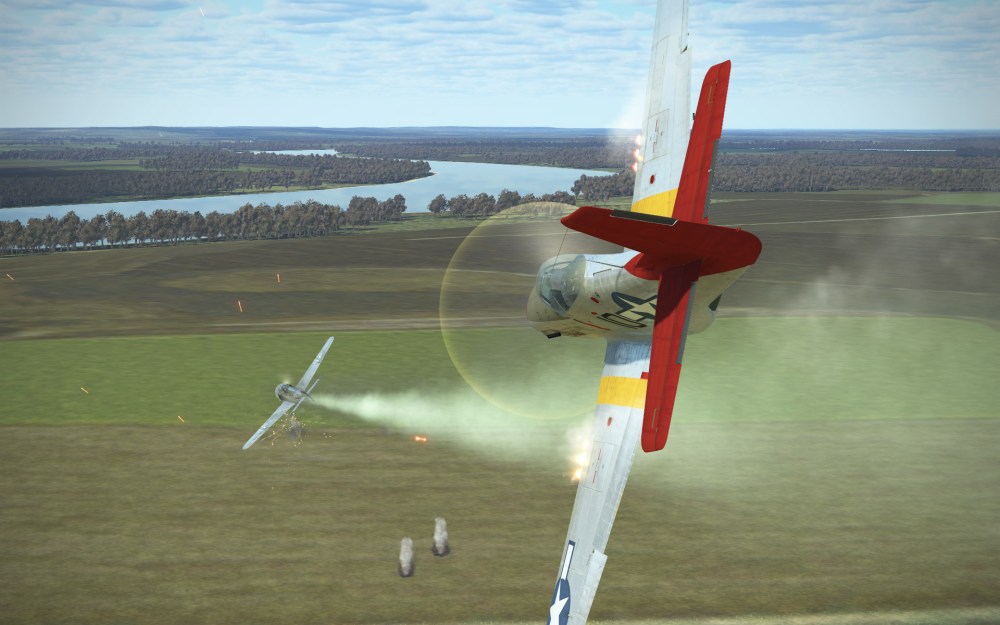
When we in the community do find something wrong, as Yak_Panther has done, there’s also some understanding required by us that finding an issue doesn’t translate into an instant fix of the issue.
A complex simulation like IL-2 needs to be looked into to find the source and come up with the right solution. We may know the problem but the underlying coding responsible is complicated and woven over dozens of years. Bottom line? Fixes will sometimes take time and Jason has given us an indication that while some may only take a few weeks to solve, others will require months.
A key line in Jason’s update that I want to quote is important because it underscores some fundamental realities of software and sim/game development.
Due to the requirements of our development schedule (which is often written months or years in advance) it is difficult for us to “go backward” and address certain issues without severally hurting the current product dev cycle. We have business obligations that we have to meet that require us to balance building new features, content and technology with changing old ones.
Jason Williams
Always worth bearing in mind.
Moving on from here
I think this update by Jason was a good and needed one. It replaces some (sometimes inaccurate) speculation with realities, details and Jason’s patented “real talk.” There are a few mea culpa’s but also I hope a renewed understanding by all that these issues aren’t simple fixes or ones that the development team can immediately pivot to.
Having myself worked in the project manager role, I can understand that you sometimes have to stick to your development plan and schedules. Compartmentalizing the needs of the overall project over solving a specific fix is a necessity at times and while I think we’d all like to snap our fingers and have the thing that bugs us the most about one of our favourite simulators fixed, it all does need time to come into play.
Nothing should downplay legitimate concerns and complaints but we also need to be patient to see them fixed. That patience has been rewarded over the years with a great WWII combat sim. It continues to grow, it continues to solve and fix problems, and there’s reason why it’s one of my most flown simulators. It isn’t perfect and I’m glad to see these issues addressed.




 Stormbirds
Leave a reply to Sigurd. Cancel reply