
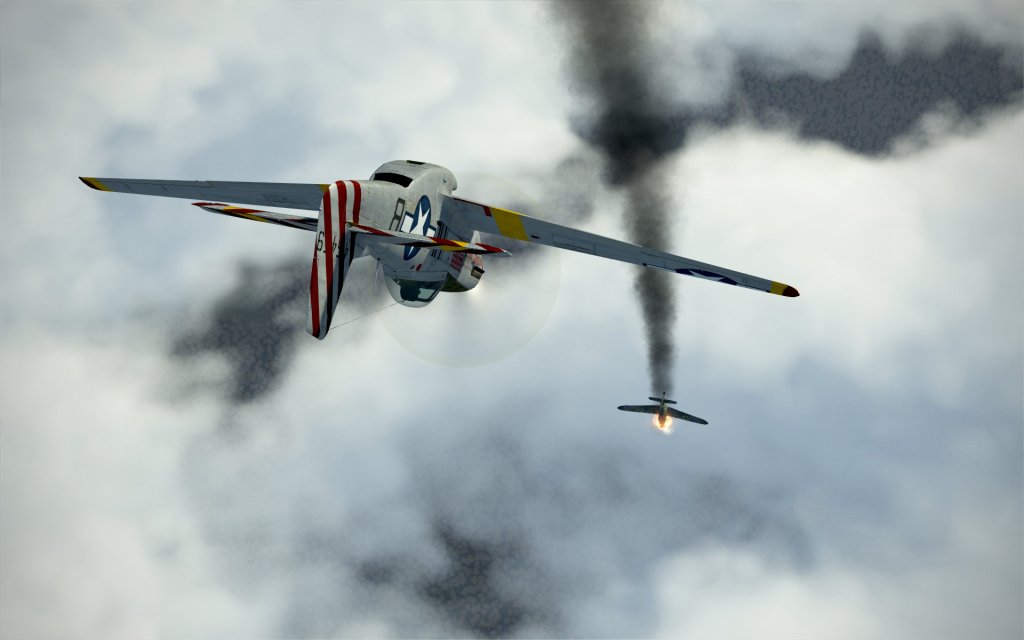
One contentious issue across multiple generations of WWII combat flight simulations is the issue of the representation of the Browning M2 .50cal. Less powerful than a 20mm cannon but more effective than a light machine gun, the M2 .50cal was the primary armament for most American combat aircraft in World War II. There’s been plenty of controversy surrounding the effectiveness of the real weapon as well as the effectiveness of the simulated version over the years. IL-2: Great Battles’ most recent patch changed some key values and that left me with a couple of big questions. Is the weapon actually better now? What comes next? I’ve done my best to try and provide some answers on these questions. Let’s have a look!
More punch?
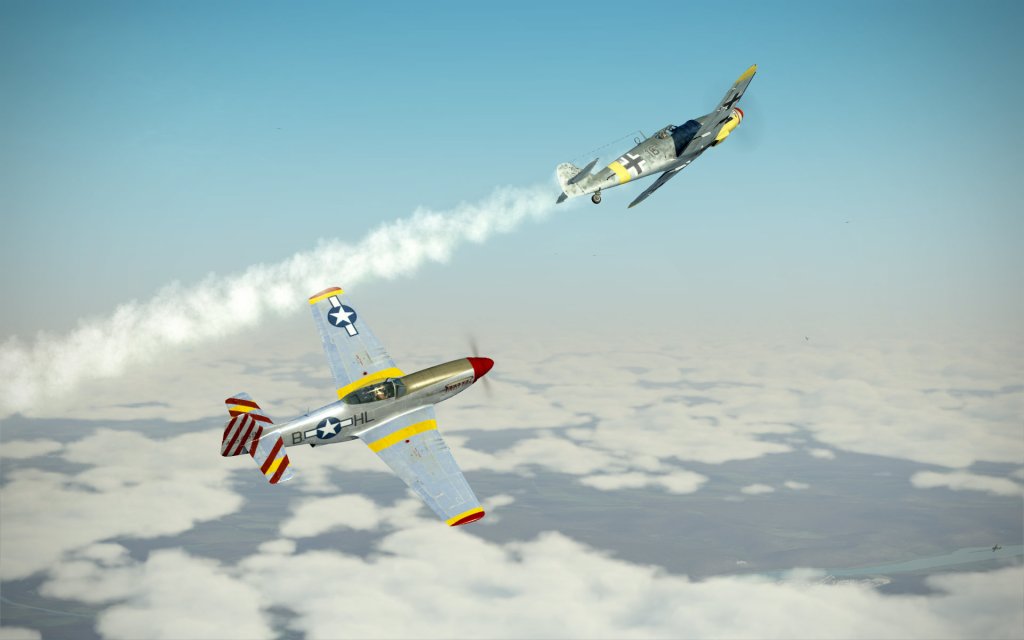
First, it’s important to understand what has changed. Extensive research by community member Yak_Panther revealed that the .50cal’s bullets were traveling too slowly and they didn’t quite weigh enough. Subsequent investigations by members of the 1CGS team confirmed the very same. It was a mistake that went back all the way to 2015 and the introduction of the P-40 Collector Plane and the release of Battle of Moscow.
As of update 4.604, the .50cal has had three fundamental changes in response. First, the bullet weighs a bit bit more. Second, the bullet travels a little bit faster. Third, the dispersion pattern of the bullets has been altered so that they now spread out just a little more at the convergence distance than they did before.
The change seems to have had more of an effect than I would have guessed. Others can tell you the numbers but I’m more interested in how they practically affect my flying and combat effectiveness. The effect is not a dramatic one but rather a subtle one with some practical changes.
I am seeing a perceived increase in four types of damage. First, fuel tanks and radiators seem to rupture more frequently. Second, fuel tanks and engines seem to light on fire slightly more frequently. Third, the number of pilot kills that I’ve managed to get has gone up slightly. Finally, I’ve seen a few more aircraft shedding wings, ailerons, elevators, and other key airframe components than before.
The spread also seems to have helped. The .50cals remain tightly grouped weapons but they do spread around just a little more than before and that seems to have the effect of hitting the target more frequently in a burst of shots.
My impressions are based on a few hours of QMB testing plus one two-three hour flight session online. It’s not exhaustive and its not a numbers based approach that I would use to argue a finer point. However, I can report that I have an impression of having slightly more power on hand when hitting with primarily .50cal armed aircraft. And that seemed to be shared among the virtual pilots I was flying with too. Despite flying the underdog P-40, we were able to use teamwork, tactics and .50cal firepower to bring down a good number of 109’s often in a single firing pass.
The practical result? A few more single pass kills and less time on target reducing my overall risk of being bounced. This is good!

It’s not a magic bullet
Prior to this change, I never felt like the .50cal was as under performing as a few in the community suggested. On the other hand, and I’ve written this a few times, I always think it’s good to test, provide good data, and for development teams like 1CGS to be open to checking their work. In this case, a check was a valuable thing because a couple of errors have been corrected and my feeling was wrong.
I also still do not subscribe to the notion that they were previously useless weapons and are now suddenly useful. This update improves historical and simulated accuracy but it’s not magic.
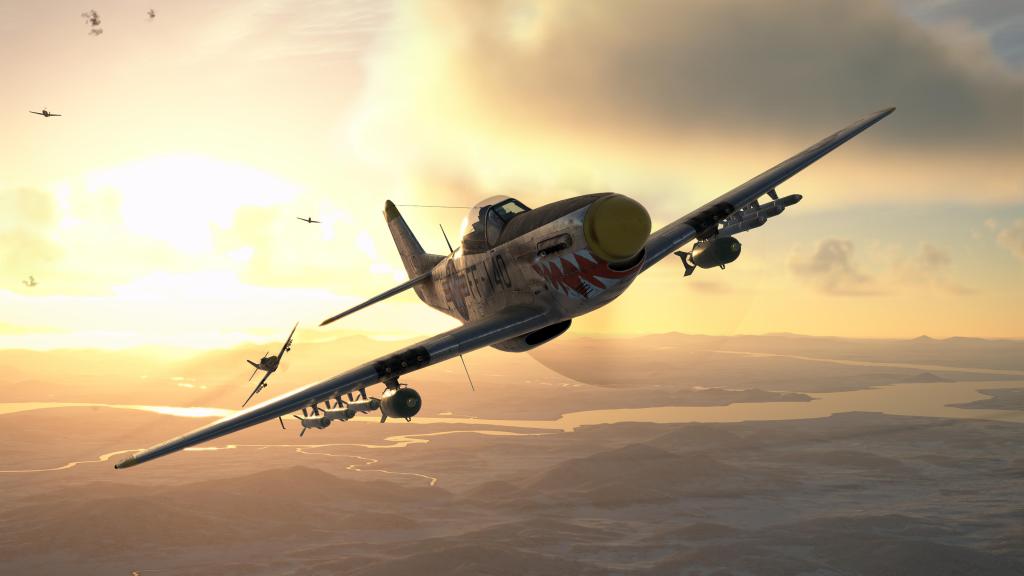
Previously, it was not unusual for me to go on Combat Box with a few friends, fly P-51 Mustangs, and for the team to collectively come back with a half dozen or more kills split between 2 or 3 of us. Just before the patch arrived, I flew a team mission to attack an objective which involved strafing and bombing targets before we were bounced and had to fight our way back.
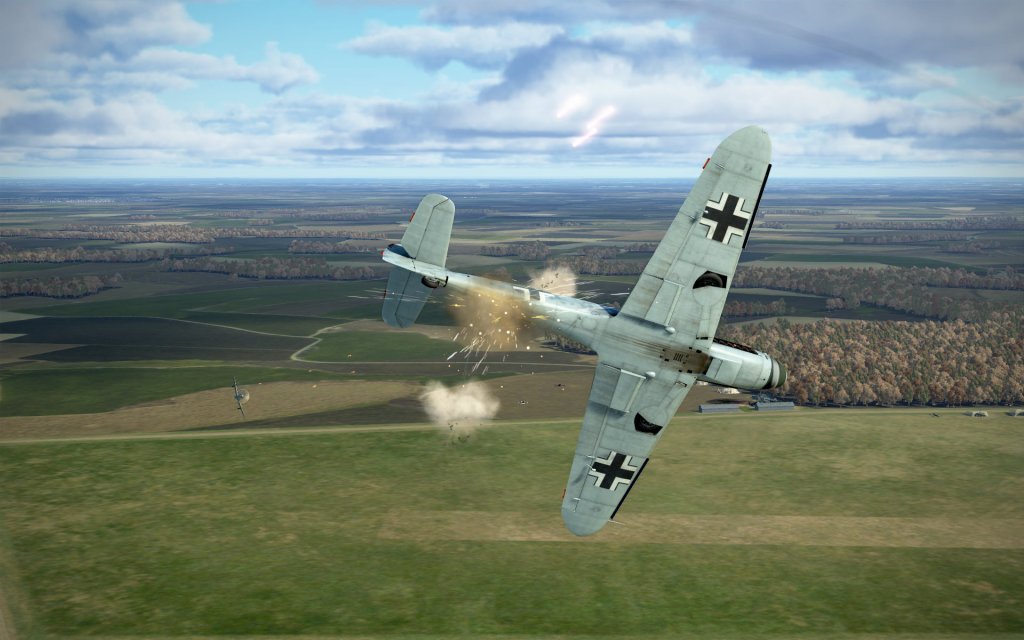
I destroyed 7 aircraft total with 4 of them being on the ground and the other three being human piloted aircraft (arguably the more important metric). One of those aircraft went down with just a couple of bullets that severed a control cable and say that Bf109 crash to the ground. Completely ineffective? No. Suffering from some incorrect values. Yes, absolutely.
This change is not, however, providing some magical benefit to Allied pilots that was not there before either. Han from the dev team even went to the forums to provide some data on what we should and should not expect of the weapon. Axis pilots are not going to be suddenly shot down in droves and Mustang, Thunderbolt, Lightning, Warhawk and other .50cal armed aircraft will still need to use smart and practiced gunnery techniques as they always have. They are hitting just a little harder than before.

But wait, there’s more
Late in the war, American aircraft changed their ammo belt to include large quantities of the API (armor piercing incendiary) and APIT (the same API loadout plus a tracer) bullet mix. This was done in response to the arrival of the Me262 jet fighter with the idea being that the incendiary rounds would ignite jet fuel. Results soon bore out that the incendiary armor piercing bullet types were also more effective against other more conventional aircraft too and the revised belting spread around quickly after that.
At this moment, no weapon in the IL-2: Great Battles Series has any incendiary effects. Most other weapons can get by without this type of bullet because they typically also have a high explosive option in the mix. Even the German 13mm machine gun and Russian UB 12.7mm have small HE bullets that can cause quite a bit of damage (this is another hot topic for some).

So, it is my great hope that Jason and the 1CGS dev team can find some time later on down the road to add in incendiary bullet effects. As Jason pointed out in a response to a question on the subject, it isn’t just renaming a bullet name and making a flashy effect. They also want to simulate the effects that an incendiary bullet would have on a target including interactions with the fuel tanks. It wouldn’t surprise me in the least if this is already part of a long range plan that first needs the new fuel tank system to be implemented before they can start to build a simulation of this type of weapon.
Groundwork in complex projects has to be laid out over prolonged periods of time so it may take a while to get this in. I’m fine with the reality of that.
The 1CGS team have consistently delivered on longstanding community wishes. It is sometimes hard to remember the good work that has been done when a new controversy comes up taking its place. It is also hard to remember that sometimes when the resolution is not immediately forthcoming. I would, however, submit to everyone that they absolutely listen to us, they do take action, and this latest update is not the last time that we’ll see the team tackle this legendary weapon and find better ways to simulate it and its contemporaries.
My first impressions on this most recent change could of course be wrong, everyone’s mileage may vary, and further changes down the road are almost certain. That said, I feel pretty confident at this point that the changes have made the .50cal at least a little more effective and hopefully that will satisfy more people.


![[DBS]TH0R Avatar](https://1.gravatar.com/avatar/7e3c1b9c262b850180ddec7f9fd03938e29da4be154ceea9f754245c18792e15?s=48&d=identicon&r=G)






Leave a Reply