
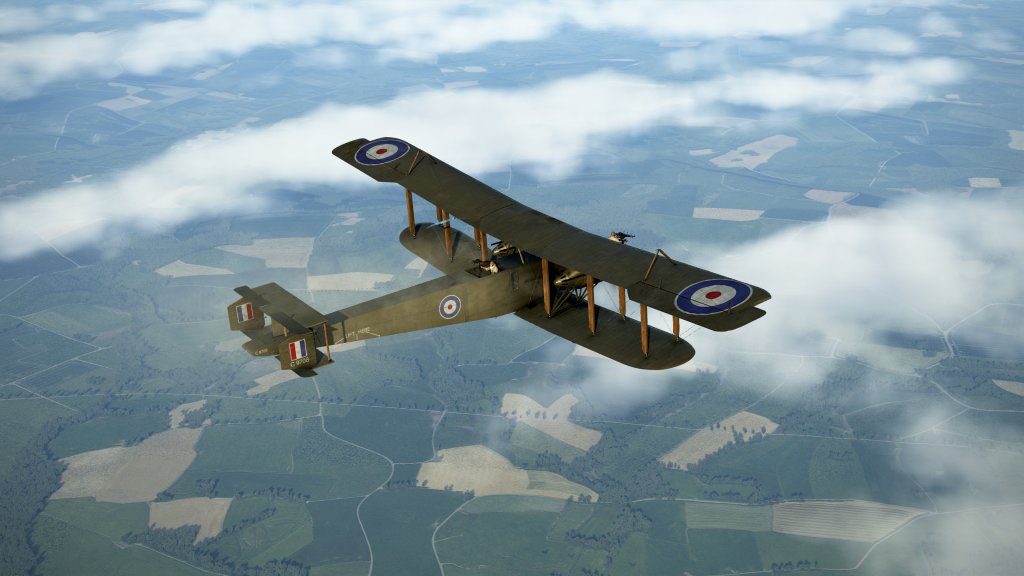
This one is a double feature review as I have a look at Flying Circus Vol. 2’s Gotha G.V and Handley Page O/400 heavy bombers. Both aircraft are remarkably similar in their performance and overall configuration but they are not carbon copies and come with their own unique quirks as well. Let’s have a look!
A bit of history of these two behemoths
Handley Page Type O series started as a request at the start of WWI to build a long range bomber aircraft. In the words of Captain Murray Sueter, the director of the Air Department of the Royal Navy, the desire was for a “bloody paralyser” of an airplane.
Prototypes were constructed and delivered by December of 1915 for initial evaluation. A tail oscillation problem required several modifications to the design before problems were largely solved and the aircraft was accepted into service. The O/100, the first production series, began combat operations in late 1916 with initial operations taking place over the North Sea where a German destroyer was attacked and damaged in a bombing run.
Fighter interception remained a problem for these aircraft so the switch in tactics to night bombing would prove tactically useful and inform bomber doctrine for decades to come. The 0/400 introduced more powerful engines and entered service in the spring of 1918. By mid summer the type was being used in 40-airplane raids on strategic targets which foreshadowed the mass bomber formations of WWII.
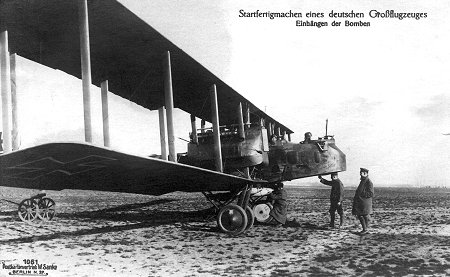
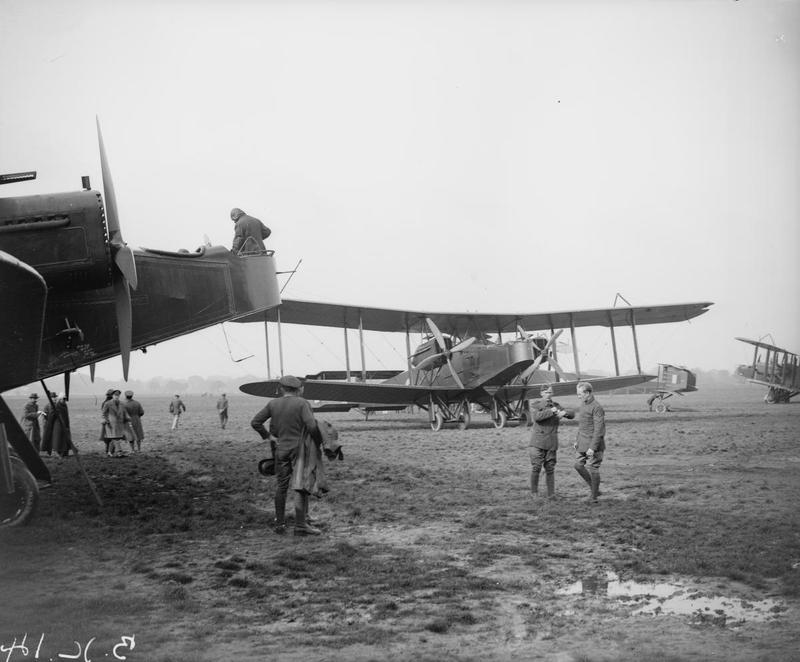
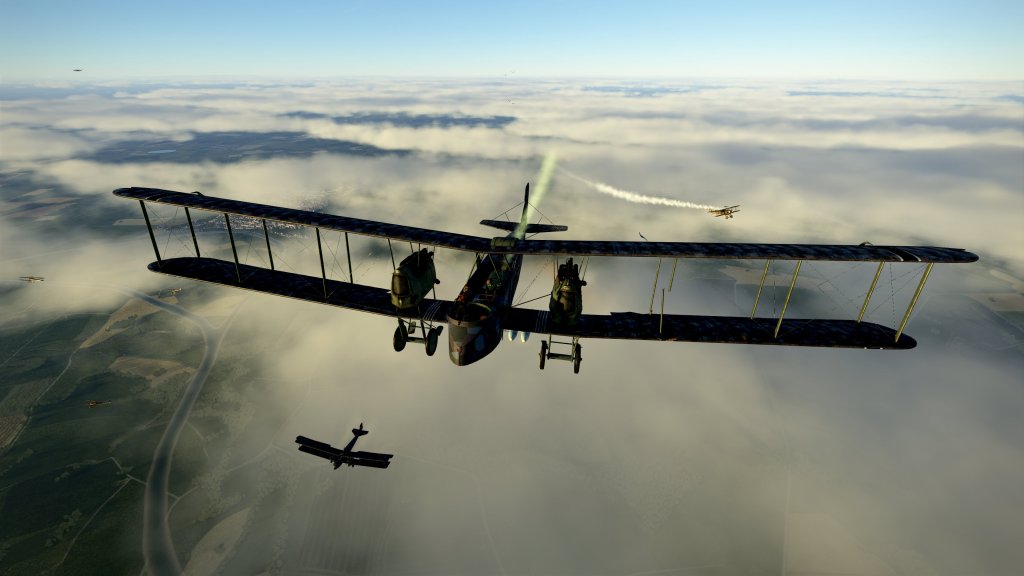
Now, let’s switch to the Gotha G. The G series of bombers designed by Gotha went through a similar development process as the Handley Page. The desire for a long range strategic bomber to compliment and then ultimately replace the Zeppelin raids on England lead to to the large twin engine bomber. Gotha used their experience building large sea planes to produce the unconventional G.I. That was followed by the much more conventional and easier to build G.II. What followed were a series of enhancements and refinements to the design leading to the definitive G.V.
By 1917 the Gotha bombers were in operation dropping bombs over London and causing considerable causalities. Additional raids against the south of England caused additional damage but were also met with significant anti-aircraft fire and interception by fighters. In one raid, the RNAS and RFC made over 100 sorties to engage the formation.
With resistance stiffening, the decision to move to night bombing mirrored the experience that the British had with the O/400. The last England raid was made in May of 1918 with a large force of 38 Gothas. They were met with night fighters and flak guns losing several bombers.
Visuals and sounds
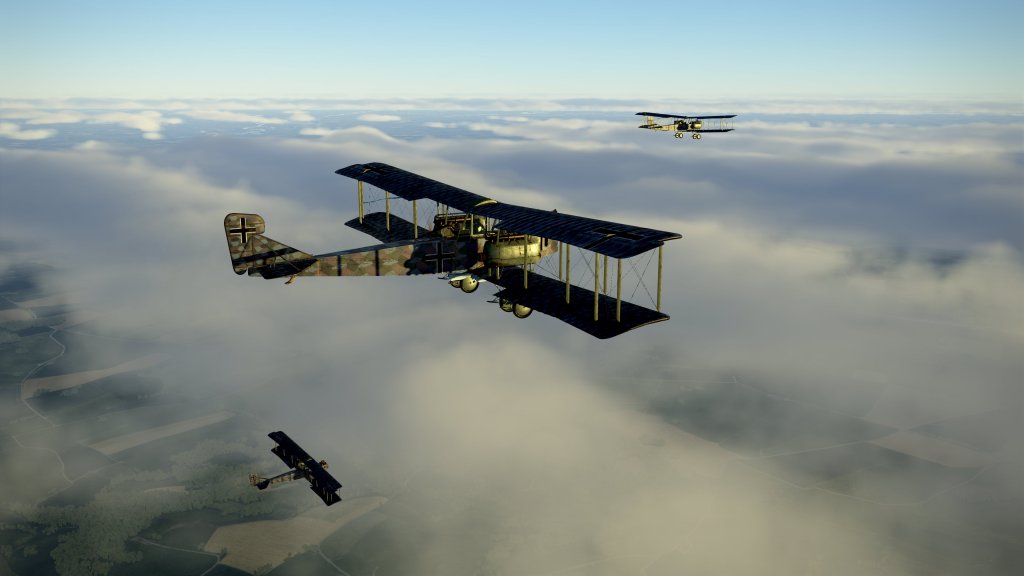

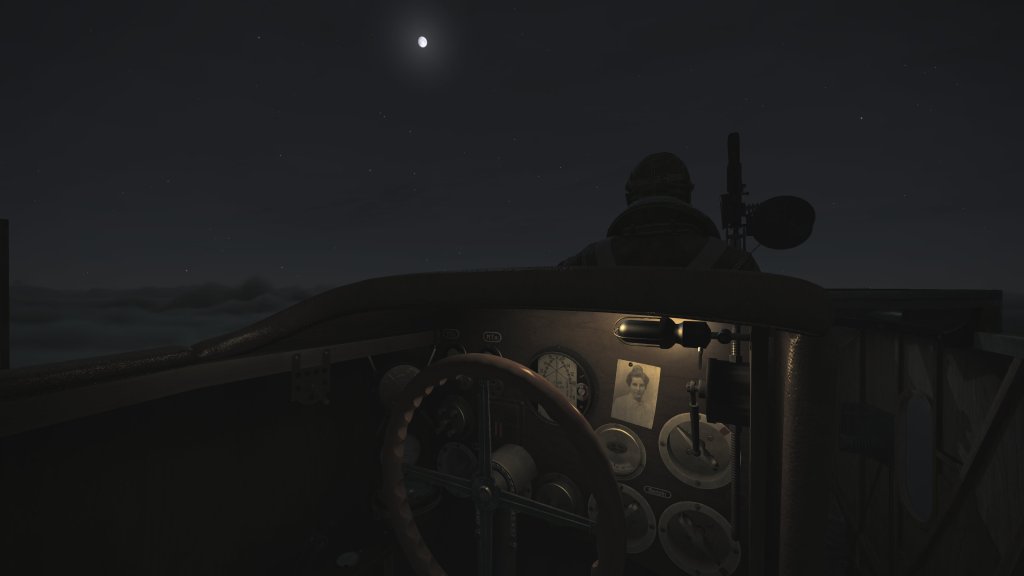
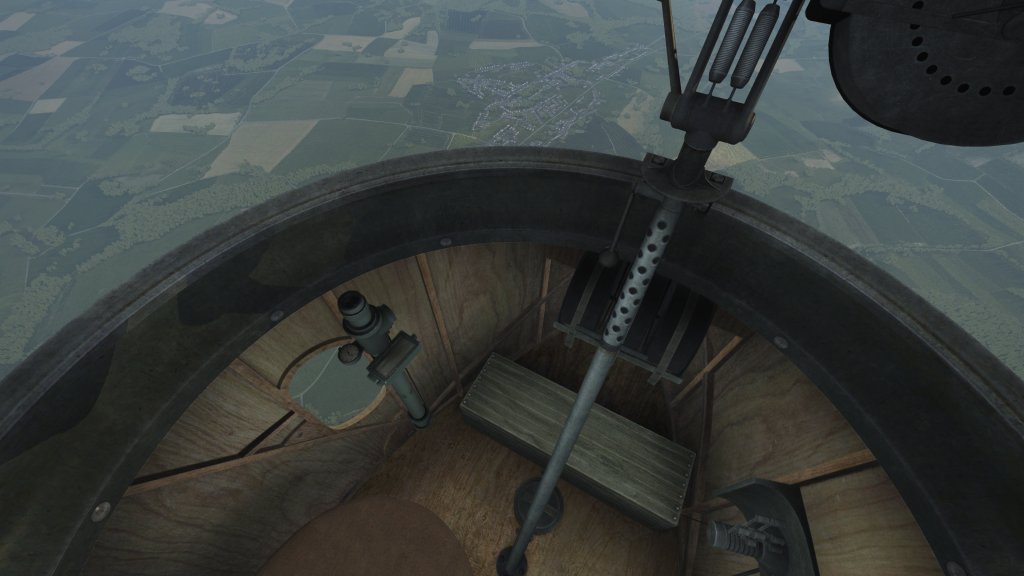

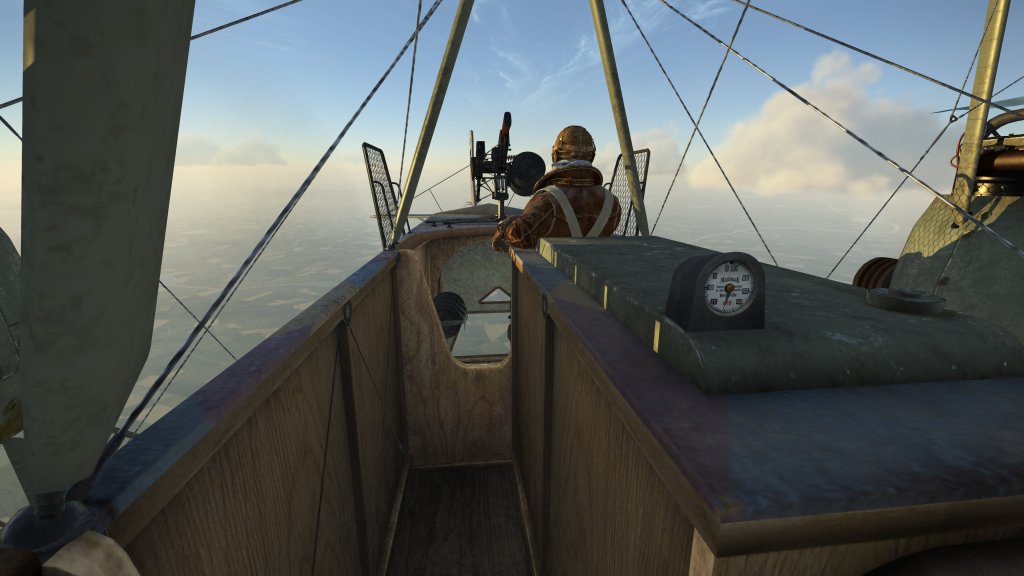
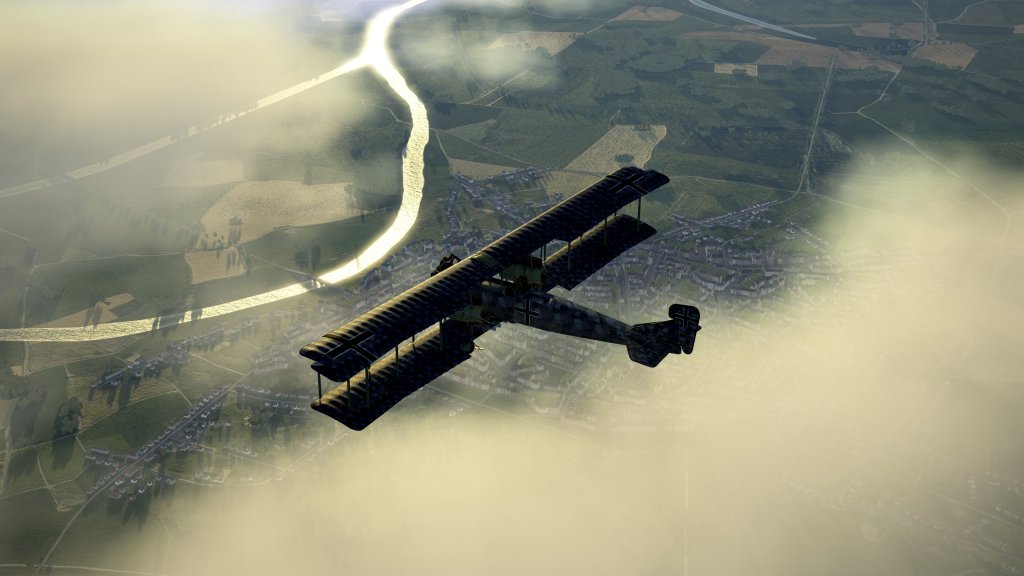
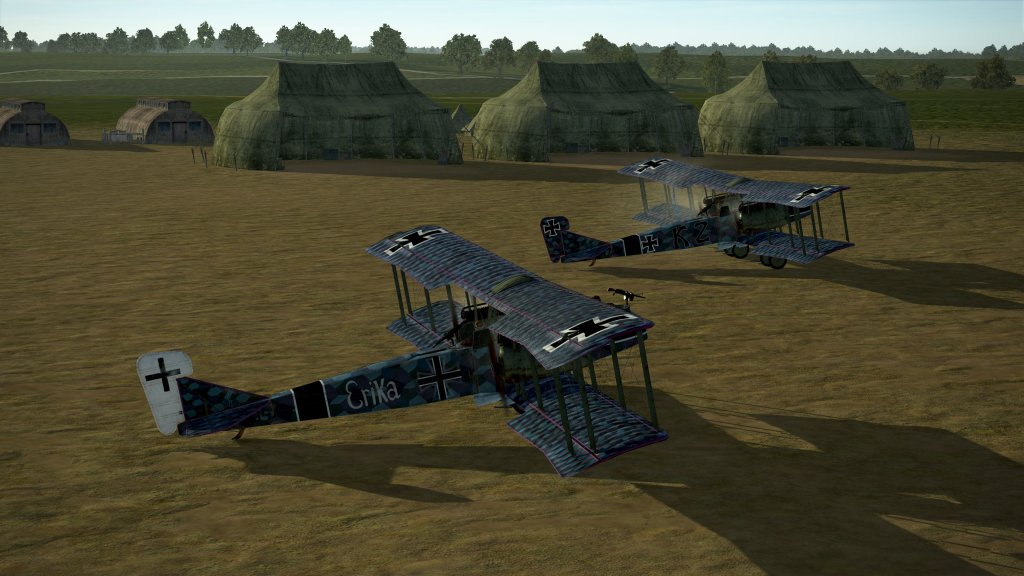
1CGS and Ugra Media have again done a consistently good job and both Handley Page 0/400 and Gotha G.V rise to meet the occasion. A good selection of custom skins, available tac codes, damage detailing, and high quality 4K textures all come together to offer a consistently good experience.
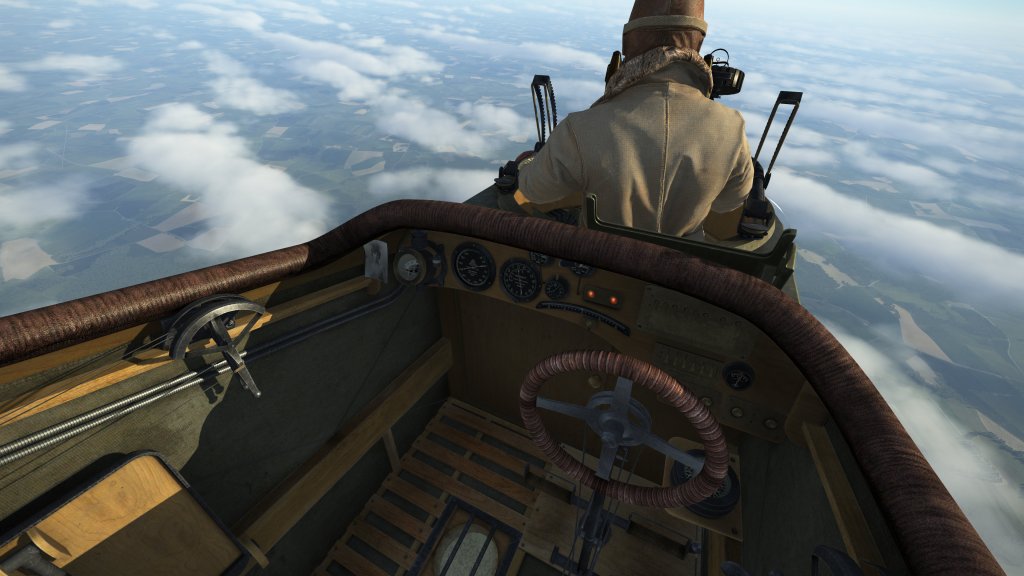
I particularly like the cockpit experience with both aircraft with the wooden panels, classic gauges, and the Gotha has that great little walkthrough area that just looks superb when you look over your shoulder.
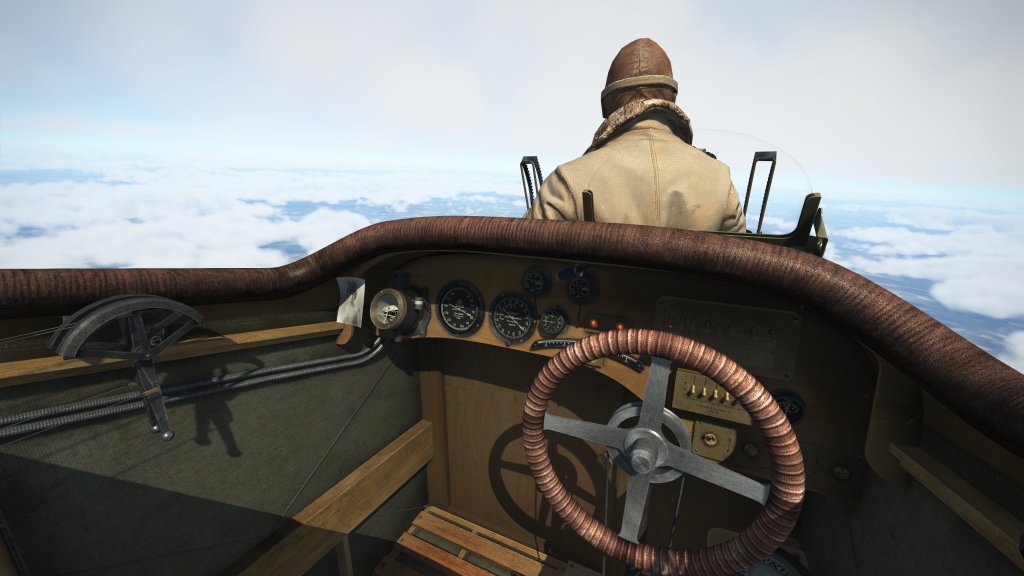


Sounds are of the usual IL-2 Great Battles/Rise of Flight series fare offering an aurally accurate if not entirely authentic sound. That said, I’m not aware of any restored flying examples of either aircraft existing in the world so authenticity would be a challenge.
Flying
The Gotha G.V is a challenging airplane to fly. Do you want an example of what excessive asymmetric yaw means? The Gotha will teach you in a visceral way. Even small movements of the ailerons result in considerable nose travel in the opposite direction. That means that flying the G.V is an exercise in very careful control movements and supreme coordination with the rudder. Failing to do that will result in the aircraft tipping over, stalling, and crashing to the ground. The G.V is in the running for the hardest airplane I’ve ever flown in a flight sim.

The Handley Page O/400 feels like a luxury cruiser by comparison. Aileron response is slow but far easier to manage than with the G.V. The O/400 rolls and turns ponderously and the aircraft is not very agile at all but then that was never the goal or requirement.
The key for both of these aircraft is the ability to climb (albeit gradually with a full load) and then reach the target and at this they both do well in their intended job.
Landing is also a challenge with these aircraft. Both bombers require care in their handling and that is none more obvious than in the last moments of flight. A very careful sink rate must be followed up by even more careful rudder coordination to ensure that the long wings do not strike the ground.
In combat

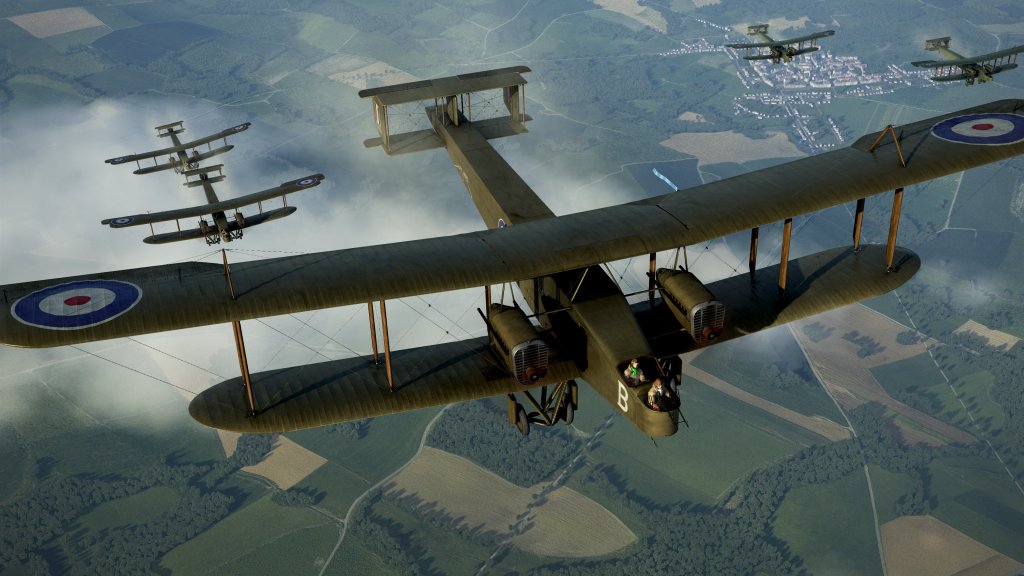
In this section I will generalize as the two bombers are employed in more or less the same way. Climbing to altitude, both bombers should be flown to target in a relatively straight line while employing their bomb sight to then direct and unleash their payload of bombs on an area target.
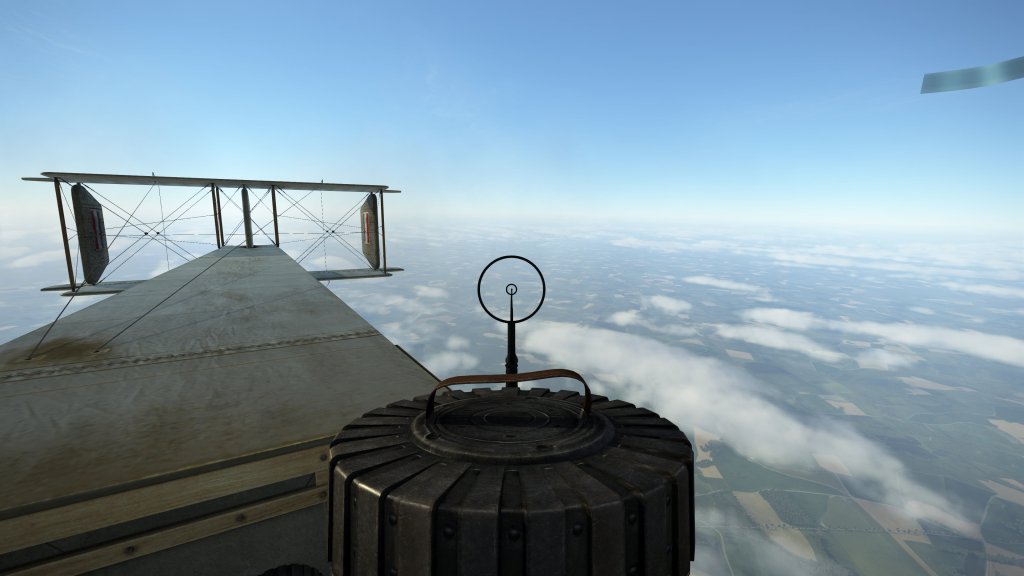
The Handley Page O/400 has a variety of modifications available. They range from the mundane, like an optional fuel gauge (I’d bring that), the ability to upgrade the rear gunner station to a twin Lewis MG installation, and the ability to upgrade the forward gunner station with the very unique 57mm Davis Gun. The Davis Gun was the first true recoilless gun and it was intended to be used against Zepplins and submarines. It’s combat use was apparently limited or non-existent. A Lewis machine gun can optionally be fitted ontop of the barrel for sighting. The O/400 also can carry eight or sixteen 112lb H.E.R.L. bombs or four or eight 250lb H.E.R.L. in the internal bomb bay. There’s also the massive 1650lb SN heavy bomb which is externally fitted and can cause a massive blast.


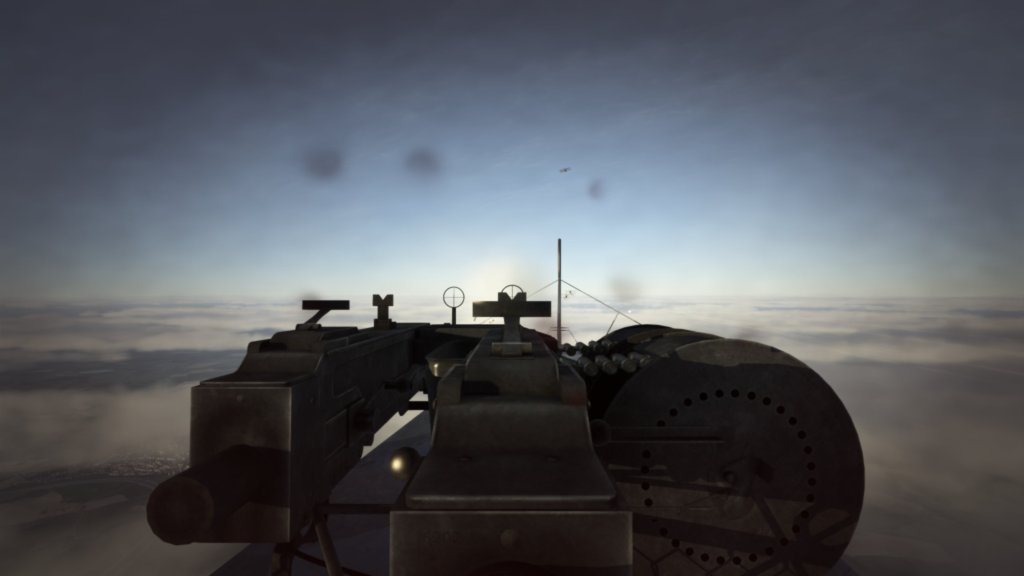
For the Gotha G.V, the aircraft has a pair of gunner stations armed with a single Parabellum MG in each by default with options to upgrade that station with twin Parabellum MGs or a 20mm Becker cannon. A Fuel Gauge and Clock and Cockpit light round out the available modifications. For the bombs, the G.V’s primary weapon, the type can be fitted with a mix of bombs that includes seven 50 or 100kg P.u.W bombs and a heavier configuration with either a single 300kg P.u.W or even a single 300kg and four 100 kg P.u.W.

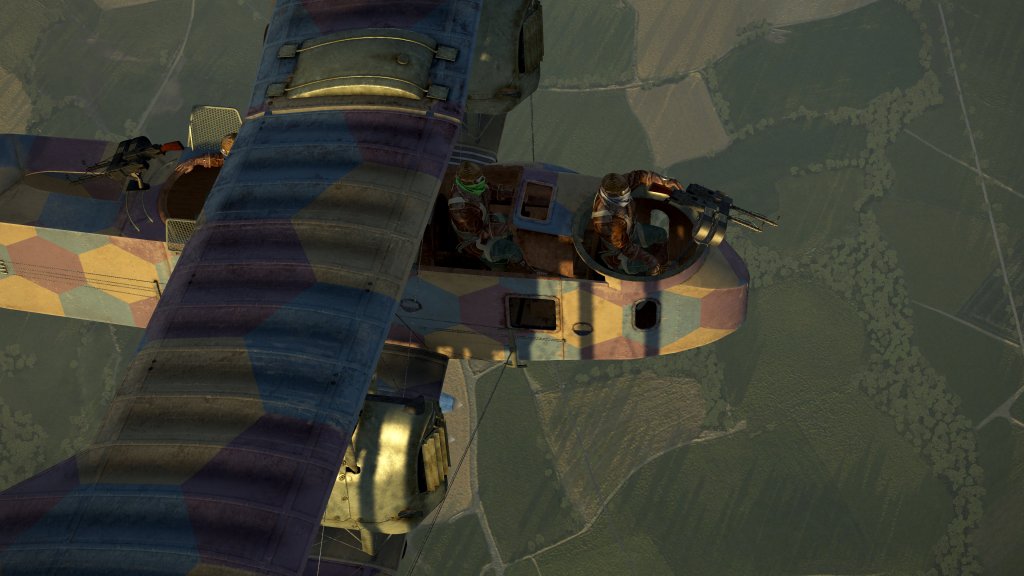
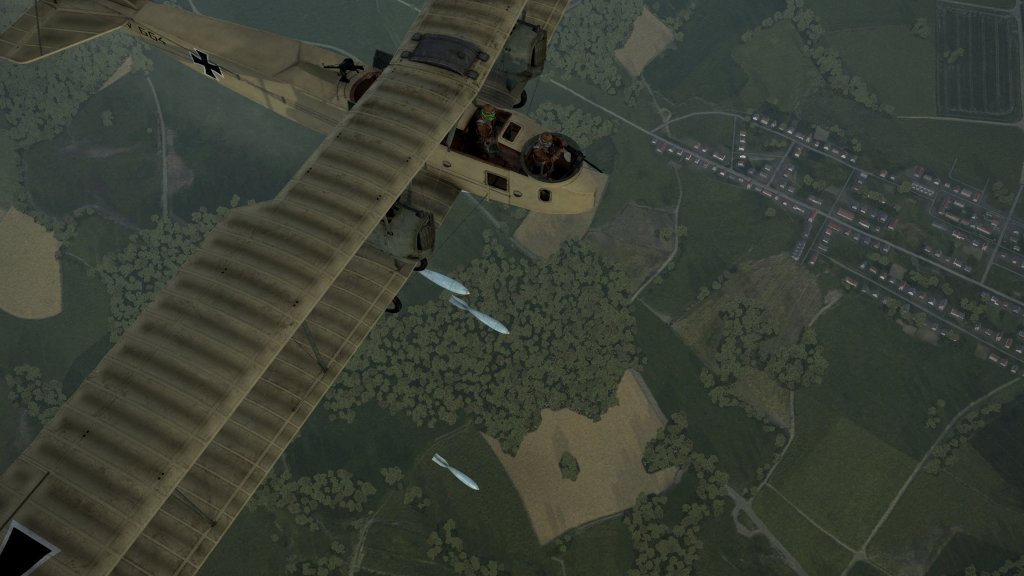
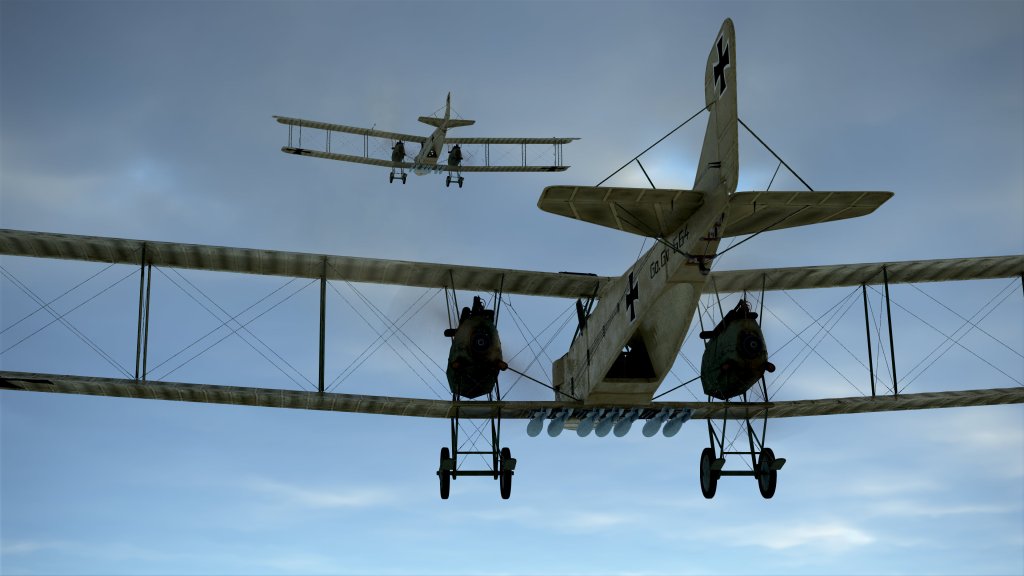
Unlike some of the smaller aircraft, neither of these is really suited to any other kind of combat. They are too big and too difficult to maneuver to be used in low level operations so you must be a committed bomber pilot to make them work.
Penetrating enemy defenses is also a challenge. Big and only moderately fast relative to the fighter interceptors they are up against, both aircraft are easily spotted and thus they rely on altitude and cloud cover to evade interception. When intercepted they then rely on their gunners to help defeat the enemy and here they have a modest chance of success.
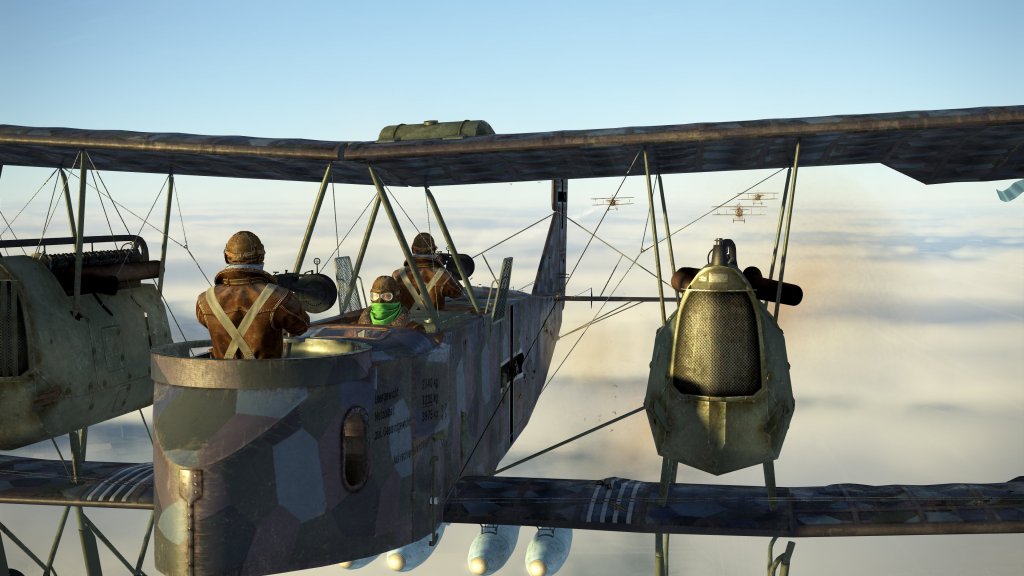
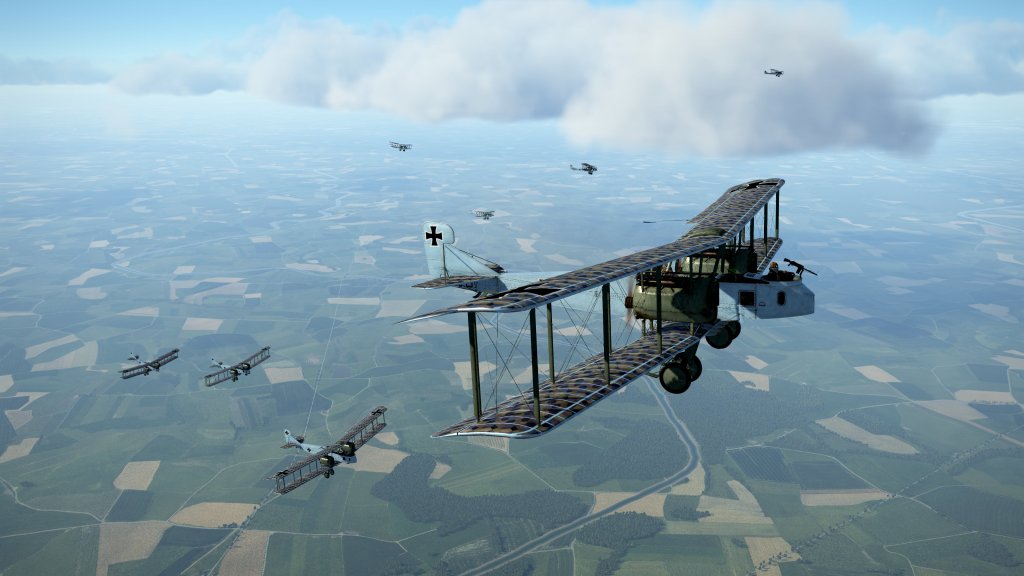
I’ve had the opportunity to fly along as a gunner in a multiplayer scenario and that ended up being quite fun. With a human pilot and a pair of human gunners flying in a pair of bombers, fire can be coordinated and enemy fighters can be warned off. In one instance a Dr. I made a successful initial interception but was unable to generate enough overtake to get close without being met with return fire. Flying in coordinated groups with bombers mixed with fighters is the best way to make it through.
Final thoughts
The return of the Gotha G.V and Handley Page O/400 to the series after their introduction in Rise of Flight is a very welcome one. Both aircraft represent a unique addition to Flying Circus with their heavy bomber role of flying high and dropping bigger bombs than other types. They often create opportunities for co-operative play and teamwork both with other planes and with bringing multiple players into a single airplane. They also tend to attract lots of attention from the enemy team and this makes them lightning rods for air combat.
Both are well represented with extremely well done 3D models, cockpits, and textures. They are implemented well and are begging for the single player experience that will compliment the multiplayer one that’s already available.
Screenshots








 Stormbirds
Leave a comment