
Microsoft added some custom details to a couple of air strips in the New Guinea in the last world update and I thought I should go and check them out. Most of the airstrips that I landed at in this journey were located at high altitudes in remote places and the best plane for the job in my mind is Sim Works Studios Kodiak 100. Here’s my story!
Port Moresby to Kokoda
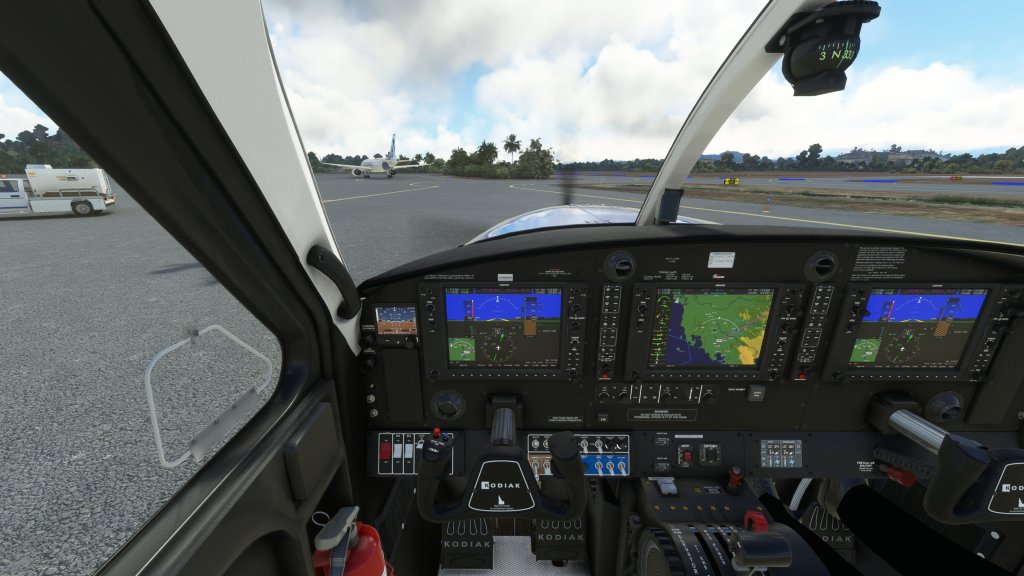
The beginning of the journey starts off in what I think is a natural starting point. Port Moresby is the capital and largest city in Papa New Guinea. During the early parts of WWII, the city was a target for Japanese raids over the mountains and was a hub of Allied aerial resistance in the area. Most of the fields that were built up during the war are gone but Port Moresby Jacksons International Airport is the major airport that services the city. Here’s where I started out.
Sim Works Studios Kodiak 100 is among my most favourite aircraft in Microsoft Flight Simulator. The extremely well dialed in flight modeling, the custom engine model, the attention to detail all over the airplane, and the capabilities of the airplane that include high altitude flying and short runway operations with tundra tires make this a unique option. Read my full review if you want to get a fuller sense of the plane.
I was about to make use of all of those abilities over the course of this trip.
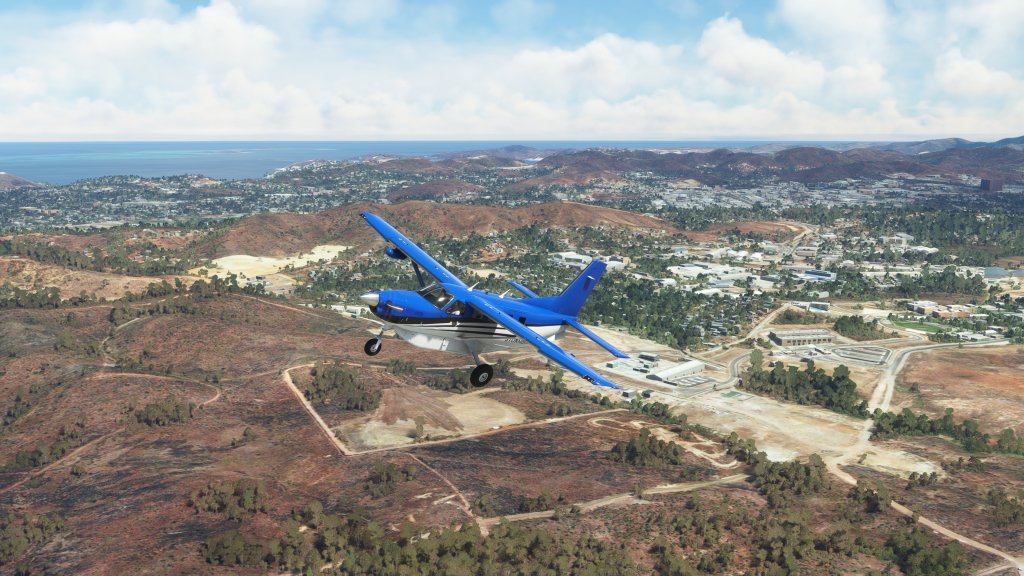
Departing Port Moresby was easy with light winds, low turbulence, and a beautiful sunny day. The long runway is not needed with an airplane like the Kodiak and despite a moderate fuel and cargo load we were on our way with ease.
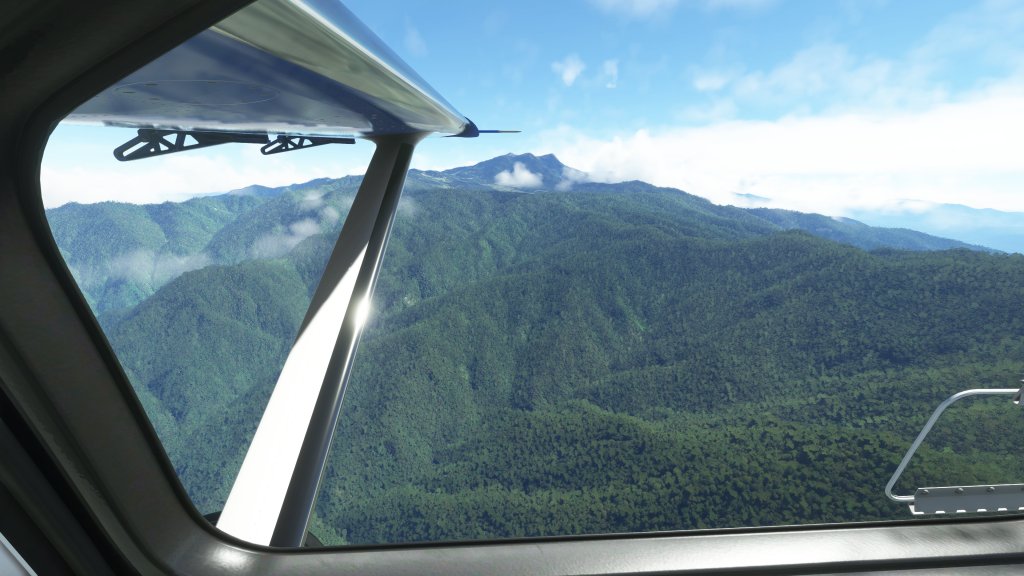
Ahead of me was the Owen Stanley mountain range that runs up and down the island of New Guinea. It’s peaks are around 10,000 feet, which, famously during WWII proved to be a difficult place to fight for the low altitude optimized P-40 and P-39 fighters. With the Kodiak and its modern PT-6 turboprop, however, climbing to altitude was not too much of a problem.
After a short flight I arrived at the first destination of Kokoda. This place is once again famous or infamous for its role in WWII history as it is the furthest point on the Kokoda trail that runs from the north eastern side of the island. It was also the only place where an airfield could be constructed in the rugged terrain and thus had strategic significance.
The scenery here has had some light touchup work with some unique airfield buildings added to the airstrip that runs alongside the town.


Kokoda (AYLK) to Tapini (AYTI)
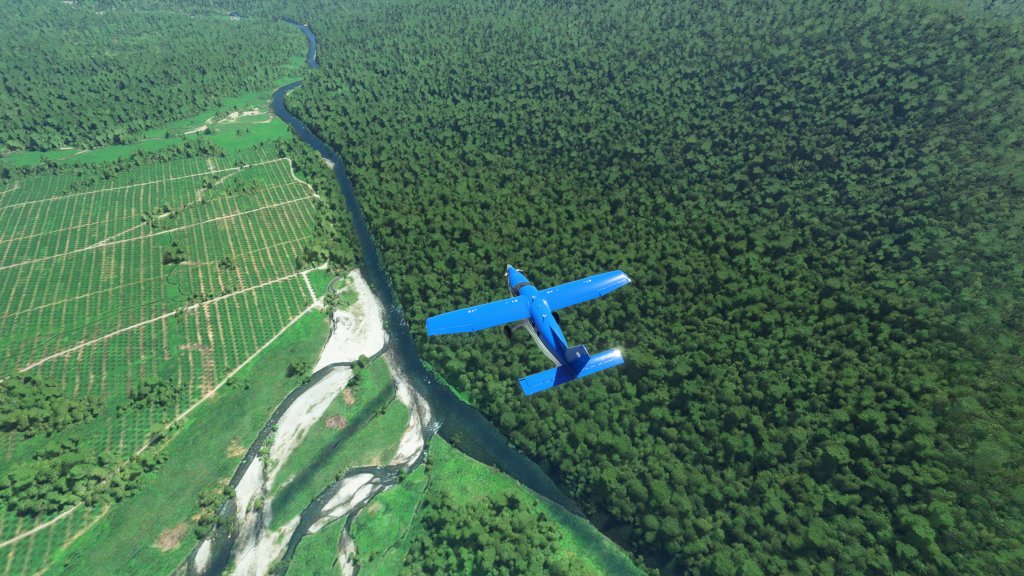
Things had been pretty easy so far but they were about to get a bit more challenging. Climbing higher into the mountains, my next flight required me to climb along the ridge lines in flatter areas in order to gain sufficient altitude to cross over the peaks of the mountain chain.
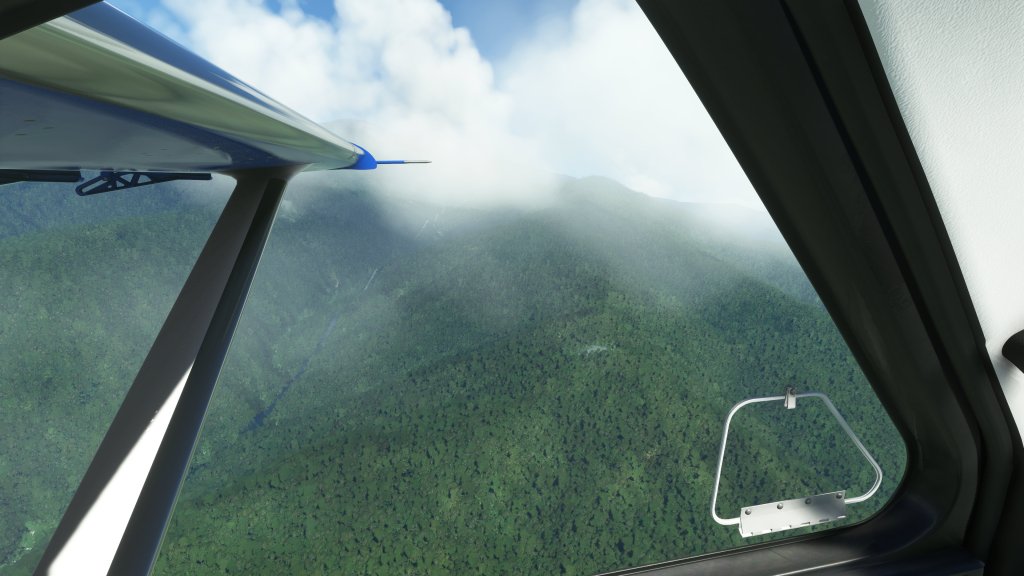
The Kodiak is very capable but its still bound by the laws of physics and so climbing with fuel, cargo and passengers required time. This took some deviations from the direct course I had plotted but fortunately we were able to make it to 13,000 feet with plenty of clearance from the peaks below.
This is one of those scenarios where the ASL and AGL is very different and although the ground isn’t that far beneath you, the air is considerably thinner and you have to think a bit more carefully about how you handle the airplane.
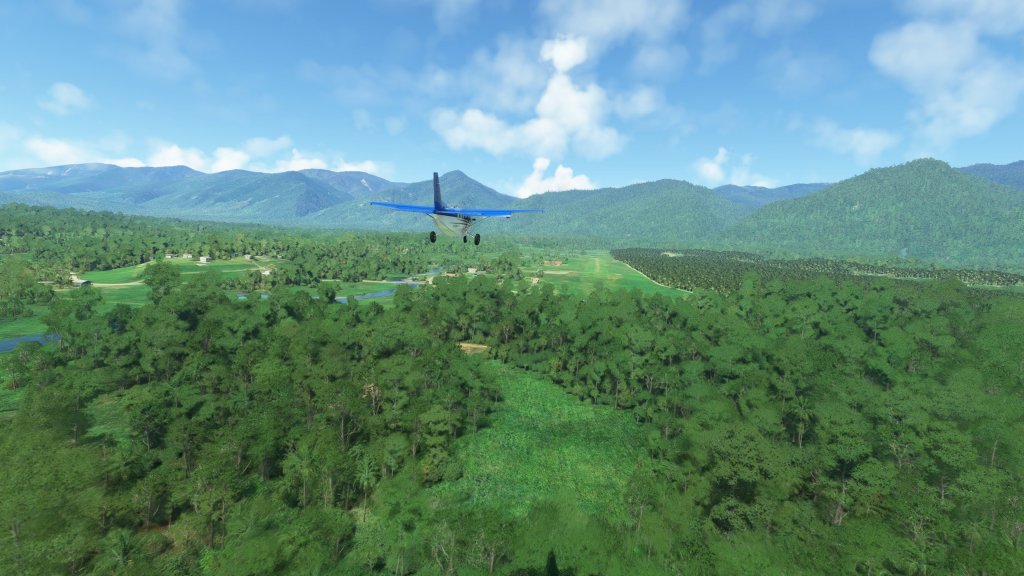
Eventually I arrived at my destination, Tapini, but getting down to it took some doing. First I headed south and descended a few thousand feet before turning north and doing the same. I got myself down far enough into the valley to then make my turn and descend into the grass strip with parts of the village on either side.
My landing was a good one but a bit harrowing as I sought to find a good power setting to maintain the correct amount of lift – very different at several thousand feet than when flying near sea level. But land I did and ample use of the reverser was used to slow down. What a landing!



Tapini (AYTI) to Guari (AYGF)
The takeoff from Tapini was equally exhilarating. With a ramp down the hill before angling back upwards, at maximum power and with the payload I was carrying the aircraft at first struggled for lift in the thin air but up we went (with the announcer telling me “don’t sink, don’t sink, don’t sink”) albeit slowly at first.
Like my last flight, I turned and aligned the aircraft with the long valley ahead of me and began to climb. There was no opportunity to go straight to my destination even though it was only about 15 minutes away so the actual flight time was more in the 25 minute range as I climbed up and over the ridge before turning to my destination. There were a few harrowing moments but both relief and fascination as we cleared the mountain and emerged into the blue.
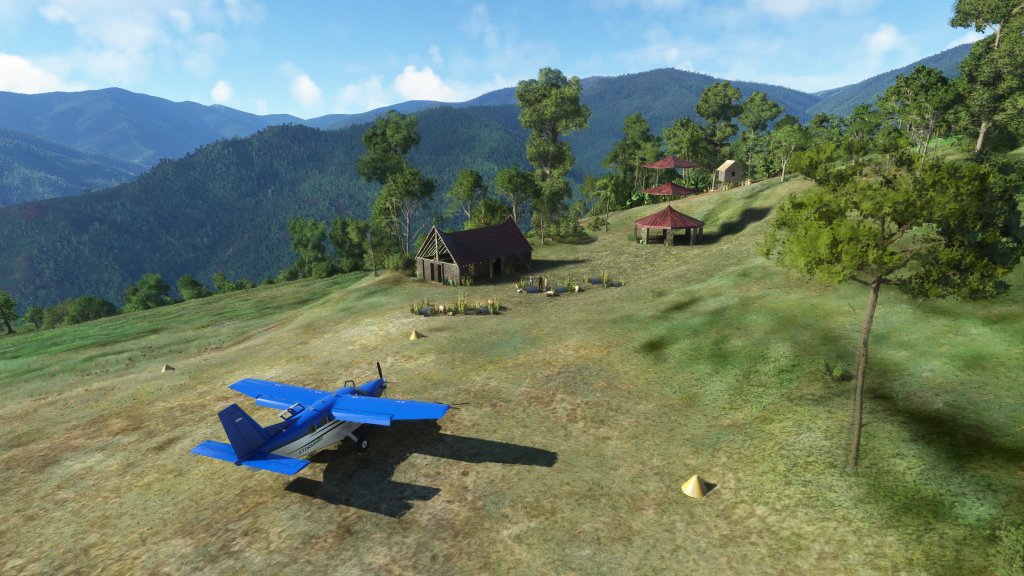
Landing at Guari went similar to my landing at Tapini although the approach was a bit easier. Just spotting the runway took a bit of time but when I did I was able to circle my way down and setup for yet another high altitude approach. Starting to feel like a pro at it by now! This runway was even shorter so the landing had to be slower and I came to a stop at the top of the hill where a house and some other structures were present. There was even a greeting party!


Guari (AYGF) to Madang (AYMD)
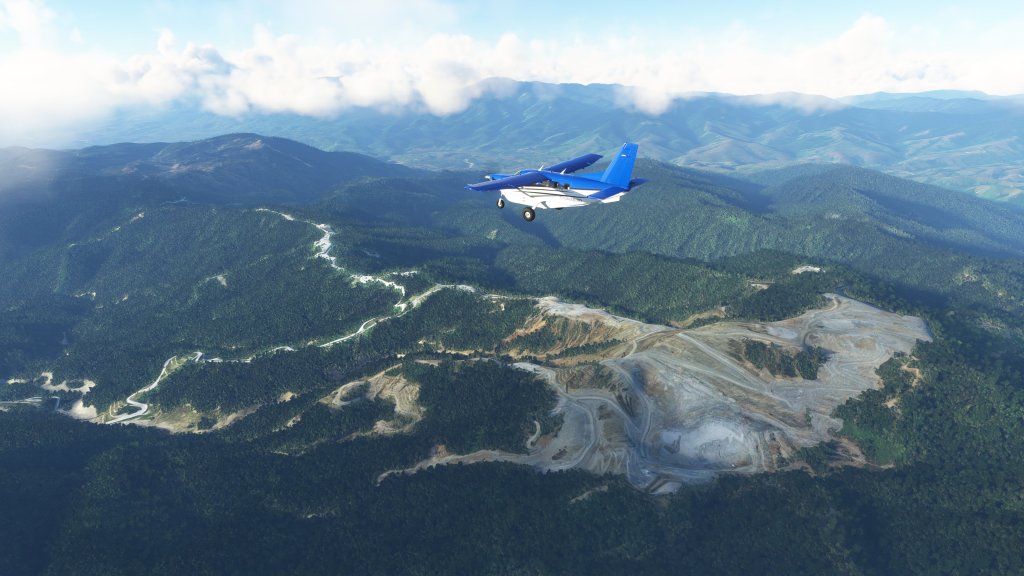
Running down the ramp and back into the air, the Kodiak 100 successfully managed to gain altitude once again and we were climbing away again first into the valley and then up over the peaks. I hadn’t mentioned it but I did use the oxygen system onboard the airplane when flying at 13,000 feet. The Kodiak does simulate the oxygen consumption even if the sim doesn’t create hypoxia situations – maybe 2024 will!
This was a longer haul at over an hour between Guari and Madang. This next airport was not upgraded by the Asobo team and is default, however, I needed a logical end point and Madang made sense to me. With a population of 27,420 on the north coast of Papua New Guinea, Madang is also the capital of Madang Province and it has a nice little airport and a great place for an aircraft to stop after servicing some remote airstrips.
Cruising over the mountains and river valleys, this was an easier flight as I brought the Kodiak in for a landing as the sun set. Journey complete! Definitely one of the more epic journeys that I’ve been on and a reminder to me on why the Kodiak remains my absolute favourite in Microsoft Flight Simulator – even if I’m always flying other planes.




 Stormbirds
Leave a reply to ShamrockOneFive Cancel reply