
Back in the pilots seat for a new flight journal piece. This time I’m in the iniBuilds Microsoft Flight Simulator Airbus A310. Its a free airliner that came with the 40th anniversary release of Microsoft Flight Simulator 2020 and I thought it was well past time that I dip my toes in. Here’s a short story featuring my first complete flight in the A310!
Back in the seat, flying high
I’ve been out of the virtual piloting game for a couple of weeks but back into it in style last night flying a nice medium haul up the western coast of North America in the Airbus A310.
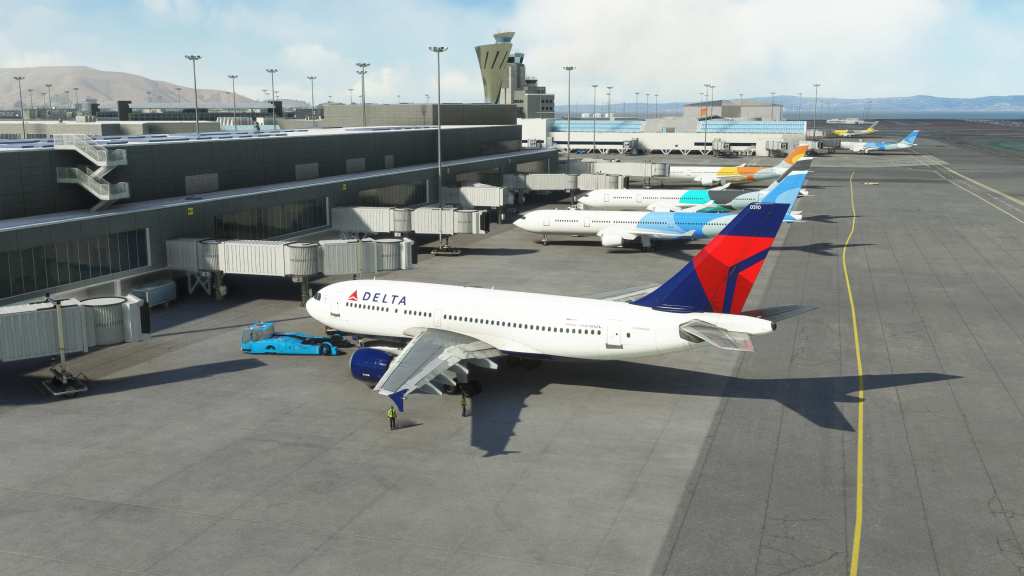
My flight took me from KSFO, San Francisco International, up to Seattle and KSEA. Two classic, highly travelled, well known, airports. Both sporting custom scenery packages as part of Microsoft Flight Simulator. Even better, the scenery on the way is superb giving pilots on this route plenty of eye candy in the sim.
Like most other airliners, iniBuilds have seen fit to give their A310 for Microsoft Flight Simulator its own EFB which helps me achieve my “fast and fun” outlook on airliner operations. Hit a button and the aircraft starts itself up and gets itself ready for flight. You can absolutely run through the start-up operations (something I’ve done myself) but when time is constrained and you want to get flying… iniBuilds is here to make that happen. Sadly, the aircraft does not import flight plans from MSFS. This puts it in the same category as most aircraft in the series, but it remains a pet peeve of mine.
I had to wait at the end of KSFO’s runway 28L as a series of aircraft came in for a landing on both 28L and parallel 28R. There was no shortage of user flown and AI flown airliners arriving and departing here and the departures were held up a bit by ATC while several airplanes arrived. Soon, though, it was my time and I taxiied on the runway. I hit the TOGA button and the A310 powered up for a takeoff.
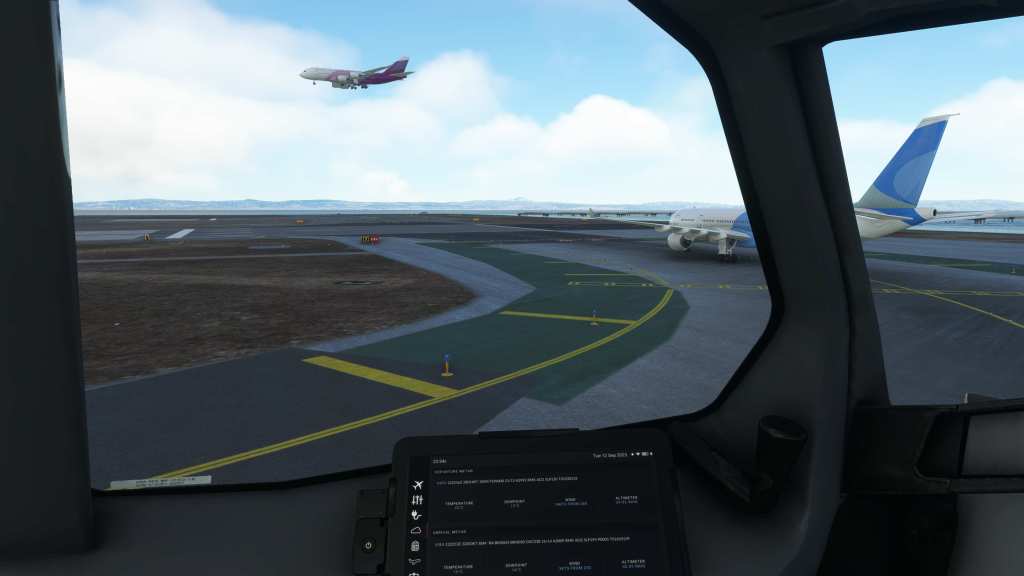

Climbing out of the runway area and into light clouds and fog before emerging into the sunlight above San Francisco never gets old.
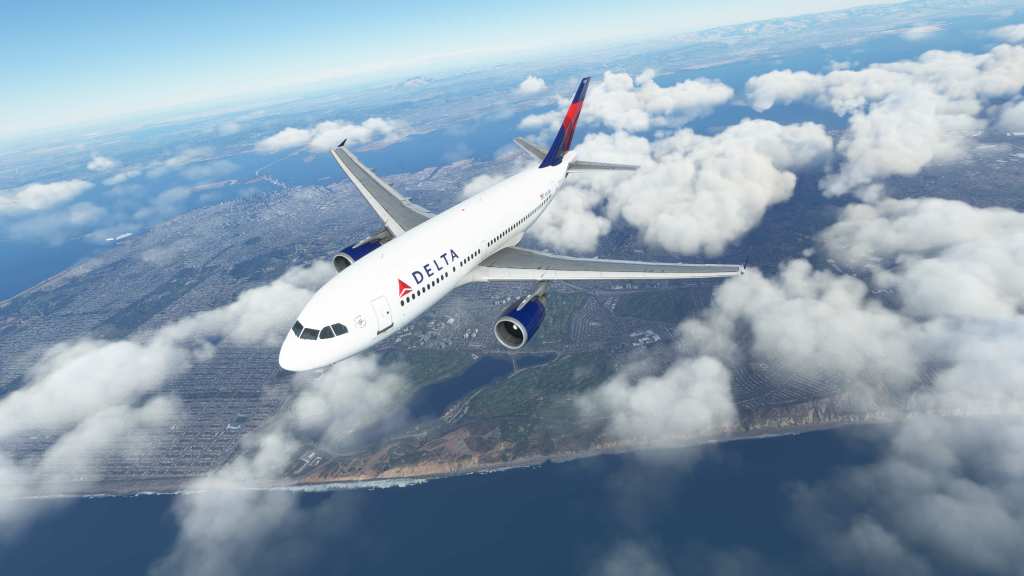

Then we climbed, first to 20,000 feet and then up eventually to 36,000 feet for our cruise to Seattle.
The scenery in this region is incredible with the high resolution DEM and satellite imagery really showing off what Microsoft Flight Simulator is capable of. Its among the best scenery in the world that I’ve experienced and it looks great at high altitudes and pretty good too at lower ones.
Our flight roughly followed the Sacramento valley northwards with the mountains of the Coast Ranges to the west and the Sierra Nevada range to the east. The variation of terrain between flat agricultural lands in the middle with massive mountain ranges on either side is stunning.

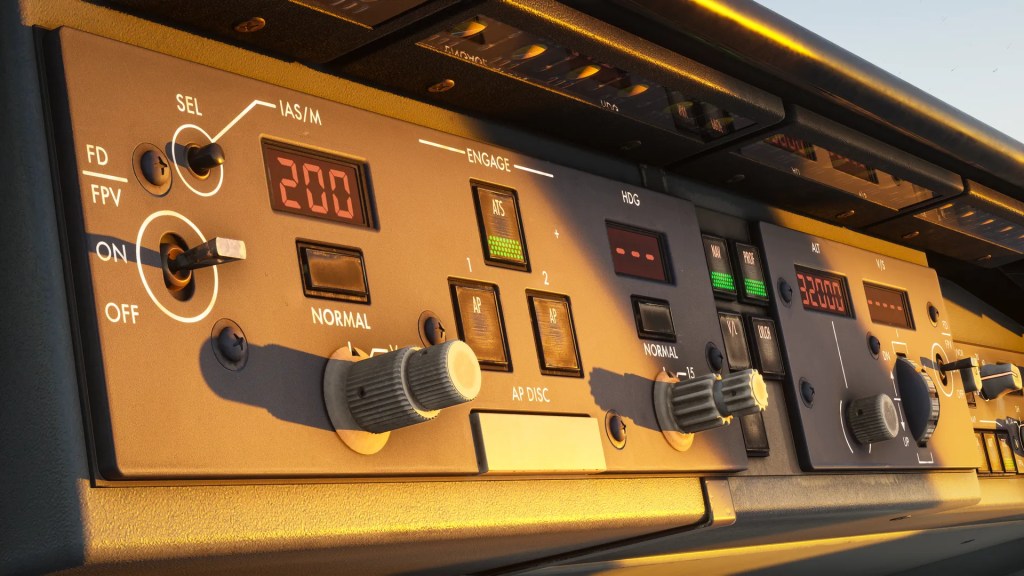
During this part of the flight, I spent some time looking around the cockpit and the airplane in general. The cockpit is impressively detailed and generally lives up to the high standards set by other aircraft in the series. It does feel a little grey and spartan. Its less of a glass cockpitfest than the modern A320neo and more traditional feeling in a lot of ways. This is still an early Airbus product and you can see them doing their own thing in some areas and following established industry convention in others.
At this point I worked on the back half of my flight plan, inputting the STAR for my arrival at KSEA and working through how the MCDU works. This is how I approach new aircraft flying them on a couple of flights, sometimes incomplete ones, before finally making it all the way which is what happened with this flight. My prior A310 flights helped me get to this point but this one was all the way to destination.


As I got closer to Seattle, we started descending with the air brakes becoming necessary as we needed to make a few quick descents at points to stay on plan. Thicker, low-lying clouds, were all that we could see of the Seattle area and so the last several minutes of my flight had me flying in zero visibility conditions relying on instruments alone to get lined up on landing.

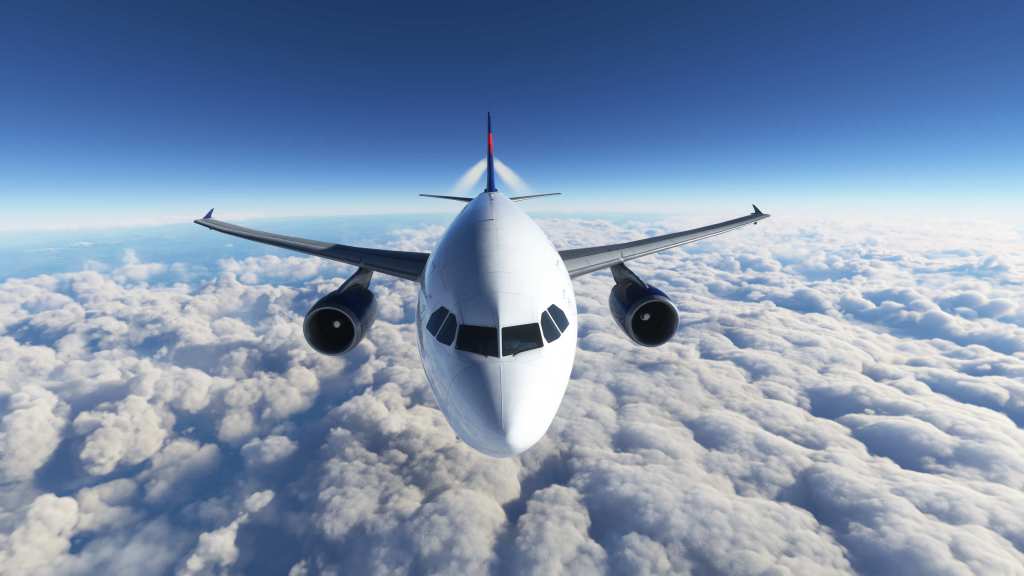

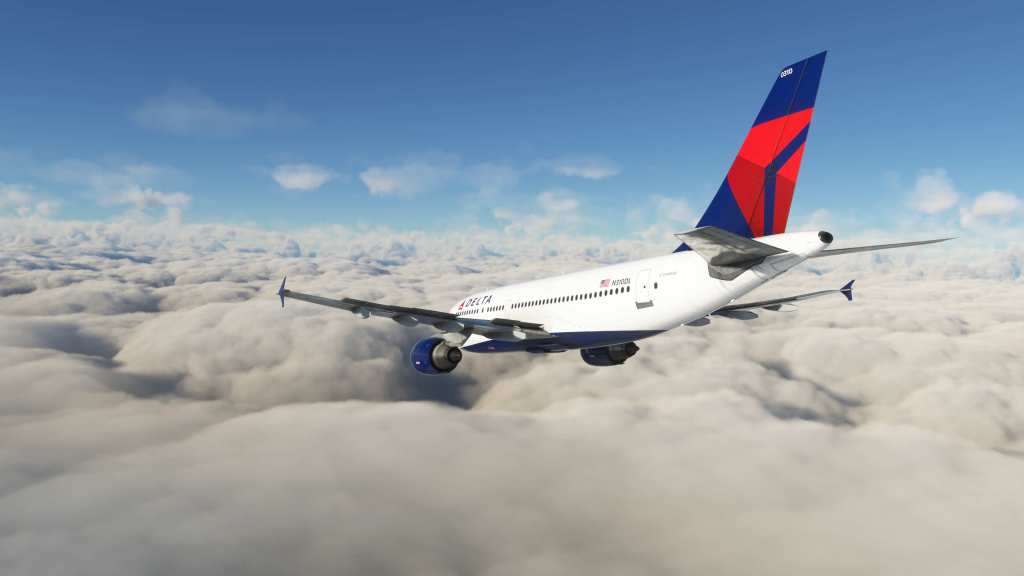
As we descended the last few hundred feet the skies cleared up and I had a good line on runway 16L. The ILS was in and I think I had all of the appropriate modes enabled but at this point I had some warnings going about autopilot and various other concerns – still I managed to get the gear and flaps setup and put the aircraft down on the ground with a more or less gentle touchdown. A bit panicky at times and running out of sim time but still satisfying to get it down on the ground.

First impressions
I’ve heard various things about the iniBuilds A310. It has improved over time with several updates being implemented since its release with the 40th Anniversary edition last year. How it compares to then and now I cannot say as I don’t have the experience, however, I can say that the aircraft mor or less measures up to other high fidelity airliner experiences.
I say that in that the aircraft seems to do what its meant to do without any INOP messages that you might see on the default A320neo. The flight model feels fine, the sounds are great, and the visuals are all excellent too.
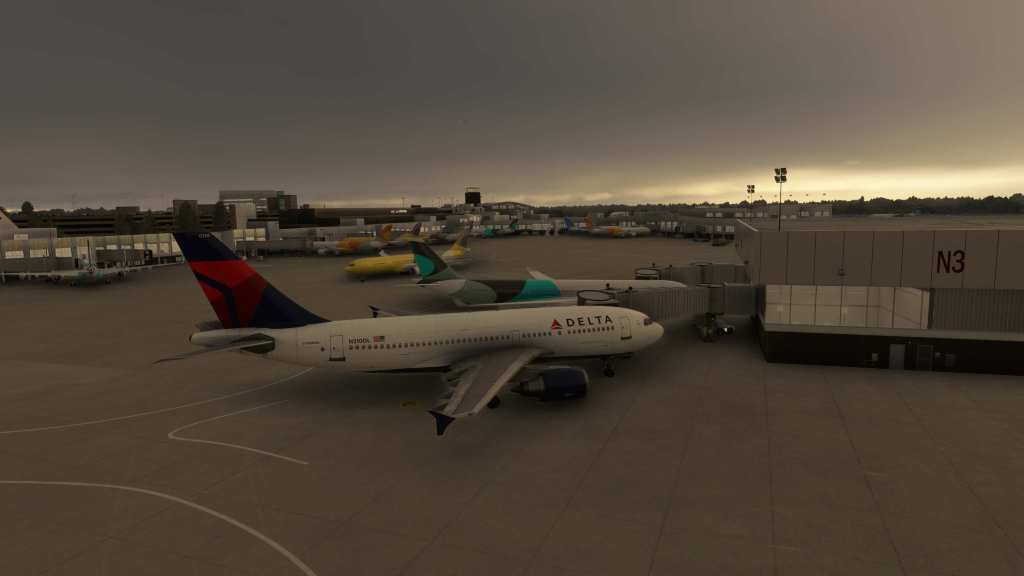
The livery I used was a modern Delta airlines livery as available through the iniManager software package. Its iniBuilds store app as well as livery manager and iniBuilds has made sure to offer a ton of livery options for free to PC users (not sure how they handle it on consoles).
I have heard from some that its a bit heavy on system resources and I would concur. My frame rates were a bit low at San Francisco and again at Seattle-Tacoma International. That said, I didn’t find it overly heavy with the A310 giving me only slightly worse frame rates than the PMDG 737-600 and Just Flight F28 and doing slightly better than my last flight in the FSS E-Jet.
If you’re looking for a high fidelity experience and you don’t want to spend any extra money, iniBuilds A310 is worth a look. Seeing as its included in the sim in the first place, this makes it easily available to many. On the flipside, its not an easy airplane to just jump in and fly and its more like its compatriots in the PMDG, Fenix, JustFlight Aerosoft and other products in complexity of flight and flight planning. I did enjoy my time in jet and future flights and Flight Journals are ahead of me!

 Stormbirds
Leave a reply to frumpy Cancel reply