
A block of airports in the federated states of Micronesia were among several that received some minor touch-ups and one more complete custom arrangement with World Update 14. With all in close proximity, I decidd it was time for the island hopping life! For this flight journal I get out the Aerosoft DHC-6 to do some island flying. Let’s go!
First hop
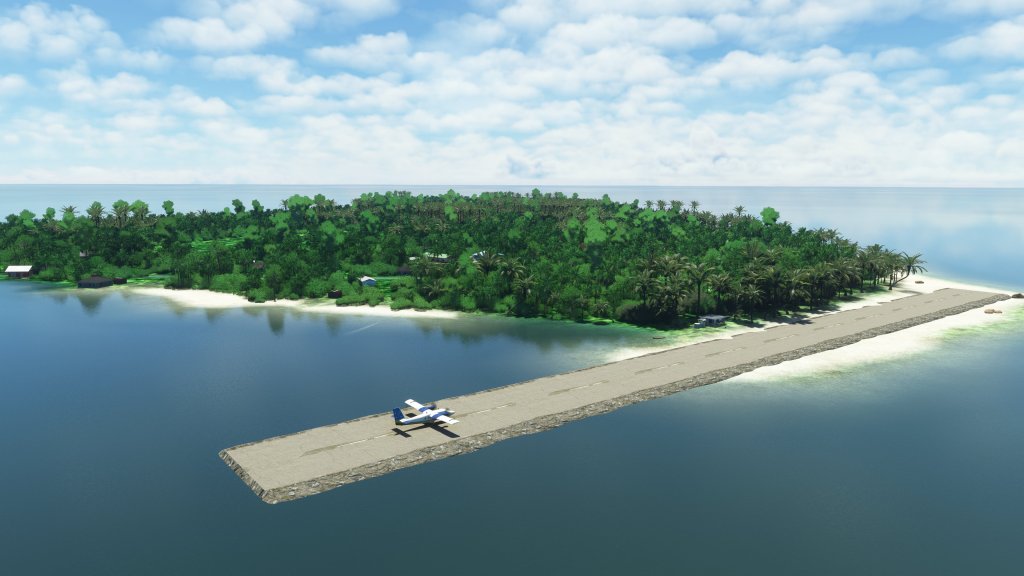
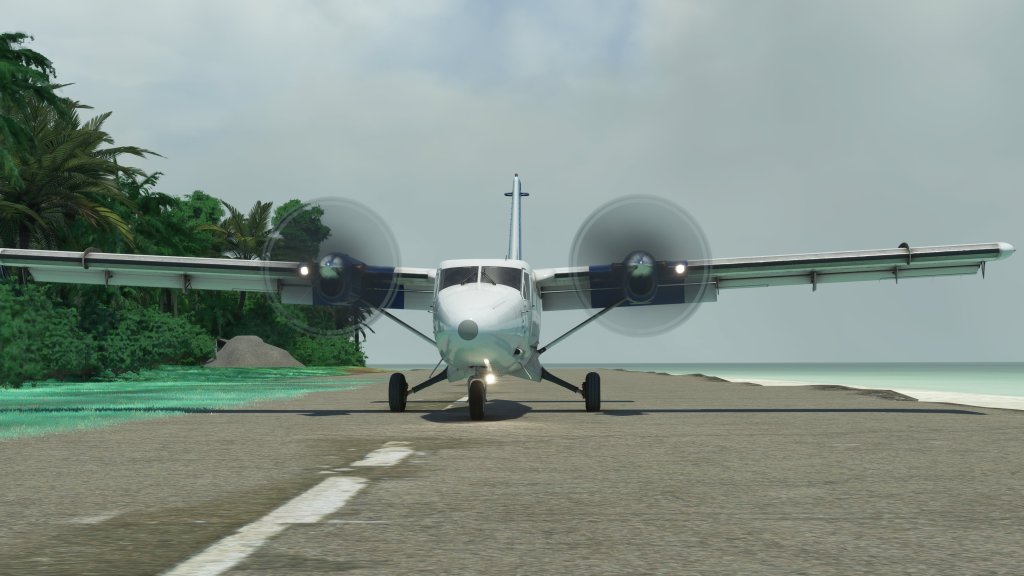
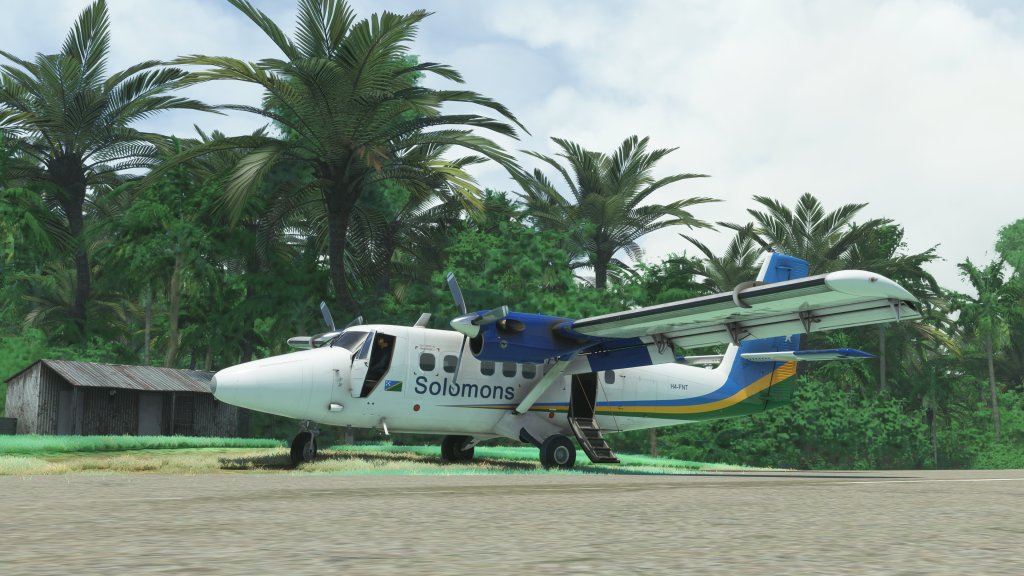
Hopping some islands saw me flying from PTPI on Pinglelap island to PTMO on Moki Atoll. Small concrete strips with just over 1,000 feet of runway requires some fancy flying. On my takeoff roll I quickly realized that I wasn’t going fast enough and managed to just clear the water as the DHC-6 accelerated through its takeoff speed. Despite the type’s STOL capabilities, even this runway was pushing its maximum capability. Phew!
After that it was a clear ride up to cruise altitude of 8,000 feet.
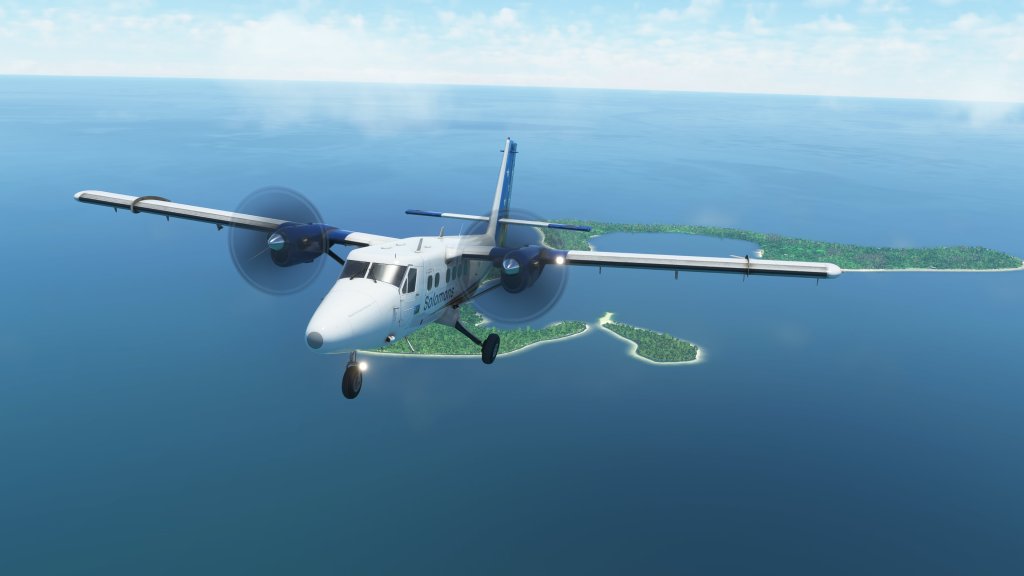
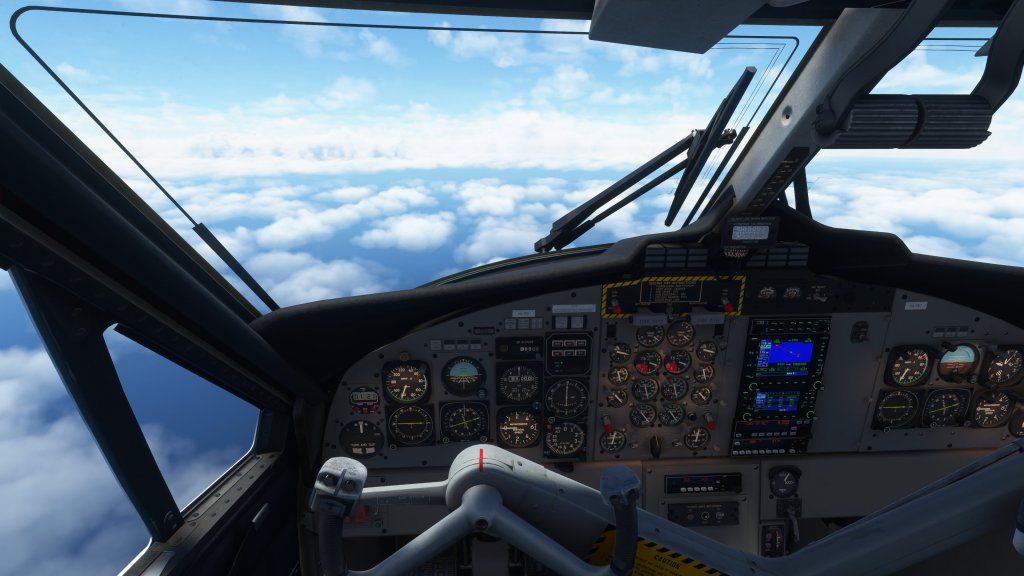
Clear and sunny skies above continued through the whole flight but beneath me lay a layer of clouds and rain below. With my GPS guiding me to the airport I slowly descended through the light clouds and some rain showers. For a while I couldn’t see the island and then when I could see the island I couldn’t make out the airstrip. It wasn’t until I had overflown it did I see the concrete strip that made up the runway.
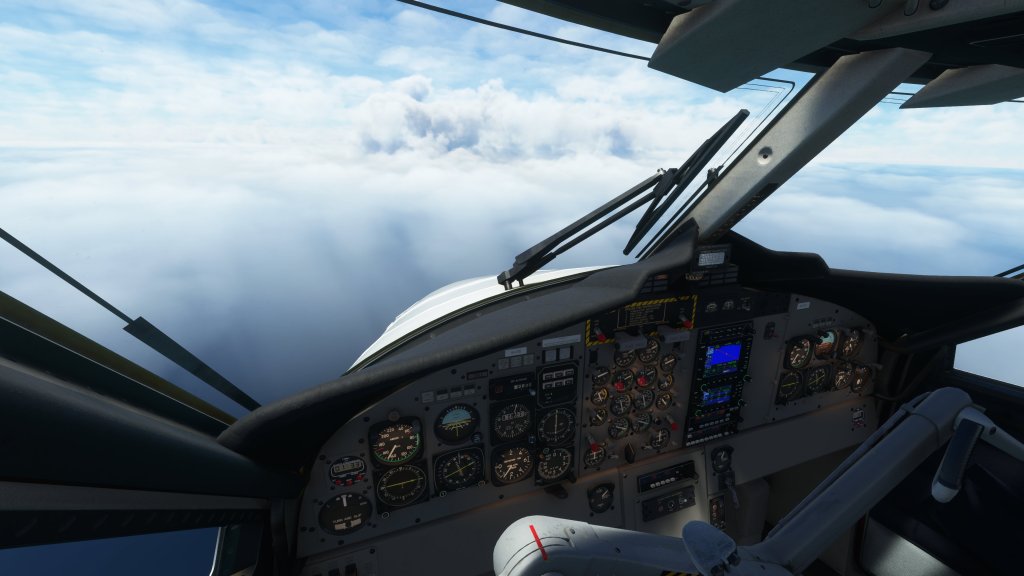
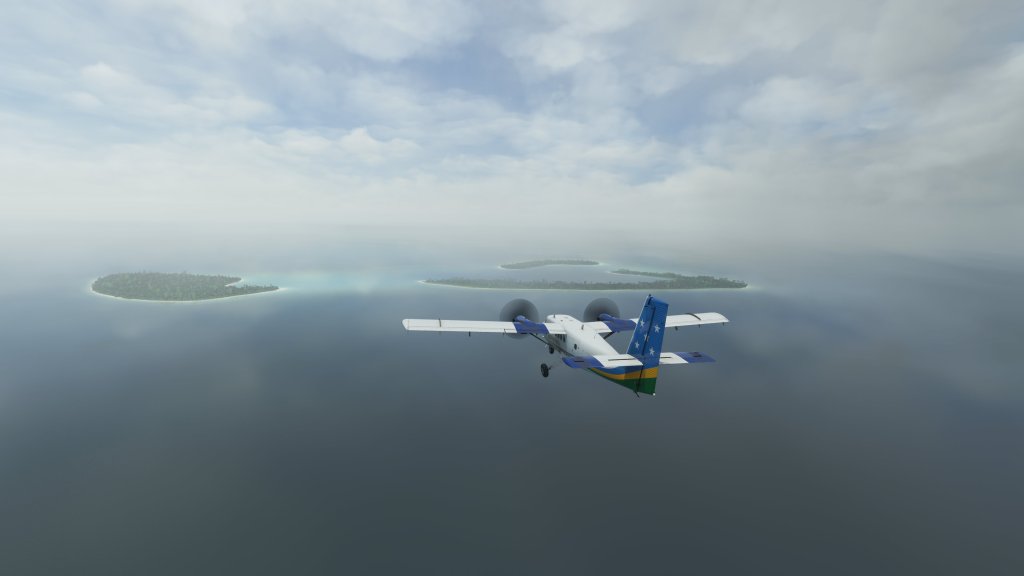
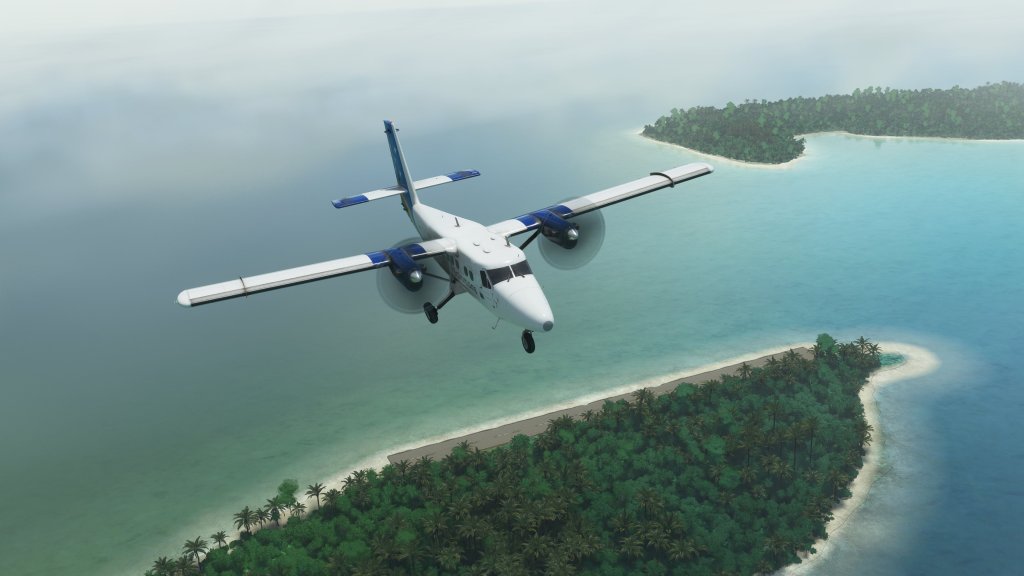
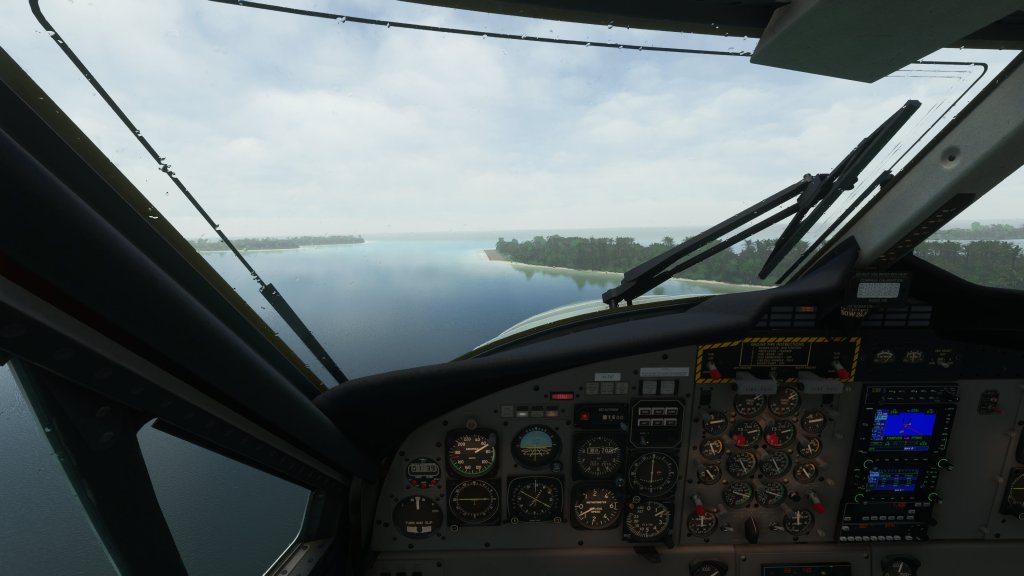
A wide turn brought me in on the runway heading and I tried to keep my speed to a minimum riding the stall all the way down. My landing wasn’t pretty and left a lot to be desired but I did get it into reverse very quickly and thanks to the DHC-6s great brakes and STOL performance was on the ground safe and sound. Again… phew!
Second hop
From PTMO to PTPN (Pohnpei International Airport) this route would take me from the small island stopover that I left off with on the first hop to a significant international airport located on a small island just the north of Kolonia – a coastal town and the capital of Pohnpei State in the Federated States of Micronesia.
The rain showers that I had flown into before were still in the area although they had moved around and my takeoff run was a bit more clear than the landing. Having learned from my nearly not a takeoff on the first run, I smartly applied the brakes, gave it an extra notch of flaps and let the engine power build before unleashing the DHC-6 down the runway.
This takeoff went better than the last and I was on my way west towards PTPN.
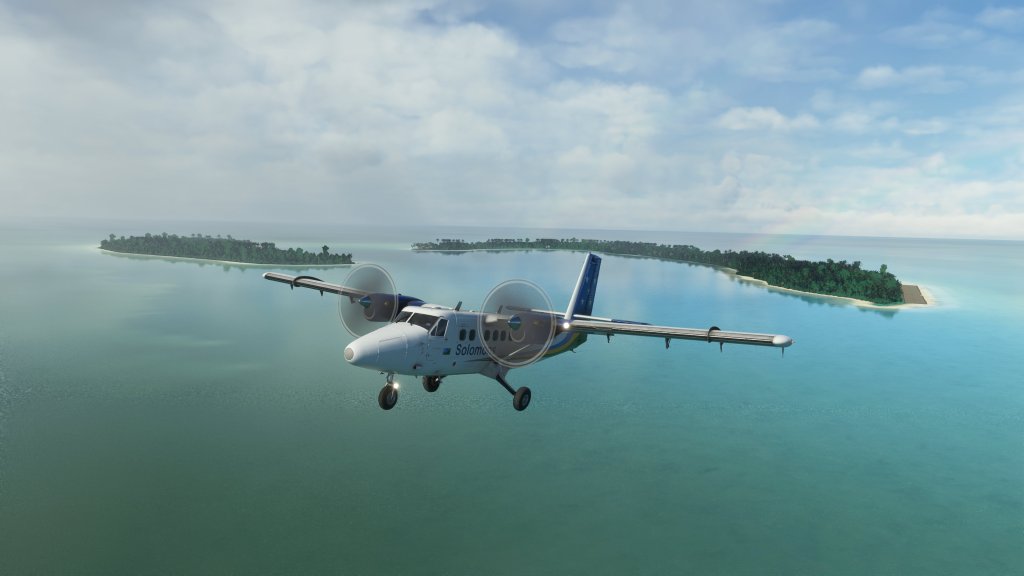
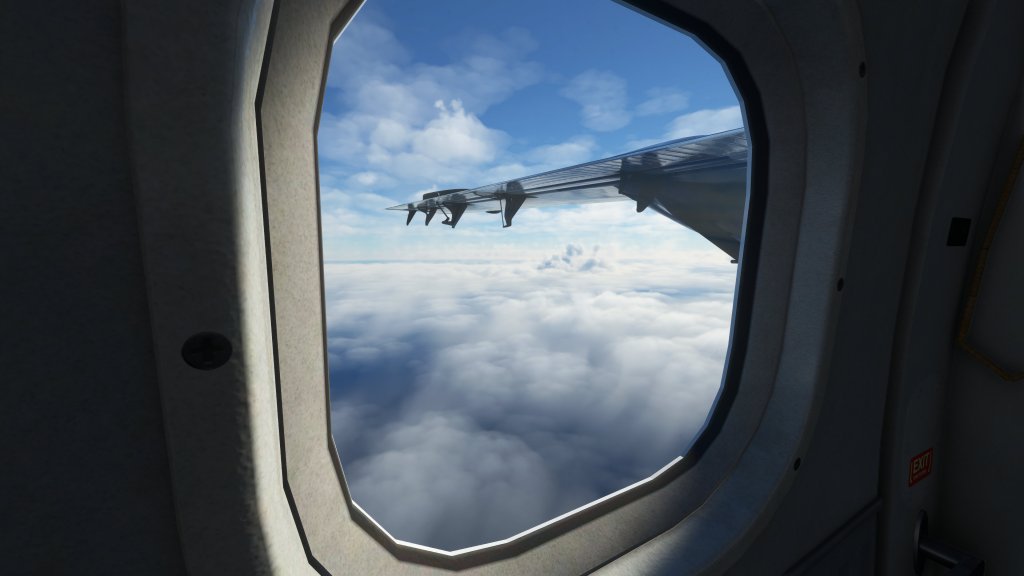
Small rain showers at lower altitudes were no issue for most of the flight but a larger build up halfway into the route required a detour to the north.
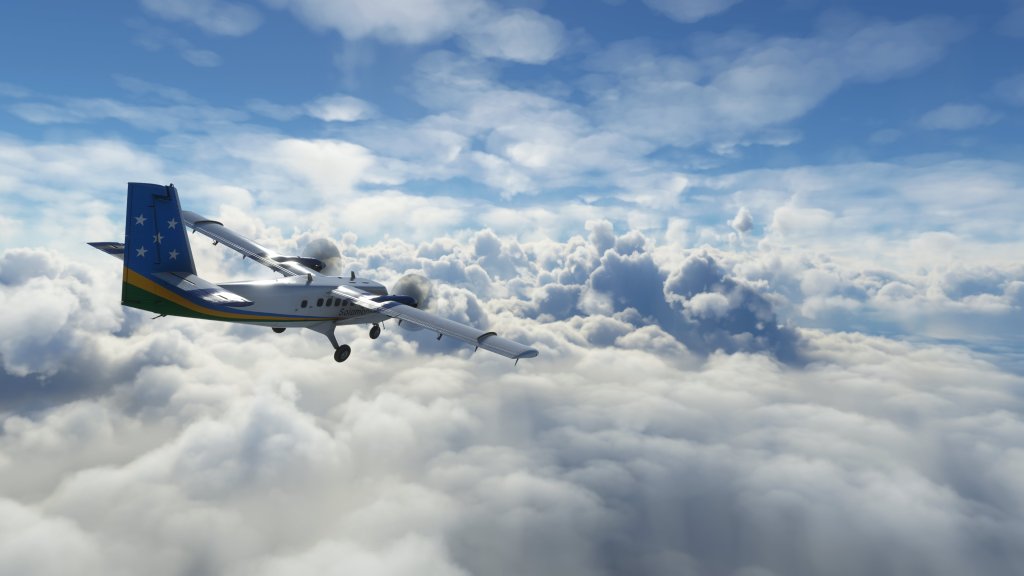
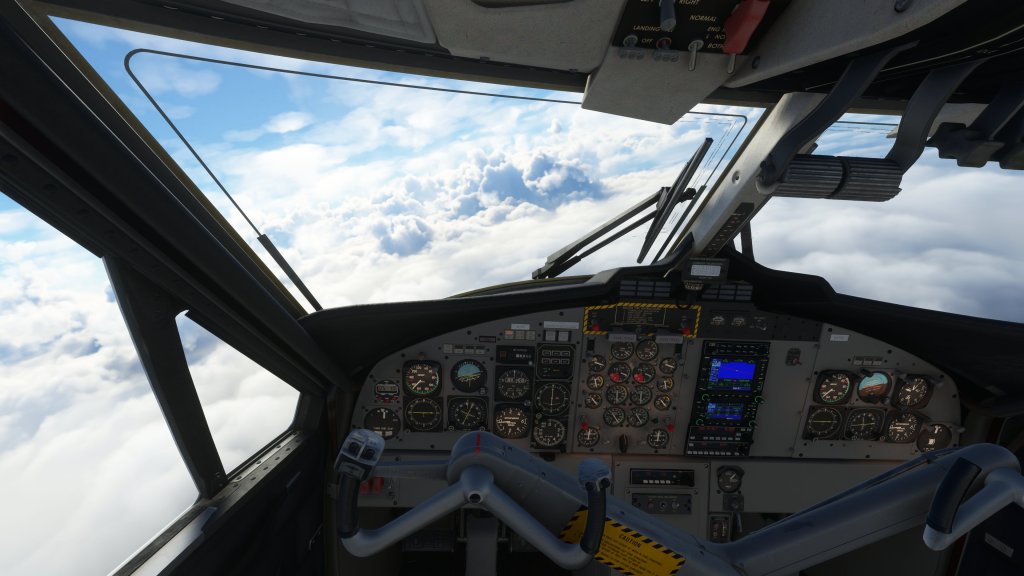
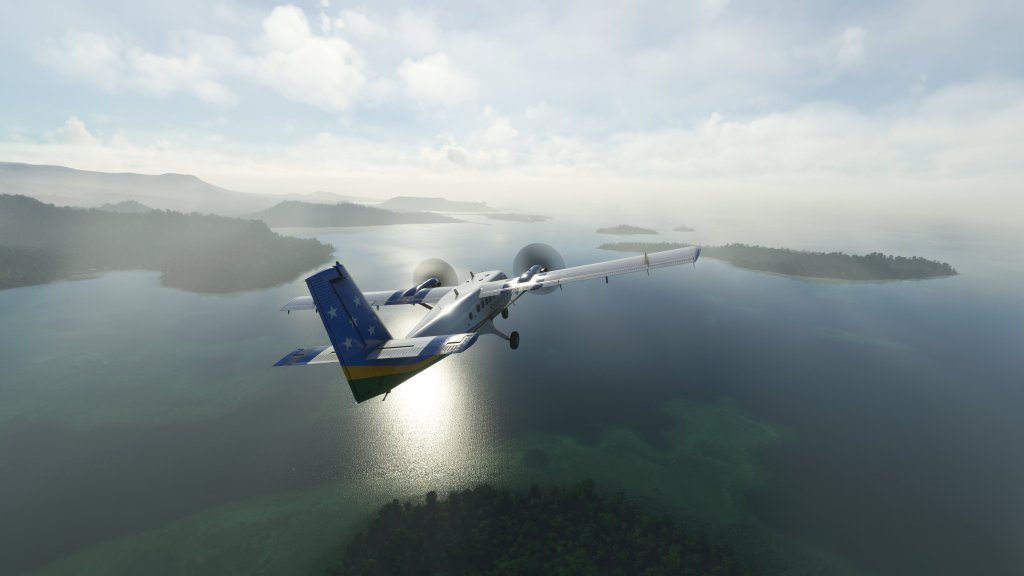
After taking the detour I got myself more or less back on track. Soon the island of Pohnpei appeared ahead in the mist and cloud with reflected light making it very difficult to spot the runway. But eventually I did and brought the DHC-6 in for a much more leisurely landing on a nice long runway that can handle 737 class airliners.
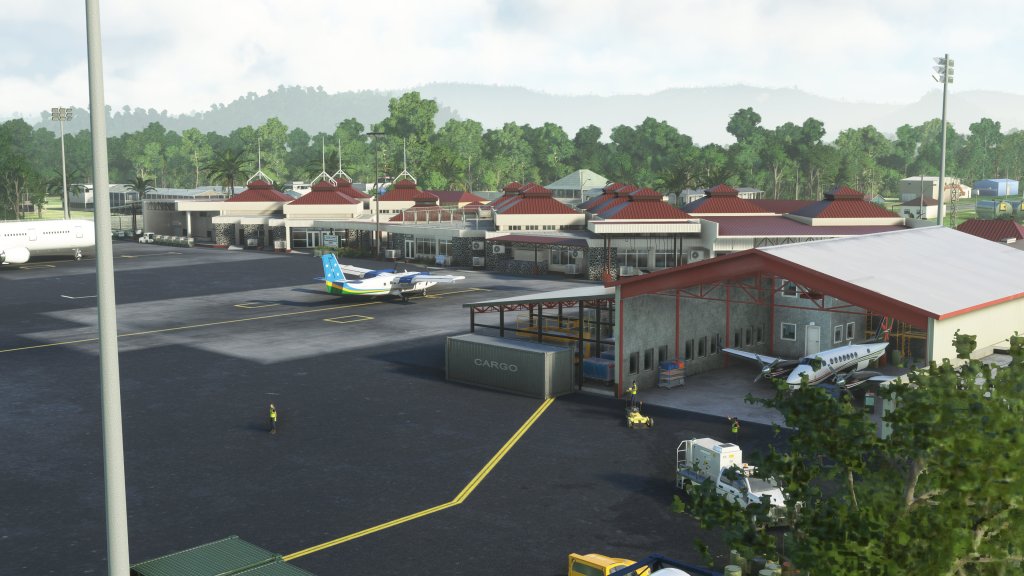
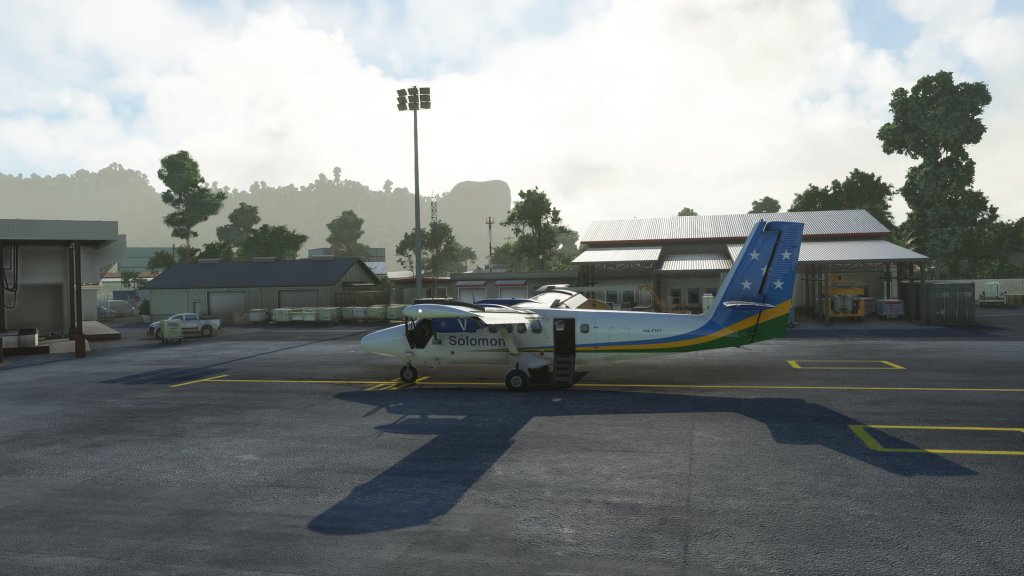
PTPN is one of the airports that got a more custom makeover and its quite a fun little airport to fly into. Although the DHC-6 feels quite a home landing at a medium sized airport like this, the real world version can handle flights from larger aircraft too making this a fun destination for airliner flyers and smaller airplane lovers alike.

Third hop
PTPN (Pohnpei International Airport) over to PTNG would be the third and final hop. Strong storms have been a dominant feature in the Pacific and that has been reflected in the live weather that I’ve encountered throughout this short journey. That would provide a dramatic backdrop for this next hop as the island of Pohnpei was covered in very thick cloud when I set out.
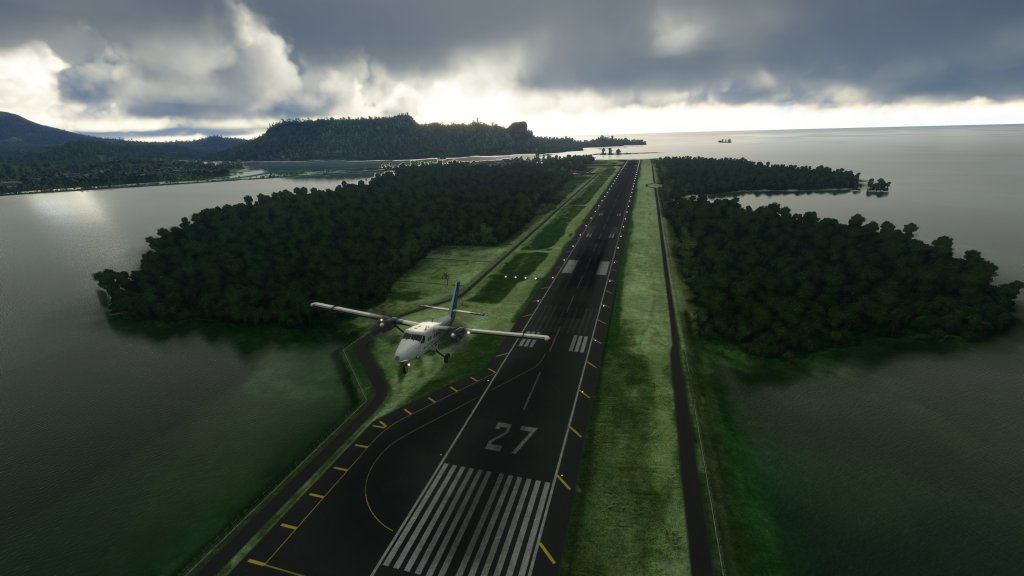
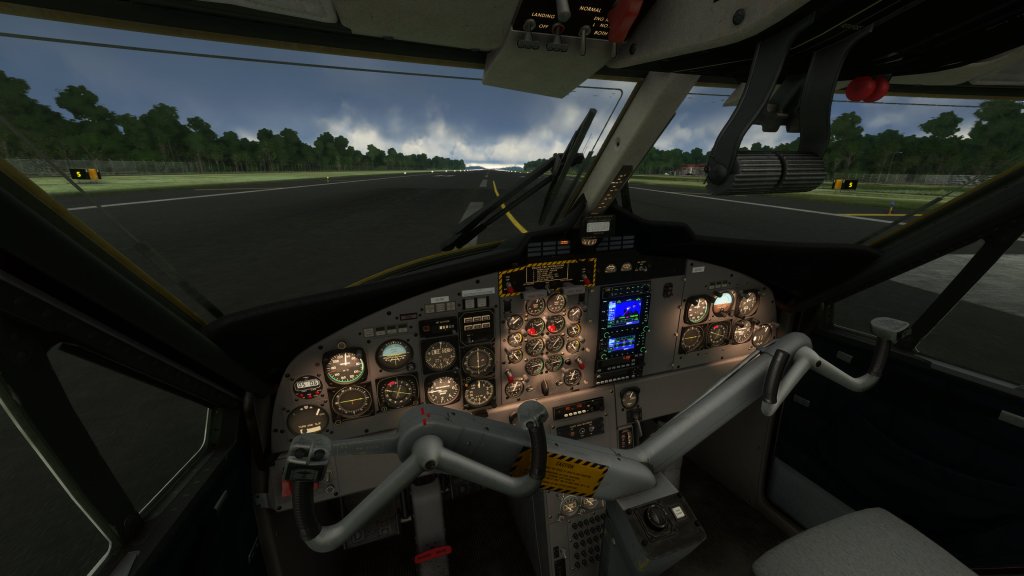
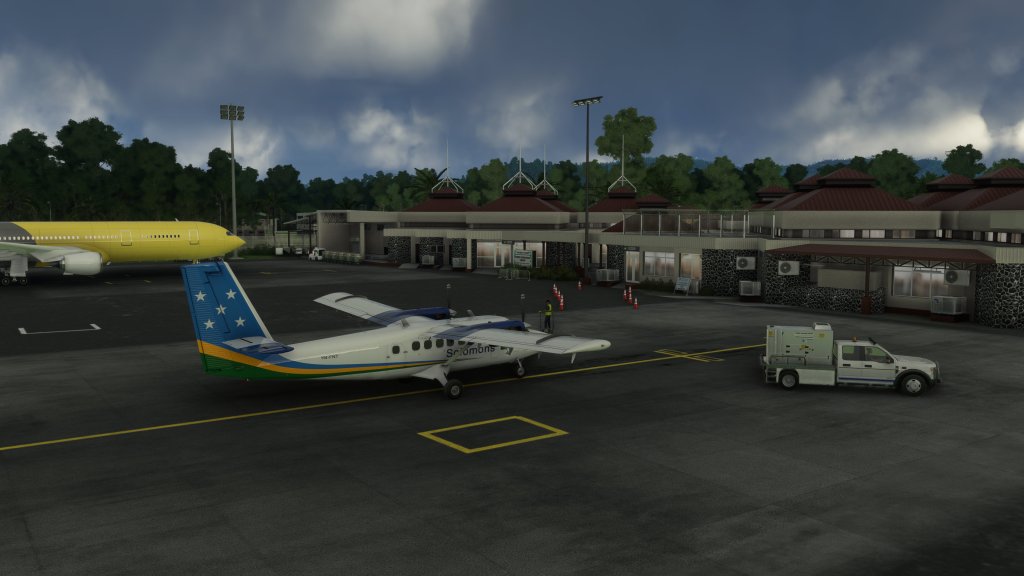
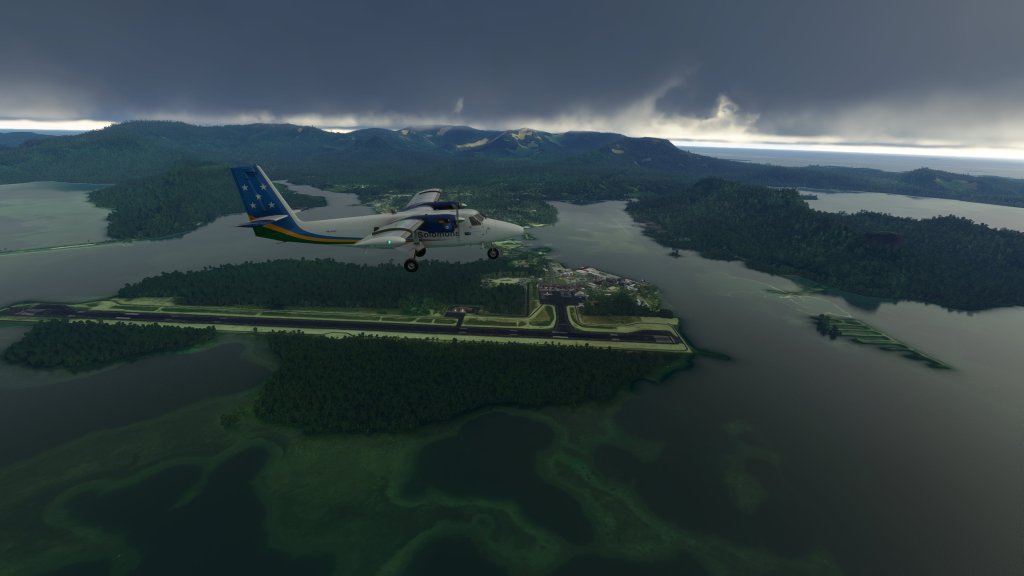
Although there was no rain, the skies definitely kept the sun fully obscured and the surrounding area was dark.
I kept this hop at low level with relatively calm winds and low clouds for the first part of the journey. Clearer skies ahead and the turquoise waters around Ant Atoll were a welcome change from the dark and brooding skies.
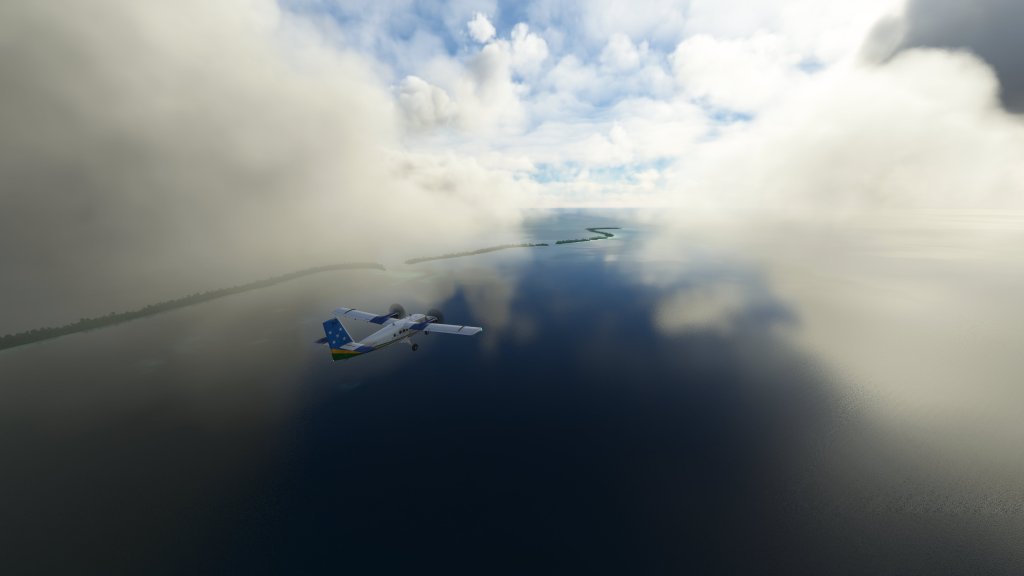
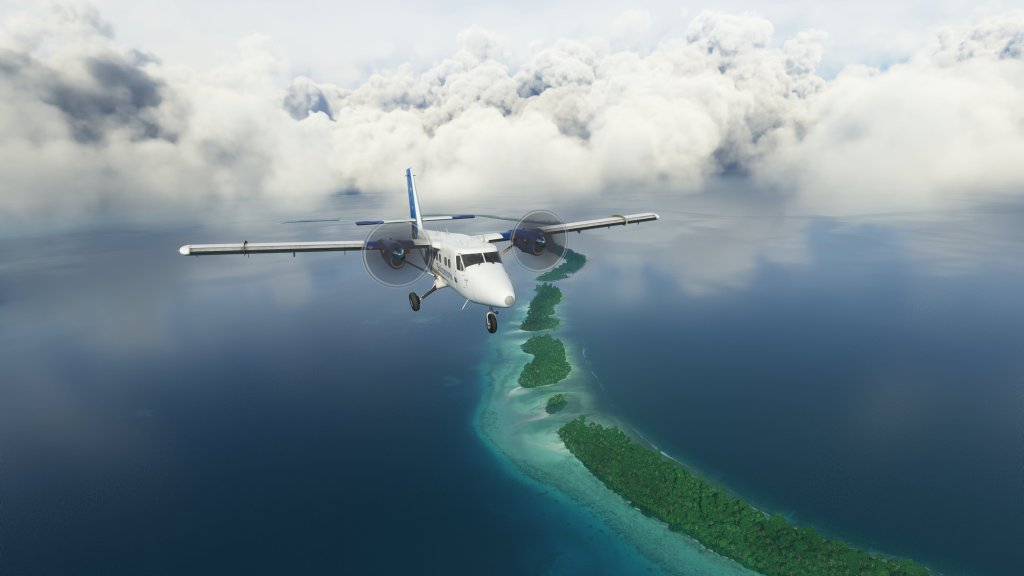
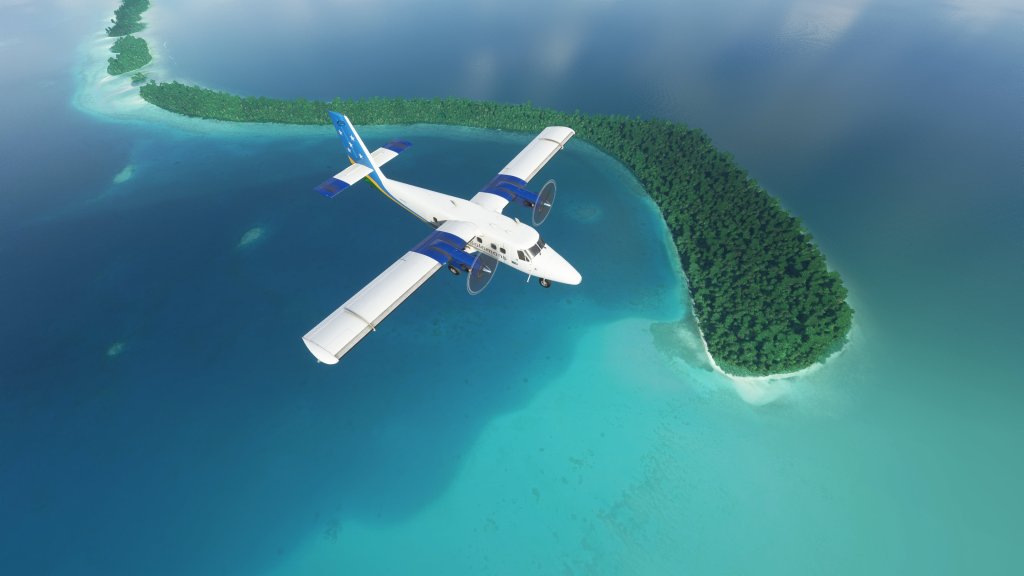
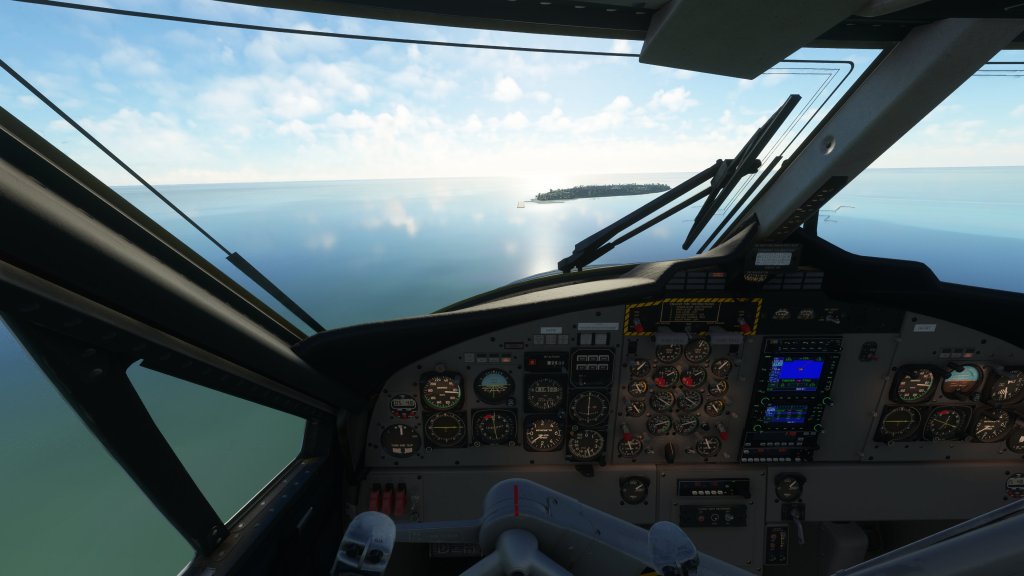
After a while flying over featureless ocean and feeling quite small in a big world, my destination island finally appeared ahead. Although looking very out of place, this concrete pad in the ocean is very much a real world feature as I was able to spot it from Google maps. Flying into and out of this place must be an exercise in extreme flying.
I brought the DHC-6 in for my best landing yet (although still not a good one) and taxied over to the spit of land that connects the airstrip to the island. My journey here was over and it was quite fun hopping from spot to spot.
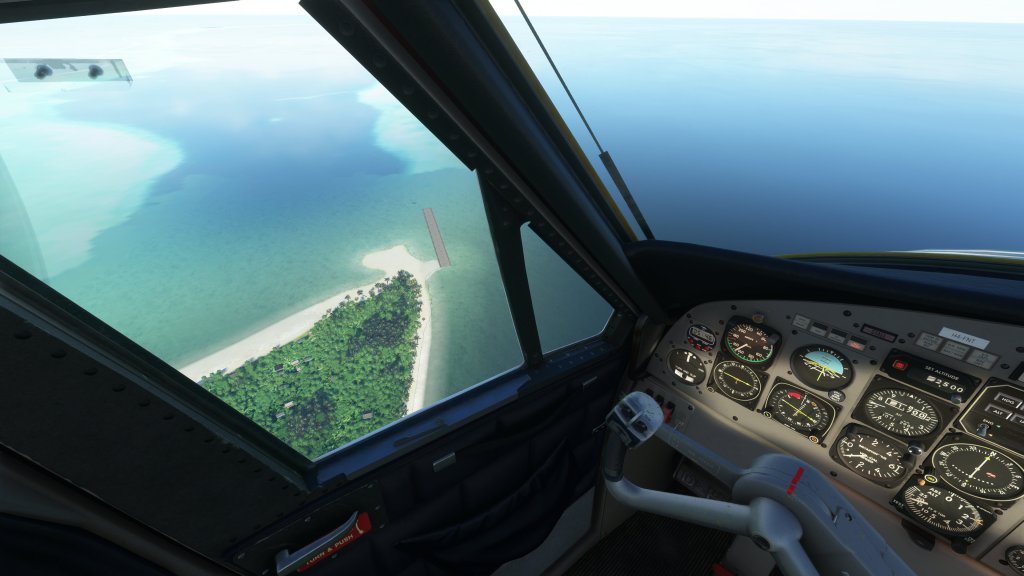
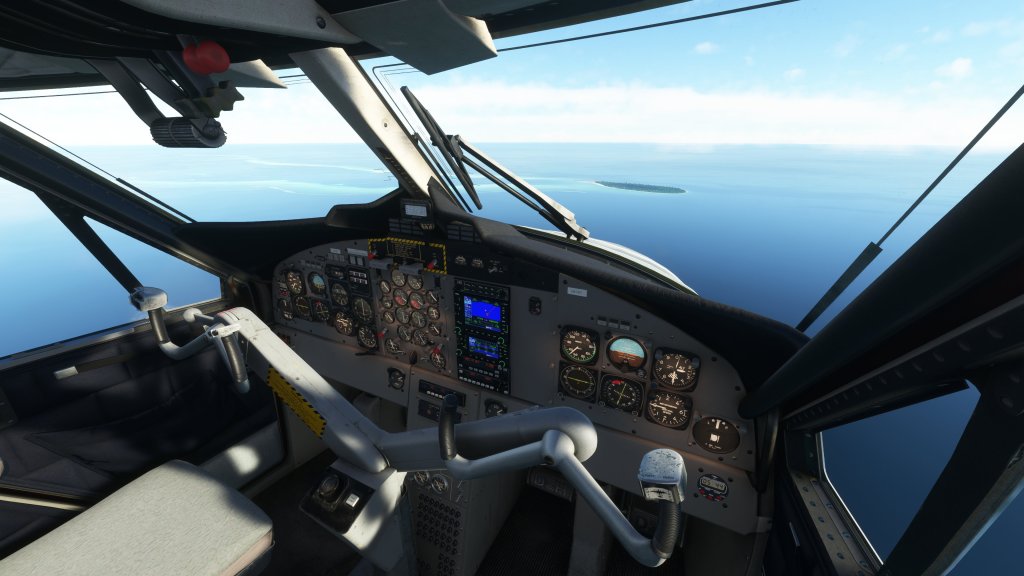
Back in the Aerosoft DHC-6
I’ve been meaning to fly the Aerosoft DHC-6 for a while now. It’s been a long time since I wrote my full review and I wanted to see how I felt about the airplane after all this time.
It hasn’t received any updates since then and Aerosoft have taken it down from their store. Owners can continue to download it from the store but new buyers can’t get it from Aerosoft directly. It was available on the MSFS store for quite a while after but it doesn’t appear to be available there anymore either. So, this is a bit of a rare airplane now.
My issues with the airplane are the same as before. A few weird sound blending issues and a flight model that needs a more modern overhaul would put this airplane over the finish line. Its visuals are extremely strong, its systems are well realized, and the airplane is genuinely fun to fly. Why Aerosoft stopped just short of the finish line I’m not sure if I will ever know. There is, of course, the comment that the product may reappear at a future date (or come bundled with a future MSFS release?) but the whole thing is still weird to me.
In any case, this was a fun flight and absent the DHC-6 there are probably a few other airplanes that might be able to do a similar job. The BN-2 Islander, the Kodiak 100 or maybe even the DHC-4 Caribou. Let me know if you try!


 Stormbirds
Leave a reply to ShamrockOneFive Cancel reply