
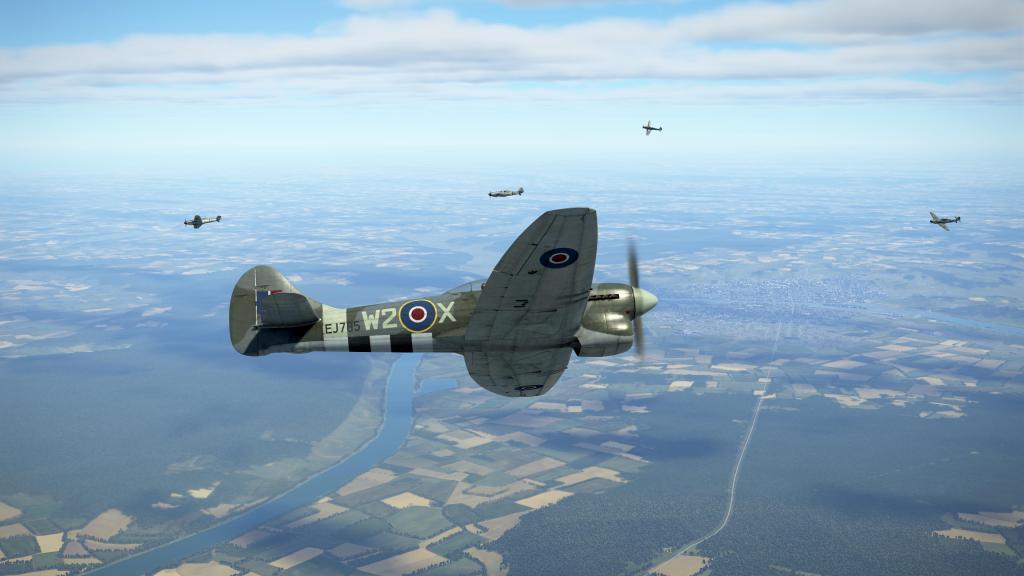
One of the patch notes for Update 5.504 indicates that the Tempest Mark V, an aircraft included in the IL-2 Sturmovik: Battle of Bodenplatte release that came out several years ago now, has had its flight model adjusted. What’s changed? Why the adjustment? How should you alter your tactics? Let’s dig into it!
What has changed?

A debate has gone on for some time in the FM discussion area of the IL-2 forums since at least the fall of 2020. The question: Was the Tempest turning better than it should? Eight pages and just a little over four years later and I think we have the answer.
All things considered, the Tempest Mark V is a heavier fighter than its stablemate the Spitfire XIV. The Tempest’s empty weight is, as listed by IL-2’s own data, 9599 lbs while the Spitfire XIV’s empty weight is 7264 lbs. In tactical comparison documentation from RAF Wittering, dated from the 15th of June, 1944, the comment reported that between the Typhoon and the Tempest there was little variation in turn with a slight edge given to the Typhoon. In the sim, until the recent update, the two have been moderately different with the Tempest having a significant edge.
Weight is not the only factor with the wing shape, engine power, aerodynamics, and various other factors contributing to an aircraft’s performance when turning. The Tempest Mark V had a wing similar to that of the Mustang with a “laminar flow” style profile. That was a thinner wing and a different profile than was typical at the time with reduced drag performance but also resulted in slightly harsher stalls and thus lower turn performance.
The change seems to be the result of the community debate highlighting the issue plus the addition of new documentation to help inform updating the flight model. New data in these discussions is always essential. A post on the Russian side of the IL-2 forum, indicates as much with developer Gavrick giving an explanation to us. Google translate struggled a bit with the translation here but I think the overall meaning is clear:
Materials on Tempest blowdowns from the British archive (for which many thanks to caring people). If before this one could only suspect that its lift force was somewhat overestimated – there was no precise data on its aerodynamics, it was necessary to rely on estimates based on indirect available figures (and because of this a somewhat optimistic turn was obtained), now everything fell into place. The speed and rate of climb remained practically the same (although the rate of climb near the ground and the acceleration dynamics became even slightly better).
More data from the archives has contributed to a more accurate simulation. That’s the ideal!
But how does it feel in action after the change? Let’s talk about that.
How it feels in action
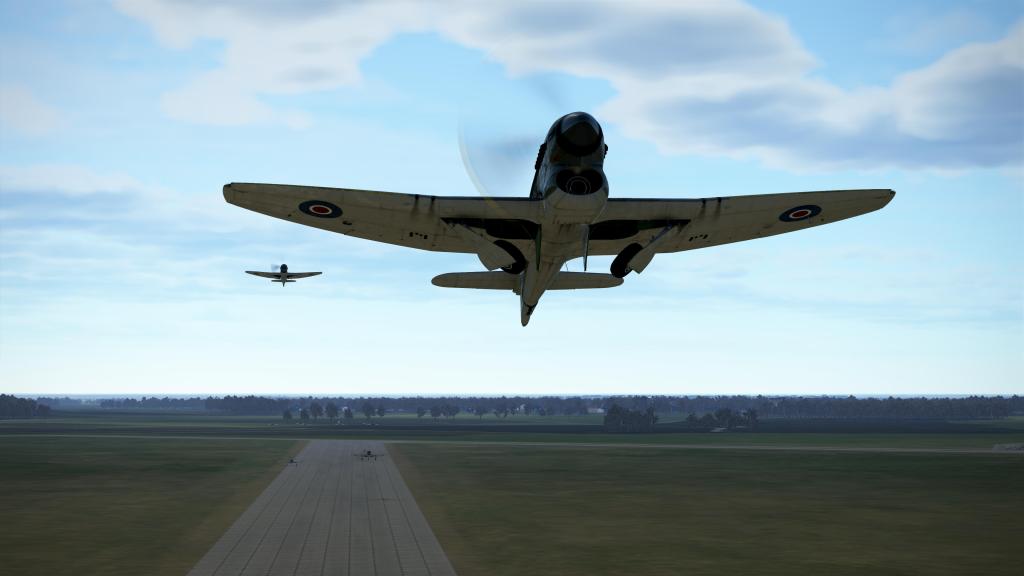
On my first mission with the revised Tempest V, my initial experiences were all quite similar. Startup, taxi, takeoff, and cruise were all pretty much the same as before. My first indication that something was different is how the aircraft feels in the roll.
Roll feels slightly more sluggish than it did before. It’s not nearly as slow as the Typhoon, thankfully, but there’s a bit more weight to each roll. Not that big of a difference but it does feel a little different. Then I discovered that the biggest difference is that the same sluggishness applies to turns as well.

New performance numbers are not available but the 20 seconds maximum performance turn time at sea level is the same as listed by the Fw190D-9 in the IL-2 data. I did a couple of comparison turns myself but its difficult to get a good read on exact numbers without a more methodological approach. Instead, I want to focus on how it feels in action and I would say that it now feels more like the Mustang or Fw190D-9, especially as a turn fight becomes more prolonged. There’s more speed bleed and less ability to rapidly pull into a high angle of attack position.
Another difference is the stall which you’ll feel more of in this revised flight model. Pull too much AoA, get into a stall, and the Tempest will roll several degrees quite quickly and sometimes flick you out of a turn. It’s not as harsh as the Mustang or Fw190 but it feels a bit more like those airplanes than the Spitfire.
One benefit to the change here is that the Tempest’s overly sensitive elevator, while still highly effective, no longer has the same ability to pull into an airframe breaking over-G situation. You can pull the stick back for full effect with less of a chance of that happening though I suspect its still possible.
Everything else about the Tempest including its extremely high performance in speed, its great climb rate, impressive firepower and its overall capability as a late war fighter remains. It certainly still feels extremely capable!
Changed tactics
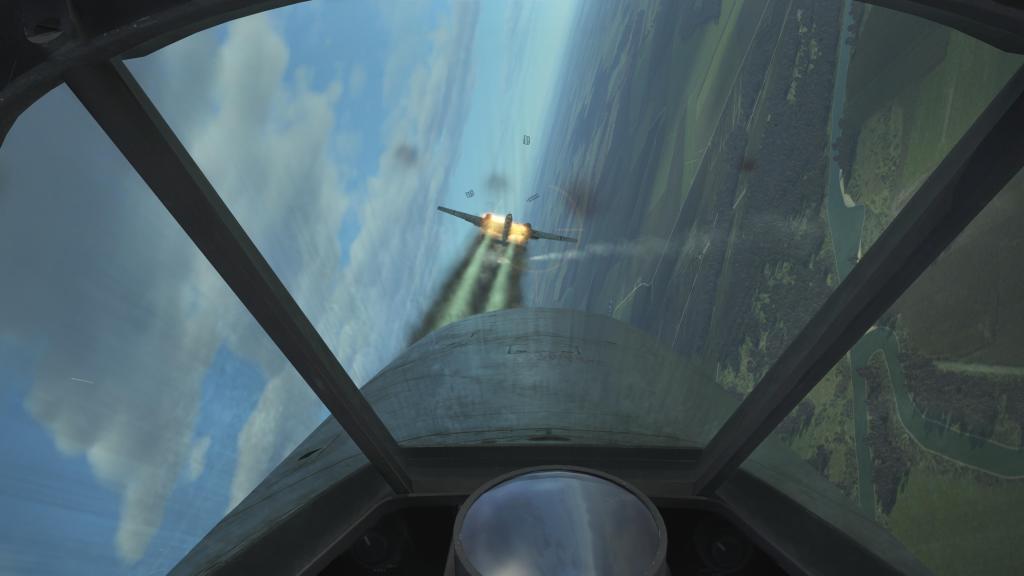
Tactics is is where I think we’re going to see a divergence in opinions on this. Depending on how you fly the airplane is going to affect how you see these changes in terms of changed tactics. In my experience my tactics with the Tempest haven’t really changed all that much though you may have a different experience.
The Tempest was a powerful fighter that excelled in the more hit and run or boom and zoom style fighting that was typical of late war fighters. Staying fast, diving or indeed zooming up on sometimes unsuspecting enemies with high rates of speed, and then zooming out to position for the next attack. I’ve been flying the Tempest that way the entire time that we’ve had access to it. It’s the way that Tempest squadrons tended to fight and I learned to fight the aircraft that way in the last two IL-2 sims that featured it. The extra turn capability was a benefit but a limited one in these high speed circumstances where pulling too tight could destroy the aircraft.
The other method, used previously, would be to fly the Tempest more or less like a Spitfire. It too can be flown in the same way as described above, but can also more readily get into a tight turning fight and come out the victor. The Tempest was capable of doing that more ably before and somewhat less-so now.
Avoid prolonged turn battles, and use the aircraft’s impressive speed, firepower, visibility, and climb rate at low and medium altitudes to surprise the enemy and out perform them when needed. Don’t let the speed bleed off too much and avoid prolonged turn fights. You’ll bleed your speed and make yourself an easy target.
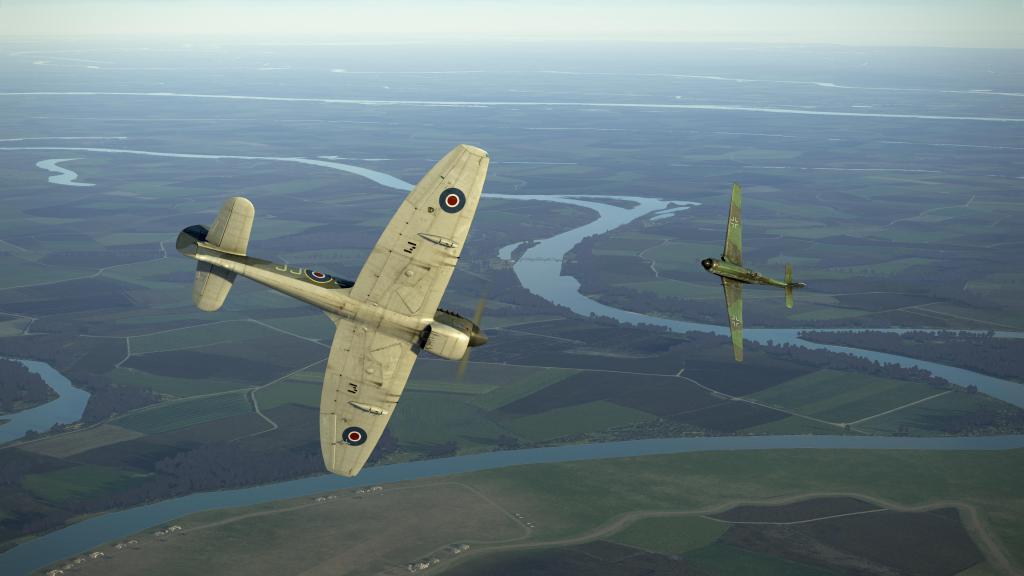
Final thoughts
While few aircraft will challenge the Tempest, it has been humbled slightly. The Tempest Mark V was very impressive before and it remains so after this change. As a key late war type in the Allied arsenal, the Tempest is an important part of the online scene and it, of course, fulfills a key role in single player careers and campaigns too. While this change does reduce its capability slightly, if flown in the way that it should be flown, it should continue to be a capable aircraft.
Flight model debates that lead to this change will no doubt rage on for years on this or another aircraft. I’ve been in enough of them since about 2002 back over on the original IL-2 forums to know that we’ll always be looking to get better data and contest how something flies in a combat flight sim.
This change appears to be the result of years of community discussion, detailed examinations of available data, and probably some hard research and a recalculation by the developers.



Leave a comment