
I’ve spent several hours now with Magnitude-3’s DCS: F4U-1D Corsair for DCS World putting the aircraft through its paces, learning its systems, and getting to know the infamous bent wing bird, the hose nose, the ensign eliminator, or the whistling death. This is an aircraft that seems to have a mixed reputation in the community so far and I almost didn’t jump in early because of some of the comments I read. However, I’m really glad that I did because my own experience differs from some of what I’ve heard out there. This is my take on this new warbird for DCS World!
Corsair ahoy!

Magnitude-3 announced their Corsair project quite a few years ago and there were times where I wasn’t sure if this project would ever release. However, the developers there continued the long slog through their work and they have delivered their aircraft module for DCS World. What does it include?
Corsair comes packaged with the aircraft itself, access to the entire inventory of HVAR and Tiny Tim rockets, various general purpose bombs, fuel tanks, .50cal M2 machine guns, and even the ASM-N-2 Bat guided glide bomb that some Corsairs were fitted with before the end of the war. While this project is in early access the Corsair has the full armament package.
The aircraft simulation here is also relatively deep with electrical, hydraulic, and pneumatic systems all modeled and running in the background. Radio systems and radio beacon systems are all modeled and you can track an aircraft carrier when using the appropriate Morse code.
Speaking of carriers, Magnitude-3 haven’t just released the Corsair but also a companion aircraft carrier to go along with it. USS Essex represents the Essex-class of aircraft carrier of which 24 were ultimately constructed. The carrier, its flak guns, and functional elevators are part of the experience together, of course, with its wire-arrestor system for catching aircraft.
Japanese ground units are also part of the package:
- Type 3 80mm AA gun
- Type 88 75mm AA gun
- Type 89 I Go medium tank
- Type 94 Isuzu truck
- Type 94 25mm AT/AA gun on Isuzu truck
- Type 96 25mm AT/AA gun
- Type 95 Ke Ni light tank
- Type 98 So Da armored personnel and ammunition carrier
Both the ground units and the Essex-class carrier are free to all DCS World players so this module helps elevate the experience for everyone.
Not included in the pack but releasing alongside Corsair is the DCS: Marianas WWII map. This Pacific themed map is freely available, developed by Eagle Dynamics, and a great first setting for the aircraft. It differs from the modern Marianas map by featuring period specific buildings, geographical formations and land use, and features many of the famous airfields used during the Marianas islands invasion campaign.
Corsair has a good number of instant action missions on the Marianas WWII map, Normandy 2, Persian Gulf and Caucasus. There’s also a small selection of slightly longer missions including a dawn strike on a Japanese port and airfield. The missions were created by Reflected Simulations so they are quite good!
Like all DCS modules, content remains a problem fortunately it looks like Reflected Simulations will also be doing a campaign in the future so that’s encouraging. For now, the Corsair has a few things to do and there are a few multiplayer experiences out there now too, but it will be constrained until more supporting content comes.
The visuals and the sounds

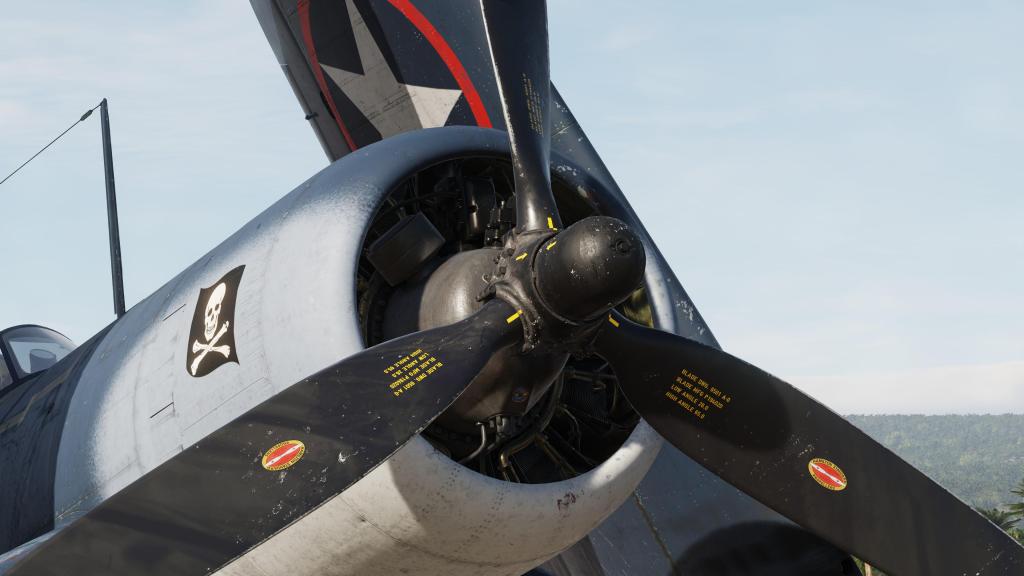
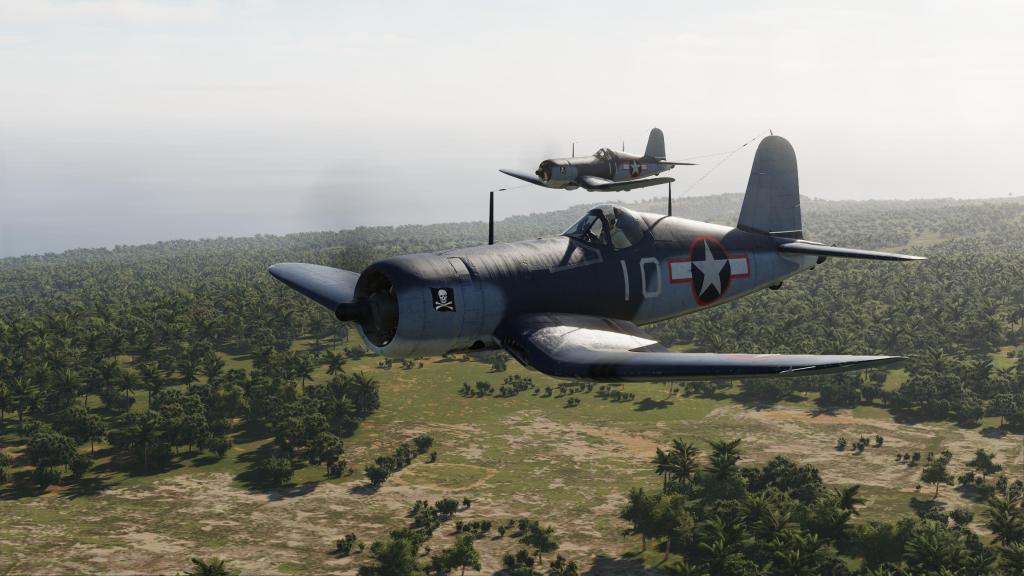


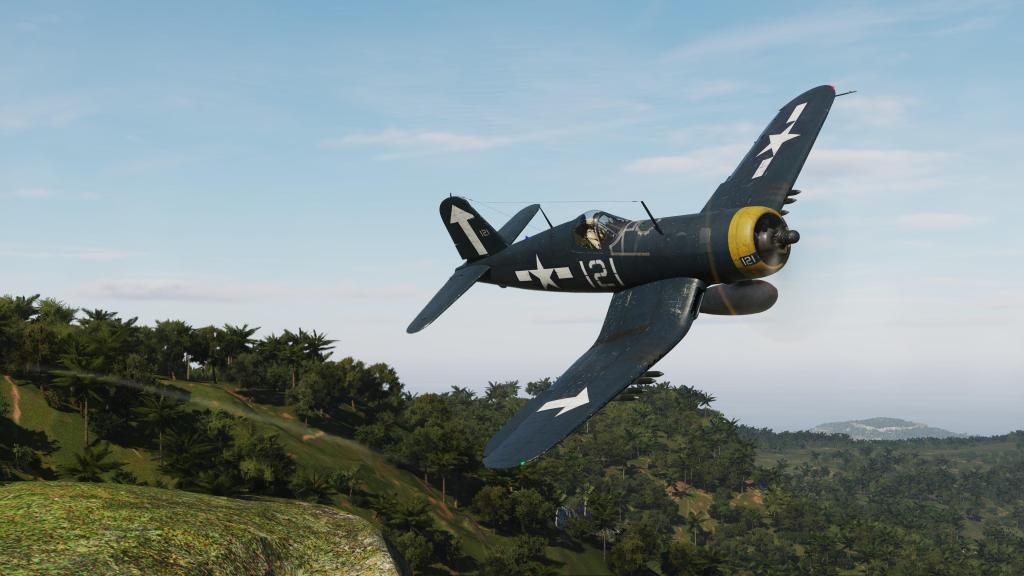
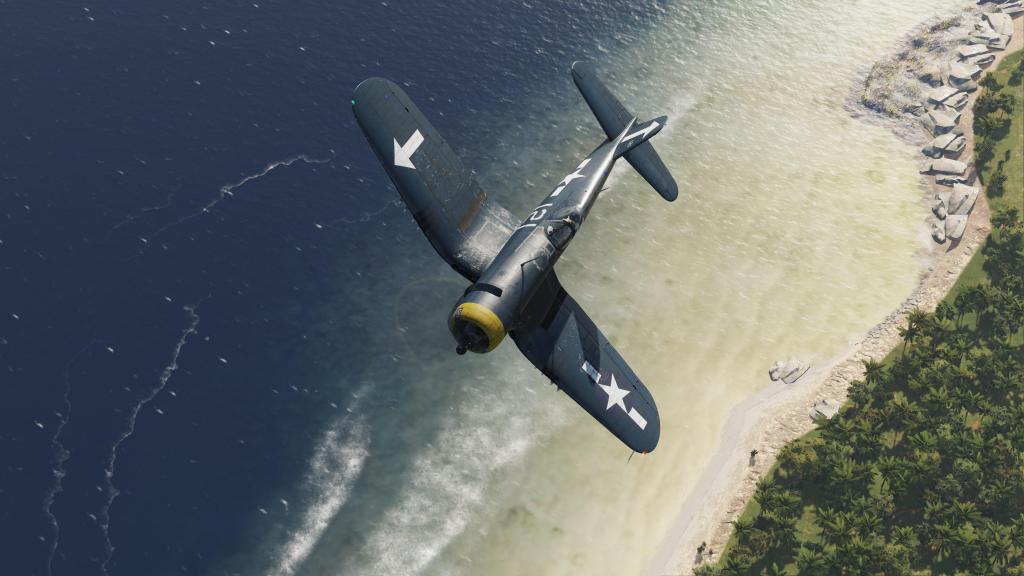

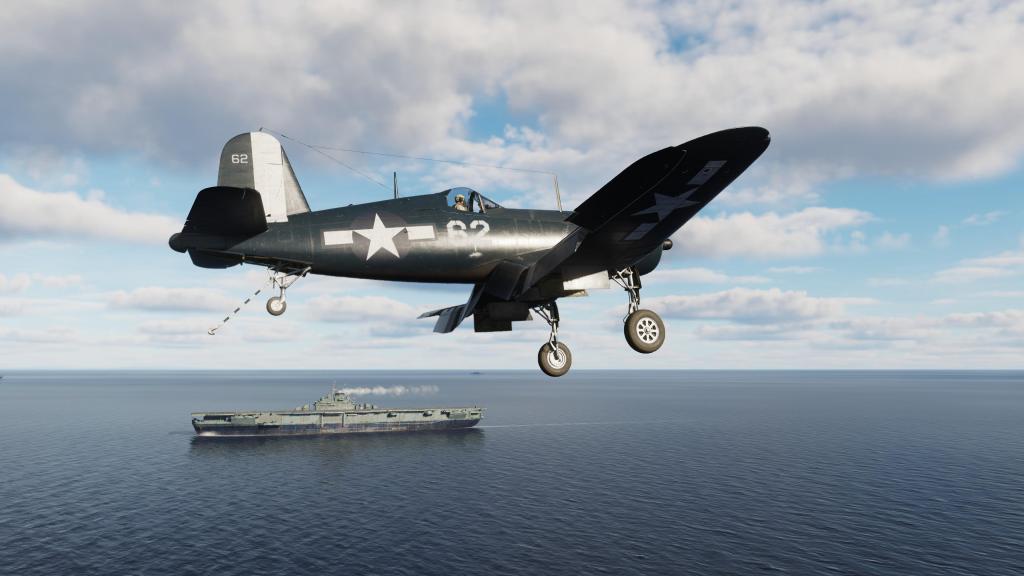
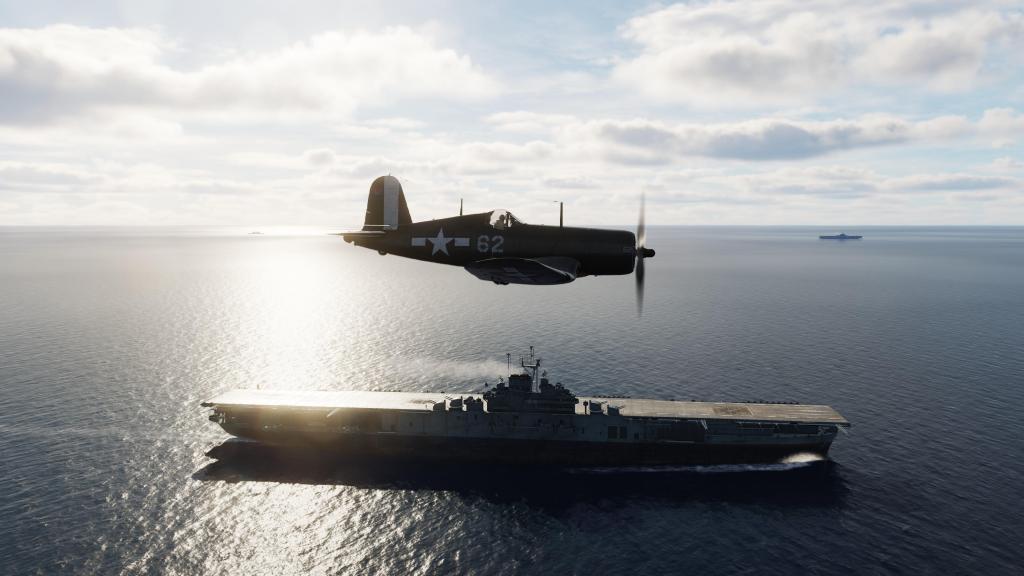

Over the last several years we’ve seen Magnitude-3 make and remark parts of the DCS: F4U and I suspect that been because the company felt like their product had been falling behind. The standard for DCS World aircraft has been rising steadily and clearly the company’s artists were keen to keep up.
We’ve seen some other long in development modules launch in great shape but feel a little behind the times with the model. Fortunately, the Corsair does not feel behind the times. It’s very much up at the forefront which is great to see.
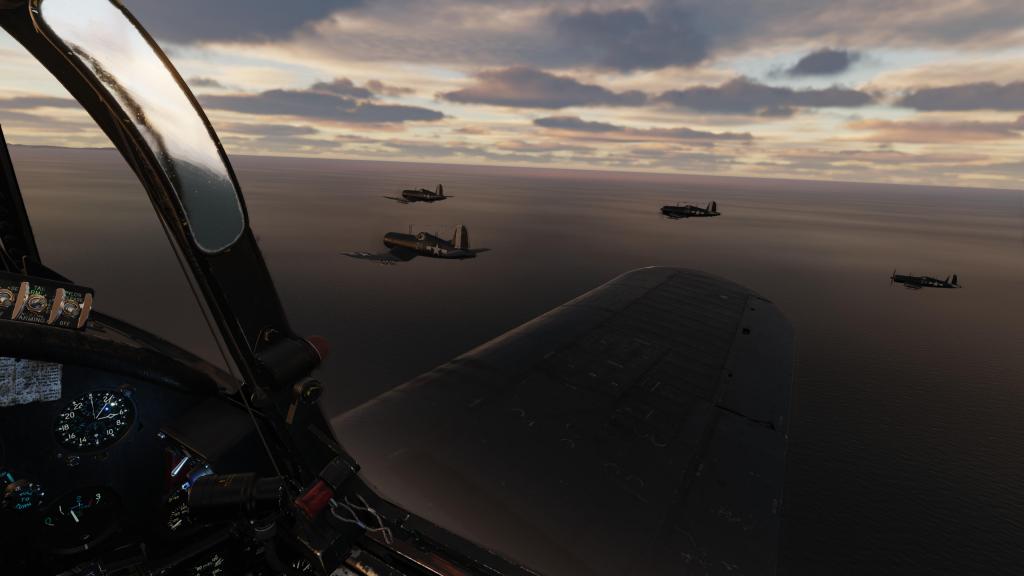
Sharp textures inside and out are a highlight of this aircraft. The cockpit is meticulously detailed with all kinds of buttons, knobs, switches, wires, and controls all beautifully detailed.
I will, however, complain slightly that some of the wear and tear applied to some parts makes it hard to read and that detracts a bit from the experience. It looks cool, yes, but they are harder to read and I tend to draw the line at that kind of wear and tear artistry. I want it to feel used and lived-in but not at the expense of readability. Fortunately this is few and far between but it does stick out.


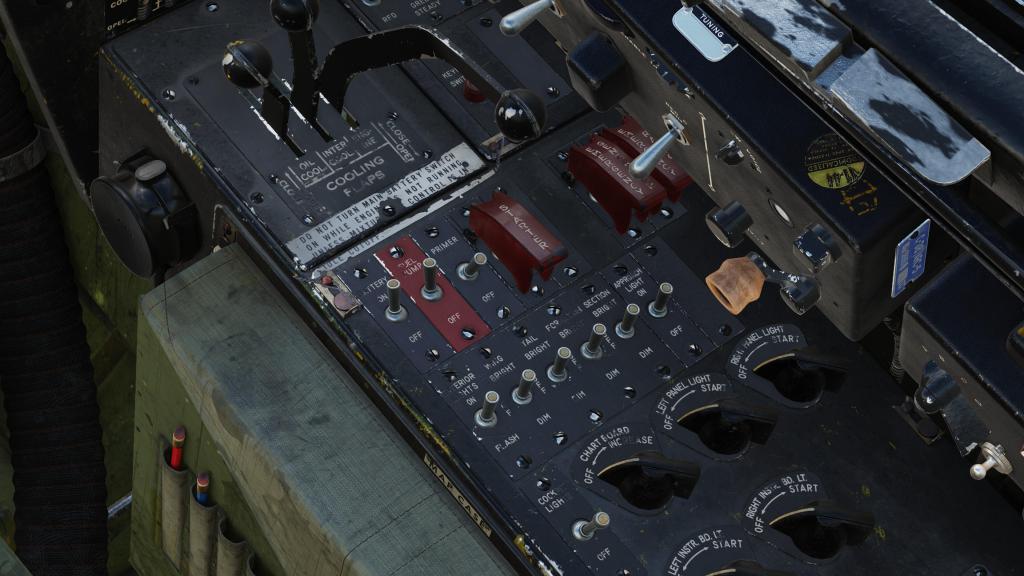

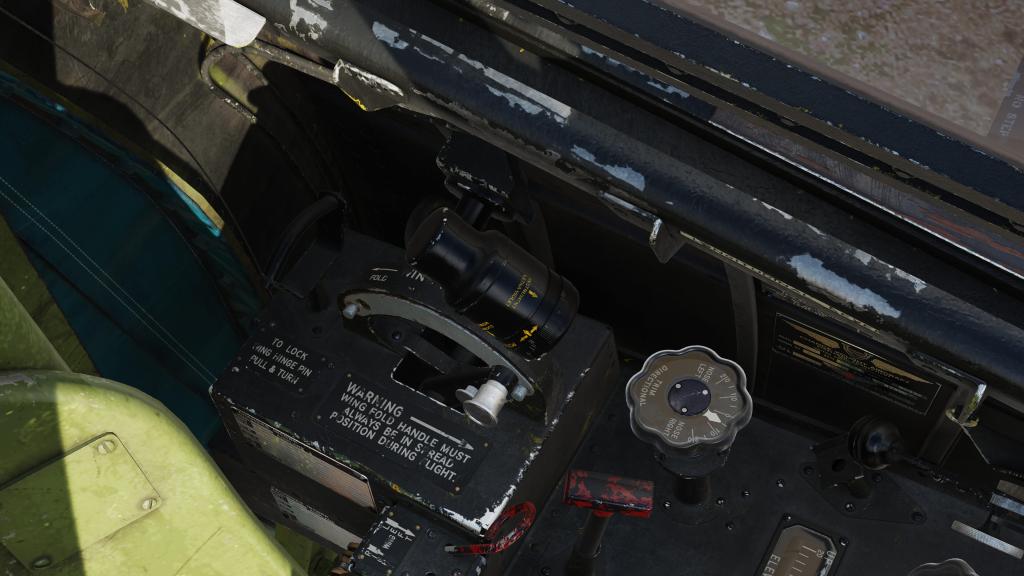

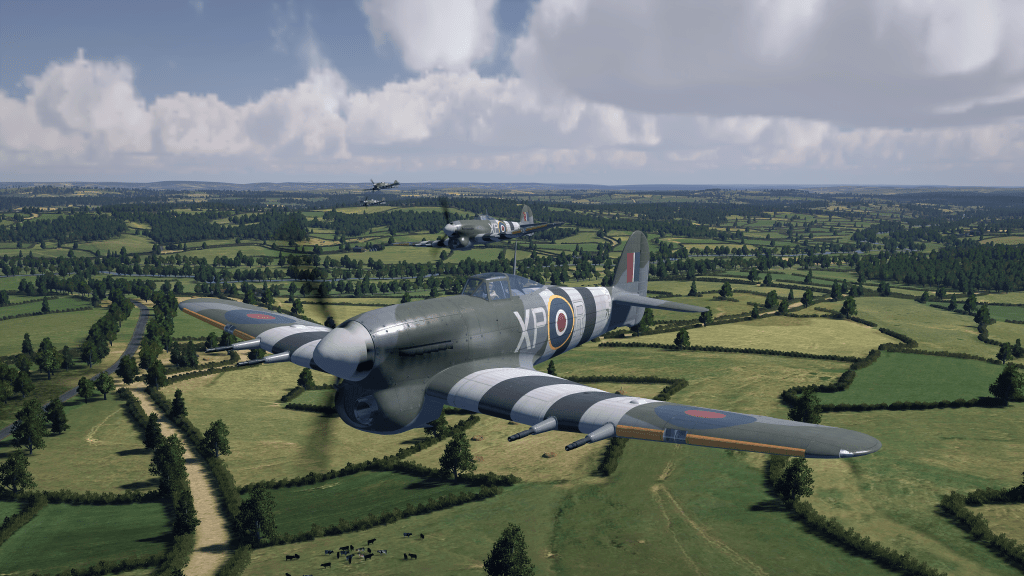
The exterior is absolutely beautiful with sharp and detailed texturing and texture effects all around. The propeller and R-2800 engine are modeled beautifully. This aircraft has beautifully modeled animations too with the ailerons and folding wing mechanisms being particularly impressive and satisfying to watch.
As great as those animations are, there are some cockpit controls that jump from position to position, sans animation, that makes that part feel a little unpolished.
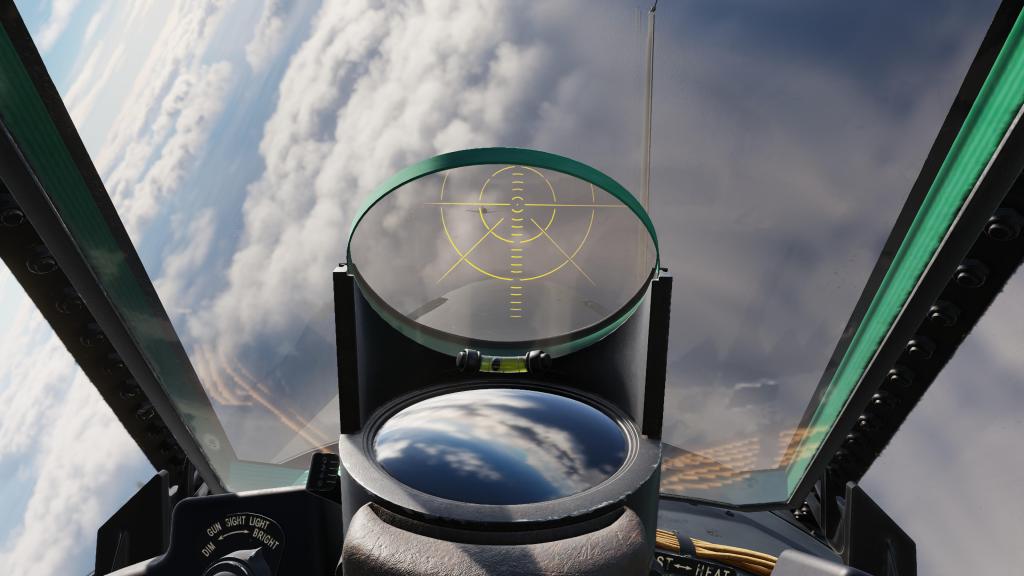
The overly reflective canopy is also a problem. It can absolutely obliterate the outside world in glare at certain angles. I think this needs some tuning to get it right.

The F4U comes with a dozen or more liveries covering various US Navy schemes from three years of Pacific operations plus there are some Fleet Air Arm schemes from the British Pacific Fleet which is also great to see.
Now let’s talk sounds. The engine sounds are the focal point of any warbird and these ones are adequate. They react technically well to power changes and there is a generally decent sounding clatter from the radial engine as you’d expect. At the same time, its not quite as satisfying as the similarly R-2800 powered P-47 from Eagle Dynamics. That one benefits from real world recordings while this one sounds like it was the job of some very good, yet still synthetic, sound work.
Other sounds are satisfying. There’s a pretty good “bark” from the guns So too is the aircraft’s characteristic whistle which you can hear from the cockpit while you perform some impressive dives from altitude or while screaming along the deck at high speeds. That’s in but there’s no real wind noise effects from when the aircraft starts to stall. Something I hope Magnitude 3 rectifies later on. We may not have “seat of the pants” feel but usually sounds like that help convey the same kinds of information.
Getting hit by enemy fire produces some quite useful and slightly jarring clanging noises. Really glad that we can hear that so that battle damage isn’t a mystery.
The F4U’s sounds taken as a whole are not bad but they aren’t fully satisfying when compared to some of the other DCS World warbird offerings either. The bar is set pretty high which is perhaps the biggest issue.
How it flies
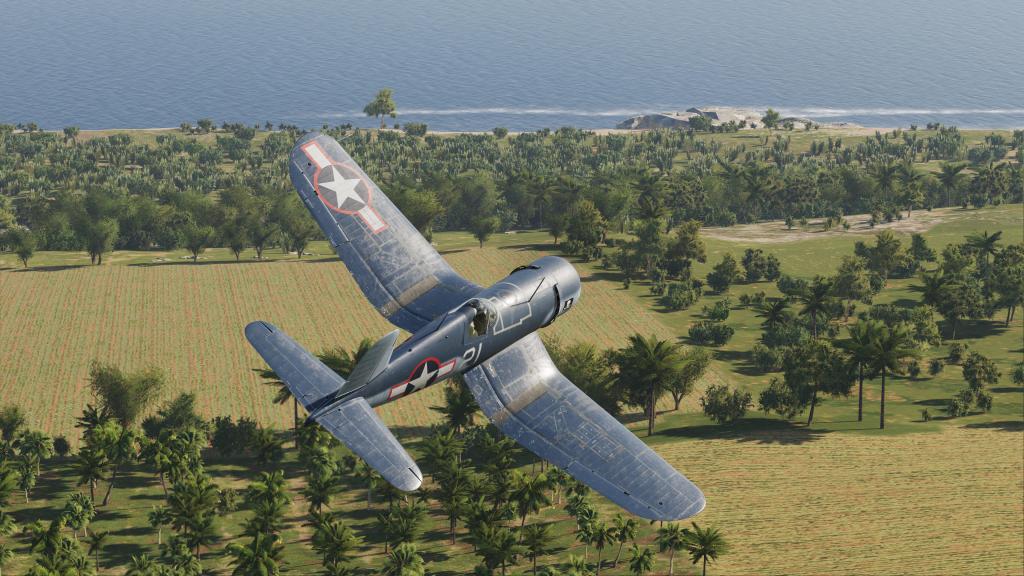
There’s been an awful lot said about the Corsair since its release and some of it I agree with, generally, while other takes that I’ve heard on the aircraft seem to be highly inaccurate at best.
Straight up, the flight model needs some extra work put into it to smooth out some issues with it. I’ve seen what a few have been able to accomplish and I’ve managed to do some pretty weird things with it myself if I try as well.
The aircraft can, when rapidly pushed forward and back on the elevator, move away from controlled flight into something quite unbelievable looking and feeling. It’s probably not something that a real control stick on the real airplane could even contemplate doing but with a joystick on a home PC… its a whole different story.


Most DCS warbird are quite twitchy and this one is too. I don’t know if this is a technical issue or a philosophical one but putting in some control curves is necessary to get the aircraft into a little bit more reasonable and controllable shape.
Ailerons I found were actually fine without need of any curve while the elevator needed 20-25 put in to smooth it out and a similar set of values are recommended on the equally twitchy rudder. I may further adjust those values as I dial in my flying with the aircraft.
Most of us have short throw joysticks with light actuation forces while the real airplane had a much longer stick attached to the control cables and the physical controls themselves. Somewhere along the line it’d probably be good if DCS simulated that to some extent so that we don’t get the overly twitchy response – maybe it does but I don’t think the current method is satisfying as an experience without dialing in the controls quite a bit.
There are other elements, however, of the flight model that are generally excellent. The problem areas seem to be more about what happens when you push far beyond the normal line of operation.

Lots of good things going on here too. Power changes cause the nose to move left and right with quick action on the rudder needed to keep the airplane flying straight and rudder and control coordination is an absolute must on this aircraft. Ailerons lose effect at higher speeds, the rudder is somewhat limited in effect until you get some speed going, and deploying flaps causes the nose to droop realistically. All things that you look for in a simulated warbird.
I’ve read more than one person write that they thought the Corsair was “on rails” and I can’t agree with that assessment in the slightest. I really was expecting, based on these comments, to see a half finished flight model and that’s not at all the case. There are absolutely some edge of the envelope problems here that need rectifying but once you get away from that, the Corsair feels every bit as lively as you’d expect from an airplane with the nickname “Ensign eliminator.” Well, its been busy eliminating some virtual Ensigns including the one writing this article!
Putting the work in


Corsair is, of course, a naval combat aircraft and so for this section I want to talk about the aircraft in that context.
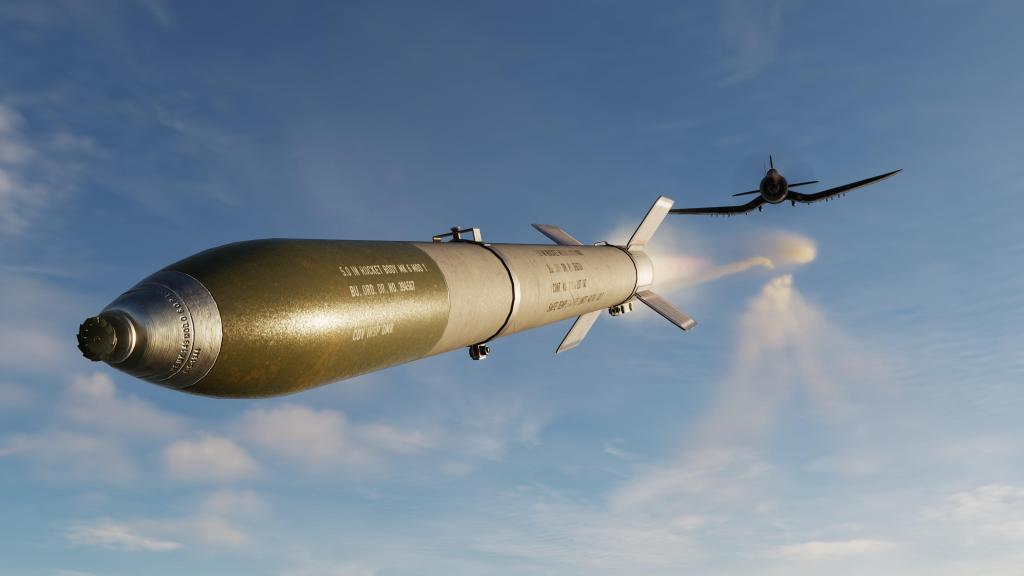
First, armaments with this project are fully in place and the Corsair has its expected mix of six .50cal machine guns, the ability to fit up to eight HVAR rockets, a mix of general purpose bombs, and the slightly more unique Tiny Tim rockets (ironically quite large) and the ASM-N-2 Bat – a fire and forget radar homing anti-ship glide bomb. Way ahead of its time that last one though the actual operation is primitive by modern standards. Still, it portents future developments in guided armament.
The air to ground armament is very effective and it makes the Corsair quite a capable fighter bomber. That’s good because it doesn’t have a ton of other stuff to do just yet (more on that in a bit) but it is quite fun as a strike aircraft blasting ships, vehicles, airbases, and other targets.


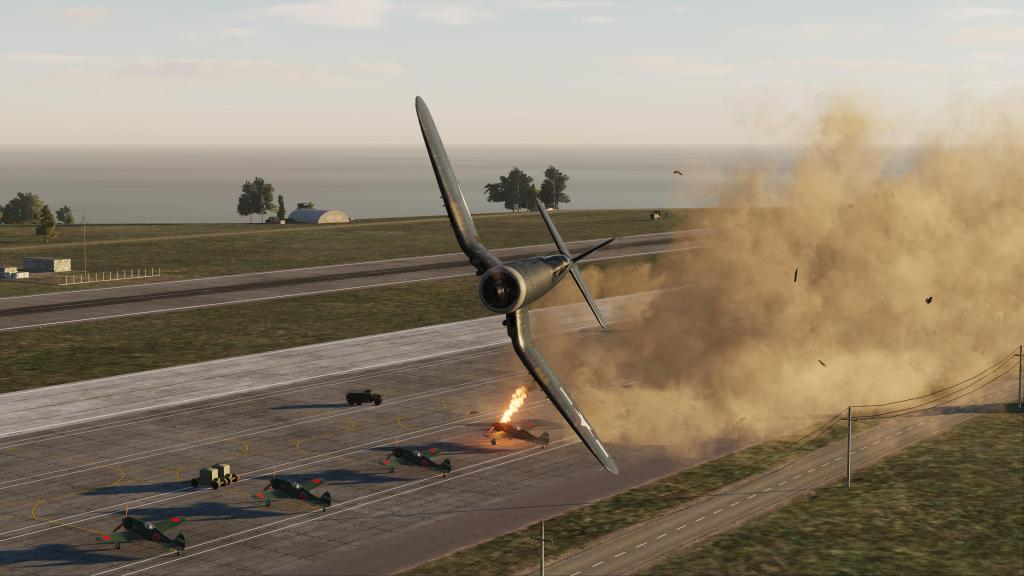


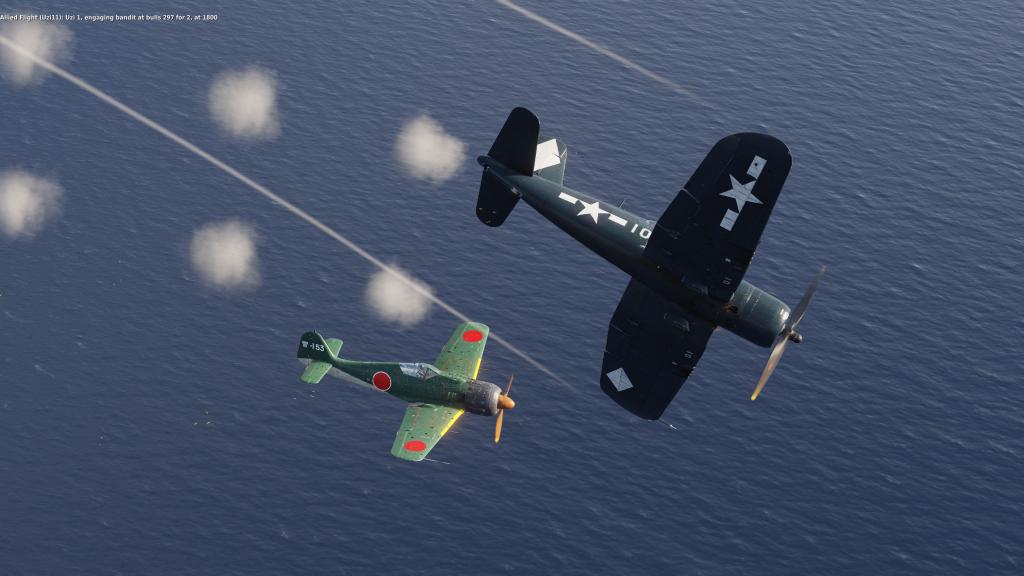
The Corsair is a generally fast and reasonably agile fighter that outclassed the A6M Zero in most respects except horizontal turn. This made it an effective fighter in 1943 and beyond. Sticking to fast manoeuvres and managing the Corsair’s handling are the keys to getting guns on target and avoiding being drawn into tight turn fights.


Finally, the Corsair is absolutely a carrier aircraft. It was initially relegated to land operations because of its poor over the nose visibility, however, the Royal Navy perfected a sweeping turn approach that provided a better view of the carrier’s deck until the last possible moment.
There are some bugs. Casmo (CasmoTV on YouTube) noted that if the carrier is steering between 180 degrees and 270 degrees, the hook will not make contact with the cables on the carrier deck.
I’m told this is likely one of those ‘math-programming’ problems but its certainly a very specific issue for the aircraft and its associated USS Essex carrier experience. When not steaming in that direction, landing and taking off on the carrier is a fun, challenging and ultimately rewarding experience that requires some serious naval aviator airmanship. Carrier landing practice is a great way to just get a feel for the airplane and really challenge yourself without even needing to get into combat.
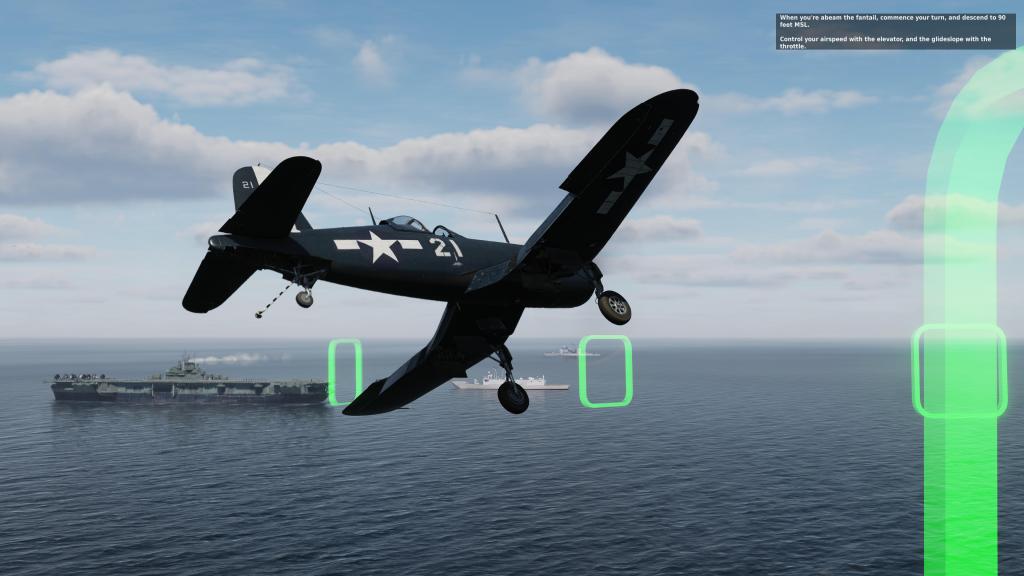

I’ve had some very awkward successes and one splash into the water after letting the speed bleed off too far. Eliminated! Practice will continue on this and satisfaction is landing the plane brilliantly.
Tip of the spear problems
DCS: F4U Corsair’s biggest problem is not the module itself but the rest of the ecosystem that it is a part of. Corsair is the first DCS Pacific WWII module coming out ahead of Eagle Dynamics own DCS: F6F Hellcat project and ahead of a planned asset pack that is intended to include the A6M5 Zero, B6N “Jill,” D4Y “Judy,” TBM Avenger, SDB Dauntless and other aircraft.
For a credible Pacific WWII experience, centered around the 1944 Marianas battles (hopefully they stay here and develop this experience without wandering too far), Corsair needs these other aircraft to be a part of the mix. Right now its on its own and it has nothing else to really do battle with directly.
To Magnitude-3’s credit, the company knew they were up against that and developed the aforementioned Japanese ground vehicles including flak, cars, trucks and tanks. And they developed USS Essex too so we have something to fly from. If it hadn’t included those, F4U would feel even more empty than it does. Unfortunately, it is still on its own when it comes to Pacific WWII content and that, for now at least, is a problem.
Mitigating this is the Corsair’s usage post-war. While the F4U-4 and later models were used in Korea, its not inconceivable that DCS players could accept the F4U-1D in Korea or Cold War themed battles with the appropriate coat of paint. F4U-5s were also used in the 1969 “Football War” between El Salvador and Honduras with the 100-hour long conflict involving clashes between P-51 and F4U fighters.
The type also saw limited use in the European conflict so it has a least a little bit of a chance of being shoehorned into some other DCS scenarios while we wait for Pacific WWII content to arrive.
Final thoughts
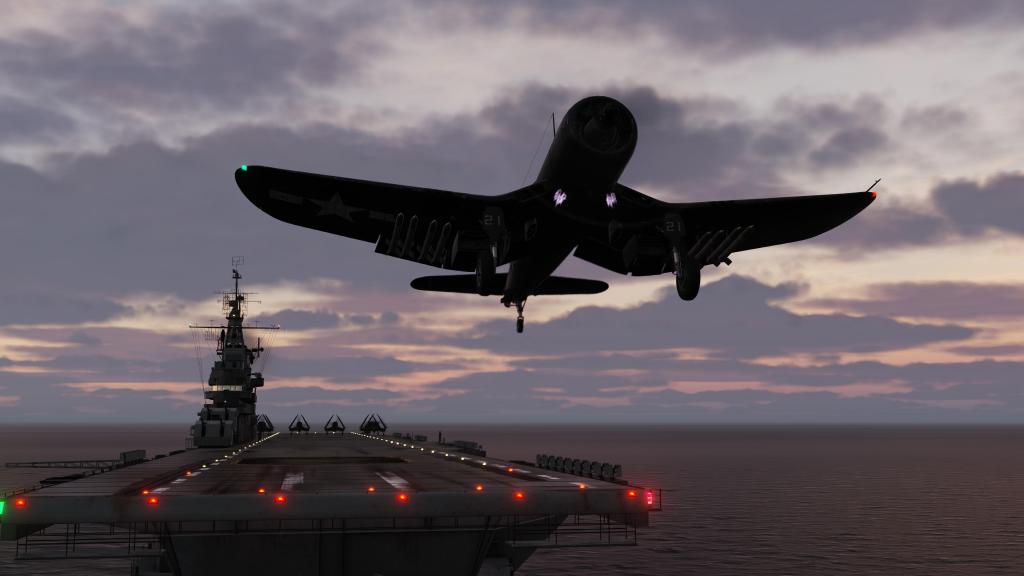
One of my first flight sims was Dynamix’s Aces of the Pacific and ever since then I’ve chased the same joy that this old sim gave me. I experienced some moments of that loading in on the deck of the Essex with my Corsair’s wings folded. Flying over the Pacific and cutting across the islands of the Marianas has been a thoroughly enjoyable experience. This all despite the very limited amount of content currently available.
DCS: F4U Corsair needs flight model tuning, a few graphical tweaks, and some general polish. But I think if Magnitude 3 can move quickly on those issues they will have an impressive Pacific WWII warbird offering.
The lack of content isn’t specifically its fault and Magnitude 3 shipped this with more content than the typical module. Still, that issue will hang over the Corsair for the intervening time. We’ll have to see how that works out.
To sum it all up, DCS: F4U Corsair by Magnitude 3 is a very good experience already that is marred by a few glitches and rough edges that need sorting out. Once solved, I believe this will be an excellent warbird experience all around and one that will benefit from what hopefully is a concerted effort by Eagle Dynamics and perhaps Magnitude 3 themselves to create some engaging Pacific WWII content. We’ll have to see how that story unfolds.
DCS: F4U-1D Corsair by Magnitude 3 is available for sale in early access on the DCS World e-Shop and on Steam for $47.99 USD.
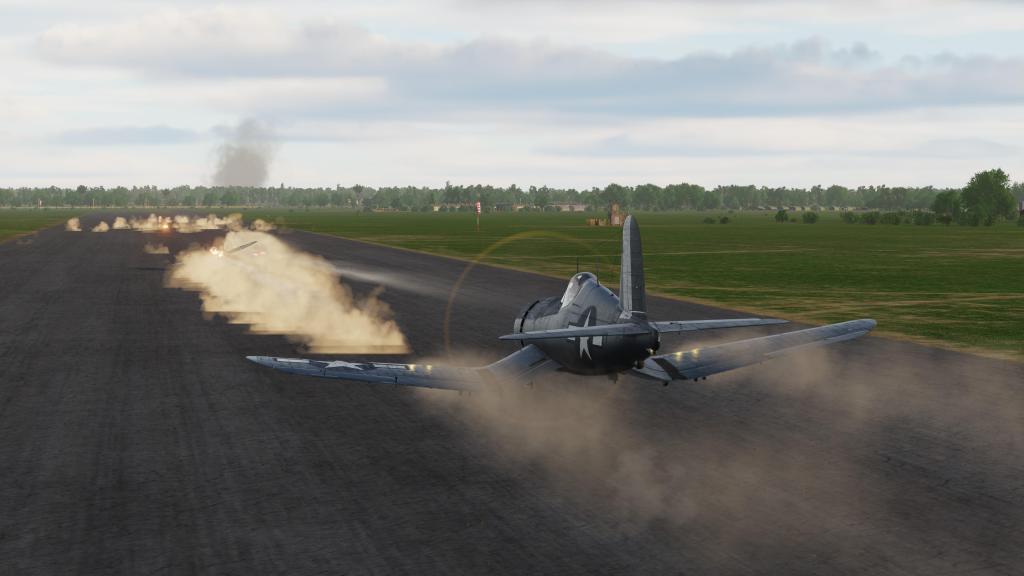
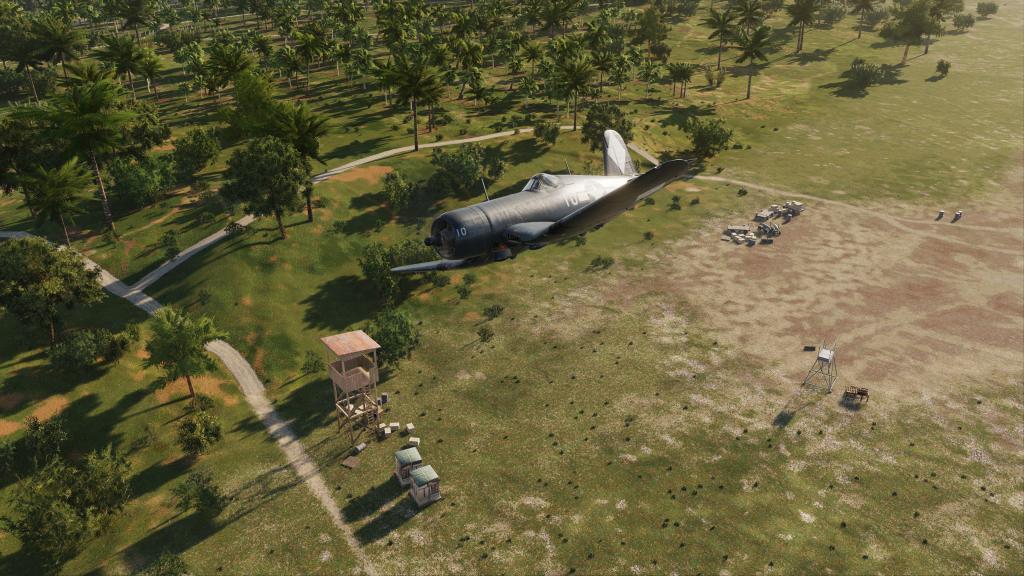
Screenshots






 Stormbirds
Leave a reply to CanadaOne Cancel reply