
PMDG have just recently updated their Boeing 777 line of aircraft and I thought it was a great time to fly it and see if I noticed any differences. And even if I didn’t, I have a lot of housework to do and a long distance cruise (with a bit of time compression) seemed like a great way to be productive in a bunch of different ways! Such is the life of a long haul flight sim flyer. So I loaded up a flight from Philadelphia to San Jose with the 777-F and off I went!
Back in the seat
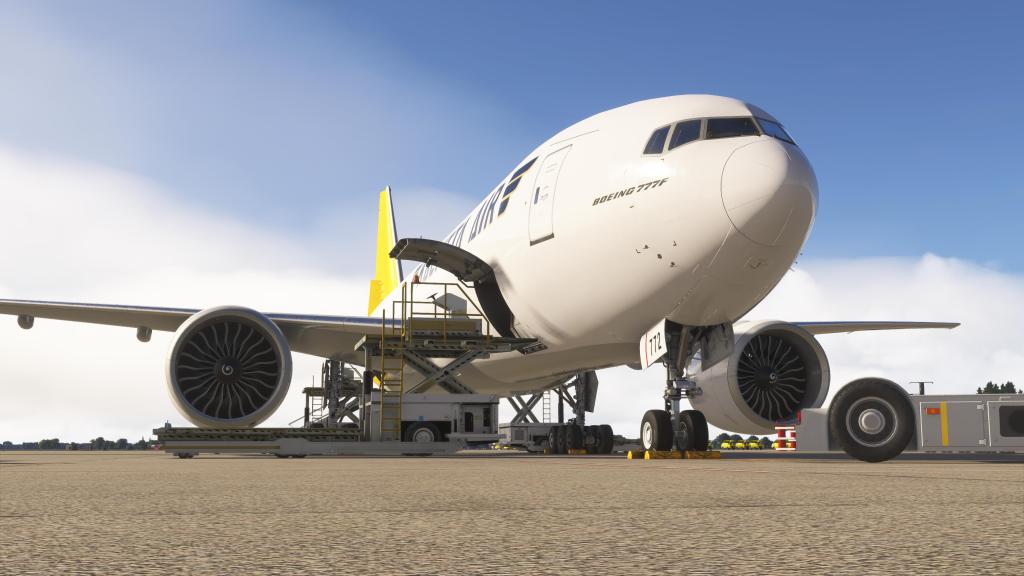
It’s been several months since I last flew the PMDG 777. I flew it quite a lot, more than I thought I would, after getting it but then I got distracted by dozens of other things and I got away from it. It did take me a bit to get back into the flow of things (case in point: forgot to hit the ADIRS button until well into the process and then had to redo some of my setup with the nav alignment).
After getting to grips with everything, I got permission to pushback and started up both engines.
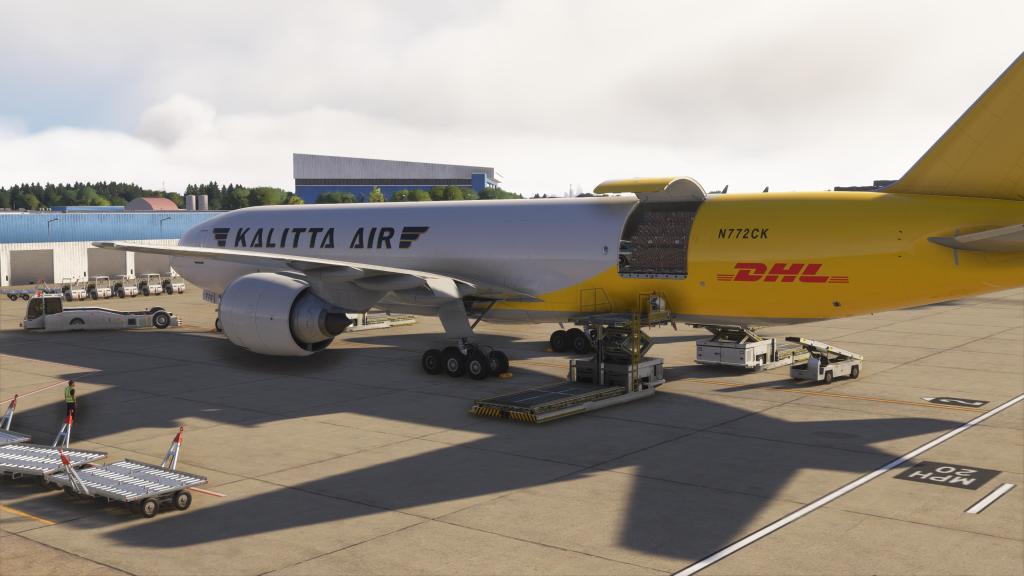
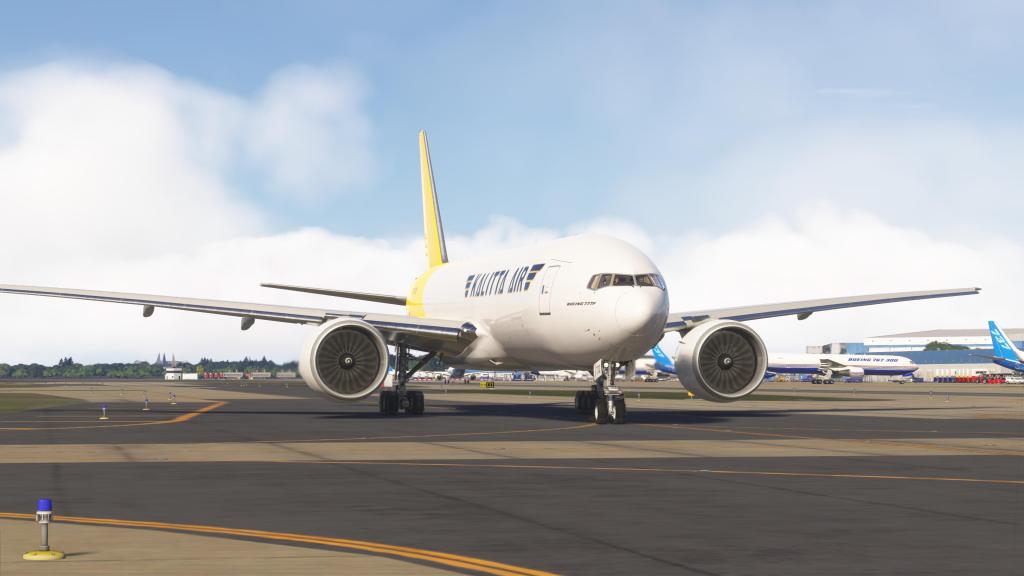
The 777 automates so much about that process that it is quite easy to do that part.
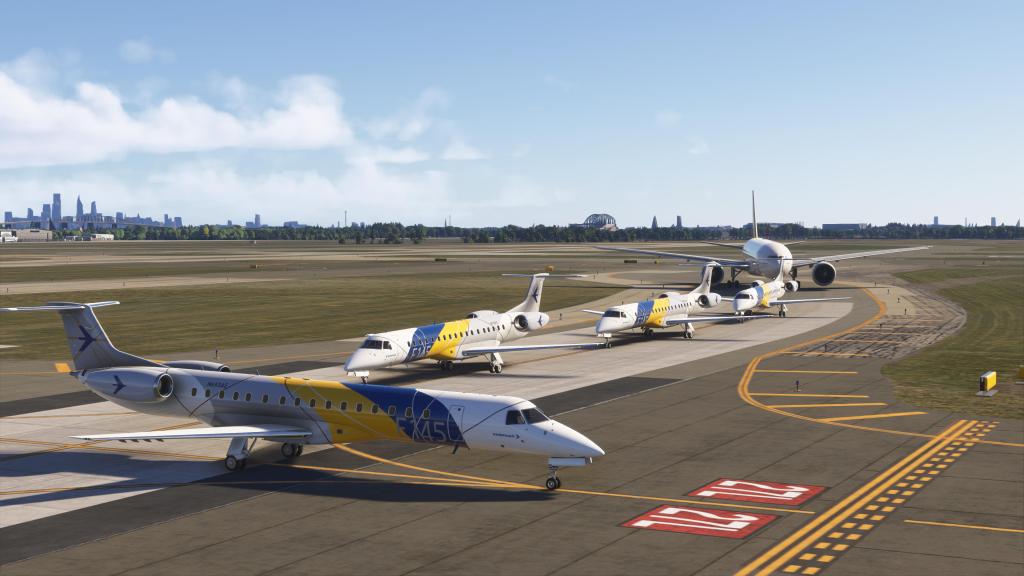
Taxiing over to runway 27L did involve some MSFS AI traffic getting into a bit of a congested pattern. This is adequate separation yeah? Mmmm maybe not?
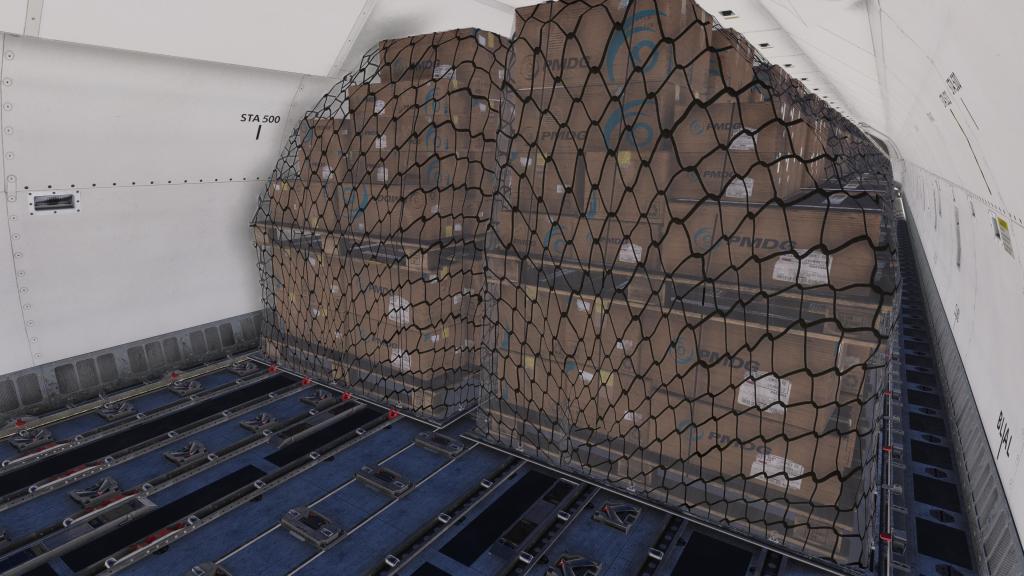
Takeoff comes quickly in the 777, even with a full load of cargo in the back, as those GE90 engines deliver their rated thrust.
Climbing up to our initial cruise altitude of FL340 took only a few minutes and then we were cruising.
Cross the continent
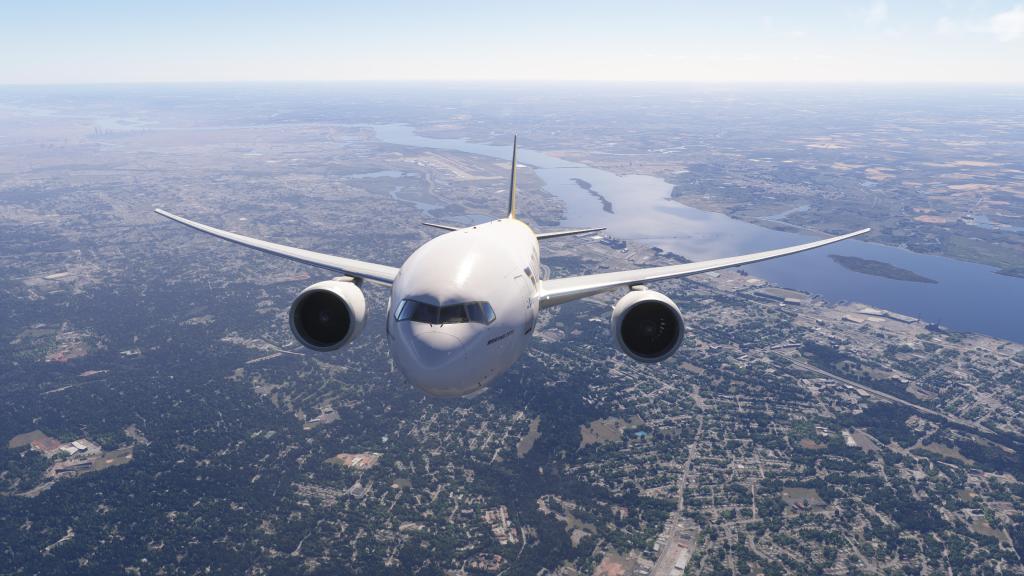
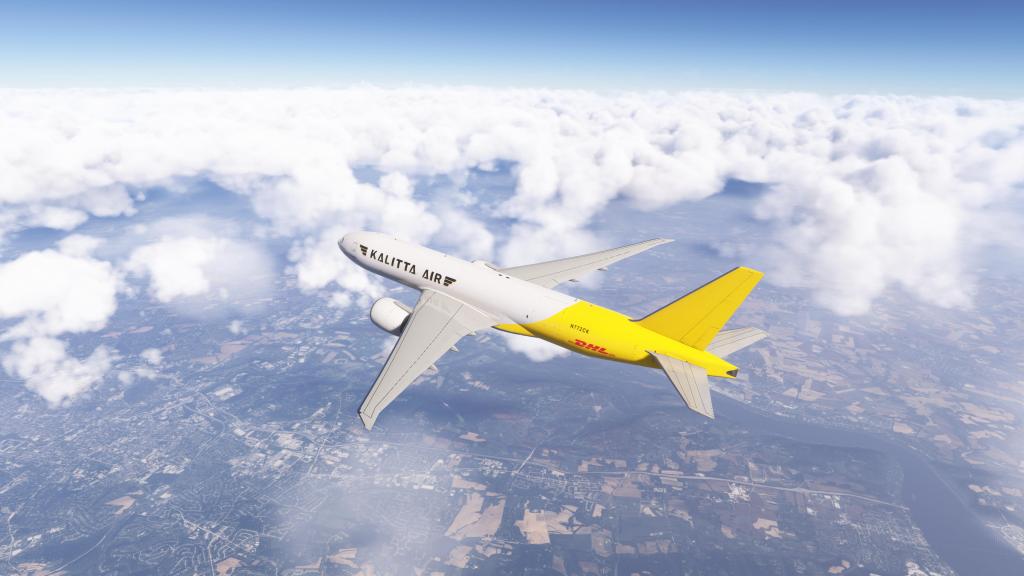
It’s spring time in North America and that means clashing airmasses and thunderstorms and severe weather. The first indication of that was turbulence as we cruised westwards over Pennsylvania. This was mostly a subtle shake but when you engage time compression it gets a bit more wobbly – the PMDG 777 still has one of the best time compression experiences around but throw the unpredictability of live weather into the mix and it shakes around a bit.
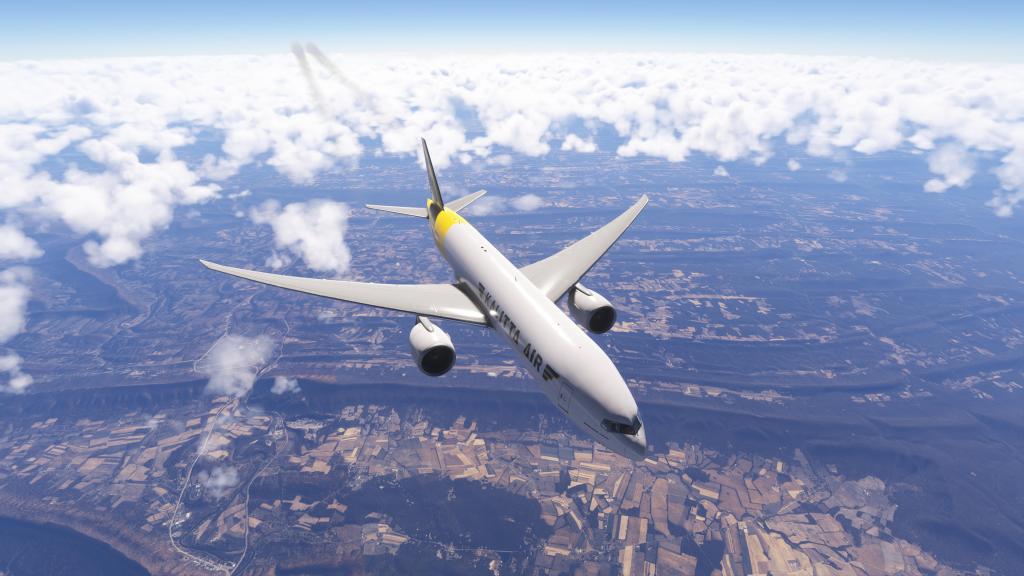
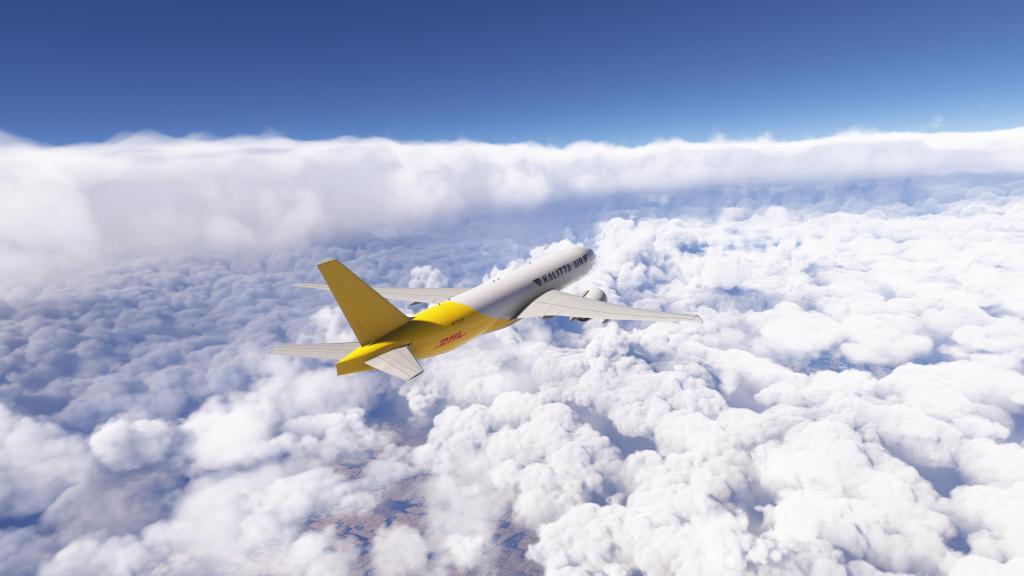
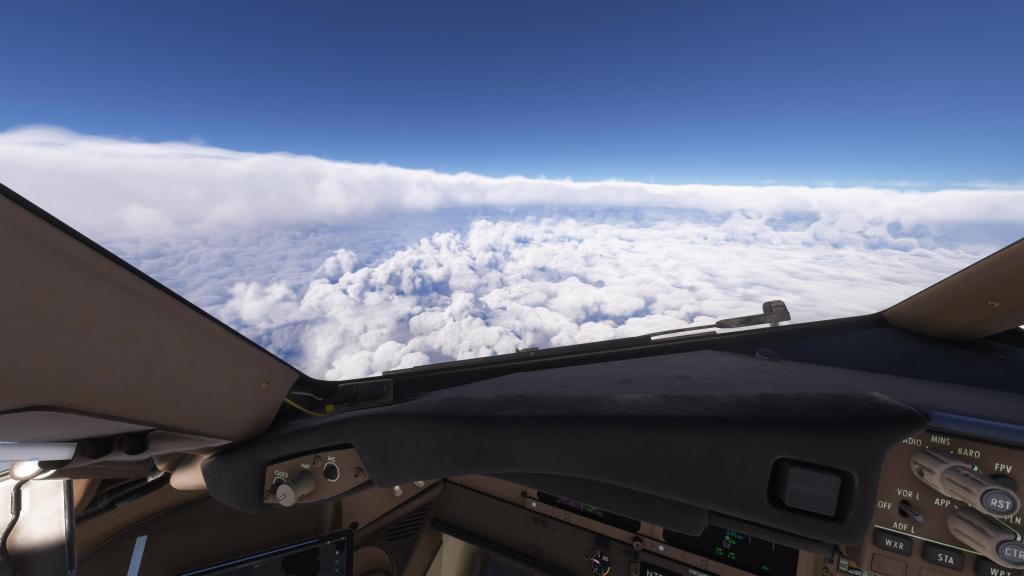
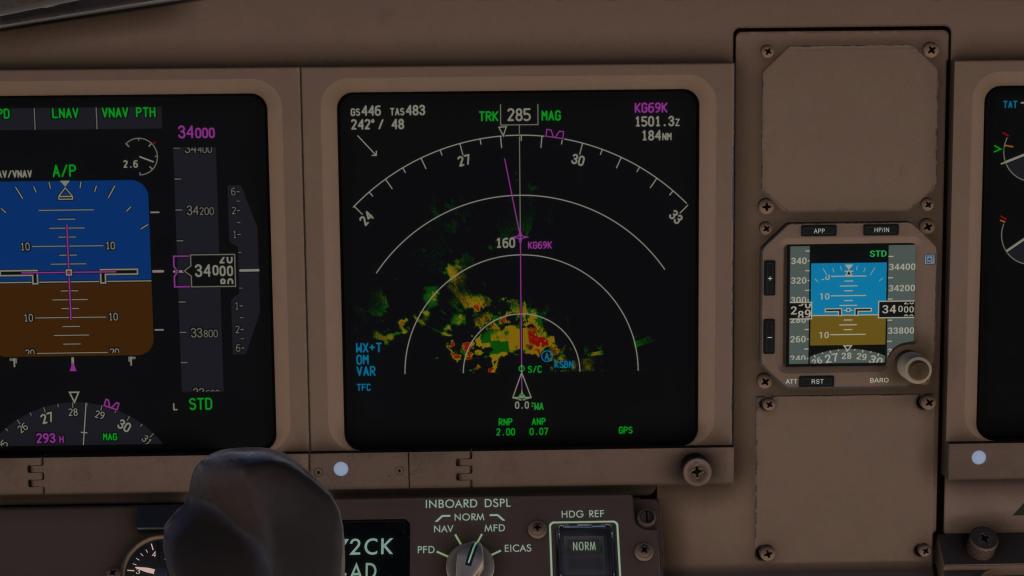
As we approached Chicago area I ran into a frontal boundary. Weather radar indicated heavy precipitation beneath us and I requested and received a cruise altitude increase to FL360. A few bumps of turbulence as we crossed over the front was all that I noted and then on with the flight. It did make for an impressive visual!
Cruising high over Des Moines, Iowa, precious few breaks in the clouds let us verify that Earth was indeed still down there. Low overcast cloud cover dominated this next part of the journey.
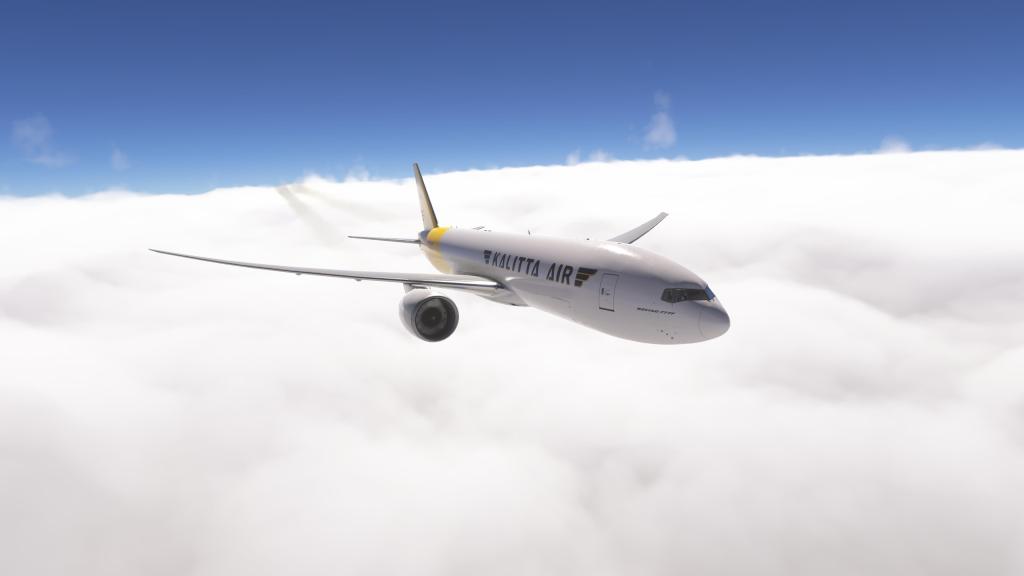
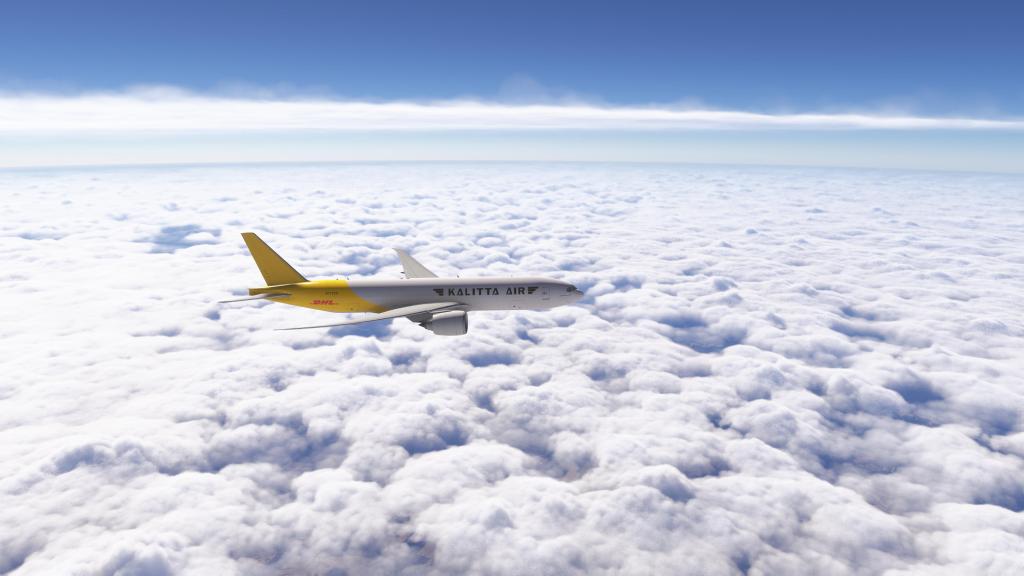
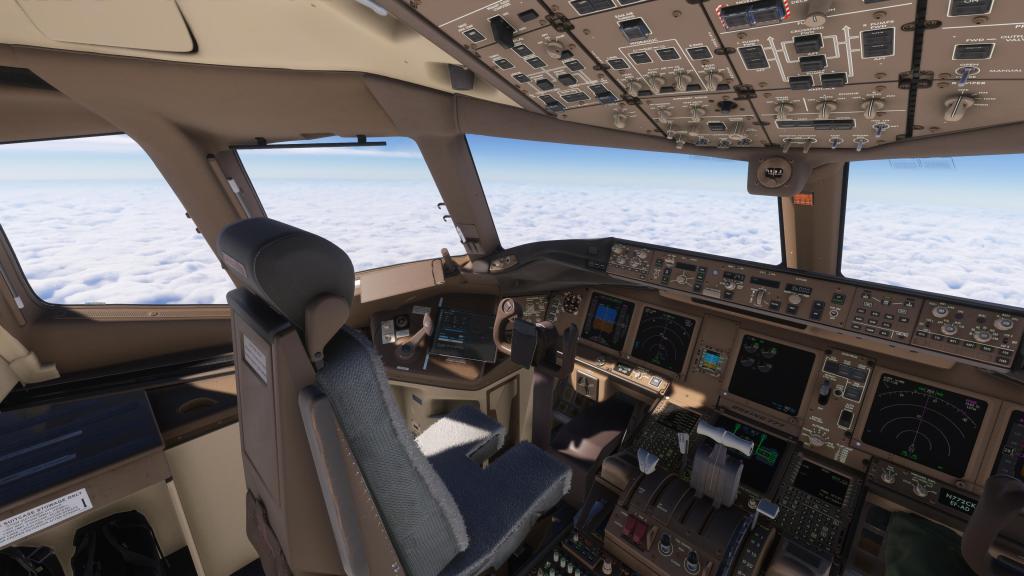
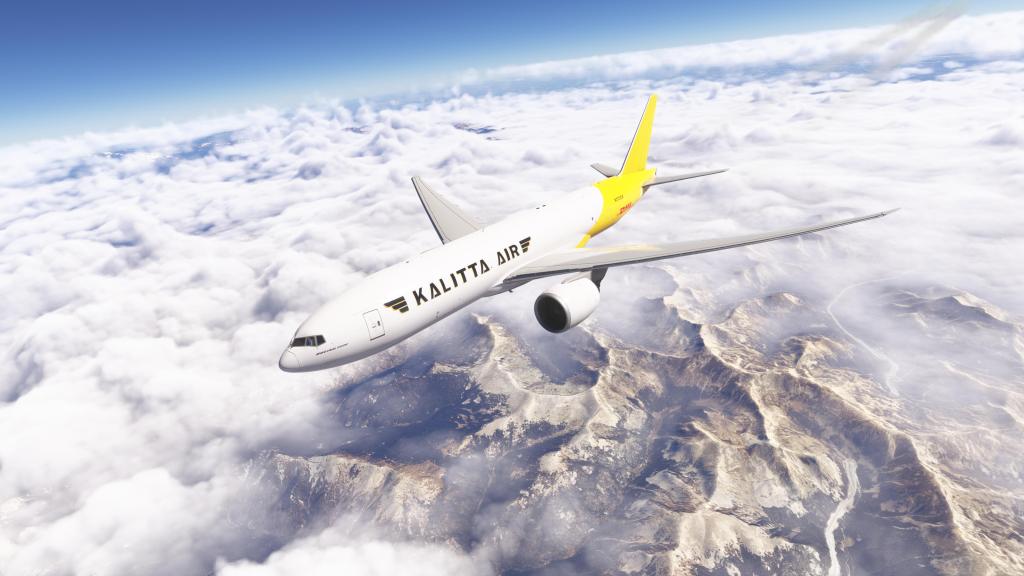
We didn’t see any real breaks in the clouds until Denver at which point the mountains started to break things up.
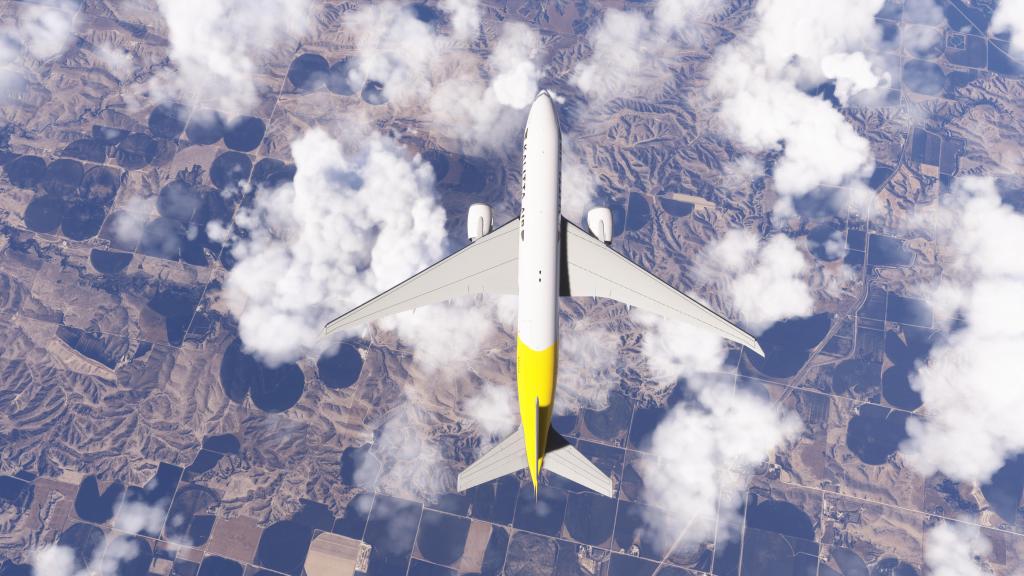
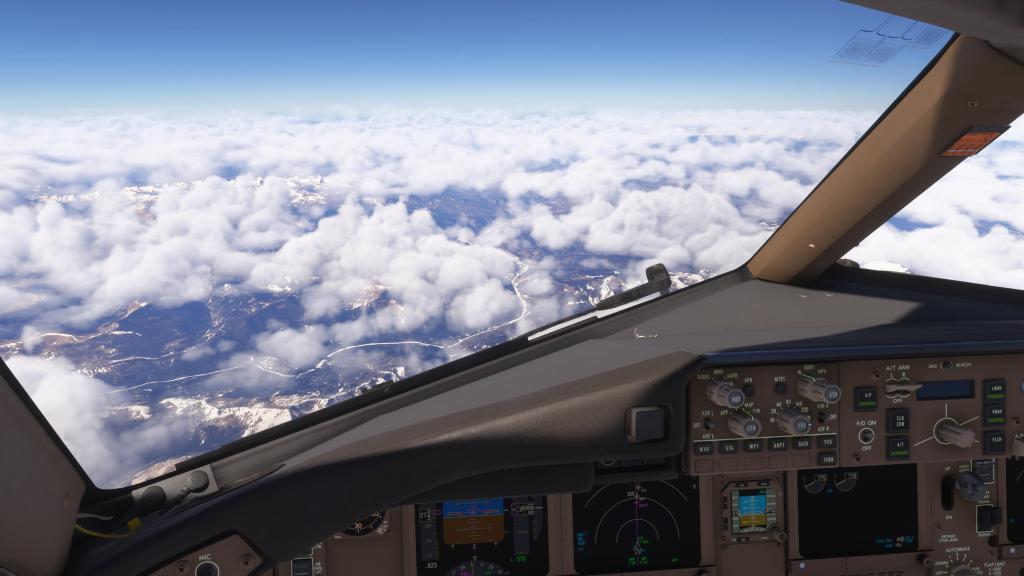
And then we entered into a very different airmass. Dry, clear skies as we crossed Utah near Moab.
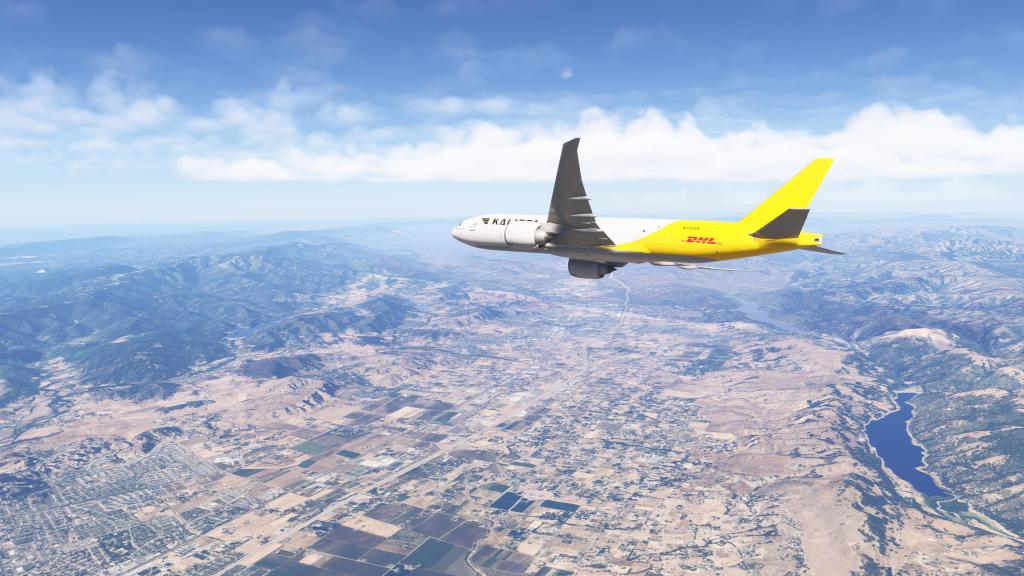
For the next couple of hours it was a cruise across desert terrain and clear skies. The ruggedness of it all really coming into view as we reached top of descent and began to drop altitude flying over the Sierra Nevada mountain range. These are some of the nicest and most detailed mountains in the sim (not all mountain ranges are rendered equally) and they are well worth some exploring time.
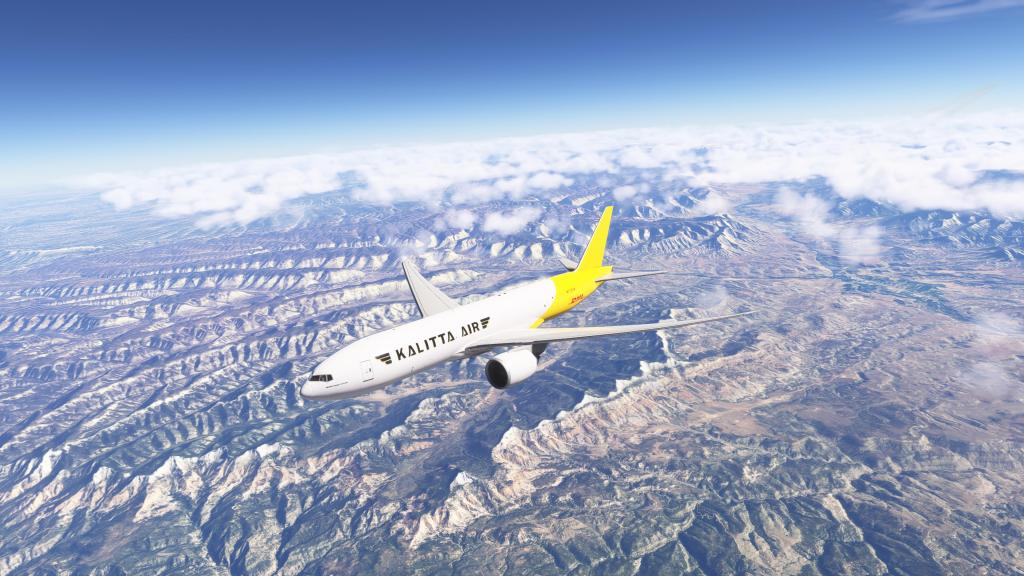
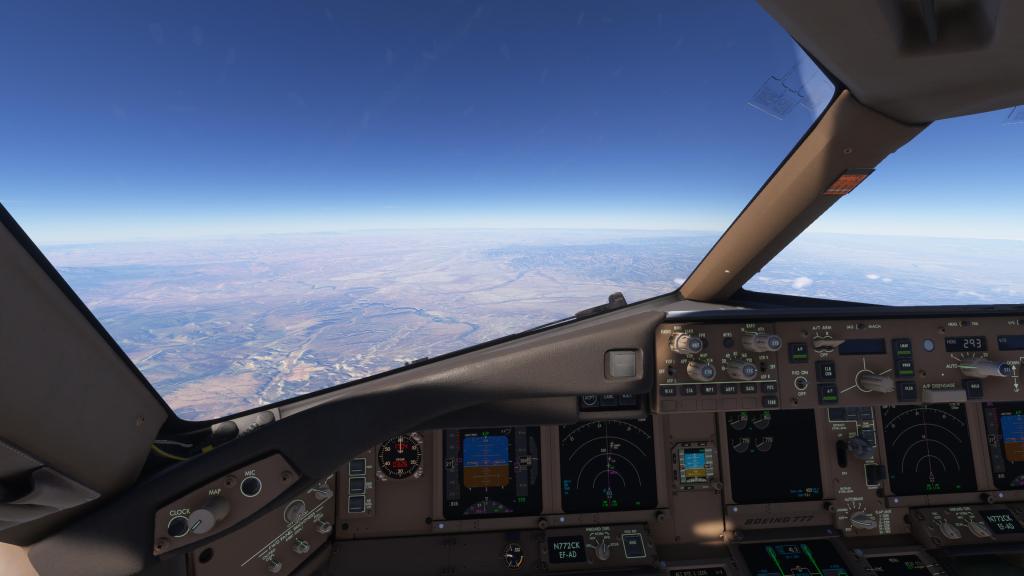
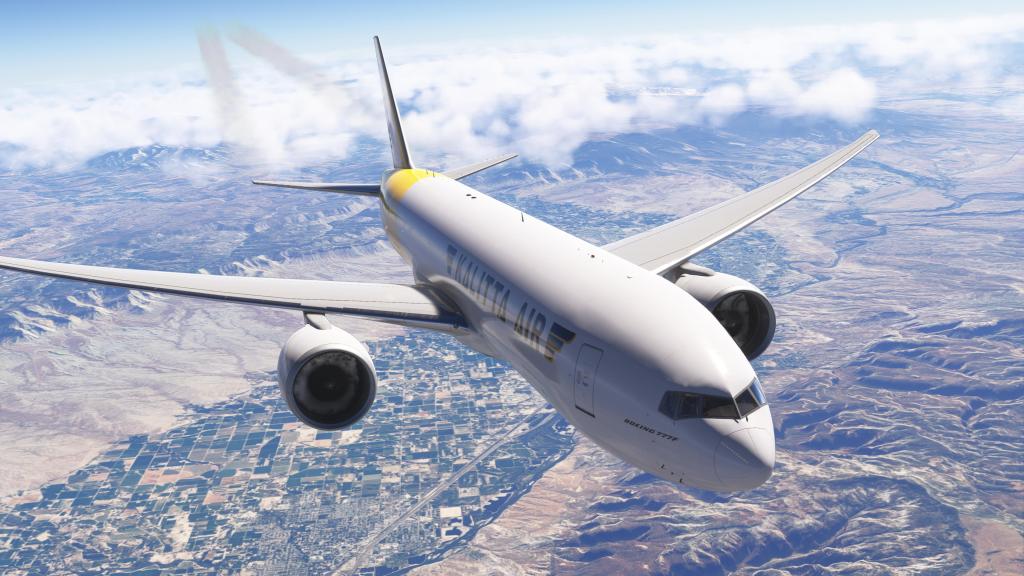
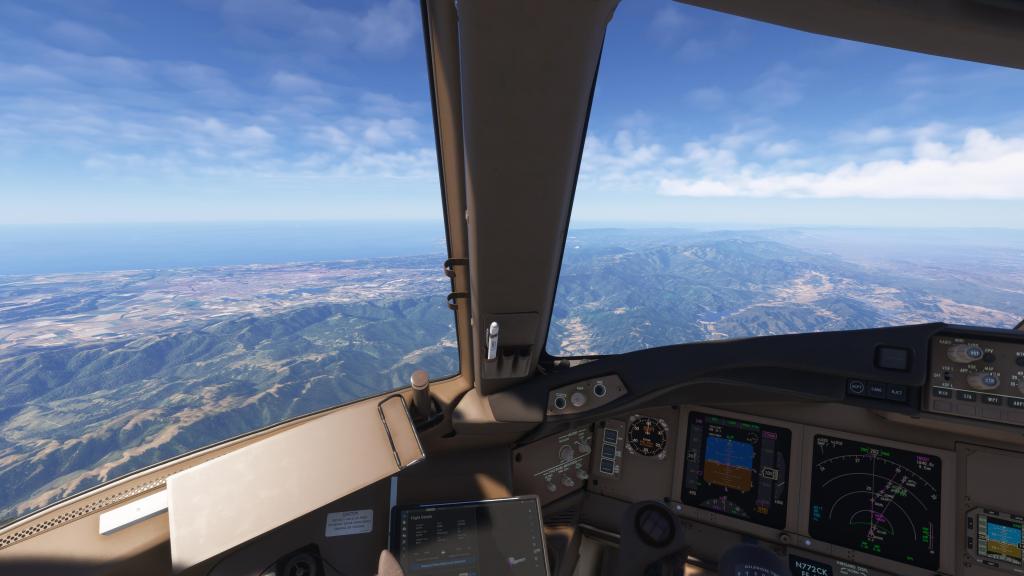
Then, almost suddenly, the Pacific ocean appeared ahead of us and we began maneuvering for final approach into San Jose’s Runway 12R.
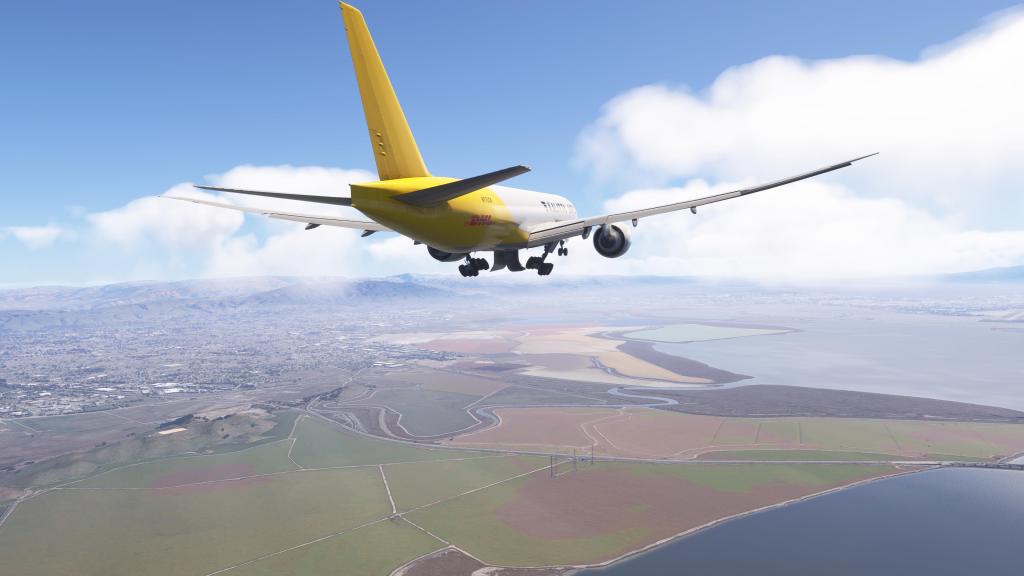
In true fashion, I was a little high and fast for the initial approach so I had to extend my turn halfway down the bay but once that was settled, I got the aircraft set for a nice approach into the airport. San Jose is a bit of an interesting approach flying in over the salt ponds and because Moffett Field is not too far off of the course for San Jose Mineta International and I wonder how many flights have, in low visibility, mistakenly landed there over the years.
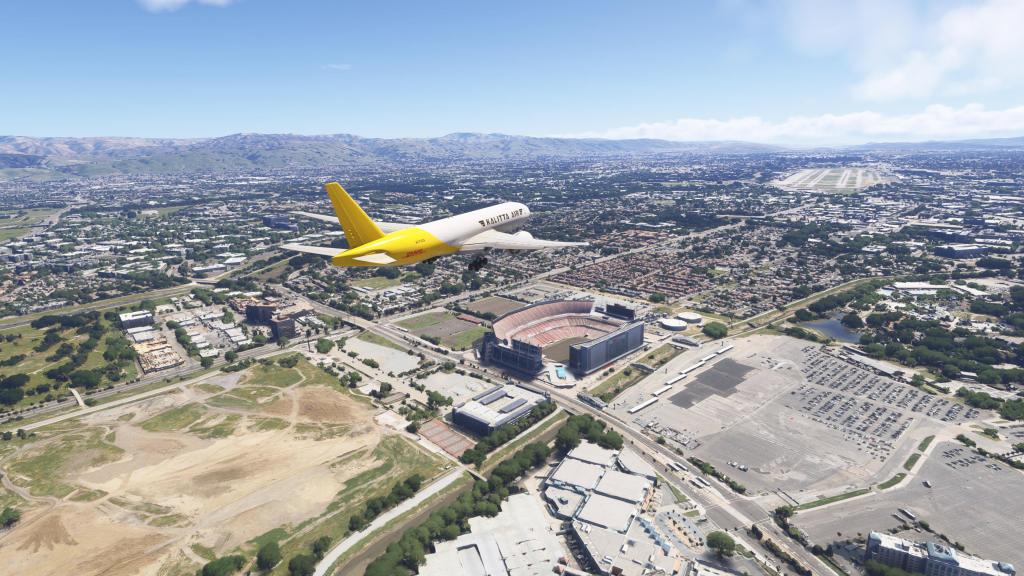
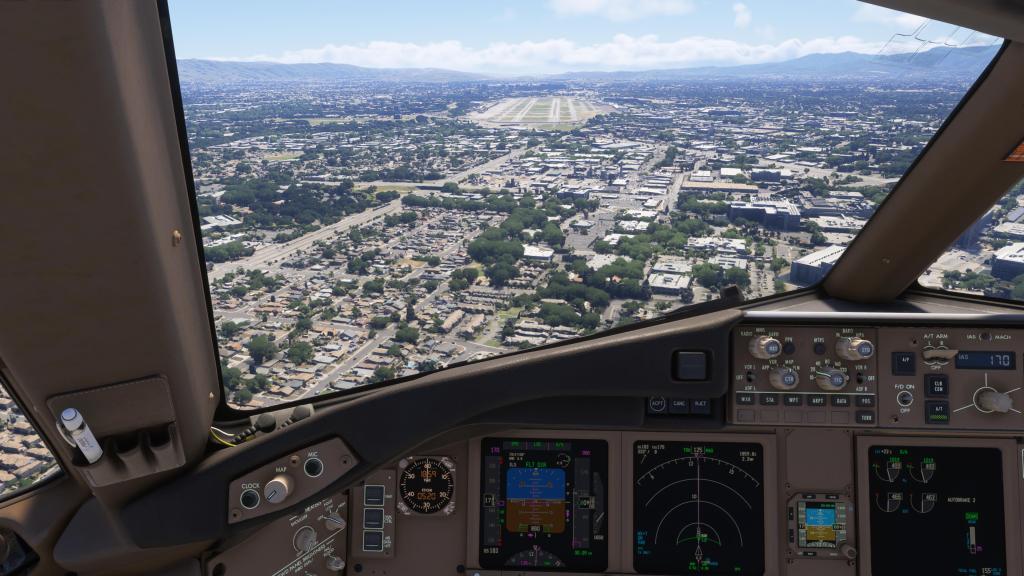
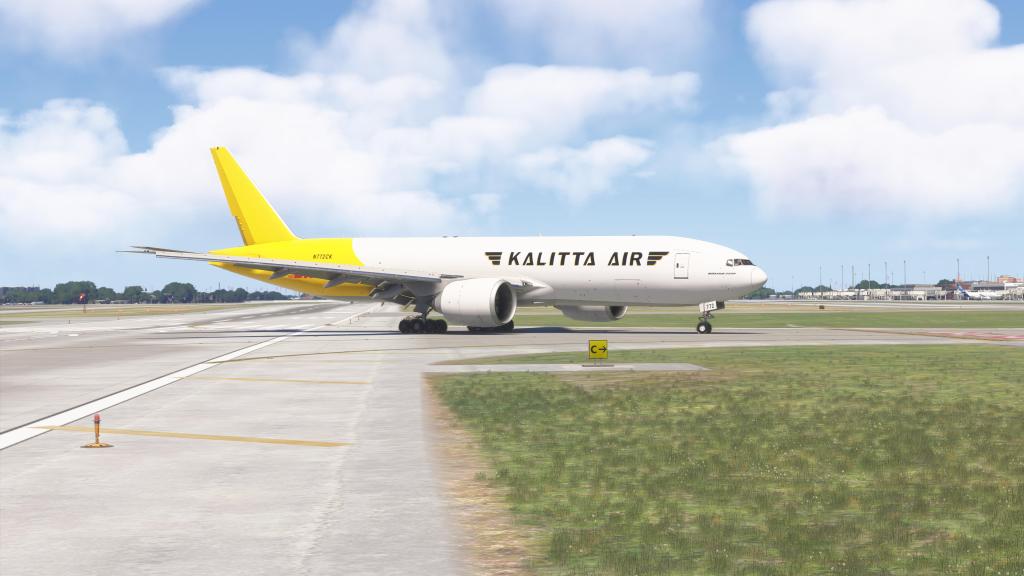
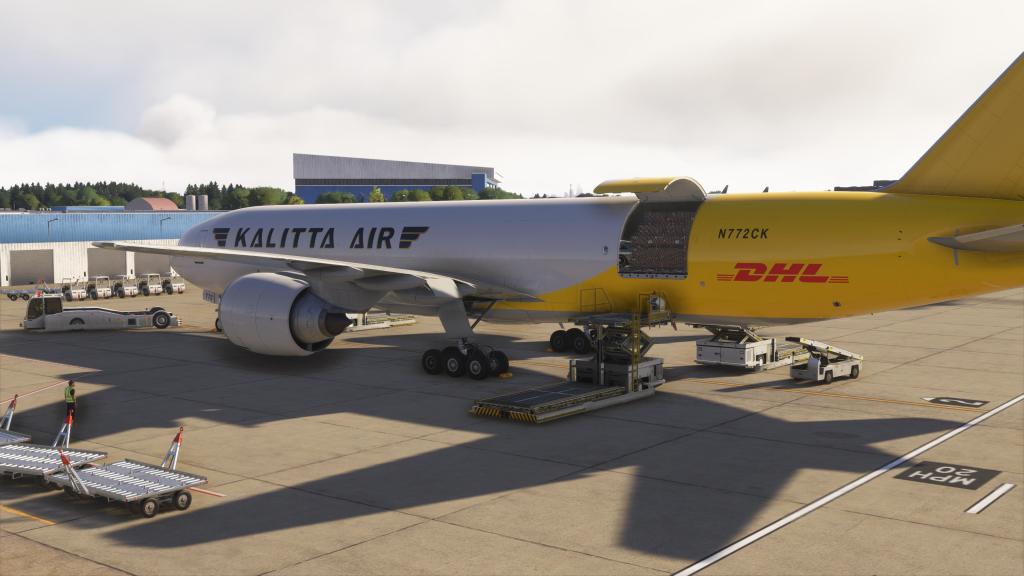
For not having flown the 777 in quite some time, my touchdown was really good and taxi was uneventful.
With 4X time compression and some serious housework to do, this cross continent flight was doable in just a couple of real world hours. Meanwhile I got a lot done so this journal was productive in more than one way. Perhaps its time to really stretch the 777s legs and queue up for a truly long distance flight? Something to plan for in the future.
Did I notice a lot of difference with the updated fly-by-wire system? I can’t say that I did. Hand flying it still feels good, it feels natural, and so whatever tweaks they were making were imperceptible to me. The rest of the aircraft performed brilliantly as always so its also good to not see any sort of regression. Still one of the best widebody airliner or freighter experiences around!


 Stormbirds
Leave a reply to Ghost Cancel reply