
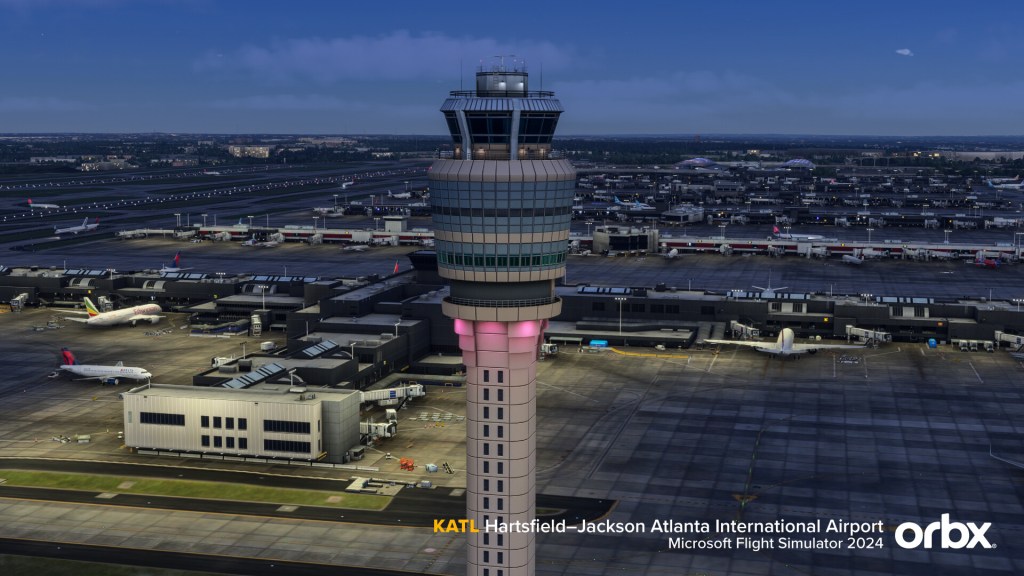
It’s been a while since we’ve last had a major DRM (digital rights management) controversy in the flight simulation scene, however, we’re setting the count back to zero today after it was revealed that Orbx was planning to ship KATL Hartsfield-Jackson Atlanta International Airport with an external DRM solution. We’ll break down the difficulties and how Orbx has responded.
DRM, highly anticipated scenery, and you
KATL has been highly sought after as a major US airport hub not yet fully realized by scenery developers. Initial reviews from content creators (mostly streamers) showed off an impressive scenery for the airport and that had a lot of fans quite excited. That has turned to significant disappointment across multiple forums, Reddit groups and Discord communities as it has been revealed that a unique DRM solution is being shipped with it.
So what has happened exactly? Orbx install instructions for KATL have revealed to include a note instructing users to navigate to their community folder and run “L3SimGuard_Launcher.exe.: The DRM then asks for a key to be input and for the software to run to enable the Atlanta scenery to work.
DRM software has been contentious since the earliest days of its introduction. It has blended into the background with some well established platforms while continuing to be a significant problem for users in others.
One particularly ugly chapter that remains in users memories comes from several years ago when FSLabs shipped a DRM solution that, depending on your read of it, was wrapped with what amounted to malware. A great summary of the statements and situation there is available here. The controversy has stuck around with long standing members of the flight sim community bringing up the situation half a decade and more later.
The situation with Orbx, Matteo Veneziani the author of the scenery itself, and the DRM developer Axel, is not exactly the same but it has brought many of the same issues and feelings forward and FSLabs has been mentioned frequently in discussions. Memories are long!
We did get a statement from Matteo on the situation talking about the challenges of having work pirated.
I’ve listened to everyone’s feedback and took some time to think about it. Please understand that I come from a position of having had my work stolen for many years which is a cause of extreme frustration for me, just like I understand you were frustrated today. I’ve been offered a potential solution to a problem that has been affecting me for a long time, and I believed in it. That being said, I don’t want my battle against piracy to negatively affect the legitimate customers who support my work. I’ve also read your concerns about security, and that’s a valid point. Give me a few hours to talk to Orbx about the situation (it wouldn’t be fair of me to decide without involving them at all), and we’ll make an announcement before release.
I certainly empathize with Matteo on working hard, for years in this case, on a product only to see pirates distributing it for free and without any compensation for the original user. It’s a problem of course and disheartening for the developer
We also saw a statement from the DRM developer who wrote the following on the Orbx Discord:
Hey, I’m Axel, the developer of the DRM solution used in the upcoming Orbx KATL Atlanta scenery.
I know there are quite a few questions and concerns about it right now, and we’re currently working on a proper FAQ that explains how everything works in more detail.
You can probably imagine that it’s frustrating for developers to spend years creating a scenery, only to see it pirated within hours of release. The DRM is intended to help protect that work while keeping the experience for legitimate customers as seamless as possible.
In the meantime, if you have any questions, concerns, or things you’d like clarified, feel free to ask here and I’ll do my best to answer them or include them in the FAQ.
Best regards,
Axel
It was followed up with additional clarification that the DRM was coded using an AI-assisted coding solution and that the developer has 5-semesters in computer science completed to date.
What really set off alarm bells, however, was word that the DRM required Kernel level access to the system to function. This is on the same level as Windows and some hardware drivers. It’s not entirely foolproof either as other Kernel level DRM has been compromised in the past.
The whole situation, playing out largely over the last 12-hours, appears to be at an end for now with Orbx announcing via forums and Discord that the company will not be moving forward with this DRM.
We WONT be moving forward with it. DRM will no longer be included.
Sante (Orbx)
That is encouraging and users have expressed some relief while others are expressing significant trepidation at buying anything right now suggesting that they will take a wait and see approach.
Fighting piracy or hurting users?
This news and discussion warrants some editorial as well and so we transition now from the news to a more editorial stance.
First, I really empathize with developers who work hard on their products only for it to be stolen and shared for free. Many developers depend, at least in part on revenues from their products to put food on the table, pay mortgages, and preserve livelihoods. I consider myself a staunch supporter of developers that aim to do right by their users and produce solid products. I want to see them succeed and get compensated fairly.
At the same time, I’m primarily a consumer of flight sim content and I want to see consumer friendly offerings and solutions to any number of product categories. Heavy handed solutions for DRM have traditionally not been seen kindly by the flight sim community. And for good reason!
DRM software, especially one with such deep access to a system, can become compromised exposing user information and personal data to scammers. This is not theoretical as even larger developers with regular software updates and dedicated and trained internal software development have seen DRM and anti-cheat solutions broken or even compromised (see the 2005 Sony BGM Rootkit scandal for one of the most famous examples).
When I hear that what appears to be a solo dev with more limited experience dipping their toes into this without the kind of backup and support needed for ensuring consistent long term support I have to simply say no, that’s too much risk.
There’s also been much written in the past about what DRM is really doing. DRM will nearly always be defeated by dedicated software pirates who will find a way around it and then distribute the software (scenery assets in this case) within their circles. The folks who intend to benefit from that were not likely to be paying customers in the first place. And so I ask ask if it is preventing piracy or is it just unnecessarily increasing risk for legitimate and paying customers. I think it increases risk with little if any actual benefit.
More to all of this, previews of the scenery had already been distributed to content creators in the last week and it doesn’t appear that any of them were aware of what was planned which makes the whole thing appear a little bit sneaky. True intent or not.
Orbx has reversed course, however, other developers and storefronts may attempt to do something similar in the future. So, what I want to see is a little more upfront transparency from storefronts on their use of DRM, how invasive said system might be, and continued questioning from the community on if some of these more invasive measures offer any benefit to legitimate consumers or the developers that they support.
It remains to be seen if Orbx have suffered any long term reputational damage the way that FSLabs has continued to wear, years later, but it strikes me as a not entirely thought through effort given the past history. Flight simmers are dedicated folks with long histories and who are quite willing to make their concerns heard and heard loudly as we saw again today. Time will tell if any real fallout will result.




 Stormbirds
Leave a comment