
Long time readers of Stormbirds know that I really fell in love with Just Flight’s F28 Professional. The classic airliner aesthetic, beautiful visual detail, great sounds, and great overall immersion have made me a big fan of the jet. It’s one that I keep coming back to time and time again. When Just Flight announced that the real world successor would also be developed, I was very intrigued and that day has finally come with the recent release of the F70 & F100 Professional. I’m not quite ready to do the full review as I’m still putting time in on the jet but I think its well past due that I put some early impressions in and share my general thoughts on the jet right now.
What is on offer and what is the value?
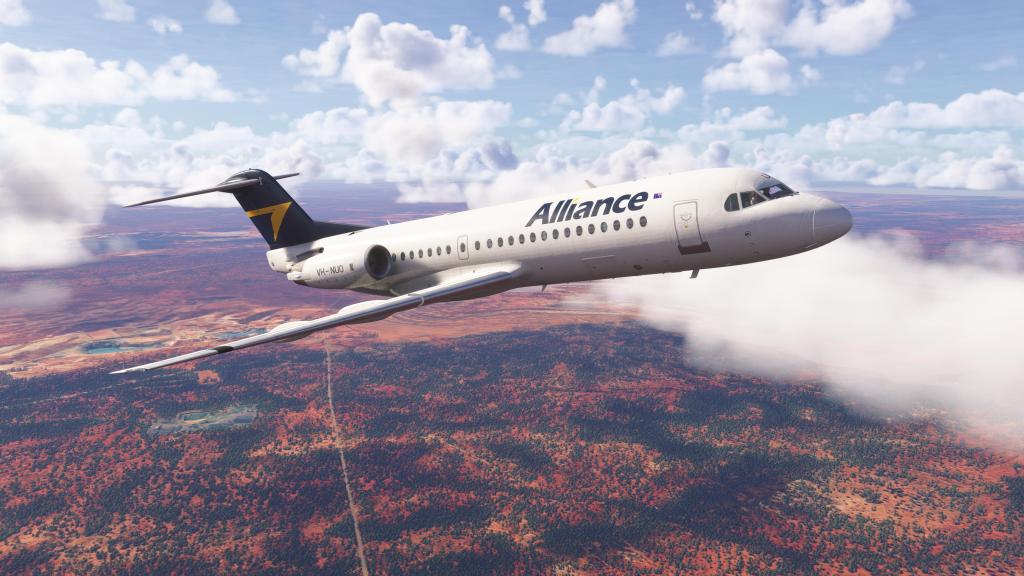

Just Flight have typically offered their jets in a singular package. The Avro RJ, the BAe 146 (related but somewhat different jets), the F28 and presumably the forthcoming A300B4. One presumes that the extended development cycle and complex modern avionics caused Just Flight to offer the F70 and F100 independently or as part of a bundle.
I’m not really noticing huge differences in how they handle or operate. They are there, sure, Just Flight have done a good job of that, but they are basically the same aircraft with little to distinguish except for having some unique operators and liveries on both.
Included with the F70 is just a single configuration while the F100 comes with a number of minor variations: 100 passenger with integral air stairs and a small cargo door, or the same with a large cargo door, or a sliding door version with a large cargo door or a 98 passenger version with an L2 door. While Fokkers had both Rolls Royce Tay 620-15 and 650-15 engines, so far only the 620-15 has been represented and Just Flight are looking into introducing the slightly more powerful 650 as well.
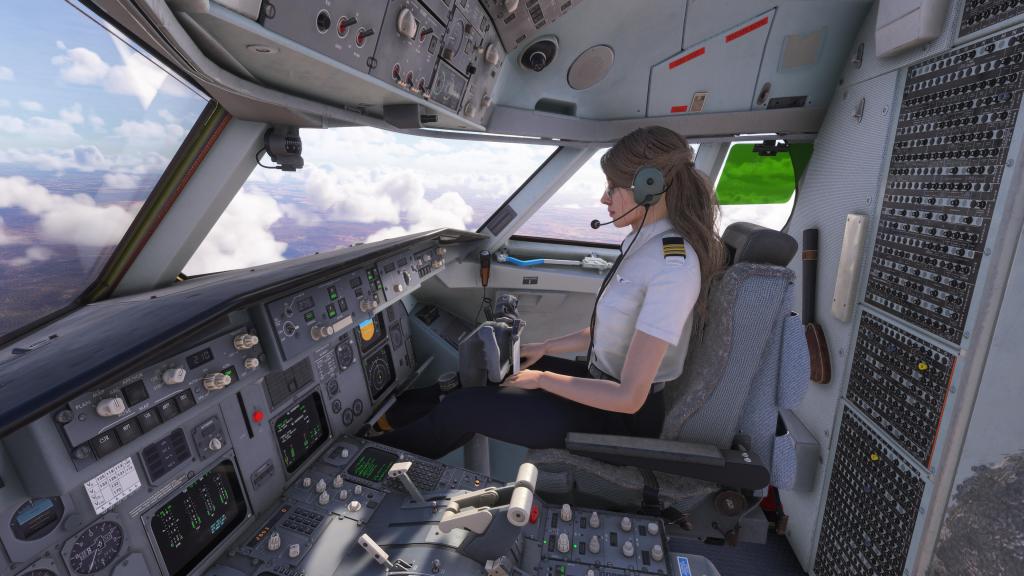
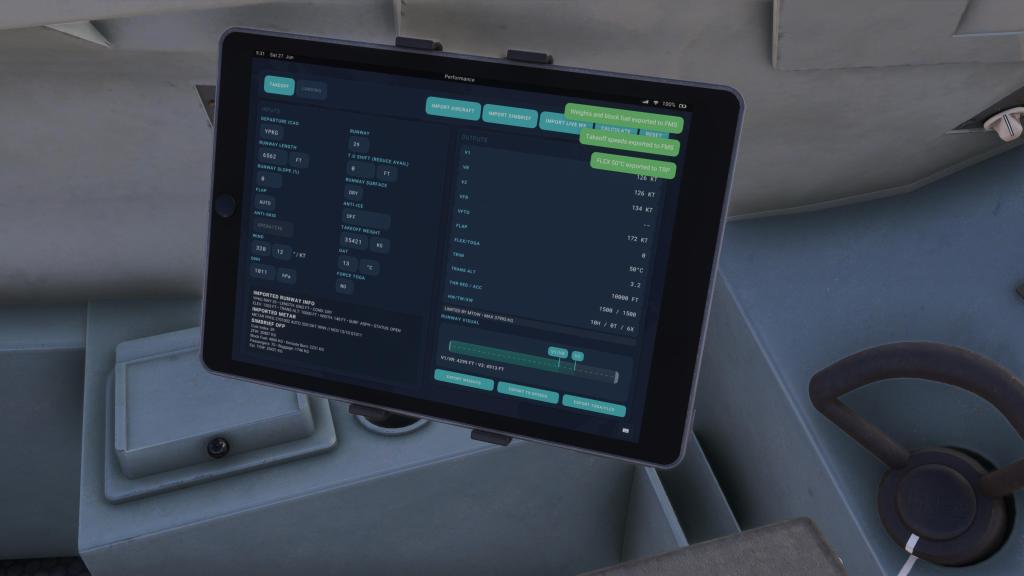
Features are extensive with a fully simulated series of systems, exterior model, flight model, custom coded engine and systems simulation, a fully featured EFB with the usual third party supports, etc. You can read the full feature list here but suffice to say that everything is here save for failure models and a really deep electrical model (it’s got one but it doesn’t go into every system).
So you can choose, if you wish, to buy just the F70 or just the F100 or buy them in a bundle. It’s $84.99 USD for both while their individually sold editions are $69.99 USD. For the $15 extra you get the whole experience.
The pricing is a bit awkward. Its reasonable in terms of its price bracket, falling roughly in line with PMDG, iniBuilds and Fenix Simulations, but the decision point between the whole package and just the one variant is a bit more awkward. Getting the whole package may not be entirely worthwhile unless you’re really committed. If you decide differently later, however, you would have to add the second plane for full price as there is no upgrade pathway – I kind of wish Just Flight would do that for folks who want to try one variant and then decide to go all in later.
How goes the flying so far?
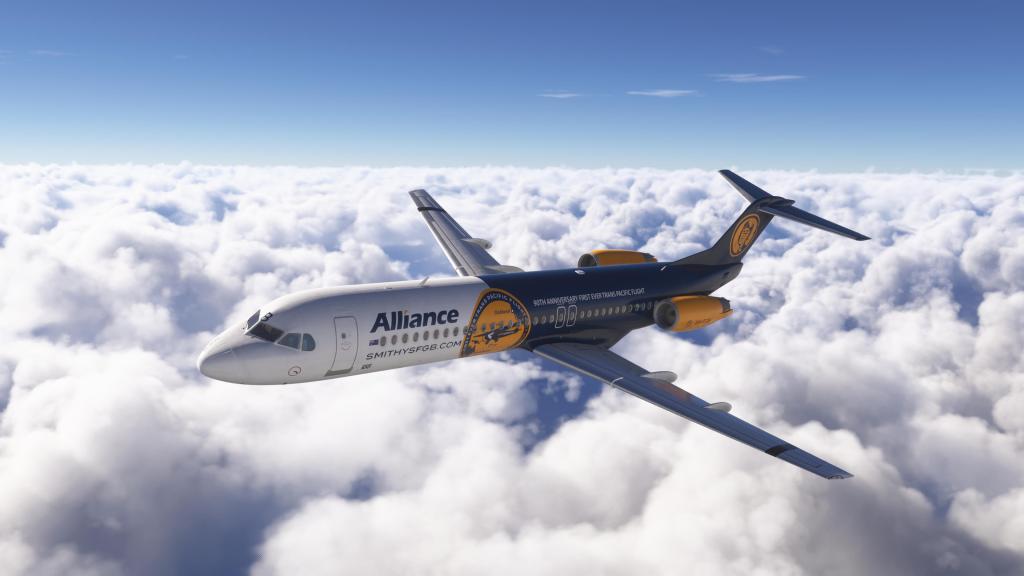
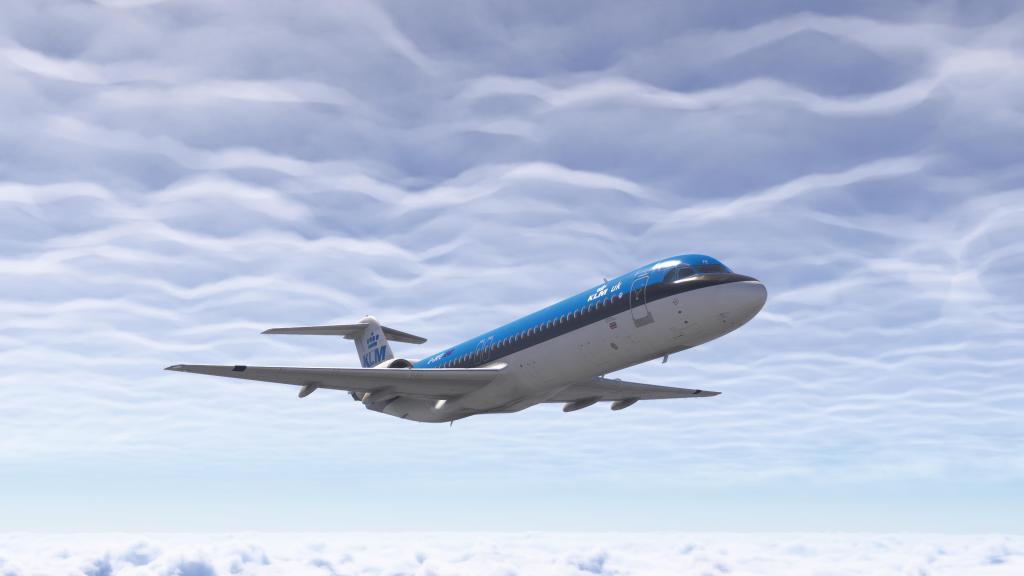
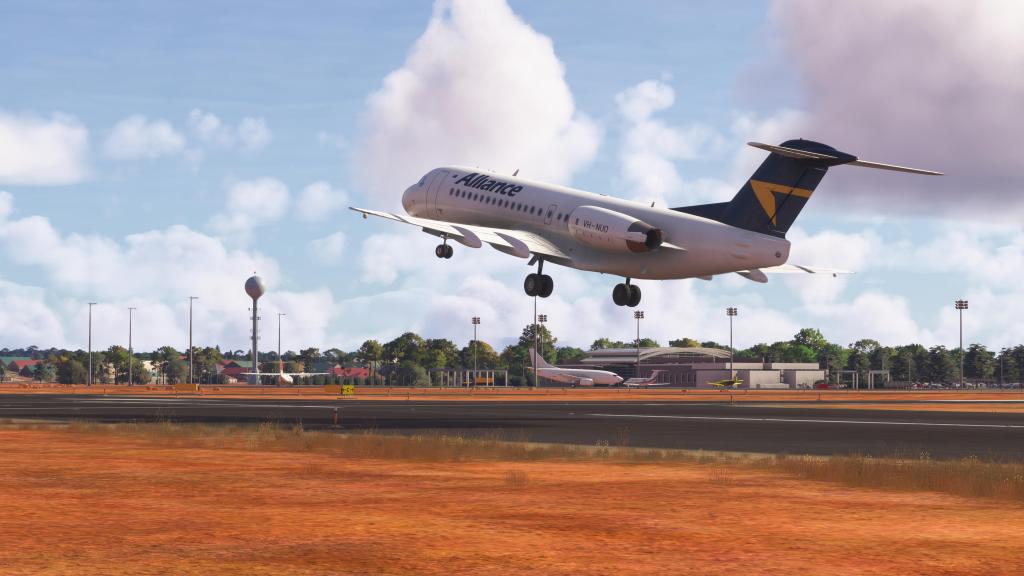
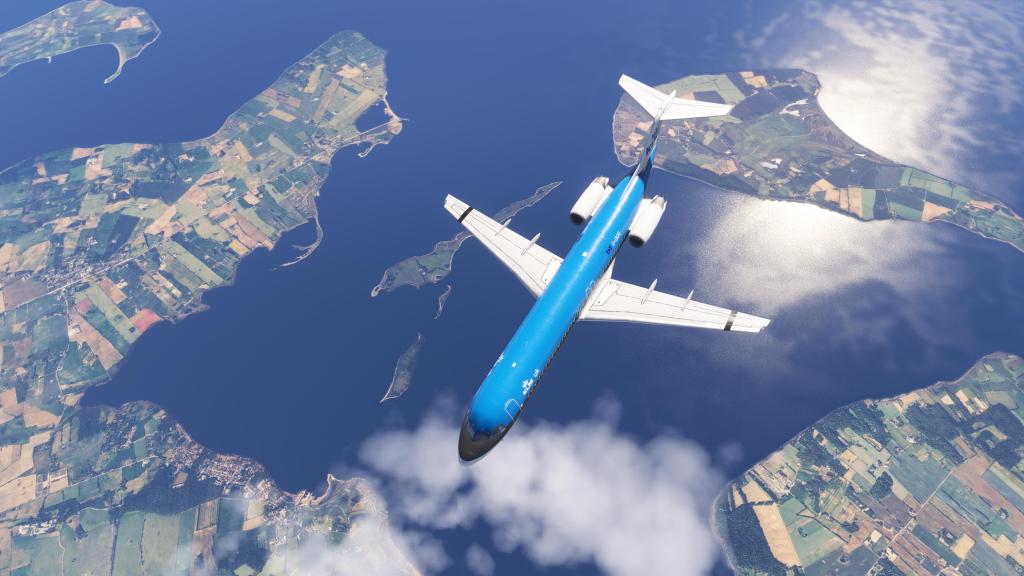
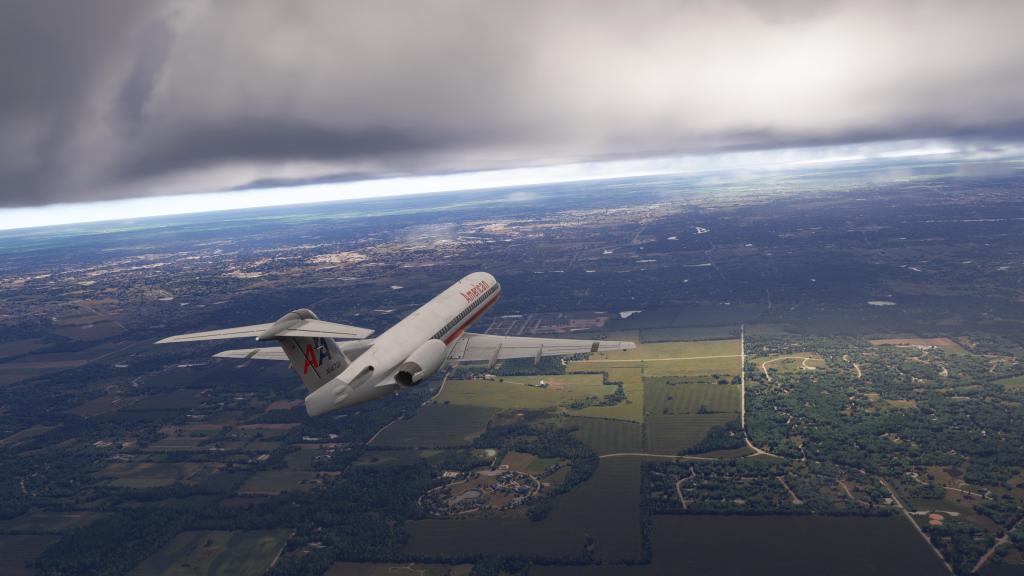
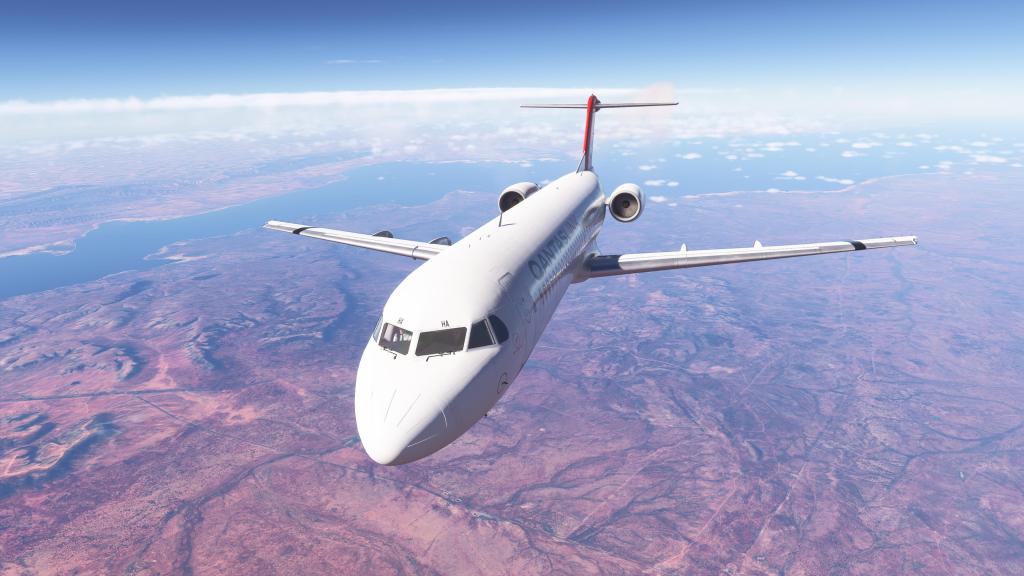
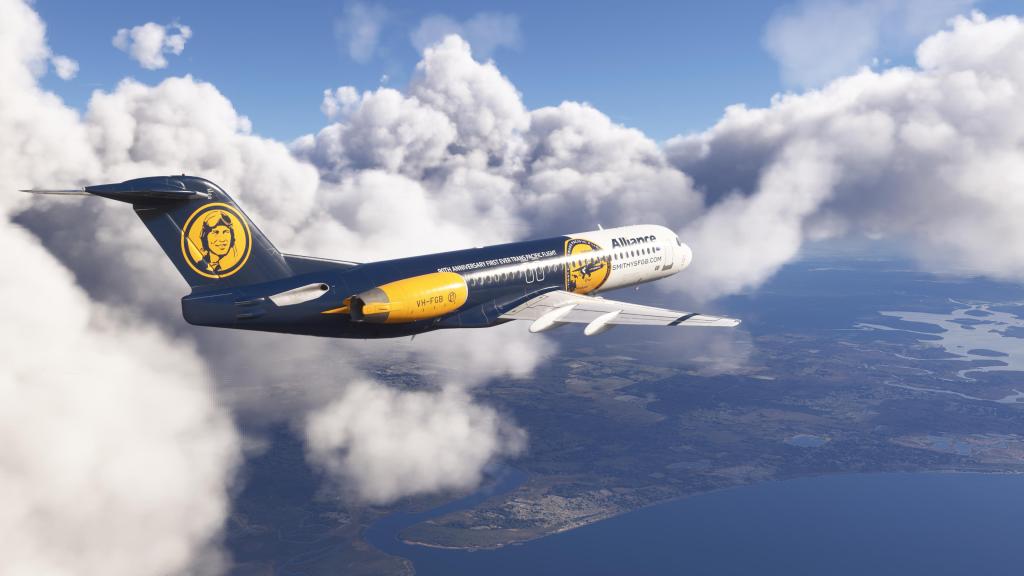
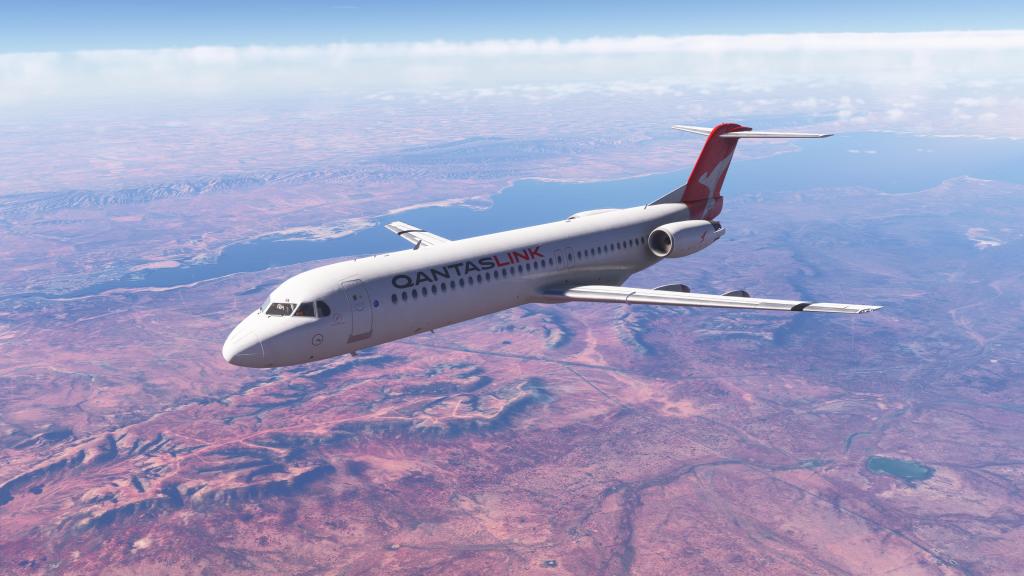
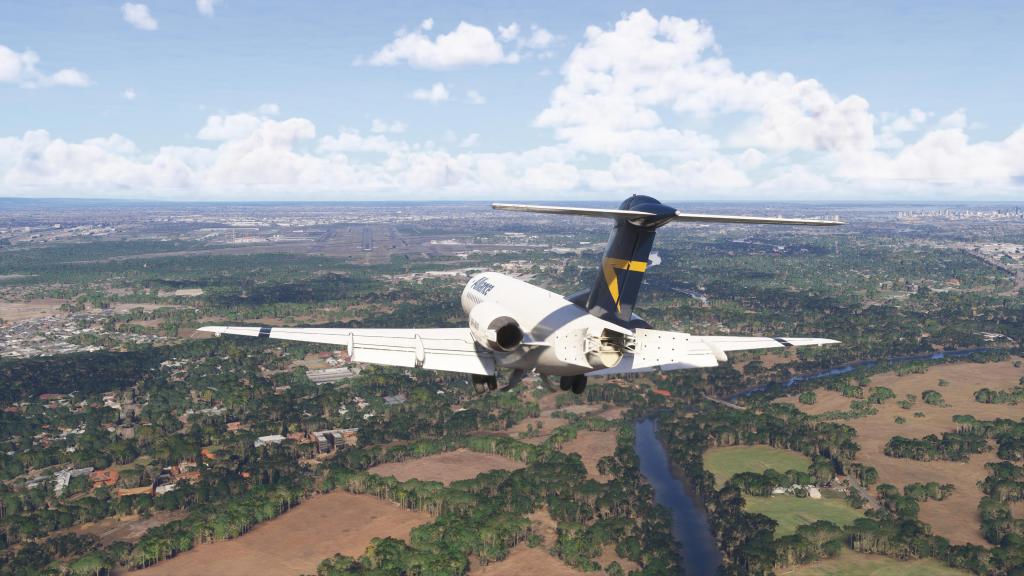
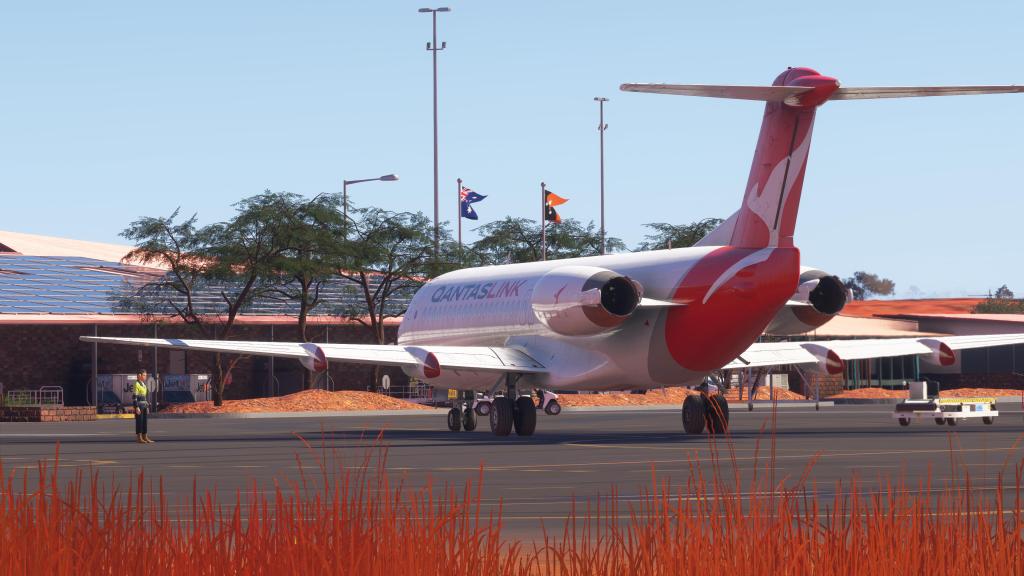
I’ve done a series of flights with the F70 and F100 so far. A lot of those flights have been in Australia where real world operations are still ongoing. I’ve flown to Adelaide and to Uluru (Ayers Rock) and I’ve done Brisbane up to Rockhampton. In Europe I’ve done a few KLM flights out of Amsterdam to places like Copenhagen and Manchester. In the US I’ve done some flights out of Atlanta as well.
Each flight has been a learning experience and I’m getting to grips with the systems on the jet. Time has been short so I haven’t done anything longer yet, however, I can confirm that it does 4X time compression well.
I have run into performance issues with this jet thanks to heavy VRAM usage. I ended up retweaking my texture settings to give a little more VRAM overhead so that the jet would run smoothly. While that was annoying, I think I’ve settled on an overall better setting for my system across all aircraft.
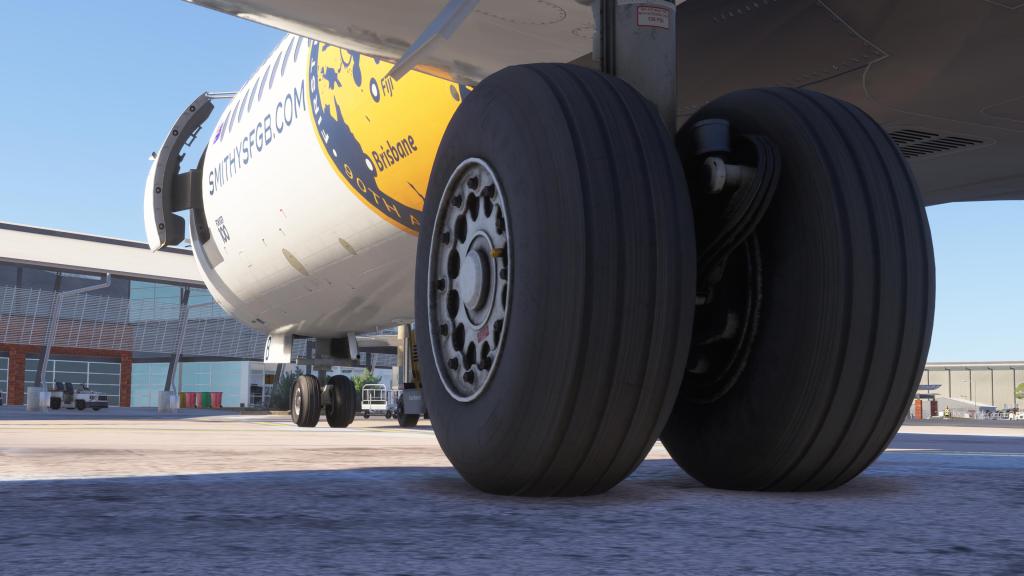
While the F70 and F100’s systems don’t push the CPU quite as hard as say an iniBuilds A350 does, they do occupy quite a bit of texture space thanks to large 8K textures putting them in a similar category. I’ve got it running smoothly now but I kind of wish there was maybe a texture downgrade option (so far I haven’t found one). The textures are razor sharp of course but you pay a price for that.
Quirks and quandaries!
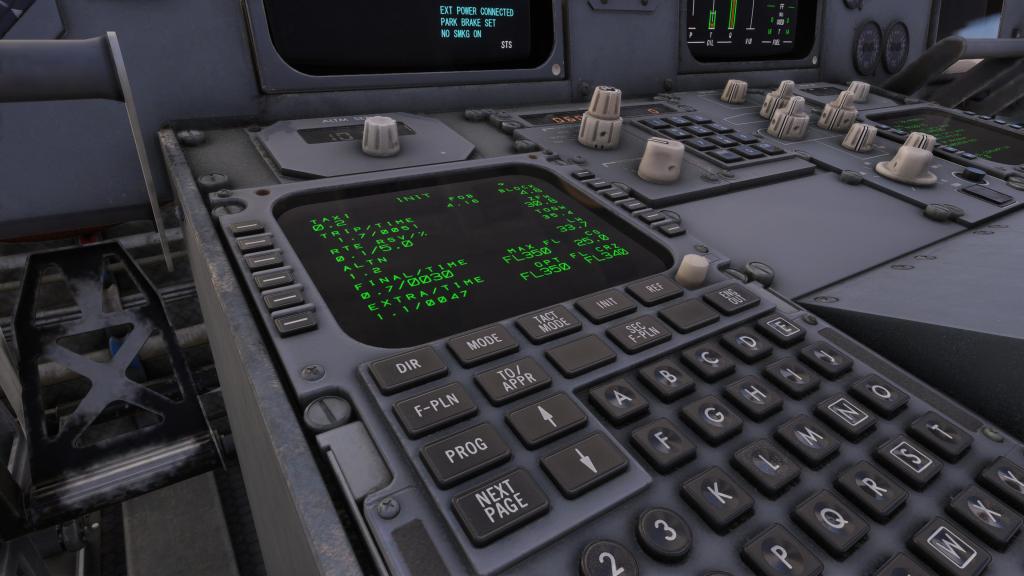
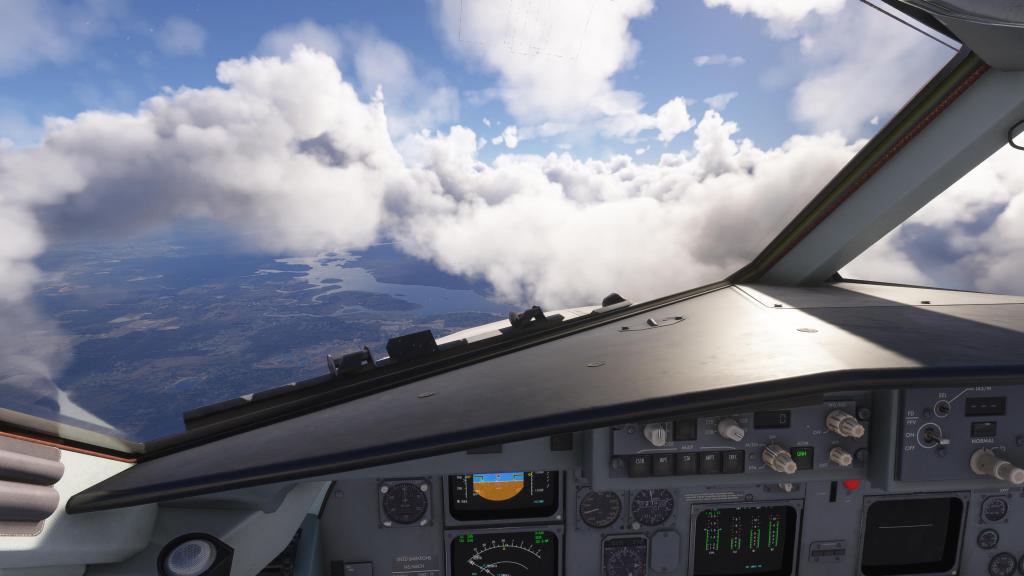
The systems and operations sit somewhere between modern Boeing and Airbus with its own series of quirks. I’m perhaps more reminded of X-Craft’s ERJ series (review on that one is coming up too) or even the Citation-X from FlightFX than the Boeings or Airbuses. Whatever the comparison ends up being, this is a more modern type with more modern sensibilities around autopilot, FMC, and so forth. Those are part of the integral systems and that makes for some interesting flying.
There are quirks. For example Fokker F70 and F100 will engage the auto throttle if you rapidly power up to TOGA on landing approach assuming you’re going-around. That caught me by surprise a few times as I tend to be heavy on the throttle adjustments (F-14 and F/A-18 flying will do that to you) and the sudden AT engagement really threw me for a loop.
Another fascinating quirk… all of my takeoffs have been with 0 flaps so far. The Fokkers have enough power and lift to takeoff without flaps in most scenarios only needing them in certain hot, high and heavy scenarios. Fascinating indeed!
I’ve also run into some difficulty with the VNAV systems and the landing approach procedure. I thought I was doing things correctly but I’m clearly not as the plane is not descending on the profile that I thought it was intended to. I’ve been manually intervening a lot of the time. Part of the reason why I haven’t done the full review is because I’m still getting to grips with the quirks of how I think it should work versus whats written in the manual or done in tutorials.
One last thing! The Fokker 70 and 100 don’t climb very fast at all! I thought the Avro RJ was a bit underpowered but it turns out that the Fokker 70 and 100 are quite slow to climb on profile to their assigned cruise altitude. In some instances my flight were so short that takeoff, climb, and descent happened with only just a few minutes spent at actual cruise altitude. SimBrief planned flights are often a little too high in some instances so I’ve been adjusting the cruise altitudes manually. Again, fascinating!
Does it have the magic of the F28?
I’ve wrestled with this one a bit. The answer? No! I don’t think it does.
With the F28, the magic or the undefinable part of the experience, was rooted in a more emotional response to a combination of features coming together with a fun to fly classic retro-styled airplane. The F70 and F100 are more modern iterations of the F28 and while they share some of the design from earlier iterations, its also clear that this is a much more modern design. Some of the magic is lost in favour of a more conventional and familiar design but it loses the uniqueness.
That is in no way an indictment of Just Flight’s work because every checkbox on the F28 is here in the F70 and F100 Professional. Just Flight have added additional features as well and the model and texture work are a step up from the older offering. Its none of those definable things and is more an emotional one.
One of the things that most stands out, systems operation aside, is that the handling is less sharp. Again, I think Just Flight have captured the larger and longer Fokkers well, so its not a knock against flight model but rather a difference in the jet itself. The F28 almost gives you a bushplane kind of vibe where you know you can get it into some unique spots and it’ll fly you in there with no complaints. The F70 and F100 feel more bus-like and more akin to other airliners of this style and generation.
Full review to come
I need more time, more flying, and some more thought before a full review comes together. I’m also waiting to see how Just Flight handle the upgrade process over the coming weeks and month or two. We’re already up to V1.2 so far with the aircraft as Just Flight have solved some major quirks that have come up post launch.
Commentary from the community has been generally positive although I feel like the jet has flown under the radar while Synaptic’s A220 occupies a lot of interest. In a lot of ways, these two are similar regionally focused jets and are now flying alongside each other in the case of Australia these days. They also couldn’t be more different with the Fokker representing an older style of jet gradually being retired while the A220 is still one of the newest airliners on the block.
This is a good form of flying in Microsoft Flight Simulator offering short enough routes for fun and realistic operations while still making you feel like you’ve flown somewhere distant. I’ve got more to do with the Fokker 70 and 100 before the full review but I am working on it!
Screenshots



Leave a comment