

The charge made by a few have suggested that Bodenplatte’s forthcoming Spitfire IX is outdated and obsolete at the time of the Battle of Bodenplatte. That would be inaccurate at best, so let’s have a look at the Spitfire IX.
A brief history of the Spitfire IX
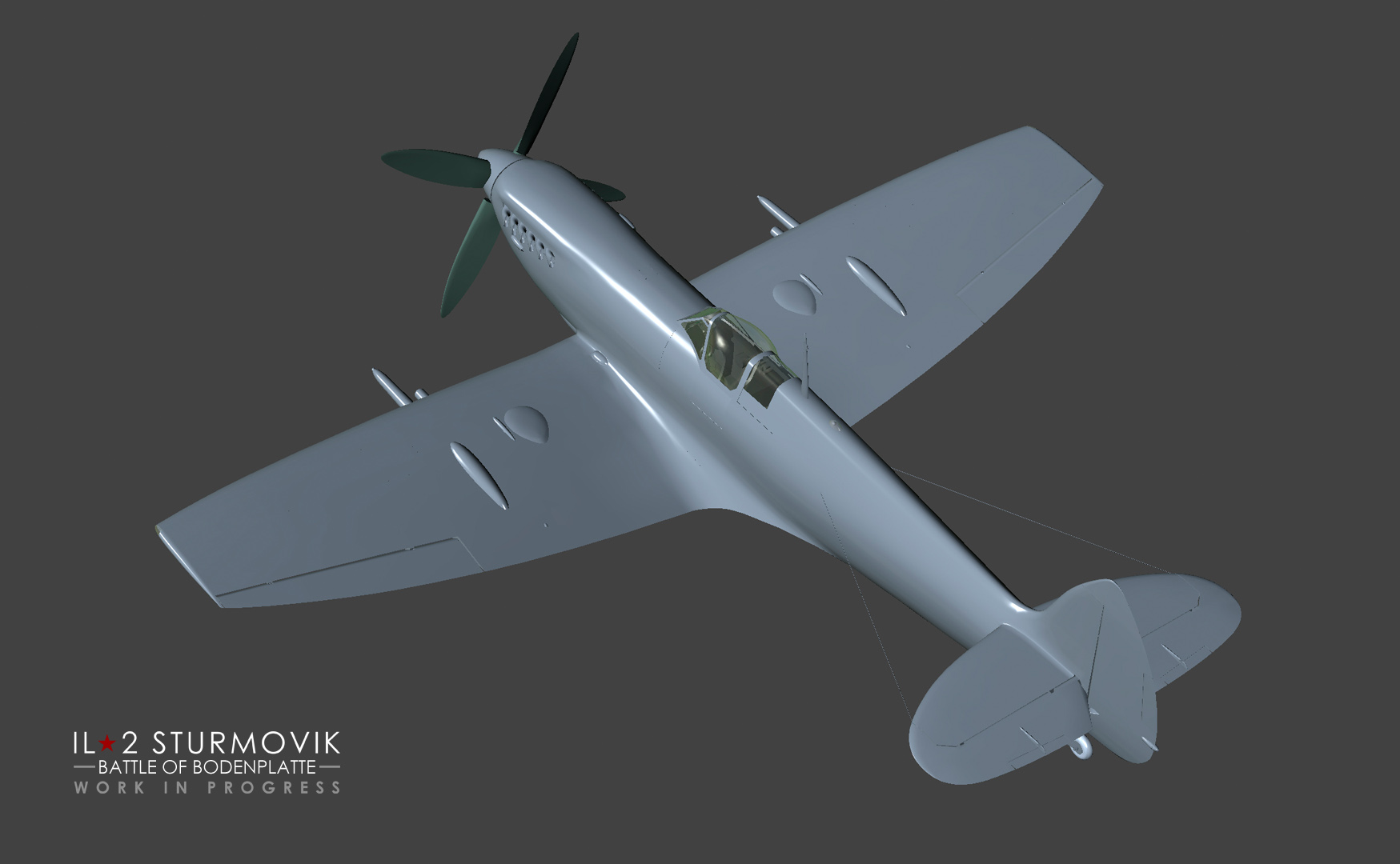
The Spitfire IX is a type that saw multiple changes and improvements from its early introduction in 1942 and final use in 1945.
The earliest Spitfire IX models were actually converted Mark V airframes modified to have the new more powerful Merlin 60 series installed. This was all in response to the appearance of the FW190A on the Western Front and the dire need for a Spitfire that had the speed to be able to keep up. The planned Spitfire VIII was a year away from production so the IX was rushed to service.
Early Spitfire IXs were fitted with the Merlin 61 engine giving the aircraft superior performance and speed over the Spitfire V, particularly at high altitudes. This engine was later superseded by the Merlin 63 and Merlin 63a allowing for higher boost. The definitive version, however, was the Spitfire IX fitted with the Merlin 66 which began to appear in squadrons in 1943. The Merlin 66 had its supercharger geared so as to be faster than the FW190A at all altitudes. This reduced its extreme high altitude performance slightly but speed and climb at all other altitudes improved.
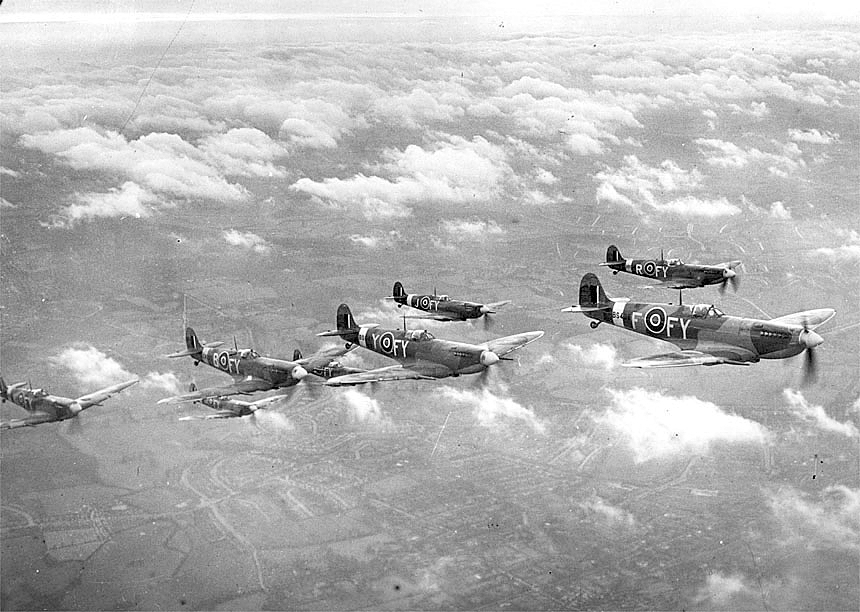
Getting the naming schemes right
This Merlin 66 version of the Spitfire IX came into use before official nomenclature could be established. This fighter was listed in many pilots logs throughout the war as a Spitfire IX-B to mark the upgraded Merlin 66 engine. This created considerable confusion and continues to. The B normally indicating a B-type wing but in not in this case. No Spitfire IX models were ever fitted with the B type wing.
The official naming system came up with a F, LF, and HF denoting regular, low, and high altitude optimized Spitfires in terms of their engines and officially the Merlin 66 equipped Spitfire IX was called the LF.IX with either the C or E type wings fitted.
The C-type wing was a modification from the B with allowance for the original outboard Browning .303 machine guns and with space open for four 20mm cannons (two in each wing). The E-type wing is the same wing structurally as the ‘c’ type but armed differently. On the E-type the .303 machine guns in the wings are removed. Instead, the Hispano Mark II 20mm cannons with 120 rounds (twice the capacity of the Vb) are moved to the outboard positions and the inboard positions are fitted with Browning M2 .50cal machine guns. This was a more typical arrangement of a 1944 and 1945 Spitfire.
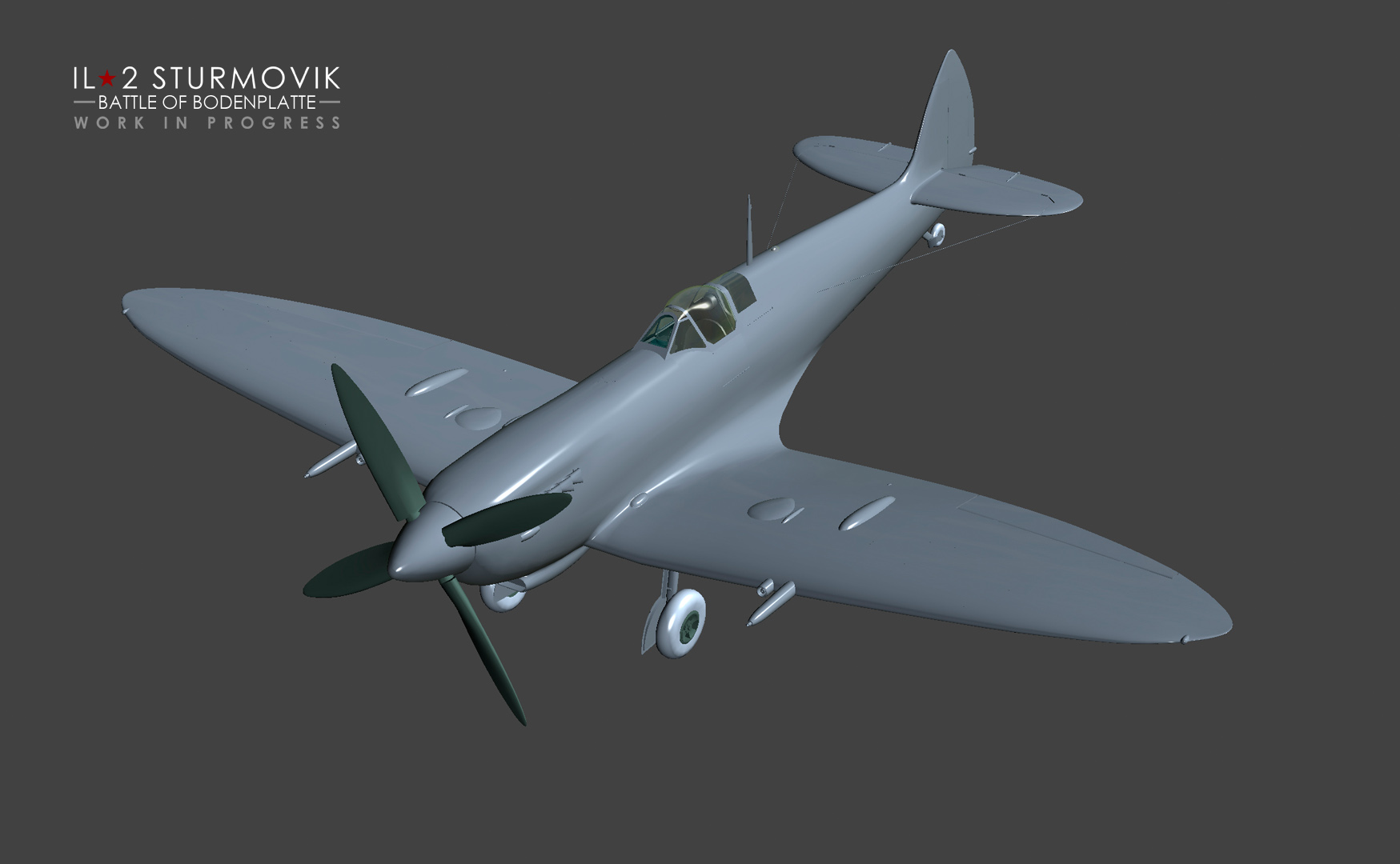
The Spitfire coming with Battle of Bodenplatte
We’re getting a Spitfire LF.IXe. This is a late series Spitfire IX typically built starting in the spring and summer of 1944 with a Merlin 66 engine running at the standard +18lbs of boost. Some of the key identifying features include the pointed tail for added stability and the positioning of the 20mm cannons – in this case in the outboard position denoting an E-type wing. The inboard positions have, as previously mentioned, Browning .50cals so the weight of fire on this fighter is higher and the firepower itself is more concentrated.
Let’s compare some basic performance values as well:
Spitfire IX (Merlin 61 at +15lbs):
- Maximum rate of climb in M.S. supercharger: 3200 ft.min at 13,500 ft
- Maximum rate of climb in F.S. supercharger 2540 ft/min. at 25,900 ft.
- Maximum true air speed in M.S. supercharger 380 1/2 m.p.h. at 15,400 ft.
- Maximum true air speed in F.S. supercharger 403 m.p.h. at 27,400 ft.
Spitfire IX (Merlin 66 at +18lbs):
- Maximum rate of climb in M.S. supercharger: 4700 ft/min at 7000 ft.
- Maximum rate of climb in F.S. supercharger 3860 ft/min.at 18,000 ft.
- Maximum true air speed in M.S. supercharger 384 m.p.h. at 10,800 ft.
- Maximum true air speed in F.S. supercharger 407 m.p.h.at 22,000 ft.
Later models of Spitfire IX with the Merlin 66 achieved much higher climb rates and slight improvements in airspeed values throughout the range except at the very highest altitudes.
Performance data available from SpitfirePerformance.com.
Here are some of the possible modifications:
- Engine mod at +25lbs of boost for even better low altitude performance (up to 24mph increase at sea level and low altitudes)
- Mark II GGS lead computing gunsight
- 250lb and 500lb bombs for fighter-bomber missions
- Clipped wings
Will we get all of these features? We don’t know for sure on all of them but we are confirmed now for the clipped wings. I suspect we will see at least some of them. Should the Spitfire IX get the +25lb boost you’ll see a fighter with incredible low altitude performance.

Spitfire IX vs XIV vs XVI
There’s been lots of debate in the community about the Spitfire IX, the XVI and the XIV. Let’s clear some stuff up on all of those.
Of the 20+ Spitfire squadrons in use during the Battle of Bodenplatte on January 1, the majority of them were equipped with the late model Spitfire IX that I’ve been talking about. By March the majority were equipped with the very similar Spitfire XVI.
The Spitfire XVI was used extensively by the RAF in 1945 and this mark of Spitfire is identical to the late series Spitfire IX in all but one way. The XVI had a Packard produced Merlin 266. The engine was made in the US and made to US measurements but was otherwise the same as the Merlin 66. Some very late examples of the XVI had a cut down fuselage and a bubble canopy and these began to appear in March and April of 1945.
Together the Spitfire IX and its twin the XVI made up the majority of the Spitfire force in 1944 and 1945. The Spitfire XIV, arguably the ultimate Spitfire of the war, had 6 squadrons in use by the end of the war and made up a smaller percentage.
The developers, wisely I think, chose the type with the most relevance being equipped by the most number of squadrons and used in the most number of ways.
The Spitfire XIV is not on the Battle of Bodenplatte aircraft list but I could easily see it becoming a popular Collector Plane being offered in the same way that the La-5FN and Bf109G-6 were offered.
In conclusion
No, the Spitfire we’re getting is not a 1942 obsolete fighter. It’s very much in its element in late 1944 and early 1945 equipping dozens of squadrons and performing at very high levels at even the standard +18lbs of boost.
Sharing little with the earliest Spitfire IX models, we getting a late war version well suited to the kind of combat that we typically see. High rates of agility and especially the superior turn and climb will make the Spitfire IX a very dangerous fighter to contend with and may very well be the best fighter available should it comes with both the +25lb engine boost and a gyro stabilized gunsight.



 Stormbirds
Leave a reply to ShamrockOneFive Cancel reply