

With Heatblur’s DCS: F-14 Tomcat due out by “winter” and Eagle Dynamics adding more features to the DCS: F/A-18C Hornet I feel like there is a kind of friendly rivalry going on in the virtual hangars of DCS World. I thought it would be fun to have a showdown between these two carrier based aircraft as they are two of the most talked about DCS World modules right now.
The Fleet Defender
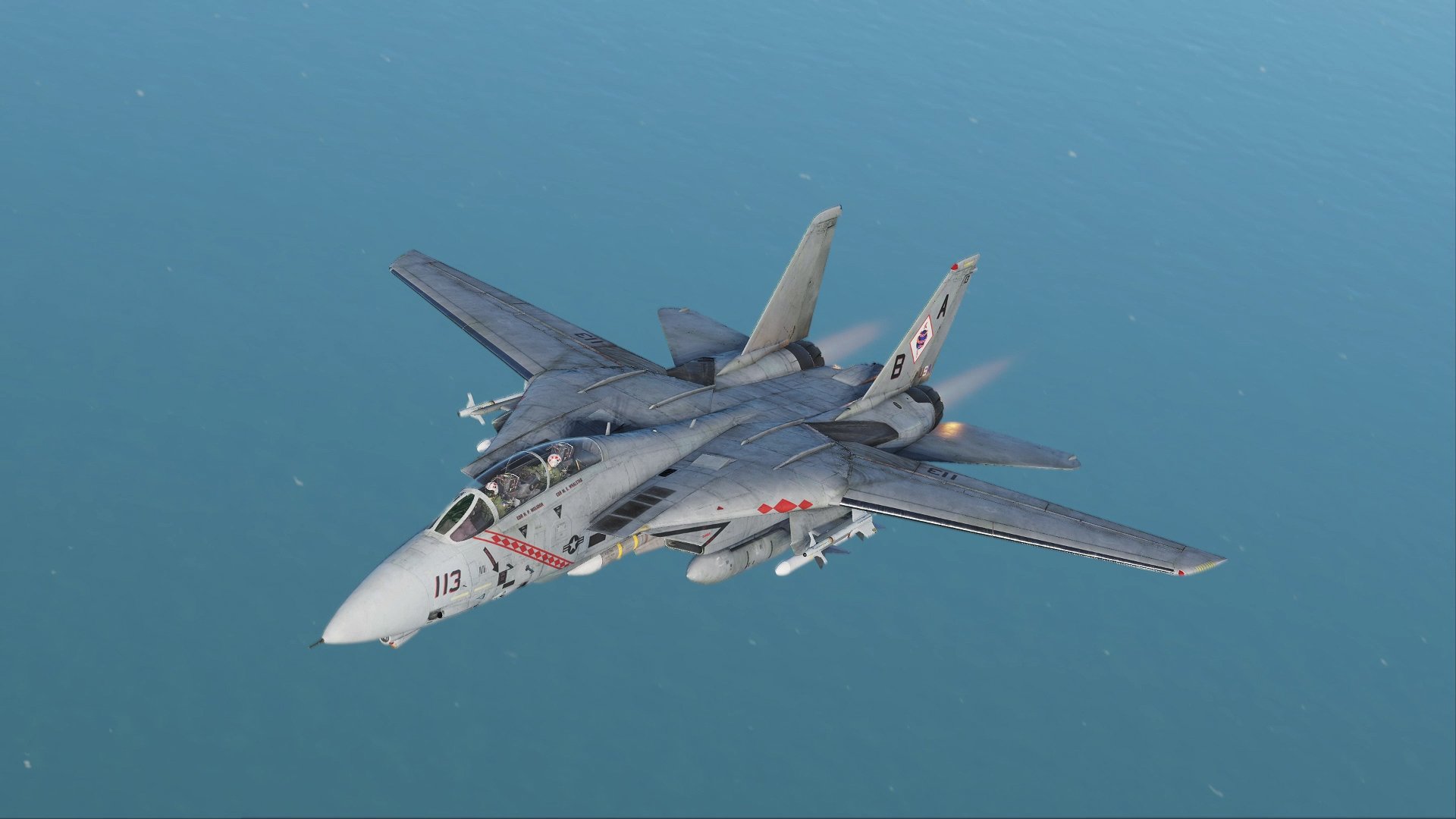
I was young when I watched Top Gun on VHS with my dad and the F-14 rocketed to the top of my aircraft awareness list. The big variable geometry fleet defense fighter with its incredible sound and rugged looks held appeal and continues to this day. It is the quintessential fighter jet of the 1980s and people buying the F-14 module for DCS are going to get their money’s worth if they are looking for that combination of powerful fighter jet with 1980s nostalgia. In short, flying the F-14 comes with some performance advantages and a huge dose of personality.
The F-14 isn’t a perfect aircraft. It was well known for its tricky handling and the requirement for its pilot to work hard to ensure that they are in control at all times. Immensely powerful, the F-14 can get out of control and into difficult situations. Heatblur doesn’t hide from that legacy and you can see in the reveal trailer a F-14 doing a flat spin – an issue with the F-14.
The F-14 can be propelled up to a speed of just over Mach 2 thanks to the problematic TF30 (F-14A) and the much better F110 engine (F-14B). It also has a stated combat radius of 500 nautical miles and can climb up to 50,000 feet or more.
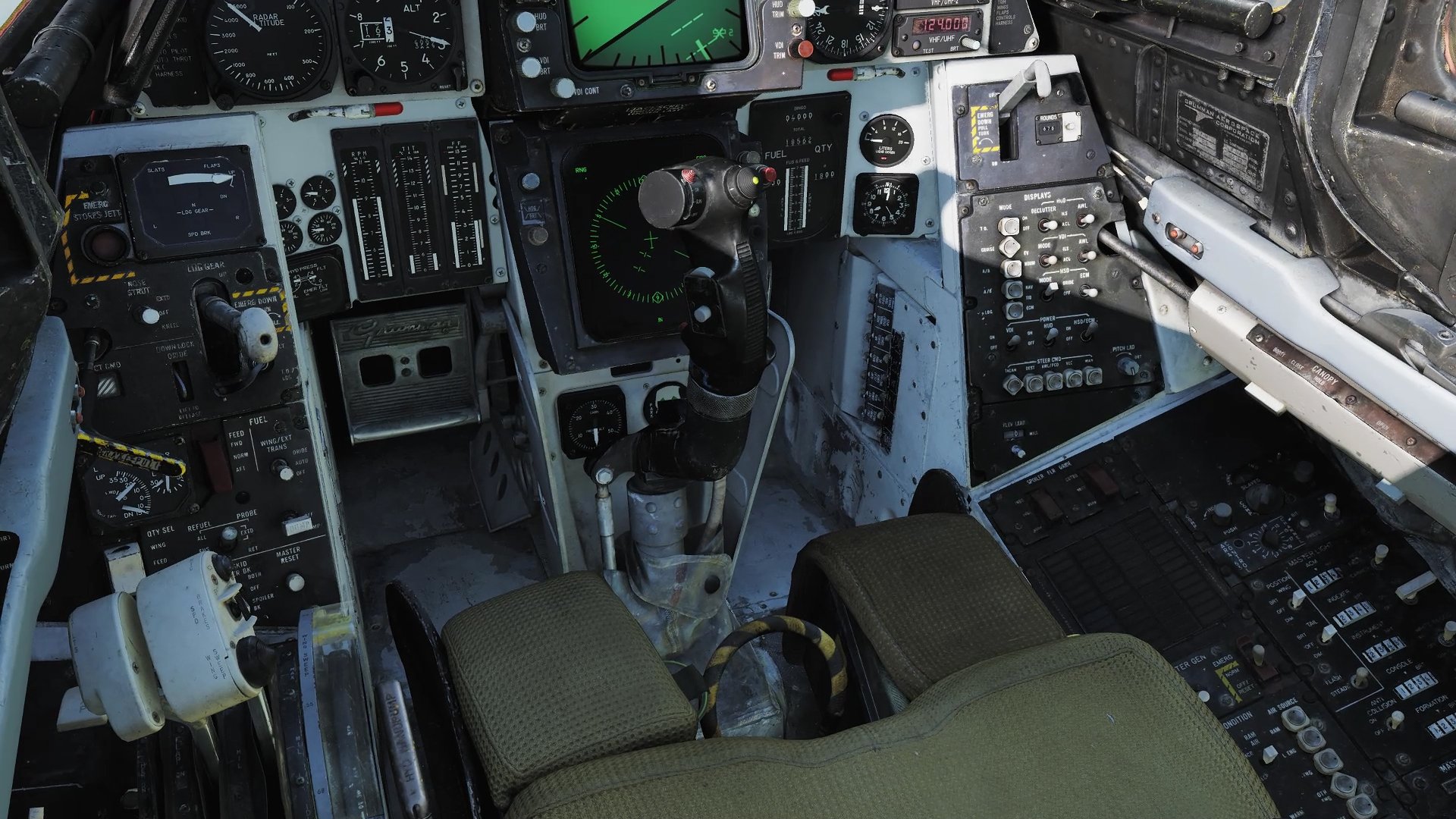
The F-14 is an aircraft with one step in the future and one step in the past. Analog systems with steam gauges and, by modern standards, a rudimentary HUD are complimented with some more advanced systems like the ability to use laser guided precision bombs and the AIM-54 Phoenix missile.
The Tomcat can sling an impressive loadout of AIM-7, AIM-9, and AIM-54 Phoenix missiles. The AIM-54, in combination with the AWG-9 radar, give the F-14 an impressive ability to engage targets at extreme long ranges with a stated operational range of 100 nm. Against maneuvering targets the range will be much shorter but that doesn’t negate the fact that it can still lock on and shoot at far greater ranges than most others.
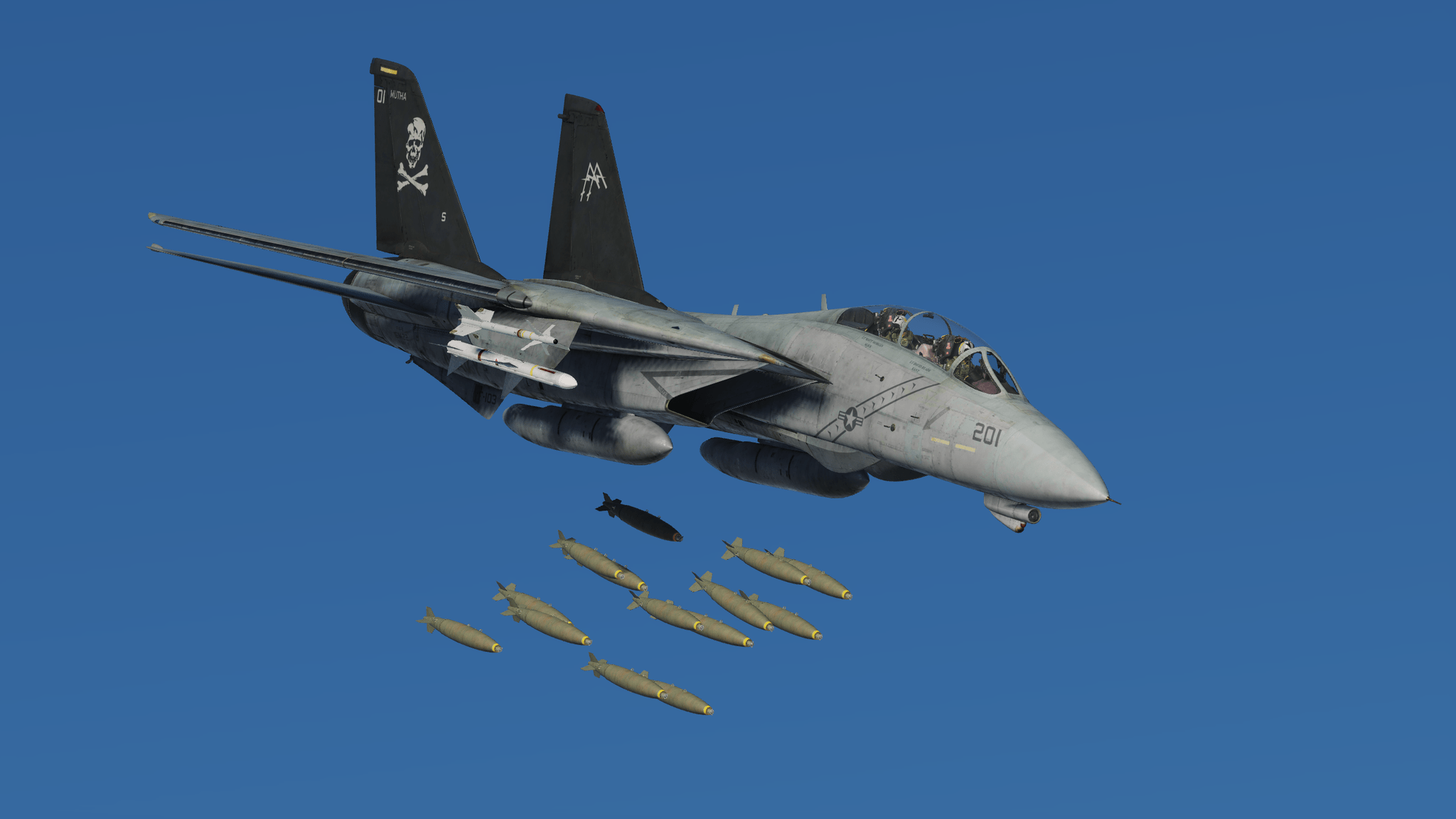
Late upgrades to the F-14 also came with the ability to deploy unguided and laser guided bombs. The RIO can use the LANTIRN pod to laser designate and engage targets with precision LGBs turning the F-14 from fleet defender into a precision strike aircraft. It’s not going to come with a wide array of ground attack options but it does at least offer a few of them as an option.
We’ve talked a lot about the F-14 so now I’m going to tap into the other side of the debate and talk about the F/A-18C Hornet.
The Smart Striker
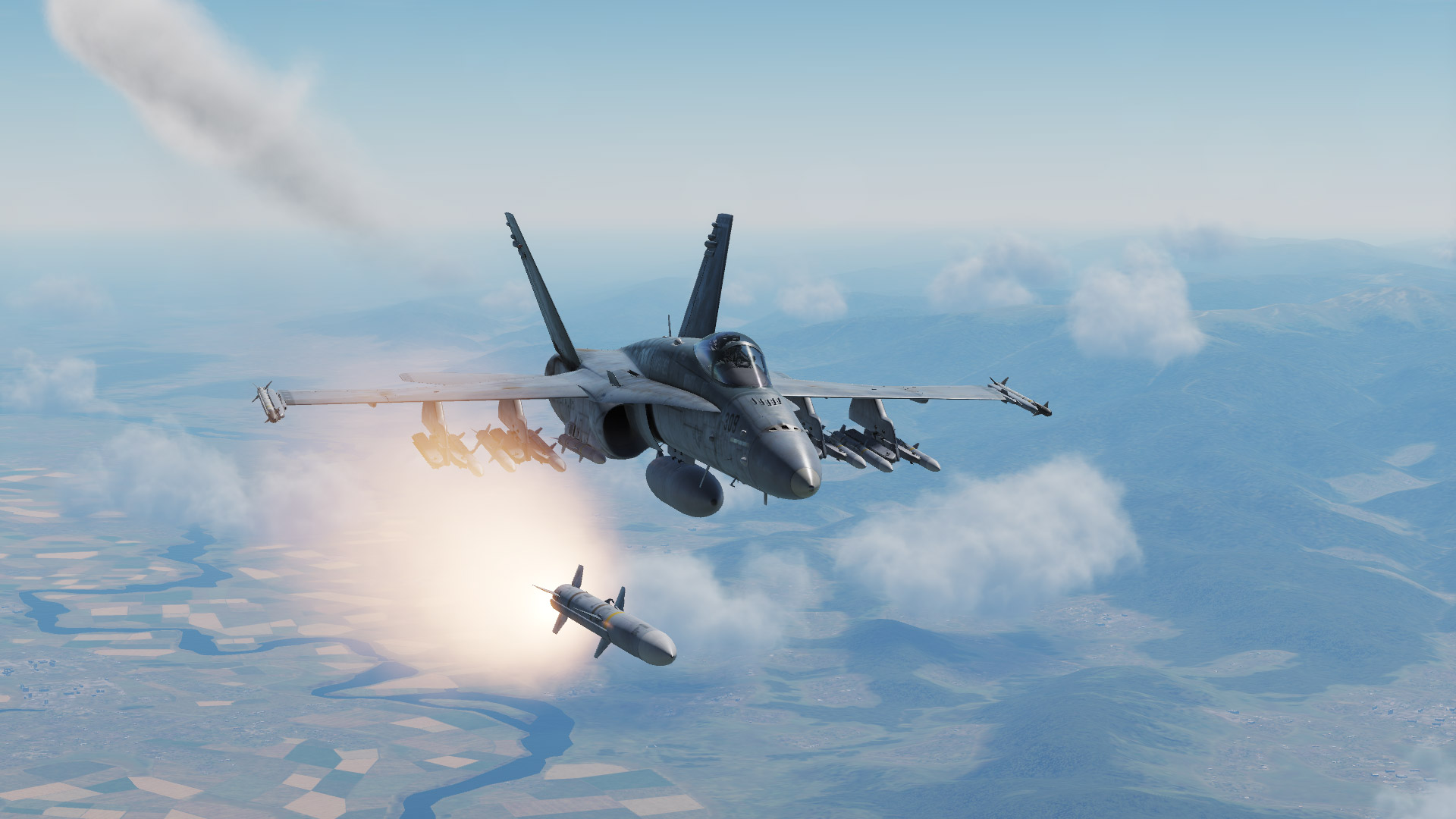
I may have been a fan of the F-14 growing up but I got a chance to see the F/A-18 in real life many more times and the appeal of this twin engine multi-role strike aircraft captured my attention just as quickly as the F-14 did.
The F/A-18C is a jack of all trades and master of none jet that brings a whole ton of capability to the decks of aircraft carriers and the air bases of multiple nations. With the press of a button, the F/A-18C goes from air-to-air to air-to-ground mode and back again with ease. When the Hornet was new, this was a new capability, and its still a pretty impressive feat even today.
The Hornet has 400 nm of combat range, a service ceiling of 50,000 feet, and a maximum speed of Mach 1.8. Realistically the F-18 won’t be going Mach 1.8 but it will be going low to mid Mach 1 at most altitudes even when hauling some ordinance.
Although the DCS World iteration of the F/A-18C is still being developed I’m going to assume full capability for part of this discussion. The Hornet already has its full list of weapons to attack air targets ranging from the 20mm cannon to the AIM-120C and AIM-9X Sidewinder. It has a long list of guided and unguided weapon systems too including the Harpoon, Maverick, LGB, JDAM, and JSOW.
Many of the weapons the Hornet can employ are stand-off weapons meaning that the Hornet can use them at ranges that sometimes out distance air defenses. When enemy aircraft get in close, the Hornet can use its JHCMS system to lock and engage maneuvering fighters with the AIM-9X Sidewinder at previously unheard of angles.
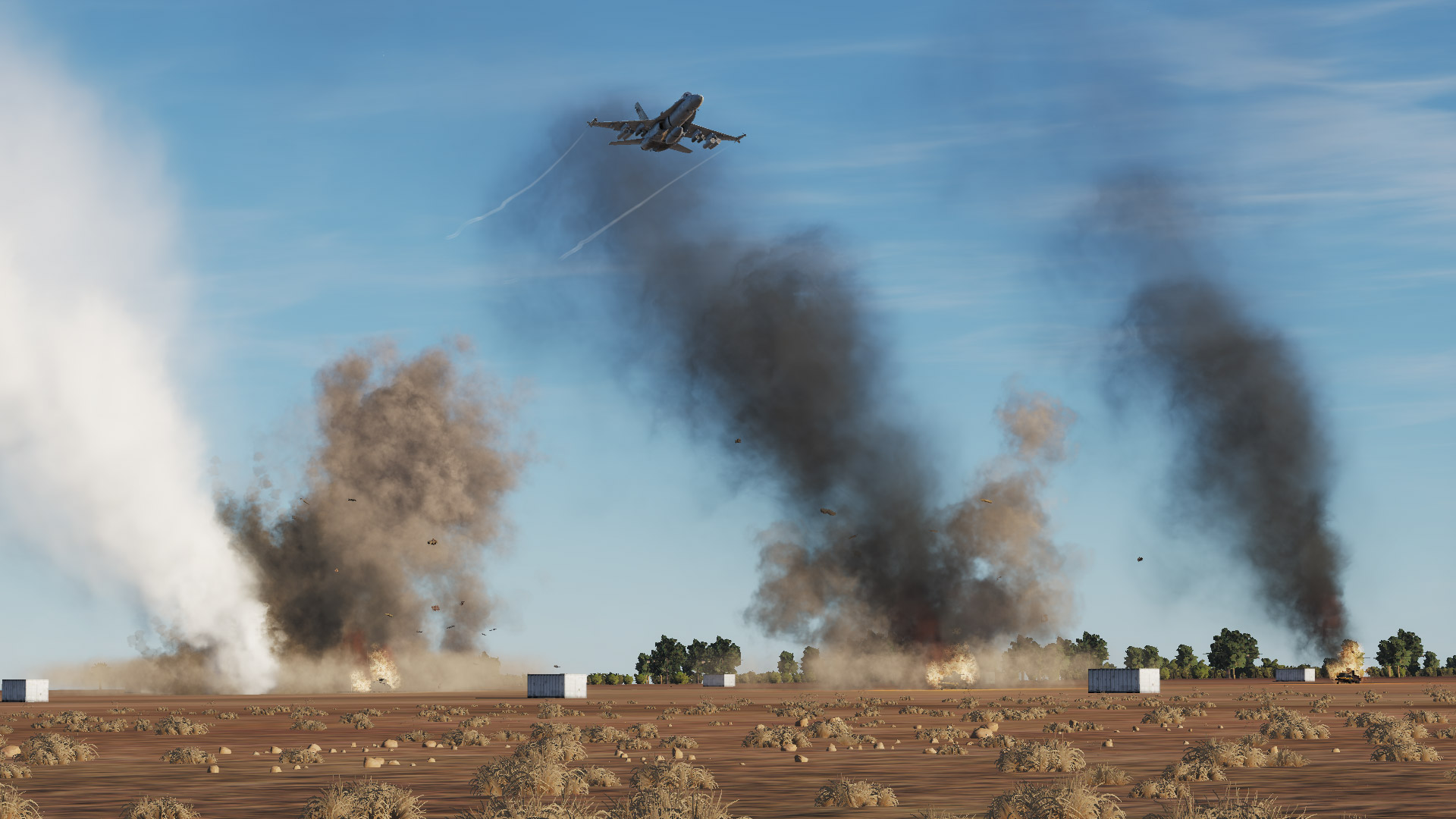
When the AIM-9X isn’t available, the Hornet is still a powerful contender with its fly-by-wire controls ensuring that the pilot has the ability to quickly and easily fly the aircraft to the edge of its envelope. The Hornet also has an incredible ability to pitch quickly which makes it a dangerous dog fighter.
The Hornet brings with it an impressive array of systems and sensors tied together through a partially digital cockpit interface complete with a sophisticated HUD, helmet sight, navigation system, and a long list of configurable weapons.
Sharing the deck: Hornet vs Tomcat
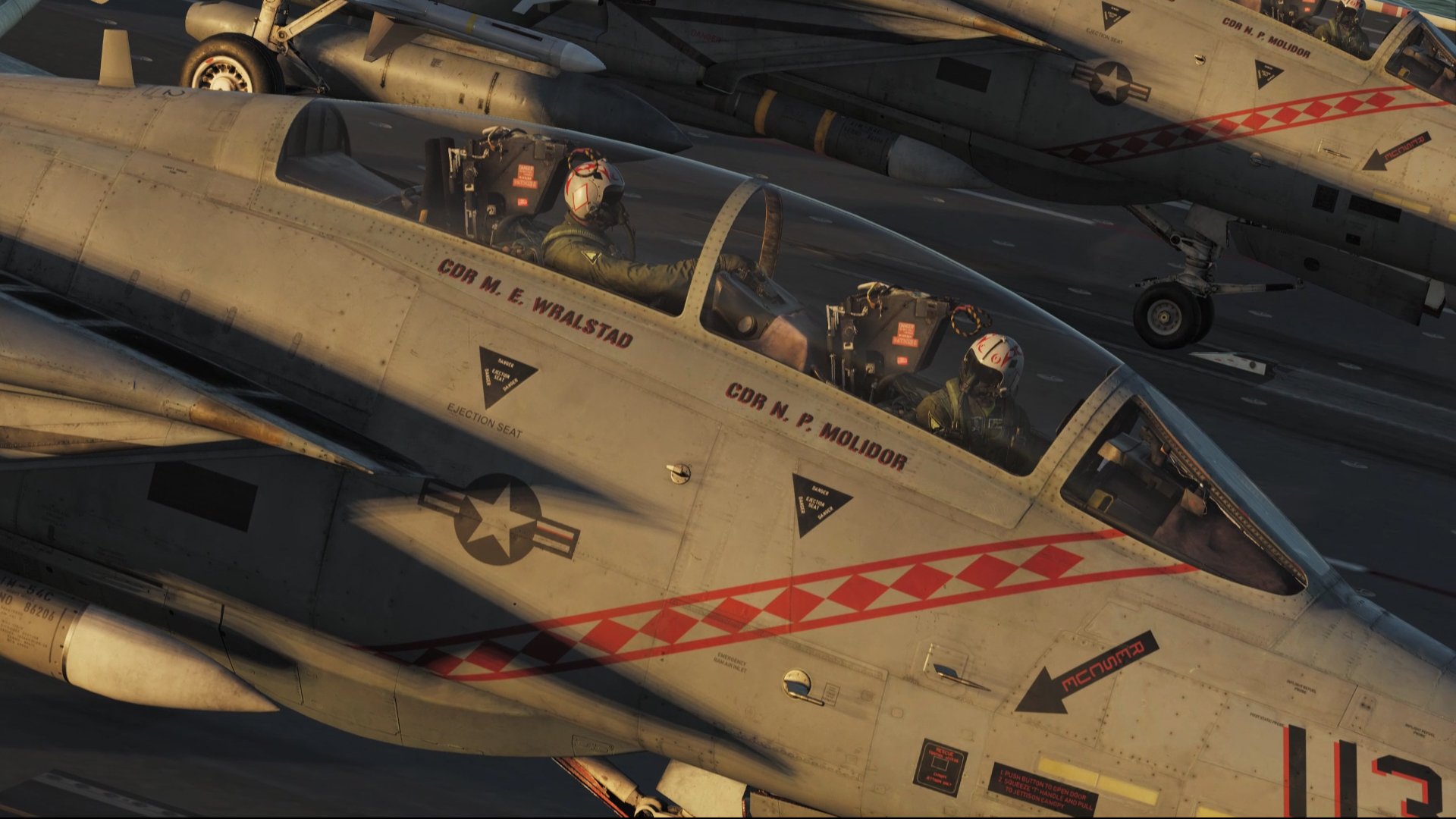
So we have a good break down of the two aircraft and their respective capabilities let’s compare these two with a really basic versus back and forth comparison.
The F-14 has greater range, can engage air to air targets at a greater range, has a more powerful radar, and is faster. The AIM-54 Phoenix alone gives it an incredible ability to engage targets at long ranges.
By comparison, the F/A-18 has less range and can’t shoot air to air targets at the same distance but it can do things the Tomcat can’t including perform stand-off strike missions, employ a vast array of precision weapons outside of the Tomcat’s limited arsenal, and shoot at airborne targets at a 90 degree offset thanks to the AIM-9X and JHMCS.
The F/A-18 can be flown by a single pilot with much of the systems being automatically operated while the F-14 is a two seat aircraft requiring that second person to operate the sensors.
The F-14 has incredible power but the close in dogfight capability will likely go to the Hornet with its ease of handling and incredible pitch authority at slower speeds. The F-14 shouldn’t be counted out either being more agile than it appears and having the advantage of variable geometry wings to optimize itself to the situation.
The back and forth on these two aircraft can go on for a long time (and I’m looking forward to the comments) but I want to summarize these two aircraft. In short, the F/A-18 is designed to be smart and fire smart weapons and the F-14 is designed to be powerful and fight its way through the enemy to keep the fleet safe.
Conclusions
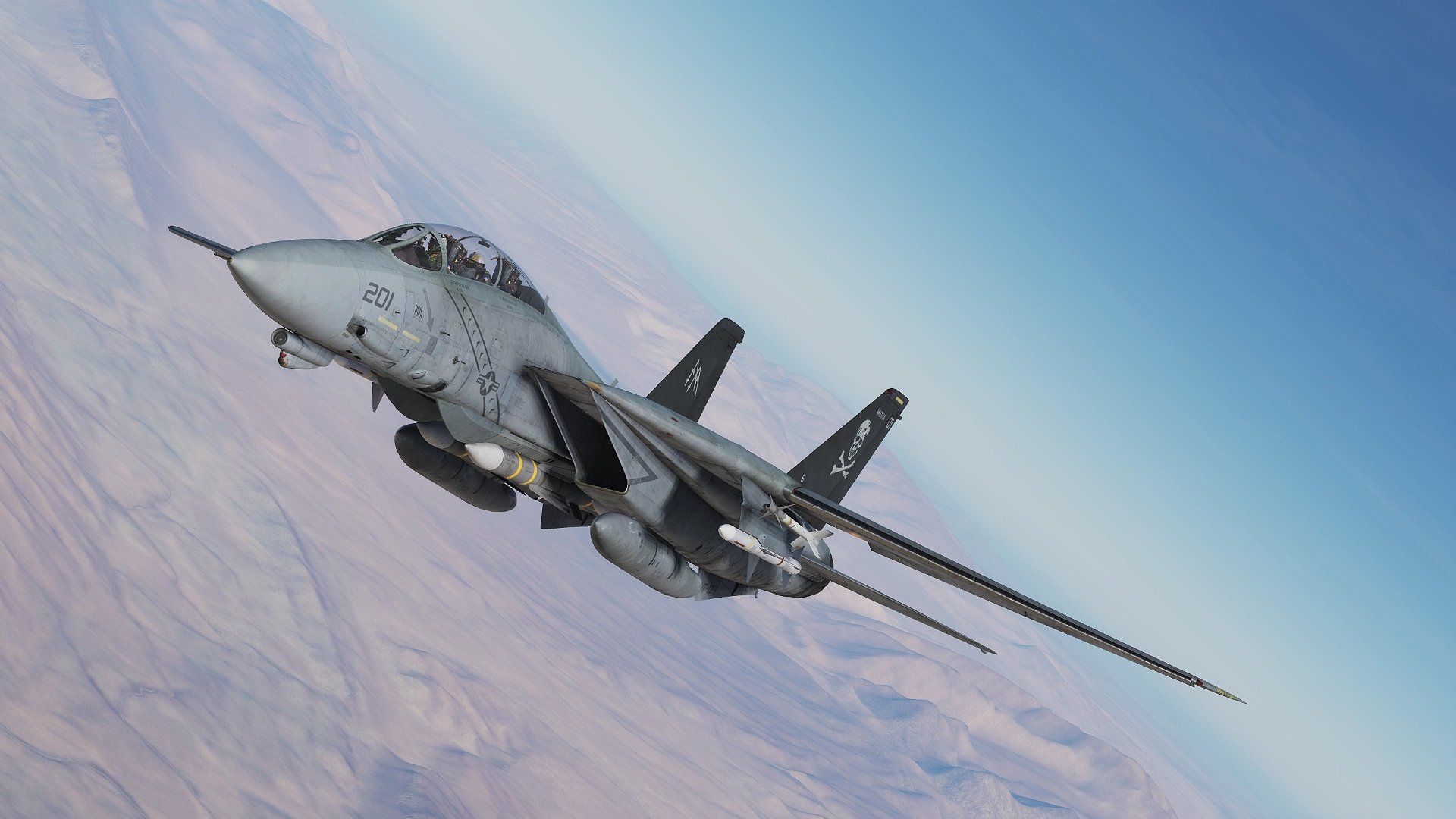
The big questions out in the community right now is which module should you buy? Which is better? There are no easy answers to these questions if we’re comparing these two aircraft alone. Tomcat aficionados are going to say the Tomcat while Hornet supporters will say the Hornet and the reality is that both of these aircraft offer compelling packages.
What the F-14 has that the F/A-18 doesn’t is the nostalgia factor. Load up the soundtrack to Topgun and many people will relive the sights and sounds of that movie and of one of the stars of that movie: the F-14 itself. Heatblur as a developer has tapped into that nostalgia with a soundtrack and content oriented around the F-14 in a fantastic way. We’re still months away from a full release of the F-14 but before long the F-14 will start to show up in the hands of players and that will be a great day.
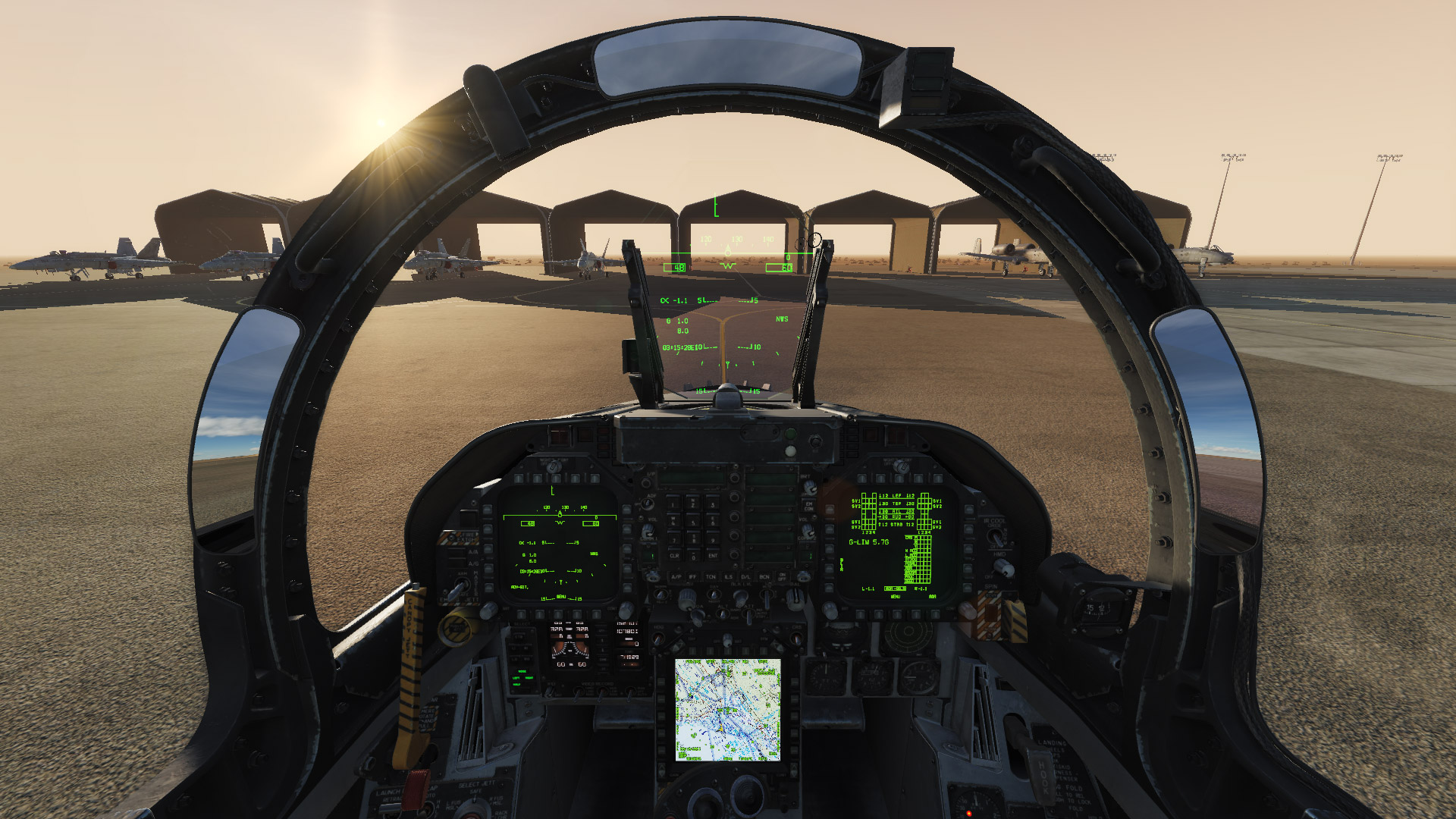
I want to conclude and suggest something else entirely in this editorial. DCS World has gone through some significant growing pains and been limited to just a few high fidelity options for many years now. That is changing with the early access of the F/A-18C and a serious effort by Eagle Dynamics to build not just the Hornet but systems and support for other future 4th gen fighter jets we’re entering an interesting and exciting new era. At the same time, Heatblur is coming along with the F-14 and a lot of great content to support it.
Together, these aircraft represent two of the greats of modern and recent carrier aviation and they form a pair of aircraft that can easily cohabitate the virtual aircraft carrier decks of many a multiplayer server or single player scenario. If that doesn’t sound like one of the greatest pieces of news for DCS World in recent history then I don’t know what is.
That’s what I think but I’d love to hear your thoughts in the comments below!


 Stormbirds
Leave a reply to boxcarleader Cancel reply