

I’ve been following the development of Microsoft’s new Flight Simulator title since the announcement back in June of this year. Since then we’ve learned a lot of new information about the title and the kind of tech that it’s bringing to the table to make this new sim work. There’s a lot of revolutionary stuff that Microsoft and developer Asobo Studio are bringing to the table here but there’s a bigger picture that in recent days has started to become more clear to me. Is Microsoft Flight Simulator about to make a very big impact in 2020? It might and here’s why.
First, the latest news
Microsoft has tapped developer Asobo Studio to build Microsoft Flight Simulator. Asobo has prior experience building complex digital worlds with their own engine technology. The team have digital world building experience and that seems to have helped when it comes to the world of the simulation. Having the support of Microsoft’s enormous resources and technology also makes a difference and there are two key resources they are tapping into for this product – Bing and Azure AI. More on those later.
We’ve learned that the sim intends to have support for plenty of hardware which is encouraging because they are going to need to make sure that hardware that works with sim cockpits down to $50 joysticks all work. Support for third party developers is apparently also on the table and they are actively reaching out to developers. It was hinted before but multiplayer is supposed to be in the feature list as well.
VR is a more complex issue. Initially, word was that VR would not be part of the release roadmap but we’ve also learned that they are reconsidering this decision. I think that’s wise. VR has become the killer feature for flight simulators and other sim developers have almost universally adopted VR whenever it was possible.
We’ve also learned that their flight model will be somewhat similar to the ‘blade element theory’ system that we see in sims like X-Plane and DCS. Essentially the aircraft will have thousands of surfaces simulated at once to approximate the real aircraft. It’s not quite the same as X-Plane or DCS but hopefully it will have the same effect of providing aircraft with a realistic and engaging flight model that feels real.
Finally, we’ve learned that the sim will have general aviation aircraft such as the Cessna 172 and Diamond DA62, it will have high performance turboprops like the TBM 930, and it will have a variety of jets including the Airbus A320 that we saw in the first trailer. What it won’t have at launch is helicopters, though the developer says that doing helicopters right would be something they would love to do as a follow-up. Fingers crossed but I think we’ll see them eventually.
Revolutionary scenery

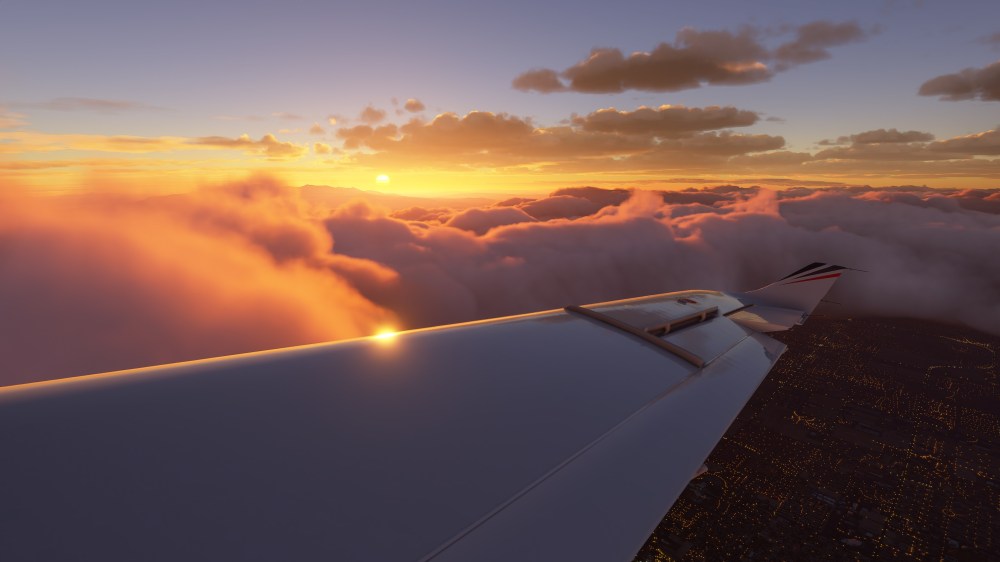
The latest images from the team show a vibrant cloudscape backed up by a truly photorealistic world. That world is being driven by 2 petabytes (or 2,000 terabytes) of satellite data that can be stored, in portions, locally on your system or streamed in via a fast internet connection. Even folks who play offline will apparently have a decent enough looking experience to enjoy flying is the message we’re getting.
The world data is being supplied by Bing Maps but that’s where another technology comes into play. AI. Specifically, Microsoft’s AI system is called Azure AI and they are using this technology to help fill out the world through machine learning. It will correct satellite imagery and add objects to the world. Azure AI can also be used to create 3D structures and build accurate representations of buildings in the virtual world. For example, there are apparently 3-trillion trees in the sim at the moment and it’s based on the supplied imagery.
The world will be accurate right down to the specific buildings on a street. You’ll finally be able to fly over your own house in a flight simulator, look down, and say, “Hey, that’s my house!” This is revolutionary.
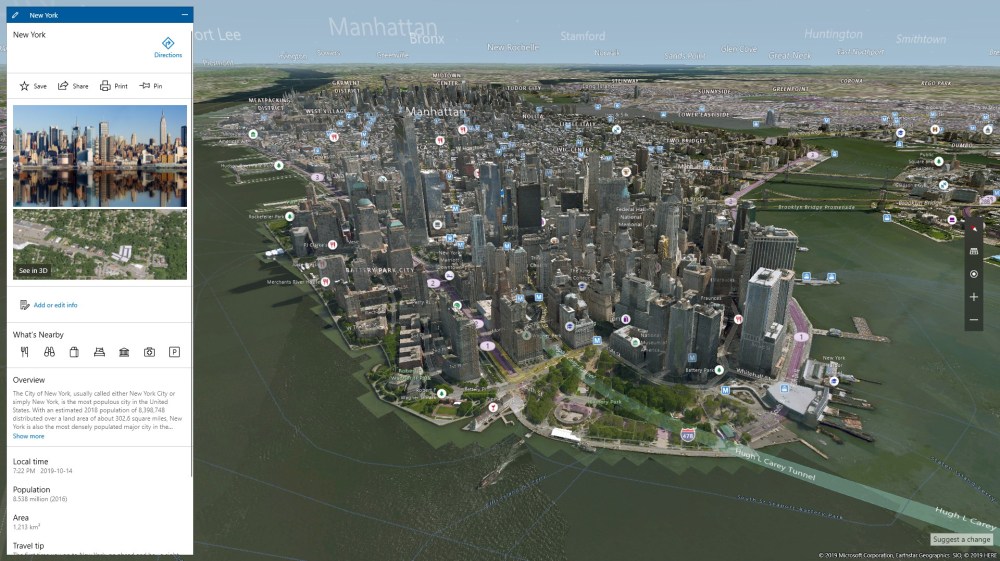
From what we can tell, this technology is the evolution of something you may already have on your PC. If you have a Windows 10 PC, open up the Maps app and go somewhere like New York City and marvel at the 3D buildings. Google Maps does this too but in this case I wanted to focus on Microsoft’s implementation. What you see there is adequate and Flight Simulator is going to have to take this up a notch to truly make it look good.
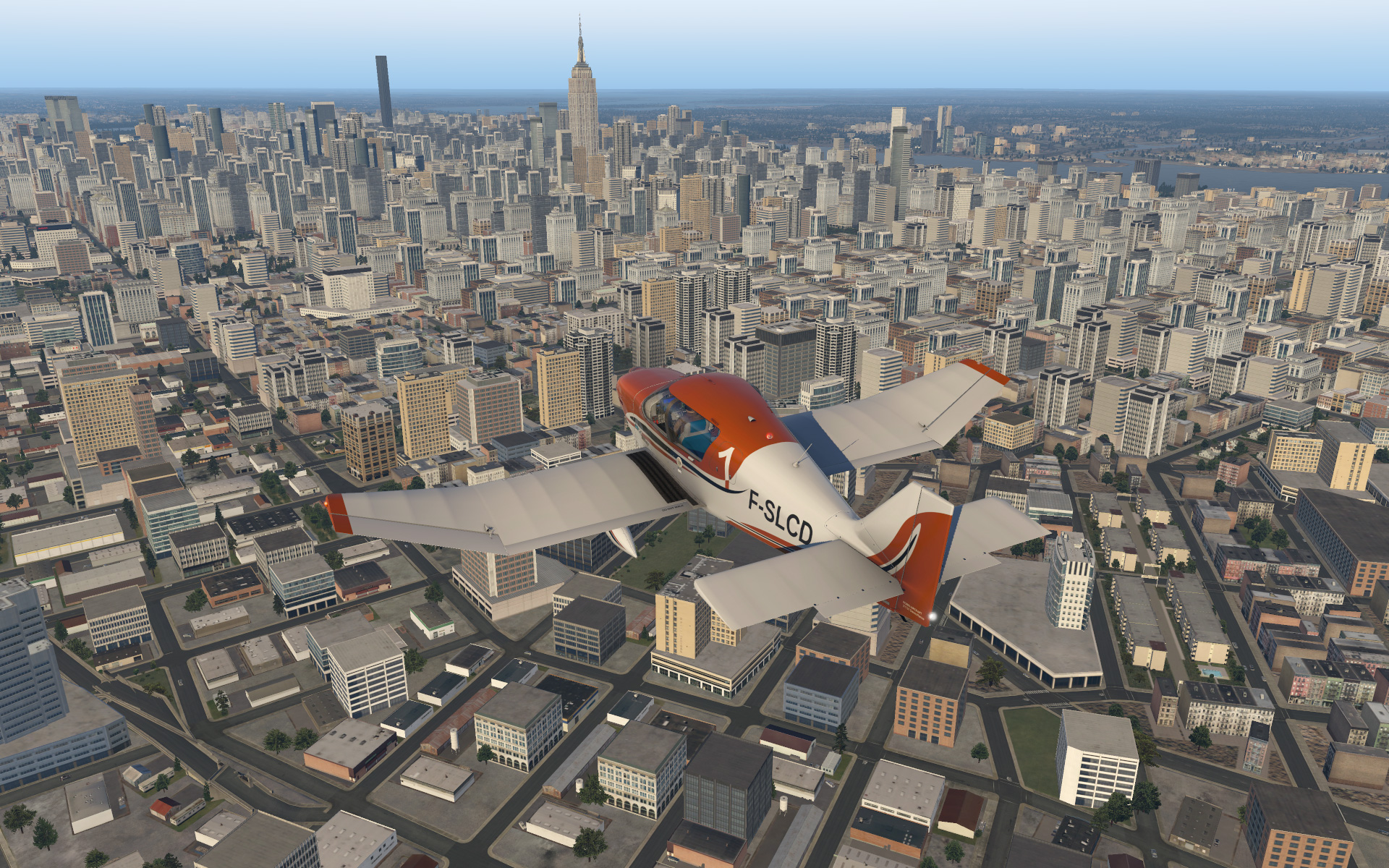
That said, if you fly over New York City in X-Plane, recently adding more buildings to help provide a more realistic city-scape, you’ll see that it’s just not quite as unique looking. Everything in X-Plane 11 is very cookie cutter and that’s because a lot of the scenery is generated from a package of generic buildings. X-Plane does this so they can simulate the world.
The first of four features is out from Microsoft and the world is their first focus with Lionel Fuentes, Lead Engine Programmer, walking through many of the details of the system. A great video to watch (and check out the TBM 930’s being flown in the background).
Revolutionary weather too
I’m really excited about the weather system here as the sim will come, out of the box, with real time weather injection to compliment the gorgeous visuals that we’ve already seen.
Everything from humidity and pollution to updrafts and downdrafts will be built in and imported from real time weather information. That’s all plugged into the visual system so that we have localized rainstorms and fog and all of the light scattering and scenery will be painted in the appropriate colours and hazing.
It can be raining in one area and bright and clear in another or fog can be in a specific zone and not across the whole of the scenery that you can see. It sounds amazing and I’m very excited to see this for myself.

Capturing the attention of non-simmers
Everything that I’ve written up to now is to give a primer on the latest of what we know about this sim that Microsoft and Asobo are building. There’s revolutionary technology and impressive graphics being brought together but it may end up being that the sum of the parts are greater than the whole and this is where I start to get a little more excited. Not just for Flight Simulator but for flight simulation on the whole.
Articles about Microsoft Flight Simulator have been popping up on places like Engaget and PC Gamer but then there was a large article on CNN.com and that caught my attention as mainstream media tend to ignore our hobby most of the time (and when they do, it’s not always in the best light).
It’s a good article because it ties a lot of elements together from the real life pilot shortage and the perceived inaccessibility of flight simulators as well as all of the new things that Microsoft and Asobo are doing with the product.
I wanted to pull this one comment from the article:
Beyond the reboot of Microsoft Flight Simulator there’s another dimension to the story that’s acutely relevant to the future of air travel in the real world. With flight traffic set to double over the next 20 years, there’s a looming pilot shortage. Flight simulators are the incubators of tomorrow’s pilot talent pool — a factor that airline flight crew recruiters are very conscious of.
CNN – Can Microsoft Flight Simulator’s 2020 reboot solve the pilot shortage?
Microsoft is bringing Flight Simulator to PC first but they intend to release it on XBox as well and with XBox offering impressive graphics and processing power these days I have high hopes that people on XBox will be able to experience at least most of what we can get on PC.
I still think this is a great thing as it opens the market quite a bit more to “gamers,” people who may not necessary jump into a flight simulator product on PC. If they can have a 3/4ths experience on an Xbox with a gamepad controller… that may be enough to convince them to seek out the fuller experience on their Windows based PC or it may even inspire future generations of pilots as the CNN article suggests.
Other media coverage
We’ve had a multitude of previews coming from people like frooglesim, who was very skeptical but seems to have been won over, to some other personalities in the flight sim world and even from places like IGN.
Here are some of the most interesting ones out there starting with frooglesim’s preview. This is a 33-minute video and if you watch just one video about this I think this is the one to watch right now. Froogle was famously not excited about this sim but, as he lays out in the video, his opinion has changed dramatically.
A far shorter preview by IGN covers all the basics without taking too long to watch so this is a good one if you just have a few minutes.
Squirrel, who I have never watched before on YouTube, also has a great preview of the sim.
Finally, if you want a more light-hearted take on the whole thing… there’s Airforceproud95.
Final thoughts
If at the start of 2019 you had told me that Microsoft was going to get back into sims and that they would talk about technology and features that would shake up the whole industry, I would have had at least some difficulty believing you. Even more surprising to past-me is the potential that this sim now has to really boost the whole of the sim market by introducing people to sims and showing them what the very latest technology can do for the whole experience – hopefully bringing a new generation into the experience and encouraging them to seek out not only this flight sim experience but many.
The connections to the real world and the concerns that there won’t be enough pilots to support future flying needs makes this all very interesting as well in that big picture context I was talking about at the start.
I’ve gone from interested but very hesitant to almost completely on-board with this. I will be following developments closely and looking forward to 2020.




 Stormbirds
Leave a reply to Razoreye Cancel reply