
Microsoft Flight Simulator’s 40th Anniversary update came packed with new airplanes and one of them was one that I just had to check out. I did that by doing a little flight from Tofino to Courtenay both located on Vancouver Island in the Canadian Province of British Columbia. This is a mini-review of the airplane and a flight journal piece all in one so let’s go!
Tofino starting point
Not too long ago I picked up the CYAZ Tofino/Long Beach Airport available from Orbx Direct. It’s a nice bit of scenery and a really cool place to fly. It seemed like just the sort of hop that DeHaviland Beaver would fit into and so that’s what I set out to do.
The DHC-2 Beaver is a legendary bushplane established as a do-everything utility and passenger aircraft flying in rugged conditions all across Canada and in other countries around the world. It first flew in 1947 and by 1948 was in serial production. 1,657 of these were produced until 1967, however, the utility of the type and its ruggedness has meant that a large number still fly. Some of the floatplane variant have been recently modified by Vancouver’s Harbour Air to a fully electric airplane with potentially many years of service ahead.
A single Pratt & Whitney R-985 Wasp Jr. 9 cylinder radial engine with 450 horsepower gives the small and relatively light Beaver its ability to fly into and out of a lot of different roughly prepared airports with its STOL capability. Beavers have been modified to perform a huge variety of roles and the large cockpit and passenger doors on both sides of the aircraft have proven to be useful when loading people and cargo no matter which side of the dock the aircraft has been pulled up to.
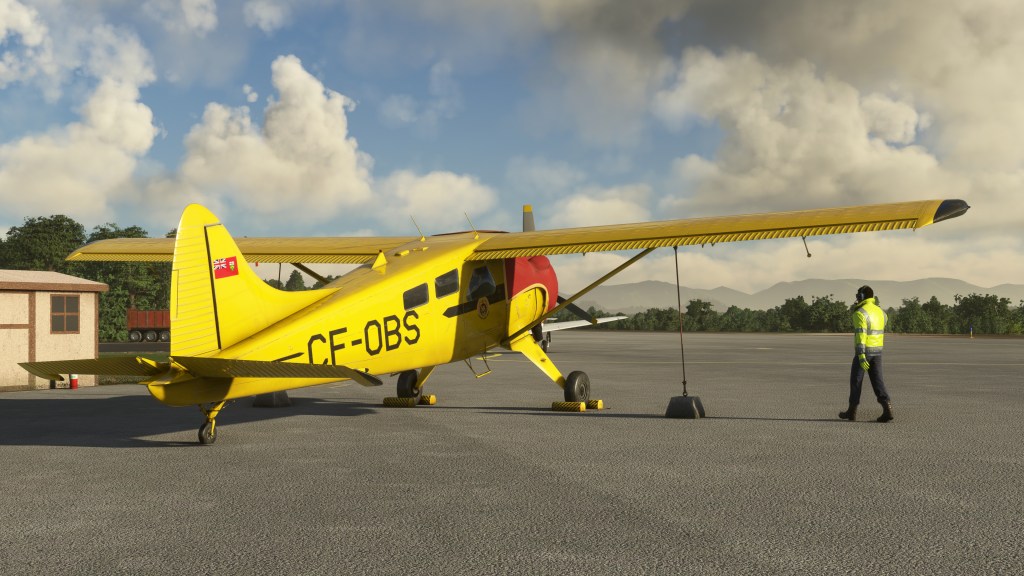

Before I set out from Tofino, I wanted to check out the work done on this airplane. Blackbird Simulations, previously known as Milviz, have been working on this project for quite some time and then went quiet on it. I feared its cancellation for a while but it turned out that it was instead slated for this 40th Anniversary release.
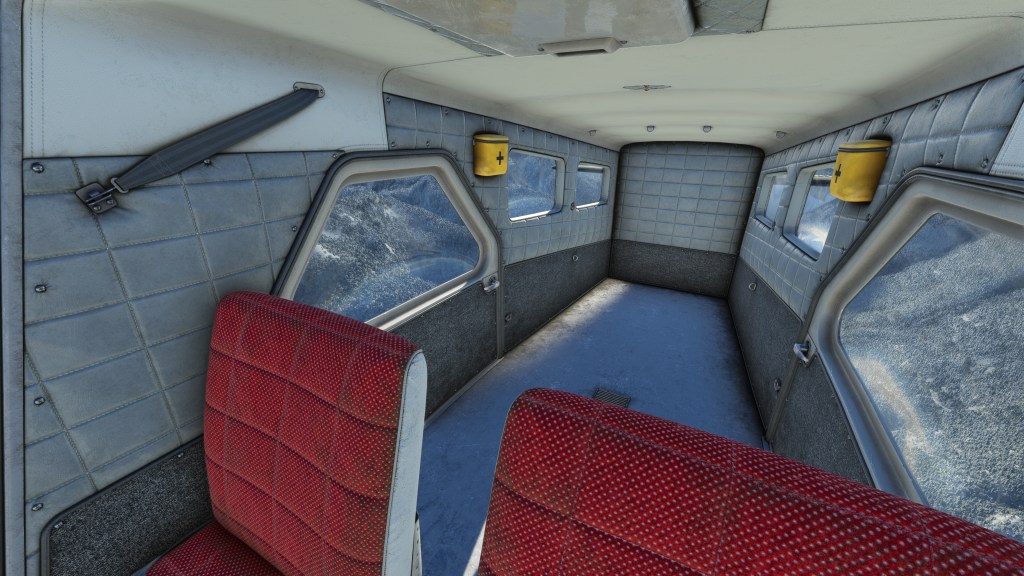
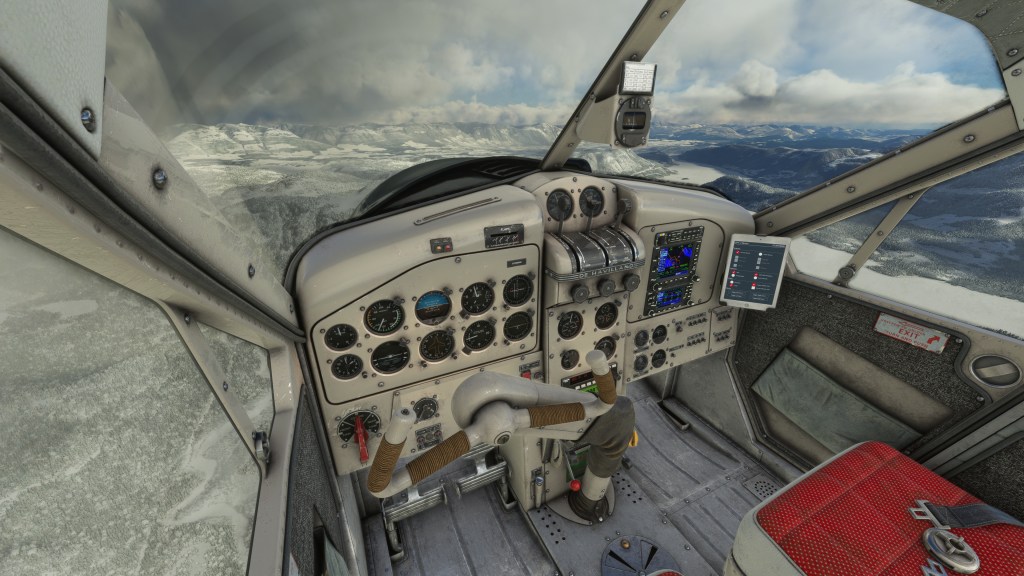
The aircraft as simulated as some pretty impressive simulation details going on behind the scenes with even the small things like shaking needles and fuel tank needles that react to g-forces in the tanks. Incredible! A tablet lets you choose options such as a passenger or cargo variation, different propeller nosecone, co-pilot visibility, tie-downs, doors, and more.
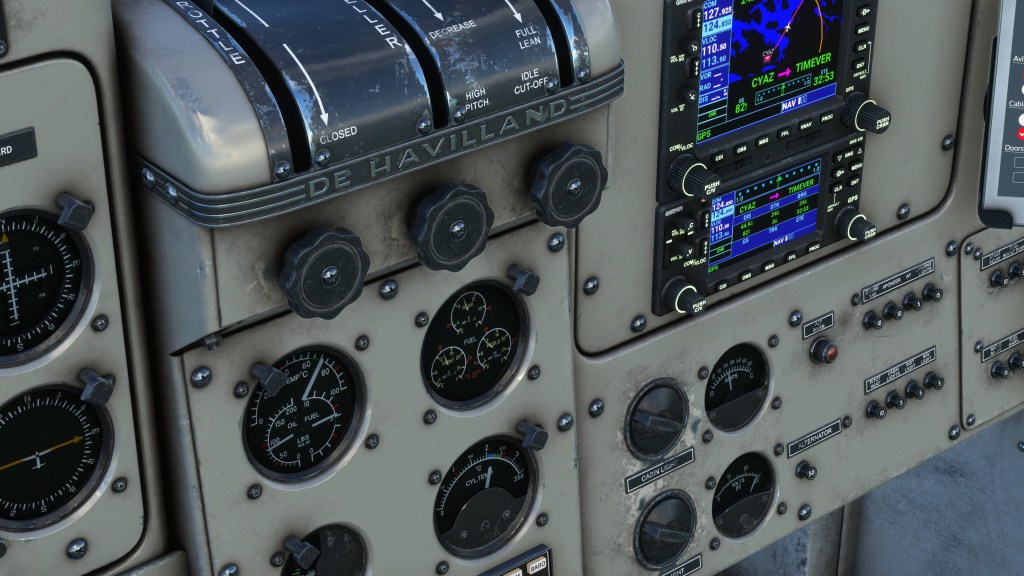
Once taxied out the runway it was time to run up the engines and listen to the sounds. Really good sound work here and I appreciated that even more when we started trundling down the runway. It didn’t take long for the DHC-2 to lift off and start climbing.
No problem getting into the air with this STOL airplane!
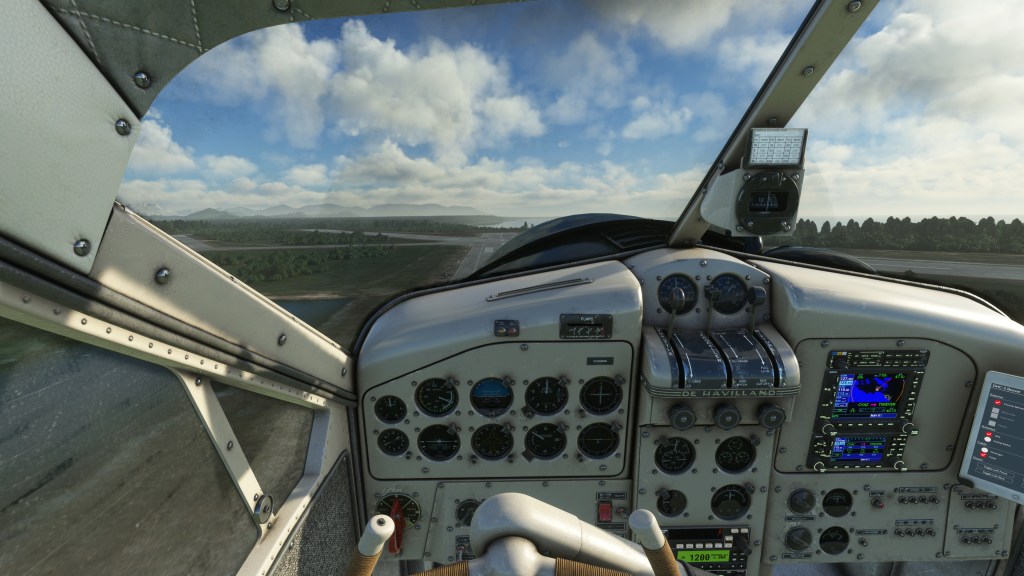
Mountains and storms
After takeoff I did a bit of just flying with the type to get a feel for it. The Beaver isn’t exceptionally aerobatic or high performing but it feels relatively straightforward to handle. Still, a bit of rudder coordination is good for smooth flying and the type fills you with confidence. I’m sure it’d handle making some tight turns on some difficult to approach runways in the mountains if it needed to.
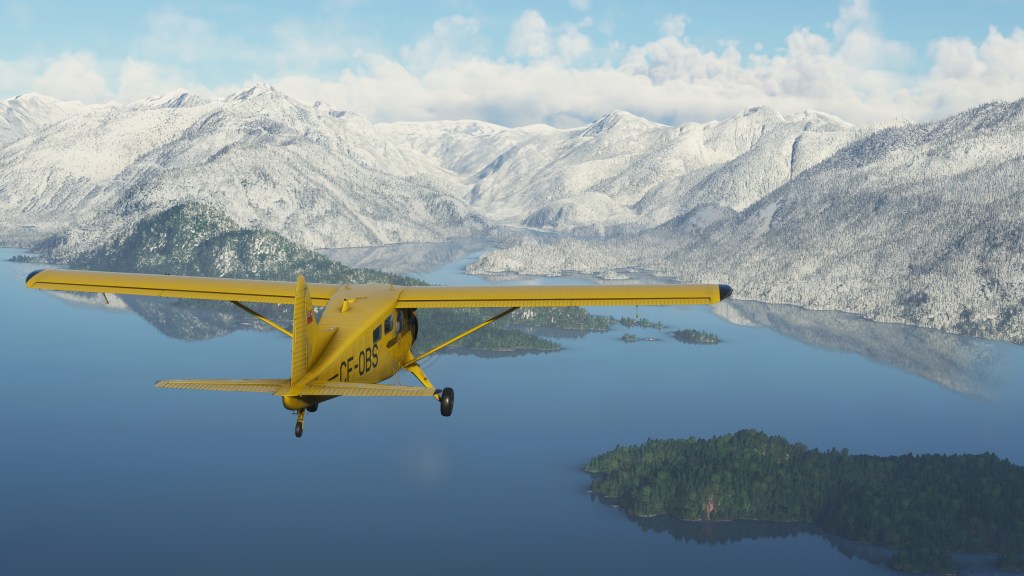
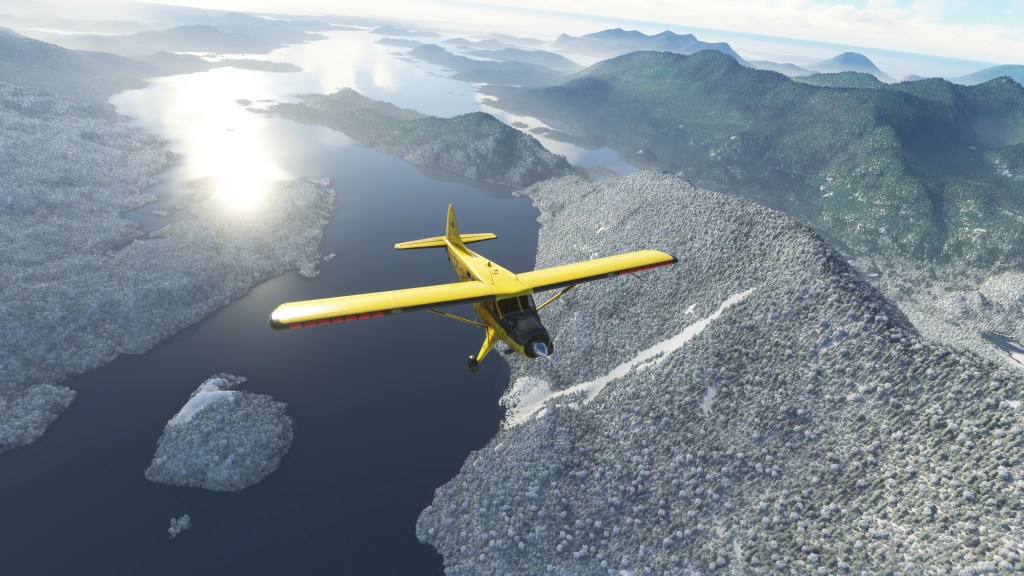
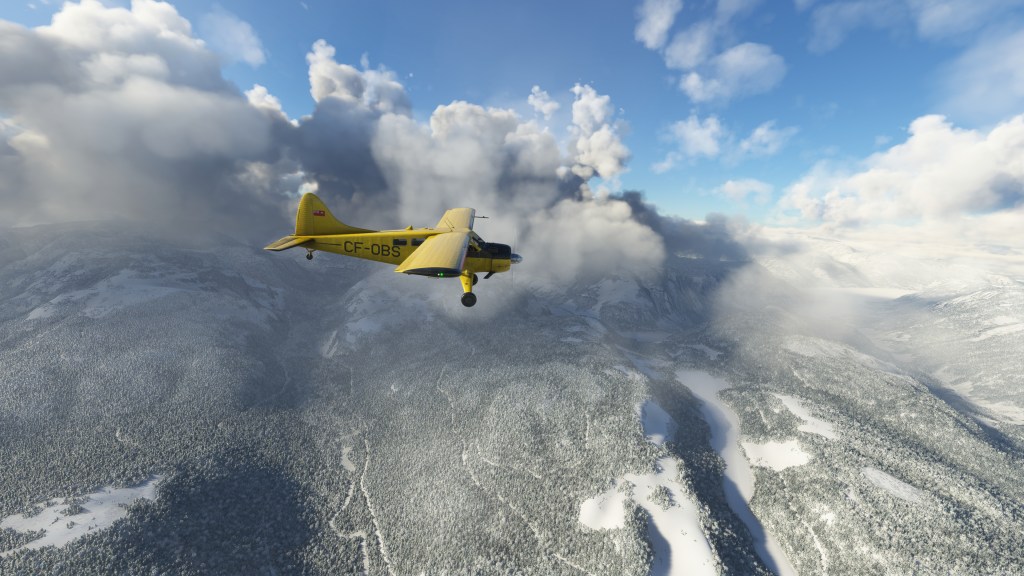
Climbing out of the Tofino area, located on the western coast of Vancouver island, I turned and headed east towards my destination. Ahead of me was Clayoquot Arm Provincial Park which is undoubtedly, from the photos I’ve seen, one of the most incredible places in the world. The stark contrast between mountains, rivers, conifers and and Pacific coast inlets is just incredible. Microsoft Flight Simulator gives us a taste of it and in this case we have a dose of winter weather as the mountains are now snow covered.
Climbing slowly, I finally reached my cruise altitude and set the Beaver’s autopilot on a heading hold along the planned flight path.
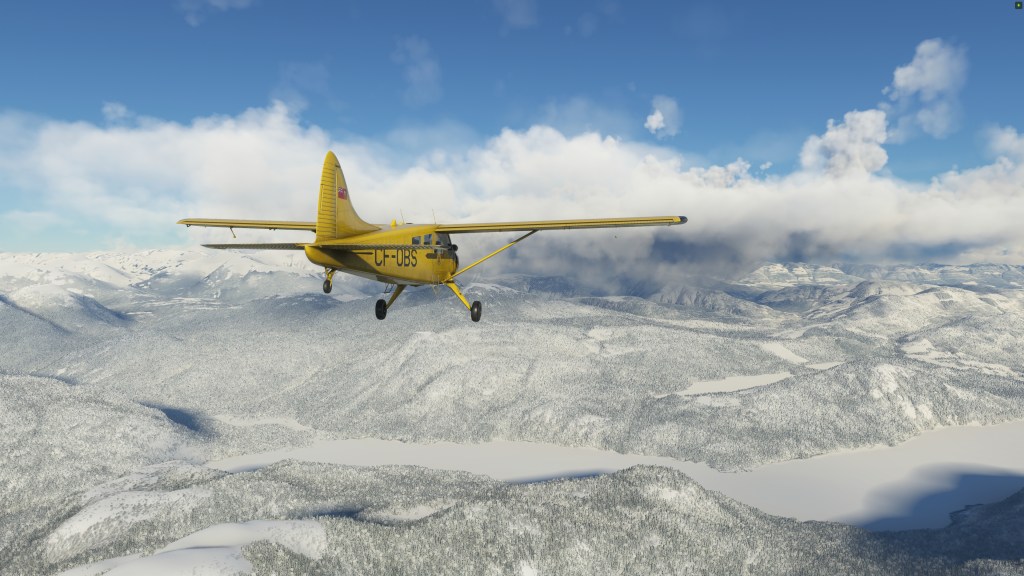
Ahead of me were some dark clouds and low visibility. Uncertain on what the icing and wind situation were like, and already feeling a bit of instability from winds coming off of the mountains, I decided to make a turn to the south east plotting a course around the edge of the storm.
Dark clouds passed me along the side relatively uneventfully but still beautifully.
Final approach to Courtenay
The storm began to recede into the distance behind me and ahead I could begin to see the Strait of Georgia and my destination at Courtenay.
The airport choose was the small Courtenay Airpark (CAH3). Located near the downtown core, this little airpark seemed like just the kind of place that a Beaver might fly into. It’s small paved runway easily handled by a rugged plane like this one.
It took me some time to get downwind of runway 13 and then a bit longer to actually see the airport. Eventually I was able to spot it in the gloom and make a safe, three point landing. The Beaver handles well right down to the limits with its flaps out giving it incredible stability and engine power enabling you to keep a well controlled descent rate.
The ground handling on this aircraft also seems to be a cut above some of the other tail draggers that I’ve flown in MSFS so this was great.
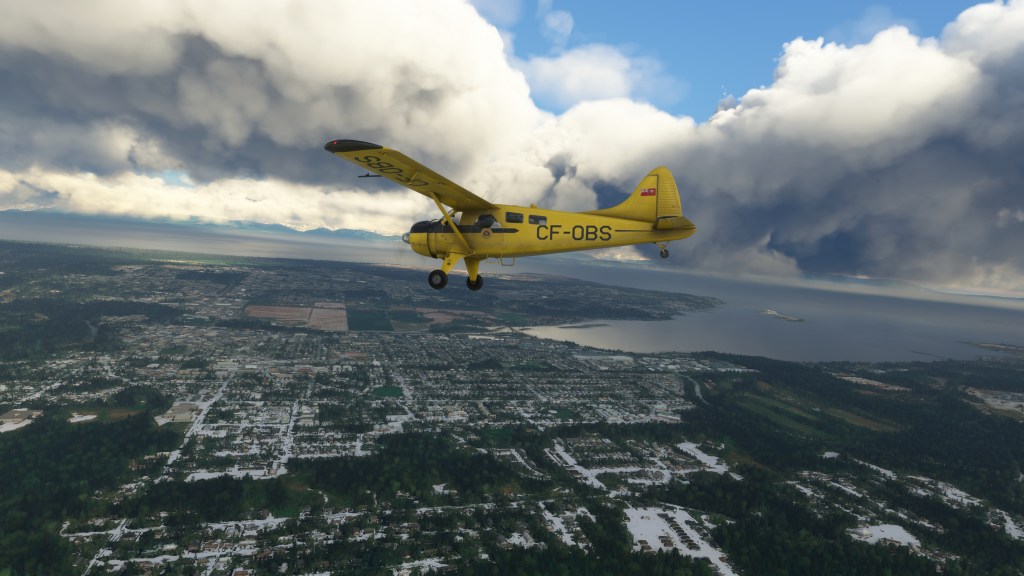
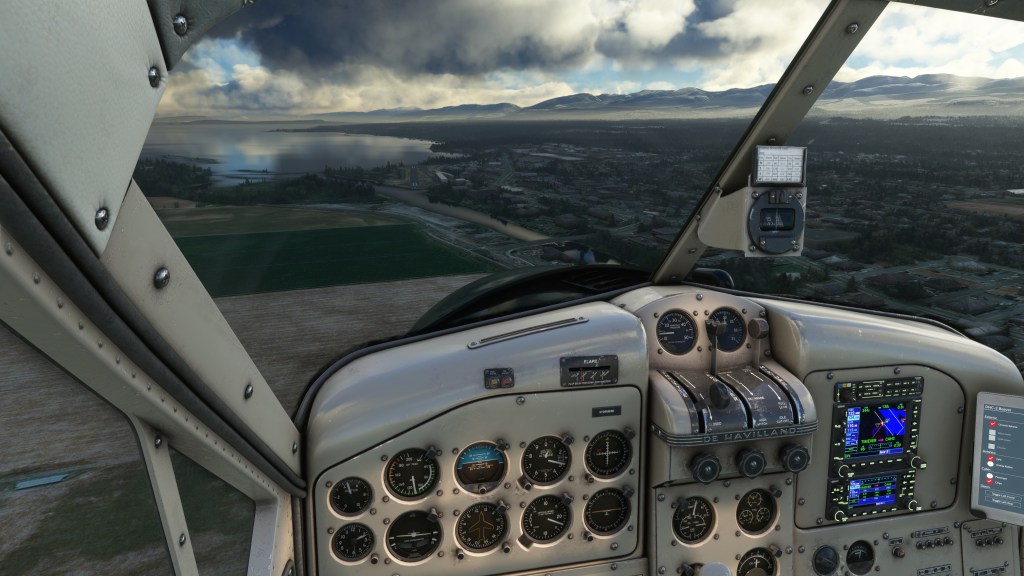
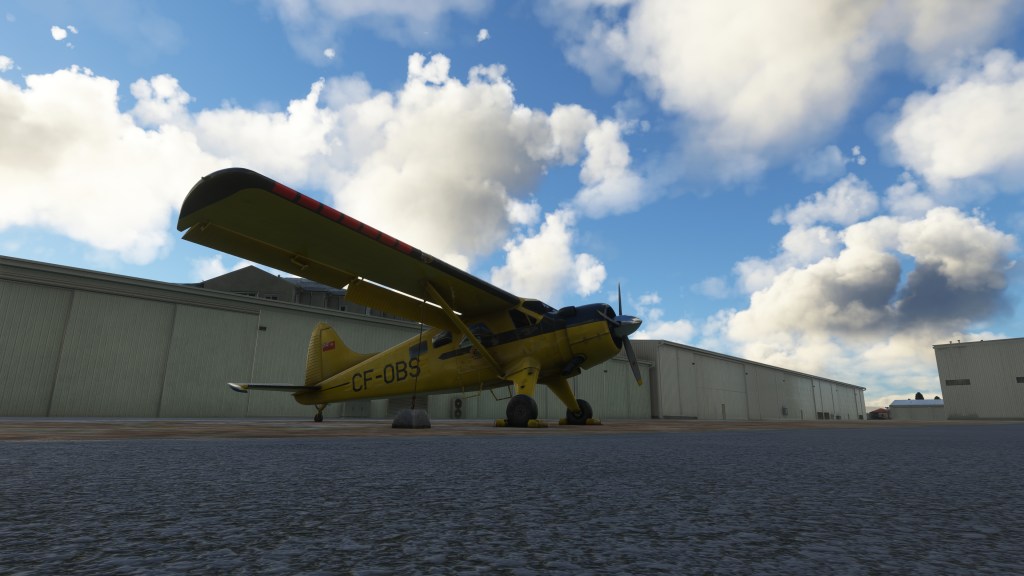
Of everything that I’ve checked out so far with the 40th Anniversary update, the Beaver is the real standout for me. Visually impressive, packed with some really great features both big and small, and possessing good flight dynamics and the appearance of some deeper sim modeling, this is a great aircraft and another contender for best GA airplane in Microsoft Flight Simulator. I might be overselling it but right now I feel psyched about flying this airplane on some future adventures. More of those to come!
If Blackbird Simulations decide to release more versions of the Beaver, I’d buy them in a heartbeat.


 Stormbirds
Leave a reply to ShamrockOneFive Cancel reply