
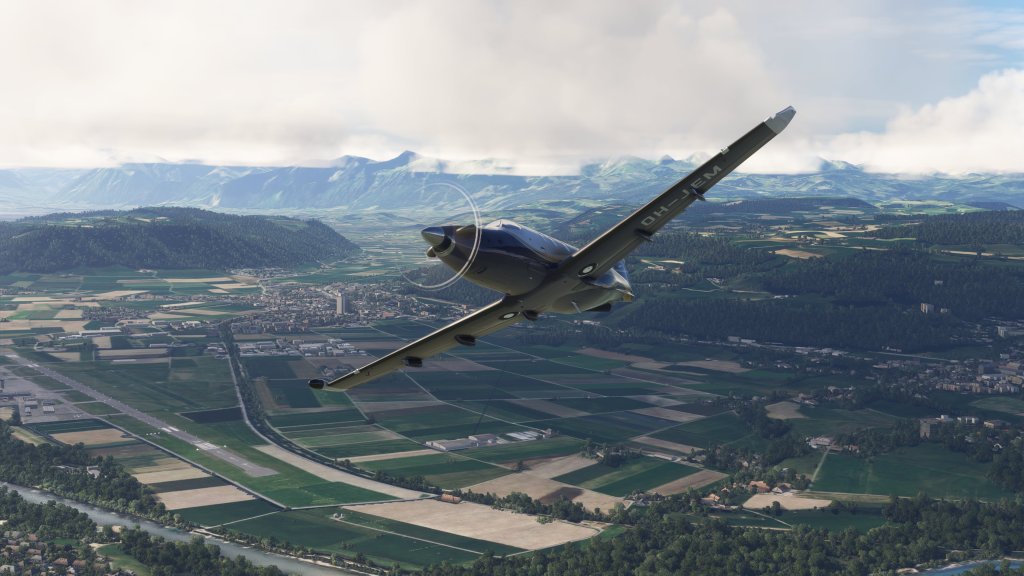
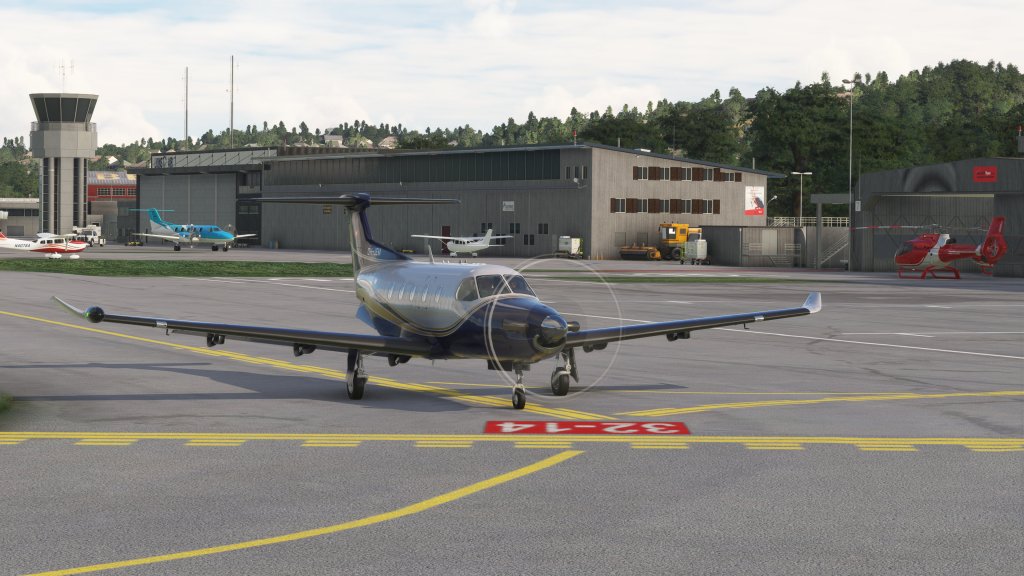
I’ve just completed my first flight in Sim Works Studios’ Pilatus PC-12. For this inaugural flight, I flew from Bern Airport in Switzerland (LSZB) to Nice, France (LFMN) taking in some beautiful views of the Alps along the way. Here’s how the first flight went and a few first impressions of this aircraft for Microsoft Flight Simulator.
Startup, taxi and takeoff
I spent fair bit of time learning the start-up procedure for the PC-12. It’s not an overly complex process but there are a few quirks to doing it right. I was baffled by the generator buttons not always activating but I quickly learned that the sequence of events is really important in this aircraft. Once the problem with the sim pilot was sorted (that’s me!) I was off to the races with the PC-12.
The one test, which I didn’t do, makes sure that the stall shaker system is working correctly. Of course my virtual version always will work. I skipped the test! The warning will remain illuminated for the flight unless you do it.
Startup itself is remarkably easy. Wait until the NG is over 13% and then move the condition lever to ground. And the 1200 horsepower Pratt & Whitney Canada PT-6 turboprop roars to life with a magnificent buzz. I love the sound here!
Taxing the PC-12 seems to generally be easy but you do need to manage forward thrust. Even at idle, the PC-12 wants to roll forward so moving into Beta helps manage it. I’m not sure if that’s a standard procedure on the real aircraft but I have read a bit about how much forward momentum it gets even at idle so at least some of this appears to be replicating the real thing.
Once onto the runway I applied the power and the PC-12 gathered speed extremely quickly. Impressive! Nose up and the aircraft climbed out handily! No issues with power on takeoff here. I’ve heard some folks have had issues handling the aircraft after takeoff, however, I noticed no problems so far.

Autopilot, cruise, FPS and cabin stuff
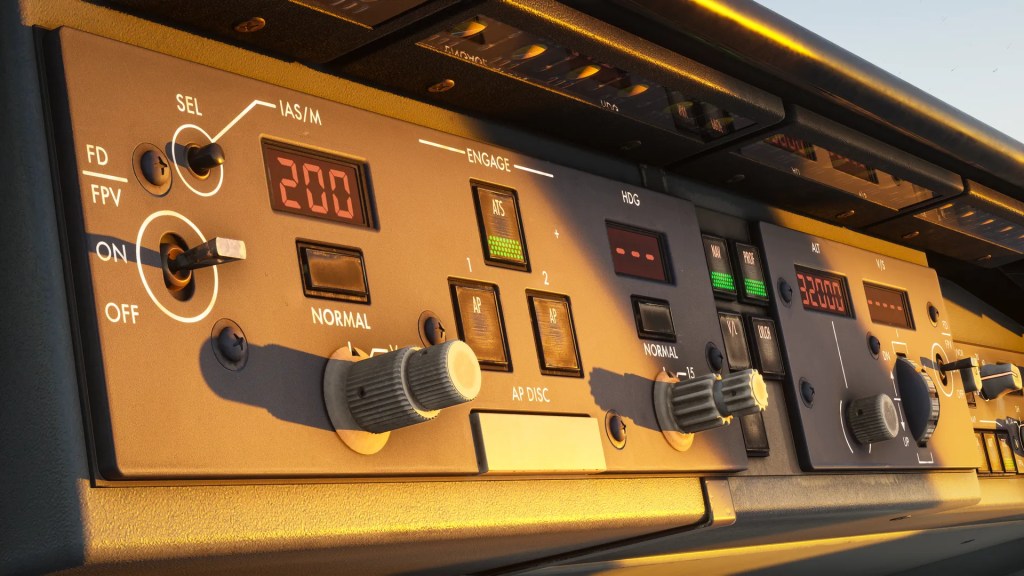
After hand flying the PC-12 for a bit, I switched over to autopilot. The PC-12 is generally fully featured here with most autopilot modes. Manual vertical speed control here to get to altitude which takes a bit of fiddling but the power is certainly there.
This version is a bit more old school with its avionics so you’ll find controls scattered all over the place, almost haphazardly, as I assume the PC-12 was retrofitted at various points. SWS are doing a more modern glass cockpit version too but for now we’re flying this one. It does have charm!
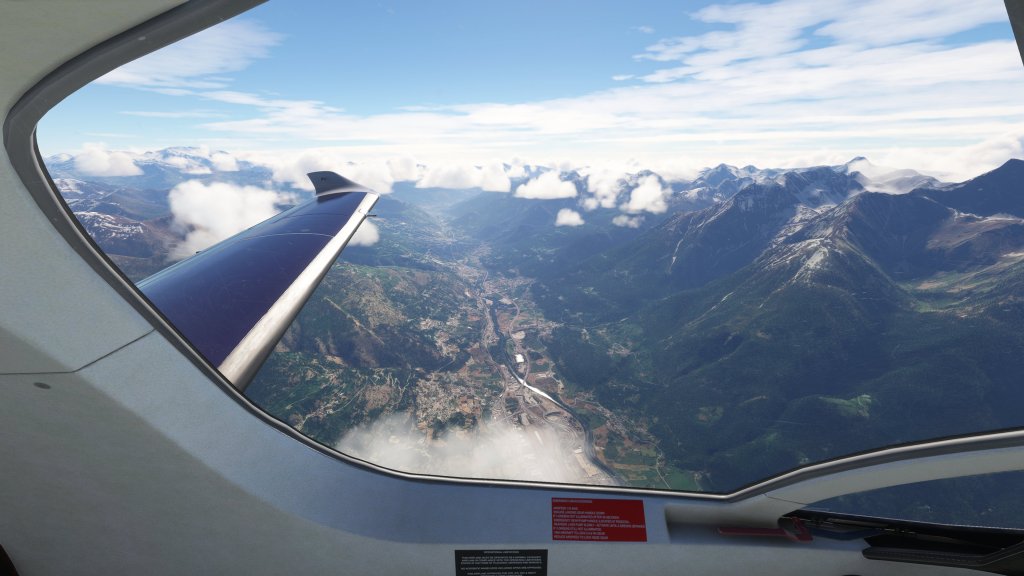
I didn’t bother with any flight plans for this run so I was kind of just winging it. My initial cruise altitude of 12,000 feet cleared most peaks of the surrounding mountains but a few required some dodging. Later I climbed to 15,000 feet just to stay clear.
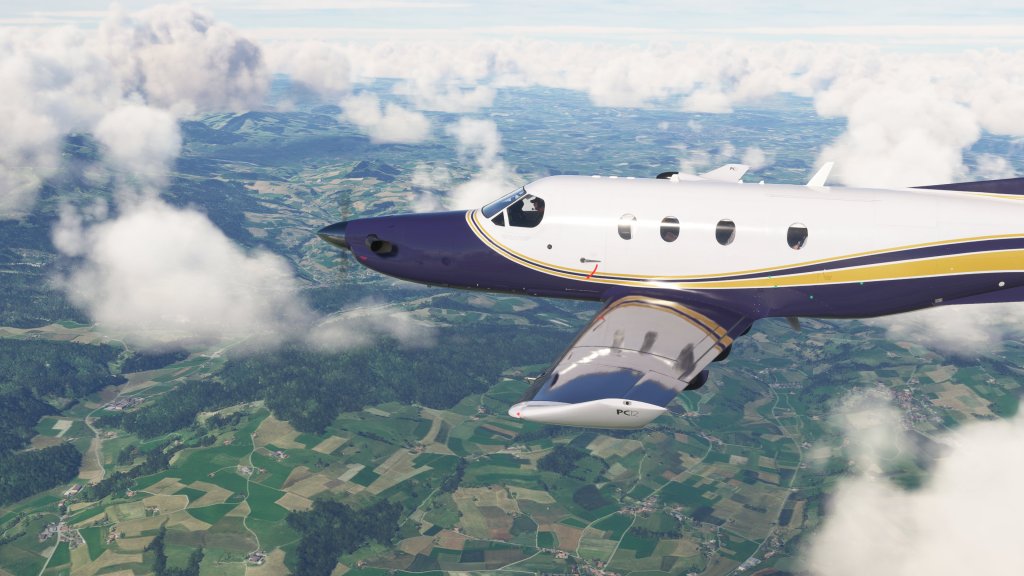


The cruise portion gave me a chance to have a look at the cabin briefly as well as the exterior and cockpit details. More on them later but already I can say that it’s generally excellent.
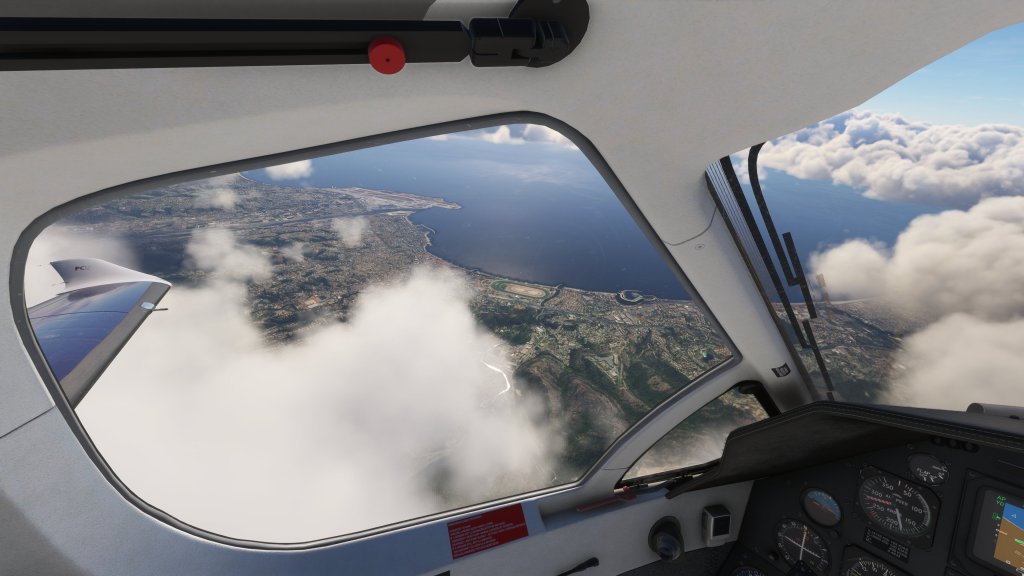
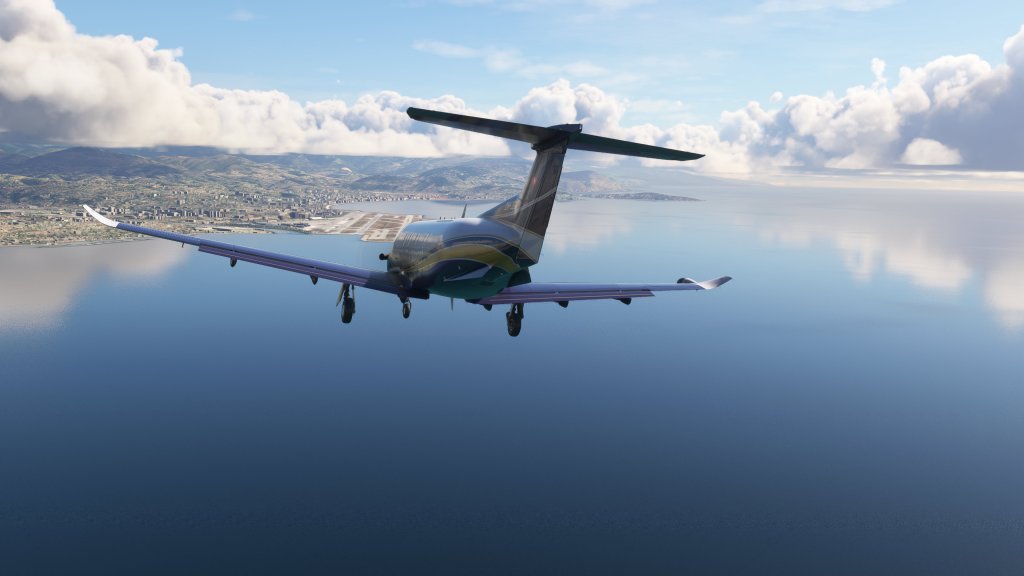
The views outside were superb as well!
I wanted to say too that SWS’ work on performance has really paid off with this aircraft. The frame rate was extremely high and the entire experience was without any performance glitches or problems. That’s pretty good considering this aircraft is not too far off of the complexity of some of the airliners I’ve been flying recently. It’s also a comparison point for Carenado’s PC-12 which infamously has had some frame rate issues. Something I haven’t verified for myself.
Setting up for landing
The PC-12 is definitely a quick airplane and before too long I had crossed the last of the mountain ranges that I needed to clear and began a descent into Nice. ATC gave me clearance for Runway 22R and I began configuring the PC-12 for landing.
Here I’m a little uncertain as to how I feel about the airplane. I did have to have a significant crab to counteract some winds but it felt steady while in position for the landing. Almost too steady? I need more time to evaluate the aircraft in this configuration. It’s also famously nose down in its attitude when landing which I know SWS spent a lot of time trying to get just right…and came close despite some challenges with the current state of MSFS’ flight model.
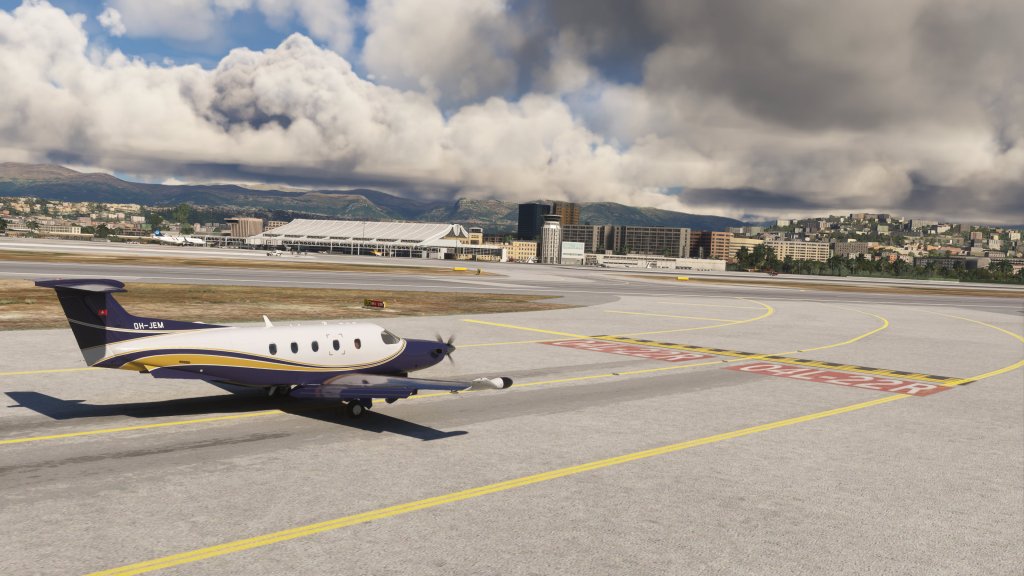
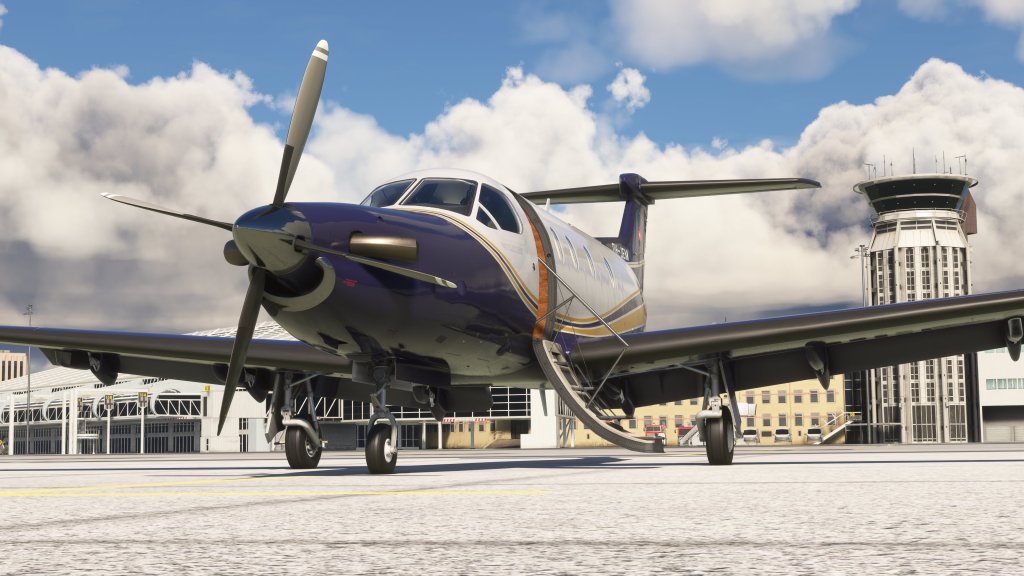
I made an adequate landing and taxiied to an empty parking spot. I even opened up the passenger door to let the passengers in the back out. A successful first flight. I expect to learn a lot more about this aircraft over the coming weeks and months but I can already tell that it’ll be a favourite – quirkiness and all.



 Stormbirds
Leave a reply to Urgent Siesta Cancel reply