
I was very lucky to get a little bit of a head start on my DCS: F-4E Phantom II content thanks to a preview build coming my way from the folks at Heatblur. It’s still early in my process of getting to know the legendary jet fighter but some things are already becoming clear. With this preview I want to focus on a few key items and issues that I know many of you have been asking about. Let’s get to it!
The first impressions

Heatblur are set to launch DCS: F-4E in just a couple of days now and it should come as no surprise to anyone that the developers have established themselves as being among the best in the industry. Their DCS: AJS-37 Viggen and DCS: F-14 Tomcat modules are masterpieces of flight sim development, modeling, sound work, and feature set. The DCS: F-4E, with my first hours behind me, show that their efforts have not been diminished by time and F-4E looks set to join the company’s previous endeavours as one of the very best.
Although DCS: F-4E will be an early access product, it follows in the footsteps of the Tomcat and Viggen by arriving with an extensive featureset. Heatblur have plans to bring additional features post launch such as the DMAS upgrade that brought in more digital avionics into the jet but what we’re starting out with is already impressive.
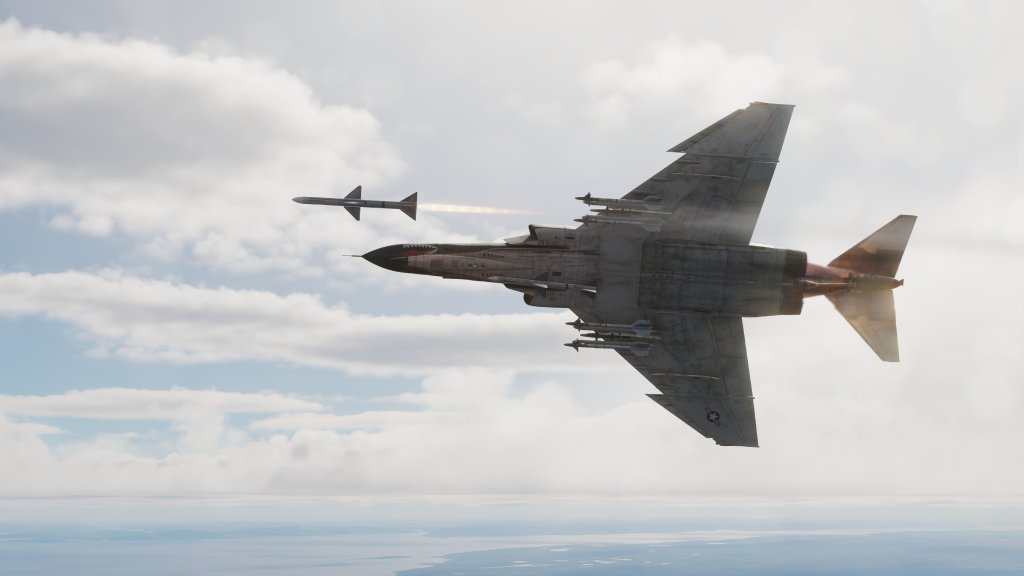
When it comes to basic capabilities you won’t find anything lacking here. The gun, the Sparrows, the Sidewinders, TV guided bombs, Mavericks, and everything else that you can load onto the jet all work. So does the navigation system, the radar, the IFF, a detailed simulation of the RWR, and Jester 2.0! The new AI assistant that rides in the WSO position helps you fly and fight the jet and with version 2.0 (the first version was originally on the F-14 although that will eventually be upgraded too) you’ve got Jester taking a bit more initiative and asking some questions preemptively such as asking you if we’re going to be flying low altitude today.
I’ll get more into the weeds in follow-up articles but suffice to say that there’s a lot here and you’ll be able to fly, fight, and make use of the Phantom’s capabilities on day one as both a fighter and as a strike/attack aircraft.
Is it hard to fly?
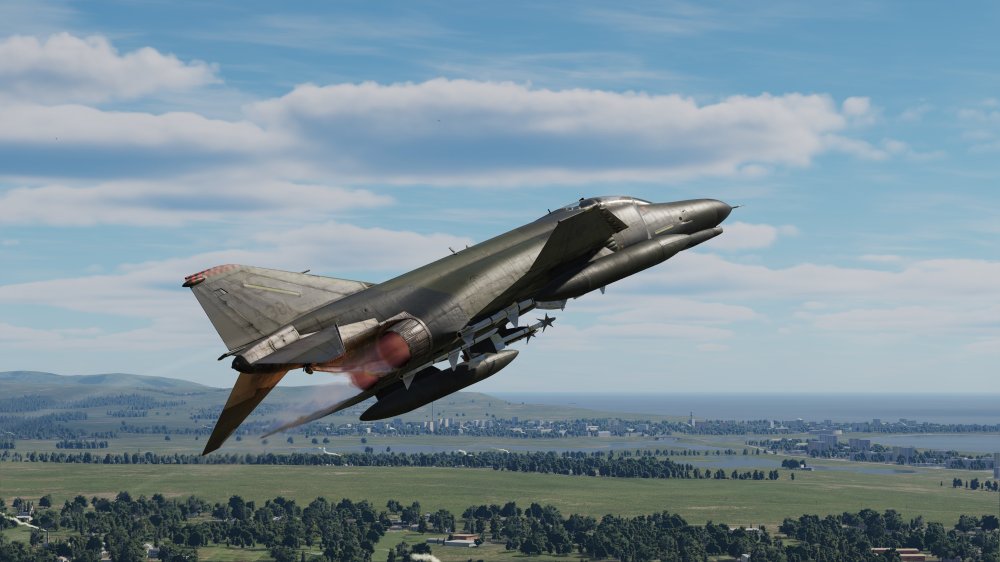
One of the issues I wanted to tackle is how hard it is to learn the F-4. There’s this impression out there that the Phantom is a hard jet to fly and fight. I know some of you have expressed that feeling in the comments and I’ve held that thought in my head too wondering just how difficult it would be to get to know the Phantom and if its analogue nature would hinder trying to fly it meaningfully.
After my first several hours, I can safely say that the Phantom is no more difficult than the Tomcat, Hornet, Hind, or any other fully featured module. The actual mechanics of flying the Phantom are actually not that bad with the jet generally being well behaved in most regimes of flight and being steady and stable enough that flying it doesn’t require a ton of management. It’s not fly-by-wire of course so its not like an F-16 or F/A-18 but its certainly not that hard to manage and in many ways is easier than the F-14.
When it comes to fighting the jet, Jester helps split the workload leaving you thinking more about flying and shooting while Jester manages the radar and much of the navigational functions. Jester calls out bandits and missiles with equal enthusiasm to his version 1.0 counterpart in the F-14 so having an extra set of eyes in the back seat really helps! If you have a human back there, things can be perhaps even more dynamic but as a primarily solo flyer I’ve found Jester 2.0 to be a great asset.

A lot about the F-4 is actually not all that hard to manage. If you’re familiar with any number of other aircraft from the era from the F-5 to the A-4, you’ll see some familiar procedures to get things to work. Turning on the weapons pylons, selecting a bomb or air to air weapon, and adjust the gunsight depression is not shocking different from an F-5 for example.
Some things about this jet are actually downright easy. One of my favourites is the Dive Toss bomb method which requires very little setup and you, together with Jester, make use of the jets radar to get ranging and then drop the bombs at the appropriate moment.
Other items require a few steps though often you can benefit from similar workflows for weapons like the AGM-62 Walleye, Walleye II and GBU-8 HOBOS.

The hard part about the Phantom is not the basics of flying it but in the becoming a master of it. While the jet is very capable for its timeframe of the late 1960s and on, its not a highly agile dogfighter with fly by wire technology, a radar and datalink system with high levels of situational awareness. It’s just not from that era. To fight the F-4 effectively, you’ll need to learn the tactics and techniques to get the most out of the jet.
Fighting the Phantom

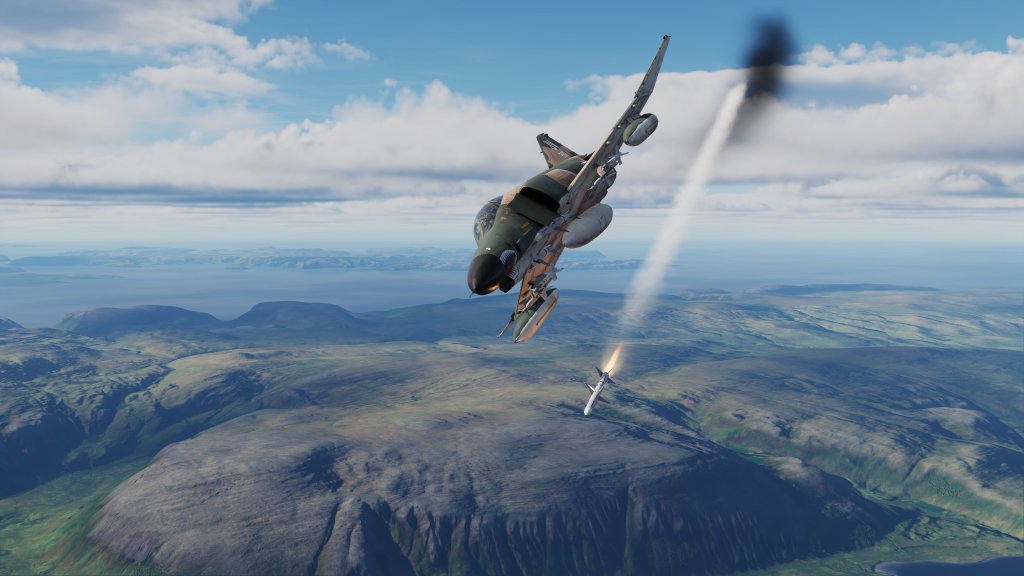

I’ve got a lot of reading and experience to gather up before I am anywhere close to learning all of what’s needed to fight the Phantom. But I can already say that the basics of the tactics that you’ll be employing here are that of a team based energy fighter that does best when flying fast or climbing hard. It’s engines and aerodynamics give the Phantom an advantage over most aircraft of its era in the vertical fight but it doesn’t perform nearly as well in a horizontal fight against opponents that are better in that regime.
It’s radar is also considerably less capable than what you might experience in the F-16, F-15, or F/A-18. Fighters come into range around 20-25nm while larger aircraft can be picked up further out. That together with a less capable IFF system means that BVR fights are often far shorter ranged than in the 4th gen fighters and decisions and tactics will revolve a little more around the aircraft’s less capable systems. Compared to types of a similar era, however, and the Phantom is plenty capable! If you’ve been flying the DCS: Mirage F1 recently you’ll probably have a sense of what that era of Cold War BVR looks like because the tactics are not all that different.
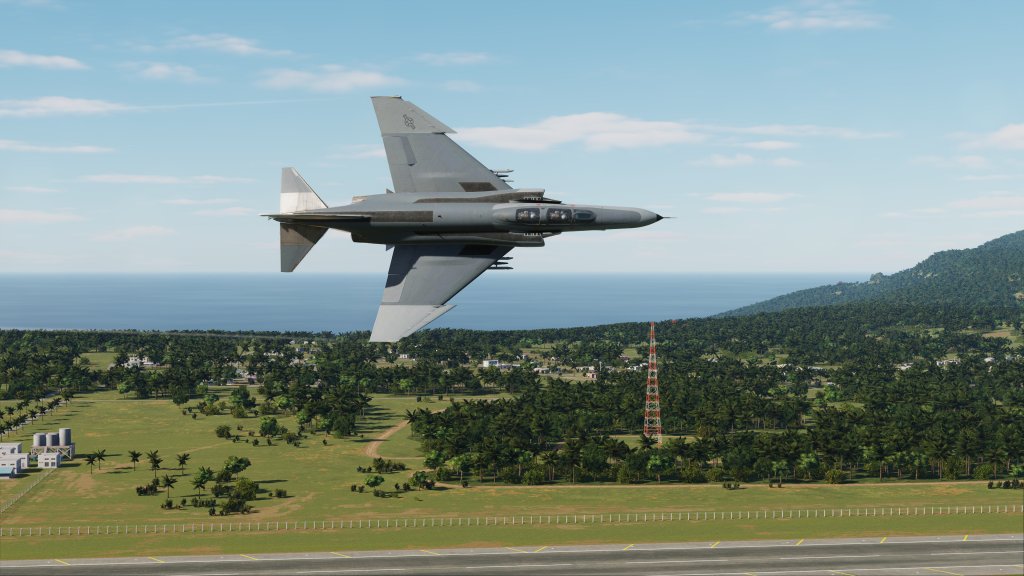
For air to ground the Phantom is more Viggen and less F-16. You’ll likely end up flying low, fast, and avoiding SAM and AAA to deliver one strike all at once and then get out quickly. And the jet is quite fun to fly in this kind of profile too!


Framerates
There has been concern that all of the complex underlying mechanics behind the modeling of the Phantom could cause issues with performance, however, that has not been my experience.
Regular readers will know that I’m not big into benchmark testing but I thought I should give you a sense of what the F-4E is like running on my Core i7 12700KF, 64 GB RAM, RTX 3080ti system running at 4K. Admittedly it’s a powerful machine though one that now has a couple of years under it.
Frame rates are generally holding at a steady 91 frames per second while parked on the apron at Anderson AFB on the DCS: Marianas Islands map. In exactly the same parking space I also tested the F/A-18 with 81 fps, A-10C II at 96 fps and the AH-64D with about 86 fps on average.

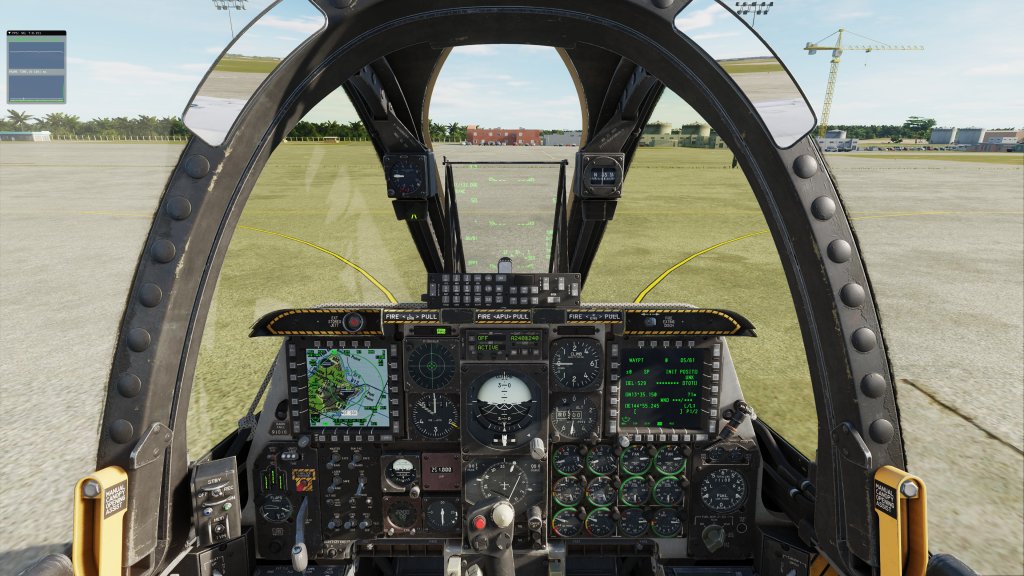
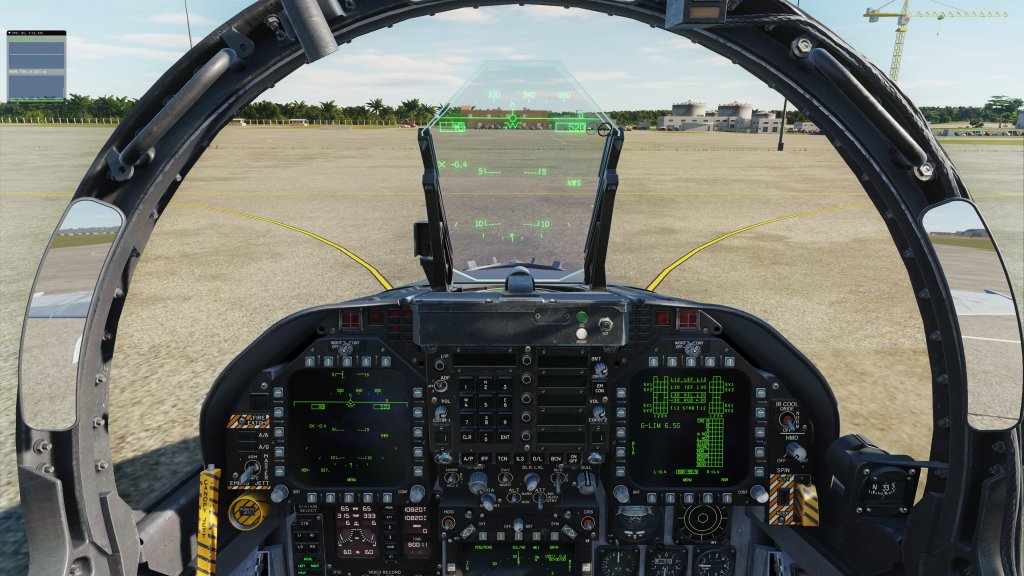

This is admittedly not the most comprehensive benchmark but I wanted to offer a very basic comparison point of what each of these jets are showing, on my system, when I spawn them on an empty apron on one of DCS World’s more demanding maps.
The overall impression is of a smoothly running jet. If you’re right on the edge with other modules you may find the F-4 a bit of a challenge to run too. On the other hand, if other modules like the F/A-18 or A-10C II run well then you’ll probably not have any real issues here.
I love the extensive livery list
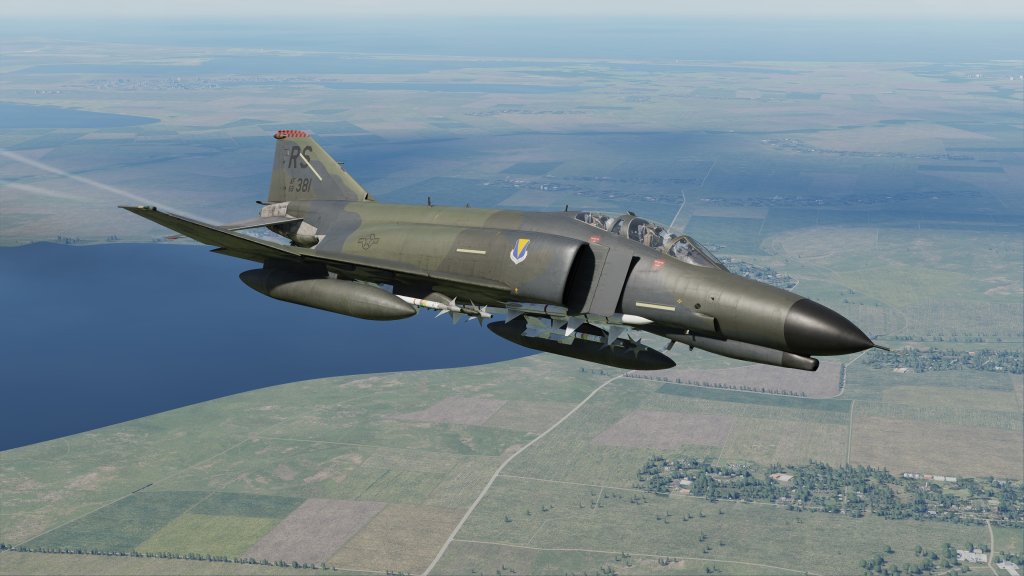
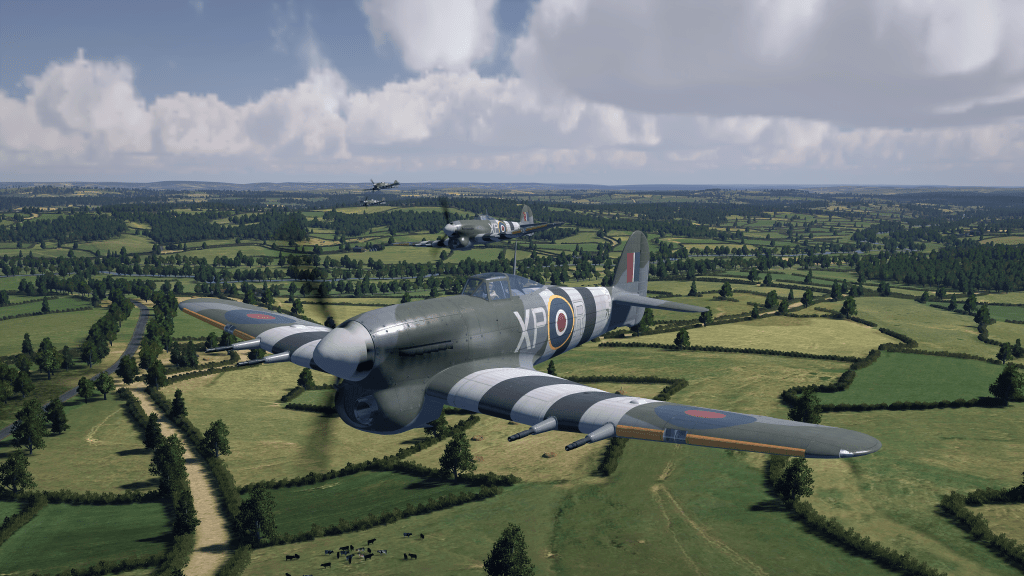
Heatblur have once again come through and delivered an extensive library of liveries built right into the jet. There are dozens upon dozens of options from several USAF schemes as well as liveries representing Germany, Turkey, Japan, Iran, Israel, Greece, and others. We’ve even got a couple of fictional liveries with an RAF scheme (which flew a different variant of the Phantom rather than this F-4E). The Thunderbirds, who flew the jet from 1969 to 1973, are also featured too!
I’m just scratching the surface here so suffice to say that there’s quite a few!



Final thoughts
I’ll be doing more Phantom content and a follow-up early access review later on but I can already say that I’m very impressed with the jet, I feel far less intimidated by the learning curve than I did before, and the Phantom absolutely lives up to the reputation that Heatblur have established for themselves. Even if there happens to be some bugs on launch day, and I expect there will be some, we know over the long haul that this team never quits on their projects.
I am looking forward to launch day on May 21 because everyone else will get a chance to fly this jet too! And if its not for you, its still going to be a tremendous boon to Cold War and modern era flyers alike as both friend and foe. I can’t want to see multiplayer servers filled to the brim with Phantoms and with other types looking for the chance to test their mettle versus the phantastic Phantom!
The DCS: F-4E Phantom II by Heatblur Simulations is currently available for pre-order on the Heatblur and DCS World e-Shops for $59.99. You can get a head start on your learning process too by accessing the online manual for the jet here.
I want to thank the folks at Heatblur for the early look at the jet! There will be more Phantom content coming soon so stay tuned for more!
Screenshots
Exterior screenshots




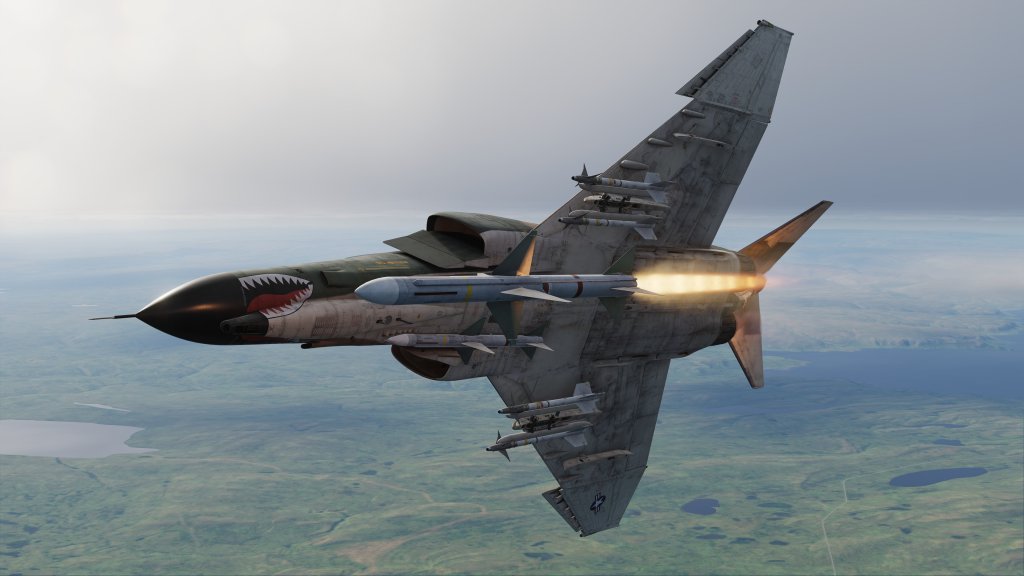
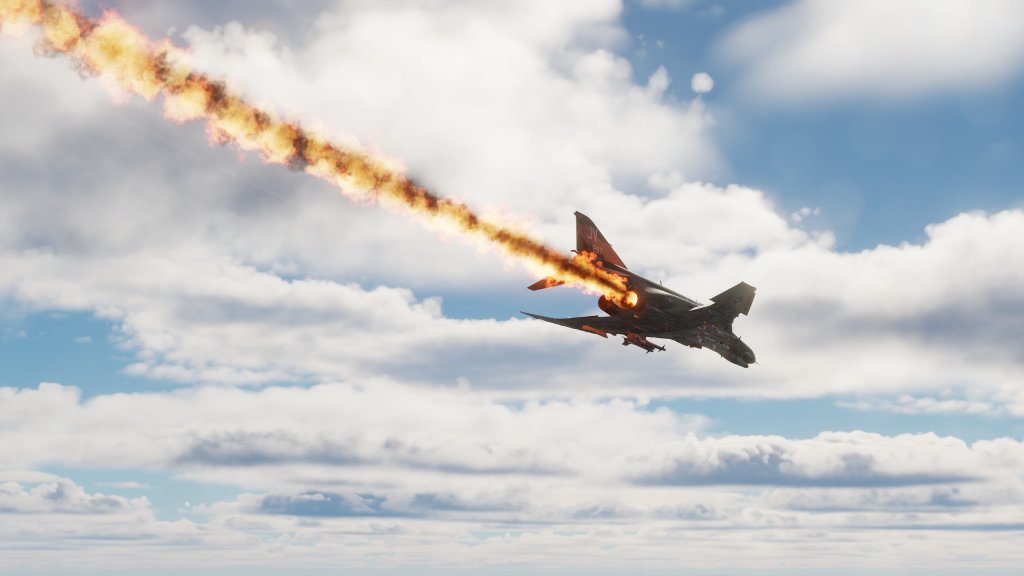
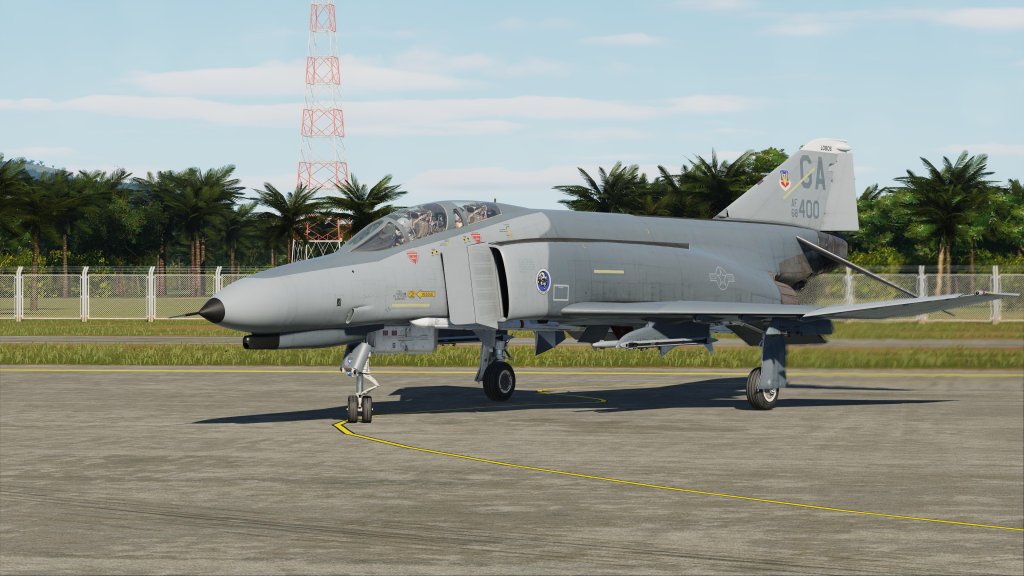


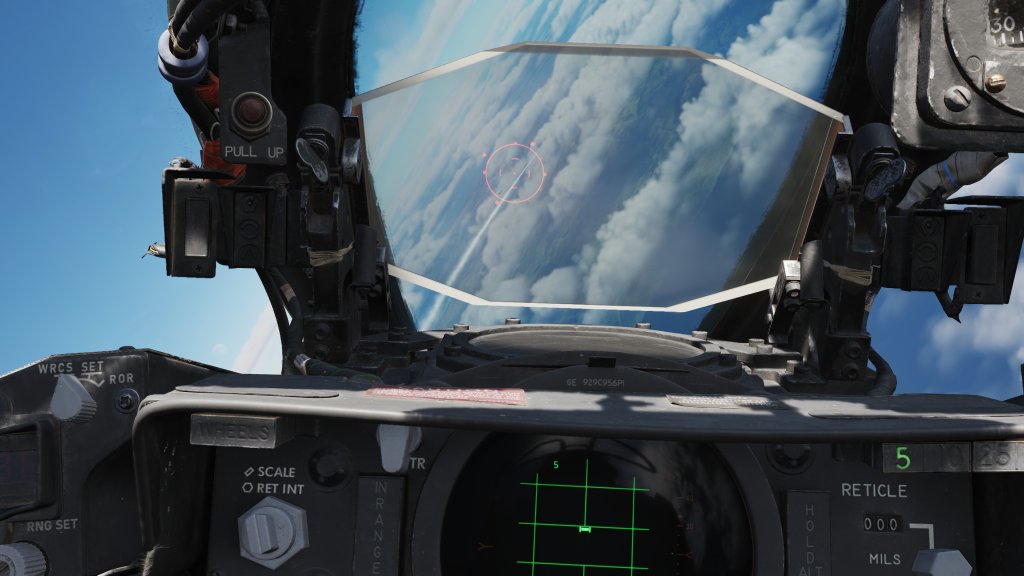
Interior screenshots


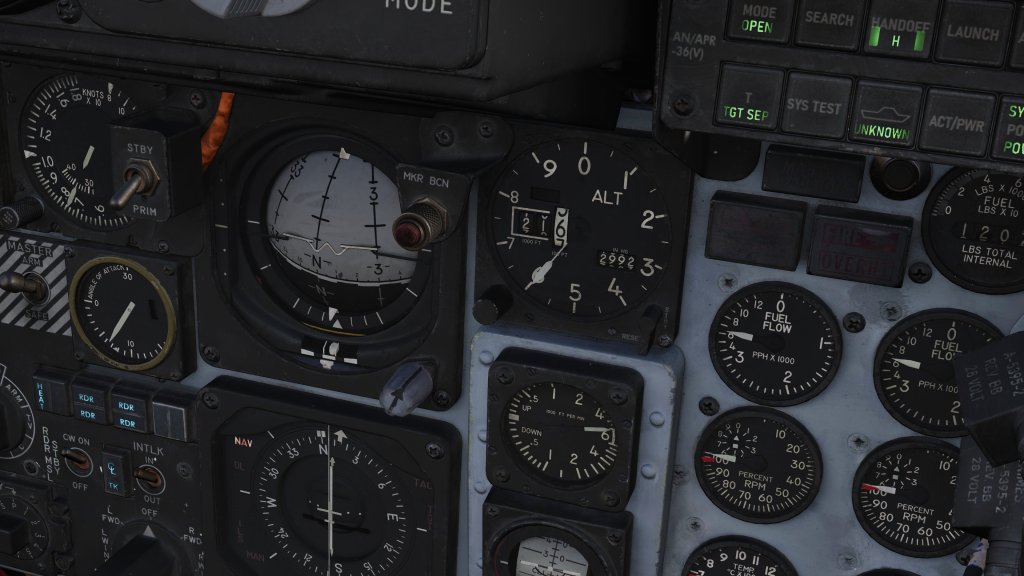




 Stormbirds
Leave a reply to jeff Cancel reply