
If what I’ve seen over the last few days is true, it seems like you won’t be waiting all that long to get your hands on Heatblur’s DCS: F-14B(U) Upgrade for DCS World. I was very fortunate to get an early preview of the module so I could fly it and get some thoughts written down ahead of its launch. In part one of the series I’m taking you through the journey of returning to the Tomcat and getting reacquainted with a type that I’ve put a fair bit of time into but not all that recently. It’s time to kick the tires and light the fires with the F-14B(U)!
Focused on flying
I’m pretty rusty on DCS: F-14. I flew it quite a lot when it came out and had quite a bit of fun with it. I think some of my most memorable bits weren’t flying the Tomcat in combat, which I did do a fair bit of, but rather the challenge of putting the jet on the deck safely and with a good score. The F-14 is one of those ultimate carrier-based fighter experiences and any version is going to push you to fly it to your absolute best.
What you’re about to see is a work in progress effort by Heatblur to get the F-14B(U) ready for public consumption. Since doing this flight, the developer has put out additional builds that have continued to chip away at bugs and get things ready to go for launch. I fully expect a Heatblur quality launch for this aircraft so not to worry… this is normal for developers as they get ready to launch a module.
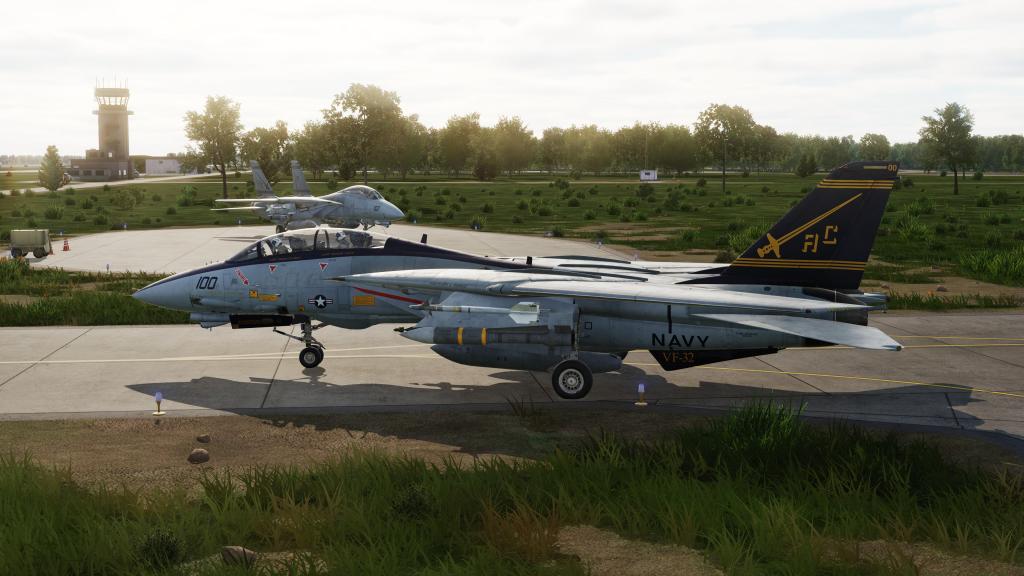
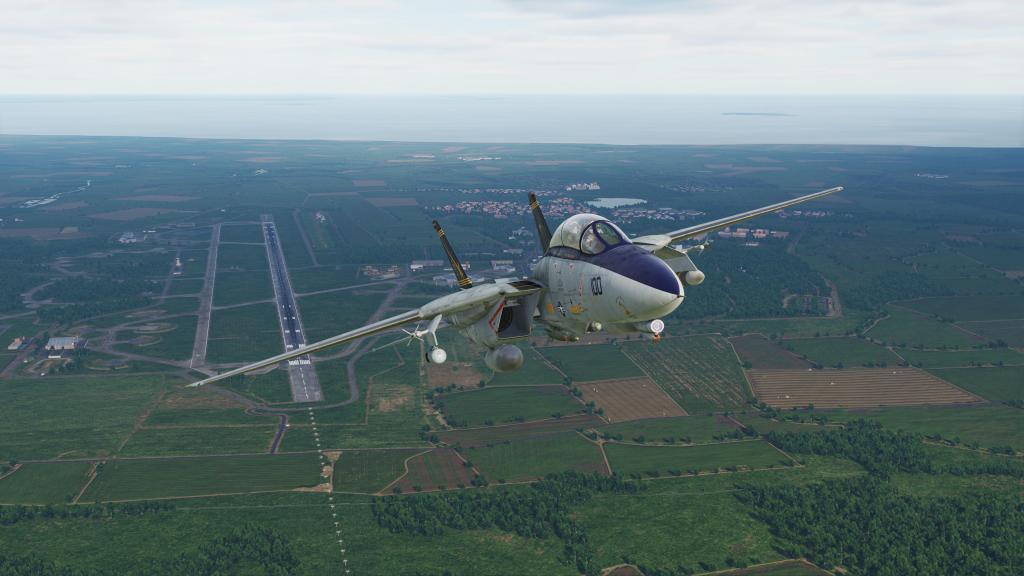
In this first piece, I’m really just focused on getting back into the pilot’s seat and re-learning how to fly the Tomcat. It’s a beast of a fighter and the F-14B(U), despite some of the upgrades, is still very much an aircraft that straddles two generations of fighters just with a more pronounced gulf – between the more analogue generation 3 and an increasingly digital generation 4 fighter. That’s not a knock against the Tomcat as a simulation experience but rather an advantage for those chasing down a highly interactive experience.
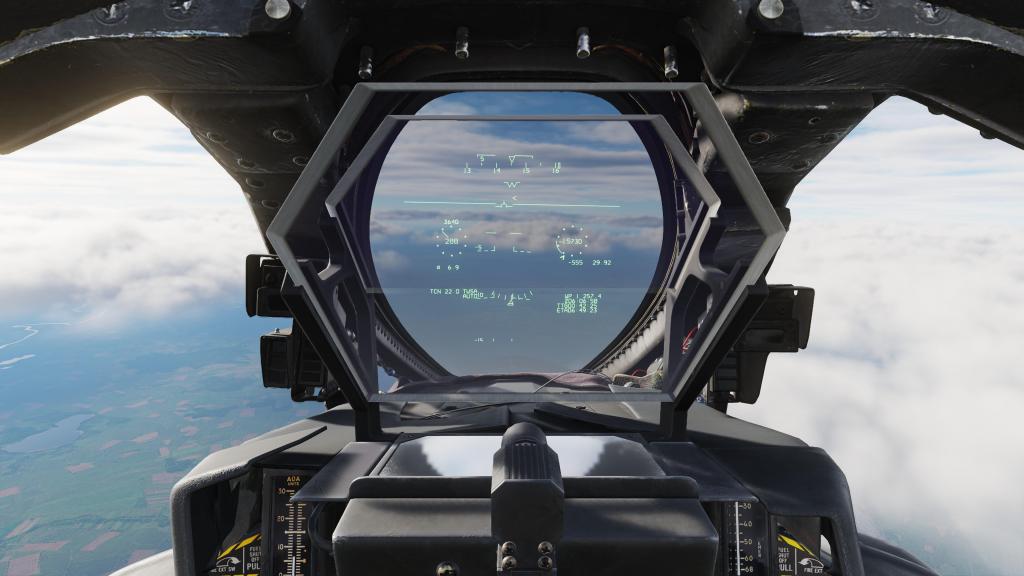
One of the first things I noticed once up in the air is the much improved HUD. Its no secret that the updated HUD is a centerpiece of the systems upgrade and while I haven’t dug into the combat modes, it’s clear that we have a more Hornet-esq experience with a high refresh rate, a lot of data on display, and very clear symbology. The older variants were more generation 3 than 4 in that respect and this one puts it firmly in gen 4.
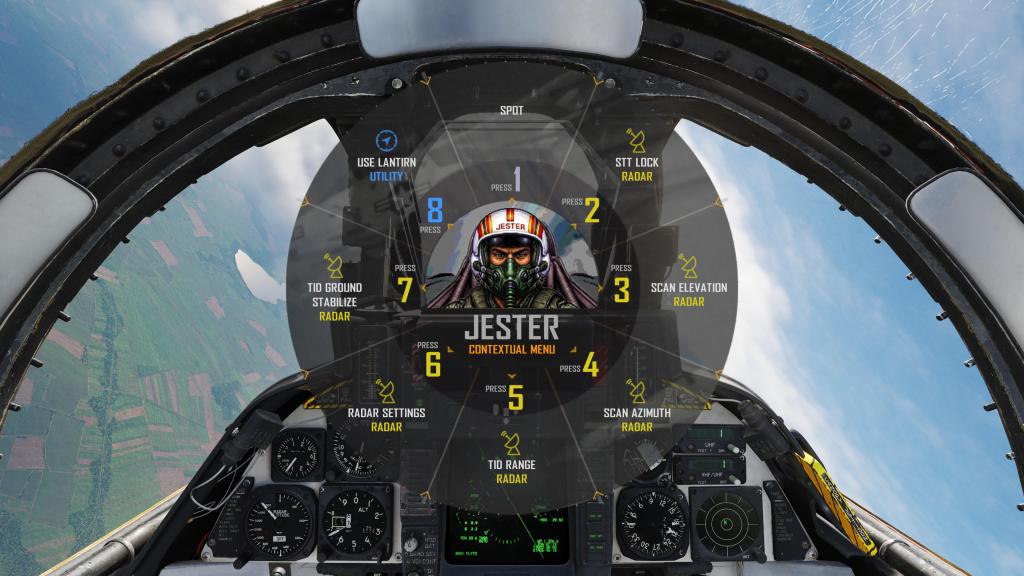
Another thing that I’ve noticed is that Jester has new menus and a new look drawing on late 1980s videogame art for inspiration. I’m not sure if I love the new look yet or not but its certainly nostalgic and this module draws heavily on that.
Taking the F-14 into the air and flying it around certainly feels more familiar than different. Heatblur have updated the flight model on this variant to represent the digital-based stability augmentation system that replaces the older analogue system. But what does that mean from a practical standpoint?
My initial impressions are that the Tomcat still feels like the Tomcat but with the very edges of the envelope smoothened and dampened just a bit more. That may actually end up disappointing some but more pragmatically it makes it slightly easier to fly to the edge of the envelope without it getting away from you. Make no mistake, fly the F-14 wrong and it can stall and cause you to flop around. But it requires a more hamfisted approach than before. Otherwise, it remains just as responsive and capable as before and you can compete in this jet with just about anything in DCS World if you approach it correctly.
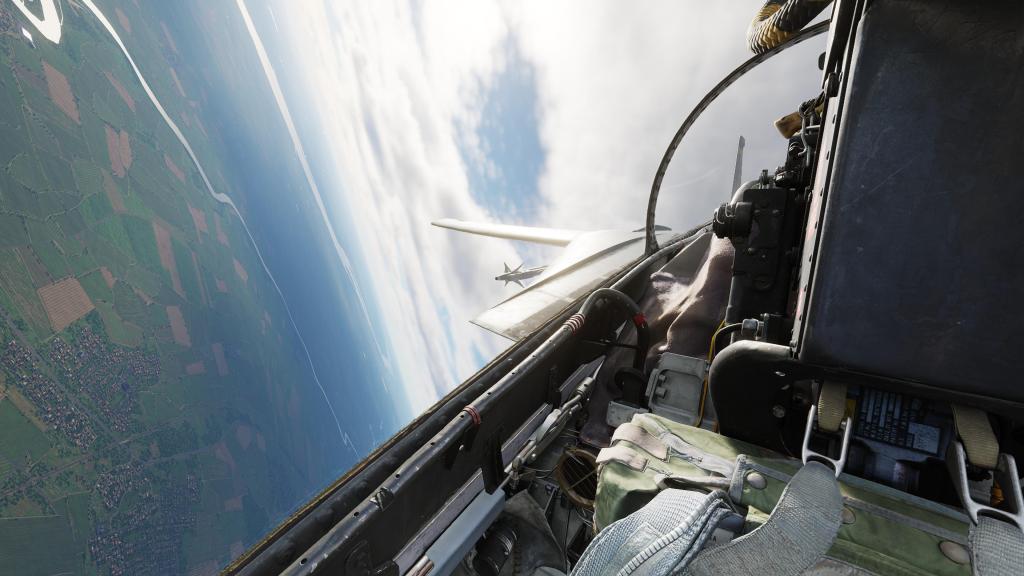
The other big thing that really was driven home by some of the new loadout options is the kind of munitions you can bring along with you on a flight. I know some DCS fans are looking to fill a certain spot for a fast long range penetration strike fighter with the ability to defend itself… and this variant of the Tomcat certainly fits into that capability mix in a way that the earlier models don’t as easily.
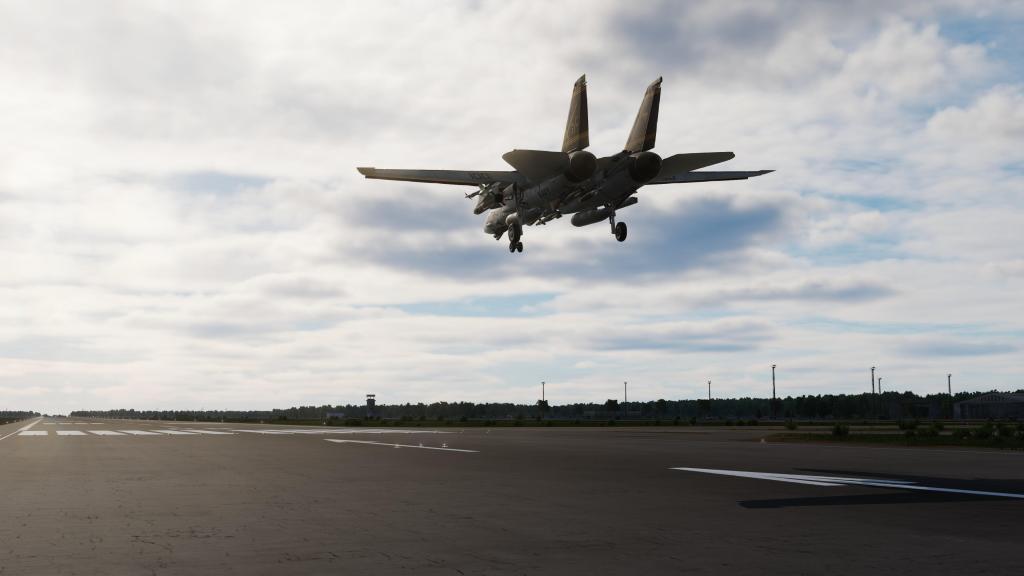
A pair of AIM-9s, one AIM-54C, a Lantirn targeting pod, and a mixed loadout of GPS and laser guided bombs as well as a pair of fuel tanks gives the F-14 real striking capability paired with self-escort. You can kind of do everything with a loadout like that.
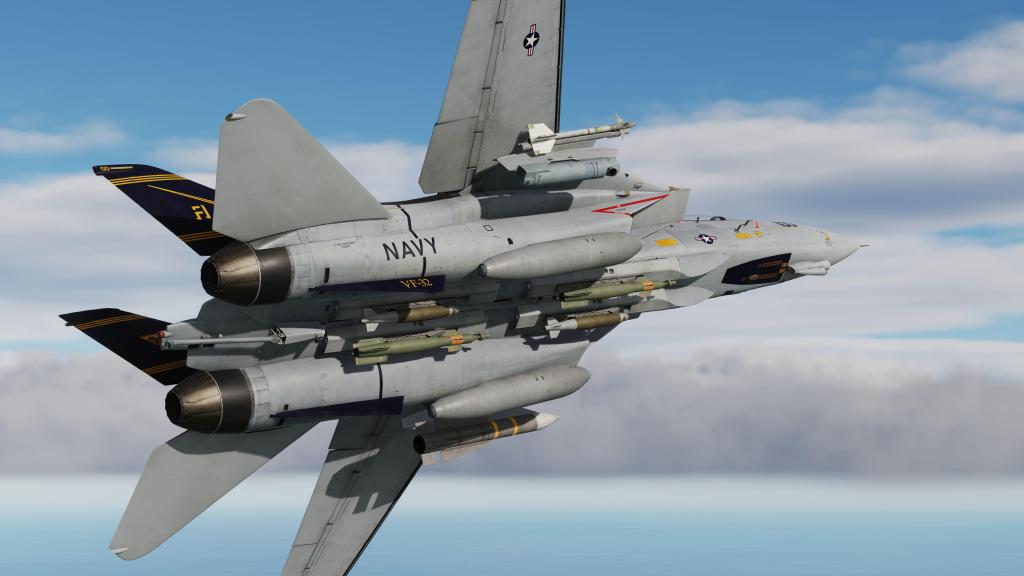
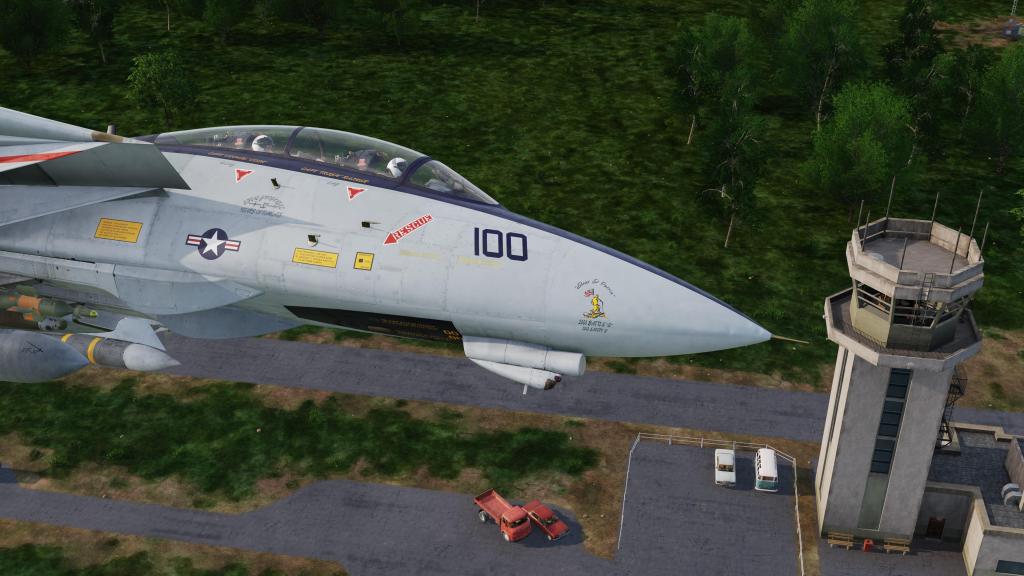
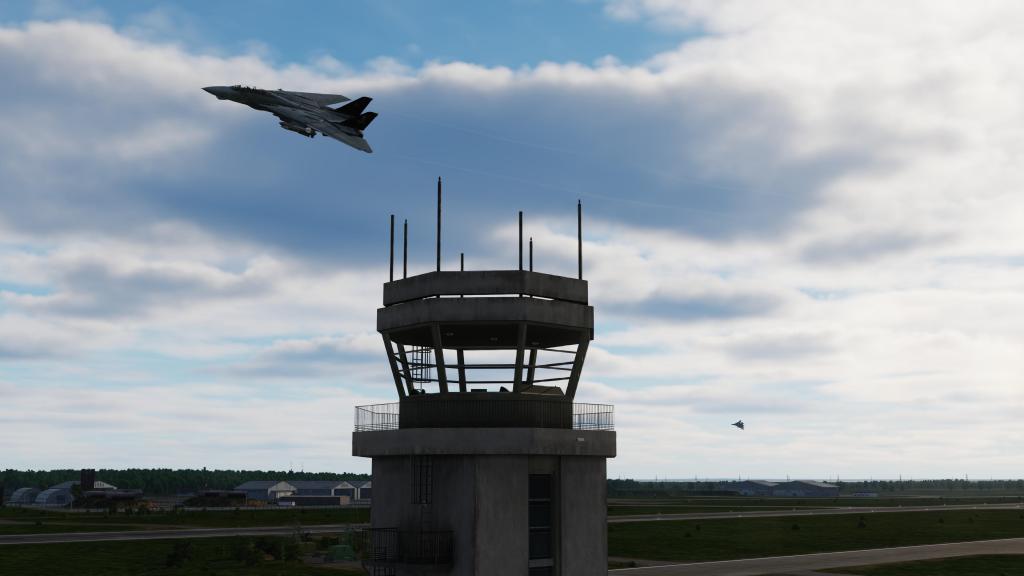
These were the kinds of thoughts that were going through my head as I was buzzing the tower on my way back to base after taking the F-14 out for my first flight in the upgraded model.
Carrier ops in the F-14B(U)
Taking off from land bases is fine and all but the Tomcat’s bread and butter is carrier operations. I’m pretty rusty there too! I used to be taking off and landing all the time in my Hornet and slightly less often in the Tomcat but more recently I’ve been flying other aircraft. Well its time to get hooked up to the catapult and shot off the carrier deck in style!
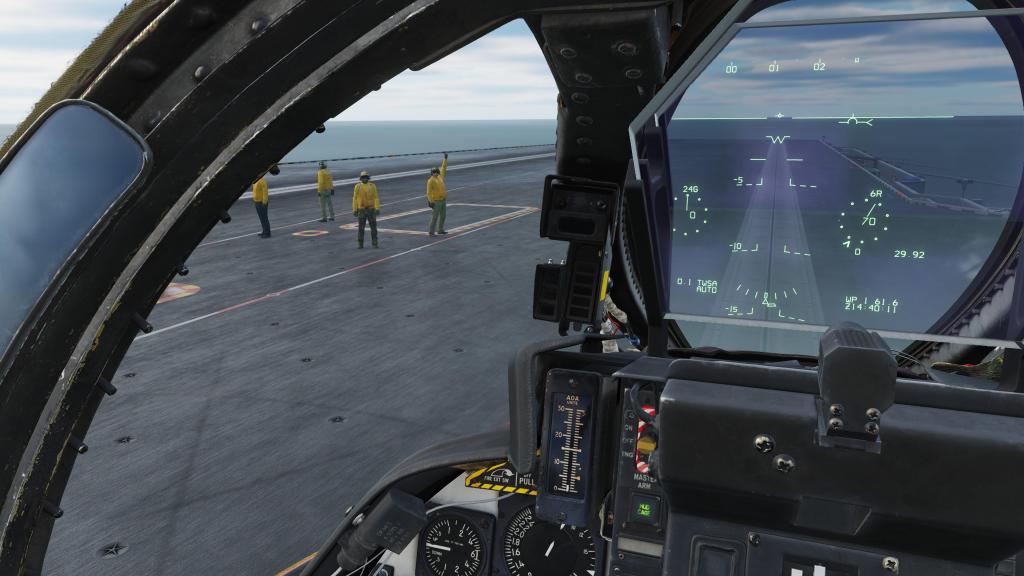
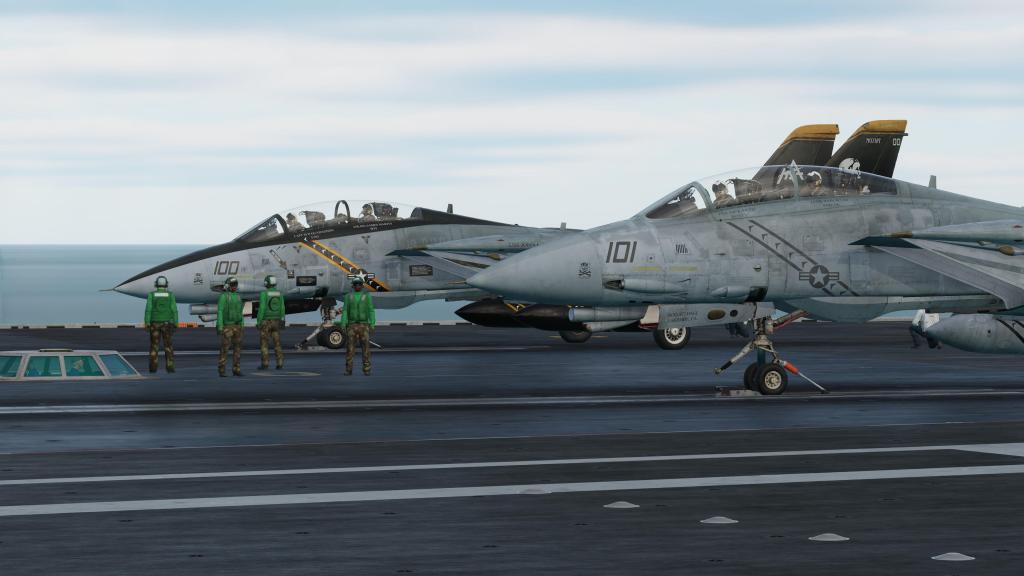
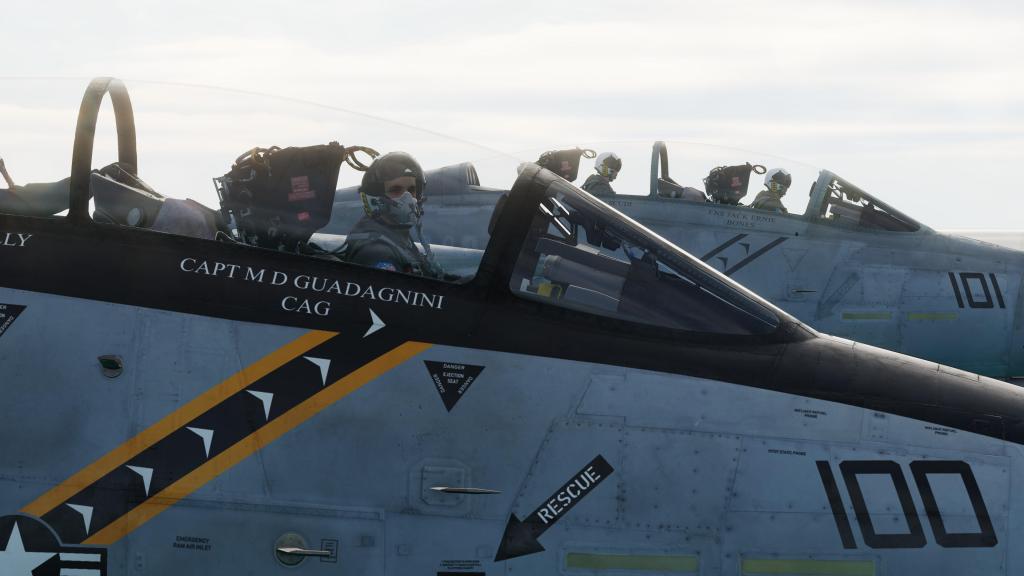
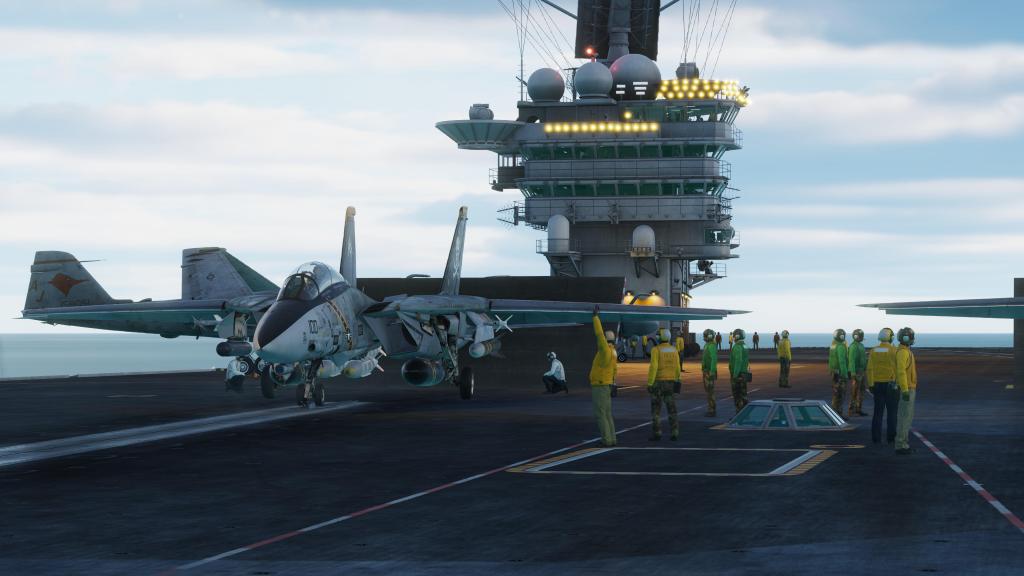
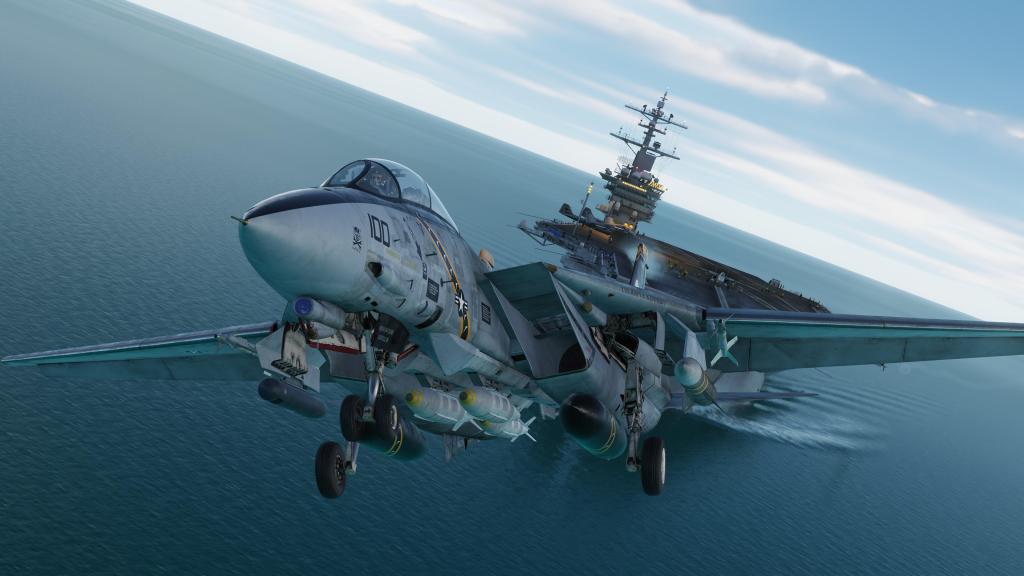
After takeoff, I set myself up for a little flight up the coast of Lebanon on the DCS: Syria map.
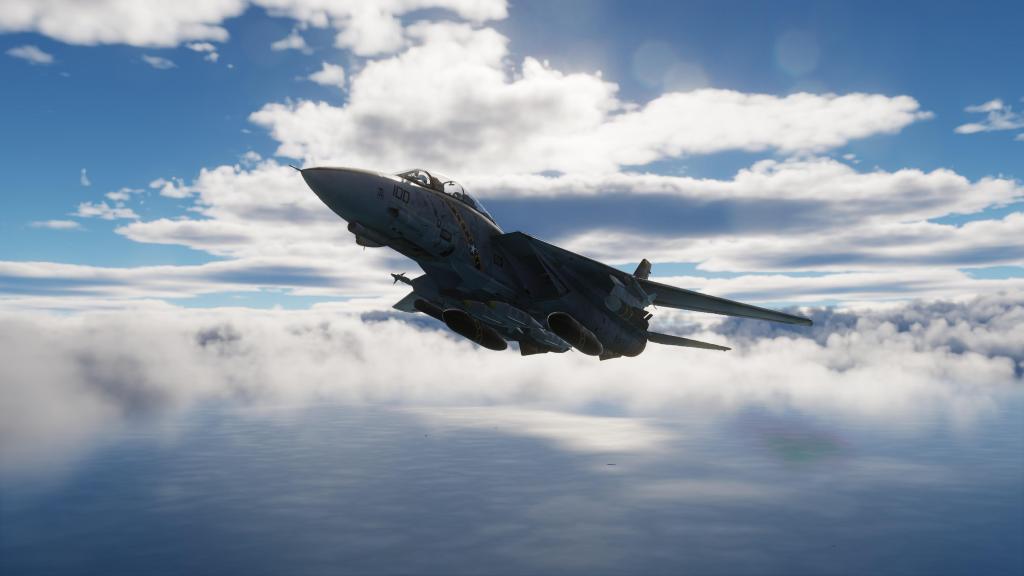
For this second sortie I’m still not focused on combat but just getting a feel for the aircraft. This time I’ve got a heavier loadout packing the Lantirn, Phoenix, and AIM-9s that I had the last time but now also loaded with three 1000lb JDAM GPS guided bombs. If you need to take out some bigger stationary targets, precisely, this seems like a great setup to self-escort and make things go boom in a big way.
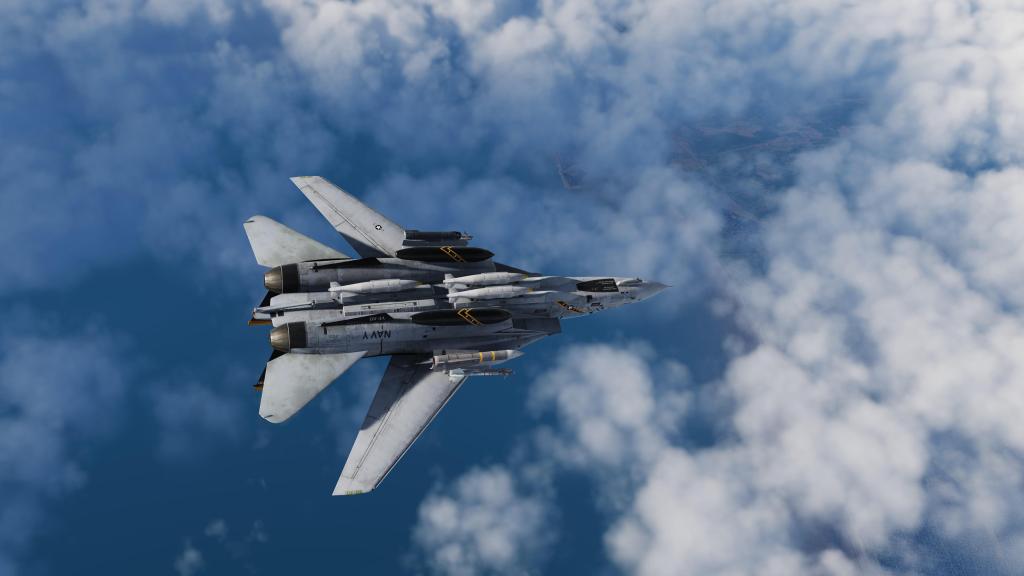
After all of that, I did a flight inland into Lebanon and worked my way north skimming over small towns, roadways, lakes, carving canyons and generally shaking the plane out in low level flying. No problem for the Tomcat, even with a heavy loadout.
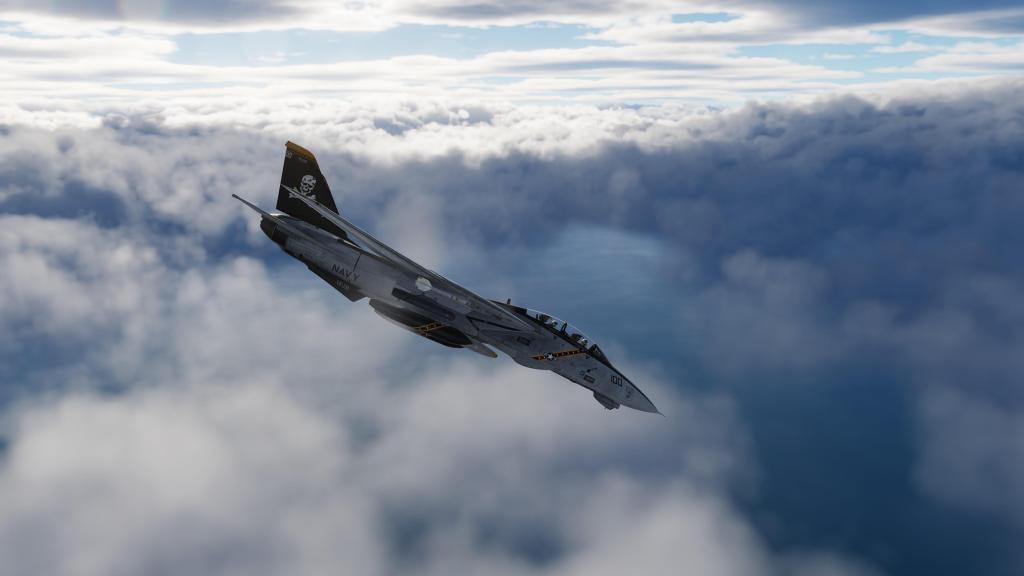
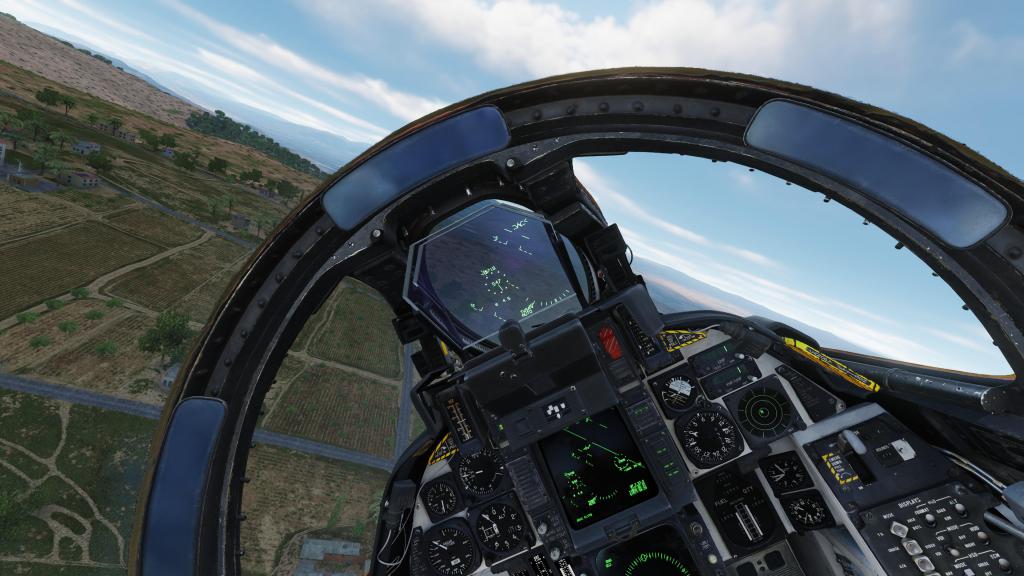
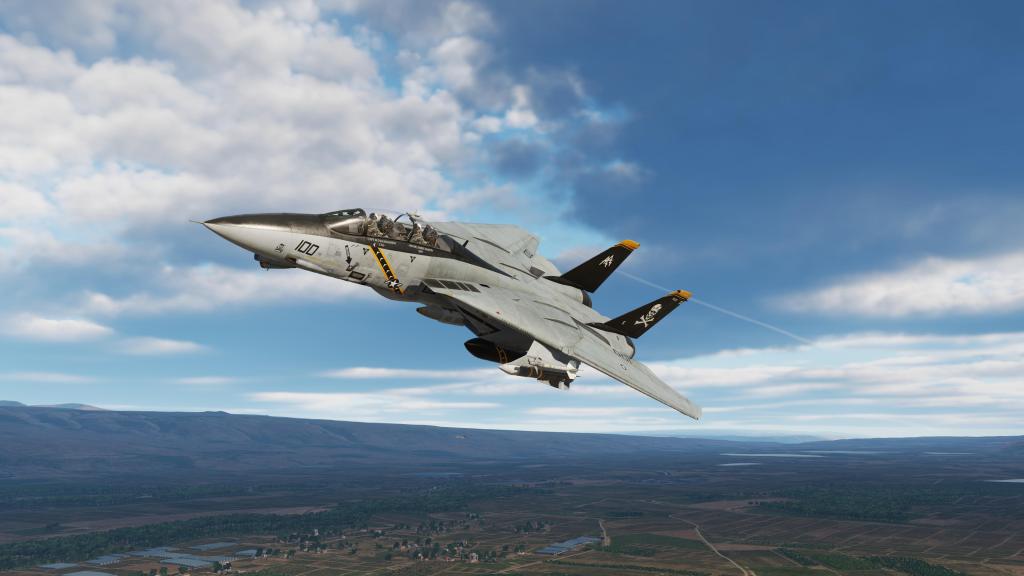
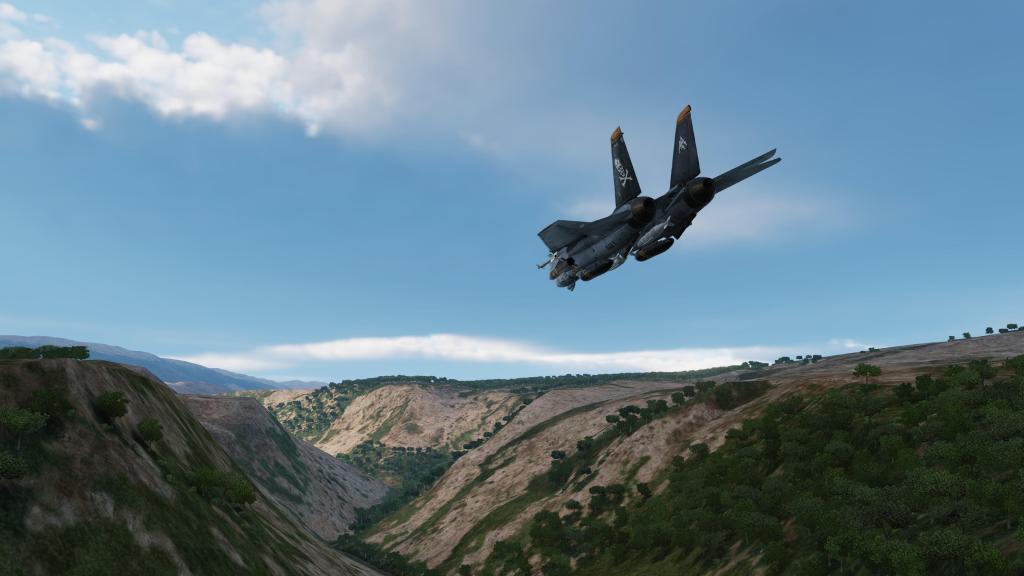
After going low, I hit the burners and was carried on the power of the F-14B(U)’s twin F110-GE-400 which has lots of power readily available and on tap at nearly a moment’s notice. None of the slow spooling that you get with the earlier F-14A models. Again, I think flight simmers will be split on which is the more enjoyable experience but in competitive environments the F-14B is going to be able to keep up easily with the best fighters available in DCS right now.
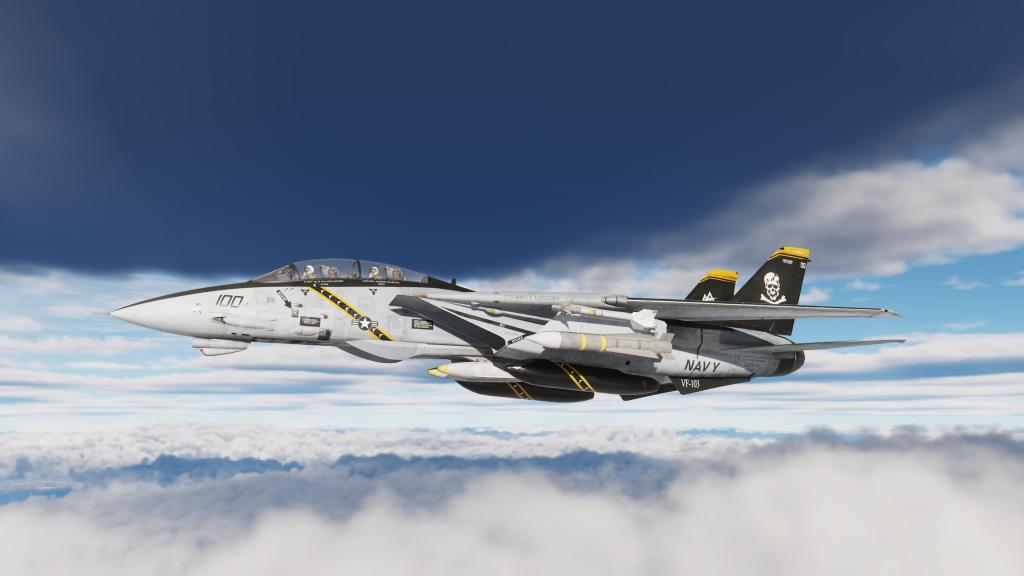
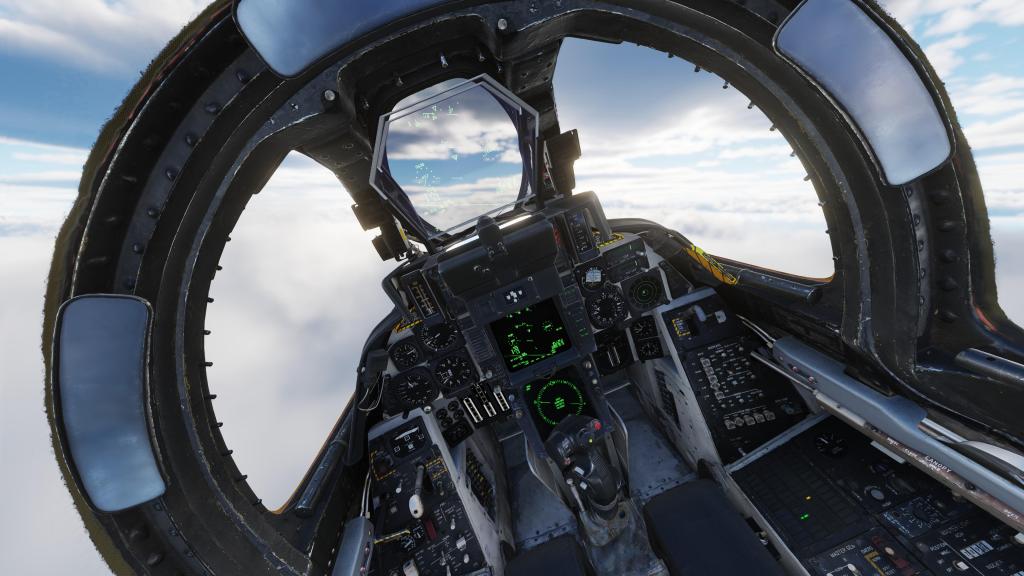
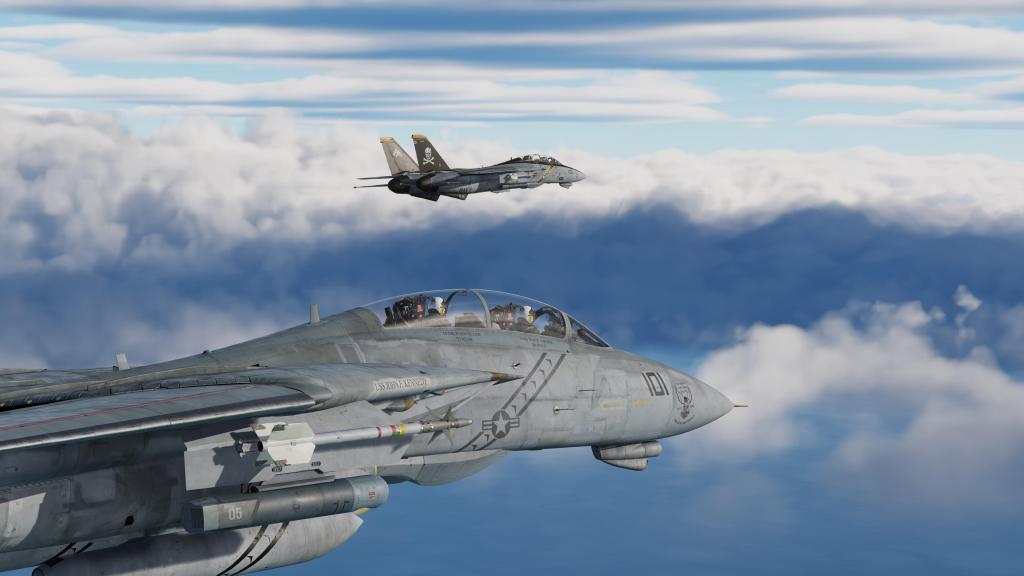
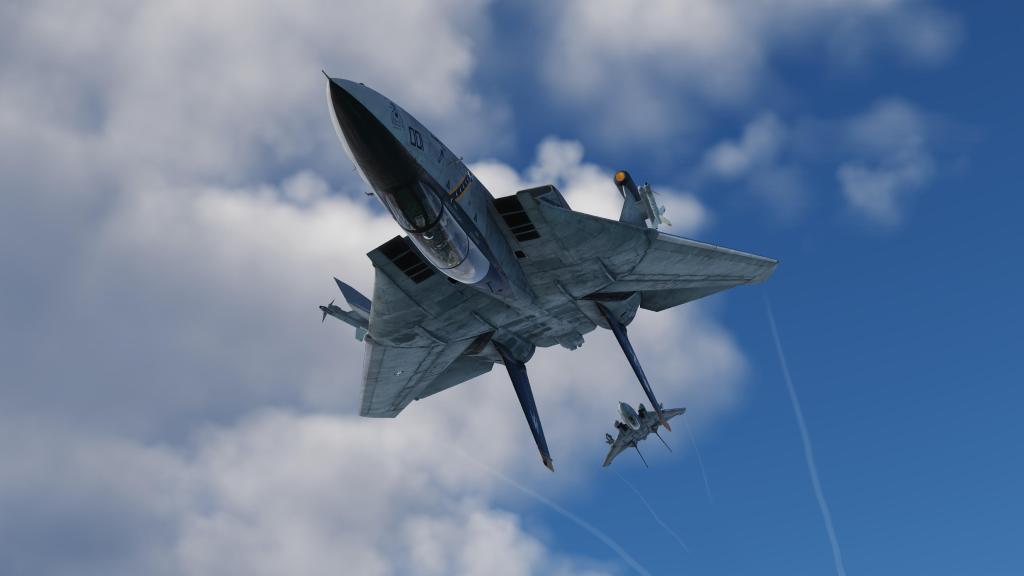
After all of that flying at speed, dancing in the clouds, and checking things out, I brought the F-14 back to the carrier together with my wingman.
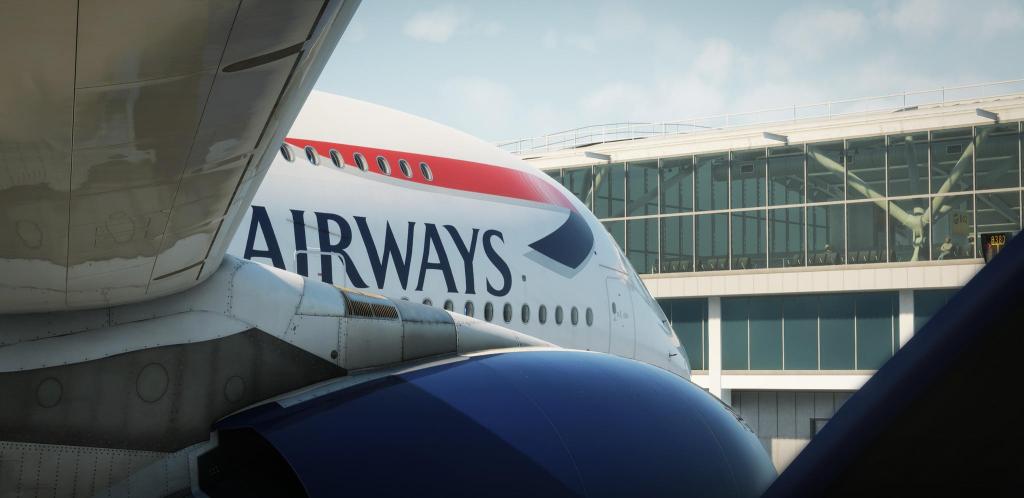
You’ll notice that I took an awful lot of screenshots because the combination of DCS lighting, Heatblur’s exceptional visual work (no surprise!), and the particular time of day and weather really shine.
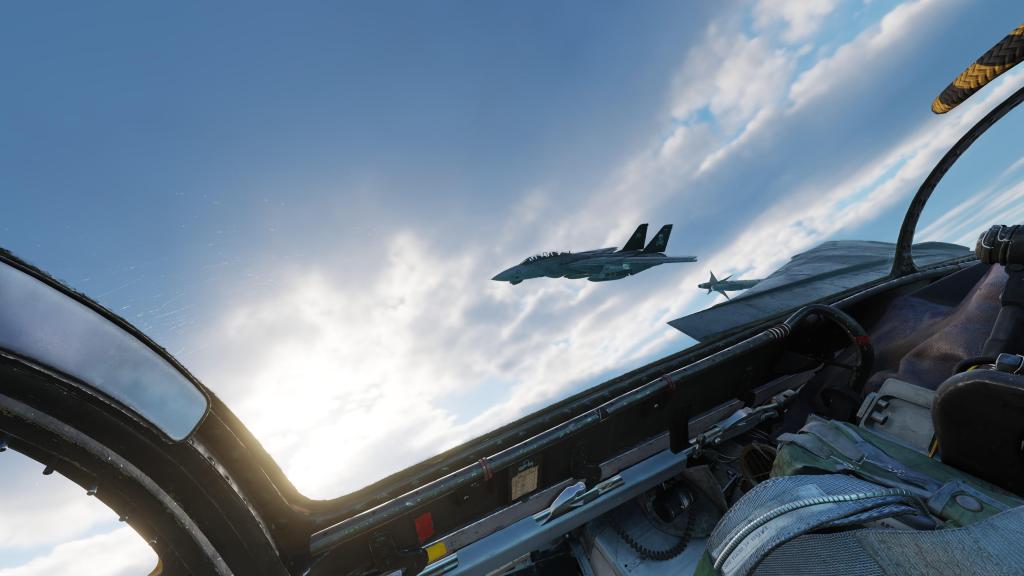
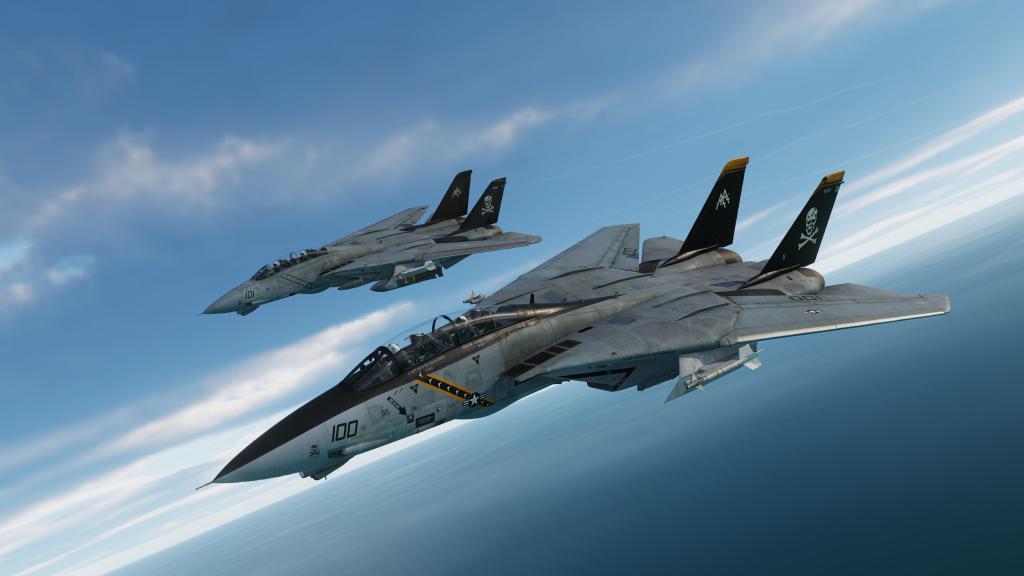
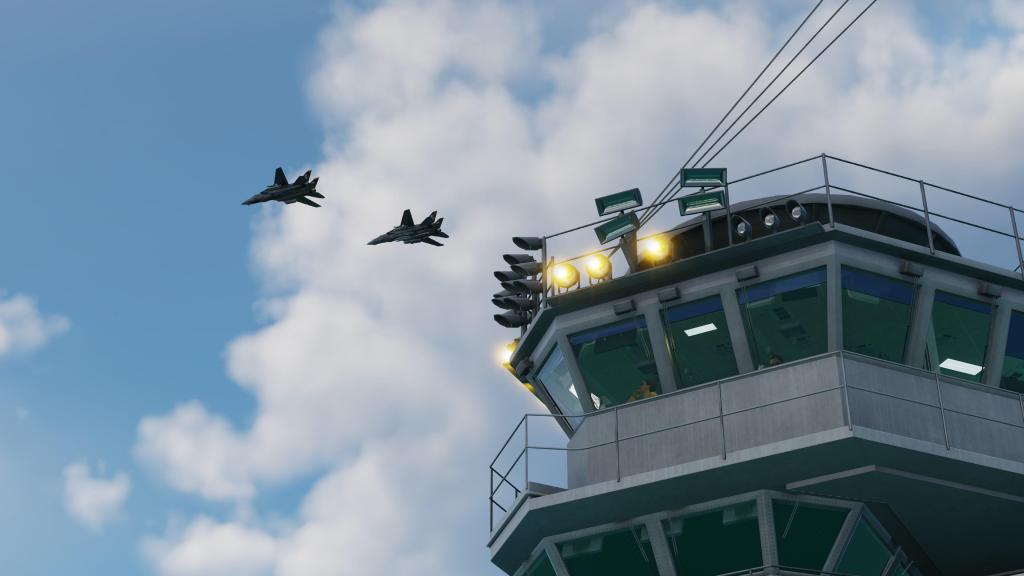
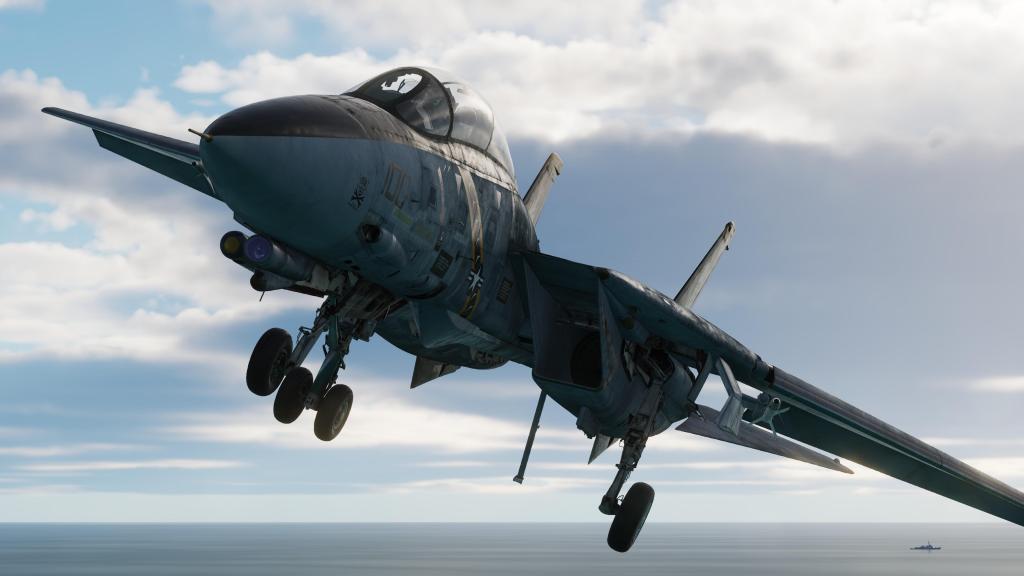
What shined less was my carrier landing abilities which have seriously atrophied from my earlier days and which I am desperately in need of some practice runs once again because the end result was…. well you can see for yourself. Woops!
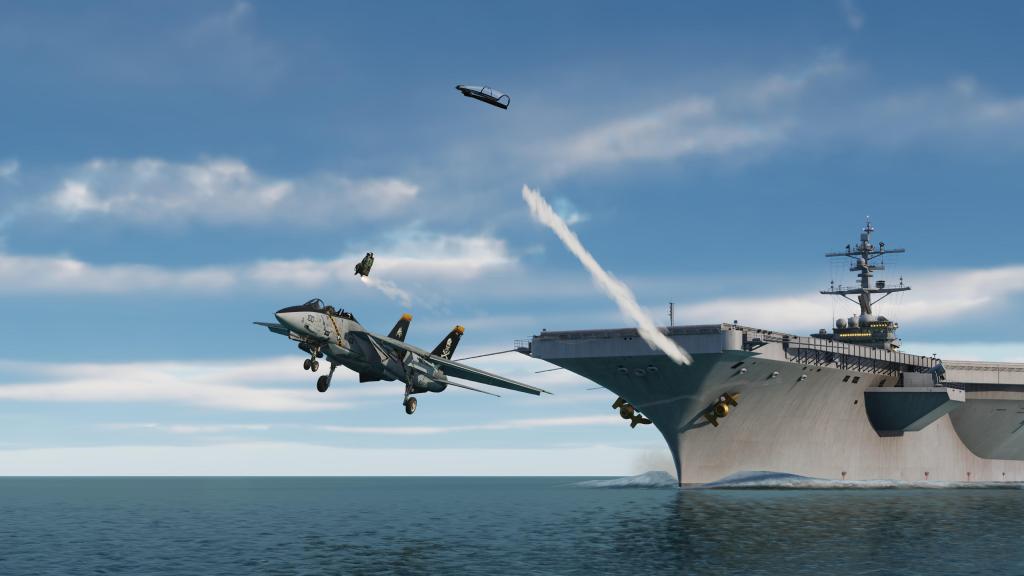
Getting the F-14B(U) into combat
All of that flying about and mostly landing it correctly is well and good but getting the airplane into combat is my next goal. Striking some targets, blasting some enemy aircraft, and putting upgraded systems through their paces are my next goals.
At a bare minimum, Heatblur have given us a follow-on to one of DCS World’s best modules. While I acknowledge that there continues to be controversy in the community over paying for the variant, the thing that is already clear to me is that this is every bit the Tomcat of before plus a bunch of new features piled on top.
At the same time, this is a different version of the Tomcat with a slightly different role that it fits into more naturally than before – precision striker. I think that’s exciting and it certainly doesn’t invalidate the excellent experience already on tap with the F-14A/B that lots of folks already have.
I haven’t really truly dug into the things that have changed yet either. That wasn’t my goal with the first couple of flights because what I really wanted to do was just get into the jet, fly it, get a feel for how it flies and compares to the previous models.
I can already tell that I love having the upgraded HUD and the better displays than what we had before and that I can’t wait to dig into it some more!
A future article is coming and you’re all along for the ride as Heatblur readies the aircraft for a release. More to come!


 Stormbirds
Leave a comment