
Its not fast, its not glamorous, but it is a workhorse of the Australian outback and in all kinds of other places around the world. SimWorks Studios GA8 AirVan treads aviation territory less well travelled and brings with it a bunch of new core and optional features that should propel this and other aircraft in their line-up into the future. But does that make the AirVan a must have? Let’s find out if its something you want to check out.
A bit of history
GippsAero GA8 Airvan was designed in the late 1990s and started production in 2000. Intended as a competitor to the Cessna Caravan filling a gap between six-seat Cessna 206 and fourteen-seat 208 Caravan, the GA8 was also designed from the outset to be able to handle rough field operations and operate in the Australian outback.
GippsAero was acquired in 2014 by Indian conglomerate Mahindra Group who continued production of the aircraft until 2020. Then, in November 2023, GippsAero’s cofounder, George Morgan, re-purchased the company. As of 2025, the aircraft’s production has resumed.
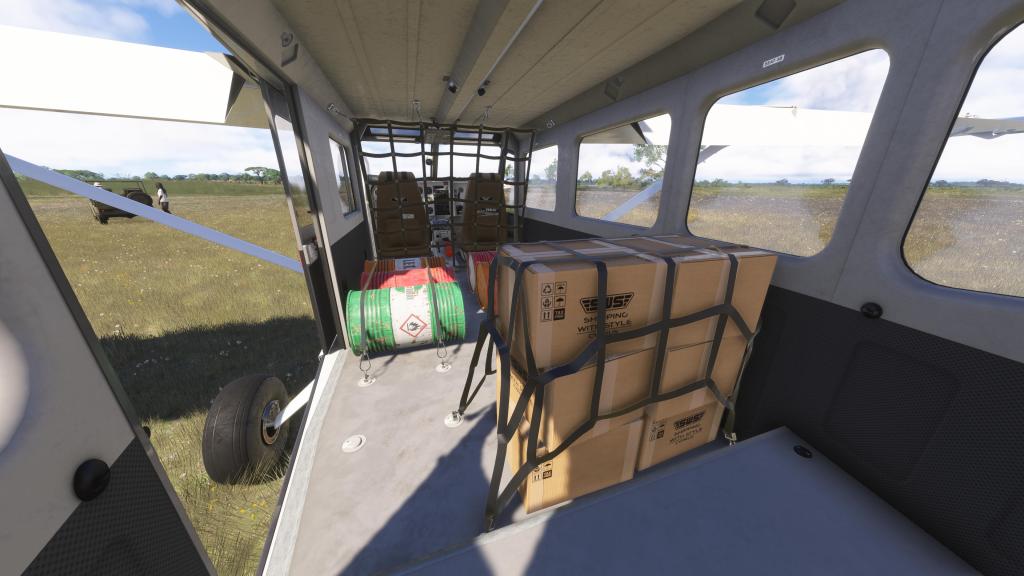
The aircraft features a conventional overwing design, custom configuration with removable seats or space for cargo, is powered by a 300hp IO-540-K1A5 piston engine and can take off in just 525 feet when lightly loaded. In average load configuration the takeoff distance is a still short 1,000 feet.
The GA8 has found itself to be popular for skydiving, freight, as well as intelligence and surveillance operations.
Put it simply, the GA8 doesn’t have a lot of extra performance nor flashy looks but it does have quite a bit of versatility in the light utility role.
Disclaimer
SimWorks Studios set me up with access to the GA8 AirVan in exchange for a review. The developer provided it with no strings attached and has no editorial control over this review.
Audio and visuals
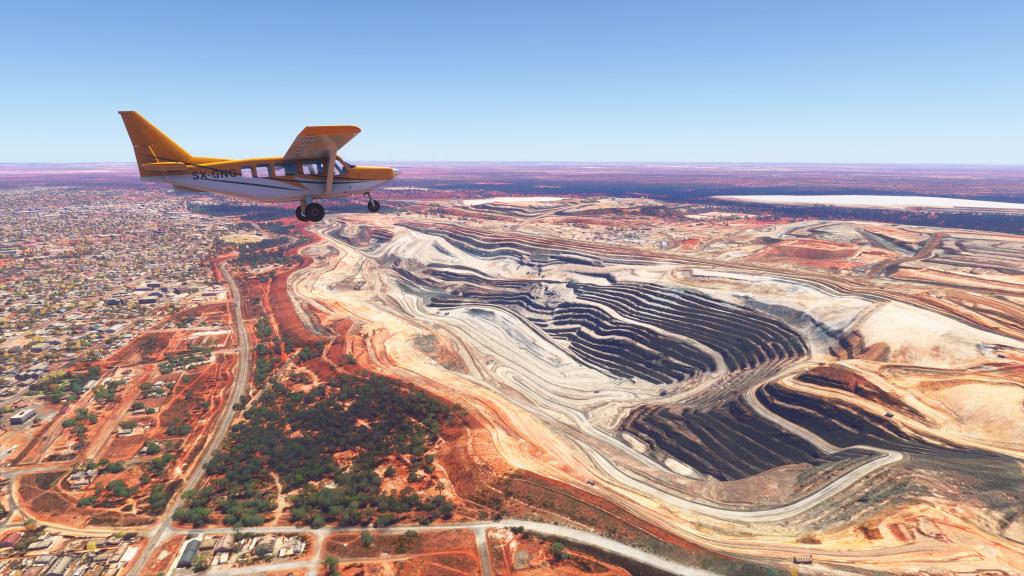
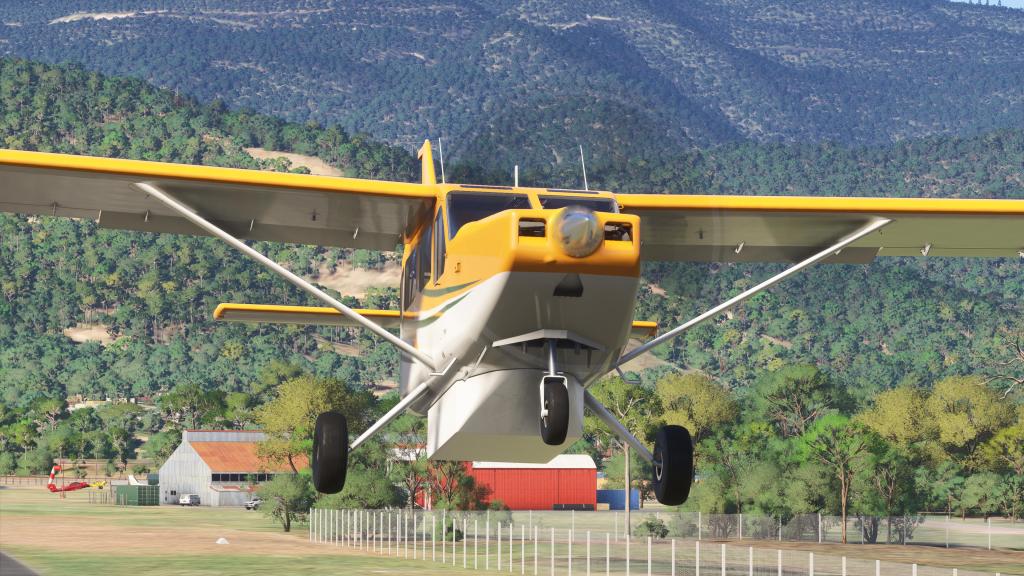
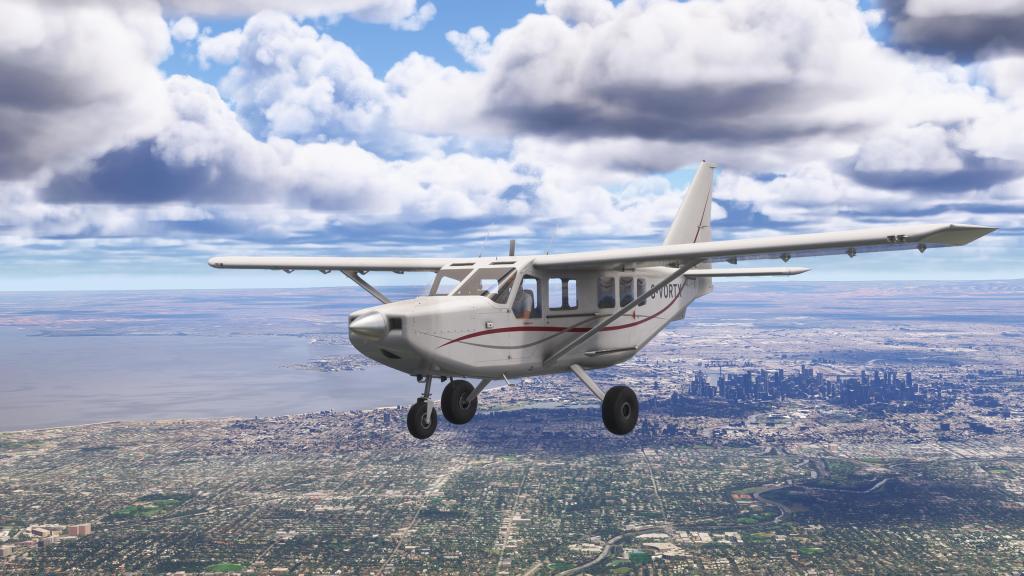
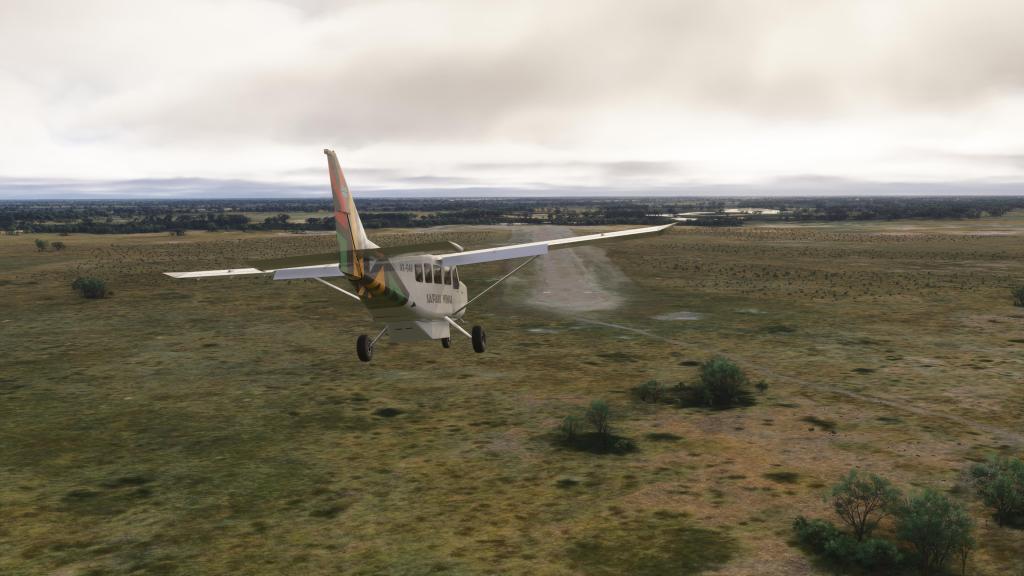
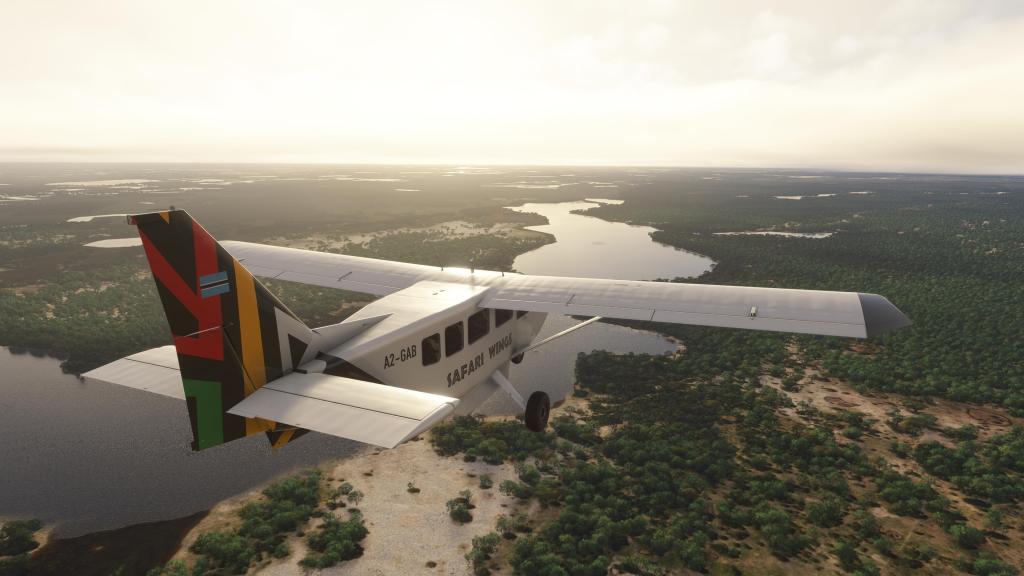
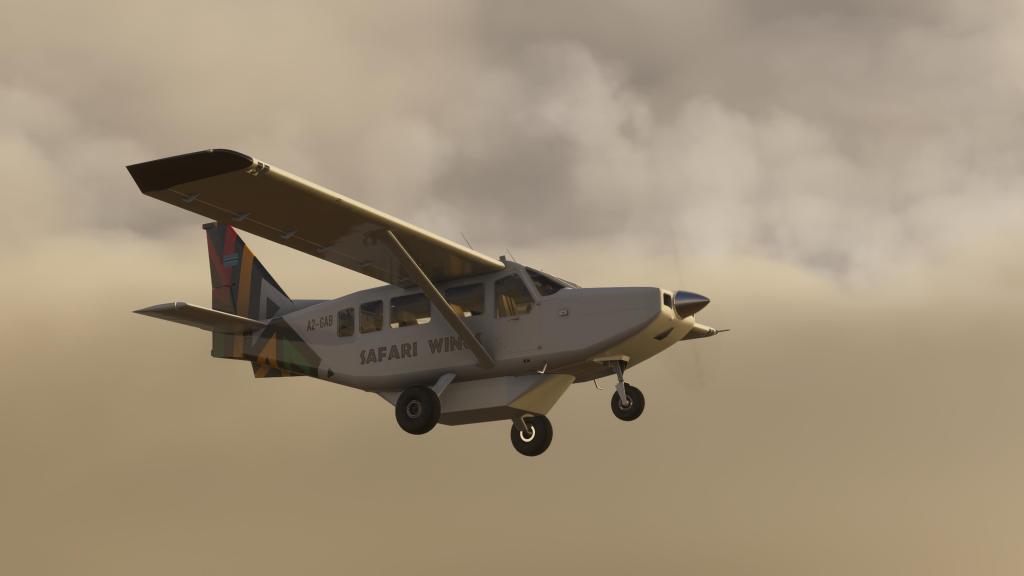
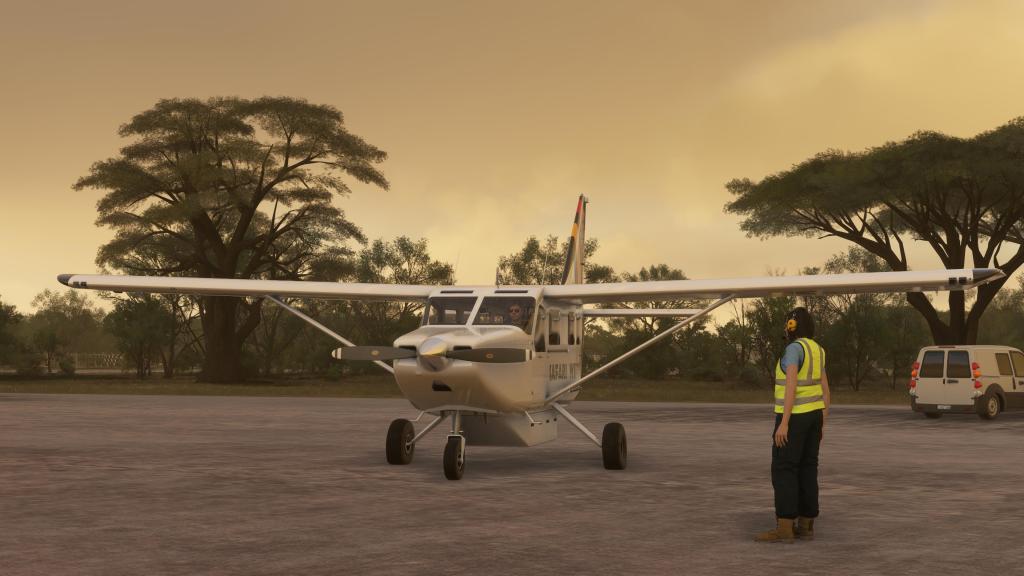
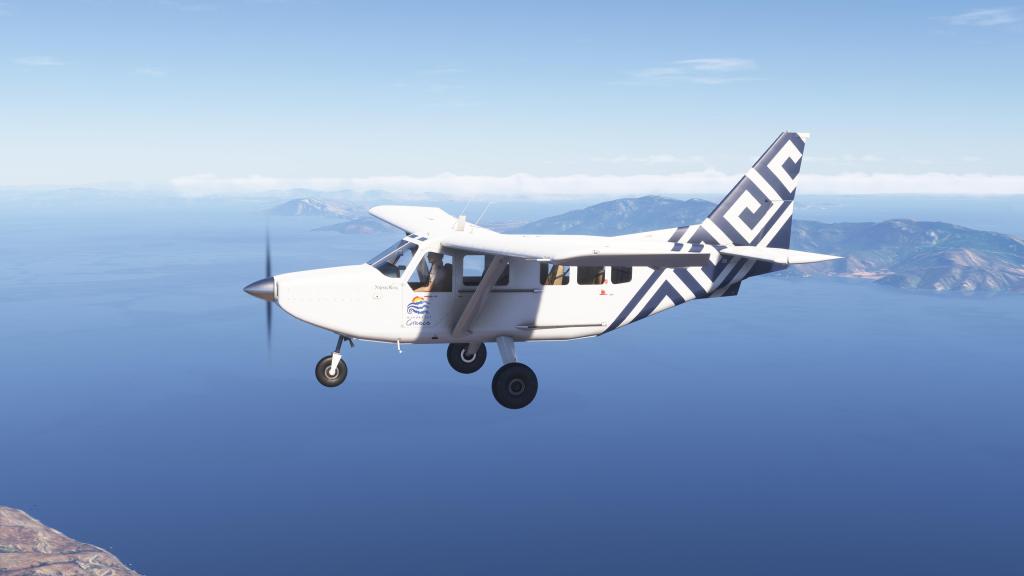
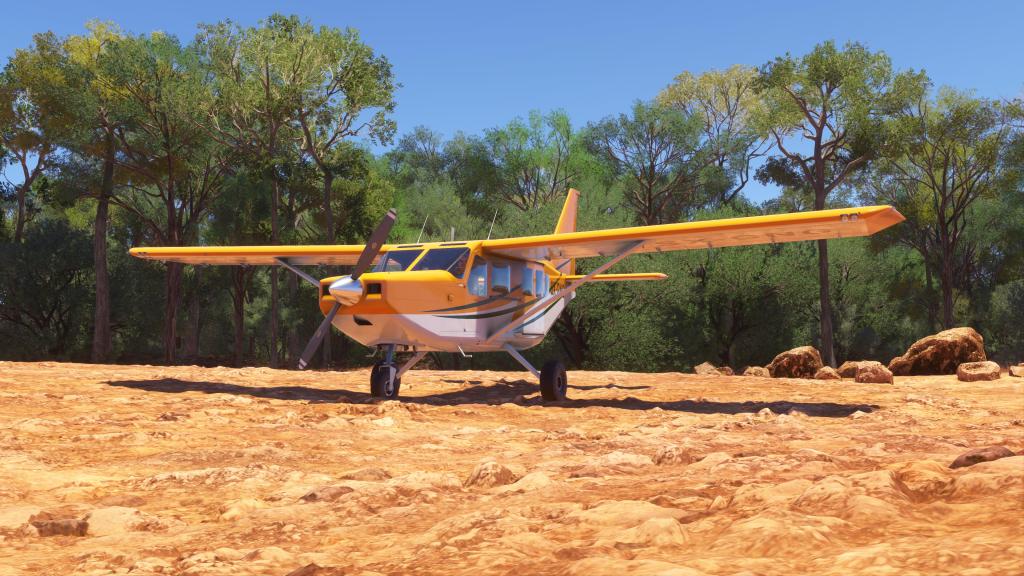
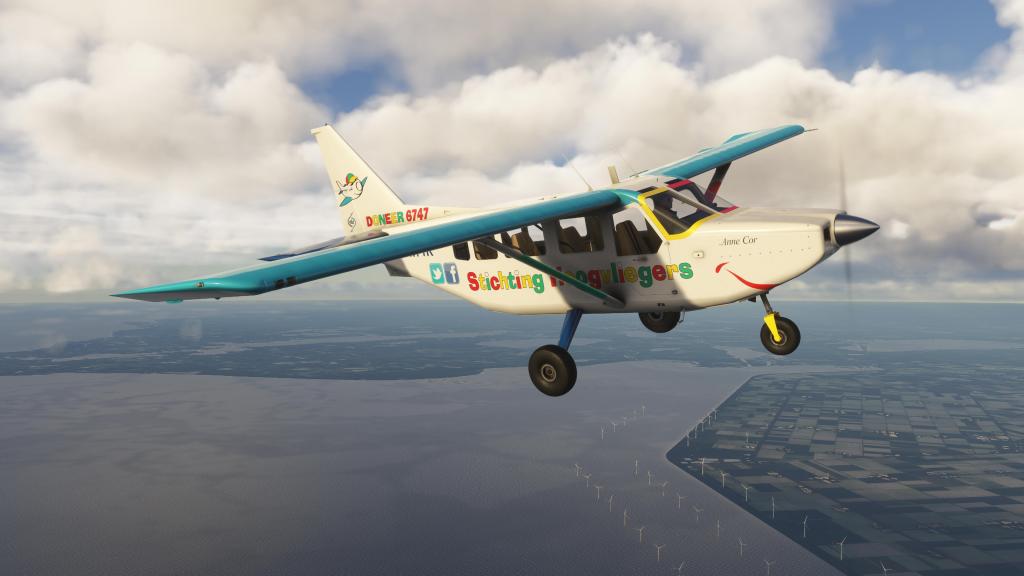
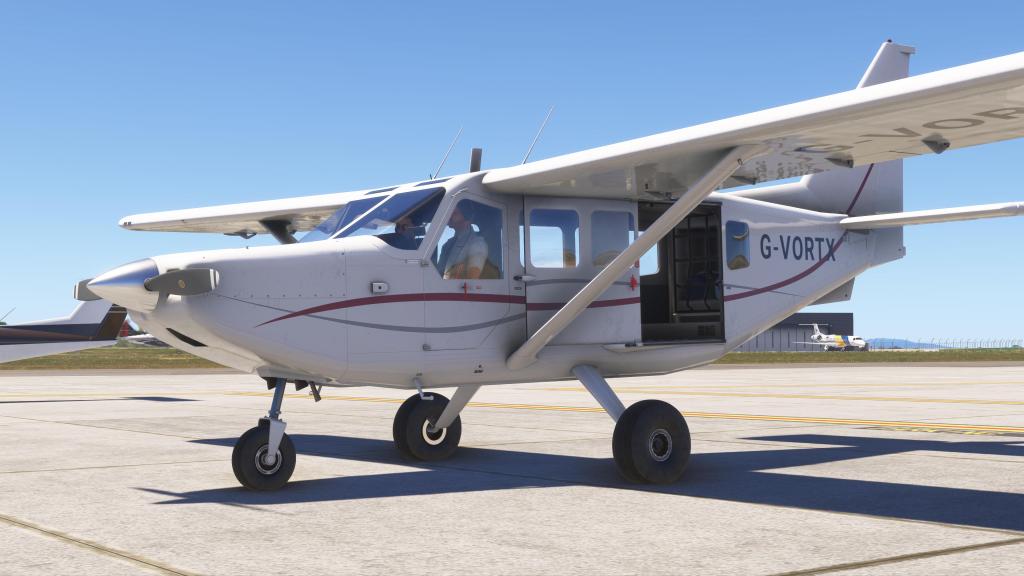
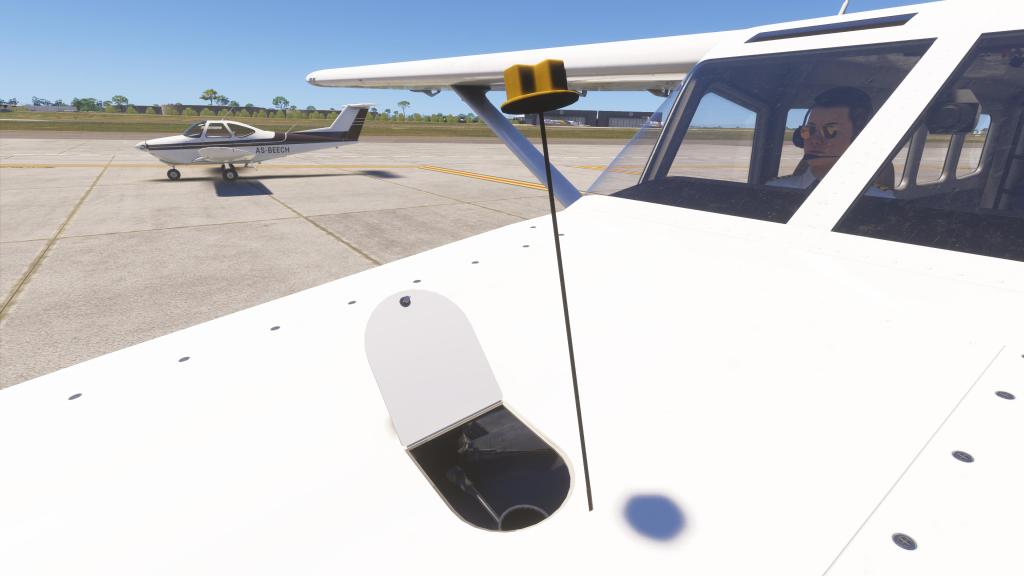
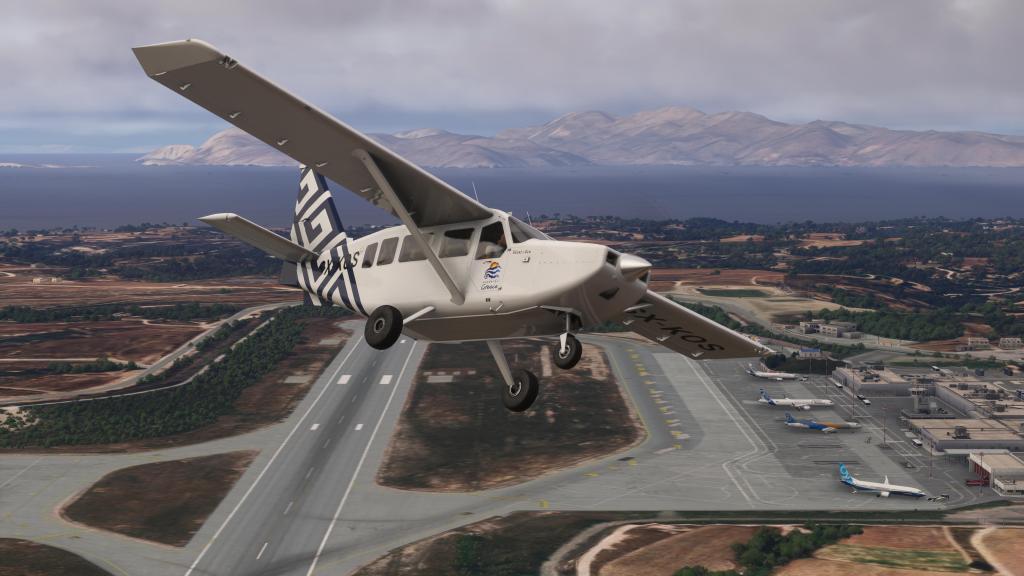
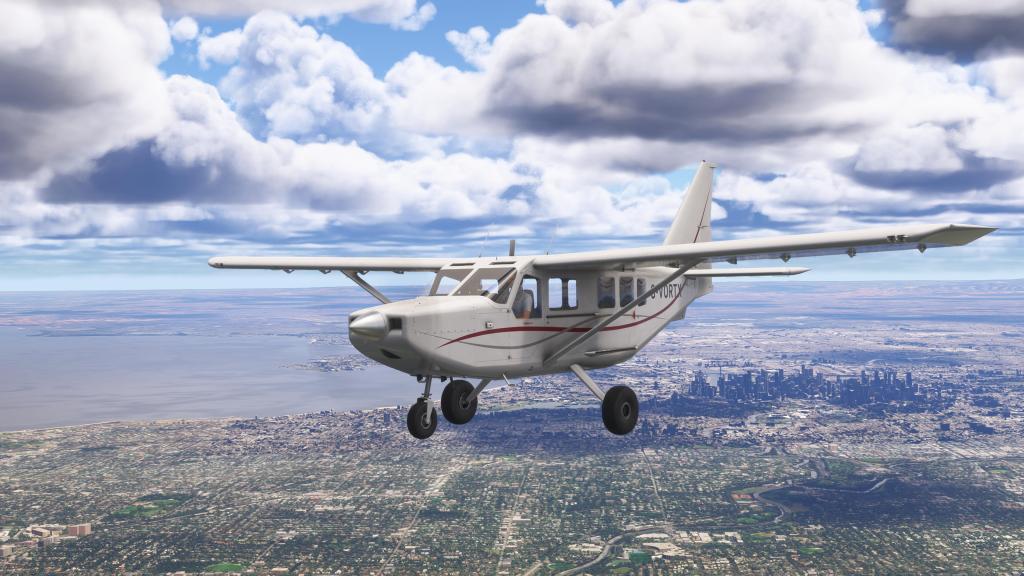
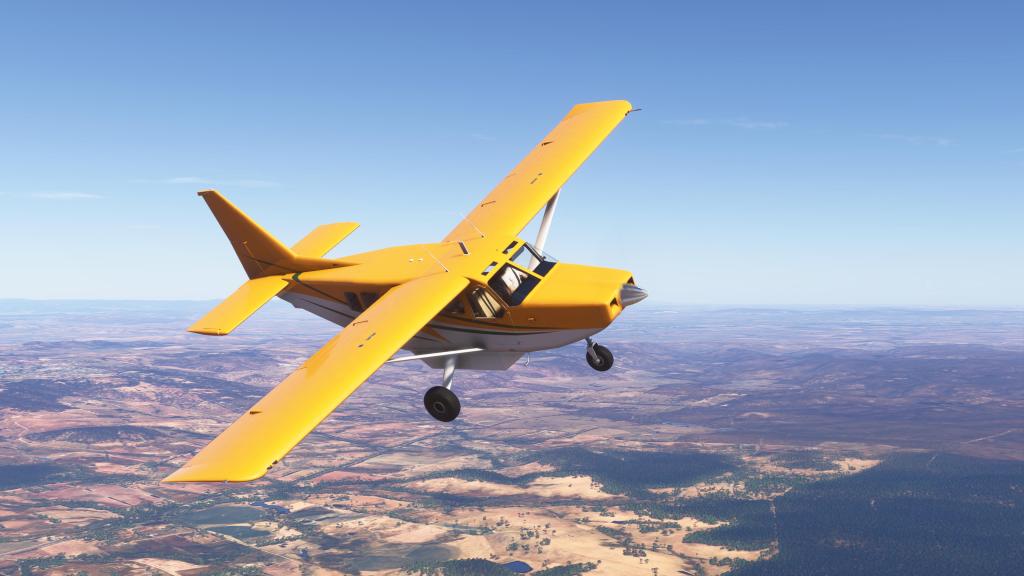
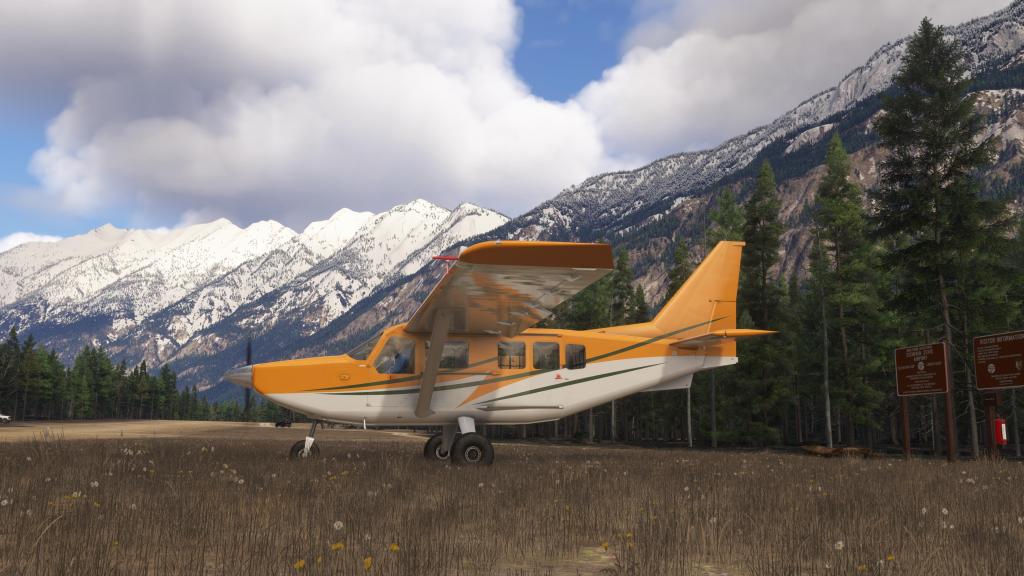
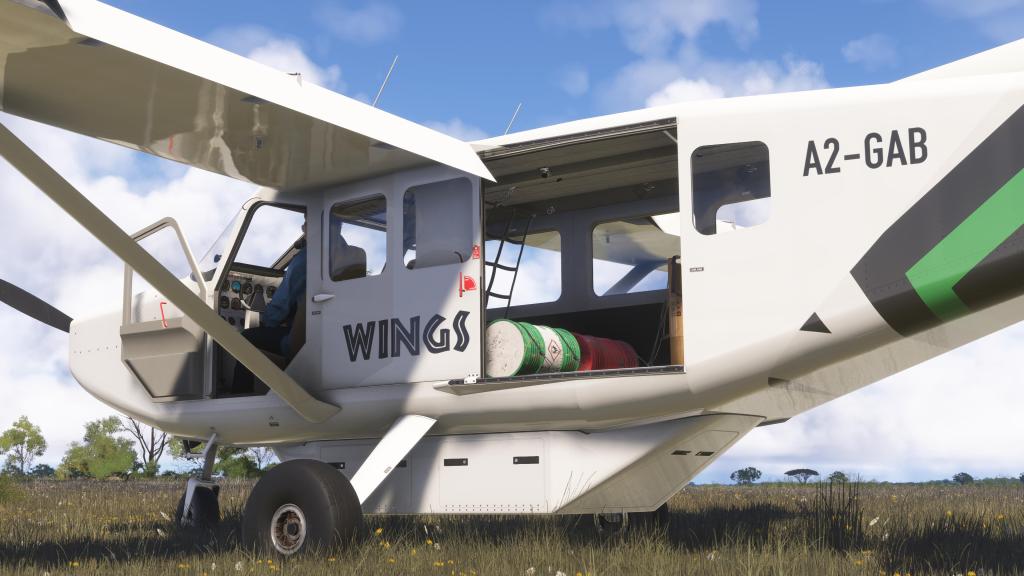
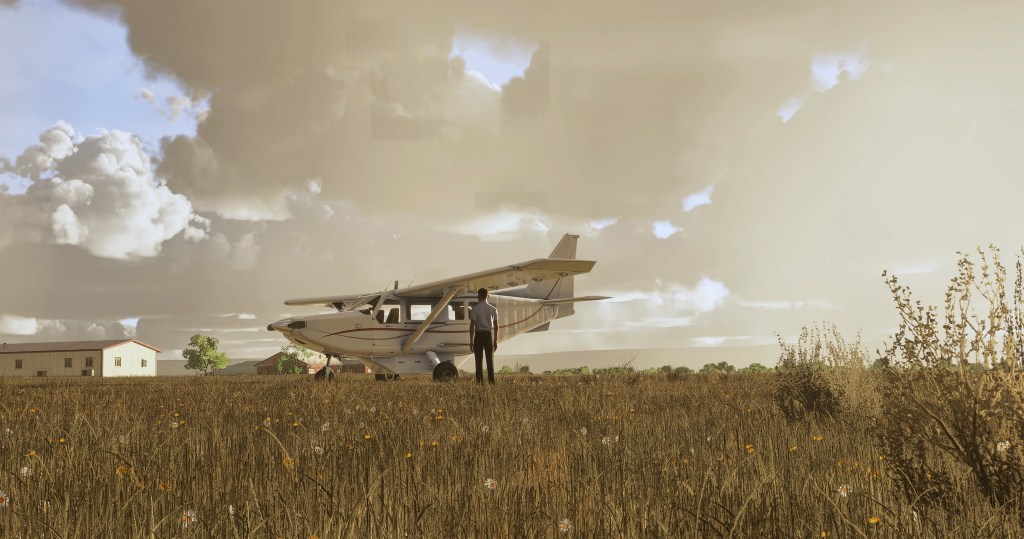
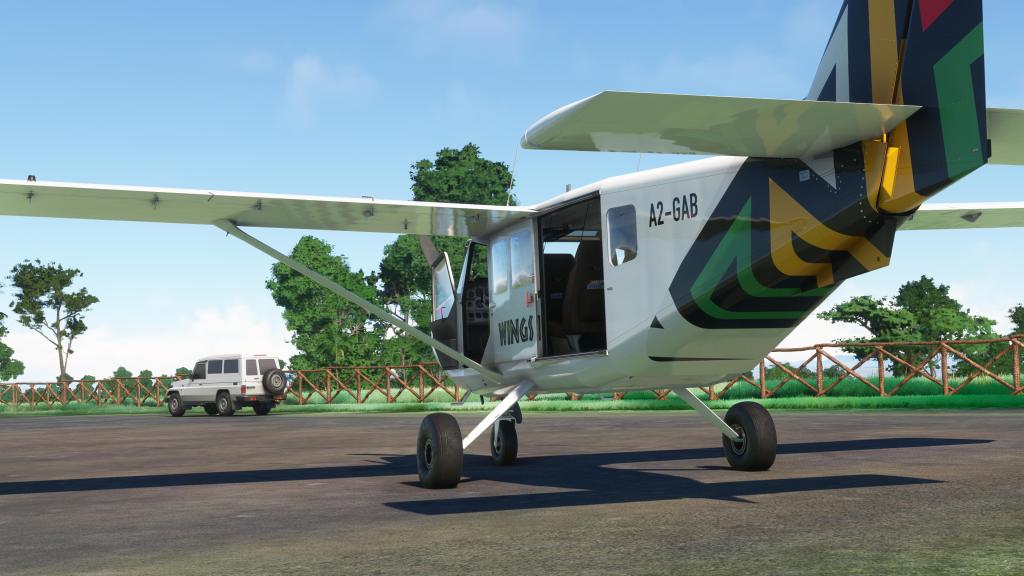
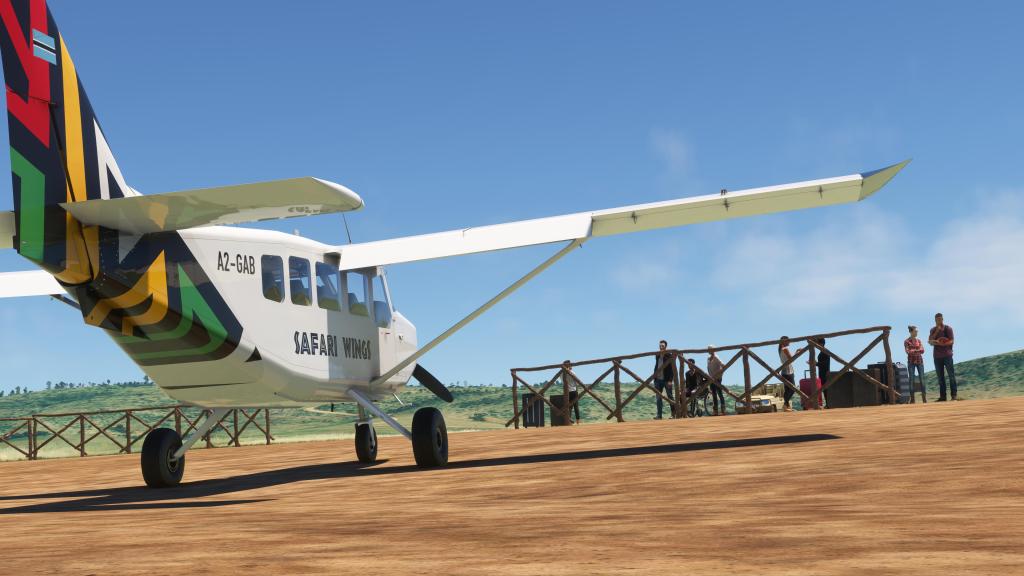
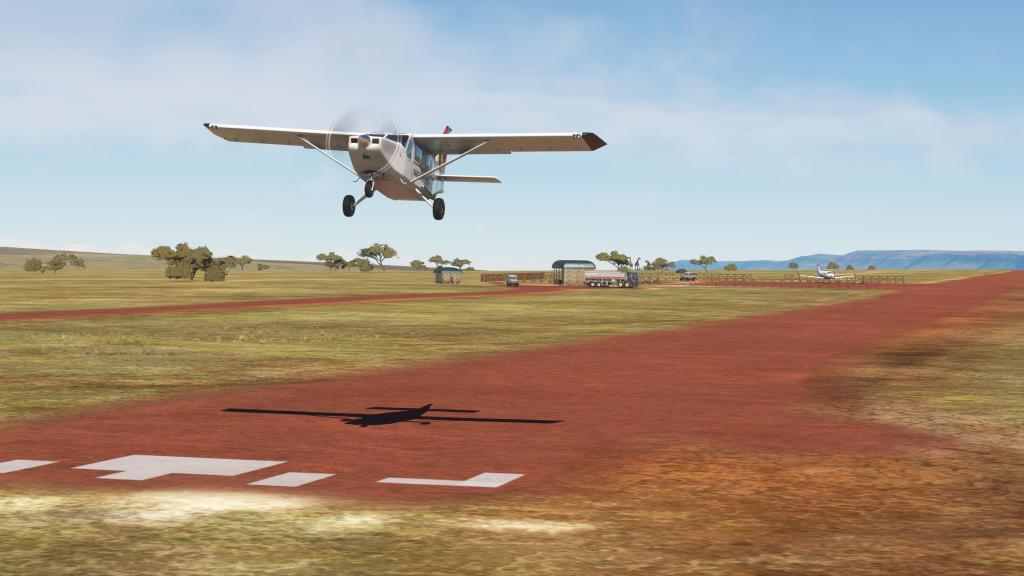
The Airvan is a simple looking airplane with its squat angular look. It’s the opposite of some of the sleeker designs out there and even SimWorks Studios rendition of the rugged Kodiak 100 looks positively sleek and stylish compared to the Airvan. That’s alright though, because this aircraft has a very utilitarian aesthetic and I think SimWorks has managed to capture its look. Sometimes a simple visual is hard to do well and this is done well.
On the outside the aircraft has lots of fine details around the tires, the wheel struts, the smooth operation of the flaps and controls, and some of the finer pieces like the ability to check the oil via a interactive dipstick. Even the oil level is represented – though I did find it hard to see in some lighting conditions. Still, its cool that its there at all!
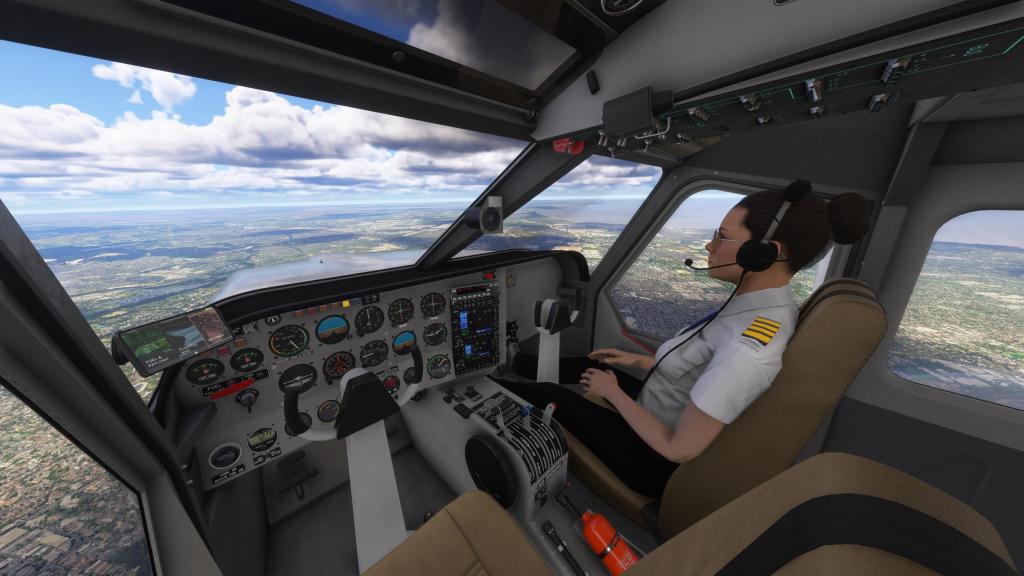
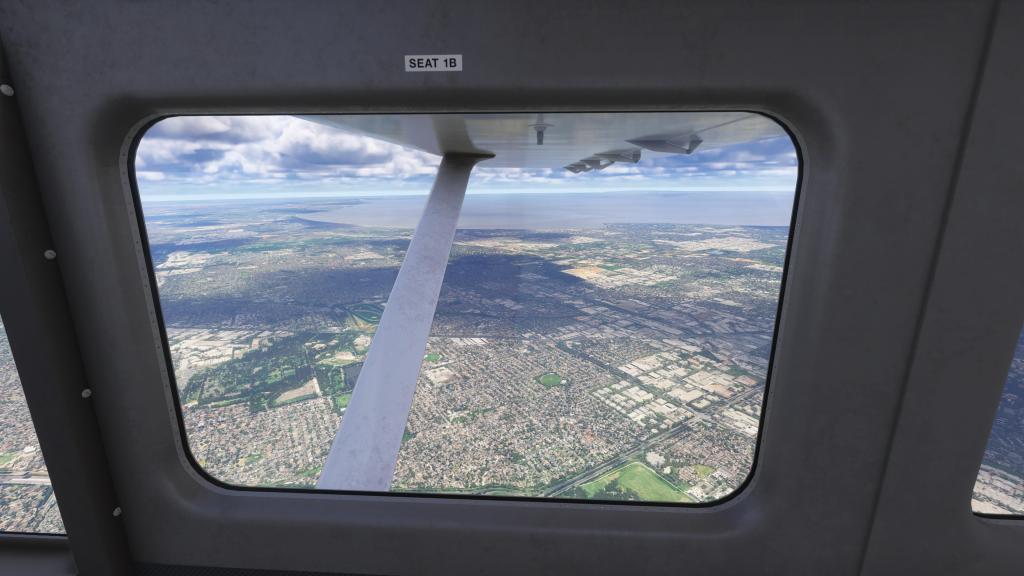
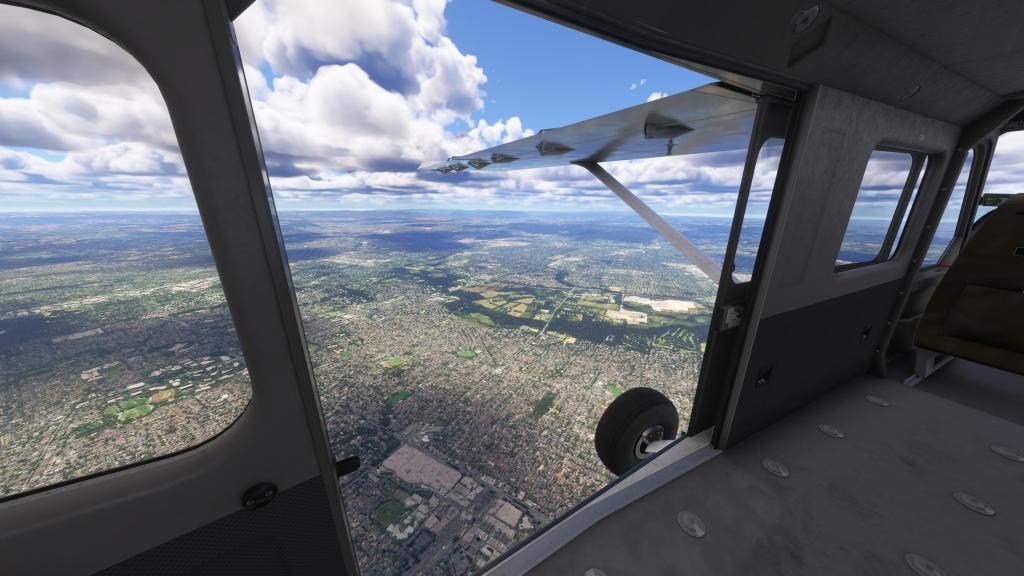
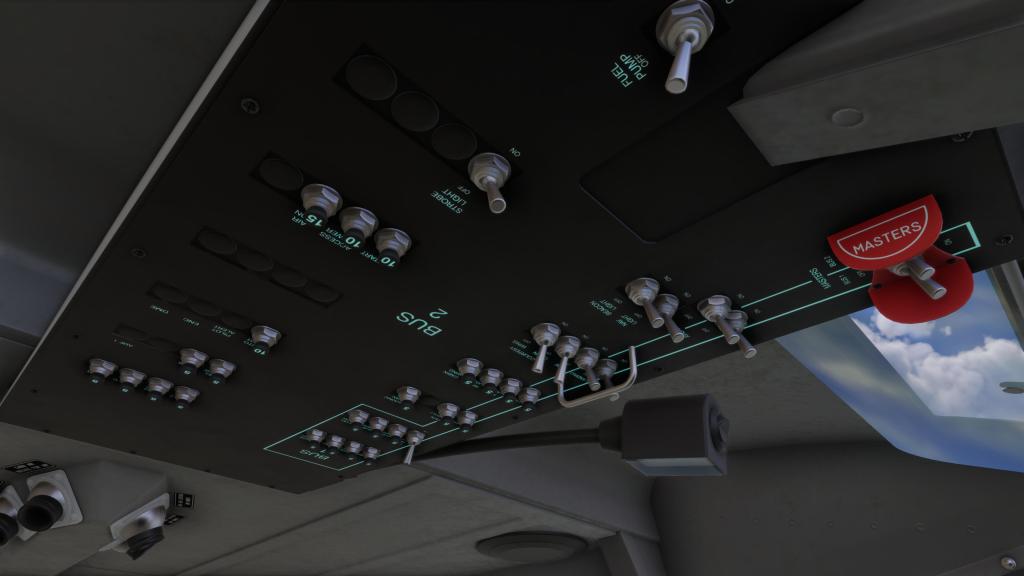
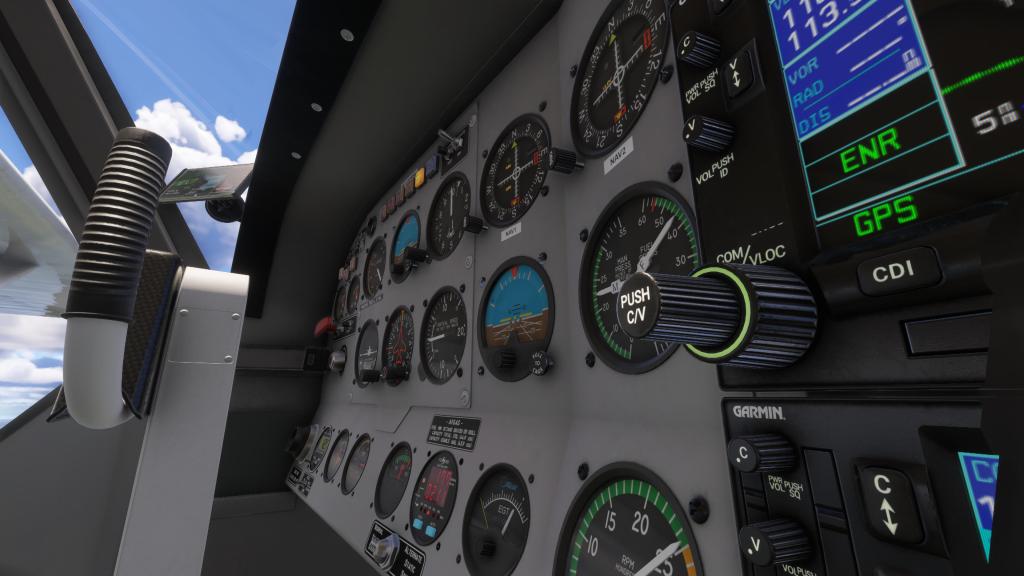
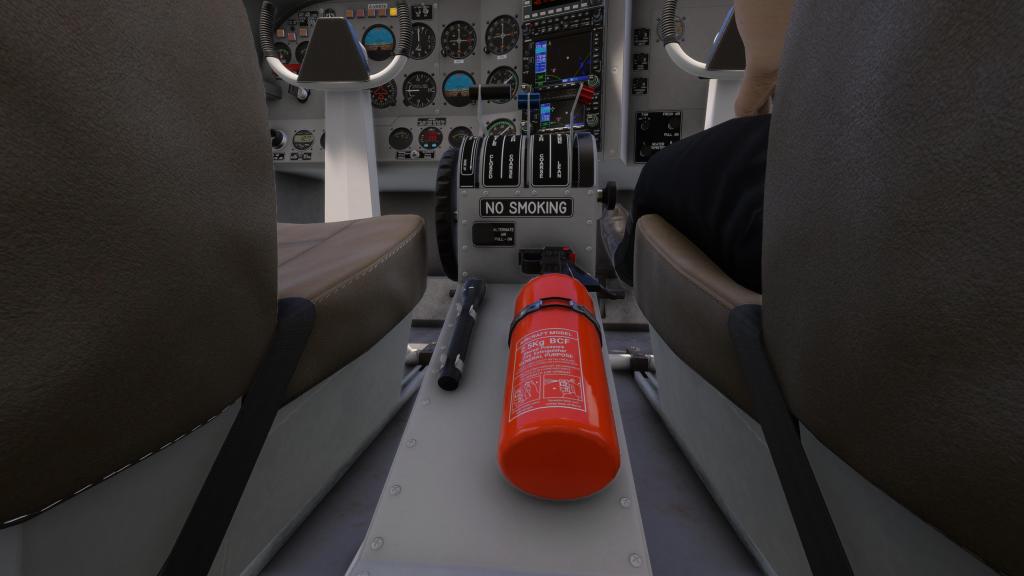
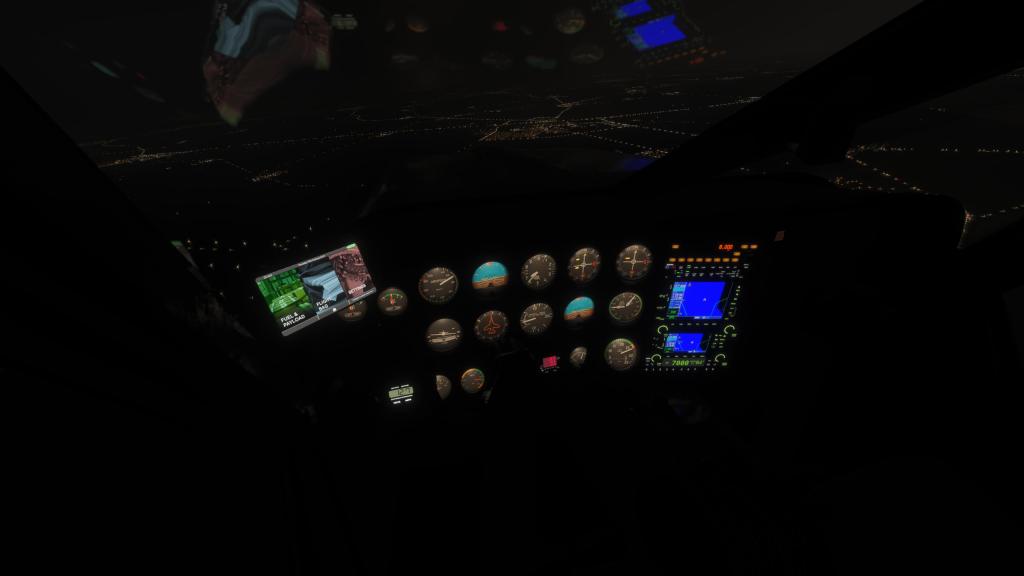
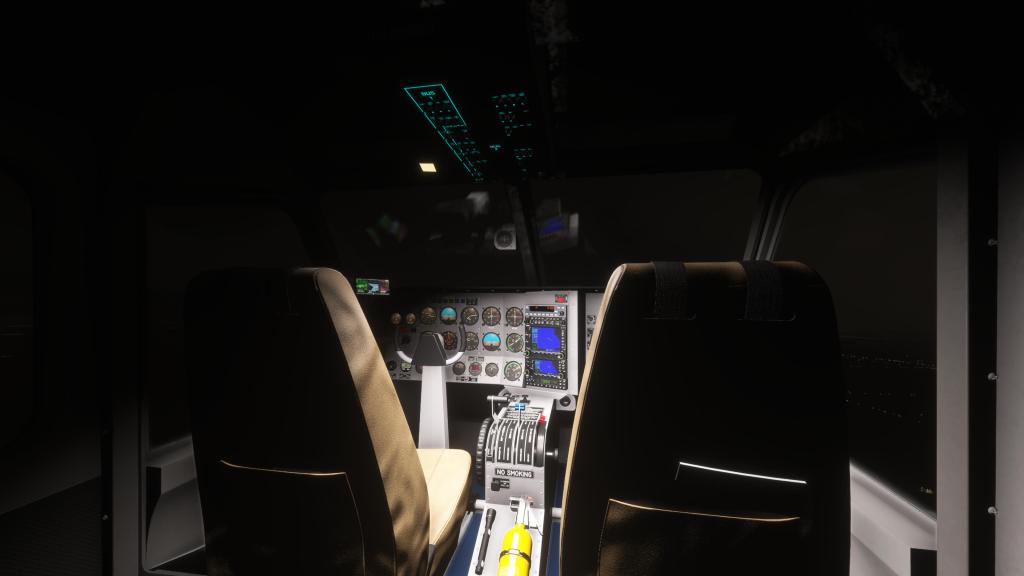
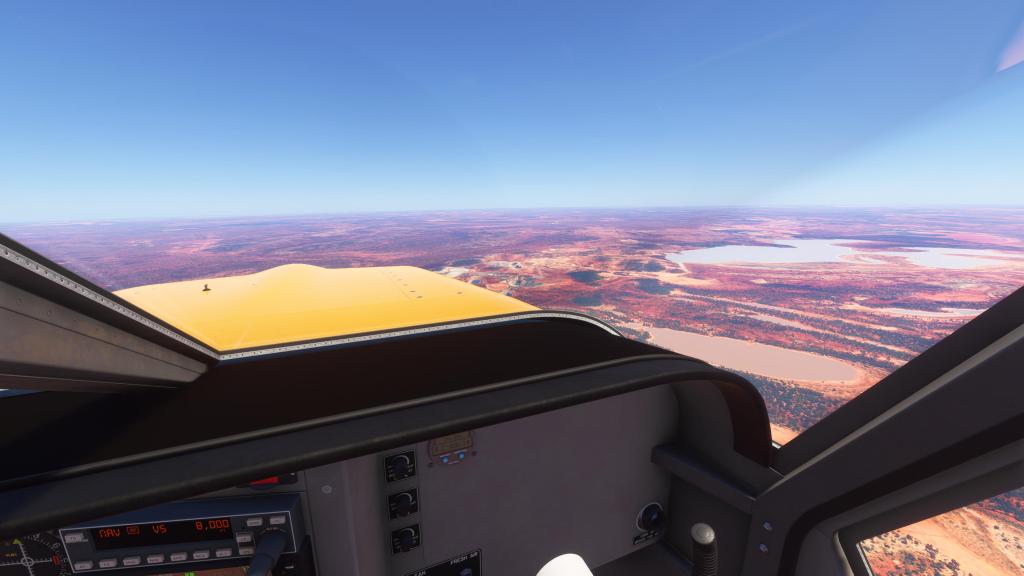
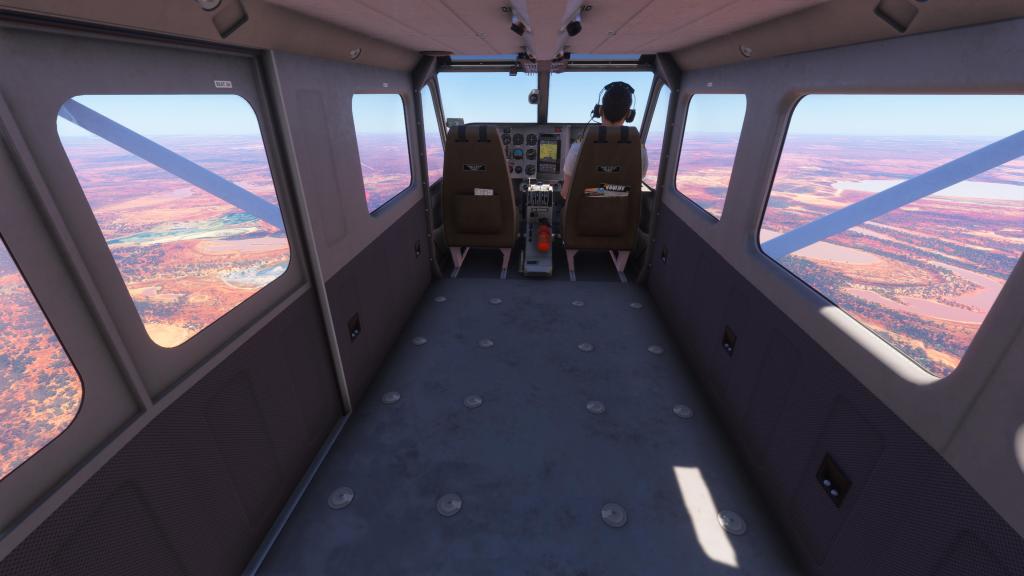
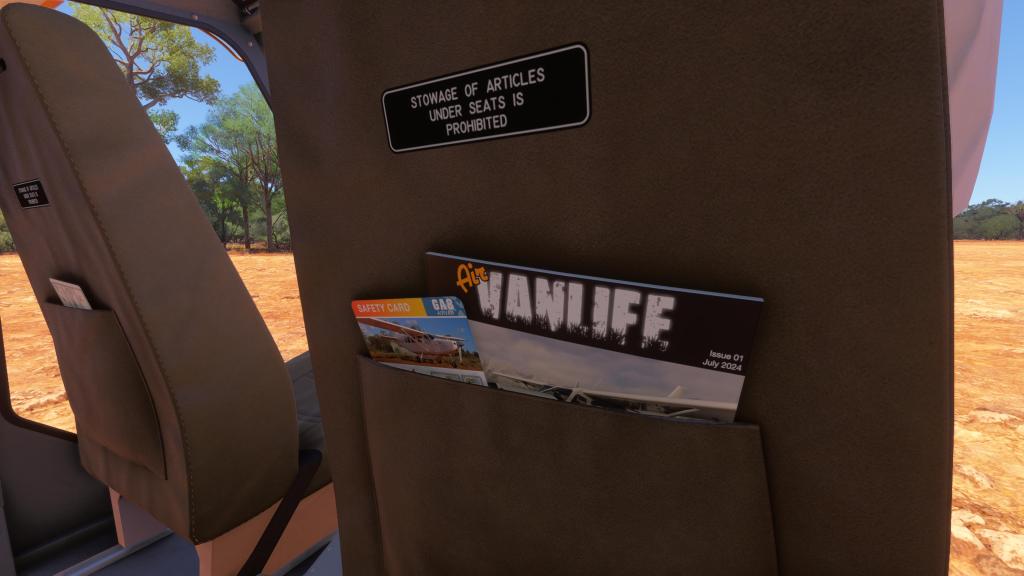
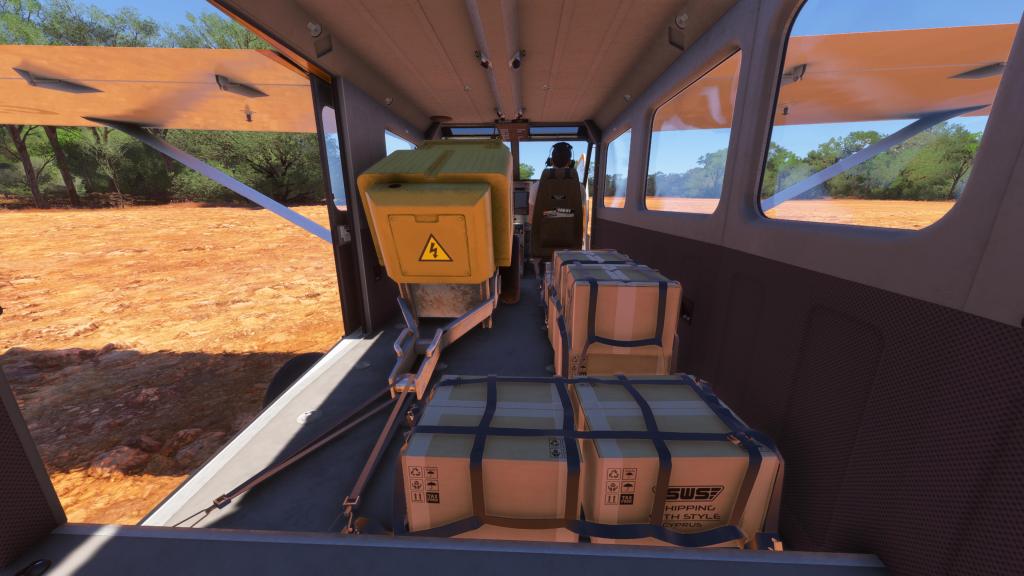
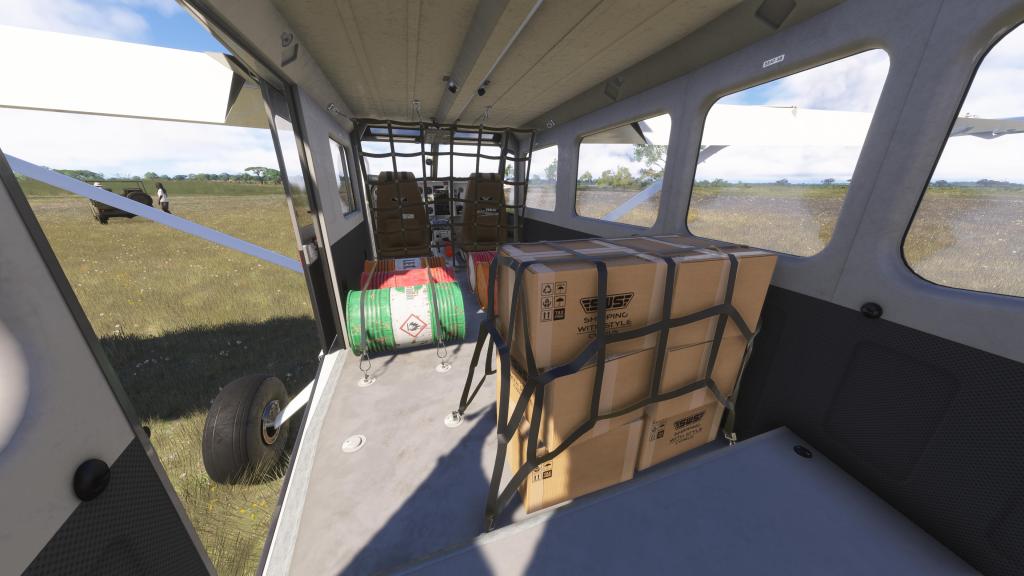
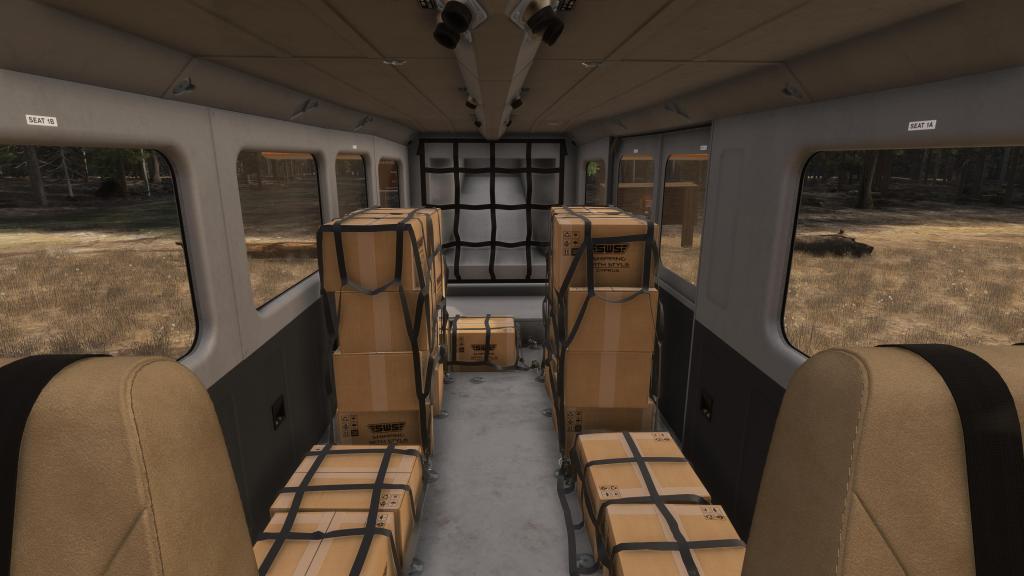
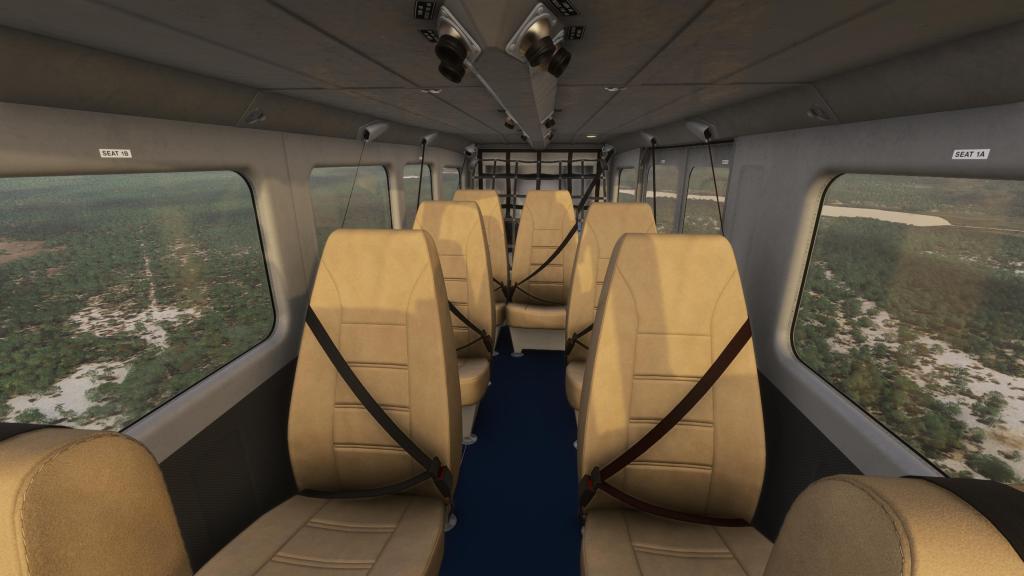
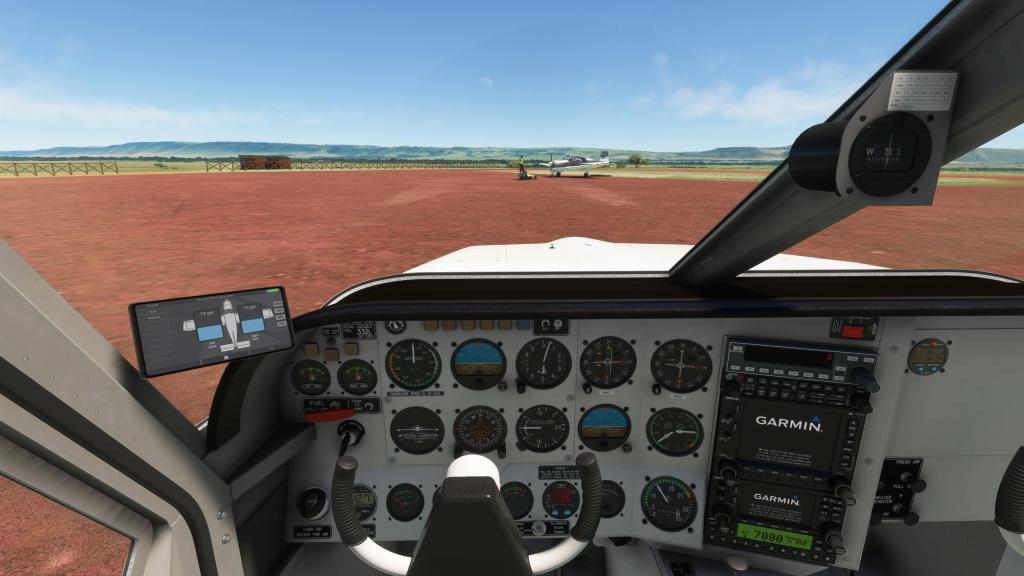
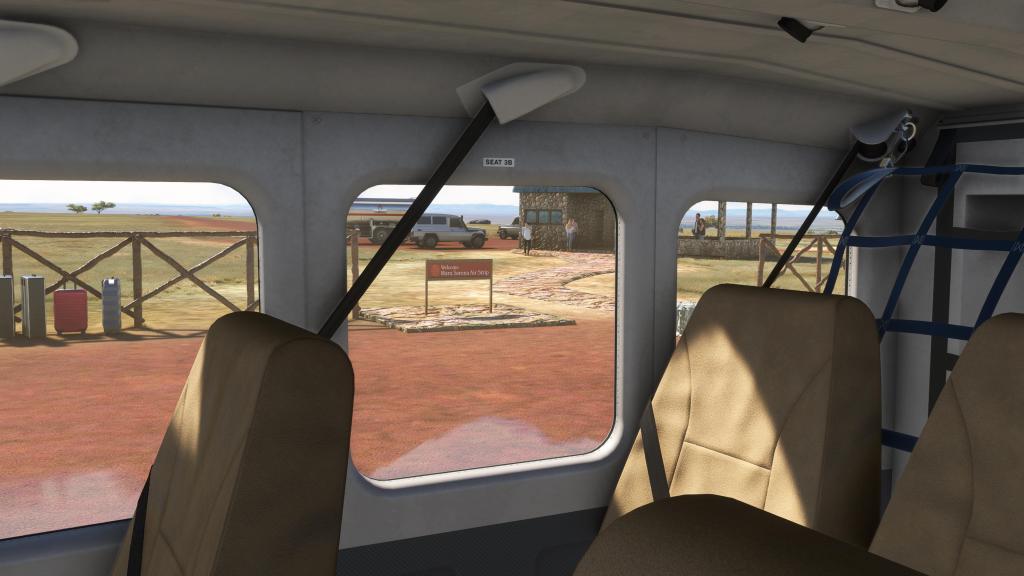
In the cockpit and cabin you’ll find clean, sharp textures throughout. The overall look is on the cleaner and less worn side which is consistent with the developers prior projects. This time around, however, the aircraft will realistically weather during flying operations gradually becoming more dirty and ultimately needing a wash. Love this feature!
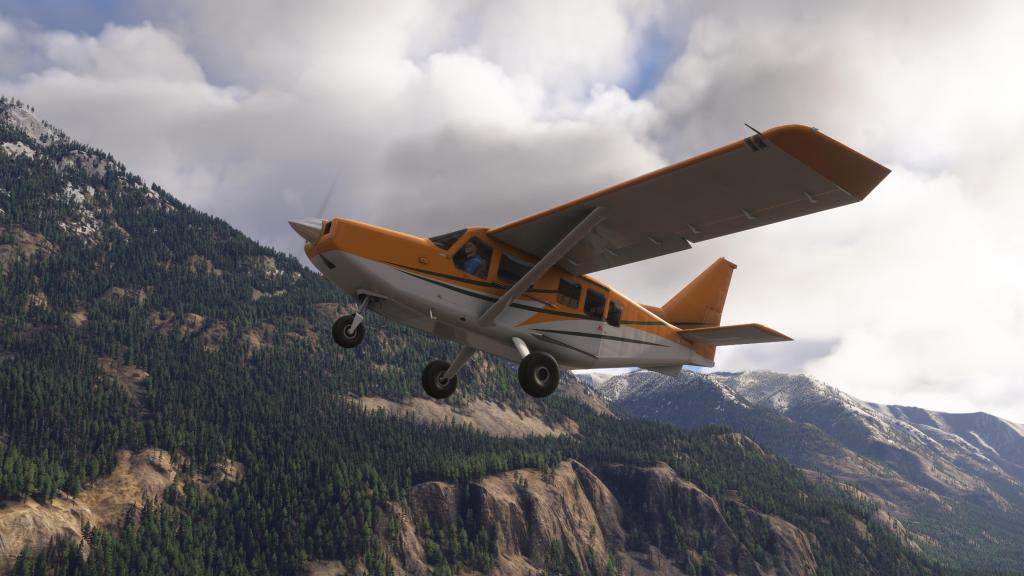
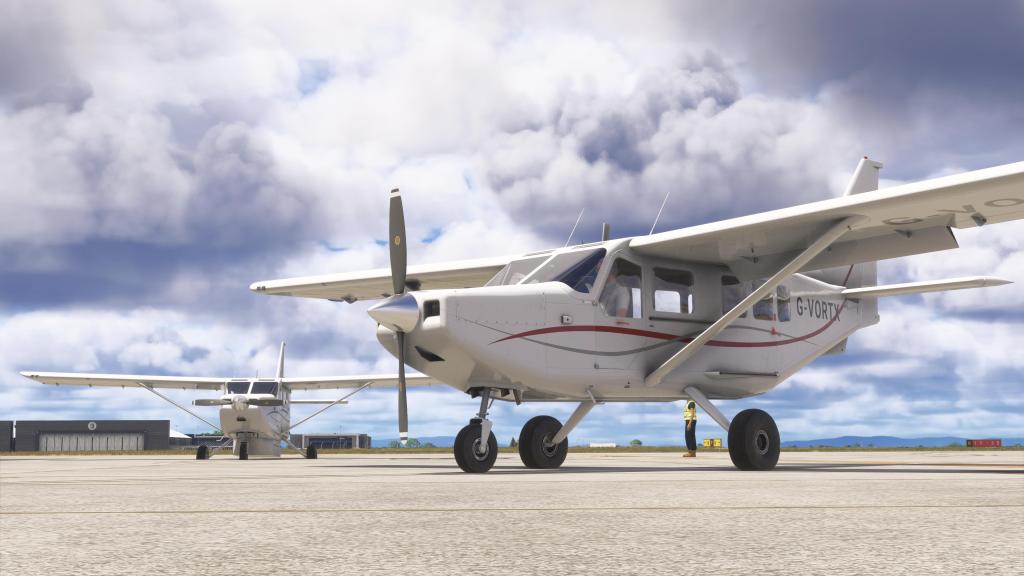
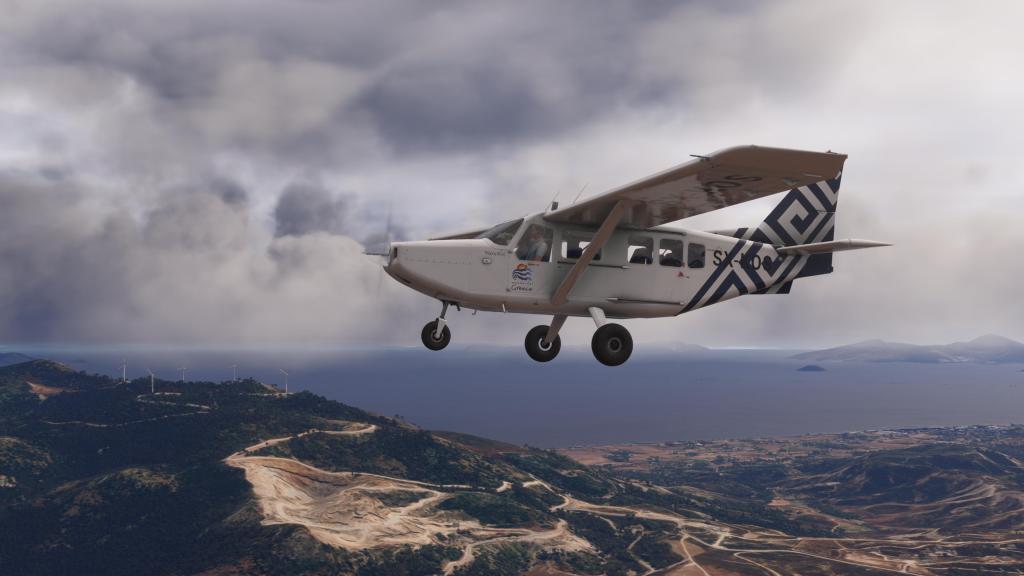
The aircraft has 6 liveries total for all variations (with and without the cargo pod, passenger and cargo interior alike):
- White (base)
- Stichting Hoogvliegers
- Nissos Kos
- VortX
- Yellow
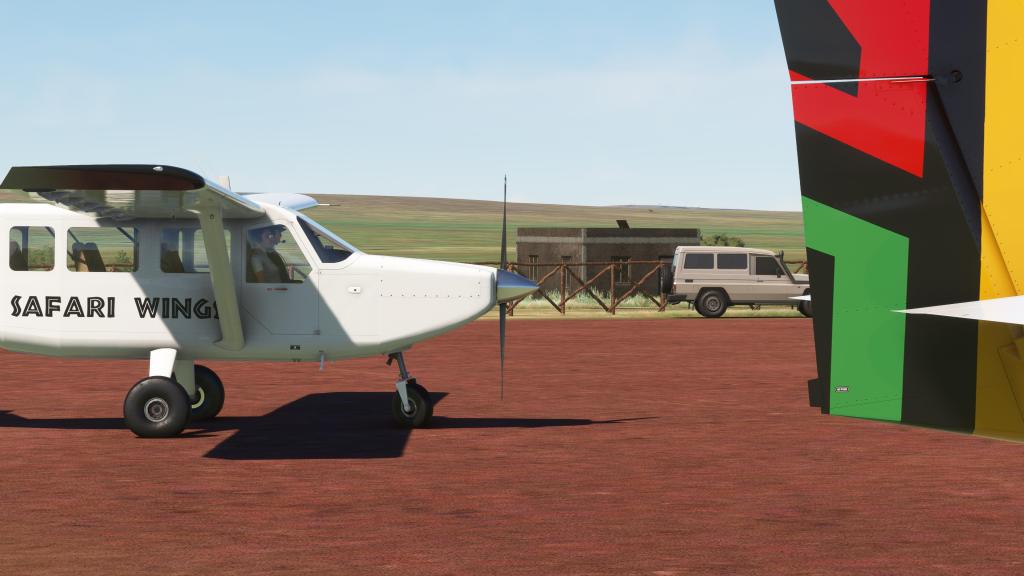
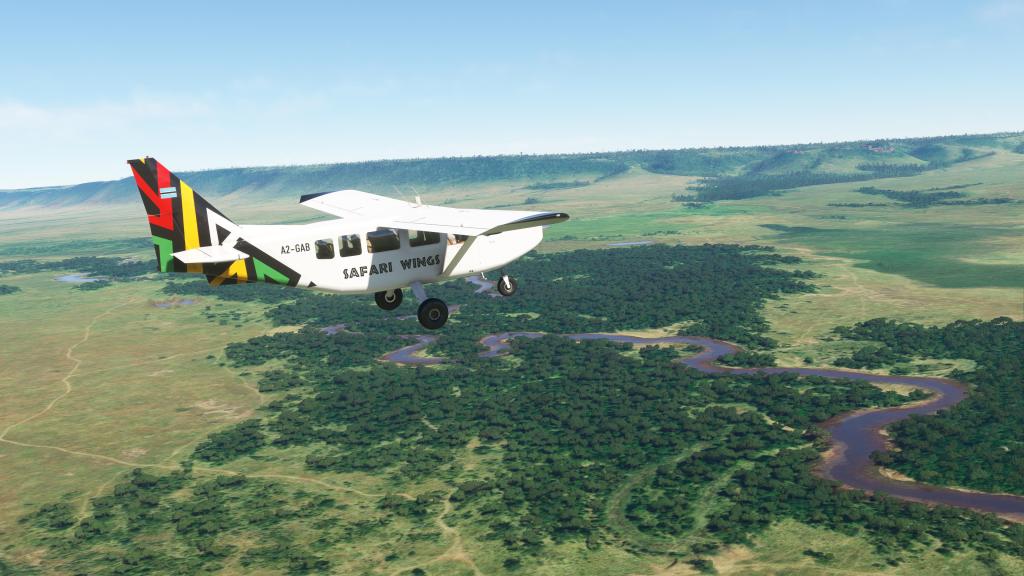
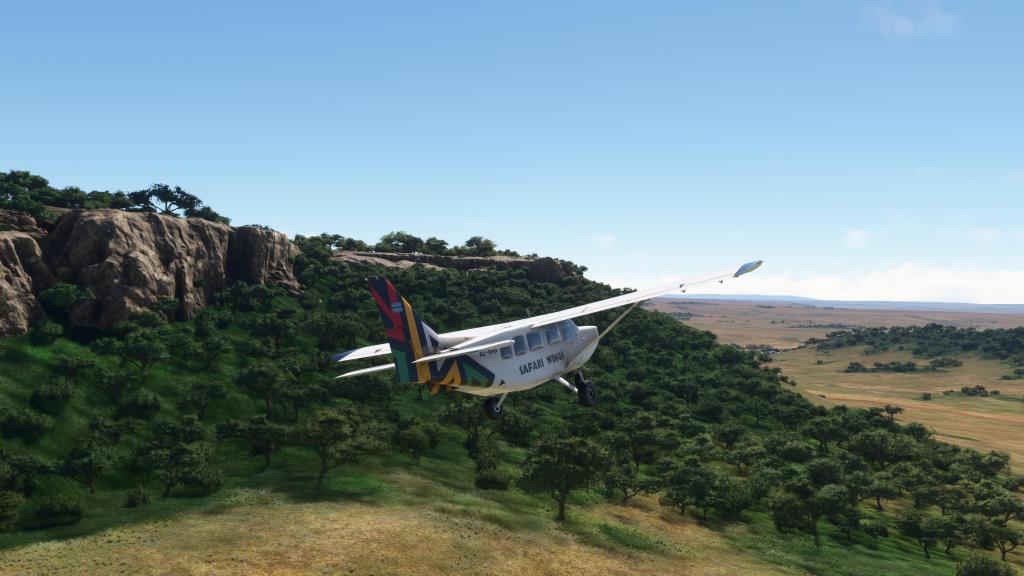
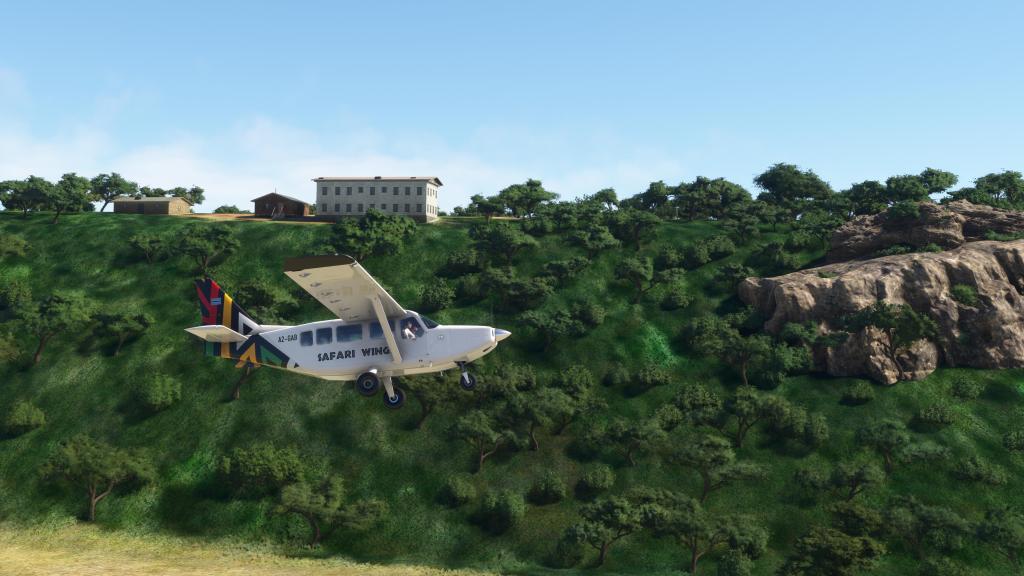
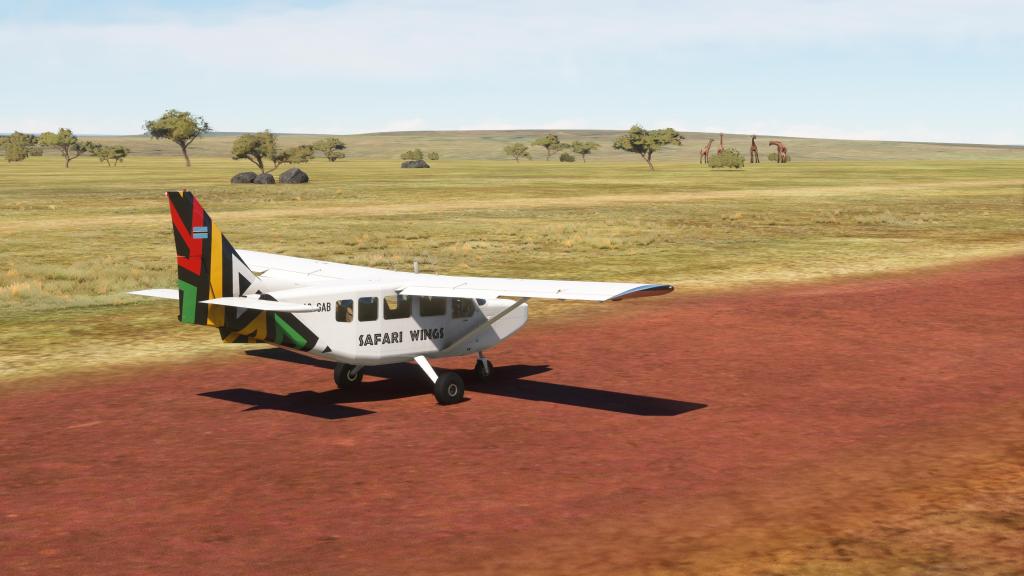
- Safari Wings
The included liveries are real world examples plus a white base. It’s a decent enough selection, but I do wish for a few more generic options to be included. The yellow and green for example would work great in other colours and more variety is definitely needed.
The sounds on the Airvan are quite good overall. Buttons and breakers have satisfying click and pop sounds, flaps and various controls all have their own audio effects, while the engine sounds about average across the series. The outside wind sounds when the camera is positioned behind the aircraft reminds me of the great audio work done by Aerobask for their X-Plane aircraft. I haven’t seen many MSFS aircraft do the same wind noise treatment and I like the immersion that it offers.
Features and add-ons
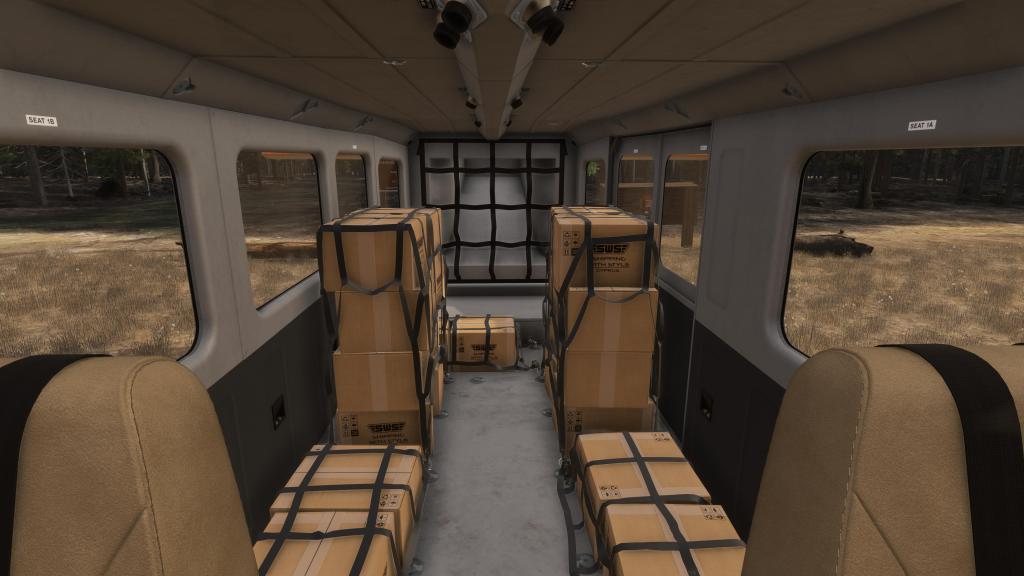
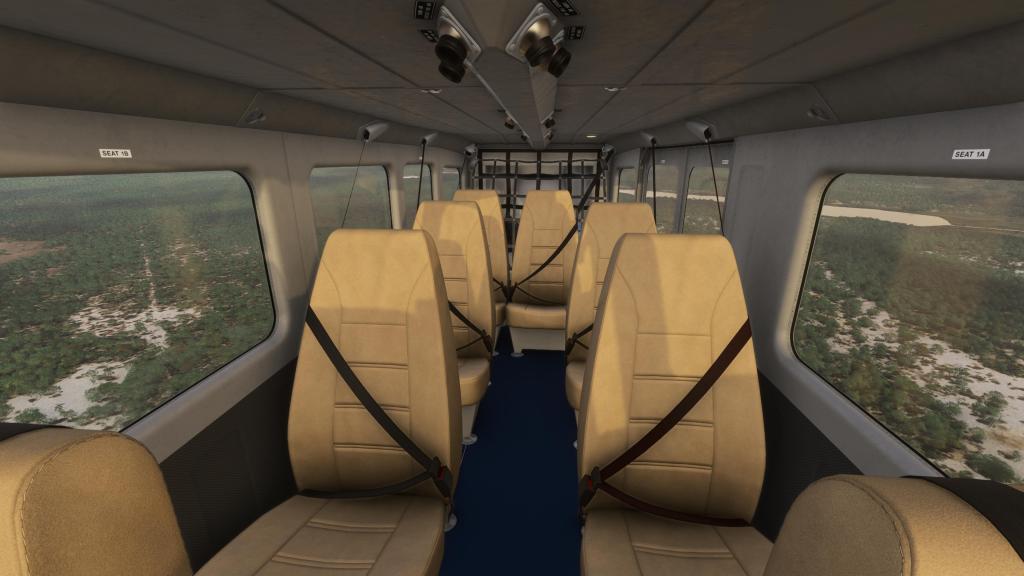
The Airvan has all of the usual features that you’d expect from a developer with the level of experience that SimWorks Studios has. There are high resolution textures, Wwise sounds with samples from a real Airvan, flight model verified by real GA8 pilots, and there are a couple of variations on cabin including both cargo and passenger cabins.
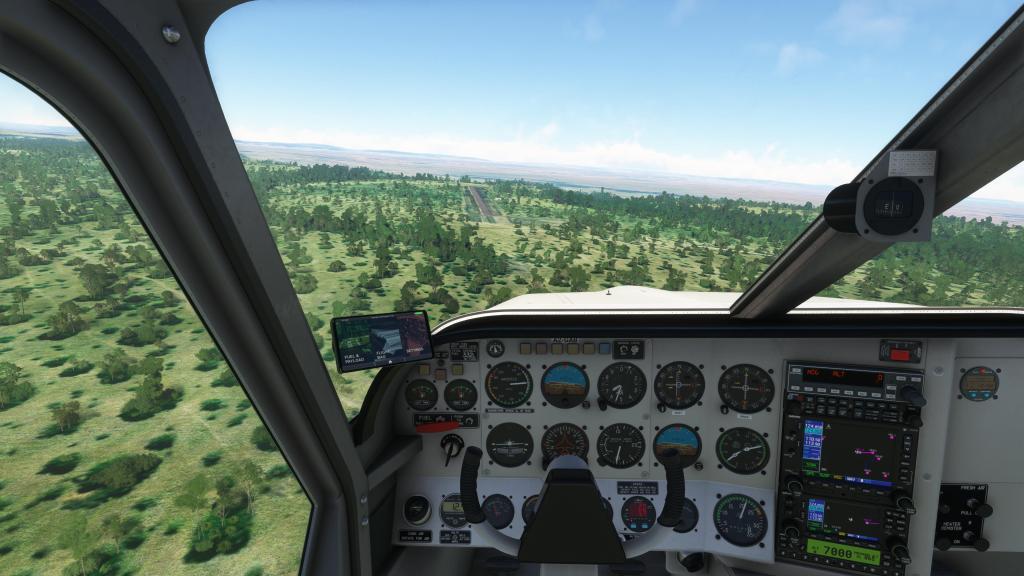
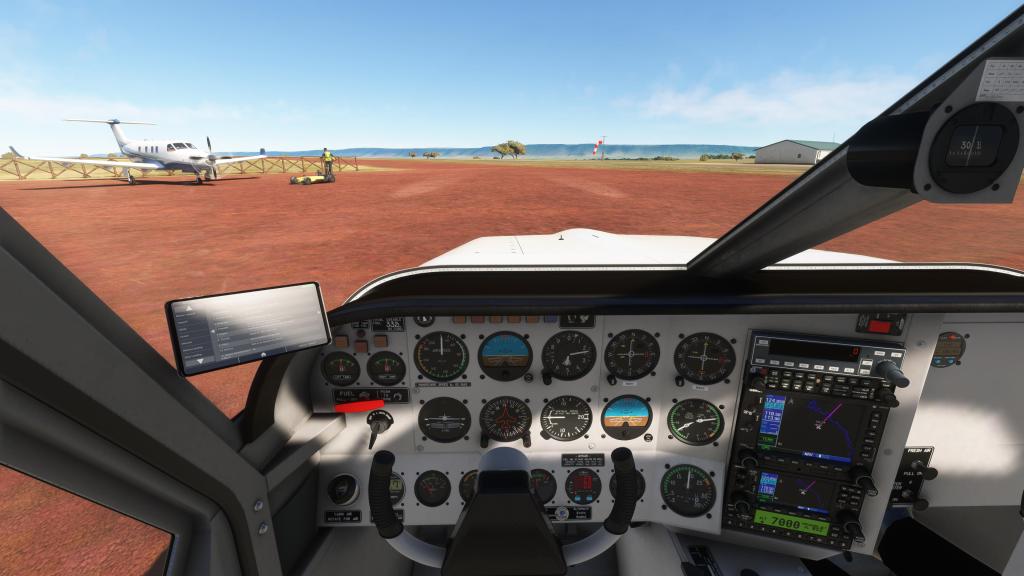
There are some other notable features and its clear that SimWorks Studios has used development of the GA8 Airvan to build up some core features for not just this airplane but also others in their line-up. A custom tablet and hot swappable avionics are a first for this developer and it brings them in line with the competition.
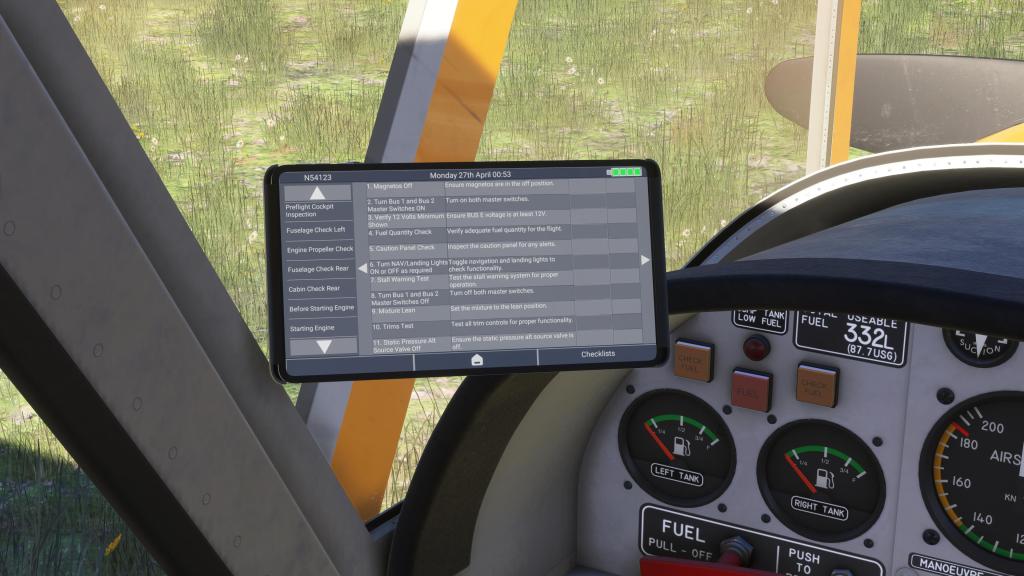
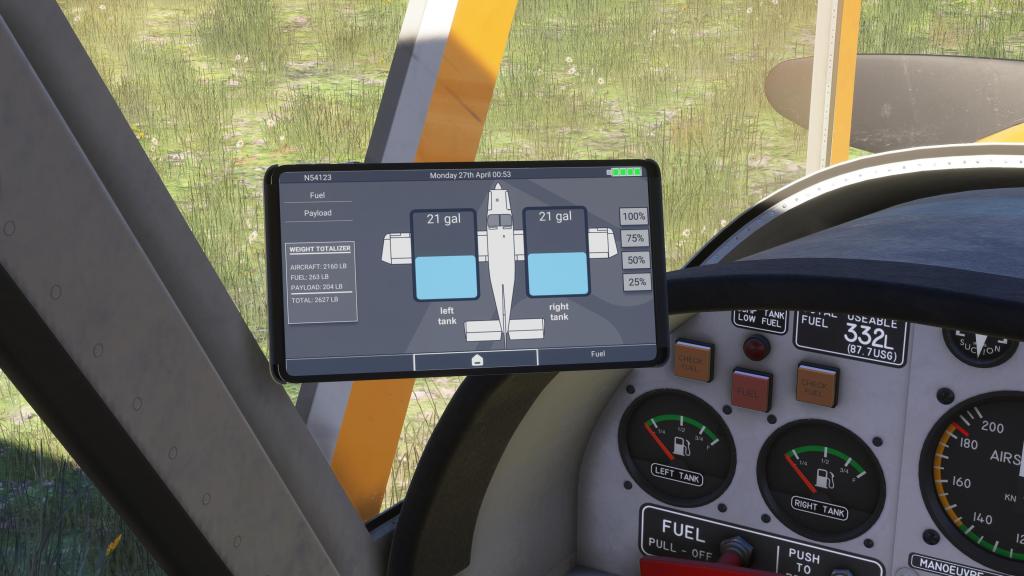
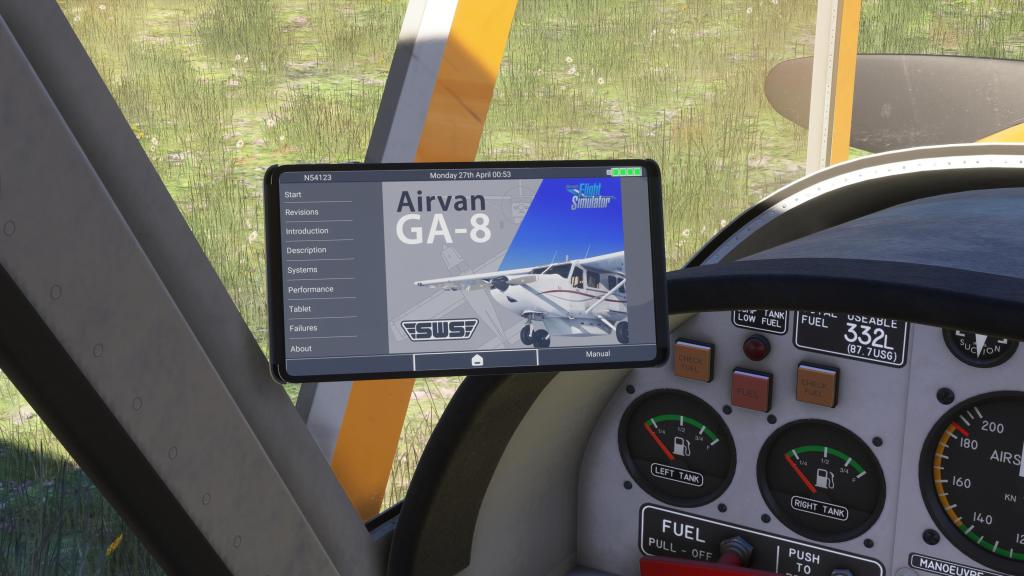
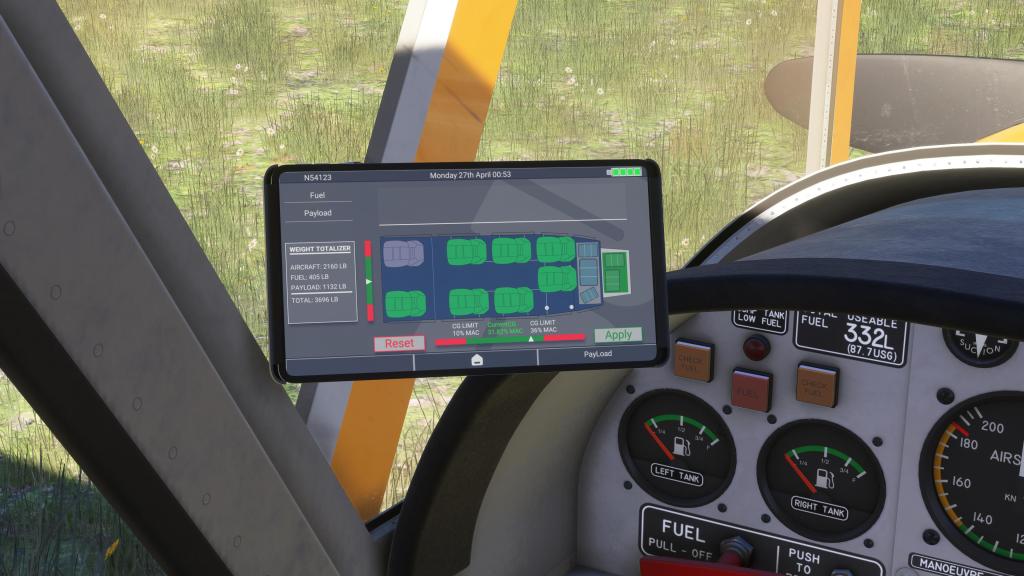
The tablet has aircraft features and management, hot swappable avionics, and checklist items all integrated into the system. This is a notable improvement over how they had to handle things with their PC-12 and needing to select avionics via a configuration or installer setup. That feature, by the way, is coming to the PC-12 sometime soon! Back with the Airvan, the swappability is between a default and two payware (with freeware option) avionics options – namely PMS50’s GTN750 and TDS GTNXi Pro.
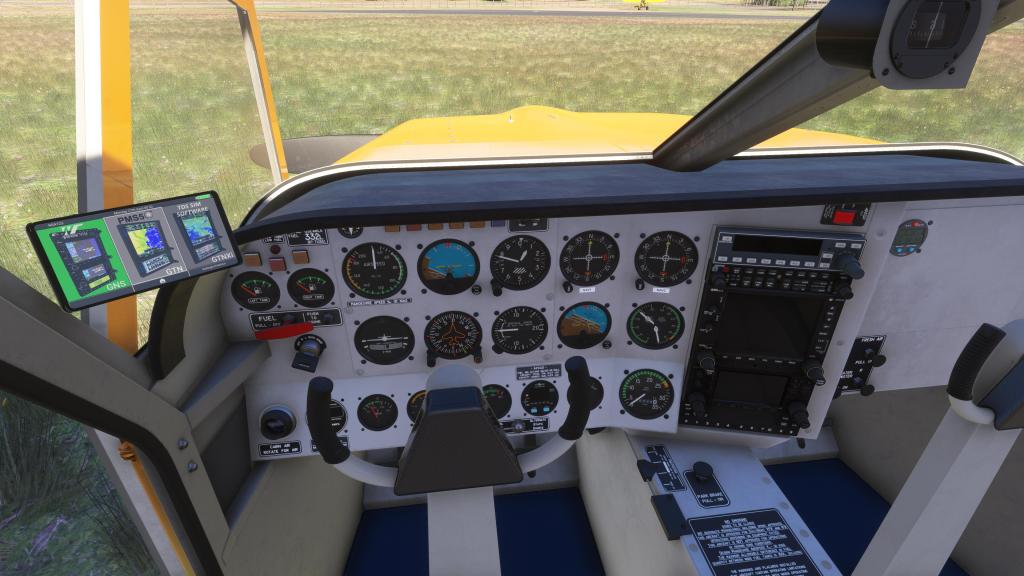
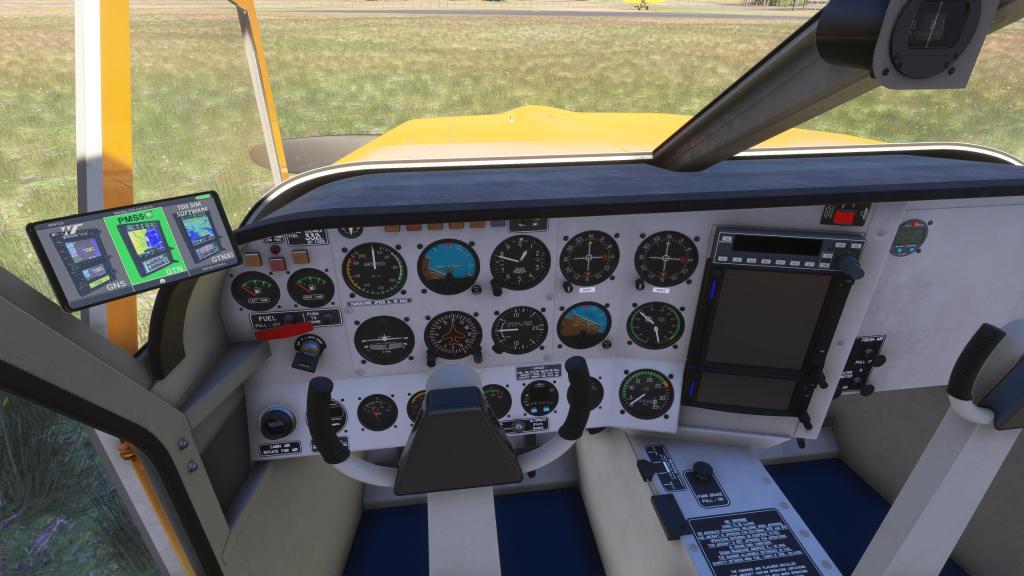
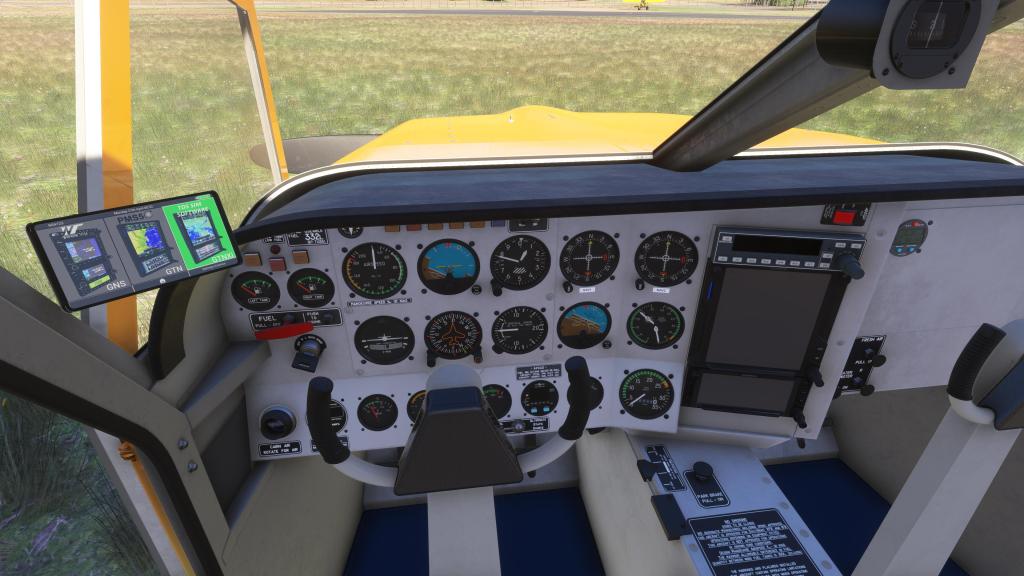
More basic functionality includes the usual array of general aviation systems including an autopilot. In the real world, not every GA8 has one, but it is optionally available with this simulated version. I always find having autopilot essential for flying longer distances without needing to be hands on with the airplane. The aircraft supports the PMS50 and TDS GTN750 avionics add-ons as an option. I love the touch interface in a flight sim for simpler operation and these add that capability so that’s a big win too. These are hot-swappable from the tablet interface.
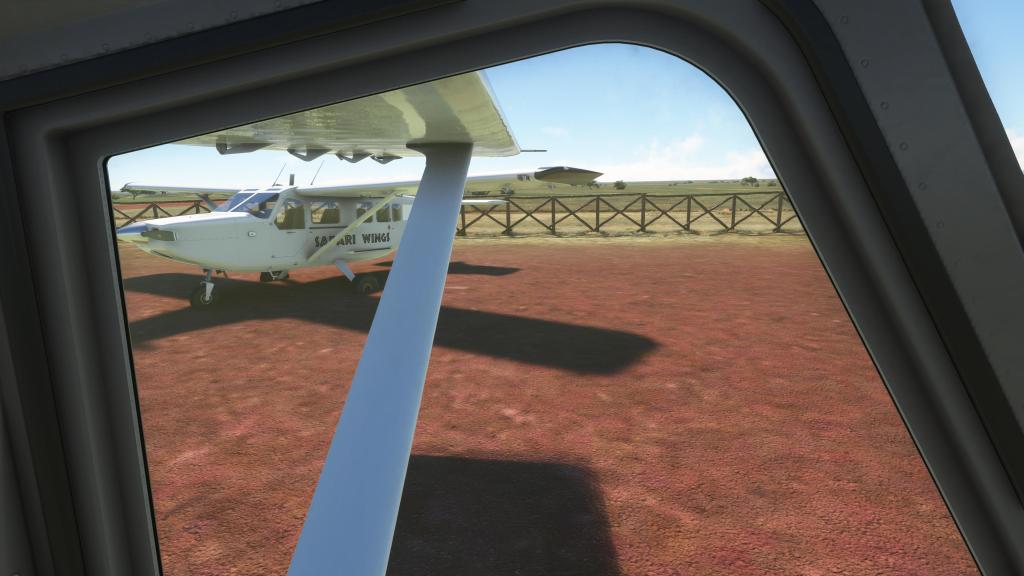
There’s also some really cool persistence features. Your aircraft will accumulate dirt and mud over time and based on usage. Leave it out for several weeks and it’ll need a wash from being out in the elements. Fly it into a rough field strip and out again and that’ll accumulate some extra dirt and mud. You’ll even see it build up on the cockpit glass. There’s other persistence bits and pieces like cockpit persistence as well. Leave the sunshades down on the last flight and they will still be there the next time.
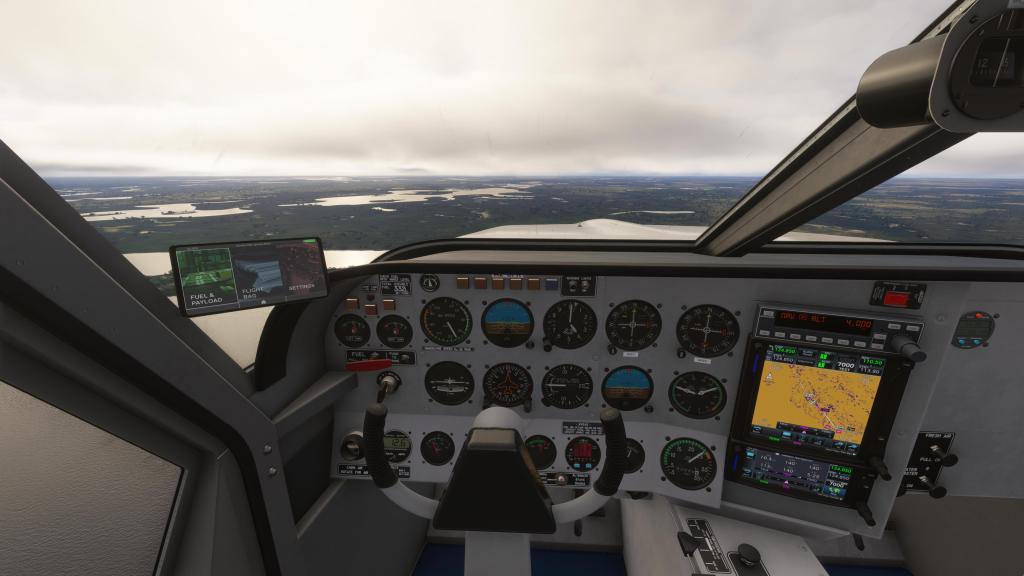
There’s an optional and added layer of persistence that SimWorks Studios calls System Pulse. It’s their version of a deep system simulation that takes wear and tear into a new level and adds over 70 system failures with failures cascading realistically through the aircraft. I did spend a bit of time testing it out in MSFS 2020 and it seemed to be a nice extra layer of detail for those wanting a bit more of a ‘hardcore’ experience. MSFS 2024 native users will find that System Pulse is not yet available. Alex from SWS tells me that it was working fine in Sim Update 2, Sim Update 3 broke it, and they are busy fixing the changes in how the sim understands the system. This is a paid add-on rather than included in the base module.
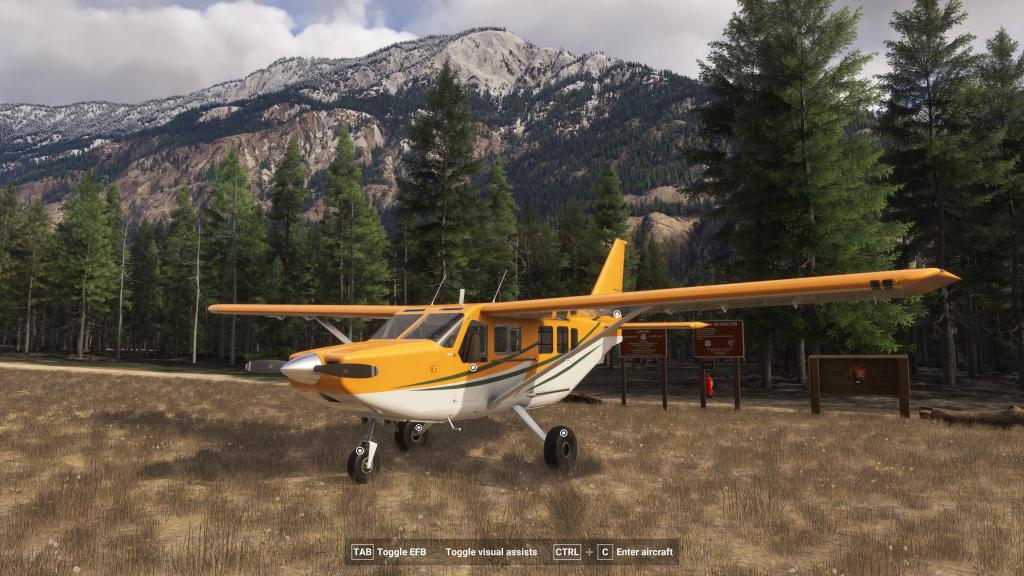
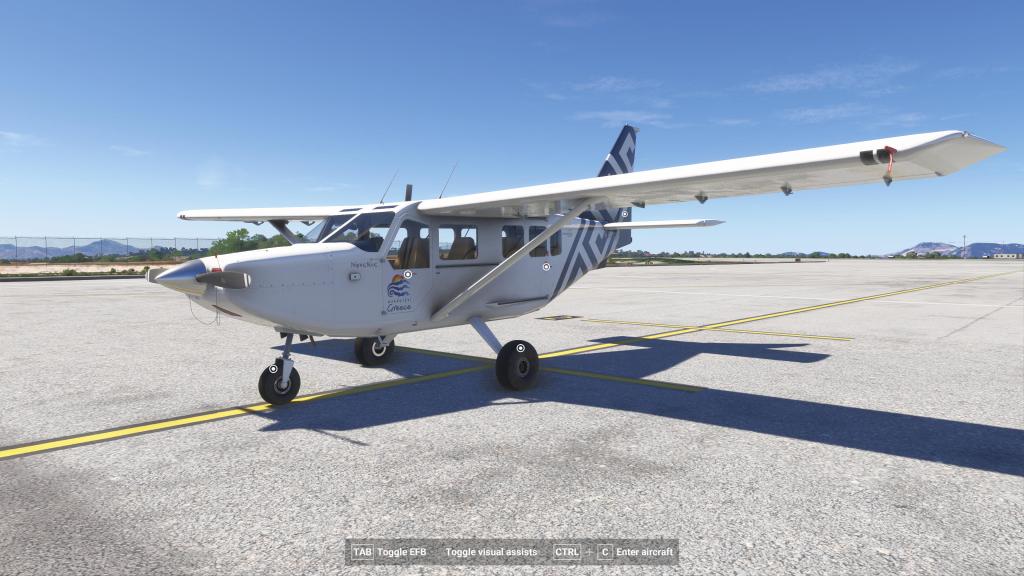
Its worth noting that SWS did their own walk-around mode for the 2020 version with interactivity (including chocks removal and cover removal) while doing the same thing with the built in 2024 interface as well. So that’s kind of a bonus for 2020 users while meeting expectations for 2024.
Flying the Airvan
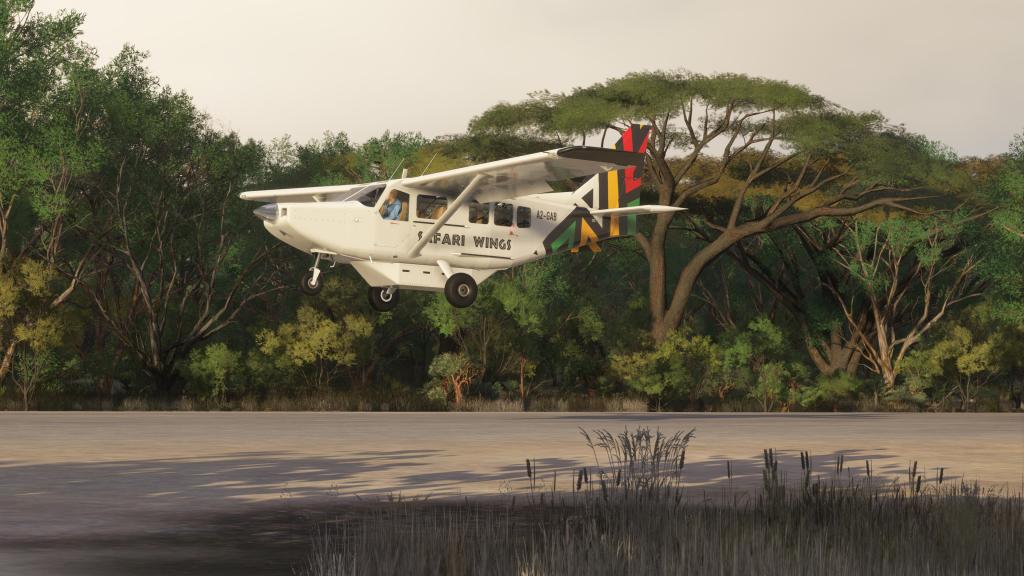
If you’re looking for a hot performer… the Airvan is not it! This is a slow aircraft that emphasizes simplicity, rough field operations, and back country flying. You’ll find yourself cruising at 100 knots or maybe 120 knots with a bit of wind. But its job isn’t to go fast, its more for aerial skydiving, a great sightseeing airplane, and a cargo hauler. You’ll see these aircraft conducting sightseeing tours in Australia, Greece, the Netherlands and beyond.
When you advance the throttle to takeoff settings there’s quite a lot of noise… but acceleration happens quite slowly. Lifting off you’ll feel very quickly that while the aircraft is responsive and quite easy to handle, it’s not got a lot of extra power on hand. That has lead me to some hairy takeoffs when fully loaded with cargo or passengers. The Airvan can, to be clear, do the takeoff and the centre of gravity is within the published limits… it just needs a lengthy runway to make it happen.
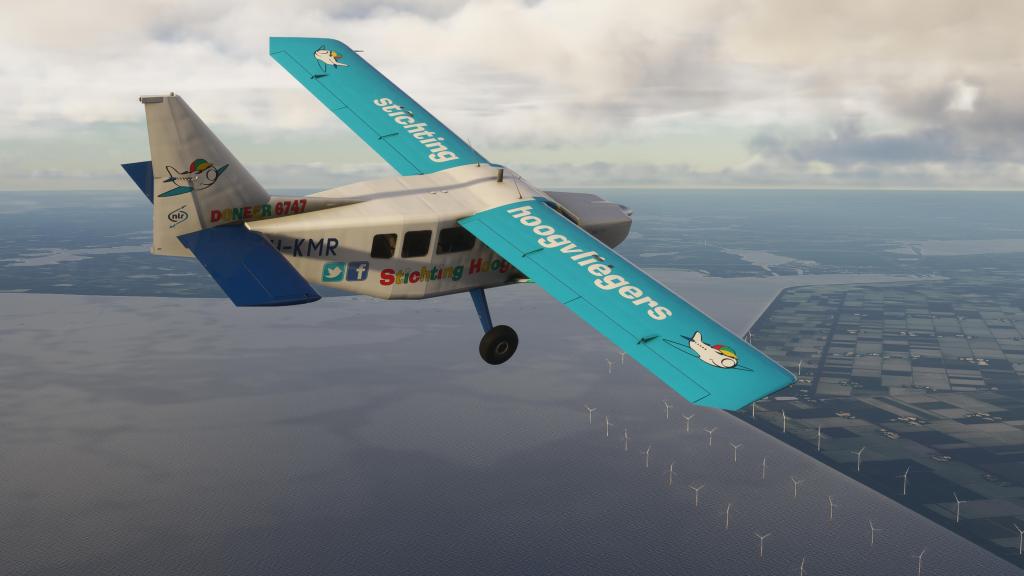
This aircraft does really shine, however, once its up in the air. It’s stable, predictable and easy to fly. You can pick out a landmark and orbit it easily and without difficulty. This is, in part, what it was made for and its great at that. Its not exciting but its not going to be exciting which is a good thing for a lot of utility airplanes like this one.
Landings are generally well behaved too though you’ll want to watch your power and make sure you don’t get too far behind the aircraft. It can sink and drop a wing if you let it get too close to the stall or in too high of an angle-of-attack situation. That lack of power applies here too. Handled well, however, and you’ll be able to get it to settle down just fine and in some relatively austere airstrips.
The GA8 does reasonably well on some bush strips as long as its not the smallest and most difficult ones. It just doesn’t have the power. But on longer strips and generally austere conditions, the GA8 feels very much at home. Not surprisingly, its a good match for SimWork Studios Okavango Delta in Africa.
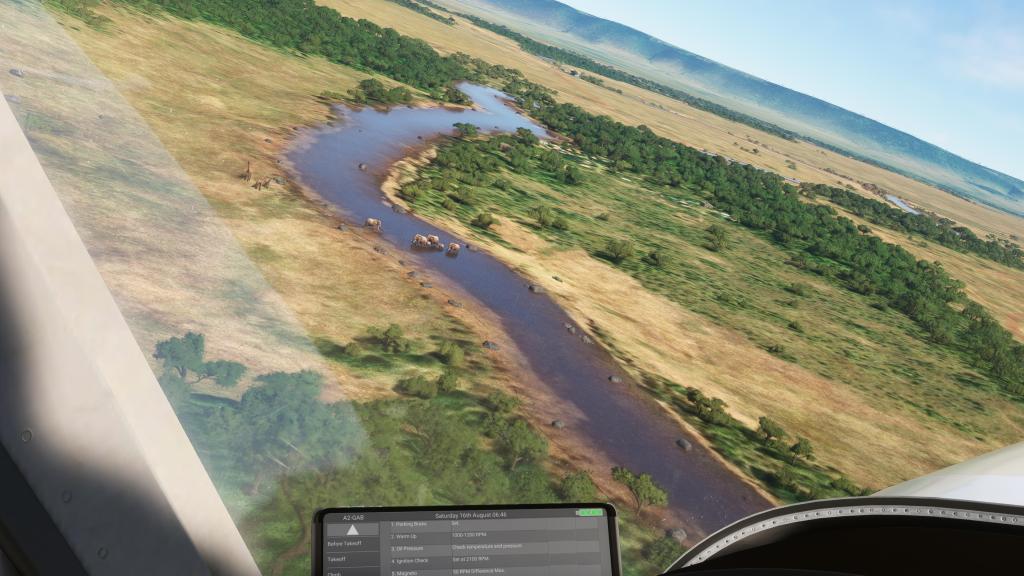
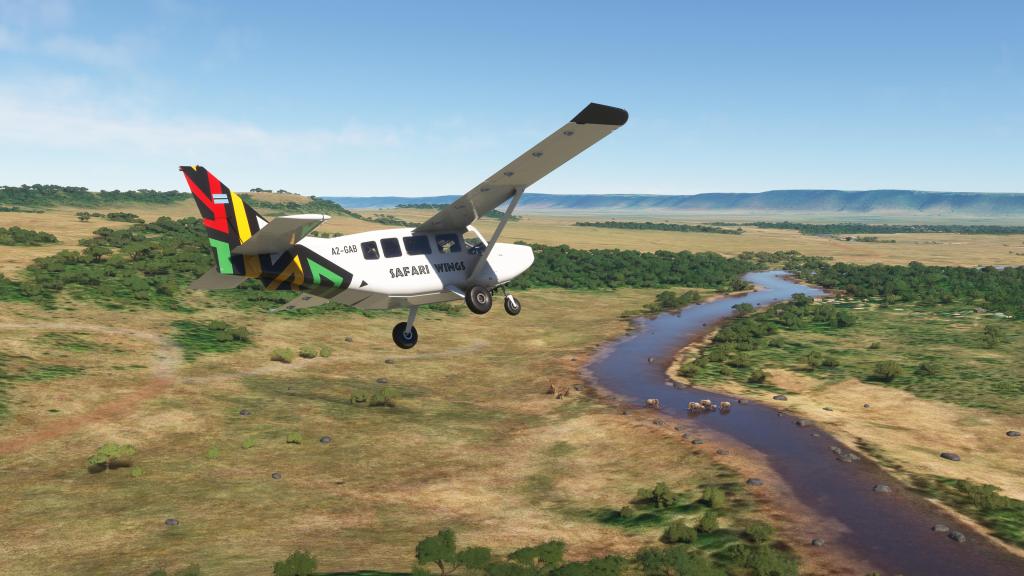
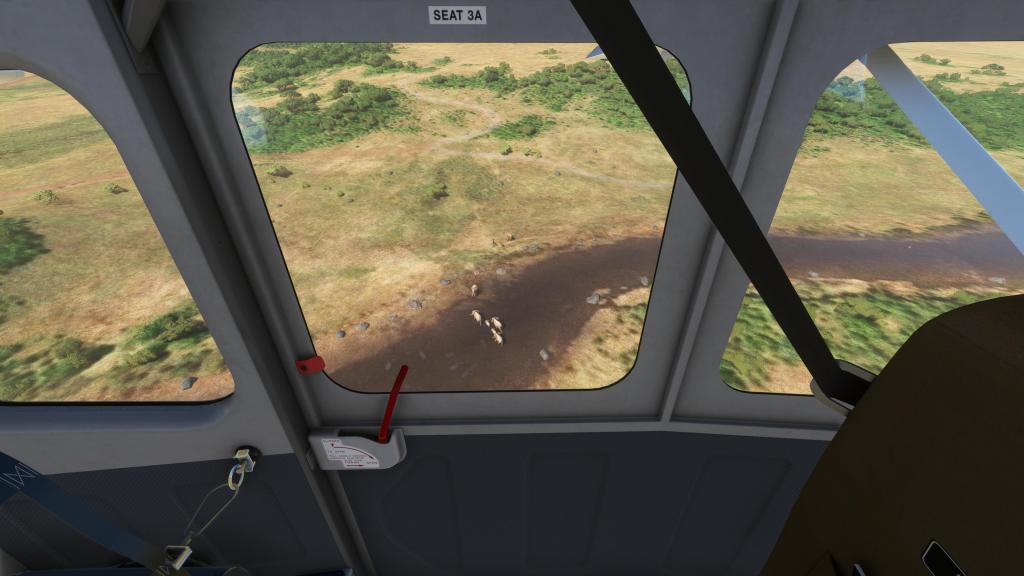
I’ve written up a couple of journals and previews of the aircraft prior to its release. Reading these may give you a more in-depth sense of the kind of missions you might take the aircraft on. I did some flying in Australia and Greece in this first impression, later I went to the Netherlands and flew a sightseeing tour with the Stichting Hoogvliegers (the story behind that livery is interesting), and I did the Maasai Safari milkrun in 2020.
Final thoughts
Filled with cool persistence features and offering a generally solid effort all around, SimWorks Studios has put together yet another quality release. The Airvan has not suffered from the quirks that the developer faced with the PC-12 and has delivered not only on core features but all of the extras that I can see being carried into future products. If you like SWS’ products but not the Airvan specifically, you can see the direction that this developer is going in and I like it a whole lot.
Where the aircraft may not appeal is in the airplane itself. It’s a slow, sightseeing and utility airplane, ideal for hauling people and cargo in a very utilitarian package as I’ve mentioned several times throughout the review. If you want fancy style or fast airplanes, the GA8 Airvan won’t appear much to you. On the other hand, if you like the rough field flying and relaxed pace of a plane like this, you’re going to find a lot of depth and value to the experience.
SWS do face a slightly uphill battle these days as developers like Black Square or A2A have introduced some truly spectacular general avation options albeit at premium prices. The GA8 Airvan comes in about $10 cheaper so that does make it more budget friendly, however, it also punches above its weight thanks to the reliability and persistence features.
The SystemsPulse features are definitely aimed at the persistence functionality that you find with those developers and SWS is aiming very high with their features here. With the system currently not working on 2024, right now it only really shines for MSFS 2020 users. The developer is working on it, as I wrote earlier, so I expect it will come eventually.
You can purchase SimWorks Studios GA8 Airvan Basic Edition for MSFS 2020 and Basic Edition for 2024 with the price of €27.49 from the SWS website. The 2020 version comes with a license for 2024 as well as a free update. The GA8 System Pulse add-on is an extra €14.99 and at present is available for 2020 only with 2024 version coming later. The aircraft is also available at the MSFS Marketplace.
Screenshots














Leave a comment