
I’ve had the opportunity to get my hands on a preview build of the DCS: F-100D from Grinnelli Designs. The folks at Grinnelli were nice enough to send me over a preview to check out and help set me up with it. I’m going to do a few articles on it as I show off some of its capabilities and then put to record my initial feelings on it as the module closes in on release. For this first article, I’m going to talk through some of the basics and what I stumbled over as I did my first flights in the jet.
The flights before
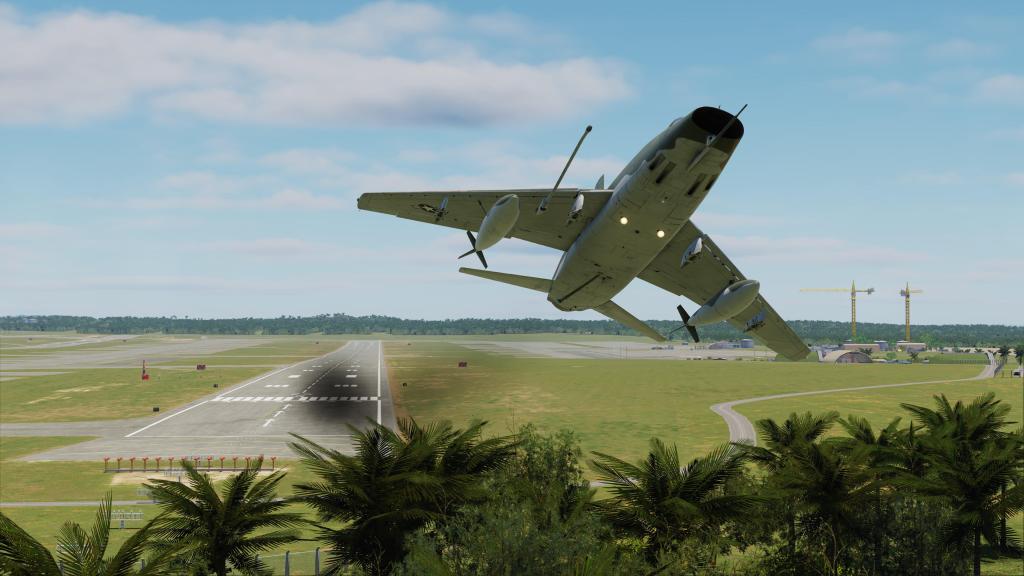
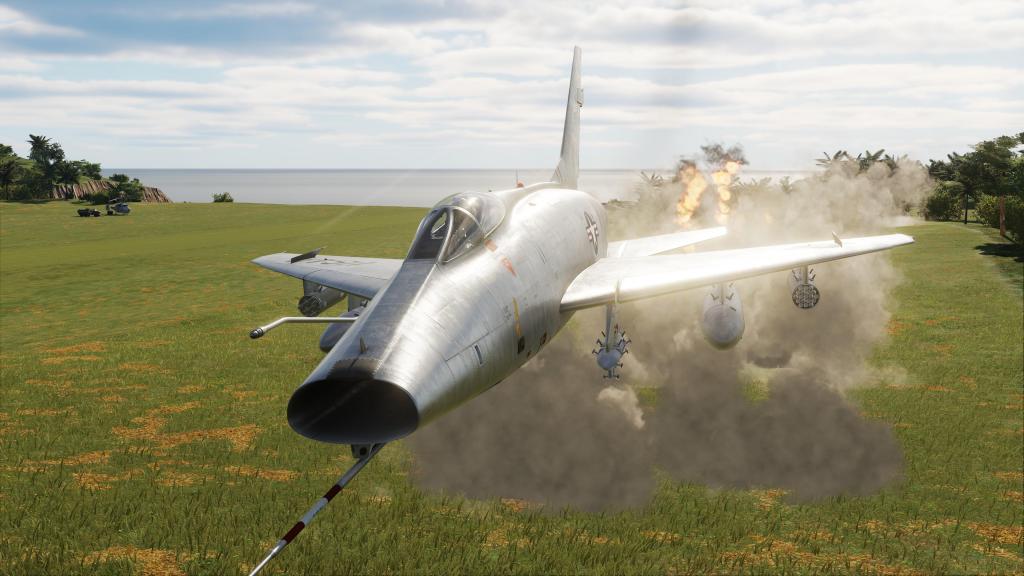
What follows isn’t my first flight in the DCS: F-100D as I did spend some time prior to this working through the control setup, keybindings, and messing around with the systems and weapons.
On my very first flight, I didn’t have a binding for the afterburner and I nearly didn’t make it for example. In some combat scenarios, I misjudged how quickly the controls lock up at speed and crashed into some trees. All part of the learning process! Those flights I decided not to really document as they aren’t as entertaining… but the Guam tour below is a bit more of a structured and ordered experience of learning to fly the jet. So let’s go there!
The Guam tour
Note: I’m flying a preview build of the DCS: F-100D. Grinnelli are still actively working on the module, crunching bugs, and fixing issues, and bringing things together. Consider everything you see here a work in progress!
This first preview is focused on my initial efforts to become acquainted with the DCS: F-100D. Its not my first flight exactly as I’ve been messing about with the module in different ways but in this one I wanted to kind of walk through a complete flight and how I found things.
For this flight I’ve set myself up with a little tour around Guam. Starting at Andersen Air Force Base, the plan is to start the jet, taxi, takeoff, fly a circuit of the island at low and medium altitudes, and then land again. How did it go? Pretty well actually!
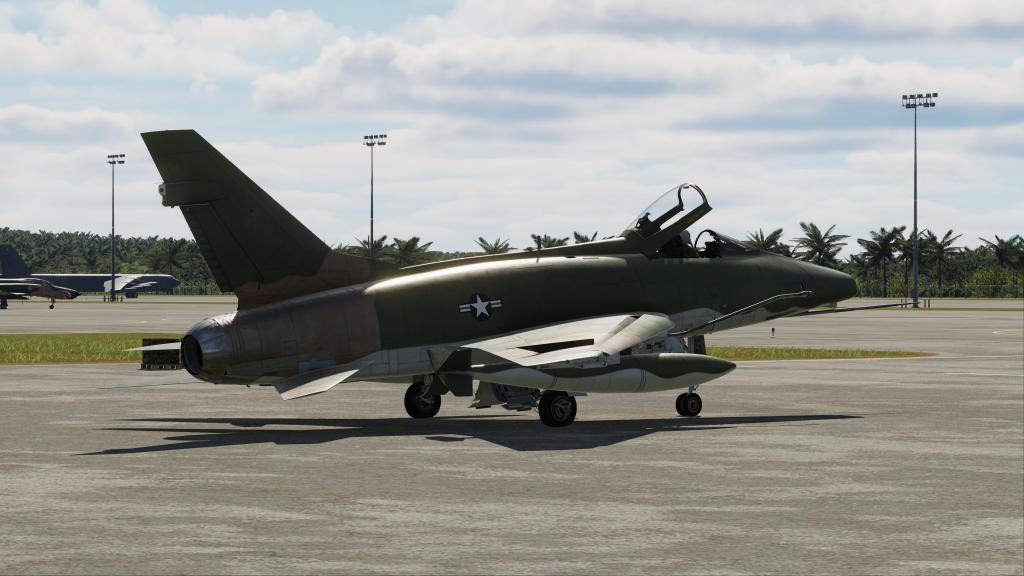
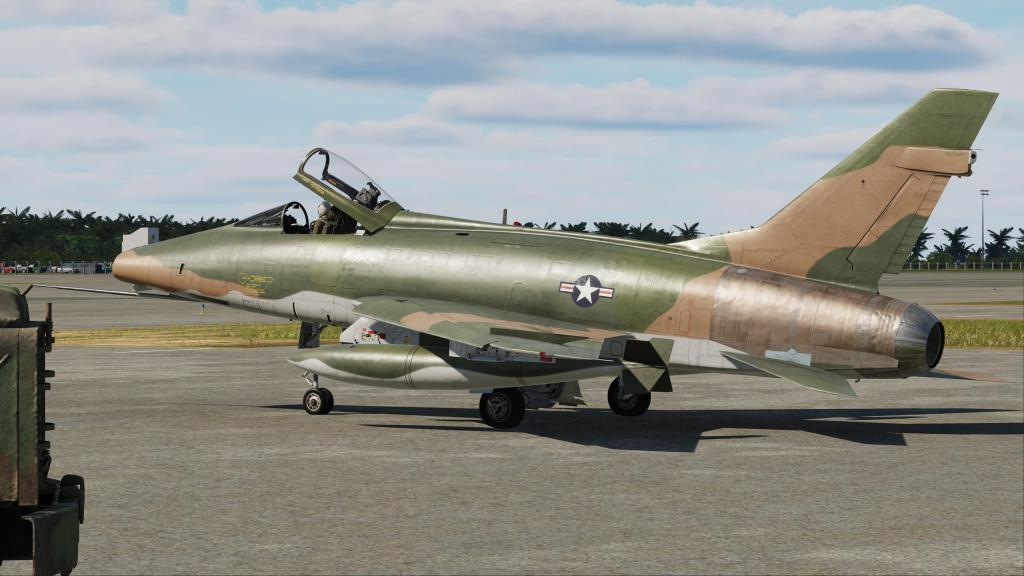
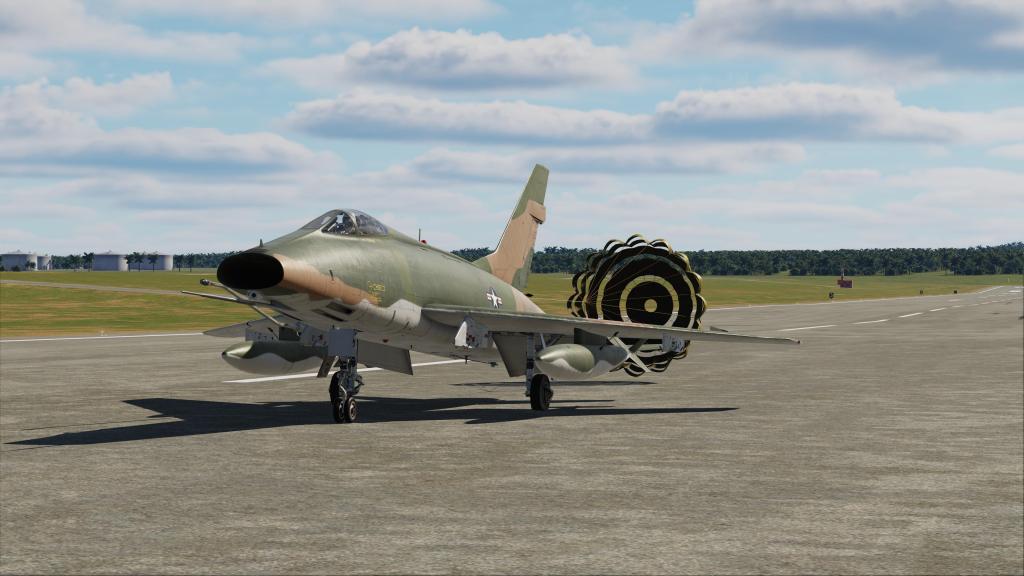
We start on the ramp at Guam and I spent a little bit of time admiring the jet all around before getting things rolling. For this flight I’m testing out the auto-start procedure which takes only a couple of minutes to complete before the aircraft is ready to rock. If you want a relatively simple start-up time, the F-100D can certainly get rolling quickly.
I’ve got keybinds for the nose wheel steering toggle and that plus ample use of differential braking helps keep the F-100D on track through the taxi. I found the jet needs a fair bit of throttle to even get moving so you will have to throttle it up to get things going.
I’ll take a moment here to remind everyone that Grinnelli have done a lot of work on the engine itself. Throttle up quickly and you’ll be hearing pops and bangs and all sorts of uncomfortable noises from it. The Pratt & Whitney J57-P-21 really takes careful management to keep it smoothly operating so… gently does it!
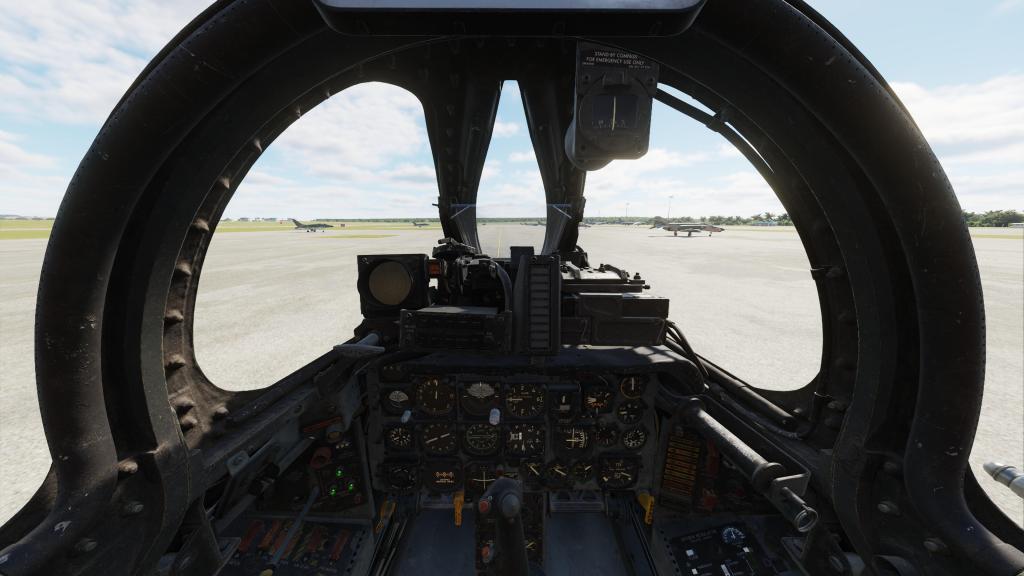
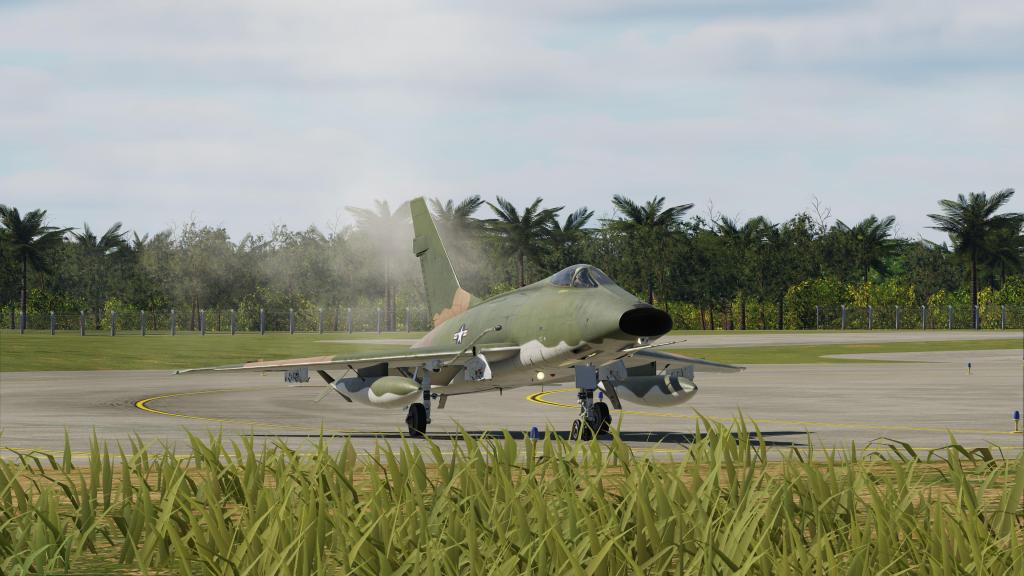
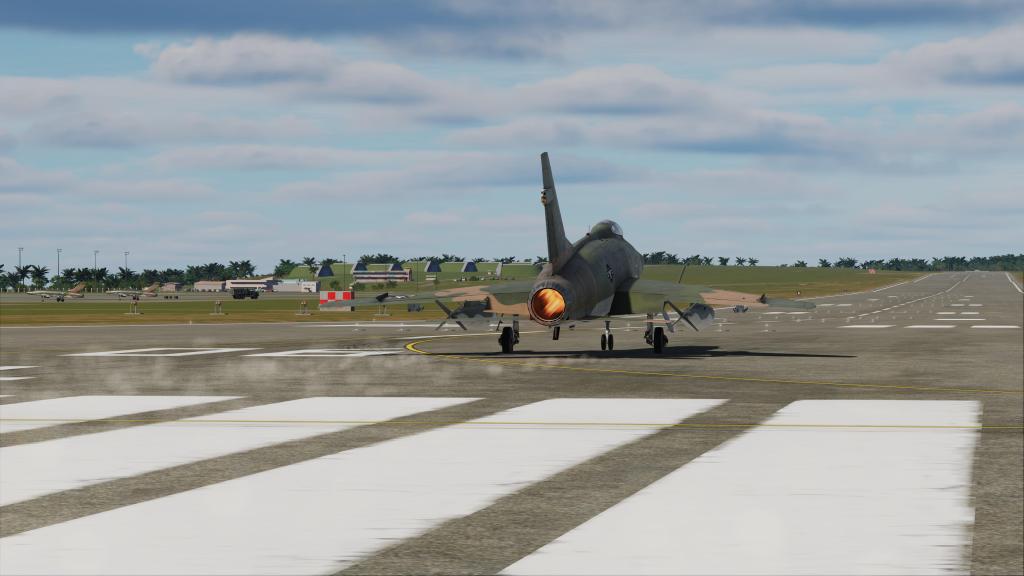
Turning onto the runway, I advanced the throttle and then tapped the afterburner toggle that I’ve bound to my throttle to engage the burner. Unlike more modern types, the throttle is advanced into the afterburner stage and then you need to use a bound control to move it into the afterburner mode. You’ll see the throttle physically slide to the left to engage it and the roar and kick from the sound effects when this happens is delightful – its part of what I can already tell is ample work by Grinnelli’s team to get the sound involved in making you feel what this jet is all about.
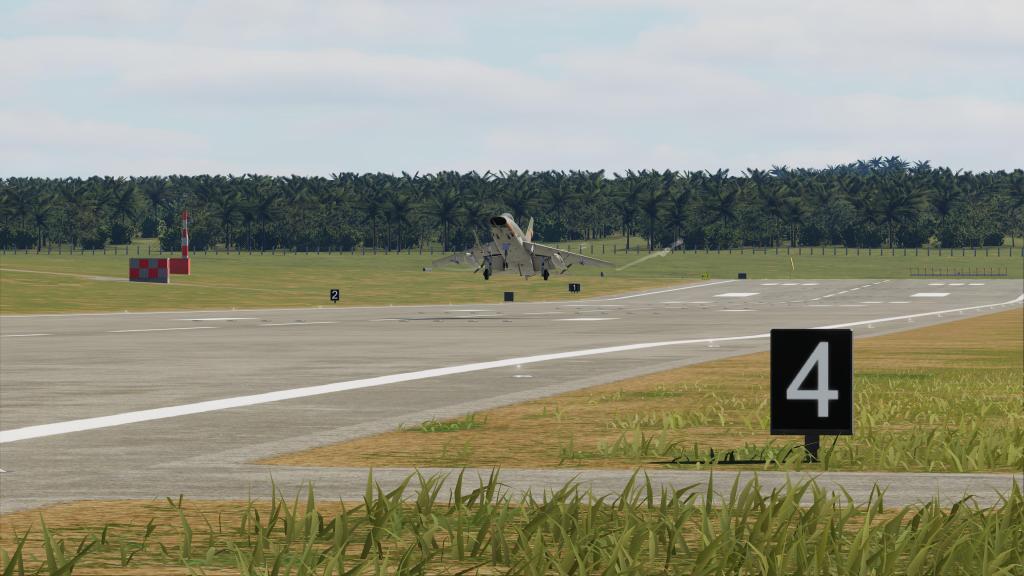
After burner kicks in, things happen quickly and you’re lifting off the runway with a gentle couple of degree angle and working to retract the gear and the flaps quickly and bring in the landing lights before they reach overspeed.
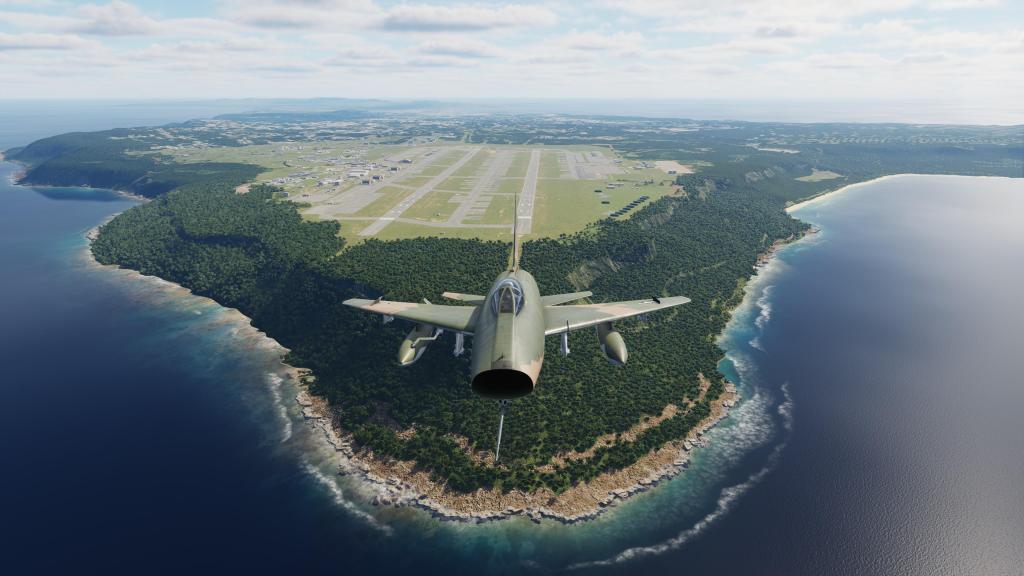
For the next few minutes I’m working on gaining speed and feeling out the airplane.
The F-100D feels a bit heavy in its response. While controls are direct and capable, it can be a bit sluggish in roll at some speeds and to get a good turning rate you need to start to build the speed in well over 300 knots. I’m not sure what, off hand, the best turn speed is with this jet but its certainly not a turn and burn sort of experience from my initial impressions. Without the burner… it also feels a bit slow to accelerate. Though you do keep on moving at well over 300 knots.
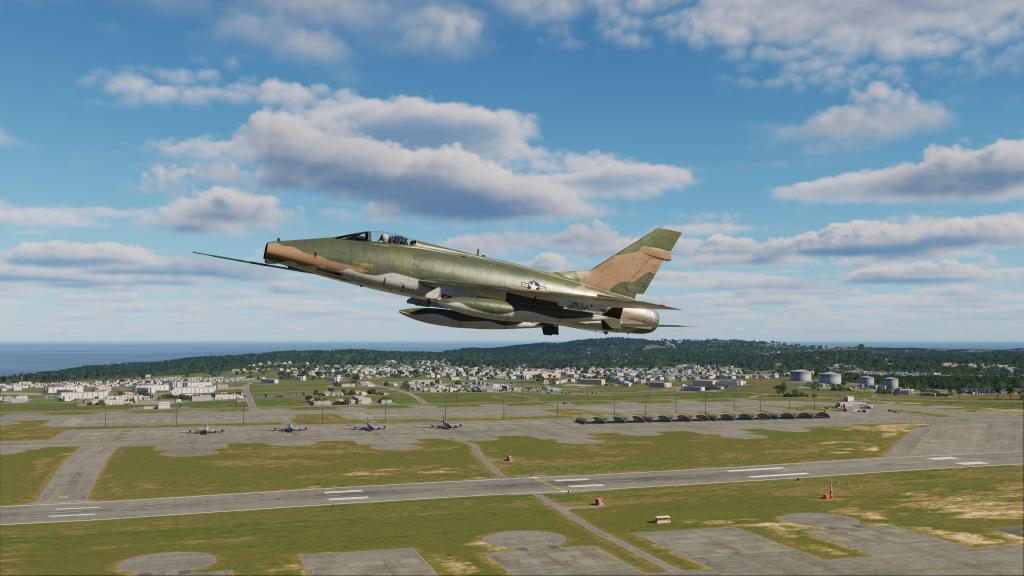
While doing all of this, I buzzed the Andersen north field which is currently not in operation. Starting to have some fun here!
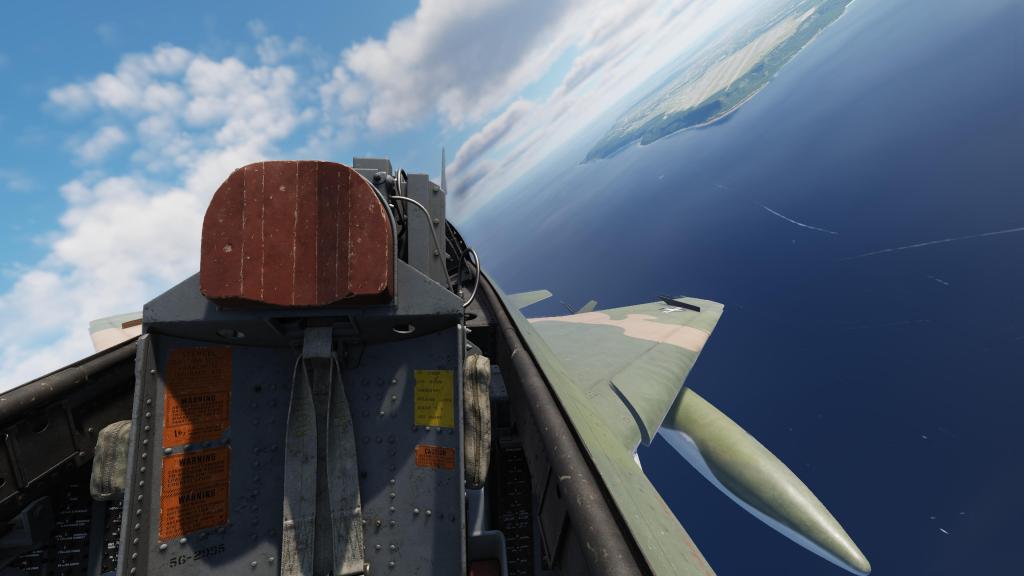
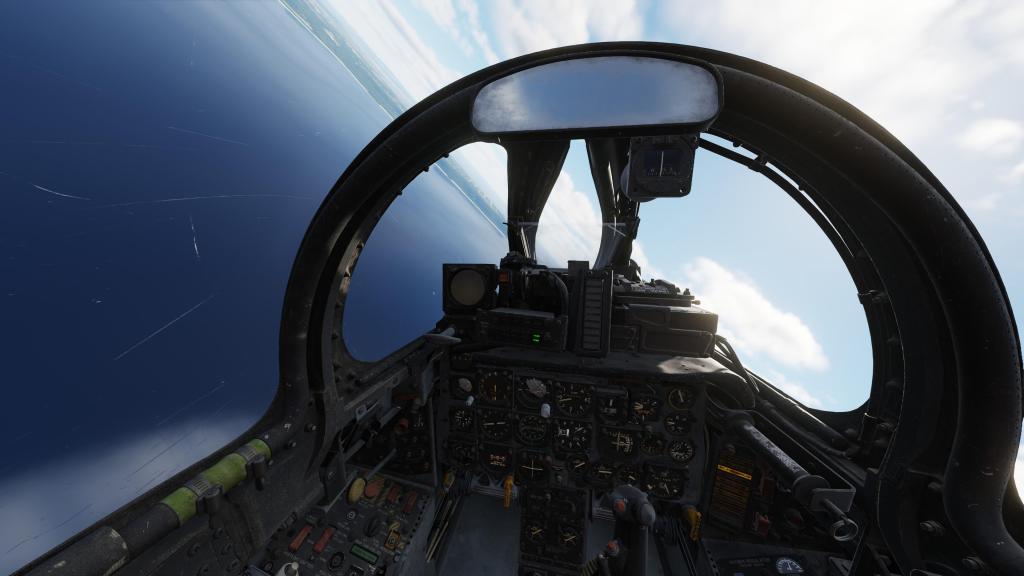
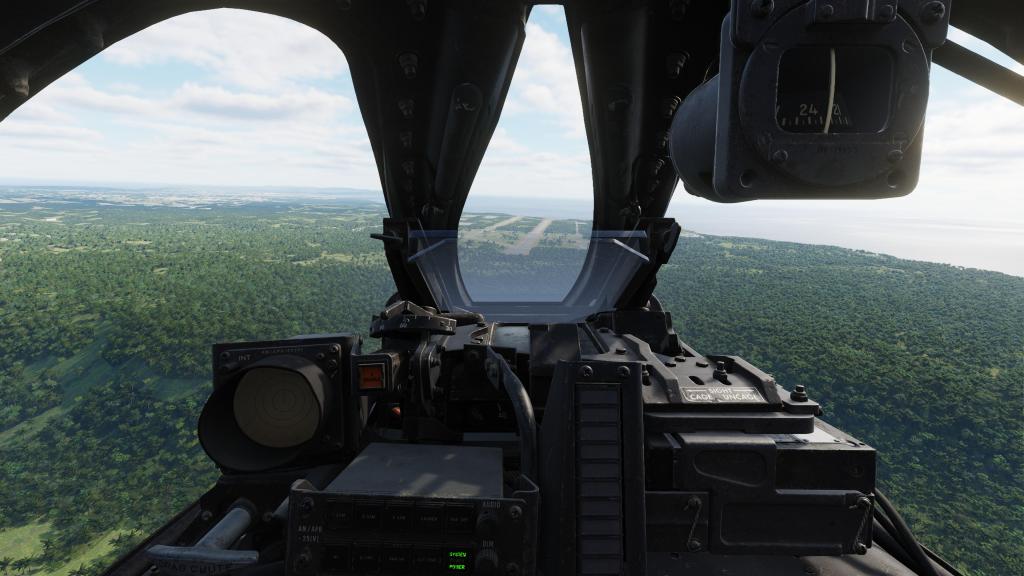
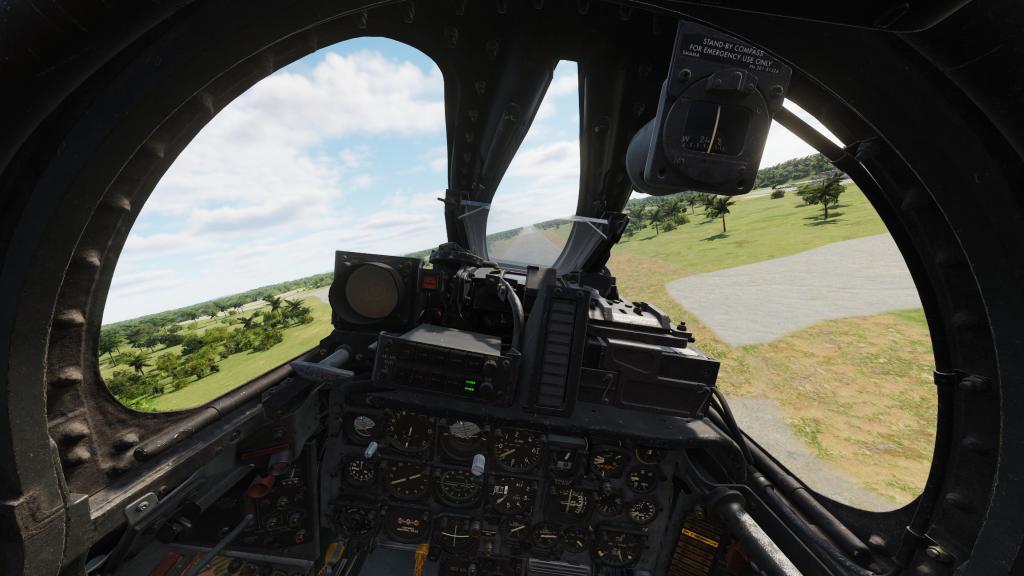
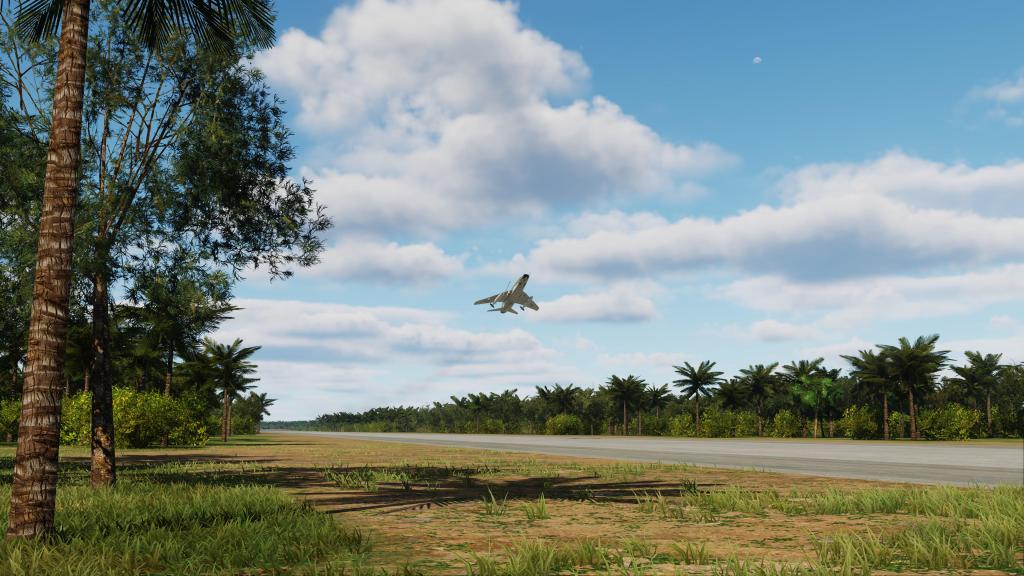
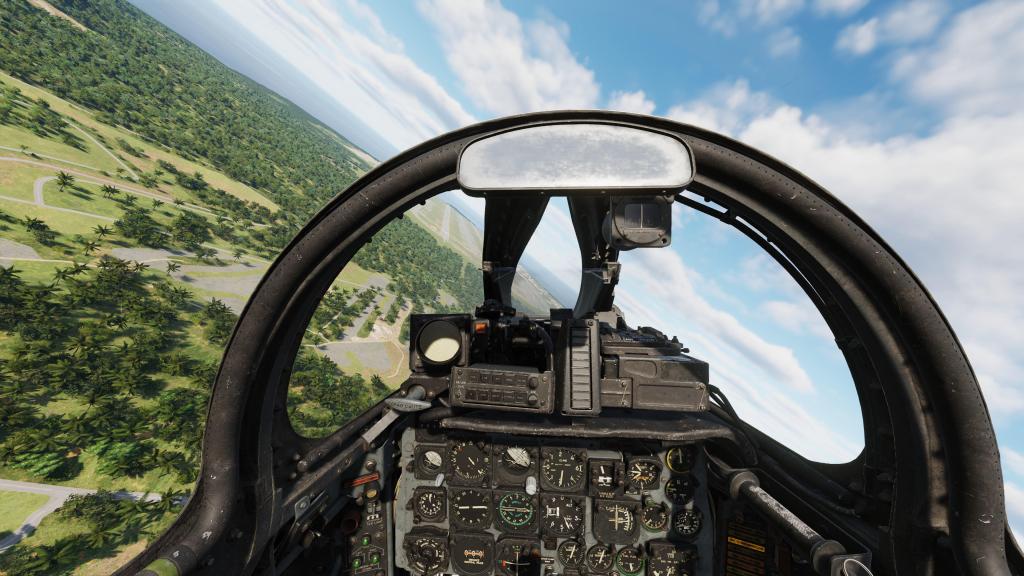
For the next few minutes I was mostly joyriding. Flying low and as fast as the jet can go and getting a feel for the handling.
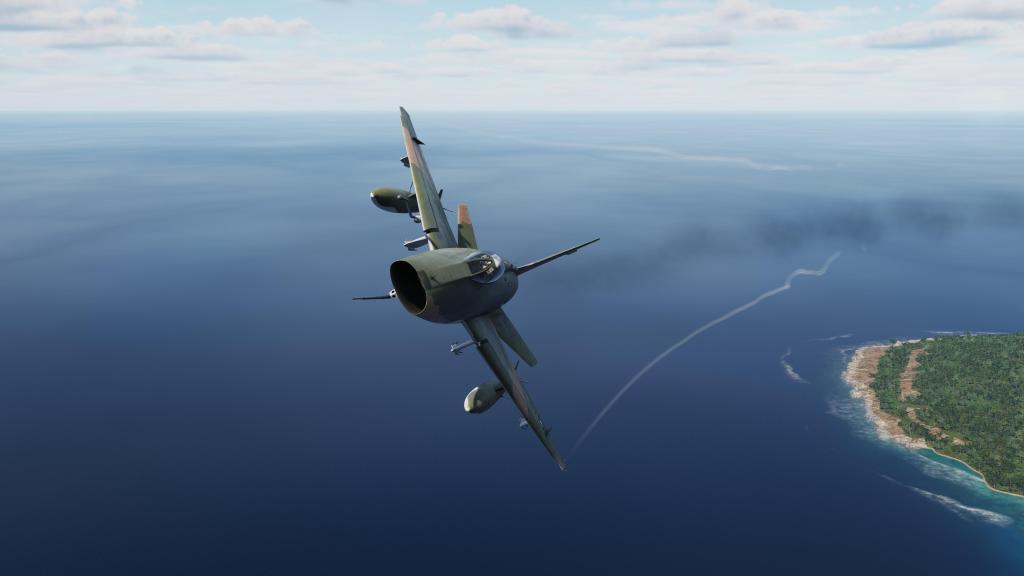
By this point I’ve worked my way along the south western side of the island flying past the harbour, along beachstrips, and generally just hugging the coast.
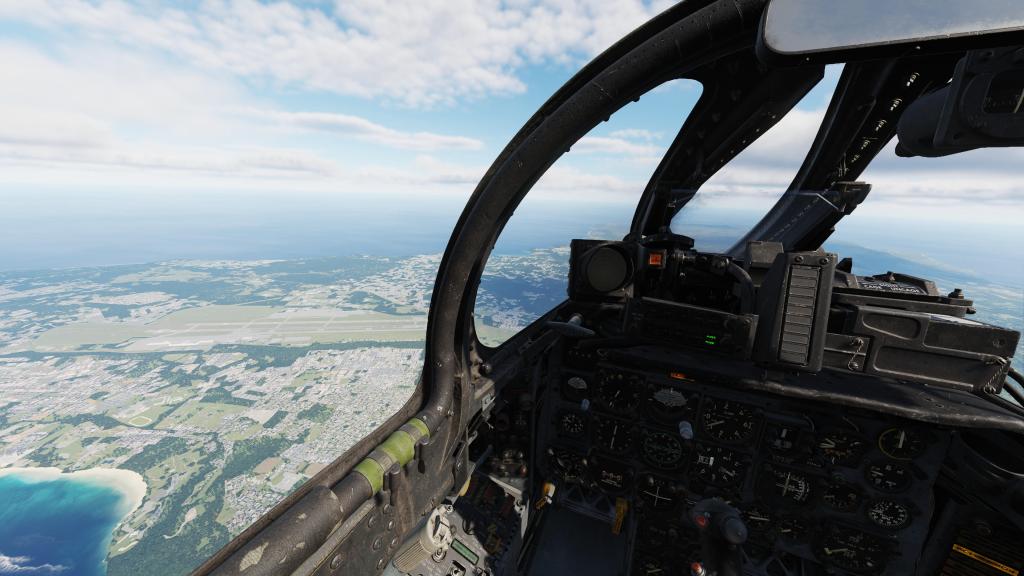
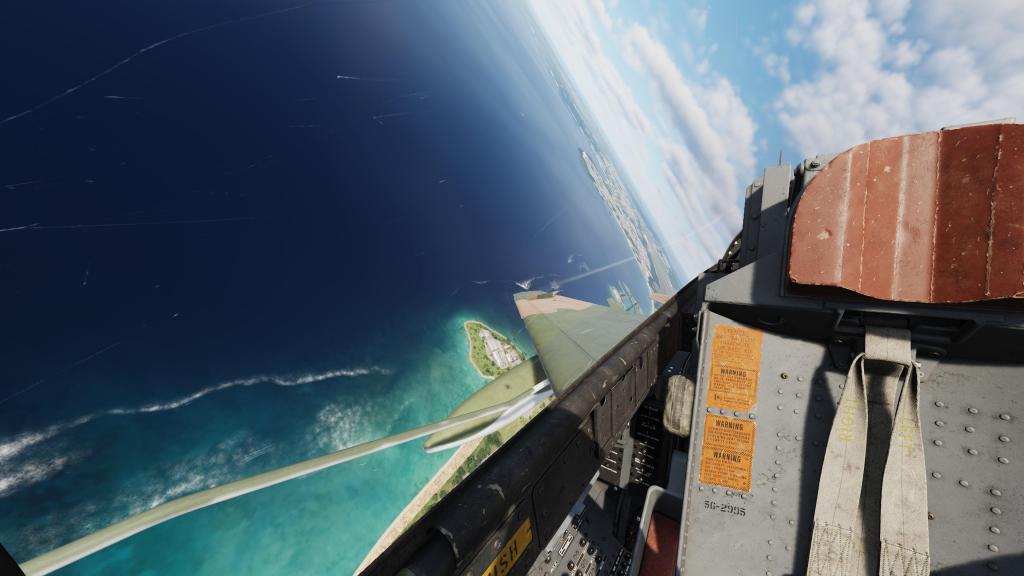
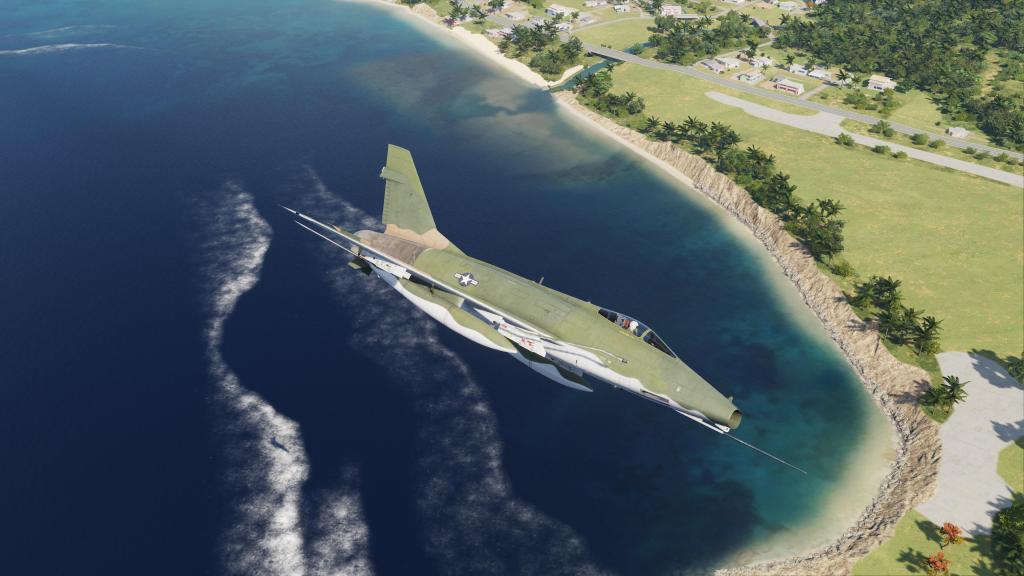
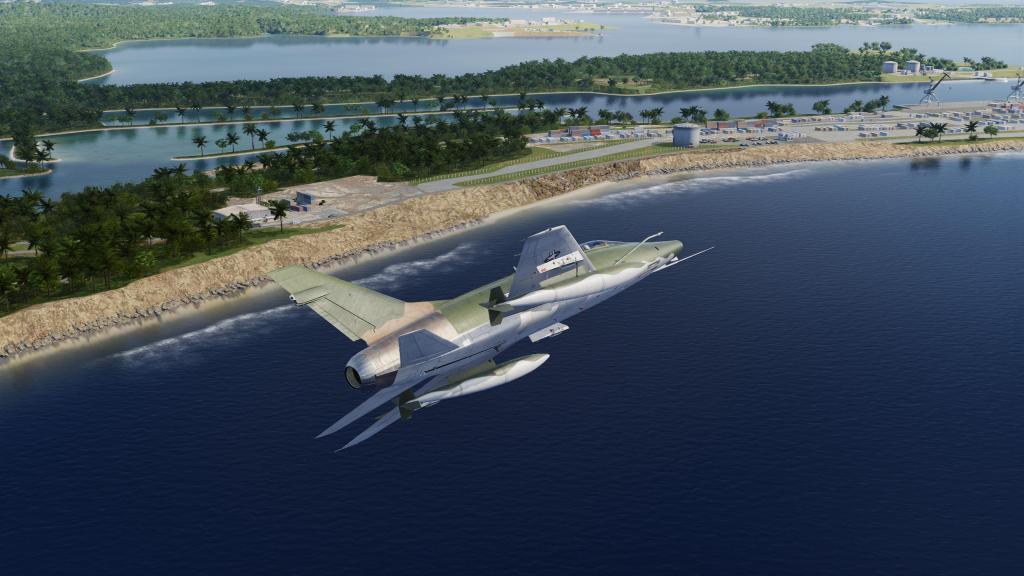
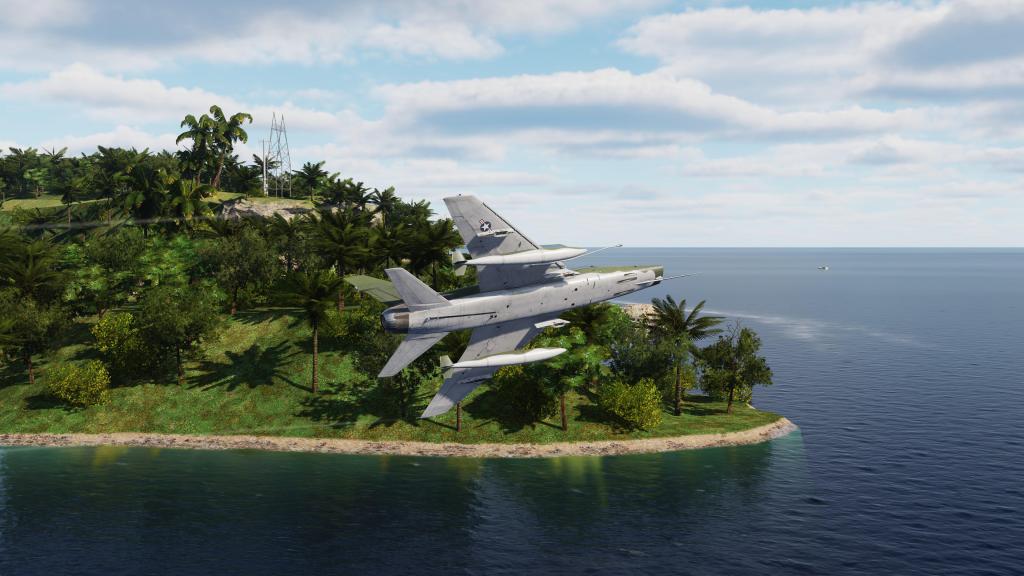
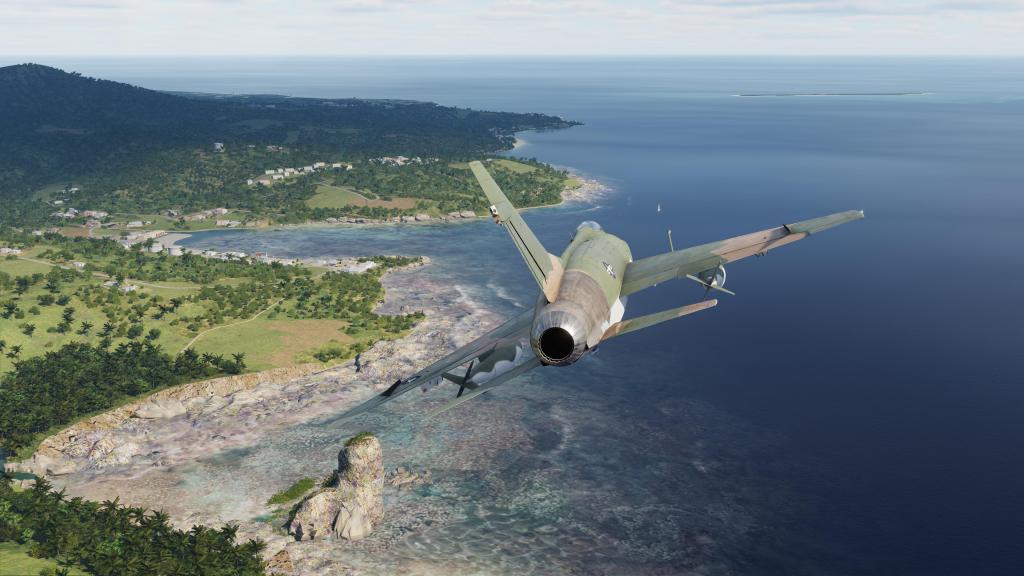
I’ve been staying off of afterburner most of this time but here its time to kick things into gear again so its time to light the fires. Once again, the satisfying roar of the afterburner kicking in really is enjoyable. It feels much more visceral than on more modern aircraft and the change in performance is noticeable.
Suddenly we’re climbing at a much faster rate blasting up through the sky to over 10,000 feet.
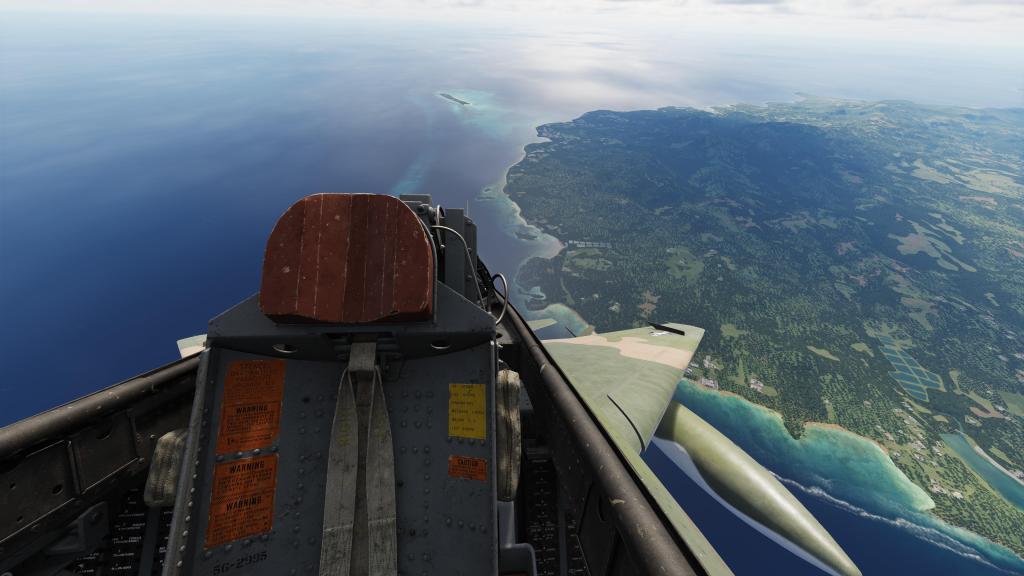
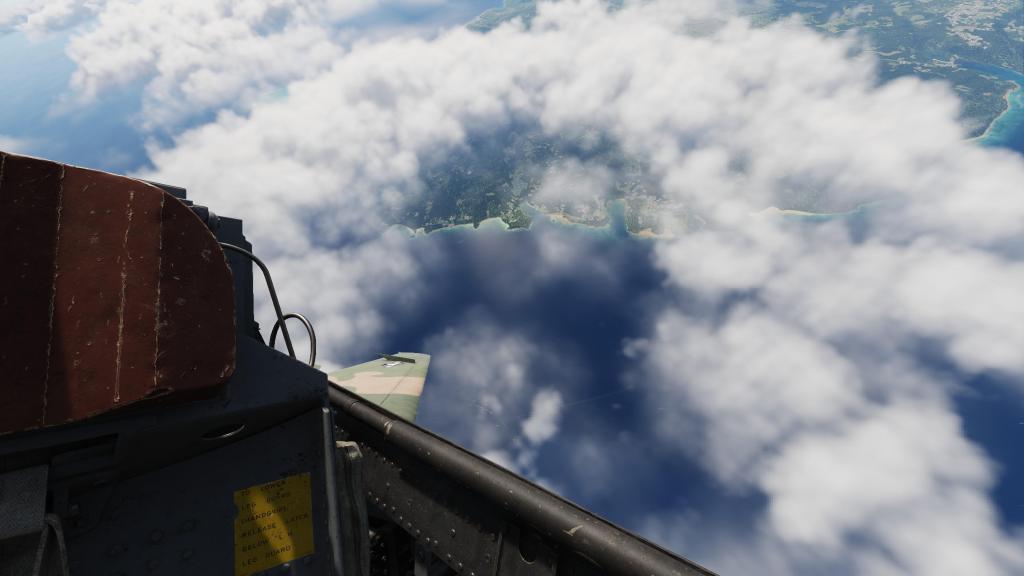
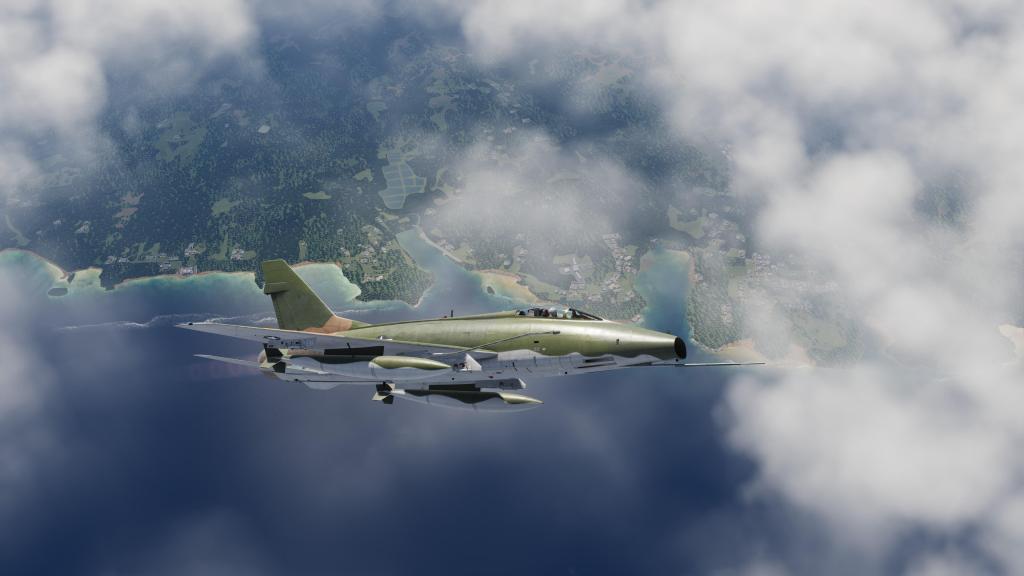
This is where the F-100’s interceptor roots are on display and where the jet feels most at home. Its made to be fast, to climb, and intercept the enemy and that original objective certainly was to be found when I did this. Off afterburner and it feels a little sedate, on burner it really gets moving.
As fun as those several minutes were, I was now flying north and heading back to base to get the landing done. Here is where I had the most trepidation as the F-100D is known for being a bit of a difficult beast to handle and I certainly did find that.
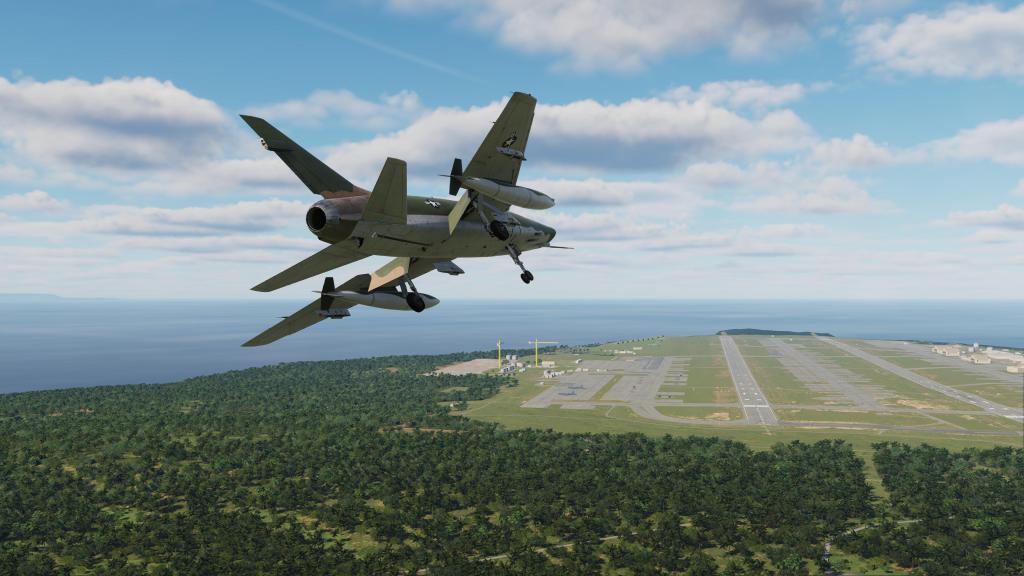
I did an overhead break over the same runway I took off from. Turning left away from the field and setting up for a pattern landing, the speed started to bleed off and the sedate calm that I was feeling from most of the flight started to give way to a slightly more unruly beast. The nose began to wander more, aileron inputs caused more rolling tendencies still, and as the speed bled off and the thunk of the flaps deploying were felt the aircraft really started to get that nose up pitch that I’ve read about.
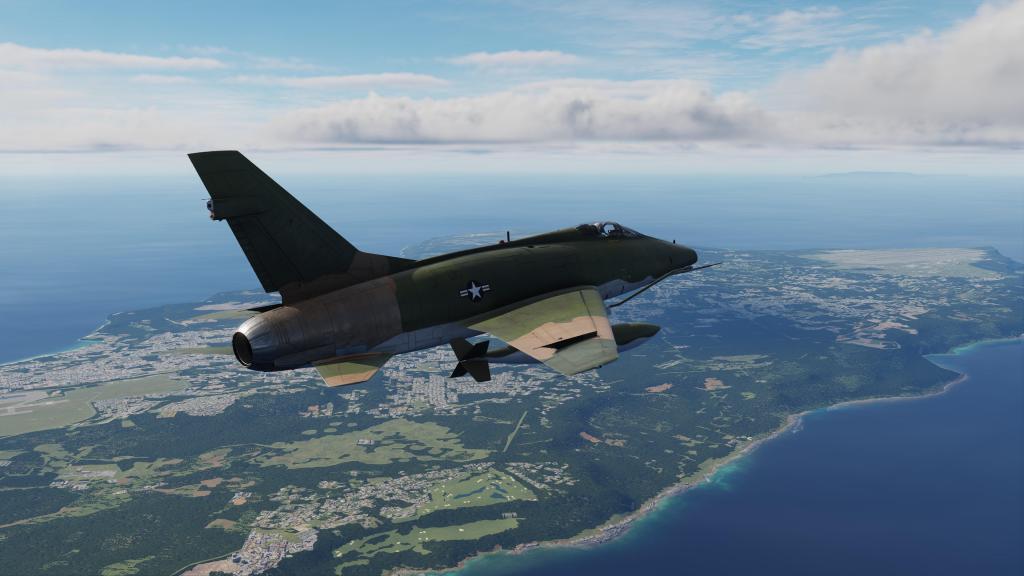
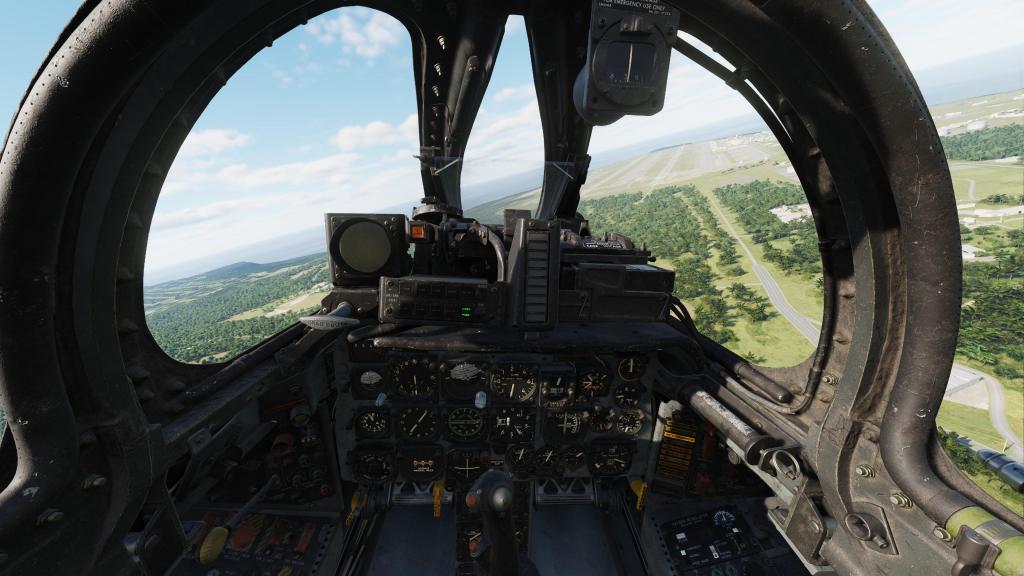
While I did make a decent enough landing, it was certainly up there for more harrowing experiences. I will get better with it and improve my technique but … yeah… it will bite you if you get it wrong. As much as that’s a problem for real world flyers with the jet, as far as simulation goes this is incredible and speaks to the detailed flight model that Grinnelli has been working on.
Coming up next
In my next article, I’m going to look at some of the weapons and combat capabilities of the DCS: F-100D. If it all goes well, I’ll have that out by mid-week!
Do you have questions? Please let me know in the comments and I’ll find out some of the things that you may want to know ahead of the DCS: F-100D’s release.
More to come!


 Stormbirds
Leave a comment